Category: Uncategorized

  • Beginner’s Guide: Mastering Keyboard Improvisation Easily

    Diving into the world of keyboard improvisation can feel like stepping into a vast, uncharted musical territory, especially for beginners. It’s where creativity flows freely, and the rules of music bend to the will of imagination. But don’t let the openness intimidate you; everyone starts somewhere, and the journey to improvisational freedom is packed with rewarding milestones.

    For those just tickling the ivories with dreams of jazzing up their tunes, knowing where to begin is the first step. Improvisation might seem like a skill reserved for the musically gifted, but it’s actually an art form that anyone can learn with practice, patience, and a bit of guidance. Let’s ease into the basics of keyboard improvisation, setting the stage for a musical adventure that’s as fulfilling as it is fun.

    Understanding Keyboard Scales

    Scales serve as the foundation for most musical improvisation, acting as the musical alphabet from which melodies, harmonies, and solos are formed. They’re not just a series of notes but a scaffold for creativity on the keyboard. For beginners, getting to grips with scales can unlock the door to more intuitive and free-flowing improvisation.

    At its core, a scale is a sequence of notes ordered by pitch. Two of the most fundamental types that beginners should focus on are the Major and Minor scales. Each has a distinct sound and emotional tone, with major scales often sounding happy or bright, while minor scales tend to convey a sadder or more reflective mood.

    To start, one might look into the C Major scale, arguably the first scale most learners encounter due to its simplicity—all white keys from C to C. This simplicity makes it an excellent starting point for understanding how scales are built and for beginning to improvise. Once comfortable with the C Major scale, branching out into G Major or F Major, which introduce sharps and flats, respectively, can add variety and challenge.

    Here’s a quick overview of the notes in these foundational scales:

    Scale Notes
    C Major C, D, E, F, G, A, B, C
    G Major G, A, B, C, D, E, F#, G
    F Major F, G, A, Bb, C, D, E, F

    Practicing these scales involves more than simply running one’s fingers up and down the keyboard. To truly grasp them, one should:

    • Practice with both hands, separately at first, then together.
    • Increase speed gradually, ensuring accuracy and comfort at each step.
    • Experiment with different rhythms and articulations to make scale practice more musical and engaging.

    Scales are the building blocks of improvisation. They provide a structure for melody and harmony but don’t dictate how they must be used. Knowing scales well gives improvisers the tools to express themselves more freely and respond in the moment to the music they’re creating or interacting with.

    To broaden one’s improvisational vocabulary, exploring scales in different keys is essential. Shifting a scale up or down a semitone, for example, can dramatically alter its character and the improvisational ideas it sparks.

    Building Chords and Progressions
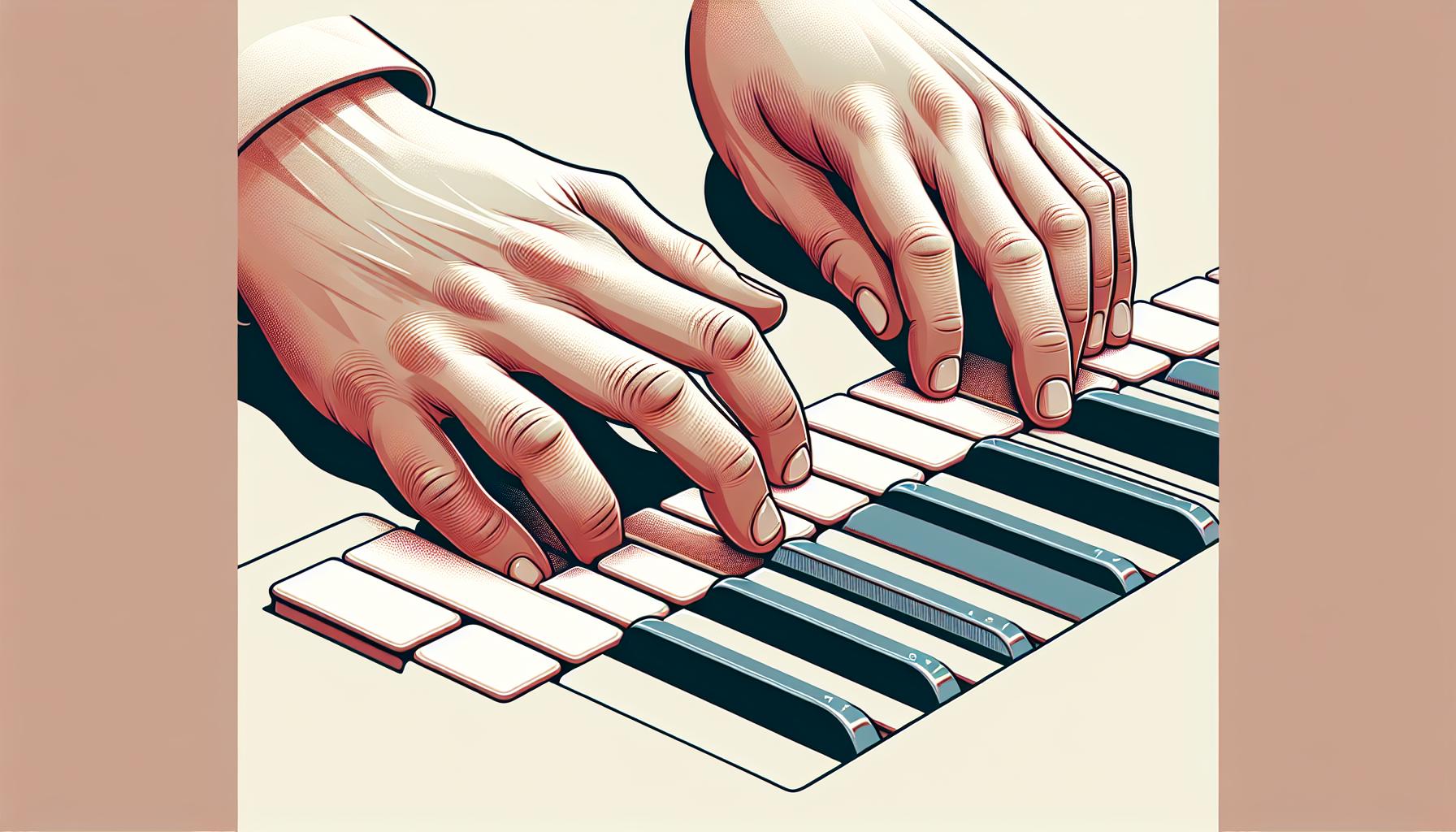
    Once a beginner has a grasp on keyboard scales, the next step in their improvisational journey is understanding chords and progressions. Chords form the backbone of most music genres, providing depth and harmony that scales alone can’t achieve. For someone new to the keyboard, the idea of building chords might seem daunting, but it’s essentially about combining notes in a way that sounds pleasing.

    At its simplest, a chord is made up of three or more notes played together. The most fundamental chord for beginners is the triad, which includes the root note, a third, and a fifth. For instance, in the key of C Major, the C Major chord comprises C (the root), E (the third), and G (the fifth). This combination of notes creates a harmonious sound characteristic of the Major chord’s bright and happy feel.

    Progressions, on the other hand, are sequences of chords played in a certain order. They form the structural foundation of a song, leading the listener through various emotional landscapes. One of the most famous chord progressions in Western music is the I-IV-V-I progression. In the key of C Major, this translates to C Major, F Major, G Major, and back to C Major. This progression is the backbone of countless songs across many genres, illustrating how a simple sequence of chords can produce an effective musical journey.

    To start building chords and progressions, beginners should:

    • Familiarize themselves with chord shapes for Major and Minor chords in various keys.
    • Practice switching between chords smoothly, ensuring each note rings out clearly.
    • Experiment with different progressions, starting with the I-IV-V-I progression, and then exploring more complex sequences as they become comfortable.

    The magic of improvisation comes alive when one starts to play around with chords and progressions. By altering a chord’s structure slightly or swapping one chord for another, beginners can start to infuse their personality into their playing. Experimenting with suspended or added chords, for example, can introduce a sense of tension and release, adding emotional depth to improvisations.

    Developing Rhythm and Timing
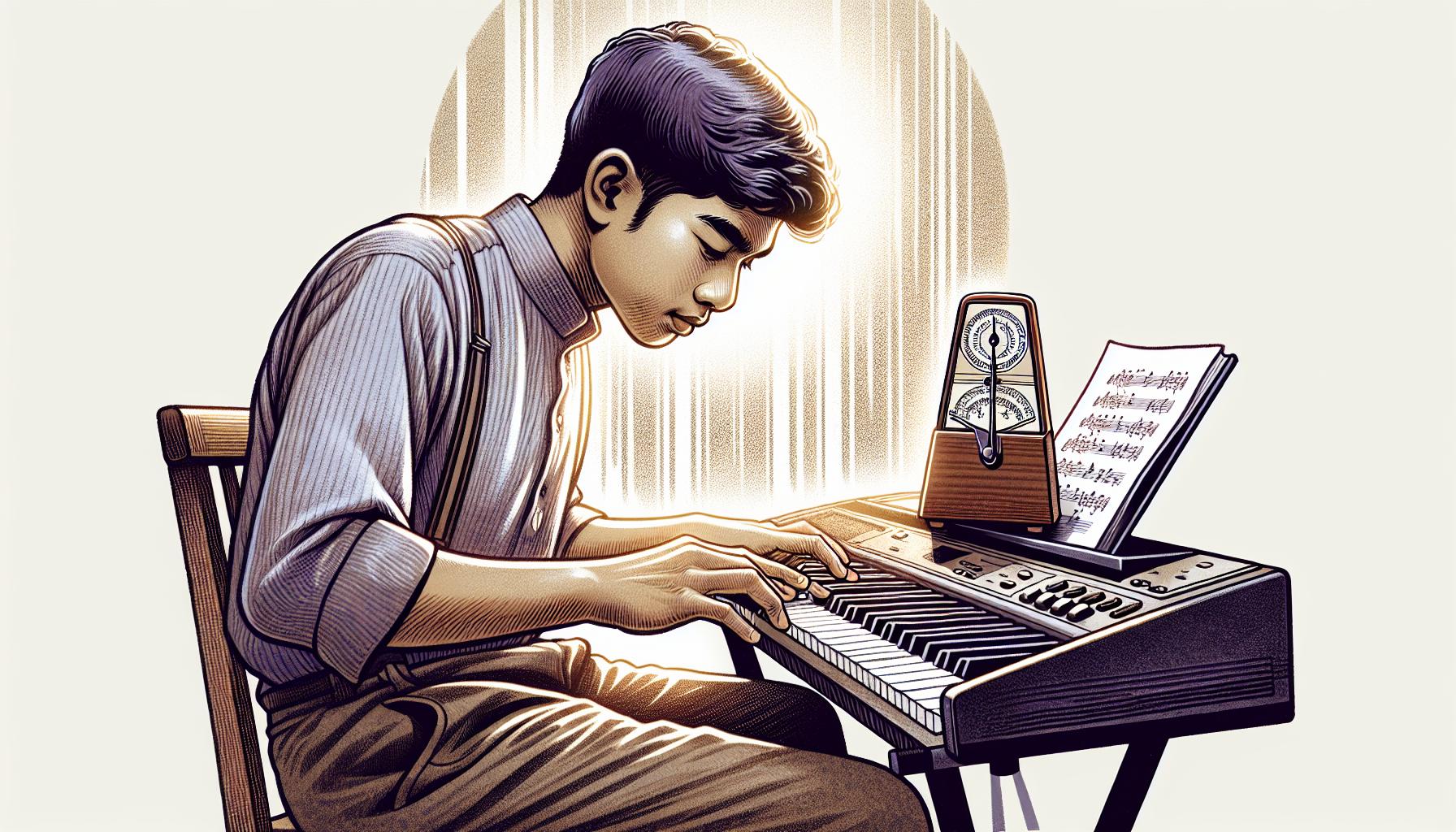
    Once beginners have dived into the world of chords and progressions, the next pivotal step in mastering improvisation on the keyboard involves honing their rhythm and timing. Achieving a solid grasp on these musical elements is crucial as they’re the backbone that supports the flow and feel of a piece.

    Rhythm, in its essence, is a pattern of sounds and silences in time. Timing, on the other hand, relates to the precise moment these sounds occur, ensuring music moves along at the correct pace. Together, they orchestrate the dynamic movement of a piece, dictating its speed, mood, and energy.

    For beginners eager to improve their rhythmic skills, starting with basic rhythmic patterns and practicing with a metronome is essential. Metronomes, either digital or mechanical, help players keep a steady beat and gradually increase their tempo as they become more comfortable. Simple exercises include playing quarter, eighth, and sixteenth notes in various combinations, focusing on consistency and precision.

    They should also experiment with Syncopation, where the emphasis is placed on off-beats, adding complexity and interest to music. By shifting accents onto unexpected beats, players can create a sense of tension and release, making their improvisation more engaging. Syncopation can be practiced by clapping, tapping, or playing scales and chords, accenting notes other than the downbeat.

    Exploring Different Time Signatures offers another avenue for growth. Most beginners start with the familiar 4/4 time, but venturing into time signatures like 3/4, 6/8, or even 7/8 can open up new rhythms and styles. Playing simple melodies or chord progressions in these varied meters can significantly enhance a beginner’s rhythmic vocabulary and adaptability.

    Additionally, Playing Along with Music Tracks is a fun and effective way to practice rhythm and timing. Beginners should choose songs that resonate with them across different genres and try to play the melody lines or harmonize with the chords. This not only helps in developing timing but also in understanding how rhythm works in different musical contexts.

    Technique Purpose Benefit
    Metronome Practice Keeps a steady beat Improves timing
    Syncopation Emphasis on off-beats Adds interest and complexity
    Exploring Time Signatures Playing in various meters Increases rhythmic vocabulary

    Exploring Different Styles of Improvisation
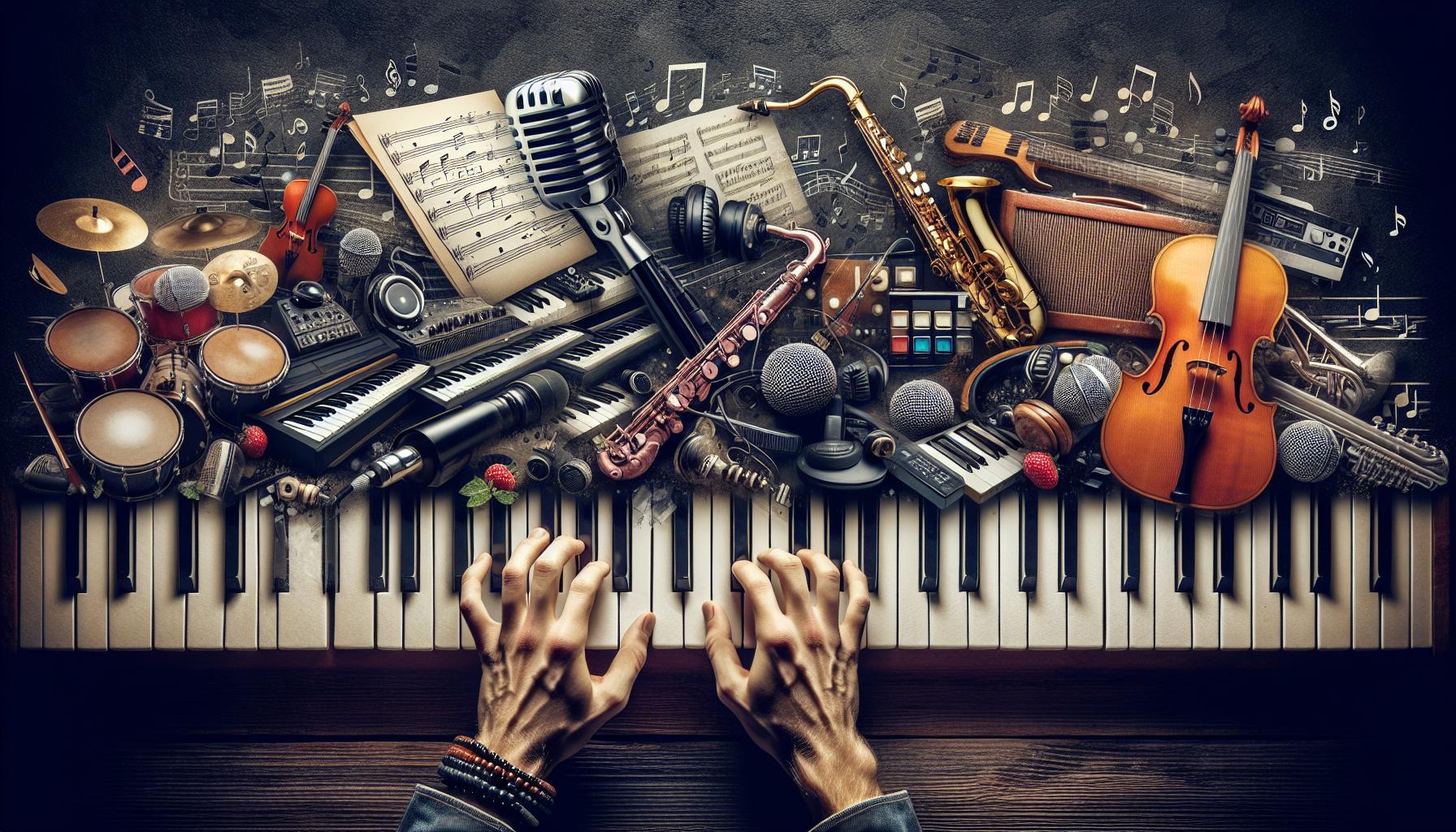
    Once a beginner has a solid foundation in scales, chords, and rhythm, the next exciting step in mastering keyboard improvisation is exploring different musical styles. Every style, from jazz to classical, rock to electronic, offers unique challenges and opportunities for improvisers.

    Jazz Improvisation

    Jazz is renowned for its complex chord progressions and the freedom it offers musicians to express themselves. Beginners might feel intimidated by jazz’s seemingly intricate theory, but starting with the basics of swing rhythm and the blues scale can demystify this genre. Listening to jazz legends like Thelonious Monk or Bill Evans and trying to mimic their style can be a fantastic way to get comfortable with jazz improvisation. It’s also crucial to understand the concept of swing time, which gives jazz its distinctive rhythmic feel, and practice playing with a sense of ‘groove’.

    Classical Improvisation

    Although classical music might seem rigid, improvisation has been a part of its tradition for centuries. Improvisers can explore variations on classical themes or invent their own melodies within the style’s harmonic structures. Studying pieces by composers who were known for their improvisational skills, such as Bach or Beethoven, can provide insight into classical improvisation techniques. Attention to expression and dynamics is vital in this style, aiming to convey emotion through subtle changes in volume and tempo.

    Rock and Pop Improvisation

    In rock and pop, improvisation often takes the form of soloing over chord progressions. The pentatonic scale is a great starting point for improvising in these genres, offering a simple yet versatile palette of notes that sound good over many chord types. Playing along with favorite tracks and focusing on creating memorable melodies rather than complex harmonic structures can help in mastering this style. Additionally, experimenting with electronic effects like distortion or reverb can add an exciting dimension to improvisations.

    Electronic and Experimental Music

    For those drawn to electronic and experimental music, improvisation can be about exploring sound textures and unconventional rhythms. This style encourages pushing boundaries, using synthesizers and software to manipulate sounds in innovative ways. Experimenting with loops, sampling, and layering different sounds can lead to unexpected and inspiring improvisational journeys. Beginners should not shy away from diving into music technology, as it opens up endless possibilities for creative expression.

    Practicing Techniques and Exercises

    When embarking on the journey to master keyboard improvisation, integrating a series of targeted practices and exercises into daily routines can significantly enhance a beginner’s prowess. Consistent practice not only solidifies the fundamental concepts covered earlier but also accelerates the transition from novice to adept improviser.

    One of the initial steps is to dedicate time to scale and chord memorization. Familiarity with these elements provides the scaffolding needed for smooth improvisational flow. They should start by practicing major and minor scales in different keys, gradually increasing speed as comfort with the finger placements grows. Alongside scales, working on chord transitions and voicings strengthens the ability to weave complex harmonic textures.

    Incorporating ear training exercises into practice sessions plays a crucial role in developing improvisational skills. Listening to and identifying intervals, chord qualities, and progressions by ear empowers musicians to reproduce the melodies and harmonies they hear in their minds or in other compositions. Beginners can use mobile apps or online tools designed for ear training to improve their auditory skills progressively.

    Another vital component is rhythmic training. Effective improvisation isn’t just about the notes played but also about when they’re played. Practicing with a metronome helps in internalizing a steady beat, while experimenting with different rhythmic patterns and syncopation adds flavor and sophistication to performances. Beginners should strive to be comfortable with various time signatures, as flexibility with rhythm significantly broadens improvisational possibilities.

    Improvisation drills are also instrumental in honing one’s skills. These exercises might include:

    • Playing over backing tracks in different styles to understand how to adapt improvisations to various musical contexts.
    • Limiting improvisation to a specific set of notes or chords to foster creativity within constraints.
    • Using a random chord generator to practice creating smooth transitions between unexpected chord progressions.

    Here’s an illustrative table showcasing recommended daily practice elements for beginners:

    Practice Element Time Allocation
    Scale Memorization 15 Minutes
    Chord Transitions 15 Minutes
    Ear Training 10 Minutes
    Rhythmic Training 10 Minutes
    Improvisation Drills 20 Minutes

    Conclusion

    Embarking on the journey of keyboard improvisation opens up a world of musical expression that’s both rewarding and fun. By dedicating time to the practice elements outlined, beginners will find themselves making significant progress. It’s not just about memorizing scales or chords but about bringing them to life through music. Remember, the key to improvisation is creativity and patience. So, grab your keyboard, dive into the exercises, and let your musical ideas flow. Before you know it, you’ll be improvising with ease and confidence, adding your unique touch to the music you play. Happy improvising!

  • Beginner’s Guide: Fun Ways to Practice Keyboard Scales

    Stepping into the world of music, especially keyboard playing, can feel like unlocking a door to endless creativity. But just like any art, mastering the keyboard requires a solid foundation. And what better way to build this foundation than by practicing scales? For beginners, scales are the building blocks of music, the ABCs of the musical language.

    Diving into scales might not sound like the most thrilling adventure at first. However, they’re crucial for developing finger strength, agility, and understanding musical structures. Imagine being able to glide your fingers across the keys with ease, playing melodies that once seemed complex. That’s the power of consistent scale practice. Let’s explore how beginners can approach practicing keyboard scales in a way that’s both effective and enjoyable.

    Importance of Keyboard Scales for Beginners

    Practicing keyboard scales might seem monotonous at first glance, but they’re the backbone of learning to play the keyboard effectively. For beginners, diving into scales early on is a pivotal step toward mastery in music. It’s not just about moving fingers across the keys; it’s about setting a solid foundation for musical education, skill development, and overall mastery of the instrument.

    Building a Strong Musical Foundation

    Keyboard scales are much more than a series of notes. They’re the gateway to understanding music theory, the structure of songs, and how melodies and harmonies are crafted. By learning scales, beginners get a sneak peek into the language of music, making it easier to grasp concepts like keys, intervals, and chord progressions. This knowledge isn’t just theoretical; it’s applied every time they play a piece, helping them make sense of the music they’re bringing to life.

    Enhancing Finger Strength and Agility

    One can’t overlook the physical benefits of scale practice. Regular scale drills enhance finger strength and promote agility and precision in finger movements. This is crucial for beginners who are still developing their finger independence – the ability of each finger to move freely and accurately on the keyboard. Over time, this practice leads to smoother transitions between notes and chords, making complex pieces more manageable.

    Improving Sight-Reading Skills

    Scales also play a significant role in improving sight-reading skills. As beginners become more familiar with the patterns and structures of scales, they’ll find it easier to anticipate the notes and chords in new pieces. This familiarity reduces hesitation and boosts confidence when faced with unfamiliar music, enhancing overall performance quality.

    Fostering Musical Expression and Creativity

    Beyond technical skills, scales are instrumental in developing a player’s musical expression and creativity. Understanding the nuances of different scales enables beginners to experiment with creating their own melodies and harmonies. This exploration fosters a deeper connection with music, encouraging creativity and self-expression through the keyboard.

    • Consistency is Key: Practicing scales regularly is more beneficial than sporadic, lengthy sessions.
    • Slow and Steady Wins: Starting slow allows for focus on accuracy and precision, which can then be speeded up over time.
    • Use a Metronome: This tool helps in maintaining a consistent tempo and improving rhythmic accuracy.
    • Vary the Scales: Don’t just stick to major scales; explore minor, chromatic

    Choosing the Right Scale Variations

    When beginners embark on their musical journey, one of the pivotal decisions they face is selecting the appropriate scale variations to practice. It’s tempting to stick to the major scales, as they are the most commonly used and taught scales in keyboard training. However, delving into various types of scales can significantly broaden a musician’s skill set and enhance their understanding of musical theory.

    Why Explore Beyond Major Scales?

    Exploring beyond major scales offers several benefits:

    • Diversification of Technical Skills: Practicing different scale variations, such as minor, melodic minor, harmonic minor, and blues scales, can challenge and thus improve a player’s technical abilities.
    • Enhanced Musical Expression: Each scale carries its own emotional weight and color, providing players with an expanded vocabulary for musical expression.
    • Improved Improvisation: Knowledge of a wider array of scales equips musicians with the tools needed for more creative and effective improvisation.
    • Comprehensive Musical Understanding: Learning various scale types aids in a deeper comprehension of music theory, enabling players to recognize and understand patterns within pieces they learn or compose.

    Starting with Minor Scales

    For beginners, a natural progression after mastering major scales is to venture into minor scales. There are three main types:

    • Natural Minor
    • Harmonic Minor
    • Melodic Minor

    Each offers a unique sound and set of challenges. The natural minor scale, often considered the fundamental minor scale, shares its key signature with its relative major scale, offering an accessible starting point for exploration.

    Incorporating Blues and Pentatonic Scales

    After gaining confidence with major and minor scales, beginners can further their exploration with blues and pentatonic scales. These scales play a pivotal role in genres like jazz, rock, and pop music. The pentatonic scale, with its five notes per octave, is particularly versatile and can be a gateway to improvisation.

    Practice Techniques for Scale Variations

    To effectively practice these scales, beginners should:

    • Start Slow: Focus on accuracy before speed. It’s crucial to ensure that each note is played clearly and confidently.
    • Use a Metronome: This helps maintain a steady tempo and develops a strong rhythmic foundation.
    • Break Down Challenges: If a scale proves difficult, breaking it down into smaller sections can help manage the challenge more effectively.

    In table form, here are recommended minimum practice durations for these scales:

    | Scale Type |

    Understanding Finger Technique

    When it comes to mastering keyboard scales, understanding and developing proper finger technique is crucial. It not only aids in playing scales more fluidly but also prevents strain and injury. Newcomers often overlook this aspect, focusing instead on merely memorizing scale patterns. However, it’s the precision and efficiency of finger movements that truly enhance one’s scale practice.

    Beginners should start by familiarizing themselves with the concept of finger numbering. This system assigns a number to each finger, making it easier to follow scale fingering charts. Here’s a quick rundown:

    • Thumb: 1
    • Index Finger: 2
    • Middle Finger: 3
    • Ring Finger: 4
    • Little Finger: 5

    This numbering system is the foundation for all fingering techniques across various scales. It’s essential for beginners to commit this to memory for ease of reference when practicing.

    Proper finger positioning is another key element. Players should ensure their fingers are curved, not flat, to strike the keys with the tips of their fingers. This curved position provides greater control and allows for smoother transitions between notes. Moreover, keeping the wrists relaxed but not drooping can further facilitate fluid movement across the keyboard.

    Hand coordination plays a significant role in effective scale practice. Beginners often find their hands working against each other. To combat this, they’re encouraged to practice scales hands separately at first. Once comfortable, they can gradually start to play scales with both hands, initially at a slow pace, and then increasing speed as they become more adept.

    Dynamic finger strength is vital for expression and control in music. Here are some exercises aimed at building finger independence and strength:

    • Five-finger drills: Play consecutive notes within the span of five fingers, focusing on even tone and volume.
    • Contrary motion scales: Play scales in opposite directions with each hand. This challenges coordination and strengthens weaker fingers.
    • Articulation exercises: Practice playing scales with different articulations (staccato, legato) to improve dynamic control.

    Incorporating these techniques into daily practice routines enriches scale mastery and prepares beginners for advanced keyboard challenges. Furthermore, consistent practice not only yields progress in scale performance but also instills a sense of musicality that transcends technical skills.

    Flexibility and endurance are essential outcomes of diligent finger technique practice. As students continue to explore new scales and genres, the agility gained from these exercises ensures they can tackle any musical piece with confidence.

    Incorporating Scale Practice into Daily Routine

    For beginners, integrating scale practice into their daily routine is essential for building foundational skills at the keyboard. The key is to develop a consistent practice schedule that includes scales but doesn’t feel overwhelming. Start with short, focused sessions and gradually increase their duration as comfort and stamina improve. It’s not about how long they practice but how effectively.

    Daily scale practice should begin with a warm-up using five-finger drills to prepare the fingers for more complex movements. After warming up, they should move on to practicing scales hands separately. This allows them to focus on the technique of each hand independently, ensuring that finger positioning and motion are correct before trying to coordinate both hands together. Once comfortable, they can begin practicing scales with both hands, slowly at first, then gradually increasing the speed while maintaining accuracy and fluidity.

    Here are some tips for effectively incorporating scale practice into daily routines:

    • Set Realistic Goals: Beginners should set small, achievable goals for each practice session. For example, they might focus on mastering one or two scales in a week, depending on their complexity and the student’s initial skill level.
    • Use a Metronome: Practicing with a metronome helps develop a sense of steady rhythm and pacing. Beginners should start slow, focusing on evenness and accuracy, and only increase the tempo when they feel comfortable.
    • Dedicate Specific Practice Time for Scales: Allocating a specific portion of each practice session exclusively to scales is vital. This could be the first 10 to 15 minutes of practice, depending on the overall length of the session.
    • Incorporate Different Articulations: As they advance, beginners should practice scales with various articulations, such as legato (smooth and connected) and staccato (short and detached). This introduces variety and helps develop a more nuanced touch.

    To visualize the recommended practice time allocation, here’s a simple breakdown for a 1-hour practice session:

    Activity Time Allocation
    Warm-up with Five-Finger Drills 10 minutes
    Scale Practice Hands Separately 20 minutes
    Scale Practice Both Hands 15 minutes
    Review of Previous Scales 10 minutes
    Cool Down with Light, Easy Pieces 5 minutes

    Tips for Making Scale Practice Enjoyable

    Practicing keyboard scales may seem monotonous at first, but there are several strategies that can make these sessions not only productive but also enjoyable. Finding joy in the process is crucial for maintaining motivation and ensuring consistent progress.

    First and foremost, personalizing the practice routine is key. Every musician has unique preferences and learning styles. Some may find pleasure in the methodical increase of tempo, achieving a sense of accomplishment as they play scales faster with accuracy. Others might enjoy experimenting with different rhythms or adding swing to their scales to break the monotony. By tailoring the practice session to fit their individual tastes, beginners will find scale practice less of a chore and more of an engaging activity.

    Incorporating technology and apps can significantly enhance the scale practice experience. Many apps provide interactive challenges, progress tracking, and gamified learning experiences that make practicing scales feel more like a game than a task. This not only adds an element of fun but also provides valuable feedback that can help refine techniques.

    Another tip is to practice with play-along tracks. Many online resources offer backing tracks in various musical styles that can accompany scale practice. Playing scales alongside these tracks can help beginners feel like they are part of a band or orchestra, making the exercise more musically engaging and helping to develop a sense of timing and rhythm.

    Exploring the creative aspect of scales can also add interest to practice sessions. Beginners should be encouraged to compose simple melodies using the scales they are learning. This not only solidifies their understanding of the scale structures but also sparks creativity and a deeper connection to music.

    Setting short-term goals and rewarding oneself upon achieving them can greatly increase motivation. These goals could range from mastering a new scale every week to achieving a specific tempo without errors. Rewards can be as simple as taking a break to enjoy a favorite snack or as significant as purchasing new music books or accessories for the keyboard. Celebrating these small victories reinforces the positive aspects of scale practice and encourages persistence.

    Engaging with the music community can bring a whole new level of enjoyment to practicing scales. Joining forums, attending workshops, or participating in social media groups dedicated to keyboard players can provide a sense of camaraderie. Sharing progress, seeking advice, and celebrating achievements with fellow musicians can make the journey more enjoyable and less solitary.

    Conclusion

    Mastering keyboard scales is a fundamental step that opens doors to the vast world of music. By tailoring practice sessions to personal tastes, leveraging modern technology, and engaging with the music community, beginners can transform scale practice from a mundane task into an exciting journey of musical exploration. Remember, the key to progress is consistent practice paired with a dash of creativity and fun. So grab your keyboard, let your fingers dance across the keys, and embark on this musical adventure with enthusiasm and determination. The road to becoming a proficient keyboardist is both challenging and rewarding, and it all starts with mastering those scales. Happy practicing!

  • Never Too Late: Mastering the Keyboard at Any Age

    Have you ever found yourself tapping along to a catchy tune, wishing you could play it on the keyboard? But then, that nagging thought creeps in: “Isn’t it too late for me to start learning?” Let’s put that doubt to rest once and for all. It’s never too late to embark on a musical journey, and the keyboard is a fantastic place to start.

    The beauty of music is that it knows no age. Whether you’re in your 20s, 40s, or even 60s, the keyboard awaits with open keys. It’s not just about becoming the next Mozart; it’s about the joy, the challenge, and the satisfaction that comes from learning something new.

    Benefits of Learning Keyboard at Any Age

    Learning to play the keyboard is a journey that offers numerous benefits, irrespective of the learners’ age. It’s a myth that only young people can reap the rewards of mastering a musical instrument. In reality, individuals of any age can enjoy and benefit from learning the keyboard. The advantages range from mental to physical, highlighting the universal appeal of music.

    Mental Stimulation and Cognitive Benefits

    Playing the keyboard isn’t just about memorizing notes and compositions; it’s a complex task that stimulates the brain. Research has shown that playing a musical instrument can enhance cognitive functions, including memory, attention, and problem-solving skills. For older adults, engaging in music can be a protective factor against cognitive decline, keeping the brain active and alert.

    Table: Cognitive Benefits by Age Group

    Age Group Cognitive Benefits
    20s Enhances memory, improves multitasking
    40s Boosts brain plasticity, sharpens focus
    60s+ Slows cognitive decline, increases alertness

    Physical Health and Well-being

    Beyond the cognitive benefits, learning to play the keyboard also has a positive impact on physical health. It improves hand-eye coordination and fine motor skills. For older individuals, integrating music into their lives can lead to a more active lifestyle and even reduce feelings of depression or loneliness. Consequently, playing the keyboard is not just an exercise for the mind but also for the body.

    Emotional and Psychological Benefits

    The emotional rewards of learning the keyboard are profound. Music is a universal language that expresses emotions when words fall short. Playing the keyboard allows individuals to express themselves creatively, leading to enhanced self-esteem and confidence. It also serves as a stress reliever, offering a sense of peace and relaxation after a long day. For many, the keyboard becomes an outlet for emotional expression, helping to navigate the complexities of life with a bit more ease.

    Social Connections and Community

    Embarking on the journey of learning the keyboard opens up opportunities to connect with others. Whether it’s through joining a music class, participating in community events, or simply sharing music with friends and family, these social interactions enrich the learning experience. They offer a sense of belonging and community that can be especially beneficial for individuals seeking new friendships or wanting to expand their social network.

    Dispelling the Myth of Age Limitations

    Many believe that learning the keyboard is a journey best started in youth, when the brain’s plasticity is at its peak. However, this view underestimates the human capacity for growth and adaptation at any age. Studies and real-life examples alike illustrate that age is just a number when it comes to mastering a musical instrument like the keyboard.

    The Power of Perseverance and Practice

    The key to learning the keyboard isn’t tied to age but to perseverance and practice. Regardless of when one starts, the journey toward becoming proficient in keyboard playing involves regular practice, learning from mistakes, and steadily setting and meeting goals. Adults, in fact, often have advantages in these areas, possessing the discipline and self-motivation that children are still developing.

    Cognitive Benefits Across the Board

    Learning to play the keyboard engages the brain in a unique way, offering cognitive benefits that extend well beyond the instrument. From enhancing memory to improving problem-solving skills, these advantages are not exclusive to the young. Older learners frequently report improvements in these areas, with studies supporting the notion that learning a musical instrument can stimulate brain functions at any age.

    Age Group Cognitive Benefits
    Children Enhanced creativity and problem-solving skills
    Adults Improved memory, attention, and multitasking abilities
    Seniors Delayed cognitive decline, improved mood

    Physical Health Advantages

    The physical act of playing the keyboard also supports health in unexpected ways. For starters, it improves fine motor skills and hand-eye coordination. For older adults, especially, this can counteract the effects of aging, keeping hands nimble and responsive. Moreover, the act of sitting down to practice encourages a routine, which has overarching benefits for organizing one’s lifestyle and priorities.

    Emotional Rewards and Social Connections

    Beyond the tangible mental and physical benefits, learning the keyboard at any age opens doors to emotional fulfillment and social opportunities. Music is a universal language that can express emotions when words fail, offering a therapeutic outlet for stress, anxiety, and depression. Furthermore, participating in music groups or ensembles fosters social connections, breaking down age barriers and building communities centered around shared passions.

    Challenges You May Face

    Embarking on the journey to learn the keyboard as an adult comes with its set of challenges. While the quest is undoubtedly rewarding, recognizing these hurdles can prepare you to overcome them more effectively.

    One of the primary challenges adults face is time management. Balancing work, family duties, and personal time makes it tough to carve out consistent practice sessions. Unlike children or teenagers who might have designated times for such activities, adults must be more strategic in finding and guarding their practice time. This often means sacrificing leisure activities or reorganizing priorities to ensure regular practice, a critical factor in mastering the keyboard.

    Another significant hurdle is the psychological barrier of starting late. Many adults harbor a misconception that they’re “too old” to learn an instrument, or fear they won’t be as good as those who started young. Such thoughts can dampen motivation and even deter some from pursuing their interest. It’s crucial to remember that learning an instrument is less about age and more about persistence, passion, and practice. Setting realistic goals and celebrating small victories can greatly help in overcoming these mental blocks.

    Moreover, adults may face physical challenges in learning the keyboard. Starting to learn an instrument later in life means your fingers might not be as dexterous or quick to adapt to new positions and movements. This can be frustrating, especially when trying to keep pace with complex compositions. Incorporating finger exercises and stretches into your routine can mitigate some of these difficulties, enhancing flexibility and reducing the risk of strain.

    Lastly, the selection of appropriate learning materials and methods can be daunting. The market is flooded with books, online courses, and tutorials targeted at beginners, but not all are suitable for adult learners. Adults might benefit more from materials that move at a quicker pace or those that offer more depth into music theory early on. Finding a teacher or course that aligns with your learning style and goals is essential to making progress and staying engaged.

    Despite these challenges, countless adults successfully learn to play the keyboard every year. Understanding and anticipating these obstacles are the first steps toward overcoming them. With determination, the right approach, and support from fellow music enthusiasts, learners of any age can enjoy the rich rewards that come with mastering the keyboard.

    Tips for Adult Beginners

    Embarking on the journey of learning to play the keyboard as an adult can feel daunting, but it’s never too late to start. With the right strategies, adults can navigate the challenges they may face and find joy and satisfaction in their musical endeavors. Here are some tips that can help adult learners to make the most out of their keyboard lessons.

    Set Realistic Goals

    The first step is to set achievable goals. Understanding what they want to accomplish can help adults stay motivated and focused. Whether it’s mastering a specific song, playing for personal enjoyment, or performing for others, having clear objectives can guide their practice sessions and keep them on track.

    Develop a Practice Schedule

    One of the biggest challenges for adults is finding the time to practice. Therefore, creating a consistent practice schedule is crucial. They don’t need to practice for hours each day. Even 15 to 30 minutes of focused practice can lead to progress over time. The key is consistency; practicing regularly, even in short sessions, can significantly improve their skills.

    Embrace Technology

    Many apps and online resources are specifically designed to make learning the keyboard more accessible and enjoyable for adults. From video tutorials to interactive learning apps, adults can take advantage of these tools to supplement their learning. These resources can be particularly helpful for those who may not have access to traditional one-on-one lessons.

    Seek Support

    Joining a community of fellow learners can be incredibly beneficial for adults. Whether it’s an online forum, a local music group, or social media communities, connecting with others who are on a similar learning journey can provide emotional support, motivation, and valuable advice. Sharing experiences and challenges can help adults realize that they’re not alone in their struggles and successes.

    Focus on Enjoyment

    Ultimately, the goal of learning the keyboard should be to enjoy making music. Adults are encouraged to play music that they love and to not be too hard on themselves when they encounter difficulties. Celebrating small victories and improvements is essential, as it helps build confidence and reinforces the joy of learning.

    Embracing the Musical Journey

    When adults decide to learn the keyboard, they’re not just learning to play an instrument—they’re embarking on a rewarding musical journey. This part of the journey involves embracing every aspect of learning, including the challenges and joys that come with mastering the keyboard. For many, the realization that it’s never too late to start can be incredibly empowering.

    Setting Goals

    First and foremost, setting achievable goals is crucial. It’s easy to become overwhelmed or disillusioned if expectations are not met. Adults are encouraged to set realistic goals which can range from learning a simple song in a month to mastering a specific musical genre over the course of a year.

    The Role of Consistency

    Consistency plays a key role in the learning process. Adults leading busy lives might find it hard to carve out time for practice, but even 15 minutes a day can lead to significant progress over time. Establishing a practice schedule that fits into one’s daily routine ensures that keyboard practice becomes a habit, not a chore.

    Utilizing Technology

    In today’s digital age, technology can be a powerful ally in learning the keyboard. From online tutorials to music learning apps, there are countless resources available at one’s fingertips. Leveraging technology not only offers flexibility in when and how one learns but also provides a vast array of tools to enhance the learning experience.

    Seeking Support

    Finding a community of fellow learners can be incredibly motivating. Whether it’s online forums, social media groups, or local music clubs, connecting with others on the same musical journey can provide both support and inspiration. Sharing milestones, challenges, and tips with peers creates a sense of camaraderie and belonging.

    The Joy of Making Music

    Above all, the journey of learning the keyboard should be enjoyable. The joy of making music, whether for oneself or others, is a powerful motivator. Adults are encouraged to explore different genres, experiment with composing their own music, and not be afraid to make mistakes. After all, every mistake is a learning opportunity.

    Focus on Personal Growth

    The musical journey is as much about personal growth as it is about musical achievement. Adults learning the keyboard often discover new facets of their creativity and patience. The discipline required to learn and practice an instrument can translate into other areas of life, providing a unique source of fulfillment and confidence.

    Conclusion

    Embarking on the journey to learn the keyboard is a step towards not just musical proficiency but personal enrichment. It’s never too late to dive into the world of music and reap the benefits of enhanced creativity, patience, discipline, and confidence. By setting realistic goals, practicing consistently, embracing technology, and leaning on the support of a community, anyone can make significant progress. So, grab that keyboard and let the music begin. After all, the joy and fulfillment that come from playing are timeless.

  • Best Beginner Keyboards for Live Gigs: Tips & Essential Gear

    Stepping into the world of live gigs can be thrilling for any budding musician. It’s that electrifying moment when you’re ready to share your music with the world. But before you hit the stage, there’s one crucial choice to make: finding the right beginner keyboard that won’t let you down under the spotlight.

    Choosing a keyboard for live performances is a bit like picking a partner for a dance. It needs to match your rhythm, amplify your sound, and most importantly, keep up with the pace of your musical journey. Whether you’re playing cozy café gigs or dreaming of larger venues, the perfect keyboard can make all the difference in how your music is received.

    Understanding the Basics of Live Gig Keyboards

    When embarking on the journey of live performances, understanding the basics of live gig keyboards is a crucial step for beginners. A keyboard isn’t just an instrument; it’s a musical companion that contributes to the texture and depth of your performance. Different keyboards have diverse functionality, quality, and capabilities which directly influence your sound and adaptability on stage.

    Key Components to Consider

    Before diving into the vast pool of options, there are essential components every budding musician should consider:

    • Weighted Keys: They mimic the resistance and feel of an acoustic piano, offering a dynamic range that can enhance expression in your performance.
    • Polyphony: This refers to the number of notes a keyboard can produce simultaneously. Higher polyphony allows for more complex and richer sounds.
    • Built-In Sounds: A variety of built-in tones and effects can inspire creativity and add flavor to your music.
    • Connectivity: Features like USB and MIDI connections are vital for recording and integrating other digital gear into your performances.

    Keyboards Versus Digital Pianos

    It’s common for beginners to confuse keyboards with digital pianos. While they look similar, each serves a different purpose, especially in live gigs. Digital pianos focus on emulating the sound and feel of an acoustic piano, often with weighted keys and limited sound customization. Keyboards, however, offer a broader range of sounds and effects, are more portable, and typically have features more aligned with live performance needs such as looping and layering sounds.

    Budget Considerations

    Budget inevitably plays a significant role in the decision-making process. Investing in a high-quality keyboard from the start can be more economical in the long run, as it might prevent the need for an upgrade too soon. However, there are affordable options that do not compromise on the essential features necessary for live performances. It’s about finding the right balance between cost and functionality to ensure you get the best value for your money.

    Feature Essential Nice-to-Have
    Weighted Keys Yes Depending on preference
    High Polyphony Yes For complex pieces
    Built-In Sounds Yes For versatility
    Connectivity Yes For expansion
    • Try Before You Buy: Spend time with different keyboards to see what feels right. The connection between musician and instrument is deeply personal.
    • **

    Key Features to Look for in a Beginner Keyboard

    When venturing into the world of live gigs, beginners must know which features are crucial in a keyboard. This knowledge ensures they select an instrument that not only enhances their performance but also stands the test of time as they grow as musicians.

    Weighted keys are a top priority. They mimic the resistance and rebound of an acoustic piano, providing a more authentic playing experience. This feature is vital for developing proper finger technique and dynamics in performance. For those starting, the transition to different keyboards or pianos becomes smoother with weighted keys.

    Next, polyphony plays a crucial role. Polyphony refers to the number of notes a keyboard can produce at once. For beginners, a 32-note polyphony is often sufficient. However, as skills and musical pieces become more complex, opting for a keyboard with 64 or more notes of polyphony becomes beneficial. This allows for richer, more complex sound without note dropouts, especially during fast passages or when layering sounds.

    Built-in sounds offer a palette for creativity and expression. A keyboard with a wide range of quality sounds, including pianos, organs, strings, and synthesizers, invites exploration and allows beginners to experiment with different genres and textures. Some keyboards also offer the ability to layer sounds or split the keyboard into different voices, which can add depth to live performances.

    Connectivity is another essential feature. USB MIDI connectivity allows the keyboard to interface with computers and recording software, opening up a world of possibilities for music production and learning. An AUX input for playing along with music from a phone or MP3 player can be beneficial for practice. Some keyboards also offer Bluetooth connectivity, making it easier to use apps and software tools that can aid in learning and performing.

    Considering budget is also important. While it’s tempting to opt for the cheapest option, investing in a keyboard with these key features can significantly improve the learning and performing experience. Beginners should balance cost with functionality, aiming for the best they can afford without overspending on advanced features they may not yet need.

    Before making a purchase, trying out different keyboards is invaluable. It allows beginners to feel the difference in key action, hear the sound quality firsthand, and explore the ease of use of each model. Personal preference plays a significant role in choosing an instrument, and what works for one beginner may not suit another.

    Feature Importance

    Top Beginner Keyboards for Live Gigs

    When venturing into the world of live performance, the choice of instrument can make all the difference. For those just starting out, finding the perfect beginner keyboard that balances cost, functionality, and portability is key. Here’s a look at some top picks that tick all these boxes and are particularly well-suited for live gigs.

    Yamaha PSS-A50

    The Yamaha PSS-A50 is renowned for its portability and versatility, making it a fantastic choice for beginners. It features 37 mini keys that are touch-sensitive, ensuring that performers can play with expression. Despite its compact size, it doesn’t skimp on sound quality. With a wide variety of built-in voices and rhythms, it allows for creative performances anywhere.

    • Weight: Light and portable
    • Key Feature: Phrase Recorder for looping and layering

    Casio CT-S300

    Casio’s CT-S300 is another excellent beginner keyboard, especially valued for its 61 touch-responsive keys. It stands out for its usability, incorporating a pitch bend wheel and a USB to host connectivity option. This keyboard not only supports a variety of music genres but its built-in carry handle also makes it incredibly easy to transport to gigs.

    • Weight: Easily portable
    • Key Feature: Dance Music Mode for instant music tracks

    Roland GO:KEYS

    Roland’s GO:KEYS keyboard is designed with creativity in mind. It features 61 keys and offers a unique loop mix function, allowing beginners to build fully produced songs without any previous music production experience. Bluetooth connectivity enables streaming and playing along with your favorite songs, adding an interactive aspect to practice and performance.

    • Weight: Moderately light
    • Key Feature: Bluetooth MIDI and audio support

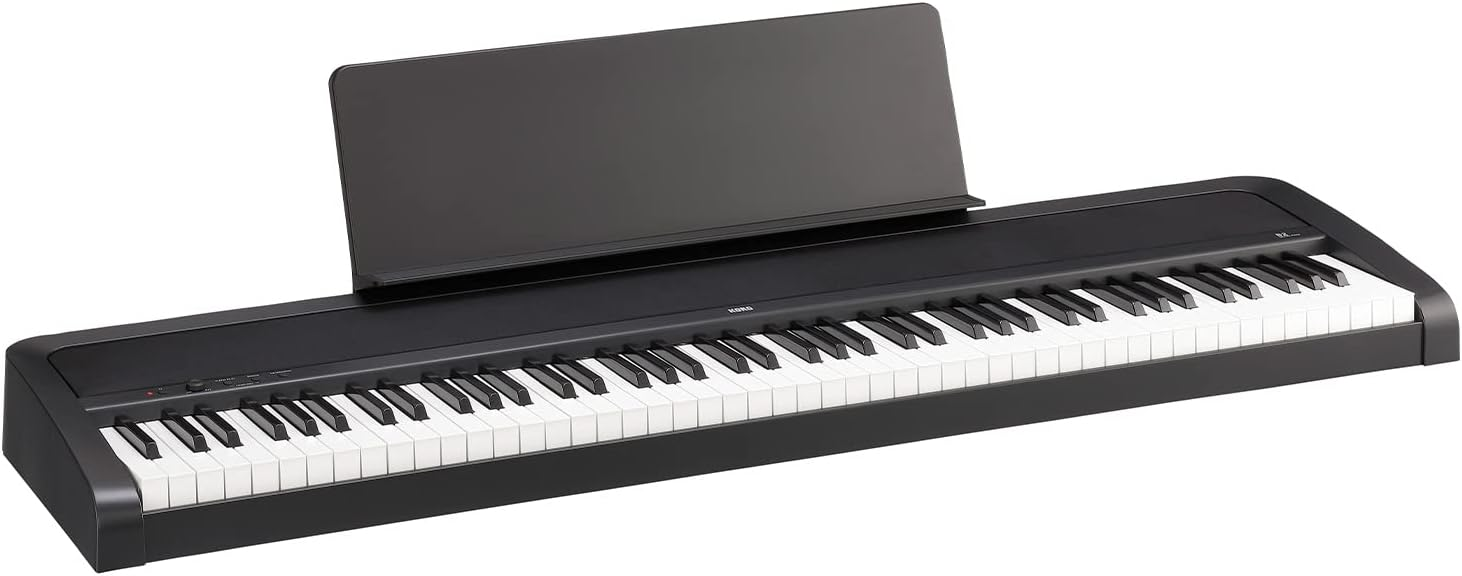
    Korg B2

    The Korg B2 is a brilliant choice for beginners who are serious about their piano playing journey. With 88 Natural Weighted Hammer Action keys, it provides an authentic acoustic piano feel. It comes equipped with a variety of high-quality sounds, from grand pianos to electronic organs, and features USB MIDI/Audio, enabling direct connection to music production software.

    • Weight: Heavier, suited for stationary setups
    • Key Feature: Versatile sound library

    Tips for Optimizing Your Keyboard Performance On Stage

    When it comes to live performances, having a great keyboard is only part of the equation. Optimizing your keyboard for the stage is crucial for ensuring a stellar performance. Here are some tips to help you make the most out of your live gigs.

    Understand Your Gear Inside and Out

    Before hitting the stage, it’s essential that you’re familiar with every aspect of your keyboard. Spend time exploring its features, experimenting with sounds, and understanding its limits. This knowledge will allow you to troubleshoot on the fly and make quick adjustments as needed, ensuring your performance runs smoothly.

    • Explore all Features: Dive deep into your keyboard’s capabilities.
    • Practice Frequently: Regular practice sessions help you master your instrument.

    Customize Your Sound

    Creating a unique sound can help you stand out during live performances. Most beginner keyboards offer a range of presets and effects that can be customized. Experiment with these options in advance to find a combination that best suits your style and the genre of music you’re performing.

    • Experiment with Presets: Use built-in sounds to learn what works for you.
    • Adjust Effects: Reverb, chorus, and delay can add depth to your sound.

    Optimize Your Setup

    A well-thought-out setup is key for a smooth performance. Position your keyboard so it’s comfortable for playing and easy to reach all the controls. If you’re using multiple keyboards or modules, ensure they are easily accessible. Also, consider the height of your keyboard stand for optimal posture and performance comfort.

    • Ergonomic Positioning: Adjust the keyboard height for comfort.
    • Accessible Controls: Make sure all necessary controls are within easy reach.

    Sound Check Is a Must

    Never underestimate the importance of a good sound check. This is the perfect opportunity to adjust your levels and ensure your keyboard blends well with the rest of the band and the venue’s sound system. A proper sound check can prevent feedback issues and ensure your keyboard is heard clearly across the venue.

    • Adjust Levels: Balance your keyboard volume with the band and venue.
    • Check for Feedback: Identify and resolve any potential feedback problems.

    Engage with Your Audience

    Engagement is key to an unforgettable performance. Your interaction with the audience can make a significant difference. Make eye contact, smile, and move with the music. Your body language can communicate your enthusiasm and passion for the music, inviting the audience into your performance.

    • **Make

    Must-Have Accessories for Your Live Gig Keyboard Setup

    When it comes to performing live, having the right keyboard is just the beginning. To truly elevate your performance and ensure everything runs smoothly, there are several must-have accessories that should accompany your keyboard setup. These items not only enhance the playing experience but also help in managing your gear efficiently on stage.

    Quality Keyboard Stand

    A sturdy keyboard stand is non-negotiable. It’s essential for keeping your instrument secure and at the right height, which can significantly affect your comfort and playing posture. Look for stands that offer adjustability and stability, especially if you’re performing on uneven surfaces. Some popular options include X-stands for their portability and Z-stands for their exceptional stability and space for additional gear.

    Sustain Pedal

    The sustain pedal is a necessary extension of your expressiveness on the keyboard. It allows notes to ring out longer, providing that essential connection between your touch and the overall sound. Opt for a pedal that mimics the feel and response of an acoustic piano pedal, ensuring a natural and intuitive playing experience.

    Keyboard Case or Gig Bag

    Protecting your instrument during transport is crucial. A high-quality keyboard case or gig bag with padding can safeguard your keyboard from bumps, scratches, and the elements. Hard cases offer the best protection, while soft gig bags are lighter and usually have pockets for storing cables and other accessories.

    Sound System

    Depending on the venue, you might need to bring your own sound system or monitor. A good portable PA system can make a huge difference in how your music is heard, both by you and the audience. Additionally, having a personal monitor on stage can help you stay in tune with your performance without relying solely on the venue’s sound system.

    Cables and Power Strips

    Never underestimate the necessity of having extra cables and a reliable power strip with surge protection. Having backups is crucial, as cables can fail unexpectedly. A power strip ensures you can plug in all your gear, even when power outlets are scarce or inconveniently positioned.

    Setlist Stand

    A setlist stand or music sheet holder can be incredibly helpful, especially for beginners or those playing intricate pieces. Being able to glance at your setlist or scores without disrupting your performance can keep things flowing smoothly.

    Conclusion

    Choosing the right beginner keyboard for live gigs is just the start. It’s about making that keyboard work for you in the best way possible. Remember, the magic doesn’t just lie in the instrument but also in how you use it. By thoroughly understanding your gear, customizing your sound to fit the venue, and ensuring your setup is as comfortable and accessible as possible, you’re setting the stage for success. Don’t forget the importance of a good sound check and the role of engaging with your audience. These elements combined will help create an unforgettable live performance. And with the right accessories in your arsenal, you’re not just prepared, but also protected and ready to deliver a smooth show. So go ahead, take these tips, and make your mark on the stage. Your journey to captivating live performances starts here.

  • Top Beginner Keyboards for Rich Bass Sounds: A Comprehensive Guide

    Finding the perfect beginner keyboard can be a daunting task, especially when you’re after that rich, deep bass sound that gives music its soulful edge. It’s not just about hitting the right notes; it’s about feeling the groove and laying down those foundational bass lines that make your heart thump.

    Luckily, the market is brimming with options tailored for newcomers eager to explore the lower octaves without breaking the bank. Whether you’re into jazz, rock, or electronic music, there’s a beginner keyboard out there with your name on it, ready to deliver those delicious bass sounds that’ll get your creative juices flowing. Let’s dive into what makes a keyboard stand out in the bass department and how to pick the right one to kickstart your musical journey.

    Understanding the Importance of Bass in a Keyboard

    When exploring the musical spectrums available in a keyboard, bass plays a pivotal role in bringing music to life. Bass sounds provide the foundational layer upon which melodies and harmonies build, creating a full, rich sound experience. For beginners, understanding the importance of bass in music is essential, as it not only enhances the depth and emotion in pieces but also serves as the backbone for rhythm and groove.

    Keyboards with good bass capabilities are invaluable for newcomers trying to grasp the essence of various music genres. Whether it’s the soulful undertones in jazz, the driving force in rock, or the pulsating beats in electronic music, bass is the common thread that ties the emotions and rhythm of a song together. It’s about more than just hitting the low notes; it’s about feeling the groove and establishing a solid foundation for other instruments to shine.

    Moreover, keyboards that offer rich bass sounds can significantly impact a beginner’s learning experience. They allow for a more immersive practice session, enabling learners to better understand the role of each note and chord in the context of the full musical piece. This not only improves their technical ability to play but also deepens their musicality and appreciation for different styles.

    Selecting a keyboard with robust bass features entails consideration of several aspects:

    • Sound Quality: The essence of a good bass sound lies in its clarity and depth. Beginners should look for keyboards that offer crisp, clear bass tones that mimic the sounds of their acoustic counterparts.
    • Range of Sounds: A keyboard with a variety of bass sounds and effects can provide beginners with a playground to explore different musical genres and textures.
    • Touch Sensitivity: The responsiveness of the keys to touch can greatly affect the nuance of bass sounds. Keyboards with adjustable touch sensitivity allow users to experiment with the dynamics of bass lines.

    Understanding these factors can dramatically enhance a beginner’s journey in music, making the selection of a keyboard with good bass sounds a crucial step. Through the right equipment, beginners can truly feel the music they create, laying down solid bass lines that breathe life into their compositions. Equipped with a suitable keyboard, they’re set to explore the depths of music, one note at a time.

    Features to Look for in a Beginner Keyboard for Rich Bass Sounds

    When embarking on the musical journey of learning to play the keyboard, beginners should keep an eye out for several key features that can significantly enhance the richness of bass sounds. These features not only contribute to a more immersive learning experience but also aid in developing a keen ear for music.

    Sound Quality and Range: The cornerstone of a good beginner keyboard is exceptional sound quality, particularly when it comes to bass sounds. Keyboards that offer a wide range of sounds, including deep bass tones, allow beginners to explore various music genres and techniques. High-quality sound samples and a broad sound palette are indicative of a keyboard designed to deliver an engaging musical experience.

    Touch Sensitivity: Beginners will find that keyboards with touch-sensitive keys offer a more dynamic playing experience. The ability to control the volume and tone of the bass sounds through the pressure applied to the keys mimics the expressiveness of traditional acoustic instruments. This feature is invaluable for learners as it encourages the development of a nuanced touch and a deeper understanding of musical expression.

    Polyphony: Polyphony refers to the number of sounds a keyboard can produce at one time. For a rich bass experience, a keyboard with a high polyphony count is recommended. This ensures that bass tones do not get cut off or compromised when playing complex chords or when layering sounds. With a higher polyphony, beginners can experiment with intricate bass lines without sacrificing sound quality.

    Built-In Bass Effects: Keyboards equipped with built-in bass effects, such as equalizers and bass boost, offer beginners the opportunity to customize their sound. Experimenting with these effects can be a fun and educational way for learners to discover their preferred bass tones and how they fit into different musical contexts.

    Connectivity Options: While not directly related to bass sounds, connectivity features such as USB and MIDI ports allow beginners to expand their musical resources. By connecting to computers and mobile devices, learners can access a vast array of educational apps, recording software, and additional sound libraries, including rich bass sounds.

    • Sound Quality and Range: Look for keyboards with high-quality sound samples and a variety of bass tones.
    • Touch Sensitivity: Choose keyboards with touch-sensitive keys for expressive playing.
    • Polyphony: Opt for keyboards with

    Top Beginner Keyboards with High-Quality Bass Capabilities

    When on the hunt for the perfect beginner keyboard that doesn’t compromise on bass quality, there are several standout models that promise to deliver rich, deep sounds. The market is flooded with options, but a few have risen to the top, celebrated for their superior bass capabilities and beginner-friendly features. These keyboards not only make learning more enjoyable but also ensure that the bass tones are as authentic and inspiring as possible.

    The Yamaha PSR-EW310 is widely recognized for its impressive sound quality. It boasts a potent 76-key setup, ideal for exploring a wide range of bass tones. The PSR-EW310 also comes embedded with Touch Sensitivity that mimics the nuanced dynamics of an acoustic piano, the PSR-EW310 allows beginners to experiment with subtle variations in bass pressure and intensity. Additionally, it offers 482 high-quality voices, including incredible bass patches, making it a top choice for those prioritizing bass sound richness in their musical journey.

    Another notable mention is the Casio CTK-3500. It shines with its Step-Up Lesson System, a boon for beginners eager to grasp music fundamentals while honing their bass playing skills. With 400 tones and 150 rhythms, it offers vast opportunities to dive into different musical styles, all while maintaining a powerful bass presence. Like the Yamaha, it includes 61 touch-sensitive keys, ensuring a responsive and dynamic playing experience.

    Here’s a quick comparison of features between these two models:

    Feature Yamaha PSR-EW310 Casio CTK-3500
    Keys 76 61
    Touch Sensitivity Yes Yes
    Polyphony 48 notes 48 notes
    Preset Voices/Rhythms 482 voices, Built-in bass effects 400 tones, 150 rhythms
    Connectivity USB to HOST, AUX IN USB, Audio-In
    Added Benefits Wide range of bass samples, Yamaha Education Suite Dance Music Mode, Step-Up Lesson System

    Tips for Getting the Most Out of Bass Sounds on Your Keyboard

    Playing a keyboard that boasts good bass sounds is thrilling for any beginner. However, mastering these sounds to create truly mesmerizing music involves more than just hitting the right notes. Here are some practical tips to help you get the most out of the bass sounds on your keyboard.

    Experiment with Different Settings

    Each keyboard comes with its unique set of features and settings tailored to enhance your playing experience. To find the perfect bass sound, it’s crucial to experiment with these settings. Playing around with the equalizer (EQ) can significantly alter the richness and depth of the bass. Boosting the lower frequencies while maintaining a balance with the mids and highs can bring your bass sounds to life. Additionally, using effects like reverb and chorus sparingly can add dimension without overwhelming the clarity of the bass.

    • Equalizer settings: Boost lower frequencies
    • Effects: Use reverb and chorus sparingly

    Understanding Layering and Splitting

    Many beginners overlook the power of layering and splitting functions on their keyboards. These features allow you to play multiple voices or instruments simultaneously or divide the keyboard into different sections, each with its unique sound. By layering a bass sound with another instrument, like a piano or pad, you can create a fuller, more complex sound. Splitting the keyboard lets you assign a bass voice to the left hand while playing melodies or chords with the right, simulating the dynamic of a live band.

    Play Along to Different Genres

    Diversity in practice can significantly improve your command of bass sounds. Playing along to songs from various genres exposes you to different bass line techniques and rhythms. Jazz, funk, and reggae, for instance, offer complex bass lines that challenge your timing and finger independence. Meanwhile, pop and rock songs can help you understand the role of bass in driving a song’s groove. This experience not only enhances your playing technique but also broadens your musicality, making your performances more versatile and engaging.

    Conclusion

    Choosing the right beginner keyboard with impressive bass sounds boils down to understanding your musical needs and experimenting with the features at your disposal. The Yamaha PSR-EW310 and the Casio CTK-3500 stand out not just for their quality but also for the creative freedom they offer. By leveraging the tips provided—like tweaking the equalizer settings and exploring the layering functions—you’re setting the stage for a richer, more immersive bass experience. Remember, the journey to mastering bass on your keyboard is a mix of the right tools and a lot of practice. So dive into different genres, play along, and watch as your skills and musical versatility grow. Happy playing!

  • Top Sites for Beginner Keyboards: Reviews & Ratings Guide

    Embarking on the journey of learning to play the keyboard is an exciting adventure, filled with chords, melodies, and endless possibilities. But before you can start tickling those ivories, you’ll need the right instrument. Finding the perfect beginner keyboard can seem daunting, especially with so many options out there.

    Thankfully, the internet has made it easier than ever to find the ideal keyboard for beginners. Whether you’re looking for something budget-friendly, feature-packed, or with the best learning tools, there’s an online store ready to deliver your musical companion right to your doorstep. Let’s dive into where you can find the best beginner keyboards online, ensuring you start your musical journey on the right note.

    Researching Different Keyboard Brands

    Once the decision to embark on the musical journey of learning the keyboard has been made, the next step is weaving through the myriad of available brands. Researching Different Keyboard Brands is critical, as it not only unveils a range of prices and features but also frames an understanding of what differentiates one brand from another. In this vast market, brands like Yamaha, Casio, and Roland stand out for their commitment to quality, innovation, and learner-friendly instruments.

    For beginners, navigating the specifics of each brand’s offerings can be both exciting and overwhelming. Yamaha, for example, is renowned for its range of keyboards that cater to both beginners and advanced musicians, providing high-quality sound and robust learning features. Casio, on the other hand, offers cost-effective options without compromising much on the quality or the learning experience. Roland is celebrated for its cutting-edge technology and superior sound quality, making it a favorite among those willing to invest a bit more into their musical voyage.

    Before making a choice, it’s vital to dive into customer reviews and ratings. These firsthand insights provide a glimpse into the real-world experiences of users, shedding light on the durability, sound quality, and user-friendliness of the keyboards. Moreover, many online music forums and YouTube channels dedicate themselves to reviewing and comparing different keyboard models and brands. Taking advantage of these resources can significantly simplify the decision-making process.

    Additionally, consideration must be given to what features are non-negotiable. For some, the inclusion of pre-recorded songs and built-in lessons might be paramount, while for others, the quality of sound and the feel of the keys take precedence. Understanding the importance of these features helps in filtering the vast options to a more manageable list that aligns with personal preferences and goals.

    Brand Price Range Special Features
    Yamaha $100 – $1000+ Wide range, high-quality sound, learning tools
    Casio $50 – $600 Cost-effective, durable, beginner-friendly
    Roland $300 – $2000+ Advanced technology, superior sound quality

    Budget-Friendly Options for Beginners

    Finding a budget-friendly keyboard as a beginner doesn’t mean compromising on quality. Numerous online platforms offer affordable options that cater to the needs of those just starting their musical journey. This section explores where beginners can find high-quality, cost-effective keyboards online.

    Amazon is a treasure trove for beginners looking for their first keyboard. Not only does it offer a wide range of brands, including Yamaha, Casio, and Roland, but it also features user reviews that can guide new buyers. Prices vary widely, ensuring that there’s something for every budget. Plus, with Amazon’s customer service and return policies, shoppers can feel secure in their purchases.

    Another fantastic option is Sweetwater. This site specializes in musical instruments and provides detailed product descriptions and expert reviews. Sweetwater often has deals and financing options, making it easier for beginners to invest in higher-quality keyboards without straining their wallets.

    For those who are comfortable with pre-owned options, Reverb offers a marketplace specifically for musical instruments. Here, beginners can find used keyboards at a fraction of the cost of new ones. Each listing provides comprehensive information about the instrument’s condition, and the platform’s buyer protection policy ensures a safe transaction.

    Ebay is another platform that shouldn’t be overlooked. It’s an excellent place for beginners to find both new and used keyboards. With the auction or “Buy It Now” options, purchasers can often snag a great deal. However, they should be aware of the seller’s return policy and shipping costs before committing to a purchase.

    For those looking for an extra deal, Musician’s Friend offers a “Stupid Deal of the Day,” which occasionally features keyboards. Alongside this, the site has a clearance section where discontinued or open-box items are available at reduced prices.

    Lastly, don’t forget to check out Guitar Center. Offering a mix of new and used keyboards, this retailer often runs sales and promotions. They also have a rewards program that can help save money over time.

    • Set a Budget: Know how much you’re willing to spend before diving in. This helps narrow down options and prevents overspending.
    • Read Reviews: Take advantage of customer and expert reviews to get an idea of the keyboard’s performance and quality.
    • Check Return Policies: Especially if you’re buying used, knowing the return policy can save headaches if the instrument doesn

    Online Stores with Beginner Keyboard Bundles

    When starting on the journey of learning the keyboard, finding the perfect beginner bundle can make all the difference. Beginner bundles are specially curated to include not just the instrument but also essential accessories such as stands, headphones, and learning materials. These bundles are designed to give novices everything they need to start their musical journey on the right note.

    Several online stores stand out for their comprehensive range of beginner keyboard bundles. They tailor these packages to meet the varied needs of beginners, combining quality with affordability. Let’s dive into what each platform offers:

    • Amazon has emerged as a one-stop shop for beginners seeking keyboard bundles. With an extensive selection from various brands, shoppers can enjoy the benefit of user reviews to gauge the quality and suitability of each bundle. Amazon’s easy return policy and fast shipping options add to its appeal.
    • Sweetwater is known for its customer-focused approach, offering not just a wide selection of keyboard bundles but also expert advice. They provide detailed product descriptions and videos, making it easier for beginners to understand what they’re getting. Furthermore, Sweetwater’s after-sales support is unmatched, ensuring buyers have all the help they need.
    • Guitar Center offers a mix of online convenience and in-store experience. Their website lists detailed bundles tailored for beginners with the option to try and buy at local stores. This blend of online and offline shopping helps beginners make informed decisions supported by expert opinions.
    • Musician’s Friend stands out for its regular deals and financing options, making it easier for beginners to invest in a good quality keyboard without breaking the bank. They also have a comprehensive selection, from affordable options for the absolute beginner to more advanced setups for those ready to take the next step.

    Each of these platforms offers unique benefits that cater to the needs of beginner keyboard players. Amazon’s vast inventory and reliable customer feedback, Sweetwater’s expert guidance, Guitar Center’s hybrid shopping experience, and Musician’s Friend’s budget-friendly deals create a diversified landscape of options. Beginners are advised to consider their specific needs, such as the type of music they want to play, the features they find essential, and the level of support they require from the platform.

    • Read thoroughly through product descriptions and reviews
    • Check bundle contents to ensure they include all the necessary accessories
    • Consider warranty and return policies to safeguard your purchase

    Key Features to Consider in a Beginner Keyboard

    When beginners set out to purchase their first keyboard, the vast number of options can seem overwhelming. It’s crucial to focus on a few key features that can make the learning process smoother and more enjoyable. The right choice can significantly impact a beginner’s journey into the world of music.

    Firstly, key count is a primary consideration. Most professional keyboards boast 88 keys, but for beginners, a 61-key keyboard is often more than adequate. It’s less intimidating and still offers ample range to learn, play, and practice a wide variety of songs and pieces.

    Another critical aspect is touch sensitivity. Keyboards with touch-sensitive keys respond to the pressure applied, mimicking the dynamics of an acoustic piano. This feature is vital for beginners to develop a nuanced playing style, teaching them the importance of pressure and finger strength in producing sounds ranging from pianissimo to fortissimo.

    Consider the voice and sound quality. A good beginner keyboard should offer a range of voices (the sounds that the keyboard can produce), including piano, organ, strings, and more. This diversity allows beginners to explore different genres and sounds, keeping practice sessions engaging and fun. Sound quality is just as important; it makes the learning experience more rewarding and enjoyable. High-quality sounds encourage learners to spend more time with their instrument, honing their skills and exploring their musical interests.

    Lesson modes and built-in songs can be incredibly beneficial for self-taught musicians. Many keyboards come equipped with tutorials and practice songs that help beginners learn the basics of music theory, rhythm, and timing in an interactive manner. These features support independent learning, allowing beginners to progress at their own pace.

    Connectivity options are becoming increasingly important. USB and MIDI ports allow keyboards to connect to computers and other devices, opening up a world of learning applications, software instruments, and recording opportunities. This connectivity can greatly enhance a beginner’s learning experience, enabling easy access to online tutorials, interactive learning platforms, and the ability to record and share music.

    Lastly, portability might be a consideration for those with limited space or who plan to take their keyboard to lessons. Lightweight models and those with a compact design make transportation and storage much easier.

    • Key count: 61-key keyboards are often sufficient for beginners.
    • Touch sensitivity: Essential for developing expressive playing skills.
    • Sound quality and variety: Keeps learning interesting and engaging.

    Comparing Customer Reviews and Ratings

    When shopping for beginner keyboards online, diving into customer reviews and ratings becomes an invaluable step in making an informed decision. These insights give prospective buyers a window into the experience of real users, helping to paint a clearer picture of what to expect from their potential purchase. While browsing through various online retailers, it’s crucial to approach reviews with a critical eye.

    Many online stores and platforms feature user-generated reviews, allowing customers to rate their purchases on a scale, typically from one to five stars. These ratings offer a quick glance at the overall satisfaction level among consumers. However, the true value lies in the detailed reviews. Through these narratives, beginners can learn about the specifics of each keyboard model, including its performance, durability, sound quality, and whether it lives up to its advertised features.

    It’s important to look for patterns within these reviews. If multiple customers mention a particular strength or flaw, it’s likely a consistent aspect of the keyboard. For example, if numerous reviewers praise the touch sensitivity of a specific model, that’s a strong indicator of its quality in that regard. Conversely, repeated complaints about key responsiveness or sound quality should serve as red flags.

    Moreover, reviews can also provide insights into the post-purchase support offered by manufacturers or sellers. This includes customer service responsiveness, warranty fulfillment, and how issues are resolved. A keyboard might be excellent, but if the support behind it is lacking, it could lead to frustrations down the line.

    Below is a comparison of average customer ratings for some popular beginner keyboard models:

    Keyboard Model Average Rating
    Yamaha PSR-E273 4.5
    Casio CTK-2550 4.3
    Alesis Melody 61 MKII 4.2
    RockJam RJ761 4.1

    While the table above provides a snapshot, diving into the individual reviews reveals much more. For instance, the Yamaha PSR-E273 might have a higher average rating, but specifics in the reviews could highlight its superior educational features, a selling point for pure beginners. The Alesis Melody 61 MKII, while slightly lower in average rating, may receive specific praise for its comprehensive bundle, offering great value for those needing a full setup.

    Conclusion

    Embarking on the journey to purchase a beginner keyboard online can be a thrilling first step into the world of music. By paying close attention to customer reviews and ratings, shoppers gain valuable insights into what to expect from their potential new instrument. It’s not just about the numbers; it’s the stories behind those ratings that truly illuminate the path to making an informed decision. Whether it’s the Yamaha PSR-E273’s versatility, the Casio CTK-2550’s user-friendliness, the Alesis Melody 61 MKII’s comprehensive features, or the RockJam RJ761’s connectivity options, there’s a keyboard out there that’s a perfect match for every budding musician. So dive into those reviews with a keen eye, and soon you’ll find the keyboard that not only meets your expectations but perhaps even exceeds them.

  • Best Beginner Digital Pianos In 2023 For You

    Best Beginner Digital Pianos In 2023 For You

    Looking to know about the best beginner digital pianos in 2023? If yes, you’re reading the right article!

    Many of us dream of having an acoustic piano in our home, but they’re not always the most suitable option – especially for beginners.

    Traditional pianos come with several inconveniences. For example, they’re large, heavy, expensive, and require regular tuning and maintenance.

    That’s why smaller, lighter, and cheaper digital pianos have become popular. They mimic the feel and sound of a real piano.

    But it takes work to pick a digital piano with many options.

    To help you out, we have done extensive research for you. We have selected 27 digital pianos for beginners based on user reviews, brand reputation, and experience in this field.

    From those 27, we chose ten models that performed exceptionally well in our test to create this list of the best beginner digital pianos in 2023. These models were selected based on their design, sound quality, key action, ease of use, special features, and price.

    So, whether you’re starting to learn to play piano or upgrading from a regular keyboard, you’ll find something here that fits your needs.

    Let’s dive into our top picks!

    10 Best Beginner Digital Pianos In 2023

    Before we begin, and to avoid repetition, do note that ALL digital pianos in this list meet the following criteria:

    • Manufactured by well-established companies with good reputations in the music industry, such as Yamaha, Roland, Casio, Korg, etc.
    • Compact and lightweight.
    • 88 full-size keys with weighted hammer action
    • High-quality samples (realistic piano tone)
    • At least 64-note polyphony to play complex pieces without dropping notes.
    • Standard functions like a metronome to help you keep time, headphones jack for quiet practice, a music rest for your sheet music, transpose, etc.
    • Each piano can be powered with batteries or a wall socket, so you can use it wherever you want.
    • The price ranges from $250 to $1000, making them affordable for beginners on a tight budget.

    Yamaha P-45

    Key Specifications

    • Dimensions: 52.25 x 11.5 x 6 inches
    • Keyboard Type: Graded hammer standard (GHS) keyboard
    • No. of Keys: 88
    • Touch Sensitivity: Yes (Hard/medium/soft/fixed)
    • Polyphony (Max.): 64
    • Voices: 10
    • Effects: Yes
    • Speakers: Yes
    • Pedals: 1 (Sustain Pedal)
    • Metronome: Yes
    • Connectivity: DC IN, USB to Host, a headphones Jack, sustain pedal jack
    • Weight: 11.5 kg
    • Price: $449

    Our top pick is the Yamaha P-45 digital piano because of its realistic sound, fantastic feel, and playability at an affordable price. It is one of the best-selling Yamaha digital pianos for beginners under 500 dollars.

    The keyboard features 88 Graded Hammer Standard (GHS) keys. It offers a fully weighted and realistic feel and a reliable entry-level action.

    The GHS doesn’t have texture on keys and uses a 2-sensor key detection system to detect keys. While it’s no problem to quickly repeat notes on the P-45, playing further up the keys can be more difficult due to the shorter action.

    This Yamaha digital piano offers excellent sound quality. The P-45 uses AWM stereo sampling technology that delivers a rich, natural piano sound.

    Additionally, the piano offers ten beautiful tones, including electric pianos, organs, strings, and other instrument sounds.

    Since the sound is entirely subjective, comparing it with the competition is brutal. But we feel that it is on the same level as the FP-10 and B2 in terms of realism. Nevertheless, each sound has a unique character, so it is best to listen and decide which one appeals to you the most.

    The P-45 has 64 notes of polyphony, which is enough for most situations.

    It doesn’t have Split Mode or Line Out jacks, but they’re not a dealbreaker for beginners. However, if you plan on using your piano for performances, you’ll need dedicated Line Out jacks (only available on the next model up, the P-125).

    Another thing to consider is the lack of MIDI recording. Unfortunately, only a few pianos in this price range have this feature, such as the Casio CDP-S160 and Alesis Recital Pro.

    The P-45 has a USB-type B port, which is fantastic. This port lets you connect it to a computer for multi-track MIDI recordings and do many other things (learning, notation creation, music production, etc.) using various music apps.

    In addition to all its impressive features, this digital piano includes a power adapter, sustain pedal, and music rest.

    Overall, the Yamaha P-45 is a solid entry-level digital piano with a realistic sound, touch, and an affordable price, making it an excellent choice for beginners and hobbyists.

    Check On Amazon

    Roland FP-10

    Specification

    • Dimensions: 50.5 x 10.1 x 5.5 inches
    • Number of Keys: 88
    • Touch Sensitivity: Yes (5 types, OFF)
    • Polyphony (Max.): 96
    • Voices: 15
    • Effects: Yes
    • Speakers: Yes
    • Pedals: 1 (Sustain Pedal)
    • Connectivity: Bluetooth 4.0, USB to Device, USB to Host, Sustain Pedal jack, a headphone jack
    • Weight: 12.3 kg
    • Price: $594

    The Roland FP-10 takes second place in our list because it offers the best piano-playing experience with no frills at a fraction of the cost of other high-end models.

    This model features Roland’s PHA-4 Standard keyboard with an escapement mechanism and synthetic ivory key surfaces. This keyboard provides high-quality touch and realistic mechanical movements that emulate the sensation of playing on an acoustic piano.

    This is the only piano in this price range that simulates the escapement sensation found on an acoustic piano.

    Besides Casio keyboards, it’s the only piano for $500 that uses a 3-sensor detection system and has ivory keys.

    The FP-10’s sound is also impressive, thanks to Roland’s famous SuperNATURAL sound engine. This engine combines sampling with physical modeling algorithms to produce a natural and detailed sound.

    This musical instrument also has 96 polyphony, 15 different sounds, and various piano sound effects. It includes organic piano elements such as string resonance, damper resonance, and key-off response.

    Even though the FP-10 doesn’t have many features (like MIDI recording or lesson mode), you can easily expand it by connecting it to Roland’s free Piano Partner 2 app via Bluetooth. This unlocks additional rhythms and features like a MIDI recorder and provides an intuitive graphical interface for controlling settings and parameters.

    Additional connectivity options include USB to Device, USB to Host, a sustain pedal jack, and a headphone jack. Plug in headphones if you would like to practice music quietly or play piano without disturbing others.

    Overall, the Roland FP-10 is the best digital piano with the highest quality piano sound and feel in its price range.

    Although it doesn’t have as many features as some digital keyboards on this list, we think it’s got the best piano sound at this price. And this is what matters if you want it to sound as close as possible to an acoustic piano.

    Check On Amazon

    Alesis Recital Pro

    Specification

    • Dimensions: 51.6 x 13.8 x 5.5 inches
    • Number of Keys: 88
    • Touch Sensitivity: Yes (3 types, Off)
    • Polyphony (Max.): 128
    • Voices: 12
    • Effects: Yes
    • Speakers: Yes
    • Pedals: N/A
    • Connectivity: A USB port, 2 x Line outputs, Sustain Pedal input, headphone output
    • Weight: 11.8 kg
    • Price: $379

    The Alesis Recital Pro is the cheapest 88-key digital piano for beginners on our list. Due to its lightweight and compact design, the piano is easy to move around, making it perfect for frequent travelers.

    It features 88 full-size hammer action keys that can be adjusted for touch response to suit your playing style.

    The piano keys are weighted like an acoustic piano, but the action is not graded. This is not a dealbreaker for beginners, but advanced pianists should take note.

    This piano model has 12 onboard voices and multiple sound effects. You can layer or split these 12 voices to create a richer tone.

    In this low price range of $379, the default grand piano tone is excellent, but we wish there were more piano-centric tones available since there are only two grand pianos and one electric piano.

    One thing we love about the Recital Pro is that it comes with a large, backlit, and highly functional LCD screen. This makes setting effects and selecting functions extremely easy. Each voice has dedicated buttons, so switching between them is easy.

    Furthermore, this affordable digital piano has a 20-watt speaker system that is powerful enough to perform in front of a small group. You can also hook up more powerful speakers with the 14″ stereo line-out jacks.

    The USB MIDI port lets you connect to music-learning apps. It includes two months of live online, face-to-face lessons and a 3-month subscription to a music learning app, which is an excellent value.

    Additionally, this instrument has a sustain pedal connector, but a pedal is not included in the box. To make it fully functional, you’ll need to add a sustain pedal to your cart for about $20.

    You can power the piano with the included power adapter or 6 “D” batteries.

    So, if you’re looking for the cheapest digital piano for beginners with great sound quality and easy to use, we highly recommend the Alesis Recital Pro. It’s easy to use and offers excellent value for the price.

    Check On Amazon

    Casio Privia PX-S1100

    Specification

    • Dimensions: 52 x 9.1 x 4 inches
    • Number of Keys: 88
    • Touch Sensitivity: Yes (5 sensitivity levels, off)
    • Polyphony (Max.): 192
    • Voices: 18
    • Effects: Yes
    • Speakers: Yes
    • Pedals: 1 (Sustain Pedal)
    • Connectivity: USB ports (Type A & B), Audio IN, two stereo outputs, sustain pedal jack, connector for a 3-pedal unit, LINE OUT: 2 (L / MONO, R), Standard jack
    • Weight: 11.2 kg
    • Price: $729

    If you’re looking for something affordable that doesn’t compromise quality, this 88 fully weighted keys piano should be on your shortlist.

    This Casio model is one of the best portable digital pianos for beginners under $1000. The bundle comes with everything you need to get started.

    It includes an adjustable music stand, piano bench, sustain pedal, Austin Bazaar instructional DVD, instructional book, and polishing cloth.

    The PX-S1100 is an upgrade to the S1000 with modern features that budding pianists expect today.

    The piano sounds incredible and plays like a real piano because of its weighted keys. This digital keyboard has 88 fully weighted keys with five sensitivity levels and 192 notes of maximum polyphony.

    Additionally, it has 18 voices, effects, and an upgraded speaker system (which was already great in the previous model).

    The sleek, glossy fascia attracts fingerprints, but it looks as good as it sounds.

    One of the new features of the PX-S1100 is the ability to stream audio and MIDI wirelessly via the included WU-BT10 USB adapter. This new feature will revolutionize your practice routine. It lets players play along with their favorite songs and take advantage of popular online piano lessons.

    So, if you want a well-built, affordable digital piano with superb sound and smart connectivity, the Casio PX-S1100 is the right choice.

    Korg B2

    Key Specifications

    • Dimensions: 51.6 x 13.2 x 4.6 inches
    • No. of Keys: 88
    • Touch Sensitivity: Yes (3 types)
    • No. of Voices: 12
    • Polyphony (Max.): 120
    • Speakers: Yes
    • Pedals: Sustain Pedal
    • Connectivity: USB to Host, Audio input, sustain pedal input, Phones (Headphone/ LINE OUT combined use)
    • Weight: 11.4 kg
    • Price: $599

    Next, we have the Korg B2 digital piano with powerful sound and minimal features. It is one of the best digital pianos for beginners under $1000.

    It has a simple yet beautiful sleek design. Because of its compact and lightweight design, the B2 is perfect for musicians looking for a portable 88-note performance instrument.

    The piano features Korg’s Natural Weighted Hammer Action keyboard, which provides a natural response that is comfortable to play – whether you’re a beginner or an expert.

    The B2 has a stereo PCM tone generator that produces deep, powerful sound with a wide dynamic range through dual 15W speakers.

    It also includes 12 unique voices, including five piano voices from a newly developed piano engine.

    Like other digital pianos on this list, the Korg B2 has a headphone output for silent practice, an audio input for jamming to your favorite songs, and a sustain pedal input.

    You can also connect it to your computer via USB Audio and MIDI to use it with recording software and teaching apps.

    In addition, it comes with a three-month subscription to Skoove Piano Teaching software, making it an excellent option for beginners looking to improve their skills.

    At under $1000, the B2 comes with a piano-style sustain pedal and music rest, making it an excellent value for a quality digital piano.

    In summary, the Korg B2 is an easy-to-use and stylish digital piano that provides a rich and realistic piano-playing experience. It’s suitable for beginners, intermediate players, and professional musicians.

    Check On Amazon

    Kawai ES 120

    Key Specifications

    • Dimensions: 51.4 x 11 x 6 inches
    • No. of Keys: 88
    • Touch Sensitivity: Yes (Light, Normal, Heavy, Off)
    • Polyphony (Max.): 192
    • Voices: 25
    • Effects: Yes
    • Speakers: Yes
    • Pedals: 1 (Sustain Pedal)
    • Metronome: Yes
    • Connectivity: Bluetooth (audio + MIDI), USB to Host, two headphone jacks, Line Out (R, L/Mono), Sustain Pedal jack
    • Weight: 12 kg
    • Price: $899

    Kawai is a big name in acoustic pianos, and their ES 120 is a contender in the beginner digital piano category.

    The ES 120 features 25 different tones, including an accurate replica of the Shigeru Kawai SK-EX concert grand piano. The sounds are also powered by Kawai’s Harmonic Imaging technology, enhancing realism throughout the dynamic range.

    This piano uses Kawai’s Responsive Hammer Compact action, which is similar to its higher-end RHIII action, but redesigned to fit into a more compact case.

    It also has a built-in metronome and 100 drum rhythms to make piano practice fun and effective.

    Additionally, this instrument supports MIDI and audio over Bluetooth for wireless communication with iOS and Android devices.

    And the Kawai’s Virtual Technician app lets you tweak advanced parameters such as temperament and touch response.

    Overall, the Kawai ES 120 is an impressive digital piano with realistic sounds, touch-sensitive keys, and a wide range of connectivity options. At $899, it is an excellent value for money.

    YAMAHA P125

    Key Specifications

    • Dimensions: 52.19 x 11.63 x 6.56 inches
    • No. of Keys: 88
    • Touch Sensitivity: Yes (Hard/medium/soft/fixed)
    • Polyphony (Max.): 192
    • Voices: 24
    • Effects: Yes
    • Speakers: Yes
    • Pedals: 1 (Sustain Pedal)
    • Metronome: Yes
    • Connectivity: DC IN, USB to Host, AUX OUT, Sustain Pedal Input, dual Headphones Jacks.
    • Weight: 11.8 kg
    • Price: $699.99

    The Yamaha P125 digital piano is an upgrade from the P45 model.

    It features the same Graded Hammer Standard keyboard as the P45 model but offers a more extensive range of features and better sound quality.

    With a maximum polyphony of 192 notes, the Pure CF sound engine produces an exceptionally realistic piano tone. Also, the P125 has more sounds and 20 onboard rhythms, giving you more flexibility.

    You can even customize your sound with control over EQ and damper resonance. Moreover, it has a two-track recorder, allowing you to record and playback your performances.

    The P125 is ideal for teachers and students because it comes with dual headphone outputs.

    Additionally, it is compatible with Yamaha’s free Smart Pianist app for iOS devices, which is a significant improvement over the P45 model.

    Overall, the Yamaha P125 is a versatile digital piano that’s a fantastic option for those who want realistic sound quality, customizable features, and easy connectivity.

    Check On Amazon

    Casio CDP-S160

    Key Specifications

    • Dimensions: 52 x 9.1 x 3.8 inches
    • Number of Keys: 88
    • Touch Sensitivity: Yes (3 sensitivity levels, off)
    • Voices: 10
    • Polyphony (Max.): 64
    • Effects: Yes
    • Speakers: Yes
    • Pedals: 1 Sustain pedal
    • Metronome: Yes
    • Connectivity: USB Type B port, Audio IN, dual headphone jack, Phones/Output: Stereo mini jack, sustain pedal, and triple pedal unit
    • Weight: 10.5 kg
    • Price: $577

    The CDP-S160 is another popular Casio digital piano on this list. It comes with many useful features and a realistic feel and sound.

    The CDP-S160 is built well. The keyboard features 88 full-size, progressively weighted hammer action keys that are textured similarly to traditional ebony & ivory keys on an acoustic piano.

    As the keys are less heavy, this keyboard is more suitable for beginners who have yet to develop sufficient finger strength.

    In terms of sound quality, the CDP-160 doesn’t disappoint. It has ten onboard tones, including three grand pianos and three electric pianos. You can layer these voices or use choruses and reverb effects to create your unique sound.

    The piano has 16-watt built-in speakers, with bass ports under the chassis for enhanced resonance in the lower notes.

    The keyboard also features an intuitive song recorder, auxiliary audio input, and a 3.5mm headphone jack. The headphones jack also serves as an audio output if you need to connect to more powerful speakers.

    The CDP-S160 is the only digital piano under $500 that features a free mobile app that lets you adjust many settings.

    When connected to your smartphone or iPad, you can select voices, view music sheets, change keys, repeat sections, load MIDI and audio songs, change parameters, and change tempo.

    You can use music-learning apps to connect your keyboard to your computer via USB MIDI.

    In addition to the piano, the package includes a single damper pedal. However, you can get a triple pedal accessory and a wooden stand if you want a more traditional look.

    The keyboard runs on 6 AA batteries and has a versatile carrying case.

    Check On Amazon

    Donner DEP-20 Beginner Digital Piano

    Key Specifications

    • Dimensions: 52.4 x 11.6 x 7.6 inches
    • Number of Keys: 88
    • Touch Sensitivity: Yes, adjustable touch response
    • Voices: 238
    • Polyphony (Max.): 128
    • Effects: Yes
    • Speakers: Yes
    • Pedals: 1 Sustain pedal
    • Metronome: Yes
    • Connectivity: USB-MIDI, USB Port, Audio in & out, dual headphone jack, sustain pedal, and triple pedal unit
    • Weight: 11.5 kg
    • Price: $379

    The Donner DEP-20 is a fantastic digital piano for beginners who want a high-quality instrument without spending a lot of money. Despite its low cost, it doesn’t scrimp on quality.

    It features 88 full-sized keys that are adjustable in touch response, so you can customize the keyboard to suit your playing style.

    This keyboard delivers impressive sound quality through two 25W amplifiers. It has 238 tones, which is the highest number on this list.

    In dual mode, you can combine two voices, such as piano and drums, to create new compositions.

    The device includes a sustain pedal jack, a triangle pedal unit, audio inputs, and outputs. These ports are ideal for music arrangement and ensemble playing.

    One of the most impressive features of this product is its backlit LCD screen that displays chord names and notation. This makes it easy to adjust tones and settings.

    You can also save and playback your performances using a particular mode. This 88-key piano is suitable for rehearsals, learning, and creating music.

    In summary, if you’re looking for a multipurpose 88-key electric piano that won’t break the bank, the Donner DEP-20 is worth considering.

    Check On Amazon

    Roland GO:PIANO 88

    Roland GO:Piano, 88-Key Digital Piano (GO-88P), 88Keys

    Key Specifications

    • Dimensions: 50.56 x 11.5 x 3.43 inches
    • No. of Keys: 88
    • Touch Sensitivity: Yes (3 types, fixed touch)
    • Voices: 4
    • Polyphony (Max.): 128
    • Speakers: Yes
    • Effects: Yes
    • Metronome: Yes
    • Pedals: 1 (sustain pedal)
    • Connectivity: Bluetooth Ver 4.0, USB to Host, a headphone output, sustain pedal input, Phones/Output jack
    • Weight: 7 kg
    • Price: $399

    The Roland GO:Piano 88-Key Digital Piano is a popular and affordable option for beginners, priced at $399.

    It’s a full-size 88-note piano and is the lightest digital piano on this list. It weighs only 7kg, making it easy to transport and set up anywhere, even for buskers.

    Although the keyboard is only semi-weighted rather than fully weighted due to its portability, many users find it acceptable.

    Compared to the smaller GO:PIANO 61, this Roland piano has only four sounds. But they are superior in quality, so you get a more focused piano experience. During testing, its speakers were found to be exceptionally powerful.

    The instrument also features Bluetooth audio and MIDI connectivity. This lets you play along with tunes streamed from your smartphone and record your playing into the Roland Piano Partner 2 app via Bluetooth.

    Overall, the Roland GO:Piano 88-Key Digital Piano is an excellent choice for beginners who want a lightweight, portable option with superior sound quality and connectivity.

    Check On Amazon

    Conclusion

    So that’s our list of the ten best beginner digital pianos in 2023. They are affordable and portable.

    All of the pianos on our list would be perfect for a first-time student or even someone looking to return to the piano after a long break.

    These pianos offer a solid foundation for developing your skills and will keep pace with you as you progress along your musical journey. They offer different features and functions to help you grow your piano skills.

    We hope this article has helped you find a beginner digital piano that suits your budget and needs.

    Related Topics

  • How To Fix Digital Piano Keys – A Complete Guide

    How To Fix Digital Piano Keys – A Complete Guide

    If you’re wondering how to fix digital piano keys, this article is for you!

    Digital pianos offer beautiful sound along with the feel and dynamics of an acoustic piano. Piano keys play an important role in sound reproduction.

    But what happens when one or more keys stop working? It can be frustrating and ruin the piano-playing experience, even if the rest of the piano is in good tune.

    Luckily, fixing digital piano keys doesn’t have to be a daunting task. You can easily troubleshoot and fix sticky and broken piano keys with the right tools, knowledge, and a little effort.

    In this article, I’ll provide a step-by-step guide on how to fix broken, stuck, and sticky keys on a digital piano. So you can get back to playing your favorite pieces with ease.

    Let’s dive in and get those keys working again!

    What Causes Digital Piano Keys Not To Work?

    Before we get into the solution, let’s discuss what causes digital piano keys not to work!

    There are several reasons why keyboard keys don’t work correctly. The following are some of the most common problems we’ve encountered with broken and stuck keys:

    Dust build-up

    If the sensors underneath the keys are dirty, it can interfere with the signals sent to the keyboard and cause the keys to malfunction. To fix this, you can try cleaning the sensors with a soft, lint-free cloth slightly dampened with water.

    A foreign object inside the key bed

    If a foreign object, such as a penny or a coin, has fallen inside the key bed, it can prevent the keys from functioning correctly. In this case, you may need to remove the object or have a technician do it.

    Broken key

    If part of the key has snapped or the backend of the key is broken, it can cause the key to get stuck in place and stop working. Depending on the severity of the damage, you may need to replace the key or have it repaired by a technician.

    Broken spring

    The spring underneath the key helps it to rebound after being pressed. The key may not function properly if the spring is broken or damaged. In this case, you may need to replace the spring.

    Moisture or Humidity

    In many digital pianos, the keys and actions are made of wood. When keys are exposed to moisture or high humidity, they can swell or stick, making them difficult or impossible to play.

    Tools You Need to Repair a Digital Piano Key

    To repair a digital piano key, you will need certain tools to make the process more efficient and effective. Here are the essential tools and equipment you’ll need to repair failing keys in an electric piano:

    • Screwdriver
    • A tester and multitester
    • Cleaning solution for digital piano keys
    • Replacement key(s) from the manufacturer
    • Blow spray, foam spray, and sealant spray
    • Carpenter’s glue
    • Insulating tape

    You can buy these tools at a hardware store, instrument spare parts warehouse, electronics workshop, or an online retailer.

    How to Fix Digital Piano Keys at Home

    In this section, I’m showing you how to fix a stuck piano key and a broken piano key. But it’s always best to let the manufacturer fix your musical instrument if it’s still under warranty.

    Also, I want to let you know that your piano keyboard disassembly procedures, construction, and components can differ depending on the make and model.

    Now let’s move on to the solution!

    How to Fix Sticky Piano Keys: Cleaning Instructions

    Instructions for a Digital Upright Piano

    Here’s a step-by-step guide for fixing stuck keys on an upright piano:

    • Firstly, open the hinged cover at the top of your upright digital piano. Unscrew the front panel using a screwdriver and lift it up to uncover the action and keys. Try pushing the hammer forward to release the key.
    • If it doesn’t work, you have to unscrew and remove all the action to expose the keys fully. Due to moisture, some keys rub against each other. You’ll notice that they’re more swollen than the other keys. Pull these keys back and sand their sides to fix them.
    • Next, look inside the top of the piano for any foreign objects that may be causing the keys to stick. You should be able to reach inside and grab anything that doesn’t belong there.
    • If you notice a key is locked, grasp it and force it up and down while alternating pushing it to the right and left. Remember to hold adjacent keys with your other hand to keep them out of the way.
    • Aside from that, you can also use a specialized cleaning solution to dissolve dust buildup and clean your piano keys. We recommend using the Cory/MPS Key-Brite Piano Key Cleaner. This solution dissolves dust buildup and is safe for all types of keys, including plastic, wooden, ivory, and ivorite keys.
    • Once you’re done and the problem is resolved, replace every part that you removed, close the cover, and screw back the panels.

    That’s it!

    Important Tip: You should use a keyboard cover to protect your keyboard from dust, which is a common cause of sticky keys.

    Instructions for a Digital Grand Piano

    If you have a digital grand piano with stuck keys, follow these steps to fix them:

    • First, you must remove the card in front of the keys by unscrewing it. There are screws underneath it. For some brands, you’ll need to slide it up and out to remove it.
    • Then, take off the keyboard cover and slide action to check for foreign objects that may be stuck. Pencils are a common culprit that fall through the keyboard cover and get stuck. Some piano stocks are challenging to remove. Call a piano technician to remove any items, such as pencils or a coin.
    • Inspect the card directly in front of the white keys to ensure it is not rubbing against any of them. There’s a chance the board in front of the white keys will warp. A spacer, such as a business card, in areas where the board rubs the keys.
    • It is also possible that the screws holding the card in place were too tight or needed to be adjusted. You need to loosen them accordingly.
    • If the item is stuck in the up position, bend or gently twist it to dislodge it. You can easily mistake a faulty shock absorber for a stumbling block. You don’t have to remove the action to deal with a shock absorber. However, be careful not to tilt the shock absorber too much, as it can worsen the problem. If the damper isn’t fixed by bending, call a piano tuner.

    How to Fix Unresponsive or Dead Keys on a Digital Piano

    Here’s a step-by-step guide on how to fix dead or unresponsive keys on a keyboard:

    Step 1: Open up your keyboard

    The first step to fixing a dead key on a keyboard is to open up the keyboard itself. To do this, remove the screws on the edge of the keyboard and in the middle of the keyboard to access the top. When you have removed all of the screws, you should be able to flip the keyboard over and remove the top of the keyboard.

    Step 2: Access the key modules

    Once you’ve opened the keyboard, you can access the key modules. These are the components that contain the individual keys on the keyboard. Remove the back panel of the keyboard to access the screws holding the key modules.

    Step 3: Identify the dead key

    Before you start fixing the dead key, it’s essential to identify which key is causing the problem. On our keyboard, it was a G key in the mid-range of the keyboard.

    Step 4: Replace or swap out the faulty component

    Depending on the cause of the dead key, you may need to replace a faulty component to fix the problem. At first, we thought the dead key was dust, but we eventually realized it was a defective component.

    Take your keyboard to a professional if you’re uncomfortable replacing the component yourself.

    In some cases, it may be possible to swap out a faulty component with a working one from another part of the keyboard. Luckily, we swapped out the defective component with one from another part of the keyboard, so we didn’t have to replace anything.

    Step 5: Reassemble the keyboard

    Once you’ve fixed the dead key, it’s time to reassemble the keyboard. Simply reverse the steps you took to disassemble the keyboard, making sure to replace all the screws and connectors.

    Finally, test the keyboard to ensure all keys are functioning correctly.

    Note: You can also check out this video. This video explains how to fix a dead or unresponsive key at home.

    How to Fix Broken Keys on a Digital Piano

    If a piano keyboard key is broken, you must repair or replace it.

    Here’s a step-by-step guide that you can follow to replace a broken key on your digital piano:

    Orient the keyboard

    First, lay your digital piano keyboard face down, and detach the battery casing from the back plate. After that, remove the batteries from the holder.

    Unscrew The Back Plate

    Use a screwdriver to remove the screws from the back plate’s top, bottom, and sides.

    Turn Over The Keyboard

    Once you’ve unscrewed it, carefully turn over the keyboard. Be careful as you do this since, at this point, the keyboard body is not attached to the face plate. The piano keyboard may break if you’re not careful.

    Lift the Face Plate

    Hold both sides of the keyboard and gently lift the face plate from its front and back. While doing this, be careful because the wires under the piano keyboard’s face plate are vital for proper function.

    Take out the Screws That Hold the Key Block

    Now you need to remove the screws that hold the keys together. Identify the key block that needs to be replaced. Depending on the block, there may be three or four screws.

    Detach the Blocks of Keys

    Once unscrewed, pull the top upwards to remove the block of keys. By doing this, the keys will be more accessible.

    Replace the Keys

    Press the tab on the back of the key blocks to detach the keys. Remove the broken white and black keys and replace them with new ones.

    Reassemble the Keyboard

    Once you’ve fixed the issue, reassemble the keyboard by following the same steps in reverse order. Screw everything back into its original place.

    When you’re finished, test the key to ensure it is working properly. Play the key and listen to the sound. Make sure there are no unusual sounds or problems with the sound as you play the key. If everything seems to work correctly, you’ve successfully replaced your broken piano key.

    Note: Watch this video to learn how to fix a broken key on your electric piano.

    We recommend hiring a professional if you aren’t comfortable or experienced with repairing digital pianos.

    FAQs

    How to fix Broken Synthesizer Keys?

    If you have a broken key on your synthesizer and it’s sticking up, you’ll likely need to replace the entire key bed.

    To do this, contact the manufacturer of your synthesizer for instructions. They will send you a video or manual on how to replace the key bed. It’s usually the same process as opening up your keyboard; only you’ll have to remove the key bed.

    It’s essential to follow the manufacturer’s instructions carefully to avoid causing further damage to your synthesizer. It may seem daunting, but you can do it if you use the right tools and follow instructions carefully.

    Where to buy replacement keys?

    You can buy replacement keys from online retailers like Amazon, eBay, and Sweetwater. You can also check with your local music store or contact the manufacturer directly for more information.

    How long does it take to replace a digital piano key?

    It depends on your experience with repairing digital pianos. It can take anywhere from 30 minutes to a few hours to replace a digital piano key.

    Final Thought

    Sticky or unresponsive keys can quickly become frustrating and hinder your playing experience.

    Fortunately, digital piano keys aren’t too hard to fix. You can fix most stuck or broken keys yourself and save some money. But remember, you don’t apply too much force as that might cause further damage.

    By following the above steps, you can avoid expensive repairs and get back to playing piano again.

    If you find that the problem with your piano keyboard is more complex and you don’t see anything unusual when you open it up, contact a professional technician for assistance. They have the expertise to repair your digital piano correctly.

    Did this article help you fix your broken or dead piano keyboard keys? Let me know in the comments section!

    Related Topics

  • Piano Keyboard Types and With Pros & Cons

    Piano Keyboard Types and With Pros & Cons

    If you’re a musician or music enthusiast, you know that pianos come in all shapes and sizes. But did you know that there are different piano keyboard Types as well? That’s right – not all pianos are created equal, and the kind of keyboard you choose can greatly impact your playing experience.

    In this post, I’ll dive deeper into the different types of piano keyboards available and discuss the pros and cons of each.

    From professional stage pianos to portable digital and MIDI keyboards, there’s a keyboard piano for every playing style and approach.

    So, let’s dive in and learn more about the different types of piano keyboards!

    Understand The Keyboard Better

    Before we get into the types of piano keyboards, let’s first understand the keyboard better!

    The piano keyboard is a beautiful and complex instrument, capable of producing a wide range of sounds and emotions.

    The main feature of the keyboard is its ability to simulate other sounds, which is true of most keyboard types. You can play the musical notes with the keys to produce a variety of sounds, including those of brass and string instruments.

    Keyboards have different numbers of keys, divided into two sections: white and black. The white keys are the natural notes (A, B, C, D, E, F, and G), and the black keys are the sharp and flat notes (also known as accidentals).

    The pattern of white and black keys repeats itself every octave, a range of eight notes. The lowest key on the 88-key keyboard is an A, and the highest one is a C.

    One of the main reasons people choose keyboard pianos over acoustic pianos is convenience and cost. Keyboard pianos are often more portable and versatile, making them an excellent choice for gigging musicians or those who don’t have room for a full-size piano in their home.

    However, it’s important to note that there’s nothing quite like an acoustic piano’s rich, natural sound. It’s all about finding the right balance for your needs and budget.

    7 Types Of Piano Keyboards (2023)

    Below are the seven different types of piano keyboards:

    Digital Piano Keyboard

    As the name implies, a digital keyboard piano is a keyboard that simulates the sounds and feels of a piano. It is probably the best keyboard for students who need to focus on practicing musicianship and for adult beginners who want to learn piano.

    Digital keyboards use analog sensors for keyboard action and different versions of chips that reproduce the sound of an acoustic piano.

    Unlike many other keyboards, this piano keyboard typically has 88 full-size keys. The best digital piano keyboards have graded and weighted keys to replicate the feel of a real piano.

    They come with various features, such as built-in speakers, touch sensitivity, and the ability to save and play back recordings.

    They also offer extra features such as excellent maximum polyphony, demo songs, lesson modes, USB MIDI connections, and more for added versatility.

    Digital piano keyboards are more portable and cost-effective than acoustic pianos.

    Pros

    • Digital piano keyboards are portable and lightweight, making them easy to move and store.
    • They are much cheaper than traditional pianos.
    • They have various sounds and features, such as changing instrument sounds and computer connectivity.
    • They do not require tuning, saving the cost and hassle of regular maintenance.

    Cons

    • Their tactile feel isn’t like an acoustic piano, which can be a drawback for some pro players.
    • The sound quality may not be as good as an acoustic piano.
    • Some digital pianos can be expensive, especially if you want a high-end model with advanced features.

    Stage Keyboard Piano

    These keyboard pianos are professional digital pianos specifically designed for live performances. They are generally more lightweight and portable than digital piano keyboards.

    Due to their portability and durability, you can easily move between stages, and the sound quality is pro-level. They often have a built-in sound library to access sounds such as electric pianos, organs, and synthesizers.

    These keyboard pianos are also highly customizable, allowing the performer to tailor their sound to fit the needs of the gig.

    A portable digital piano differs from a stage piano primarily in terms of construction, materials, and overall performance. Stage pianos are sturdier and more portable. The keys feel excellent, and the sonic performance is often superior to that of entry-level to mid-level portable digital pianos.

    While the extra features and overall quality may differ from brand to brand and model to model, they are typically top-notch and high-quality musical instruments.

    Pros

    • They are very lightweight and portable, making them easy to carry and transport to different gigs.
    • Suitable for live performances due to their portability and durability.
    • They have a built-in sound library with various sounds, allowing for greater flexibility in terms of sound.
    • Highly customizable.

    Cons

    • They don’t have the same level of sound quality as a traditional piano.
    • They may be more expensive than entry-level digital pianos.
    • They don’t offer as many features as some other digital pianos.

    Arranger Keyboard

    Arrangers are electronic keyboards that come with auto-accompaniment features. They are designed for solo musicians who want a versatile keyboard at their fingertips on stage.

    One of the best features of arranger keyboards is their auto-accompaniment feature, which allows you to create music that sounds like a full band or orchestra is playing it.

    That makes arranger keyboards perfect for live performances, where you need to create complex and dynamic music on the fly.

    In addition to their versatility and live performance capabilities, they offer different instrument sounds, effects, and USB connectivity. With USB connectivity, you can easily record and edit your music on the keyboard.

    In short, arranger keyboards are an all-in-one solution for solo musicians who want to create and perform professional-sounding music. They are incredibly versatile, allowing the user to create complete songs independently.

    Pros

    • Suitable for composition.
    • The auto-accompaniment feature encourages students to play.
    • They have a user-friendly interface and easy-to-use controls.
    • Ideal for musicians who want a single instrument that can handle various tasks.

    Cons

    • Starting prices can be higher for keyboards than for less advanced keyboards.
    • While arranger keyboards are generally easy to use, the range of programmable options can overwhelm beginners.
    • They have limited sound options.

    Workstation Keyboard

    Workstation keyboards are a type of keyboard that is essentially a computer in a keyboard form. They are designed for music production and are great for use in the studio or on stage.

    These keyboards allow you to easily manipulate music by sampling, sequencing, recording, editing, and more. They often come with weighted keys, making them ideal for advanced beginners.

    It is the versatility of workstation keyboards that makes them so popular. Workstations allow you to do almost everything a digital audio workstation (DAW) can do on a computer or smart device with a DAW. That makes them a great all-in-one solution for musicians, arrangers, and producers of all levels.

    However, it’s important to note that workstation keyboards are not the best choice for classic piano players. That’s because the keys on workstation keyboards are not typically designed to simulate the feel of an acoustic piano. Instead, they focus on the functionality and versatility of music production.

    Workstation keyboards come in various sizes and with different features, depending on the brand and model. While they can be pricey, they have generally considered the best all-around instruments for music production in their price range.

    Pros

    • Highly versatile and perfect for advanced beginner piano students.
    • These keyboards feature weighted keys.
    • Wide range of built-in sounds.
    • Workstation keyboards are much lighter and take up less space than traditional pianos, making them easier to transport.

    Cons

    • Their prices tend to be higher, especially high-end models.
    • Piano beginners can find these instruments too advanced.

    Synthesizers

    Synthesizer keyboards have been a popular choice for a long time due to their ability to create unique sounds, layer effects, and manipulate sound.

    With their digital or analog processing capabilities, synths are commonly used to create particular sounds and beats for studio recordings and on stage.

    Synthesizers have many sound manipulation functions that standard keyboards do not, such as an effects library, filters, tones, samples, and more.

    A workstation keyboard is a synth with MIDI and DAW controllers and has some additional features.

    Synthesizers come in analog and digital forms. It is essential to note the difference between analog and digital synthesizers.

    Digital synths operate using a numerically-controlled oscillator, resulting in digital signals. These synthesizers are relatively new and typically feature a keyboard and LCD display.

    On the other hand, analog synths use a voltage-controlled oscillator with analog signals and consist of sound-generating circuitry and modulators.

    The major difference for musicians is that analog synths provide a continuous signal with a richer sound, while digital synths offer more versatility and additional functions.

    Since professionals use synthesizers to create unique sounds and soundtracks, they require considerable music knowledge and experience.

    Pros

    • They can create unique sounds and manipulate sound in various ways.
    • Excellent for studio recordings and live performances.
    • They offer multiple sounds and output to amps or recording equipment.
    • Digital synths offer more versatility and additional functions.
    • Analog synths provide a continuous signal with a richer sound.

    Cons

    • Require a significant amount of music knowledge and experience to utilize their capabilities thoroughly.
    • The quality can vary between brands.
    • A bit pricey.

    Electric Organs

    Electric organs are electronic keyboard instruments that mimic the sound of traditional pipe organs or Hammond organs.

    They are primarily used in churches. These musical instruments have been popular for decades and were often used in rock music during the 1970s and 1980s.

    Digital organs come in various sizes and key numbers, so you can have the vintage organ sound whenever you want.

    Like other piano keyboards, they offer various sound effects and sound sets. Furthermore, they are compatible with both hardware and software. Some high-quality electronic organs produce a sound that resembles a pipe organ.

    Several manufacturers have retained the pipe organ parts in the electronic versions, including drawbars, pedal boards, and multiple key decks.

    However, this instrument is different from a piano. An electronic organ may not be the best choice if you’re serious about learning about the piano.

    Pros

    • Digital organs mimic the sound of traditional pipe organs or Hammond organs.
    • They are available in various sizes and key numbers.
    • They offer different sound effects and sound sets.
    • It is easier to transport and set up electric organs because they are portable and lightweight.
    • They tend to require less maintenance than traditional organs.

    Cons

    • They rely on electricity, which can be a limitation in certain situations or locations.
    • They may not be the best choice if you’re serious about learning the piano.

    MIDI Controllers

    MIDI controllers are specialized keyboards designed to control other electronic instruments or software.

    MIDI stands for Musical Instrument Digital Interface, a technology introduced in the 1980s. The purpose of this is to communicate between electronic instruments and computers.

    The controllers do not produce sounds on their own, but they can trigger sounds or control parameters in other devices. These keyboards transmit MIDI data between the device and the computer to trigger the sounds on your computer.

    Because controllers lack built-in sound-generating capabilities, they have lower price tags than other keyboards for beginning pianists.

    The right DAW and virtual instrument plug-ins make MIDI keyboards highly versatile. They are advanced mouse and keyboard combinations for playing music and producing it.

    MIDI controllers are popular in live and studio projects. You can use them to play any instrument, manipulate sound with effects, create loops, and control your DAW.

    Many different MIDI keyboard models are available on the market, from basic 25-key models to highly advanced 88-key models for greater control over your music.

    Pros

    • MIDI controllers are a good choice for computer composition.
    • They send MIDI information to synthesizers and computer programs.
    • Affordable.
    • You can use them to trigger sounds and control various parameters in real time.
    • Portable and easy to take to gigs.
    • Available in various sizes and styles, it is easy to find a controller that fits your needs and budget.

    Cons

    • It requires a computer or laptop to run virtual instruments and music production software.
    • No onboard sounds.

    Types of Pianos

    Now let’s take a quick look at the different types of pianos!

    There are three primary types of pianos: acoustic pianos, digital pianos, and hybrid pianos.

    Acoustic Piano

    First up, we have the classical acoustic piano. These instruments are made with wood, metal strings, and hammers and produce sound when the keys are pressed, and the hammers hit the strings. Acoustic pianos are known for their rich, full sound and are the go-to choice for many professional musicians.

    They are the most traditional pianos, based on vertically and horizontally arranged strings. Since their strings are arranged differently, they are classified into grand and upright pianos.

    Grand Pianos: Grand pianos (aka grands) are known for their elegant appearance and rich, full sound. They have a longer, horizontal design with the strings stretched out horizontally.

    In grand pianos, strings and hammers are arranged diagonally from the keyboard. They also have soundboards, which help amplify the sound.

    Grand pianos are famous for concert pianists and professional recording studios due to their exceptional sound quality. However, they can be expensive and require more space, making them less practical for the average home.

    Upright Pianos: These pianos are more compact and cost-effective. They have a vertical orientation, and the strings and hammers are arranged vertically behind the keyboard.

    Upright pianos are an excellent option for those with limited space or a tighter budget. While they may not have the same rich, full sound as a grand piano, they can still produce beautiful music and are an excellent choice for beginners and amateur musicians.

    They are often found in homes and smaller venues.

    Remember, acoustic pianos require regular maintenance, such as tuning and voicing, to keep them sounding their best.

    Digital Piano

    The next type of piano is a digital piano. These electronic instruments use samples of real piano sounds and amplify them through speakers or headphones.

    In addition to reproducing the sounds of a piano in a memorized manner, this piano model can also increase or decrease the volume of the keys, and its appearance is similar to an acoustic piano.

    They offer a range of sounds beyond just the traditional piano so that you can get creative with your playing.

    In addition, digital pianos include numerous features such as built-in metronomes, rhythm patterns, recording capabilities, connectivity options, and more. These features allow you to expand your musical possibilities.

    They’re also more affordable than traditional acoustic pianos, and you don’t need to worry about tuning or transporting them.

    Digital pianos are an excellent option for beginners or those who don’t have the space or budget for an acoustic piano.

    Hybrid Piano

    This type of piano is a mixture of acoustic and digital pianos. Hybrid pianos combine the best of both worlds – the sound and feel of an acoustic piano with the convenience and versatility of a digital piano.

    That means you can enjoy a grand piano’s rich, authentic sound and access a variety of sounds and effects on the digital side.

    Hybrid pianos often have real strings, hammers, and a digital component that allows for additional sounds and features.

    So, which type of piano is right for you? Well, that depends on your needs and preferences. Acoustic pianos offer a classic, authentic sound but require more maintenance and space.

    Digital pianos are more convenient and affordable, but they may not have the same level of depth and nuance as acoustic pianos. Hybrid pianos offer a good balance of both but can be pricier.

    Ultimately, the best piano for you is the one that fits your playing style and meets your needs.

    How To Choose The Right Piano Keyboard

    When choosing the right piano keyboard, there are a few key things to consider. Here are some tips to help you make the right decision:

    Keyboard Size

    The keyboard size is an essential factor to consider, mainly if you have limited space in your home or plan on taking your keyboard with you on the go. In addition to the layout, you should consider the number of keys.

    A full-size keyboard typically has 88 keys, just like a traditional piano. If you have the space and plan on playing more advanced pieces, a full-size keyboard is a good choice.

    If you have limited space or plan on traveling with your keyboard, a smaller option with 76 or even 61 keys might be a better fit.

    Sound

    The sound quality of a keyboard is another crucial factor to consider. If you’re a beginner, you might not be as concerned with the nuances of sound quality.

    But as you become more advanced, the sound of your keyboard can make a big difference in your playing experience. Keyboards from the best brands produce sounds similar to those produced by a real piano.

    You should also consider polyphony (how many sounds the keyboard produces at any given time) and multiple sounds, such as drums, strings, and woodwinds.

    Action

    The action of a piano keyboard refers to how well the keys respond when pressed. A keyboard’s action varies in firmness and resistance depending on its model.

    Keyboards with weighted keys are more responsive than unweighted keys, making them good pianos for beginners.

    Some keyboards have a lighter action, which can be easier to play but might not feel as authentic as those with a heavier action. A lighter action might be a good choice if you’re a beginner. But if you want a more authentic piano feel, consider a heavier action keyboard.

    MIDI Compatibility

    MIDI, or Musical Instrument Digital Interface, is a technology that allows keyboards to connect to computers and other digital devices.

    MIDI compatibility is an important feature to consider if you want to use your keyboard to create music on your computer. Many keyboards come with USB MIDI, which makes it easy to connect to your computer.

    Budget

    Last but not least, you should consider your budget when choosing a keyboard. There are options available at different prices, from budget-friendly options for beginners to high-end keyboards for more advanced players.

    Determine how much you’re willing to spend and look for a keyboard that fits within your budget while still offering the features you need.

    Conclusion

    As you can see, I’ve discussed different types of piano keyboards. Each piano keyboard type has its own unique features and benefits, and the right choice for you will depend on your needs and preferences.

    So, you can choose the most suitable piano keyboard type for your playing needs.

    A portable digital piano is the best option if you’re a beginner looking for your first keyboard piano at a reasonable price.

    If you’re more interested in music production, you should consider using a MIDI keyboard with your DAW (digital audio workstation).

    Read More

  • Yamaha g2 Piano Review | Everything You Need To Know

    Yamaha g2 Piano Review | Everything You Need To Know

    If you are looking for a great-sounding grand piano for your home, then you may be wondering if the Yamaha G2 is the right choice for you.

    After all, investing in an acoustic grand piano is a major decision, as they are quite expensive and require a large space to place them.

    In this article, I’ll review the Yamaha G2 piano in detail to help you make an informed decision. This review will give you an honest assessment of the Yamaha G2 piano’s features, benefits, and weaknesses.

    By the end of this article, you’ll know if the Yamaha G2 is right for you.

    Let’s get started!

    Yamaha G2 Grand Piano: A Detailed Review (2022)

    When it comes to Grand pianos, some people find older European models preferable to the brighter-sounding modern Yamahas. However, the Yamaha G2 may prove to be an exception. So, let’s take a closer look at the Yamaha G2 piano to determine if it’s right for you!

    Overview

    Yamaha is one of the most trusted names in the piano industry. This company started building nice pianos in 1887. The G2 model is Yamaha’s top-selling grand piano and is a popular choice for home use or in teaching studios.

    The Yamaha G2 is an 88-key acoustic grand piano that was first introduced in Japan in 1984. Since then, it has been improved over the years and is now considered one of the best-sounding grand pianos in its price range.

    This musical instrument provides superb sound quality and exceptional playability. With its lovely rich and powerful tone, this piano will fill up any room with warm and vibrant sound.

    Also, it has a beautiful black polish finish and is in superb condition. Compared to other grand pianos, it is a smaller and more affordable option.

    Now that you have a brief overview of the Yamaha G2 piano, let’s go into more detail.

    Key Specifications

    First, let’s take a look at the key specifications of this piano.

    • Brand: Yamaha
    • Type: Grand Piano
    • Size (cm): 100H x 148W x 170L
    • Acoustic / Digital: Acoustic
    • No. of Keys: 88
    • No. of Pedals: 3
    • Finish: High Gloss
    • Color: Black
    • Condition: Used
    • Weight: 300kg (approx.)
    • Price: $9,950

    Design and Build quality

    The Yamaha G2 grand piano has a traditional design and is made with premium materials. Its high gloss black finish adds to its elegant look, while its sturdy construction ensures that this instrument will last for many years.

    Besides its classic black gloss case, the Yamaha G2 has a long tail design that makes it stand out. This allows it to fit perfectly in any room and complement any decor.

    In terms of size, the G2 grand piano measures 100H x 148W x 170L cm, making it one of the smaller options on the market. This makes it a great choice for small to medium-sized homes and teaching studios.

    The piano’s 88 keys are made from spruce wood and are designed to provide a responsive touch. The action is smooth, allowing for precise articulation of notes.

    The G2 also features 3 pedals – soft, sostenuto, and damper. These pedals can be used to change the tone of the piano in some way. That way, you can create several expressions and dynamics in your playing.

    Overall, the Yamaha G2 is a durable and reliable smart-looking grand piano.

    Sound Quality

    Now let’s talk about the sound quality of the Yamaha G2 acoustic piano.

    The G2 delivers a powerful and pure tone that is sure to impress. It has a deep bass and bright treble, giving it a full-bodied sound. The tone is clear and nicely balanced with plenty of detail.

    It also has a wide dynamic range. You can play many styles from gentle and delicate to loud and powerful. This makes it great for solo performances or accompaniment.

    This piano has a very powerful sound without overpowering the surroundings, so it’s ideal for playing with a band or in large spaces. In addition to its power for louder playing, the G2 also offers plenty of soft dynamics.

    You can easily adjust the piano sound with the three-pedal setup.

    Overall, the Yamaha G2 piano has an excellent sound quality that will be sure to please any audience. It produces an array of tones, so you can create your unique sounds with ease.

    The Piano Keys

    The Yamaha G2 piano features an 88-key keyboard. The 88 keys on this model are made of spruce wood and have a glossy finish. These keys provide excellent touch response, allowing you to accurately execute different playing techniques.

    They are also weighted appropriately, giving the player an authentic piano experience. The feel is light and comfortable, making it easy to play for extended periods.

    Additionally, the keys respond to different levels of touch, so you can play a more expressive performance.

    Overall, the Yamaha G2 piano provides smooth key action that is perfect for any pianist, beginner or advanced.

    Price and Value

    The Yamaha G2 piano is one of the most affordable Yamaha pianos on the market. It retails for around $10,000 and is in good condition. This makes it a good option for someone who is looking for an affordable yet high-quality grand piano.

    Considering its excellent sound and build quality, the Yamaha G2 is an exceptional value for the money. It is a piano that you can enjoy for many years to come.

    Pros and Cons of Yamaha G2 Piano

    Pros

    • It has a classic appearance thanks to its high gloss black finish and long tail design.
    • It has 88 spruce wood keys that have a nice responsive touch.
    • The well-rounded and full-bodied sound.
    • 3 pedals for added sound control and dynamics.
    • Compact size for houses.
    • More affordable than other Yamaha grand pianos.

    Cons

    • It requires careful inspection since it is an older model.
    • It’s not portable.

    Who should buy the Yamaha G2 Piano?

    As a wonderful starter piano, it would suit intermediate to advanced musicians who require a high-quality instrument. If you need a more compact acoustic piano for your home with fantastic sound and nice responsive action, then the Yamaha G2 model is a good choice.

    Conclusion

    To sum up, the Yamaha G2 piano is an excellent choice for those looking for a reliable and high-quality musical instrument.

    If you are looking for used pianos, you won’t find a better model than a Yamaha G2. Featuring an advanced scale design, it provides a wonderful tone and sound quality that will surely delight anyone who plays it.

    However, when purchasing this product, remember that it is an older model, so you should inspect it carefully.

    You can enjoy the amazing sound of the G2 for a lifetime if you take good care of it since Yamaha has built it to last for many years.

    Related Topics