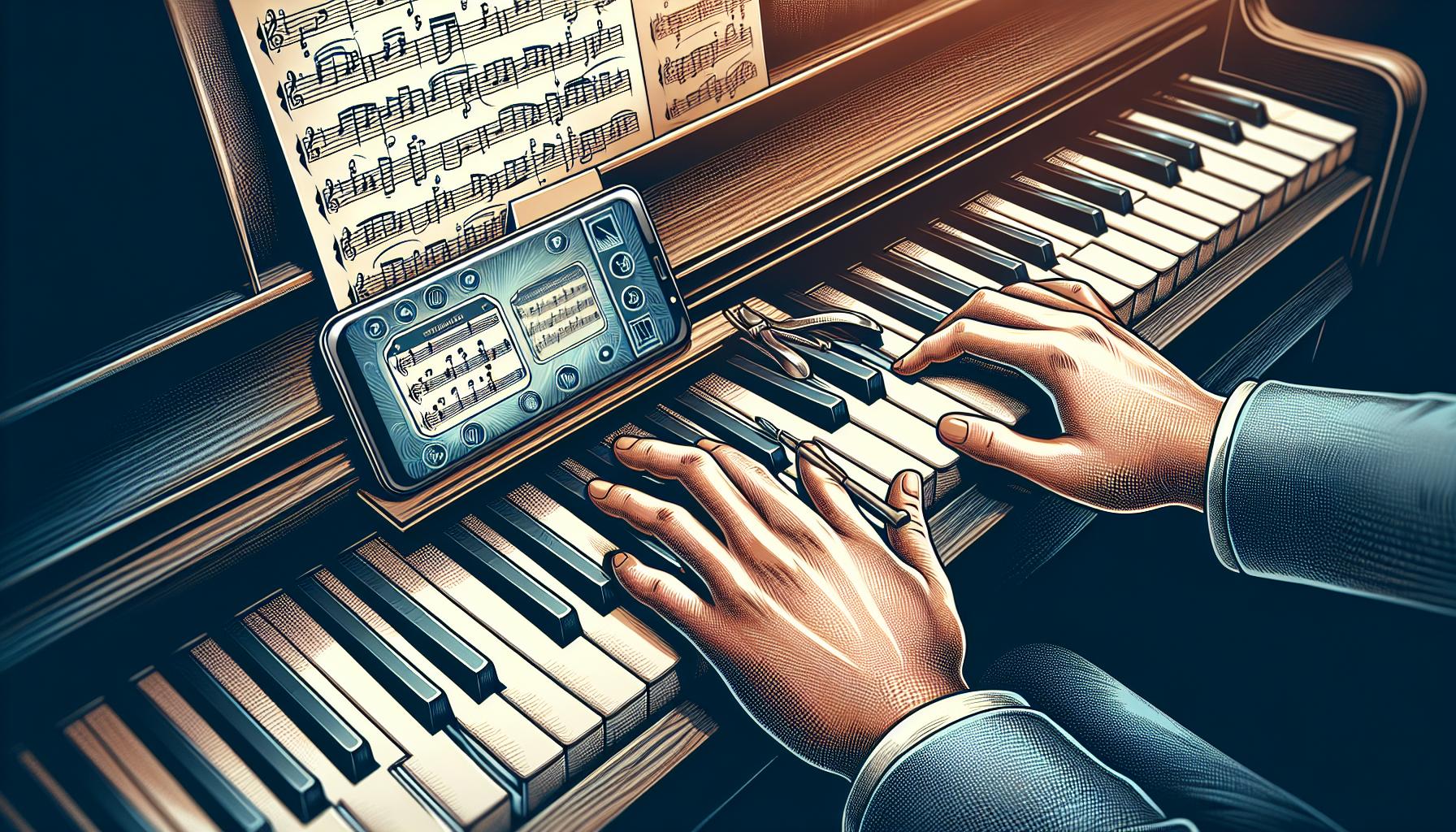
Category: Learning Methods

  • Top Beginner Strategies for Online Keyboard Courses: Learn & Succeed

    Top Beginner Strategies for Online Keyboard Courses: Learn & Succeed

    Diving into the world of music can be both thrilling and a bit daunting, especially for beginners. But what if there was a way to ease into it from the comfort of your own home? Enter online keyboard courses for beginners, a gateway to unlocking musical potential without stepping out the door.

    These courses have revolutionized how we learn music, making it accessible, affordable, and, most importantly, enjoyable. They’re designed with the absolute beginner in mind, ensuring that anyone can start their musical journey with confidence. Whether you’re dreaming of playing your favorite songs or composing your own, these courses lay down the foundation you need to get there.

    Benefits of Learning Keyboard Online

    One of the most significant advantages of learning the keyboard online for beginners is the flexibility it offers. Unlike traditional lessons, online courses allow students to learn at their own pace, fitting their practice sessions around their daily schedules. This feature is particularly beneficial for individuals with busy lives, as they can engage in learning during times most convenient for them, whether that’s early in the morning or late at night.

    Moreover, online keyboard courses are often more affordable than in-person lessons. Since there are no physical space and fewer overhead costs for instructors, these savings can be passed on to the students. Here’s a quick comparison of average costs associated with different learning methods:

    Learning Method Average Cost
    In-person Lessons $60 per hour
    Online Courses (One-time) $100 – $200 total

    This table highlights the cost-effective nature of online learning, thereby making it an accessible option for a wider audience.

    Additionally, the variety of resources available through online courses is unmatched. Students have access to a plethora of video tutorials, interactive exercises, and digital sheet music. This diversity not only caters to different learning styles but also ensures that learners remain engaged and motivated throughout their musical journey.

    Another boon of online learning is the supportive community that often accompanies these courses. Many platforms offer forums or discussion groups where students can share their progress, seek advice, and support each other. This sense of community enhances the learning experience, making it not just a solitary journey but a shared adventure.

    Furthermore, technology plays a crucial role in enhancing the learning experience. With the advent of apps and software designed specifically for music education, students can benefit from features such as real-time feedback on their playing, virtual duets, and personalized lesson plans that adjust based on their progress. These technological advancements ensure a more interactive and enriched learning environment.

    One often overlooked benefit of online learning is the exposure to diverse musical styles and genres. Traditional lessons may focus primarily on classical music, but online courses offer tutorials and lessons across a broad spectrum, from jazz and blues to pop and electronic. This diversity not only broadens a student’s musical knowledge and appreciation but also allows them to explore and find their own unique style and interests.

    Features of a Good Online Keyboard Course

    When exploring online keyboard courses for beginners, certain features stand out, making some options more beneficial than others. Identifying these key elements can help learners choose a course that best suits their musical goals and learning style.

    Structured Lesson Plans are crucial for progressive learning. A well-structured course should offer lessons that build on each other, gradually increasing in complexity. This ensures that students develop a solid foundation in keyboard fundamentals before advancing to more challenging concepts. Interactive exercises and regular assessments should be part of the curriculum to track progress and solidify understanding.

    High-Quality Video Content makes a significant difference in online learning. Courses should provide clear, professionally-recorded videos that offer various angles to demonstrate proper hand positioning and technique. Seeing the instructor’s movements in high definition can greatly aid in replicating the correct form and avoiding common mistakes.

    Personalized Learning Experiences cater to the unique needs of each student. The best online keyboard courses offer adaptive learning paths that consider the student’s pace and areas for improvement. Some platforms incorporate AI technology to tailor lessons, exercises, and even song recommendations based on the learner’s performance and preferences.

    Access to a Wide Range of Repertoire encourages musical exploration and keeps the learning process exciting. Beginners should have the opportunity to learn and play songs from different genres, including classical, jazz, pop, and more. This not only broadens their musical taste but also enhances their adaptability and improvisation skills.

    Supportive Online Community and Instructor Feedback play a significant role in a student’s learning journey. Courses that offer direct communication with instructors or peer support through forums and discussion groups can provide the encouragement and motivation learners need. Constructive feedback on assignments and performances helps students identify their strengths and areas for improvement.

    Below is a summary of the essential features to look for in a good online keyboard course:

    • Structured Lesson Plans
    • High-Quality Video Content
    • Personalized Learning Experiences
    • Access to a Wide Range of Repertoire
    • Supportive Online Community and Instructor Feedback

    These elements combined create a learning environment that is not only educational but also engaging and supportive. While flexibility and affordability are significant advantages of online learning, the course’s content and structure are what truly define its effectiveness. As technology continues to advance, online keyboard courses are becoming more sophisticated, offering an educational experience that can rival, and in some aspects surpass, traditional in-person lessons.

    Setting Up Your Home Studio for Online Lessons

    Creating a dedicated space for online keyboard lessons is crucial for a beginner’s development and enjoyment. Here, we’ll explore the essentials in setting up an inviting and functional home studio that will make learning both effective and enjoyable.

    First and foremost, choosing a quiet, well-lit area is key. The space doesn’t need to be large but should be free from distractions. A corner in a bedroom, a section of the living room, or even a well-organized closet can serve as your musical haven. Remember, the goal is to have a dedicated space where focus and creativity can flourish.

    Lighting plays a significant role in your setup. Natural light is ideal, but if that’s not possible, ensure the area is well-lit with lamps or overhead lights. Proper lighting reduces eye strain and keeps you energized during practice sessions.

    The centerpiece of your home studio will be the keyboard itself. Position it in a way that you’re comfortable, with the keyboard stand adjusted so that your arms are parallel to the floor when you’re seated. Investing in a comfortable, adjustable bench is equally important to maintain good posture and comfort during long practice sessions.

    Essential Equipment and Accessories

    • High-Quality Headphones: A pair of good headphones is essential for focused practice without disturbing others. They should be comfortable to wear for extended periods and offer excellent sound quality.
    • Stable Internet Connection: Since the lessons are online, a reliable and fast internet connection is a must. Consider using a wired connection to minimize latency issues during live lessons.
    • Webcam and Microphone: A high-definition webcam and a clear microphone are important for interactive lessons. They allow the instructor to see and hear you clearly, providing more accurate feedback.
    • Music Stand: Position a music stand nearby to hold your sheet music or a tablet. This helps keep your music at eye level, promoting better posture and reducing neck strain.
    • Decorate with Inspiration: Hang up posters of your favorite musicians or artwork that inspires you. The visual appeal of your space can significantly enhance your motivation.
    • Organize Your Resources: Keep your sheet music, notes, and other learning materials neatly organized and easily accessible. A clutter-free environment promotes a focused and

    Tips for Success in Online Keyboard Learning

    Starting an online keyboard course is an exciting step towards mastering the instrument, but it’s easy to get sidetracked without the right approach. Here are some essential tips to help beginners stay on track and make the most out of their learning experience.

    Establish a Regular Practice Schedule

    Success in learning an instrument like the keyboard relies heavily on consistency. It’s vital to set aside specific times for practice each day, even if it’s just for a few minutes. Regular practice helps in building muscle memory and improves familiarity with the keyboard layout. By sticking to a schedule, learners ensure they’re making steady progress.

    Take Advantage of Online Resources

    The internet is a goldmine of resources for keyboard learners. From tutorial videos to free sheet music and online forums, there’s an abundance of materials to aid in learning. Students should explore:

    • Video tutorials for visual and auditory learning
    • Apps and websites offering practice exercises
    • Online communities for support and motivation

    Leveraging these resources can significantly enhance the learning experience, providing insights and techniques that might not be covered in their course.

    Set Realistic Goals

    Goal setting is crucial in measuring progress and staying motivated. Beginners should start with simple, achievable goals such as mastering a particular scale or learning a simple song within a few weeks. As they accomplish these goals, they can gradually increase the difficulty, keeping themselves challenged but not overwhelmed.

    Embrace Mistakes

    Learning an instrument is a journey filled with ups and downs. Mistakes are inevitable, but they’re also valuable learning opportunities. Instead of getting frustrated, students should analyze what went wrong and how they can improve. This positive attitude towards mistakes fosters resilience and encourages continuous learning.

    Engage with the Community

    Joining an online community of fellow keyboard learners can be incredibly beneficial. Sharing experiences, challenges, and achievements creates a sense of camaraderie and can be a great source of motivation. These communities often offer advice, support, and encouragement that can make the learning process more enjoyable and less isolating.

    Record and Review Practices

    One of the best ways to track progress and identify areas for improvement is by recording practice sessions. Watching these recordings allows learners to critique their technique, timing, and expression. This self-review process encourages a deeper understanding of their performance and highlights areas that need more attention.

    Conclusion

    Embarking on the journey of learning the keyboard online opens up a world of musical possibilities. By setting a consistent practice schedule and leveraging the wealth of online resources available, beginners can make significant progress. It’s all about setting achievable goals, learning from every mistake, and tapping into the supportive online community. Remember, recording your practice isn’t just about tracking progress—it’s a tool for reflection and growth. With patience and dedication, anyone can transform their musical aspirations into reality. So grab your keyboard and let the adventure begin!

  • Mastering the Keyboard with Small Hands: Tips and Tools for Success

    Mastering the Keyboard with Small Hands: Tips and Tools for Success

    Learning to play the keyboard can feel like a daunting task, especially for those with small hands. It’s easy to think that sprawling chords and complex melodies are out of reach. But that’s far from the truth! With the right approach, small hands can master the keyboard just as effectively as their larger counterparts.

    The key lies in understanding that it’s not the size of your hands that matters, but how you use them. Techniques, exercises, and certain adjustments can make a world of difference. So, if you’ve ever felt discouraged about learning the keyboard because of your hand size, it’s time to shake off those doubts and dive into the world of music with confidence.

    Positioning and Posture

    When learning the keyboard, proper positioning and posture are crucial, especially for those with small hands. By establishing a comfortable and efficient setup, players can simplify their approach to the keyboard, making it easier to reach notes and execute chords despite smaller hand spans.

    Firstly, it’s essential to sit at the right height. The player’s elbows should be at the same level as the keyboard, allowing the forearms to be parallel to the floor. This position minimizes strain and provides greater control over finger movements. An adjustable bench can be a great asset here, ensuring the player can fine-tune their sitting height as needed.

    Hand positioning is another vital aspect. Players with small hands should focus on keeping their fingers curved and relaxed, avoiding stretching them out too much. The thumb and little finger should form a gently curved line, never locked or rigid. This curvature increases the reach of each finger, making it easier to press keys that seem just out of reach.

    The wrists should stay neutral or slightly elevated. High or drooping wrists can lead to discomfort and reduce the hand’s mobility. Think of the wrists as floating gently above the keyboard, maintaining a natural and comfortable arc without tensing up.

    It’s also beneficial to incorporate hand positioning exercises into daily practice sessions. These exercises can help in building muscle memory for optimal hand placement, further easing the playability for those with small hands. Here’s a simple exercise to try:

    • Place your hands on the keyboard, keeping fingers curved.
    • Press down on a key with each finger, starting with the thumb and moving to the little finger.
    • Ensure your wrists remain neutral and your fingers are relaxed.
    • Repeat this exercise, gradually increasing speed and moving across different octaves.

    Adopting these positioning and posture strategies will not only reduce the risk of strain but also improve overall flexibility and reach on the keyboard. While it might seem cumbersome at first, consistent practice and mindfulness of these principles can make a significant difference in how comfortably and effectively one can play the keyboard, regardless of hand size.

    Besides physical positioning, mental posture plays a role in mastering the keyboard with small hands. Approaching the instrument with confidence and a positive mindset can enhance learning and performance. Believing in one’s ability to overcome the challenges posed by smaller hands encourages persistence and creativity in finding solutions and techniques that work for the individual player.

    Choosing the Right Keyboard

    For those with small hands, selecting the ideal keyboard is a pivotal step in the journey toward musical mastery. The vast array of keyboards available on the market can seem overwhelming, but key factors such as size, action, and features play a crucial role in finding the perfect match.

    Keyboards come in various sizes, typically measured by the number of keys. Standard pianos and many digital keyboards have 88 keys, but there are also options with 76, 61, or even fewer keys. For smaller hands, a 76 or 61-key keyboard might be more manageable and less intimidating, making it easier to reach octaves and complex chords.

    The action of the keyboard, or how the keys respond to touch, is another critical consideration. Weighted or semi-weighted keys offer resistance similar to that of traditional pianos, which can be beneficial for building finger strength and technique. However, for beginners, especially children or those with very small hands, keyboards with lighter action can be less taxing and more comfortable to play for extended periods.

    • Size Considerations:

    • 88 keys: Full range, ideal for advanced pieces
    • 76 keys: Slightly reduced range, easier to manage
    • 61 keys: Compact, suitable for beginners
    • Weighted: Mimics acoustic piano, good for technique
    • Semi-weighted: Lighter than weighted, balances feel and ease
    • Light action: Easiest to press, ideal for small or inexperienced hands

    Additionally, modern keyboards offer a plethora of features that can enhance learning and creativity. Look for instruments with built-in learning programs, metronomes, and recording capabilities. These tools can be incredibly beneficial for practice and tracking progress. Some keyboards also include various voices and rhythms, allowing players to explore different musical styles and arrangements, which can be especially encouraging for new learners.

    Connectivity options are worth considering as well. Many digital keyboards can connect to computers or tablets via USB or MIDI, opening up a world of digital learning resources and music production software. This feature is not only fun but can significantly supplement musical education and provide endless opportunities for creative expression.

    Finger Strengthening Exercises

    For individuals with small hands, finger strengthening exercises are a key component in not only increasing dexterity but also in preventing strain and injury. These exercises are designed to improve the strength and flexibility of the fingers, making it easier to reach keys and maintain proper playing posture.

    One effective method is the Piano Finger Stretch. This involves placing the fingers on the keys and stretching each finger individually while keeping the others in place. It’s a simple yet powerful way to enhance finger independence and flexibility. Another exercise, the Finger Lifts, focuses on lifting each finger high while pressing down on the keys with the others. This exercise builds strength in each finger, making rapid movements more manageable.

    Incorporating Hand Squeezes into one’s practice routine can also be beneficial. Using a soft ball or a stress ball, squeeze the ball with each hand for a few seconds before releasing. This exercise helps in strengthening the hand muscles, providing better control and power when playing.

    Table Taps are another easy yet effective exercise. Without the need for any instrument, simply tap each finger on a flat surface, like a table, as if playing a piano. This mimics the action of pressing piano keys and improves muscle memory. For an added challenge, try increasing the speed or tapping in specific patterns to also work on rhythm and coordination.

    Here are the benefits of incorporating these exercises into your routine:

    Benefit Description
    Improved Finger Independence Each finger becomes more capable of moving independently.
    Increased Flexibility Fingers can stretch and reach farther on the keyboard.
    Enhanced Muscle Strength Stronger fingers can play with more power and endurance.
    Better Control and Precision Precision in hitting keys accurately improves.

    These exercises should be done regularly but shouldn’t replace time on the keyboard. They’re most effective when used in conjunction with regular practice, gradually integrating them into one’s routine to see the best results. Start with a few minutes each day, closely listening to one’s body to avoid overexertion.

    Remember, while the goal is to increase finger strength and flexibility, it’s important to practice these exercises gently to prevent any possible strain or injury. If any exercise feels uncomfortable or painful, it’s advisable to stop and consult with a music teacher or a physical therapist who can provide personalized guidance based on individual needs and circumstances.

    Adaptations and Modifications

    Individuals with small hands often encounter challenges while learning to play the keyboard. To navigate these hurdles, specific adaptations and modifications can make a significant difference in comfort, efficiency, and overall playability.

    Choosing the Right Keyboard

    Selecting an instrument that caters to small hands is paramount. Keyboards with slimmer keys and a reduced key width offer a more manageable span for smaller hands, making it easier to reach chords and intervals. Lightweight, portable keyboards also tend to have more compact designs, which can be advantageous.

    Adjustable Keyboard Stands

    Height plays a crucial role in how effectively one can play, especially for those with smaller hands. An adjustable keyboard stand enables players to set the keyboard at an optimal height, promoting better hand posture and reducing strain. Ensuring the elbows are slightly above the keys can facilitate easier reach across the keyboard.

    Simplified Chord Voicings

    Mastering full chords can be daunting. Simplified chord voicings or playing chord inversions can offer a workaround. This involves rearranging the notes of a chord so that they are closer together or omitting some notes altogether. This practice not only accommodates small hands but also introduces learners to advanced musical concepts.

    • Triads over extended chords can be easier to manage
    • Inversions help in playing chords with fewer stretches

    Finger Stretching and Strengthening

    In conjunction with the exercises outlined previously, targeted stretching and strengthening exercises can further empower individuals. By consistently engaging in these practices, learners can gradually expand their reach and improve dexterity.

    Use of Pedals for Sustain

    The sustain pedal can be a valuable tool for those with small hands. By sustaining notes or chords without having to hold them physically, players can easily move to the next set of notes or chords. This technique allows for a smoother transition and a more connected sound, making it less noticeable when hands need to shift positions frequently.

    Digital Tools and Apps

    In today’s digital age, numerous tools and applications can assist learners with small hands. Apps that offer virtual lessons often include features that allow customization of the learning experience, including adjusting the pace of lessons or focusing on specific techniques that benefit smaller hands.

    • Slow down features to practice difficult passages
    • Custom exercises tailored to individual needs and hand sizes

    Practice Tips for Small-Handed Players

    When embarking on the journey of learning the keyboard with small hands, individuals might face unique challenges. However, proper practice techniques can significantly ease this learning process. Here are some invaluable practice tips tailored for small-handed players.

    Start with Scales and Arpeggios

    Scales and arpeggios are not just fundamental exercises for all players; they’re particularly beneficial for those with small hands. Engaging in these exercises daily helps in improving reach and flexibility. It’s crucial to start slowly, focusing on achieving a fluid motion without overstretching the fingers. As proficiency grows, incrementally increase the tempo.

    Break It Down

    One of the most effective strategies is breaking pieces into smaller sections. This approach allows players to concentrate on mastering one segment before moving to the next. It’s a gradual process that fosters a deeper understanding and muscle memory of the piece, making the overall learning experience less daunting.

    • Focus on one hand at a time
    • Practice challenging measures separately
    • Gradually combine hands as confidence builds

    Utilize the Thumb Under Technique

    The thumb under technique is particularly useful for players with small hands. It involves tucking the thumb under the palm to reach the next note in a scale or arpeggio, allowing for smoother transitions between keys. Mastering this technique early on can significantly improve agility and comfort on the keyboard.

    Schedule Regular Breaks

    Regular breaks are essential, especially for small-handed players, to prevent strain and fatigue. Practice sessions should be spaced out with short breaks to allow muscles to rest. A good rule of thumb is to take a 5 to 10-minute break every hour of practice.

    Incorporate Finger Independence Exercises

    Finger independence exercises are designed to strengthen each finger and improve control. These exercises usually involve playing patterns that require fingers to move independently of each other, enhancing precision and dexterity. Over time, these exercises can greatly facilitate intricate finger movements required in more complex pieces.

    Make Use of Digital Tools

    Leveraging digital tools and apps can offer a customized learning experience suitable for players with small hands. These platforms often come with features that allow learners to:

    • Slow down the tempo of pieces for meticulous practice
    • Access customized exercises designed for small hands
    • Track progress and identify areas that need improvement

    Conclusion

    Mastering the keyboard with small hands is entirely achievable with the right approach and dedication. By focusing on scales and arpeggios, breaking down pieces, and employing techniques like thumb under, players can navigate the keyboard more efficiently. Remember, taking regular breaks and engaging in finger independence exercises will further enhance your playing experience. Embrace the journey, and don’t forget to leverage digital tools to tailor your practice sessions. With patience and persistence, the keys are within your reach.

  • Beginner’s Guide: Mastering Keyboard Improvisation in a Band

    Beginner’s Guide: Mastering Keyboard Improvisation in a Band

    Stepping into the world of music by joining a band as a keyboardist is an exciting journey filled with chords, melodies, and harmonies. For beginners, it’s not just about hitting the right notes; it’s about becoming a vital part of the musical conversation happening on stage.

    Navigating through this new terrain might seem daunting at first. But fear not! With a few tips and tricks up your sleeve, you’ll soon find your groove. From understanding your role in the band to mastering the art of improvisation, there’s a whole world to explore behind those black and white keys.

    Embarking on this musical adventure promises not only to enhance your skills but also to open up a realm of creative possibilities. Let’s dive into the basics of playing keyboard in a band and set the stage for an exhilarating experience.

    Understanding the Role of a Keyboardist in a Band

    When diving into the world of band music as a keyboardist, it’s essential to grasp the multifaceted role they play. Keyboardists are the chameleons of the band, seamlessly transitioning between blending in and standing out. Their role extends beyond merely adding layers to the music; they’re instrumental in setting the tone, mood, and even the rhythmic foundation of a song.

    One of the first things a beginner should understand is that a keyboard can mimic a vast array of instruments, from pianos and organs to synthesizers and strings. This versatility allows keyboardists to fill in the musical gaps or enhance certain sections of a song. They might provide a lush string section sound in one piece and then switch to a funky clavinet groove in the next. The keyboard’s expansive range also gives players a unique opportunity to experiment with textures and dynamics, contributing significantly to the band’s overall sound.

    Effective Communication and Versatility

    To thrive in their role, keyboardists must develop excellent communication skills. They often work closely with other members to ensure their parts are complementary and not overwhelming. This involves understanding the band’s dynamics and knowing when to take the lead and when to support. For instance, during a guitar solo, a keyboardist might switch to a softer, ambient pad sound to provide a background that lets the guitar shine.

    Versatility is another critical aspect of a keyboardist’s role within a band. Given the instrument’s capability to produce such a wide range of sounds, keyboardists should be adept at playing different styles. Whether it’s jazz, rock, pop, or fusion, being able to adapt and play appropriate parts that fit the genre and the song is paramount.

    Mastering Improvisation and Composition

    Moreover, a keyboardist’s ability to improvise cannot be overstated. Improvisation isn’t just about soloing; it’s about being able to spontaneously create parts that enhance the music. This skill is particularly useful during live performances, where the ability to adapt and respond to the moment can elevate the show’s energy and engagement.

    Choosing the Right Keyboard and Equipment

    When venturing into the world of band performances, choosing the right keyboard and equipment is pivotal. For beginners, this decision can significantly influence their playing style, ease of integration with the band, and overall performance quality. With the myriad of options available, it’s crucial to understand the basics of what makes a keyboard suitable for band use.

    First and foremost, keyboard action is a critical factor to consider. Keyboards come with various types of action, such as weighted, semi-weighted, and synth action. Weighted keys mimic the feel of an acoustic piano, making them ideal for players seeking that classical touch. Semi-weighted keys offer a middle ground, providing some resistance without the heft of fully weighted keys. Synth action keys are light and responsive, perfect for quick leads and synth parts. For band scenarios, semi-weighted or synth action keyboards are often more versatile, accommodating a wide range of playing styles and musical genres.

    Sound versatility is another key aspect. A keyboard that offers a wide range of sounds and instruments can greatly enhance a band’s musical palette. Look for keyboards with extensive libraries of built-in sounds, from pianos and organs to synthesizers and orchestral instruments. This allows keyboardists to seamlessly switch between roles, from rhythm accompaniment to lead melodies, without needing multiple instruments.

    Connectivity features also play a significant role. A good band keyboard should have:

    • MIDI capability for connecting to other electronic instruments and computers
    • An auxiliary input for playing along with external audio sources
    • Multiple outputs for connecting to different amplification systems

    These features ensure that the keyboard can integrate smoothly with the band’s setup and adapt to various performance environments.

    The size and portability of the keyboard are factors that shouldn’t be overlooked. Bands often have to transport their equipment to gigs, rehearsals, and recording sessions. Lightweight and compact keyboards are easier to carry and set up, especially for those who frequently perform at different venues.

    Lastly, durability is essential. The rigors of live performances and transportation can take a toll on musical equipment. Investing in a keyboard that is built to last can save beginners from the frustration and expense of frequent replacements.

    • A reliable keyboard stand that can withstand the energy of live performances
    • A comfortable and adjustable bench or stool
    • Quality headphones for practice without disturbing others
    • An amplification system

    Learning Basic Keyboard Techniques for Beginners

    Embarking on the journey of playing keyboard in a band brings its own set of challenges and excitement. Before beginners can impress with their skills, it’s crucial to master some basic keyboard techniques. These fundamentals not only pave the way for more advanced learning but ensure that the new keyboardist can seamlessly blend into any band setup.

    Mastering Hand Position

    The first step in learning keyboard for beginners is to adopt the correct hand position. Positioning the hands properly on the keyboard is vital for playing with ease and preventing strain over long practice sessions. The fingers should be curved slightly, hovering over the keys with the thumb and pinky making a C shape. This position allows for faster movement across the keyboard and helps in executing chords and scales with precision.

    Understanding Scales and Chords

    At the heart of keyboard playing, especially in a band, is the knowledge of scales and chords. Scales, both major and minor, form the foundation of music theory and aid in the development of finger strength and dexterity. Beginners should start with simple scales like C major and gradually progress to more complex ones.

    Chords, which are groups of notes played together, are the building blocks of songs. Learning basic chords and how to transition between them smoothly is essential. Mastery of chords enables keyboardists to participate effectively in band performances, contributing to the harmonic foundation of songs.

    Developing Rhythm and Timing

    A keyboard player in a band needs to have impeccable timing. Playing in sync with other band members requires a solid understanding of rhythm and the ability to keep time. Beginners should practice with a metronome to develop their internal clock, starting slow and increasing the tempo as they become more comfortable.

    Incorporating Dynamics and Expression

    Music is about expression, and playing the keyboard is no different. Beginners should learn how to control dynamics, the loudness and softness of the music, to bring emotion and feel to their playing. Experimenting with touch sensitivity on the keyboard can help in understanding how to convey different emotions through music.

    Exploring Different Sounds and Textures

    Modern keyboards offer a vast array of sounds and textures, from grand pianos to synthesizers. Beginners should explore these sounds, understanding how they fit into different genres of music. Experimenting with various sounds enhances the versatility of a keyboardist, making them a valuable asset to any band.

    As beginners improve their basic techniques, they’ll find that their role in a band becomes more dynamic and influential.

    Importance of Timing, Rhythm, and Sync with Other Band Members

    When playing keyboard in a band, the essence of music truly unfolds. The beauty lies not just within the notes themselves but in how they’re intricately woven with the contributions of other band members. Timing, rhythm, and synchronization are the threads that bind these musical elements together, creating a seamless tapestry of sound.

    Timing, in the musical sense, refers to the keyboardist’s ability to align their notes precisely with the beat. This is crucial, as even a slight deviation can disrupt the cohesiveness of the band’s performance. Beginners may find using a metronome during practice helpful, gradually internalizing the beat until it becomes second nature.

    Rhythm, on the other hand, shapes the dynamic structure of the music. It’s not merely about playing in time but understanding the pattern of sounds and silences, which gives music its texture and feel. Keyboard players must hone their sense of rhythm to maintain the song’s groove, ensuring that their contributions add depth and emotion rather than chaos. Listening to various genres and practicing different rhythmic patterns can vastly improve one’s rhythmic sensibilities.

    Synchronizing with other band members extends beyond mere timing and rhythm. It’s about developing a deep musical connection, understanding each other’s playing styles, and anticipating their moves. This level of synergy allows the band to perform as a unified whole, with each member supporting and elevating the others’ performances. Communication, both verbal and non-verbal, plays a significant role in achieving this synchronization. Regular band practices, coupled with an open mind and a willingness to adapt, are key factors in developing this connection.

    In ensuring optimal synchronization, keyboardists should focus on:

    • Listening attentively to the other instruments, not just their own part
    • Practicing dynamic adjustments; knowing when to stand out and when to blend in
    • Using visual cues and body language for non-verbal communication during performances

    This synergy isn’t achieved overnight. It evolves from shared experiences, challenges, and the collective desire to create something memorable. As beginners integrate these aspects of timing, rhythm, and synchronization into their playing, they’ll find their place within the band, contributing to the ensemble’s success while also growing as individual musicians.

    Mastering the Art of Improvisation on Keyboard

    When beginners start playing the keyboard in a band, they often find the concept of improvisation daunting. However, improvisation isn’t just a skill for the virtuosos; it’s an accessible tool that every keyboardist can develop with practice and patience. The key lies in starting with the basics and gradually expanding one’s musical vocabulary.

    Improvisation, at its core, is the art of creating music on the spot. This requires a solid understanding of scales, chords, and how they interact within different musical contexts. Beginners should first focus on mastering major and minor scales, as these form the foundation of most contemporary music. Once comfortable with scales, they can move on to experimenting with simple chord progressions, trying out different rhythms and patterns.

    One effective strategy for improving improvisation skills is to play along with recordings of songs. This not only helps in ear training but also offers a safe, forgiving environment to experiment with new ideas. Playing along with songs from various genres broadens one’s musical exposure and provides a wealth of ideas that can be incorporated into one’s own improvisations.

    Listening plays a crucial role in improvisation. It’s not just about listening to oneself but also about being attentive to what other band members are playing. This synchronicity allows for a more cohesive and dynamic performance. When keyboardists listen and respond to the music around them, they can find moments to shine with a solo or fill gaps with harmonious lines that enhance the overall sound of the band.

    Moreover, the practice of improvisation nurtures creativity and musical expression. It opens up opportunities for keyboardists to inject their personal touch into the music, making every performance unique. They learn to trust their instincts, experimenting with different notes and rhythms until they find what feels right in the moment.

    Encouraging collaboration among band members is another way to foster improvisational skills. Jam sessions, where there’s freedom to explore without the pressure of perfect execution, can be particularly beneficial. These sessions not only improve individual abilities but also strengthen the musical connection within the band. Through these collaborative efforts, musicians learn to complement each other’s styles, leading to more inventive and spontaneous performances.

    To facilitate growth in improvisation, it’s important for beginners to record their practice sessions. Listening back to these recordings can provide valuable insights into what works well and what areas need improvement. This reflective practice aids in honing one’s improvisational approach, gradually increasing confidence and competence.

    Conclusion

    Stepping into the world of keyboard playing in a band might seem daunting at first but it’s really about embracing the journey. With the right mindset and dedication to mastering scales, chords, and the nuances of musical improvisation, anyone can make significant strides. Remember, it’s not just about the notes you play but how you play them. Listening, learning, and collaborating with your bandmates will not only improve your skills but also deepen your connection to the music you create together. So keep experimenting, keep practicing, and most importantly, keep enjoying the music. After all, it’s this shared passion that makes playing in a band truly rewarding.

  • Master Fast Keyboard Playing: Essential Tips for Beginners

    Master Fast Keyboard Playing: Essential Tips for Beginners

    Playing fast on a keyboard might seem like a skill reserved for the pros, but it’s not as out of reach as it looks. Every pianist, from beginners to seasoned musicians, started with the same basic steps and a lot of practice. It’s about breaking down the barriers, one note at a time, and before you know it, those fingers are flying across the keys with ease.

    The key to mastering speed on the keyboard lies in understanding the right techniques and consistently applying them. It’s not just about moving your fingers faster, but also about smart practice, proper posture, and using the right exercises. Let’s dive into how beginners can start their journey towards becoming speed demons on the keyboard, making beautiful music faster than they ever thought possible.

    Understanding the Basics

    Before diving into the nitty-gritty of playing fast on a keyboard, it’s crucial to grasp the basics. These fundamentals serve as the building blocks that will support a beginner’s journey toward achieving speed and dexterity. Understanding and mastering these basics not only pave the way for quicker learning but also ensure that the music created is both beautiful and technically sound.

    First and foremost, beginners need to familiarize themselves with keyboard layout and finger placement. Knowing which finger goes where for specific keys is the groundwork of playing efficiently. It’s like knowing the alphabet before writing a story. Here, they’ll learn about the C major scale, which is a great starting point due to its simplicity and the fact that it uses white keys only.

    Next up is hand coordination. Playing fast requires both hands to work in tandem, seamlessly executing different patterns and rhythms. At first, this might seem like patting your head and rubbing your stomach at the same time — tricky but definitely achievable with practice. Starting with slow, simple melodies that use both hands helps in gradually building this coordination.

    Additionally, incorporating correct posture and hand positioning cannot be overstated. Initially, this might not seem directly related to speed, but it’s a game-changer. Proper posture and positioning reduce the risk of injury and strain, making it easier to play for longer periods and move across the keyboard swiftly. Remember, a relaxed body facilitates faster playing.

    At this point, it’s also paramount to stress the importance of rhythm and timing. Without these, playing fast can result in a jumbled mess of notes. Metronomes or keyboard tools with built-in rhythm functions are invaluable for beginners to keep time and improve their musical ear.

    To sum it up, understanding the basics is akin to laying a strong foundation for a house. It’s about getting comfortable with the keyboard, developing coordination, ensuring correct physical approach, and keeping time. All of these aspects work together to not only make fast playing possible but also make it sound good.

    As they progress, beginners will find that these basic skills become second nature, making it easier to focus on speed and complexity. The journey from hitting the right keys to playing intricate melodies at a quick pace is filled with challenges but, with persistence and the right techniques, it’s definitely within reach.

    Developing Finger Dexterity

    In the journey to mastering fast keyboard play, developing finger dexterity is a crucial step that often gets overlooked. Dexterity refers to the ability of the fingers to move quickly and accurately, which is essential for playing complex melodies at speed. It’s not just about moving fast, but also about having control and precision with each note.

    Basic Exercises for Improved Dexterity

    To enhance finger dexterity, beginners should start with simple exercises. One fundamental practice is scale repetition. Playing scales is akin to jogging for musicians; it builds stamina and strength. Start slowly, focusing on evenness in touch and sound, and gradually increase the speed. Another excellent exercise involves finger independence drills, where one practices pressing individual fingers down in various patterns without moving the others. This can help in reducing tension and increasing control over each finger’s movements.

    Incorporating Technique Into Practice Routines

    Integrating specific techniques into daily practice is vital. Legato and staccato playing styles not only add expressiveness to the music but also challenge and develop finger strength and agility. Beginners should also explore exercises that require crossing fingers over one another to play scales or arpeggios. These techniques push the boundaries of what the fingers are used to and thus improve dexterity.

    The Role of Regular, Incremental Practice

    Consistency is key when working to increase finger dexterity. Regular practice, ideally daily, helps in muscle memorization and improvement. It’s important to gradually increase the difficulty and speed of the exercises. However, it’s equally crucial to avoid jumping ahead too quickly as this can lead to frustration and potential injury. Listening to the body and fingers is important; if something feels overly strenuous, it may be beneficial to reduce the speed or simplify the exercise.

    Progress can be tracked through several indicators:

    Indicator Description
    Increased Speed Ability to play exercises and pieces faster over time
    Improved Precision Higher accuracy in hitting intended notes
    Reduced Fatigue Ability to practice for longer periods without tiring
    Enhanced Muscle Memory Fewer mistakes and smoother transitions between notes

    Finger Strengthening Tips

    Beyond keyboard exercises, engaging in activities that strengthen the fingers can also contribute to dexterity. Simple tasks like squeezing a stress ball or practicing finger stretches can improve strength and flexibility, making playing faster on the keyboard more achievable.

    Practicing with Proper Posture

    When embarking on the journey to playing fast on the keyboard, many beginners tend to overlook the significant role that proper posture plays in their development. Maintaining a correct posture is not just about looking professional; it’s a fundamental aspect that impacts a player’s endurance, dexterity, and overall playing efficiency. Good posture ensures that movements are fluid and that minimal strain is placed on the body, allowing for longer, more productive practice sessions.

    To start, they should ensure their bench is positioned at such a height that their forearms are parallel to the keyboard. This alignment promotes wrist flexibility and prevents strain during rapid finger movements. Their feet must rest flat on the floor, providing stability and balance. If their feet don’t comfortably reach the floor, using a footrest can make a world of difference.

    Another critical element is the back posture. Slouching or leaning too far forward can lead to tension in the back and shoulders, eventually impeding their ability to play swiftly and accurately. They should aim to keep their back straight, yet relaxed, with their shoulders squared and down, away from the ears. This posture not only prevents fatigue but also ensures that their arms are free to move across the keyboard without restriction.

    The distance from the keyboard is another factor that can significantly affect their playing speed. They shouldn’t be so close that their elbows are cramped against their sides, nor so far that they have to stretch to reach the keys. Finding that perfect balance where their elbows are slightly away from their body allows for optimal arm and hand movement, facilitating quicker and more precise keystrokes.

    Incorporating these posture tips into their practice routine can dramatically enhance their playing capabilities. By adjusting their seat height, ensuring their feet are properly positioned, maintaining a straight yet relaxed back, and finding the ideal distance from the keyboard, they set the foundation for faster and more efficient keyboard playing. Regularly checking and correcting their posture will help them develop muscle memory for these proper techniques, making them second nature over time.

    Besides the immediate benefits of reduced strain and increased endurance, practicing with proper posture paves the way for advanced techniques and playing styles. As they progress, the foundation of good posture will enable them to tackle challenging compositions with ease, showcasing their skill in fast keyboard playing.

    Utilizing Effective Exercises

    When diving into the world of keyboard playing, especially with the goal of increasing speed, integrating specific exercises into one’s practice routine is vital. These exercises are not just about pushing fingers to move faster; they’re about building the muscle memory, strength, and precision required to play quickly and efficiently.

    Finger Independence Exercises play a crucial role in developing dexterity. One popular method involves practicing scales and arpeggios, as they require the player to use all fingers in a controlled, rhythmic manner. Beginning slowly and gradually increasing the speed without compromising accuracy ensures that each finger gains the necessary strength and independence.

    Hanon Exercises, known for their effectiveness in improving speed, agility, and finger strength, should not be overlooked. Comprising 60 exercises, these drills are designed to address specific weaknesses in finger coordination. Starting with the first few exercises and progressively working through the series can lead to significant improvements in playing speed.

    Incorporating Metronome Practice is another key strategy. The metronome provides a constant beat that helps players maintain a steady tempo. Starting at a slow pace and incrementally increasing the metronome speed challenges the player to keep up, pushing their limits in a controlled manner. Remember, the goal isn’t just to play faster but to play accurately at higher speeds.

    Lastly, Sight-Reading Practice significantly contributes to playing faster. By regularly practicing reading and playing new pieces of music, players improve their ability to quickly process new information and translate it into action. This skill, while challenging to develop, is invaluable for those looking to improve their speed on the keyboard.

    Practice Routine Tips

    To make the most of these exercises, integrating them into a daily practice routine is essential. Here are a few tips to ensure effective practice:

    • Set Realistic Goals: Start with achievable goals and gradually increase the complexity and speed of exercises.
    • Maintain Consistency: Daily practice, even for short periods, can yield better results than sporadic, lengthy sessions.
    • Focus on Accuracy First: Speed should come after mastering accuracy. Rushing through exercises without precision won’t lead to improvement.
    • Keep Exercises Varied: Rotate through different exercises to keep practice sessions fresh and cover various aspects of playing.

    Goal Setting and Tracking Progress

    When embarking on the journey to play faster on the keyboard, goal setting is a crucial step that often goes overlooked by many beginners. Without clear, achievable goals, progress can seem elusive, leading to frustration and potentially giving up too early. They should start by setting specific, measurable, attainable, relevant, and time-bound (SMART) goals. For instance, mastering a particular piece at a certain tempo within two weeks is far more tangible than a generic goal of “play faster”.

    Tracking progress is equally important as setting goals. It’s not just about noticing improvements in speed and dexterity but also about understanding the relationship between practice habits and outcomes. Beginners should keep a practice journal or use digital apps designed for musicians. These tools allow them to note down their daily practice routines, challenges faced, pieces or scales worked on, and incremental improvements.

    Implementing a Structured Practice Routine

    A structured practice routine is instrumental in achieving set goals. Beginners should divide their practice sessions into different segments such as warm-up exercises, scales, and arpeggios, focusing on speed, and finally, applying these skills to pieces they are learning. Each session should start with slower tempos, gradually increasing to the desired speed. It prevents muscle strain and builds a solid foundation for precision at higher speeds.

    Utilizing Technology for Feedback

    In today’s digital age, several tools can provide immediate feedback, which is invaluable for tracking progress. Metronomes are essential for maintaining a consistent tempo and gradually increasing speed. Recording oneself and analyzing the playback helps in identifying areas that need improvement. Moreover, there are software and apps designed specifically for musicians that track accuracy, speed, and other metrics during practice.

    Importance of Incremental Progress

    It’s vital to acknowledge that progress in keyboard playing, especially in achieving faster speeds, is often incremental. Small improvements over time lead to substantial long-term gains. Incremental progress also helps in setting realistic expectations and reduces the likelihood of injury due to overexertion. Beginners should celebrate small victories to stay motivated throughout their learning journey.

    Adapting Goals Based on Progress

    As beginners monitor their progress, they may find it necessary to adjust their goals. Sometimes, they might achieve their objectives faster than expected, or they might encounter unforeseen challenges. Being flexible and willing to redefine goals ensures continual development and prevents stagnation. It’s a dynamic process that mirrors the evolving nature of learning an instrument.

    Conclusion

    Mastering the keyboard at a fast pace isn’t just about pressing keys quicker. It’s about laying the right foundation with proper posture, engaging in targeted exercises, and setting achievable goals. By focusing on the nuances of posture, dedicating time to Finger Independence and Hanon Exercises, and leveraging technology for feedback, beginners can make significant strides. Remember, consistency is key. With patience and regular practice, the journey from slow, deliberate notes to rapid, fluid melodies becomes not just a possibility but a reality. Embrace the process, celebrate your progress, and let your fingers dance across the keyboard with newfound speed and precision.

  • Top Beginner Keyboard Lessons for Kids: Making Music Fun

    Top Beginner Keyboard Lessons for Kids: Making Music Fun

    Diving into the world of music can be a thrilling adventure for kids, and there’s no better way to start than with keyboard lessons. The keyboard, with its versatile range and approachable layout, offers a fantastic foundation for budding musicians. It’s not just about hitting the right notes; it’s about unlocking a world of creativity and expression that can last a lifetime.

    For many parents, the challenge isn’t in getting their kids interested in music, but in finding the right approach to beginner keyboard lessons that keeps them engaged and excited. From choosing the right instrument to finding a teaching method that sparks joy, the journey is filled with opportunities to inspire and nurture a child’s love for music. Let’s explore how to make those first steps on the keyboard not just educational, but truly enchanting.

    Benefits of Music Education for Kids

    Exploring the realm of music education, particularly keyboard lessons for kids, unravels numerous advantages that extend beyond the mastery of chords and keys. Engaging children in musical activities from a young age fosters a myriad of developmental benefits, making it a pivotal part of their growth journey.

    Firstly, music education plays a crucial role in enhancing cognitive abilities. Research has consistently shown that children involved in music lessons exhibit improved memory skills, better problem-solving capabilities, and higher levels of creativity. They’re not just learning to read music and play an instrument; they’re also boosting their brain’s capacity to process complex information and think outside the box.

    Social skills see a significant boost as well. Group lessons and performances require children to work together, listen to each other, and support their peers. This collaborative environment encourages respect, patience, and empathy, teaching kids valuable lessons in teamwork and communication.

    Here are some key statistics showing the impact of music education on children’s academic and social skills:

    Skill Area Improvement Noted
    Memory 75% increase
    Problem-solving capabilities 60% better performance
    Creativity 80% enhancement
    Teamwork 90% improvement in collaboration

    Furthermore, music education significantly boosts a child’s emotional well-being. Learning to play an instrument like the keyboard allows them to express themselves in a unique and powerful way. It offers an outlet for emotions, whether it’s joy, sadness, or frustration, contributing to their emotional maturity and resilience.

    Moreover, setting and achieving musical goals can dramatically improve a child’s self-esteem and motivation. Each song learned, and performance given, is a milestone that instills confidence and encourages persistence. It’s about the journey, where every small victory fuels their desire to learn and grow.

    The discipline and structure cultivated through regular practice sessions are invaluable traits that transfer to other areas of life. Kids who stick to a practice schedule learn the importance of consistency and hard work, laying the groundwork for success in future endeavors.

    • Cognitive Abilities: Enhanced through learning and memorization of music.
    • Social Skills: Developed through group activities and performances.
    • Emotional Well-being: Boosted via expressive and creative outlets.
    • Self-esteem and Motivation: Fostered through reaching musical milestones.

    Introduction to the Keyboard Instrument

    The journey of music education often begins with an introduction to one of the most versatile and widely embraced instruments: the keyboard. For many kids, keyboard lessons serve as a gateway into the world of music, offering a foundation that benefits them across various facets of development. The keyboard, with its array of keys and the potential to produce a multitude of sounds, not only captivates young minds but also provides a unique platform for comprehensive learning.

    At its core, the keyboard instrument includes pianos, electronic keyboards, and synthesizers, each offering different experiences and sounds. A standard keyboard boasts 88 keys, a range that enables kids to explore music from classical to contemporary genres. Starting with simple melodies, children gradually learn about different notes, scales, and chords, paving the way for a deeper understanding of musical theory and composition.

    Keyboard lessons for beginners usually emphasize the importance of hand positioning and finger dexterity, skills critical for playing more complex pieces as students progress. Instructors often integrate engaging teaching methods, such as games and technology, to maintain a child’s interest and motivation. Beyond individual practice, many music programs encourage ensemble playing, which enhances teamwork skills and exposes students to the collaborative nature of music.

    Moreover, the digital aspect of modern keyboards allows for an interactive learning experience. Many models come equipped with built-in teaching tools, such as light-up keys and apps, that facilitate self-guided learning. This aspect is especially appealing to the tech-savvy generation of learners, making practice sessions more engaging and fun.

    The adaptability of the keyboard as an instrument also means that it can cater to various learning styles and preferences. Whether a child is visually oriented, learns by doing, or prefers auditory learning, keyboard lessons can be tailored to meet their individual needs. This customization ensures that each child’s musical journey is as unique as they are, fostering a lasting love and appreciation for music.

    As children progress through their keyboard lessons, they’re not just learning how to play an instrument. They’re developing a set of skills that transcends music, shaping their cognitive, social, and emotional growth. From enhancing memory and problem-solving abilities to nurturing teamwork and discipline, the benefits of keyboard education are profound and far-reaching.

    Choosing the Right Keyboard for Young Learners

    When it comes to selecting the perfect keyboard for young learners, parents and educators face a multitude of options. The right instrument can significantly enhance a child’s learning experience, making the selection process crucial. Here are key factors to consider to ensure you pick a keyboard that not only fits your budget but also supports your child’s musical journey.

    Size and Key Weight

    Keyboards come in various sizes, typically measured by the number of keys they contain. For young beginners, a 61-key keyboard is often recommended. It’s compact enough for small hands while still offering a wide range of notes for learning and exploration.

    Another important aspect is key weight. Keyboards with weighted keys mimic the feel of an acoustic piano, promoting proper finger technique and strength. Though they tend to be more expensive, weighted keyboards are worth the investment for their educational value.

    Sounds and Features

    Modern keyboards come packed with an array of sounds and features that can make learning fun and engaging for children. Look for instruments with:

    • Built-in lessons
    • Metronomes
    • A variety of instrument voices

    These features spark curiosity and encourage self-directed learning. Additionally, some models offer interactive apps and connectivity options for tablets or PCs, which can further enrich the learning experience.

    Durability and Portability

    Children’s instruments often face more wear and tear, so durability is key. Look for keyboards made of sturdy materials that can withstand frequent use. Portability is another consideration, especially if the keyboard will be transported to lessons or performances. Lightweight models with built-in speakers are convenient for on-the-go families.

    Price

    Price is an inevitable concern when choosing a keyboard for beginners. Fortunately, there’s a wide range of options available to fit various budgets. Here’s a quick overview of expected costs:

    Type Price Range
    Basic 61-Key $50 to $150
    Intermediate $150 to $300
    Advanced (Weighted) $300 to $600+

    While it’s tempting to opt for the most affordable option, consider it an investment in your child’s musical education. A slightly pricier keyboard with the right features can make a significant difference in their learning progress.

    By considering these factors, parents and educators can choose a keyboard that not only meets their financial constraints but also provides a rich, engaging learning environment for young musicians.

    Fun and Engaging Teaching Methods for Beginner Keyboard Lessons

    Teaching kids to play the keyboard requires not just patience and skill but also an understanding of what makes learning enjoyable for them. Incorporating fun and engaging teaching methods not only captures their interest but also encourages a love for music that can last a lifetime.

    One popular approach is using color-coded notes. This method helps students, especially younger ones, to easily identify and remember notes and their positions on the keyboard. Teachers might use stickers or colored tapes, assigning a specific color to each note. This visual aid significantly reduces learning curves and enables kids to play simple songs more quickly.

    Gaming apps have also become a staple in modern music education. Many apps are designed specifically for learning the keyboard and offer an interactive experience that feels more like playing a game than practicing scales. These apps use challenges, rewards, and progress tracking to keep students engaged. Incorporating these into lessons can provide a mix of traditional learning and digital fun.

    Storytelling through music is another innovative method. Teachers encourage students to create a story based on the music they are playing, or vice versa, to pick pieces that tell a story. This approach not only enhances creativity but also aids in emotional expression, allowing students to feel more connected to the music they are creating.

    Group lessons can offer a sense of community and collaboration. Learning in a group setting allows students to observe their peers, share tips, and even perform together. This not only makes the lessons more enjoyable but also instills a sense of confidence and camaraderie among young learners.

    Lastly, incorporating physical movement into lessons can be particularly beneficial for kids. Teachers might encourage students to move to the rhythm or use hand-clapping exercises to teach rhythm and timing. This not only helps with musical timing but also makes lessons more dynamic and physically engaging.

    By intertwining these methods into beginner keyboard lessons, teachers can create a rich and engaging learning environment for their students. These innovative approaches cater to the dynamic interests of children, making music education a fun and rewarding journey.

    Cultivating a Love for Music in Children

    Cultivating a love for music in children isn’t just about teaching them how to play an instrument; it’s about opening a door to a vast, enriching world that can enhance their emotional and intellectual development. For many kids, the first step into this world is through keyboard lessons, which provide a foundational understanding of music. However, the way these lessons are approached can make a big difference in whether a child develops a passion for music or views it as just another chore.

    One of the most effective strategies is to integrate music into daily life in a fun and natural way. This could involve playing a variety of music at home or in the car, thereby exposing kids to different genres and styles. Parents and educators can discuss the music with the children, asking what they liked about it and if there’s anything specific they would like to learn on the keyboard.

    Moreover, encouraging kids to explore and experiment with their keyboards without fear of making mistakes is crucial. They should feel free to press different keys, try out new sounds, and even attempt to create their own tunes. This exploratory approach not only enhances their understanding of the instrument but also bolsters their creative confidence.

    Another key element in nurturing a love for music involves setting realistic expectations. It’s important for children to understand that becoming proficient at an instrument takes time and practice. Celebrating small achievements, like learning a new song or mastering a particular chord, can keep them motivated.

    In addition to individual practice, participating in group lessons or performances can be incredibly beneficial. This social aspect of learning music allows children to see their peers’ progress, inspiring them to keep improving. It can also provide a sense of belonging to a musical community, making the learning process feel more like a collective journey than a solitary endeavor.

    To make learning more engaging, integrating technology and interactive learning tools can be a game-changer. There are numerous apps and online platforms designed to make practicing the keyboard more entertaining, with features like gamified lessons, progress tracking, and interactive tutorials. These tools not only make practice sessions more enjoyable but also cater to the digital literacy that is second nature to today’s children.

    Conclusion

    Embarking on keyboard lessons offers kids a fantastic journey into the world of music. It’s not just about hitting the right notes; it’s about sparking a lifelong passion for music. By weaving these lessons into the fabric of their daily lives, children learn that music isn’t a chore but a channel for expression and creativity. Encouraging them to play around and discover the joy of music on their own terms helps keep their spirits high and their interest piqued. And when they share this journey with peers, it not only amplifies their enjoyment but also builds a community of young musicians who inspire each other. So let’s embrace technology and innovative teaching methods to make this musical voyage as enriching and fun as possible for our young learners. After all, the goal is to cultivate a deep-seated love for music that will accompany them throughout their lives.

  • Top Keyboard Lesson Books for Beginners: Learn Effectively

    Top Keyboard Lesson Books for Beginners: Learn Effectively

    Diving into the world of music can be as exhilarating as it is daunting, especially for those just starting their journey with the keyboard. Finding the right guide to lead the way is crucial. That’s where the magic of a good lesson book comes in. It’s not just about learning the notes but also about sparking that initial love for music.

    With a plethora of options available, choosing the best keyboard lesson book for beginners might seem like looking for a needle in a haystack. But fear not! The perfect book doesn’t just teach; it inspires, making every practice session something to look forward to. Whether it’s mastering the basics or exploring the first melodies, the right book can make all the difference.

    Benefits of Using Keyboard Lesson Books

    When embarking on the journey of learning the keyboard, beginners might wonder about the most effective approach to develop their musical skills. Keyboard lesson books stand out as invaluable resources for several reasons, offering a structured pathway to musical proficiency.

    Firstly, these books are designed to gradually introduce learners to the fundamentals of keyboard playing, ensuring that they build a solid foundation in both theory and practice. From understanding musical notes and rhythms to mastering hand positioning, lesson books break down complex concepts into digestible, manageable lessons. This not only helps in avoiding overwhelming beginners but also fosters a sense of accomplishment as they progress through each chapter.

    Moreover, keyboard lesson books often include a variety of music genres, catering to different tastes and interests. This diversity is crucial in keeping students engaged and motivated. Whether they’re drawn to classical, jazz, or pop music, learners can find pieces that not only challenge them but also excite their musical curiosity. As they explore various styles, students naturally develop a more versatile skill set, which is beneficial for their overall growth as musicians.

    Another significant advantage is the inclusion of practice exercises in these books. Structured exercises enable learners to apply newly acquired knowledge, reinforcing their learning. Many books also come with performance pieces, which prepare students for recitals or informal performances. This practical aspect of lesson books encourages regular practice and helps beginners understand the application of theoretical knowledge to actual music playing.

    For those who appreciate feedback and structure, some keyboard lesson books offer access to online resources. These can include video tutorials, additional exercises, and even interactive apps that allow learners to track their progress. Such resources are immensely helpful in providing visual and auditory references, which can enhance understanding and make the learning process more engaging.

    Benefit Description
    Solid Foundation Gradually introduces fundamentals, ensuring a thorough understanding of keyboard playing.
    Variety of Genres Offers pieces from different music genres to keep lessons engaging and cater to all interests.
    Structured Practice Exercises Includes practice exercises and performance pieces for applying knowledge and improving skills.
    Access to Online Resources Provides additional learning materials and interactive tools for enhanced learning experience.

    By integrating keyboard lesson books into their practice routine, beginners not only learn how to play but also develop a deep appreciation for music. This approach makes the journey from novice to accomplished musician both enjoyable and fulfilling.

    Factors to Consider When Choosing a Keyboard Lesson Book

    When delving into the world of keyboard mastery, picking the right lesson book is pivotal. This guide can serve as a beacon, leading the way through musical notation and complex chords. However, not every book is suited for every beginner. There are several factors to weigh when making this choice, ensuring the journey into music is both enjoyable and efficient.

    Learning Style and Content: One size doesn’t fit all, especially in music education. Beginners should look for books that align with their learning preferences. Some learners thrive on visual aids and diagrams, while others may prefer detailed written instructions or a mix of both. The content should introduce musical concepts progressively, ensuring a solid foundation is built before moving on to more complex lessons.

    Genre and Musical Interests: Engagement is key to persistence and enjoyment. Beginners should consider their musical tastes when selecting a lesson book. Whether it’s classical, jazz, pop, or rock, a book that includes genres of interest can enhance motivation. Some books offer a broad spectrum of genres, which is perfect for those still exploring their musical preferences.

    Practice Exercises and Performance Pieces: Practice makes perfect, and the right book should provide ample exercises that reinforce the lessons learned. These exercises should vary in difficulty, gradually preparing the student for more challenging pieces. Additionally, including performance pieces allows beginners to apply what they’ve learned in a more cohesive and enjoyable manner.

    Online Resources and Audio Tracks: Many modern keyboard lesson books come with online resources, such as video tutorials, downloadable sheets, and audio tracks. These supplementary materials can greatly enhance the learning experience, offering visual and auditory aids that books alone cannot provide. Beginners should look for books with these features, as they can make practice sessions more engaging and effective.

    Reviews and Recommendations: Lastly, one should not overlook the wealth of information available through reviews and recommendations. Hearing about the experiences of others can provide valuable insights into the book’s effectiveness and suitability for beginners. It’s a good practice to research and read reviews from various sources before making a final decision.

    In considering these factors, beginners will be better equipped to choose a keyboard lesson book that not only meets their immediate needs but also sets the foundation for continued musical growth and exploration.

    Top Picks for Best Keyboard Lesson Books for Beginners

    After understanding the factors to consider when choosing a keyboard lesson book for beginners, it’s time to dive into some top picks that have stood out in the musical community. These selections are based on their ability to cater to different learning styles, inclusion of a wide variety of genres, and their overall effectiveness in building foundational skills for beginning keyboardists.

    Alfred’s Basic Adult All-in-One Course

    One of the most recommended books for beginners is Alfred’s Basic Adult All-in-One Course. It’s a comprehensive guide that covers theory, technique, and reading in a single volume. What makes it especially appealing is its use of familiar tunes and engaging exercises that keep learners motivated. Notably, this book also includes access to online audio tracks, allowing students to hear what the music is supposed to sound like, which aids in their understanding of rhythms and melodies.

    Hal Leonard Student Keyboard Guide

    Another excellent resource is the Hal Leonard Student Keyboard Guide. Hal Leonard is a renowned name in music education, and this book lives up to the brand’s reputation. It’s structured in a way that makes learning fun and interactive for beginners of all ages. The book includes a variety of musical genres to play, from classical to contemporary, ensuring that students remain engaged and excited about learning. The layout is clear and easy to follow, with colorful illustrations that enhance the learning experience.

    John Thompson’s Easiest Piano Course

    For those who prefer a more classical approach, John Thompson’s Easiest Piano Course is a fantastic selection. The book is well-regarded for its systematic approach to teaching piano basics, such as notes, rhythms, and chords. Each lesson is short and simple, which prevents beginners from feeling overwhelmed. As students progress, they’re introduced to more challenging pieces that build on previous lessons, ensuring steady progression.

    Piano Adventures by Nancy and Randall Faber

    Piano Adventures by Nancy and Randall Faber offers a multi-dimensional learning experience that caters to both children and adults. What sets this series apart is its focus on developing musicality from the very beginning. The books include engaging, original music that encourages expressive playing. Additionally, Piano Adventures provides online support, including tutorials and play-along tracks that make practice sessions more effective and enjoyable.

    Tips for Getting the Most Out of Your Lesson Book

    Selecting the right keyboard lesson book is just the first step on a musical journey. To truly maximize the benefit of these resources, aspiring pianists should adopt a series of best practices. These tips will ensure that learners not only progress through the lessons but also enjoy the process and retain what they’ve learned.

    Set Realistic Goals is vital for keeping motivation high and tracking progress. Beginners should define short-term objectives for each practice session, such as mastering a particular scale or playing a song without mistakes. Equally important are long-term goals which could range from completing the book to performing a piece in front of an audience. By setting these benchmarks, learners can focus their efforts and celebrate their achievements along the way.

    Practicing Regularly cannot be overstated. Consistency is key when learning an instrument. Even short, daily practice sessions are more effective than sporadic, lengthy ones. This habit helps in building muscle memory and improving sight-reading skills. Beginners should aim for at least 15-30 minutes of practice a day, gradually increasing the duration as they become more comfortable with the keyboard.

    Another crucial aspect is Engaging with the Material. Most modern lesson books come with additional resources like online audio tracks or apps. These tools are not just supplementary; they’re integral to the learning experience. Listening to recordings helps with understanding the rhythm and dynamics of a piece, while apps can offer interactive lessons that adapt to the user’s pace. Beginners should take full advantage of these features to enrich their learning.

    Seeking Feedback and Guidance is especially important for self-learners. Feedback can come from various sources: teachers, online communities, or even friends and family. Constructive criticism can highlight areas for improvement and motivate learners to push their boundaries. Additionally, online forums and social media groups offer a wealth of tips and encouragement from fellow beginners and experienced pianists alike.

    Lastly, it’s imperative to Focus on the Journey. Learning to play the keyboard is as much about the process as it is about the outcome. Instead of racing through the book, learners should take the time to enjoy each lesson and celebrate the progress, no matter how small. Understanding that mistakes are part of learning and patience is essential can transform the experience from a challenging task to a rewarding hobby.

    Conclusion

    Choosing the right keyboard lesson book is just the beginning of an exciting musical journey. By setting achievable goals and dedicating time to regular practice, beginners can make significant strides in their playing. It’s crucial to complement book learning with online resources and apps that add variety and depth to the practice sessions. Remember, seeking feedback and embracing the learning process with a positive mindset are key to not only improving but also finding joy in every note played. With the right approach and resources, anyone can master the keyboard and enjoy making music.

  • Top Easy Classical Keyboard Pieces for Beginners: A Mastery Guide

    Top Easy Classical Keyboard Pieces for Beginners: A Mastery Guide

    Starting on the keyboard can be both exciting and a bit daunting, especially when you’re eager to play beautiful music but aren’t quite sure where to begin. Classical music, with its rich history and complex compositions, might seem out of reach for beginners. But don’t worry, there’s a treasure trove of easy classical keyboard pieces that are not only manageable for beginners but also incredibly rewarding to play.

    These pieces serve as the perfect introduction to the world of classical music, offering a gentle learning curve while still providing the satisfaction of mastering a timeless work of art. Whether you’re a young student just starting your musical journey or an adult revisiting an old passion, these compositions will help you build confidence at the keyboard and inspire you to explore more challenging pieces in the future.

    Benefits of Playing Easy Classical Keyboard Pieces

    When beginners embark on the journey of playing the keyboard, selecting easy classical pieces as their starting point offers a myriad of benefits that go beyond simply mastering a new instrument. These pieces, crafted by master composers, are time-tested pathways that guide novices through the essential elements of keyboard playing while nurturing a deep appreciation for classical music.

    Early Success Builds Confidence. One of the primary advantages for beginners learning these pieces is the immediate sense of achievement they feel. Easy classical keyboard pieces are designed in such a way that they’re accessible to novices, enabling them to produce beautiful music without overwhelming complexity. This early success is crucial in building self-confidence and motivation, encouraging learners to persevere in their musical journey.

    Development of Technical Skills. Despite their simplicity, these pieces encompass a range of technical skills that are fundamental to becoming proficient at the keyboard. Beginners will find themselves navigating through different key signatures, time signatures, and dynamics, all while maintaining proper hand position and finger techniques. This gradual increase in technical dexterity is vital for tackling more challenging compositions in the future.

    Introduction to Musical Expression. Easy classical pieces serve as an excellent introduction to the expressive capabilities of the keyboard. Through these compositions, learners begin to understand how tempo, dynamics, and phrasing contribute to conveying emotion and storytelling in music. This early exposure to musical expression lays the groundwork for a more nuanced and sensitive approach to playing as they progress.

    A Gateway to Music Theory. Learning these pieces also opens the door to fundamental concepts in music theory, including melody, harmony, and rhythm. By studying and playing these compositions, beginners naturally absorb these concepts, which are essential for reading music and understanding the structure of compositions. This knowledge acts as a foundation that supports all future musical endeavors, whether they continue with classical music or explore other genres.

    Cultural and Historical Appreciation. Easy classical keyboard pieces are more than just notes on a page; they are windows into the past that allow players to connect with the composers and the eras they lived in. As beginners learn these pieces, they also gain insights into the historical and cultural contexts that influenced their creation. This deeper understanding enriches the playing experience and fosters a lifelong appreciation for classical music.

    Selection of Easy Classical Keyboard Pieces for Beginners

    When embarking on the journey of learning the keyboard, incorporating easy classical pieces into practice sessions can significantly enhance the learning experience. These pieces not only serve as attainable goals for beginners but also introduce them to the vast world of classical music in a manageable way.

    Why Choose Classical Pieces

    Classical music, with its structured harmony and melody, provides an excellent foundation for keyboard beginners. It encourages learners to focus on both hand coordination and emotion, cultivating a deeper sense of musicality early on. Moreover, playing classical pieces allows beginners to encounter various historical styles, from Baroque to Romantic, which broadens their understanding and appreciation of the genre.

    Recommended Pieces for Beginners

    To help beginners start their classical music journey, here’s a curated list of pieces that are both accessible and rewarding to play:

    • “Minuet in G Major” by Johann Sebastian Bach: This piece, although simple in its melody, requires precision in timing and dynamics, making it a perfect piece for beginners to practice.
    • “Ode to Joy” by Ludwig van Beethoven: Recognizable and uplifting, this melody helps beginners learn about phrasing and expression in music.
    • “The Entertainer” by Scott Joplin: Though technically not a classical piece in the strictest sense, its inclusion here is for its simplicity and introduction to a different rhythmical structure, which is beneficial for hand coordination.
    • “Sonatina in C Major, Op. 36, No. 1” by Muzio Clementi: This piece introduces beginners to the sonatina form, with clear sections and themes that are great for working on transitions and musical storytelling.

    Each of these pieces offers something unique to the beginner, from technical challenges to opportunities for expressive playing.

    Tips for Practicing

    Practicing these pieces should be a rewarding experience. Here are a few tips to make the most out of your practice sessions:

    • Take It Slow: Always start by learning the notes and rhythms slowly, gradually increasing the tempo as you become more comfortable.
    • Focus on Hand Independence: Many classical pieces require hands to move independently of each other. Practice hands separately before putting them together.
    • Listen to Recordings: Listening to how professional musicians interpret the piece can provide inspiration and a clearer understanding of the music.

    Tips for Learning and Mastering Classical Keyboard Pieces

    Learning to play classical keyboard pieces can be a rewarding yet challenging journey for beginners. The nuances of classical music require not only technical skill but also an understanding of the piece’s emotional depths. Here are some strategies to facilitate the learning process and help beginners master these timeless compositions.

    Start with Proper Posture

    The foundation of great keyboard playing begins with posture. Sitting correctly at the keyboard with a straight back, relaxed shoulders, and feet flat on the ground can significantly impact one’s ability to play. Proper hand position, with curved fingers hovering over the keys, allows for more precise and fluid movements. Beginners should pay special attention to their posture to prevent tension and facilitate easier playing.

    Break Down the Pieces

    Diving straight into playing a piece from start to finish can be overwhelming for beginners. Instead, they should focus on breaking the piece down into manageable sections or bars. Working on small segments at a time enables learners to concentrate on mastering one aspect before moving on to the next, making the learning process less daunting and more accessible.

    Use a Metronome

    Timing is crucial in classical music. Beginners often struggle with maintaining consistent tempo throughout a piece. Using a metronome can help players develop a strong sense of rhythm and timing. Starting with a slower tempo than the piece requires allows beginners to focus on accuracy and precision. Gradually, they can increase the tempo as their confidence and skills develop.

    Listen and Learn

    Listening to recordings of professional musicians playing the pieces beginners are learning can be incredibly beneficial. It provides insights into how the pieces should sound and offers inspiration. Beginners should listen actively, noting how the professionals handle tempo changes, dynamics, and expressiveness. This understanding can significantly enhance their interpretation of the pieces.

    Focus on Dynamics and Expression

    Classical music is known for its expressive depth. Beginners should not just focus on hitting the right notes but also on conveying the emotion behind the music. Understanding the dynamics and varying the volume and intensity of their playing can bring the pieces to life. Encouraging beginners to feel the music and express themselves through their playing can transform their performances from mechanical to deeply moving.

    Conclusion

    Embarking on the journey of learning classical keyboard pieces is both exciting and rewarding. By adopting the strategies outlined, beginners have a clear roadmap to not just play notes but to bring music to life. It’s about more than just hitting the right keys; it’s about making the pieces sing with emotion and expression. As they practice with these tips in mind, they’ll find themselves not just playing music, but truly connecting with it. Here’s to the beginning of a musical adventure that promises to be as enriching as it is enjoyable.

  • Master Keyboard Skills Anywhere with Simply Piano: A Guide

    Master Keyboard Skills Anywhere with Simply Piano: A Guide

    Diving into the world of music can be both thrilling and a bit daunting, especially when it comes to learning an instrument like the keyboard. But what if there was a way to make that journey smoother and more enjoyable? Enter Simply Piano, a game-changer for beginners and seasoned players alike.

    This app promises to take you by the hand, guiding you through the basics to more advanced techniques, all at your own pace. With its user-friendly interface and personalized learning paths, Simply Piano makes mastering the keyboard accessible and fun. Whether you’re aiming to play your favorite songs or understand music theory, it’s tailored to fit your musical aspirations.

    Exploring Simply Piano Features

    When embarking on the journey of learning the keyboard with Simply Piano, users are greeted with an array of features designed to make the learning process both engaging and efficient. At its core, Simply Piano prides itself on offering a user-friendly interface that newcomers can navigate with ease, allowing them to jump straight into lessons without the hassle of a steep learning curve.

    One of the standout features of Simply Piano is its personalized learning paths. After assessing a player’s skill level, the app tailors a specific curriculum meant to challenge and develop their abilities at a comfortable pace. This customization ensures that both beginners and more experienced players can find content that matches their needs and goals.

    Comprehensive Course Library

    Within Simply Piano, there’s a comprehensive library of courses covering a wide range of topics:

    • Basic chords and melodies
    • Reading sheet music
    • Understanding rhythm
    • Advanced techniques for experienced players

    This extensive collection ensures that there’s always a new challenge to tackle or a new skill to master, keeping the learning process fresh and exciting.

    Interactive and Real-Time Feedback

    A key feature that sets Simply Piano apart from other learning methods is its interactive and real-time feedback mechanism. As users play, the app listens and provides immediate feedback on their accuracy and timing. This instant response helps learners correct mistakes on the fly, reinforcing good habits and ensuring continuous improvement.

    Expansive Song Library

    For many learners, the ultimate goal is to play their favorite songs. Recognizing this, Simply Piano offers an expansive song library that spans various genres and eras. From classical masterpieces to contemporary hits, users can search and find songs that resonate with them, making practice sessions enjoyable and highly personal.

    Facts about the Simply Piano Song Library:

    Genres Available Songs in Library
    Classical 100+
    Pop 200+
    Jazz 50+
    Rock 150+

    Progress Tracking and Achievements

    To keep learners motivated, Simply Piano includes a progress tracking feature that visually displays users’ advancement over time. Alongside this, the app rewards accomplishments with achievements, celebrating milestones and encouraging players to set and reach new goals.

    Supportive Community

    Lastly, Simply Piano fosters a supportive community of learners. Through the app, users can connect, share experiences, and offer each other encouragement.

    Getting Started with Simply Piano

    Embarking on a musical journey with Simply Piano is as straightforward as it is exciting. First, users need to download the app from their respective app stores. It’s available on both iOS and Android, making it accessible to a wide array of smartphone and tablet users. After installation, the app guides users through a simple setup process, where they’ll tune their piano or keyboard to ensure the app can accurately recognize the notes being played.

    One of the first steps in the app is selecting a learning path. Simply Piano offers several paths tailored to different skill levels, from absolute beginners who have never touched a keyboard to advanced players looking to polish their skills and learn new pieces. This customization makes the learning experience much more personal and effective.

    Required Equipment

    To get the most out of Simply Piano, learners need:

    • A piano or keyboard
    • A smartphone or tablet
    • A stable stand or a way to secure the device in sight while playing

    The beauty of Simply Piano lies in its utilization of the device’s microphone to listen to and evaluate the player’s progress. For electric keyboard users, there’s the option to connect directly via a USB cable, offering even more precise feedback.

    Navigating the Interface

    Simply Piano’s interface is designed with the user in mind. The home screen presents the chosen learning path prominently, with clear directions on how to proceed. New lessons unlock as the player progresses, ensuring a structured learning approach. The app also features a Songs tab where users can browse and select pieces to learn outside of their structured lessons. This feature is particularly popular among users who want to fast-track their ability to play familiar tunes.

    Interactive Feedback System

    The core of Simply Piano’s effectiveness is its interactive feedback system. As users play, the app listens and provides real-time feedback on accuracy and timing, highlighting areas for improvement. This immediate response helps learners correct mistakes on the spot, greatly speeding up the learning process.

    Exercises and songs within Simply Piano are designed to gradually increase in difficulty, ensuring that users are constantly challenged yet never overwhelmed. Engagement with the app is further enhanced by badges and achievements, rewarding progress and encouraging users to keep practicing.

    Progressing Through Levels

    As users begin their journey with Simply Piano, they’re introduced to a structured progression system that’s both encouraging and comprehensive. Each level in Simply Piano is meticulously designed to build upon the skills learned in the previous ones, ensuring a smooth and seamless learning curve. From the basics of note recognition to mastering complex chords, the app’s curriculum is tailored to cater to individual learning speeds and preferences.

    Personalized Learning Paths

    The beauty of Simply Piano lies in its personalized learning paths. Right from the start, users are prompted to choose a path that aligns with their musical goals. Whether they’re aspiring to play classical music, pop tunes, or jazz, the app has a diverse range of courses to suit every taste. This personalization makes each user’s journey unique, enabling them to focus on the genres they love most while still acquiring the foundational skills needed to play the keyboard proficiently.

    Achievements to Keep You Motivated

    One of the most effective features of Simply Piano is its reward system. As users progress through levels, they earn badges and achievements that serve as milestones of their improvement. This gamification element not only adds a fun aspect to learning but also keeps motivation levels high. Seeing a tangible record of their progress encourages users to set higher goals and continue practicing.

    Level Achievement Description
    1 First Note Recognized and played first note correctly
    5 Chord Master Mastered basic chords
    10 Songbird Completed first full song

    Interactive Challenges and Real-Time Feedback

    To further enhance the learning experience, Simply Piano incorporates interactive challenges at each level. These challenges are designed to test users’ skills in a fun and engaging way, covering everything from pitch accuracy to rhythm and timing. Coupled with the app’s real-time feedback system, learners can readily identify areas for improvement and work on them immediately. This instant feedback is crucial for building correct playing habits from the outset and avoiding common mistakes.

    Expanding Your Musical Repertoire

    As users advance through the levels, the course library continues to expand, unlocking new songs and exercises. This not only helps in keeping the learning experience fresh and exciting but also in expanding users’ musical repertoire. The Songs tab becomes enriched with a wider variety of genres and difficulty levels, presenting learners with the opportunity to challenge themselves and explore different musical styles.

    Mastering Techniques with Simply Piano

    As learners dive deeper into their musical journey with Simply Piano, they’ll find the app’s dedication to mastering keyboard techniques both encouraging and challenging. It’s not just about hitting the right notes; the app focuses on teaching the nuances of playing, which are crucial for any aspiring musician. From understanding scales and chords to mastering dynamics and articulation, Simply Piano offers a comprehensive toolkit for growth.

    Personalized Feedback Loop

    One of the standout features is the personalized feedback loop. As users play, the app listens and analyzes their performance, offering real-time feedback. This isn’t about pointing out every single mistake but rather guiding learners towards improvement in areas like finger positioning and hand coordination. The feedback is constructive, aimed at fostering a persistent learning attitude.

    Interactive Exercises and Challenges

    To keep the learning process exciting, Simply Piano includes a variety of interactive exercises and challenges. These are designed to practice specific techniques, such as:

    • Scales and arpeggios for dexterity
    • Chord progressions for harmonic understanding
    • Rhythm exercises to improve timing

    Each challenge ramps up in difficulty, ensuring that users are constantly pushing their boundaries and discovering new aspects of their musical abilities.

    Video Tutorials for Visual Learning

    For those who benefit from seeing concepts in action, Simply Piano offers a selection of video tutorials. These videos cover a range of topics, from basic keyboard layout to more complex techniques like pedal usage and expressive playing. The visual component helps demystify aspects of keyboard playing that might seem daunting at first glance.

    Expanding Musical Knowledge

    As users progress, they’ll notice an expansion in their musical knowledge and vocabulary. Simply Piano doesn’t just teach how to play songs; it delves into music theory, helping users understand the why behind the music. This deeper understanding enables learners to not only play existing pieces with more expression but also to engage in improvisation and composition.

    Gradual Learning Curve

    The app’s structured progression system ensures that learners are not overwhelmed. Starting with simple pieces and gradually introducing more complex musical concepts, users feel a sense of achievement at each stage of their journey. Simply Piano’s approach reinforces the idea that mastery comes with patience and practice.

    Advantages of Learning Keyboard with Simply Piano

    Simply Piano offers a unique approach to learning the keyboard that blends traditional methods with the convenience of modern technology. This combination provides a slew of advantages making it an appealing option for beginners and intermediate players alike.

    First and foremost, accessibility is a key benefit. With Simply Piano, learners have the ability to practice anytime, anywhere. All they need is their keyboard and a smartphone or tablet. This flexibility allows for more consistent practice without the constraints of scheduled lessons.

    Moreover, personalized learning experiences are at the core of Simply Piano’s methodology. The app adapts to each user’s skill level, tailoring exercises to challenge them just enough to progress but not so much that they become frustrated. This personalized approach helps keep learners engaged and motivated as they see tangible improvements in their playing.

    Interactive Learning Experience

    • Immediate Feedback: One of the standout features of Simply Piano is its immediate feedback system. The app listens to the player’s performance and offers instant constructive criticism. This real-time feedback accelerates the learning process, making it easier to correct mistakes and improve technique.
    • Engaging Exercises: Simply Piano’s curriculum is packed with entertaining exercises and challenges designed to hone specific skills. Whether it’s mastering scales, chords, or timing, each exercise is an engaging experience that builds musical proficiency.
    • Progress Tracking: Learners can track their progress through the app, offering a visual representation of their improvement over time. This feature not only motivates learners but also helps them identify areas that require more attention.

    Comprehensive Curriculum

    Simply Piano covers a wide spectrum of keyboard-related skills. From reading sheet music to understanding complex chords, the curriculum is designed for comprehensive learning. Beginners start with the basics, such as identifying notes and simple melodies, before advancing to more complex concepts.

    • Music Theory: A solid foundation in music theory is crucial for any musician. Simply Piano includes lessons on theory, which empowers users to comprehend musical structures and enhances their ability to express themselves through music.
    • Video Tutorials: For visual learners, Simply Piano provides an array of video tutorials explaining everything from the layout of the keyboard to techniques for playing more expressively. These tutorials complement the interactive exercises, offering learners a well-rounded educational experience.

    Conclusion

    Embracing Simply Piano as a learning tool brings the world of keyboard music right to your fingertips. Its innovative approach merges the best of both worlds: the richness of traditional piano lessons with the convenience and engagement of modern technology. Whether you’re starting from scratch or looking to polish your skills, the app’s personalized journey ensures that learning is not just effective but also incredibly enjoyable. With Simply Piano, the dream of playing beautiful music isn’t far-fetched—it’s an achievable reality that’s waiting just a few taps away. So why wait? Let the music begin!

  • Top 4 Best iPad Apps for Learning Keyboard: Gamified & Interactive

    Top 4 Best iPad Apps for Learning Keyboard: Gamified & Interactive

    In the digital age, learning to play the keyboard has never been easier, thanks to a plethora of iPad apps designed to make the journey both fun and effective. Whether you’re a complete beginner or looking to brush up on your skills, there’s an app out there tailored to your needs.

    From interactive lessons that feel like games to comprehensive courses taught by seasoned musicians, these apps transform your iPad into a portable music teacher. Let’s dive into the world of iPad apps that are striking the right chords with keyboard learners of all ages.

    Benefits of Learning Keyboard with iPad Apps

    Learning the keyboard has never been more engaging or accessible, thanks in large part to the plethora of iPad apps designed for aspiring musicians. These innovative applications achieve a delightful harmony of convenience and efficacy, offering myriad benefits to users of all ages and skill levels.

    Personalized Learning Pace is one of the standout advantages. Traditional music lessons often proceed at the instructor’s pace, which might not align with every student’s needs. iPad apps, however, allow users to progress at their own pace, replaying difficult sections as needed and skipping over concepts they’ve already mastered. This custom approach ensures that learners remain neither bored nor overwhelmed.

    Affordability is another significant benefit. Registering for music classes or hiring a private tutor can be expensive. iPad apps, on the other hand, often come at a fraction of the cost, with many offering free basic courses. Even premium versions or subscriptions are typically less costly than traditional lessons, making keyboard learning more accessible to a wider audience.

    The Availability of Diverse Teaching Methods caters to different learning preferences. Some apps focus on a game-like interface to make learning feel more like play, which can be especially appealing to younger users. Others provide video tutorials, interactive sheet music, or hands-on practice exercises. This variety ensures that every learner can find an app that resonates with their preferred style of learning.

    Real-Time Feedback and Progress Tracking are also made possible through advanced technology in iPad apps. Sensors and microphones can assess the user’s playing in real-time, offering immediate feedback on timing, accuracy, and rhythm. Such instant evaluations can be incredibly motivating, as they allow learners to recognize and celebrate their improvements and milestones.

    Moreover, these apps often come with a Vast Library of Songs spanning various genres and difficulty levels. Learners can start with simple tunes and gradually move to more complex pieces, keeping the learning process fresh and exciting. This extensive repertoire also enables users to practice playing the songs they love, which can significantly enhance motivation and enjoyment.

    In addition to these benefits, iPad keyboard learning apps foster a sense of Community and Support. Many apps offer online forums or integration with social media, allowing learners to share their progress, ask for advice, and connect with others on the same musical journey. This sense of community can be a strong motivating factor, encouraging continuous learning and improvement.

    Top Interactive Keyboard Learning Apps

    Delving into the realm of digital keyboard learning, a few iPad apps have risen above the rest, setting benchmarks for interactive and engaging piano education. These apps not only offer personalized lessons but also incorporate elements that make learning feel like a game, thus maintaining the learner’s interest and motivation.

    Simply Piano is a household name for anyone looking to dive into keyboard learning through their iPad. This app is celebrated for its user-friendly interface and its ability to cater to both beginners and advanced players. It listens to the player through the iPad’s microphone, providing real-time feedback that helps in correcting mistakes instantly. With a vast library that spans classical to contemporary hits, Simply Piano ensures that learners have a wide range of songs to choose from.

    Another standout is Yousician, which prides itself on its technology that recognizes music played on an acoustic keyboard, or through a midi connection, and provides instant feedback and guidance. What sets Yousician apart is its self-paced learning approach, allowing users to progress at their own speed, making it an excellent choice for learners of all ages.

    Flowkey is renowned for its flexibility, offering courses and songs across various genres and difficulty levels. Its key feature is the split-screen view, allowing learners to see both hand movements and sheet music in real-time, facilitating a more comprehensive learning experience. Flowkey’s extensive song library is continually updated, ensuring that users always have fresh and motivating songs to practice.

    For those interested in a more social learning experience, Skoove offers an engaging platform with interactive piano lessons. Skoove’s AI recognizes the notes you play and helps guide your progression. It also offers the opportunity to receive lessons from real instructors, which adds a personal touch to the digital learning process.

    App Key Features Best For
    Simply Piano Real-time feedback, Wide song library Beginners to Advanced
    Yousician Self-paced learning, Instant feedback Learners of all ages
    Flowkey Split-screen view, Comprehensive song library Flexible learning
    Skoove AI recognition, Access to real instructors Community-centered learning

    Courses by Seasoned Musicians

    A unique selling point of some iPad apps for learning the keyboard is their partnership with seasoned musicians and educators. These collaborations result in courses that not only cover the technical aspects of playing the piano but also bring a rich, immersive learning experience to the table. Apps that feature lessons crafted by expert musicians often stand out for their depth of knowledge, insightful tips, and the real-world experience they impart to learners.

    Among the notable apps that boast such courses, a few stand out for their direct connection to the industry. For instance, Simply Piano and Flowkey collaborate with professional pianists and composers to create specialized lessons that cater to a variety of musical tastes and skill levels. These lessons aren’t just about hitting the right notes; they also focus on the artistry and expression behind the music. As a result, learners get a holistic education that’s as much about performance as it is about technique.

    Yousician, on the other hand, employs a team of music educators led by high-profile musicians. This app takes an innovative approach by integrating technology with traditional teaching methods. The feedback mechanism, powered by the app’s advanced algorithm, simulates a real-time classroom experience. This gives students the feeling of having a personal tutor without the need for physical presence.

    Skoove offers something slightly different; it leans heavily on its AI recognition software to provide real-time feedback, but it doesn’t stop there. The app ensures that its course content is continually updated and vetted by professional musicians and teachers. This collaboration ensures that learners are not only getting the most current information and techniques but are also exposed to various teaching styles and perspectives.

    Song Library and Genre Diversity

    An attractive feature for many learners is the diversity of songs available in these apps’ libraries. Simply Piano boasts a vast library that spans numerous genres, allowing students to practice with songs they love and are familiar with. Yousician and Flowkey equally offer a wide array of options, from classic compositions to modern-day hits, appealing to users’ varied musical tastes.

    Fun and Gamified Learning Experience

    In today’s digital age, learning to play the keyboard needn’t be a monotonous task, thanks to a handful of iPad apps that have revolutionized the method of musical education by incorporating fun and games into the curriculum. These apps, specifically designed for learners of all ages, turn the potentially daunting journey of keyboard mastery into an interactive and enjoyable adventure.

    Simply Piano and Yousician, for instance, lead the charge in gamified learning. They boast features that engage users in a way that feels more like playing a video game than sitting through a traditional music lesson. Progressing through levels, unlocking achievements, and competing with friends or users worldwide provide constant motivation and an element of excitement that traditional learning methods often lack.

    Simply Piano uses an innovative approach by listening to the notes you play and providing real-time feedback, almost like having a personal tutor at your side. This instant feedback mechanism helps learners to correct their mistakes on the fly and understand music theory in a practical context. Meanwhile, Yousician crafts a personalized journey for each user, leveraging well-known songs and exercises designed to improve specific skills, such as reading sheet music and playing by ear.

    Flowkey and Skoove further enhance the learning experience with their unique features. Flowkey offers a split-screen view where one side shows a video of a pianist playing the song, and the other displays the falling notes, akin to popular rhythm games. This visual representation aids in understanding hand coordination and timing, crucial skills for any pianist. On the other hand, Skoove emphasizes the importance of improvisation and composition, encouraging learners to create their music. This creative freedom not only makes learning more enjoyable but also nurtures an in-depth understanding of musical structures and harmony.

    The diverse song libraries that these apps offer are nothing short of impressive. Ranging from classical to contemporary hits, these libraries ensure that learners can practice and play songs they love, making practice sessions something to look forward to. Moreover, these apps often update their song selections to keep content fresh and engaging.

    Furthermore, the aspect of social learning cannot be overstated. Many of these apps feature online communities where learners can share their progress, challenges, and achievements. This not only fosters a sense of belonging and encouragement but also offers a platform for receiving constructive feedback from peers and instructors.

    Conclusion

    With the right app, learning to play the keyboard becomes an adventure rather than a chore. The apps we’ve explored offer more than just lessons; they’re gateways to a musical journey tailored specifically for you. Whether you’re drawn to the classics or prefer to rock out to contemporary hits, there’s something for everyone. The community aspect can’t be overlooked either—it’s like having a cheer squad and a team of mentors rolled into one. So grab your iPad, pick an app, and start playing. Who knows where your musical journey will take you?

  • Beginner’s Guide: Master Reading Keyboard Sheet Music Quickly

    Beginner’s Guide: Master Reading Keyboard Sheet Music Quickly

    Diving into the world of keyboard music can be both exciting and a bit overwhelming for beginners. It’s like learning a new language, but instead of words, you’re decoding notes and rhythms. The good news? Once you get the hang of it, the world of music opens up in ways you’ve never imagined.

    Understanding Musical Notes and Symbols

    When embarking on the journey to read keyboard sheet music, beginners soon realize that musical notes and symbols are the alphabet of the music world. Just like learning any new language, recognizing these symbols is the first step to fluency.

    Musical notes are the building blocks of sheet music. They tell the player which keys to press and for how long. Notes are represented by oval shapes either placed on the lines or spaces of the staff. The staff itself consists of five lines and four spaces, each corresponding to a different musical pitch. Notes have different durations, symbolized by their appearance. For example, a whole note, which is an open oval without a stem, is held for four beats in common time, while a quarter note, which looks similar but has a stem, is held for just one beat.

    Symbols play an important role in how a piece of music is played. Here are a few key symbols that beginners should familiarize themselves with:

    • Treble Clef: Indicates the notes that are higher in pitch, commonly played with the right hand.
    • Bass Clef: Represents lower-pitched notes, usually played with the left hand.
    • Sharp (#): Raises a note by a half step.
    • Flat (b): Lowers a note by a half step.
    • Natural: Cancels any previous sharps or flats.
    • Time Signature: Located at the beginning after the clef and key signature, indicating how many beats are in each measure and what kind of note receives one beat.

    Understanding rhythms is just as crucial. Rhythms tell musicians when to play the notes and for how long. They’re indicated by the shape of the note heads, stems, and flags. Rhythm in sheet music is like timing in speech—it lets players know which notes to emphasize and how to pace themselves.

    Note Type Symbol Beats in 4/4 Time
    Whole Note Open oval 4
    Half Note Open oval + stem 2
    Quarter Note Filled oval + stem 1
    Eighth Note Filled oval + stem + flag 0.5

    Basics of Keyboard Sheet Music

    When venturing into the realm of keyboard sheet music, beginners often feel overwhelmed by the sheer amount of symbols and notations sprawled across the pages. However, breaking down these elements into manageable chunks can significantly demystify the process and lay the foundation for progression in playing the keyboard.

    One of the first things to grasp is the staff, which comprises five lines and four spaces. Each of these lines and spaces represents a specific musical note. Typically, the keyboard utilizes both the treble clef (for the right hand) and the bass clef (for the left hand), effectively covering a wide range of notes. The treble clef spirals around the G note line, indicating that notes on and above this line are played with the right hand. Conversely, the bass clef, embracing the F note line below the treble clef, denotes that notes on and below this line are in the left hand’s domain.

    Reading musical notes is akin to learning a new language, with each note on the staff corresponding to a specific key on the keyboard. For instance, the note placed on the bottom line of the treble staff is E, which matches the E key on the keyboard. Memorizing the notes associated with both clefs is crucial, and many beginners find the acronym phrases—such as “Every Good Boy Does Fine” for the lines of the treble clef and “All Cows Eat Grass” for the spaces—helpful for recall.

    Another critical aspect is understanding rhythmic values, which determine the length or duration each note should be held. Here are a few common note values:

    Note Type Symbol Duration
    Whole Note 4 beats
    Half Note ♩ with a stem 2 beats
    Quarter Note ♩ filled in with a stem 1 beat
    Eighth Note ♩ filled in with a stem and a flag 1/2 beat

    Each symbol conveys not just the pitch but also how long the musician should press the keyboard key, paving the way for musical expression through tempo and rhythm.

    Reading Notes on the Staff

    When starting out with keyboard sheet music, one of the first skills to master is reading notes on the staff. The staff consists of five lines and four spaces on which notes sit or hang. Each line or space represents a different musical note. The clef at the beginning of the staff tells players which notes correspond to which lines or spaces.

    The Treble Clef, often called the G clef, spirals around the second line from the bottom. This indicates that this line represents the note G above middle C. Notes on the treble clef staff usually play with the right hand. In contrast, the Bass Clef, or F clef, marks the fourth line from the bottom as the note F below middle C, and these notes are generally played with the left hand.

    To effectively learn to read notes on the staff, beginners should start by memorizing the notes of each line and space. A common mnemonic for the lines of the treble clef is Every Good Boy Does Fine, representing the notes E, G, B, D, and F. For the spaces, the word FACE fits perfectly, as it spells out the notes F, A, C, and E that appear in the spaces. For the bass clef, the lines can be remembered with Great Big Dogs Fight Animals, corresponding to the notes G, B, D, F, and A, and the spaces with All Cows Eat Grass, giving the notes A, C, E, and G.

    Memorizing these mnemonics is a starting point. Practice is crucial. Beginners should take time to identify notes on various pieces of music, gradually speeding up until it becomes second nature. Flashcards can also be an effective tool for learning to swiftly recognize notes.

    Once beginners are comfortable identifying notes on both the treble and bass clefs, they can begin practising playing simple pieces that utilize both hands. At this stage, they should also start paying attention to the key signature at the beginning of each piece of music. The key signature can alter which notes are sharp or flat throughout the piece, affecting how each note is played on the keyboard.

    Understanding how to read notes on the staff is fundamental for any keyboard player.

    Identifying Rhythms and Timing

    Once a beginner has nailed down reading notes on both the treble and bass clefs, the next pivotal skill is mastering rhythms and timing. This aspect of keyboard sheet music is all about interpreting various symbols that dictate how long each note should be held, contributing to the overall flow and feel of the piece.

    Rhythms in sheet music are indicated by a combination of note values and rests. Note values tell the player how long to hold a note, while rests indicate silence for a specific duration. These elements work hand-in-hand to create the rhythm of a piece. Here’s a brief rundown of common note values and their corresponding rests:

    • Whole note and whole rest: A whole note is held for four beats, while a whole rest also lasts four beats but in silence.
    • Half note and half rest: These are held or observed for two beats.
    • Quarter note and quarter rest: Both of these last for one beat.
    • Eighth note and eighth rest: These signify a duration of half a beat.

    Understanding these symbols allows musicians to grasp the tempo and rhythm of a song, transforming notes from mere pitches into music with emotion and movement.

    Another critical concept in rhythms and timing is time signatures. Placed at the beginning of a piece right after the key signature, the time signature tells you how many beats are in each measure and what type of note gets counted as one beat. For example, a 4/4 time signature means there are four beats per measure, and the quarter note gets one beat. Other common time signatures include 3/4, 2/4, and 6/8, each lending a different rhythmic feel to the music.

    To get the hang of rhythms and timing, beginners should:

    • Start Simple: Practice reading and playing compositions with straightforward rhythms before tackling more complex patterns.
    • Use a Metronome: This tool helps develop a consistent pace, enhancing the ability to follow the timing indicated in sheet music.
    • Count Aloud: Speaking the beat or rhythm out loud can aid in internalizing the timing.

    Lastly, incorporating rhythmic exercises into practice sessions is a beneficial strategy. Clapping out rhythms, using rhythm flashcards, or playing simple rhythmic patterns on the keyboard can bridge the gap between understanding rhythm theoretically and applying it practically. As with learning notes, patience and consistent practice are key.

    Practice Makes Perfect

    Once beginners have familiarized themselves with keyboard notes, rhythms, and timing, it’s crucial to emphasize that consistent practice is key to making progress. It’s not just about playing through pieces from start to finish; targeted practice techniques can significantly enhance one’s ability to read sheet music effectively.

    Focus on Trouble Spots

    When practicing a piece of music, it’s easy to want to play from beginning to end. However, more effective progress comes from identifying and focusing on trouble spots. These can be areas with challenging rhythms, unfamiliar notes, or complex fingerings. Breaking the piece into sections and working on the hard parts separately before playing it as a whole can lead to more efficient learning.

    Slow Practice

    Speed isn’t everything when it comes to learning keyboard sheet music. In fact, playing slowly is immensely beneficial for beginners. This approach allows musicians to pay more attention to note accuracy, rhythm precision, and correct finger placement. As familiarity with the piece increases, gradually increasing the tempo can help in mastering the piece at the desired speed.

    Use of Metronome

    Incorporating a metronome into practice sessions cannot be overstated. This tool helps maintain a consistent tempo and improves timing. Beginners might find it challenging at first but patience and regular use can lead to significant improvements in playing rhythmically accurate music.

    Reading Ahead

    A useful skill that often goes overlooked is the ability to read ahead in the music while playing. This involves looking at the next few notes or measures before actually playing them, giving the brain time to prepare for what’s coming. This skill is crucial for smoother transitions between sections and for maintaining the flow of the music without unnecessary pauses.

    Rhythmic Dictation Exercises

    Incorporating rhythmic dictation exercises into practice sessions can bridge the gap between theoretical knowledge of rhythms and practical application. These exercises involve listening to rhythms and trying to notate them or clapping along to rhythms written on sheet music. It’s a fun and engaging way to improve rhythmic accuracy and develop a deeper understanding of different rhythmic patterns.

    Benefit Description
    Enhanced Note Accuracy Slow practice and focus on trouble spots improve note accuracy.
    Rhythm Precision Use of a metronome and rhythmic exercises sharpens rhythmic skills.
    Improved Finger Placement

    Conclusion

    Embarking on the journey to read keyboard sheet music can seem daunting at first. Yet with the right approach and dedication, it becomes an enriching experience. Remember, mastering this skill doesn’t happen overnight. It’s the small, consistent steps that lead to big achievements. By focusing on trouble spots, practicing slowly, and using tools like a metronome, you’ll not only improve your note accuracy and rhythm but also deepen your musical understanding. So keep at it, enjoy the process, and before you know it, you’ll be playing your favorite pieces with ease and confidence. Happy practicing!