Category: Learning Methods

  • Why Do Electric Keyboards Have a Reverb Effect?

    Why Do Electric Keyboards Have a Reverb Effect?

    Music passes through a computer program before it makes its way to our ears. Programs such as Cubase, Logic, Protools, Ableton or Studio One allow musicians to edit and fine-tune their recordings before releasing them to the public. Without these programs, many songs would never make it to our radios or streaming services.

    In addition to the traditional instruments that we think of when we think of music, many of the sounds that we hear in music are actually made from electronic instruments. These instruments use a variety of techniques to create sound, including synthesis and sampling. By using these techniques, composers are able to create new and unique sounds that would not be possible with traditional instruments.

    So, it seems logical that if you’re playing a gig where you’re covering someone else’s music, you probably won’t be able to get through the whole night without at least some understanding of how to create programmed sounds. This is especially true if the artist whose music you are covers relies heavily on computer-generated sounds in their own performances.

    What Is Reverb?

    Reverb simply creates the illusion of being in a space other than where the musician or listener is actually located. The sound of reverb adds depth and dimension to an audio signal, making it seem as though the signal is coming from within a room, hall, or other enclosure. Ambience can also be simulated using delays, which create the impression of hearing a sound from a distance.

    The sound we now know as reverb was once made by piping sound into a room that was equipped with different microphones at altering distances from the signal source. This allowed for the sound to be captured and then played back with an echo, which gave the illusion of the sound being played in a large space. The recorded sound was then mixed back in with the original sound. This allowed the listener to hear the recorded sound as if it were coming from a different space. This created a more immersive experience for the listener.

    Reverb Now

    Thanks to modern technology, we can now create reverb using software which is much more efficient and doesn’t require as much space. We have a lot of plug-ins that mimic the similar sound for us. I highly recommend that you utilize Ableton’s stock reverb. It has a wide range of uses and can really add depth and dimension to your tracks. By using the stock reverb, you will be able to get a feel for what it can do and how it can enhance your music. Once you have a good understanding of how it works, then you can start experimenting with different third party plug-ins. Aside from Ableton’s, you can also check out Valhalla Vintage Verb if you are searching for good reverbs.

    Goals Of Reverb As An Effect

    Today, we’ll go over some tips for getting the most out of your piano sound by using a reverb effect. In this instance, we are aiming for a more atmospheric sound, and so a little bit of noise can actually work in our favor.

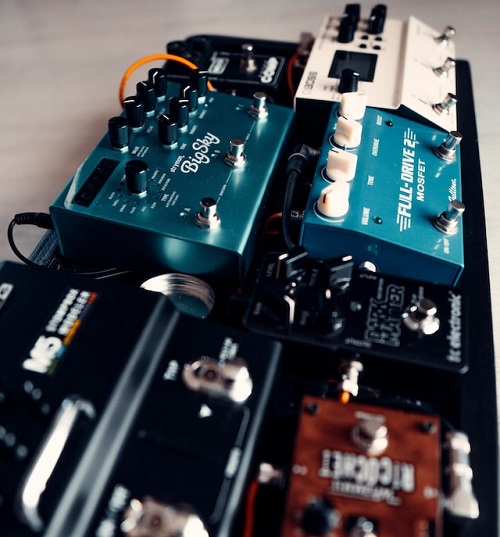
    Reverb can help give your piano playing a sense of space and depth, making it sound more natural and realistic. By adjusting the settings on your reverb pedal or plugin, you can control how pronounced the effect is. A longer decay time will create a more lush, washing sound, while a shorter one will be more subtle and reserved. Experiment with different settings to see what sounds best with your playing style and the music you’re making.

    Our first goal: Create Atmosphere

    The echoey, expansive sound can make listeners feel as if they are on the edge of their seats, eagerly awaiting the next note.

    Our second goal : Add Warmth

    A gentle reverb can make your piano sound fuller and warmer and can be ideal for slower pieces or ballads. This also makes the singer feel more supported and helps them to project their voice better.

    Our third goal: Adding sustain to unsupported lead lines

    With a few simple techniques, you can add amazing sustain to your unsupported lead lines and make them greater sounding. By adding reverb, you can add depth and dimension to your music which can be useful for thin-sounding or brittle tracks. If you want to add a little more interest to your music, try using reverb to emphasize certain parts of the melody.

    The What’s And Why’s

    Input Processing: The reverb processor can be set to remove high frequency content, low frequency content, or a combination of both from the signal that is being processed.. This will allow you to customize the sound of your reverb to get the perfect tone for your needs.

    Spin: The size of the room and how many times the signal is reflecting off the walls will affect how long it takes for the sound to decay. In a small room with few hard surfaces, the sound will die away quickly. However, in a large room with lots of hard surfaces, the sound will take longer to decay.

    Size: I have to turn my size all the way up in order to get an extra spacious pad sound. This involves turning my wet and dry mix up at the same time.

    Stereo: This setting on your reverb control determines how wide the effect will sound. At the 120 setting, the left and right channels of your stereo field each receive a different signal. This creates a more spacious, reverberant sound.

    Diffusion Network: The diffusion network found on many reverb units allows you to more finely control the frequencies of your reverb tail. By boosting or subtracting different frequency bands, you can shape the overall tone of the reverb to better match your needs.

    Density and Scale: Your sound gets darker as the knobs are turned higher.

    Decay: The duration of time in seconds it takes for the reverb to completely diminish. The decay time is an important factor in determining the overall sound of the reverb. A longer decay time will result in a more pronounced reverb, while a shorter decay time will result in a more subtle reverb.

    Reverb is one of the most important effects for keyboards, and today we’re going to be talking about how to use it to get the most out of your live performance. Reverb can be used to add depth and space to your sound, or it can be used to create a sense of atmosphere. It’s also an essential tool for creating dynamics in your performance. Try adding different embellishments to your playing to add interest, such as trills, rolls, or vibrato. You can also experiment with different dynamics to create a more dramatic effect. Use your imagination and have fun!
  • Difference between digital piano and keyboard

    Difference between digital piano and keyboard

    Difference between digital piano and keyboard

    If you’re looking to buy an instrument to start your musical journey, you may wonder about the difference between digital pianos and keyboards. Both are popular for beginners and experienced musicians, but some key distinctions exist.

    In this article, you don’t have to worry about it because we will help you understand the difference between a digital piano and a keyboard.

    Also, This blog post will explore the main distinctions between digital pianos and keyboards to help you choose the right instrument.

    People use the terms digital piano and electronic keyboard to describe a wide variety of instruments, like console digital pianos or synths. We will focus on each term’s most common definition and usage to make things less confusing.

    So without further ado, let’s dive into it.

    What is a digital piano?

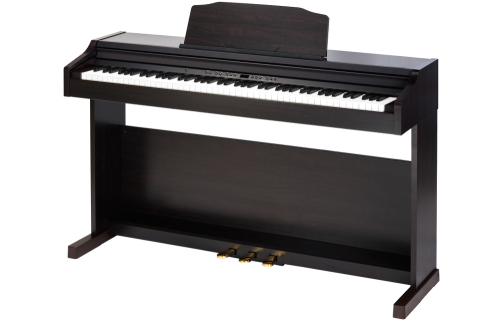
    Digital pianos are meant to seem like real pianos. Digital pianos generally include 88 keys and resemble acoustic pianos. They are usually offered in three configurations: upright, in a cabinet, or on a keyboard stand. A digital piano is often comparable to an acoustic piano in terms of touch, feel, and sound.

    There are several distinctions between digital pianos also, Standard digital pianos, upright digital pianos, and stage pianos are the three most common types of digital pianos. Upright vertical pianos have a large cabinet comparable to an upright piano.

    A digital piano is often equipped with the best hammer action key systems and tone generation engines to match it to the performance of a traditional upright piano.

    Now let’s take a look at keyboards.

    What is a keyboard?

    A keyboard is a musical instrument that is played using a piano-style keyboard. A keyboard typically has 61 or 76 keys, although some professional models have 88 keys.

    Keyboards usually have weighted or semi-weighted keys, which means that the keys respond to your touch in a way that makes it feel like you are playing a real piano.

    In addition, keyboards usually have more sounds than digital pianos, which makes them more versatile instruments.

    Now that we know the primary distinction between digital piano and keyboard let’s go more in-depth and explore the difference between them.

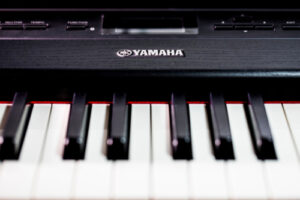
    Yamaha Keyboards Are Extremely Popular

    Digital piano vs keyboard

    Digital pianos and keyboards are often used interchangeably, but there are some critical differences between the two. For one, digital pianos tend to be more expensive than keyboards because digital pianos typically offer more features and better sound quality.

    Another difference is that digital pianos usually have weighted keys, which makes them feel more like acoustic pianos.

    This is a significant selling point for many piano players. Finally, digital pianos typically have more realistic pedal functions, making them feel more like acoustic pianos.

    So, a digital piano is probably a better choice if you’re looking for a more authentic piano experience. But a keyboard might be the way to go if you’re on a budget or want something lighter and easier to carry.

    Number of keys

    The number of keys on a digital piano corresponds with the number on an acoustic piano. For example, digital pianos have 88 keys with 6 octaves, while most electronic keyboards have 61 or 76 keys with 4 to 5 octaves. The greater the number of keys, the greater the range of notes you can play.

    Weighted keys

    Weighted keys on a digital piano give the instrument a feel more like an acoustic piano. The weights also help people with little finger strength play more easily. In contrast, regular keyboards do not have weighted keys.

    Size of keys

    One big difference between digital pianos and electronic keyboards is the size of the keys. The keys are the same size on a digital piano as on an acoustic piano. Most have 88 keys, just like a standard piano.

    The weight of the keys affects how realistic the piano sound is. For example, a grand piano voice on an electronic keyboard isn’t as natural as a keyboard piano. However, it’s challenging to get the most out of it with less expressiveness if it does.

    An electronic keyboard usually has 76 keys, although some models have 61 keys or even 49 keys. So, if you’re looking for a keyboard that feels like a real piano, you should get a digital one.

    Portability

    Regarding portability, keyboards are more portable than digital pianos. This is because digital pianos are often heavier and less portable, making them more challenging to transport from one place to another.

    However, if you need to move your digital piano around frequently, some lighter and more portable options are available on the market.

    This makes keyboards the better choice if you need an instrument that you can easily take with you on the go.

    Sounds

    There are various factors to consider if you can’t pick between a digital piano or a keyboard. A crucial distinction is sound quality. As a rule, digital pianos have the superior sound quality to keyboards.

    This is because digital pianos use higher-quality speakers and more advanced sound-generating technology. As a result, digital pianos typically have more realistic piano sounds. In addition, some digital pianos come with features that allow you to adjust the piano sound to better suit your preferences. The focus of most digital pianos is their acoustic piano modelling technology.

    On the other hand, keyboards usually have inferior sound quality because keyboards typically use lower-quality speakers and less advanced sound-generating technology.

    As a result, keyboards often have less realistic piano sounds. In addition, very few keyboards come with features that allow you to adjust the piano sound.

    If you want customization and a wider array of sounds, then a keyboard might be better for you. Most keyboards have 100+ sounds and offer ways to edit and change those sounds. Keep in mind that more doesn’t always mean better quality.

    Touch quality

    When you play a digital piano, it feels more like playing an acoustic piano than a keyboard. For example, digital pianos have keys that are generally weighted or semi-weighted. Unfortunately, hammer-action keys on digital pianos are typically weighted, meaning they are meant to simulate the action of real acoustic piano keys.

    Semi-weighted keys use a spring rather than a hammer to create a lighter touch. However, the touch is not as realistic as an acoustic piano, but it does have some of that feeling.

    Higher-end digital pianos generally feature some degree of weight adjustment and, in some instances, after-touch customization, which influences the sound of the key when you press it down.

    A keyboard’s keys, like those on a piano, are either semi-weighted or unweighted “waterfall” keys. These keys are simple to play and make it easy to produce glissando or slide effects.

    However, these keys do not provide the same tactile sensation as acoustic piano keys, therefore, if you want an authentic piano experience, you should go with a digital piano instead of a keyboard.

    What is the most suitable option for a novice?

    The answer to this question depends on what you’re looking for. A digital piano or keyboard will work fine if you’re looking for a way to make music. However, a digital piano is probably the better option if you’re looking for an instrument that feels and sounds like a real piano.

    Conclusion

    So here we are, at the end of our journey. You should now better understand the key differences between digital pianos and keyboards. Keep in mind that you can use both instruments to make beautiful music. The choice is ultimately up to you and what you’re looking for in an instrument.

    Remember, Piano sound quality is the most crucial factor when choosing between digital pianos and keyboards. Both digital pianos and electronic keyboards use digital technology to create piano sounds.

    However, cheaper electronic keyboards typically use lower-quality sounds, whereas digital pianos usually have more authentic piano sounds.

    In addition, electric pianos usually have a richer, fuller sound than the electronic keyboard’s electric piano sounds.

    Finally, grand pianos tend to have the most authentic piano sound of all three types of instruments. Yes, they can be very expensive and we wouldn’t recommend a beginner start with one.