Blog

  • Top Easy Classical Keyboard Pieces for Beginners: A Mastery Guide

    Top Easy Classical Keyboard Pieces for Beginners: A Mastery Guide

    Starting on the keyboard can be both exciting and a bit daunting, especially when you’re eager to play beautiful music but aren’t quite sure where to begin. Classical music, with its rich history and complex compositions, might seem out of reach for beginners. But don’t worry, there’s a treasure trove of easy classical keyboard pieces that are not only manageable for beginners but also incredibly rewarding to play.

    These pieces serve as the perfect introduction to the world of classical music, offering a gentle learning curve while still providing the satisfaction of mastering a timeless work of art. Whether you’re a young student just starting your musical journey or an adult revisiting an old passion, these compositions will help you build confidence at the keyboard and inspire you to explore more challenging pieces in the future.

    Benefits of Playing Easy Classical Keyboard Pieces

    When beginners embark on the journey of playing the keyboard, selecting easy classical pieces as their starting point offers a myriad of benefits that go beyond simply mastering a new instrument. These pieces, crafted by master composers, are time-tested pathways that guide novices through the essential elements of keyboard playing while nurturing a deep appreciation for classical music.

    Early Success Builds Confidence. One of the primary advantages for beginners learning these pieces is the immediate sense of achievement they feel. Easy classical keyboard pieces are designed in such a way that they’re accessible to novices, enabling them to produce beautiful music without overwhelming complexity. This early success is crucial in building self-confidence and motivation, encouraging learners to persevere in their musical journey.

    Development of Technical Skills. Despite their simplicity, these pieces encompass a range of technical skills that are fundamental to becoming proficient at the keyboard. Beginners will find themselves navigating through different key signatures, time signatures, and dynamics, all while maintaining proper hand position and finger techniques. This gradual increase in technical dexterity is vital for tackling more challenging compositions in the future.

    Introduction to Musical Expression. Easy classical pieces serve as an excellent introduction to the expressive capabilities of the keyboard. Through these compositions, learners begin to understand how tempo, dynamics, and phrasing contribute to conveying emotion and storytelling in music. This early exposure to musical expression lays the groundwork for a more nuanced and sensitive approach to playing as they progress.

    A Gateway to Music Theory. Learning these pieces also opens the door to fundamental concepts in music theory, including melody, harmony, and rhythm. By studying and playing these compositions, beginners naturally absorb these concepts, which are essential for reading music and understanding the structure of compositions. This knowledge acts as a foundation that supports all future musical endeavors, whether they continue with classical music or explore other genres.

    Cultural and Historical Appreciation. Easy classical keyboard pieces are more than just notes on a page; they are windows into the past that allow players to connect with the composers and the eras they lived in. As beginners learn these pieces, they also gain insights into the historical and cultural contexts that influenced their creation. This deeper understanding enriches the playing experience and fosters a lifelong appreciation for classical music.

    Selection of Easy Classical Keyboard Pieces for Beginners

    When embarking on the journey of learning the keyboard, incorporating easy classical pieces into practice sessions can significantly enhance the learning experience. These pieces not only serve as attainable goals for beginners but also introduce them to the vast world of classical music in a manageable way.

    Why Choose Classical Pieces

    Classical music, with its structured harmony and melody, provides an excellent foundation for keyboard beginners. It encourages learners to focus on both hand coordination and emotion, cultivating a deeper sense of musicality early on. Moreover, playing classical pieces allows beginners to encounter various historical styles, from Baroque to Romantic, which broadens their understanding and appreciation of the genre.

    Recommended Pieces for Beginners

    To help beginners start their classical music journey, here’s a curated list of pieces that are both accessible and rewarding to play:

    • “Minuet in G Major” by Johann Sebastian Bach: This piece, although simple in its melody, requires precision in timing and dynamics, making it a perfect piece for beginners to practice.
    • “Ode to Joy” by Ludwig van Beethoven: Recognizable and uplifting, this melody helps beginners learn about phrasing and expression in music.
    • “The Entertainer” by Scott Joplin: Though technically not a classical piece in the strictest sense, its inclusion here is for its simplicity and introduction to a different rhythmical structure, which is beneficial for hand coordination.
    • “Sonatina in C Major, Op. 36, No. 1” by Muzio Clementi: This piece introduces beginners to the sonatina form, with clear sections and themes that are great for working on transitions and musical storytelling.

    Each of these pieces offers something unique to the beginner, from technical challenges to opportunities for expressive playing.

    Tips for Practicing

    Practicing these pieces should be a rewarding experience. Here are a few tips to make the most out of your practice sessions:

    • Take It Slow: Always start by learning the notes and rhythms slowly, gradually increasing the tempo as you become more comfortable.
    • Focus on Hand Independence: Many classical pieces require hands to move independently of each other. Practice hands separately before putting them together.
    • Listen to Recordings: Listening to how professional musicians interpret the piece can provide inspiration and a clearer understanding of the music.

    Tips for Learning and Mastering Classical Keyboard Pieces

    Learning to play classical keyboard pieces can be a rewarding yet challenging journey for beginners. The nuances of classical music require not only technical skill but also an understanding of the piece’s emotional depths. Here are some strategies to facilitate the learning process and help beginners master these timeless compositions.

    Start with Proper Posture

    The foundation of great keyboard playing begins with posture. Sitting correctly at the keyboard with a straight back, relaxed shoulders, and feet flat on the ground can significantly impact one’s ability to play. Proper hand position, with curved fingers hovering over the keys, allows for more precise and fluid movements. Beginners should pay special attention to their posture to prevent tension and facilitate easier playing.

    Break Down the Pieces

    Diving straight into playing a piece from start to finish can be overwhelming for beginners. Instead, they should focus on breaking the piece down into manageable sections or bars. Working on small segments at a time enables learners to concentrate on mastering one aspect before moving on to the next, making the learning process less daunting and more accessible.

    Use a Metronome

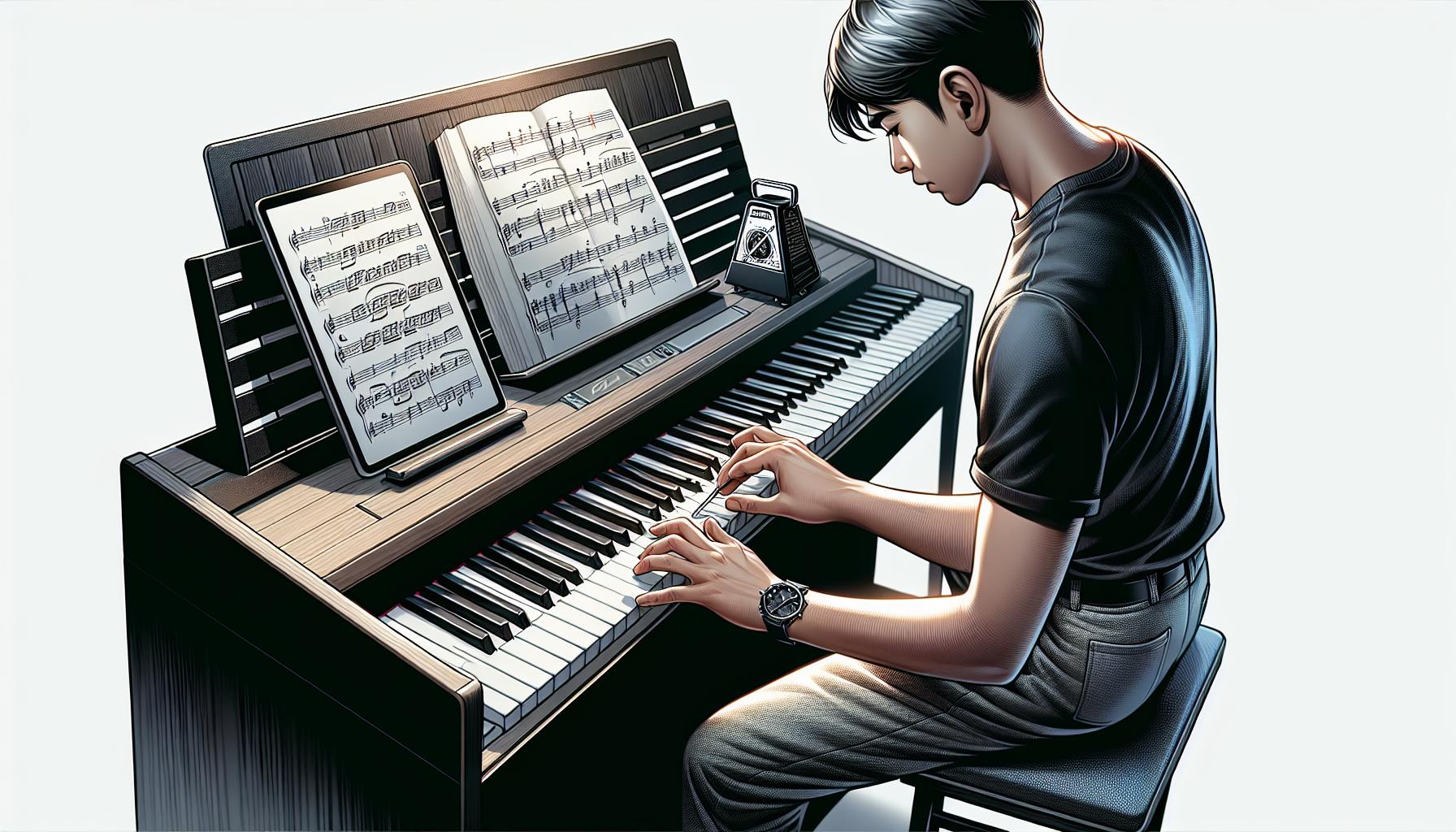
    Timing is crucial in classical music. Beginners often struggle with maintaining consistent tempo throughout a piece. Using a metronome can help players develop a strong sense of rhythm and timing. Starting with a slower tempo than the piece requires allows beginners to focus on accuracy and precision. Gradually, they can increase the tempo as their confidence and skills develop.

    Listen and Learn

    Listening to recordings of professional musicians playing the pieces beginners are learning can be incredibly beneficial. It provides insights into how the pieces should sound and offers inspiration. Beginners should listen actively, noting how the professionals handle tempo changes, dynamics, and expressiveness. This understanding can significantly enhance their interpretation of the pieces.

    Focus on Dynamics and Expression

    Classical music is known for its expressive depth. Beginners should not just focus on hitting the right notes but also on conveying the emotion behind the music. Understanding the dynamics and varying the volume and intensity of their playing can bring the pieces to life. Encouraging beginners to feel the music and express themselves through their playing can transform their performances from mechanical to deeply moving.

    Conclusion

    Embarking on the journey of learning classical keyboard pieces is both exciting and rewarding. By adopting the strategies outlined, beginners have a clear roadmap to not just play notes but to bring music to life. It’s about more than just hitting the right keys; it’s about making the pieces sing with emotion and expression. As they practice with these tips in mind, they’ll find themselves not just playing music, but truly connecting with it. Here’s to the beginning of a musical adventure that promises to be as enriching as it is enjoyable.
  • Master Keyboard Skills Anywhere with Simply Piano: A Guide

    Master Keyboard Skills Anywhere with Simply Piano: A Guide

    Diving into the world of music can be both thrilling and a bit daunting, especially when it comes to learning an instrument like the keyboard. But what if there was a way to make that journey smoother and more enjoyable? Enter Simply Piano, a game-changer for beginners and seasoned players alike.

    This app promises to take you by the hand, guiding you through the basics to more advanced techniques, all at your own pace. With its user-friendly interface and personalized learning paths, Simply Piano makes mastering the keyboard accessible and fun. Whether you’re aiming to play your favorite songs or understand music theory, it’s tailored to fit your musical aspirations.

    Exploring Simply Piano Features

    When embarking on the journey of learning the keyboard with Simply Piano, users are greeted with an array of features designed to make the learning process both engaging and efficient. At its core, Simply Piano prides itself on offering a user-friendly interface that newcomers can navigate with ease, allowing them to jump straight into lessons without the hassle of a steep learning curve.

    One of the standout features of Simply Piano is its personalized learning paths. After assessing a player’s skill level, the app tailors a specific curriculum meant to challenge and develop their abilities at a comfortable pace. This customization ensures that both beginners and more experienced players can find content that matches their needs and goals.

    Comprehensive Course Library

    Within Simply Piano, there’s a comprehensive library of courses covering a wide range of topics:

    • Basic chords and melodies
    • Reading sheet music
    • Understanding rhythm
    • Advanced techniques for experienced players

    This extensive collection ensures that there’s always a new challenge to tackle or a new skill to master, keeping the learning process fresh and exciting.

    Interactive and Real-Time Feedback

    A key feature that sets Simply Piano apart from other learning methods is its interactive and real-time feedback mechanism. As users play, the app listens and provides immediate feedback on their accuracy and timing. This instant response helps learners correct mistakes on the fly, reinforcing good habits and ensuring continuous improvement.

    Expansive Song Library

    For many learners, the ultimate goal is to play their favorite songs. Recognizing this, Simply Piano offers an expansive song library that spans various genres and eras. From classical masterpieces to contemporary hits, users can search and find songs that resonate with them, making practice sessions enjoyable and highly personal.

    Facts about the Simply Piano Song Library:

    Genres Available Songs in Library
    Classical 100+
    Pop 200+
    Jazz 50+
    Rock 150+

    Progress Tracking and Achievements

    To keep learners motivated, Simply Piano includes a progress tracking feature that visually displays users’ advancement over time. Alongside this, the app rewards accomplishments with achievements, celebrating milestones and encouraging players to set and reach new goals.

    Supportive Community

    Lastly, Simply Piano fosters a supportive community of learners. Through the app, users can connect, share experiences, and offer each other encouragement.

    Getting Started with Simply Piano

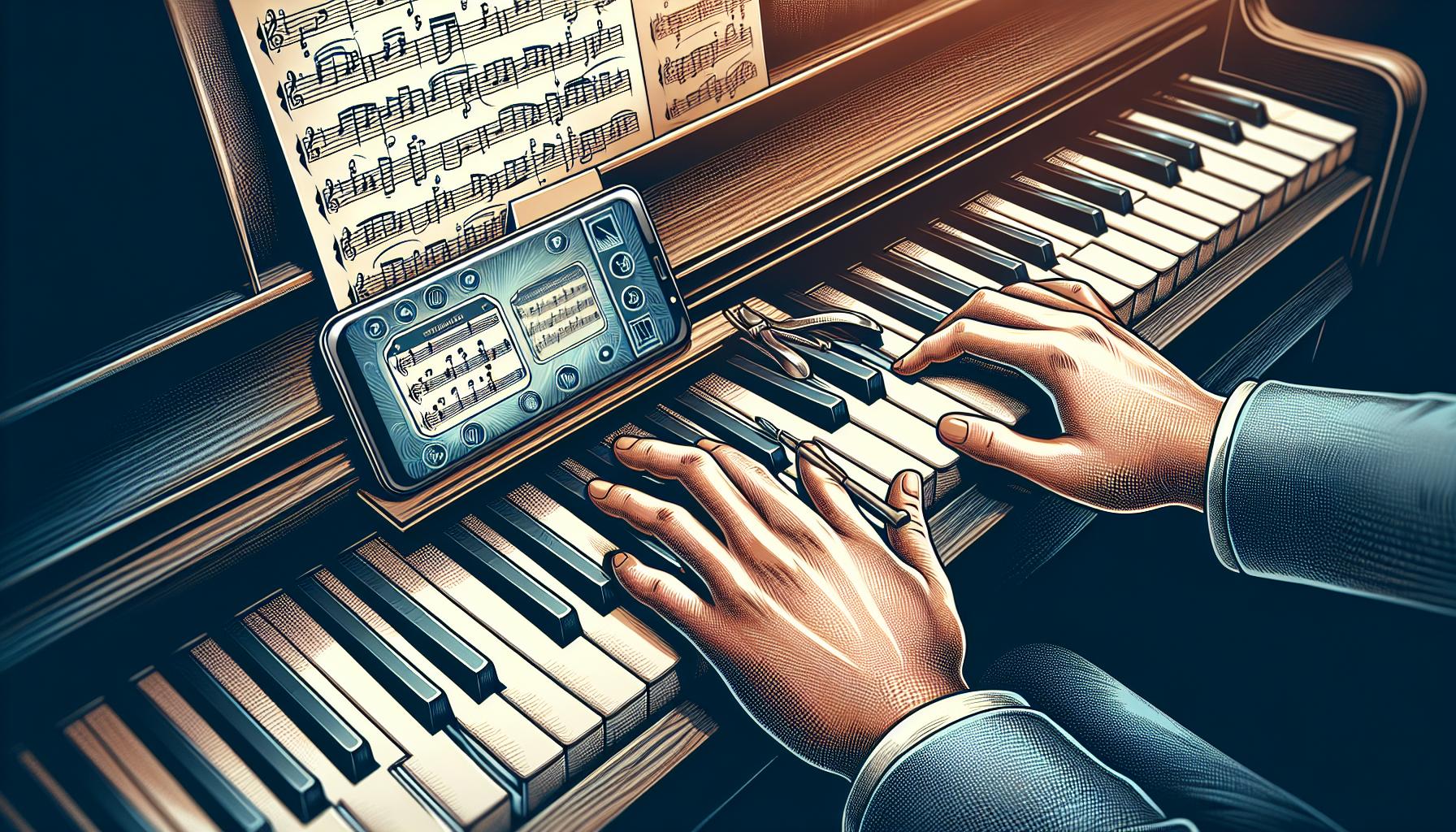
    Embarking on a musical journey with Simply Piano is as straightforward as it is exciting. First, users need to download the app from their respective app stores. It’s available on both iOS and Android, making it accessible to a wide array of smartphone and tablet users. After installation, the app guides users through a simple setup process, where they’ll tune their piano or keyboard to ensure the app can accurately recognize the notes being played.

    One of the first steps in the app is selecting a learning path. Simply Piano offers several paths tailored to different skill levels, from absolute beginners who have never touched a keyboard to advanced players looking to polish their skills and learn new pieces. This customization makes the learning experience much more personal and effective.

    Required Equipment

    To get the most out of Simply Piano, learners need:

    • A piano or keyboard
    • A smartphone or tablet
    • A stable stand or a way to secure the device in sight while playing

    The beauty of Simply Piano lies in its utilization of the device’s microphone to listen to and evaluate the player’s progress. For electric keyboard users, there’s the option to connect directly via a USB cable, offering even more precise feedback.

    Navigating the Interface

    Simply Piano’s interface is designed with the user in mind. The home screen presents the chosen learning path prominently, with clear directions on how to proceed. New lessons unlock as the player progresses, ensuring a structured learning approach. The app also features a Songs tab where users can browse and select pieces to learn outside of their structured lessons. This feature is particularly popular among users who want to fast-track their ability to play familiar tunes.

    Interactive Feedback System

    The core of Simply Piano’s effectiveness is its interactive feedback system. As users play, the app listens and provides real-time feedback on accuracy and timing, highlighting areas for improvement. This immediate response helps learners correct mistakes on the spot, greatly speeding up the learning process.

    Exercises and songs within Simply Piano are designed to gradually increase in difficulty, ensuring that users are constantly challenged yet never overwhelmed. Engagement with the app is further enhanced by badges and achievements, rewarding progress and encouraging users to keep practicing.

    Progressing Through Levels

    As users begin their journey with Simply Piano, they’re introduced to a structured progression system that’s both encouraging and comprehensive. Each level in Simply Piano is meticulously designed to build upon the skills learned in the previous ones, ensuring a smooth and seamless learning curve. From the basics of note recognition to mastering complex chords, the app’s curriculum is tailored to cater to individual learning speeds and preferences.

    Personalized Learning Paths

    The beauty of Simply Piano lies in its personalized learning paths. Right from the start, users are prompted to choose a path that aligns with their musical goals. Whether they’re aspiring to play classical music, pop tunes, or jazz, the app has a diverse range of courses to suit every taste. This personalization makes each user’s journey unique, enabling them to focus on the genres they love most while still acquiring the foundational skills needed to play the keyboard proficiently.

    Achievements to Keep You Motivated

    One of the most effective features of Simply Piano is its reward system. As users progress through levels, they earn badges and achievements that serve as milestones of their improvement. This gamification element not only adds a fun aspect to learning but also keeps motivation levels high. Seeing a tangible record of their progress encourages users to set higher goals and continue practicing.

    Level Achievement Description
    1 First Note Recognized and played first note correctly
    5 Chord Master Mastered basic chords
    10 Songbird Completed first full song

    Interactive Challenges and Real-Time Feedback

    To further enhance the learning experience, Simply Piano incorporates interactive challenges at each level. These challenges are designed to test users’ skills in a fun and engaging way, covering everything from pitch accuracy to rhythm and timing. Coupled with the app’s real-time feedback system, learners can readily identify areas for improvement and work on them immediately. This instant feedback is crucial for building correct playing habits from the outset and avoiding common mistakes.

    Expanding Your Musical Repertoire

    As users advance through the levels, the course library continues to expand, unlocking new songs and exercises. This not only helps in keeping the learning experience fresh and exciting but also in expanding users’ musical repertoire. The Songs tab becomes enriched with a wider variety of genres and difficulty levels, presenting learners with the opportunity to challenge themselves and explore different musical styles.

    Mastering Techniques with Simply Piano

    As learners dive deeper into their musical journey with Simply Piano, they’ll find the app’s dedication to mastering keyboard techniques both encouraging and challenging. It’s not just about hitting the right notes; the app focuses on teaching the nuances of playing, which are crucial for any aspiring musician. From understanding scales and chords to mastering dynamics and articulation, Simply Piano offers a comprehensive toolkit for growth.

    Personalized Feedback Loop

    One of the standout features is the personalized feedback loop. As users play, the app listens and analyzes their performance, offering real-time feedback. This isn’t about pointing out every single mistake but rather guiding learners towards improvement in areas like finger positioning and hand coordination. The feedback is constructive, aimed at fostering a persistent learning attitude.

    Interactive Exercises and Challenges

    To keep the learning process exciting, Simply Piano includes a variety of interactive exercises and challenges. These are designed to practice specific techniques, such as:

    • Scales and arpeggios for dexterity
    • Chord progressions for harmonic understanding
    • Rhythm exercises to improve timing

    Each challenge ramps up in difficulty, ensuring that users are constantly pushing their boundaries and discovering new aspects of their musical abilities.

    Video Tutorials for Visual Learning

    For those who benefit from seeing concepts in action, Simply Piano offers a selection of video tutorials. These videos cover a range of topics, from basic keyboard layout to more complex techniques like pedal usage and expressive playing. The visual component helps demystify aspects of keyboard playing that might seem daunting at first glance.

    Expanding Musical Knowledge

    As users progress, they’ll notice an expansion in their musical knowledge and vocabulary. Simply Piano doesn’t just teach how to play songs; it delves into music theory, helping users understand the why behind the music. This deeper understanding enables learners to not only play existing pieces with more expression but also to engage in improvisation and composition.

    Gradual Learning Curve

    The app’s structured progression system ensures that learners are not overwhelmed. Starting with simple pieces and gradually introducing more complex musical concepts, users feel a sense of achievement at each stage of their journey. Simply Piano’s approach reinforces the idea that mastery comes with patience and practice.

    Advantages of Learning Keyboard with Simply Piano

    Simply Piano offers a unique approach to learning the keyboard that blends traditional methods with the convenience of modern technology. This combination provides a slew of advantages making it an appealing option for beginners and intermediate players alike.

    First and foremost, accessibility is a key benefit. With Simply Piano, learners have the ability to practice anytime, anywhere. All they need is their keyboard and a smartphone or tablet. This flexibility allows for more consistent practice without the constraints of scheduled lessons.

    Moreover, personalized learning experiences are at the core of Simply Piano’s methodology. The app adapts to each user’s skill level, tailoring exercises to challenge them just enough to progress but not so much that they become frustrated. This personalized approach helps keep learners engaged and motivated as they see tangible improvements in their playing.

    Interactive Learning Experience

    • Immediate Feedback: One of the standout features of Simply Piano is its immediate feedback system. The app listens to the player’s performance and offers instant constructive criticism. This real-time feedback accelerates the learning process, making it easier to correct mistakes and improve technique.
    • Engaging Exercises: Simply Piano’s curriculum is packed with entertaining exercises and challenges designed to hone specific skills. Whether it’s mastering scales, chords, or timing, each exercise is an engaging experience that builds musical proficiency.
    • Progress Tracking: Learners can track their progress through the app, offering a visual representation of their improvement over time. This feature not only motivates learners but also helps them identify areas that require more attention.

    Comprehensive Curriculum

    Simply Piano covers a wide spectrum of keyboard-related skills. From reading sheet music to understanding complex chords, the curriculum is designed for comprehensive learning. Beginners start with the basics, such as identifying notes and simple melodies, before advancing to more complex concepts.

    • Music Theory: A solid foundation in music theory is crucial for any musician. Simply Piano includes lessons on theory, which empowers users to comprehend musical structures and enhances their ability to express themselves through music.
    • Video Tutorials: For visual learners, Simply Piano provides an array of video tutorials explaining everything from the layout of the keyboard to techniques for playing more expressively. These tutorials complement the interactive exercises, offering learners a well-rounded educational experience.

    Conclusion

    Embracing Simply Piano as a learning tool brings the world of keyboard music right to your fingertips. Its innovative approach merges the best of both worlds: the richness of traditional piano lessons with the convenience and engagement of modern technology. Whether you’re starting from scratch or looking to polish your skills, the app’s personalized journey ensures that learning is not just effective but also incredibly enjoyable. With Simply Piano, the dream of playing beautiful music isn’t far-fetched—it’s an achievable reality that’s waiting just a few taps away. So why wait? Let the music begin!
  • Top 4 Best iPad Apps for Learning Keyboard: Gamified & Interactive

    Top 4 Best iPad Apps for Learning Keyboard: Gamified & Interactive

    In the digital age, learning to play the keyboard has never been easier, thanks to a plethora of iPad apps designed to make the journey both fun and effective. Whether you’re a complete beginner or looking to brush up on your skills, there’s an app out there tailored to your needs.

    From interactive lessons that feel like games to comprehensive courses taught by seasoned musicians, these apps transform your iPad into a portable music teacher. Let’s dive into the world of iPad apps that are striking the right chords with keyboard learners of all ages.

    Benefits of Learning Keyboard with iPad Apps

    Learning the keyboard has never been more engaging or accessible, thanks in large part to the plethora of iPad apps designed for aspiring musicians. These innovative applications achieve a delightful harmony of convenience and efficacy, offering myriad benefits to users of all ages and skill levels.

    Personalized Learning Pace is one of the standout advantages. Traditional music lessons often proceed at the instructor’s pace, which might not align with every student’s needs. iPad apps, however, allow users to progress at their own pace, replaying difficult sections as needed and skipping over concepts they’ve already mastered. This custom approach ensures that learners remain neither bored nor overwhelmed.

    Affordability is another significant benefit. Registering for music classes or hiring a private tutor can be expensive. iPad apps, on the other hand, often come at a fraction of the cost, with many offering free basic courses. Even premium versions or subscriptions are typically less costly than traditional lessons, making keyboard learning more accessible to a wider audience.

    The Availability of Diverse Teaching Methods caters to different learning preferences. Some apps focus on a game-like interface to make learning feel more like play, which can be especially appealing to younger users. Others provide video tutorials, interactive sheet music, or hands-on practice exercises. This variety ensures that every learner can find an app that resonates with their preferred style of learning.

    Real-Time Feedback and Progress Tracking are also made possible through advanced technology in iPad apps. Sensors and microphones can assess the user’s playing in real-time, offering immediate feedback on timing, accuracy, and rhythm. Such instant evaluations can be incredibly motivating, as they allow learners to recognize and celebrate their improvements and milestones.

    Moreover, these apps often come with a Vast Library of Songs spanning various genres and difficulty levels. Learners can start with simple tunes and gradually move to more complex pieces, keeping the learning process fresh and exciting. This extensive repertoire also enables users to practice playing the songs they love, which can significantly enhance motivation and enjoyment.

    In addition to these benefits, iPad keyboard learning apps foster a sense of Community and Support. Many apps offer online forums or integration with social media, allowing learners to share their progress, ask for advice, and connect with others on the same musical journey. This sense of community can be a strong motivating factor, encouraging continuous learning and improvement.

    Top Interactive Keyboard Learning Apps

    Delving into the realm of digital keyboard learning, a few iPad apps have risen above the rest, setting benchmarks for interactive and engaging piano education. These apps not only offer personalized lessons but also incorporate elements that make learning feel like a game, thus maintaining the learner’s interest and motivation.

    Simply Piano is a household name for anyone looking to dive into keyboard learning through their iPad. This app is celebrated for its user-friendly interface and its ability to cater to both beginners and advanced players. It listens to the player through the iPad’s microphone, providing real-time feedback that helps in correcting mistakes instantly. With a vast library that spans classical to contemporary hits, Simply Piano ensures that learners have a wide range of songs to choose from.

    Another standout is Yousician, which prides itself on its technology that recognizes music played on an acoustic keyboard, or through a midi connection, and provides instant feedback and guidance. What sets Yousician apart is its self-paced learning approach, allowing users to progress at their own speed, making it an excellent choice for learners of all ages.

    Flowkey is renowned for its flexibility, offering courses and songs across various genres and difficulty levels. Its key feature is the split-screen view, allowing learners to see both hand movements and sheet music in real-time, facilitating a more comprehensive learning experience. Flowkey’s extensive song library is continually updated, ensuring that users always have fresh and motivating songs to practice.

    For those interested in a more social learning experience, Skoove offers an engaging platform with interactive piano lessons. Skoove’s AI recognizes the notes you play and helps guide your progression. It also offers the opportunity to receive lessons from real instructors, which adds a personal touch to the digital learning process.

    App Key Features Best For
    Simply Piano Real-time feedback, Wide song library Beginners to Advanced
    Yousician Self-paced learning, Instant feedback Learners of all ages
    Flowkey Split-screen view, Comprehensive song library Flexible learning
    Skoove AI recognition, Access to real instructors Community-centered learning

    Courses by Seasoned Musicians

    A unique selling point of some iPad apps for learning the keyboard is their partnership with seasoned musicians and educators. These collaborations result in courses that not only cover the technical aspects of playing the piano but also bring a rich, immersive learning experience to the table. Apps that feature lessons crafted by expert musicians often stand out for their depth of knowledge, insightful tips, and the real-world experience they impart to learners.

    Among the notable apps that boast such courses, a few stand out for their direct connection to the industry. For instance, Simply Piano and Flowkey collaborate with professional pianists and composers to create specialized lessons that cater to a variety of musical tastes and skill levels. These lessons aren’t just about hitting the right notes; they also focus on the artistry and expression behind the music. As a result, learners get a holistic education that’s as much about performance as it is about technique.

    Yousician, on the other hand, employs a team of music educators led by high-profile musicians. This app takes an innovative approach by integrating technology with traditional teaching methods. The feedback mechanism, powered by the app’s advanced algorithm, simulates a real-time classroom experience. This gives students the feeling of having a personal tutor without the need for physical presence.

    Skoove offers something slightly different; it leans heavily on its AI recognition software to provide real-time feedback, but it doesn’t stop there. The app ensures that its course content is continually updated and vetted by professional musicians and teachers. This collaboration ensures that learners are not only getting the most current information and techniques but are also exposed to various teaching styles and perspectives.

    Song Library and Genre Diversity

    An attractive feature for many learners is the diversity of songs available in these apps’ libraries. Simply Piano boasts a vast library that spans numerous genres, allowing students to practice with songs they love and are familiar with. Yousician and Flowkey equally offer a wide array of options, from classic compositions to modern-day hits, appealing to users’ varied musical tastes.

    Fun and Gamified Learning Experience

    In today’s digital age, learning to play the keyboard needn’t be a monotonous task, thanks to a handful of iPad apps that have revolutionized the method of musical education by incorporating fun and games into the curriculum. These apps, specifically designed for learners of all ages, turn the potentially daunting journey of keyboard mastery into an interactive and enjoyable adventure.

    Simply Piano and Yousician, for instance, lead the charge in gamified learning. They boast features that engage users in a way that feels more like playing a video game than sitting through a traditional music lesson. Progressing through levels, unlocking achievements, and competing with friends or users worldwide provide constant motivation and an element of excitement that traditional learning methods often lack.

    Simply Piano uses an innovative approach by listening to the notes you play and providing real-time feedback, almost like having a personal tutor at your side. This instant feedback mechanism helps learners to correct their mistakes on the fly and understand music theory in a practical context. Meanwhile, Yousician crafts a personalized journey for each user, leveraging well-known songs and exercises designed to improve specific skills, such as reading sheet music and playing by ear.

    Flowkey and Skoove further enhance the learning experience with their unique features. Flowkey offers a split-screen view where one side shows a video of a pianist playing the song, and the other displays the falling notes, akin to popular rhythm games. This visual representation aids in understanding hand coordination and timing, crucial skills for any pianist. On the other hand, Skoove emphasizes the importance of improvisation and composition, encouraging learners to create their music. This creative freedom not only makes learning more enjoyable but also nurtures an in-depth understanding of musical structures and harmony.

    The diverse song libraries that these apps offer are nothing short of impressive. Ranging from classical to contemporary hits, these libraries ensure that learners can practice and play songs they love, making practice sessions something to look forward to. Moreover, these apps often update their song selections to keep content fresh and engaging.

    Furthermore, the aspect of social learning cannot be overstated. Many of these apps feature online communities where learners can share their progress, challenges, and achievements. This not only fosters a sense of belonging and encouragement but also offers a platform for receiving constructive feedback from peers and instructors.

    Conclusion

    With the right app, learning to play the keyboard becomes an adventure rather than a chore. The apps we’ve explored offer more than just lessons; they’re gateways to a musical journey tailored specifically for you. Whether you’re drawn to the classics or prefer to rock out to contemporary hits, there’s something for everyone. The community aspect can’t be overlooked either—it’s like having a cheer squad and a team of mentors rolled into one. So grab your iPad, pick an app, and start playing. Who knows where your musical journey will take you?

  • Why Learning Keyboard is the Best Start for Music Newbies

    Why Learning Keyboard is the Best Start for Music Newbies

    Deciding on the first instrument to learn can be a bit of a head-scratcher. With so many options out there, it’s easy to feel overwhelmed. But what if there was an instrument that’s not only versatile but also beginner-friendly? Enter the keyboard, a popular choice for many budding musicians.

    The keyboard’s appeal lies in its accessibility and the immediate gratification it offers. From the moment they press their first key, learners can produce a clear, unmistakable note, unlike other instruments that might require a bit more finesse to get started. It’s this straightforwardness that makes the keyboard a strong contender for the title of the best first instrument.

    Moreover, the keyboard opens up a world of musical exploration. With a range of sounds and rhythms at one’s fingertips, it encourages creativity and experimentation. It’s an instrument that grows with the player, making it a fantastic starting point for anyone’s musical journey.

    Versatility of the Keyboard

    The keyboard stands out in the musical world for its unmatched versatility. Unlike many other instruments, it offers a broad spectrum of sounds and styles, making it an ideal option for learners eager to explore various musical genres. From classical music to jazz, rock, and pop, the keyboard can mimic an orchestra’s breadth or a rock band’s energy, all from the comfort of one’s home.

    One of the keyboard’s most compelling features is its ability to produce a wide range of sounds. Many modern keyboards are equipped with hundreds of tones, including pianos, organs, strings, brass, and synth sounds. This versatility not only keeps the learning process engaging and fun but also allows students to experiment and discover their musical preferences and talents. They can easily switch from practicing a Bach prelude to jamming on a blues scale, all with the press of a button.

    The keyboard’s adaptability extends to its role in music composition and production. With the advent of MIDI (Musical Instrument Digital Interface) technology, keyboards have become indispensable tools in the music industry. They can be connected to computers and other devices to record, compose, and produce music, opening up a world of creativity and professional opportunities for learners. This makes the keyboard not just an instrument for personal enjoyment but also a gateway to a potential career in music.

    Additionally, the keyboard’s layout provides a visual and intuitive understanding of music theory. The arrangement of keys helps learners grasp concepts such as scales, chords, and intervals more naturally than on other instruments. This visual approach to learning music theory is beneficial for beginners, as it demystifies complex concepts and encourages a deeper understanding of music.

    Moreover, keyboards are available in various sizes and at different price points, making them accessible to a wide range of learners. Whether it’s a compact, portable keyboard for a small living space or a full-sized digital piano for a more authentic feel, there’s a keyboard for every need and budget. This accessibility further underscores the keyboard’s role as a versatile and approachable instrument for beginners.

    The keyboard’s versatility is a key factor in its appeal as a first instrument. It not only offers immediate gratification and ease of learning but also provides a foundation for musical exploration and growth. Whether a learner’s interest lies in classical music, rock, pop, or electronic genres, the keyboard serves as a versatile and fulfilling starting point in their musical journey.

    Accessibility for Beginners

    When considering whether the keyboard is a good first instrument for beginners to learn, one can’t overlook its remarkable accessibility. This attribute alone makes it a compelling choice for novices of all ages. Unlike some instruments that require a certain physicality or sophistication to begin learning, keyboards present a welcoming starting point for many. From young children with smaller hands to adults who’ve never read a note of music in their lives, the keyboard adapts to the needs and limitations of its player remarkably well.

    Keyboards come in a variety of sizes, offering an array of options to accommodate different physical abilities and space constraints. Mini keyboards with fewer keys are not just budget-friendly; they are also perfect for younger learners whose hands might struggle with the stretch of a full-sized piano keyboard. This adaptability ensures that beginners can start making music without the barrier of an unwieldy instrument.

    Moreover, the financial barrier to entry is significantly lower for keyboards compared to many other musical instruments. Interested learners can find a wide range of options that fit various budgets. From affordable models ideal for someone just dipping their toes into the world of music to more sophisticated options designed for those ready to explore deeper, there’s a keyboard for every price point. Consider the following price categories that highlight this diversity:

    Type Price Range
    Basic Keyboards $50 – $200
    Intermediate Models $200 – $500
    Advanced Keyboards $500 and above

    Additionally, many keyboards offer built-in learning aids which can significantly enhance the learning process. These features might include light-up keys to indicate which notes to play, built-in metronomes to keep time, and even tutorials or games that make practice fun. Such tools not only lower the initial learning curve but also keep learners engaged and motivated over time.

    Another key aspect of the keyboard’s accessibility lies in its ubiquity in music education settings. Many schools and teaching studios prefer keyboards due to their versatility and ease of maintenance. This widespread use makes it easier for learners to find teachers and resources tailored to keyboard learning. Online platforms and applications have further expanded access, offering lessons that range from absolute beginner to advanced techniques at the tap of a screen.

    Immediate Gratification

    When diving into the world of music, one of the most enticing aspects of starting with a keyboard is the immediate gratification it offers. In contrast to many other instruments, beginners can produce clear, recognizable notes from the moment they press a key. This instant feedback is not only rewarding but also encourages continued practice and exploration.

    Keyboards, with their diverse range of sounds and effects, allow learners to experiment with different tones and styles right out of the gate. Whether it’s mimicking the sound of a grand piano or venturing into electronic music, the keyboard facilitates an environment where creativity and experimentation flourish. This versatility is a boon for maintaining interest and motivation among beginners, who can easily feel overwhelmed by the complexities of music theory and technique.

    The built-in features of many keyboards, such as pre-recorded tracks and metronomes, further contribute to this sense of immediate satisfaction. Learners can play along with these tracks, getting a feel for timing and rhythm without the need to assemble a band or invest in additional equipment. For many, this makes the learning process more engaging and less daunting, as they can perceive their progress in real-time.

    Moreover, the digital nature of keyboards allows for easy recording and playback, enabling learners to listen to their performances and track their progress. This feedback loop is crucial for developing an ear for music and improving over time. The ability to instantly hear what they’ve played helps beginners identify areas for improvement and celebrate their accomplishments, no matter how small.

    Feature Benefit
    Price Range Catering to various budgets
    Size Options Adaptable to different physical abilities
    Built-in Aids Enhances learning without extra costs
    Online Tutorials Expanded access to lessons

    The affordability and accessibility of keyboards also play a significant role in the immediate gratification they offer. With options available across a broad spectrum of price points, beginners can get started without a sizable upfront investment. This accessibility extends to the availability of sizes, ensuring that individuals of all ages and physical abilities can find an instrument that suits their needs.

    Musical Exploration with the Keyboard

    The keyboard stands out as a remarkable tool for musical exploration, especially for those embarking on their musical journey. One of the most compelling aspects of learning on a keyboard is the vast array of sounds and instruments it can emulate. From the rich tones of a grand piano to the sharp twang of an electric guitar, keyboards allow learners to experiment with sounds that span across genres and eras. This not only keeps the learning process fresh and engaging but also opens the door to creative expression from the very beginning.

    Moreover, the integration of technology into keyboards presents limitless opportunities for growth and exploration. With features such as MIDI (Musical Instrument Digital Interface) connectivity, learners can connect their keyboard to a computer or tablet, opening up a world of digital audio workstations (DAWs) and educational apps. This connection enables beginners to compose, record, and refine their music with professional-grade software, a process that was once accessible only to experienced musicians with expensive studio equipment.

    Advantage Details
    Diverse Instrument Sounds Allows playing sounds from pianos to drums, broadening musical understanding.
    MIDI Connectivity Facilitates connection with software for composing and editing music.
    Built-in Learning Tools Many keyboards feature lessons and games that make learning music theory and practice enjoyable.

    In addition to the plethora of sounds and technical capabilities, many keyboards come equipped with built-in learning tools. These range from simple metronomes to complex software that teaches music theory, note reading, and even song performance. Some models offer light-up keys to guide beginners through songs, making the initial stages of learning music much less daunting. These features not only aid in practicing and perfecting pieces but also add an element of fun to the learning process.

    Practicing with a keyboard also fosters a deep understanding of musical structure and theory. As learners experiment with different sounds and compose their pieces, they naturally come to grasp concepts like harmony, melody, and rhythm. This foundational knowledge is crucial for those who wish to delve deeper into music composition or take up other instruments in the future.

    Growth Potential as a First Instrument

    When considering the keyboard as a first instrument, it’s imperative to look at its growth potential. The keyboard stands out for a variety of reasons, primarily due to its inherent versatility and ability to grow with the musician. As learners progress, they often discover that the keyboard not only serves as a fantastic groundwork for understanding musical theory but also offers an expansive range of complexity and expression. This adaptability ensures that musicians can continually challenge themselves and explore new horizons.

    One of the strongest points in favor of the keyboard is its wide range of sounds and features. Modern keyboards can emulate the tones of many instruments, from the grand piano to strings and even percussion. This allows students to experiment with styles and genres far beyond traditional piano music, encouraging a well-rounded musical experience. The inclusion of MIDI (Musical Instrument Digital Interface) connectivity opens another realm of possibilities. Through MIDI, players can connect their keyboard to a computer and a variety of digital audio workstations (DAWs) and educational apps. This connectivity facilitates not only learning but also the composition and recording of music, providing a hands-on introduction to music production.

    An important factor in the growth potential of using a keyboard as a first instrument is the array of built-in learning tools many models offer. Features such as built-in metronomes, LED guide lights, and interactive learning software directly accessible through the keyboard itself make mastering the basics more intuitive. These tools support a self-paced learning journey, allowing students to learn and practice independently, which is crucial for developing consistency and discipline in musical training.

    Additionally, keyboards often come with tutorial programs and can connect to a wide array of educational apps. This digital integration makes learning engaging and interactive, appealing to learners of all ages. They can benefit from real-time feedback on their playing, which accelerates the learning process. Moreover, these platforms frequently update, ensuring that tutorial content remains fresh and in step with contemporary musical trends.

    Feature Benefit
    Versatility Explores a wide range of musical genres and styles
    MIDI Connectivity Facilitates composition and music production
    Built-in Learning Tools Offers self-paced, interactive learning
    Digital Integration Keeps educational content fresh and relevant

    Conclusion

    Choosing a keyboard as a first instrument opens up a world of musical possibilities. Its versatility and the range of features it offers make it an ideal starting point for beginners keen on exploring various musical genres and styles. The ability to connect with digital audio workstations and educational apps not only enhances the learning experience but also keeps it engaging and up-to-date. With a keyboard, learners have a solid foundation to develop their musical skills and creativity, making it a fantastic choice for anyone stepping into the world of music.

  • Beginner’s Guide: Master Reading Keyboard Sheet Music Quickly

    Beginner’s Guide: Master Reading Keyboard Sheet Music Quickly

    Diving into the world of keyboard music can be both exciting and a bit overwhelming for beginners. It’s like learning a new language, but instead of words, you’re decoding notes and rhythms. The good news? Once you get the hang of it, the world of music opens up in ways you’ve never imagined.

    Understanding Musical Notes and Symbols

    When embarking on the journey to read keyboard sheet music, beginners soon realize that musical notes and symbols are the alphabet of the music world. Just like learning any new language, recognizing these symbols is the first step to fluency.

    Musical notes are the building blocks of sheet music. They tell the player which keys to press and for how long. Notes are represented by oval shapes either placed on the lines or spaces of the staff. The staff itself consists of five lines and four spaces, each corresponding to a different musical pitch. Notes have different durations, symbolized by their appearance. For example, a whole note, which is an open oval without a stem, is held for four beats in common time, while a quarter note, which looks similar but has a stem, is held for just one beat.

    Symbols play an important role in how a piece of music is played. Here are a few key symbols that beginners should familiarize themselves with:

    • Treble Clef: Indicates the notes that are higher in pitch, commonly played with the right hand.
    • Bass Clef: Represents lower-pitched notes, usually played with the left hand.
    • Sharp (#): Raises a note by a half step.
    • Flat (b): Lowers a note by a half step.
    • Natural: Cancels any previous sharps or flats.
    • Time Signature: Located at the beginning after the clef and key signature, indicating how many beats are in each measure and what kind of note receives one beat.

    Understanding rhythms is just as crucial. Rhythms tell musicians when to play the notes and for how long. They’re indicated by the shape of the note heads, stems, and flags. Rhythm in sheet music is like timing in speech—it lets players know which notes to emphasize and how to pace themselves.

    Note Type Symbol Beats in 4/4 Time
    Whole Note Open oval 4
    Half Note Open oval + stem 2
    Quarter Note Filled oval + stem 1
    Eighth Note Filled oval + stem + flag 0.5

    Basics of Keyboard Sheet Music

    When venturing into the realm of keyboard sheet music, beginners often feel overwhelmed by the sheer amount of symbols and notations sprawled across the pages. However, breaking down these elements into manageable chunks can significantly demystify the process and lay the foundation for progression in playing the keyboard.

    One of the first things to grasp is the staff, which comprises five lines and four spaces. Each of these lines and spaces represents a specific musical note. Typically, the keyboard utilizes both the treble clef (for the right hand) and the bass clef (for the left hand), effectively covering a wide range of notes. The treble clef spirals around the G note line, indicating that notes on and above this line are played with the right hand. Conversely, the bass clef, embracing the F note line below the treble clef, denotes that notes on and below this line are in the left hand’s domain.

    Reading musical notes is akin to learning a new language, with each note on the staff corresponding to a specific key on the keyboard. For instance, the note placed on the bottom line of the treble staff is E, which matches the E key on the keyboard. Memorizing the notes associated with both clefs is crucial, and many beginners find the acronym phrases—such as “Every Good Boy Does Fine” for the lines of the treble clef and “All Cows Eat Grass” for the spaces—helpful for recall.

    Another critical aspect is understanding rhythmic values, which determine the length or duration each note should be held. Here are a few common note values:

    Note Type Symbol Duration
    Whole Note 4 beats
    Half Note ♩ with a stem 2 beats
    Quarter Note ♩ filled in with a stem 1 beat
    Eighth Note ♩ filled in with a stem and a flag 1/2 beat

    Each symbol conveys not just the pitch but also how long the musician should press the keyboard key, paving the way for musical expression through tempo and rhythm.

    Reading Notes on the Staff

    When starting out with keyboard sheet music, one of the first skills to master is reading notes on the staff. The staff consists of five lines and four spaces on which notes sit or hang. Each line or space represents a different musical note. The clef at the beginning of the staff tells players which notes correspond to which lines or spaces.

    The Treble Clef, often called the G clef, spirals around the second line from the bottom. This indicates that this line represents the note G above middle C. Notes on the treble clef staff usually play with the right hand. In contrast, the Bass Clef, or F clef, marks the fourth line from the bottom as the note F below middle C, and these notes are generally played with the left hand.

    To effectively learn to read notes on the staff, beginners should start by memorizing the notes of each line and space. A common mnemonic for the lines of the treble clef is Every Good Boy Does Fine, representing the notes E, G, B, D, and F. For the spaces, the word FACE fits perfectly, as it spells out the notes F, A, C, and E that appear in the spaces. For the bass clef, the lines can be remembered with Great Big Dogs Fight Animals, corresponding to the notes G, B, D, F, and A, and the spaces with All Cows Eat Grass, giving the notes A, C, E, and G.

    Memorizing these mnemonics is a starting point. Practice is crucial. Beginners should take time to identify notes on various pieces of music, gradually speeding up until it becomes second nature. Flashcards can also be an effective tool for learning to swiftly recognize notes.

    Once beginners are comfortable identifying notes on both the treble and bass clefs, they can begin practising playing simple pieces that utilize both hands. At this stage, they should also start paying attention to the key signature at the beginning of each piece of music. The key signature can alter which notes are sharp or flat throughout the piece, affecting how each note is played on the keyboard.

    Understanding how to read notes on the staff is fundamental for any keyboard player.

    Identifying Rhythms and Timing

    Once a beginner has nailed down reading notes on both the treble and bass clefs, the next pivotal skill is mastering rhythms and timing. This aspect of keyboard sheet music is all about interpreting various symbols that dictate how long each note should be held, contributing to the overall flow and feel of the piece.

    Rhythms in sheet music are indicated by a combination of note values and rests. Note values tell the player how long to hold a note, while rests indicate silence for a specific duration. These elements work hand-in-hand to create the rhythm of a piece. Here’s a brief rundown of common note values and their corresponding rests:

    • Whole note and whole rest: A whole note is held for four beats, while a whole rest also lasts four beats but in silence.
    • Half note and half rest: These are held or observed for two beats.
    • Quarter note and quarter rest: Both of these last for one beat.
    • Eighth note and eighth rest: These signify a duration of half a beat.

    Understanding these symbols allows musicians to grasp the tempo and rhythm of a song, transforming notes from mere pitches into music with emotion and movement.

    Another critical concept in rhythms and timing is time signatures. Placed at the beginning of a piece right after the key signature, the time signature tells you how many beats are in each measure and what type of note gets counted as one beat. For example, a 4/4 time signature means there are four beats per measure, and the quarter note gets one beat. Other common time signatures include 3/4, 2/4, and 6/8, each lending a different rhythmic feel to the music.

    To get the hang of rhythms and timing, beginners should:

    • Start Simple: Practice reading and playing compositions with straightforward rhythms before tackling more complex patterns.
    • Use a Metronome: This tool helps develop a consistent pace, enhancing the ability to follow the timing indicated in sheet music.
    • Count Aloud: Speaking the beat or rhythm out loud can aid in internalizing the timing.

    Lastly, incorporating rhythmic exercises into practice sessions is a beneficial strategy. Clapping out rhythms, using rhythm flashcards, or playing simple rhythmic patterns on the keyboard can bridge the gap between understanding rhythm theoretically and applying it practically. As with learning notes, patience and consistent practice are key.

    Practice Makes Perfect

    Once beginners have familiarized themselves with keyboard notes, rhythms, and timing, it’s crucial to emphasize that consistent practice is key to making progress. It’s not just about playing through pieces from start to finish; targeted practice techniques can significantly enhance one’s ability to read sheet music effectively.

    Focus on Trouble Spots

    When practicing a piece of music, it’s easy to want to play from beginning to end. However, more effective progress comes from identifying and focusing on trouble spots. These can be areas with challenging rhythms, unfamiliar notes, or complex fingerings. Breaking the piece into sections and working on the hard parts separately before playing it as a whole can lead to more efficient learning.

    Slow Practice

    Speed isn’t everything when it comes to learning keyboard sheet music. In fact, playing slowly is immensely beneficial for beginners. This approach allows musicians to pay more attention to note accuracy, rhythm precision, and correct finger placement. As familiarity with the piece increases, gradually increasing the tempo can help in mastering the piece at the desired speed.

    Use of Metronome

    Incorporating a metronome into practice sessions cannot be overstated. This tool helps maintain a consistent tempo and improves timing. Beginners might find it challenging at first but patience and regular use can lead to significant improvements in playing rhythmically accurate music.

    Reading Ahead

    A useful skill that often goes overlooked is the ability to read ahead in the music while playing. This involves looking at the next few notes or measures before actually playing them, giving the brain time to prepare for what’s coming. This skill is crucial for smoother transitions between sections and for maintaining the flow of the music without unnecessary pauses.

    Rhythmic Dictation Exercises

    Incorporating rhythmic dictation exercises into practice sessions can bridge the gap between theoretical knowledge of rhythms and practical application. These exercises involve listening to rhythms and trying to notate them or clapping along to rhythms written on sheet music. It’s a fun and engaging way to improve rhythmic accuracy and develop a deeper understanding of different rhythmic patterns.

    Benefit Description
    Enhanced Note Accuracy Slow practice and focus on trouble spots improve note accuracy.
    Rhythm Precision Use of a metronome and rhythmic exercises sharpens rhythmic skills.
    Improved Finger Placement

    Conclusion

    Embarking on the journey to read keyboard sheet music can seem daunting at first. Yet with the right approach and dedication, it becomes an enriching experience. Remember, mastering this skill doesn’t happen overnight. It’s the small, consistent steps that lead to big achievements. By focusing on trouble spots, practicing slowly, and using tools like a metronome, you’ll not only improve your note accuracy and rhythm but also deepen your musical understanding. So keep at it, enjoy the process, and before you know it, you’ll be playing your favorite pieces with ease and confidence. Happy practicing!

  • Ultimate Guide to Free Beginner Keyboard Lesson PDFs: Tips & Tricks

    Ultimate Guide to Free Beginner Keyboard Lesson PDFs: Tips & Tricks

    Diving into the world of music can be as thrilling as it is daunting, especially when you’re standing at the threshold with a keyboard in front of you. For many, the journey begins with the hunt for resources that are both comprehensive and, importantly, free. That’s where free beginner keyboard lesson PDFs come into play.

    These magical documents are more than just sheets of paper; they’re gateways to mastering melodies and harmonies without breaking the bank. Whether you’re a budding musician or someone looking to pick up a new hobby, these PDFs offer the perfect starting point. They’re tailored to guide you through the basics, from understanding keys to playing your first song, ensuring that the journey ahead is as smooth as possible.

    Exploring Free Beginner Keyboard Lesson PDFs

    When embarking on the journey of learning the keyboard, beginners often face the hurdle of finding cost-effective resources that can guide them through the basics and beyond. This is where free beginner keyboard lesson PDFs come into play. These downloadable guides are invaluable tools for anyone looking to dive into the world of music without the heavy investment in private lessons or expensive online courses.

    One of the major advantages of these PDFs is their accessibility. They can be easily found with a simple internet search and downloaded instantly, providing immediate access to a wealth of knowledge. This instant access means that learners can start practicing the moment inspiration strikes, whether it’s early morning or late at night.

    The content of these PDFs is tailor-made for beginners, covering essential topics such as:

    • The layout of the keyboard
    • Basic music theory
    • Scales and chords
    • Simple songs to start with

    These guides often include Illustrations and step-by-step instructions that make complex concepts easier to grasp. For visual learners, this can be especially helpful, turning intimidating music theory into an engaging, learn-at-your-own-pace experience.

    Another cornerstone of these PDFs is the progressive structure. Most are designed to take learners from the very basics to more complex playing techniques in a sequential manner. This ensures that students build a solid foundation before moving on to more challenging pieces, reducing the feeling of being overwhelmed.

    Engaging with these materials also encourages the development of self-discipline. Since there’s no teacher to report to, learners need to set their own practice schedules and stick to them. This self-guided learning approach fosters a sense of responsibility and independence, skills that are beneficial both in and outside the music world.

    Beyond the basic lessons, some PDFs delve into genres and styles, allowing students to explore different areas of music. From classical to pop, jazz to electronic, learners can find resources that cater to their musical tastes and aspirations. This allows for a more personalized learning journey, where students can align their practice with their interests.

    Benefit Description
    Cost-Effective No need for hefty investments in lessons or courses.
    Instant Access Download and start learning immediately.
    Tailored for Beginners Content designed to ease new learners into music.
    Self-Guided Learning Develops discipline and independence.
    Genre Exploration

    Benefits of Using Free Beginner Keyboard Lesson PDFs

    When embarking on the journey of learning the keyboard, many beginners might find themselves overwhelmed by the sheer volume of resources available. However, utilizing free beginner keyboard lesson PDFs offers a myriad of benefits that can significantly enhance the learning experience. These resources stand out as both practical and efficient for several reasons.

    First and foremost, free beginner keyboard lesson PDFs are incredibly accessible. Whether someone’s at home, in a studio, or on the go, these pieces of content can be easily downloaded and saved on various devices. This eliminates the barrier of needing to purchase physical books or enroll in expensive classes to get started. For individuals on a tight budget or those who prefer self-study, this aspect is particularly appealing.

    Moreover, these PDFs are usually crafted with beginners in mind. They tend to start with the basics of keyboard playing, progressing slowly to more complex techniques. This structured approach ensures that learners can build a solid foundation, making it easier to absorb more advanced concepts later on. Each lesson is often accompanied by illustrations and step-by-step instructions, which aids in visual learning and simplifies seemingly complicated topics.

    Another significant advantage is the flexibility in learning. Unlike scheduled classes, learners can progress at their own pace, revisiting challenging sections as needed. This personalized approach caters to individual learning speeds and styles, fostering a more enjoyable and less pressured learning environment. It’s also easier to incorporate practice into one’s daily routine since these resources can be accessed anytime.

    Free PDFs also promote self-discipline and independence. Since there’s no external pressure from teachers or classmates, learners are encouraged to set their own goals and schedules. This not only enhances their ability to manage their time effectively but also cultivates a sense of responsibility towards their own learning process.

    One of the more exciting aspects of using these PDFs is the opportunity to explore diverse musical genres. From classical to pop, jazz to rock, free keyboard lesson PDFs often cover a wide array of styles. This exposure allows learners to experiment with different types of music, helping them find their unique style and preferences. It’s an excellent way for individuals to deepen their understanding and appreciation of music.

    Where to Find the Best Free Beginner Keyboard Lesson PDFs

    Discovering the right resources for beginning keyboard lessons can feel overwhelming with so much available online. However, there’s a wealth of high-quality, free PDFs designed specifically for beginners, making the journey into music both accessible and enjoyable. Here are some top sites where rookies can find these invaluable resources.

    Music Education Websites

    Many dedicated music education websites offer a plethora of free PDFs tailored for keyboard beginners. These sites often compile lessons that cover everything from basic note reading to simple songs. Not only do these resources provide comprehensive instruction, but they also come with illustrations and sometimes even audio clips to aid in practice.

    Online Forums and Communities

    Online forums like Reddit, and communities on platforms like Facebook, harbor a wealth of shared knowledge and resources. Members often post links to free lesson PDFs and other learning materials. These communities not only offer access to resources but also provide a platform for feedback and encouragement from fellow learners and experienced musicians.

    Educational Platforms

    Some educational platforms offer free trials or certain resources at no cost, including beginner keyboard lesson PDFs. While the full range of materials may require a subscription, the free content available is often substantial and incredibly helpful for those just starting out.

    Public Domain Archives

    Public domain archives are treasure troves of music sheets and instructional materials that are no longer copyrighted. Sites like IMSLP/Petrucci Music Library offer access to a wide range of compositions that can serve as practice material. Additionally, you’ll sometimes find beginner guides and lesson plans contributed by educators.

    • Music Education Websites: Ideal for step-by-step lessons.
    • Online Forums and Communities: Great for community support and diverse resources.
    • Educational Platforms: Offers a mix of professional guidance and instructional material.
    • Public Domain Archives: Provides a vast collection of music sheets and historical lesson plans.

    It’s important for beginners to explore a variety of sources to find the materials that best suit their learning style and musical interests. Each of these platforms brings something unique to the table, from interactive lessons to forums where you can ask for advice and share experiences. Additionally, incorporating different types of materials can keep the learning process exciting and enriching.

    Tips for Making the Most of Free Beginner Keyboard Lesson PDFs

    Finding free beginner keyboard lesson PDFs is an excellent start for anyone keen to dip their toes into the world of music. However, simply having the resources isn’t enough. To truly benefit from these materials, learners need to approach them with the right mindset and strategies.

    Setting Realistic Goals is crucial when starting with keyboard lessons. Beginners should ask themselves what they want to achieve with their practice. It might be learning a specific piece, understanding music theory, or being able to play by ear. By setting clear, achievable goals, learners can stay motivated and track their progress effectively.

    Creating a Practice Schedule that fits into one’s daily routine helps in maintaining consistency. Keyboard learning requires regular practice, so carving out a specific time each day for practice can significantly enhance skill development. It doesn’t have to be lengthy; even 15 to 20 minutes of focused practice can make a difference, especially for beginners.

    Incorporating A Variety of Materials from different sources can enrich the learning experience. While sticking to a structured lesson plan is beneficial, exploring other free PDFs that offer different approaches or insights can provide a more well-rounded education. It’s also a way to keep the learning process exciting and fresh.

    Playing Along with Recordings can be a fun and effective method to improve timing, rhythm, and musicality. Many free PDFs include links to audio files or recommend specific recordings. Listening to and playing along with these can help beginners understand how the pieces are supposed to sound and how to interpret them musically.

    Learners should not shy away from Seeking Feedback. Sharing progress with friends, family, or online communities can provide valuable insights and encouragement. Feedback is essential for improvement, and many are surprised at the supportive nature of online music communities.

    Recording One’s Practice Sessions offers learners the chance to self-assess their performance. It can highlight areas that need more work and show progress over time. This practice can be highly encouraging, showing learners how far they’ve come.

    Lastly, understanding that Setbacks Are Part of the Learning Process helps maintain a positive attitude towards learning. Every musician faces challenges, and making mistakes is a natural part of the journey. It’s important to view these experiences as learning opportunities rather than failures.

    Conclusion

    Embarking on the journey of learning keyboard through free PDFs is an exciting venture. With the right resources at their fingertips, beginners have everything they need to start making music. By setting clear goals and sticking to a consistent practice schedule, they’ll find themselves making progress in no time. Remember, incorporating a variety of materials and techniques can make the learning process more enjoyable and effective. And while setbacks might occur, they’re just stepping stones on the path to mastery. So grab those PDFs, set up a practice space, and let the music begin. The world of keyboard playing awaits with endless possibilities and joys.

  • Master Two-Handed Keyboard Play: Integrating Pedals for Full Sound

    Master Two-Handed Keyboard Play: Integrating Pedals for Full Sound

    Playing the keyboard with both hands might seem like a daunting task at first, but it’s a skill that can unlock a world of musical expression. It’s the bridge between a beginner’s single-note melodies and the rich, complex harmonies that make music truly captivating.

    Mastering two-handed playing requires patience, practice, and a bit of guidance. Whether you’re dreaming of performing classical pieces or just want to jam out to your favorite songs, learning to coordinate your hands on the keyboard is a game-changer. In the next sections, we’ll dive into tips and techniques that’ll help you play the keyboard with two hands, making your musical journey even more exciting and fulfilling.

    Understanding Hand Independence

    Hand independence on the keyboard is a vital skill that lets musicians play different rhythms and melodies simultaneously. It’s the backbone of more intricate and expressive performances, but achieving it isn’t a walk in the park. They’ll need to understand that this skill takes time, dedication, and the right approach to fully develop.

    First off, musicians must grasp the concept of brain and muscle coordination. Each hand is controlled by the opposite side of the brain. Thus, developing hand independence also means training the brain to manage two distinct actions at once. It’s a bit like rubbing your stomach and patting your head simultaneously – tricky at first, but definitely possible with practice.

    To start, they might find it helpful to practice simple exercises that focus on independent movements. These exercises don’t have to be complex. Even simple contrasting rhythms between the hands can significantly improve coordination over time. For instance, having one hand play quarter notes while the other plays eighth notes can be an effective starting point.

    Another crucial aspect is strength and flexibility. Often, one hand may be more dominant or agile than the other. Through targeted exercises, one can work on balancing this discrepancy. This might involve playing scales or arpeggios with each hand independently, focusing on maintaining even tone, volume, and speed.

    Mental practice plays a surprisingly significant role as well. Visualizing the music and the movements of each hand before even touching the keyboard can enhance muscle memory and coordination. It allows musicians to mentally rehearse the coordination between hands, which can make actual practice more effective.

    Lastly, slow and deliberate practice is key. Rushing through pieces or exercises won’t do any good. They need to give their brain and muscles the time to adjust to the complex demands of playing with both hands. Starting slow allows for the correction of mistakes and ensures that they’re building a solid foundation for hand independence.

    Incorporating these strategies into daily practice routines can lead to significant improvements. And remember, patience is paramount. Progress might be slow, but every bit of practice paves the way to mastering hand independence on the keyboard.

    Finger Positioning and Exercises

    Proper finger positioning is a cornerstone for mastering hand independence on the keyboard. It not only ensures accuracy and speed but also prevents strain and injury. Each finger has a designated place on the keyboard, and maintaining this positioning can significantly enhance a musician’s ability to play complex compositions. The thumb usually covers the white keys near the center, while the rest of the fingers extend outwards, each responsible for its own set of keys.

    To develop dexterity and independence, musicians can start with exercises specifically designed to challenge and strengthen their fingers. Scales, arpeggios, and simple chord progressions provide a solid foundation. Practicing scales with both hands simultaneously, but in opposite directions, for example, demands acute mental and physical coordination, yet builds muscle memory and confidence.

    Here are some exercises that can significantly improve finger positioning and independence:

    • Hanon exercises: These are great for beginners and advanced players alike. They focus on repetitive patterns that enhance finger agility and strength.
    • Czerny exercises: Tailored for intermediate to advanced players, these exercises simulate compositions and help build endurance.
    • Bach’s Two-Part Inventions: Ideally for more advanced players, these pieces require a high level of hand coordination and finger independence.

    Incorporating these exercises into daily practice can yield remarkable improvements over time. It’s crucial, however, to start slow. Speed is not the goal initially; precision is. Correct finger placement and movement should always take precedence. As fingers become stronger and more adept at independent movement, speed will naturally increase.

    Furthermore, incorporating strength and flexibility exercises can also make a significant difference. Simple exercises like stretching the fingers apart on a flat surface or pressing the palms together in a prayer position and pushing downwards help increase the range of motion and flexibility.

    Besides physical exercises, visualization techniques can be highly beneficial. Before playing a piece, musicians should spend time mentally practicing the finger movements. This mental rehearsal can make physical execution smoother and more instinctive.

    Lastly, regular breaks are essential. Practicing these exercises continuously can be taxing on the hands and fingers. Short, frequent breaks allow muscles to rest and recover, preventing strain and potential injury. By alternating between focused practice and rest, musicians allow their bodies and brains the necessary time to assimilate new skills.

    Practicing Scales and Arpeggios

    Practicing scales and arpeggios is a cornerstone in learning to play the keyboard with both hands. It’s not just about learning the notes, but also about building a foundation for finger strength, independence, and agility. When beginners start with scales, it may seem monotonous. However, the repetitive nature of scales and arpeggios is precisely what builds muscle memory and coordination between the hands.

    For beginners, starting with the C Major Scale is often recommended because it doesn’t contain any sharps or flats, making it simpler to understand and execute. As learners become more comfortable, they should gradually introduce scales with sharps and flats to challenge their dexterity and cognitive understanding of the keyboard layout.

    Scale Type Characteristics
    Major Scales Happy or bright sound
    Minor Scales Sad or serious sound
    Chromatic Scales Every semitone on keyboard
    Pentatonic Scales Five notes per octave
    Blues Scales Used in Blues music

    Incorporating Arpeggios—playing the notes of a chord individually, rather than simultaneously—further enhances hand coordination and flexibility. They require the pianist to stretch their fingers across a broader range of keys while maintaining precise timing and dynamics between hands.

    Some tips for effective practice include:

    • Slow Practice: Always start slow, focusing on evenness of tone and rhythm. Speed should only be increased when precision at a slower tempo has been mastered.
    • Hands Separately, Then Together: Practice scales and arpeggios with each hand separately to concentrate on technique and fingerings. Only after comfort and accuracy are achieved should the hands be brought together.
    • Use a Metronome: This helps maintain a consistent tempo and builds rhythmic accuracy, critical when playing with both hands.

    Visual aids like hand position diagrams and finger numbering systems can also be extremely beneficial. These aids assist learners in visualizing the correct posture and movement across the keyboard.

    Coordinating Hands with Different Melodies

    Learning to play the keyboard with both hands simultaneously is a significant milestone in your musical journey. It’s where music truly starts to come alive, allowing for a richer and more complex sound. However, coordinating hands to play different melodies can be daunting at first. It requires patience, practice, and a few strategic approaches to make this challenge more manageable.

    Start with Simple Contrasting Melodies. Begin by choosing pieces or exercises that involve simple, contrasting melodies between the hands. This could mean a single-note melody in the right hand paired with basic chords or arpeggios in the left. The key is to select pieces that don’t demand too much from either hand initially, allowing you to focus on the coordination aspect.

    Practice Each Hand Separately First. Before attempting to play with both hands together, make sure that you’re comfortable playing the parts separately. This ensures that each hand knows what it’s supposed to do without the added complexity of coordination. Spend time getting each hand’s part down pat, paying close attention to the rhythm and timing.

    Use a Metronome. Introducing a metronome early on can significantly help with timing and coordination. Start at a slow tempo that allows you to play each hand’s part comfortably and accurately. Gradually increase the speed as you become more confident. The metronome serves as a constant reference point for both hands, ensuring they stay in sync.

    Slow Down and Break It Down. When you begin to play with both hands, start at a much slower tempo than you might think necessary. It’s easier to coordinate the hands when you give yourself ample time to think about each note and its timing. If you find a particular section challenging, break it down into even smaller segments, practicing those thoroughly before attempting to play the whole piece again.

    Visualize the Keyboard and Your Hands. Visualization can be a powerful tool in mastering hand coordination. Away from the keyboard, imagine playing the piece, focusing on the movements of each hand. This mental practice reinforces the physical movements you’ll make when playing and can help smooth out coordination issues.

    Incorporate Hand Independence Exercises. Aside from practicing pieces, there are specific exercises designed to improve hand independence. These often involve playing different rhythms or contrasting motions in each hand. Regularly incorporating these exercises into your practice routine can greatly enhance your ability to coordinate hands with different melodies.

    |

    Using Pedals for Enhanced Performance

    When learning to play keyboard with two hands, incorporating the use of pedals can significantly enhance performance, adding depth and a rich resonance to the music produced. Typically, most keyboards come with at least one pedal, much like the sustain pedal on a piano, which helps in holding notes longer than the fingers can. Understanding how and when to use this pedal, along with any other available pedals, is a key aspect of mastering the keyboard.

    The sustain pedal, or the right pedal, allows for notes to linger and blend into each other, creating a smooth and cohesive sound. Utilizing this pedal not only adds emotional depth to the music but also assists in playing complex pieces that require both hands to move freely across the keyboard. Beginners should first get comfortable with the timing of pressing and releasing this pedal, as it directly affects the clarity and quality of the sound.

    Moreover, some advanced keyboards also feature additional pedals such as the soft pedal (una corda) and the sostenuto pedal. The soft pedal, when engaged, produces a softer and more subdued sound, which can be particularly useful for playing parts of a piece that require a delicate touch. On the other hand, the sostenuto pedal allows certain notes to be sustained while others are played staccato, providing a unique effect that can make a performance stand out.

    Here are some tips for effectively using pedals on the keyboard:

    • Start Simple: Begin with the sustain pedal and practice pressing it at the right moment, usually just after striking a note. This ensures the note’s resonance without blurring subsequent notes.
    • Practice Pedal Timing: Work on lifting the pedal precisely when needed to maintain the music’s clarity. Timing is crucial to avoid muddling the sound.
    • Experiment with Pedal Effects: Try using the soft pedal to explore different textures and dynamics in music. Notice how it changes the overall feel of a piece.
    • Incorporate Pedals into Practice Sessions: As you practice playing with two hands, gradually add pedal usage into your sessions. This will help develop coordination between hands and feet.

    Conclusion

    Mastering the keyboard with two hands is a journey that goes beyond just the keys. The integration of pedals is a game-changer, offering a new dimension of sound that can elevate music from good to breathtaking. By starting with the basics and gradually incorporating the sustain, soft, and sostenuto pedals, players can add richness and complexity to their performances. Remember, patience and practice are key. With time and dedication, the coordination between hands and feet will become seamless, unlocking the full potential of the keyboard. Happy playing!

  • Master Keyboard Sight-Reading: Essential Apps & Tips for Beginners

    Master Keyboard Sight-Reading: Essential Apps & Tips for Beginners

    Sight-reading music, especially on the keyboard, can feel like decoding a mysterious language at first. It’s a skill that requires patience, practice, and a bit of know-how. For beginners, diving into this world can be both thrilling and a tad intimidating. But fear not! With the right approach, anyone can start their journey toward becoming a proficient sight-reader.

    Imagine sitting at your keyboard, sheet music in front of you, and playing it effortlessly without hours of practice on that specific piece. That’s the magic of sight-reading! It opens up a whole new realm of musical exploration and enjoyment. Whether you’re aspiring to play classical masterpieces or just want to jam out to your favorite tunes, mastering sight-reading is a game-changer.

    Understanding Sight-Reading

    Sight-reading on the keyboard isn’t just about hitting the right notes; it’s about understanding and interpreting the musical language laid out before you. Imagine being able to open any music book and fluently read through it as if it were your favorite novel. That’s the magic of sight-reading! For beginners, this might seem like a daunting task, but with patience and practice, it’s incredibly rewarding.

    Sight-reading involves several key skills:

    • Music notation recognition: This is the ability to quickly identify notes, rhythms, and other symbols on the sheet music.
    • Hand-eye coordination: Your eyes need to scan the music while your hands move accordingly without much lag.
    • Musicality: Beyond just notes, understanding dynamics, articulation, and expression are crucial for bringing music to life.

    Starting Your Sight-Reading Journey

    The first step is familiarizing yourself with the basics of music theory. Knowing how to read music will be your foundation. Beginners should start with simple pieces, focusing on recognizing patterns such as scales, arpeggios, and chords. These patterns are common in most compositions, and identifying them will make sight-reading much easier.

    Another helpful tip is to set realistic goals. You might not ace your first sight-reading attempt, and that’s okay. Celebrate small victories and gradually increase the difficulty of the pieces you attempt to read.

    Daily Practice is Key

    Just like learning a new language, daily practice is essential for improvement. Dedicate at least 15 minutes a day to sight-reading new pieces. Start with slow, manageable compositions and resist the urge to stop and correct every mistake. The goal is to keep going, simulating a real sight-reading scenario where you don’t have the luxury to go back.

    Utilizing Technology

    Leveraging technology can also enhance your sight-reading skills. There are numerous apps and online resources targeted at improving music reading competence. Some platforms offer interactive exercises designed to boost your note recognition speed, rhythm understanding, and overall musical comprehension.

    Reading Ahead

    An invaluable skill in sight-reading is learning to read ahead. This means not just focusing on the notes you’re currently playing but also glancing at future measures. This skill allows for smoother transitions, better tempo maintenance, and more musical expression.

    Skill Benefit

    Benefits of Sight-Reading Keyboard Music

    Sight-reading keyboard music offers an array of benefits that extend beyond the realm of music itself. For beginners, the process of learning to sight-read can seem daunting, but the rewards are numerous, impacting both musical proficiency and cognitive skills.

    Firstly, sight-reading enhances cognitive function. It’s an activity that requires the brain to work quickly and efficiently. The reader must decode symbols (notes, rhythms, articulations) and translate them into physical actions without pause. This active engagement boosts memory, concentration, and problem-solving skills, contributing to a sharper mind.

    Moreover, sight-reading builds musical independence. Musicians who can sight-read confidently are not reliant on others to decipher music for them or limited to pieces they have memorized. They can explore a wide repertoire, playing new pieces at a glance. This independence encourages exploration and a broader understanding of music genres and styles.

    Another key benefit is the improvement in hand-eye coordination. Sight-reading on the keyboard demands precise coordination between what the eyes see and how the hands move. This skill is crucial not only for music but also enhances fine motor skills in everyday activities.

    Sight-reading also promotes quicker learning of new pieces. A musician proficient in sight-reading can learn pieces much faster than those who learn by ear or memorization alone. This efficiency is especially beneficial for those involved in ensemble work or accompaniment, where learning new material quickly is often required.

    The ability to sight-read opens up opportunities for social connections and musical collaboration. Being able to join a band, ensemble, or accompany singers without needing extensive preparation time allows for more spontaneous and enjoyable music-making experiences. It’s also a skill highly regarded in the professional music world, leading to more performance opportunities.

    Lastly, sight-reading can significantly increase confidence and reduce performance anxiety. The more exposure musicians have to sight-reading, the more adept they become at handling surprises or mistakes during performances. Knowing that they can manage unfamiliar pieces reduces anxiety and builds confidence in their abilities.

    Essential Techniques for Beginners

    Starting the journey of learning to sight-read keyboard music can seem daunting at first. However, with the right techniques and consistent practice, beginners can make significant strides toward becoming proficient sight-readers. For those new to the world of keyboard music, mastering a few foundational skills is crucial.

    Positioning and Posture are key to effective sight-reading. Beginners should ensure they’re seated comfortably at the piano, with feet flat on the floor and hands gently curved over the keys. A proper posture supports better control and dexterity, allowing for more accurate note playing.

    Familiarity with the Keyboard is another essential technique. Beginners should spend time exploring the keyboard, identifying notes, and understanding their locations without having to look down constantly. This familiarity aids in faster note recognition when sight-reading. Practicing scales and simple pieces can accelerate this learning process.

    Understanding Musical Notation is at the heart of sight-reading. Beginners must learn how to quickly decipher notes, rhythms, and other musical symbols. Starting with simple rhythms and progressing to more complex patterns can help build this skill gradually. There are several resources and tools available to help beginners learn and practice musical notation.

    Rhythmic Precision is critical for successful sight-reading. Beginners should practice tapping out rhythms before playing them on the keyboard. This method helps internalize the rhythm, making it easier to play correctly when sight-reading. Using a metronome can also be beneficial in maintaining consistent timing.

    Gradual Increase in Difficulty is a strategy beginners should adopt. Starting with simple pieces and gradually moving to more complex ones helps build confidence and skill over time. It’s important not to rush this process. Patience and perseverance can significantly impact a beginner’s progress in sight-reading.

    Daily Practice cannot be overstated. Even just 15 minutes of focused sight-reading practice each day can lead to noticeable improvements over time. Beginners should make practice a regular part of their routine, always striving to challenge themselves with new pieces slightly above their current level.

    Practice Strategies to Improve Sight-Reading Skills

    When it comes to mastering sight-reading at the keyboard, a well-structured practice routine is essential. The following strategies aim to enhance beginners’ sight-reading abilities, transforming them into confident musicians.

    Regular Practice

    Success in sight-reading is directly proportional to how frequently and consistently one practices. It’s advisable for beginners to incorporate sight-reading into their daily practice routine, even if it’s just for a few minutes. Over time, these short, consistent practice sessions build up, leading to substantial improvements.

    Start Simple

    Diving into complex musical pieces can be overwhelming and counterproductive for beginners. Instead, they should start with simple melodies that match their current skill level. Gradually increasing the difficulty of the pieces they practice with helps to build confidence and ensures a steady progression in their sight-reading skills.

    Use a Metronome

    Rhythmic precision is crucial for effective sight-reading. Practicing with a metronome helps musicians to maintain a consistent tempo, improving timekeeping and rhythm. It also aids in developing a sense of internal rhythm, which is vital for performances without the metronome.

    Varied Repertoire

    Exploring a wide range of music genres and styles introduces beginners to different musical structures, rhythms, and notations. This exposure broadens their musical knowledge and adaptability, making it easier to sight-read various types of music. It’s beneficial to regularly incorporate new pieces into the practice routine to keep things exciting and challenging.

    Focus on Sight-Reading Daily

    Dedicating a specific part of practice sessions exclusively to sight-reading can significantly enhance one’s ability in this area. Beginners should aim to sight-read at least one new piece of music every day. This not only helps in improving sight-reading skills but also in expanding their musical repertoire.

    Analyze Before Playing

    Before diving into playing a new piece, it’s crucial to take a moment to analyze it. Looking for key signatures, time signatures, tempo markings, and any changes that occur within the piece can prepare the musician mentally for what’s to come. This preemptive analysis helps in reducing mistakes and improving the overall quality of sight-reading.

    Resources and Tools for Beginner Sight-Readers

    When embarking on the journey of improving sight-reading skills, beginners at keyboard music should consider leveraging various resources and tools designed to make learning both efficient and enjoyable. These resources range from digital applications to traditional practice books, each with its own set of benefits tailored to the needs of novice musicians.

    Digital Apps and Websites

    In the digital age, there’s no shortage of applications and websites dedicated to music education. They offer interactive experiences that can significantly enhance the learning curve for sight-reading.

    • Musictheory.net and Teoria are excellent for understanding music theory, a crucial foundation for sight-reading.
    • SightReadingFactory.com provides customizable sight-reading exercises, allowing users to adjust difficulty levels and focus on specific musical elements.
    • Flowkey and Simply Piano guide users through songs and provide instant feedback, helping to develop not only sight-reading skills but also overall musicality.

    Practice Books

    Despite the surge in digital tools, traditional practice books remain invaluable for beginner sight-readers. These books often come with structured lessons that progress in difficulty, offering a well-rounded approach to learning.

    • “A Line a Day Sight Reading” series is designed to build sight-reading skills gradually, with each day introducing a new piece that’s slightly more challenging than the last.
    • “Improve Your Sight-Reading!” by Paul Harris is another series praised for its practical approach, focusing on the skills needed to sight-read more effectively.
    • “The Sight-Reading Book for Piano” series, organized by grade level, provides sight-reading exercises that correlate with the Royal Conservatory of Music examinations, ensuring that students are practicing pieces relevant to their skill level.

    Metronomes and Tuners

    Rhythmic accuracy is a key component of sight-reading. Metronomes, whether traditional or app-based, are crucial tools for beginners to maintain steady timing while practicing.

    • Korg TM50BK is a popular choice that serves as both a tuner and metronome.
    • Soundbrenner Pulse offers a unique approach, providing vibrations instead of sound to keep time, which can be less intrusive during practice sessions.
    • Metronome Beats and Pro Metronome apps are convenient for on-the-go practice, offering a variety of time signatures and tempos to match the requirements of different pieces.

    Conclusion

    Embarking on the journey of sight-reading keyboard music opens up a world of musical possibilities. With the right tools and resources at their fingertips, beginners have everything they need to start this exciting adventure. From digital apps that demystify music theory to traditional practice books designed for steady progress, there’s a wealth of support available. Remember, incorporating a metronome into practice sessions is key to mastering the rhythmic precision that sight-reading demands. As they explore these resources, beginners will not only enhance their sight-reading skills but also deepen their overall musical understanding and enjoyment. So grab those tools and let the music begin!

  • Master Correct Hand Posture for Keyboard Beginners: Tips & Techniques

    Master Correct Hand Posture for Keyboard Beginners: Tips & Techniques

    Stepping into the world of typing can feel like unlocking a new superpower, but it’s not just about how fast you can go. The key to harnessing this power lies in mastering the correct hand posture. For beginners, this might seem like a minor detail, but it’s the cornerstone of efficient and pain-free typing.

    Imagine typing smoothly, with your fingers gliding over the keys like dancers on a stage. It’s not just a dream—it’s entirely possible with the right hand posture. Whether you’re typing up an email, working on a novel, or coding the next big app, how you position your hands can make all the difference. Let’s dive into the essentials of proper hand posture for keyboard beginners.

    Importance of Correct Hand Posture for Keyboard Beginners

    Mastering the correct hand posture isn’t just about looking professional at the keyboard; it’s a critical aspect that beginners often overlook. For many, the journey into the digital world starts with typing – a fundamental skill in today’s tech-driven environment. Whether it’s for crafting emails, writing documents, or diving into the coding universe, the significance of adopting the right hand posture from the get-go cannot be overstated.

    Correct hand posture ensures that fingers are ideally positioned over the keyboard, enabling smooth, swift, and accurate typing. It’s not merely about speed; accuracy plays a pivotal role in effective communication and work efficiency. Faulty posture, on the other hand, not only slows down typing speed but also increases the risk of errors, disrupting workflow and diminishing productivity.

    Moreover, the benefits of correct hand posture extend beyond efficiency and accuracy. Ergonomics is a key factor in preventing strain and injury. Repetitive strain injuries (RSIs), such as carpal tunnel syndrome, are notorious among individuals spending extensive periods typing without proper hand alignment. Beginners who start with and maintain correct hand posture significantly reduce their risk of developing such ailments, ensuring a pain-free typing experience in the long run.

    Practicing proper hand posture involves:

    • Keeping wrists straight and not resting on the keyboard or desk.
    • Positioning fingers lightly on the home row keys (A, S, D, F for the left hand and J, K, L, ; for the right hand).
    • Using the correct finger to press each key.
    • Ensuring thumbs are used for the space bar.

    Adopting these habits from the start instills muscle memory, making correct posture second nature and typing an almost effortless task. Contrastingly, correcting bad habits once they’re ingrained requires much more time and effort.

    The digital age demands proficiency in typing, making it an indispensable skill. For beginners, the journey toward typing mastery starts with understanding the importance of correct hand posture. This foundation not only enhances typing skills but also promotes a healthier, more sustainable practice.

    Ergonomic Keyboard Setup

    Achieving correct hand posture is only one piece of the puzzle when it comes to typing comfortably and efficiently. An Ergonomic Keyboard Setup plays a crucial role in ensuring that beginners can maintain the right posture without straining. Both the placement of the keyboard and the type of keyboard used are important factors to consider.

    Firstly, the keyboard should be positioned directly in front of the user to prevent any unnecessary twisting of the torso or reaching which can lead to discomfort or injury over time. The height of the keyboard is also pivotal; it should align in such a way that the user’s forearms are parallel to the floor, with wrists straight and relaxed.

    For those spending significant amounts of time typing, investing in an ergonomic keyboard might be worthwhile. These keyboards are designed to fit the natural placement of hands and reduce strain. Some features to look for include:

    • Split keyboard design: Divides the keyboard into two halves, allowing for a more natural hand and wrist position.
    • Tent and slope adjustments: These features allow the user to angle the keyboard in a way that decreases pressure on the wrists.
    • Cushioned wrist rests: Located at the base of the keyboard, these supports help keep the wrists in a neutral position, reducing the risk of strain.

    Making Adjustments

    Adjusting to a new ergonomic setup may take some time. Beginners should allow themselves to slowly adapt to the changes rather than forcing it all at once. Small, incremental adjustments can make a big difference over time, improving both comfort and typing speed.

    Moreover, paying attention to the distance from the screen is also critical. The monitor should be positioned about an arm’s length away, with the top of the screen at or slightly below eye level. This helps in reducing neck and eye strain, complementing the ergonomic benefits gained from proper hand positioning on the keyboard.

    Practice and Patience

    As beginners start to integrate these ergonomic principles into their typing habits, they’ll likely notice an improvement not only in their typing comfort but also in their accuracy and efficiency. However, it’s important to remember that developing muscle memory and adjusting to a new typing posture takes practice and patience. They shouldn’t be discouraged by initial awkwardness or slower typing speeds; these are common and will improve over time.

    Positioning of Fingers and Wrists

    Achieving the right finger positioning is a cornerstone in learning to type effectively and comfortably. Beginners might not realize it, but the placement of each finger on the keyboard can drastically affect typing speed, accuracy, and the risk of strain. The home row, where the fingers rest when not typing, is the starting point. It consists of the keys A, S, D, F for the left hand and J, K, L, ; for the right hand. Each finger is responsible for reaching out to specific keys, reducing the need for hand movement and increasing typing efficiency.

    When it comes to wrist positioning, the goal is to maintain a neutral, straight alignment. This prevents undue stress on the wrists, potentially warding off conditions like carpal tunnel syndrome. To achieve this, typists should ensure their wrists are not bending upwards, downwards, or to the sides while typing. One way to maintain this posture is by floating the hands slightly above the keyboard, using the arms to move the fingers to the desired keys. It might take some practice to get used to, but it’s crucial for preventing strain.

    Ergonomic aids, such as wrist rests or adjustable chairs and desks, can further support proper wrist and finger positioning. These tools are designed to keep the wrists in a natural position and at an optimal height relative to the keyboard. However, it’s important for beginners to remember that these aids are just that—supportive tools. The foundation of good typing begins with correct finger and wrist placement, which these ergonomic solutions can complement but not replace.

    In addition, tactile feedback from the keyboard can play a significant role in improving typing technique. Keyboards that provide a physical response or sound when a key is pressed can help beginners learn the correct force needed for typing, avoiding the habit of pressing keys too hard, which can also lead to strain. This form of sensory feedback is beneficial in reinforcing the muscle memory needed for efficient typing.

    Lastly, beginners should take frequent short breaks to stretch their fingers and wrists. This not only helps in reducing the risk of strain but also in reinforcing the muscle memory associated with correct positioning. Stretching exercises focused on the fingers, wrists, and arms can provide the necessary relief and relaxation between typing sessions.

    Common Mistakes to Avoid

    When it comes to perfecting hand posture for keyboard beginners, there are a few common pitfalls that can derail progress, lead to discomfort, and potentially cause long-term strain. Identifying and correcting these mistakes early on can significantly enhance the typing experience.

    Overextension of Fingers: One of the most frequent errors involves stretching fingers too far to reach keys. This not only slows down typing speed but also increases the risk of strain. Instead of overreaching, they should learn to utilize the correct finger for each key, based on standard typing techniques.

    Ignoring Home Row: The home row keys are foundational to efficient typing, yet beginners often overlook their importance. Neglecting to anchor their hands on the home row leads to erratic hand movements and reduces typing accuracy. Regular practice in returning fingers to these keys can greatly improve typing proficiency.

    • Home Row Keys for the Left Hand: A, S, D, F
    • Home Row Keys for the Right Hand: J, K, L, ;

    Improper Wrist Position: Another common mistake is either drooping the wrists down or elevating them too high. Both positions force the wrists into unnatural angles, increasing the risk of discomfort and injury. Maintaining a neutral wrist position is paramount. If necessary, they might consider using ergonomic aids such as a wrist rest or an adjustable keyboard stand.

    Neglecting Posture: While hand positioning is crucial, overall posture plays a significant role in typing efficiency and health. Slouching or leaning too far forward can not only affect hand placement but also lead to back and neck pain. They should aim to sit back in their chair with feet flat on the ground and the screen at eye level to maintain a balanced posture.

    Skipping Breaks: In the zeal to improve, beginners often skip necessary breaks, thinking it might slow their progress. However, regular pauses are essential for rest and recovery. Short breaks to stretch and relax the hands can prevent fatigue, reinforce muscle memory, and contribute to long-term improvement.

    Practice Techniques to Improve Hand Posture

    Improving hand posture for keyboard beginners is not just about avoiding mistakes; it’s also about actively engaging in practice techniques that promote better habits. These methods are designed to be straightforward and effective, catering to beginners who are keen on enhancing their typing experience.

    One of the first steps in improving hand posture is to consciously remind oneself to return the fingers to the home row after pressing a key. This simple act reinforces muscle memory, making it second nature to start and end in the correct position. Beginners should practice typing letters and gradually move on to words, ensuring they’re always starting from the home row. This technique not only improves finger placement but also boosts typing speed over time.

    Incorporating regular stretches into one’s routine is another vital technique. Stretching helps in preventing cramps and stiffness, making it easier to maintain the correct hand posture. Beginners should aim to stretch before starting their typing practice and during breaks. Simple stretches, such as extending the fingers and rotating the wrists, can have a significant impact on flexibility and posture.

    The use of typing software specially designed for posture improvement can be incredibly beneficial. These programs offer exercises that focus on correct finger placement, timing, and maintaining the right wrist and hand position. Through repetitive practice, beginners can improve their hand posture, speed, and accuracy. The key is to choose software that offers real-time feedback, allowing for immediate corrections.

    Engaging in touch typing drills is another effective practice technique. Touch typing encourages typists to rely on their tactile memory to find keys, rather than sight. This method requires the typist to keep their eyes on the screen, not the keyboard, which promotes better hand posture by ensuring the hands remain in a neutral position. As beginners become more comfortable with touch typing, their reliance on looking down at the keyboard diminishes, further reinforcing proper hand posture.

    Here’s a quick look at some statistics highlighting the benefits of proper typing techniques:

    Benefit Percentage Improvement
    Typing Speed 40-70%
    Accuracy 60-80%
    Reduction in Physical Strain 50-65%

    Conclusion

    Mastering the art of correct hand posture isn’t just about avoiding discomfort; it’s about unlocking a more efficient, accurate, and enjoyable typing experience. By returning to the home row, stretching regularly, and leveraging the right tools and drills, keyboard beginners can set themselves on a path to significant improvement. The journey to better typing habits is both a commitment and an investment in one’s digital proficiency. With the right approach, the rewards in speed, accuracy, and reduced strain are well within reach. So, let’s embrace these practices and type our way to success.

  • Is Learning Keyboard Hard for Adults? Tips to Overcome Challenges

    Is Learning Keyboard Hard for Adults? Tips to Overcome Challenges

    Learning to play the keyboard as an adult might seem like a daunting task. After all, we often hear about musical prodigies who started their training in diapers. But does that mean if you’ve missed the boat in childhood, you’re out of luck? Not at all.

    The truth is, adults have some unique advantages when it comes to learning instruments, including the keyboard. They’re often more disciplined, motivated, and have a better understanding of how they learn best. So, if you’re an adult thinking about tickling those ivories, you might be surprised at how achievable it can be.

    Understanding the Challenges

    Learning to play the keyboard as an adult comes with its set of challenges. While adults benefit from enhanced discipline and motivation, several obstacles can make the journey slightly tough. Recognizing these hurdles is the first step toward overcoming them and moving forward on one’s musical journey.

    Time Management

    The most common challenge faced by adults learning the keyboard is finding the time. Juggling responsibilities such as work, family, and social commitments means that practice often takes a back seat. They need a strategy to carve out regular, dedicated practice sessions to progress. It’s not just about squeezing practice time into a busy schedule but making it a non-negotiable part of their daily routine.

    Physical Flexibility

    Adults might find that their fingers are not as flexible or responsive as they would like. This can lead to frustration when attempting to master complex chords or rapid transitions. Effective techniques and exercises designed to increase dexterity and reduce tension can help alleviate this challenge.

    Setting Realistic Expectations

    Another significant hurdle is the lofty expectations adults often set for themselves. Many aspire to reach a certain level of proficiency within a short time frame, which can lead to disappointment if progress is slower than anticipated. Understanding that learning an instrument is a gradual process, and celebrating small achievements can help keep motivation high.

    Overcoming Mental Blocks

    Fear of failure often hampers adults more than children. The self-imposed pressure to quickly excel can create mental blocks, making it harder to absorb new information or perform pieces confidently. Adults benefit greatly from adopting a growth mindset, viewing each mistake as a learning opportunity rather than a setback.

    Finding the Right Learning Resources

    In today’s digital age, there are countless resources available for learning the keyboard. However, not all resources are created equal, and what works for one learner might not suit another. Adults have to navigate through a plethora of books, online tutorials, and apps to find the ones that cater to their learning style and musical interests.

    Integrating Theory and Practice

    Many adults struggle with integrating music theory into their practice. While they might excel at playing by ear or reproducing melodies, understanding the theory behind music enables them to become versatile musicians. Catering time to learn about scales, chords, and rhythm can enhance their ability to improvise and compose music.

    Advantages of Learning as an Adult

    While several challenges are inherent in learning the keyboard as an adult, there are significant advantages that should not be overlooked. Adults bring to the table a level of discipline and motivation often not found in younger learners. This maturity translates into a more organized approach to learning, where goals are set, and steps to achieve these goals are systematically followed.

    One of the key advantages is the ability to self-direct learning. Adults are typically better at identifying what they do not know and taking the initiative to fill these gaps. Whether it’s through online tutorials, apps, or formal lessons, adult learners can tailor their educational journey to fit their personal taste and learning pace. This degree of autonomy enhances the overall learning experience, making it more enjoyable and effective.

    Moreover, adults often have a better appreciation for music. This appreciation can transform the learning process from being just another task to a deeply fulfilling personal journey. The emotional connection to the music can serve as a powerful motivator, driving learners to continue practicing and improving even when faced with difficulties.

    Another advantage is the development of a newfound social circle. Joining music groups or classes exposes learners to like-minded individuals, fostering friendships and opportunities to collaborate. These social interactions not only make the learning process more fun but also provide a support system that can be incredibly beneficial for motivation and growth.

    Attribute Adult Learners
    Investment in Quality Instruments More likely to afford better keyboards and learning tools
    Access to Learning Materials Can invest in a wider range of books, apps, and courses
    Private Lessons More financially equipped to hire personal tutors

    Financial stability is another aspect where adult learners have an edge. They’re often in a position to invest in high-quality instruments and resources that can significantly enhance the learning experience. From owning a good quality keyboard to subscribing to comprehensive online courses, having the necessary tools at disposal makes a huge difference in progress and motivation.

    Effective Learning Strategies

    When embarking on the journey of learning the keyboard as an adult, adopting effective learning strategies can substantially ease the process and make it more enjoyable. Understanding that each individual’s learning curve varies, there are several tried-and-true methods that can aid in smoothing the path to musical proficiency.

    Set Clear Goals

    Firstly, setting clear, achievable goals is crucial. Whether it’s mastering a particular song, understanding chord progressions, or improving finger agility, having specific milestones to aim for keeps learners focused and motivated. Break down large goals into smaller, manageable tasks to prevent feelings of overwhelm and to track progress more effectively.

    Regular Practice

    Consistency is key. Regular practice, even if it’s just for 15 to 30 minutes a day, can work wonders. It’s not about the length of the practice session, but the quality and regularity. Adults often have busy schedules, but carving out dedicated practice time can significantly enhance skill development and muscle memory.

    Use Technology

    Leveraging technology can also be quite beneficial. There’s a wealth of resources available online, from video tutorials and interactive apps to digital sheet music. These tools not only make learning more accessible but also more engaging. They allow learners to practice at their own pace and time, which suits the adult learner’s lifestyle.

    Mix Learning Methods

    Diversifying learning methods can prevent monotony and boost retention. Adult learners should mix formal lessons, whether in-person or online, with self-taught sessions. By doing so, they can benefit from professional guidance while also having the freedom to explore and experiment on their own. Joining online forums or community groups can also provide valuable support and advice from fellow learners.

    Incorporate Theory and Practical

    A balance between theory and practical application is essential. Understanding the theory behind music can enrich the learning experience, making it easier to grasp complex pieces later on. However, it should not overshadow the practical aspect of playing. Therefore, applying theoretical knowledge to actual playing scenarios is beneficial for reinforcing learning and making practice sessions more interesting.

    Enjoy the Process

    Lastly, enjoying the process and celebrating small victories along the way can make learning the keyboard as an adult not just a goal to achieve but a fulfilling journey to experience. Adult learners should remember why they started and allow their love for music to be the driving force behind their efforts.

    Setting Realistic Expectations

    Embarking on the journey to learn the keyboard as an adult can be an exhilarating yet intimidating experience. While the enthusiasm to master an instrument is commendable, it’s equally important to set realistic expectations early on. Adult learners must understand that mastery doesn’t happen overnight and that progress may sometimes feel slow. By aligning expectations with reality, it becomes easier to stay motivated and avoid discouragement.

    First and foremost, they should acknowledge the learning curve associated with picking up a new skill later in life. Unlike children, whose brains are like sponges soaking up new information, adults might find it a bit more challenging to memorize scales, chords, and music theory. Patience is key. Celebrating small victories, like mastering a new chord or playing a simple song from start to finish, can provide a sense of achievement and encourage further learning.

    Another critical aspect of setting realistic expectations involves time management. Adults typically have to juggle multiple responsibilities, including work, family, and social commitments. Finding time to practice can be a challenge, and it’s essential to be honest about how many hours per week can realistically be dedicated to keyboard lessons and practice. Consistent, focused practice sessions, even if short, are far more beneficial than sporadic, lengthy sessions.

    It’s also helpful to establish clear, measurable goals. Setting both short-term and long-term objectives can help adult learners track their progress and maintain focus. For instance, a short-term goal might be to learn a new song each month, while a long-term goal could be to perform confidently at a small gathering by the year’s end.

    Lastly, incorporating a variety of learning resources can make the journey less daunting and more enjoyable. Online tutorials, apps, and digital tools offer interactive and flexible learning solutions that cater to different learning styles and paces. Adults should take advantage of these resources to supplement their learning.

    By setting realistic expectations, adult learners can navigate the challenges of learning the keyboard with a positive attitude and resilience. It’s not about the speed of reaching the destination but the richness of the journey that matters. With a clear understanding of what to expect, they can carve a path that’s both fulfilling and enjoyable, buoyed by gradual progress and personal satisfaction.

    Overcoming Frustration and Plateaus

    For many adult learners, starting the journey to learn the keyboard is met with enthusiasm and excitement. However, as the initial progress begins to slow down, frustration and plateaus can become common challenges. It’s crucial for learners to recognize that these periods of seemingly stagnant progress are a natural part of learning any new skill.

    One effective strategy for overcoming these challenges is breaking down goals into smaller, more manageable tasks. Rather than aiming to master a complex piece in a week, learners might focus on perfecting a single measure each day. This approach not only makes the learning process more manageable but also provides a sense of accomplishment along the way.

    Engaging with a supportive community can also play a significant role in pushing through tough times. Many online forums and local groups exist where fellow learners share their experiences, tips, and encouragement. Knowing they’re not alone in their struggles can be a huge morale booster for adult learners.

    Experimenting with different learning methods is another key to overcoming plateaus. Diversifying the learning experience can reignite interest and help learners discover new ways to understand challenging concepts. For example, if traditional practice methods are leading to boredom or frustration, incorporating music games or apps might introduce a refreshing twist to the routine.

    It’s also vital for learners to remind themselves of why they started learning the keyboard in the first place. Revisiting initial goals and aspirations can rekindle motivation during times of discouragement. Whether it’s to play a favorite song, to share music with friends and family, or simply to enjoy a new hobby, keeping the end goal in sight can help learners ride out the rough patches.

    Regular reflection on progress made thus far can help learners appreciate how far they’ve come. Documenting the learning journey through recordings or journal entries provides tangible evidence of improvement, which can be especially encouraging during times when progress feels slow.

    Lastly, setting aside time to play pieces they love, regardless of their current learning plan, can remind learners of the joy of playing music. It’s important to balance discipline and structure with moments of free play and exploration to keep the learning experience enjoyable.

    As adult learners navigate the ups and downs of learning the keyboard, adopting these strategies can help them maintain momentum and stay on track toward their musical goals.

    Conclusion

    Learning the keyboard as an adult certainly comes with its set of challenges but it’s far from impossible. By setting realistic goals and embracing the journey with patience, anyone can make significant strides. Remember, every musician started somewhere, and the joy of creating music can make every step of the process worthwhile. So, keep experimenting, stay connected with fellow learners, and don’t forget to celebrate the small victories along the way. After all, it’s the love for music and the determination to grow that transforms beginners into seasoned players.