Blog

  • Top YouTube Channels for Mastering Keyboard: Jazz to Classical

    Top YouTube Channels for Mastering Keyboard: Jazz to Classical

    Diving into the world of music, especially learning to play the keyboard, can be both thrilling and daunting. But, thanks to YouTube, beginners and seasoned players alike have a treasure trove of resources right at their fingertips. With just a few clicks, you can access tutorials, tips, and tricks from some of the most talented musicians around the globe.

    Understanding the Basics

    When embarking on the journey to master the keyboard, it’s crucial to build a strong foundation by understanding the basics. The keyboard is an incredibly versatile instrument, capable of producing a wide range of sounds and styles. From classical music to pop ballads, learning the keyboard opens up a world of musical possibilities. However, before diving into complex compositions and improvisations, beginners must grasp the fundamental concepts and techniques.

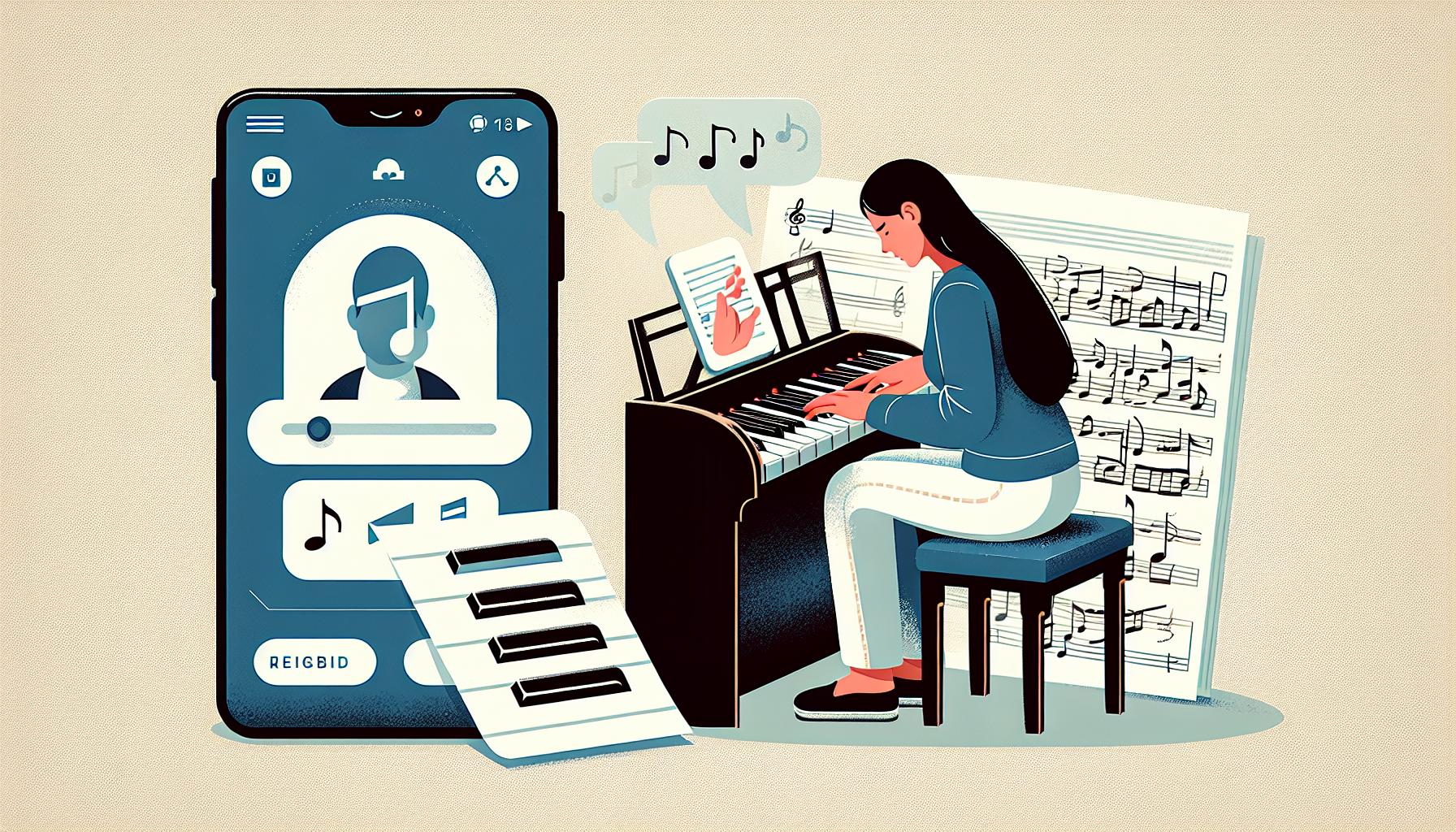
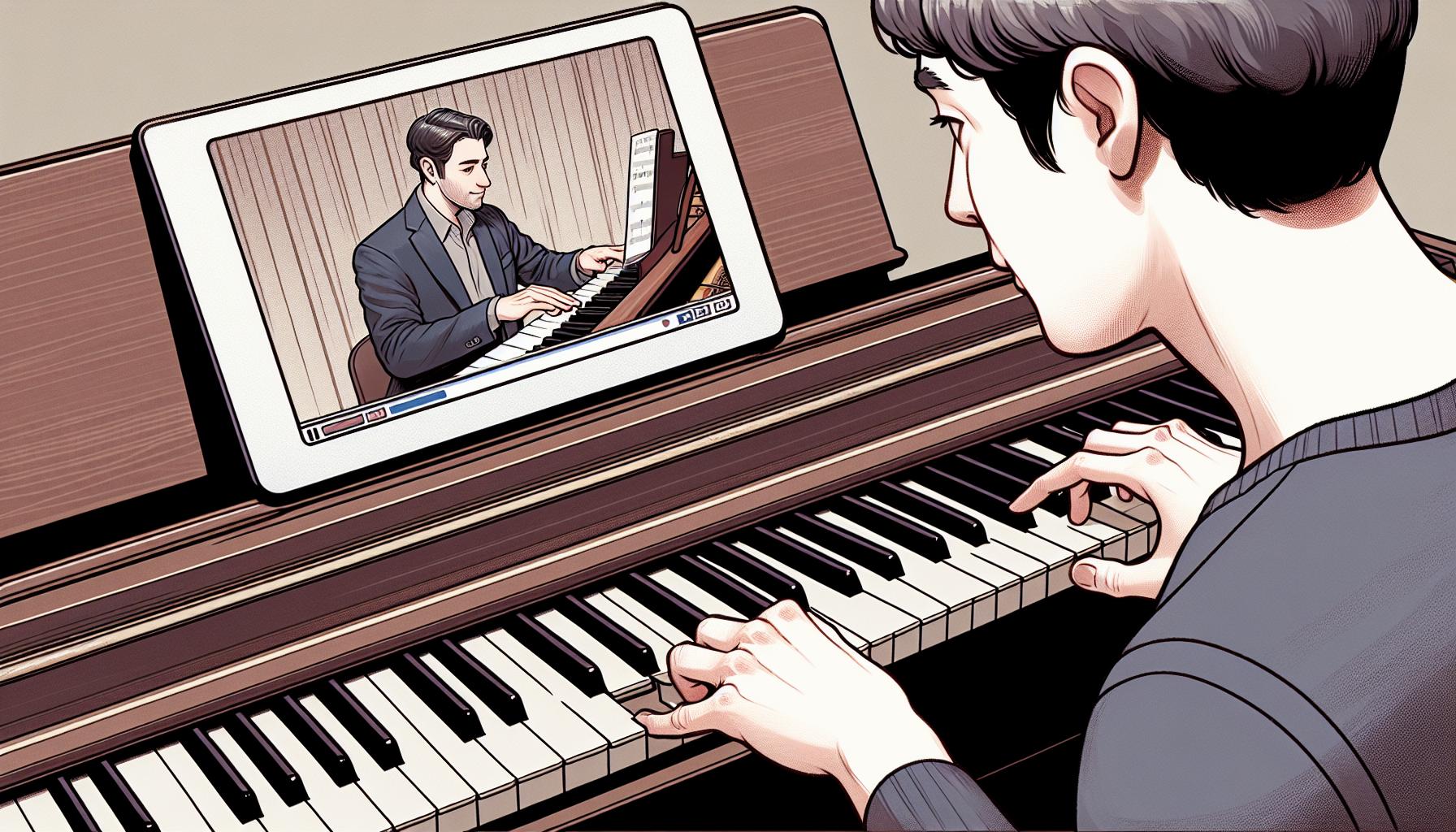
    YouTube channels dedicated to keyboard lessons have become invaluable resources for learners at all levels. These platforms offer detailed tutorials on everything from reading musical notation to mastering basic chords and scales. The beauty of learning through YouTube is the flexibility it allows. Whether one has fifteen minutes or an hour to spare, there’s always a lesson available that fits into their schedule.

    Beginners should start with videos that cover:

    • Proper finger placement and hand posture
    • Reading sheet music and understanding musical symbols
    • Identifying keys and learning the basic note values
    • Basic chords and scales which form the foundation of music

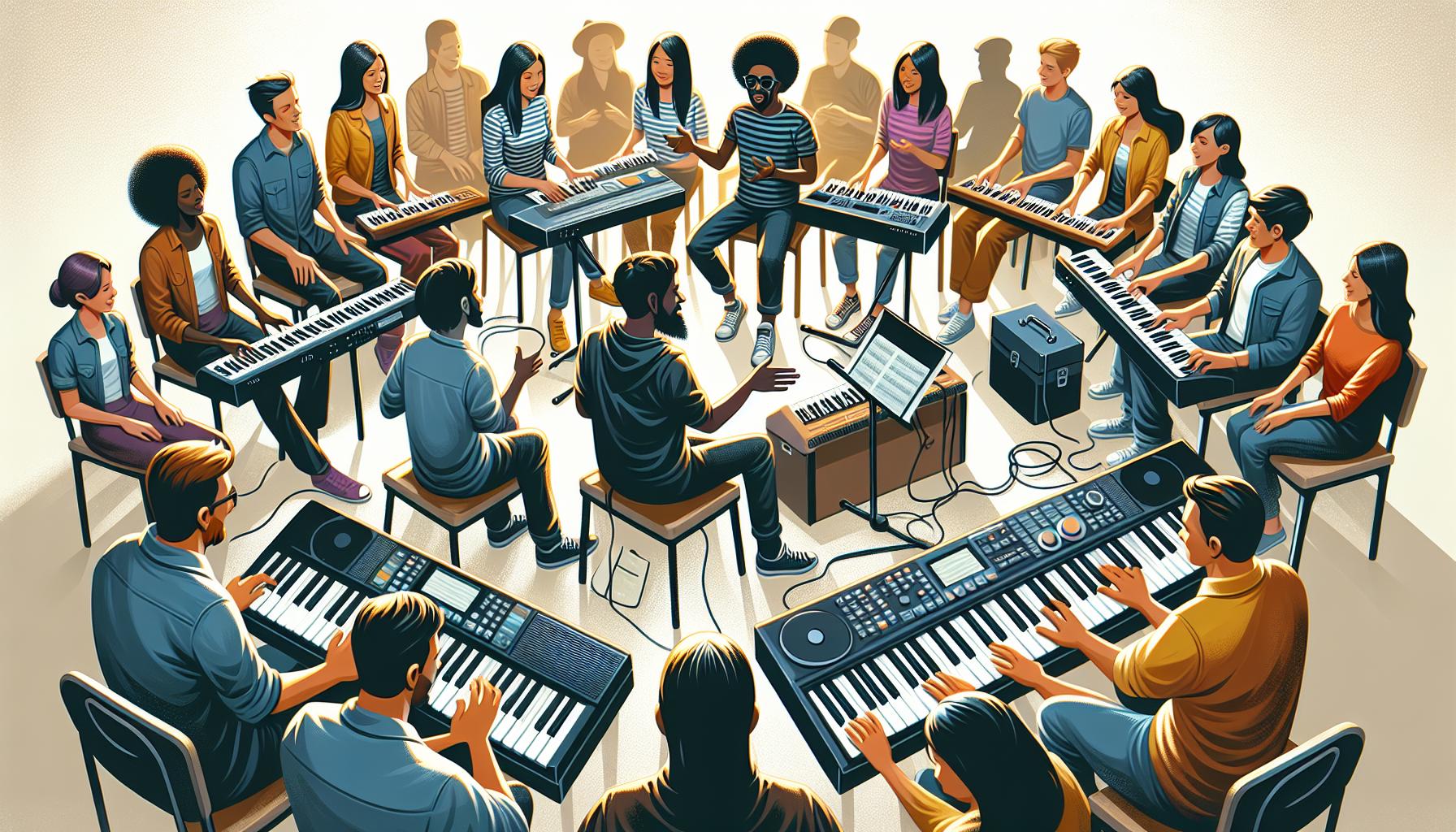
    One of the greatest benefits of learning keyboard on YouTube is the access to a global community of musicians. Not only do learners get tips and instructions from seasoned professionals, but they can also interact with fellow beginners, share experiences, and support each other’s musical journey. This sense of community can be incredibly motivating for someone just starting.

    Moreover, beginners have the advantage of replaying videos as many times as needed, ensuring they fully understand a concept before moving on. This contrasts sharply with traditional music lessons, where the pace is often set by the teacher, sometimes leaving students feeling rushed or, conversely, held back.

    As learners progress, they can start exploring more advanced topics such as improvisation, playing by ear, and even composing their own music. At this stage, YouTube channels offer specialized lessons that cater to these interests, often taught by industry professionals or conservatory-trained musicians. These advanced tutorials can help refine a player’s technique, broaden their musical knowledge, and inspire creativity.

    It’s important for learners to remember that while YouTube is an amazing resource, practice is key to mastering the keyboard. Regular, dedicated practice sessions where individuals work on the skills and techniques learned from videos will lead to significant improvements over time. Setting small, achievable goals can help keep motivation high and make the learning process more rewarding.

    Learning Techniques and Styles

    When diving into the world of keyboard learning on YouTube, learners quickly realize that diversity in teaching techniques and musical styles is vast. Each channel brings its unique approach, catering to students with different learning preferences and musical tastes.

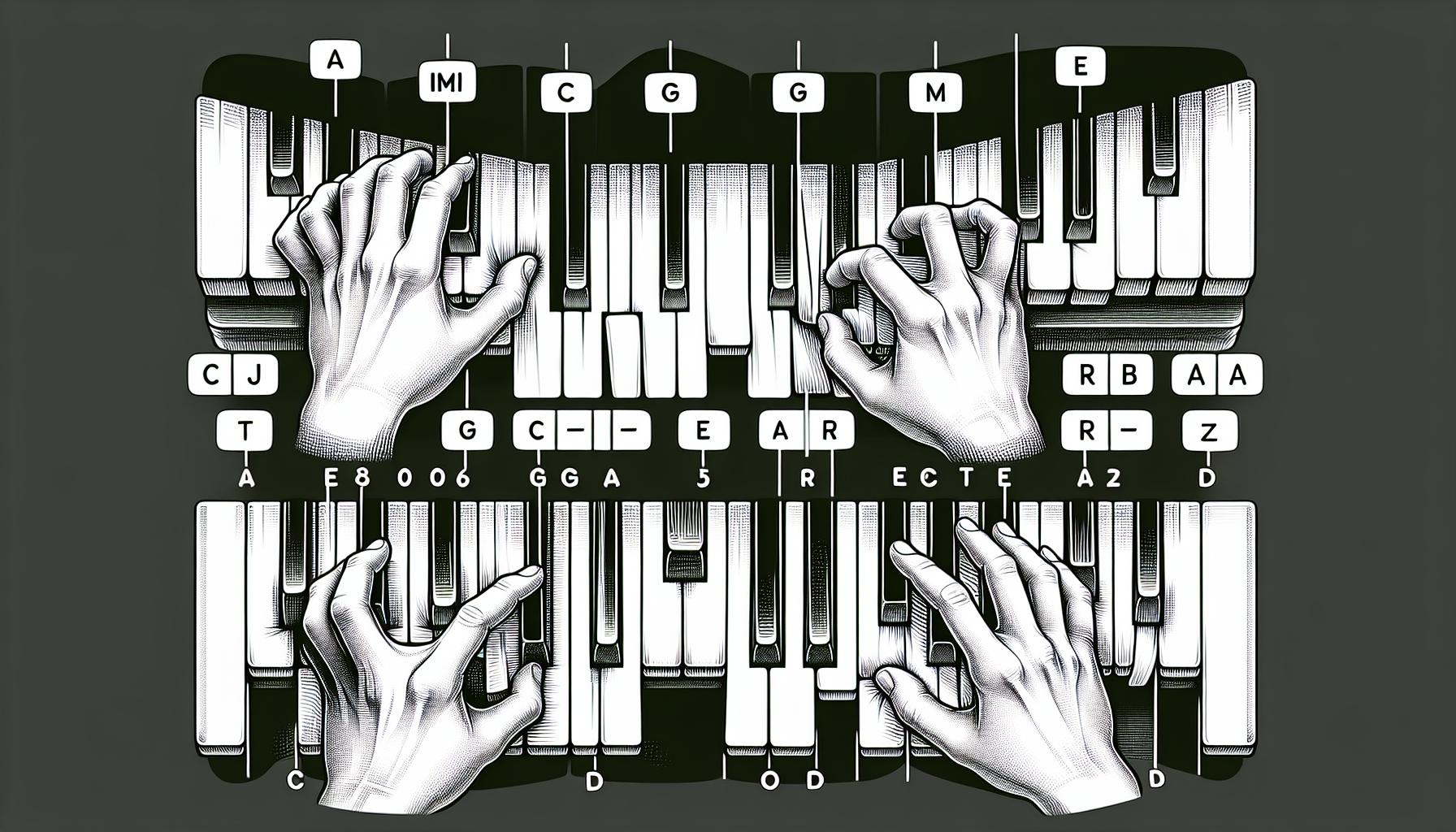
    For beginners, channels that focus on fundamental skills are invaluable. These YouTube channels break down the basics of keyboard playing, such as finger placement, chord progressions, and rhythm patterns, into easily digestible lessons. They often start with simple songs to keep learners motivated and show visible progress. Visual aids, such as animated keyboard overlays, help in understanding which keys to press and when, making learning more intuitive.

    As learners progress, they can explore channels that specialize in specific musical genres. From classical to jazz, pop, and electronic music, there’s a wealth of content designed to teach the nuances of each style. This includes learning famous compositions, understanding genre-specific playing techniques, and even improvisation. Channels focusing on a particular genre often delve deep into the theory behind the music, offering a more comprehensive understanding of the style.

    Here’s a quick overview of the types of channels available for different learners:

    • Fundamental Techniques: Focus on the basics, perfect for beginners.
    • Genre-Specific Lessons: Dive into specific musical styles for intermediate to advanced learners.
    • Song Tutorials: Teach how to play popular songs, suitable for all levels.
    • Music Theory: Explore the theory behind music, beneficial for those looking to deepen their understanding.

    Interactive learning features prominently on many channels, with some creators inviting learners to participate in challenges or share their progress in the comments. This interactive element not only helps build a community around the channel but also encourages learners to keep practicing.

    Another significant advantage of YouTube lessons is the ability to see the instructors’ hand movements up close. This aspect of learning is often missing in traditional keyboard lessons but is crucial for mastering complex pieces of music. It gives learners the chance to mimic the correct technique, leading to more effective practice sessions.

    Moreover, many channels offer practice exercises and worksheets downloadable from their websites or linked in the video descriptions. These resources complement the video lessons and provide learners with the opportunity to practice offline, which is key to retaining new skills.

    Mastering Chords and Scales

    Mastering chords and scales is a pivotal step in the journey of learning to play the keyboard. This skill set serves as the foundation for understanding music theory and developing the ability to play various musical styles. YouTube channels dedicated to keyboard learning provide an extensive range of tutorials focused on these crucial elements, catering to both beginners and advanced learners.

    For beginners, channels like Piano Lessons On The Web and HDpiano break down the basics of chords and scales in an easy-to-understand manner. They emphasize the importance of finger positioning, chordal movements, and the relationship between scales and chords. Visual aids, such as animated keyboard overlays and close-up hand movements, guide learners through each step, ensuring they grasp the essential concepts.

    Intermediate and advanced players will find channels such as Josh Wright Piano TV and Walk That Bass invaluable resources for deepening their knowledge. These channels offer insights into more complex chords, advanced scales, and techniques for incorporating them into compositions and improvisations. They also cover genre-specific chord progressions and scale patterns, enabling learners to explore music ranging from classical to jazz and pop.

    Interactive Learning Features

    A significant advantage of learning chords and scales via YouTube is the interactive learning features many of these channels offer. Q&A sessions, live streams, and community challenges allow learners to engage directly with instructors and fellow students. This interactive approach not only clarifies doubts but also motivates learners to practice and improve consistently.

    Practice Makes Perfect

    Practice is key to mastering any musical instrument, and these YouTube channels understand this well. They often provide downloadable practice resources such as sheet music and exercise drills specially designed to enhance chord and scale proficiency. Musictheory.net and Teoria are frequently recommended by these channels for additional practice in music theory and ear training, crucial components for mastering chords and scales.

    Incorporating Chords and Scales into Music

    Once learners have a solid grasp of chords and scales, the next step is incorporating them into music. Many of the channels do a fantastic job of demonstrating how to use these foundational elements to play songs, create arrangements, and even compose new pieces. They teach students to recognize chord progressions and scale patterns in popular music, offering strategies for deconstructing and reconstructing songs for practice and performance.

    Exploring Advanced Concepts

    When keyboard learners feel comfortable with the basics, it’s time to dive into more sophisticated territory. Advanced concepts not only challenge their skillset but also deepen their understanding and appreciation of music. YouTube channels specializing in these advanced areas offer a treasure trove of knowledge, exploring intricate musical theories, advanced chords and scales, improvisation techniques, and much more.

    One standout channel for those ready to push their limits is Aimee Nolte Music. Aimee’s approach to teaching is relaxed yet informative, making complex concepts accessible. Her lessons cover jazz improvisation, advanced music theory, and how to interpret lead sheets. She often delves into the analysis of music from famous artists, offering insights into their techniques which learners can incorporate into their own play.

    Nahre Sol is another channel that thrives on exploring the intersection of classical music and modern improvisation. The content here is as entertaining as it is educational, with Nahre diving deep into the creative process. She explores how classical motifs can be transformed with modern twists, offering exercises that challenge traditional boundaries and encourage creativity.

    For those with a passion for film scores and orchestral music, Rick Beato offers a wealth of knowledge. His channel dissects famous compositions, breaking down their intricate layers and teaching viewers how to apply similar techniques in their music. Rick’s discussions on modal interchange, advanced harmony, and arranging for keyboard are particularly invaluable for advanced learners.

    Each of these channels emphasizes not just the ‘how’ but also the ‘why’ behind advanced musical concepts. They encourage learners to think critically about music, urging them to explore beyond mere replication of tunes. This kind of in-depth understanding is crucial for those aspiring to not just play but truly excel in their musical endeavors.

    Here are some specific areas where advanced learners can benefit from these channels:

    • Jazz Improvisation: Unlocking the secrets to spontaneous musical creation.
    • Advanced Harmony and Theory: Understanding the backbone of complex musical compositions.
    • Classical and Modern Fusion: Learning how to blend different eras and styles seamlessly.
    • Musical Analysis: Gaining insights from the breakdown of famous pieces.
    • Creative Composition: Encouraging originality in music creation.

    Conclusion

    Exploring advanced keyboard techniques and theories is a journey that requires dedication, curiosity, and the right guides. Channels like Aimee Nolte Music, Nahre Sol, and Rick Beato have proven to be invaluable resources for those looking to dive deeper into the world of music. They don’t just teach; they inspire learners to push their boundaries and explore new heights in their musical endeavors. Whether it’s jazz improvisation, classical fusion, or dissecting film scores, these channels offer a treasure trove of knowledge that can transform an enthusiastic learner into a proficient musician. So grab your keyboard, and let’s make music that resonates with skill and passion.

  • Beginner’s Guide: Master Singing and Chords on Keyboard Easily

    Beginner’s Guide: Master Singing and Chords on Keyboard Easily

    Diving into the world of music can be a thrilling adventure, especially when it involves learning to play chords and sing along on the keyboard. For beginners, this might seem like a daunting task, but it’s actually a fun and rewarding journey.

    Starting with the basics, anyone can gradually build their skills, blending melody and harmony to create beautiful music. It’s all about taking those first steps, familiarizing oneself with the keys, and finding one’s voice.

    Whether you’re aspiring to be the next pop sensation or just looking to serenade your loved ones, mastering the art of playing chords and singing on the keyboard is a fantastic place to start. Let’s dive into the essentials and set the stage for a musical adventure that’s both enriching and exhilarating.

    Understanding Chords

    When embarking on the musical journey of playing chords and singing on the keyboard, one of the first steps is to gain a solid understanding of what chords are and how they’re structured. In essence, a chord is a group of notes played together that harmoniously blend to produce a distinct sound. Typically, these are composed of three or more notes that, when played simultaneously, create a rich, full-bodied audio experience.

    For beginners, it’s important to start with the basics. The three main types of chords to focus on initially are major, minor, and seventh chords. Each type brings its unique flavor and emotion to music, setting the stage for varying moods and atmospheres in songs. Let’s delve a bit deeper into these foundational chords:

    • Major chords are essentially the cheerful, bright-sounding chords. They’re constructed using a root note, a major third, and a perfect fifth. For example, a C Major chord includes the notes C, E, and G.
    • Minor chords, contrastingly, offer a more somber, reflective sound. They’re formed by taking a root note, a minor third, and a perfect fifth, as seen in the A minor chord, which consists of the notes A, C, and E.
    • Seventh chords add a layer of complexity and richness, often used in blues and jazz music. These are four-note chords that include the interval of a seventh in addition to a chord’s triad. The C7 chord, for instance, is made up of C, E, G, and B♭.

    Mastering these chords not only enhances one’s ability to play a wide range of songs but also serves as a stepping stone to exploring more intricate chord variations and progressions.

    Practice Makes Perfect

    Getting to grips with chords involves more than just memorizing their structure; practical application and regular practice are key. Beginners should allocate time each day to practice chord shapes, transitions, and combinations. Starting with simple chord progressions, such as transitioning between C Major and G Major, helps in building muscle memory and dexterity.

    • Chord drills: Focusing on individual chords, then progressing to switching swiftly between them.
    • Song practice: Choosing simple songs with familiar chord progressions to play and sing along to.
    • Collaborative practice: Playing with other musicians can enhance learning by exposing one to

    Getting Familiar with the Keyboard

    Before diving into chords and vocal accompaniment, it’s crucial that beginners get comfortable with the layout and feel of the keyboard. This foundational step paves the way for a smoother learning curve when progressing to more complex skills such as playing chords and singing concurrently.

    The keyboard, typically comprising 88 keys on a standard piano, includes both white and black keys. The white keys represent natural notes, while the black keys are sharps and flats, crucial for playing a variety of scales and chords. Identifying middle C, the central note on the keyboard, is a fundamental step. Middle C serves as a home base from which players can explore musical scales, chords, and melodies.

    Recognizing Patterns: Notably, the keyboard is structured with repeating groups of 12 keys, starting with seven white keys (C, D, E, F, G, A, B) and five black keys in pairs and triplets. This pattern repeats across the entire keyboard, which is essential knowledge for locating notes and chords efficiently.

    Touch and Dynamics: Another aspect to get acquainted with is touch sensitivity or dynamics. Many keyboards and digital pianos are touch-sensitive, meaning the volume and tonal characteristics of the notes can change based on how hard or softly they’re played. Experimenting with touch allows players to express feelings and dynamics in their music, adding depth to performances.

    Practical exercises to familiarize oneself with the keyboard layout include:

    • Note Naming Drills: Practice naming and playing random notes to improve note identification speed.
    • Scale Practice: Regularly play major and minor scales starting from different notes to enhance hand coordination and memorization of key locations.
    • Chord Shape Recognition: Begin by playing simple major and minor chords. Recognizing the shape of these chords on the keyboard helps in transitioning smoothly between them.

    Engaging in these exercises regularly, even for a few minutes each day, can significantly improve a beginner’s familiarity and comfort with the keyboard. This foundational knowledge not only aids in learning how to play chords and sing but also instills confidence, making the learning process more enjoyable and less daunting.

    Basic Finger Placement Techniques

    As beginners make their way through the basics of understanding the keyboard layout and its dynamics, the next step involves mastering basic finger placement techniques. This is where the interplay between the hands begins to shape the music, allowing chords and melodies to flow simultaneously.

    The five-finger position is often the starting point for learning proper finger placement. This technique involves placing the thumb of each hand on middle C for the right hand, and the C an octave below for the left, with each subsequent finger resting on the next key. This position not only helps in building muscle memory but also serves as a foundation for exploring more complex chord structures.

    To transition smoothly between chords while singing, beginners should focus on economy of movement. This means minimizing the distance fingers need to travel across the keyboard, thus ensuring a smoother sound and reducing the likelihood of errors. One practical exercise to enhance this skill is practicing chord changes slowly, paying close attention to the movement of each finger, ensuring they are using the shortest path possible.

    Another vital component is finger independence. Playing chords and melodies together requires each finger to move independently of the others. Exercises such as playing scales and arpeggios can significantly improve this aspect of keyboard playing. For instance, practicing C major scales, with emphasis on even tone and volume from each finger, can help develop the needed dexterity and control.

    Hand positioning is also crucial. Beginners should always strive for a relaxed hand posture, with slightly curved fingers, much like holding a small ball. This not only prevents strain and injury but also allows for more expressive playing. Keeping the wrists flexible and avoiding unnecessary tension in the arms are also important elements to remember.

    For those aiming to both play chords and sing, integrating voice exercises alongside keyboard practice can prove beneficial. Exercises that focus on pitch matching, where the player plays a note on the keyboard and then sings that note, can help in developing an ear for music and enhance the ability to play and sing simultaneously.

    Benefit Description
    Enhanced Muscle Memory Regular practice solidifies finger placement and movement patterns, making transitions smoother.
    Increased Coordination Simultaneously playing and singing requires high levels of hand-eye, hand-voice coordination, which improves with practice.
    Improved Expressiveness

    Adding Voice to Your Chords

    Once beginners are comfortable with the basic finger placements and have started exploring various chords on the keyboard, it’s time to introduce the element of singing. Adding voice to the chords is a significant milestone that brings a new layer of complexity and excitement to playing. This process involves not just playing the chords correctly but integrating the act of singing into the performance. It’s a skill that requires patience, practice, and a keen sense of coordination.

    One of the first steps in combining singing with playing chords is to start simple. Beginners should choose songs that they are familiar with and that have simple chord progressions. This familiarity helps in reducing the cognitive load, allowing the player to focus more on the coordination between playing and singing rather than on what comes next in the song. Songs with repetitive chord patterns are excellent for practicing this.

    Breathing Techniques play a critical role in this integration. Just as in any vocal training, learning how to breathe correctly while singing can dramatically improve the quality of the performance. However, when combined with playing the keyboard, it also becomes a matter of timing. Practicing breathing exercises while sitting at the keyboard, even without playing, can help build this important skill.

    Another aspect to consider is the Economy of Movement. This principle, imperative in learning effective chord transitions, also applies when integrating singing. Minimal movement ensures that the focus can remain split between playing the chords and singing, without one task overwhelming the other. It’s about finding the right balance and ensuring that neither playing nor singing suffers because of divided attention.

    Finger Independence and Strength need to be continuously developed as well. While beginners might have started working on these aspects already, singing while playing chords introduces a new level of difficulty. Over time, as finger independence grows, the player will find it easier to navigate the keyboard without having to constantly look down, which in turn makes it easier to focus on singing. Regular exercises that target finger strength and independence are crucial.

    Integrating Voice Exercises alongside keyboard practice cannot be overstated in its importance. Simple vocal warm-ups done at the keyboard can help bridge the gap between playing and singing. They might include humming or singing scales while playing chords or progression. This dual practice not only warms up the voice but also trains the brain to handle both tasks simultaneously.

    Practice Tips for Beginners

    When starting the journey of simultaneously playing chords and singing on the keyboard, beginners might find the coordination challenging at first. However, with specific practice strategies, they can gradually build up their skill set and confidence. These practice tips are designed to provide a structured pathway toward achieving musical harmony between voice and instrument.

    Start With Familiar Songs

    One of the most effective ways to ease into playing and singing is by choosing songs that are already familiar. This familiarity allows beginners to focus more on the mechanics of playing and the nuances of singing without the added complication of learning a new song. Starting with simple melodies and chord progressions can drastically reduce the learning curve.

    Break It Down

    It’s crucial to break down both the singing and playing parts, practicing them separately before attempting them together. For the playing part, beginners should:

    • Focus on mastering the chord progressions
    • Ensure accurate finger placements
    • Practice transitioning between chords smoothly

    For the singing part, they ought to concentrate on:

    • Maintaining the correct pitch
    • Controlling their breathing
    • Emphasizing clear enunciation

    This segmented approach allows for focused improvement, gradually building towards combining these elements.

    Use a Metronome

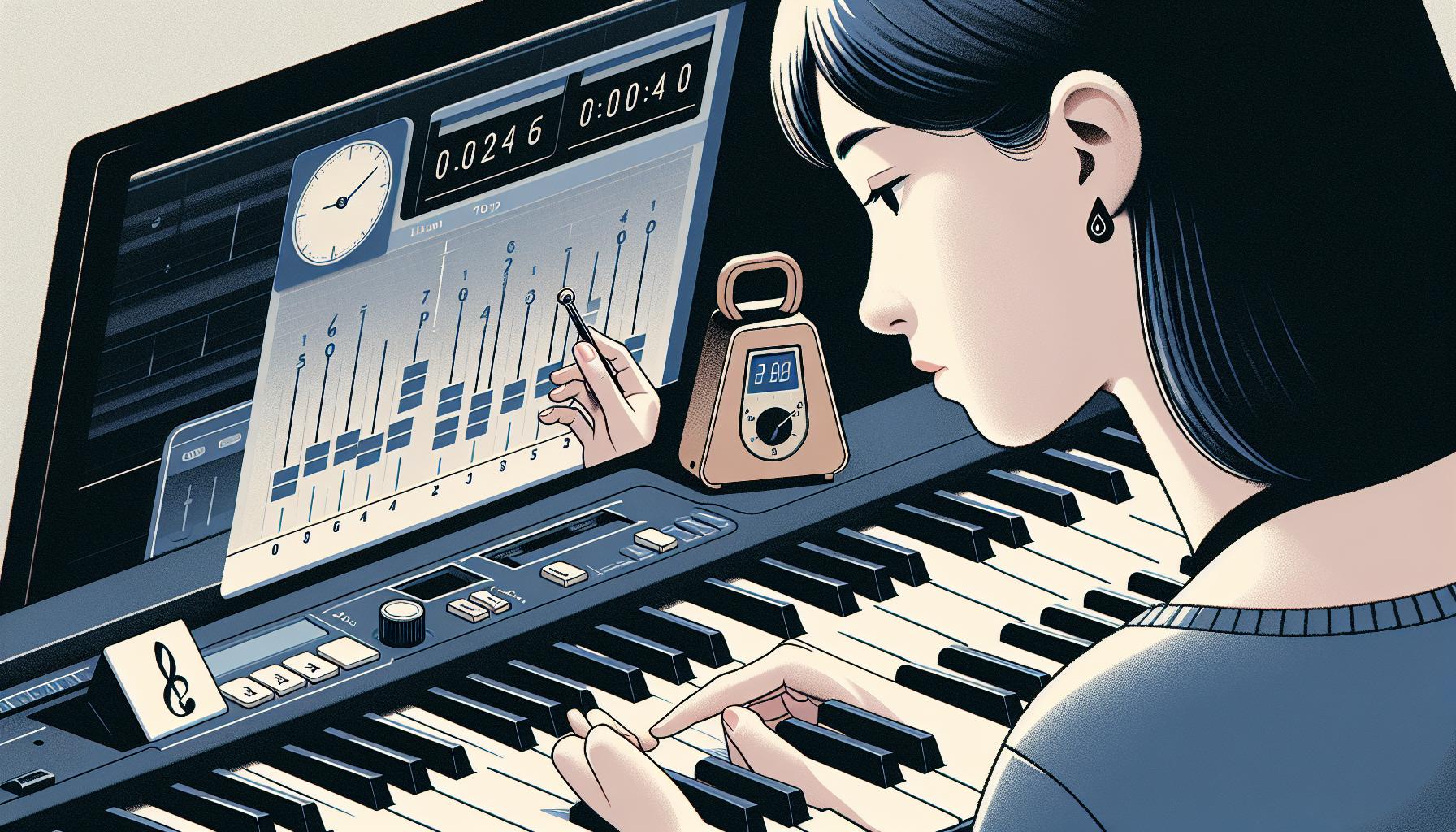
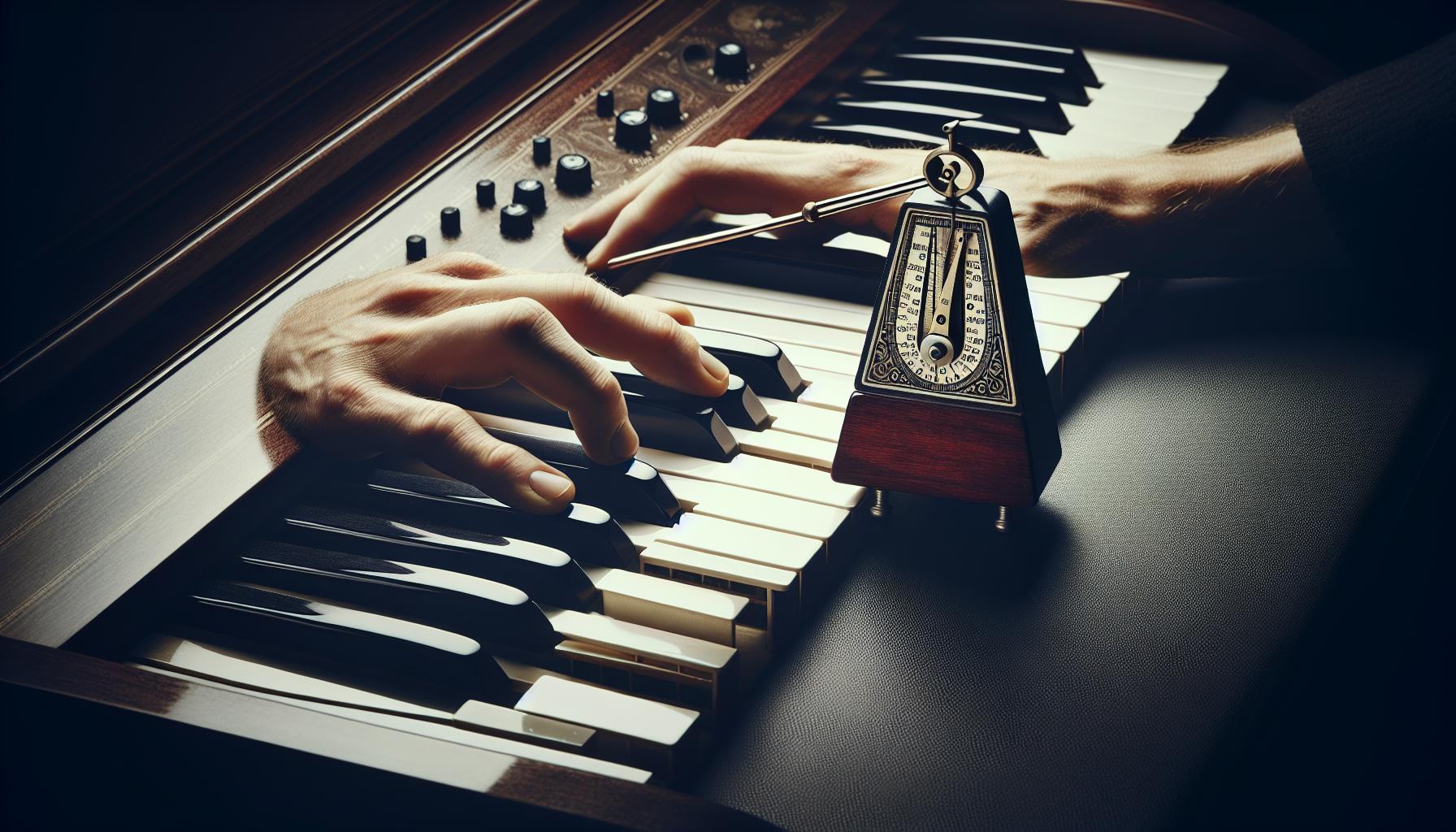
    A metronome is an invaluable tool for beginners. It helps maintain a steady tempo, an essential skill when coordinating singing and playing. Starting at a slower tempo allows for more precise control over finger movements and vocal timing. Gradually, as confidence and capability increase, the tempo can be increased to match the original speed of the songs.

    Record and Review

    Regularly recording practice sessions provides beginners with the opportunity to review their progress objectively. It’s easier to catch and correct mistakes and to identify areas that require more focused attention. Additionally, hearing one’s progress over time can be incredibly encouraging, providing a tangible sense of improvement.

    Exercise Patience and Persistence

    Learning to play chords and sing simultaneously is a process that requires patience and persistence. It’s natural to experience setbacks or to feel as though progress is slow. However, regular practice, even if it’s just a few minutes a day, can lead to significant improvements over time. Setting small, achievable goals can help maintain motivation and a sense of accomplishment.

    • For fingers: Simple scale runs or finger stretching exercises help prepare for the intricate work of chord transitions

    Conclusion

    Mastering the art of playing chords and singing on the keyboard is a journey filled with discovery and challenges. By starting with songs that resonate with you and breaking down each component, you’re setting a solid foundation for growth. Remember, the key to progress lies in consistent practice, patience, and the willingness to review and adjust your techniques. As you incorporate these strategies into your daily routine, you’ll find yourself moving closer to your goal. Keep pushing forward, and soon, the harmony of your voice and the keyboard will flow effortlessly.

  • Beginner’s Guide: Emotion-Filled Songwriting on the Keyboard

    Beginner’s Guide: Emotion-Filled Songwriting on the Keyboard

    Diving into songwriting can feel like exploring a new universe, especially when you’re armed with just a keyboard and a burst of creativity. For beginners, the keyboard isn’t just an instrument; it’s a gateway to expressing emotions, stories, and melodies that have been swirling in their minds.

    Starting your songwriting journey might seem daunting at first, but it’s all about taking those first few steps. With the right approach, even novices can craft tunes that resonate. Whether you’re dreaming of serenading someone special or simply want to capture your thoughts in music, the keyboard is a versatile companion that’s ready to translate your ideas into melodies.

    Choosing the Right Keyboard

    When embarking on the journey of songwriting, selecting the right keyboard is akin to choosing a companion for a voyage into the realms of melody and creativity. For beginners, the vast array of options might seem overwhelming at first, but by focusing on a few key criteria, they can find an instrument that not only meets their current needs but also supports their growth as a musician.

    First and foremost, the type of keyboard plays a crucial role. There are mainly two types geared towards beginners:

    • Digital Pianos: Designed to replicate the sound and feel of an acoustic piano, they are ideal for those who wish to focus on the fundamentals of piano playing alongside songwriting.
    • Synthesizers: With a vast array of sounds and effects, synthesizers are perfect for those looking to explore a wide range of musical styles and textures.

    The choice between these depends on one’s musical preferences and goals. If expressing intricate emotions through lush chords and melodies is the goal, a digital piano might be the best fit. However, for those looking to fuse genres and experiment with sound, a synthesizer offers endless possibilities.

    Another factor to consider is keyboard size. Keyboards come in various sizes, typically ranging from 25 to 88 keys. Beginners might find a 61-key keyboard sufficient to start with, as it offers a balance between range and portability. However, those serious about mastering the piano alongside songwriting may want to opt for an 88-key keyboard to have the full range of a traditional piano at their fingertips.

    Features and functionality also play a vital role. Look for keyboards with:

    • Built-in metronomes, which help maintain a consistent tempo.
    • Recording capabilities, allowing one to capture ideas as they come.
    • Weighted keys, especially for those leaning towards piano playing, as they mimic the resistance of an acoustic piano’s keys.

    Lastly, the budget can dictate the choice to a great extent. Fortunately, there’s a wide range of options available to suit various financial considerations. It’s important to remember that while higher-priced keyboards often come with more features, many affordable models provide excellent quality and functionality for beginners. Investing in a keyboard should be seen as investing in one’s musical journey, with a focus on finding the right balance between cost and features to suit one’s personal needs and aspirations.

    Learning Basic Chords and Scales

    Once beginners have found the perfect keyboard to embark on their songwriting journey, the next step is to dive into learning basic chords and scales. These elements are the building blocks of music, serving as the foundation upon which songs are constructed.

    Chords are combinations of notes played simultaneously that create harmony. For songwriting novices, mastering a few simple chords can open up a vast array of musical possibilities. Starting with major and minor chords in key areas like C, G, and D makes the process approachable. These chords are not only fundamental but also incredibly versatile, allowing beginners to play a significant portion of popular music.

    Scales, on the other hand, are sequences of notes that ascend or descend in pitch. Understanding scales is crucial for melody creation. The major scale is a great starting point due to its familiar sound and its role in forming the basis of many songs. Learning scales not only aids in improvisation but also enhances a musician’s ability to build their own melodies.

    To facilitate the learning process, here are some effective strategies:

    • Practice Regularly: Regular practice aids in memorization and finger dexterity. Even a few minutes a day can make a significant difference.
    • Use Apps and Online Resources: Many free and paid resources are available to help beginners learn chords and scales. These tools often provide interactive lessons and feedback.
    • Play Along with Songs: Trying to play chords and melodies along with favorite songs can be a fun and rewarding way to practice. It also helps in understanding how songs are structured.
    • Experiment: Encourage experimentation with different chord progressions and scale patterns. Experimentation is key to developing a personal style and understanding what sounds good.

    Here’s a simple table outlining a few basic chords that beginners should start with:

    Chord Name Notes
    C Major C, E, G
    G Major G, B, D
    A Minor A, C, E
    E Minor E, G, B
    D Major D, F#, A

    Learning these chords and how they transition between each other is essential for creating smooth and appealing progressions in songwriting.

    Understanding Song Structure

    When delving into songwriting on the keyboard, beginners quickly learn that having a grasp on song structure is as crucial as knowing their scales and chords. A typical song structure can serve as a roadmap, guiding the songwriter from one section to the next, ensuring the listener stays engaged from start to finish.

    Most popular songs follow a basic structure often referred to as the Verse-Chorus-Verse format. This layout includes an introduction, verses, choruses, a bridge, and, finally, an outro. Each part serves a unique purpose, allowing the songwriter to tell a story or convey emotions effectively.

    • Introduction: This section sets the tone for the song, establishing the key, tempo, and overall vibe. It’s a crucial part for capturing the listener’s attention.
    • Verses: The verses provide the narrative of the song, offering details and building up to the more emotional chorus. Lyrics in the verses often change from one to the next, atop a constant or slightly varied musical backdrop.
    • Chorus: The chorus is typically the most memorable part of the song, both lyrically and melodically. It sums up the song’s main theme or emotional core and is repeated several times throughout.
    • Bridge: This section offers a departure from the repetitive nature of verses and chorus. It provides a contrast, either musically, lyrically, or both, leading the listener back to the final chorus with renewed interest.
    • Outro: The outro wraps up the song, providing a satisfying conclusion to the musical journey. It often mirrors the intro but can also fade out with a repetition of the chorus or a variation of the melody.

    For beginners, starting with this traditional song structure can simplify the songwriting process. However, they’re encouraged to experiment with rearranging sections or adding new ones. The beauty of songwriting is that there are no hard and fast rules, and breaking from tradition can lead to highly creative results.

    Understanding how to craft each section of a song on the keyboard involves mastering chord progressions, melody lines, and rhythmic patterns appropriate for each part. For instance, a verse might use a simple chord progression that builds up to a more complex and catchy progression in the chorus. Practice is key, as is listening to a wide range of music to understand how different artists and genres utilize various structures.

    Tips for Lyric Writing

    When it comes to writing songs on the keyboard, crafting the lyrics can often feel like navigating through a maze. But fear not, as there are several tips and techniques that can simplify this process and bring out the inner poet in anyone.

    Firstly, understanding the theme of the song is crucial. Before putting pen to paper, one should spend some time reflecting on what message or story they wish to convey. This clarity will serve as a guiding light throughout the lyric writing process, ensuring that every line contributes to the overall narrative.

    Secondly, consider the structure of the lyrics as carefully as the song’s musical composition. Most songs follow a pattern of verses and choruses, sometimes including a bridge or an outro. Each of these sections serves a distinct purpose: verses introduce and develop the story, choruses offer a memorable, emotional punchline, and bridges provide a moment of contrast or relief. Keeping this structure in mind helps in organizing thoughts and ensuring that the lyrics flow smoothly with the melody.

    Engaging Imagery is another powerful tool in the lyricist’s toolbox. Instead of stating emotions or scenarios outright, painting pictures with words can evoke deeper feelings in the listener. This technique makes the song relatable and memorable, allowing listeners to see through the songwriter’s eyes. Phrases like “a heart as heavy as a suitcase” or “dancing shadows on the wall” give depth to the lyrics, making them more impactful.

    Rhyme schemes play a significant role in making lyrics catchy and enjoyable. While perfect rhymes are common, experimenting with slant rhymes or internal rhymes can add sophistication and unpredictability to the song. However, it’s essential not to let the rhyme scheme dictate the song’s message. The best lyrics maintain a balance between clever rhyming and genuine expression.

    Conversational Tone often makes lyrics feel more authentic and relatable. By writing as if speaking to a friend, one can eliminate the barrier between the songwriter and the listener. This approach fosters a personal connection, making the song’s message more impactful.

    Finally, the most important tip for lyric writing is to keep writing. The first draft is rarely perfect, and it’s through revision and experimentation that the best lines come to life. Encouraging feedback from others and being open to changes can significantly improve the quality of the lyrics.

    Incorporating Emotions into Your Songs

    When delving into songwriting on the keyboard, one of the most vital aspects to master is the ability to weave emotions seamlessly into your compositions. This emotional connection is what transforms a simple melody into a resonant piece that listeners can relate to and feel moved by.

    The first step in infusing emotion into your songs is to reflect on the feelings you wish to express. Whether it’s joy, sadness, love, or frustration, identifying the core emotion serves as a foundation for your songwriting process. It’s not just about the lyrics; the chords and melodies you choose play a significant role in conveying these emotions. For instance, minor chords often evoke a sense of melancholy or introspection, while major chords can exude happiness or excitement.

    Another strategy involves dynamics and tempo. A song that starts softly and gradually builds up can mirror the escalating intensity of feelings, closely mimicking how emotions evolve in real life. Similarly, the tempo of the song can influence the listener’s emotional response. A slower tempo might be used to convey a sense of longing or reflection, whereas a faster tempo could suggest joy or urgency.

    Imagery in lyrics is yet another powerful tool for emotional expression. Crafting vivid images through words can transport listeners to a particular time or place, eliciting a strong emotional reaction. Combining storytelling with sensory details enhances the listener’s engagement, making the emotions more palpable and relatable.

    Experimenting with Harmony and Dissonance

    Experimenting with harmonic structures can also add emotional depth to your songs. Utilizing dissonance, or a set of notes that traditionally ‘clash,’ can evoke tension, unrest, or the complexity of feelings. Resolving dissonance into consonance—the harmonious blending of notes—can symbolize resolution or clarity, mirroring the emotional journey within the song.

    The Role of Melodic Intervals

    The intervals between notes in your melody can significantly affect the emotional tone of your song. Larger intervals may convey a sense of freedom or exhilaration, while smaller intervals are often perceived as more intimate or contemplative. It’s crucial to consider how the melody interacts with your chord progressions to create a cohesive emotional narrative.

    Conclusion

    Embarking on the journey of songwriting on the keyboard opens up a world where emotions can be intricately woven into melodies and chords. Remember, it’s the heartfelt connection to your music that will resonate most with listeners. By reflecting on your emotions, experimenting with harmonic structures, and not shying away from the power of dynamics and tempo, you’re well on your way to crafting songs that not only sound good but feel authentic. Keep these insights in mind as you continue to explore and express your inner world through the keys. Happy songwriting!

  • Ease Arthritis Pain: Tips on How to Play Keyboard Comfortably

    Ease Arthritis Pain: Tips on How to Play Keyboard Comfortably

    Playing the keyboard with arthritis might seem like a daunting challenge at first glance. The thought of pressing down keys when your fingers are stiff and sore could be discouraging. But here’s a little secret: it’s definitely possible, and many have found joy and relief in the melodies they create despite their condition.
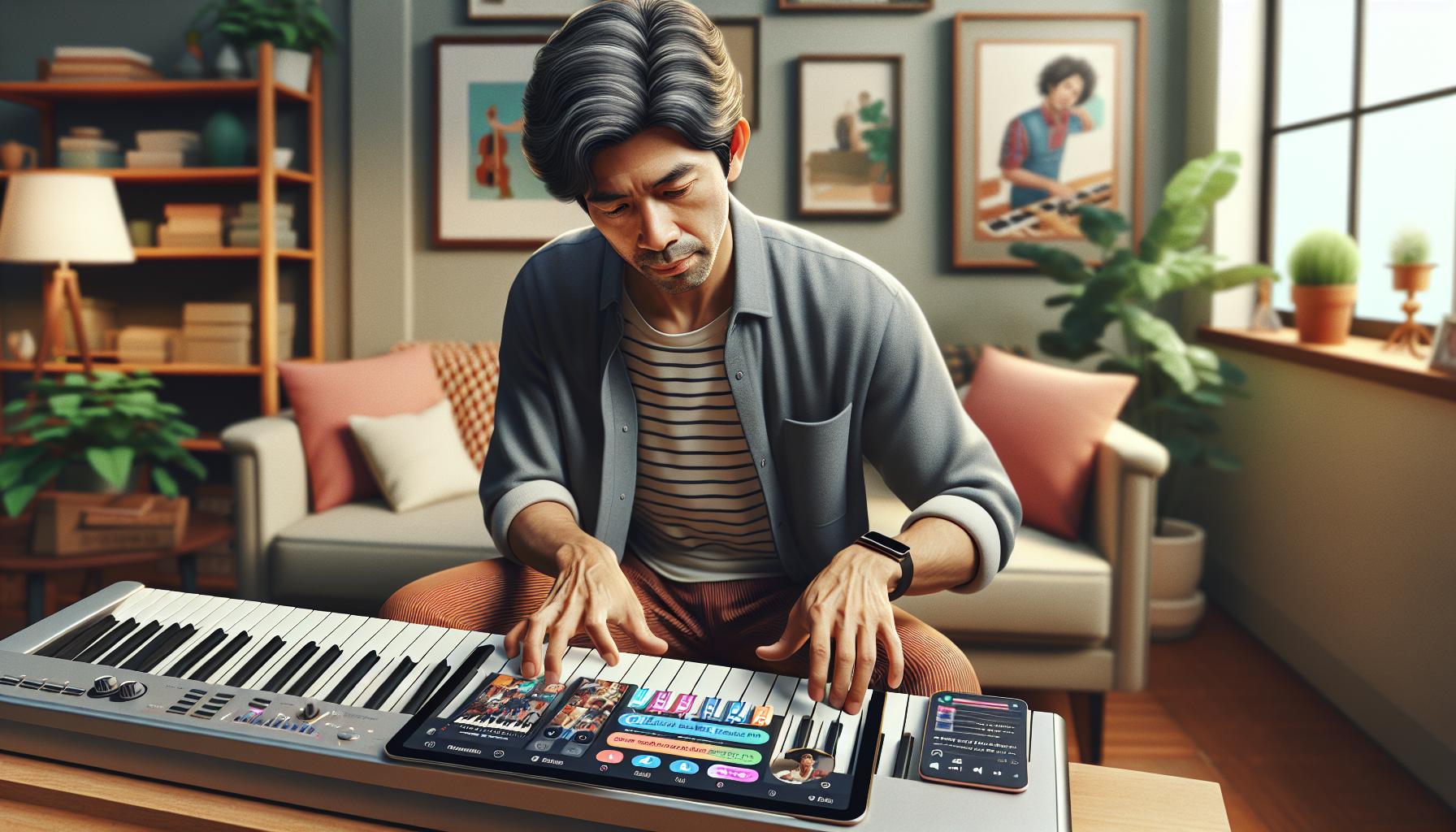
    Adapting your keyboard playing technique and making some ergonomic adjustments can make a world of difference. It’s all about finding the right balance between comfort and musical expression. So, if you love tickling the ivories but arthritis is trying to hold you back, don’t worry. You’re about to discover how to keep those fingers moving smoothly across the keys, making music that soothes the soul and the joints.

    Understanding Arthritis and Its Effects on Keyboard Playing

    Arthritis is a common condition that affects millions of people worldwide, characterized by inflammation of the joints. This inflammation can lead to pain, stiffness, and reduced mobility, which can significantly impact a person’s ability to perform daily activities, including playing musical instruments like the keyboard.

    For musicians dealing with arthritis, the physical act of pressing down on the keyboard keys can be challenging. The stiffness in the fingers makes it harder to move swiftly and accurately across the keyboard, while the pain can make prolonged sessions of playing quite uncomfortable. However, it’s not all gloom and doom for keyboard enthusiasts. Understanding the specific ways in which arthritis affects playing can lead to finding effective strategies to mitigate these challenges.

    Key Points on Arthritis and Keyboard Playing:

    • Stiffness and Swelling: The fingers and wrists can become stiff and swollen, making it difficult to move quickly or press down on keys with the necessary force.
    • Pain: Pain, often a constant companion of arthritis, can range from mild to severe and may escalate during or after playing the keyboard.
    • Reduced Mobility: The range of motion in the fingers and hands may be limited, affecting the ability to stretch across keys or perform complex chord progressions.

    To navigate these challenges, it’s essential for individuals with arthritis to first consult with healthcare professionals who can provide tailored advice and treatment plans. This may include physical therapy, medication, or other interventions aimed at reducing symptoms.

    Moreover, incorporating specific adjustments in the approach to playing the keyboard can make a significant difference. Selecting a keyboard with lighter, more responsive keys can reduce the amount of force needed to play. Additionally, warming up with gentle hand and finger exercises before playing can help increase flexibility and reduce stiffness.

    • Shorter Playing Sessions: Limiting the duration of playing sessions can help manage fatigue and discomfort.
    • Ergonomic Adjustments: Using supports like wrist rests or adjusting the keyboard stand for optimal height and angle can promote a more comfortable playing posture.
    • Simplified Arrangements: Playing simpler musical pieces or adapting arrangements to avoid stretches and fast movements can keep the joy of music alive without straining the joints.

    Adapting Your Playing Technique

    When arthritis strikes, it’s not just the physical aspect of playing the keyboard that’s affected; the technique must adapt as well. For many, this transition can be challenging yet rewarding, as it opens up new avenues for musical expression. Adapting one’s playing technique to accommodate arthritis involves a combination of modifications to posture, finger positioning, and playing style.

    Firstly, posture plays a critical role in reducing strain on the joints. Ergonomic seating and keyboard placement can ensure the hands and arms are in the most relaxed position possible. Adjusting the height of the piano bench so the forearms are parallel to the keyboard can help minimize stress on the fingers and wrists. Moreover, maintaining a slight curve in the fingers, as opposed to stretching or flattening them, allows for gentler, more fluid movements across the keys.

    Dynamic playing also needs adaptation. Those with arthritis should focus on using the weight of their arms to press the keys instead of relying solely on finger strength. This technique, known as arm weight playing, can significantly reduce the force exerted by the fingers, thus alleviating pain. Emphasizing this approach during softer passages and when accurate key depression is essential can make a world of difference.

    In addition to these physical adjustments, some creative adaptations can be made to the music itself. Simplifying complex melodies or harmonies helps in reducing the number of finger movements required. When looking at sheet music, identifying passages that can be played with fewer notes or simpler chords without losing the essence of the piece can be incredibly beneficial. For more advanced players, re-arranging music to fit their comfort level not only maintains their connection to the piece but also fosters a deeper understanding and appreciation of the work.

    Here are a few technical adjustments to consider:

    • Light Touch: Opt for a lighter touch when possible, reducing the pressure on painful joints.
    • Shorter Sessions: Limit playing sessions to prevent overuse of joints, incorporating frequent breaks.
    • Warm-Up Exercises: Begin each session with gentle hand and finger exercises to enhance flexibility.
    • Mindful Repertoire Selection: Choose pieces that are within comfortable technical demand or adapt arrangements accordingly.

    Making Ergonomic Adjustments to Your Setup

    Adapting the physical setup of the keyboard can significantly reduce strain on the hands and wrists of individuals with arthritis. Key adjustments include the height and angle of both the keyboard and the chair. Achieving an optimal setup requires a balance that supports good posture while minimizing stress on the joints.

    Chair Height and Position

    Selecting the right chair plays a pivotal role in maintaining comfort during play. It’s essential that the chair allows the player’s feet to rest flat on the ground, with knees at a 90-degree angle. This position provides stability and reduces undue pressure on the joints. Furthermore, opting for a chair with adjustable height and sufficient back support can make a considerable difference in overall comfort and endurance during longer sessions.

    Keyboard Height and Angle

    The height of the keyboard should be adjusted so that the forearms are parallel to the floor, or slightly sloping downward, without forcing the wrists to bend upwards or downwards. This reduces the risk of straining the wrist and finger joints. If possible, using a keyboard stand that allows for angle adjustments can further tailor the setup to an individual’s needs, enhancing comfort and playability.

    Key Modifications

    • Adjustable Stands: Invest in stands that offer easy height and angle adjustments.
    • Cushioned Bench: A bench with padding can reduce pressure on the hips and spine.
    • Wrist Supports: Soft foam or gel wrist rests can alleviate pressure and provide support during playing.
    • Foot Pedal Extensions: For those who find reaching foot pedals difficult, extensions or adjustable pedals ensure they can be used without strain.

    Environmental Considerations

    The environment where the keyboard is set up also influences playing comfort. Proper lighting reduces eye strain and the need for excessive reaching or leaning to see the music sheet or keys. Ensuring the room temperature is comfortable and avoiding drafty or overly warm areas can help in managing arthritis symptoms during playing.

    In integrating these ergonomic adjustments, individuals will find that playing the keyboard not only becomes more comfortable but also more enjoyable. Each modification, no matter how small it seems, contributes to a setup that accommodates their needs. These changes go hand in hand with the technique adaptations discussed previously, forming a comprehensive approach to playing the keyboard with arthritis.

    Exercises to Improve Finger Dexterity and Reduce Stiffness

    For those managing arthritis while pursuing their passion for playing the keyboard, incorporating specific exercises into their routine can lead to significant improvements in finger dexterity and a reduction in stiffness. These targeted exercises are designed not only to enhance playing ability but also to support overall hand health. Here’s a look at some effective exercises they can start with.

    Warm-Up Stretches are vital before diving into keyboard sessions or finger exercises. Gently stretching the fingers, wrists, and arms helps to prepare the muscles and joints, reducing the risk of strain. Simple stretches include wrist flexes and extensions, where one extends the arm with the palm down and uses the other hand to gently pull the fingers back, then down, holding each position for about 15 seconds.

    The Piano Method exercise utilizes the keyboard itself for improving finger strength and flexibility. One can practice pressing the keys gently but firmly, focusing on using each finger individually. This can be done by playing scales or simple songs, concentrating on smooth transitions and even pressure from each finger. It’s not just about playing music; it’s about engaging the fingers in a controlled, mindful manner.

    Finger Opposition Exercises, involving touching each finger to the thumb in succession, can significantly enhance finger control and dexterity. Repeating this exercise several times throughout the day helps keep the fingers mobile and reduces stiffness. For added resistance and to build strength, small rubber bands can be placed around the thumb and the opposing finger during this exercise.

    Squeeze and Release Practices aid in building endurance and flexibility. Using a soft stress ball or similar object, they can squeeze tightly for a few seconds and then release. This exercise is not only great for strength but also encourages joint movement without the high impact of other activities.

    Dexterity Challenges such as picking up small items, such as beads or coins, and sorting them into containers can be fun and therapeutic. It requires precise movements and fine motor control, challenging the fingers in various ways and improving their ability to perform complex tasks.

    Finding Joy and Relief in Playing Despite Arthritis

    For many individuals living with arthritis, the idea of playing a keyboard can feel daunting. The pain and stiffness associated with arthritis might seem like insurmountable barriers. However, with the right approach, playing the keyboard can not only become a possible hobby but also a source of joy and relief from the symptoms of arthritis.

    Adapting the playing environment and keyboard itself to one’s physical needs is the first step in making keyboard playing enjoyable. For instance, ergonomic adjustments to the keyboard setup, which were discussed earlier, are essential. They’re not just about comfort; they’re about making music accessible. Choosing a keyboard with lighter action or touch-sensitive keys can make playing less physically demanding for arthritic hands.

    In addition to physical adjustments, embracing a positive mindset plays a crucial role. Seeing the activity not as a challenge but as an opportunity can make a significant difference. It’s about focusing on what can be done rather than what can’t. Celebrating small victories, like mastering a new chord or piece, can provide a significant morale boost.

    Engaging in regular, gentle exercises designed for musicians with arthritis is another vital strategy. These exercises, detailed previously, don’t only improve playing capability but also contribute to overall hand health. Participants often report feeling less stiffness and pain, which directly translates to a more enjoyable playing experience.

    Many find that music itself offers therapeutic benefits. The joy of creating music can provide a mental escape from chronic pain, serving as an excellent coping mechanism. For some, this mental engagement and the sense of accomplishment from making music can even lead to a noticeable reduction in perceived pain levels.

    Furthermore, joining a community of musicians or learners can enhance the playing experience. Sharing progress, challenges, and tips with others who understand the unique difficulties of playing with arthritis can be incredibly uplifting. Online forums, local music groups, or classes tailored to individuals with disabilities offer valuable support networks.

    Technology also offers several tools and applications designed to aid musicians with arthritis. Software that helps with composing, arranging, and even virtual playing can keep the passion for music alive without the physical strain. These digital solutions allow individuals to continue exploring musical creativity, even on days when playing physically might not be possible.

    Conclusion

    Playing the keyboard with arthritis might seem challenging at first but it’s far from impossible. By embracing the strategies outlined—like ergonomic adjustments, lighter action keys, and gentle exercises—players will find themselves making music that’s as beautiful and fulfilling as ever. Remember, it’s not just about the notes you hit but the joy and therapeutic benefits that come from the journey. Let’s keep the music flowing, celebrate every achievement, and never forget the power of a supportive community and the right tools to turn obstacles into opportunities for growth and enjoyment.

  • Mastering the Keyboard by Ear: Tips for an Effective Learning Journey

    Mastering the Keyboard by Ear: Tips for an Effective Learning Journey

    Learning to play the keyboard by ear is like unlocking a superpower. It’s about letting the music flow through you, catching every nuance and emotion without being tethered to sheet music. Imagine sitting down at your keyboard and effortlessly playing any song that comes to mind, just by listening to it. Sounds magical, doesn’t it?

    This journey isn’t just for the “musically gifted”; it’s a skill that anyone with a passion for music can develop. With patience, practice, and a few insider tips, they’ll soon be translating the music they hear into beautiful keyboard melodies. Let’s dive into the world of playing the keyboard by ear, where they’ll learn to trust their instincts and let their creativity soar.

    Understanding the Basics of Music Theory

    Before diving headfirst into playing the keyboard by ear, it’s crucial to grasp some fundamental concepts of music theory. These are the building blocks that will enable anyone to more accurately understand and replicate the music they hear. It’s like learning the alphabet before writing a story.

    Firstly, knowledge of scales is essential. Scales form the foundation of music, with the Major and Minor scales being the most common. Understanding scales helps in identifying the mood of a piece – whether it’s cheerful or melancholic. For someone aiming to play by ear, recognizing these scales in songs can significantly simplify the learning process.

    Then, there are chords, which are groups of notes played together to add harmony. Familiarizing oneself with basic chords and their variations opens up a vast array of songs to play. The beauty of chords lies in their versatility; learning just a few can enable a musician to play numerous songs.

    Rhythm and timing come next. They’re the heartbeat of any piece of music. Grasping different beats and time signatures is key to understanding the pace and flow of a song. Without rhythm, even the right notes can sound off if not played in time.

    Lastly, ear training exercises are indispensable. They sharpen one’s ability to distinguish between different notes, chords, and scales. Simple practices like trying to identify the notes of everyday sounds or humming a song and then finding those notes on the keyboard can be incredibly beneficial.

    Here’s a quick overview of these basic music theory elements:

    Element Description
    Scales Foundation of music, defining its mood
    Chords Groups of notes adding harmony
    Rhythm and Timing The heartbeat of music, essential for flow
    Ear Training Exercises to identify notes by ear

    These elements of music theory, while might seem daunting at first, are actually quite accessible. Websites, apps, and online tutorials offer endless resources for those eager to learn. Starting with these basics, anyone can begin to understand the language of music. This understanding not only enhances one’s ability to play by ear but also deepens the overall musical experience.

    Developing Your Ear for Music

    Training one’s ear is a fundamental aspect of learning to play the keyboard by ear. This process involves sharpening the ability to recognize and differentiate between various pitches, tones, and chords. Active listening plays a crucial role in this phase. It entails more than just hearing music; it’s about analyzing and understanding the components that make up a piece. By frequently listening to a wide range of music, individuals can start to identify patterns, rhythms, and harmonies, which are instrumental in developing a keen ear for music.

    Practical exercises are another essential method for honing listening skills. These exercises might include:

    • Singing scales and arpeggios: Vocalizing helps to internalize the sound of different notes and how they relate to each other.
    • Repeating melodies and harmonies: Listening to short segments of music and then trying to play or hum them back helps in memorizing and recognizing musical elements.
    • Using music theory apps: Many apps are designed to train the ear by presenting interactive challenges such as identifying intervals, chords, and scales.

    These activities not only enhance one’s ability to discern musical components by ear but also aid in translating those auditory cues into physical actions on the keyboard.

    Feedback is indispensable in this learning phase. Recording one’s playing sessions and comparing them with the original pieces provides insight into areas that require improvement. It’s also beneficial to play in front of others or a teacher who can offer constructive criticism and guidance.

    Embracing The Learning Curve

    Understandably, developing an ear for music doesn’t happen overnight. It’s a skill that unfolds and improves over time, often through trial and error. Patience is key. Beginners might find it challenging at first to pick out individual notes or to follow chord progressions by ear. However, with consistent practice, these tasks become more manageable, and eventually, intuitive. Celebrating small victories, such as successfully playing back a melody heard only a few times, can be incredibly motivating.

    The Role of Music Theory

    While the focus is on playing by ear, a basic understanding of music theory cannot be understated. Knowing the building blocks of music—such as scales, chords, and intervals—provides a language through which one can understand and communicate musical ideas more effectively. When an individual hears a piece of music, being able to theoretically dissect it enables a smoother translation of what’s heard into playing it on the keyboard.

    Ear Training Exercises for Keyboard Players

    Ear training is a crucial part of learning to play the keyboard by ear. It involves developing the ability to identify pitches, intervals, chord progressions, and rhythms just by listening. Here are some effective exercises that can help keyboard players sharpen their listening skills and improve their musical ear.

    Identify Single Notes

    Start by playing a single note on the keyboard without looking at the keys. Try to identify the note either by its name (C, D, E, etc.) or its position (do, re, mi in solfège). Initially, it might seem challenging, but with consistent practice, the ability to recognize notes quickly improves. An interesting way to practice is by using flashcards with note names and trying to play them on the keyboard without peeking.

    Interval Recognition

    Intervals, the distance between two pitches, are the building blocks of music. Recognizing intervals by ear is pivotal for understanding and identifying melodies. To practice this:

    • Play two notes simultaneously or sequentially and attempt to identify the interval.
    • Start with larger, easier-to-distinguish intervals like octaves and fifths, gradually moving to smaller, more challenging ones.
    • Utilizing an intervals chart or app can provide a structured way to approach this exercise.

    Chord Progressions

    Understanding and identifying chord progressions by ear is essential for playing music more expressively and improvisationally on the keyboard. To enhance this skill:

    • Play simple chord progressions in a loop and try to identify each chord.
    • Focus on common progressions at first, such as the I-IV-V (one-four-five) progression.
    • Experiment with different keys to familiarize your ear with the same progression in various tonal contexts.

    Rhythmic Dictation

    Rhythmic patterns form the backbone of any piece of music. Being able to discern and replicate rhythms by ear is crucial. Practice tips include:

    • Listen to a rhythm and try to tap it back or replicate it on the keyboard.
    • Start with simple rhythms, increasing complexity as you improve.
    • Use a metronome to help keep time and improve your rhythmic precision.
    • Listening to a piece of music and trying to pick out individual parts, such as the melody, bass line, or specific instruments.
    • Attempting to replicate what you hear on the keyboard.
    • Analyzing songs to

    Translating Songs into Keyboard Melodies

    After developing a strong foundation in ear training, the next exciting step for keyboard learners is Translating Songs into Keyboard Melodies. This process involves listening to melodies and then replicating them on the keyboard, offering a practical application of ear training skills. It’s not only fun but also greatly enriches a musician’s ability to play by ear and understand music more deeply.

    The first step in this journey is to start with simple melodies. Nursery rhymes, folk songs, or even the melody line of popular songs are great places to begin. These melodies usually have straightforward structures making them easier to identify and play by ear. The learner should listen to the melody several times, hum or sing along, and then attempt to find the notes on the keyboard. This method encourages active listening and reinforces the connection between what they hear and what they play.

    To aid in this process, keyboard learners should break down the song into smaller, manageable segments. Tackling a melody one phrase at a time ensures that the learner doesn’t get overwhelmed and allows for focused, detailed listening. Once they’ve mastered a segment, they can proceed to the next, gradually piecing the song together.

    Another effective strategy is using technology to slow down the music. Apps and software that can adjust the tempo of a song without altering the pitch are invaluable tools. Slowing down the music gives learners more time to discern notes, rhythms, and intervals, making the learning process smoother and more accessible.

    Listening for the baseline of a song provides another clue for translating melodies. The bass line often outlines the chord progressions and can guide the learner in understanding the song’s structure. By playing the bass notes with the left hand while the right hand plays the melody, learners begin to achieve a fuller sound and a deeper understanding of the song’s composition.

    Practicing this translation from hearing to playing requires patience and persistence. It’s common to encounter mistakes or to not find the right notes immediately. However, every attempt sharpens the ear and enhances the ability to decode melodies. Feedback is critical during this stage; recording one’s playing and comparing it to the original track can reveal discrepancies and areas for improvement.

    Tips to Enhance Your Learning Journey

    When it comes to mastering the keyboard by ear, practice is key, but there are strategies that can make your journey smoother and more enjoyable. Here are several tips that can help enhance your learning experience.

    Immerse Yourself in Music

    One fundamental tip is to immerse yourself in music as much as possible. This doesn’t just mean practicing on the keyboard; it also involves listening actively to a wide variety of music. Try to expose yourself to different genres, styles, and periods. Listening to a broad spectrum of music will help you identify and understand patterns, rhythms, and harmonies more intuitively.

    Use Technology to Your Advantage

    In today’s digital age, an array of apps and software is available to aid in ear training and music learning. Applications that slow down music without altering the pitch can be incredibly helpful for beginners trying to pick out notes and chords in fast melodies. Furthermore, there are online platforms that offer interactive ear training exercises tailored to various skill levels.

    Set Realistic Goals

    It’s crucial to set realistic and achievable goals for yourself. Whether it’s mastering a specific song by ear within a month or being able to identify all major chords and intervals, having clear, attainable targets will keep you motivated. Make sure to celebrate every small victory along the way; this reinforces your progress and encourages you to keep pushing forward.

    Create a Practice Schedule

    Consistency is vital when learning any new skill. Creating a structured practice schedule that you can stick to is essential. Even 15 to 30 minutes of focused practice every day is more beneficial than occasional, longer sessions. Tailor your practice times to when you’re most alert and productive to make the most out of each session.

    Record and Evaluate Your Progress

    Recording your practice sessions can provide invaluable feedback. Listening back to yourself playing can highlight areas that need improvement and help you track your progress over time. It’s also beneficial to occasionally play alongside the original tracks to gauge how closely you’re able to replicate the melodies and harmonies by ear.

    Engage with a Community

    Learning in isolation can be challenging, so it’s advisable to engage with a community of learners. Whether it’s through online forums, social media groups, or local music clubs, connecting with others on the same journey can offer support, motivation, and advice. Sharing experiences and tips with fellow learners can greatly enhance your learning experience.

    Conclusion

    Mastering the keyboard by ear is a journey filled with its own set of challenges and rewards. By immersing yourself in music and leveraging technology, you’re setting the stage for a fulfilling learning experience. Remember, the key to success lies in consistent practice and engaging with a supportive community. So, keep setting those realistic goals, stick to your practice schedule, and don’t forget to track your progress. With time and dedication, you’ll find yourself playing the keyboard with confidence and ease, all by ear. Happy playing!

  • Top Keyboard Learning Games for Beginners: VR, AR, and Social Play

    Top Keyboard Learning Games for Beginners: VR, AR, and Social Play

    Diving into the world of music can be a thrilling adventure, especially when it comes to mastering the keyboard. For beginners, the journey might seem a bit daunting at first. But fear not! The digital age brings a bounty of keyboard learning games that make this musical expedition both fun and engaging.

    These games are designed not just to teach the basics of keyboard playing but to do so in a way that feels more like play than work. They offer a unique blend of learning and entertainment, ensuring that beginners don’t just learn, but fall in love with the process. Whether it’s hitting the right notes, understanding musical notation, or getting the timing perfect, there’s a game out there for every aspect of keyboard learning.

    Benefits of Using Keyboard Learning Games

    When beginners decide to learn the keyboard, the journey ahead can appear daunting. However, keyboard learning games have revolutionized the way novices approach this musical adventure. By integrating technology with traditional learning methods, these games offer a supportive and interactive environment catered to the needs of beginners. Let’s delve into the benefits these innovative games provide.

    Firstly, keyboard learning games transform the learning process into a fun and engaging activity. Traditional methods might sometimes fail to capture the learner’s attention, but games with their intriguing challenges and interactive missions keep the student’s interest alive. This playful approach ensures that beginners look forward to their practice sessions rather than viewing them as a chore.

    Another significant advantage is the customized learning experience these games offer. Unlike a one-size-fits-all approach, many keyboard games allow users to adjust difficulty levels and choose exercises that align with their personal learning pace. This customization makes learning more accessible and efficient, as beginners can focus on areas where they need the most practice.

    Moreover, keyboard learning games often come with real-time feedback mechanisms. This instant feedback helps learners correct their mistakes on the spot, promoting a deeper understanding of musical concepts. Knowing immediately when a wrong note is hit or when the timing is off allows for quick adjustments, thereby speeding up the learning process.

    Keyboard learning games also foster a sense of achievement and motivation. Many games incorporate progress tracking and reward systems, motivating beginners to set and achieve their learning goals. This gamified learning environment pushes learners to strive for improvement, turning the daunting task of mastering the keyboard into an achievable and exciting journey.

    Here’s a quick recap of the key benefits:

    • Fun and Engaging Learning: Keeps interest alive and transforms learning into a playful activity.
    • Customized Learning Experience: Offers adjustments in difficulty levels and exercises for a personal learning pace.
    • Real-Time Feedback: Helps in immediate correction of mistakes, promoting a deeper understanding.
    • Achievement and Motivation: Incorporates progress tracking and rewards, encouraging continuous improvement.

    In addition to these benefits, it’s essential to acknowledge the social aspect of using keyboard learning games. Many of these platforms offer online communities where learners can share their progress, tips, and even challenges. This sense of community not only provides emotional support but also facilitates learning from peers, which can be incredibly beneficial for beginners navigating through their musical journey.

    Top Keyboard Learning Games for Beginners

    Exploring the world of keyboard learning can be an adventure filled with melodies and harmonies. For beginners, the journey often starts with finding the right tools to make learning not just beneficial but also exciting. Among these tools are keyboard learning games that offer a blend of entertainment and education, perfectly suited for newcomers to the musical landscape.

    Synthesia

    Often referred to as “Guitar Hero for the piano,” Synthesia transforms learning into an interactive game. Users can play using a light-up keyboard feature, where keys light up to indicate which note to play next, making it easier for beginners to follow along. This game offers:

    • A wide range of songs from classical to contemporary hits.
    • The ability to adjust the speed of song playback, catering to different learning paces.
    • Real-time feedback on accuracy, allowing learners to improve their skills progressively.

    Flowkey

    Flowkey is renowned for its intuitive approach to teaching piano through games. It provides a comprehensive catalogue of songs and a feature that listens to your playback, giving instant feedback on your performance. Highlights include:

    • An extensive library of tracks across various genres.
    • Detailed tutorial videos accompanying each song, ideal for grasping techniques.
    • Compatibility with both acoustic and digital pianos.

    Piano Maestro

    Created by JoyTunes, Piano Maestro is a game designed to make piano practice exciting and rewarding. It offers a journey from a rookie to a maestro, through engaging challenges and songs. Its features are:

    • A progression system that introduces new concepts and techniques in a structured manner.
    • The ability to track progress over time, encouraging continuous improvement.
    • A family-friendly design that allows for multiple user profiles, making it great for households.

    Skoove

    Skoove offers a blend of AI-powered lessons and interactive gameplay to provide beginners with a well-rounded learning experience. Its stand-out features include:

    • Personalized lessons that adapt to your skill level and pace.
    • The use of popular music to teach theory and technique, making learning relevant and enjoyable.
    • Available on multiple platforms, ensuring you can learn anytime, anywhere.

    How Keyboard Learning Games Make Learning Fun

    Keyboard learning games have revolutionized the way beginners approach learning the piano. By seamlessly blending educational elements with entertaining activities, these games ensure that students not only practice more frequently but also enjoy every moment of it.

    One of the standout features of these games is their interactive learning environments. Unlike traditional lessons where students may passively follow instructions, keyboard learning games encourage active participation. Users can engage with light-up keyboards that guide them through songs, turning practice sessions into a dynamic and interactive experience. This method not only helps in retaining attention but also significantly improves the ability to memorize notes and rhythms.

    Moreover, instant feedback is another critical component that contributes to the fun learning experience. Whether it’s hitting the right note or keeping up with the tempo, games like Synthesia and Flowkey provide real-time feedback, allowing learners to correct their mistakes immediately. This instant gratification is not only motivating but also speeds up the learning process, as players can quickly understand and apply corrections.

    An extensive library of songs across various genres further adds to the excitement. Beginners are often more eager to learn when they can play songs they love and recognize. From classical to pop and rock, these games offer a wide selection of music, ensuring there’s something for everyone. The ability to explore different genres keeps the learning experience fresh and prevents practice from becoming monotonous.

    Personalized lessons tailored to each learner’s pace and skill level are yet another benefit. Everyone learns at their own pace, and these games acknowledge that by providing customizable lesson plans. Whether it’s focusing on chord progressions, melody playing, or rhythm timing, learners can concentrate on areas where they need the most improvement. This personalized approach ensures that learners remain engaged and motivated throughout their musical journey.

    Finally, progress tracking is an essential feature that adds an element of achievement to the learning process. Most games come equipped with tools that monitor the learner’s progress, highlighting strengths and areas for improvement. This not only offers a sense of accomplishment as students see their skills develop over time but also helps in setting and achieving tangible goals.

    Keyboard learning games transform the traditional learning process into an enjoyable and effective journey. With interactive lessons, instant feedback, a vast song library, personalized learning, and progress tracking, these games make it easier and more fun to master the piano. They ensure that beginners not only stick with their lessons but also look forward to practicing, marking a significant shift in how music education is approached.

    Features to Look for in Keyboard Learning Games

    When diving into the world of keyboard learning games, knowing what features can make or break the learning experience is crucial. As beginners embark on their musical journey, selecting a game that not only entertains but also effectively teaches, is key. Here are some features to look out for:

    • Wide Range of Songs: A diverse library of songs across various genres and difficulty levels keeps learners engaged and motivated. It’s important for beginners to find pieces they enjoy practicing, as this boosts their likelihood of sticking with the lessons.
    • Interactive Feedback: The best keyboard learning games provide immediate visual or auditory feedback on the player’s performance. This feature helps beginners quickly correct mistakes and understand timing, rhythm, and note accuracy.
    • Learning Progress Tracking: Games that track progress over time offer learners a tangible sense of achievement. Seeing improvement keeps motivation high and helps set new learning targets.
    • Customizable Learning Paths: Not everyone learns at the same pace, so the ability to customize lessons according to individual needs is a significant advantage. Games that assess a player’s capability and adjust the difficulty level accordingly can offer a more personalized learning experience.
    • Easy-to-Use Interface: A user-friendly interface makes the learning process smoother, especially for beginners unfamiliar with musical notations or game mechanics. Look for games that are intuitive and don’t require extensive setup before one can start practicing.

    Essential Technical Features

    On the technical side of things, certain aspects shouldn’t be overlooked:

    • Compatibility and Connectivity: Ensure the game is compatible with your keyboard or digital piano. Some games require MIDI connectivity for a full range of features, so checking device compatibility is a must.
    • High-Quality Graphics and Sound: High-resolution graphics and high-quality sound samples can significantly enhance the learning experience. They make the game more enjoyable and can also provide a more accurate simulation of playing a real piano.
    • Regular Updates and Support: Opt for developers who actively support their software with regular updates. New songs, features, and bug fixes keep the game fresh and ensure a smoother learning experience.

    The Social Aspect

    Lastly, consider whether the game has a social component:

    • Community Challenges and Leaderboards: Some learners find motivation through competition or community challenges. Games that feature leaderboards or allow players to share their progress can add an exciting social element to the learning process.

    The Future of Keyboard Learning Games

    The landscape of keyboard learning games for beginners is on the brink of a significant evolution. With the rise of cutting-edge technologies, these games are poised to become more immersive and interactive than ever before. Innovations such as virtual reality (VR) and augmented reality (AR) are set to redefine the way learners engage with music, providing a truly hands-on experience that stretches beyond the conventional keyboard or piano setup.

    Virtual reality, in particular, promises to transport learners to virtual concert halls or classrooms, where they can learn and practice with virtual instructors or alongside other students in a simulated environment. This leap in technology not only enhances the learning experience but also makes it vastly more engaging and fun. Augmented reality, on the other hand, overlays digital information onto the real world, allowing learners to see finger placements and chords directly on their physical keyboard, guiding their practice in real-time.

    Adaptive Learning Algorithms

    Another exciting development in the future of keyboard learning games is the integration of adaptive learning algorithms. These sophisticated systems tailor the learning experience to each individual’s pace and progress, ensuring that learners are neither under-challenged nor overwhelmed. By analyzing the learner’s behavior and performance, the game can adjust the difficulty level of exercises or suggest new pieces that match the learner’s current skill level.

    Feature Description
    VR & AR Integration Immersive technologies that enhance the learning experience by providing virtual environments or information overlays.
    Adaptive Learning Systems that tailor the learning path according to the learner’s progress, ensuring optimal challenge levels.

    Enhancing Social Interaction

    Social features are set to play a pivotal role in the future of keyboard learning games. The implementation of global leaderboards, online recitals, and multiplayer modes encourages learners to be part of a community. These features not only motivate learners by fostering a sense of competition and achievement but also provide opportunities for feedback from peers and instructors. The social aspect of learning, which is crucial for motivation and progress, will benefit greatly from these enhancements.

    Conclusion

    With the integration of cutting-edge technologies like VR and AR, keyboard learning games are set to revolutionize how beginners master the instrument. These advancements promise not just to make learning more engaging but also to tailor the experience to each learner’s needs through adaptive algorithms. Moreover, the emphasis on social interaction through leaderboards, recitals, and multiplayer modes is bound to keep motivation high and foster a sense of community among learners. As we look to the future, it’s clear that these innovative tools will play a key role in shaping the next generation of musicians.

  • Learn Keyboard on a Budget: Cutting Costs Without Cutting Quality

    Learn Keyboard on a Budget: Cutting Costs Without Cutting Quality

    Embarking on the journey to learn the keyboard opens up a world of musical possibilities. Whether it’s to serenade someone special, join a band, or simply enjoy the therapeutic benefits of playing music, the keyboard is a versatile and accessible instrument for many. But before diving into the world of black and white keys, one might wonder, how much does it actually cost to learn the keyboard?

    The answer isn’t as straightforward as one might hope. It depends on a variety of factors, including the method of learning one chooses, the type of keyboard they wish to purchase, and how deep they want to dive into the musical adventure. Let’s explore what aspiring keyboardists should consider when budgeting for their new skill.

    Types of Keyboards for Beginners

    When venturing into the world of keyboard learning, one of the first decisions newcomers face is choosing the right type of keyboard. The selection can significantly impact the learner’s experience and, by extension, the overall cost of learning the instrument. Keyboards vary in terms of features, sizes, and prices, making it crucial to understand the options before making a purchase.

    Digital Pianos are often recommended for beginners who desire an experience close to playing an acoustic piano. These instruments typically feature weighted keys that mimic the touch and feel of a traditional piano and provide a range of sounds that replicate its acoustic counterpart. Digital pianos stand out for their sound quality and realistic playing experience. However, they tend to be on the higher end of the price spectrum due to their advanced features.

    Synthesizers, on the other hand, are all about creativity and versatility. They allow players to experiment with a wide array of sounds and effects, making them a popular choice among those looking to produce music or explore various musical genres. Synthesizers can be complex and might overwhelm beginners with their multitude of functions and settings. They’re a fit for learners with a keen interest in electronic music or sound design.

    Portable Keyboards present an affordable and practical option for beginners. These keyboards are lightweight, compact, and often come with a variety of built-in sounds and rhythms that can make learning fun and engaging. While they may lack the nuanced touch response of higher-end models, portable keyboards offer a good starting point for those on a tight budget or with limited space.

    To further illustrate the differences, the following table summarizes the key aspects of each keyboard type:

    Keyboard Type Key Features Price Range Best For
    Digital Piano Weighted keys, high-quality sound replication of acoustic pianos $$ – $$$ Beginners seeking a realistic piano experience
    Synthesizer Wide array of sounds and effects; great for creativity $$ – $$$ Aspiring musicians interested in electronic music
    Portable Keyboard Lightweight, compact, various built-in sounds and rhythms $ – $$ Beginners on a budget or with limited space

    Cost of Keyboard Lessons

    When embarking on the journey of learning the keyboard, an essential aspect to consider is the cost of lessons. The price can vary widely based on several factors, including the instructor’s expertise, lesson format, and location. Generally, individual lessons can range from $15 to $60 per session, while more experienced teachers or those located in cities with a high cost of living may charge upwards of $100.

    For beginners, group lessons present an affordable alternative. These sessions typically cost less per person, offering a balance of personalized attention and peer interaction. The cost can be as low as $10 per student for each class, making it a budget-friendly option for those just starting out.

    Online courses and tutorials have gained popularity, providing flexibility and a wide range of pricing options. Monthly subscriptions to platforms can run from $20 to $50, granting access to extensive libraries of lessons covering various skill levels. Free resources are also available, though they may lack the structured progression and feedback that paid programs offer.

    Payment Models

    Different instructors and platforms may offer various payment models to suit different needs and budgets:

    • Pay-Per-Lesson: Ideal for learners who prefer a flexible schedule without a long-term commitment.
    • Monthly Subscription: Offers unlimited access to lessons and materials, suitable for dedicated students.
    • Package Deals: Buying lessons in bulk often comes with a discount, appealing to those committed to regular practice.

    Additional Costs

    Aside from the lesson fees, there are other potential costs associated with learning the keyboard:

    • Sheet Music and Books: While some instructors include these in their fees, others may require students to purchase their own, which can add up over time.
    • Examination Fees: For students pursuing formal qualifications, exam fees can range from $50 to $200.
    • Recital Fees: Participating in recitals or performances may incur additional costs for venue rental and accompanists.

    Here’s a snapshot of the average costs associated with keyboard lessons:

    Type of Lesson Average Cost per Session
    Individual Lessons $15 – $100+
    Group Lessons $10 – $50
    Online Subscriptions $20 – $50 per month

    Online Resources vs. Private Lessons

    When venturing into the world of keyboard learning, students find themselves at a crossroads: choosing between online resources and private lessons. Both paths offer unique advantages and cater to different learning styles, budgets, and schedules. Understanding the pros and cons of each can help learners make an informed decision that best fits their needs.

    Advantages of Online Resources

    Online resources have dramatically changed the landscape of music education, making it more accessible than ever. They offer several significant benefits:

    • Flexibility: Learners can study at their own pace, revisiting lessons as needed. This is particularly beneficial for those with unpredictable schedules.
    • Affordability: Many online platforms provide free content or charge less than private tutors. Subscription services offer vast libraries of lessons covering various skills and genres for a monthly fee that often costs less than a single private lesson.
    • Variety: From classical to contemporary music, online lessons cover an extensive range of styles, catering to diverse musical interests.

    Online learning platforms often include interactive features, such as progress tracking and real-time feedback on playing, enhancing the learning experience.

    Advantages of Private Lessons

    Private lessons, on the other hand, offer a more personalized learning experience. Key benefits include:

    • Tailored Instruction: Tutors can adapt lessons to the student’s learning style, pace, and musical interests, providing personalized guidance that online resources cannot match.
    • Immediate Feedback: Instructors offer instant feedback on technique, rhythm, and expression, correcting mistakes before they become ingrained habits.
    • Motivation and Accountability: Regular lessons with a tutor create a structure that keeps learners motivated. The personal relationship with a tutor adds a layer of accountability that can drive students to practice more diligently.

    Private lessons, however, come with higher costs and require a commitment to a scheduled time each week, which may not suit everyone’s lifestyle.

    Cost Comparison

    The decision between online resources and private lessons often comes down to cost. Here is a breakdown of typical expenses associated with each option:

    Type Cost Range
    Online Subscriptions $10-$40 per month
    Private Lessons $40-$100 per lesson (30-60 minutes)

    Private lessons can quickly become a significant investment over time, but they offer invaluable personalized guidance. Online resources, while more affordable, require self-discipline and may not provide the same level of tailored instruction or immediate feedback.

    Additional Expenses to Consider

    When embarking on the journey to learn the keyboard, it’s crucial to budget not just for lesson fees but also for additional expenses that might crop up along the way. These costs can vary widely depending on the individual’s commitment level, choice of instrument, and the accessories they deem necessary for their learning process.

    Purchasing a Keyboard

    The first step for any aspiring keyboardist is acquiring an instrument. Prices range significantly based on quality, brand, and features. A basic beginner keyboard can start as low as $100, while more advanced models with a wider range of sounds and weighted keys can go up to $1000 or more. It’s advisable to start with a modestly priced instrument and upgrade as one’s skills progress.

    Sheet Music and Books

    While online resources and private lessons often provide materials, investing in a diverse range of sheet music and instructional books can enhance one’s learning. This cost varies, but budgeting around $50 to $100 annually should cover the needs of most beginners for new and engaging music pieces.

    Maintenance and Repairs

    Keyboards, especially those that are transported frequently, can incur wear and tear. Although less maintenance-intensive than acoustic pianos, electronic keyboards may still need occasional repairs or part replacements. Setting aside $50 to $100 a year for potential maintenance should help avoid any surprises.

    Headphones and Amplification

    For those practicing in shared spaces, headphones are essential. A good pair that minimizes audio leakage can cost anywhere from $25 to $200. Additionally, if one intends to perform, investing in an amplification system might be necessary. Portable amps vary widely in price, starting at around $100 and extending to over $500 for higher-quality sound.

    Software and Applications

    Many learners supplement their education with software and mobile apps that offer interactive learning experiences. These can range from free to subscription-based services costing up to $20 a month. Selecting ones that align with individual learning goals and budget is key.

    Exam Fees

    For students pursuing formal qualifications, such as grades from music conservatories, there are exam fees to consider. These exams, which assess progress and proficiency, can cost between $100 and $400 each.

    Travel Costs

    Attending lessons, workshops, or events outside the home may incur travel costs. While these expenses are highly individual, considering public transport fares or fuel costs for personal vehicles is important for those frequently on the move for their musical education.

    Tips for Budgeting Wisely

    Navigating through the monetary demands of learning the keyboard requires a strategic approach to budgeting. It’s vital for aspiring keyboardists to pinpoint areas where expenses can be trimmed without compromising the quality of their learning experience.

    Firstly, they should consider purchasing a used keyboard. Many music enthusiasts upgrade their instruments regularly, which means the market is often flooded with well-cared-for second-hand keyboards. This option can significantly reduce the initial investment while still providing a quality instrument for practice and learning.

    Another practical step is to borrow or purchase used sheet music and books. Music sheets and instructional books can be costly when bought new, but many are available at a fraction of the price second-hand. Furthermore, libraries and online platforms often offer free access to these materials, presenting an opportunity for learners to expand their repertoire or theory knowledge without breaking the bank.

    For those investing in digital keyboards, leveraging free or affordable software and apps for supplementary learning can be a game-changer. The internet hosts a plethora of educational resources that can enhance the learning process. From interactive tutorials to theory games, there’s an abundance of tools available that cater to various skill levels and learning preferences.

    Expense Area Traditional Cost Budget-Savvy Alternative
    Instrument Purchase $500 – $2000 $100 – $600 (used)
    Sheet Music & Books $50 – $200 $0 – $50 (borrowed/used)
    Software & Apps $20 – $200 $0 – $50 (free/affordable)

    Implementing a regular maintenance schedule for the keyboard can also prevent unforeseen repair costs. Simple actions like dusting the keyboard, avoiding liquid exposure, and storing the instrument properly when not in use can prolong its life and maintain its value. Occasionally, investing in professional servicing can catch issues before they become costly repairs.

    Additionally, for those attending keyboard lessons or events outside their home, carpooling or using public transportation can mitigate travel expenses significantly. Planning these logistics in advance can help in budgeting for these costs more efficiently.

    Ultimately, managing the financial commitment of learning the keyboard rests on making informed decisions and seeking value. By investing time into researching options and taking advantage of available resources, learners can pave a budget-friendly path towards musical proficiency.

    Conclusion

    Embarking on the journey to learn the keyboard doesn’t have to break the bank. With a bit of creativity and resourcefulness, aspiring musicians can find numerous ways to keep costs low while still enjoying a rich learning experience. Whether it’s opting for a pre-loved instrument, sharing resources, or tapping into the wealth of digital tools, the path to mastering the keyboard is accessible to all. Remember, it’s the passion for music and the commitment to practice that truly make the difference, not the amount spent. So, dive in, explore your options, and let the music guide you without worrying too much about the financial tune.

  • Beginner’s Guide: Master Keyboard Chords with These Simple Tips

    Beginner’s Guide: Master Keyboard Chords with These Simple Tips

    Diving into the world of music can be thrilling, and there’s no better way to start than by learning to play chords on a keyboard. It’s the foundation of countless songs and a skill that opens up a universe of musical possibilities. Whether you’re dreaming of composing your own melodies or simply want to jam along to your favorite tunes, mastering chords is your first step on this exciting journey.

    For beginners, the keyboard might seem a bit intimidating with its sea of black and white keys. But don’t worry, they’ll soon become your best friends. With a bit of patience and practice, you’ll be playing chords like a pro in no time. So, let’s get those fingers ready to dance across the keys and discover the magic of making music.

    Understanding Chords

    In the journey of mastering the keyboard, understanding chords is akin to unlocking a treasure trove of musical possibilities. Chords form the backbone of most music, providing the harmonic foundation on which melodies dance. They’re not just groups of notes played together but are the emotional language of music, capable of conveying joy, sorrow, tension, and resolution.

    For beginners, the world of chords might seem vast and intricate, but at its heart, chords are built on simple, fundamental principles. A chord, in its most basic form, is a combination of three or more notes played simultaneously. These basic chords form the stepping stones for more complex harmonies and are essential for anyone looking to play music on a keyboard.

    Major and Minor Chords

    At the center of chord learning are the major and minor chords, the yin and yang of the music world. Major chords are bright, happy, and straightforward, creating a sound that’s full of optimism. In contrast, minor chords are deeper, often evoking a sense of melancholy or introspection. The difference between them lies in the middle note of the chord, which is shifted down by a half step in minor chords, altering the chord’s entire mood and color.

    Chord Progressions

    Once familiar with individual chords, the next step is understanding how they connect to form chord progressions. These progressions are sequences of chords that move the song from one emotional state to another, providing the narrative flow that guides listeners on a musical journey. Some chord progressions have become staples in music due to their pleasing resolution and memorable sound.

    Practice Makes Perfect

    For beginners, practicing chord shapes and transitions is crucial. Starting with simple chords and progressing to more complex combinations can help in gradually building muscle memory. A handy practice technique is to pick a chord progression and practice switching between chords smoothly, focusing on the movement of fingers from one position to another.

    Activity Recommendation
    Chord Practice Start with C, G, Am, F sequence.
    Finger Placement Use one finger per note, ensuring comfortable movement.
    Transition Speed Begin slowly, aiming for accuracy over speed.

    Getting Familiar with Keyboard Layout

    Before diving deep into the world of chords, it’s crucial for beginners to get comfortable with the keyboard layout. This familiarity lays the groundwork for easier chord playing and overall musical exploration. The keyboard comprises white and black keys, each corresponding to different musical notes.

    The white keys represent the notes A, B, C, D, E, F, and G, which then repeat across the keyboard. Starting from middle C, these notes are the foundation of basic music theory and understanding them is the first step in learning how to play chords. The black keys, placed between some of the white keys, are used to play sharp (#) and flat (b) notes which modify the pitch of the white keys slightly up or down, respectively.

    Recognizing the repeating pattern of the keyboard is something beginners should practice. A good starting point is to locate middle C, which is usually found near the center of the keyboard. It acts as a reference point for identifying all other notes. A helpful tip is to notice the pattern of the black keys – they’re grouped in twos and threes across the keyboard. Middle C is directly to the left of the first black key in the group of two.

    To aid in learning, many beginners find it helpful to label the keys with their corresponding notes. This can be done using small stickers or erasable markers. However, it’s important not to become too reliant on these labels, as the goal is to eventually recognize the notes instinctively.

    Basic Keyboard Functions

    Besides the layout of the keys, beginners should also familiarize themselves with the basic functions of the keyboard. Most keyboards come with various settings and features that can enhance learning. Volume control, for instance, allows players to practice at a comfortable sound level. Understanding how to use the metronome feature can aid in keeping time, an essential skill when playing music.

    Some keyboards also feature built-in learning programs, which can guide beginners through basic lessons and song practice. Experimenting with different instrument sounds can also make practice sessions more enjoyable and offer a feel of playing with other instruments.

    Practicing Note Recognition

    Regular practice in recognizing notes is crucial. Beginners might start by playing each note from A to G in order and then trying to play them randomly to test their recall. Listening to the sound each note makes and associating it with its position on the keyboard helps in developing an ear for music, an invaluable skill for any musician.

    Basic Music Theory

    Before diving into the mechanics of playing chords, beginners should grasp some fundamental music theory. This knowledge not only aids in understanding how chords are constructed but also enhances overall musical intuition.

    At the heart of music theory lies the concept of scales, a sequence of notes in a specific order. The most common scale, and perhaps the most important for beginners, is the C Major Scale. This scale is unique because it consists entirely of white keys on the keyboard, making it an excellent starting point for learning. The notes in the C Major Scale are C, D, E, F, G, A, B, and then back to C, creating a do-re-mi-fa-so-la-ti-do pattern. Understanding this scale is crucial as it provides the foundation for forming chords.

    Chords are essentially a group of notes played together to produce a harmonious sound. The simplest type of chord is the triad, which consists of three notes. To form a triad, one would start with a root note, add the third note above the root, and then add the fifth note above the root. For example, a C Major chord is formed by playing C (the root), E (the third), and G (the fifth) together. This brings us to an essential point in music theory: intervals. Intervals refer to the distance between two notes. In the context of a C Major chord, E is a major third interval from C, and G is a perfect fifth interval from C.

    Beyond major chords, there are minor chords, which have a slightly different construction and offer a different mood or feel in music. A minor chord is formed by lowering the third note by one semitone. Taking the A Minor chord as an example, the notes would be A (the root), C (the minor third), and E (the fifth). This minor adjustment changes the chord’s emotional tone, illustrating how slight variations in intervals can significantly affect a chord’s sound.

    Playing Major and Minor Chords

    After grasping the basics of music theory and understanding how chords are formed, beginners are now ready to move on to the practical aspect of playing chords on a keyboard. One of the first steps is learning to play major and minor chords, which are pivotal in music, imparting different emotional textures to a piece.

    To start, let’s focus on major chords, known for their bright and happy sound. A major chord is formed by combining the root note, a major third, and a fifth. For instance, to play a C Major chord, one would need to press C (the root), E (a major third above C), and G (a fifth above C) simultaneously. Beginners should practice finding these intervals on the keyboard, starting with the C Major chord, as it solely involves white keys, making it less intimidating.

    Moving on to minor chords, which convey a more melancholic or somber tone, the only difference between a major and minor chord is the third interval. In a minor chord, the third is a minor third from the root, not a major third. To convert the previously learned C Major chord into a C Minor chord, simply lower the E to an E flat. This minor adjustment drastically changes the chord’s mood, showcasing the power of intervals in music.

    Here’s a simple breakdown of the notes in C Major and C Minor chords:

    Chord Type Notes
    C Major C, E, G
    C Minor C, E♭, G

    To facilitate learning, beginners should practice these chords in a rhythmical pattern, playing each chord four times before switching to another chord. This not only helps in memorizing the placement of notes but also in developing a sense of rhythm, which is crucial in music.

    Additionally, incorporating chord inversions into practice sessions can significantly improve fluency on the keyboard. An inversion involves rearranging the notes of a chord so that a different note becomes the base. For instance, the first inversion of the C Major chord would place E as the lowest note, followed by G, and then C an octave higher. This method of practicing encourages beginners to familiarize themselves with the keyboard layout and develop hand independence, making transitions between chords smoother and more intuitive.

    Practice Tips for Beginners

    As beginners embark on their journey to master chords on the keyboard, they’ll find that consistent and focused practice is essential. Here are some practical tips that can significantly improve their learning experience and skill development.

    Establish a Routine

    One of the keys to mastering keyboard chords is to establish a regular practice schedule. It’s not just about the amount of time spent practicing but the consistency of it. Aiming for short, daily practice sessions is more effective than long, infrequent ones. Beginners should try to allocate at least 15 to 30 minutes each day specifically for keyboard practice. This helps in building muscle memory and familiarity with the instrument.

    Break It Down

    Learning to play chords can be overwhelming at first. Therefore, beginners should break down their practice sessions into manageable tasks. They could start with mastering the major and minor chords in a single key before moving on to others. Once comfortable, they could practice transitioning between these chords, focusing on smooth and rhythmic changes.

    Use Metronomes and Apps

    Timing and rhythm are crucial when playing chords. Utilizing a metronome can help beginners maintain a steady tempo and improve their rhythmic accuracy. Many free metronome apps are available that they can use during practice. Additionally, there are numerous apps designed specifically for learning music theory and practicing keyboard that offer interactive exercises and feedback, making learning both fun and effective.

    Practice Inversions

    Once the basic major and minor chords are comfortable under their fingers, beginners should move on to practicing chord inversions. This involves playing the chords with notes in a different order. Chord inversions help in achieving smoother transitions between chords and in creating a more cohesive sound. This practice not only enhances fluency on the keyboard but also aids in understanding the structure of chords more deeply.

    Play Along with Music

    Practicing chords doesn’t have to be monotonous. One way to make it more engaging is by playing along with songs. Beginners should pick simple songs they enjoy and try to play the chord progressions. This not only makes practice enjoyable but also helps in applying the chords in a musical context. It’s a fantastic way for learners to hear how chord progressions work in real-life music.

    Conclusion

    Mastering chords on the keyboard is a journey that requires patience, dedication, and the right approach. By establishing a solid practice routine and breaking down sessions into manageable tasks, beginners can steadily progress in their skills. Incorporating tools like metronomes and apps, along with practicing chord inversions and playing along with music, not only makes the learning process more effective but also more enjoyable. Remember, every great musician started somewhere, and with these tips, you’re well on your way to becoming proficient in playing keyboard chords. Keep practicing, stay motivated, and most importantly, have fun with it!

  • Top Keyboard Learning App for Adults: Maximize Your Musical Journey

    Top Keyboard Learning App for Adults: Maximize Your Musical Journey

    In today’s fast-paced world, learning to play the keyboard has never been easier, especially for adults who might not have the luxury of time on their side. Thanks to a plethora of apps available at their fingertips, anyone can start their musical journey from the comfort of their home. But with so many options, finding the right app can feel like searching for a needle in a haystack.

    That’s where we step in. We’ve sifted through the digital noise to bring you the cream of the crop in keyboard learning apps tailored for adults. Whether you’re a complete novice or looking to brush up on your skills, there’s an app out there that’s perfect for you. Let’s dive into the world of chords and melodies, and discover the best keyboard learning app that’ll have you playing like a pro in no time.

    Benefits of Using Keyboard Learning Apps for Adults

    In today’s fast-paced environment, adults often struggle to find time for personal development and hobbies. Amidst juggling work, family, and social commitments, dedicating time to learn an instrument such as the keyboard may seem daunting. This is where keyboard learning apps shine, offering a flexible and efficient way for adults to enhance their musical skills.

    One of the primary benefits of using keyboard learning apps is the flexibility they offer. Unlike traditional music lessons that require a fixed schedule, these apps allow users to practice anytime and anywhere. Whether it’s during a lunch break, late at night, or early in the morning, learners can fit their practice sessions around their busy lives. This flexibility not only makes learning more convenient but also helps in maintaining a consistent practice routine.

    Another advantage is the variety of learning materials available within these apps. Most apps come packed with a wide range of lessons covering everything from basic chords to complex compositions. They also offer different genres of music, ensuring that users can explore various musical styles and find what resonates with them. This variety keeps the learning process exciting and engaging.

    Instant feedback is yet another focal point. Many apps incorporate real-time feedback mechanisms, which assess the user’s performance and offer suggestions for improvement. This immediate response helps learners correct their mistakes on the spot, facilitating faster and more efficient learning. Moreover, this feedback is often visualized in a user-friendly manner, making it easy for learners to understand and act upon.

    Furthermore, keyboard learning apps are generally more affordable than hiring a personal tutor. While the initial app download might be free, premium features or subscriptions are often available at a fraction of the cost of traditional lessons. This affordability makes learning the keyboard more accessible to a wider audience, particularly for those who might have been dissuaded by the high cost of private tutoring.

    Finally, many apps provide a supportive community for learners. Users can connect with others on the same musical journey, share their progress, and even engage in friendly competitions. This sense of community not only motivates learners but also provides them with valuable insights and tips from fellow users.

    Top Features to Look for in a Keyboard Learning App

    When diving into the world of keyboard learning apps, adults should keep an eye out for several key features that can significantly enhance their learning experience. These components not only streamline the process but also make it more fulfilling and effective.

    Interactive Lessons and Real-Time Feedback are crucial. The best apps incorporate technology that listens to the user play and provides instant feedback, pointing out areas of improvement and congratulating achievements. This immediate response mimics the experience of having a personal instructor, guiding users through each step of their journey.

    Another important aspect is Customizable Learning Paths. Adults come with varying levels of experience and goals when it comes to playing the keyboard. An app that offers the flexibility to tailor the learning experience to fit individual needs stands out. Whether someone is starting from scratch or looking to refine their skills, being able to customize lessons and challenges ensures a more personalized and hence, engaging learning experience.

    Don’t overlook the importance of a Wide Range of Music Selection. The best keyboard learning apps offer a diverse library of songs covering different genres and difficulty levels. This diversity is vital for maintaining interest and motivation. Being able to practice with songs that a user loves or is curious about can make the learning process much more enjoyable.

    Community and Support play a significant role in the learning process. Apps that feature a community component provide an outlet for learners to share their progress, challenges, and achievements. This sense of belonging can boost motivation and accountability. Moreover, having access to support from both the app developers for technical issues and a community for learning tips can significantly enhance the overall experience.

    Feature Why It’s Important
    Interactive Lessons & Feedback Mimics personal instruction, offers immediate guidance
    Customizable Learning Paths Tailors learning experience to individual needs
    Wide Range of Music Selection Keeps learning interesting and engaging
    Community and Support Provides motivation, accountability, and assistance

    The integration of Gamification Elements should not be undervalued. Earning points, badges, or reaching new levels as one progresses through lessons can add an element of fun and challenge. This not only makes learning more engaging but also encourages consistency and persistence.

    Best Keyboard Learning Apps for Beginner Adults

    Embarking on the musical journey of learning the keyboard can be both exciting and overwhelming for beginner adults. With a plethora of apps available, choosing the right one can drastically shape one’s learning curve and overall enjoyment. For those just starting out, certain apps have distinguished themselves as front-runners, thanks to their user-friendly design and comprehensive features tailored to novices.

    Simply Piano and Flowkey are two standout apps that cater exceptionally well to beginner adults. Both offer interactive lessons and real-time feedback, crucial for building a strong foundation. They recognize notes played on a real keyboard and guide users through each lesson with intuitive visuals and constructive tips.

    Simply Piano excels with its customizable learning paths. It assesses the user’s skill level at the onset and tailors the curriculum accordingly, making it an ideal choice for adults who might be starting from scratch or those with some prior knowledge. Its wide range of music selections ensures that learning never becomes monotonous. From classical to pop, learners can choose songs they are genuinely interested in, keeping motivation high.

    Flowkey, on the other hand, is renowned for its broad music selection and ease of use. It offers a split screen feature where one half displays the upcoming notes in a rolling sheet music format, while the other half shows a professional pianist’s hands playing those notes. This dual visual provides learners with a comprehensive understanding of timing and technique.

    Contemporary apps like Yousician widen the appeal by integrating gamification elements into the learning process. Yousician uses performance-based achievements and challenges to make practice sessions more engaging. It also provides detailed feedback on timing, accuracy, and rhythm, making it a robust tool for someone just starting their keyboard journey.

    Moreover, the role of community and support cannot be overstressed. Apps like Simply Piano and Flowkey have built-in communities where learners can share their progress, challenges, and achievements. This feature is particularly beneficial for adult beginners, who might find additional motivation and encouragement through interaction with peers.

    While the perfect app is subjective and depends on individual learning styles and goals, beginner adults should look for apps that offer:

    • Interactive Lessons
    • Real-Time Feedback
    • Customizable Learning Paths
    • A Wide Range of Music Selection
    • Gamification Elements
    • Community and Support

    Advanced Keyboard Learning Apps for Adult Players

    As adult learners progress beyond the basics, advanced keyboard learning apps become crucial in furthering their musical journey. These apps offer more than just simple tunes and basic lessons; they dive deep into music theory, composition, and intricate playing techniques. Among them are Playground Sessions, Skoove, and Piano Marvel, each tailored to meet the needs of intermediate to advanced players.

    Playground Sessions, co-created by music legend Quincy Jones, stands out for its robust curriculum that blends music theory with practical keyboard skills. The app’s strength lies in its interactive lessons led by world-renowned pianists and educators. Players can access a wide array of songs across various genres, making the learning experience diverse and engaging. Furthermore, Playground Sessions’ technology listens to players’ performances, providing immediate feedback on timing and accuracy, which is essential for mastering complex pieces.

    Skoove offers a slightly different approach by emphasizing a strong foundation in music theory along with practical skills. This app is designed to guide users through advanced chord progressions, scale modes, and improvisation techniques, making it a perfect tool for those looking to understand music at a deeper level. Skoove’s AI technology adapts to each learner’s pace, providing personalized lessons that cater to individual strengths and weaknesses.

    Piano Marvel is particularly noteworthy for its extensive library of sheet music and its sophisticated S.A.S.R. (Standard Assessment of Sight Reading) feature. This unique tool assesses a player’s sight-reading skills, offering detailed feedback and scores that motivate learners to improve. Piano Marvel’s method and technique courses challenge users with complex rhythms and faster tempos, suitable for those aiming to refine their technical skills.

    For adult players seeking more than just casual learning, these advanced apps offer:

    • Interactive lessons with real-time feedback
    • Music theory and composition modules
    • Customizable learning paths for personal growth
    • Wide selection of music covering various genres and styles
    • Tools for self-assessment, encouraging progress and motivation

    Tips for Maximizing Your Learning with Keyboard Apps

    When embarking on the journey to master the keyboard through apps, adults find themselves at a crossroads of technology and traditional music learning. The key to progress lies not just in what you learn, but also in how you learn it. Here are several tips that can significantly enhance the efficiency and enjoyment of learning through keyboard apps.

    Set Clear Goals

    Before diving deep into any keyboard app, setting clear, actionable goals is crucial. Whether it’s mastering a specific piece, understanding chord progressions, or improving sight-reading skills, goals give direction and purpose to your practice. They not only motivate but also provide a means to measure progress.

    Regular Practice

    Consistency is the golden rule for mastering any skill, and learning the keyboard is no exception. Carving out a specific time each day for practice can lead to substantial improvements over time. Even 15 to 30 minutes of focused practice can yield noticeable progress if done regularly.

    Make Use of Interactive Features

    The interactivity that keyboard learning apps offer is what sets them apart from traditional learning methods. Features like immediate feedback on your playing, performance tracking, and customizable lessons are invaluable. They not only make learning more engaging but also allow for a personalized learning experience.

    Feature Benefit
    Immediate Feedback Lets you quickly correct mistakes
    Performance Tracking Shows progress over time
    Customizable Lessons Tailors learning to your pace

    Engage with the Community

    Many keyboard learning apps have built-in communities where you can share progress, challenges, and achievements. Engaging with fellow learners can be incredibly motivating. It provides a sense of companionship and competition, encouraging you to push your boundaries.

    Incorporate Theory and Practical

    While the immediate goal might be to play songs and pieces, a balanced approach that includes both theory and practical skills is essential. Understanding music theory enhances one’s ability to learn pieces more quickly and to improvise. Most advanced apps like Skoove, Playground Sessions, and Piano Marvel offer integrated music theory lessons. Engaging with these lessons can deepen your understanding and appreciation of music.

    • Books on music theory or the history of keyboard music
    • Videos that offer tutorials or masterclasses
    • **

    Conclusion

    Choosing the right keyboard learning app can transform how adults approach music education. By setting realistic goals, committing to consistent practice, and engaging with all the interactive features available, learners can make substantial progress. It’s also crucial to blend theory with practice for a well-rounded musical foundation. Remember, leveraging additional resources and the app’s community can greatly enhance the learning experience. With dedication and the right tools, mastering the keyboard is an achievable and rewarding journey.

  • Stay Motivated Learning Keyboard: Tips for Every Step

    Stay Motivated Learning Keyboard: Tips for Every Step

    Learning to play the keyboard can be an exciting journey, but it’s no secret that staying motivated through the ups and downs requires a bit of strategy. Whether you’re mastering a new song or tackling challenging chords, the thrill of progress is what keeps the fire burning. Yet, there are moments when motivation starts to wane, and that’s perfectly normal.

    The key to staying motivated lies in understanding that every great keyboardist started somewhere, and the journey is as rewarding as the destination. This article will explore practical tips and tricks to keep your spirits high and your fingers moving. From setting achievable goals to finding a community of fellow learners, we’ll dive into how to maintain your enthusiasm for the keyboard, ensuring that every practice session is as enjoyable as the first.

    Setting Achievable Goals

    When diving into learning the keyboard, one of the most effective strategies to maintain motivation is setting achievable goals. Goals act as beacons of light on a learner’s journey, providing direction and a sense of purpose. However, the key is to set goals that are challenging yet attainable within a reasonable timeframe.

    Short-term goals are vital for keeping daily motivation high. These could include learning a new chord each day, practicing scales for 15 minutes, or mastering a simple song by the end of the week. The satisfaction of ticking off these smaller objectives provides immediate gratification and fuels the desire to tackle the next challenge.

    On the other hand, long-term goals offer a bigger-picture perspective and can include aims such as completing a keyboard course in six months, participating in a local music event, or even composing an original piece. These ambitions help learners to visualize their future selves as accomplished keyboardists, driving them forward during moments of doubt or frustration.

    It’s also beneficial to break these goals down into actionable steps. For instance, if the aim is to master a particularly complex piece of music, the learner could:

    • Divide the piece into sections
    • Focus on one section per practice session
    • Slowly piece sections together as each is mastered
    • Practice transitions between sections to ensure smoothness

    This methodical approach reduces overwhelm and makes the goal seem more attainable.

    To ensure these goals truly motivate, they should be:

    • Specific: Clearly define what success looks like.
    • Measurable: Include criteria that make it easy to track progress.
    • Achievable: Be realistic given current skills and available time.
    • Relevant: Align with the overall purpose, such as becoming a proficient keyboard player.
    • Time-bound: Have a deadline to keep the momentum going.

    Incorporating rewards for achieving milestones can also significantly boost motivation. Perhaps it’s treating oneself to a new piece of music or a related gift after mastering a difficult song. These rewards act as an extra incentive to push through challenging periods.

    Lastly, keeping a progress journal can be incredibly motivating. Documenting achievements, no matter how small, serves as a tangible reminder of how far one has come. It’s easy to forget past accomplishments when faced with new challenges, but reviewing a progress journal can reignite determination and pride in one’s journey.

    Finding Inspiration from Great Keyboardists

    One of the most exhilarating ways to stay motivated while learning the keyboard is by drawing inspiration from great keyboardists. Watching and listening to accomplished pianists and keyboard players can ignite a desire to achieve similar proficiency. It’s about seeing what’s possible and envisioning oneself reaching those heights. From classical maestros like Ludwig van Beethoven and Sergei Rachmaninoff to modern-day virtuosos like Jordan Rudess from Dream Theater and Cory Henry, the range of styles and expressions is vast and varied.

    Many successful keyboard players often share their journeys, highlighting the struggles and milestones they encountered along the way. This can be incredibly reassuring for beginners, who may often feel overwhelmed by the challenges they face. They see that even the greats had to start somewhere, and that persistence and passion are key to overcoming obstacles.

    Social media platforms and video-sharing websites are treasure troves of performances, tutorials, and interviews from these talented individuals. Beginners can:

    • Watch live performances to understand the energy and emotion that music can convey.
    • Follow tutorial videos specifically designed by these artists to help novices grasp basic and advanced keyboard techniques.
    • Listen to interviews to learn about the artists’ philosophies on music, practice routines, and how they deal with setbacks.

    Emerging keyboard players should not hesitate to explore different genres. Diversity in musical exposure broadens understanding, influences one’s style, and prevents monotony from setting in. A classical enthusiast might find unexpected inspiration in jazz improvisations, while a rock keyboardist could discover new complexity in classical compositions. This cross-genre exploration can unlock creative potential and deepen an appreciation for the keyboard’s versatility.

    Participating in online forums and communities focused on keyboard playing also offers a platform to discuss these inspirations and learn from peers who share similar musical interests. Engaging with others can bring new insights, recommend unknown artists for inspiration, and even foster collaborations that enrich the learning experience.

    Setting aside time for focused listening and analysis is crucial. When learners dissect a piece played by a great keyboardist, noting the techniques used, the emotional conveyance, and the composition’s structure, they gain a deeper understanding of the artistry involved. This critical listening can be a powerful learning tool, encouraging them to integrate similar elements into their playing.

    Joining a Community of Learners

    Learning the keyboard is a journey that thrives on motivation, inspiration, and, importantly, a sense of community. For beginners and even those further along in their journey, finding a group of like-minded individuals can be transformative. Communities offer support, advice, and the unique opportunity to share progress, struggles, and achievements. They serve as an invaluable resource for novices and experienced players alike, providing a platform for interaction and growth.

    Online forums and social media groups have become bustling hubs for keyboard learners. Platforms like Reddit, Facebook, and even Discord host vibrant communities where members can post questions, share their music, and provide feedback to others. These digital spaces allow learners to connect with peers from around the globe, offering diverse perspectives and insights that might not be available locally.

    Participating in these communities can also lead to finding mentors or accountability partners. Having someone to share goals and progress with can significantly boost a learner’s motivation and discipline. It’s the shared experiences, the tips for overcoming common challenges, and the celebration of every small victory that knit these individuals together, fostering a motivating environment that propels each member forward.

    Local music clubs and keyboard classes offer another dimension to joining a community of learners. These spaces provide the physical presence and direct interaction that online forums cannot. Being part of a local group where members meet regularly for jam sessions, workshops, or just casual play can enrich the learning experience. Such interactions are not only beneficial for improving skills but also for building lasting friendships rooted in a shared passion for music.

    Engaging in competitions or group performances can also be an exhilarating way to stay motivated. These events introduce a healthy sense of competition and provide goals for learners to work towards. Additionally, they offer the chance to witness the vast range of creativity and skill among peers, which can be incredibly inspiring.

    Whether it’s online or in person, becoming part of a community comes with numerous benefits:

    • Motivation and Encouragement: Continuous support and encouragement from peers help keep motivation high.
    • Diverse Learning Resources: Access to a wide array of tips, tutorials, and experiences shared by community members.
    • Feedback and Collaboration: Opportunities for constructive feedback and collaboration on projects or learning exercises.
    • Networking: Connections made can lead to potential collaborations, mentorship, and even friendships that go beyond just learning the keyboard.

    Rewarding Yourself for Milestones

    When embarking on the journey of learning the keyboard, setting and achieving milestones isn’t just a matter of progress; it’s also about recognizing and celebrating each step forward. The practice of rewarding oneself for hitting specific goals can significantly boost motivation and sustain interest in the learning process. This doesn’t need to involve grand gestures. Often, small, meaningful rewards can provide the encouragement needed to keep moving forward.

    For beginners, the milestones could be as simple as mastering a new chord, playing a piece without mistakes, or practicing consistently for a whole week. For each of these achievements, selecting a personal reward that feels special or indulgent can create a positive association with the effort put into learning. Some people might treat themselves to a new piece of music, a keyboard accessory, or even a relaxing day off from practice. The key is choosing something that genuinely feels rewarding and motivates further practice.

    Here’s a simple breakdown of potential milestones and matching rewards:

    Milestone Achieved Potential Reward
    Mastering a new chord Downloading a new piece of sheet music
    Playing a piece flawlessly A new keyboard accessory
    Consistent daily practice for a week A day off or a special treat
    Learning a song by heart Sharing the performance with friends or online

    Engaging with online communities or local music groups can also offer a platform to share achievements and receive encouragement and praise from fellow learners. This social reinforcement serves as an additional reward, amplifying the sense of accomplishment and belonging within a community of keyboards enthusiasts.

    Moreover, setting progressively challenging milestones can ensure continuous learning and improvement. As one’s skills grow, the milestones should reflect this progression, maybe moving from learning basic chords to mastering complicated pieces or even composing original music. Adjusting rewards to keep pace with advancing milestones ensures that motivation remains high.

    Encouraging continuous feedback during this journey, whether from a teacher, online forums, or self-assessment, provides clarity on progress and insights into what the next set of milestones could include. This feedback loop not only helps in adjusting goals and rewards to match one’s current skill level but also in recognizing when to celebrate progress.

    Embracing the Journey

    Learning to play the keyboard is more than just hitting the right notes; it’s about enjoying and embracing the journey, from the confusing first steps to mastering complex compositions. Along the way, challenges and setbacks are inevitable, but they’re also a crucial part of the learning process. They offer invaluable lessons that go beyond music theory and practice.

    One effective strategy for staying motivated is to break down the learning process into smaller, manageable chunks. Instead of viewing the journey as a daunting path to becoming an accomplished musician, learners should focus on the immediate next step. Celebrate the completion of each piece, no matter how simple, and recognize it as a step forward in the journey.

    Another aspect of embracing the journey is to maintain a positive mindset. It’s easy to get discouraged when progress feels slow, but it’s important to remember that every musician, even the most famed and accomplished ones, started somewhere. Keeping a practice journal can help. By regularly documenting progress, learners can visualize their growth over time, which can be incredibly motivational.

    Find Inspiration

    Seeking out inspiration can play a significant role in maintaining motivation. Listening to accomplished keyboardists, attending live performances, and exploring new genres of music can all ignite a passion for learning. Additionally, watching tutorials and performances on platforms like YouTube can provide not only educational content but also a source of motivation seeing what’s possible with dedication and practice.

    Connect with Others

    Joining communities of fellow learners can significantly enrich the learning experience. Whether it’s an online forum, a local music group, or social media platforms, connecting with others who share the same goals can provide a sense of support and camaraderie. These communities offer a space to share experiences, challenges, and achievements, and to receive feedback and encouragement.

    Learners can also engage in friendly competitions or set up collaborative projects, such as virtual ensemble pieces, to make learning more interactive and fun. Sharing milestones and celebrating them together can amplify the sense of accomplishment and keep everyone motivated.

    Adjust Goals as Needed

    As learners progress, it’s essential to revisit and adjust goals. What once seemed like a challenging piece may now be comfortably within reach, and it’s important to continuously challenge oneself with more complex compositions or techniques. This doesn’t mean pushing to the point of frustration but rather, finding a balance between comfort and challenge that encourages growth without overwhelming the learner.

    | Milestone |

    Conclusion

    Staying motivated while learning the keyboard is all about embracing the journey with a positive mindset. Remember to break down your learning into manageable steps and celebrate every small win along the way. Inspiration is everywhere—from listening to professional musicians to exploring new genres and attending live performances. Don’t forget the power of community. Connecting with fellow learners and participating in projects together can significantly boost your motivation. As your skills grow, be ready to adjust your goals to keep challenging yourself. Keep these tips in mind and you’ll find joy in every note you play.