Blog

  • Master Piano: Free Online Lessons for Absolute Beginners

    Master Piano: Free Online Lessons for Absolute Beginners

    Diving into the world of music can be as thrilling as it is daunting, especially for those dreaming of playing the piano but not knowing where to start. The good news is, the digital age has made learning more accessible than ever. With a plethora of free online piano lessons available, absolute beginners can embark on their musical journey from the comfort of their own home.

    These online resources are tailored to cater to those who’ve never touched a piano before, breaking down lessons into manageable, bite-sized chunks. Whether it’s mastering the basics of reading music, understanding the keyboard layout, or getting the hang of simple chords, there’s something for everyone. Let’s explore how these free lessons can turn your musical aspirations into reality, one note at a time.

    Exploring the Benefits of Online Piano Lessons

    In an era where everything is within arm’s reach through the internet, learning to play the piano has also found its place in the digital world. Online piano lessons have become a beacon of hope for absolute beginners, offering them a unique opportunity to chase their musical dreams from the comfort of their own homes. Accessibility is at the forefront of these benefits, breaking down geographical barriers and making quality piano instruction available to anyone with an internet connection.

    Another significant advantage of online piano lessons is the flexibility they offer. Traditional piano classes require learners to adhere to a strict schedule, which can be challenging for those juggling work, education, or family commitments. In contrast, online lessons allow learners to engage in their practice at any time that suits them, be it early morning or late at night. This flexibility ensures that learning the piano can fit into anyone’s lifestyle, not the other way around.

    Cost is a critical factor in pursuing any new hobby or skill, and here too, online piano lessons shine. They often present a more affordable alternative to private tuition, which can be prohibitively expensive for many. Free online piano lessons, in particular, eliminate the financial barrier to entry, allowing learners to get started without the need for a significant upfront investment. This democratization of learning resources means that more people than ever can embark on their musical journey without financial constraints standing in their way.

    The variety of learning materials available online is another compelling reason to consider this route for piano education. Whether it’s classical music, jazz, pop, or blues, learners can find lessons tailored to their musical preferences and skill level. This vast array of choices not only keeps the learning process engaging but also allows students to explore different genres, fostering a deeper appreciation and understanding of music.

    Furthermore, technology has enabled innovations like interactive simulation software and video tutorials, which significantly enhance the learning experience. These tools provide immediate feedback on performance, allowing learners to correct mistakes in real time. This immediate feedback loop accelerates the learning process and helps maintain motivation by clearly showing progress.

    Lastly, the online community of learners and educators adds a layer of support and encouragement that cannot be underestimated. Beginners have the chance to connect with more experienced players, share their progress, and even collaborate on projects, creating a sense of camaraderie and mutual growth.

    Benefit Description
    Accessibility

    Lesson Structure for Absolute Beginners
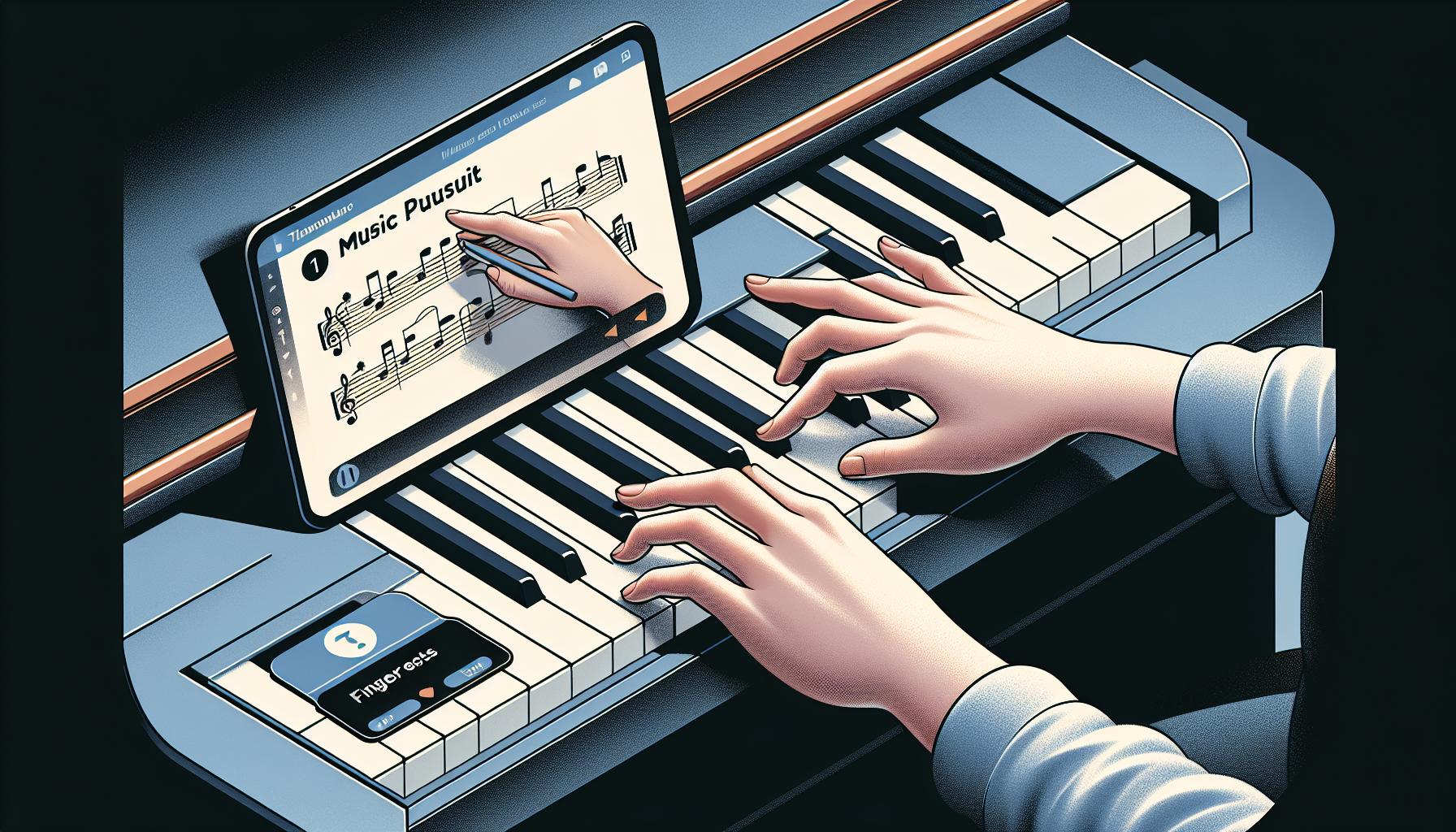
    When diving into the world of free online piano lessons, newcomers may wonder about the structure these lessons typically follow. Absolute beginners need a clear, step-by-step guide to help them navigate their musical journey. Free online lessons cater to this need beautifully, showcasing a blend of flexibility and thoroughness that’s hard to find elsewhere.

    First off, lessons usually kick off with an introduction to the piano itself. Learners get acquainted with the names of the keys, the layout of the keyboard, and the role of foot pedals. This foundational knowledge is crucial as it supports all future learning.

    Next, tutors introduce basic music theory. This includes understanding notes, rhythms, and scales. Even in online settings, interactive tools and videos make this potentially daunting subject matter engaging and digestible. For beginners, grasping these concepts early on is essential for reading music and developing timing skills.

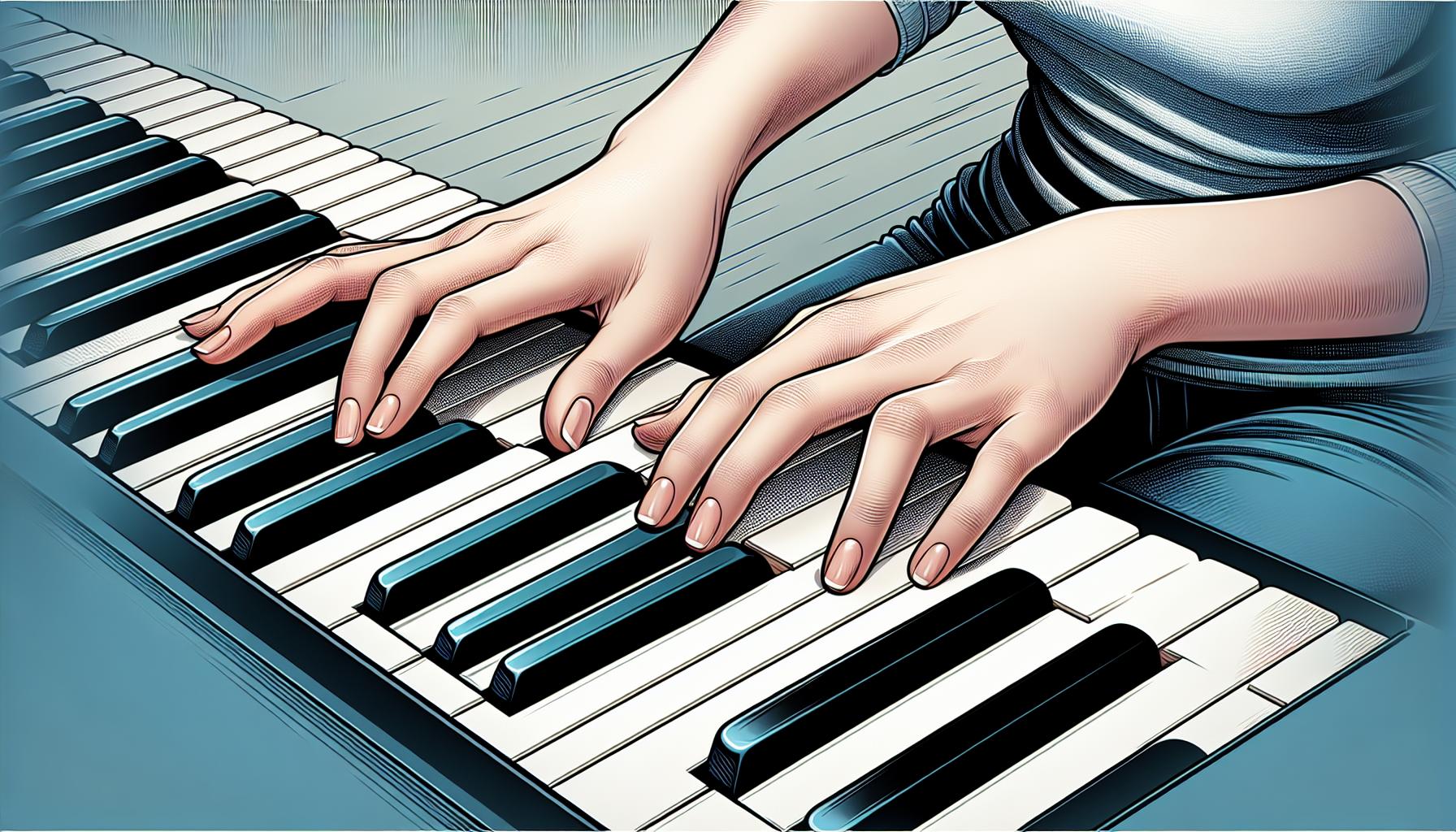
    The practical part of the lessons often begins with simple hand positioning and finger exercises. These exercises are designed to increase dexterity and comfort with the keyboard. Following this, students start playing simple songs or pieces. This approach not only boosts confidence but also provides immediate, tangible evidence of progress, which is incredibly motivating.

    Another pivotal aspect is the integration of technology in these lessons. Many free online platforms offer innovative tools such as metronomes, digital music sheets, and interactive piano simulators. These resources not only make learning more fun but also more effective, offering immediate feedback and personalized learning paths.

    As students progress, they’re introduced to a broader variety of music genres, encouraging exploration and personal musical expression. This variety ensures that learners find the style that resonates most with them, whether it’s classical, jazz, pop, or another genre.

    To support ongoing learning, these lessons often incorporate quizzes and challenges. These elements gamify the learning process, making practice sessions more engaging. They also help reinforce concepts and techniques learned, ensuring students retain and can apply their newfound knowledge.

    Finally, it’s not just about solo practice. Online communities and forums offer students the chance to connect with peers and instructors. Here, they can share their progress, challenges, and triumphs. These communities provide an invaluable source of support and motivation, turning an individual’s learning journey into a shared experience.

    Overall, the structure of free online piano lessons for absolute beginners is designed to provide a comprehensive and enjoyable start to one’s musical education.

    Mastering the Basics of Reading Music

    After familiarizing themselves with the layout of the piano and understanding the initial steps of hand positioning and basic exercises, students are encouraged to dive into the world of reading music. This essential skill forms the backbone of their musical journey, paving the way for them to explore a wider range of pieces as they progress.

    Reading music encompasses recognizing notes on the staves, understanding rhythms, and grasping how these elements combine to create melodies and harmonies. Free online piano lessons for absolute beginners approach this challenge with a gradual, step-by-step method, ensuring that students build a strong foundation. At the outset, learners are introduced to the grand staff, comprising the treble clef (for the right hand) and the bass clef (for the left hand).

    Note Identification

    Identifying notes starts with memorizing the spaces and lines of each clef. Many lessons employ mnemonic devices to aid in this process. For the treble clef, phrases like “Every Good Boy Does Fine” help students remember the lines, while “FACE” represents the spaces. Similarly, for the bass clef, lines can be remembered with “Good Boys Do Fine Always,” and spaces with “All Cows Eat Grass.”

    Rhythm Basics

    Understanding rhythm involves being able to read various note values, such as whole notes, half notes, quarter notes, and so on. Lessons often integrate clapping and counting exercises that help beginners internalize the pulse and rhythm of music. This practical approach is important for developing timing and synchronization when playing the piano.

    Simple Melodies

    Once students grasp note identification and rhythm, they’re gradually introduced to playing simple melodies. This consists of short pieces that incorporate basic notes and rhythms they have learned. These melodies are carefully selected to ensure a sense of accomplishment and motivate learners to continue exploring more complex pieces.

    Technology Tools

    The inclusion of technology in learning to read music cannot be understated. Many platforms offer interactive tools that allow students to practice note reading in a gamified environment. Features such as immediate feedback on accuracy and tempo help learners correct mistakes in real-time, significantly speeding up the learning process.

    Practice Makes Perfect

    Consistent practice is key to mastering music reading. Online lessons encourage regular engagement with reading exercises, both within the platform and through printable materials. This ensures that students not only learn during lessons but also apply and reinforce their knowledge between sessions.

    Understanding Keyboard Layout
    Once beginners get a grasp of reading music, the next critical step in free online piano lessons is diving into the keyboard layout. This understanding forms the foundation upon which all piano skills are built.

    At first glance, a piano keyboard might seem like a complex jumble of black and white keys. Yet, with the right guidance, students quickly learn that this layout is more logical than it appears. Free online lessons for absolute beginners break down the keyboard into manageable sections, ensuring that students aren’t overwhelmed.

    The 88 keys of a standard piano are divided into groups of twos and threes by the black keys. This pattern is vital for navigation, providing a visual guide to identify the white keys, each corresponding to a musical note from A to G. Beginners are taught to recognize these patterns, enabling them to locate notes quickly without the need to count each key.

    Recognizing Octaves and Middle C

    One of the first tasks in understanding the keyboard layout is identifying octaves. An octave is a series of eight white keys, starting and ending with the same note name but at a higher pitch. Middle C, the most referenced note in beginner piano, serves as a home base. It’s positioned near the center of the keyboard and acts as a point of reference for finding other notes. Free lessons emphasize the importance of locating Middle C early on, as it’s crucial for both reading music and understanding the keyboard’s layout.

    Interactive Learning Tools

    To aid in the assimilation of keyboard layout knowledge, many online piano lessons incorporate interactive tools. These may include virtual keyboards that allow learners to practice note identification and software that quizzes students on locating specific keys. This hands-on approach reinforces learning, making the virtual environment an effective tool for mastering the keyboard layout.

    • Practice Sessions: Regular, guided practice using these interactive tools helps cement the relationship between musical notes and their physical location on the keyboard.
    • Visual Aids: Flashcards, diagrams, and other visual aids are commonly used to supplement learning, providing a quick reference for students as they become more familiar with the keyboard.

    Progressing to Simple Songs

    After mastering the basics of the keyboard layout, students are gradually introduced to playing simple songs. This not only applies their knowledge of note identification and location but also starts to develop hand-eye coordination and musical timing. The choice of songs in free online lessons often reflects a careful balance between challenge and achievability, ensuring that students remain motivated and engaged.

    Getting the Hang of Simple Chords
    After mastering the basics of the keyboard layout and beginning to play simple songs, students are ready to dive into the world of chords, a crucial step in their musical journey. Chords form the backbone of most music genres, providing depth and harmony to melodies. Free online piano lessons offer a structured approach to learning chords, starting with the simplest forms – major and minor triads.

    Major triads consist of three notes: the root note, the major third, and the perfect fifth. They’re known for their bright, happy sound. In contrast, minor triads, which also consist of three notes—the root, the minor third, and the perfect fifth—produce a sadder, more reflective tone. These fundamental chord types are essential for beginners to understand as they lay the groundwork for more complex chords and harmony in music.

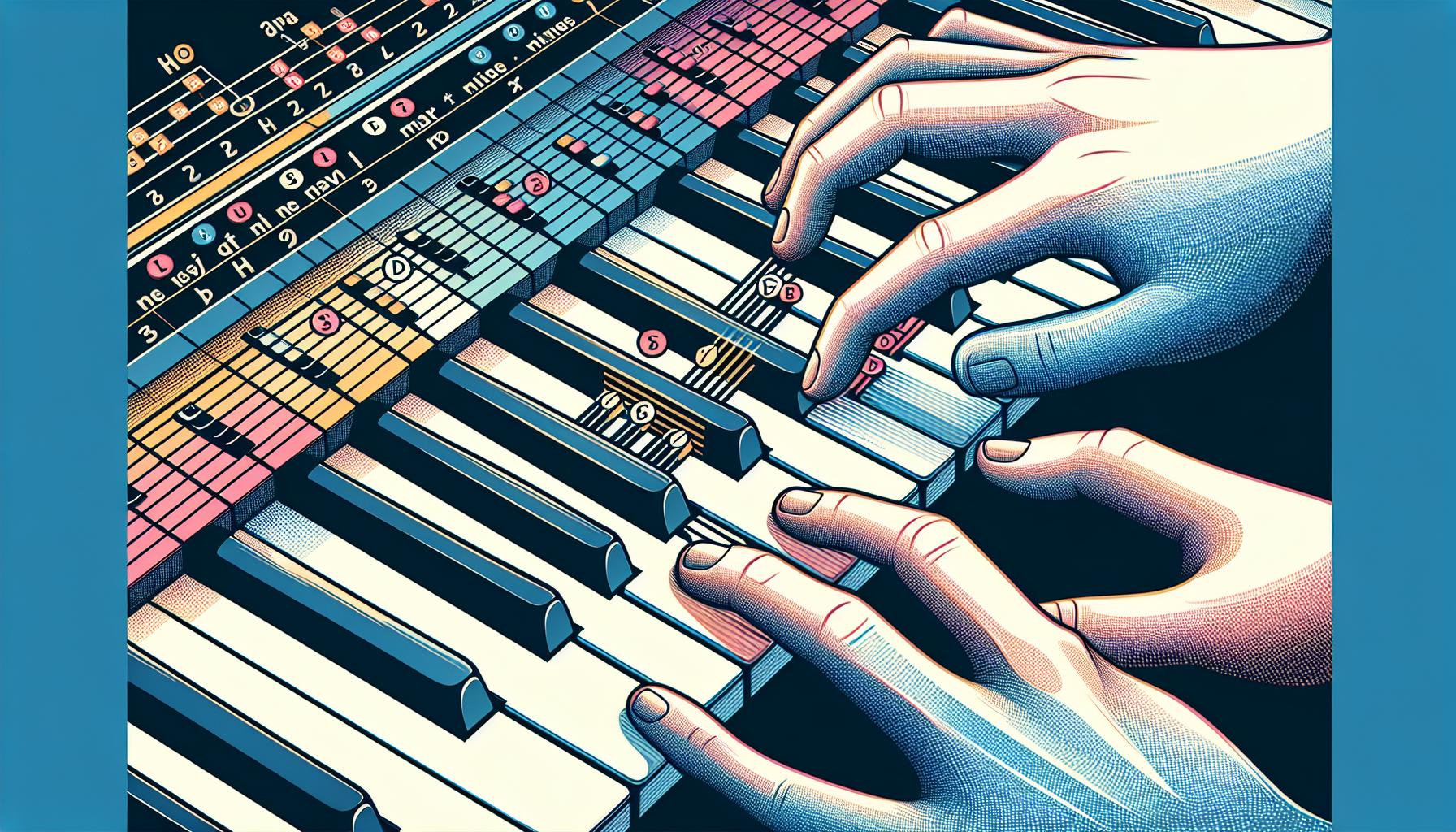
    Free lessons leverage the familiarity students have with the keyboard to introduce chord shapes and patterns. Just as with single notes, recognizing patterns on the keyboard is pivotal for identifying and playing chords efficiently. Interactive tools and software come into play here, allowing students to practice chord formations and hear how they should sound, enhancing their auditory and muscle memory.

    To help students get comfortable with playing chords, lessons often include:

    • Visual aids: Diagrams and color-coded keys display chord structures clearly.
    • Practice exercises: Repetitive drills that focus on transitioning between chords smoothly.
    • Song practice: Simplified versions of popular songs that incorporate the chords being learned.

    Incorporating songs that students love and are already familiar with keeps the learning process engaging and fun. It also demonstrates the practical application of chords in music, allowing learners to see their progress in real-time.

    As students gain confidence in identifying and playing basic chords, they’re introduced to the concept of chord progressions. A chord progression is a series of chords played in a sequence, which forms the harmonic foundation of a song. Understanding common progressions such as the classic I-IV-V helps students grasp song structure and prepares them for more advanced musical concepts.

    Interactive quizzes and games designed to recognize and remember different chord progressions further aid in solidifying this understanding. These tools not only reinforce learning but also make the process interactive and enjoyable.

    Conclusion

    Embarking on the journey of learning piano online as an absolute beginner might seem daunting at first. Yet with the structured approach of understanding the keyboard layout, mastering the basics becomes an exciting adventure. The integration of interactive tools and visual aids not only makes the learning process engaging but also ensures a solid foundation is built. From recognizing notes and playing simple songs to exploring the harmony of chords, each step is designed to keep students motivated. As they progress, the world of music opens up with endless possibilities. So whether it’s playing their favorite song or understanding the intricacies of musical composition, these free online piano lessons offer a comprehensive path to musical mastery.
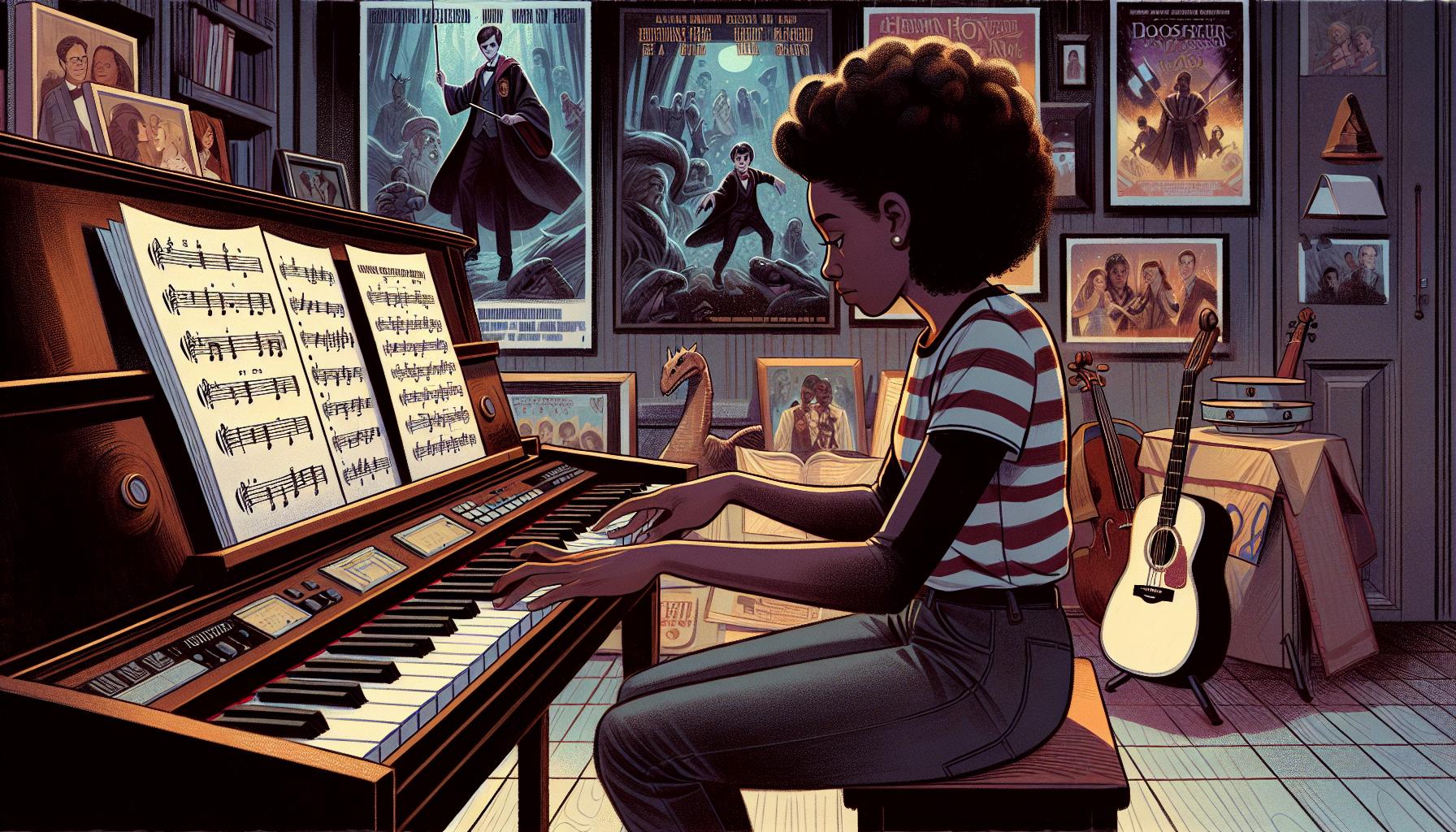
  • Top Beginner-Friendly Keyboard Movie Themes: Harry Potter, Titanic & More

    Top Beginner-Friendly Keyboard Movie Themes: Harry Potter, Titanic & More

    Diving into the world of music can be thrilling, especially when it involves playing iconic movie theme songs on the keyboard. For beginners, there’s something magical about bringing to life the melodies that have enchanted audiences on the big screen. It’s not just about hitting the right notes; it’s about connecting with the heartbeats of timeless stories.

    Starting with familiar tunes can boost confidence and make the learning process enjoyable. Imagine sitting at the keyboard and effortlessly playing the hauntingly beautiful theme from “The Godfather” or the adventurous strains of “Indiana Jones”. These songs aren’t just fun to play; they’re gateways to mastering the keyboard and understanding musical storytelling.

    Exploring Famous Movie Theme Songs

    When beginners embark on the journey of learning the keyboard, diving into the world of famous movie theme songs offers not just a practice ground but a passage into a realm of nostalgia and wonder. These themes, known for their emotive power and unforgettable melodies, serve as perfect materials for novices to explore musical storytelling and improve their skills.

    Among the treasure trove of cinematic music, certain songs stand out for their simplicity and impact, making them ideal for beginners. The “Harry Potter” theme song, with its whimsical and enchanting tune, captures the magic of the wizarding world and is a joy for learners to play. A few keys and a gentle rhythm are all it takes to bring Hogwarts to life, right from the living room.

    Similarly, the “Pirates of the Caribbean” theme song offers a swashbuckling challenge that’s both exciting and approachable for new players. Its rhythmic intensity and memorable melody line push beginners to explore dynamic playing and timing, crucial skills in keyboard mastery.

    Here’s a glimpse at some of the most popular movie themes for keyboard beginners and their attributes:

    Theme Song Movie Key Features
    The Godfather Theme The Godfather Melodic, Emotional
    Indiana Jones Theme Raiders of the Lost Ark Adventurous, Rhythmic
    Harry Potter Theme Harry Potter Series Whimsical, Enchanting
    Pirates of the Caribbean Theme Pirates of the Caribbean Series Swashbuckling, Intense
    Jurassic Park Theme Jurassic Park Majestic, Inspirational

    Learning these songs not only boosts confidence but also introduces players to a variety of musical elements, including melody, harmony, and rhythm. Each theme, with its own story and emotion, teaches beginners how music can convey feelings and narratives without a single spoken word.

    To make the most out of this learning experience, students are encouraged to start by listening to these themes intently, noting their emotional impact and how the melody and harmony work together to create a powerful experience. This attentive listening helps in understanding the intricacies of each theme and prepares the learner for a more informed and sensitive rendition on the keyboard.

    Benefits of Starting with Iconic Tunes

    Diving into the world of music, particularly through the keyboard, is an exciting journey filled with endless melodies and harmonies. For beginners, the path might seem daunting at first, with scales and theory vying for their attention. However, beginning their musical adventure with iconic movie theme songs can offer a variety of benefits that not only enhance their learning experience but also keep their passion for music burning brightly.

    Engagement and Motivation are key factors in the learning process, especially for novices. Iconic movie themes like those from “Star Wars” or “Jurassic Park” are instantly recognizable and connect learners to their favorite cinematic memories. This familiarity fosters a deeper connection to the music, making practice sessions more enjoyable and less of a chore. When students play tunes they love and recognize, they’re more likely to stick with their practice routine, turning challenges into exciting opportunities to recreate beloved melodies.

    Practicing these well-known themes also helps beginners Understand Musical Concepts in a more intuitive and memorable way. These songs are not just melodic; they are structured in ways that introduce learners to fundamental musical concepts such as timing, phrasing, and dynamics. For instance, the haunting melody of “Harry Potter” highlights the use of minor keys and demonstrates how music can evoke emotions. As students engage with these songs, they naturally absorb lessons on melody, harmony, and rhythm, laying a solid foundation for more advanced musical studies.

    Moreover, iconic movie themes are often composed with a wide audience appeal in mind, which means they’re engineered to be catchy yet simple. This simplicity is crucial for beginners who might get easily overwhelmed by complex pieces. Songs like the theme from “The Godfather” offer simplicity without sacrificing depth, allowing learners to feel a sense of accomplishment early in their journey. As they master these tunes, their confidence grows, paving the way for tackling more challenging pieces in the future.

    Another significant benefit is the Development of Listening Skills. To play these themes accurately, students must listen to the originals attentively, analyzing each note and nuance. This active listening enhances their ear for music, teaching them to distinguish subtle differences in pitch, tone, and rhythm. It’s a crucial skill for any musician, aiding not just in playing by ear but in all aspects of musical performance and composition.

    Learning Tips for Beginners

    Embarking on the journey of learning to play famous movie theme songs on the keyboard can be exhilarating for beginners. These tips are designed to streamline the learning process, ensuring that the endeavor is as enjoyable as it is beneficial.

    Start with Simple Tunes

    One of the keys to mastering any instrument, especially the keyboard, is to start with simple tunes. Movie themes like “Harry Potter” or “Titanic” are not only recognizable but also relatively easier to learn. They often consist of repetitive patterns that help in honing one’s skills without overwhelming them.

    Practice Regularly

    Consistency is crucial when learning an instrument. Setting aside a specific time each day for practice can significantly improve proficiency and confidence. Even just 15 to 30 minutes of focused practice can lead to noticeable progress over time.

    Embrace Mistakes

    Remember, making mistakes is a part of the learning process. Instead of getting frustrated, try to understand what went wrong and how it can be corrected. Mistakes are valuable learning opportunities that can lead to greater musical understanding.

    Listen to the Original Pieces

    Actively listening to the original version of the movie theme provides a greater sense of timing, rhythm, and emotion. It serves as a model for what beginners should aspire to achieve. It’s also beneficial to watch live performances or tutorials on platforms like YouTube to get visual guidance on finger placement and technique.

    Use Technology to Your Advantage

    Today, there are numerous apps and software designed specifically for music learners. These tools can offer interactive lessons, tutorials, and even games that make learning both fun and effective. They can also provide instant feedback, helping beginners correct their mistakes in real-time.

    Break It Down

    Tackling a whole song at once can be daunting. Breaking the song down into smaller, manageable sections can make the learning process more digestible. Focus on mastering each section before moving on to the next. This method not only helps in memorizing the tune but also in understanding its structure.

    Keep It Fun

    Lastly, it’s essential to keep the learning process entertaining. Choosing songs that one loves, creating challenges with friends, or setting personal milestones can keep motivation high. Music is a form of expression, and enjoying that expression is key to sustained learning.

    Popular Movie Themes for Keyboard Practice

    When diving into the world of keyboard music, it’s thrilling to explore pieces that resonate with many. Famous movie themes not only captivate listeners but also offer beginners a fantastic opportunity to showcase their growing skills. These pieces often contain simple yet engaging melodies that are perfect for newcomers to the instrument. In this section, we’ll delve into several iconic movie themes that are ideal for keyboard practice.

    First on the list is the unforgettable “Harry Potter Theme” (Hedwig’s Theme) by John Williams. This magical piece immediately transports listeners to the wizarding world, making it a fan favorite for many. Its repetitive melody line makes it accessible for beginners, while its variations can challenge them as they progress.

    Another classic is the “Titanic Theme” (My Heart Will Go On) by James Horner. Known for its emotional depth, this melody teaches beginners to express feelings through music. Its slow pace allows learners to focus on each note and the smooth transitions between them, which is crucial for developing a sensitive playing style.

    For those who love adventure, “Jurassic Park Theme” by John Williams offers a fantastic learning piece. Its grand and majestic sound requires focus on dynamics, teaching beginners how to play softly and loudly to create an engaging musical story.

    “Darth Vader’s Theme” (The Imperial March) from Star Wars, also by John Williams, is perfect for those interested in a more dramatic piece. It helps beginners understand the importance of rhythm and timing in creating tension and excitement within music.

    Below are a few key details about these themes to help beginners choose where to start:

    Movie Theme Composer Key Features
    Harry Potter Theme (Hedwig’s Theme) John Williams Magical, repetitive melody
    Titanic Theme (My Heart Will Go On) James Horner Emotional depth, slow pace
    Jurassic Park Theme John Williams Grand sound, dynamic variation
    Darth Vader’s Theme (The Imperial March) John Williams Dramatic, rhythmic precision

    Incorporating these movie themes into daily practice sessions will not only boost technical skills but also enrich the musical experience by connecting keyboard learning to beloved cinematic memories. They’re also a hit at gatherings, allowing beginners to share their progress with friends and family through tunes that are instantly recognizable and cherished by many.

    Conclusion

    Diving into the world of movie theme songs on the keyboard opens up a magical gateway for beginners. It’s not just about mastering the keys but also about bringing cinematic worlds right into their living rooms. By practicing these iconic tunes, they’re not only enhancing their technical skills but are also stepping into the shoes of their favorite characters. It’s a journey that’s as rewarding as it is fun. So, whether they’re conjuring spells with the “Harry Potter Theme” or setting sail with the “Titanic Theme,” there’s a whole universe of musical adventures waiting to be explored. Let the music begin!

  • Free Printable Beginner Keyboard Sheet Music: Explore Various Genres

    Free Printable Beginner Keyboard Sheet Music: Explore Various Genres

    Starting your musical journey can feel like stepping into a vast, uncharted territory, especially if the keyboard is your instrument of choice. It’s thrilling and a bit daunting, but the right resources can make all the difference. That’s where printable beginner keyboard sheet music comes into play. It’s a fantastic tool for those just getting their fingers familiar with the keys, offering a blend of simplicity and challenge that’s perfect for novices.

    With printable sheet music, learners have the freedom to practice at their own pace, anytime, anywhere. Whether it’s classical tunes or the latest pop hits, there’s something out there for every budding musician. The beauty of starting with beginner sheets is that they often include helpful annotations, making it easier to understand musical symbols and terms. It’s like having a personal music tutor at your fingertips, ready to guide you through each note and chord.

    Benefits of Printable Beginner Keyboard Sheet Music

    Printable beginner keyboard sheet music stands out as a valuable resource for those embarking on their musical voyage. The beauty of these resources lies in their ability to bridge the gap between novice enthusiasm and musical literacy. Here’s a closer look at why they are highly favored by budding musicians.

    First and foremost, printable sheets offer the ultimate convenience. With just a few clicks, learners can access a plethora of music sheets from classical to contemporary pieces tailored for beginners. This ease of access means that practice isn’t confined to just music lessons; it can happen anytime, anywhere. Flexibility in practice schedule encourages consistency, which is crucial in mastering the keyboard.

    Another significant benefit is the customized learning experience these sheets provide. Unlike standard keyboard books that follow a one-size-fits-all approach, printable sheet music can be chosen based on one’s musical tastes and skill level. This ensures learners remain engaged and motivated, as they play pieces they genuinely enjoy and find appropriately challenging.

    Moreover, printable keyboard sheet music often includes helpful annotations. These annotations are invaluable for beginners, offering guidance on finger placement, tempo, and musical expressions. By having these cues directly on the sheet, learners can better understand the complexities of music notation and improve their playing technique without feeling overwhelmed.

    The ability to mark up and annotate these printable sheets themselves also plays a pivotal role in the learning process. As beginners navigate through the pieces, making their own notes and adjustments allows for a more interactive and reflective practice session. This hands-on approach to learning not only reinforces musical concepts but also accelerates skill development.

    For visual learners, the straightforward layout of these beginner sheets reduces the intimidation factor often associated with complex musical scores. By focusing on simple melodies and basic chords, learners can gradually build their reading skills in a structured, yet gentle manner. This methodical progression is key in building confidence and establishing a solid foundation in music theory and keyboard proficiency.

    Lastly, the affordability of printable sheet music cannot be overstated. Investing in music books can quickly add up, especially when exploring different genres or looking for pieces that match one’s evolving skill level. Printable sheets, often available for free or at a minimal cost, provide an economical solution to accessing a diverse range of music. This democratizes music education, making it more accessible to people from all walks of life.

    Finding the Right Sheet Music for Your Skill Level

    Finding suitable printable beginner keyboard sheet music can feel overwhelming for newcomers. Amidst a vast sea of options, pinpointing pieces that align with one’s skill level and musical tastes is pivotal. The journey starts with understanding the various skill levels commonly found in keyboard music and recognizing where one falls on this spectrum.

    Skill Levels Simplified

    In the realm of keyboard music, pieces are typically categorized into three broad skill levels:

    • Beginner: These pieces focus on simple melodies, basic rhythms, and minimal hand movement. They often include popular children’s songs and classic folk tunes.
    • Intermediate: A step up in complexity, intermediate sheet music introduces varied musical techniques, chord variations, and more extensive use of both hands.
    • Advanced: For those who’ve mastered the keyboard, advanced pieces challenge players with complex rhythms, intricate harmonies, and rapid movements across the keys.

    Identifying Your Level

    To accurately gauge one’s level, reflection on a few key aspects of one’s playing can be insightful:

    • Comfort with the Basics: Can they read music comfortably? Do they have a handle on simple rhythms and melodies?
    • Technical Skills: Assess how well they navigate scales, chords, and hand coordination.
    • Repertoire: What is the most complex piece they’ve successfully played?

    With these considerations in mind, one can start seeking sheet music that fosters growth without overwhelming. Resources like online databases and music education platforms offer an array of printable beginner keyboard sheet music, categorized by skill level. Many of these websites feature user reviews and difficulty ratings, further guiding learners toward appropriate selections.

    Tailoring Choices to Personal Interests

    While skill level is paramount in choosing the right piece, personal interest shouldn’t take a backseat. Engaging with music that resonates on a personal level enhances motivation and learning. Thankfully, the versatility of keyboard music encompasses various genres, from classical and jazz to pop and rock. Beginners should explore different styles to discover what captivates them the most, keeping in mind that a mix of genres can round out their musical education and technique.

    Moreover, incorporating songs that they’re enthusiastic about into their practice routine makes the learning process more enjoyable. It bridges the gap between mechanical practice and genuinely living the music.

    Practicing with Printable Sheets Anytime, Anywhere

    One of the most notable advantages of printable beginner keyboard sheet music is its incredible versatility. Unlike traditional music books, which can be bulky and not always accessible, printable sheets can be easily carried or stored on any digital device. This means learners can practice their favorite pieces wherever they find a keyboard or piano. Whether it’s a quick session at a friend’s house, a practice room at school, or even during a vacation, access to their chosen repertoire is just a print away.

    With printable sheet music, there’s no need to wait for a physical book to arrive by mail or to go out to a store. As soon as they discover a piece they’re passionate about, they can download and print it within minutes. This immediate access not only saves time but also keeps motivation high. The excitement of stumbling upon a new piece of music and being able to practice it right away is a feeling that cannot be overstated.

    Furthermore, the ease of printing allows for customization of the learning experience. If a particular piece is proving too challenging or too easy, it’s simple to find and print another that better suits the learner’s current skill level. This flexibility ensures that learners remain engaged and challenged, without becoming overwhelmed or bored. Moreover, the ability to reprint a piece means that annotations, such as fingerings or dynamic markings, can be added and modified as needed, allowing for a more personalized practice session.

    Digital Organization and Environmental Benefits

    Adopting printable sheet music also comes with the added advantage of easy digital organization. Learners can store their music files on a computer or cloud storage, making it simple to keep track of their repertoire. This organization extends to the environmental benefits of using less paper. Since learners only print the pieces they’re working on, there’s less waste compared to buying entire books of which only a few pieces might be relevant.

    Many websites and platforms offering printable sheet music also update their libraries regularly, providing an endless source of new music to explore. This accessibility to a diverse array of compositions encourages learners to broaden their musical horizons and experiment with styles or composers they may not have encountered otherwise.

    Understanding Musical Symbols and Terms

    Grasping the basics of musical symbols and terms is like learning a new language. It’s essential for anyone starting their musical journey, especially with keyboard instruments. This knowledge not only enhances one’s ability to read and interpret sheet music but also enriches the overall playing experience by adding layers of meaning and emotion to the pieces they learn.

    For beginners, the world of musical notation might seem complex at first glance. However, they’ll find that most sheet music consists of a few fundamental elements. Staff lines and spaces form the backbone, representing different musical pitches. Each line and space corresponds to a specific note, which is crucial for learning the position of keys on the keyboard.

    Clefs are another vital component, indicating the pitch range of the music. The treble clef is most common for keyboard music, representing higher notes, while the bass clef denotes lower notes. Together, they cover the wide array of sounds a keyboard can produce, ensuring learners play each note in the correct octave.

    Then there are musical notes and rests, symbolizing sound and silence, respectively. Each has different shapes to show how long they should be played or paused. For instance, a quarter note suggests a short duration, while a whole note offers a longer sound. Understanding these symbols helps beginners maintain rhythm and tempo, critical components of music that breathe life into compositions.

    Dynamics and articulations add expression and texture to music. Symbols like forte (f) for loud and piano (p) for soft instruct players on the volume of their playing. Articulations, such as staccato (detached notes) and legato (smooth and connected notes), further dictate how each note is to be played, allowing for emotional expression through music.

    Beyond these basics, beginners will encounter various other terms and symbols that provide detailed instructions on how to play a piece. Metronome marks indicate the tempo or speed of a piece, and term such as Allegro (fast) or Adagio (slow) give further insight into the composer’s intentions.

    Exploring Different Genres with Beginner Sheet Music

    When embarking on the journey of learning the keyboard, beginners may find themselves confined to classical pieces, as they’re often the go-to genre for most beginner sheet music. However, the world of music is vast and varied, encompassing a myriad of genres that offer learners an opportunity to explore different styles and rhythms. From the soulful melodies of the blues to the upbeat rhythms of pop, each genre offers a unique learning experience and a chance to delve into diverse musical expressions.

    Classical music is indeed a cornerstone of musical education, providing a strong foundation in technique and theory. Nonetheless, venturing into other genres can dramatically enhance one’s musical palette. Jazz, with its syncopated rhythms and improvisation, challenges students to think outside the box and develop a keen ear for intricate musical nuances. Similarly, Rock and Pop music, known for their memorable melodies and simpler chord progressions, can be a fun and engaging way to practice and apply learned skills.

    Blues and R&B, on the other hand, introduce learners to soulful expressions and groove-based playing, highlighting the importance of rhythm and timing. Furthermore, Country music, with its storytelling and distinct twang, offers a unique approach to phrasing and articulation. By exploring these genres, beginners not only broaden their musical horizons but also discover what resonates with them personally.

    For beginners, accessing printable sheet music tailored to these various genres can be a gateway to cultural and emotional education through music. This diversity not only keeps practice sessions interesting but also encourages learners to experiment with different sounds and techniques. Moreover, playing a variety of music can foster a deeper appreciation for the art, instilling a lifelong love and curiosity for music exploration.

    Finding beginner-friendly sheet music for these genres might seem daunting at first. Yet, numerous online resources and music education platforms offer printable sheet music specifically designed for beginners in a wide range of genres. These sheets often come with simplified arrangements that maintain the essence of the original compositions while ensuring they are accessible to novices.

    Incorporating different genres into practice routines not only accelerates learning by offering new challenges and techniques but also ensures that learners stay motivated and engaged in their musical journey. They get to experience firsthand how diverse the world of music is and how various elements from different genres can blend to create new and exciting sounds.

    Conclusion

    Exploring different genres through printable beginner keyboard sheet music is a journey filled with discovery and growth. It’s a way to not only build a solid musical foundation but also to dive into the vast sea of creativity that music offers. By stepping out of their comfort zone and embracing genres from classical to country, learners find themselves on a path that’s as enriching as it is enjoyable. They’ll not only accelerate their learning curve but also cultivate a deep-seated love and appreciation for music’s diverse landscape. So here’s to the beginners who are ready to embark on this musical adventure—the sheet music world is your oyster!

  • Top Fun Keyboard Songs for Beginners: Tips & Tricks for Fast Learning

    Top Fun Keyboard Songs for Beginners: Tips & Tricks for Fast Learning

    Starting to learn the keyboard can be both exciting and a bit daunting. But what better way to dive in than with some fun and easy songs? They’re not just enjoyable to play; they’re also great for boosting confidence and building foundational skills.

    From timeless classics to modern pop hits, there’s a wide range of tunes that are perfect for beginners. These songs often feature simple melodies and chords that can be picked up quickly, making practice sessions something to look forward to.

    Benefits of Learning Keyboard with Fun Songs

    When beginners choose fun songs as their entry point into the world of keyboard playing, they’re not just making practice enjoyable. They’re setting themselves up for a more effective learning experience. Here’s why incorporating fun songs into keyboard practice is a brilliant move for any novice player.

    First and foremost, engagement levels soar when learners tackle songs they actually enjoy. It’s no secret that motivation can wane if practice feels like a chore. However, when beginners are excited about the tunes they’re learning, they’re more likely to sit down at the keyboard regularly and for longer periods. This consistent practice is key to making progress.

    Moreover, fun songs often come with the advantage of simplicity. Many beginners’ favorites have straightforward melodies and chords, making them accessible for someone just starting out. This simplicity is not a drawback but an incredible asset. It allows learners to focus on the fundamentals of music theory and technique without getting overwhelmed.

    Here’s a brief look at how fun, easy songs can impact learning:

    Aspect Impact
    Engagement High engagement leads to consistent and longer practice sessions.
    Musicality Simple songs help in understanding basic music theory concepts.
    Technique Players develop fundamental playing techniques more naturally.
    Confidence Early successes boost learners’ confidence in their ability.

    Furthermore, learning through songs that are both enjoyable and widely recognized provides an invaluable opportunity for beginners to share their progress. Whether it’s a family gathering or a school talent show, being able to perform a popular tune boosts their confidence exponentially. This public or even informal family performance experience is crucial as it introduces a sense of purpose and achievement in their musical journey.

    Another key benefit revolves around the development of musical ear and creativity. As learners play songs they love, they’re more likely to experiment with them – perhaps changing the tempo, trying out different octaves, or adding a personal touch to the melody. This experimentation is a fantastic way for beginners to develop a deeper understanding of music as a creative expression, not just a skill set to master.

    Lastly, the flexibility of song choices in keyboard learning allows for a personalized learning path. Everyone has different taste in music, and when learners can pick songs that resonate with them personally, it adds a layer of personal connection and dedication to the learning process.

    Timeless Classics for Beginners

    When embarking on the journey of learning to play the keyboard, beginners often find themselves sifting through countless songbooks and online resources, searching for that perfect set of tracks to start honing their skills. Amidst a vast sea of options, there lies a treasure trove of timeless classics that not only resonate with audiences of all ages but also offer the perfect blend of simplicity and enchantment to kickstart a beginner’s musical journey.

    “Twinkle Twinkle Little Star”, arguably the epitome of classic melodies, serves as an excellent starting point. Its straightforward rhythm and repetitive melody line make it an ideal choice for mastering basic finger movements and understanding musical notation. Similarly, “Jingle Bells” offers a jovial tune that’s as enjoyable to play as it is recognizable, teaching beginners about tempo and dynamic expression with its upbeat and merry rhythm.

    On the other hand, classics like “Ode to Joy” by Beethoven introduce beginners to the world of classical music with a simple yet profound melody. Playing such a piece not only instills a sense of accomplishment but also nurtures an appreciation for classical compositions. Furthermore, the flexibility in tempo and dynamics in this piece makes it a versatile choice for learners at different stages of their keyboard journey.

    In addition to these, “Fur Elise”, another masterpiece from Beethoven, can be adapted for beginners. Although the original composition is complex, simplified versions allow beginners to experience the beauty of classical music while gradually improving their skill set. This piece particularly emphasizes the importance of emotion and expression in music, encouraging students to explore the expressive potential of the keyboard.

    Each of these classics carries a unique charm and learning opportunity, making them indispensable tools in a beginner’s repertoire. They not only foster a deep connection with music from the get-go but also pave the way for exploring more intricate compositions in the future.

    Song Composer Key Skills Developed
    Twinkle Twinkle Little Star Trad. Finger movements, notation
    Jingle Bells James Lord Pierpont Tempo, dynamic expression
    Ode to Joy Ludwig van Beethoven Appreciation for classical music
    Fur Elise Ludwig van Beethoven Emotion, expression

    Modern Pop Hits to Master

    While timeless classics offer a solid foundation for beginners, diving into modern pop hits can be equally rewarding and entertaining. These contemporary songs not only keep practice sessions fresh and engaging but also allow learners to play tunes they hear on the radio or their streaming playlists. Let’s explore a few pop hits that have straightforward chord progressions and melodies, making them perfect for keyboard beginners.

    One standout song that combines simplicity with popularity is “Someone Like You” by Adele. Its repetitive chord pattern and soulful melody make it an excellent choice for beginners eager to perform a song that resonates with many. Another hit that’s fun to learn is “Love Yourself” by Justin Bieber. The song’s uncomplicated structure and catchy melody offer a great way to practice rhythm and chord transitions without feeling overwhelmed.

    For those who enjoy a bit of a challenge while still sticking to the beginner-friendly theme, “Clocks” by Coldplay provides a rhythmic pattern that’s mesmerizing yet not too difficult to master with some practice. This song introduces syncopation and arpeggios in a way that’s accessible for novices.

    Here’s a brief overview of these modern pop hits along with their key characteristics:

    Song Title Artist Key Features
    Someone Like You Adele Repetitive chord pattern, Soulful melody
    Love Yourself Justin Bieber Simple structure, Catchy melody
    Clocks Coldplay Rhythmic pattern, Introduction to arpeggios

    Encouraging learners to explore songs outside the classical repertoire enhances their musical experience. It allows them to connect with the music they love and share their progress with friends and family through performances of familiar tunes. Additionally, tackling these pop hits can boost confidence and motivate beginners to continue their keyboard journey.

    Beyond the fun aspect, learning modern songs helps in understanding contemporary music theory and composition techniques. It exposes players to various genres and styles, fostering a versatile skill set that’s beneficial for future musical endeavors.

    As beginners progress through their journey, gradually increasing the complexity of the songs they learn is crucial. Starting with these pop hits and moving towards more intricate compositions ensures a balanced and comprehensive learning experience. Every new song brings its own set of challenges and learning opportunities, reinforcing key concepts and skills developed through practice.

    Tips for Practicing Keyboard Songs

    Starting out on the keyboard can be an exciting journey, and choosing fun songs is crucial to keeping that excitement alive. However, knowing how to practice effectively is just as important to make progress. Here are some tips that beginners can follow to enhance their practice sessions.

    Create a Routine

    Establishing a consistent practice routine can work wonders. It’s not just about the quantity of practice but the quality and regularity. Beginners should aim for short, daily practice sessions instead of long, infrequent ones. Starting with as little as 15 to 20 minutes a day can lead to significant progress. The key is consistency.

    Break It Down

    Trying to tackle an entire song in one go can be overwhelming. Instead, break the song into smaller, manageable sections. Focus on mastering a single chord progression or melody line before moving on to the next. This method not only makes learning easier but also boosts the sense of achievement as each part is mastered.

    Slow and Steady

    Speed is not a friend when learning a new song on the keyboard. Beginners should start playing the notes slowly to ensure accuracy and to internalize the melody and rhythm. As the movements become more familiar, gradually increase the tempo. Using a metronome can help maintain a steady pace and improve timing.

    Use Technology

    In this digital age, numerous resources can aid in learning keyboard songs. Apps and online tutorials offer visual and auditory guidance that can be extremely helpful. Recording practice sessions and playing them back can also provide insight into areas that need improvement.

    Focus on Hand Position and Posture

    Good hand positioning and maintaining a proper posture are crucial for playing effectively and avoiding strain. Beginners should pay close attention to their hand placement on the keyboard and ensure their back is straight and shoulders are relaxed. Proper technique lays the foundation for more advanced playing in the future.

    Set Realistic Goals

    Setting achievable goals can keep motivation high and provide a clear path forward. Whether it’s mastering a particular song by the end of the month or learning a new chord each week, goals should be specific, measurable, and attainable. Celebrating these small victories can fuel the desire to keep learning.

    Conclusion

    Diving into the world of keyboard playing opens up a universe of musical possibilities. By embracing modern pop hits as part of their learning journey beginners will find themselves not only enjoying the process but also rapidly improving their skills. Remember it’s all about the journey. With a little patience and dedication to the practice tips outlined they’ll soon be playing their favorite tunes with ease. So grab that keyboard and let the music begin!

  • Top Sites for Beginner Keyboards: Reviews & Ratings Guide

    Embarking on the journey of learning to play the keyboard is an exciting adventure, filled with chords, melodies, and endless possibilities. But before you can start tickling those ivories, you’ll need the right instrument. Finding the perfect beginner keyboard can seem daunting, especially with so many options out there.

    Thankfully, the internet has made it easier than ever to find the ideal keyboard for beginners. Whether you’re looking for something budget-friendly, feature-packed, or with the best learning tools, there’s an online store ready to deliver your musical companion right to your doorstep. Let’s dive into where you can find the best beginner keyboards online, ensuring you start your musical journey on the right note.

    Researching Different Keyboard Brands

    Once the decision to embark on the musical journey of learning the keyboard has been made, the next step is weaving through the myriad of available brands. Researching Different Keyboard Brands is critical, as it not only unveils a range of prices and features but also frames an understanding of what differentiates one brand from another. In this vast market, brands like Yamaha, Casio, and Roland stand out for their commitment to quality, innovation, and learner-friendly instruments.

    For beginners, navigating the specifics of each brand’s offerings can be both exciting and overwhelming. Yamaha, for example, is renowned for its range of keyboards that cater to both beginners and advanced musicians, providing high-quality sound and robust learning features. Casio, on the other hand, offers cost-effective options without compromising much on the quality or the learning experience. Roland is celebrated for its cutting-edge technology and superior sound quality, making it a favorite among those willing to invest a bit more into their musical voyage.

    Before making a choice, it’s vital to dive into customer reviews and ratings. These firsthand insights provide a glimpse into the real-world experiences of users, shedding light on the durability, sound quality, and user-friendliness of the keyboards. Moreover, many online music forums and YouTube channels dedicate themselves to reviewing and comparing different keyboard models and brands. Taking advantage of these resources can significantly simplify the decision-making process.

    Additionally, consideration must be given to what features are non-negotiable. For some, the inclusion of pre-recorded songs and built-in lessons might be paramount, while for others, the quality of sound and the feel of the keys take precedence. Understanding the importance of these features helps in filtering the vast options to a more manageable list that aligns with personal preferences and goals.

    Brand Price Range Special Features
    Yamaha $100 – $1000+ Wide range, high-quality sound, learning tools
    Casio $50 – $600 Cost-effective, durable, beginner-friendly
    Roland $300 – $2000+ Advanced technology, superior sound quality

    Budget-Friendly Options for Beginners

    Finding a budget-friendly keyboard as a beginner doesn’t mean compromising on quality. Numerous online platforms offer affordable options that cater to the needs of those just starting their musical journey. This section explores where beginners can find high-quality, cost-effective keyboards online.

    Amazon is a treasure trove for beginners looking for their first keyboard. Not only does it offer a wide range of brands, including Yamaha, Casio, and Roland, but it also features user reviews that can guide new buyers. Prices vary widely, ensuring that there’s something for every budget. Plus, with Amazon’s customer service and return policies, shoppers can feel secure in their purchases.

    Another fantastic option is Sweetwater. This site specializes in musical instruments and provides detailed product descriptions and expert reviews. Sweetwater often has deals and financing options, making it easier for beginners to invest in higher-quality keyboards without straining their wallets.

    For those who are comfortable with pre-owned options, Reverb offers a marketplace specifically for musical instruments. Here, beginners can find used keyboards at a fraction of the cost of new ones. Each listing provides comprehensive information about the instrument’s condition, and the platform’s buyer protection policy ensures a safe transaction.

    Ebay is another platform that shouldn’t be overlooked. It’s an excellent place for beginners to find both new and used keyboards. With the auction or “Buy It Now” options, purchasers can often snag a great deal. However, they should be aware of the seller’s return policy and shipping costs before committing to a purchase.

    For those looking for an extra deal, Musician’s Friend offers a “Stupid Deal of the Day,” which occasionally features keyboards. Alongside this, the site has a clearance section where discontinued or open-box items are available at reduced prices.

    Lastly, don’t forget to check out Guitar Center. Offering a mix of new and used keyboards, this retailer often runs sales and promotions. They also have a rewards program that can help save money over time.

    • Set a Budget: Know how much you’re willing to spend before diving in. This helps narrow down options and prevents overspending.
    • Read Reviews: Take advantage of customer and expert reviews to get an idea of the keyboard’s performance and quality.
    • Check Return Policies: Especially if you’re buying used, knowing the return policy can save headaches if the instrument doesn

    Online Stores with Beginner Keyboard Bundles

    When starting on the journey of learning the keyboard, finding the perfect beginner bundle can make all the difference. Beginner bundles are specially curated to include not just the instrument but also essential accessories such as stands, headphones, and learning materials. These bundles are designed to give novices everything they need to start their musical journey on the right note.

    Several online stores stand out for their comprehensive range of beginner keyboard bundles. They tailor these packages to meet the varied needs of beginners, combining quality with affordability. Let’s dive into what each platform offers:

    • Amazon has emerged as a one-stop shop for beginners seeking keyboard bundles. With an extensive selection from various brands, shoppers can enjoy the benefit of user reviews to gauge the quality and suitability of each bundle. Amazon’s easy return policy and fast shipping options add to its appeal.
    • Sweetwater is known for its customer-focused approach, offering not just a wide selection of keyboard bundles but also expert advice. They provide detailed product descriptions and videos, making it easier for beginners to understand what they’re getting. Furthermore, Sweetwater’s after-sales support is unmatched, ensuring buyers have all the help they need.
    • Guitar Center offers a mix of online convenience and in-store experience. Their website lists detailed bundles tailored for beginners with the option to try and buy at local stores. This blend of online and offline shopping helps beginners make informed decisions supported by expert opinions.
    • Musician’s Friend stands out for its regular deals and financing options, making it easier for beginners to invest in a good quality keyboard without breaking the bank. They also have a comprehensive selection, from affordable options for the absolute beginner to more advanced setups for those ready to take the next step.

    Each of these platforms offers unique benefits that cater to the needs of beginner keyboard players. Amazon’s vast inventory and reliable customer feedback, Sweetwater’s expert guidance, Guitar Center’s hybrid shopping experience, and Musician’s Friend’s budget-friendly deals create a diversified landscape of options. Beginners are advised to consider their specific needs, such as the type of music they want to play, the features they find essential, and the level of support they require from the platform.

    • Read thoroughly through product descriptions and reviews
    • Check bundle contents to ensure they include all the necessary accessories
    • Consider warranty and return policies to safeguard your purchase

    Key Features to Consider in a Beginner Keyboard

    When beginners set out to purchase their first keyboard, the vast number of options can seem overwhelming. It’s crucial to focus on a few key features that can make the learning process smoother and more enjoyable. The right choice can significantly impact a beginner’s journey into the world of music.

    Firstly, key count is a primary consideration. Most professional keyboards boast 88 keys, but for beginners, a 61-key keyboard is often more than adequate. It’s less intimidating and still offers ample range to learn, play, and practice a wide variety of songs and pieces.

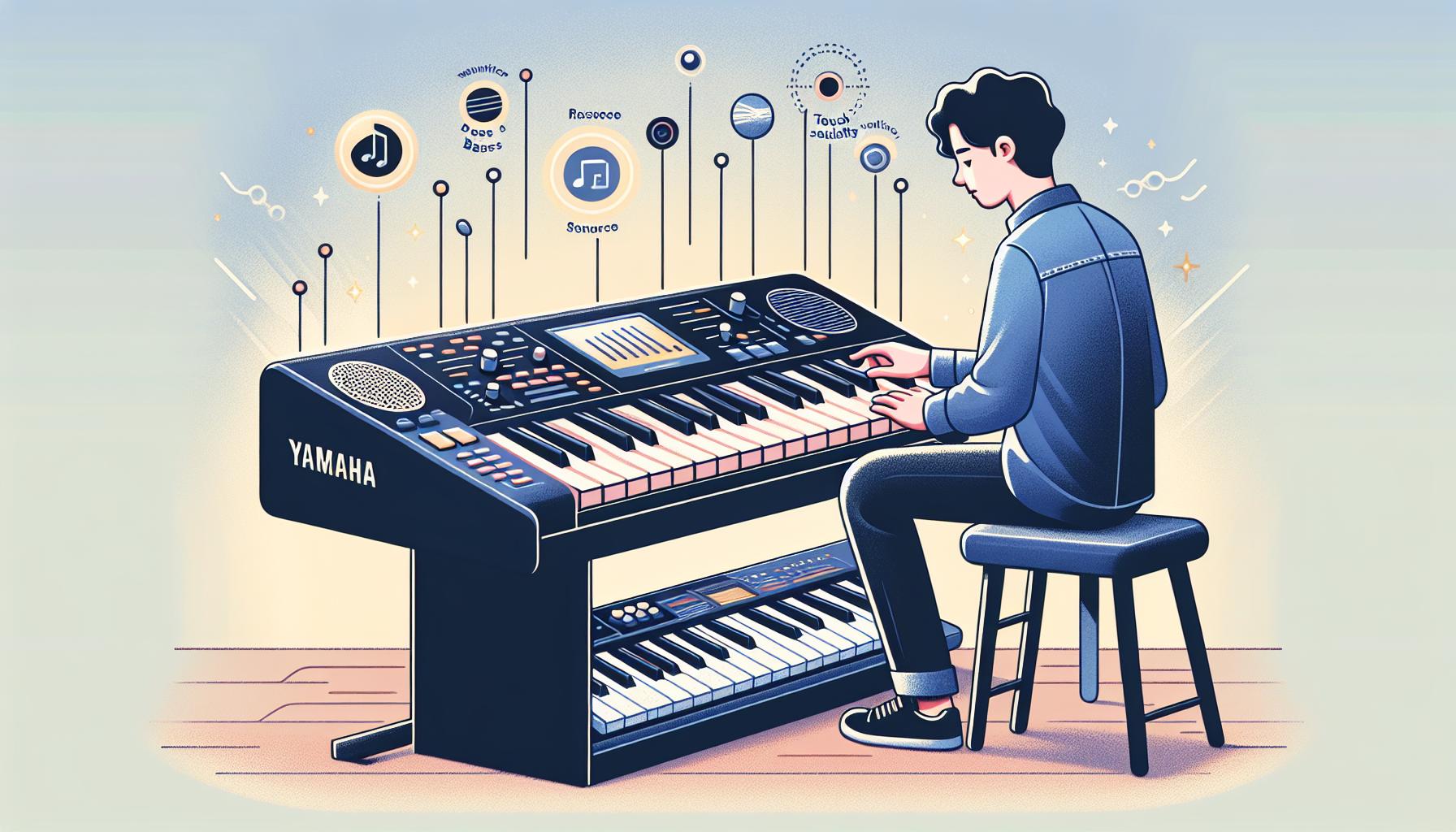
    Another critical aspect is touch sensitivity. Keyboards with touch-sensitive keys respond to the pressure applied, mimicking the dynamics of an acoustic piano. This feature is vital for beginners to develop a nuanced playing style, teaching them the importance of pressure and finger strength in producing sounds ranging from pianissimo to fortissimo.

    Consider the voice and sound quality. A good beginner keyboard should offer a range of voices (the sounds that the keyboard can produce), including piano, organ, strings, and more. This diversity allows beginners to explore different genres and sounds, keeping practice sessions engaging and fun. Sound quality is just as important; it makes the learning experience more rewarding and enjoyable. High-quality sounds encourage learners to spend more time with their instrument, honing their skills and exploring their musical interests.

    Lesson modes and built-in songs can be incredibly beneficial for self-taught musicians. Many keyboards come equipped with tutorials and practice songs that help beginners learn the basics of music theory, rhythm, and timing in an interactive manner. These features support independent learning, allowing beginners to progress at their own pace.

    Connectivity options are becoming increasingly important. USB and MIDI ports allow keyboards to connect to computers and other devices, opening up a world of learning applications, software instruments, and recording opportunities. This connectivity can greatly enhance a beginner’s learning experience, enabling easy access to online tutorials, interactive learning platforms, and the ability to record and share music.

    Lastly, portability might be a consideration for those with limited space or who plan to take their keyboard to lessons. Lightweight models and those with a compact design make transportation and storage much easier.

    • Key count: 61-key keyboards are often sufficient for beginners.
    • Touch sensitivity: Essential for developing expressive playing skills.
    • Sound quality and variety: Keeps learning interesting and engaging.

    Comparing Customer Reviews and Ratings

    When shopping for beginner keyboards online, diving into customer reviews and ratings becomes an invaluable step in making an informed decision. These insights give prospective buyers a window into the experience of real users, helping to paint a clearer picture of what to expect from their potential purchase. While browsing through various online retailers, it’s crucial to approach reviews with a critical eye.

    Many online stores and platforms feature user-generated reviews, allowing customers to rate their purchases on a scale, typically from one to five stars. These ratings offer a quick glance at the overall satisfaction level among consumers. However, the true value lies in the detailed reviews. Through these narratives, beginners can learn about the specifics of each keyboard model, including its performance, durability, sound quality, and whether it lives up to its advertised features.

    It’s important to look for patterns within these reviews. If multiple customers mention a particular strength or flaw, it’s likely a consistent aspect of the keyboard. For example, if numerous reviewers praise the touch sensitivity of a specific model, that’s a strong indicator of its quality in that regard. Conversely, repeated complaints about key responsiveness or sound quality should serve as red flags.

    Moreover, reviews can also provide insights into the post-purchase support offered by manufacturers or sellers. This includes customer service responsiveness, warranty fulfillment, and how issues are resolved. A keyboard might be excellent, but if the support behind it is lacking, it could lead to frustrations down the line.

    Below is a comparison of average customer ratings for some popular beginner keyboard models:

    Keyboard Model Average Rating
    Yamaha PSR-E273 4.5
    Casio CTK-2550 4.3
    Alesis Melody 61 MKII 4.2
    RockJam RJ761 4.1

    While the table above provides a snapshot, diving into the individual reviews reveals much more. For instance, the Yamaha PSR-E273 might have a higher average rating, but specifics in the reviews could highlight its superior educational features, a selling point for pure beginners. The Alesis Melody 61 MKII, while slightly lower in average rating, may receive specific praise for its comprehensive bundle, offering great value for those needing a full setup.

    Conclusion

    Embarking on the journey to purchase a beginner keyboard online can be a thrilling first step into the world of music. By paying close attention to customer reviews and ratings, shoppers gain valuable insights into what to expect from their potential new instrument. It’s not just about the numbers; it’s the stories behind those ratings that truly illuminate the path to making an informed decision. Whether it’s the Yamaha PSR-E273’s versatility, the Casio CTK-2550’s user-friendliness, the Alesis Melody 61 MKII’s comprehensive features, or the RockJam RJ761’s connectivity options, there’s a keyboard out there that’s a perfect match for every budding musician. So dive into those reviews with a keen eye, and soon you’ll find the keyboard that not only meets your expectations but perhaps even exceeds them.

  • Top Beginner Keyboards for Rich Bass Sounds: A Comprehensive Guide

    Finding the perfect beginner keyboard can be a daunting task, especially when you’re after that rich, deep bass sound that gives music its soulful edge. It’s not just about hitting the right notes; it’s about feeling the groove and laying down those foundational bass lines that make your heart thump.

    Luckily, the market is brimming with options tailored for newcomers eager to explore the lower octaves without breaking the bank. Whether you’re into jazz, rock, or electronic music, there’s a beginner keyboard out there with your name on it, ready to deliver those delicious bass sounds that’ll get your creative juices flowing. Let’s dive into what makes a keyboard stand out in the bass department and how to pick the right one to kickstart your musical journey.

    Understanding the Importance of Bass in a Keyboard

    When exploring the musical spectrums available in a keyboard, bass plays a pivotal role in bringing music to life. Bass sounds provide the foundational layer upon which melodies and harmonies build, creating a full, rich sound experience. For beginners, understanding the importance of bass in music is essential, as it not only enhances the depth and emotion in pieces but also serves as the backbone for rhythm and groove.

    Keyboards with good bass capabilities are invaluable for newcomers trying to grasp the essence of various music genres. Whether it’s the soulful undertones in jazz, the driving force in rock, or the pulsating beats in electronic music, bass is the common thread that ties the emotions and rhythm of a song together. It’s about more than just hitting the low notes; it’s about feeling the groove and establishing a solid foundation for other instruments to shine.

    Moreover, keyboards that offer rich bass sounds can significantly impact a beginner’s learning experience. They allow for a more immersive practice session, enabling learners to better understand the role of each note and chord in the context of the full musical piece. This not only improves their technical ability to play but also deepens their musicality and appreciation for different styles.

    Selecting a keyboard with robust bass features entails consideration of several aspects:

    • Sound Quality: The essence of a good bass sound lies in its clarity and depth. Beginners should look for keyboards that offer crisp, clear bass tones that mimic the sounds of their acoustic counterparts.
    • Range of Sounds: A keyboard with a variety of bass sounds and effects can provide beginners with a playground to explore different musical genres and textures.
    • Touch Sensitivity: The responsiveness of the keys to touch can greatly affect the nuance of bass sounds. Keyboards with adjustable touch sensitivity allow users to experiment with the dynamics of bass lines.

    Understanding these factors can dramatically enhance a beginner’s journey in music, making the selection of a keyboard with good bass sounds a crucial step. Through the right equipment, beginners can truly feel the music they create, laying down solid bass lines that breathe life into their compositions. Equipped with a suitable keyboard, they’re set to explore the depths of music, one note at a time.

    Features to Look for in a Beginner Keyboard for Rich Bass Sounds

    When embarking on the musical journey of learning to play the keyboard, beginners should keep an eye out for several key features that can significantly enhance the richness of bass sounds. These features not only contribute to a more immersive learning experience but also aid in developing a keen ear for music.

    Sound Quality and Range: The cornerstone of a good beginner keyboard is exceptional sound quality, particularly when it comes to bass sounds. Keyboards that offer a wide range of sounds, including deep bass tones, allow beginners to explore various music genres and techniques. High-quality sound samples and a broad sound palette are indicative of a keyboard designed to deliver an engaging musical experience.

    Touch Sensitivity: Beginners will find that keyboards with touch-sensitive keys offer a more dynamic playing experience. The ability to control the volume and tone of the bass sounds through the pressure applied to the keys mimics the expressiveness of traditional acoustic instruments. This feature is invaluable for learners as it encourages the development of a nuanced touch and a deeper understanding of musical expression.

    Polyphony: Polyphony refers to the number of sounds a keyboard can produce at one time. For a rich bass experience, a keyboard with a high polyphony count is recommended. This ensures that bass tones do not get cut off or compromised when playing complex chords or when layering sounds. With a higher polyphony, beginners can experiment with intricate bass lines without sacrificing sound quality.

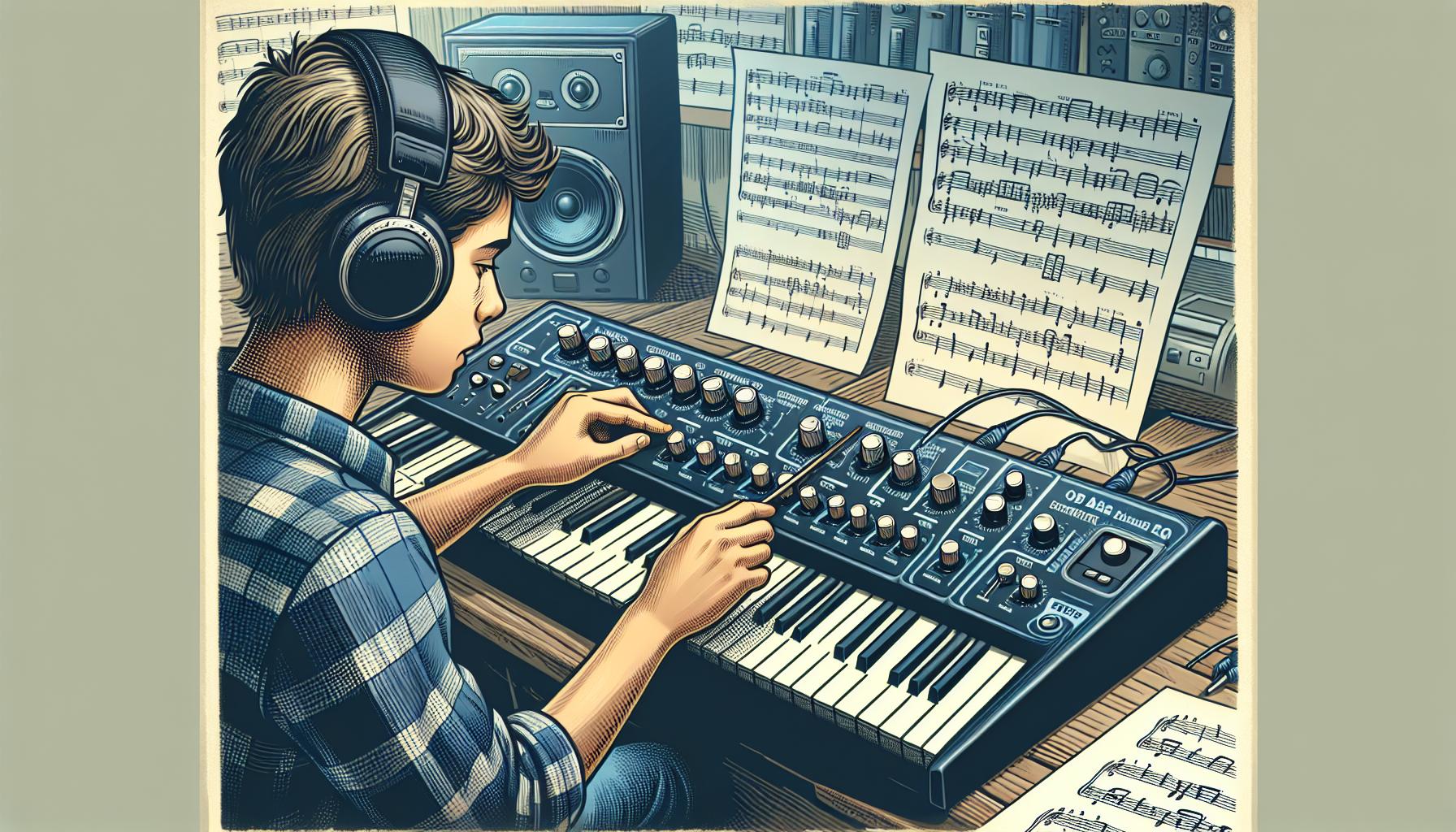
    Built-In Bass Effects: Keyboards equipped with built-in bass effects, such as equalizers and bass boost, offer beginners the opportunity to customize their sound. Experimenting with these effects can be a fun and educational way for learners to discover their preferred bass tones and how they fit into different musical contexts.

    Connectivity Options: While not directly related to bass sounds, connectivity features such as USB and MIDI ports allow beginners to expand their musical resources. By connecting to computers and mobile devices, learners can access a vast array of educational apps, recording software, and additional sound libraries, including rich bass sounds.

    • Sound Quality and Range: Look for keyboards with high-quality sound samples and a variety of bass tones.
    • Touch Sensitivity: Choose keyboards with touch-sensitive keys for expressive playing.
    • Polyphony: Opt for keyboards with

    Top Beginner Keyboards with High-Quality Bass Capabilities

    When on the hunt for the perfect beginner keyboard that doesn’t compromise on bass quality, there are several standout models that promise to deliver rich, deep sounds. The market is flooded with options, but a few have risen to the top, celebrated for their superior bass capabilities and beginner-friendly features. These keyboards not only make learning more enjoyable but also ensure that the bass tones are as authentic and inspiring as possible.

    The Yamaha PSR-EW310 is widely recognized for its impressive sound quality. It boasts a potent 76-key setup, ideal for exploring a wide range of bass tones. The PSR-EW310 also comes embedded with Touch Sensitivity that mimics the nuanced dynamics of an acoustic piano, the PSR-EW310 allows beginners to experiment with subtle variations in bass pressure and intensity. Additionally, it offers 482 high-quality voices, including incredible bass patches, making it a top choice for those prioritizing bass sound richness in their musical journey.

    Another notable mention is the Casio CTK-3500. It shines with its Step-Up Lesson System, a boon for beginners eager to grasp music fundamentals while honing their bass playing skills. With 400 tones and 150 rhythms, it offers vast opportunities to dive into different musical styles, all while maintaining a powerful bass presence. Like the Yamaha, it includes 61 touch-sensitive keys, ensuring a responsive and dynamic playing experience.

    Here’s a quick comparison of features between these two models:

    Feature Yamaha PSR-EW310 Casio CTK-3500
    Keys 76 61
    Touch Sensitivity Yes Yes
    Polyphony 48 notes 48 notes
    Preset Voices/Rhythms 482 voices, Built-in bass effects 400 tones, 150 rhythms
    Connectivity USB to HOST, AUX IN USB, Audio-In
    Added Benefits Wide range of bass samples, Yamaha Education Suite Dance Music Mode, Step-Up Lesson System

    Tips for Getting the Most Out of Bass Sounds on Your Keyboard

    Playing a keyboard that boasts good bass sounds is thrilling for any beginner. However, mastering these sounds to create truly mesmerizing music involves more than just hitting the right notes. Here are some practical tips to help you get the most out of the bass sounds on your keyboard.

    Experiment with Different Settings

    Each keyboard comes with its unique set of features and settings tailored to enhance your playing experience. To find the perfect bass sound, it’s crucial to experiment with these settings. Playing around with the equalizer (EQ) can significantly alter the richness and depth of the bass. Boosting the lower frequencies while maintaining a balance with the mids and highs can bring your bass sounds to life. Additionally, using effects like reverb and chorus sparingly can add dimension without overwhelming the clarity of the bass.

    • Equalizer settings: Boost lower frequencies
    • Effects: Use reverb and chorus sparingly

    Understanding Layering and Splitting

    Many beginners overlook the power of layering and splitting functions on their keyboards. These features allow you to play multiple voices or instruments simultaneously or divide the keyboard into different sections, each with its unique sound. By layering a bass sound with another instrument, like a piano or pad, you can create a fuller, more complex sound. Splitting the keyboard lets you assign a bass voice to the left hand while playing melodies or chords with the right, simulating the dynamic of a live band.

    Play Along to Different Genres

    Diversity in practice can significantly improve your command of bass sounds. Playing along to songs from various genres exposes you to different bass line techniques and rhythms. Jazz, funk, and reggae, for instance, offer complex bass lines that challenge your timing and finger independence. Meanwhile, pop and rock songs can help you understand the role of bass in driving a song’s groove. This experience not only enhances your playing technique but also broadens your musicality, making your performances more versatile and engaging.

    Conclusion

    Choosing the right beginner keyboard with impressive bass sounds boils down to understanding your musical needs and experimenting with the features at your disposal. The Yamaha PSR-EW310 and the Casio CTK-3500 stand out not just for their quality but also for the creative freedom they offer. By leveraging the tips provided—like tweaking the equalizer settings and exploring the layering functions—you’re setting the stage for a richer, more immersive bass experience. Remember, the journey to mastering bass on your keyboard is a mix of the right tools and a lot of practice. So dive into different genres, play along, and watch as your skills and musical versatility grow. Happy playing!

  • Best Beginner Keyboards for Live Gigs: Tips & Essential Gear

    Stepping into the world of live gigs can be thrilling for any budding musician. It’s that electrifying moment when you’re ready to share your music with the world. But before you hit the stage, there’s one crucial choice to make: finding the right beginner keyboard that won’t let you down under the spotlight.

    Choosing a keyboard for live performances is a bit like picking a partner for a dance. It needs to match your rhythm, amplify your sound, and most importantly, keep up with the pace of your musical journey. Whether you’re playing cozy café gigs or dreaming of larger venues, the perfect keyboard can make all the difference in how your music is received.

    Understanding the Basics of Live Gig Keyboards

    When embarking on the journey of live performances, understanding the basics of live gig keyboards is a crucial step for beginners. A keyboard isn’t just an instrument; it’s a musical companion that contributes to the texture and depth of your performance. Different keyboards have diverse functionality, quality, and capabilities which directly influence your sound and adaptability on stage.

    Key Components to Consider

    Before diving into the vast pool of options, there are essential components every budding musician should consider:

    • Weighted Keys: They mimic the resistance and feel of an acoustic piano, offering a dynamic range that can enhance expression in your performance.
    • Polyphony: This refers to the number of notes a keyboard can produce simultaneously. Higher polyphony allows for more complex and richer sounds.
    • Built-In Sounds: A variety of built-in tones and effects can inspire creativity and add flavor to your music.
    • Connectivity: Features like USB and MIDI connections are vital for recording and integrating other digital gear into your performances.

    Keyboards Versus Digital Pianos

    It’s common for beginners to confuse keyboards with digital pianos. While they look similar, each serves a different purpose, especially in live gigs. Digital pianos focus on emulating the sound and feel of an acoustic piano, often with weighted keys and limited sound customization. Keyboards, however, offer a broader range of sounds and effects, are more portable, and typically have features more aligned with live performance needs such as looping and layering sounds.

    Budget Considerations

    Budget inevitably plays a significant role in the decision-making process. Investing in a high-quality keyboard from the start can be more economical in the long run, as it might prevent the need for an upgrade too soon. However, there are affordable options that do not compromise on the essential features necessary for live performances. It’s about finding the right balance between cost and functionality to ensure you get the best value for your money.

    Feature Essential Nice-to-Have
    Weighted Keys Yes Depending on preference
    High Polyphony Yes For complex pieces
    Built-In Sounds Yes For versatility
    Connectivity Yes For expansion
    • Try Before You Buy: Spend time with different keyboards to see what feels right. The connection between musician and instrument is deeply personal.
    • **

    Key Features to Look for in a Beginner Keyboard

    When venturing into the world of live gigs, beginners must know which features are crucial in a keyboard. This knowledge ensures they select an instrument that not only enhances their performance but also stands the test of time as they grow as musicians.

    Weighted keys are a top priority. They mimic the resistance and rebound of an acoustic piano, providing a more authentic playing experience. This feature is vital for developing proper finger technique and dynamics in performance. For those starting, the transition to different keyboards or pianos becomes smoother with weighted keys.

    Next, polyphony plays a crucial role. Polyphony refers to the number of notes a keyboard can produce at once. For beginners, a 32-note polyphony is often sufficient. However, as skills and musical pieces become more complex, opting for a keyboard with 64 or more notes of polyphony becomes beneficial. This allows for richer, more complex sound without note dropouts, especially during fast passages or when layering sounds.

    Built-in sounds offer a palette for creativity and expression. A keyboard with a wide range of quality sounds, including pianos, organs, strings, and synthesizers, invites exploration and allows beginners to experiment with different genres and textures. Some keyboards also offer the ability to layer sounds or split the keyboard into different voices, which can add depth to live performances.

    Connectivity is another essential feature. USB MIDI connectivity allows the keyboard to interface with computers and recording software, opening up a world of possibilities for music production and learning. An AUX input for playing along with music from a phone or MP3 player can be beneficial for practice. Some keyboards also offer Bluetooth connectivity, making it easier to use apps and software tools that can aid in learning and performing.

    Considering budget is also important. While it’s tempting to opt for the cheapest option, investing in a keyboard with these key features can significantly improve the learning and performing experience. Beginners should balance cost with functionality, aiming for the best they can afford without overspending on advanced features they may not yet need.

    Before making a purchase, trying out different keyboards is invaluable. It allows beginners to feel the difference in key action, hear the sound quality firsthand, and explore the ease of use of each model. Personal preference plays a significant role in choosing an instrument, and what works for one beginner may not suit another.

    Feature Importance

    Top Beginner Keyboards for Live Gigs

    When venturing into the world of live performance, the choice of instrument can make all the difference. For those just starting out, finding the perfect beginner keyboard that balances cost, functionality, and portability is key. Here’s a look at some top picks that tick all these boxes and are particularly well-suited for live gigs.

    Yamaha PSS-A50

    The Yamaha PSS-A50 is renowned for its portability and versatility, making it a fantastic choice for beginners. It features 37 mini keys that are touch-sensitive, ensuring that performers can play with expression. Despite its compact size, it doesn’t skimp on sound quality. With a wide variety of built-in voices and rhythms, it allows for creative performances anywhere.

    • Weight: Light and portable
    • Key Feature: Phrase Recorder for looping and layering

    Casio CT-S300

    Casio’s CT-S300 is another excellent beginner keyboard, especially valued for its 61 touch-responsive keys. It stands out for its usability, incorporating a pitch bend wheel and a USB to host connectivity option. This keyboard not only supports a variety of music genres but its built-in carry handle also makes it incredibly easy to transport to gigs.

    • Weight: Easily portable
    • Key Feature: Dance Music Mode for instant music tracks

    Roland GO:KEYS

    Roland’s GO:KEYS keyboard is designed with creativity in mind. It features 61 keys and offers a unique loop mix function, allowing beginners to build fully produced songs without any previous music production experience. Bluetooth connectivity enables streaming and playing along with your favorite songs, adding an interactive aspect to practice and performance.

    • Weight: Moderately light
    • Key Feature: Bluetooth MIDI and audio support

    Korg B2

    The Korg B2 is a brilliant choice for beginners who are serious about their piano playing journey. With 88 Natural Weighted Hammer Action keys, it provides an authentic acoustic piano feel. It comes equipped with a variety of high-quality sounds, from grand pianos to electronic organs, and features USB MIDI/Audio, enabling direct connection to music production software.

    • Weight: Heavier, suited for stationary setups
    • Key Feature: Versatile sound library

    Tips for Optimizing Your Keyboard Performance On Stage

    When it comes to live performances, having a great keyboard is only part of the equation. Optimizing your keyboard for the stage is crucial for ensuring a stellar performance. Here are some tips to help you make the most out of your live gigs.

    Understand Your Gear Inside and Out

    Before hitting the stage, it’s essential that you’re familiar with every aspect of your keyboard. Spend time exploring its features, experimenting with sounds, and understanding its limits. This knowledge will allow you to troubleshoot on the fly and make quick adjustments as needed, ensuring your performance runs smoothly.

    • Explore all Features: Dive deep into your keyboard’s capabilities.
    • Practice Frequently: Regular practice sessions help you master your instrument.

    Customize Your Sound

    Creating a unique sound can help you stand out during live performances. Most beginner keyboards offer a range of presets and effects that can be customized. Experiment with these options in advance to find a combination that best suits your style and the genre of music you’re performing.

    • Experiment with Presets: Use built-in sounds to learn what works for you.
    • Adjust Effects: Reverb, chorus, and delay can add depth to your sound.

    Optimize Your Setup

    A well-thought-out setup is key for a smooth performance. Position your keyboard so it’s comfortable for playing and easy to reach all the controls. If you’re using multiple keyboards or modules, ensure they are easily accessible. Also, consider the height of your keyboard stand for optimal posture and performance comfort.

    • Ergonomic Positioning: Adjust the keyboard height for comfort.
    • Accessible Controls: Make sure all necessary controls are within easy reach.

    Sound Check Is a Must

    Never underestimate the importance of a good sound check. This is the perfect opportunity to adjust your levels and ensure your keyboard blends well with the rest of the band and the venue’s sound system. A proper sound check can prevent feedback issues and ensure your keyboard is heard clearly across the venue.

    • Adjust Levels: Balance your keyboard volume with the band and venue.
    • Check for Feedback: Identify and resolve any potential feedback problems.

    Engage with Your Audience

    Engagement is key to an unforgettable performance. Your interaction with the audience can make a significant difference. Make eye contact, smile, and move with the music. Your body language can communicate your enthusiasm and passion for the music, inviting the audience into your performance.

    • **Make

    Must-Have Accessories for Your Live Gig Keyboard Setup

    When it comes to performing live, having the right keyboard is just the beginning. To truly elevate your performance and ensure everything runs smoothly, there are several must-have accessories that should accompany your keyboard setup. These items not only enhance the playing experience but also help in managing your gear efficiently on stage.

    Quality Keyboard Stand

    A sturdy keyboard stand is non-negotiable. It’s essential for keeping your instrument secure and at the right height, which can significantly affect your comfort and playing posture. Look for stands that offer adjustability and stability, especially if you’re performing on uneven surfaces. Some popular options include X-stands for their portability and Z-stands for their exceptional stability and space for additional gear.

    Sustain Pedal

    The sustain pedal is a necessary extension of your expressiveness on the keyboard. It allows notes to ring out longer, providing that essential connection between your touch and the overall sound. Opt for a pedal that mimics the feel and response of an acoustic piano pedal, ensuring a natural and intuitive playing experience.

    Keyboard Case or Gig Bag

    Protecting your instrument during transport is crucial. A high-quality keyboard case or gig bag with padding can safeguard your keyboard from bumps, scratches, and the elements. Hard cases offer the best protection, while soft gig bags are lighter and usually have pockets for storing cables and other accessories.

    Sound System

    Depending on the venue, you might need to bring your own sound system or monitor. A good portable PA system can make a huge difference in how your music is heard, both by you and the audience. Additionally, having a personal monitor on stage can help you stay in tune with your performance without relying solely on the venue’s sound system.

    Cables and Power Strips

    Never underestimate the necessity of having extra cables and a reliable power strip with surge protection. Having backups is crucial, as cables can fail unexpectedly. A power strip ensures you can plug in all your gear, even when power outlets are scarce or inconveniently positioned.

    Setlist Stand

    A setlist stand or music sheet holder can be incredibly helpful, especially for beginners or those playing intricate pieces. Being able to glance at your setlist or scores without disrupting your performance can keep things flowing smoothly.

    Conclusion

    Choosing the right beginner keyboard for live gigs is just the start. It’s about making that keyboard work for you in the best way possible. Remember, the magic doesn’t just lie in the instrument but also in how you use it. By thoroughly understanding your gear, customizing your sound to fit the venue, and ensuring your setup is as comfortable and accessible as possible, you’re setting the stage for success. Don’t forget the importance of a good sound check and the role of engaging with your audience. These elements combined will help create an unforgettable live performance. And with the right accessories in your arsenal, you’re not just prepared, but also protected and ready to deliver a smooth show. So go ahead, take these tips, and make your mark on the stage. Your journey to captivating live performances starts here.

  • Best Beginner Keyboards for Small Hands: Top Picks & Playing Tips

    Best Beginner Keyboards for Small Hands: Top Picks & Playing Tips

    Selecting the perfect beginner keyboard for small hands can seem like a daunting task, but it’s crucial for ensuring a comfortable and enjoyable learning experience. With the right instrument, those early stages of musical exploration become much more accessible and fun.

    Manufacturers have recognized the need for more inclusive designs, and today’s market offers a variety of keyboards tailored to smaller hands. These models often feature narrower keys and a more compact layout, making it easier for beginners to reach chords and melodies without strain. Whether it’s for a young child or an adult with petite hands, finding the right keyboard can make all the difference in sparking a lifelong passion for music.

    Understanding the needs of small-handed players

    Selecting the right keyboard for beginners with small hands isn’t just about the size; it’s about ensuring a comfortable and enjoyable experience that encourages continuous learning and practice. Small-handed players, be they children or adults, face unique challenges that can impact their learning curve and overall interest in music. Understanding these challenges is key to making an informed choice.

    Firstly, the stretch required for octave plays or complex chords on a standard keyboard can lead to discomfort or even strain for those with smaller hands. This struggle can deter learners, making practices less effective and, over time, diminishing their zeal to continue. Keyboards designed with a more compact layout address this issue by reducing the distance between keys, thereby making it easier for small hands to navigate complex musical pieces without unnecessary strain.

    Another aspect to consider is the weight of the keys. Beginners, particularly children, might find the weighted keys of a traditional piano too hard to press down. Keyboards with lighter, more responsive keys can make a significant difference in playability, allowing for easier and more nuanced control over the music.

    Manufacturers have recognized these needs and have begun to offer models that cater specifically to this demographic. Features like reduced key sizes, lighter action, and slim profiles not only accommodate the physical constraints of smaller hands but also help in building confidence and skill over time.

    Key Characteristics to Look For

    When shopping for the perfect beginner keyboard for small hands, keep an eye out for the following features:

    • Reduced key size: Slightly narrower keys can make a big difference in playability for small hands.
    • Lighter key action: Keyboards with a lighter touch response are easier to play, especially for young learners.
    • Compact design: A slimmer profile and reduced width can help small-handed players reach all keys comfortably.
    Feature Benefit for Small-Handed Players
    Reduced key size Easier chord and melody play
    Lighter key action Less finger strain, more nuanced control
    Compact design Comfortable reach for both hands

    Factors to consider when choosing a beginner keyboard

    When selecting a beginner keyboard for small hands, it’s essential to consider several key factors that can significantly impact a learner’s experience. Understanding these aspects will help ensure that the keyboard not only fits the player’s physical needs but also supports their musical development.

    Key Size and Action

    The size of the keys and their action—how they respond to touch—are crucial for small-handed individuals. Standard keyboards might pose a challenge, as their keys could be too wide and heavy, making it difficult for a learner to play comfortably.

    • Reduced Key Size: Look for keyboards with slightly smaller keys. This adjustment can make a world of difference, enabling easier reach and less strain.
    • Lighter Key Action: Keyboards with a lighter touch require less force to press the keys. This is especially beneficial for beginners who might not yet have developed strong finger muscles.

    Compact Design

    A keyboard’s overall design plays a significant role in accessibility and comfort. Compact models are more suited for learners with small hands, as they often include a smaller keybed and a more manageable overall size, ensuring that players can reach the entire range without overstretching.

    • Number of Keys: Beginner keyboards typically range from 61 to 76 keys, fewer than the 88 keys of a standard piano. This reduction not only makes the instrument more compact but also less daunting for new players.

    Additional Features to Enhance Learning

    Beyond the physical characteristics of the keyboard, certain features can make learning more enjoyable and efficient for beginners.

    • Built-In Lessons: Some keyboards come equipped with interactive learning tools, such as built-in lessons or light-up keys, to guide beginners through their first songs.
    • Headphone Jack: For learners, being able to practice without worrying about disturbing others can be a bonus. A headphone jack allows for private practice sessions, encouraging more practice time.
    • Recording Capability: Being able to record and playback one’s playing can be incredibly beneficial for progress tracking and self-evaluation.
    • High-Quality Sounds: Quality sound can make practice sessions more rewarding and enjoyable, encouraging learners to spend more time with their instrument.
    • Variety of Voices: Having a range of instrument voices and sound effects can keep practice engaging and fun, allowing beginners to

    Top beginner keyboards designed for small hands

    When embarking on the musical journey, beginners with smaller hands should consider keyboards specifically designed to accommodate their unique needs. Manufacturers have recognized the importance of creating instruments that cater to a broader range of players, including younger individuals or those with petite hand sizes. This section highlights some of the best beginner keyboards suitable for small hands, ensuring that the path to becoming a proficient pianist is as comfortable and enjoyable as possible.

    Yamaha Piaggero NP-12

    One of the standout options is the Yamaha Piaggero NP-12. This keyboard features a slim and lightweight design, making it ideal for small spaces and easy transport. With 61 keys, it provides a reduced key size which is perfect for players with smaller hand spans. Despite its compact size, the NP-12 doesn’t compromise on quality. It boasts Yamaha’s Advanced Wave Memory Stereo Sampling, delivering rich and expressive sounds that inspire beginners to keep practicing.

    Casio SA-76

    For those seeking a budget-friendly option, the Casio SA-76 is an excellent choice. It is specifically designed for children and beginners, featuring 44 mini-sized keys that are perfect for small fingers. The SA-76 doesn’t skimp on features, offering 100 tones, 50 rhythms, and 10 integrated songs for varied practice sessions. Its simple operation and playful design encourage consistent practice and exploration.

    Roland GO:KEYS GO-61K

    The Roland GO:KEYS GO-61K is another fantastic option that caters to beginners with small hands. This innovative keyboard introduces a unique approach to playing and learning music. It comes equipped with 61 touch-sensitive keys with a reduced size, making it easier for small hands to navigate. What sets the GO:KEYS apart is its loop mix function, allowing players to build songs by simply triggering looped phrases and beats. This interactive feature brings an element of fun and creativity to practice sessions, making learning an engaging experience.

    Tips for optimal playing experience

    Choosing the right beginner keyboard for small hands is just the first step in a musical journey. Beyond the selection of an instrument, adopting proper techniques and practices can significantly enhance the playing experience. When embarking on this path, beginners should consider the following advice to ensure they’re not only comfortable but also making the most of their practice sessions.

    Proper Posture and Keyboard Placement

    A foundational aspect of playing the keyboard effectively, especially with smaller hands, is maintaining good posture. Sitting upright, yet relaxed, allows players to reach keys more easily without straining. The keyboard should be positioned at a height where the forearms are parallel to the floor when the hands are on the keys. This alignment helps in reducing fatigue and improving accuracy during playing.

    Adjustable Benches and Pedals

    Investing in an adjustable bench can make a significant difference in finding the right playing position. It allows players of all sizes to adjust their seating height to the optimal level for easy access to the entire keyboard. Similarly, beginners with small hands may find pedal extenders useful. These devices help in comfortably reaching the pedals without having to stretch or adopt awkward positions.

    Hand Positioning and Finger Techniques

    For those with small hands, mastering hand positioning and finger techniques is crucial. They’re advised to:

    • Keep their fingers curved, as if holding a small ball.
    • Use the tips of their fingers to press the keys, avoiding flat finger playing.
    • Practice scales and exercises designed to improve finger strength and dexterity, which can make playing more fluid and reduce the effort needed to press the keys.

    Utilizing Keyboard Features

    Modern beginner keyboards come equipped with features designed to support learning and make playing easier. Here are a few functionalities to look for:

    • Touch sensitivity: Adjusting touch sensitivity can help players with smaller hands not to have to press as hard to produce sound.
    • Key lighting: Some keyboards have keys that light up to show players which notes to play, providing visual guidance.

    Regular Practice and Patience

    Consistency is key in mastering any new skill, and learning to play the keyboard is no exception. Regular practice sessions, even if they’re short, can lead to steady progress. Break up practice into focused sessions targeting specific skills or pieces. And remember, patience is essential. Progress might seem slow at first, but with time and dedication, improvement will become noticeable.

    Conclusion

    Choosing the right beginner keyboard for small hands can make a world of difference in a budding musician’s journey. With options like the Yamaha Piaggero NP-12, Casio SA-76, and Roland GO:KEYS GO-61K, there’s a perfect fit out there for everyone. Remember, it’s not just about the instrument but also how you use it. Embracing proper posture, adjusting your setup, and mastering hand positioning are key to a comfortable and rewarding playing experience. And let’s not forget the power of practice and patience. With these insights, you’re well on your way to making beautiful music that feels as good as it sounds.

  • Top Good Beginner Keyboards for Music Recording: Unlock Your Potential

    Top Good Beginner Keyboards for Music Recording: Unlock Your Potential

    Starting your musical journey can be thrilling, especially when it comes to recording your own music. For beginners, finding the right keyboard to kickstart this journey is crucial. It’s not just about the keys and sounds; it’s about finding a keyboard that’ll grow with you as your skills flourish.

    Choosing the perfect beginner keyboard for recording doesn’t have to be daunting. With the right information, you can find a keyboard that offers the best blend of features, ease of use, and value for money. Whether you’re looking to lay down your first track or simply want to experiment with sounds, the right keyboard can make all the difference.

    Factors to Consider When Choosing a Beginner Keyboard

    When diving into the world of music recording, the keyboard serves as the beginner’s first point of contact with their musical expressions. It’s not just an instrument; it’s a companion on the journey toward musical fluency. So, taking the time to select the right keyboard is crucial. Here are key factors that every budding musician should consider.

    Key Count and Size

    The number of keys on a keyboard can significantly impact a beginner’s learning curve and comfort. Standard keyboards have 88 keys, but for beginners, especially those short on space or budget, keyboards with 61 or 76 keys are more manageable and still offer a broad range of octaves for exploration.

    • 61 keys are suitable for basic learning and compact spaces.
    • 76 keys provide a middle ground, offering more octaves while still being manageable in size.

    Touch Sensitivity

    Touch sensitivity is a feature that allows the keyboard to respond to the force with which the keys are pressed, mimicking the acoustic piano’s responsiveness. This is essential for expressing dynamics in music. Beginners will find that playing on a touch-sensitive keyboard greatly enhances their expressiveness and technique from the start.

    Built-in Learning Tools

    Many keyboards now come equipped with features and tools designed to assist beginners in their learning journey. These can include:

    • Built-in lessons covering the basics of music theory, keyboard playing, and even specific song tutorials.
    • Light-up keys that guide finger placement for learning songs.
    • Apps and software compatibility for interactive learning experiences.

    Sound Quality and Variety

    A beginner’s keyboard should inspire creativity and passion for music. High-quality sound samples and a variety of instrument voices can make practice sessions more enjoyable and productive. From grand pianos to strings and percussion, the sound variety can also fuel a beginner’s exploration of different music genres.

    Connectivity Options

    For those looking to record music, connectivity options are a non-negotiable aspect. USB and MIDI (Musical Instrument Digital Interface) ports are vital for connecting the keyboard to computers and other recording equipment. This connectivity not only facilitates recording but also opens up a world of digital learning and music production software.

    Here’s a brief comparison of essential features to look for:

    Feature Importance
    Key Count and Size Choose based on space available and the range of music you wish to explore.
    Touch Sensitivity

    Top Features to Look for in a Beginner Keyboard

    When stepping into the world of music recording, selecting the right keyboard can be a pivotal decision for beginners. It’s not just about finding any keyboard but rather one that aligns with their learning curve and recording needs. Here are the key features to keep an eye out for when shopping for a beginner keyboard.

    Key Count and Size

    A standard acoustic piano has 88 keys, but beginners may not need the full range immediately. Keyboards with 61 to 76 keys are often more than sufficient for those just starting out. They offer enough octaves to explore a variety of music genres without feeling overwhelmed. Additionally, the size of the keys is critical. Full-size keys provide a smoother transition to playing an acoustic piano later on.

    Feature Ideal Specification
    Key Count 61 to 76 keys
    Key Size Full-size keys

    Touch Sensitivity

    Touch sensitivity is a vital feature that allows the keyboard to respond to the pressure of the fingers, mimicking the expressiveness of an acoustic piano. Beginners will benefit greatly from a touch-sensitive keyboard as it aids in developing dynamics in their playing from the start.

    Built-in Learning Tools

    Modern keyboards come equipped with built-in learning tools that are incredibly helpful for beginners. From light-up keys to step-by-step lessons, these features guide learners through the basics of music theory and technique. Some keyboards even offer apps that learners can use to further their skills at their own pace.

    Sound Quality and Variety

    High sound quality is essential for creating recordings that beginners can be proud of. A good beginner keyboard should offer a range of sounds or voices, from different types of pianos to orchestral instruments, which can inspire creativity. Having a variety of high-quality sounds at their fingertips allows beginners to explore different music styles and find their unique sound.

    Feature Ideal Specification
    Sound Quality High
    Sound Variety Wide range of voices

    Connectivity Options

    Connectivity is another crucial factor to consider. A beginner keyboard should have options for connecting to computers, smartphones, or other MIDI devices. This connectivity allows for easy recording, editing, and sharing of music. USB and MIDI ports are common in many models, making them compatible with a variety of music software and recording setups.

    • USB Ports
    • MIDI Ports

    Best Beginner Keyboards for Recording Music

    When stepping into the world of music recording, finding the right keyboard can make all the difference. Beginners should look for instruments that not only appeal to their musical tastes but also support their learning journey. Here’s a glance at some of the top choices that blend quality, features, and value.

    Yamaha PSR-EW300

    The Yamaha PSR-EW300 is a standout among beginner keyboards, offering 76 touch-sensitive keys for expressive playing. It strikes a perfect balance between functionality and affordability, making it an excellent choice for those starting their musical journey. Notably, the PSR-EW300 comes with a robust selection of 574 instrument voices, allowing beginners to explore various sounds and genres. With its built-in education suite, learners can practice at their own pace using the included lessons on chords, techniques, and music theory.

    • Key Features:
    • 76 touch-sensitive keys
    • 574 instrument voices
    • Built-in education suite
    • USB connectivity for easy recording

    Casio CTK-2550

    Another great starter option is the Casio CTK-2550, a compact keyboard with 61 keys. It’s designed to be easily portable while still offering a rich set of features. With 400 high-quality tones and 150 built-in rhythms, it provides a variety of musical exploration paths. The CTK-2550 doesn’t skimp on educational resources either, as it includes access to the free Chordana Play app, which helps beginners learn to play their favorite songs with a smartphone or tablet.

    • Key Features:
    • 61 keys
    • 400 tones, 150 rhythms
    • Chordana Play app compatibility
    • Dance music mode for creating and remixing electronic tracks

    Alesis Melody 61 MKII

    For those looking for an all-in-one package, the Alesis Melody 61 MKII is a compelling choice. This keyboard not only comes with 61 full-size keys but also includes accessories such as a stand, bench, headphones, and a microphone for singing along. It features 300 built-in sounds and 40 demo songs, alongside an easy-to-use record feature for capturing creative moments. The Melody 61 MKII is perfect for beginners who want everything they need to start playing right out of the box.

    • Key Features:
    • 61 full

    Tips for Getting the Most Out of Your Beginner Keyboard

    Embarking on a musical journey with a beginner keyboard opens a world of possibilities. Whether it’s the Yamaha PSR-EW300, Casio CTK-2550, or Alesis Melody 61 MKII, maximizing the potential of these instruments involves more than just pressing keys. Here are some strategies and practices that can significantly enhance the learning and recording experience.

    Firstly, exploring the full range of sounds and features inherent in these keyboards ignites creativity and broadens musical horizons. Each model mentioned comes packed with a variety of instrument voices and rhythm patterns. Spending time to explore these sounds not only familiarizes beginners with different musical genres but also provides a comprehensive toolkit for creating unique compositions.

    In addition, leveraging the educational tools and apps that accompany these keyboards can dramatically improve proficiency and understanding of music theory. For instance, the Yamaha PSR-EW300 and Casio CTK-2550 offer access to software that guides beginners through lessons, helping them learn songs and techniques at their own pace. This blend of technology and traditional learning accelerates growth and builds a solid foundation in music.

    Recording and listening back to one’s performances should become a regular practice. Most beginner keyboards feature easy recording options that allow musicians to capture and review their playing. This not only helps in identifying areas of improvement but also tracks progress over time. It’s an excellent way for learners to critique their own work, understand timing, and focus on dynamics that they might overlook during the act of playing.

    Setting realistic goals and challenges for oneself ensures steady progress and keeps motivation high. Whether it’s mastering a new song, experimenting with composing, or exploring the use of different instrument voices, setting milestones can make the learning journey exciting and rewarding.

    Lastly, connecting with a community of fellow musicians can provide invaluable support and inspiration. Online forums, social media groups, and music classes offer platforms where beginners can share experiences, ask for advice, and collaborate with others. This sense of community not only encourages learning through sharing but also opens up opportunities for feedback from more experienced musicians.

    By embracing these approaches, beginners can unlock the full potential of their keyboards. It’s not just about having the right equipment but also about adopting the right mindset and practices to foster musical growth. Each step taken is a step closer to realizing one’s musical aspirations, making every moment spent at the keyboard profoundly rewarding.

    Conclusion

    Choosing the right beginner keyboard like the Yamaha PSR-EW300, Casio CTK-2550, or Alesis Melody 61 MKII is just the start of an exciting musical journey. By diving into the features these keyboards offer and leveraging educational tools, beginners can rapidly enhance their skills. It’s about more than just practicing; it’s about exploring music’s vast possibilities and connecting with others who share the same passion. So grab your keyboard, set some goals, and start making music that expresses your unique voice. The world of music awaits and it’s filled with endless opportunities for growth and creativity.

  • Top Arranger Keyboards for Beginners: Yamaha, Casio, Korg, & Roland Reviewed

    Top Arranger Keyboards for Beginners: Yamaha, Casio, Korg, & Roland Reviewed

    Stepping into the world of music, especially for beginners, can be both thrilling and a tad overwhelming. With an array of instruments to choose from, it’s the arranger keyboard that often stands out as the perfect starting point. They’re versatile, packed with features, and designed to grow with you as you master the art of music.

    Choosing the best arranger keyboard for beginners isn’t just about finding an instrument. It’s about discovering a companion that makes learning fun, engaging, and incredibly rewarding. Whether it’s the variety of sounds, the built-in learning tools, or the ability to record your first masterpiece, the right arranger keyboard can open up a universe of musical possibilities. Let’s dive into what makes these keyboards a top pick for those just starting their musical journey.

    Understanding Arranger Keyboards

    When beginners embark on their musical journey, they often encounter a range of instruments, each with its unique charm. However, arranger keyboards stand out not just for their versatility but for how they cater to those new to music. At its core, an arranger keyboard is a powerful instrument designed to be both a solo entertainer’s dream and a beginner’s best friend. It’s teeming with features that simplify the learning process, making music creation accessible and fun.

    Arranger keyboards distinguish themselves with their built-in accompaniment features. These instruments are equipped with a variety of rhythms and styles that can back a player in real-time, providing a full band experience even when one is playing solo. From pop ballads to rock grooves, these keyboards have settings that mimic a wide range of musical genres. This diversity allows learners to explore different styles, fostering a deeper understanding and appreciation of music.

    Another standout feature of arranger keyboards is their intuitive design. Manufacturers often incorporate educational tools directly into these instruments. For example, built-in lessons, easy-to-follow lighting guide systems, and step-by-step song teaching functionalities are common. These features are especially beneficial for beginners, as they offer a structured learning path that can accelerate skill development. Additionally, many arranger keyboards feature large, user-friendly screens that display chords, notation, and even lyrics, further enhancing the learning experience.

    The ability to record and playback is also a significant advantage of arranger keyboards. Beginners can easily record their performances, a tool that’s invaluable for practice and improvement. By listening to their recordings, they can identify areas of strength and those needing improvement. Moreover, recording tracks is not only beneficial for self-assessment but also ignites creativity, encouraging users to experiment with composing their music.

    Lastly, the range of sounds and voices offered by arranger keyboards is unparalleled. They house a vast library of instrument voices, from pianos and strings to synthesizers and drums. This variety is particularly appealing to beginners, as it allows them to experiment with different sounds and find their musical voice. The ability to layer these sounds or split the keyboard into different zones further expands the creative possibilities.

    Feature Benefit
    Built-in Rhythms Provides a full band experience
    Intuitive Design Facilitates learning with educational tools
    Record and Playback Allows for self-assessment and ignites creativity

    Key Considerations for Beginners

    When venturing into the world of music with an arranger keyboard, it’s crucial for beginners to consider several factors that can significantly influence their learning experience and enjoyment of the instrument. Understanding these key considerations can help novices make an informed decision, ensuring they choose an arranger keyboard that best suits their needs and aspirations.

    Ease of Use

    One of the primary considerations for beginners is the ease of use. Arranger keyboards come with a variety of features and functions, but for someone just starting out, a straightforward interface with intuitive controls is essential. Beginners should look for keyboards that offer:

    • A user-friendly layout
    • Clear labeling of buttons and functions
    • A well-organized screen display

    These features can help reduce the learning curve, allowing beginners to focus more on making music and less on navigating complex menus.

    Educational Features

    Learning to play the keyboard is an exciting journey, and having the right educational tools can make all the difference. Beginners should consider arranger keyboards that include:

    • Built-in lessons covering basics to advanced techniques
    • Interactive learning modes that provide real-time feedback
    • Accompaniment features that adjust to the player’s skill level

    These educational features not only enhance the learning experience but also keep beginners engaged and motivated throughout their musical journey.

    Sound Quality and Variety

    The quality and variety of sounds an arranger keyboard can produce are vital for inspiring creativity and keeping practice sessions enjoyable. Beginners should look for keyboards that offer:

    • High-quality sound samples
    • A wide range of instrument voices and styles

    Having access to a broad selection of sounds allows beginners to experiment with different music genres and find their unique musical style.

    Price

    While price should not be the sole factor in choosing an arranger keyboard, it’s certainly a consideration for beginners who may not be ready to invest heavily in a new hobby. They should seek a balance between cost and quality, focusing on keyboards that offer:

    • Good value for the price
    • Essential features without overwhelming complexity

    Considering these factors can help beginners find an arranger keyboard that fits their budget while still providing a rewarding and enjoyable learning experience.

    Factor Why It’s Important
    Ease of Use Reduces learning curve, allowing focus on music
    Educational Features Enhances learning, keeps users engaged
    Sound Quality Inspires creativity, makes practice enjoyable
    Price

    Top Features to Look For

    When beginners step into the vast world of music with the aim of selecting an arranger keyboard, the myriad of features can be overwhelming. However, focusing on a handful of essential aspects can simplify the decision-making process and ensure they get the most out of their musical journey.

    First and foremost, ease of use is paramount. Beginners should look for keyboards that offer intuitive interfaces and straightforward navigation. This means clear labeling, accessible menus, and ideally, a touchscreen for seamless operation. Instruments that require a steep learning curve just to perform basic functions may deter novices from persisting with their practice.

    Another critical feature to consider is the range of built-in rhythms and accompaniments. These are the backbone of an arranger keyboard, allowing users to explore different musical styles and genres. Beginners will benefit from a wide selection that includes everything from pop and rock to jazz and classical. This diversity not only enriches the learning experience but also encourages exploration and creativity.

    Educational tools cannot be overstated in their importance. Keyboards equipped with built-in lessons, chord dictionaries, and interactive learning modes provide invaluable resources for beginners. Some models even offer connectivity with smartphones and tablets, enabling access to online tutorials and apps that enhance the learning process.

    The quality of sound reproduction is another critical factor. Beginners might not initially distinguish subtle sound nuances, but high-quality sound samples make a significant difference in motivation and enjoyment. Arranger keyboards that feature realistic instrument voices ensure that every practice session is both rewarding and stimulating.

    Connectivity options such as USB and MIDI ports offer additional versatility. They allow beginners to connect their keyboards to computers and other devices, facilitating music recording, composition, and even software-based learning. This feature opens up a world of possibilities for expanding musical knowledge and skills.

    Lastly, the inclusion of a built-in recording function can be incredibly beneficial. It enables learners to record their sessions, which is crucial for tracking progress, self-evaluation, and sharing performances with others. This feature can serve as a powerful motivational tool, encouraging continuous improvement.

    • Ease of Use: Intuitive interfaces, touchscreen for seamless operation.
    • Built-in Rhythms and Accompaniments: Wide selection across genres.
    • Educational Tools: Lessons, chord dictionaries, interactive modes.
    • Sound Quality: High-quality sound samples and realistic instrument voices.
    • Connectivity: USB, MIDI ports for recording and software learning.
    • Recording Function:

    Best Arranger Keyboards for Beginners

    Choosing the right arranger keyboard as a beginner can be a daunting task given the plethora of options available in the market. However, some models stand out due to their user-friendly design, comprehensive features, and excellent value for money. This section highlights a few arranger keyboards that are ideal for beginners, keeping in mind the crucial aspects discussed earlier, such as ease of use, built-in rhythms, educational tools, sound quality, and connectivity options.

    Yamaha PSR-EW310

    The Yamaha PSR-EW310 is renowned for its impressive sound quality and expansive library of voices and styles. It offers:

    • A 76-key touch response keyboard
    • 622 high-quality voices
    • 205 auto-accompaniment styles
    • Built-in lessons and a duo mode for simultaneous learning

    Its USB to HOST audio and MIDI connectivity allows for straightforward recording and music production, making it a great tool for beginners eager to track their progress.

    Casio CT-X700

    Casio’s CT-X700 is another excellent choice for novices. Highlights include:

    • A 61-key touch response keyboard
    • AiX Sound Source technology for rich, realistic tones
    • 600 built-in tones and 195 rhythms
    • Integrated step-up lesson system

    With a USB port for MIDI connections and a music rest for tablets and smartphones, the CT-X700 presents an all-in-one solution for beginners.

    Korg EK-50

    The Korg EK-50 is designed for immediate musical gratification with its auto-accompaniment function that lets even novices sound like seasoned professionals. This keyboard features:

    • A 61-key keyboard with velocity sensitivity
    • Over 702 sounds and 280 styles
    • Onboard recording and song playback features
    • Battery operation for portability

    Its intuitive interface and versatile features ensure a smooth learning curve for budding musicians.

    Roland E-X20A

    The Roland E-X20A combines premium sounds with great affordability, making it a solid choice for beginners. Its specifications include:

    • Authentic sounds and rhythms from various genres
    • A 61-note keyboard with high-quality Roland voices
    • Battery operation for mobile use
    • Easy to use and carry for young musicians

    It offers beginners a straightforward way to start their musical journey with confidence.

    Conclusion

    Choosing the right arranger keyboard as a beginner can significantly influence one’s musical journey. With options like the Yamaha PSR-EW310, Casio CT-X700, Korg EK-50, and Roland E-X20A, beginners have a solid lineup to consider. Each of these keyboards brings something unique to the table, from touch response keys and a vast array of sounds to comprehensive connectivity options for further exploration. They’re not just instruments; they’re gateways to mastering music, offering a blend of fun and education. So whether it’s diving into different genres or connecting with other devices for music production, there’s an arranger keyboard out there that’s the perfect fit for every beginner.