Category: Learning Methods

  • How to Find the Best Keyboard Teacher Near You: A Guide

    How to Find the Best Keyboard Teacher Near You: A Guide

    Finding the perfect keyboard teacher can feel like searching for a needle in a haystack. With so many options out there, it’s easy to feel overwhelmed. But fear not! The journey to mastering those ivory keys is about to get a whole lot smoother.

    Whether you’re a complete beginner dreaming of serenading under the stars, or someone looking to polish their skills, the right teacher can make all the difference. They’ll not only guide you through the technicalities but also ignite a passion for music that lasts a lifetime. Let’s dive into how to find that perfect keyboard mentor who’s just around the corner.

    Researching Local Keyboard Teachers

    When embarking on the quest to find a local keyboard teacher, the journey often begins with a bit of detective work. It’s not just about finding any teacher, but the right one who can turn lessons into a joyful exploration rather than a tedious chore. Researching local keyboard teachers requires patience and a strategic approach.

    Start with Word of Mouth

    One of the most reliable methods is starting with word-of-mouth recommendations. Friends, family members, and acquaintances who have gone through the learning process can offer invaluable insights. They can share their experiences with specific teachers or music schools, providing a firsthand account of what to expect. This form of research is beneficial because it comes with a layer of trust and personal experience.

    Leverage Online Platforms

    In today’s digital age, the internet is a treasure trove of information. Various online platforms, including social media groups, music forums, and dedicated websites, have made it easier to find keyboard teachers near you. Websites like Thumbtack and TakeLessons allow users to filter teachers based on location, experience, and teaching style. Reading through reviews and ratings on these platforms can offer a glimpse into the teacher’s effectiveness and student satisfaction.

    Local Music Shops and Schools

    Don’t overlook local music shops and schools. Often, these places are hubs for the music community and can provide recommendations for local keyboard instructors. Music shops sometimes have bulletin boards with advertisements from teachers seeking students. Similarly, schools often have connections with skilled teachers looking for new students. Visiting these places not only helps in finding a teacher but also immerses you in the local music scene.

    Teaching Style and Methodology

    Finding a teacher whose teaching style resonates with your learning preferences is crucial. Some teachers may emphasize reading music, while others might focus on improvisation and ear training. During your research, try to get a sense of each teacher’s methodology. This information might be found on their personal websites, in interviews, or through online reviews. Understanding their approach will help in making an informed decision.

    Trial Lessons

    Consider arranging trial lessons with potential teachers. This gives both the student and the teacher a chance to assess compatibility. A trial lesson can provide insight into the teacher’s methodology, personality, and the way they interact with students. It’s an opportunity to ask questions and gauge how well the teacher communicates and responds to your musical interests.

    Asking for Recommendations from Music Schools or Stores
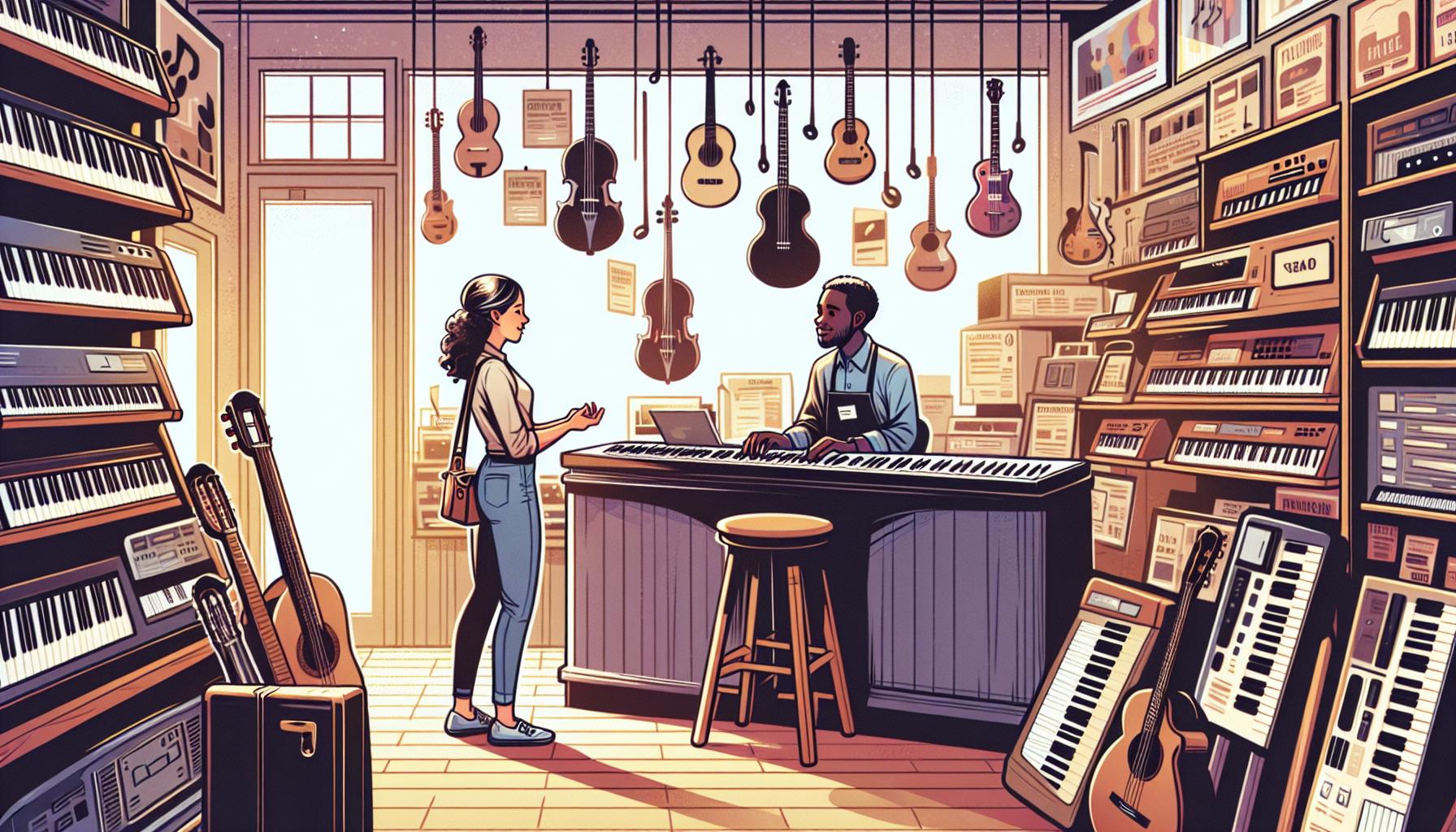
    While modern technology offers a myriad of options for finding a keyboard teacher, there’s something undeniably reliable about the old-school method of asking for recommendations from local music schools or stores. These establishments aren’t just hubs for purchasing instruments or booking lessons; they’re communities where musicians and music educators converge. As such, they can be invaluable resources in your quest for the perfect keyboard teacher.

    When you step into a music store or contact a music school, you’re not just asking for a service. You’re tapping into a network of experienced professionals who understand the musical landscape of your area. Staff members at these places usually have firsthand experience with the local music teaching community, including who specializes in what, teaching styles, and even which teachers have the best track records for student success.

    • Personal Interaction: Engaging with staff allows for a more nuanced understanding of each recommendation. They can provide insights that aren’t available online, such as a teacher’s ability to connect with students or their experience with specific music genres.
    • Variety of Options: Music schools often have multiple teachers on staff, which means you might be able to find several potential teachers in one place. This variety gives you the opportunity to explore different teaching styles and methodologies without having to search far and wide.

    Here are a few steps to make the most out of your inquiries:

    1. Be Specific About Your Needs: Whether you’re a beginner or looking to refine advanced skills, make sure to communicate your goals and preferences. The more information you provide, the better the recommendations will be tailored to you.
    2. Ask About Teacher Qualifications: Inquiry about the credentials and teaching experience of the instructors. It’s important to know that the teacher has a solid background in music education.
    3. Seek Information on Policies and Rates: Don’t forget to ask about lesson policies, scheduling flexibility, and tuition fees. These factors are just as important as finding a skilled teacher.
    4. Request References: If possible, ask for contact information of current or former students. Speaking with them can provide additional insights into the teacher’s effectiveness and approachability.

    Attending Music Events or Workshops

    Getting involved in the local music scene by attending events or workshops is a fantastic way to find a good keyboard teacher. These gatherings are often filled with music enthusiasts, including teachers looking to connect with potential students. They offer a unique opportunity for firsthand experiences with instructors outside of a formal teaching environment.

    Music festivals, local concerts, and workshops facilitate interaction among community members. They provide a platform for instructors to showcase their skills and for students to observe teaching styles in a more relaxed setting. For someone searching for a keyboard teacher, there’s no better way to gauge compatibility and teaching philosophy than seeing a teacher in action.

    Workshops, in particular, can be goldmines for finding talented teachers. These events usually focus on specific aspects of music theory or instrument mastery. They allow prospective students to participate and get a feel for how a teacher communicates and educates. It’s also the perfect environment to ask questions and see how well the teacher can tailor their instruction to different skill levels.

    Many communities have bulletin boards or social media pages dedicated to upcoming music events. Keeping an eye on these can alert you to valuable opportunities to meet and evaluate potential keyboard instructors. Participation not only deepens your understanding of music but also immerses you in the musical culture of your area. This engagement can lead to discovering a teacher who not only meets your educational needs but also shares your passion and enthusiasm for music.

    Exploring local music events and workshops does more than just introduce potential teachers. It also broadens one’s musical network, opening doors to resources, learning materials, and even friendships that can support your musical journey. Whether it’s through a casual conversation at a concert or a hands-on session in a workshop, the connections made in these settings are invaluable.

    Remember, finding the right keyboard teacher is as much about personal connection as it is about educational qualification. Seeing how teachers interact with their environment, perform, and pass on their knowledge in an informal setting can provide deep insights into their teaching style and personality. This approach ensures that when you finally decide on a teacher, it’s not just based on their credentials but also on their ability to inspire and motivate you on your musical journey.

    Trying Online Platforms for Finding Teachers
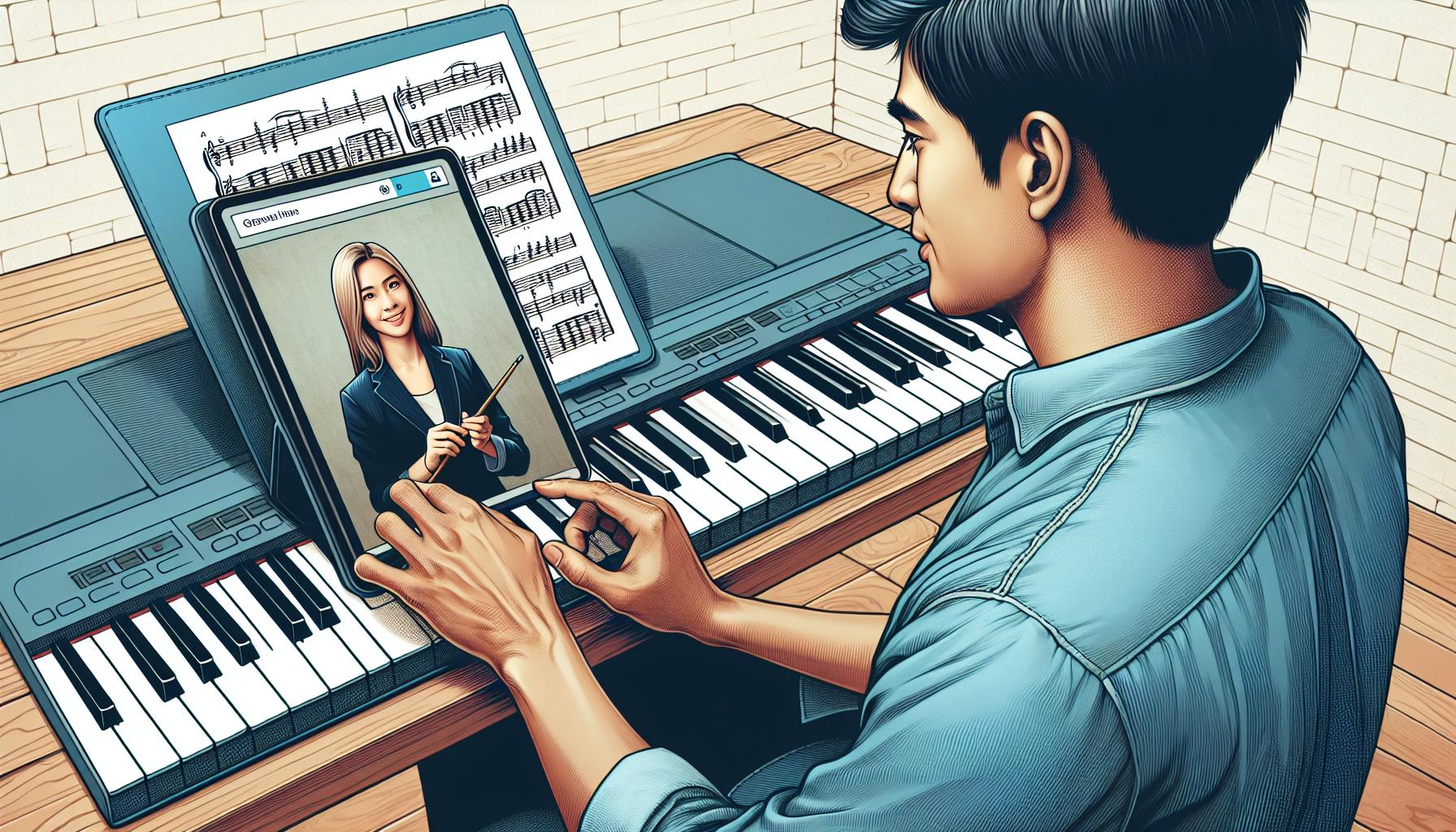
    In the digital age, online platforms have become a revolutionary way to connect students with qualified keyboard teachers from around the globe. These platforms remove geographical constraints, enabling students to find the best possible match for their learning style and musical goals. Websites and apps dedicated to music education offer a plethora of options, from local instructors to internationally acclaimed artists.

    One of the greatest strengths of using online platforms is the ability to filter teachers based on various criteria such as experience, teaching style, genre specialization, and price. This customization ensures that students can find a teacher who not only meets their educational needs but also fits their budget. Profiles and reviews from past students provide invaluable insight into a teacher’s effectiveness, offering a level of transparency that can be hard to find through traditional search methods.

    Moreover, many online platforms offer trial lessons. This feature allows students and teachers to assess compatibility before committing to a regular schedule. It’s an opportunity for students to experience how the teacher communicates and adapts lessons to individual needs, ensuring a good fit. Trial lessons often lead to more confident and informed decisions about pursuing long-term education with a particular instructor.

    The convenience of scheduling and attending lessons from the comfort of one’s home cannot be overstated. Online lessons often come with flexible scheduling options, catering to busy lifestyles. This ease of access is particularly beneficial for those who might not have the time or means to travel for lessons. Furthermore, the digital format allows for lessons to be recorded, giving students the ability to replay and review instructions and feedback at their own pace.

    Online platforms also frequently host community forums and resource libraries, further enriching the learning experience. These resources include sheet music, practice exercises, and video tutorials that supplement one-on-one lessons. Forums allow students to ask questions, share experiences, and connect with other music learners, fostering a sense of community and support.

    In embracing online platforms for finding keyboard teachers, students unlock a world of possibilities. They gain access to a broad, diverse pool of talent and resources that would be otherwise inaccessible, making the journey of learning the keyboard more flexible, personalized, and enriched. Whether seeking to master classical piano or explore contemporary keyboard techniques, online platforms provide the tools and connections needed to advance on this musical journey.

    Evaluating and Choosing the Right Keyboard Teacher
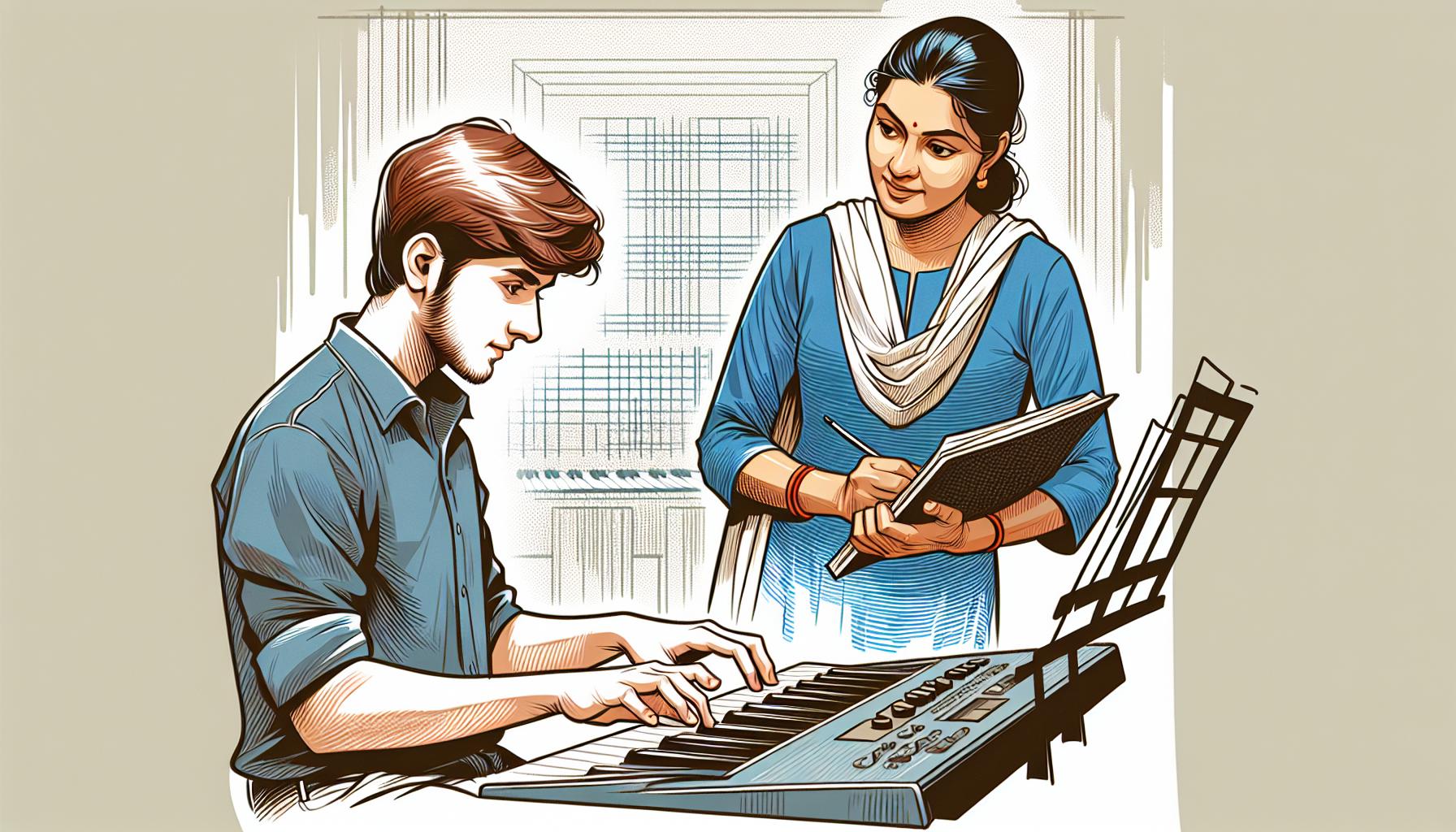
    Finding the perfect keyboard teacher involves more than just a simple search for “keyboard teacher near me.” It requires a thoughtful approach to evaluating and choosing the right fit for one’s musical aspirations and learning style. This selection process is crucial for both beginners eager to learn the fundamentals and advanced players aiming to hone their skills further.

    When embarking on this journey, the first step is to consider the teacher’s qualifications and experience. A teacher with a robust musical background, including formal education and performance experience, can provide a comprehensive learning experience. However, credentials are not the sole factor. The teacher’s ability to adapt to different teaching styles to suit the student’s learning pace and interest is equally important. Hence, students should look for a teacher who balances professional expertise with a flexible teaching approach.

    Another critical aspect to evaluate is the teacher’s track record. Recommendations, reviews, and testimonials from previous or current students offer valuable insights into the teacher’s effectiveness, reliability, and personality. Positive feedback usually indicates a supportive and conducive learning environment, whereas consistent complaints might be a red flag.

    Students seeking the right keyboard teacher should also prioritize trial lessons. These initial sessions are not only an opportunity to assess the teacher’s pedagogical methods but also allow students to experience how comfortable and motivated they feel under the teacher’s guidance. Comfort and motivation are indispensable for sustained learning. Therefore, engaging in trial lessons with different teachers can help students make an informed choice that aligns with their learning goals and preferences.

    The logistical aspects of learning, such as the location of the lessons, the flexibility of scheduling, and the lesson format (in-person vs. online), should not be overlooked. In today’s digital age, geographical constraints are less of a barrier, thanks to the proliferation of online learning platforms. These platforms offer a plethora of options where students can find teachers that not only meet their criteria but also offer the convenience of scheduling lessons from anywhere. The choice between in-person and online lessons depends on the student’s personal preference, learning style, and the specific goals they aim to achieve through the keyboard lessons.

    Another important factor is the alignment of musical interests and goals. Students and teachers who share similar musical tastes and objectives are likely to build a more productive and enjoyable learning relationship. Whether the focus is on classical music, jazz, pop, or any other genre, finding a teacher who specializes in that area can deeply enrich the learning experience.

    Conclusion

    Finding the right keyboard teacher is a journey that’s both exciting and crucial for musical growth. It’s about matching personal learning goals with a teacher’s expertise and teaching style. Remember, the perfect fit is out there. It might take some research and a few trial lessons but it’s worth the effort when you finally strike that harmonious chord with a teacher who not only understands your musical aspirations but also knows how to guide you there. So don’t hesitate to dive into this quest. The right teacher can transform your musical journey into an enriching and fulfilling experience. Happy searching!
  • Master Keyboard Chords for Any Song: Easy Learning Tips & Techniques

    Master Keyboard Chords for Any Song: Easy Learning Tips & Techniques

    Ever found yourself humming to a tune and wishing you could play it on your keyboard? You’re not alone! Many music enthusiasts dream of bringing their favorite songs to life but often hit a roadblock when it comes to finding the right chords.

    Thankfully, the digital age has made it easier than ever to uncover the secrets behind any melody. Whether you’re a beginner hoping to strum along to the latest hits or an experienced musician aiming to expand your repertoire, this guide is your ticket to unlocking keyboard chords for any song.

    Understand the Basics of Chords

    Before diving into the vast sea of music and attempting to decipher the chords of your favorite songs, it’s crucial to get familiar with the basic structure of chords. Chords form the backbone of most musical pieces, and understanding their fundamentals can significantly ease the process of identifying them in various songs.

    At the heart of music theory, a chord is a combination of three or more notes played together to produce a harmonious sound. The simplest and most commonly used chord is the triad, which consists of the root note, a third, and a fifth. These elements work in concert to give each chord its distinctive sound and emotional impact. For anyone just beginning their journey into the world of music, becoming familiar with these basic chords is an indispensable first step.

    There are mainly four types of triads that are essential:

    • Major chords, which sound happy and full
    • Minor chords, known for their sad and melodic tone
    • Diminished chords, which carry a sense of tension and instability
    • Augmented chords, offering a unique, slightly dissonant sound

    To put this into practice, one doesn’t need an extensive background in music theory. Many resources are available online that provide detailed charts and diagrams showing the finger positions for these chords on a keyboard. By starting with these primary chords, musicians can play a surprisingly wide range of songs and begin to understand how different pieces of music are constructed.

    Furthermore, the concept of chord progression comes into play. A chord progression is a series of chords played in sequence. Popular music often relies on familiar progressions that evoke certain feelings and moods in the listener. Recognizing these patterns can vastly improve one’s ability to pick out chords by ear, a skill that becomes invaluable when looking to play along with songs.

    For those aspiring to take their understanding to the next level, exploring scales is the next logical step. Each chord is associated with a particular scale, and knowledge of scales not only aids in the identification of chords but also in the improvisation and creation of music. The major and minor scales are the foundation, but there are also blues, pentatonic, and other exotic scales that bring different flavors to music.

    Fortunately, modern technology has made it easier than ever to learn about chords and scales. Numerous apps and websites offer interactive lessons tailored to both beginners and more experienced players. These tools often provide feedback and can track progress, making the learning process both efficient and enjoyable.

    Utilize Online Resources and Apps

    In today’s digital age, countless resources are at a musician’s fingertips to help demystify the process of identifying chords for any song on the keyboard. From beginners to seasoned musicians, online tools and mobile apps have transformed the way one learns and practices music. Whether it’s figuring out the chords to a new pop song or dissecting a complex jazz arrangement, these platforms offer solutions that cater to every need.

    Websites dedicated to chord sheets serve as a valuable resource for musicians looking to learn new songs. These sites host a vast collection of songs across various genres, complete with detailed chord charts. Users can search for a song by title or artist and often find multiple versions of chords submitted by other musicians. This community-driven approach not only provides access to an extensive library of songs but also offers insights into different ways a song can be played.

    Mobile apps for chord recognition take learning to the next level. Apps like Chordify or Yousician listen to the song through the device’s microphone and analyze it in real-time, displaying the chords as the song plays. This feature is incredibly beneficial for those trying to learn a song by ear. It also allows musicians to practice along with the actual track, providing a more immersive learning experience.

    Another noteworthy mention is online music theory tools and courses. These resources offer structured lessons on chords, scales, and chord progressions. They’re designed to deepen the user’s understanding of music theory, enabling them to not only find chords for any song but also comprehend why those chords work together. Many of these courses include interactive components, such as quizzes and exercises, reinforcing the learning process.

    For hands-on practice, several virtual keyboard applications are available online. These simulate a real keyboard on the screen, allowing users to practice chords without having a physical keyboard at hand. It’s an excellent tool for visual learners and those who wish to practice away from their instrument.

    Resource Type Benefits
    Chord Sheets Websites Wide range of songs, community contributions
    Chord Recognition Apps Real-time analysis, play along with tracks
    Music Theory Tools Structured lessons, deeper understanding of music theory
    Virtual Keyboard Apps Practice without a physical instrument, beneficial for visual learners

    Learn to Transcribe Chords by Ear

    Transcribing chords by ear might seem daunting at first, but it’s a skill that greatly enhances a musician’s understanding and appreciation of music. It’s about listening to a song and figuring out the chords without referring to a chord sheet. This ability not only improves one’s ear for music but also fosters a deeper connection with the pieces one plays.

    One of the first steps in learning to transcribe by ear is to Familiarize Oneself With Chord Sounds. Major, minor, diminished, and augmented chords each have a distinct character. Recognizing these differences is critical. A good exercise is to play various chords on the keyboard and listen to their tonal qualities. Over time, the ear will start to distinguish these different sounds in music.

    Next, it’s important to Start With Simple Songs. Choosing songs with clear, slow chord progressions can make the process of identifying chords by ear much easier. Many popular music tracks stick to four-chord progressions, making them ideal for practice. As one becomes more comfortable with this, they can gradually move on to more complex pieces.

    Employing the use of technology can also aid in this process. There are numerous Pitch and Tempo Changing Apps available that can slow down a song without altering its pitch. This allows musicians to listen to chord changes more clearly and gives them more time to figure out which chords are being played. These apps can be an invaluable tool for those learning to transcribe music by ear.

    Another pivotal aspect is to Practice Regularly. Like any skill, consistency is key. Setting aside time each day to train one’s ear will result in quicker and more accurate chord identification. It’s also helpful to occasionally test oneself by trying to transcribe a new song without any assistance and then checking the accuracy against available chord sheets or tutorials.

    Moreover, engaging in Ear Training Exercises can be highly beneficial. There are many online resources and mobile apps designed specifically to improve musical ear training. These exercises often include identifying intervals, chord qualities, and chord progressions by ear, all of which are crucial skills for transcribing chords.

    Understanding the Context of the Song also plays a significant role. Knowing the genre, the typical chord progressions used in that genre, and any stylistic elements can hint at what chords might be coming next. This contextual knowledge, combined with a trained ear, will significantly streamline the transcription process.

    Experiment with Different Voicings and Inversions

    After mastering the basics of identifying chords by ear and familiarizing oneself with the typical progressions within various genres, the next step in finding keyboard chords for any song involves experimenting with different voicings and inversions. This practice not only enhances the musician’s ability to play more complex pieces but also adds a layer of sophistication to their performance.

    Voicings refer to how the notes of a chord are spread out across the keyboard, while inversions focus on changing the bass note of the chord. Playing around with these aspects can dramatically change the sound and mood of a song, making it crucial for those seeking to accurately capture the essence of the music they’re learning.

    Why Experiment with Voicings?

    • Adds richness and depth: Different voicings can make a chord sound fuller or more subtle, depending on the song’s needs.
    • Improves hand independence: Practicing various voicings helps musicians develop better control over their fingers, leading to more intricate and expressive playing.
    • Enhances musical understanding: Understanding how to voice chords gives insight into the composer’s intentions, offering a deeper appreciation of the music.

    Inversions: A Gateway to Sophistication

    Inversions play a key role in transition between chords smoothly. By keeping some notes constant while changing others, inversions can lead to more cohesive and interesting arrangements. They’re particularly useful in genres like jazz and classical music, where fluidity and elegance are paramount.

    Steps to Experiment with Voicings and Inversions

    1. Identify the basic chord structure: Before altering it, one must first recognize the chord they’re working with.
    2. Rearrange the notes: Try spreading the notes out across the keyboard or grouping them closer together. Observe how these changes affect the sound.
    3. Change the bass note: Alter the inversion of the chord by playing different notes of the chord in the bass. Notice the differences in tension and resolution.

    Practical Exercises

    • Replicate famous pieces: Choose songs known for their unique chord progressions and try to replicate the voicings and inversions used.
    • Create variations: Take a simple song and play it using different voicings and inversions. Record the variations and compare how they sound.
    • Use technology: Employ apps and software that display chords and inversions. This technology can offer visual guidance and inspiration.

    Practice, Practice, Practice!

    Embarking on the journey to find keyboard chords for any song isn’t just about understanding theory or recognizing patterns; it’s rooted deeply in consistent and deliberate practice. They say practice makes perfect, and when it comes to mastering keyboard chords, this age-old adage couldn’t be more accurate. Dedicating time each day to practice not only solidifies one’s grasp of basic chords but also sharpens the ear, enabling musicians to identify and replicate chords more intuitively over time.

    To streamline the learning process, musicians are encouraged to start with simple songs. These are the kind of tracks that rely on straightforward chord progressions and fewer chord changes. By focusing on these simpler compositions, learners can gradually build their confidence and capability, setting a strong foundation for tackling more complex pieces in the future. As the familiarity with various chords and their sounds grows, transitioning to songs with more intricate harmonies becomes significantly less daunting.

    One effective strategy is to incorporate Daily Learning Sessions that include a mix of chord identification, practice, and application. By dedicating specific blocks of time to focus solely on listening to songs and attempting to transcribe the chords, followed by practicing these chords and applying them in different contexts, learners can greatly enhance their skill set. Furthermore, they can:

    • Record their practice sessions to track progress and identify areas for improvement.
    • Use technology, like chord identification apps and online tutorials, to supplement their learning.
    • Experiment with writing their own chord progressions based on the songs they’re working on.

    It is also vital to Engage in Active Listening, where learners pay close attention not just to the melody but to the underlying chord structures and how they progress throughout a song. This approach not only aids in chord identification but also enriches one’s musical appreciation and understanding.

    Here are some suggested daily practice routines:

    Routine Component Time Allocated
    Warm-up (finger exercises and scales) 10 minutes
    Chord identification (listening to new songs) 20 minutes
    Chord practice (repetition of newly learned chords) 15 minutes
    Application (playing along with songs or backing tracks) 15 minutes

    Conclusion

    Mastering keyboard chords for any song is a journey that requires patience, dedication, and a structured approach. By starting with the basics and gradually increasing complexity, musicians can build a solid foundation. Incorporating daily learning sessions, leveraging technology, and actively listening to music can significantly enhance one’s ability to recognize and play chords. Remember, the key to success lies in consistent practice and a willingness to explore new strategies. So grab your keyboard, dive into the world of chords, and let the music guide your path to mastery. Happy playing!

  • Top Fun Keyboard Songs for Beginners: Tips & Tricks for Fast Learning

    Top Fun Keyboard Songs for Beginners: Tips & Tricks for Fast Learning

    Starting to learn the keyboard can be both exciting and a bit daunting. But what better way to dive in than with some fun and easy songs? They’re not just enjoyable to play; they’re also great for boosting confidence and building foundational skills.

    From timeless classics to modern pop hits, there’s a wide range of tunes that are perfect for beginners. These songs often feature simple melodies and chords that can be picked up quickly, making practice sessions something to look forward to.

    Benefits of Learning Keyboard with Fun Songs

    When beginners choose fun songs as their entry point into the world of keyboard playing, they’re not just making practice enjoyable. They’re setting themselves up for a more effective learning experience. Here’s why incorporating fun songs into keyboard practice is a brilliant move for any novice player.

    First and foremost, engagement levels soar when learners tackle songs they actually enjoy. It’s no secret that motivation can wane if practice feels like a chore. However, when beginners are excited about the tunes they’re learning, they’re more likely to sit down at the keyboard regularly and for longer periods. This consistent practice is key to making progress.

    Moreover, fun songs often come with the advantage of simplicity. Many beginners’ favorites have straightforward melodies and chords, making them accessible for someone just starting out. This simplicity is not a drawback but an incredible asset. It allows learners to focus on the fundamentals of music theory and technique without getting overwhelmed.

    Here’s a brief look at how fun, easy songs can impact learning:

    Aspect Impact
    Engagement High engagement leads to consistent and longer practice sessions.
    Musicality Simple songs help in understanding basic music theory concepts.
    Technique Players develop fundamental playing techniques more naturally.
    Confidence Early successes boost learners’ confidence in their ability.

    Furthermore, learning through songs that are both enjoyable and widely recognized provides an invaluable opportunity for beginners to share their progress. Whether it’s a family gathering or a school talent show, being able to perform a popular tune boosts their confidence exponentially. This public or even informal family performance experience is crucial as it introduces a sense of purpose and achievement in their musical journey.

    Another key benefit revolves around the development of musical ear and creativity. As learners play songs they love, they’re more likely to experiment with them – perhaps changing the tempo, trying out different octaves, or adding a personal touch to the melody. This experimentation is a fantastic way for beginners to develop a deeper understanding of music as a creative expression, not just a skill set to master.

    Lastly, the flexibility of song choices in keyboard learning allows for a personalized learning path. Everyone has different taste in music, and when learners can pick songs that resonate with them personally, it adds a layer of personal connection and dedication to the learning process.

    Timeless Classics for Beginners

    When embarking on the journey of learning to play the keyboard, beginners often find themselves sifting through countless songbooks and online resources, searching for that perfect set of tracks to start honing their skills. Amidst a vast sea of options, there lies a treasure trove of timeless classics that not only resonate with audiences of all ages but also offer the perfect blend of simplicity and enchantment to kickstart a beginner’s musical journey.

    “Twinkle Twinkle Little Star”, arguably the epitome of classic melodies, serves as an excellent starting point. Its straightforward rhythm and repetitive melody line make it an ideal choice for mastering basic finger movements and understanding musical notation. Similarly, “Jingle Bells” offers a jovial tune that’s as enjoyable to play as it is recognizable, teaching beginners about tempo and dynamic expression with its upbeat and merry rhythm.

    On the other hand, classics like “Ode to Joy” by Beethoven introduce beginners to the world of classical music with a simple yet profound melody. Playing such a piece not only instills a sense of accomplishment but also nurtures an appreciation for classical compositions. Furthermore, the flexibility in tempo and dynamics in this piece makes it a versatile choice for learners at different stages of their keyboard journey.

    In addition to these, “Fur Elise”, another masterpiece from Beethoven, can be adapted for beginners. Although the original composition is complex, simplified versions allow beginners to experience the beauty of classical music while gradually improving their skill set. This piece particularly emphasizes the importance of emotion and expression in music, encouraging students to explore the expressive potential of the keyboard.

    Each of these classics carries a unique charm and learning opportunity, making them indispensable tools in a beginner’s repertoire. They not only foster a deep connection with music from the get-go but also pave the way for exploring more intricate compositions in the future.

    Song Composer Key Skills Developed
    Twinkle Twinkle Little Star Trad. Finger movements, notation
    Jingle Bells James Lord Pierpont Tempo, dynamic expression
    Ode to Joy Ludwig van Beethoven Appreciation for classical music
    Fur Elise Ludwig van Beethoven Emotion, expression

    Modern Pop Hits to Master

    While timeless classics offer a solid foundation for beginners, diving into modern pop hits can be equally rewarding and entertaining. These contemporary songs not only keep practice sessions fresh and engaging but also allow learners to play tunes they hear on the radio or their streaming playlists. Let’s explore a few pop hits that have straightforward chord progressions and melodies, making them perfect for keyboard beginners.

    One standout song that combines simplicity with popularity is “Someone Like You” by Adele. Its repetitive chord pattern and soulful melody make it an excellent choice for beginners eager to perform a song that resonates with many. Another hit that’s fun to learn is “Love Yourself” by Justin Bieber. The song’s uncomplicated structure and catchy melody offer a great way to practice rhythm and chord transitions without feeling overwhelmed.

    For those who enjoy a bit of a challenge while still sticking to the beginner-friendly theme, “Clocks” by Coldplay provides a rhythmic pattern that’s mesmerizing yet not too difficult to master with some practice. This song introduces syncopation and arpeggios in a way that’s accessible for novices.

    Here’s a brief overview of these modern pop hits along with their key characteristics:

    Song Title Artist Key Features
    Someone Like You Adele Repetitive chord pattern, Soulful melody
    Love Yourself Justin Bieber Simple structure, Catchy melody
    Clocks Coldplay Rhythmic pattern, Introduction to arpeggios

    Encouraging learners to explore songs outside the classical repertoire enhances their musical experience. It allows them to connect with the music they love and share their progress with friends and family through performances of familiar tunes. Additionally, tackling these pop hits can boost confidence and motivate beginners to continue their keyboard journey.

    Beyond the fun aspect, learning modern songs helps in understanding contemporary music theory and composition techniques. It exposes players to various genres and styles, fostering a versatile skill set that’s beneficial for future musical endeavors.

    As beginners progress through their journey, gradually increasing the complexity of the songs they learn is crucial. Starting with these pop hits and moving towards more intricate compositions ensures a balanced and comprehensive learning experience. Every new song brings its own set of challenges and learning opportunities, reinforcing key concepts and skills developed through practice.

    Tips for Practicing Keyboard Songs

    Starting out on the keyboard can be an exciting journey, and choosing fun songs is crucial to keeping that excitement alive. However, knowing how to practice effectively is just as important to make progress. Here are some tips that beginners can follow to enhance their practice sessions.

    Create a Routine

    Establishing a consistent practice routine can work wonders. It’s not just about the quantity of practice but the quality and regularity. Beginners should aim for short, daily practice sessions instead of long, infrequent ones. Starting with as little as 15 to 20 minutes a day can lead to significant progress. The key is consistency.

    Break It Down

    Trying to tackle an entire song in one go can be overwhelming. Instead, break the song into smaller, manageable sections. Focus on mastering a single chord progression or melody line before moving on to the next. This method not only makes learning easier but also boosts the sense of achievement as each part is mastered.

    Slow and Steady

    Speed is not a friend when learning a new song on the keyboard. Beginners should start playing the notes slowly to ensure accuracy and to internalize the melody and rhythm. As the movements become more familiar, gradually increase the tempo. Using a metronome can help maintain a steady pace and improve timing.

    Use Technology

    In this digital age, numerous resources can aid in learning keyboard songs. Apps and online tutorials offer visual and auditory guidance that can be extremely helpful. Recording practice sessions and playing them back can also provide insight into areas that need improvement.

    Focus on Hand Position and Posture

    Good hand positioning and maintaining a proper posture are crucial for playing effectively and avoiding strain. Beginners should pay close attention to their hand placement on the keyboard and ensure their back is straight and shoulders are relaxed. Proper technique lays the foundation for more advanced playing in the future.

    Set Realistic Goals

    Setting achievable goals can keep motivation high and provide a clear path forward. Whether it’s mastering a particular song by the end of the month or learning a new chord each week, goals should be specific, measurable, and attainable. Celebrating these small victories can fuel the desire to keep learning.

    Conclusion

    Diving into the world of keyboard playing opens up a universe of musical possibilities. By embracing modern pop hits as part of their learning journey beginners will find themselves not only enjoying the process but also rapidly improving their skills. Remember it’s all about the journey. With a little patience and dedication to the practice tips outlined they’ll soon be playing their favorite tunes with ease. So grab that keyboard and let the music begin!

  • Free Printable Beginner Keyboard Sheet Music: Explore Various Genres

    Free Printable Beginner Keyboard Sheet Music: Explore Various Genres

    Starting your musical journey can feel like stepping into a vast, uncharted territory, especially if the keyboard is your instrument of choice. It’s thrilling and a bit daunting, but the right resources can make all the difference. That’s where printable beginner keyboard sheet music comes into play. It’s a fantastic tool for those just getting their fingers familiar with the keys, offering a blend of simplicity and challenge that’s perfect for novices.

    With printable sheet music, learners have the freedom to practice at their own pace, anytime, anywhere. Whether it’s classical tunes or the latest pop hits, there’s something out there for every budding musician. The beauty of starting with beginner sheets is that they often include helpful annotations, making it easier to understand musical symbols and terms. It’s like having a personal music tutor at your fingertips, ready to guide you through each note and chord.

    Benefits of Printable Beginner Keyboard Sheet Music

    Printable beginner keyboard sheet music stands out as a valuable resource for those embarking on their musical voyage. The beauty of these resources lies in their ability to bridge the gap between novice enthusiasm and musical literacy. Here’s a closer look at why they are highly favored by budding musicians.

    First and foremost, printable sheets offer the ultimate convenience. With just a few clicks, learners can access a plethora of music sheets from classical to contemporary pieces tailored for beginners. This ease of access means that practice isn’t confined to just music lessons; it can happen anytime, anywhere. Flexibility in practice schedule encourages consistency, which is crucial in mastering the keyboard.

    Another significant benefit is the customized learning experience these sheets provide. Unlike standard keyboard books that follow a one-size-fits-all approach, printable sheet music can be chosen based on one’s musical tastes and skill level. This ensures learners remain engaged and motivated, as they play pieces they genuinely enjoy and find appropriately challenging.

    Moreover, printable keyboard sheet music often includes helpful annotations. These annotations are invaluable for beginners, offering guidance on finger placement, tempo, and musical expressions. By having these cues directly on the sheet, learners can better understand the complexities of music notation and improve their playing technique without feeling overwhelmed.

    The ability to mark up and annotate these printable sheets themselves also plays a pivotal role in the learning process. As beginners navigate through the pieces, making their own notes and adjustments allows for a more interactive and reflective practice session. This hands-on approach to learning not only reinforces musical concepts but also accelerates skill development.

    For visual learners, the straightforward layout of these beginner sheets reduces the intimidation factor often associated with complex musical scores. By focusing on simple melodies and basic chords, learners can gradually build their reading skills in a structured, yet gentle manner. This methodical progression is key in building confidence and establishing a solid foundation in music theory and keyboard proficiency.

    Lastly, the affordability of printable sheet music cannot be overstated. Investing in music books can quickly add up, especially when exploring different genres or looking for pieces that match one’s evolving skill level. Printable sheets, often available for free or at a minimal cost, provide an economical solution to accessing a diverse range of music. This democratizes music education, making it more accessible to people from all walks of life.

    Finding the Right Sheet Music for Your Skill Level

    Finding suitable printable beginner keyboard sheet music can feel overwhelming for newcomers. Amidst a vast sea of options, pinpointing pieces that align with one’s skill level and musical tastes is pivotal. The journey starts with understanding the various skill levels commonly found in keyboard music and recognizing where one falls on this spectrum.

    Skill Levels Simplified

    In the realm of keyboard music, pieces are typically categorized into three broad skill levels:

    • Beginner: These pieces focus on simple melodies, basic rhythms, and minimal hand movement. They often include popular children’s songs and classic folk tunes.
    • Intermediate: A step up in complexity, intermediate sheet music introduces varied musical techniques, chord variations, and more extensive use of both hands.
    • Advanced: For those who’ve mastered the keyboard, advanced pieces challenge players with complex rhythms, intricate harmonies, and rapid movements across the keys.

    Identifying Your Level

    To accurately gauge one’s level, reflection on a few key aspects of one’s playing can be insightful:

    • Comfort with the Basics: Can they read music comfortably? Do they have a handle on simple rhythms and melodies?
    • Technical Skills: Assess how well they navigate scales, chords, and hand coordination.
    • Repertoire: What is the most complex piece they’ve successfully played?

    With these considerations in mind, one can start seeking sheet music that fosters growth without overwhelming. Resources like online databases and music education platforms offer an array of printable beginner keyboard sheet music, categorized by skill level. Many of these websites feature user reviews and difficulty ratings, further guiding learners toward appropriate selections.

    Tailoring Choices to Personal Interests

    While skill level is paramount in choosing the right piece, personal interest shouldn’t take a backseat. Engaging with music that resonates on a personal level enhances motivation and learning. Thankfully, the versatility of keyboard music encompasses various genres, from classical and jazz to pop and rock. Beginners should explore different styles to discover what captivates them the most, keeping in mind that a mix of genres can round out their musical education and technique.

    Moreover, incorporating songs that they’re enthusiastic about into their practice routine makes the learning process more enjoyable. It bridges the gap between mechanical practice and genuinely living the music.

    Practicing with Printable Sheets Anytime, Anywhere

    One of the most notable advantages of printable beginner keyboard sheet music is its incredible versatility. Unlike traditional music books, which can be bulky and not always accessible, printable sheets can be easily carried or stored on any digital device. This means learners can practice their favorite pieces wherever they find a keyboard or piano. Whether it’s a quick session at a friend’s house, a practice room at school, or even during a vacation, access to their chosen repertoire is just a print away.

    With printable sheet music, there’s no need to wait for a physical book to arrive by mail or to go out to a store. As soon as they discover a piece they’re passionate about, they can download and print it within minutes. This immediate access not only saves time but also keeps motivation high. The excitement of stumbling upon a new piece of music and being able to practice it right away is a feeling that cannot be overstated.

    Furthermore, the ease of printing allows for customization of the learning experience. If a particular piece is proving too challenging or too easy, it’s simple to find and print another that better suits the learner’s current skill level. This flexibility ensures that learners remain engaged and challenged, without becoming overwhelmed or bored. Moreover, the ability to reprint a piece means that annotations, such as fingerings or dynamic markings, can be added and modified as needed, allowing for a more personalized practice session.

    Digital Organization and Environmental Benefits

    Adopting printable sheet music also comes with the added advantage of easy digital organization. Learners can store their music files on a computer or cloud storage, making it simple to keep track of their repertoire. This organization extends to the environmental benefits of using less paper. Since learners only print the pieces they’re working on, there’s less waste compared to buying entire books of which only a few pieces might be relevant.

    Many websites and platforms offering printable sheet music also update their libraries regularly, providing an endless source of new music to explore. This accessibility to a diverse array of compositions encourages learners to broaden their musical horizons and experiment with styles or composers they may not have encountered otherwise.

    Understanding Musical Symbols and Terms

    Grasping the basics of musical symbols and terms is like learning a new language. It’s essential for anyone starting their musical journey, especially with keyboard instruments. This knowledge not only enhances one’s ability to read and interpret sheet music but also enriches the overall playing experience by adding layers of meaning and emotion to the pieces they learn.

    For beginners, the world of musical notation might seem complex at first glance. However, they’ll find that most sheet music consists of a few fundamental elements. Staff lines and spaces form the backbone, representing different musical pitches. Each line and space corresponds to a specific note, which is crucial for learning the position of keys on the keyboard.

    Clefs are another vital component, indicating the pitch range of the music. The treble clef is most common for keyboard music, representing higher notes, while the bass clef denotes lower notes. Together, they cover the wide array of sounds a keyboard can produce, ensuring learners play each note in the correct octave.

    Then there are musical notes and rests, symbolizing sound and silence, respectively. Each has different shapes to show how long they should be played or paused. For instance, a quarter note suggests a short duration, while a whole note offers a longer sound. Understanding these symbols helps beginners maintain rhythm and tempo, critical components of music that breathe life into compositions.

    Dynamics and articulations add expression and texture to music. Symbols like forte (f) for loud and piano (p) for soft instruct players on the volume of their playing. Articulations, such as staccato (detached notes) and legato (smooth and connected notes), further dictate how each note is to be played, allowing for emotional expression through music.

    Beyond these basics, beginners will encounter various other terms and symbols that provide detailed instructions on how to play a piece. Metronome marks indicate the tempo or speed of a piece, and term such as Allegro (fast) or Adagio (slow) give further insight into the composer’s intentions.

    Exploring Different Genres with Beginner Sheet Music

    When embarking on the journey of learning the keyboard, beginners may find themselves confined to classical pieces, as they’re often the go-to genre for most beginner sheet music. However, the world of music is vast and varied, encompassing a myriad of genres that offer learners an opportunity to explore different styles and rhythms. From the soulful melodies of the blues to the upbeat rhythms of pop, each genre offers a unique learning experience and a chance to delve into diverse musical expressions.

    Classical music is indeed a cornerstone of musical education, providing a strong foundation in technique and theory. Nonetheless, venturing into other genres can dramatically enhance one’s musical palette. Jazz, with its syncopated rhythms and improvisation, challenges students to think outside the box and develop a keen ear for intricate musical nuances. Similarly, Rock and Pop music, known for their memorable melodies and simpler chord progressions, can be a fun and engaging way to practice and apply learned skills.

    Blues and R&B, on the other hand, introduce learners to soulful expressions and groove-based playing, highlighting the importance of rhythm and timing. Furthermore, Country music, with its storytelling and distinct twang, offers a unique approach to phrasing and articulation. By exploring these genres, beginners not only broaden their musical horizons but also discover what resonates with them personally.

    For beginners, accessing printable sheet music tailored to these various genres can be a gateway to cultural and emotional education through music. This diversity not only keeps practice sessions interesting but also encourages learners to experiment with different sounds and techniques. Moreover, playing a variety of music can foster a deeper appreciation for the art, instilling a lifelong love and curiosity for music exploration.

    Finding beginner-friendly sheet music for these genres might seem daunting at first. Yet, numerous online resources and music education platforms offer printable sheet music specifically designed for beginners in a wide range of genres. These sheets often come with simplified arrangements that maintain the essence of the original compositions while ensuring they are accessible to novices.

    Incorporating different genres into practice routines not only accelerates learning by offering new challenges and techniques but also ensures that learners stay motivated and engaged in their musical journey. They get to experience firsthand how diverse the world of music is and how various elements from different genres can blend to create new and exciting sounds.

    Conclusion

    Exploring different genres through printable beginner keyboard sheet music is a journey filled with discovery and growth. It’s a way to not only build a solid musical foundation but also to dive into the vast sea of creativity that music offers. By stepping out of their comfort zone and embracing genres from classical to country, learners find themselves on a path that’s as enriching as it is enjoyable. They’ll not only accelerate their learning curve but also cultivate a deep-seated love and appreciation for music’s diverse landscape. So here’s to the beginners who are ready to embark on this musical adventure—the sheet music world is your oyster!

  • Top Beginner-Friendly Keyboard Movie Themes: Harry Potter, Titanic & More

    Top Beginner-Friendly Keyboard Movie Themes: Harry Potter, Titanic & More

    Diving into the world of music can be thrilling, especially when it involves playing iconic movie theme songs on the keyboard. For beginners, there’s something magical about bringing to life the melodies that have enchanted audiences on the big screen. It’s not just about hitting the right notes; it’s about connecting with the heartbeats of timeless stories.

    Starting with familiar tunes can boost confidence and make the learning process enjoyable. Imagine sitting at the keyboard and effortlessly playing the hauntingly beautiful theme from “The Godfather” or the adventurous strains of “Indiana Jones”. These songs aren’t just fun to play; they’re gateways to mastering the keyboard and understanding musical storytelling.

    Exploring Famous Movie Theme Songs

    When beginners embark on the journey of learning the keyboard, diving into the world of famous movie theme songs offers not just a practice ground but a passage into a realm of nostalgia and wonder. These themes, known for their emotive power and unforgettable melodies, serve as perfect materials for novices to explore musical storytelling and improve their skills.

    Among the treasure trove of cinematic music, certain songs stand out for their simplicity and impact, making them ideal for beginners. The “Harry Potter” theme song, with its whimsical and enchanting tune, captures the magic of the wizarding world and is a joy for learners to play. A few keys and a gentle rhythm are all it takes to bring Hogwarts to life, right from the living room.

    Similarly, the “Pirates of the Caribbean” theme song offers a swashbuckling challenge that’s both exciting and approachable for new players. Its rhythmic intensity and memorable melody line push beginners to explore dynamic playing and timing, crucial skills in keyboard mastery.

    Here’s a glimpse at some of the most popular movie themes for keyboard beginners and their attributes:

    Theme Song Movie Key Features
    The Godfather Theme The Godfather Melodic, Emotional
    Indiana Jones Theme Raiders of the Lost Ark Adventurous, Rhythmic
    Harry Potter Theme Harry Potter Series Whimsical, Enchanting
    Pirates of the Caribbean Theme Pirates of the Caribbean Series Swashbuckling, Intense
    Jurassic Park Theme Jurassic Park Majestic, Inspirational

    Learning these songs not only boosts confidence but also introduces players to a variety of musical elements, including melody, harmony, and rhythm. Each theme, with its own story and emotion, teaches beginners how music can convey feelings and narratives without a single spoken word.

    To make the most out of this learning experience, students are encouraged to start by listening to these themes intently, noting their emotional impact and how the melody and harmony work together to create a powerful experience. This attentive listening helps in understanding the intricacies of each theme and prepares the learner for a more informed and sensitive rendition on the keyboard.

    Benefits of Starting with Iconic Tunes

    Diving into the world of music, particularly through the keyboard, is an exciting journey filled with endless melodies and harmonies. For beginners, the path might seem daunting at first, with scales and theory vying for their attention. However, beginning their musical adventure with iconic movie theme songs can offer a variety of benefits that not only enhance their learning experience but also keep their passion for music burning brightly.

    Engagement and Motivation are key factors in the learning process, especially for novices. Iconic movie themes like those from “Star Wars” or “Jurassic Park” are instantly recognizable and connect learners to their favorite cinematic memories. This familiarity fosters a deeper connection to the music, making practice sessions more enjoyable and less of a chore. When students play tunes they love and recognize, they’re more likely to stick with their practice routine, turning challenges into exciting opportunities to recreate beloved melodies.

    Practicing these well-known themes also helps beginners Understand Musical Concepts in a more intuitive and memorable way. These songs are not just melodic; they are structured in ways that introduce learners to fundamental musical concepts such as timing, phrasing, and dynamics. For instance, the haunting melody of “Harry Potter” highlights the use of minor keys and demonstrates how music can evoke emotions. As students engage with these songs, they naturally absorb lessons on melody, harmony, and rhythm, laying a solid foundation for more advanced musical studies.

    Moreover, iconic movie themes are often composed with a wide audience appeal in mind, which means they’re engineered to be catchy yet simple. This simplicity is crucial for beginners who might get easily overwhelmed by complex pieces. Songs like the theme from “The Godfather” offer simplicity without sacrificing depth, allowing learners to feel a sense of accomplishment early in their journey. As they master these tunes, their confidence grows, paving the way for tackling more challenging pieces in the future.

    Another significant benefit is the Development of Listening Skills. To play these themes accurately, students must listen to the originals attentively, analyzing each note and nuance. This active listening enhances their ear for music, teaching them to distinguish subtle differences in pitch, tone, and rhythm. It’s a crucial skill for any musician, aiding not just in playing by ear but in all aspects of musical performance and composition.

    Learning Tips for Beginners

    Embarking on the journey of learning to play famous movie theme songs on the keyboard can be exhilarating for beginners. These tips are designed to streamline the learning process, ensuring that the endeavor is as enjoyable as it is beneficial.

    Start with Simple Tunes

    One of the keys to mastering any instrument, especially the keyboard, is to start with simple tunes. Movie themes like “Harry Potter” or “Titanic” are not only recognizable but also relatively easier to learn. They often consist of repetitive patterns that help in honing one’s skills without overwhelming them.

    Practice Regularly

    Consistency is crucial when learning an instrument. Setting aside a specific time each day for practice can significantly improve proficiency and confidence. Even just 15 to 30 minutes of focused practice can lead to noticeable progress over time.

    Embrace Mistakes

    Remember, making mistakes is a part of the learning process. Instead of getting frustrated, try to understand what went wrong and how it can be corrected. Mistakes are valuable learning opportunities that can lead to greater musical understanding.

    Listen to the Original Pieces

    Actively listening to the original version of the movie theme provides a greater sense of timing, rhythm, and emotion. It serves as a model for what beginners should aspire to achieve. It’s also beneficial to watch live performances or tutorials on platforms like YouTube to get visual guidance on finger placement and technique.

    Use Technology to Your Advantage

    Today, there are numerous apps and software designed specifically for music learners. These tools can offer interactive lessons, tutorials, and even games that make learning both fun and effective. They can also provide instant feedback, helping beginners correct their mistakes in real-time.

    Break It Down

    Tackling a whole song at once can be daunting. Breaking the song down into smaller, manageable sections can make the learning process more digestible. Focus on mastering each section before moving on to the next. This method not only helps in memorizing the tune but also in understanding its structure.

    Keep It Fun

    Lastly, it’s essential to keep the learning process entertaining. Choosing songs that one loves, creating challenges with friends, or setting personal milestones can keep motivation high. Music is a form of expression, and enjoying that expression is key to sustained learning.

    Popular Movie Themes for Keyboard Practice

    When diving into the world of keyboard music, it’s thrilling to explore pieces that resonate with many. Famous movie themes not only captivate listeners but also offer beginners a fantastic opportunity to showcase their growing skills. These pieces often contain simple yet engaging melodies that are perfect for newcomers to the instrument. In this section, we’ll delve into several iconic movie themes that are ideal for keyboard practice.

    First on the list is the unforgettable “Harry Potter Theme” (Hedwig’s Theme) by John Williams. This magical piece immediately transports listeners to the wizarding world, making it a fan favorite for many. Its repetitive melody line makes it accessible for beginners, while its variations can challenge them as they progress.

    Another classic is the “Titanic Theme” (My Heart Will Go On) by James Horner. Known for its emotional depth, this melody teaches beginners to express feelings through music. Its slow pace allows learners to focus on each note and the smooth transitions between them, which is crucial for developing a sensitive playing style.

    For those who love adventure, “Jurassic Park Theme” by John Williams offers a fantastic learning piece. Its grand and majestic sound requires focus on dynamics, teaching beginners how to play softly and loudly to create an engaging musical story.

    “Darth Vader’s Theme” (The Imperial March) from Star Wars, also by John Williams, is perfect for those interested in a more dramatic piece. It helps beginners understand the importance of rhythm and timing in creating tension and excitement within music.

    Below are a few key details about these themes to help beginners choose where to start:

    Movie Theme Composer Key Features
    Harry Potter Theme (Hedwig’s Theme) John Williams Magical, repetitive melody
    Titanic Theme (My Heart Will Go On) James Horner Emotional depth, slow pace
    Jurassic Park Theme John Williams Grand sound, dynamic variation
    Darth Vader’s Theme (The Imperial March) John Williams Dramatic, rhythmic precision

    Incorporating these movie themes into daily practice sessions will not only boost technical skills but also enrich the musical experience by connecting keyboard learning to beloved cinematic memories. They’re also a hit at gatherings, allowing beginners to share their progress with friends and family through tunes that are instantly recognizable and cherished by many.

    Conclusion

    Diving into the world of movie theme songs on the keyboard opens up a magical gateway for beginners. It’s not just about mastering the keys but also about bringing cinematic worlds right into their living rooms. By practicing these iconic tunes, they’re not only enhancing their technical skills but are also stepping into the shoes of their favorite characters. It’s a journey that’s as rewarding as it is fun. So, whether they’re conjuring spells with the “Harry Potter Theme” or setting sail with the “Titanic Theme,” there’s a whole universe of musical adventures waiting to be explored. Let the music begin!

  • Master Piano: Free Online Lessons for Absolute Beginners

    Master Piano: Free Online Lessons for Absolute Beginners

    Diving into the world of music can be as thrilling as it is daunting, especially for those dreaming of playing the piano but not knowing where to start. The good news is, the digital age has made learning more accessible than ever. With a plethora of free online piano lessons available, absolute beginners can embark on their musical journey from the comfort of their own home.

    These online resources are tailored to cater to those who’ve never touched a piano before, breaking down lessons into manageable, bite-sized chunks. Whether it’s mastering the basics of reading music, understanding the keyboard layout, or getting the hang of simple chords, there’s something for everyone. Let’s explore how these free lessons can turn your musical aspirations into reality, one note at a time.

    Exploring the Benefits of Online Piano Lessons

    In an era where everything is within arm’s reach through the internet, learning to play the piano has also found its place in the digital world. Online piano lessons have become a beacon of hope for absolute beginners, offering them a unique opportunity to chase their musical dreams from the comfort of their own homes. Accessibility is at the forefront of these benefits, breaking down geographical barriers and making quality piano instruction available to anyone with an internet connection.

    Another significant advantage of online piano lessons is the flexibility they offer. Traditional piano classes require learners to adhere to a strict schedule, which can be challenging for those juggling work, education, or family commitments. In contrast, online lessons allow learners to engage in their practice at any time that suits them, be it early morning or late at night. This flexibility ensures that learning the piano can fit into anyone’s lifestyle, not the other way around.

    Cost is a critical factor in pursuing any new hobby or skill, and here too, online piano lessons shine. They often present a more affordable alternative to private tuition, which can be prohibitively expensive for many. Free online piano lessons, in particular, eliminate the financial barrier to entry, allowing learners to get started without the need for a significant upfront investment. This democratization of learning resources means that more people than ever can embark on their musical journey without financial constraints standing in their way.

    The variety of learning materials available online is another compelling reason to consider this route for piano education. Whether it’s classical music, jazz, pop, or blues, learners can find lessons tailored to their musical preferences and skill level. This vast array of choices not only keeps the learning process engaging but also allows students to explore different genres, fostering a deeper appreciation and understanding of music.

    Furthermore, technology has enabled innovations like interactive simulation software and video tutorials, which significantly enhance the learning experience. These tools provide immediate feedback on performance, allowing learners to correct mistakes in real time. This immediate feedback loop accelerates the learning process and helps maintain motivation by clearly showing progress.

    Lastly, the online community of learners and educators adds a layer of support and encouragement that cannot be underestimated. Beginners have the chance to connect with more experienced players, share their progress, and even collaborate on projects, creating a sense of camaraderie and mutual growth.

    Benefit Description
    Accessibility

    Lesson Structure for Absolute Beginners

    When diving into the world of free online piano lessons, newcomers may wonder about the structure these lessons typically follow. Absolute beginners need a clear, step-by-step guide to help them navigate their musical journey. Free online lessons cater to this need beautifully, showcasing a blend of flexibility and thoroughness that’s hard to find elsewhere.

    First off, lessons usually kick off with an introduction to the piano itself. Learners get acquainted with the names of the keys, the layout of the keyboard, and the role of foot pedals. This foundational knowledge is crucial as it supports all future learning.

    Next, tutors introduce basic music theory. This includes understanding notes, rhythms, and scales. Even in online settings, interactive tools and videos make this potentially daunting subject matter engaging and digestible. For beginners, grasping these concepts early on is essential for reading music and developing timing skills.

    The practical part of the lessons often begins with simple hand positioning and finger exercises. These exercises are designed to increase dexterity and comfort with the keyboard. Following this, students start playing simple songs or pieces. This approach not only boosts confidence but also provides immediate, tangible evidence of progress, which is incredibly motivating.

    Another pivotal aspect is the integration of technology in these lessons. Many free online platforms offer innovative tools such as metronomes, digital music sheets, and interactive piano simulators. These resources not only make learning more fun but also more effective, offering immediate feedback and personalized learning paths.

    As students progress, they’re introduced to a broader variety of music genres, encouraging exploration and personal musical expression. This variety ensures that learners find the style that resonates most with them, whether it’s classical, jazz, pop, or another genre.

    To support ongoing learning, these lessons often incorporate quizzes and challenges. These elements gamify the learning process, making practice sessions more engaging. They also help reinforce concepts and techniques learned, ensuring students retain and can apply their newfound knowledge.

    Finally, it’s not just about solo practice. Online communities and forums offer students the chance to connect with peers and instructors. Here, they can share their progress, challenges, and triumphs. These communities provide an invaluable source of support and motivation, turning an individual’s learning journey into a shared experience.

    Overall, the structure of free online piano lessons for absolute beginners is designed to provide a comprehensive and enjoyable start to one’s musical education.

    Mastering the Basics of Reading Music

    After familiarizing themselves with the layout of the piano and understanding the initial steps of hand positioning and basic exercises, students are encouraged to dive into the world of reading music. This essential skill forms the backbone of their musical journey, paving the way for them to explore a wider range of pieces as they progress.

    Reading music encompasses recognizing notes on the staves, understanding rhythms, and grasping how these elements combine to create melodies and harmonies. Free online piano lessons for absolute beginners approach this challenge with a gradual, step-by-step method, ensuring that students build a strong foundation. At the outset, learners are introduced to the grand staff, comprising the treble clef (for the right hand) and the bass clef (for the left hand).

    Note Identification

    Identifying notes starts with memorizing the spaces and lines of each clef. Many lessons employ mnemonic devices to aid in this process. For the treble clef, phrases like “Every Good Boy Does Fine” help students remember the lines, while “FACE” represents the spaces. Similarly, for the bass clef, lines can be remembered with “Good Boys Do Fine Always,” and spaces with “All Cows Eat Grass.”

    Rhythm Basics

    Understanding rhythm involves being able to read various note values, such as whole notes, half notes, quarter notes, and so on. Lessons often integrate clapping and counting exercises that help beginners internalize the pulse and rhythm of music. This practical approach is important for developing timing and synchronization when playing the piano.

    Simple Melodies

    Once students grasp note identification and rhythm, they’re gradually introduced to playing simple melodies. This consists of short pieces that incorporate basic notes and rhythms they have learned. These melodies are carefully selected to ensure a sense of accomplishment and motivate learners to continue exploring more complex pieces.

    Technology Tools

    The inclusion of technology in learning to read music cannot be understated. Many platforms offer interactive tools that allow students to practice note reading in a gamified environment. Features such as immediate feedback on accuracy and tempo help learners correct mistakes in real-time, significantly speeding up the learning process.

    Practice Makes Perfect

    Consistent practice is key to mastering music reading. Online lessons encourage regular engagement with reading exercises, both within the platform and through printable materials. This ensures that students not only learn during lessons but also apply and reinforce their knowledge between sessions.

    Understanding Keyboard Layout

    Once beginners get a grasp of reading music, the next critical step in free online piano lessons is diving into the keyboard layout. This understanding forms the foundation upon which all piano skills are built.

    At first glance, a piano keyboard might seem like a complex jumble of black and white keys. Yet, with the right guidance, students quickly learn that this layout is more logical than it appears. Free online lessons for absolute beginners break down the keyboard into manageable sections, ensuring that students aren’t overwhelmed.

    The 88 keys of a standard piano are divided into groups of twos and threes by the black keys. This pattern is vital for navigation, providing a visual guide to identify the white keys, each corresponding to a musical note from A to G. Beginners are taught to recognize these patterns, enabling them to locate notes quickly without the need to count each key.

    Recognizing Octaves and Middle C

    One of the first tasks in understanding the keyboard layout is identifying octaves. An octave is a series of eight white keys, starting and ending with the same note name but at a higher pitch. Middle C, the most referenced note in beginner piano, serves as a home base. It’s positioned near the center of the keyboard and acts as a point of reference for finding other notes. Free lessons emphasize the importance of locating Middle C early on, as it’s crucial for both reading music and understanding the keyboard’s layout.

    Interactive Learning Tools

    To aid in the assimilation of keyboard layout knowledge, many online piano lessons incorporate interactive tools. These may include virtual keyboards that allow learners to practice note identification and software that quizzes students on locating specific keys. This hands-on approach reinforces learning, making the virtual environment an effective tool for mastering the keyboard layout.

    • Practice Sessions: Regular, guided practice using these interactive tools helps cement the relationship between musical notes and their physical location on the keyboard.
    • Visual Aids: Flashcards, diagrams, and other visual aids are commonly used to supplement learning, providing a quick reference for students as they become more familiar with the keyboard.

    Progressing to Simple Songs

    After mastering the basics of the keyboard layout, students are gradually introduced to playing simple songs. This not only applies their knowledge of note identification and location but also starts to develop hand-eye coordination and musical timing. The choice of songs in free online lessons often reflects a careful balance between challenge and achievability, ensuring that students remain motivated and engaged.

    Getting the Hang of Simple Chords

    After mastering the basics of the keyboard layout and beginning to play simple songs, students are ready to dive into the world of chords, a crucial step in their musical journey. Chords form the backbone of most music genres, providing depth and harmony to melodies. Free online piano lessons offer a structured approach to learning chords, starting with the simplest forms – major and minor triads.

    Major triads consist of three notes: the root note, the major third, and the perfect fifth. They’re known for their bright, happy sound. In contrast, minor triads, which also consist of three notes—the root, the minor third, and the perfect fifth—produce a sadder, more reflective tone. These fundamental chord types are essential for beginners to understand as they lay the groundwork for more complex chords and harmony in music.

    Free lessons leverage the familiarity students have with the keyboard to introduce chord shapes and patterns. Just as with single notes, recognizing patterns on the keyboard is pivotal for identifying and playing chords efficiently. Interactive tools and software come into play here, allowing students to practice chord formations and hear how they should sound, enhancing their auditory and muscle memory.

    To help students get comfortable with playing chords, lessons often include:

    • Visual aids: Diagrams and color-coded keys display chord structures clearly.
    • Practice exercises: Repetitive drills that focus on transitioning between chords smoothly.
    • Song practice: Simplified versions of popular songs that incorporate the chords being learned.

    Incorporating songs that students love and are already familiar with keeps the learning process engaging and fun. It also demonstrates the practical application of chords in music, allowing learners to see their progress in real-time.

    As students gain confidence in identifying and playing basic chords, they’re introduced to the concept of chord progressions. A chord progression is a series of chords played in a sequence, which forms the harmonic foundation of a song. Understanding common progressions such as the classic I-IV-V helps students grasp song structure and prepares them for more advanced musical concepts.

    Interactive quizzes and games designed to recognize and remember different chord progressions further aid in solidifying this understanding. These tools not only reinforce learning but also make the process interactive and enjoyable.

    Conclusion

    Embarking on the journey of learning piano online as an absolute beginner might seem daunting at first. Yet with the structured approach of understanding the keyboard layout, mastering the basics becomes an exciting adventure. The integration of interactive tools and visual aids not only makes the learning process engaging but also ensures a solid foundation is built. From recognizing notes and playing simple songs to exploring the harmony of chords, each step is designed to keep students motivated. As they progress, the world of music opens up with endless possibilities. So whether it’s playing their favorite song or understanding the intricacies of musical composition, these free online piano lessons offer a comprehensive path to musical mastery.

  • What’s the Best Age to Start Keyboard Lessons? Key Readiness Signs

    What’s the Best Age to Start Keyboard Lessons? Key Readiness Signs

    Deciding when to start learning the keyboard can be a bit of a puzzle. With opinions as varied as musical genres, parents and aspiring musicians often find themselves wondering if there’s a magic number. Is it when they’re toddlers, or maybe a bit older?

    The truth is, there’s no one-size-fits-all answer, but there are sweet spots that can help set the stage for a lifelong love affair with music. It’s about balancing readiness and enthusiasm, a harmony between eagerness to learn and the physical ability to manage the instrument. Let’s dive into finding that perfect age to embark on a musical journey that resonates through life.

    Benefits of Starting Young

    When it comes to learning the keyboard, starting young carries a myriad of benefits that can significantly impact a child’s development, both musically and personally. Early exposure to music education not only lays the foundation for musical skills but also fosters various cognitive and social improvements.

    Children who begin their keyboard lessons early tend to develop sharper auditory skills compared to their peers. Their ability to distinguish between different sounds, pitches, and rhythms is enhanced, making them more adept musicians as they grow. This keen sense of hearing extends beyond music, aiding in better language development and listening skills.

    Moreover, early learners often showcase improved memory capabilities. Learning to play the keyboard requires memorizing notes, scales, and oftentimes entire pieces of music. This practice significantly boosts both short-term and long-term memory, benefiting children in academic pursuits as well.

    Another compelling advantage is the improvement of fine motor skills and hand-eye coordination. Playing the keyboard involves a delicate balance of hand movements, often requiring both hands to operate independently. Younger children who tackle this challenge enhance their dexterity and coordination far beyond their years.

    Early keyboard education also nurtures discipline and patience. Mastering an instrument is a slow process filled with challenges. Children who start early learn the value of consistent practice and perseverance. These life skills are invaluable, applying to numerous situations outside of music.

    Socially, young learners gain a sense of belonging and community. Recitals, group practices, and music classes offer opportunities for social interaction and teamwork. Children learn to support their peers, appreciate the effort behind performances, and enjoy a shared interest.

    Interestingly, the emotional benefits of starting young cannot be understated. Music is a powerful medium for expression. Children who learn to play the keyboard early often find it easier to express their emotions and relieve stress through their playing. It becomes a healthy outlet for their feelings and a source of joy and satisfaction.

    Lastly, fostering a passion for music at a young age can lead to lifelong enjoyment and possibly a career in music. When the foundation is laid early, children have more time to explore different musical genres, dive deep into the complexities of music theory, and perfect their playing style.

    Factors to Consider

    When deciding the best age for a child to start learning the keyboard, several factors come into play. These factors can significantly influence not only the child’s initial experience with the instrument but their long-term musical journey as well. Understanding these considerations helps in making a more informed and beneficial decision for the child’s musical education.

    Child’s Interest

    First and foremost, the child’s interest in learning the keyboard is crucial. A genuine curiosity and excitement about the instrument can greatly enhance their motivation and engagement during lessons. Observing the child’s reaction to music and their spontaneous interactions with musical instruments can be telling signs of their interest.

    Physical Readiness

    Physical readiness is another important consideration. Playing the keyboard requires certain fine motor skills and hand-eye coordination, which tend to develop with age. Children should be able to sit comfortably at the keyboard and reach the keys with ease. Typically, these physical abilities begin to mature around the age of 5 to 6 years.

    Emotional and Cognitive Development

    The child’s emotional and cognitive development also plays a significant role. Learning an instrument involves following instructions, concentrating for extended periods, and dealing with the frustrations of challenging tasks. Children who can handle these emotional and cognitive demands are more likely to thrive in their keyboard lessons.

    Learning Environment

    The learning environment is key to fostering a positive and effective musical education. A supportive environment includes finding a patient and experienced teacher who can adapt lessons to the child’s learning pace and style. Additionally, the presence of a musical community or opportunities for group lessons can enhance learning through peer interaction.

    Time Commitment

    The commitment to regular practice is essential for progress on the keyboard. Before starting lessons, it’s important to consider whether the child has enough time to dedicate to practice amidst their other activities and responsibilities. Consistency and routine in practice are often more beneficial than the total time spent.

    Financial Investment

    Finally, starting keyboard lessons is a financial investment. Beyond the cost of lessons, there are expenses related to acquiring a keyboard, buying music books, and possibly participating in performances or exams. Ensuring that the budget aligns with these costs from the outset can prevent undue stress later on.

    Each child is unique, and these factors will weigh differently for everyone. Taking them into account helps tailor the learning experience to suit the child’s individual needs, potentially paving the way for a fulfilling and enriching musical journey.

    Early Start vs. Later Start

    When it comes to the journey of learning the keyboard, the debate between an early start versus a later start plays a crucial role in shaping a child’s musical proficiency and enjoyment. Parents often ponder whether it’s better to introduce their child to the keyboard at a young age or wait until they’re older. Each approach has its unique benefits and considerations that can impact a child’s music education experience.

    Benefits of an Early Start

    Introducing children to the keyboard at a young age offers several key advantages:

    • Neurological Development: Young children’s brains are like sponges, readily absorbing new information. Starting keyboard lessons early can stimulate brain development, enhancing areas responsible for memory, concentration, and fine motor skills.
    • Musical Foundation: Early learners have the opportunity to develop a strong musical foundation. They often gain a deeper understanding of rhythm, melody, and harmony, which can be beneficial for future musical endeavors.
    • Confidence Building: Mastering the keyboard can be a significant confidence booster for children. Early success in music can foster self-esteem and encourage them to pursue other interests with enthusiasm.

    Considerations for a Later Start

    Despite the advantages of starting young, beginning keyboard lessons later in childhood or adolescence shouldn’t be overlooked:

    • Physical Readiness: Older children may have better physical coordination and finger strength, which can facilitate smoother progress on the keyboard.
    • Focused Interest: Children who choose to pursue keyboard lessons later are often more driven by genuine interest rather than parental encouragement. This intrinsic motivation can lead to more dedicated practice and enjoyment.
    • Emotional Maturity: Older learners might have greater emotional maturity, enabling them to handle the challenges and frustrations that come with learning a new instrument with resilience.

    Making the Choice

    Ultimately, the decision on when to start keyboard lessons should be a collaborative process between the child, their parents, and potentially a music educator. It’s essential to consider the individual child’s interest, maturity level, and readiness rather than adhering strictly to age. Some children might be eager and ready to begin their musical journey at a very young age, while others may benefit from waiting until they’re older.

    Signs of Readiness

    Identifying when a child is ready to start learning the keyboard involves observing certain signs of readiness. These signs can vary from one individual to another, but they provide crucial insights into whether the child might benefit from beginning their musical journey.

    Firstly, a Strong Interest in music and instruments is a telling sign. Children who frequently express curiosity about music, enjoy listening to various tunes, or often tinker with musical toys and instruments exhibit a natural inclination towards music. This interest is a foundation upon which motivation and dedication can be built, making the learning process more enjoyable and effective.

    Secondly, the ability to Focus for an extended period is essential. Learning the keyboard requires patience, practice, and concentration. If a child can stay engaged with a task for longer periods, typically around 15 to 20 minutes for younger children, it indicates a readiness to take on keyboard lessons. Their capacity to focus not only aids in mastering technical skills but also enriches their understanding of musical pieces.

    Physical Readiness is another critical aspect. The child needs to have developed fine motor skills to navigate the keys and coordination to manage different movements with both hands. While these skills continue to evolve with age, a basic level of dexterity is necessary for starting keyboard lessons. Physical readiness also includes being able to sit up straight and reach the keyboard comfortably, which is essential for developing proper playing technique.

    An often-overlooked factor is Emotional Maturity. Children who show signs of being able to handle gentle criticism and are willing to persevere through challenges show emotional readiness for learning an instrument. Learning to play the keyboard involves trial and error, and being able to manage frustration and continue practicing is crucial for progress.

    Lastly, the child’s Response to Structure can indicate readiness. Learning an instrument involves structured practice sessions and following instructions from a teacher. Children who respond well to a routine and understand the concept of practicing to improve skills might find it easier to adapt to the discipline required in keyboard lessons.

    Observing a child for signs of a strong interest in music, the ability to focus, physical readiness, emotional maturity, and a positive response to structure can provide valuable insights into their readiness to start learning the keyboard. Each child is unique, and these signs help tailor the learning experience to their individual needs and capabilities.

    Conclusion

    Deciding the best age for a child to start learning the keyboard isn’t about picking a magic number. It’s about tuning into their unique cues and readiness. By paying attention to their interest in music, ability to focus, and readiness both physically and emotionally, parents can make an informed decision. Tailoring the learning experience to fit their child’s individual needs ensures not just a good start but a joyful journey in music education. Let’s nurture their budding musical talents with patience and understanding, setting the stage for a lifelong love of music.

  • Mastering Piano: Essential Tips to Learn Piano on Your Keyboard

    Mastering Piano: Essential Tips to Learn Piano on Your Keyboard

    Ever dreamt of playing the piano like a pro? I’m here to tell you it’s entirely possible, even if you’re starting from scratch. In this article, we’ll explore how to learn piano on a keyboard, turning that dream into a reality.

    You might be thinking, “Can I really learn piano on a keyboard?” Absolutely! Keyboards are an excellent tool for beginners, providing a more affordable and portable option than traditional pianos. We’ll delve into the best strategies, resources, and tips to help you master the art of piano playing.

    No need for expensive lessons or high-end equipment. With a keyboard, dedication, and the right guidance (which I’ll provide), you’ll be creating beautiful music in no time. So, stick around if you’re ready to embark on an exciting musical journey.

    Choosing the Right Keyboard for Learning Piano

    Let me jump right into what it takes to pinpoint the keyboard that’s best suited for your piano learning needs.

    First and foremost, it’s crucial to decide what you want in a keyboard. Ask yourself these questions: Do you want it to mimic an acoustic piano? Is portability a top concern? How much are you willing to spend? The answers to these questions will guide your decision.

    When choosing a keyboard for learning piano, the number of keys is significant. Standard pianos have 88 keys. However, keyboards can greatly vary, some offer 61 keys while others provide up to 88 keys, just like a real piano. If you’re just starting out, a 61-key keyboard is enough to learn the basics and understand the layout. However, if you want to play a wider range of music, go for the 76 or 88 keys.

    The feel of the keyboard is another crucial aspect. Some keyboards are equipped with weighted keys that mimic the experience of playing an acoustic piano. This could be a great feature if your goal is to eventually transition to an acoustic piano.

    Similarly, the sound quality of the keyboard can greatly affect your learning experience. Don’t forget to test out the built-in speakers to ensure they deliver a pleasant sound that truly enhances your practice sessions.

    Finally, you might also want to consider additional features such as in-built lessons, recording functions, and USB connectivity. These can potentially make your learning process smoother and more interactive.

    To sum things up, it’s all about finding a balance between your individual needs and the features offered by the keyboard. Whether you’re a newbie just dipping your toes or an intermediate aiming to polish your skills, the right keyboard can truly make a world of difference in your musical journey. Let’s carry on and explore some handpicked keyboards that can assist you in this beautiful venture into the realm of piano playing.

    Understanding the Basics of Piano Playing

    To get better at piano playing, it’s essential to grasp the basics. Just like learning any other musical instrument, piano playing involves mastering fundamentals like proper posture, finger placement, and reading music.

    Let’s not forget that a good posture has a lot to do with playing the piano effortlessly. You’d want to ensure your back’s straight, arms balanced and hands comfortably positioned over the keys. Get a sturdy chair or bench, set at the right height, and you’re all set. Regular practice in the correct posture not only helps prevent strain and injury but also enhances your performance over time.

    Next, it’s paramount to learn about finger placement and movement. Yes, every fingertip has its role on the keyboard! Pianists use all ten fingers, and each finger has its distinct number: Thumb is 1, Index is 2 and so on until the little finger which is 5. Knowing this numbering system is vital for sheet music as well. Generally, your fingers should be curved, relaxed but firm enough to play the notes accurately.

    One element of piano playing that can’t be overlooked is the ability to read sheet music. The staff, notes, rests, scales – understanding these concepts might seem daunting, but trust me, they’re your keys to mastering the piano. It’s an absolute necessity to read and play simultaneously, which substantially enhances your piano playing skills in the long run.

    Talking about the basics, we can’t ignore practicing scales. Pianists worldwide agree that practicing scales plays an integral part in understanding the structure of music. Scales help him not only with finger placement and movement but also with developing an intuitive sense of melody and harmony. Dive into the C Major scale first – it’s simple as it uses only the white keys on the keyboard.

    Building a Strong Foundation with Proper Technique

    Learning the piano comes with its fair share of challenges but with the right foundation in technique, honing these skills gets easier. As with any instrument, technique is crucial when it comes to the keyboard. A strong, well-practiced technique can significantly enhance the richness and expression of your music.

    One critical component of good technique is hand position. A relaxed and natural hand position can allow for fluid movement, precision in striking keys, and prevent unnecessary strain. Imagine you’re holding a small ball in your hand while placing it on the keyboard – this loose hold allows for better control and minimal tension.

    Your finger strength and fluidity will depend largely on your practice. Scales are an excellent way to work on these. They’re essential for grounding your fingers on the keyboard and help to facilitate smooth musical transitions.

    When practicing scales, I’ve found it helpful to:

    • Start with a single octave
    • Play slowly to focus on hitting each note correctly
    • Increase speed gradually
    • Experiment with different rhythm patterns

    It’s also common for pianists to misjudge the pressure they apply on the keys. A light touch might seem like the way to go, but too much lightness can cause loss of control over keys. It’s always a good idea to test and adjust your pressure as you continue your practice.

    To cap it off, reading sheet music is another critical building block for technique. It improves your understanding of rhythm, melody, and harmony. Equally, it enhances your ability to play from memory, which is a bonus for any keyboard player.

    There’s no shortcut to it. Consistent practice and focus on these techniques are key in your journey to mastering keyboard. Indeed, Rome wasn’t built in a day! Don’t be too hard on yourself if you’re not seeing progress right away but when you do, it’ll be well worth it.

    Learning Musical Notation and Reading Sheet Music

    Up next on our journey to mastering the keyboard is understanding musical notation and getting comfortable with reading sheet music. Like any other new language we learn, this won’t be an overnight process. But trust me, it’s worth every bit of the effort. Reading sheet music gives you access to a vast library of piano literature. More than that, it’s an essential skill that goes hand-in-hand with developing your piano technique.

    Musical notation is, in essence, a set of symbols that represent the pitch, rhythm, and tempo of a piece. Fundamental elements include notes, rests, clefs, time signatures, and key signatures among others. As these components come together, they create the language of music.

    • Notes signify the pitch. They show us which keys to play on the keyboard.
    • Rests direct us when to stay silent.
    • Clefs provide context for notes, determining their pitch value.
    • Time signatures dictate the rhythm of the piece.

    Amidst your learning journey, you’ll also encounter various other symbol groups responsible for articulation, dynamics, and tone color. So how do you start making sense of all these signs and symbols? Begin with an understanding of the basics, then gradually move on to more complex elements.

    When starting with sheet music, focus on recognizing notes and rhythms. Identify them on the keyboard. This will help you gain a meaningful understanding of how notation corresponds to the keyboard layout. Practice regularly, and over time you’ll notice your reading skills getting sharper. Following this, you’ll also be able to play more complex pieces.

    Just as we’ve discussed before, consistency is key in mastering the keyboard, and learning to read sheet music is no different. Remember, patience, perseverance, and practice will pave your way to proficiency.

    Practicing Effectively to Progress Quickly

    Breaking down the daunting task of learning piano into manageable sessions is the cornerstone of effective practice. This approach not only prevents overwhelm but actually speeds up your progress.

    I’ll let you in on a little secret. It’s a principle that’s rooted in both cognitive psychology and my own years of experience: quality trumps quantity when it comes to practicing. An hour of focused, deliberate practice is worth far more than three hours of mindless repetition.

    When mapping out your practice sessions, there are three core components to consider: Duration, Content, and Frequency.

    Duration

    This is purely about the length of your sessions. The ideal duration tends to be a sweet spot between 20 to 60 minutes. Any less and you might feel as though you’re just getting started when it’s time to wrap up. Any more, and mental fatigue can hinder progress.

    Ideal Duration 20 – 60 minutes

    Content

    Content is all about what you’re playing. For beginners, it’s crucial you spend time familiarizing yourself with keys and chords while slowly introducing more complex pieces as your skills advance.

    Remember to strike a balance! Repetitive drills can strengthen specific abilities but they are not a substitution for real music. Mix up drills with actual songs to provide much-needed variety and keep your practice sessions enjoyable.

    Frequency

    Last but not least, how often you hit those keys matters considerably. Consistency is key here. A quick 20-minute session every day is far more effective than a two-hour marathon once a week. Regular exposure helps reinforce the neural pathways responsible for understanding and replicating musical patterns.

    In sum, break your practice into manageable chunks while prioritizing quality over quantity. Keep your sessions varied, enjoyable and above all, consistent! As with any skill, it’s all about laying solid foundations and continually building upon them over time — all it takes is patience and persistence.

    Exploring Online Resources and Apps for Learning Piano

    Jumping into the digital age, it’s clear to see the wealth of resources available at our fingertips. Gone are the days when one-to-one lessons were the only method to learn piano. Let’s explore some online resources and apps that can help you soar in your journey of learning the piano on the keyboard.

    Online learning platforms have emerged as a dominant force in the education sector. They’re versatile, convenient, and often more affordable. More importantly, they’re flexible and adaptable to your specific learning style. Websites like Udemy, Coursera, and Khan Academy offer courses in piano learning. These encompass beginner levels to advanced techniques. They typically include video lessons, worksheets, and interactive sessions.

    An interesting, and often overlooked, virtual space is YouTube. A vast and diverse community of piano instructors share their expertise via tutorials, lesson plans, and even live streams. YouTube channels such as ‘PianoVideoLessons’ and ‘HDpiano’ are well-acclaimed by the community for their quality content.

    Here are some of the most highly-rated apps for learning piano:

    App Price Features
    Simply Piano by JoyTunes $120 per year Interactive lessons, sheet music, offline mode
    flowkey $19.99 per month Visual cues, varieties of music styles and genres
    Piano Maestro by JoyTunes Free with in-app purchases Recommended for kids, colorful and interactive

    These apps offer innovative features, like listening to you play and providing real-time feedback. They cover a wide array of topics, including rhythm, reading sheet music, and playing different genres of music.

    That said, be sure to balance digital aids with self-practice. The theories and techniques you learn online should be put into practice on your own keyboard. Remember that quality trumps quantity. Be patient, practice smart, and persist. Let’s continue exploring other aspects of learning piano on a keyboard…

    Tips and Tricks for Mastering Piano Playing

    The journey towards becoming an accomplished pianist goes beyond diligent practice and using online resources. It includes discovering unique strategies that can enhance your playing technique and musical understanding. Here are some valuable tips and tricks that’ll guide you on your path to mastering the piano.

    To start with, observe correct body positioning. As simple as it may seem, how you position your body can greatly affect your playing. Keep your back straight, avoid stiff shoulders, and ensure your arms form an L-shape at the elbow when striking the keys. Achieving perfect form provides greater access to the keys and improves your piano playing stamina.

    In addition, understanding musical notation is an essential skill every pianist should master. As you progress, it becomes increasingly important not just to read, but to interpret musical notes accurately. This means understanding pitch, rhythm, dynamics and other musical symbols that give life to the scores.

    Take time also to master scales and chords. They’re integral to all musical compositions. A comfortable familiarity with these fundamental structures can boost your ability to improvise, transpose and understand chord progressions in any piece. I can’t stress enough the importance of this: Scales and chords are the building blocks of piano playing.

    Perfecting the art of playing by ear is another powerful skill. By developing a keen musical ear, you’ll enhance your ability to reproduce melodies, understand harmonic structures and even compose your own pieces.

    Remember, no matter how perfect your practice regimen, or how advanced your technical skills, the true essence of piano mastery lies in playing with emotion and interpreting the music in a way that resonates with its listener. So continue to press those keys, revamp those melodies and imbue each note with your unique style.

    Conclusion

    So, there you have it. Learning piano on a keyboard isn’t as daunting as it might seem. With the right body posture, a solid grasp of musical notation, and a good handle on scales and chords, you’re already on your way to becoming a skilled pianist. And remember, it’s not just about hitting the right notes. It’s about playing with passion and interpreting the music in a way that speaks to you and your audience. Keep practicing, keep listening, and keep playing with emotion. Your journey to mastering the keyboard is a rewarding one, and I’m confident you’ll find joy in every step. Happy playing!

  • Why a Keyboard is a Versatile Alternative to Learning Piano

    Why a Keyboard is a Versatile Alternative to Learning Piano

    If you’re thinking about learning to play the piano, you might be wondering if starting on a keyboard is a good idea. I’ve been there, and I can tell you it’s not only possible, but it also has some benefits that may surprise you.

    In this article, we’ll explore why a keyboard can be a great alternative to a traditional piano for beginners. We’ll dive into the advantages of learning on a keyboard, from cost and convenience to versatility and volume control.

    So if you’re ready to tickle those ivories but don’t have the space or budget for a grand piano, stick around. You might find that a keyboard is the perfect fit for your musical journey.

    The Benefits of Learning on a Keyboard

    As we tread deep into musical waters, a frequently asked question strikes a chord: why play the keyboard instead of a traditional piano? Isn’t a piano superior? Well, it’s time to shed light on the popular belief that pianos are unquestionably superior to keyboards. Truthfully, the keyboard holds its own appeal, proffering some overlooked advantages.

    Versatility is the standout in this mix. Unlike the traditional piano, a keyboard introduces you to a world of sounds from various instruments. It doesn’t adhere solely to acoustic piano sounds, casting a wider net covering strings, percussion, brass, and more. It’s like owning an orchestra at your fingertips.

    Meanwhile, the volume control a keyboard provides is an often underestimated advantage, perfect for those dwelling in apartments or shared living spaces. There’s also the handy headphone option, allowing you to get lost in music without disturbing others.

    Let’s not forego the cost and convenience factors either. A keyboard is significantly more portable and affordable than a piano. It requires minimal space, is easily transported, and you won’t need to break your wallet. It makes the idea of learning to play a musical instrument seem a lot less daunting.

    In terms of learning, keyboards equipped with light-up keys can guide your fingers to the correct notes, simplifying the learning process. Some models even offer built-in learning systems!

    So, don’t be dissuaded from picking up a keyboard due to pressure from the piano camp. The keyboard not only opens up a multitude of opportunities but also provides an enjoyable way to delve into the world of music.

    Cost and Convenience

    Let’s cut to the chase: keyboards are simply more affordable than traditional pianos. You could find a decent keyboard for a few hundred dollars whereas a decent acoustic piano often starts at a few thousand. In fact, the cost difference is so significant that many beginners or even intermediate learners opt for keyboards before investing in a pianos.

    Keyboard Piano
    Average price $100-$500 $2000-$8000

    When it comes to convenience, keyboards win the fight hands down. They’re lightweight, portable, and don’t require the same kind of maintenance as traditional pianos. If you’re living in an apartment or sharing your space with others, practicing on a keyboard is a blessing. Good luck trying to move a traditional piano up three flights of stairs!

    Keyboards also provide more variety and flexibility. With a keyboard, you may use a different voice setting for every song you play. That’s like having an entire orchestra at your fingertips. Plus, most keyboards let you adjust the volume, an option that just isn’t available with traditional pianos. You can wear headphones and play your heart out without disturbing your neighbors.

    Besides affordability and convenience, many keyboards come with additional tools that help with learning and practicing. Some have light-up keys to guide learners, some have built-in metronomes for practice, and some even have the ability to record and playback your performances. These features make the whole process of learning and practicing more engaging and fun.

    In short, if you’re looking for a more affordable, convenient, and versatile option to embark on your musical journey, you can’t go wrong with a keyboard.

    Versatility

    One of the key advantages of using a keyboard over a traditional piano is its Versatility. Here’s why.

    Various Instrument Sounds

    With keyboards, you’re not limited to just the sound of piano keys. Instead, keyboards enable you to experiment with a wide array of instrument sounds. We’re talking vibrant trumpets, wailing guitars, thundering drums, and even serene flutes. Essentially, a keyboard provides an entire orchestra at your fingertips. This diverse sound palate opens up a wealth of opportunities for creativity.

    Light-up Keys and Built-In Metronomes

    These are not mere gimmicks. They’re effective learning tools designed to aid beginners. Light-up keys guide users on which notes to hit, perfect for those initial stages of learning. Built-in metronomes, on the other hand, help maintain a consistent rhythm.

    Volume Control

    Another key benefit of keyboards relates to volume control. Traditional pianos produce a lot of sound which can lead to noise complaints, especially in close quarters. Keyboards solve this problem with their adjustable volume control. Plus, for those wanting to practice in silence, keyboards often come with headphone jacks.

    Feature Benefit
    Various Instrument Sounds Expands creative possibilities
    Light-up Keys & Built-In Metronomes Aids beginners in learning
    Volume Control Controllable noise level

    Studying the piano on a keyboard thus offers countless possibilities. Whether you wish to explore different sounds, learn effectively with the help of modern tools, or manage your noise level – a keyboard can handle it all.

    By choosing a keyboard over a traditional piano, you’re not replacing one with the other. Rather, you’re opting for a more versatile instrument that also happens to be more affordable, portable, and user-friendly. Who wouldn’t want that in their repertoire?

    Volume Control

    One of the most underrated, yet highly essential features that keyboards boast over traditional pianos is the Volume Control. Think about a piano, it’s loud and proud – an iconic instrument indeed. But the volume? It’s set in stone once the piano hammers hit the strings. You can’t turn it down. It can be a real issue, especially if you’re living in shared places like apartments or dormitories. However, with a keyboard, the scenario takes quite a drastic turn.

    Unlike pianos, keyboards offer excellent volume flexibility. Whether you need to tone it down during an early morning practice session or want to crank it up for a late-night jam, the decision is yours. Keyboards are equipped with a volume slider or knob, which is a handy feature that lets you adjust the sound level to your convenience. If you’re a parent with a child who is just starting out, I bet you’ll appreciate the value of this control. Trust me, it saves a lot of headaches, or more accurately, earaches!

    Not just the overall volume of the music, but the volume of individual keys can also be controlled on a keyboard. It gives you an added advantage to create more nuanced and dynamic performances. You can play softly for more delicate pieces or hammer out a melody without causing a disturbance.

    Let’s look at some numbers. Imagine you’re playing a piano at full sound potential. The decibel level can go up to 100 dB, that’s similar to the noise level of a motorcycle or an orchestra. A keyboard, on the other hand, can be set to the sound level of a quiet conversation or can be pushed up to mimic the intensity of a concert performance if you wish so. To put it into perspective, check out this comparison below:

    Instrument Sound Level (in dB)
    Piano Up to 100 dB
    Keyboard Adjustable (25-100 dB)

    These details clearly highlight the versatility and usability of keyboards in various settings. Exercising control over your musical instrument’s volume is not just about maintaining peace with your neighbors. It’s empowering, offering a whole new layer to your playing experience and overall musical journey. So, do think about it while choosing your instrument.

    Conclusion

    So, it’s clear that keyboards have a lot to offer. They’re affordable, versatile, and convenient, making them a great alternative to traditional pianos. The volume control feature stands out, offering a level of flexibility that you just don’t get with a piano. This allows you to adjust the noise level to your liking, making keyboards a suitable choice for any setting. Whether you’re a beginner or a seasoned musician, the keyboard’s wide array of sounds and built-in features can enhance your musical journey. So why not give it a try? You may find that a keyboard is just the instrument you need to unleash your creativity and enjoy music to the fullest.

  • Unlocking Sounds: Fun Facts and Surprising Insights into Keyboard Pianos

    Unlocking Sounds: Fun Facts and Surprising Insights into Keyboard Pianos

    Ever wondered about the intricate details of the keyboard piano that you’re so fond of? I’ve delved deep into the world of keyboard pianos and I’m here to share some fascinating facts that’ll make you appreciate this versatile instrument even more.

    From its rich history to the science behind its sound, there’s a lot to discover about keyboard pianos. In this article, we’ll unravel some intriguing facts about this beloved instrument. Whether you’re a seasoned player or a curious onlooker, you’re sure to find these insights captivating.

    History of the Keyboard Piano

    Pianos have a rich history spanning over 300 years. They hold an exclusive spot in the music world for their versatile ability to produce harmony and melody simultaneously. Yet, how did this captivating instrument evolve? I’m about to explore the important milestones of keyboard piano history.

    In the early 18th century, Bartolomeo Cristofori, an expert Italian harpsichord maker, crafted the first piano. He called it “gravicembalo col piano e forte,” which translates to “harpsichord with loud and soft”. The secret behind this invention lies in its hammer action mechanism. Unlike the harpsichord, which plucks strings, Cristofori’s instrument used hammers to strike strings, offering more control over volume.

    However, the exponentially growing demand for pianos in the late 18th and early 19th centuries initiated a phase of remarkable advancement. This era achieved significant improvements in structural sturdiness, pitch range expansion, and sound quality.

    For instance, in the late 1820s, sebastien Erard, a renowned French instrument maker, introduced a double escapement action mechanism. Erard’s upgrade allowed for faster key repetition and smoother playing. This invention was a breakthrough in piano manufacturing, setting a new standard for modern grand pianos.

    Towards the end of the 19th century, our beloved piano gained another facelift with the arrival of electric and digitized piano keyboards, taking a leap into the future.

    Let’s take a look at the significant transformations that occurred throughout the centuries.

    Centuries Innovations
    Early 18th Century Creation of the Piano by B. Cristofori
    Late 18th – Early 19th Century Improvement in sturdiness, expansion of pitch range, better sound quality
    Late 1820s Double escapement action mechanism by S. Erard
    19th Century End Arrival of Electric and Digital Keyboards

    However fascinating, the history of the keyboard piano isn’t a product of mere chance. It’s an exciting testimony of musical evolution, shaped by technological advancements and artists’ ever-growing demand for more diversity and expression possibilities. It just makes me appreciate my instrument even more.

    Anatomy of a Keyboard Piano

    Have you ever opened the lid of a piano or looked closely at a state-of-the-art digital keyboard? If so, you’d understand that it’s quite a complex piece of machinery. One thing is certain, whether it’s a grand piano, an upright piano, or a keyboard piano, they all have an intricate and fascinating anatomy that contributes to creating captivating musical melodies.

    The keyboard is the most obvious part. It consists of a combination of black and white keys. On an acoustic piano, these keys are connected to wooden levers, and they all work in harmony. On a digital piano, it’s a bit different.

    Digital pianos use electronic sensors for key movements. Pressing a key causes the sensor to transmit an electronic signal. This signal is then converted into sound. With advancements in technology, some digital pianos even have weighted keys. This gives a similar feeling to the keys on an acoustic piano which have hammers attached to them that strike strings.

    Speaking of hammers and strings, they form the core of an acoustic piano’s sound mechanism. Each time you press a key, a small hammer strikes a collection of strings tailored to a specific tone. This is where the beautiful sound of a piano reverberates from.

    Now let’s get into a lesser-known element, the soundboard. The soundboard is the heart and the soul of a piano. It is designed to amplify the vibration from the strings, resonating a rich, full tone.

    A digital piano doesn’t have hammers, strings, or a soundboard. It uses sampled sounds to imitate the tones. These sampled sounds are typically recorded from acoustic pianos to ensure authenticity.

    The next part is the pedals found at the bottom of pianos and some advanced digital keyboards. There are usually three pedals with unique functions: the soft pedal, the sostenuto pedal, and the sustain pedal. Each pedal carries its unique purpose, contributing to the diversity of expression in piano performances.

    Given the complexities of a piano’s design, it’s no wonder that this beautiful instrument has evolved over centuries to reach its current state of artistry. Needless to say, journeying through the mainstream evolution of the keyboard piano, there’s still a lot to learn and understand. Pinning down to the minutiae of this fascinating instrument will take us deeper into the mesmerizing world of music.

    Types of Keyboard Pianos

    If there’s one thing that makes the world of keyboard pianos so thrilling, it’s the variety. From the first clavichord to today’s state-of-the-art digital pianos, this universe of keys is brimming with a colorful array of instruments, each with their distinctive tonal quality and play style.

    Starting off with the acoustic pianos, traditionally they are the ‘tell-tale-heart’ of keyboard instruments. Two main types fall under this umbrella: the grand and the upright. Grand pianos – often seen on concert stages – are known for their commanding presence and powerful tone. Upright pianos, on the other hand, are smaller, compact, and ideal for at-home use due to their full-bodied yet mellower sound.

    Steering into the realm of technology, we come across the digital pianos. This category is quite broad, encompassing everything from the standard digital piano with weighted keys, mimicking the acoustic piano feel, to the electronic keyboard with a stunning range of pre-programmed digital sounds. Not forgetting the synthesizers – instruments designed for creating and manipulating electronically produced tones.

    Beyond these major categories, there are some uniquely intriguing varieties as well. Player pianos, for instance, equipped with a self-playing mechanism, can perform pre-programmed music without the need for a live performer.

    It’s truly astounding to think that the core design of a piano: a simple principle of key, hammer, and string, has blossomed into such a multitude of instruments, each with its own personality, and purpose all packaged into the form we know and love as a keyboard piano. Let’s now delve deeper into the complexity of these various types and explore the intricacies even further.

    Key Features and Functions

    Delving more into the world of keyboard pianos, I find it astounding to explore its numerous, yet intricate, key features and functions. Understanding these can help us appreciate the complexity and versatility of this amazing instrument even more.

    Acoustic Pianos:

    Starting with acoustic pianos, their most essential feature is their analog sound production. When a key is pressed, it triggers a hammer that hits a string. The string then vibrates to create a unique resonating sound. This sound is amplified by the piano’s soundboard, a wooden piece designed specifically to enhance the vibrations and produce a rich, full-bodied sound.

    It’s worth mentioning the key action; the mechanism by which a key translates the finger movement into a hammer hitting a string. This provides the player with tactile feedback, giving a sense of control over the musical expression. Acoustic pianos also often come with pedals that can alter the sound in various ways: the sustain, soft, and sostenuto pedals each provide unique alterations to the piano’s sound profile.

    Digital Pianos:

    Moving on to digital pianos, they rely on sampled sounds. When a key is pressed, it triggers a pre-recorded sound of the corresponding note played on an acoustic piano. The advantage here is that they offer a variety of sounds and instruments beyond just piano sounds, like strings, organ, or synth sounds.

    I should highlight the weighted keys; designed to mimic the weight and resistance of acoustic piano keys providing the player with a similar feel and response. Add to this, the advantage of volume control and headphone capabilities that allow practice at any time without disturbing others, and the MIDI capability for interfacing with computers and recording software.

    Finally, there’s the world of electronic keyboards and synthesizers that open up a universe of sounds and music production capabilities. They can create and manipulate sounds in ways traditional instruments just can’t.

    No wonder why keyboard pianos with their various forms and technological advancements are so diverse and versatile. And to think that we have only scratched the surface – there’s more to uncover in the fascinating instrument that is the keyboard piano.

    The Science Behind the Sound

    Ever wonder how a piano creates its distinctive sound? Here’s the rundown. A piano’s sound is a result of an intricate dance between science and mechanics.

    Whenever a piano key is struck, that action sets off a series of events within the instrument. Primarily, the pressing of keys lifts a hammer, which then strikes the corresponding string or strings. This action produces a vibration, which then travels through the bridge to the soundboard. The soundboard, with its large surface area, vibrates in sync with the strings – amplifying the sound and creating the resonant tones we associate with pianos. Finding the perfect balance among all these components is a testament to the art and science of piano manufacturing – no insignificant feat!

    Moving on, did you know each string on a piano is under a substantial amount of tension? It’s true. In fact, a concert grand piano has combined string tensions of over 20 tons! Here are some more interesting data:

    Metric Fact/Number
    Number of Strings in a Standard Piano Approximately 230
    Total String Tension in a Concert Grand Over 20 tons
    Total String Tension in an Upright Piano 15 to 20 tons

    With all these forces at work, it’s easy to see why constructing a piano requires such precise engineering and craftsmanship.

    On the digital side, digital pianos replicate these sounds using meticulously recorded samples from acoustic pianos. Each keypress prompts a recording to play a specific tone. These sounds are fine-tuned with advanced technology to emulate the sonic nuances and character of their acoustic counterparts for an authentic piano experience. It’s just another fascinating aspect of the science behind the sound.

    Conclusion

    So, we’ve journeyed through the captivating world of keyboard pianos, unraveling the intricate details that make them such unique instruments. We’ve delved into the art and science behind their sound, from the tension of the strings to the precision of their construction. We’ve also peeked into the realm of digital pianos, marveling at how technology replicates the acoustic magic. It’s clear that whether it’s a classic grand or a modern digital, the keyboard piano holds a fascinating blend of history, craftsmanship, and technology. This exploration has truly underscored the beauty and complexity of these beloved instruments. As we strike the final key, I hope you’ve enjoyed this journey as much as I have, and that you’ll never listen to the sound of a keyboard piano in quite the same way again.