Blog

  • Master Gospel Keyboard Chords: Express Emotion & Connect with Your Audience

    Master Gospel Keyboard Chords: Express Emotion & Connect with Your Audience

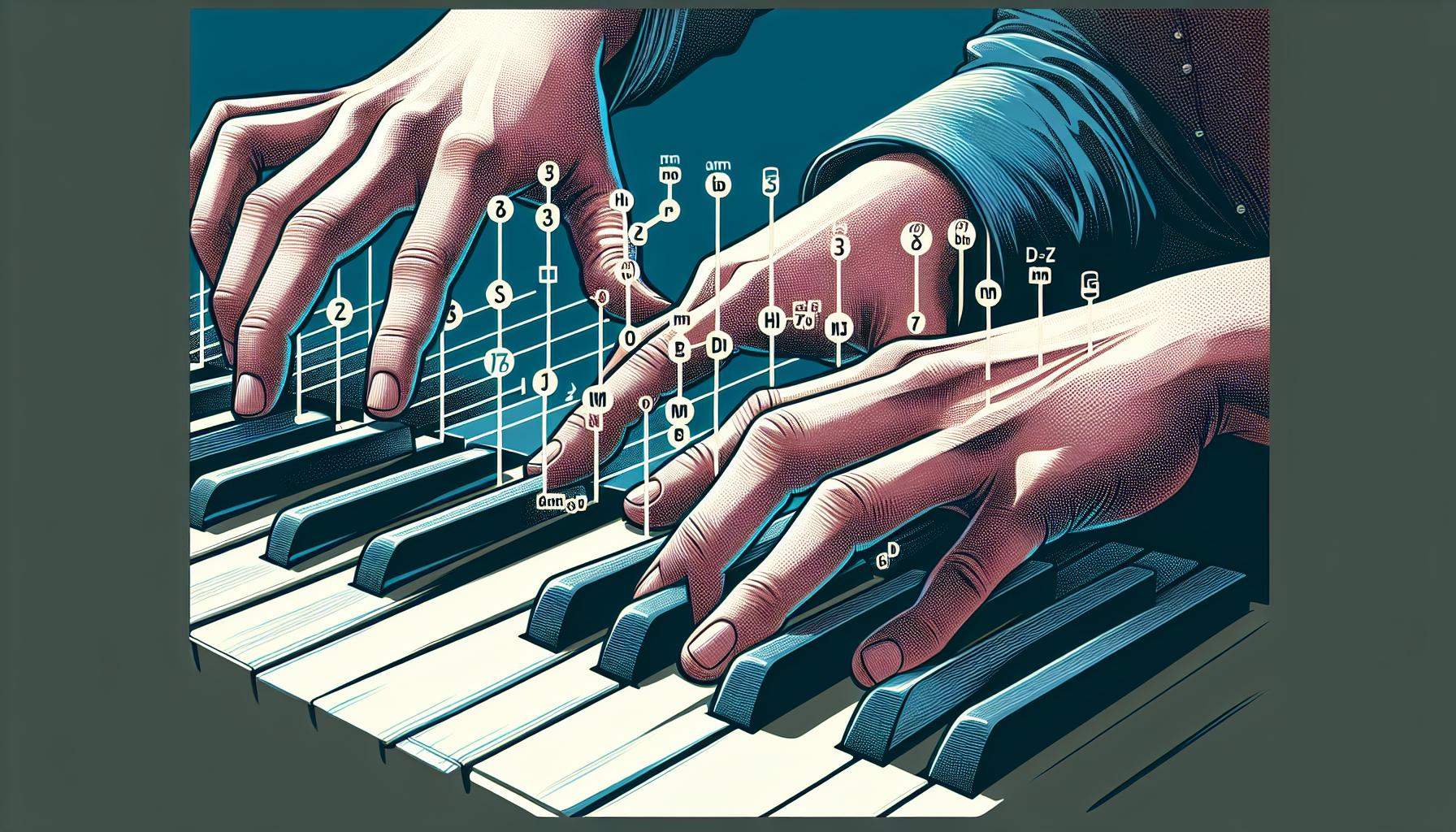
    Diving into the world of gospel music opens up a realm of soulful melodies and rich harmonies that can stir the deepest emotions. For those looking to master this genre on the keyboard, learning gospel chords is the first step toward capturing its essence. It’s a journey that’s as rewarding as it is challenging, filled with moments of both revelation and deep practice.

    Gospel music, with its roots deeply embedded in the heart of spiritual and uplifting messages, demands a unique blend of musicality and emotion from its players. The keyboard, with its versatile range, becomes the perfect instrument to convey the power and depth of gospel music. As beginners start this journey, they’ll find that gospel chords are more than just notes played together; they’re expressions of faith, hope, and joy.

    Understanding Gospel Music

    Gospel music stands out as a genre deeply entrenched in emotion and spiritual messaging. It’s a vibrant form of music that stems from the African American churches of the early 20th century, growing into a significant cultural and musical movement over the years. Gospel music is characterized by its powerful vocals, dynamic ranges, and, most importantly, the expressive keyboard chords that underpin its melodies.

    One of the key aspects that set gospel music apart is its purpose. It’s not just about entertainment; it’s about conveying messages of hope, faith, and joy. Gospel musicians often see their craft as a form of ministry, reaching out and touching hearts through their performances. This spiritual connection is why learning to play gospel music, especially on the keyboard, requires more than just technical skill; it demands an understanding and appreciation of the genre’s depth and heritage.

    The keyboard, in gospel music, is more than an instrument; it’s a vessel for storytelling. Each chord carries with it a piece of history, a breath of emotion, and a message of inspiration. For those learning gospel chords, it’s crucial to grasp the emotional weight they carry. Many gospel chords are extensions or variations of basic chords, adding layers of complexity and richness to the music. This complexity isn’t there just for musicality’s sake; it reflects the multifaceted nature of spiritual life and faith.

    In learning gospel keyboard chords, players will encounter a variety of chord types, including:

    • Major chords, representing joy and celebration
    • Minor chords, conveying moments of reflection or solemnity
    • Seventh chords, adding a sense of anticipation or longing
    • Suspended chords, creating a feeling of suspense or unresolved tension

    Each of these chords, when played in the context of a gospel song, contributes to the narrative and emotional journey of the piece.

    Gospel music also places a strong emphasis on improvisation and personal expression. This means that while there are certainly foundational chords and techniques to master, there’s also ample room for individual creativity. The ability to improvise comes with understanding the structure and flow of gospel music, allowing musicians to inject their own experiences and emotions into their performances.

    Importance of Learning Gospel Keyboard Chords
    Learning gospel keyboard chords isn’t just about gaining another skill. It’s about embracing a tradition that’s deeply woven into the fabric of gospel music. Gospel chords serve as the backbone of the genre, providing depth and emotion to songs that speak to the soul. For musicians, understanding these chords is akin to learning a new language, one that communicates hope, faith, and joy through melody.

    The role of the keyboard in gospel music cannot be understated. It’s the instrument that often leads the congregation, guiding them through worship with every chord progression. The keyboard’s versatility allows for the incorporation of various musical styles, from jazz-infused rhythms to classic hymns, all of which enrich the gospel music experience. By learning gospel keyboard chords, musicians can contribute to this rich tapestry, adding their voice to a chorus that spans generations.

    Another key aspect of learning these chords is the opportunity for personal expression. Gospel music is deeply personal, reflecting the trials, triumphs, and spiritual journey of those who play and listen to it. By mastering gospel chords, musicians can tell their own stories through music, connecting with listeners on a profound level. This connection is what transforms a song from a sequence of notes into a moving experience.

    Furthermore, the practice of learning gospel keyboard chords opens the door to improvisation. Gospel music thrives on spontaneity and emotional authenticity, qualities that are enhanced through improvised play. Knowing the foundational chords gives musicians the confidence to explore and experiment, making each performance unique. This improvisational skill is not only valuable for personal expression but also for accompanying vocalists and other musicians, allowing for a dynamic and interactive worship experience.

    Type of Chord Significance in Gospel Music
    Major Conveys joy and celebration
    Minor Adds depth and emotion, often used in reflective or somber pieces
    Seventh Introduces tension and release, adding complexity to songs
    Suspended Creates anticipation, often resolving into a major or minor chord

    This table underscores the variety and complexity of chords used in gospel music, each carrying its own emotional weight and historical significance. Understanding these chords isn’t just a technical skill; it’s a way to participate in a broader cultural and spiritual dialogue.

    Basic Gospel Keyboard Chords to Start With
    When embarking on the journey of learning gospel keyboard chords, it’s crucial to have a solid foundation. Beginning with the basics not only simplifies the learning curve but also establishes a strong musical base upon which more complex chords and techniques can be built. Naturally, there are several key chords that are essential for any aspiring gospel keyboardist to master early on.

    Major Chords form the backbone of gospel music, instilling a sense of hope and joy in many songs. These chords are straightforward and consist of the root note, the major third, and the perfect fifth. For example, a C major chord is made up of C, E, and G. Major chords are pivotal in creating uplifting and powerful moments in gospel music.

    Minor Chords add depth and emotional complexity to gospel songs, introducing a sense of somberness or introspection. They are similar to major chords but with a minor third instead of a major third. An A minor chord, for example, includes A, C, and E. These chords are crucial for expressing the full spectrum of spiritual and emotional experiences in gospel music.

    Seventh Chords are often used in gospel music to add a layer of soul and bluesy feel. These chords include a seventh note in addition to the basic triad. The dominant seventh chord, for instance, is built by adding a minor seventh to a major triad. A G7 chord would consist of G, B, D, and F. Seventh chords are key in creating tension and release, a fundamental dynamic in gospel music.

    Suspended Chords introduce a sense of anticipation or suspense in music. These are formed by replacing the third of a chord with either a second (sus2) or a fourth (sus4). For instance, a Csus4 chord is made of C, F, and G. Suspended chords offer a way to embellish songs and add variety to chord progressions.

    To illustrate the significance and frequency of these chords in gospel music, a simple table showcases their usage in common gospel songs:

    Chord Type Examples in Gospel Songs
    Major Chords “Oh Happy Day”, “Amazing Grace”
    Minor Chords “His Eye Is on the Sparrow”
    Seventh Chords “How Great Thou Art”
    Suspended Chords

    Advanced Techniques and Progressions

    Once the foundational chords are mastered, gospel keyboardists can elevate their playing with Advanced Techniques and Progressions. Gospel music is rich with emotion and dynamics, often requiring more than just basic chords to fully convey its powerful messages. Incorporating advanced techniques into one’s playing can truly bring a piece to life, making it resonate with both the player and the audience.

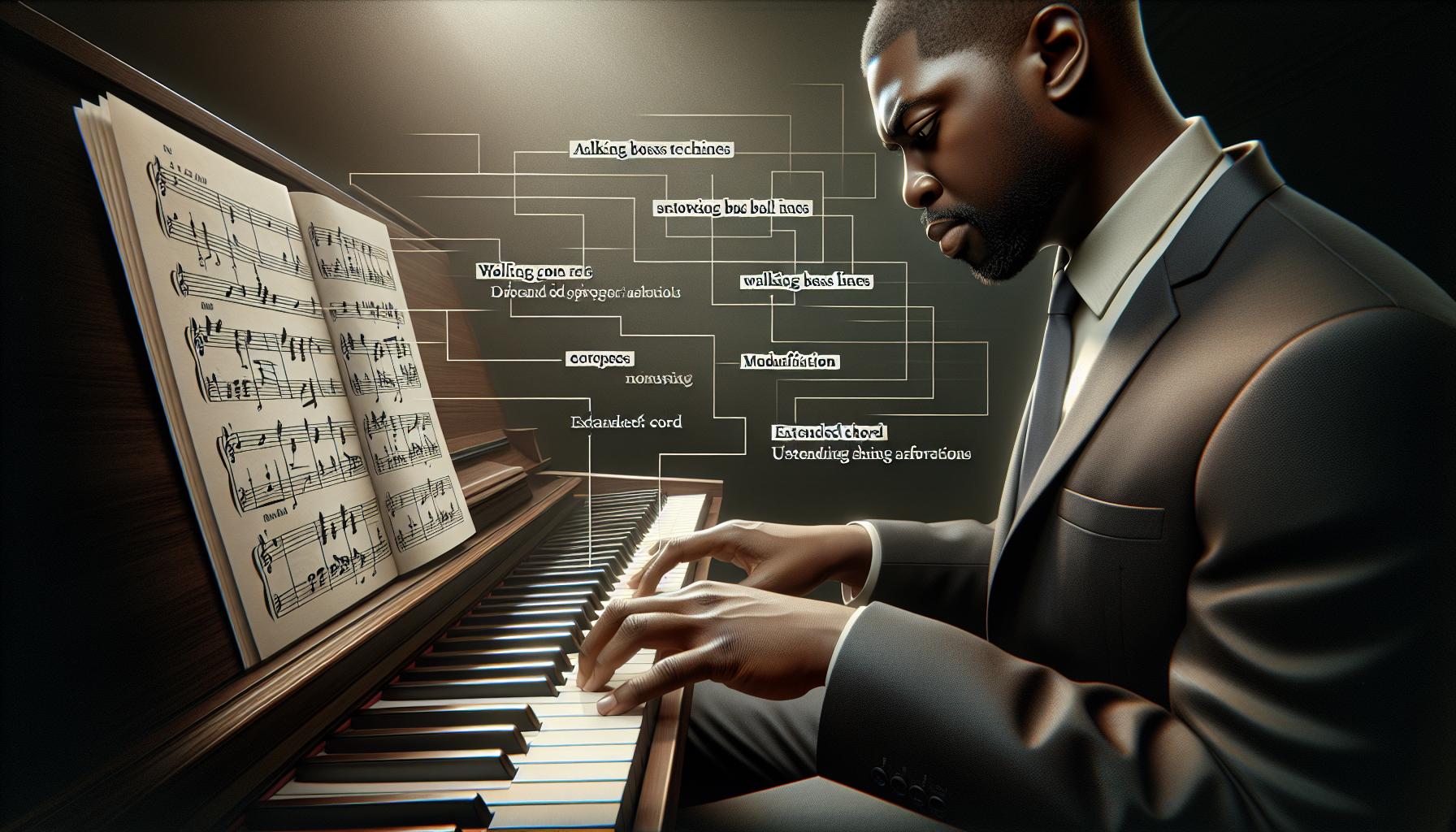
    Walking Bass Lines

    One popular technique in gospel music is the use of walking bass lines. These involve moving smoothly between chords by playing intermediate notes, creating a sense of motion and groove. It’s a technique that demands both timing and creativity, turning a simple chord progression into something far more engaging.

    • Start simple with major scales
    • Practice moving between chord tones

    Modulations and Key Changes

    Modulations, or key changes, are commonly used to uplift the energy and intensity of a piece. They’re a dramatic way to transition between sections of a song. When done smoothly, modulations can evoke a strong emotional response from the audience.

    • Practice common gospel modulations like moving up a whole step
    • Use pivot chords to transition seamlessly

    Extended Chords and Alterations

    To add depth and color to your music, learning extended chords and alterations is key. Extended chords include the 9th, 11th, and 13th, which can add a rich, complex sound to gospel music. Alterations such as sharp or flat 5ths and 9ths introduce tension and dissonance, adding to the emotional expressiveness of a piece.

    • Experiment with different extensions on common chords
    • Use alterations sparingly for maximum impact

    Voice Leading Techniques

    Voice leading is the smooth transition of individual note lines or voices from one chord to the next. In gospel music, good voice leading can make chord progressions more cohesive and emotionally compelling. Paying attention to how the notes of one chord move to the notes of the next can greatly enhance the overall sound.

    • Keep common tones between chords when possible
    • Move each voice to the nearest available note in the next chord

    Mastering the Emotion and Soul of Gospel Music

    In the journey of learning gospel keyboard chords, it’s crucial for musicians not just to understand the technical aspects but also to grasp the emotional depth and soulful nuances that give gospel music its distinctive power. Gospel music, rich in its diversity, offers a profound canvas for keyboardists to express feelings ranging from fervent hope to deep sorrow, all within the context of uplifting spirituality.

    Emotional Expression Through Chords and Progressions is central to capturing the essence of gospel music. Major chords, often seen as happy and uplifting, and minor chords, typically associated with sadness or introspection, are just the beginning. The use of seventh chords, diminished chords, and augmented chords adds layers of complexity and emotion, enabling keyboardists to convey a broader spectrum of feelings.

    Adopting techniques like dynamics control—the variation of loudness—and artful use of silence can significantly impact the conveyance of emotion. A softly played section can draw listeners into a reflective state, whereas a sudden crescendo can symbolize an epiphany or a moment of divine revelation. These techniques, when mastered, allow the keyboardist to take the audience on an emotional journey, guiding them through the highs and lows synonymous with the human experience.

    Connecting With the Audience is another pivotal aspect of playing gospel music on the keyboard. Gospel music isn’t just performed; it’s shared between the musician and the listeners. It’s a conversation without words, where emotions are exchanged through melody and harmony. To effectively connect, keyboardists must not only focus on technical proficiency but also on empathy and understanding their audience. Observing and responding to the audience’s reactions can help tailor a performance that resonates on a deeper level, creating a shared spiritual experience.

    Incorporating Gospel Music Traditions such as call-and-response patterns can further bridge the gap between the keyboardist and the audience. These traditions, deeply rooted in African musical practices, encourage participation and create a sense of community. By integrating these elements, keyboardists can foster a more inclusive environment, inviting the audience to be an active part of the musical experience.

    Conclusion

    Mastering gospel keyboard chords is more than just hitting the right notes. It’s about diving deep into the heart of gospel music and bringing out the rich tapestry of emotions that define this genre. With a focus on various chord types and the subtle art of dynamics and silence, keyboardists can truly connect with their audience on a profound level. Remember, it’s not just about playing music; it’s about sharing an experience that resonates with the soul. So, embrace these techniques, engage with gospel music traditions, and let every chord you play be a reflection of the deep emotional journey gospel music invites us all to embark on.
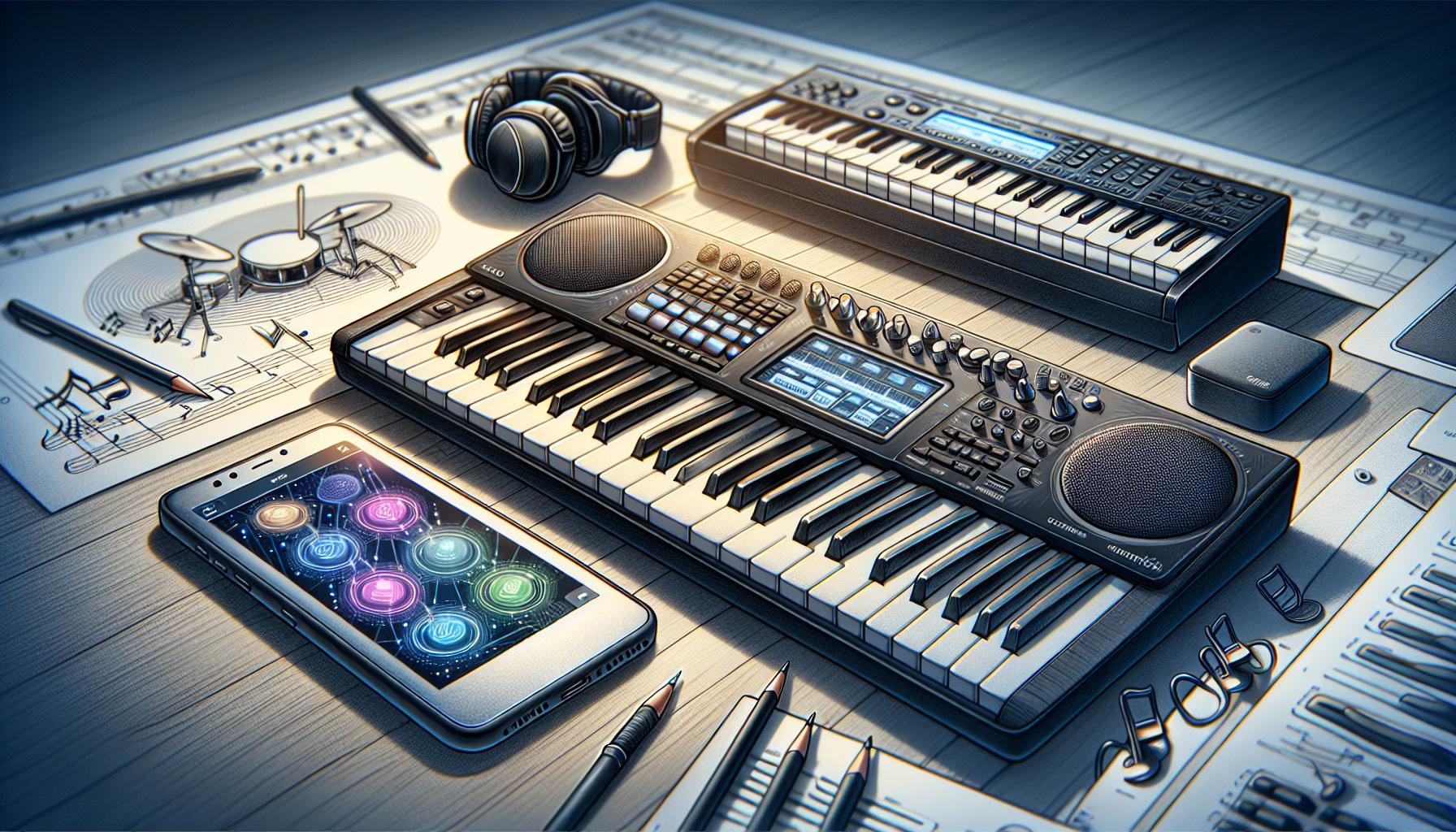
  • Top Keyboards for Pop Music: Casio, Yamaha & Roland Reviews

    Top Keyboards for Pop Music: Casio, Yamaha & Roland Reviews

    Finding the perfect keyboard for playing pop music can feel like hunting for a needle in a haystack. With so many options out there, it’s tough to know where to start. But fear not, because we’ve got you covered. Whether you’re a budding musician or a seasoned pro, the right keyboard can elevate your pop music game to new heights.

    What makes a keyboard stand out for pop music, you ask? It’s all about the blend of quality sound, versatility, and user-friendly features. From synthesizers that offer a wide range of sounds to models with built-in learning tools, there’s something for everyone. Let’s dive into the world of keyboards and discover which ones hit the right notes for pop music enthusiasts.

    Understanding Key Features of Keyboards for Pop Music

    When hunting for the best keyboard for playing pop music, understanding the essential features that make a keyboard stand out is crucial. Pop music demands versatility and expressiveness, and certain keyboards are better suited to deliver these than others.

    Range of Sounds and Built-in Rhythms play a pivotal role in enriching the pop music experience. A keyboard that boasts a vast library of instrumental voices and rhythms can simulate a full band, allowing musicians to experiment with various genres and styles within pop music. This diversity not only enhances creativity but also ensures that players can find the right sound for any pop song they wish to play.

    Key Action and Touch Sensitivity are equally important. The feel of the keys under one’s fingers can drastically affect playing style and comfort. Weighted or semi-weighted keys that mimic the touch of an acoustic piano are often preferred by experienced musicians for their dynamics and expressiveness. Meanwhile, touch-sensitive keys, which change sound intensity based on how hard they are pressed, offer a range of expression crucial for capturing the nuances of pop music.

    Connectivity options such as USB and MIDI ports have become indispensable. They enable keyboards to connect to computers and other devices, opening up a world of possibilities for recording, composing, and music production. This is especially beneficial for pop musicians looking to layer tracks, integrate with music software, or share their creations with the world.

    Moreover, Learning and Practice Tools integrated into keyboards support musicians at all skill levels in honing their craft. Features like built-in metronomes, chord dictionaries, and lesson functions can significantly enhance practice sessions. For those just starting, some keyboards offer light-up keys and step-by-step tutorials, making learning new pop songs more accessible and enjoyable.

    Finally, the Sound Quality of a keyboard cannot be overstated. High-quality sound engines and built-in speakers make a substantial difference in the overall performance. They ensure that the keyboard sounds as good in a living room as it does in a recording studio, making each practice session both productive and gratifying.

    Selecting the right keyboard for pop music involves careful consideration of several key features:

    • Range of Sounds and Built-in Rhythms
    • Key Action and Touch Sensitivity
    • Connectivity options (USB and MIDI)
    • Learning and Practice Tools
    • Sound Quality

    Best Synthesizers for Creating Pop Music

    When exploring the realm of synthesizers suitable for pop music, it’s crucial to focus on instruments that bring out the genre’s upbeat and catchy essence. Synthesizers, with their vast palette of sounds and textures, play a pivotal role in shaping the sonic landscape of any pop production. Select models stand out for their blend of user-friendly features, dynamic sound capabilities, and versatility, making them favorites among pop music creators.

    Firstly, the Yamaha MODX Series features prominently due to its exceptional sound engine that combines Advanced Wave Memory 2 (AWM2) and Frequency Modulation (FM-X) synthesis. This dual-engine setup provides musicians with an expansive range of sounds, from classic analog tones to cutting-edge digital effects. The MODX series also boasts a seamless workflow and comprehensive control options, making it a hit for live performances and studio work alike.

    Another top contender is the Roland Juno-DS. This synthesizer is celebrated for its intuitive interface and the ability to easily load and manipulate samples alongside its internal sounds. With its battery-powered operation, the Juno-DS offers portability that’s perfect for musicians on the go. The inclusion of vocal effects and a built-in eight-track sequencer further enhances its appeal for pop music production.

    The Korg Minilogue deserves a mention for its approachable analog synthesis, providing rich, warm tones that can cut through any mix. Its fully programmable interface, combined with a 16-step sequencer, allows for the creation and recall of complex sounds and patterns. The Minilogue’s polyphonic capabilities mean it can cover everything from basslines and chords to lead lines, accommodating a broad range of pop music requirements.

    For musicians looking to infuse their tracks with unique textures, the Moog Subsequent 25 makes a strong case. This powerful monophonic synth excels at delivering fat basses and sharp leads, thanks to its robust oscillators and iconic ladder filter. The ability to store presets and connect with external gear via MIDI or USB makes the Subsequent 25 a versatile tool for pop music production.

    Here’s a quick comparison of these options:

    Synthesizer Key Features
    Yamaha MODX Series Dual sound engines, AWM2 and FM-X synthesis, comprehensive control
    Roland Juno-DS

    Keyboards with Versatile Sound Options

    When diving into the world of pop music, having a keyboard that offers versatile sound options isn’t just beneficial; it’s essential. Pop music thrives on diversity, from the deep, resonating bass lines to the sparkly highs that catch listeners’ ears. As such, finding the right keyboard involves more than just picking one with a good reputation; it involves finding one that can journey through the vast landscape of sound required by pop music.

    One standout in this category is the Nord Stage 3. Renowned for its exceptional sound quality and extensive library of samples, the Nord Stage 3 is a powerhouse of versatility. Its ability to blend sounds from different engines—be it from its synth section, the classic Nord C2D organ, or its grand and upright piano sounds—makes it a top choice for musicians looking to explore the full spectrum of pop music. Additionally, the Nord’s Layer and Split functionalities allow for even more creative sound design, crucial for those intricate pop arrangements.

    The Yamaha Genos steps up as another phenomenal option for those seeking an arsenal of sound at their fingertips. This keyboard is built for the modern musician, offering a staggering array of voices and styles that cover nearly every conceivable genre, pop included. What sets the Genos apart is its intuitive UI and the Super Articulation Voices technology, enabling players to produce sounds with natural articulation and dynamics. For pop music producers and performers, this means being able to deliver more expressive and realistic performances.

    Exploring the realm of synthesizers brings us to the Arturia KeyLab 88 MKII, a keyboard that combines the best of software and hardware. Not only does it offer a Fatar keybed for an expressive playing experience, but it also comes packed with thousands of presets from Arturia’s V-Collection. This integration provides users with the unique ability to meld vintage synth sounds with contemporary tones, a feature immensely valuable for pop music production where blending eras and styles is often the key to a hit track.

    Top Keyboard Models with Learning Tools

    As the exploration of the best keyboards for playing pop music continues, attention shifts towards models that not only deliver exceptional sound but also come equipped with beneficial learning tools. For aspiring musicians, these features can be invaluable, paving the way for mastery in pop music creation and performance.

    One standout model in this category is the Casio LK-S250. This keyboard is perfect for beginners and intermediate players alike, offering a range of features designed to facilitate learning. Its key lighting system, which lights up keys to guide finger placement, is particularly effective for learning new songs quickly. Additionally, the Casio LK-S250 provides access to the Chordana Play app, which enhances the learning experience by allowing players to easily download MIDI files and step up their practice sessions with interactive lessons.

    Another excellent option is the Yamaha PSR-EW310. Yamaha’s education suite, built into this model, offers a nine-step lesson function that’s perfect for beginners. From timing and waiting to listening and then performing, the PSR-EW310 helps break down songs into manageable parts, making it easier for learners to digest complex pieces. This model also boasts a touch-responsive keyboard, making it great for expressing nuances in pop music performances.

    The Roland GO:KEYS cannot be overlooked when discussing keyboards with superb learning tools. It’s an innovative instrument designed to spark creativity. The Loop Mix function allows players to build songs by simply playing notes on the keyboard, which can be an excellent way for beginners to learn about composition and arrangement without needing to master complex theory first. Moreover, the Bluetooth connectivity enables the keyboard to link with smartphones and tablets, opening up a world of tutorial videos and apps that can further enhance the learning process.

    Keyboard Model Key Features
    Casio LK-S250 – Key Lighting System
    – Access to Chordana Play app
    Yamaha PSR-EW310 – Nine-step lesson function from Yamaha’s Education Suite
    – Touch-responsive keyboard
    Roland GO:KEYS – Loop Mix function for easy composition
    – Bluetooth connectivity for tutorial videos and apps

    Conclusion

    Choosing the right keyboard for diving into pop music doesn’t have to be daunting. The Casio LK-S250, Yamaha PSR-EW310, and Roland GO:KEYS each offer unique features that cater to beginners eager to learn and grow in their musical journey. Whether it’s through key lighting systems for learning, touch-responsive keyboards for expressive playing, or innovative functions for composition, there’s something for everyone. So take a step forward and pick the keyboard that resonates with your musical aspirations. The world of pop music awaits!

  • Master Latin Keyboard Rhythms: Essential Tips for Beginners

    Master Latin Keyboard Rhythms: Essential Tips for Beginners

    Diving into the world of Latin music can be a thrilling adventure, especially for keyboard enthusiasts eager to add some spice to their playing. Latin rhythms, with their infectious grooves and compelling beats, offer a rich palette for musical expression.

    For beginners, the journey might seem a bit daunting at first. But fear not! Mastering the basics of Latin keyboard rhythms is not only achievable, it’s also incredibly rewarding. Whether it’s the lively bounce of the Salsa or the smooth sway of the Bossa Nova, there’s a rhythm for every mood and occasion.

    Exploring Latin Keyboard Rhythms

    Diving into the world of Latin keyboard rhythms opens up a vibrant spectrum of sounds and styles that can enrich any musician’s repertoire. From the upbeat tempos of merengue to the romantic melodies of bolero, there’s a rhythm for every mood and occasion. At the heart of these rhythms lie unique patterns, or “clave,” which serve as the backbone to many Latin music styles.

    Beginners might initially feel overwhelmed by the complex rhythms and syncopation inherent in Latin music. However, they’ll soon discover that breaking down these rhythms into smaller, manageable components can make learning them far more approachable. For instance, focusing on the right hand to master the melody before adding in the left hand for harmony and rhythm can simplify the process.

    One can’t talk about Latin keyboard rhythms without mentioning the Tumbao, a crucial pattern found in Salsa music. It involves a repetitive and catchy bass line that provides a solid foundation over which the melody can dance freely. The Tumbao is more than just a pattern; it’s the heart of the groove that encourages musicians and dancers alike to move with the beat.

    Another rhythm worth exploring is the Bossa Nova, originating from Brazil. This rhythm combines samba with cool jazz, creating a smooth and laid-back sound that’s unmistakably intoxicating. Mastering the Bossa Nova on keyboard involves learning to play with a light touch, allowing the syncopated rhythms to flow seamlessly.

    For those keen on fast-paced and energetic rhythms, the Merengue offers an exhilarating challenge. Characterized by its rapid tempo and steady beats, mastering the merengue on keyboard can feel like a thrilling ride. It requires precision and stamina but rewards players with exhilarating music that’s impossible not to dance to.

    Style Characteristics
    Tumbao Repetitive bass line, foundational to the rhythm
    Bossa Nova Combines samba and jazz, smooth and laid-back
    Merengue Fast-paced, steady beat, requires precision
    • Listen to a wide range of Latin music to familiarize themselves with different rhythms.
    • Practice slowly, gradually increasing speed as they become more comfortable with the patterns.
    • Use online tutorials and resources specifically designed for learning Latin keyboard.
    • Don’t be afraid to make mistakes; learning complex

    Benefits of Learning Latin Music on Keyboard

    When someone decides to dive into learning Latin music on the keyboard, they’re not just stepping into a world of vibrant rhythms and melodies. They’re embarking on a journey that offers a plethora of benefits, both musical and personal. Beyond the unmistakable joy of playing, these benefits enrich a musician’s skill set and widen their cultural perspective.

    Firstly, learning Latin rhythms on the keyboard significantly enhances a musician’s sense of timing and rhythm. Latin music is renowned for its complex syncopations and intricate patterns. As learners wrap their hands around the Tumbao or the Bossa Nova groove, they’re not just memorizing notes; they’re internalizing a new rhythmic language. This experience profoundly improves their timing, an essential skill for any musician, and makes them more versatile in their play.

    Secondly, there’s the aspect of technical skill development. The varied dynamics and speed of Latin music, from the gentle sway of a Bossa Nova to the rapid fire of a Merengue beat, push keyboard players to develop a broad range of skills. Whether it’s mastering a smooth legato for a sultry Salsa or sharpening their staccato for a bouncy Merengue, their technique grows more refined and adaptive.

    Another compelling benefit is the expansion of musical repertoire. By studying Latin keyboard rhythms, musicians add a rich layer of diversity to their performances. Whether they’re playing solo or with a band, the ability to switch between genres effortlessly makes their music more engaging and appealing. It opens up a world of possibilities for collaboration and performance venues, from jazz clubs to Latin music festivals.

    Learning Latin music on the keyboard also offers a wonderful gateway into the cultural heritage behind the rhythms. Each Latin American region has its own unique styles, histories, and stories tied to its music. Through the process of learning, players gain a deeper appreciation for the cultural significance of the rhythms they play, connecting them to a global community of musicians and music lovers.

    Lastly, there’s a noticeable improvement in musical creativity. The intricate rhythms and harmonies found in Latin music challenge players to think outside the box. They learn to improvise and experiment with their music in ways they might not have considered before. This not only makes their playing more interesting but also enriches their overall musical expression.

    Understanding Different Latin Rhythms

    When diving into Latin keyboard rhythms, beginners will find a world rich with diverse sounds and styles. Latin music is not just about what one plays, but how one plays it. The rhythms are the soul of Latin music.

    The Heartbeat of Latin Music: Clave

    At the core of many Latin music styles is the clave. This rhythm is the backbone of patterns found in Salsa, Son, and Rumba. The clave is a two-bar pattern; there are two main types:

    • 3-2 Clave: Three beats in the first bar, two in the second
    • 2-3 Clave: Two beats in the first bar, three in the second

    The clave rhythm dictates the timing and arrangement of other instruments in a band. Keyboard players must understand and internalize the clave to effectively contribute to the music.

    Tumbao: The Groove Foundation

    Tumbao is a rhythm primarily used in Salsa and other Afro-Cuban music genres. It’s characterized by a repetitive, syncopated pattern played on the lower register of the keyboard. This pattern lays the foundation for the groove and often includes the use of octaves to enrich the sound. Tumbao isn’t just a rhythm; it’s an invitation to move, embodying the danceable essence of Latin music.

    The Bossa Nova Beat

    Originating from Brazil, Bossa Nova is a genre that blends Samba rhythms with jazz harmonies. The Bossa Nova rhythm on the keyboard is gentle, often played with a light touch to complement the smooth vocals and lyrical melodies. One key pattern involves alternating bass notes with chord rhythms, creating a laid-back but intricate sound. This style of play requires a loose wrist and a keen ear for subtlety.

    Montunos: The Joyful Melodies

    Montunos are melodic and rhythmic patterns played on the piano in many Afro-Cuban styles like Son Montuno and Mambo. These repeating figures help to build energy and excitement within the music. Playing montunos requires a solid understanding of syncopation and off-beat phrasing. It’s all about the interplay between the rhythm section and the melody, creating spaces where the music can breathe and then filling those spaces with vibrant notes.

    Cumbia: The Folkloric Rhythm

    Cumbia, originating from Colombia, has become one of Latin America’s most widespread genres.

    Essential Techniques for Beginners

    When embarking on the journey of mastering Latin keyboard rhythms, beginners might find themselves both excited and a little overwhelmed. It’s a genre rich in tradition and variety, requiring a nuanced approach to truly capture its essence. However, getting started doesn’t have to be daunting. There are several key techniques that can help novices find their footing in this vibrant musical landscape.

    Hand Independence is the cornerstone of playing Latin rhythms on the keyboard. This skill allows the player to maintain a steady rhythm with one hand, typically the left, while the right hand plays melodies or more complex rhythms. It’s challenging at first but practicing simple patterns separately before trying them together can build this essential skill methodically.

    Syncopation breathes life into Latin music, making it feel vibrant and danceable. It involves emphasizing the off-beats or weaker parts of the measure, which can be tricky for beginners accustomed to more straightforward rhythms. Clapping out rhythms or tapping them on a table before attempting them on the keyboard can help internalize this crucial aspect.

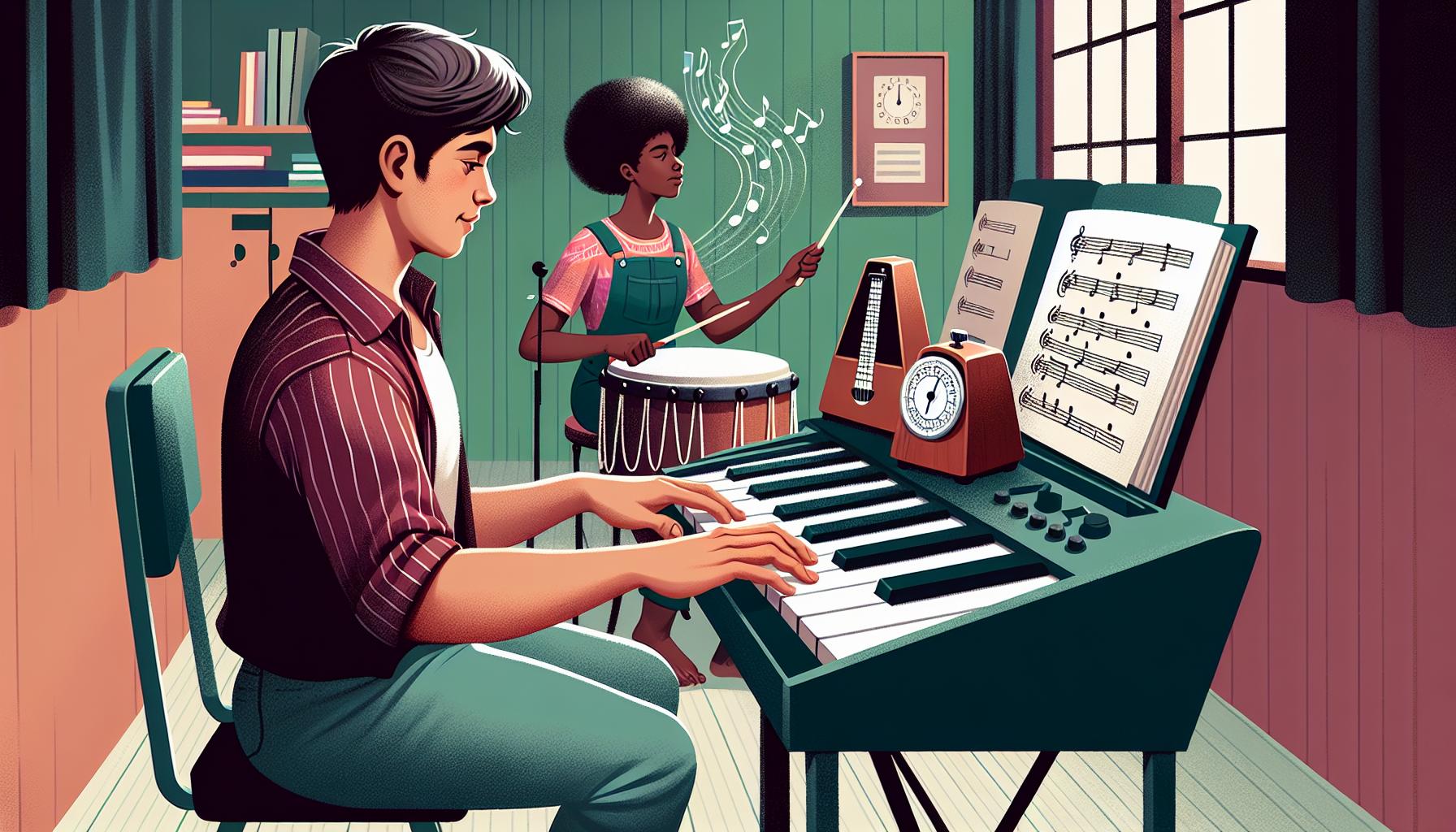
    Practicing Clave Patterns is indispensable. Whether it’s the 2-3 or 3-2 Son Clave or the Rumba Clave, understanding these patterns is critical as they form the backbone of many Latin styles. Beginners should start by listening to a lot of music to familiarize themselves with how these claves feel and sound. Then, playing along with recordings or metronomes set to these rhythms can aid in developing a good feel for them.

    Starting with Simple Patterns

    Stepping into Latin keyboard playing with Montunos or Tumbao bass lines might seem intimidating, but starting simple is key:

    • Practice the Tumbao pattern using just three notes. This pattern, foundational in Salsa music, can be simplified for beginners. Focus on getting the rhythm right before adding complexity.
    • Simple montunos, often just a few notes repeated rhythmically, can start to familiarize beginners with the role of the right hand in creating the harmonic and melodic texture over the rhythm section.

    Practice Tips for Mastering Latin Keyboard Rhythms

    Embarking on the journey of mastering Latin keyboard rhythms can be both exciting and challenging. Thankfully, there are several practice tips that beginners can adopt to enhance their learning experience and make progress in this vibrant musical style.

    First and foremost, consistent practice is key. Just like any other skill, mastering Latin rhythms on the keyboard requires regular practice. Dedicate a specific time each day to focus solely on your keyboard practice. This routine will help build muscle memory and deepen your understanding of Latin rhythms.

    Next, start slow. It’s tempting to jump right into playing complex rhythms at full speed, but slowing things down can significantly improve accuracy and timing. Work on a piece or rhythm pattern at a slower tempo until you’re comfortable, then gradually increase the speed. This method ensures that you’re mastering the fundamentals before tackling the complexities of Latin rhythms.

    Incorporating metronome use into your practice sessions can be incredibly beneficial. A metronome helps keep a steady beat, which is critical when playing rhythm-focused music like Latin genres. Beginners might find it challenging at first, but practicing with a metronome will greatly improve their sense of timing and rhythm.

    Diverse listening exercises also play a crucial role. To truly capture the essence of Latin keyboard rhythms, immerse yourself in Latin music. Listen to a variety of Latin genres, such as Salsa, Mambo, or Bossa Nova. Pay close attention to the keyboard parts and try to identify the patterns and techniques you’re learning. This will not only enhance your rhythmic understanding but also inspire your practice sessions.

    Moreover, don’t shy away from experimenting with improvisation. Latin music is known for its dynamic and improvisational nature. Once you’re comfortable with basic rhythms, try adding your own flair. Experimenting with improvisation will help develop your unique style and deepen your appreciation for the flexibility inherent in Latin music.

    Collaboration with other musicians can significantly accelerate your learning curve. If possible, practice with others who are also learning or are experienced in Latin music. This collaboration provides a real-time feedback loop and exposes you to different playing styles and techniques. It’s also a fantastic way to stay motivated and passionate about your musical journey.

    Conclusion

    Diving into the world of Latin keyboard rhythms opens up a vibrant and exhilarating musical journey for beginners. By embracing the outlined strategies, they’re setting themselves up for a rewarding learning experience. The key lies in patience, persistence, and a genuine passion for the rhythms that define Latin music. As they progress, they’ll find their own unique voice within this rich musical tradition. The journey might seem daunting at first, but with each step, they’ll grow closer to mastering the captivating rhythms that have enchanted listeners and dancers around the globe. Let the music guide you, and remember, the most important part is to enjoy every moment of your musical adventure.

  • Top 3 Keyboards for Worship Music: Elevate Your Worship Experience

    Top 3 Keyboards for Worship Music: Elevate Your Worship Experience

    Finding the perfect keyboard for worship music can feel like searching for a needle in a haystack. With so many options out there, it’s crucial to find one that not only meets your technical needs but also elevates your spiritual expression. Whether you’re leading a congregation in song or crafting serene melodies for quiet reflection, the right keyboard can make all the difference.

    From touch sensitivity to sound quality, the features that matter most can vary widely from one musician to the next. That’s why we’ve taken the time to sift through the myriad of choices to highlight the best keyboards for worship music. Let’s dive into what makes these instruments stand out and how they can help you connect deeper with your music and your audience.

    Key Features to Consider

    When embarking on the quest to find the best keyboard for worship music, there are several key features musicians should consider. Each feature plays a pivotal role in ensuring that the instrument not only meets the technical demands of the player but also connects deeply with the spiritual ambience of the worship setting.

    Sound Quality

    First and foremost, sound quality cannot be compromised. Worship music requires instruments that can produce rich, authentic sounds. Keyboards that offer a wide range of high-quality voices, including pianos, organs, and synth pads, enable musicians to express the full depth and breadth of their musical ideas.

    Touch Sensitivity

    The touch sensitivity of a keyboard is vital for dynamics control. This allows musicians to play with nuance, from the softest whisper to the most powerful crescendos, mirroring the emotional journey of the service. With good touch response, a keyboard can truly become an extension of the musician’s thoughts and feelings.

    Polyphony

    Polyphony, the number of notes a keyboard can produce simultaneously, is crucial when layering sounds or playing complex chord progressions. For worship music, where full, rich harmonies are a staple, a higher polyphony count is desirable. This ensures that no note gets cut off prematurely, maintaining the lush textures of the music.

    Connectivity

    In today’s digital age, connectivity options such as USB, MIDI, and Bluetooth are not just conveniences; they’re necessities. They allow the keyboard to interface with computers and other devices for recording, sound expansion, and even controlling visual elements of the service. Having a range of connectivity options makes a keyboard more versatile and adaptable to different worship settings.

    Portability

    For worship leaders who travel or churches with multiple venues, portability is another critical factor. Lightweight keyboards that are easy to set up can make a significant difference, ensuring that quality worship music is always a cornerstone of the service, wherever it may be.

    Durability

    Lastly, durability is key for an instrument that’s going to be used regularly in a worship setting. Keyboards that are built to last, with sturdy construction and high-quality materials, ensure that the investment will serve the worship community for years to come.

    Best Keyboards with Touch Sensitivity

    In the realm of worship music, the emotional and spiritual connection conveyed through each note is pivotal. This makes touch sensitivity an indispensable feature for keyboards used in this genre. When they’re playing, musicians need instruments that respond to their touch—where a gentle press delivers a soft sound and a firm press a bold tone. This section delves into keyboards that stand out for their exceptional touch sensitivity, enhancing the expressiveness and depth of worship music.

    One standout keyboard for worship settings is the Yamaha P-125. It’s renowned for its Graded Hammer Standard (GHS) action, which mirrors the feel of an acoustic piano by offering heavier touch in the low end and lighter touch in the high end. This mimics the hammers inside an acoustic piano, making the P-125 an excellent choice for musicians seeking an authentic playing experience. Its sound quality, combined with this realistic touch response, enables musicians to convey the subtlest of emotions in their performances.

    Another excellent option is the Roland RD-2000. It takes touch sensitivity to a new level with its PHA-50 keyboard action, blending wood and molded materials for a traditional feel with durable reliability. What sets the RD-2000 apart is its ability to detect minute variations in playing dynamics, allowing worship musicians to explore a wide range of expressive capabilities—a crucial factor for live performances where emotional expressiveness is key.

    For those who value portability alongside touch responsiveness, the Korg SV-2 is a worthy contender. Despite its lightweight design, the SV-2 doesn’t compromise on touch sensitivity. Its RH3 (Real Hammer 3) keyboard action provides a playing experience that feels astonishingly close to that of an acoustic piano, with different weights across the keyboard. This feature, paired with Korg’s acclaimed sound engine, ensures that the SV-2 supports the diverse needs of worship services, from intimate gatherings to larger congregational settings.

    Keyboard Model Key Action Type Noteworthy Feature
    Yamaha P-125 GHS Action Mimics acoustic piano feel
    Roland RD-2000 PHA-50 Action Detects minute dynamic changes
    Korg SV-2 RH3 Action Balanced despite being lightweight

    Top Keyboards for Sound Quality

    When seeking the perfect keyboard for worship music, sound quality is paramount. Musicians need instruments that can deliver rich, authentic sounds to create an immersive worship experience. Among the top contenders, certain models stand out for their exceptional sound quality.

    The Nord Stage 3 is renowned for its expansive library of sounds tailored to worship settings. With its advanced sampling technologies, the instrument ensures that each note played is imbued with depth and warmth. Features such as the C2D organ simulations and the Nord Lead A1 Synth Engine make it an outstanding choice for achieving a broad spectrum of musical expressions.

    Similarly, the Yamaha Montage 8 makes its mark with the Motion Control Synthesis Engine, seamlessly blending AWM2 (Advanced Wave Memory 2) and FM-X (Frequency Modulation) technologies. This synthesis allows musicians to create sounds that range from classic grand pianos to complex synth landscapes, all with crystal-clear quality. The Montage 8’s Super Knob feature enables real-time control of multiple parameters, offering dynamic expressive capabilities that can elevate worship music to new heights.

    Another standout is the Roland Fantom 8, which is celebrated for its versatility and powerful sound engine. It’s equipped with the V-Piano technology, delivering incredibly realistic piano sounds, and the ZEN-Core synthesis system for a wide array of instrumental textures. Its expansive keyboard allows for expressive performances, making it a favorite among worship musicians.

    In comparing these models, it’s crucial to consider their unique features and how they cater to the needs of worship music. Below is a comparison table highlighting key attributes:

    Feature Nord Stage 3 Yamaha Montage 8 Roland Fantom 8
    Sound Engine Advanced Sampling and C2D Organ AWM2 and FM-X Synthesis V-Piano and ZEN-Core Synthesis
    Expressive Controls Weighted Keys and Aftertouch Super Knob and Motion Sequences V-Piano Technology and Aftertouch
    Sound Library Extensive with Customizable Settings Vast with Integrated Performance Features Wide-ranging and Highly Versatile
    Ideal For Dynamic Worship Settings Layered Sounds and Complex Textures Realistic Piano and Synthesizer Sounds

    Keyboards with Built-In Worship Music Features

    When looking for the ideal keyboard for worship music, certain features and functionalities stand out. Keyboards equipped with built-in worship music features can significantly enhance the musical experience, providing musicians with the tools they need to create inspiring and uplifting sounds. These specialized keyboards often come with an array of sounds and effects tailored specifically for worship settings, allowing for a more seamless and expressive performance.

    Expansive Sound Libraries

    A hallmark of keyboards suited for worship music is their expansive sound libraries. These libraries are stocked with a wide range of instrument sounds – from grand pianos and organs to orchestral and synthetic textures suited for praise and worship. Having access to such a diverse palette of sounds at one’s fingertips allows musicians to tailor their output to the mood and requirements of the worship service, ensuring that every note and chord resonates with the congregation.

    Keyboard Model Number of Sounds Unique Features
    Nord Stage 3 Over 1000 Seamless transitions and Layer Section
    Yamaha Montage 8 More than 2000 Motion Control Synthesis and Super Knob
    Roland Fantom 8 Hundreds ZEN-Core synthesis system and V-Piano technology

    Intuitive Control Layouts

    For worship musicians, the ability to quickly and effectively navigate their instrument is crucial. Keyboards with built-in worship music features often boast intuitive control layouts that make it easy to adjust settings, tweak sounds, and switch between patches mid-performance. Features like assignable controls, one-touch settings, and user-friendly interfaces ensure musicians can focus more on their performance and less on technical adjustments.

    Built-in Effects and Signal Processing

    Worship music frequently involves dynamic changes in tone and atmosphere, necessitating a range of effects and signal processing capabilities. Keyboards designed for worship settings include built-in effects like reverb, delay, chorus, and EQ settings, which are essential for crafting the desired sound space. When used effectively, these tools can add depth and dimension to the music, aiding in the creation of a compelling worship experience.

    Conclusion

    Choosing the right keyboard for worship music isn’t just about the notes you play—it’s about the experience you create. The Nord Stage 3, Yamaha Montage 8, and Roland Fantom 8 each offer something unique for musicians looking to elevate their worship services. With their vast sound libraries, intuitive controls, and built-in effects, they stand out as top choices. It’s clear that investing in a keyboard with these features can significantly enhance the musical journey in any worship setting. So whether you’re leading the congregation or supporting the worship team, selecting a keyboard that resonates with your musical vision is key to creating an impactful worship experience.

  • Exploring Beethoven: Famous Keyboard Concertos That Redefined Music

    Exploring Beethoven: Famous Keyboard Concertos That Redefined Music

    Keyboard concertos have long been a staple in the world of classical music, captivating audiences with their dynamic interplay between soloist and orchestra. They’re not just pieces of music; they’re conversations, full of drama, whispers, and sometimes, a spirited debate. From the intricate works of Bach to the passionate expressions of Rachmaninoff, these concertos have stood the test of time, enchanting music lovers across generations.

    What makes these masterpieces so enduring? Perhaps it’s the way they allow the keyboard to shine, offering a dazzling array of emotions and technical prowess. Or maybe it’s the way they seamlessly blend the individual brilliance of the soloist with the collective power of the orchestra. As we dive into the world of famous keyboard concertos, we’ll explore the magic behind these musical dialogues and discover why they continue to resonate with listeners today.

    Johann Sebastian Bach: The Baroque Genius

    Johann Sebastian Bach, a name synonymous with the Baroque period, redefined the landscape of keyboard concertos. His work not only demonstrates technical mastery but also an emotional depth that bridges the soulful and the divine. Bach’s keyboard concertos are a testament to his ingenuity, offering listeners a lasting exploration into the capabilities of keyboard instruments within the concertante medium.

    Unlike his contemporaries, Bach’s ability to intertwine melodious intricacies with the thematic unity across movements is unparalleled. His concertos for harpsichord, often adapted from his own violin concertos or those of his peers, showcase a brilliant use of the instrument not just as a solo voice but as an integral part of the orchestral tapestry. This innovative approach has made pieces like the Brandenburg Concerto No. 5 and the Concerto for Two Violins in D minor, BWV 1043 (adapted for keyboard), cornerstones in the classical repertoire.

    The Brandenburg Concerto No. 5, specifically, marks a monumental shift in concertante writing, as it features one of the earliest examples of a keyboard cadenza, solidifying the harpsichord’s place as a soloistic instrument. This concerto, with its intricate interplay between the soloist and ensemble, embodies the essence of a musical conversation that’s both dynamic and expressive.

    Year Piece Significance
    1721 Brandenburg Concerto No. 5 Early keyboard cadenza
    1739 Concerto for Two Violins in D minor Adapted for keyboard; thematic unity

    Moreover, Bach was ahead of his time in understanding the keyboard’s expressive potential. His Italian Concerto, BWV 971, written for a two-manual harpsichord, exploits the contrasts between the instrument’s different registers, mimicking a dialogue between distinct musical groups. Such compositions not only highlight Bach’s virtuosic skill but also his forward-thinking approach to composition and performance.

    Wolfgang Amadeus Mozart: Brilliance in Simplicity

    Wolfgang Amadeus Mozart, a name synonymous with classical music, revolutionized the keyboard concerto, bringing an unparalleled level of craftsmanship and elegance. Unlike Bach, who laid the groundwork for complex, intricate keyboard compositions, Mozart’s approach favored clarity, simplicity, and melodic beauty. This shift not only marked a new era in music history but also showcased Mozart’s genius in composing works that were both accessible and deeply expressive.

    Mozart’s keyboard concertos stand out for their lyrical melodies, clear structures, and emotional depth. He often employed a conversational style between the solo instrument and the orchestra, creating a seamless dialogue that was innovative for its time. Mozart composed 27 keyboard concertos, the majority of which were written for the piano, his instrument of choice. These works played a crucial role in elevating the piano concerto to a major musical form, highlighting the instrument’s capabilities and expressive range.

    One of Mozart’s most celebrated keyboard concertos is the Concerto No. 21 in C major, K. 467. Known for its serene and tender second movement, this concerto showcases Mozart’s ability to pair a simple melody with rich harmonic textures, creating a work of profound beauty and subtlety. Critics and enthusiasts alike often cite the second movement’s theme, famously used in the film “Elvira Madigan,” as an example of Mozart’s gift for melody.

    Mozart’s Keyboard Concertos Key Features
    Number of Concertos 27
    Favorite Instrument Piano
    Notable Concerto Concerto No. 21 in C major, K. 467
    Key Aspect Conversational style between soloist and orchestra

    Ludwig van Beethoven: Revolutionary Romanticism

    As the musical baton passed from Mozart to Ludwig van Beethoven, the world of keyboard concertos braced for a revolutionary transformation. Beethoven’s contributions to this genre weren’t just numerous; they were groundbreaking. His five piano concertos, composed between 1795 and 1809, reflected his transition from the Classical to the Romantic period. Unlike his predecessors, Beethoven infused his concertos with unparalleled emotional depth, structural complexity, and a pioneering spirit that would forever change the course of music history.

    Beethoven’s First Piano Concerto in C major, Op. 15, serves as a bridge between classical restraint and romantic expressiveness. Here, Beethoven expanded the traditional concerto framework, offering a broader emotional range and greater orchestral integration with the solo piano. This concerto was a declaration of Beethoven’s unique voice, one that was not afraid to explore new territories.

    In The Third Concerto in C minor, Op. 37, Beethoven’s revolutionary zeal shines brightly. The minor key brings a dramatic tension previously unheard in piano concertos, creating a passionate, almost tumultuous dialogue between the soloist and the orchestra. This concerto marks a significant moment in Beethoven’s career, showcasing his ability to convey deep, complex emotions through music.

    The Emperor Concerto, No. 5 in E-flat major, Op. 73, stands as a pinnacle of Beethoven’s achievements in the concerto genre. It earned its nickname “Emperor” for its grandeur and majesty, qualities that reflect Beethoven’s own musical ambition. This masterpiece combines virtuosic demands on the soloist with a rich, expansive orchestral sound, embodying the spirit of Romanticism in its heroic vigor and lyrical beauty.

    Beethoven’s piano concertos significantly impacted the development of the genre, incorporating innovative techniques that highlighted the piano’s capabilities and expanded the concerto form. He introduced novel concepts, such as the Cadenza, a section where the orchestra pauses, and the pianist performs a solo improvisation, showcasing their virtuosity. This became a staple in concertos that followed, allowing soloists to display their technical prowess and interpretative skills.

    Concerto Composition Year Key Nickname
    No. 1 1795 C Major
    No. 2

    Conclusion: The Timeless Allure of Keyboard Concertos

    Beethoven’s contributions to the keyboard concerto genre are a testament to his genius. His work not only marked a pivotal moment in musical history but also continues to inspire musicians and audiences alike. The emotional depth and structural innovation found in his concertos, from the First to the iconic Emperor, have set a high bar for composers and performers. They’ve transformed the concerto form into a dynamic dialogue between the soloist and orchestra, where virtuosity meets expressive storytelling. Beethoven’s legacy in the realm of keyboard concertos is a reminder of music’s enduring power to move and astonish. It’s clear that as long as there are pianos to play and ears to listen, the magic of these masterpieces will continue to resonate through the ages.

  • Beginner’s Guide to Playing Reggae Keyboard: Master the Basics

    Beginner’s Guide to Playing Reggae Keyboard: Master the Basics

    Diving into the world of reggae music as a beginner keyboardist is like stepping into a vibrant, rhythm-filled realm. It’s a genre that pulses with life, offering a unique blend of sounds and techniques that stand out from the crowd. For those just starting their musical journey, the reggae keyboard presents an exciting opportunity to explore new horizons.

    Understanding the Basics of Reggae Music

    Before diving into the technicalities of playing the reggae keyboard, it’s essential to grasp the core elements that define reggae music. Originating from Jamaica in the late 1960s, reggae music is more than just a genre; it’s a cultural movement with a distinctive rhythm and sound that has captivated audiences worldwide.

    At the heart of reggae music lies its rhythmic complexity. Unlike many musical genres that follow a straightforward beat, reggae often plays around with offbeat rhythms, creating its signature “skank” sound. This unique rhythm is what gives reggae its laid-back yet compelling vibe, making it stand out from other genres.

    Another key feature of reggae music is its bass lines. In reggae, the bass is not just background support; it’s a lead instrument that drives the melody forward. These deep and melodic bass lines are crucial for setting the tone of a reggae piece, providing both rhythm and melody in a way that’s distinctively regressive.

    Chord Progressions in reggae music often adhere to a simpler structure, focusing on major and minor chords that evoke a warm, soulful feeling. This simplicity is part of reggae’s charm, allowing the rhythm and melody to shine through without overly complex harmonies.

    Integrating Reggae Elements into Keyboard Playing

    When it comes to playing reggae on the keyboard, mastering the art of rhythm is paramount. Beginners should start by familiarizing themselves with the common offbeat patterns that define reggae music. Practicing these patterns can help build a solid foundation for more complex reggae rhythms.

    • Practice offbeat rhythms
    • Focus on simple major and minor chords
    • Experiment with bass lines on the lower keys

    Incorporating bass lines into keyboard playing can be challenging but rewarding. Beginners can start by playing along with their favorite reggae tracks, attempting to match the bass lines on the lower keys of the keyboard. This exercise not only improves timing and rhythm but also deepens one’s understanding of reggae’s melodic structure.

    • Staccato: Playing notes in a short, detached manner adds to the rhythmic feel of reggae music.
    • Syncopation: Emphasizing notes that are off the main beats of the

    Choosing the Right Keyboard for Reggae Playing

    When embarking on the reggae keyboard journey, selecting the ideal instrument is crucial. Beginners might wonder what makes a keyboard suitable for reggae as opposed to other genres. The truth is, while many keyboards can serve a wide range of musical styles, certain features make some models particularly adept for reggae’s unique rhythm and sound.

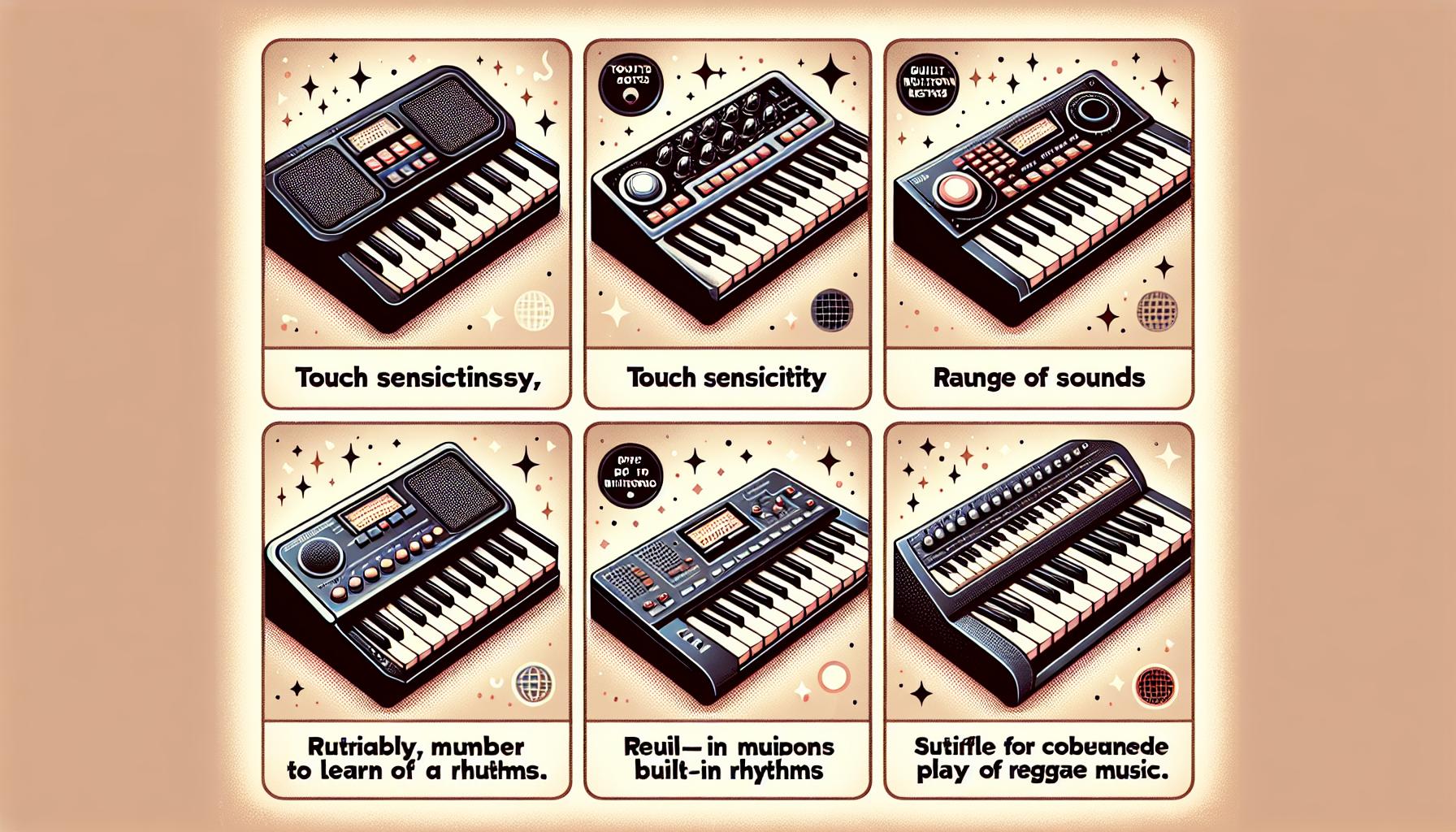
    Firstly, touch sensitivity is essential. This feature allows the volume and tone of a note to vary depending on how hard the keys are pressed, mimicking the dynamics of a real piano. Since reggae music relies heavily on expressive, soulful playing, having a touch-sensitive keyboard enables musicians to convey the genre’s emotive depth more effectively.

    Another key aspect is the range of sounds a keyboard offers. Reggae music often incorporates a variety of instrumental tones, such as organ, brass, and synth pads, aside from the classic piano sound. A keyboard that includes a broad selection of instrument voices can greatly enhance a reggae composition, providing the flexibility to experiment with different tones and textures.

    Built-in rhythms also play a part. Many keyboards come with pre-programmed drum patterns and accompaniments. For beginners, practicing along with these rhythms can help them get a feel for reggae’s syncopated beats and offbeat accents, vital components of its distinctive style.

    Lastly, keyboard size and number of keys are practical considerations. Standard keyboards have 88 keys, but for reggae music, a 61-key keyboard can be sufficient. This size still offers enough range for bass lines, chords, and melodies, without the bulk or expense of a full-size model.

    For a clearer understanding, here’s a comparison of keyboards that are often recommended for beginners looking to play reggae:

    Feature Keyboard A Keyboard B Keyboard C
    Touch Sensitivity Yes No Yes
    Range of Sounds 100+ 50+ 200+
    Built-in Rhythms 50 20 100
    Number of Keys 61 49 76

    Learning Essential Reggae Chords and Progressions

    After selecting the perfect keyboard for reggae, beginners must dive into the world of reggae chords and progressions to truly capture the genre’s essence. Reggae music heavily relies on distinct chordal structures and rhythm patterns that are both unique and soulful. Understanding these fundamental aspects will significantly elevate a beginner’s playing skills.

    The Basics of Reggae Chords

    Reggae typically revolves around a few key chords, making it accessible for beginners. The I-V-vi-IV chord progression is a classic in reggae music, creating a smooth, groovy feel that’s unmistakable. This progression involves playing the first (I), fifth (V), minor sixth (vi), and fourth (IV) chords of any given key. For example, in the key of C major, these chords would be C, G, Am, and F respectively.

    Moreover, mastering the art of minor chords and their transitions is crucial. Reggae often employs minor chords to evoke a deep, emotional resonance. Beginners should also pay attention to the off-beat or ‘skank’ rhythm, where chords are played on the off-beats or the “and” of each beat. This is a hallmark of reggae music and is essential for creating that signature reggae sound.

    Progressions to Practice

    To get started, here are some simple yet popular reggae chord progressions that beginners can practice:

    • I-V-vi-IV: As mentioned, this progression is a staple in reggae music. Experimenting with different keys can help in mastering it.
    • ii-V-I: This is another common progression, providing a slightly more jazzy feel. It’s great for songs that lean towards reggae fusion genres.
    • vi-IV-I-V: This progression gives a more emotional tone and is perfect for romantic or slower reggae tunes.

    Practicing these progressions helps in developing a good ear for reggae music and enhances the ability to create or improvise songs.

    • Use a Metronome: Playing along with a metronome will help in getting comfortable with the reggae rhythm, especially the off-beat skank.
    • Listen and Play Along: There’s no better way to learn than by listening to classic and modern reggae hits and trying to play along. This allows beginners to get a feel for how chords

    Mastering Reggae Keyboard Techniques

    As beginners venture into the world of reggae keyboard playing, mastering specific techniques becomes paramount to truly capturing the essence of reggae music. One of the key aspects to focus on is the staccato playing style. This involves playing the chords in a quick, detached manner which allows for the rhythmic patterns unique to reggae to shine through. Often, beginners might find this challenging, but practice leads to perfection. Incorporating exercises that emphasize wrist flexibility and control can greatly improve staccato playing.

    Another technique that holds significant importance is the use of off-beats or syncopation. Reggae music characteristically emphasizes the “and” counts between beats, creating its distinctive laid-back feel. Keyboard players can achieve this by practicing playing chords and melodies off the main beats. Starting slowly with a metronome and gradually increasing the speed ensures that the timing becomes second nature.

    Incorporating bass lines into keyboard playing also offers a fuller sound and a deeper connection to reggae’s roots. Most reggae songs feature prominent bass lines that drive the rhythm. Keyboard players can mimic these lines in their lower octaves or even split their keyboard if the option is available. Playing bass lines requires not only a good ear but also an understanding of reggae’s rhythm and structure. Listening to and playing along with reggae classics can help players develop this skill.

    Articulation plays a crucial role in reggae keyboard techniques. Articulating chords and notes in a way that they resonate with reggae’s unique vibe involves precise control over pressure and timing. Beginners should focus on how hard they press the keys and how that affects the sound. Experimenting with different pressures and timings can lead to a more authentic reggae sound.

    Dynamics in reggae music often fluctuate within a song, reflecting its emotional landscape. Keyboard players need to master controlling dynamics to effectively contribute to the overall mood of the piece. This involves selectively emphasizing certain chords or notes and can be practiced by playing along with dynamic shifts in reggae songs.

    Finally, improvisation plays a vital role in reggae keyboard playing. While reggae has its foundational chord progressions and rhythms, the magic often happens in spontaneous moments. Encouraging keyboard players to improvise, whether over a basic chord progression or along with a track, fosters creativity and a deeper understanding of reggae’s essence. This requires a balance of technique, theory, and most importantly, feeling the music.

    Putting It All Together: Practicing and Creating Your Own Reggae Music

    Once the fundamentals of reggae keyboard techniques are grasped, the next step is weaving these elements into a cohesive musical piece. Practicing consistently is the cornerstone of this journey. Creating reggae music that resonates requires not only technical skills but also a deep understanding of the genre’s soulful and rhythmic essence.

    They should start by dedicating time to practice each technique separately. Combining staccato playing, mastery of off-beats, and the emulation of bass lines forms the foundational sound of reggae music on the keyboard. Incorporating wrist flexibility exercises and metronome practice into daily routines dramatically improves rhythm and timing, essential for authentic reggae sound.

    After gaining comfort with individual techniques, the next step is to blend them. Start with simple chord progressions and experiment with adding off-beats and bass lines. Here are some practical steps to follow:

    • Warm up with basic scales and chords to prepare the fingers for more complex movements.
    • Practice each technique individually before attempting to combine them.
    • Use a metronome to keep steady timing, gradually increasing complexity.
    • Record practices to identify areas for improvement and track progress.

    Reggae music thrives on improvisation and emotional expression. They should not shy away from experimenting with different rhythms, pressures, and timings. This not only enhances their playing style but also deepens their appreciation for reggae music’s diverse and rich culture. Listening to a wide range of reggae artists and songs can provide inspiration and a better understanding of how to craft unique sounds and rhythms.

    Exploring the creative process of songwriting is another exciting step in creating reggae music. They can start by:

    • Writing simple melodies and building around them with reggae rhythms and techniques.
    • Incorporating different keyboard sounds to explore varied sonic textures.
    • Collaborating with other musicians to learn from their experiences and integrate new ideas.

    The path to mastering reggae on the keyboard is both challenging and rewarding. With dedication to practice, a love for the genre, and a willingness to experiment, they can start producing their own reggae music, imbued with their unique artistic touch. Engaging in online communities or local workshops provides additional opportunities to share music, receive feedback, and continue growing as a musician.

    Conclusion

    Embarking on the journey of playing reggae keyboard opens up a world of musical exploration and creativity. With dedication to practice and a deep dive into the rhythms that make reggae so unique, beginners will find themselves growing not just in skill but also in their appreciation for this soul-stirring genre. Remember, the path to mastering reggae on the keyboard is as much about feeling the music as it is about the techniques. So keep experimenting, stay connected with fellow musicians, and let your love for reggae guide your progress. There’s a whole world of reggae music waiting for your personal touch.

  • Top Beginner Classical Keyboard Sheet Music: Journey Through Time

    Top Beginner Classical Keyboard Sheet Music: Journey Through Time

    Diving into the world of classical music can feel like stepping into a vast, uncharted territory, especially for beginners at the keyboard. There’s something magical about the thought of your fingers dancing across the keys, producing melodies that have enchanted audiences for centuries. Yet, the question looms: where does one start?

    Fortunately, the world of beginner classical keyboard sheet music is rich and inviting, offering a treasure trove of pieces that are not only beautiful but also perfectly suited for those just starting their musical journey. From the gentle, flowing lines of Bach’s Minuets to the crisp, lively melodies of Mozart’s Sonatas, there’s a piece for every budding musician to fall in love with.

    Exploring the World of Classical Music

    Diving into the world of classical music can be an exhilarating experience for beginners at the keyboard. With centuries of compositions to choose from, the genre offers a vast sea of melodies that range from the profoundly deep and complex to the light and airy. For those embarking on this musical journey, the availability of beginner-friendly sheet music is a gateway to developing not only their skills but also their appreciation for classical compositions.

    At the heart of classical music for beginners are the works of Johann Sebastian Bach and Wolfgang Amadeus Mozart. Bach’s Minuets are often revered for their structured harmony and melody, making them excellent pieces for honing timing and technical skill. On the other hand, Mozart’s Sonatas introduce beginners to more expressive playing, requiring attention to dynamics and phrasing. Both composers’ works are plentiful in beginner classical keyboard sheet music collections, offering an approachable entry point into the world of classical music.

    Beyond Bach and Mozart, a treasure trove of pieces by other composers like Ludwig van Beethoven, Franz Schubert, and Frédéric Chopin awaits those ready to expand their repertoire. Beethoven’s “Für Elise”, although a cliché, remains a favorite among beginners for its accessible yet challenging progression. Schubert’s and Chopin’s compositions, while potentially more demanding, serve as excellent goals for intermediate players aiming to bridge into more complex music.

    Selecting the Right Pieces

    Choosing the right pieces to start with is crucial for maintaining enthusiasm and progress. Beginners should look for sheet music that:

    • Matches their current skill level
    • Provides a challenge without being overwhelming
    • Sparks interest through melody or historical significance

    Instructors and online resources can be invaluable in guiding beginners through this selection process, ensuring that they find pieces that are both enjoyable and beneficial to their musical development.

    The Benefits of Classical Music for Keyboard Beginners

    Studying classical music offers a range of benefits for keyboard beginners. Here are some key advantages:

    • Improved Technical Skills: Classical pieces often incorporate a wide range of technical skills, from finger independence to precise timing.
    • Enhanced Musical Understanding: Playing through these compositions introduces beginners to foundational music theory concepts in practice, such as harmony, dynamics, and structure.
    • Increased Repertoire: Learning classical music adds to a musician’s repertoire, providing them with a diverse selection of pieces they can share and perform.

    Benefits of Playing Classical Keyboard Sheet Music

    When starting a journey into the realm of classical music on the keyboard, the benefits extend far beyond simply learning to hit the right notes. It’s a voyage that promises to enrich both musical skills and personal growth. Let’s explore why dipping one’s fingers into the centuries-old traditions of classical keyboard sheet music can be so rewarding.

    Enhanced Technical Proficiency

    First and foremost, classical music is known for its complexity and depth. Even beginner pieces by composers like Bach and Mozart require a degree of precision and control that can significantly boost a player’s technical abilities. From mastering the delicate touch of a Mozart Sonata to navigating the counterpoint in a Bach Minuet, players develop:

    • Hand coordination
    • Finger strength and dexterity
    • Dynamics control
    • Timing and rhythm

    These skills are foundational for any pianist aiming to advance in their craft. Learning to articulate the nuances of classical compositions demands a level of discipline that pays off in all musical genres.

    A Deeper Understanding of Music Theory

    Classical music is rooted in the rich soil of Western music theory. By engaging with classical sheet music, learners get a hands-on education in:

    • Harmony: Understanding how chords and melodies interact.
    • Form: Recognizing the structure of compositions.
    • Counterpoint: The art of weaving independent melodies together.

    This theoretical knowledge empowers musicians to comprehend the language of music more intimately, enabling them to make more informed artistic decisions in their playing and perhaps even in their compositions.

    Expanded Musical Repertoire

    One of the joys of learning classical keyboard is the vast repertoire available to players of all skill levels. Starting with simpler, well-crafted pieces, beginners can gradually explore more complex works, thus continually expanding their musical horizons. This ongoing journey keeps learning fresh and exciting.

    Enhanced Emotional Expression and Appreciation

    Classical music is renowned for its emotional depth. Playing pieces from different eras exposes musicians to a wide range of emotional landscapes, from the profound sadness of Chopin’s nocturnes to the exuberant joy of a Mozart allegro. Learning to express these emotions through music can be profoundly satisfying and can deepen one’s appreciation for the subtleties of emotional expression in all forms of music.

    Connection to Musical Heritage

    Engaging with classical keyboard sheet music is essentially a dialogue with the past. Players connect with the thoughts and feelings of composers who lived centuries ago, gaining insights into historical contexts and cultural landscapes.

    Essential Classical Pieces for Beginners

    When embarking on the journey of learning classical keyboard, selecting the right repertoire is crucial. Beginners often benefit from pieces that are not only approachable in terms of technical demands but also enriching musically. These compositions serve as an ideal introduction to the world of classical music, enabling students to develop their skills and deepen their appreciation for this genre.

    Bach’s “Minuet in G Major”, for instance, is a cornerstone piece for beginners. Originating from the Notebook for Anna Magdalena, this piece allows students to get acquainted with baroque stylistic nuances. It emphasizes hand coordination and introduces fundamental concepts of phrasing and dynamics in a very accessible manner.

    Another exemplary piece that caters to early-stage pianists is Mozart’s “Minuet in F Major, K. 2”. Composed when Mozart was just a child, this minuet is an excellent example of classical elegance and simplicity. It provides beginners with the opportunity to explore the charm of Mozart’s music while practicing precise timing and expressive playing.

    For those looking to incorporate a bit of romantic flair into their repertoire, Schumann’s “Album for the Young, Op. 68 – Melody”, is a wonderful choice. This collection is specifically designed to nurture the musicality of young or beginner pianists, offering pieces that cover a wide range of emotions and technical challenges. “Melody” stands out for its emotive quality, teaching students the importance of playing with feeling.

    Expanding the Beginner’s Repertoire

    As students progress, Clementi’s “Sonatina in C Major, Op. 36, No. 1” becomes an essential addition to their repertoire. This piece introduces them to the sonatina form, a condensed version of the classical sonata. Here, learners can practice balancing melody and accompaniment and gain experience with more extensive structures.

    Beethoven’s “Ecossaises WoO 83” offers a glimpse into the master’s more playful side. These pieces are delightful, relatively short, and less daunting for beginners. They help in cultivating a sense of rhythm and joy in performance.

    Tips for Mastering Classical Keyboard Sheet Music

    Start Slowly and Build Up Speed Gradually

    Mastering classical keyboard pieces doesn’t happen overnight. It’s crucial to start playing each piece slowly, focusing on accurate note and rhythm recognition. As confidence and muscle memory build, gradually increase the tempo. This approach ensures that students can maintain precision and musicality at any speed.

    Use Metronome for Timing and Rhythm

    A metronome is an essential tool for anyone learning to play the keyboard. It helps maintain a steady beat, ensuring that students learn to keep time effectively. Starting with a slow tempo that’s comfortable and then carefully increasing the speed brings mastery over the rhythm and tempo of the piece.

    Break Pieces into Manageable Sections

    When faced with an entire piece of music, it can seem overwhelming. Breaking it down into smaller, more manageable sections allows students to focus on mastering one part at a time. This technique not only makes learning easier but also boosts a sense of accomplishment with each section mastered.

    Regular Practice Is Key

    Consistency in practice cannot be overstated. Regular, focused practice sessions are more beneficial than sporadic, lengthy ones. Even just 15 to 30 minutes of daily practice can lead to significant improvements over time, provided the effort is concentrated and purposeful.

    Pay Attention to Finger Positioning and Hand Movements

    Proper finger positioning and hand movement are vital for playing the keyboard efficiently and comfortably. Adhering to the suggested fingerings in sheet music not only facilitates smoother transitions between notes but also helps prevent strain and injury.

    Listen to Performances of the Pieces

    Listening to professional performances of the pieces being learned is incredibly beneficial. It gives students a sense of the music’s flow, dynamics, and emotional depth. This can inspire their own playing and provide a clear audio reference for what they’re aiming to achieve.

    Highlight Dynamic and Expressive Elements

    Classical music is rich in dynamics and expression. Students should pay close attention to these elements in the sheet music and strive to incorporate them into their playing. Understanding when to play softly (piano) or loudly (forte) adds depth and emotion to the performance.

    Seek Feedback from a Teacher or Experienced Player

    Feedback is an important part of learning. A teacher or experienced player can offer insights and tips that might not be apparent to a beginner. Regular feedback helps refine technique and interpretive skills, pushing students further along their musical journey.

    Embracing the Beauty of Classical Music

    Diving into the world of classical music can be a transformative experience for beginners at the keyboard. Most importantly, it opens up a realm where emotion, technique, and history intertwine, offering a rich tapestry of sounds and stories. Classical music isn’t just about the notes on the page; it’s about the passion and tales behind these compositions. Beginners are advised to immerse themselves in the history of the pieces they’re learning. Understanding the context in which a piece was written can profoundly affect how it’s interpreted and performed.

    One cannot overlook the influence of great composers like Mozart, Beethoven, and Chopin. Their works aren’t merely exercises in technique but are imbued with personal stories and emotions that have resonated through centuries. Engaging with these compositions, beginners will find themselves on a journey through time, exploring the depths of human expression. Listening extensively to classical music performances is crucial. It helps learners grasp the nuances of rhythm, dynamics, and phrasing that define the classical genre. They’re encouraged to listen to a variety of performances of the same piece to understand different interpretative approaches.

    Additionally, playing with emotion plays a pivotal role in truly embracing classical music. While technical skill is important, conveying the emotion behind a piece is what breathes life into it. This emotional connection takes the music beyond mere notes and rhythms, transforming it into an expressive narrative.

    To support this, beginners should:

    • Explore the stories behind the music and composers.
    • Listen to recordings by renowned pianists to understand interpretive nuances.
    • Focus on developing expressiveness alongside technical proficiency.

    This approach nurtures a deeper understanding and appreciation of classical music, paving the way for more expressive and meaningful performances. It’s not just about playing the right notes; it’s about telling a story and evoking emotions. As beginners progress, they’ll find that their relationship with music deepens, and playing becomes more than just practice—it becomes a way to connect with the vast world of human creativity and expression.

    Conclusion

    Diving into beginner classical keyboard sheet music opens up a world where every note tells a story. It’s not just about hitting the right keys but feeling the soul of the music and sharing it. As learners explore the depths of classical compositions, they’ll find themselves on a journey that’s as emotional as it is educational. By connecting with the emotions and historical contexts of pieces by Mozart, Beethoven, and Chopin, beginners can transform their playing from mere notes to powerful narratives. It’s this journey of discovery, expression, and connection that makes learning classical music a truly enriching experience. So let’s encourage beginners to not only play but to feel and tell the stories woven into the music they’re learning.

  • Master Pop Chord Progressions on Keyboard: A Guide to Perfect Play

    Master Pop Chord Progressions on Keyboard: A Guide to Perfect Play

    Diving into the world of pop music on the keyboard is like unlocking a door to endless creativity and expression. Whether you’re a beginner eager to play your favorite tunes or an experienced player looking to add some pop flair to your repertoire, mastering pop chord progressions is a game-changer.

    Understanding Chord Progressions

    When diving into playing pop music on the keyboard, it’s essential to grasp the concept of chord progressions. These sequences of chords are the backbone of most pop songs, setting the tone and mood for the listener. By understanding and mastering a few common progressions, players can unlock a vast array of songs and refine their own musical style.

    Pop music tends to favor certain progressions due to their catchy and emotionally resonant qualities. One of the most well-known sequences is the I-V-vi-IV progression. In the key of C major, this would translate to C-G-Am-F. This progression is beloved for its versatility and can be found in countless hits spanning decades.

    Another key progression is the ii-V-I, which is foundational in jazz but has crossed over into pop music. This progression, in C major, would be Dm-G-C. It’s particularly effective for creating a sense of resolution and completeness, making it great for verses and the ends of choruses.

    For those just starting on the keyboard, it’s helpful to focus on these progressions, among others:

    • vi-IV-I-V: Creates an emotional and evocative sound, perfect for powerful ballads.
    • I-vi-IV-V: A classic doo-wop progression that evokes a nostalgic feel.

    Understanding how these progressions work in different keys is crucial. Fortunately, the concept of relative minor helps in transitioning between keys smoothly. For instance, the relative minor of C major is A minor, which shares the same notes but starts on A. This trick can help players navigate through songs with ease, making key changes less intimidating.

    To get comfortable with these progressions, players should practice them in various keys, not just those that are easy or familiar. This practice builds versatility and improves the ability to play by ear, an invaluable skill for any musician, especially those keen on pop music.

    Progression Example in C Major Mood/Effect
    I-V-vi-IV C-G-Am-F Versatile, widely used
    ii-V-I Dm-G-C Sense of resolution
    vi-IV-I-V Am-F-C-G Emotional, powerful ballads
    I-vi-IV-V C-Am-F-G

    Popular Chords Used in Pop Music

    When diving into the world of pop music on the keyboard, understanding the chords that pave the way for most hits is essential. Pop music has a knack for making complex emotions feel accessible, often through a few well-chosen chords. These chords, when played together, form the backbone of countless songs listeners know and love.

    The Major and Minor triads are the most straightforward yet vital chords in pop music. Major chords create a happy, uplifting mood, while minor chords introduce a sense of sadness or tension. For beginners, it’s crucial to get comfortable with these triads as they’re the building blocks for more complex progressions.

    Beyond the basic Major and Minor triads, Seventh chords play a significant role in adding depth to songs. The addition of a seventh note to the chord introduces a layer of complexity, making a progression more interesting and emotionally nuanced. This is particularly evident in ballads and R&B tracks, where the extended chords enrich the harmonic texture.

    Suspended chords, or “sus” chords, are another popular choice in pop music. These chords, which can be either suspended seconds (sus2) or suspended fourths (sus4), replace the third note of a chord with either a second or fourth. This creates a sense of anticipation or unresolved tension, perfect for leading into a song’s climax or resolving back to a more stable chord.

    Here are some popular chords from hit pop songs:

    • C Major (C-E-G): A bright and clear sound that’s optimistic in nature.
    • G Major (G-B-D): Often used to convey feelings of excitement or resolution.
    • A Minor (A-C-E): Delivers a softer, more reflective tone.
    • E Minor (E-G-B): Perfect for adding a touch of melancholy or introspection.
    • F Major 7 (F-A-C-E): Offers a complex and rich sound, ideal for emotional depth.

    Tips for Playing Smooth Transitions

    Playing smooth transitions between chords is crucial for mastering the flow of pop music on the keyboard. To ensure that your transitions are as seamless as possible, there are several strategies one can employ.

    Firstly, finger positioning plays a vital role. It’s important to plan which fingers will press each key before moving on to a new chord. This preparation helps in minimizing movement and making transitions quicker and smoother. For example, if you’re moving from a C Major chord to a G Major chord, try to keep your thumb on the C as a pivot point, making the switch more efficient.

    Secondly, the use of inversions can greatly ease the process of moving from one chord to another. Instead of jumping across the keyboard to play the next chord in its root position, you can rearrange the notes so that the chord is played closer to the previous chord. This method not only simplifies transitions but also adds a professional touch to your playing by maintaining a consistent hand position across the keyboard.

    Practice Makes Perfect

    Practicing transitions slowly is another key to mastering smooth chord changes. Start by playing the transition between two chords slowly, focusing on minimizing the movement of your hands. Gradually increase the tempo as your comfort with the transition improves. Remember, it’s not just about speed but also about ensuring each chord sounds clear and confident.

    Utilize the Sustain Pedal

    The sustain pedal can be a valuable tool for creating smooth chord transitions. By pressing the pedal as you change chords, you allow the notes from the first chord to continue ringing out as you move to the next chord, creating a seamless sound transition. Just be careful not to overuse it, as too much sustain can blur the notes together and muddy the overall sound.

    Listen and Learn from the Pros

    Listening to professional recordings and paying close attention to how artists execute chord transitions can provide invaluable insights. Many artists use subtle techniques to smooth out their transitions that may not be immediately apparent. Try to emulate these techniques in your own playing. Additionally, watching video tutorials or live performances can help visualize how experienced keyboardists manage their finger positioning and movement between chords.

    Adding Variations to Spice Up Your Playing

    Once you’ve mastered the basics of playing pop chord progressions on the keyboard, it’s time to explore ways to spice up your performances. Introducing variations into your playing not only makes the music more interesting but also showcases your creativity and versatility as a musician.

    One effective way to add flavor to your chord progressions is through the use of passing chords. These are chords that you can insert between the main chords of the progression to create a sense of movement and complexity. For example, if your progression goes from C major to A minor, consider adding a D minor chord in between. This subtle addition can add a whole new dimension to the sound.

    Another technique worth exploring is rhythmic variation. Instead of playing the chords in a straightforward manner, try mixing up the rhythm. You could, for instance, syncopate the chord strikes or incorporate elements of swing. This doesn’t just apply to how you play the chords themselves but also to the rhythm patterns you use in your left hand for bass lines or accompanying parts.

    To truly make a song your own, experiment with different voicings of the same chords. Voicings refer to the way in which the notes of a chord are spread out across the keyboard. By playing around with these, you can find unique sounds even within well-known chord progressions. For example, instead of playing a G major chord in its basic form, try spreading the notes out for a more expansive sound.

    Incorporating melodic fills between chords is a fantastic way to liven up your playing. These short, melodic runs not only bridge the gap between chords but also provide a momentary spotlight on your improvisational skills. Whether it’s a quick arpeggio or a simple scale run, these fills can really make your performance stand out.

    Lastly, don’t underestimate the power of dynamic variation. Playing with different levels of volume and intensity can breathe life into a song. It’s not just about what chords you play but how you play them. By emphasizing certain chords through volume or playing them softly to create tension, you can convey a wide range of emotions, making your performance more engaging.

    Practice Techniques to Enhance Your Skills

    Practicing pop chord progressions on the keyboard is not just about repetition; it’s about smart and focused practice. To truly enhance one’s skills, players should incorporate a variety of practice techniques that target different aspects of their musicianship.

    One effective technique involves isolating and working on challenging sections. Often, musicians find certain chord transitions or rhythm patterns more difficult than others. By isolating these sections and practicing them slowly, they can gradually increase their speed and confidence. This targeted approach ensures that they’re not just playing through songs without addressing their weak spots.

    Another key practice technique is playing along with recordings of the songs they’re learning. This not only helps musicians get a feel for the timing and groove of the song but also aids in training their ear. Being able to play in sync with a track requires a good sense of rhythm and timing, essential skills for any keyboard player.

    Utilizing a metronome is another critical practice strategy. It’s vital for developing a steady pace and maintaining consistent timing, especially when playing complex chord progressions. Starting at a slow tempo and gradually increasing the speed as one becomes more comfortable can make even the most challenging progressions manageable.

    For those looking to broaden their creative expression, experimenting with improvisation within the chord progressions they’re learning can be incredibly beneficial. This might involve altering the rhythm, adding passing tones, or even creating small melodic lines within the progression. Through improvisation, players not only develop a deeper understanding of the music they’re playing but also discover their unique musical voice.

    Incorporating recording and playback into practice sessions can provide invaluable feedback. Listening back to one’s playing can highlight areas for improvement that might not be apparent in the moment. This method allows for critical self-evaluation and faster progress.

    Finally, practice doesn’t always have to be solo. Collaborating with other musicians can introduce new perspectives and techniques. Whether it’s jamming with a friend who plays another instrument or accompanying a singer, these interactions can inspire creativity and further refine one’s playing skills.

    By integrating these techniques into their practice routines, keyboard players can not only master the pop chord progressions they’re working on but also elevate their overall musicianship. From isolating trouble spots to collaborative play, each strategy offers a unique benefit that contributes to a well-rounded and engaging performance.

    Conclusion

    Mastering pop chord progressions on the keyboard is a journey that’s both rewarding and fun. By adopting the practice techniques outlined, players will find themselves not only improving at a steady pace but also enjoying the process. It’s about making every practice session count and turning challenges into opportunities for growth. Whether it’s playing along with favorite tunes or jamming with friends, each step brings its own set of joys. So keep at it, stay patient, and let the music flow. The keyboard is a powerful tool for expression, and with dedication, anyone can unlock its full potential.

  • Master Basic Jazz Chords on Keyboard: Tips & Practice Guide

    Master Basic Jazz Chords on Keyboard: Tips & Practice Guide

    Diving into the world of jazz can be an exhilarating adventure, especially when it comes to mastering the keyboard. Jazz, with its rich harmonies and soulful melodies, invites musicians to explore a vast landscape of sound and emotion. For those just starting their journey, understanding the basic jazz chords is the first step toward unlocking this musical treasure trove.

    The beauty of jazz chords lies in their versatility and depth, offering a palette from which to paint endless auditory pictures. Whether you’re a beginner eager to get your fingers gliding over those keys or a seasoned player looking to brush up on your fundamentals, getting a solid grip on these chords is essential. They’re the building blocks of jazz’s intricate language, and learning them opens up a world of improvisation and creativity.

    Understanding Jazz Chords

    When it comes to jazz, chords are the very essence that fuels the genre’s unmistakable sound. Unlike other music styles, jazz chords infuse songs with rich, complex, and often unexpected harmonies. For keyboard players, mastering these chords isn’t just about learning shapes and positions; it’s about diving into the soul of the music.

    Jazz chords are typically built on the principles of extended harmony. This means that they not only include the basic triad (the root, third, and fifth notes of a scale) but also incorporate various combinations of seventh, ninth, eleventh, and thirteenth intervals. These extensions add depth and color, making the chords sound fuller and more interesting.

    Starting with the Basics

    The journey into jazz often begins with the major 7th, minor 7th, and dominant 7th chords. They’re the backbone of many jazz standards and provide a solid foundation for understanding jazz harmony. Here’s a brief overview:

    • Major 7th Chords: These convey a sense of completeness and tranquility. They consist of a major triad plus a major seventh.
    • Minor 7th Chords: Offering a softer, more reflective sound, they’re formed by adding a minor seventh to a minor triad.
    • Dominant 7th Chords: Known for their tension and resolution, these chords add a minor seventh to a major triad.

    Adding Color with Extensions

    After getting comfortable with the 7th chords, the next step is exploring extensions. These notes, added to the 7th chords, introduce new layers of sound. Here’s how they contribute to jazz’s unique flavor:

    • Ninth Chords: Whether major, minor, or dominant, adding a ninth can give chords a more sophisticated edge.
    • Eleventh and Thirteenth Chords: These further extend the harmony, allowing for even richer, more complex sounds.

    Chord Voicings and Inversions

    In jazz, it’s not just what notes you play but how you play them. Chord voicings refer to the arrangement of a chord’s notes across the keyboard. By experimenting with different voicings, keyboard players can find the sound that best fits the mood they’re aiming for. Similarly, chord inversions—playing the chord with a different note in the bass—can drastically change the chord’s character.

    Importance of Basic Jazz Chords for Keyboard Players

    When diving into the rich world of jazz, keyboard players quickly find that basic jazz chords are the cornerstone of their musical journey. These chords serve as the fundamental building blocks for crafting the unique, complex sounds that define jazz music. They’re especially crucial for those new to jazz, providing a solid groundwork from which they can explore more intricate harmonies and improvisations.

    For keyboard players, mastering basic jazz chords means much more than just adding a few new sounds to their repertoire. It’s about developing a deep understanding of jazz’s harmonic landscape. Major 7th, minor 7th, and dominant 7th chords aren’t just variations of triads; they are the heartbeats of jazz harmony, each bringing its own flavor and emotional depth to the music. These chords offer completeness, reflection, and a means to resolve tension, respectively, creating a rich tapestry of sound that’s both captivating and complex.

    Beyond the foundational chords, the journey into extensions like ninths, elevenths, and thirteenths pulls the keyboard player deeper into the realm of jazz. These extended chords add layers of sophistication and color that are essential for the nuanced expressions jazz is known for. It’s not just about the chords themselves but how they’re voiced and inverted that can dramatically alter the mood and character of a piece.

    Chord Type Role in Jazz
    Major 7th Offers completeness and warmth
    Minor 7th Adds reflection and moodiness
    Dominant 7th Creates tension and resolution

    The importance of chord voicings and inversions cannot be overstated. In jazz, it’s often not just what chords are played, but how they are played that counts. Different voicings can emphasize certain notes within the chord, bringing out unique textures and emotions. Similarly, inversions can drastically change the bass line and harmony, offering fresh perspectives and sounds within the same chord framework.

    As keyboard players delve into jazz, they learn to weave these chords together, creating intricate musical tapestries that speak to the listener’s soul. The journey from basic triads to the complex extended chords illustrates a growth in understanding and skill, marking the evolution of a musician capable of expressing a vast array of emotions and stories through their instrument.

    Common Basic Jazz Chords to Master

    Diving into the world of jazz starts with mastering a few fundamental chords. For keyboard players, these basic jazz chords are the building blocks for creating the rich, sophisticated sounds characteristic of this genre. Let’s explore some of the essential chords that every aspiring jazz keyboardist should know.

    Firstly, Major 7th chords are a staple in the jazz repertoire. They’re formed by combining a root note with a major third, perfect fifth, and a major seventh. The sound of a major 7th chord is full and complete, often evoking a sense of resolution and contentment. For example, a C major 7th chord is made up of C, E, G, and B notes.

    Next are the Minor 7th chords, which include a root, a minor third, a perfect fifth, and a minor seventh. These chords introduce a reflective or somber tone into the music, perfect for expressing a wide range of emotions. An A minor 7th chord, for instance, consists of A, C, E, and G.

    Dominant 7th chords are another crucial component. These chords add a taste of tension and anticipation, urging the music forward. They consist of a root, a major third, a perfect fifth, and a minor seventh. The C7 chord, comprised of C, E, G, and B♭, is a classic example and a frequent visitor in blues progressions as well.

    In addition to these basic types, jazz chords often incorporate extensions like the ninth, eleventh, and thirteenth. These extensions add layers of complexity and sophistication, enriching the chord’s texture. For instance, adding a D (the ninth) to a C major 7th chord transforms it into a Cmaj9, introducing an additional level of harmonic depth.

    Learning about chord voicings and inversions is also crucial for keyboard players. Voicings alter the chord’s texture and mood by changing the order and octave of the notes. Inversions, on the other hand, rearrange the chord’s structure by placing notes other than the root note in the bass position. These techniques allow musicians to convey various emotions and textures, making their performances more dynamic and expressive.

    For a quick reference, here’s a summary of the chords discussed:


    Practice Tips for Perfecting Jazz Chords on Keyboard

    Mastering jazz chords on the keyboard is a thrilling adventure that demands dedication, practice, and a touch of creativity. To help musicians on this journey, here are several tips designed to enhance their practice sessions and improve their chord mastery.

    Start With the Basics

    Before diving into complex chords and progressions, it’s crucial to ensure a solid understanding of the basic major, minor, and dominant 7th chords. These foundational elements are the building blocks of jazz and will serve as a springboard for more advanced study. Practicing these chords in various keys not only builds muscle memory but also aids in developing a keen ear for jazz harmony.

    Employ Slow Practice

    One of the most effective strategies for mastering jazz chords is to practice slowly. Slow practice allows musicians to focus on the accuracy of finger placement, ensuring each note of the chord rings clear and true. It also provides the opportunity to really listen to the chords and understand their emotional and harmonic context within a piece of music.

    Use a Metronome

    Rhythm is just as important as harmony in jazz music. Utilizing a metronome during practice sessions can drastically improve a musician’s timing and rhythmic accuracy. Starting at a slow tempo, players should practice their chords and progressions, gradually increasing the speed as they become more comfortable. This disciplined approach helps in building a solid rhythmic foundation essential for jazz performance.

    Experiment With Chord Inversions

    Chord inversions offer a way to play the same chord in different positions on the keyboard, providing a smoother transition between chords and adding interest to the harmonic progression. Keyboard players should spend time practicing chord inversions in isolation before integrating them into songs. This practice will vastly improve their ability to navigate the keyboard and enrich their overall sound.

    Integrate Extensions and Voicings

    As mentioned earlier, jazz chords are notorious for their complexity, often including extensions like the 9th, 11th, and 13th. Practicing these extended chords helps musicians familiarize themselves with the fuller, more complex sound of jazz. Additionally, experimenting with different voicings can significantly alter the texture and mood of the music, giving keyboard players much-needed versatility in their playing.

    Conclusion

    Diving into the world of jazz chords on the keyboard opens up a universe of musical expression. Starting with the basics and gradually incorporating more sophisticated techniques ensures a solid foundation. Remember, mastering these chords isn’t just about technical skill—it’s also about feeling the music. So take your time, practice diligently, and let your creativity flow. With patience and passion, you’ll soon find yourself playing jazz chords with ease and confidence, adding a rich layer of complexity to your musical repertoire.

  • Top Rock Keyboard Songs for Beginners: A Guide to Mastering the Basics

    Top Rock Keyboard Songs for Beginners: A Guide to Mastering the Basics

    Diving into the world of rock music as a beginner keyboardist can feel like an exhilarating leap. It’s where the energy of rock blends with the melodic prowess of the keyboard, creating a playground for novices eager to make their mark. But where does one start in this vast sea of chords and melodies?

    Thankfully, there are rock songs out there that are not just iconic but also beginner-friendly. These tracks are perfect for getting your fingers accustomed to the keys while rocking out. They strike the perfect balance between challenge and accessibility, ensuring you’re not overwhelmed as you embark on your musical journey.

    Understanding Rock Keyboard Basics

    Venturing into the world of rock keyboard may seem daunting at first, but it’s a journey packed with excitement and discovery. For beginners, grasping the fundamentals can transform an overwhelming process into an enjoyable learning experience. Rock keyboard often involves dynamic rhythms and distinctive sounds that set it apart from other music genres. Key components such as chord progressions, riffs, and the use of synthesizers are pivotal in creating the iconic rock sound.

    Chord Progressions and Riffs

    At the heart of rock music are chord progressions and riffs that give each song its unique character. Beginners should start by mastering simple chord shapes and patterns. This foundational knowledge enables new keyboardists to navigate through songs with greater ease. Practicing with familiar tracks can significantly boost confidence, as learners start recognizing the structures and patterns that recur across various rock songs.

    Embracing Synthesizers

    Synthesizers play a crucial role in enriching rock music’s texture and depth. For beginners, familiarizing themselves with basic synthesizer settings can open up a world of sounds that closely align with rock’s energetic vibes. Starting with preset sounds often found in keyboards or software can help learners get accustomed to the synthetic aspect of rock. Experimenting with different settings allows beginners to explore how varying sounds can impact a song’s overall feel.

    Essential Skills for Rock Keyboardists

    Successful rock keyboardists don’t just rely on technical abilities. Developing a strong sense of timing and rhythm is equally important. Many rock songs feature sections where the keyboard takes the lead, requiring precise timing to synchronize with the rest of the band. Practicing with a metronome or along with recordings can improve timing and help beginners feel the groove of rock music.

    Another vital skill is learning to play by ear. While sheet music for rock songs is available, many rock musicians thrive on improvisation and adaptation. Being able to pick up tunes by ear and adapt them for the keyboard allows for more creativity and personal expression. It encourages beginners to experiment and find their unique style within the rock genre.

    Essential Techniques for Beginners

    When diving into rock keyboard songs as a beginner, there are several essential techniques that can significantly boost one’s musical journey. Mastering these techniques not only enhances the ability to play more complex pieces but also adds depth and emotion to the performance.

    Hand coordination is paramount. Rock music often demands the keyboardist to play different rhythms or even melodies simultaneously with both hands. This can seem daunting at first, but starting with simple exercises that focus on independent hand movements can greatly improve coordination over time.

    Another crucial technique is understanding and implementing dynamics. Dynamics refer to the variations in loudness or softness in music and can dramatically change the feel of a song. Beginners should practice playing the same piece at different dynamic levels to explore how it affects the music’s energy and emotion.

    Proper posture and hand positioning also play significant roles in a beginner’s development. Incorrect posture or positioning can not only hinder skill advancement but may also lead to strain or injury. Beginners should ensure they’re sitting at the right height, keeping their backs straight, and positioning their fingers on the keys comfortably and effectively.

    Incorporating scales and arpeggios into daily practice is crucial for improving finger dexterity and speed. While it might not seem directly related to playing rock songs, having a solid understanding of scales and arpeggios helps in navigating the keyboard more efficiently and adds a layer of sophistication to the music.

    Lastly, experimenting with the synthesizer’s various sounds and effects is both fun and educational. Many classic rock songs incorporate distinctive synthesizer sounds that contribute significantly to their overall impact. By familiarizing themselves with these sounds, beginners can add authenticity and flair to their performances.

    While diving into these techniques, beginners should remember that progress takes time and patience. Regular practice, combined with a passion for rock music, will pave the way for a rewarding musical journey.

    Top Rock Keyboard Songs for Novices

    When beginners are looking to dive into the world of rock keyboard songs, the vast selection can seem overwhelming. It’s crucial to pick tracks that not only resonate with one’s musical tastes but are also within skill reach. Starting with simpler songs allows for a gradual build-up of both confidence and technical ability. Here’s a curated list of iconic rock keyboard songs ideal for novices.

    “Let It Be” by The Beatles

    This classic is perfect for beginners due to its slow tempo and repetitive chord progressions. “Let It Be” not only introduces players to the concept of chord variations but also allows them to practice transitions smoothly.

    “Clocks” by Coldplay

    Featuring a distinctive piano riff, “Clocks” is a great piece for practicing rhythm and timing. The song’s repetitive patterns serve as an excellent exercise for hand coordination and endurance.

    “Don’t Stop Believin'” by Journey

    A staple in the rock genre, “Don’t Stop Believin'” provides beginners with the opportunity to work on sustaining notes and playing multiple chords. Its uplifting melody and straightforward progression are engaging for players of all levels.

    “Bohemian Rhapsody” by Queen

    While the full complexity of “Bohemian Rhapsody” may be daunting, certain segments are approachable for beginners. Focusing on the piano ballad portion allows novices to engage with dynamic changes and expressive playing.

    Practice Tips

    To master these songs, beginners should consider several practice tips:

    • Start Slow: Begin by playing each song at a slower pace to ensure accuracy. Gradually increase the tempo as confidence builds.
    • Use Metronome: Incorporating a metronome helps maintain consistent timing, a critical skill for any musician.
    • Break It Down: Work on small sections of the song at a time. Mastering piece by piece is less overwhelming and more effective.
    • Record Practice Sessions: Listening back to practice sessions can help identify areas for improvement.

    Progress Tracking

    Keeping track of progress is crucial. Here’s a simple framework:

    Week Song Skill Focus Progress Notes
    1 “Let It Be” by The Beatles Chord Transitions Improved fluency in transitions
    2

    Breakdown of Iconic Rock Hits

    When diving into the world of rock keyboard songs, a few tracks stand out for their unforgettable melodies and chord progressions. These hits not only define the genre but also serve as excellent learning material for beginners.

    “Let It Be” by The Beatles

    One of the most iconic songs in the rock repertoire, “Let It Be” features a simple yet profound piano line. It’s an ideal starting point for beginners due to its slow tempo and repetitive chord structure. The song allows players to focus on basic chord formations and smooth transitions without the pressure of complex rhythms.

    • Key skills developed:
    • Chord transitions
    • Sustaining notes
    • Expressive playing

    “Clocks” by Coldplay

    A masterpiece of modern rock, “Clocks” by Coldplay is famed for its hypnotic piano riff. Playing this song, beginners get a taste of how rhythm and melody intertwine, creating a captivating musical experience. The repetitive nature of the riff makes it a great exercise for finger independence and timing.

    • Key skills developed:
    • Rhythm and timing
    • Finger independence
    • Playing repetitive patterns

    “Don’t Stop Believin'” by Journey

    This anthem is a journey through dynamic chord progressions and engaging melodies. For beginners, “Don’t Stop Believin'” is a chance to explore a more upbeat pace while still working within accessible chord changes. The song provides a balance of challenge and achievability, making it a rewarding experience for early-stage players.

    • Key skills developed:
    • Dynamic playing
    • Upbeat tempo mastery
    • Melodic and chordal balance

    “Bohemian Rhapsody” by Queen

    Engaging with “Bohemian Rhapsody” allows beginners to experience the theatrical and eclectic style of Queen. Though it may seem daunting, focusing on the ballad section of the song offers a manageable challenge that includes slower tempos and simpler chords. This piece is perfect for enhancing expressive playing and understanding complex song structures.

    • Key skills developed:
    • Expressive playing
    • Understanding song structure
    • Introduction to complex arrangements

    Perfecting Your Performance

    Mastering keyboard songs, especially rock anthems, goes beyond just hitting the right notes. It involves a blend of technique, expression, and sometimes, a bit of showmanship. For beginners eager to perfect their performance, there are several key areas to focus on.
    Technique Is the Foundation

    First and foremost, technique lays the groundwork for any successful performance. Beginners should prioritize:

    • Finger positioning: Keeping fingers curved and relaxed prevents fatigue and increases agility.
    • Posture: Proper posture ensures comfort and control during long practice sessions.
    • Sight-reading: The ability to read music swiftly allows for smoother learning and performing experiences.

    Incorporating these fundamentals can significantly enhance the quality of one’s playing, making even the simplest songs resonate with listeners.

    Emotion and Expression

    Music, at its core, is about conveying emotion. When playing iconic rock hits, injecting personal interpretation and emotion intensifies the connection with the audience. This includes:
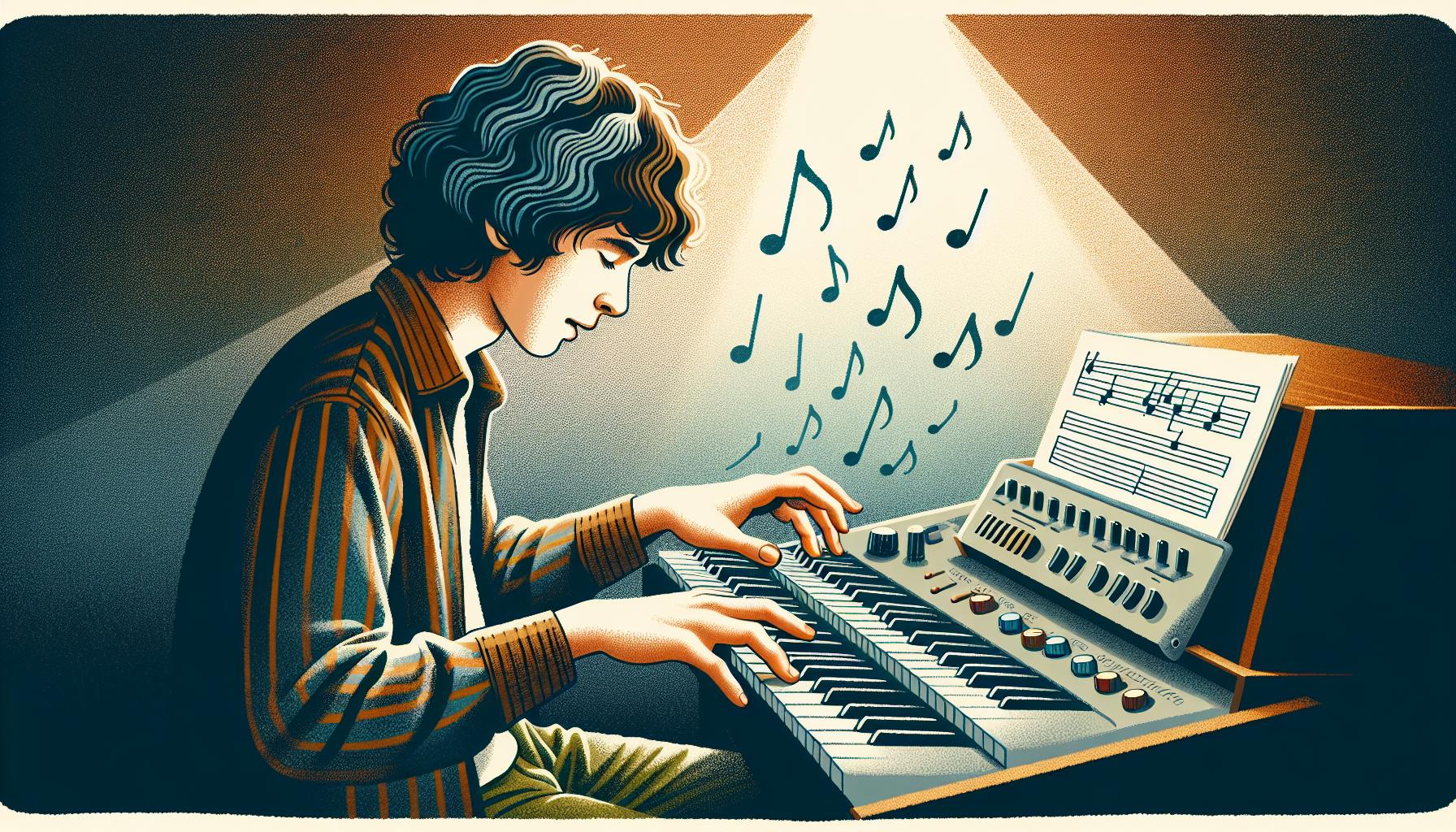
    • Dynamics: Varying the volume throughout the piece to reflect its emotional landscape.
    • Tempo nuances: Slightly speeding up or slowing down to add excitement or anticipation.

    • Expressive techniques: Using pedals for sustain or vibrato on key notes adds depth to the performance.
    Practice Makes Perfect

    Consistency in practice is vital. Regular, focused sessions will lead to noticeable improvements. Beginners might find it helpful to:

    • Set realistic goals: Break down songs into manageable sections and focus on mastering one at a time.
    • Use metronomes: They help in maintaining a steady tempo and improving rhythm.
    • Record practices: Listening back can reveal areas for improvement not noticed in the moment.

    Connect With the Song

    Understanding the story or emotion behind a song can dramatically improve how it’s played. Engaging with the lyrics or the origin of the piece offers insights into its heart, guiding the emotional delivery and dynamics of the performance.

    Incorporate Multimedia Learning

    Utilizing tutorials, play-along videos, and even game-based learning platforms can make practice sessions more engaging and effective. They offer:

    • Visual guides for finger positioning and movement
    • Varied interpretations of the same song for broader understanding
    • Instant feedback in some game-based learning platforms

    Conclusion

    Mastering rock keyboard songs as a beginner might seem daunting at first. However, with the right approach, it’s entirely achievable. Remember, it’s not just about hitting the right notes. It’s about bringing the music to life with your unique touch. By focusing on technique, emotion, and consistent practice, you’ll not only improve your skills but also deepen your connection with the music. So, keep practicing, stay patient, and most importantly, enjoy the journey of musical discovery. There’s a world of rock keyboard songs waiting for you to explore and make your own.