Blog

  • Top 5 Easy Jazz Songs for Beginner Keyboard Players: Mastering the Basics

    Top 5 Easy Jazz Songs for Beginner Keyboard Players: Mastering the Basics

    Diving into the world of jazz can be a thrilling adventure for any beginner keyboard player. It’s a genre that swings with emotion and complexity, yet it holds a treasure trove of easy tunes that are perfect for those just starting their musical journey. Jazz, with its rich history and diverse styles, offers a unique playground for newbies to explore, improvise, and express themselves.

    Finding the right songs to start with can make all the difference in building confidence and skill. That’s why we’ve curated a list of easy jazz songs that are not only fun to play but also serve as a gentle introduction to the wider world of jazz. These pieces will help you get comfortable with jazz rhythms, harmonies, and the improvisational spirit that makes jazz so captivating. Let’s swing into the basics and set the foundation for a lifelong love affair with jazz.

    Understanding Jazz Basics

    Before diving into the pool of jazz songs suitable for beginner keyboard players, it’s essential to grasp a few fundamental concepts of jazz music. Jazz, known for its emotional depth and improvisational nature, offers a unique challenge even to seasoned musicians. However, it’s this very improvisation and emotional communication that can make it incredibly rewarding for beginners.

    First and foremost, jazz is all about rhythm. The swing rhythm, characterized by a delayed second beat, is a staple in many jazz pieces. It’s this swinging that gives jazz its distinctive feel. For those new to the genre, mastering the swing rhythm can be both challenging and fun. Starting slow and using a metronome can help beginners internalize this rhythm pattern.

    Another crucial aspect of jazz is harmony. Jazz harmony involves a wide variety of chords with extensions beyond the basic triads found in many other genres of music. Seventh chords, ninth chords, and even more complex structures are common in jazz, offering a richer, more vibrant sound. Beginners shouldn’t feel intimidated by these chords. Learning even a few basic seventh chords can open up a world of sound and provide a solid foundation for further exploration.

    Improvisation is perhaps the most iconic feature of jazz music. This doesn’t mean playing random notes but rather expressing oneself within the framework of the song, exploring different melodies and harmonies. For beginners, improvisation might seem daunting, but it can also be liberating. Starting with simple scales or motifs and experimenting over the basic chord progressions of a song can be an excellent way to dip one’s toes into jazz improvisation.

    To tie these concepts together and apply them, it’s helpful to listen to jazz frequently. Listening to jazz can attune one’s ear to the nuances of the genre, from the swing of the rhythm to the richness of the harmonies. Moreover, it can inspire beginners by showing them the vast landscape of expression jazz offers. In addition to listening, playing along with recordings can be a practical exercise. It allows beginners to practice timing, get comfortable with jazz rhythms, and even try out some improvisation in a supportive context.

    Lastly, understanding jazz also involves learning about its structure. Many jazz songs follow the 12-bar blues or the 32-bar AABA form. Recognizing these structures can help beginners anticipate changes in the song and understand where there might be room for improvisation.

    Benefits of Playing Easy Jazz Songs

    When venturing into the world of jazz as a beginner keyboard player, starting with easy jazz songs offers a myriad of benefits that extend far beyond the immediate joy of playing music. These songs serve as an essential foundation, building both confidence and skills in various fundamental areas of musicianship.

    Firstly, easy jazz songs help in developing a solid sense of rhythm. Jazz music, known for its unique swing feel, requires players to internalize rhythms that are often more complex than those found in other genres. By tackling simpler compositions, beginners can gradually acclimate themselves to the syncopated rhythms characteristic of jazz, laying a strong groundwork for more advanced pieces.

    Chordal knowledge receives a significant boost as well. Jazz harmony is renowned for its complexity, with seventh chords, extended chords, and altered chords forming the backbone of its sound. Easy jazz pieces often utilize these elements in a more accessible context, enabling learners to familiarize themselves with these harmonic structures without feeling overwhelmed. This early exposure is crucial for developing the ability to navigate the keyboard’s vast harmonic landscape with ease.

    Moreover, playing straightforward jazz tunes introduces beginners to the art of improvisation—a cornerstone of jazz music. These compositions often include sections where players can experiment with simple improvisational concepts, such as riffing on a melody or creating new lines over a set chord progression. This practice is invaluable, as it encourages creativity, enhances musical ear, and fosters a deeper connection to the music being played.

    Another significant advantage is the opportunity to learn common jazz standards. Many easy jazz songs are simplified versions of these standards, which are not only fun to play but also serve as essential repertoire for any jazz musician. Knowing these standards enables players to participate in jam sessions and collaborative projects, further enriching their musical journey.

    Engaging with easy jazz songs also nurtures listening skills. Jazz is as much about listening as it is about playing, and these simpler compositions allow beginners to more easily identify and understand the genre’s distinctive elements, such as call and response, improvisation, and the interplay between soloists and rhythm sections. This attentive listening cultivates an appreciation for jazz’s intricate beauty and can inspire learners to explore a wider range of jazz music as their skills advance.

    Lastly, emotional expression through music is significantly enhanced. Jazz, with its emphasis on individuality and feeling, offers a unique outlet for emotional release and personal expression.

    Top 5 Easy Jazz Songs for Beginner Keyboard Players

    Embarking on the jazz journey can be both exhilarating and daunting for beginner keyboard players. However, starting with easy jazz songs can make the transition smoother and more enjoyable. Here’s a curated list of five easy jazz songs that are perfect for those just starting out on the keyboard. These selections not only reinforce basic skills but also introduce beginners to the joy and depth of jazz music.

    1. “Autumn Leaves” by Joseph Kosma

    “Autumn Leaves” is a must-learn for jazz beginners due to its simple chord progression and memorable melody. This classic standard introduces players to the concept of 2-5-1 progressions, a cornerstone in jazz music, in a very accessible way.

    • Key Features:
    • Memorable melody
    • Introduction to 2-5-1 progression
    • Explores minor keys

    2. “So What” by Miles Davis

    Featured on the iconic album Kind of Blue, “So What” is noted for its modal jazz style. It provides a great foundation in improvisation for beginners with its minimalist chord changes and spacious structure.

    • Key Features:
    • Emphasizes improvisation
    • Minimal chord changes
    • Iconic modal jazz example

    3. “Take the ‘A’ Train” by Billy Strayhorn

    A quintessential jazz piece, “Take the ‘A’ Train” introduces beginners to swing rhythms and the blues scale. With its catchy melody and repetitive structure, it’s a fun and engaging song that helps solidify basic jazz concepts.

    • Key Features:
    • Catchy melody
    • Swing rhythm practice
    • Blues scale introduction

    4. “Blue Monk” by Thelonious Monk

    Thelonious Monk’s “Blue Monk” is an excellent choice for beginners interested in exploring blues elements in jazz. Its straightforward chord progression and bluesy feel offer a solid base for improvisation and rhythmic exploration.

    • Key Features:
    • Straightforward chord progression
    • Bluesy feel
    • Improvisational opportunities

    Tips for Mastering Jazz Techniques

    Embarking on the journey of learning jazz on the keyboard unfolds a world of musical expression and technical growth. To aid beginners in mastering key jazz techniques and truly embracing the spirit of this genre, here are some invaluable strategies.

    Listening Actively to Jazz Classics is the cornerstone of understanding the nuance behind jazz’s rhythmic, harmonic, and melodic complexities. By immersing themselves in the works of jazz legends such as Miles Davis, Thelonious Monk, and Duke Ellington, beginners can develop an ear for the distinctive syncopation and improvisational styles that define jazz. It’s not just about hearing the notes but also feeling the rhythms and understanding the emotional expressions behind them.

    Practice with a Metronome to hone timing and rhythm. Jazz music often utilizes swung rhythms and syncopation. Practicing scales, chords, and songs with a metronome can help beginners internalize the beat, ensuring that their playing swings in true jazz fashion. This foundational skill is vital for solo performances and even more so when playing in a group, where timing is everything.

    Diving into Theory and Harmony unveils the building blocks of jazz music. Jazz harmony is known for its complexity, including extended chords and modulations, which create its rich soundscapes. Beginners should start with learning the 2-5-1 progression, a staple in jazz compositions, as it provides a solid foundation for understanding how jazz chords move and interact. Resources such as online tutorials, books, and courses can be invaluable for this purpose.

    Improvisation is at the heart of jazz. It allows musicians to express their individuality and interact musically with others. Beginners might feel intimidated by the thought of improvisation, but starting small can make a big difference. One can begin by improvising over a single chord or a simple chord progression, gradually expanding to more complex sequences. Listening to solos by jazz greats and trying to mimic their style is a fantastic way to develop one’s improvisational skills.

    Playing Along With Recordings offers a dual benefit; it’s both educational and immensely fun. By playing along with recordings, beginners can get a real-time sense of timing, improvisation, and the overall structure of jazz pieces. It’s an effective way to apply theoretical knowledge in a practical setting, making learning engaging and dynamic.

    Conclusion

    Diving into the world of jazz on the keyboard opens up a realm of musical exploration that’s both challenging and rewarding. By starting with the top 5 easy jazz songs and incorporating the outlined tips, beginners have a solid foundation to build upon. It’s all about embracing the journey, from understanding the subtleties of jazz classics to expressing one’s unique musical voice through improvisation. Remember, every great jazz musician started somewhere, and these initial steps are vital in cultivating a deep, lasting love for jazz. So, grab your keyboard, let the music flow, and who knows? You might just find yourself creating your own jazz masterpiece.
  • Master Power Chords on Keyboard: A Beginner’s Guide to Success

    Master Power Chords on Keyboard: A Beginner’s Guide to Success

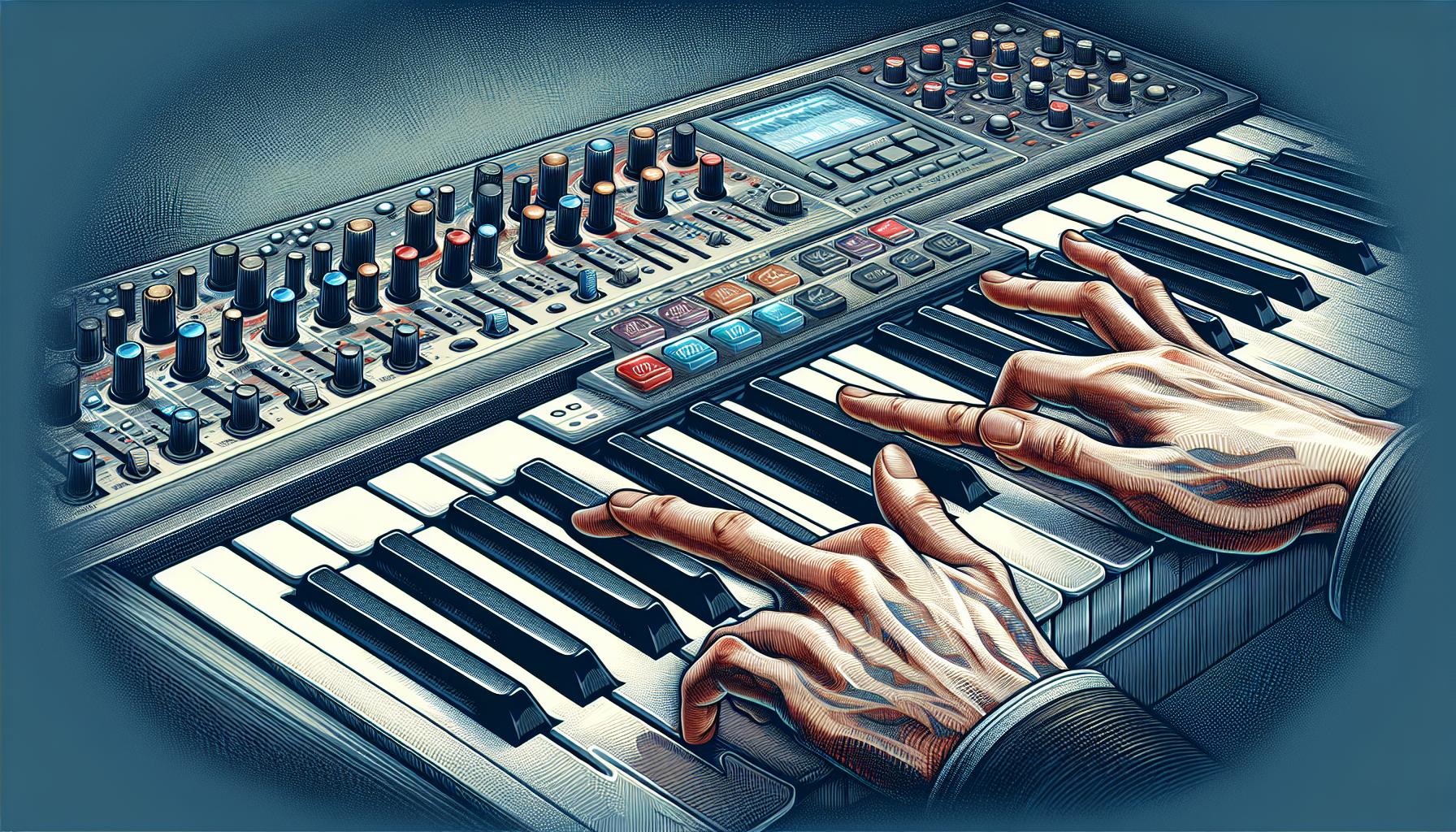
    Power chords have long been the secret sauce in the recipe of rock and punk music, but who says they’re exclusive to the guitar? Keyboard players, rejoice! You’re about to unlock a whole new level of cool in your playing. With just a bit of know-how, you can bring that gritty, punchy sound right to your fingertips, no guitar needed.

    Whether you’re aiming to beef up your band’s sound or just add some edge to your solo performances, power chords on the keyboard are your ticket. They’re surprisingly simple to master, and once you do, there’s no limit to the rock anthems you can crank out. Let’s dive in and discover how to make your keyboard roar with the power of chords.

    Understanding Power Chords

    Power chords are often seen as the backbone of rock and punk music, creating a sound that’s both gritty and compelling. While typically associated with guitars, keyboard players have the ability to harness the raw energy of power chords to add an electrifying element to their performances.

    In essence, a power chord consists of the root note and the fifth interval. These chords are commonly notated as a root note followed by the number 5, such as C5 or G5. The simplicity of this structure is what makes power chords especially appealing for musicians looking to add punch without the complexity of full chord shapes.

    For keyboard players, executing power chords involves selecting the appropriate root and fifth notes across the keyboard. The technique is straightforward but requires precision to ensure the intended sonic impact. They find this approach enables them to replicate the kind of robust, anthem-like quality that’s often associated with electric guitar riffs.

    Key Benefits of Using Power Chords on Keyboard

    Incorporating power chords into keyboard playing offers numerous advantages:

    • Simplicity: The basic two-note structure makes power chords easy to learn and incorporate into music.
    • Versatility: Suitable for various music genres, from rock to punk, and even pop, allowing keyboard players to explore different styles.
    • Fullness in Sound: Despite their simplicity, power chords add a fullness and depth to the music, enriching the overall texture.
    • Foundation for Creativity: They serve as a stepping stone for more complex compositions, encouraging musicians to experiment with their sound.

    Positioning and Technique

    Proper finger placement and technique are crucial for playing power chords effectively on the keyboard. Players usually use their thumb for the root note and their middle or ring finger for the fifth, depending on what’s comfortable and the span of their hand. It’s essential for keyboardists to practice moving between chords fluidly to maintain the rhythm of the piece they’re playing.

    To fully explore the potential of power chords, experimentation with different octave ranges can have a substantial impact on the sound produced. Playing the same chord in a lower octave can provide a heavier, more resonant base, while moving to a higher octave offers a lighter, more ethereal sound.

    Setting Up Your Keyboard

    Before diving into the exhilarating world of power chords on the keyboard, ensuring your instrument is properly set up is crucial for the best possible sound. This includes adjusting the keyboard settings, tuning, and selecting the right sounds or patches that complement the raw energy of power chords.

    Adjusting Keyboard Settings

    First, it’s important to adjust the keyboard’s settings to suit playing power chords. To capture the essence of power chords, which are known for their full and rich sound, selecting a setting that enhances the lower frequencies while maintaining clarity in the higher registers can make a significant difference. Experiment with different equalization (EQ) settings or select a preset that mimics a guitar amplifier. This can add the necessary grit and body to the keyboard’s sound, making the power chords punch through any mix.

    Choosing the Right Sounds

    Selecting the right sounds or patches is another vital step in setting up the keyboard for power chords. While traditional piano or electric piano sounds can work, exploring sounds that have a more pronounced attack and sustain can elevate the performance. Look for synth patches or organ sounds, as these can provide the necessary sustain and depth. Patches that incorporate a slight distortion or overdrive effect can also mimic the aggressiveness of a distorted electric guitar, bringing the keyboard closer to the sound of rock and punk genres.

    Tuning and Octave Selection

    Tuning is generally not an issue with digital keyboards, but ensuring your instrument is in standard concert pitch (A440 Hz) is important, especially if you’re playing with other musicians. When it comes to octave selection, playing power chords in the lower to middle octaves of the keyboard can add fullness to the sound. Experimenting with different octave ranges can help you find the sweet spot where the power chords sound best. Consider blending sounds from different octaves to create a fuller, more layered effect.

    Keyboard Action and Feel

    Finally, the action and feel of the keyboard can influence how effectively you play power chords. Weighted keys can offer a more expressive range by varying the attack, while semi-weighted or synth-action keys might allow for quicker transitions between chords. While personal preference plays a significant role here, it’s worth experimenting with different types of keyboards to see which best suits your playing style.

    Playing Power Chords in Different Keys

    Mastering power chords on a keyboard not only involves getting comfortable with their structure but also knowing how to transmute their raw energy across various musical keys. Transitioning power chords between keys unlocks a vast landscape of musical expression, vital for both composition and performance.

    To start, let’s clarify what power chords are in the context of a keyboard. A power chord typically consists of the root note and the fifth. Sometimes, players add the octave of the root to thicken the sound. Unlike standard chords that outline a song’s harmonic structure with thirds, sevenths, and beyond, power chords deliver a more neutral and robust sound, perfect for rock, pop, and electronic music genres.

    When moving power chords to different keys, understanding the circle of fifths can be incredibly helpful. The circle of fifths is a visual representation of all musical keys showing their relation based on the fifth interval. By familiarizing themselves with this circle, players can easily modulate power chords between keys, enhancing their musicality and versatility.

    Here are a few strategies for playing power chords in various keys:

    • Start Simple: Begin with power chords in the key of C Major, which requires no sharps or flats. This simplicity makes it easier to grasp the concept before tackling more complex keys.
    • Use Patterns: Recognize that the spacing between the root note and the fifth is consistent regardless of the key. This pattern recognition aids in swift adaptation across the keyboard.
    • Practice with Backing Tracks: Playing along with tracks in different keys helps solidify understanding and execution of power chords in diverse musical settings.

    Additionally, it’s beneficial to become comfortable with transposition — the process of changing a piece of music from one key to another. Many modern keyboards offer built-in transposition functions, allowing players to play in a comfortable key while the keyboard automatically shifts the music to the desired key. While this tool is handy, developing the skill to manually transpose ensures a deeper connection with the music and improves overall keyboard mastery.

    1. Select a simple song or chord progression.
    2. Play the progression using power chords in its original key.
    3. Utilize the circle of fifths to transpose the progression into at least three other keys.
    4. Practice each transposition with and without the use of the keyboard’s transposition function.

    Adding Variations and Style

    Once keyboard players have a solid grasp on the basic structure of power chords and key transitions, it’s time to inject some personality and variety into their play. This can be done by mastering a few techniques that add texture and depth to the otherwise straightforward power chords.

    Experimenting with Voicings

    One of the first ways to add variation is by experimenting with different voicings. Voicings refer to the way notes of a chord are spread out or ordered. Even though power chords are primarily composed of the root note and the fifth, there’s room for creativity in the way these are played:

    • Octave Stretching: Playing the root note in one octave and the fifth in another can create a fuller sound.
    • Adding an Octave Above: Including another root note an octave above the fifth gives the chord more presence and can often make it punchier.

    Rhythmic Variations

    Rhythm plays a crucial role in how power chords are perceived. Altering the rhythm can turn a basic progression into something much more interesting:

    • Palm Muting: Briefly muting the chords with the palm creates a staccato effect that adds a percussive element to the play.
    • Syncopation: Emphasizing off-beats can give power chords a groovy or funky feel, making them less monotonous and more dynamic.

    Applying Effects

    The digital nature of keyboards allows for the use of built-in effects to enhance the sound of power chords:

    • Distortion: Adding a mild distortion effect can emulate the gritty sound often associated with power chords on electric guitars.
    • Reverb and Delay: These effects can give chords a sense of space and depth, making them feel more atmospheric.

    Combining Techniques

    The true artistry comes when players start combining these various techniques. Using different voicings, injecting rhythmic variations, and applying effects strategically can transform simple progressions into engaging musical passages. It’s also beneficial to listen to recordings of songs that are known for their effective use of power chords and try to replicate the tone and style.

    • Equalization (EQ): Adjusting the EQ settings can highlight the punchiness of the power chords or make them blend better with other instruments.
    • Layering: Some advanced keyboards allow players to layer different sounds, which can

    Practice Tips for Mastery

    To truly master playing power chords on the keyboard, dedicated practice combined with smart strategies is essential. Consistency is key. Setting a regular practice schedule helps in building muscle memory and in deeply understanding the nuances of power chord progression.

    Start Slow

    Initiate your practice at a slow tempo. This allows you to focus on the accuracy of finger placements and the quality of sound each chord produces. As you become more comfortable, gradually increase the tempo. Remember, speed should never compromise accuracy. Use a metronome to keep track of your tempo and ensure that your timing remains precise.

    Break It Down

    Complex passages can be overwhelming. Breaking them down into smaller, manageable segments can make practice more effective. Focus on mastering each segment before moving onto the next. This not only helps in learning difficult sections more efficiently but also builds a sense of progress and accomplishment.

    Use a Variety of Sounds

    Experiment with different sounds and effects on your keyboard. Trying power chords with various instrument sounds or effects like distortion or reverb can inspire creativity and make practice sessions more enjoyable. This not only adds color to your playing but also helps in understanding which sounds work best for different types of music.

    Record and Review

    Recording your practice sessions provides valuable insights into your playing. Listening back can help you identify areas that need improvement and track your progress over time. It’s often easier to hear discrepancies in timing, dynamics, or tone in a recording than in the moment of playing.

    Play Along with Music

    Playing along with your favorite songs or backing tracks can make practice feel more engaging. This approach helps in developing timing and rhythm in a musical context. Additionally, it’s a fun way to apply what you’ve learned and see how power chords fit into actual music.

    Challenge Yourself Regularly

    Set small, achievable goals to keep pushing your boundaries. Whether it’s mastering a new song, incorporating a new technique, or increasing your playing speed, having clear objectives can motivate you to practice diligently. Celebrate your achievements, no matter how small, to stay motivated.

    Seek Feedback

    Getting feedback from more experienced keyboard players can provide valuable insights into your playing. Whether it’s in person or through online forums and communities, constructive criticism can help you identify areas for improvement and provide encouragement.

    Conclusion

    Mastering power chords on the keyboard is a journey that’s both challenging and rewarding. By sticking to a consistent practice routine and embracing the strategies outlined, players will find themselves making significant progress. It’s all about patience, persistence, and passion. Remember to enjoy the process, celebrate the small victories, and keep pushing the boundaries of creativity. With time and effort, the power of music will truly come alive under your fingertips.

  • Top Simple Classical Keyboard Pieces: Master “Fur Elise” & More

    Top Simple Classical Keyboard Pieces: Master “Fur Elise” & More

    Diving into the world of classical music can be a thrilling adventure, especially when you’re exploring it through the keys of a keyboard. For beginners, the complexity of classical pieces might seem daunting at first. But fear not! There are plenty of simple yet beautiful classical pieces perfect for those just starting their musical journey.

    Imagine being able to play a piece of history, touching the same notes that great composers like Bach and Beethoven once brought to life. It’s not only a great way to improve your keyboard skills but also a fantastic opportunity to connect with the music that has shaped the world. Let’s explore some of these accessible masterpieces that will not only captivate your audience but also boost your confidence as a budding musician.

    Benefits of Learning Simple Classical Pieces on Keyboard

    Diving into the realm of classical music as a beginner keyboard player can seem daunting at first. However, the truth is that starting with simple classical pieces offers a myriad of benefits that extend far beyond just learning a new tune. These pieces serve as a gateway into the complex world of music, allowing players to gradually build their skills in an engaging and rewarding way.

    Enhanced Technical Skills are one of the most significant advantages. Simple classical compositions may seem straightforward, but they often incorporate fundamental techniques crucial for any aspiring musician. From learning to control dynamics to mastering the art of phrasing, these pieces lay the groundwork for more advanced playing. As beginners tackle these compositions, they’re not just playing music; they’re sculpting their technical prowess with every note.

    Musical Expression and Emotion play a central role in classical music. Even the most basic pieces by composers like Bach or Beethoven are laden with emotional depth. Learning to convey these emotions through the keyboard is a valuable skill. It transforms playing from mere replication of notes to truly making music that resonates with the audience. This emotional connection not only enhances the player’s enjoyment but also deepens their understanding of music as a form of expressive art.

    The connection to Music History and Theory cannot be overstated. Each piece is a door to the past, offering insights into the era it was composed and the composer’s life and style. Beginners learn not just about music theory – like scales, chords, and harmony – but also about the cultural and historical contexts that shaped classical music. This knowledge enriches their overall musical experience, turning each piece they learn into a journey through time.

    Moreover, Progress and Motivation are significantly boosted when starting with simple pieces. Achieving mastery of a piece, no matter how simple, provides a tangible sense of accomplishment. This accomplishment is a powerful motivator, encouraging beginners to continue their musical journey. The joy of moving from one piece to the next, gradually increasing in complexity, helps maintain a high level of engagement and prevents frustration that can come from tackling too difficult pieces prematurely.

    Prelude in C Major by Johann Sebastian Bach

    One of the most accessible yet profoundly beautiful pieces for beginners is Bach’s “Prelude in C Major”. This piece is a perfect entry into the realm of classical music for keyboard players, offering a straightforward pattern that is both easy to learn and immensely satisfying to play. Originating from The Well-Tempered Clavier, Book I, this prelude is a sterling example of Bach’s genius in creating intricate music from simple structures.

    The beauty of “Prelude in C Major” lies in its consistent pattern of broken chords. This repetitive sequence not only makes it easier for beginners to grasp but also introduces them to the concept of voice leading and harmony. While the notes may seem simple at first, the challenge for players is to bring out the musicality of the piece through dynamic contrast and phrasing, turning a series of notes into a captivating musical story.

    Playing this piece, beginners will notice the emphasis on hand independence. The steady flow of notes requires the player to maintain a relaxed but controlled hand posture throughout, providing a gentle workout that builds finger strength and dexterity. This focus on technique is subtle but fundamental, setting a solid foundation for more complex pieces in the future.

    Moreover, “Prelude in C Major” serves as a vivid illustration of Bach’s style and the Baroque period’s musical characteristics. Through this piece, learners can explore the concepts of counterpoint and the importance of bass lines, enriching their understanding of music theory and history. It’s an invitation to delve into the world of Bach, discovering his other works and their significance in shaping classical music.

    As they progress through this piece, students are encouraged to experiment with tempo and dynamics. This experimentation is key to expressing the emotional depth of the piece. “Prelude in C Major” may appear simple, but it possesses an emotional resonance that, when tapped into, can move both the player and their audience. It’s an exercise in not just playing notes but in conveying feeling, an essential skill for any musician.

    Minuet in G Major by Ludwig van Beethoven

    Following the exploration of Bach’s “Prelude in C Major,” another piece that stands out as a perfect choice for beginners delving into the world of classical keyboard music is the “Minuet in G Major” by Ludwig van Beethoven. Unlike the complex symphonies and sonatas that Beethoven is famously known for, this minuet offers a gentle entry point into classical music that’s both enjoyable and manageable for newcomers.

    The “Minuet in G Major” is celebrated for its clear melody and structure. It’s a piece that’s been historically admired for its elegance and simplicity. Originating from Beethoven’s “Six Minuets” composed in 1795, this specific minuet shines as an example of classical form and beauty. The piece’s structure follows a straightforward ABA form, making it a fantastic example to learn about musical form.

    In terms of technicality, the demands of this piece are modest. The tempo is not too fast, which allows beginners to focus on accuracy and expression rather than speed. Here are a few technical aspects that beginners will find beneficial:

    • Finger placement and movement: The minuet provides a great opportunity to practice finger independence and control, a skill crucial for more complex pieces.
    • Dynamics and expression: Although the piece is straightforward, experimenting with dynamics can bring it to life, teaching beginners how to convey emotions through music.
    • Timing and rhythm: The 3/4 time signature of the minuet is perfect for beginners to get comfortable with this common but sometimes challenging rhythm.

    Learners should also pay attention to the phrasing within the piece. Each phrase offers a chance to explore how slight variations in touch and dynamics can significantly affect the overall musical expression. It’s a gentle reminder that even in simpler pieces, there’s a depth of musicality to be explored.

    Moreover, playing the “Minuet in G Major” provides an excellent opportunity for students to delve into historical context. Understanding the era in which Beethoven composed his works, including this minuet, adds great value to the learning experience. It encourages learners to see the piece not just as a set of notes on the page but as a reflection of the artistic and cultural movements of the time.

    Fur Elise by Ludwig van Beethoven

    “Fur Elise,” one of Ludwig van Beethoven’s most recognizable pieces, offers keyboard beginners an opportunity to delve into the world of classical music with a composition that’s both engaging and manageable. Unlike the more complex sonatas and symphonies that Beethoven is famed for, “Fur Elise” presents a more approachable challenge for novices, inviting them to explore the nuances of expressive playing without becoming overwhelmed by technicality.

    Composed in 1810, this piece was not published until 1867, long after Beethoven’s death, and has since become a staple in the repertoires of many aspiring pianists. The charm of “Fur Elise” lies in its A-B-A-C-A structure, which introduces learners to the concept of thematic development and recurrence within a piece. This structure underpins the thematic contrast and the emotional breadth that Beethoven is famous for, providing a gentle introduction to these concepts for beginners.

    Practicing “Fur Elise” allows students to work on several key skills:

    • Finger dexterity and independence: The piece’s arpeggiated chords and melodic flourishes serve as an excellent exercise for developing agility in the fingers.
    • Expression and dynamics: With its famous opening motif and dynamic contrasts, students learn how to convey emotion through touch and control of volume.
    • Tempo and rhythm: The varying sections within “Fur Elise” require players to adapt to changes in tempo and rhythm, adding to their musicality and timing.

    It’s crucial for students to remember that while the beginning sections of “Fur Elise” might come easily, the piece’s later parts demand more patience and practice. This progression mirrors the journey of learning an instrument—start with enthusiasm, face challenges, and grow from the experience.

    In addition to technical skills, “Fur Elise” offers a gateway into the historical and cultural context of Beethoven’s time. Understanding the story behind the composition, who Elise was (though her identity remains a mystery), and the era in which Beethoven composed adds depth to the learning experience. It emphasizes that music is not just about playing the right notes in the right order; it’s about connecting with the past, conveying emotions, and continuing a tradition of artistic expression.

    Conclusion

    Diving into the world of classical music through the keyboard opens up a realm of expressive and technical growth for beginners. With pieces like “Fur Elise,” learners not only get a taste of Beethoven’s genius but also embark on a journey that sharpens their musical abilities. It’s about more than just hitting the right notes; it’s about connecting with the emotions and stories behind the music. As they practice, players will find themselves developing a deeper appreciation for the art form and a stronger connection to the composers who’ve shaped it. So grab your keyboard, dive into these timeless pieces, and let the music guide you through an enriching learning experience.

  • Master Jazz Keyboard Voicings: Techniques & Tips for Advanced Players

    Master Jazz Keyboard Voicings: Techniques & Tips for Advanced Players

    Jazz keyboard voicings are the spice that gives jazz music its unique flavor. Imagine each chord as a color palette, and the way a jazz pianist chooses to play these chords as the brushstroke that paints a masterpiece. It’s not just about hitting the right notes; it’s about how they’re played together, creating layers of sound that can evoke a range of emotions.
    Diving into the world of jazz keyboard voicings opens up a universe of creativity and expression. Whether you’re a seasoned pianist or just starting to explore the depths of jazz, understanding these voicings can transform your playing. It’s like unlocking a secret language that lets you communicate with your audience on a whole new level.

    Importance of Jazz Keyboard Voicings

    Jazz keyboard voicings are much more than merely playing chords on a piano; they’re the backbone of the jazz sound that enthusiasts have come to know and love. These voicings, or the way in which notes of a chord are spread out and played on the instrument, add depth, color, and texture to the music, creating a rich tapestry of sound that is distinctly jazz.

    One might liken jazz voicings to the spices in a dish. Just as the right combination of spices can transform a meal from ordinary to extraordinary, the right voicings can elevate a jazz piece, making it truly resonate with the listener. It’s not an exaggeration to say that jazz voicings are pivotal in shaping the mood and emotional impact of a piece. Whether they aim to invoke a feeling of nostalgia, joy, sorrow, or contemplation, the chord voicings chosen by a jazz musician play a crucial role.

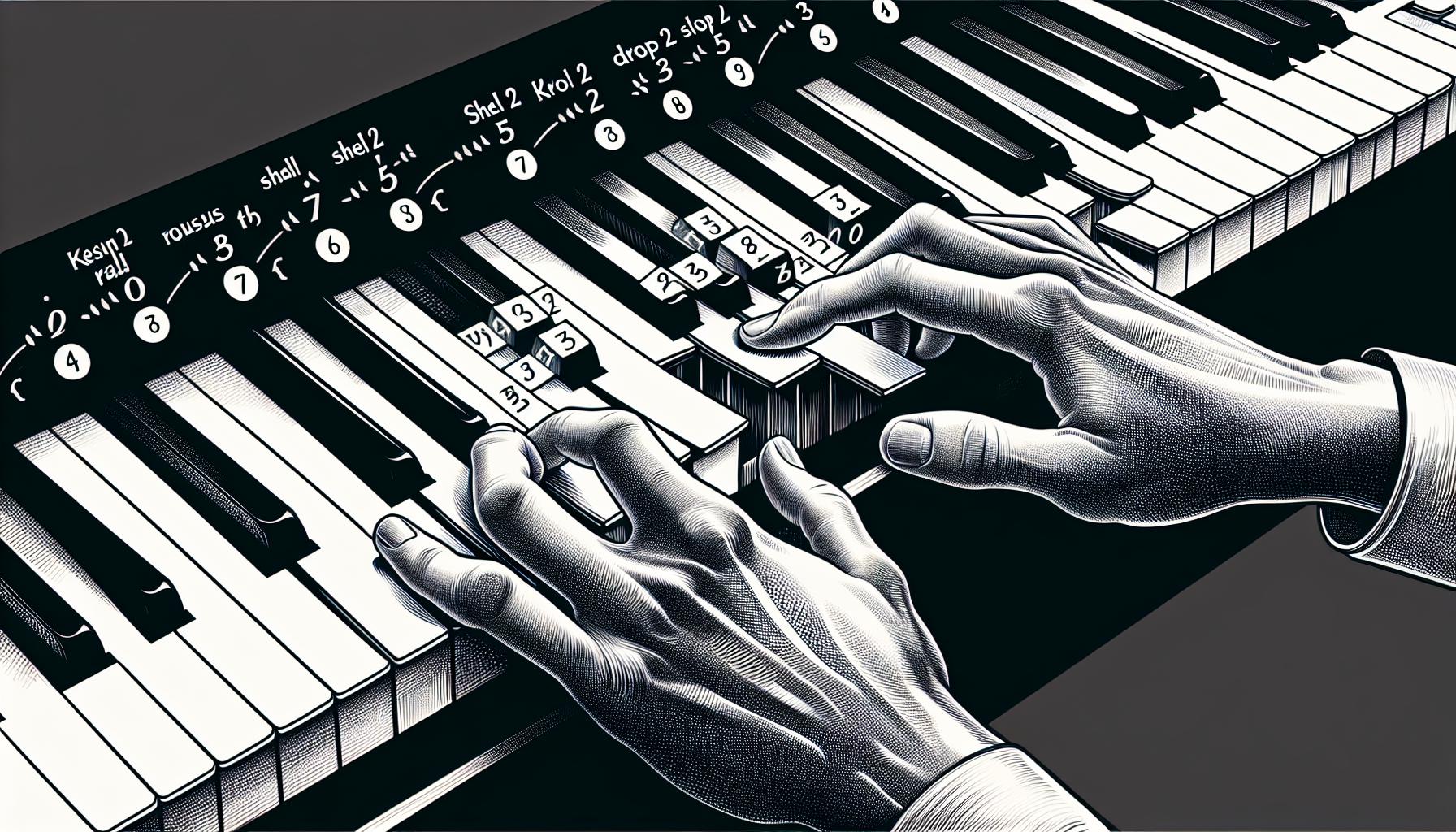
    For pianists, mastering jazz keyboard voicings means moving beyond basic chord structures to explore more complex and expressive ways to play. This involves learning various voicing techniques, such as rootless voicings, shell voicings, and drop 2 voicings, among others. Each technique offers a different flavor and texture, allowing the musician to convey a wide range of emotions and styles within their performances.

    Rootless voicings, for instance, omit the root of the chord and focus on the 3rd, 7th, and sometimes the 5th or 9th. This approach provides a more open sound and leaves space for bass instruments to fill in the root. Shell voicings, on the other hand, strip the chord down to its bare essentials—usually just the 3rd and 7th—offering a minimalist texture that is both clear and powerful.

    The exploration of jazz keyboard voicings doesn’t just benefit those aiming to become professional musicians. Even beginners can find joy in discovering how shifting one note in a chord can change the whole feel of a song. It’s an exploratory process that fosters creativity and encourages a deeper understanding of music theory and harmony.

    Types of Jazz Keyboard Voicings

    When diving into the realm of jazz keyboard voicings, pianists encounter a world rich with diverse styles and techniques. Each type of voicing offers a unique texture and emotional depth, turning the keyboard into a versatile instrument capable of expressing the intricate layers of jazz music. Among these, a few stand out for their widespread use and foundational role in jazz harmony.

    Rootless Voicings are a go-to technique for many jazz pianists. As the name suggests, these voicings omit the root of the chord, which is often played by the bass instrument in a jazz ensemble. This absence allows for a more spacious sound and gives the pianist the freedom to incorporate more colorful tones, such as the 9th, 11th, and 13th. Rootless voicings thrive in ensemble settings, where the combined instruments create a full harmonic picture.

    Shell Voicings strip down chords to their bare essentials — often just the third and the seventh of the chord, sometimes including the root or the fifth. This simplicity makes shell voicings incredibly versatile and easy to move around the keyboard. They are especially useful for beginners or when accompanying a soloist, providing a clear harmonic structure without overcrowding the sonic space.

    Drop 2 Voicings are another pillar in the jazz pianist’s toolkit. This technique involves dropping the second-highest note of a closed-position chord down an octave, creating a wider voicing that allows each note to be heard more distinctly. The result is a richer, more resonant sound that is particularly effective for solo piano performances. Drop 2 voicings can add depth and warmth to any piece, making them a favorite among jazz musicians.

    To illustrate the diversity and application of these voicings, consider the following examples in a C Major 7 context:

    Voicing Type Example Notes
    Rootless E, B, D, F
    Shell C, B, E
    Drop 2 G, C, E, B

    Each of these voicings presents a different angle of the C Major 7 chord, showcasing the pianist’s ability to shape the music’s mood and texture.

    Techniques for Playing Jazz Keyboard Voicings

    Mastering jazz keyboard voicings goes beyond knowing various voicing types. It’s about how these voicings are skillfully brought to life through techniques that embody the spirit of jazz. The journey from written note to musical expression involves a blend of foundational practices and innovative adaptations, all aiming to enhance the rich tapestry of jazz music.

    Voice Leading is a critical technique in jazz, ensuring a smooth transition between chords. By moving each voice to the nearest chord tone in the ensuing chord, musicians create a seamless flow in the music. This technique minimizes movement, which not only makes playing easier but also weaves a cohesive harmonic narrative. It’s particularly powerful in songs with complex chord progressions, as it maintains a sense of continuity and connection.

    Another essential technique is Rhythmic Variation. Jazz thrives on its rhythmic dynamism, and the keyboard is no exception. Players often experiment with syncopation, shifting accents, and altered rhythms to add excitement and unpredictability. This approach breathes life into voicings, making them feel fresh and spontaneous. The key is to remain fluid, allowing the rhythm to ebb and flow naturally within the structure of the piece.
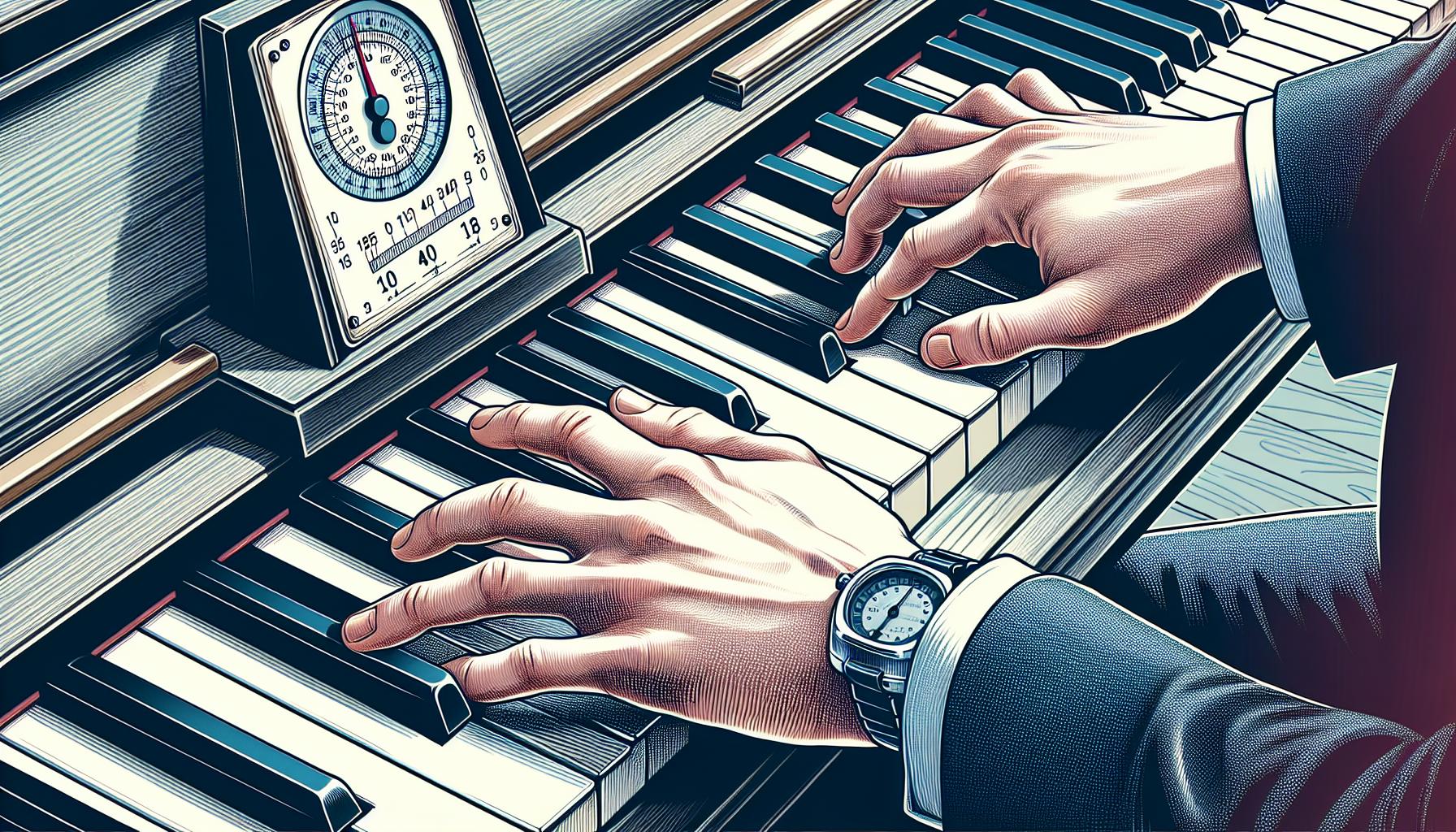
    Pedaling offers a means to enrich a voicing’s texture. By skillfully using the sustain pedal, keyboardists can create a legato effect, connecting notes and chords that might otherwise sound disconnected. When overused, however, it can muddy the sound. The trick lies in judicious application—clearing the pedal after chord changes to preserve clarity while still benefiting from the pedal’s enriching effect.

    Incorporating Melodic Lines within chord voicings can elevate a performance from good to unforgettable. Instead of merely accompanying, the keyboard becomes an active voice in the melody, intertwining melodic phrases with harmonic structures. This technique requires a deep understanding of both the melody and the harmonic framework, enabling the player to adroitly weave melodic lines into the chord voicings without losing sight of the underlying harmony.

    Applying Jazz Keyboard Voicings in Songs

    When it comes to applying jazz keyboard voicings in songs, the process extends beyond mere technical know-how. It’s about interpreting a song’s emotional and harmonic landscape, and then painting it with rich, evocative chords. Jazz pianists often start by mastering the standard chord progressions found in many jazz standards. This foundation allows them to explore more complex voicing techniques effectively.

    One common starting point is reharmonization. This involves altering the original chords of a song to introduce new colors and textures. For instance, substituting a dominant seventh chord with a more tension-filled altered dominant can drastically change the mood of a passage. Learning to apply such substitutions tastefully is paramount for a jazz pianist wanting to add their unique stamp on a piece.

    Incorporating voicings into a song also means being mindful of the role they play within a band. When accompanying a soloist, for example, it’s important to provide a supportive and complementary backdrop. This often means opting for sparser, less intrusive voicings to allow the soloist’s lines to shine through. Conversely, during solos, richer, more elaborate voicings can be used to showcase the keyboardist’s virtuosity and harmonic knowledge.

    Interplay and Dialogue

    A captivating aspect of jazz is the interplay and dialogue between musicians. Keyboard voicings are crucial here, as they can respond to, or even provoke, responses from other band members. This interaction creates a dynamic and evolving performance, showcasing the fluid nature of jazz.

    Practice Makes Perfect

    To effectively apply jazz keyboard voicings, extensive practice is imperative. This includes:

    • Transcription: Learning voicings from recordings by ear not only improves aural skills but also introduces players to a wide array of voicing possibilities.
    • Playing along: Practicing with recordings or in a band setting helps solidify the application of voicings in real-time musical situations.
    • Experimentation: Constantly trying new voicings and chord substitutions in different contexts sharpens one’s ability to think on their feet.

    Pianists should also study the work of jazz keyboard legends, absorbing nuances from their playing to develop a more authentic and expressive style.

    Advancing Your Jazz Keyboard Voicings Skills

    Once a foundational understanding of jazz keyboard voicings is in place, the journey towards advancement requires exploration beyond conventional boundaries. To truly elevate one’s skill in jazz keyboard voicings, it’s essential to dive into techniques that challenge the player’s creative and technical abilities.

    One effective method to enhance voicing skills is through the practice of inversions. By playing chord voicings in different positions, keyboardists can discover a wider range of sounds and learn how to smoothly transition between chords in a progression. This technique not only broadens the harmonic palette but also aids in developing a more fluid playing style.

    Incorporating non-traditional rhythms into one’s playing can open up new avenues of expression. Jazz is as much about rhythm as it is about harmony, and experimenting with syncopation or odd time signatures can add a fresh dynamic to voicings. This approach encourages keyboardists to think outside the box and explore the rhythmic possibilities within their harmonies.

    Listening and transcribing solos from jazz greats is another invaluable tool for advancement. By taking the time to listen carefully to recordings and transcribe the voicings used by legendary jazz keyboardists, musicians can gain insight into the application of theory in practice. This exercise not only improves ear training but also provides a comprehensive understanding of how voicings can shape the narrative of a solo or composition.

    A significant leap in skill level may also come from collaboration with other musicians. Playing in a band or with a jam group offers real-time feedback on one’s voicing choices, enabling the musician to understand how their voicings fit within the context of a group. The interaction with other instruments can highlight the importance of voicings in supporting or leading within an ensemble.

    Lastly, embracing the art of improvisation with the keyboard can significantly enhance one’s mastery of jazz voicings. Improvisation allows musicians to experiment with chord voicings on the fly, testing out new harmonic textures and progressions in a spontaneous setting. This practice not only boosts creativity but also hones the ability to adapt and respond musically in varied performance contexts.

    Conclusion

    Exploring jazz keyboard voicings is a journey that takes one beyond the realm of basic chord structures into a world where creativity knows no bounds. By mastering inversions and experimenting with non-traditional rhythms, players can unlock a whole new spectrum of sound. The wisdom of jazz legends through transcription offers invaluable insights, while collaboration sharpens one’s ability to adapt and thrive in a group. Above all, embracing the art of improvisation is key to discovering one’s unique voice on the keyboard. With these skills, the possibilities are endless, inviting players to continuously evolve and redefine their musical expression.

  • Master Jazz Keyboard: Top Improvisation Techniques Explained

    Master Jazz Keyboard: Top Improvisation Techniques Explained

    Jazz keyboard improvisation is like painting with sound, where each stroke can lead to a new, unexpected hue. It’s an art form that’s as exhilarating as it is challenging, offering musicians a canvas to express their deepest emotions and wildest ideas. From the smoky bars of New Orleans to the chic lounges of New York, jazz keyboardists have been captivating audiences with their spontaneous creations for decades.

    Diving into the world of jazz keyboard improvisation, one quickly discovers it’s not just about hitting the right notes; it’s about telling a story. Each improviser brings their own flavor to the mix, drawing from a rich palette of techniques to craft solos that are truly their own. Whether you’re a seasoned pianist or just starting out, exploring these techniques can open up a whole new world of musical expression.

    Understanding Jazz Keyboard Improvisation

    Jazz keyboard improvisation is often compared to a dialogue. Each musician listens and responds to the other, creating a conversation that’s both dynamic and fluid. This exchange is not just among the players but also with the audience, making each performance unique and ephemeral. The essence of jazz improvisation lies in its spontaneity and the musician’s ability to express emotions and thoughts through their instrument in real-time.

    At the heart of jazz keyboard improvisation is the concept of music theory. Understanding scales, chords, and progressions provides the foundational language for these musical conversations. However, knowing the rules is only the starting point. Great jazz pianists like Thelonious Monk and Bill Evans became maestros by bending and stretching the conventional rules to articulate their unique voices. For instance, Monk’s use of dissonant chords and unexpected pauses became his signature, teaching us that silence can speak as loudly as a flurry of notes.

    Improvisation can also be seen as painting with sound. Just as a painter uses a palette of colors to create imagery, a jazz keyboardist uses the keyboard to paint auditory landscapes. This sonic painting doesn’t come out of nowhere; it’s deeply rooted in a rich tradition of jazz history and culture. Familiarity with jazz standards and the work of past giants provides a canvas on which musicians can sketch their improvisations. It’s a balance between paying homage to tradition and forging a personal path through uncharted musical territories.

    Technique is undoubtedly a key element in unlocking the full potential of jazz improvisation. Mastery of the keyboard through scales, chord voicings, and rhythmic patterns allows musicians to translate their intuitive impulses into coherent musical phrases. Techniques such as swing feel, arpeggios, and the use of dynamics are tools that add depth and emotion to the musical conversation. They’re the vocabulary through which musicians articulate the stories they wish to tell.

    Another critical aspect is the understanding and implementation of modes. Modes offer a variety of tonal landscapes from which to draw inspiration. For example, the Dorian mode can impart a soulful or melancholic mood, while the Lydian mode might evoke a sense of ethereal, floating calm. Knowing when and how to use these modes effectively can elevate the narrative quality of an improvisation, making it more compelling and resonant with listeners.

    Essential Scales and Modes for Jazz Improvisation

    Jazz improvisation on the keyboard is as much about the scales and modes as it is about the emotion and connection with the audience. Knowing which scales to use and when can elevate a performance, transforming it from good to unforgettable. In this part of the article, we’ll dive into some of the essential scales and modes that form the backbone of jazz improvisation.

    Major Scales and Mixolydian Mode

    At the heart of many jazz improvisations are the major scales. These scales are fundamental, not just in jazz, but in understanding Western music as a whole. However, what sets jazz apart is how these scales are used. By incorporating the Mixolydian mode, which is essentially a major scale with a flattened seventh, musicians can give their performances a distinctly jazzy feel. This mode adds a bit of tension and color, making it perfect for solos.

    Dorian and Phrygian Modes

    The Dorian mode is another favorite among jazz keyboardists. It has a minor third and seventh, which gives it a slightly melancholic sound, ideal for certain types of blues and modal jazz. Similarly, the Phrygian mode, known for its Spanish-flamenco feel due to its minor second, brings an exotic flavor that can make improvisations stand out.

    Blues and Pentatonic Scales

    The blues scale is indispensable in jazz improvisation. It’s essentially a minor pentatonic scale with an added ♯4 or ♭5, known as the “blue note.” This scale is the backbone of the blues genre and is widely used to infuse solos with soulful, melancholic tones. Pentatonic scales, both major and minor, are also crucial. Their simplicity and versatility make them a favorite tool for improvisation, laying down melodious lines that are easy to listen to and highly expressive.

    Chord Voicings and Progressions in Jazz Keyboard

    When diving into the world of jazz keyboard improvisation, understanding chord voicings and progressions is like discovering a treasure map. These elements are the backbone of jazz’s harmonic richness and are essential for any keyboardist looking to master the genre. Chord voicings refer to how the notes of a chord are spread out or arranged on the keyboard. The right voicing can turn a simple chord progression into a captivating musical journey.

    Jazz keyboardists often explore beyond basic triads, delving into seventh, ninth, or even thirteenth chords to achieve that quintessential jazzy sound. Voice leading, or the smooth transition between the notes of different chords, becomes crucial here. It’s all about making the chord changes sound fluid and coherent, creating a conversation between the chords.

    One of the most celebrated aspects of jazz chord progressions is their cycle of fifths movement. This progression moves chords in intervals of a fifth, creating a sense of anticipation and resolution that is both satisfying and intriguing to the listener. The II-V-I progression, in particular, stands out as a fundamental building block in jazz compositions, providing a harmonic framework that’s both versatile and dynamic.

    Experimenting with chord extensions and alterations offers a pathway to unique sounds and emotions. For instance, a dominant seventh chord might be modified with a sharp ninth or a flat thirteenth to add tension and complexity, begging for resolution that can lead the improvisation in new directions. Jazz keyboardists leverage these harmonic tools not just for their theoretical intrigue but for their profound ability to convey mood and story.

    • Use of Inversions: Playing around with different inversions of chords can help in creating smoother transitions and maintaining interest throughout the improvisation.
    • Experiment with Extensions: Adding notes beyond the basic triad or seventh chord can open up a whole new palette of sounds. Try incorporating ninths, elevenths, and thirteenths.
    • Practice Voice Leading: Pay attention to how the voices within the chords move from one chord to the next. Aim for minimal movement for a sleeker sound.
    • Explore Modal Interchange: Borrowing chords from parallel modes can introduce unexpected colors and emotional shifts within a progression.

    Creating Melodic Lines and Phrasing Techniques

    One of the most exhilarating aspects of jazz keyboard improvisation lies in the creation of melodic lines that breathe life and narrative into a performance. Melodic improvisation is not just about playing the right notes; it’s about telling a story, evoking emotions, and engaging the listener through dynamic phrasing and expressive techniques. To excel in crafting captivating melodic lines, jazz keyboardists delve into various approaches that enrich their musical vocabulary.

    Firstly, they focus on scale mastery and modal exploration. Understanding and having fluidity in both traditional and exotic scales is foundational. Jazz musicians often lean on modes, which are scales derived from the major scale but starting on a different note, to create unique sounds and feelings in their solos. For example, the Dorian mode provides a minor feel with a bright, raised sixth that adds a unique color perfect for certain jazz contexts.

    Phrasing, the art of shaping musical sentences, is where true personality shines through in jazz improvisation. Effective jazz keyboardists utilize techniques such as:

    • Call and response: This ancient technique creates a dialogue within the music, where one phrase (the call) is answered or commented on by another (the response), often mimicking conversational flow.
    • Syncopation: Emphasizing off-beats or unexpected beats in the music, syncopation is key to adding groove and interest to solos.
    • Dynamic variation: Playing with the volume and intensity of notes and phrases can enormously impact the emotional effect of a performance.

    Another critical strategy for enriching melodic improvisation is motivic development. This involves taking a short musical idea or motif and evolving it throughout the solo. Alterations can include changing the rhythm, altering intervals, inverting the motif, or transposing it to different pitches. This technique not only provides cohesion to a solo but also enables the musician to explore expansive musical landscapes while staying anchored to a thematic idea.

    In crafting captivating melodic lines, it’s also essential for jazz keyboardists to:

    • Listen extensively to great jazz players and analyze their solos for melodic construction and phrasing nuances.
    • Practice improvisation regularly, experimenting with different scales, modes, and rhythmic patterns.
    • Record and critique their improvisations, noting areas for improvement and elements that work well.

    Advanced Jazz Keyboard Improvisation Tips

    Moving deeper into the realm of jazz keyboard improvisation, artists often search for ways to elevate their performance. As musicians journey beyond the fundamentals, the development of a unique voice becomes paramount. To achieve this, certain advanced techniques and concepts are indispensable.

    Polyrhythms and Cross-Rhythms play a pivotal role in enriching the rhythmic complexity of improvisations. By superimposing different rhythms or patterns over one another, keyboardists can create intriguing and unexpected rhythmic textures. It’s not just about playing more notes; it’s about weaving a richer tapestry of sound that captivates the listener.

    Exploring Extended and Altered Harmonies is another key area. Jazz thrives on harmonic complexity, and the use of extended (9ths, 11ths, 13ths) and altered (b9, #11, b13) chords can introduce a whole new dimension to the music. These harmonies provide a lush, sophisticated backdrop, against which solos can truly shine. Keyboardists often experiment with these in their left-hand chord voicings while their right hand explores melodic improvisation.

    Incorporation of Reharmonization Techniques allows players to reinterpret the underlying harmonies of a piece, thus offering fresh perspectives on familiar tunes. By changing the chords or harmonies without altering the melody, artists can surprise the audience and keep the music evolving. This technique requires a solid understanding of music theory and harmony but rewards players with endless creative possibilities.

    Melodic Minor and Diminished Scales shouldn’t be overlooked. Beyond the major and minor scales, these scales offer a treasure trove of melodic ideas. The melodic minor scale, for example, is versatile and can adapt its mood depending on the context. The diminished scale, with its symmetrical intervals, offers a sense of tension and release, which can add drama to improvisations.

    Interaction with the Band is crucial in elevating a performance. Jazz is a conversation, and listening and responding to bandmates during a solo segment can lead to magical moments of collective improvisation. It’s not just about individual brilliance but about creating something greater as a group.

    • Regularly Practice with a Metronome: This improves timing and rhythmic accuracy, especially important for mastering polyrhythms.
    • Study Jazz Scores: Analyzing the scores of

    Conclusion

    Mastering jazz keyboard improvisation is a journey that requires dedication, practice, and a willingness to explore. By integrating advanced techniques like polyrhythms, extended harmonies, and reharmonization, keyboardists can unlock new dimensions in their playing. It’s not just about the notes themselves but how they’re woven into the fabric of the music, creating a dialogue with the band and the audience. Remember, the goal is to find your unique voice and express it through your instrument. So keep experimenting, listening, and learning. The world of jazz is vast and full of surprises waiting to be discovered. Happy playing!

  • Mastering Piano Chords: Play Flawlessly Without Mistakes

    Mastering Piano Chords: Play Flawlessly Without Mistakes

    Playing the piano can feel like trying to solve a beautiful, complex puzzle. Each chord is a piece that must fit perfectly to create a harmonious melody. However, hitting the wrong notes can disrupt the music, leaving pianists feeling frustrated. But don’t worry, mastering chords without mistakes is within reach.

    Imagine sitting at your piano, fingers gliding over the keys, hitting every chord flawlessly. It’s not just a dream. With the right techniques and practice, anyone can achieve this level of precision. This article will guide you through the steps to play piano chords without hitting wrong notes, ensuring your music flows as smoothly as a river.

    Understanding Piano Chords

    Piano chords are more than just a group of notes played simultaneously—they’re the soul of a piece, giving it emotion, tension, and resolution. To play them without mistakes, it’s essential to dive deep into their structure and function. Essentially, chords are made up of a root note, which determines the chord’s name, and several other notes that create the chord’s quality, such as major, minor, diminished, or augmented.

    Firstly, recognizing chord shapes on the keyboard is crucial. Each chord type has a unique pattern that, once learned, makes it easier to navigate the keys. For example, a major chord has a bright, happy sound and is formed by playing the root note, a note four semitones above, and a note three semitones above the second note.

    Next, understanding chord inversions can significantly reduce the likelihood of hitting wrong notes. Inversions rearrange the notes of a chord but keep the overall sound. This technique allows for smoother transitions between chords by minimizing hand movement across the keyboard. For players, mastering inversions means less time spent searching for notes and more time creating fluid, harmonious music.

    Here’s a simple breakdown of chord types and their associated number of semitones between notes:

    Chord Type Semitones Between Notes
    Major 4, 3
    Minor 3, 4
    Diminished 3, 3
    Augmented 4, 4

    Theory aside, the physical aspect of playing chords accurately cannot be overlooked. Hand position and finger strength play a pivotal role. Fingers should be curved, not flat, allowing for deft movements across the keys. Daily exercises that focus on finger independence can help in building the required dexterity.

    Additionally, sight-reading plays a significant role in avoiding mistakes. The ability to read music and anticipate chord changes before they occur ensures that players are always a step ahead. Incorporating sight-reading practice into regular sessions can enhance this skill, making it easier to hit the right notes at the right time.

    Common Mistakes to Avoid

    When aspiring pianists embark on the journey of mastering piano chords, they often encounter a few common pitfalls along the way. Being aware of these can significantly enhance one’s learning curve and reduce the likelihood of hitting wrong notes.

    First and foremost, inadequate hand positioning is a major stumbling block for many. Proper hand placement is not merely about comfort; it directly impacts the accuracy and ease with which one can transition between chords. Without correct positioning, fingers may struggle to reach the intended keys, leading to potential mistakes.

    Another critical issue is the lack of finger independence. Many beginners find their fingers moving in unison rather than acting independently to strike specific notes of a chord. This limitation often results in hitting additional, unintended notes. Regular exercises focused on strengthening finger independence can mitigate this issue, fostering more precise chord execution.

    Rushing through chord transitions also leads to errors. In the eagerness to play a piece fluently, learners might move too quickly from one chord to another without establishing a solid grip on the current one. This haste can cause a blurring of notes or entirely wrong chords being played. Patience and a deliberate pace are key to overcoming this challenge.

    Neglecting the importance of muscle memory is another common mistake. Repeating chord shapes and progressions helps embed them in memory, allowing for smoother transitions and reducing the chances of hitting wrong notes. However, this requires consistent practice and patience to develop.

    Failure to understand chord theory can also hinder one’s ability to play without errors. Knowing the structure and relationship between chords enables players to anticipate and prepare for what comes next in a piece, thereby minimizing mistakes.

    Here are some action points to tackle these issues:

    • Practice hand positioning: Spend time each practice session adjusting and noting how your hands and fingers are placed on the keys.
    • Finger independence exercises: Incorporate specific exercises into your routine to build strength and independence in each finger.
    • Slow down: Give yourself permission to slow down. Focus on accuracy before speed.
    • Build muscle memory: Repeat chord shapes and progressions multiple times until they feel natural and require less conscious thought.
    • Study chord theory: Dedicate a portion of your study to understanding the theory behind chords and their progressions.

    Practice Techniques for Accuracy

    Mastering piano chords without hitting the wrong notes is all about employing the right practice techniques. By focusing on precision, students can develop a strong foundation that enables them to play confidently and accurately.

    Slow Practice

    One of the most effective techniques is practicing slowly. This might seem counterintuitive at first, but playing at a slow pace allows musicians to pay closer attention to their finger placement and movement. By deliberately pressing each key, they can ensure that every note is intentional and accurate. Gradually, as they become more confident in their chord formations, they can increase the tempo, maintaining accuracy at faster speeds.

    Use of Metronome

    Incorporating a metronome into practice sessions helps in developing a consistent tempo and strengthens rhythmic accuracy. Starting with a slow tempo allows for focus on each chord transition. As proficiency grows, increasing the metronome speed challenges the musician to maintain accuracy at quicker paces.

    Breaking Down Chords

    Understanding the structure of chords is crucial. By breaking down chords into their individual components, musicians can practice each note separately before playing them together. This step-by-step approach ensures that each finger knows its place, reducing the likelihood of hitting wrong notes.

    Repetition and Muscle Memory

    The power of repetition cannot be understated in building muscle memory. By repeatedly practicing chord progressions, the movements become second nature. This muscle memory allows musicians to play chords without having to think about each note, making it easier to avoid mistakes even when not looking at the keys.

    Recording and Listening

    Another invaluable technique is to record one’s practice sessions. Listening to these recordings can highlight areas where mistakes are frequently made, offering insights into where further practice is needed. This self-analysis promotes a cycle of continuous improvement and accuracy in playing chords.

    Integrating Theory with Practice

    A solid understanding of chord theory complements physical practice. Recognizing chord patterns and progressions on a theoretical level aids musicians in anticipating and preparing for chord changes during performances, ensuring smoother transitions and reducing errors.

    Focused Practice Sessions

    Finally, the effectiveness of practice sessions greatly depends on their focus. Instead of long, unfocused sessions, shorter periods dedicated to specific aspects of chord playing can yield better results. This targeted approach allows for deep concentration on rectifying specific errors, leading to more accurate chord execution.

    Tips to Improve Chord Transition

    Transitioning smoothly between chords is a critical skill for any pianist wanting to play without hitting wrong notes. Here are some strategies to enhance your chord transition skills, ensuring a seamless flow as you play.

    Firstly, visualization plays an essential role in mastering chord transitions. Before even touching the keys, it’s beneficial for pianists to visualize the movement between chords. This mental practice can significantly reduce errors, as they’re preparing their hands for the movement ahead. Imagining the shift from one chord to another can bridge the gap between conscious effort and subconscious execution.

    Hand positioning also cannot be overstated. When moving from one chord to another, the fingers must be optimally positioned to strike the next chord accurately. This often means anticipating the next chord shape and adjusting the hand position in advance to allow for fluid movement. Regular practice focusing on the economy of motion helps in minimizing the physical distance between chords, making transitions smoother and faster.

    Practicing common chord progressions is another effective method. Most songs are built on a series of chord progressions that recur throughout various genres of music. By practicing these progressions, pianists can familiarize themselves with the motions involved in switching between chords commonly found together. This familiarity significantly reduces the likelihood of hitting wrong notes. Here are a few key progressions to master:

    Progression Example
    I-IV-V-I C-F-G-C
    ii-V-I Dm-G-C
    I-vi-IV-V C-Am-F-G

    Additionally, incorporating pivot fingers into your practice can be a game-changer. A pivot finger is a finger that remains on the same note or moves minimally when transitioning between chords. This technique provides a physical anchor for the hand, improving accuracy and speed in chord transitions. Identifying and using pivot fingers requires an understanding of chord structures but is immensely beneficial for fluid movements.

    Lastly, the importance of slow, deliberate practice can’t be emphasized enough. Speeding through chord transitions without accuracy reinforces bad habits. By slowing down, musicians give themselves the chance to focus on the nuances of transition, including finger placement, movement, and timing. Using a metronome set to a slow tempo can aid in developing a consistent pace, gradually increasing speed only when precision at a slower pace is achieved.

    Refining Your Skills

    When tackling the challenge of playing piano chords without hitting wrong notes, refining one’s skills goes beyond mere practice. It’s a combination of precision, intuition, and strategic rehearsal. For pianists striving for improvement in this area, it’s essential to focus on refining skills in a way that integrates both the mechanical and the expressive aspects of playing.

    One pivotal approach is focusing on muscle memory. The repetition of chord shapes and transitions aids in embedding these movements into a pianist’s muscle memory, allowing for more fluid and accurate execution without the conscious effort of remembering each note. This doesn’t mean mindless repetition; each practice session should be intentional, concentrating on the accuracy of finger placement and movement.

    In addition to developing muscle memory, ear training plays a crucial role. Being able to recognize chord sounds and intervals by ear greatly aids in preventing and quickly correcting wrong notes. Ear training enhances a musician’s ability to anticipate the sound of a chord before it is played, ensuring that any discrepancies can be identified and adjusted on the fly. Incorporating ear training exercises into daily practice routines can accelerate this learning process.

    Here are several practical steps to integrate into practice sessions:

    • Slow, Focused Repetition: Take chord progressions slowly, focusing on the accuracy of each note and transition. Speed should only be increased once precision is achieved.
    • Record and Review: Recording practice sessions and listening back can be incredibly revealing. It allows pianists to hear their playing from another perspective, helping to catch mistakes and areas needing improvement they might not notice in the moment.
    • Interactive Learning Tools: Utilizing apps and software designed for music theory and ear training can make these aspects of learning more engaging and efficient.
    Strategy Description
    Muscle Memory Repetition of chord shapes and transitions to embed into physical memory.
    Ear Training Exercises designed to improve recognition of sounds and intervals.
    Slow Repetition Focused practice on accuracy at a slow tempo before increasing speed.
    Record and Review Using recordings to spot mistakes and areas for improvement.

    Conclusion

    Mastering piano chords without hitting the wrong notes takes patience and dedication. By focusing on the mechanical and expressive aspects of playing, pianists can improve their chord transitions significantly. Remember, it’s not just about practicing more, but practicing smarter. With the right approach, involving muscle memory, ear training, and the use of interactive tools, anyone can enhance their playing skills. So keep at it, review your progress regularly, and soon, you’ll find yourself playing with more confidence and precision than ever before. Happy playing!

  • Ultimate Guide: Play Piano and Sing Simultaneously Like a Pro

    Ultimate Guide: Play Piano and Sing Simultaneously Like a Pro

    Mastering the art of playing the piano while singing is a skill that many musicians aspire to. It’s like patting your head and rubbing your stomach simultaneously, but oh so much more rewarding. This unique ability not only enhances your musical versatility but also opens up a world of performance opportunities.

    However, coordinating your hands on the keyboard with your voice isn’t a walk in the park. It requires patience, practice, and a sprinkle of strategy. Whether you’re a budding musician or a seasoned pianist looking to add singing to your repertoire, we’ve got some tips to help you harmonize your piano playing with your vocal performance seamlessly. Let’s dive into the world of melody and harmony, where your voice and fingers create magic together.

    Choosing the Right Songs

    When venturing into the world of playing piano and singing simultaneously, selecting the right songs is a pivotal first step. Not all songs are created equal when it comes to this challenging feat. Beginners should lean towards songs with simple chord progressions and melodies. This approach allows the musician to focus on the mechanics of playing and singing without being overwhelmed by complicated arrangements.

    Songs with repetitive patterns are particularly beneficial because they offer the musician a chance to practice the coordination of piano playing and singing without the added difficulty of complex musical changes. Over time, as one’s confidence and skill level increase, more challenging pieces can be introduced.

    Here are some factors to consider when choosing songs:

    • Key: Songs in a comfortable key for one’s vocal range will make singing and playing simultaneously easier. Transposing a song to suit one’s voice is always an option.
    • Tempo: Slower songs can be more manageable as they offer more time to think about the coordination between hands and voice.
    • Lyrics: Simple, slow-paced lyrics are preferable as they give the musician time to focus on the instrumental parts.

    Understanding one’s personal musical preferences is also critical. Musicians should choose songs they enjoy playing and singing. Fondness for a song can be a great motivator, driving musicians to practice more and with greater enthusiasm.

    Practical Tips for Song Selection

    • Start with What You Know: Picking a familiar song can significantly reduce the learning curve. If one is already comfortable with singing the song or playing it on the piano, then combining the two becomes less daunting.
    • Use Technology: Apps and online tools can slow down the tempo of a song or change its key to better suit one’s needs.
    • Keep it Short and Sweet: Initially, one might want to focus on shorter songs or even just parts of songs (like the chorus or verse) to build up confidence and skill.

    Sample Songs to Get Started

    Below is a list of songs that are well-suited for beginners looking to play the piano and sing at the same time:

    Song Artist Reason
    “Let It Be” The Beatles Simple chord progression and melody
    “Someone Like You” Adele Repetitive pattern, slow tempo
    “Imagine” John Lennon Simple and powerful chords, slower tempo

    Mastering Hand Independence

    Hand independence is a crucial skill when learning to play the piano and sing at the same time. It allows one to maintain a steady rhythm with their left hand while playing melodies or chords with their right. For singers, this skill becomes even more essential as it enables them to focus on vocal melodies without losing track of the piano part.

    To develop hand independence, starting with exercises designed specifically for this purpose can be incredibly helpful. Practicing scales, arpeggios, or simple melodies with one hand while the other maintains a consistent chord or rhythm pattern can gradually enhance this skill. It’s vital to start slowly, focusing on accuracy rather than speed.

    • Scale and chord practice: Play scales with the right hand while the left hand plays chords.
    • Rhythm variations: Maintain a steady rhythm with one hand while playing different rhythms or melodies with the other.
    • Poly-rhythms: Practice playing two different rhythms simultaneously, one in each hand.

    The use of metronomes is highly recommended during these exercises to keep a steady beat. This not only aids in timing accuracy but also helps in syncing both hands to work independently yet together. It’s normal to find these exercises challenging at first, but with consistent practice, improvement will follow.

    Technology can also play a significant role in mastering hand independence. There are various apps and software that offer exercises and tracks designed to enhance coordination between hands. These tools can adjust to different skill levels, providing a personalized learning experience that can make practicing more engaging and efficient.

    Another technique is to simplify the piano parts initially. Reducing chords to their most basic forms or playing one note at a time can help in focusing on the integration of vocals. As proficiency in hand independence grows, the complexity of the piano parts can be gradually increased.

    Listening to recordings and watching videos of skilled musicians can also provide insight into how they achieve hand independence. Many artists share their practice routines and tips online, offering valuable resources that can inspire and guide learners through their journey.

    Incorporating singing into the practice sessions early on is crucial. Start by humming or singing simple melodies while playing. This combination practice not only aids in developing hand independence but also helps in multitasking – managing vocal and piano performances simultaneously.

    Practicing Synchronization

    Starting with the Basics

    For anyone embarking on the journey of playing the piano and singing simultaneously, practicing synchronization is a pivotal step. This entails developing a seamless connection between what one’s hands are doing on the piano and the vocal melodies. Starting with simple scales and straightforward songs can significantly ease this process. It’s crucial to choose pieces where the vocal line closely follows the rhythm and melody played by the hands, easing the cognitive load and allowing the performer to focus on synchronization.

    Incorporating a Metronome

    A metronome isn’t just a tool for ensuring timing accuracy; it’s invaluable for mastering synchronization. By setting a metronome to a slow, manageable tempo, performers can gradually increase speed as their confidence and skill in playing and singing in unison improve. This step-by-step escalation allows for a meticulous honing of skills without overwhelming the learner.

    The Role of Recording and Playback

    In the age of smartphones and accessible recording technology, there’s an underutilized tool at every musician’s disposal: recording and playback. By recording practice sessions, musicians can gain insights into where their synchronization needs refinement. Listening to one’s performance can highlight issues not apparent during the act of playing and singing, such as off-beat notes or unsynchronized vocals.

    Exercises for Advanced Synchronization

    Once the basics are down pat, delving into more complex exercises can further enhance hand-voice coordination. Here are a few highly recommended practices:

    • Polyrhythms: Introducing polyrhythms can challenge and improve one’s ability to maintain independent control over each hand while also managing vocal lines.
    • Changing Dynamics: Playing the piano at varying dynamics, from pianissimo to fortissimo, while keeping the vocal volume constant, can fine-tune one’s control over each element.
    • Singing Over Improvisation: Attempting to sing while improvising on the piano pushes the boundaries of hand-voice independence, reinforcing the neural pathways required for simultaneous play and sing.

    Learning from the Masters

    Observing and analyzing performances by seasoned musicians who excel at this dual task can offer invaluable insights. Many artists share their techniques and challenges they faced while learning to synchronize playing and singing, which can serve as both inspiration and practical guidance. It’s beneficial to watch a variety of genres and styles as each comes with its unique challenges and solutions in the realm of synchronization.

    Working on Breath Control

    Breath control is one of the pillars of successfully playing the piano and singing simultaneously. It’s not just about having the ability to hold a note; it’s about ensuring that both singing and playing are supported by a stable and controlled breathing technique. Musicians often overlook this aspect, focusing heavily on hand coordination and forgetting that breath control can either make or break their performance.

    To begin with, they should pay attention to their posture. A straight back and relaxed shoulders allow for deep, diaphragmatic breathing, which is essential for controlling airflow and, consequently, vocal tone. Practicing breathing exercises away from the piano can also be beneficial. These exercises might include inhaling deeply through the nose, holding the breath for a few seconds, and then exhaling slowly through the mouth. This practice not only improves lung capacity but also helps in maintaining a calm demeanor during performances.

    Furthermore, incorporating specific breathing techniques into piano and vocal practices is crucial. Musicians should practice identifying natural breathing points within a song. This means finding moments in the music where taking a breath feels most comfortable and least disrupts the flow of the performance. Initially, this might require some adjustments in phrasing or even the addition of slight pauses in the piano accompaniment to allow for these breathing moments.

    Another useful strategy is to practice singing and playing with a focus on dynamics. Dynamics in music refer to the volume levels of the sound produced. By varying these levels, musicians can not only add emotional depth to their performances but also manage their breath more effectively. Soft sections might require less breath pressure, allowing for a quicker intake of air before more powerful passages.

    Lastly, integrating yoga or meditation into one’s routine can significantly enhance breath control. These practices emphasize mindfulness and controlled breathing, which directly translates to better management of breath while singing and playing. They also contribute to overall well-being, which inevitably impacts musical performance.

    Musicians who dedicate time to mastering breath control will find that their ability to play the piano and sing simultaneously improves significantly. Not only does it allow for more expressive performances, but it also reduces vocal strain and enhances endurance, making longer performances more manageable. This dedication pays off by elevating their music to new levels, creating a more immersive and engaging experience for both the performer and the audience.

    Performance Tips

    When diving into the complex world of simultaneously playing the piano and singing, musicians often seek strategies to polish their performances. Mastering this skill requires not just dedication but also smart practices that fuse the intricacies of both arts. Here are some performance tips that can help artists create mesmeric renditions that captivate their audience.

    Start Slow and Separate. Initially, it’s crucial to approach both singing and playing piano as individual components before attempting to merge them. This means dedicating time to perfect each part on its own. Once comfortable, slowly integrate singing with playing, beginning with slower, simpler songs. This gradual process enhances coordination and reduces overwhelm.

    Memorization is Key. One of the greatest aids in performing both tasks simultaneously is memorizing the piano part. This allows the musician to focus more on the vocal aspect without the added pressure of reading sheet music. It fosters a more intimate connection with the performance, facilitating a smoother execution.

    Mark Your Breaths. Just as in standalone vocal performances, marking breaths on the sheet music can greatly assist in managing breathing while playing. This method ensures that breathing doesn’t become erratic or forced during complex piano segments and helps maintain vocal health.

    Utilize Technology

    In today’s digital age, technology serves as a powerful ally. Metronomes and various music apps can assist in maintaining rhythm and timing, crucial components of a seamless performance. Additionally, recording practices and performances allow for self-assessment and pinpointing areas for improvement.

    Practice with Microphones

    For those aiming for live performances or recordings, practicing with a microphone can offer invaluable experience. It helps in adjusting vocal volume and understanding mic handling, ensuring that both the singing and piano playing are captured with balance and clarity.

    Engaging with the Audience

    Embarking on the journey of playing piano and singing simultaneously isn’t just about technical mastery. It’s also about connection. Musicians should remember:

    • Eye Contact: While it might be challenging, finding moments to make eye contact with the audience creates a bond and makes the performance more engaging.
    • Expressiveness: Conveying the emotion of the piece through facial expressions and body language enriches the performance, making it more compelling.
    • Be Present: It’s easy to get caught up in concentrating on the technical aspects, but staying present and enjoying the moment can elevate the performance to new heights.

    Conclusion

    Mastering the piano and vocals simultaneously is an art that demands patience and dedication. By incorporating the strategies outlined, musicians can navigate this journey more smoothly. Remember, it’s not just about hitting the right notes but also about connecting with your audience on an emotional level. So take your time, practice diligently, and let your passion shine through every performance. With perseverance and the right approach, you’ll soon find yourself captivating audiences with your newfound dual talents.

  • Why Does My Left Hand Sound Weaker on Piano? Fixes & Practice Tips

    Why Does My Left Hand Sound Weaker on Piano? Fixes & Practice Tips

    Have you ever noticed while playing the piano that your left hand doesn’t quite match up to the strength and dexterity of your right? It’s a common issue that puzzles many pianists, from beginners to more seasoned players. The disparity in sound and control can be frustrating, making complex pieces feel even more challenging.

    This phenomenon isn’t just in your head. There’s a mix of physiological and practice-related reasons behind it. Understanding why your left hand might be lagging can be the first step towards achieving a more balanced and harmonious performance. Let’s dive into the reasons behind this musical mystery and explore how you can bring your left hand up to speed.

    Muscle Imbalance

    When pianists find that their left hand can’t keep up with their right, it’s often due to a Muscle Imbalance. Most people use their dominant hand for a variety of daily activities, from writing to eating, giving that hand more natural strength and dexterity. For many, this dominant hand is the right one—about 90% of the world’s population is right-handed. This inherent discrepancy means the left hand is naturally starting at a disadvantage when it comes to playing an instrument as demanding as the piano.

    The piano demands not only strength but also intricate control over fine motor skills. The left hand, being used less in everyday activities, is less developed in both aspects. It’s not just about raw power; the fingers need to be able to move independently and with precision. The complexity of piano music, which often assigns the melody to the right hand and accompaniment or harmonic structures to the left, can exacerbate this discrepancy. This division of labor between the hands means the right hand often gets more practice in leading with melody, further advancing its dexterity and strength.

    However, the good news is that the human body is remarkably adaptable. Just as athletes can train to improve their physical performance, pianists can engage in targeted exercises to build up the strength and dexterity of their left hand. This involves not just playing more pieces that challenge the left hand but also incorporating specific drills and practices designed to increase finger independence and control.

    Here are some strategies pianists often use to address muscle imbalance:

    • Daily technical exercises: Scales, arpeggios, and Hanon exercises can work wonders for building strength evenly across both hands.
    • Left-hand focused pieces: Certain compositions are designed to give the left hand a more significant role or even the spotlight, such as Ravel’s “Concerto for the Left Hand.”
    • Mirror practicing: Playing the same piece or exercise with both hands, but focusing on the movement and technique of the left.

    Furthermore, mindfulness about posture and approach can prevent the development of tension in the left hand, a common issue that can further hamper its performance. A relaxed hand can move more freely and react more quickly, making it essential for pianists to also focus on ergonomic playing techniques.

    Lack of Independence

    When diving into the world of piano playing, one crucial challenge that often surfaces is the Lack of Independence between a pianist’s hands. This phenomenon can significantly contribute to why a pianist’s left hand sounds weaker compared to the more dominant right hand.

    The art of playing the piano requires a sophisticated level of coordination, allowing each hand to perform different parts of a piece simultaneously. For most people, the right hand takes the lead in daily activities, from writing to using tools, which inherently builds more strength and dexterity in the right. This natural disparity becomes evident when both hands are required to operate independently on the piano keyboard.

    For the left hand, which is typically less used in day-to-day activities, reaching the same level of independence and strength poses a serious challenge. Not only does it need to match the right hand’s dexterity, but it also must develop separate cognitive pathways to execute distinct rhythmic and melodic lines. This need for independence can feel as if the pianist is attempting to split their brain in half, managing two lines of musical thought simultaneously.

    To address this issue, pianists often engage in exercises designed explicitly for enhancing hand independence. This may include:

    • Hanon Exercises: A series of finger exercises focusing on building strength and agility in each hand.
    • Scales and Arpeggios: Playing these in contrary motion helps balance the hands’ abilities and encourages independence.
    • Polyrhythmic Exercises: Practicing rhythms that require different beats per hand can greatly enhance coordination.

    Moreover, pieces composed specifically for left-hand development can play a pivotal role in overcoming the weakness. Composers like Scriabin and Ravel have contributed significantly to this repertoire, providing pieces that are not only challenging but also rich in musical texture and expression.

    Another effective strategy involves the use of mirror practicing, where a pianist practices the right-hand part with their left hand and vice versa. This technique not only improves hand independence but also fosters a better understanding of the piece as a whole.

    Despite the challenges, the journey towards achieving balance and independence between the hands is one of the most rewarding aspects of learning the piano. It’s an ongoing process that requires patience, persistence, and a mindful approach to practice. Engaging regularly with exercises and pieces that challenge the left hand’s capabilities is crucial. Through dedicated practice, pianists can gradually minimize the disparity, leading to a more balanced and expressive performance.

    Hand Position and Technique

    In addressing the common concerns around why the left hand often sounds weaker on the piano, the topic of hand position and technique emerges as a vital consideration. Many pianists, particularly those in the early stages of their learning journey, may not realize the impact that incorrect hand position can have on their ability to produce a balanced and powerful sound. Proper hand positioning involves maintaining a natural curve in the fingers, a relaxed wrist, and ensuring the hand is aligned with the forearm. This alignment is crucial for generating strength and agility in both hands.

    When pianists neglect their left hand’s positioning and technique, the disparity in sound production between the hands becomes more pronounced. The left hand requires the same level of attention and refinement in technique as the right hand to achieve symmetrical prowess. This includes practicing exercises that specifically focus on strengthening the left hand’s fingers and improving its agility. Scale and arpeggio drills, when executed with a conscious emphasis on dynamics and articulation in the left hand, can significantly enhance its sonic output.

    Another critical aspect of hand position and technique revolves around the concept of finger independence. This challenge is particularly acute in the left hand due to its less frequent use in daily, non-musical activities. Exercises designed to increase finger independence, such as those that isolate individual fingers while keeping the rest static, are particularly beneficial. They train the muscles to respond independently of each other, thereby enhancing the overall control and dexterity of the hand.

    Tackling Common Technical Faults

    Several common technical faults can contribute to the left hand sounding weaker. These include:

    • Tension: Excessive tension in the hand and arm can inhibit movement and reduce the power of the left hand’s touch. Regular attention to relaxing the muscles during practice can prevent this issue.
    • Poor Fingering Choices: Inefficient fingering can lead to awkward hand positions that compromise the left hand’s strength. Adopting fingering that promotes smooth transitions and comfortable reaches is essential.
    • Lack of Practice Focus: Often, pianists spend a disproportionate amount of their practice time on right-hand parts. Allocating dedicated time to focus solely on left-hand music can rectify this imbalance.

    By addressing these technical faults and incorporating specific exercises into their practice regimen, pianists can take significant strides in improving the strength and clarity of their left hand. This approach ensures not only a more balanced sound production between the hands but also promotes a more holistic development of piano technique.

    Repertoire Bias

    One often overlooked reason pianists may find their left hand sounding weaker than the right is Repertoire Bias. Traditionally, much of the classical piano repertoire emphasizes melodies in the right hand, relegating the left to accompaniment roles. This imbalance not only manifests in the compositions themselves but also in the practice habits of pianists. When learning a new piece, they might unintentionally allocate more practice time to perfecting the melody in the right hand, inadvertently neglecting the left hand’s development. This bias towards right-hand-dominated pieces can create a cycle where the left hand’s potential remains untapped, reinforcing its perceived weakness.

    Furthermore, due to the historical and stylistic origins of much Western classical music, composers often wrote with a preference for showcasing virtuosic right-hand passages. Pieces like Chopin’s “Revolutionary Etude” stand out as exceptions rather than the rule, spotlighting the left hand’s capabilities but are far outnumbered by those favoring the right. This repertoire bias can lead pianists to have a less diverse technical exercise for the left hand, limiting their exposure to pieces that could equally challenge and develop both hands.

    To combat the effects of repertoire bias, pianists are encouraged to explore compositions that offer a more balanced technical demand between hands or even those that spotlight the left hand. Pieces such as Ravel’s “Le Gibet” and Brahms’s Left-Hand Concerto are excellent for challenging the left hand, promoting greater balance and strength. Moreover, contemporary piano music often features more egalitarian hand roles, providing modern pianists with a broader selection of balanced repertoire.

    Incorporating a variety of pieces into one’s practice routine is not just about balancing technical skills but also about broadening musical expression and understanding. By stepping outside the traditional repertoire and embracing works that give the left hand a more prominent role, pianists can start breaking the cycle of neglect. Starting with simpler pieces that focus on left-hand strength and gradually incorporating more complex compositions can make a significant difference in how equally developed both hands are. Teachers and students alike should strive to select pieces that promote this balance, ensuring a holistic development of piano technique.

    Practice Strategies

    Overcoming the challenge of a weaker left hand on the piano involves a disciplined approach to practice. Pianists must consciously allocate time to focus on strengthening their left hand, ensuring a more balanced skill set. Here are several effective strategies to incorporate into daily practice routines.

    Symmetrical Practice is a key tactic. This involves mirroring the exercises or pieces practiced with the right hand with the left. For instance, if a pianist practices scales, arpeggios, or a particular passage with the right hand, they should also dedicate equal time and intensity to practicing those same pieces with the left hand. This method ensures that both hands receive the same amount of attention and work.

    Targeted Repertoire selection can also significantly impact the development of the left hand. As mentioned earlier, much of the traditional piano repertoire does not prioritize left-hand development. To counter this, pianists should seek out pieces known for their left-hand challenges or those composed specifically for left-hand practice. Composers such as Scriabin, Rachmaninoff, and Ravel have compositions that place substantial demand on the left hand, offering a great resource for pianists looking to strengthen this area.

    Incorporating Left-Hand Alone Practice into daily routines can dramatically improve left-hand strength and dexterity. Pianists should spend a portion of their practice time playing with the left hand alone, focusing on precision, strength, and agility without the dominance of the right hand. This isolation allows for a more focused approach to addressing weaknesses in the left hand.

    Slow Practice is another technique pianists can utilize. Playing passages slowly with the left hand not only allows for greater accuracy but also ensures that the pianist can pay close attention to dynamics, articulation, and phrasing. Over time, this careful, deliberate practice will translate into improved performance at full speed.

    Finally, Incorporating Technology into practice sessions can offer unique benefits. Digital tools and apps designed for musicians can track progress, offer exercises targeted towards left-hand improvement, and even gamify the learning process to keep motivation high. These technologies can provide immediate feedback and structured guidance, making practice sessions more efficient and productive.

    Here are a few stats highlighting the significance of dedicated left-hand practice:

    Strategy Benefit
    Symmetrical Practice Balanced skill development
    Targeted Repertoire Enhanced musical expression

    Conclusion

    Mastering the piano involves overcoming challenges, including strengthening a weaker left hand. The strategies discussed, from Symmetrical Practice to leveraging Technology, offer a roadmap to achieving a more balanced and expressive performance. By dedicating time to Left-Hand Alone Practice and selecting Targeted Repertoire, pianists can significantly enhance their skill set. Remember, progress takes patience and persistence, but with these methods, improvement is not just possible—it’s inevitable. Happy practicing!

  • Master Fast Piano Passages Flawlessly: A Step-by-Step Guide

    Master Fast Piano Passages Flawlessly: A Step-by-Step Guide

    Playing fast passages on the piano can feel like a thrilling high-speed chase. There’s excitement, adrenaline, and the sheer joy of music flowing under your fingertips. But it’s also where many pianists hit a wall, stumbling over notes and losing the melody in a blur of missteps.

    The good news? Mastering those lightning-fast sequences isn’t reserved for the virtuosos among us. It’s about technique, practice, and a few secret strategies that can turn those tricky passages into a smooth, exhilarating ride. Whether you’re a budding Beethoven or a hobbyist looking to level up, unlocking the secrets to flawless fast playing is about to change your musical journey.

    So, let’s dive into the world of precision, speed, and effortless performance. It’s time to leave those mistakes in the dust and let your fingers fly across the keys with confidence and flair.

    Understanding Piano Technique for Fast Passages

    When embarking on the journey to master fast passages on the piano, pianists must first dive deep into the intricacies of piano technique. Good technique is the backbone of playing quickly and fluently, allowing musicians to navigate the keyboard with ease. It involves a combination of finger strength, agility, and the efficient use of gravity to minimize effort while maximizing impact.

    One of the foundational aspects of technique that facilitates rapid playing is fingering. Selecting the right fingers for each note is like plotting a course through a complex maze. Optimal fingering choices can significantly reduce the physical distance fingers must travel and streamline transitions between notes. This isn’t just about following the suggestions in sheet music; it’s about understanding one’s own hands and making adjustments based on personal comfort and the uniqueness of each piece.

    Hand position also plays a critical role in mastering fast passages. A relaxed, naturally curved hand position helps prevent tension and fatigue, which are common obstacles when playing at high speeds. Pianists learn to maintain this optimal position even as they move across the keyboard, ensuring that each finger is ready to strike with precision and clarity.

    Another technique often overlooked is economy of motion. Efficiency is key when playing fast. Every unnecessary movement adds milliseconds of delay, which, in a rapid passage, can disrupt the flow and lead to mistakes. By minimizing the motion of fingers, hands, and even arms, pianists can maintain a fluid, continuous sound, even at breakneck tempos.

    Synchronization between the hands is yet another critical factor. Fast passages often require both hands to work together seamlessly, like gears in a well-oiled machine. Achieving this level of coordination demands meticulous practice, starting slow and gradually increasing the tempo, ensuring that both hands are perfectly aligned every step of the way.

    Many pianists turn to practice techniques specifically designed to enhance speed and accuracy. These might include:

    • Slow practice: Playing passages at a fraction of the intended speed to ensure accuracy and evenness.
    • Segmentation: Breaking down fast passages into smaller, manageable sections to focus on difficult areas.
    • Rhythmic variations: Altering the rhythm of the passage to practice agility and flexibility in finger movement.
    • Metronome use: Gradually increasing the metronome speed to build up to the desired tempo without sacrificing precision.

    Practicing Strategies to Improve Speed and Accuracy

    In the quest to master fast passages on the piano without mistakes, pianists often find that the devil is in the details of how they practice. Practicing strategies are pivotal in transforming a struggle with speed and accuracy into seamless and swift execution. Here, we delve into techniques that can significantly elevate a pianist’s ability to play quickly and flawlessly.

    Start Slowly and Gradually Increase the Tempo

    It might seem counterintuitive, but starting at a slow pace is fundamental. Playing slowly allows musicians to fully understand every note and its timing, ensuring that they can execute each movement with precision. As they grow more comfortable, gradually increasing the tempo helps embed the right movements into muscle memory. A useful tool in this process is a metronome, which ensures that tempo increases are measured and consistent.

    Segmentation

    Breaking down fast passages into smaller, manageable sections or segments is another effective strategy. Learning and perfecting each segment before stitching them together allows pianists to focus on the most challenging parts without being overwhelmed. This method not only enhances accuracy but also boosts confidence as each segment is mastered.

    Use of Rhythmic Variations

    Practicing fast passages with different rhythmic patterns can be particularly beneficial. By altering rhythms during practice, pianists force their fingers to adapt to new configurations, improving flexibility and responsiveness. This method strengthens the fingers and enhances their independence, making it easier to tackle the actual rhythm of the passage.

    Focus on Finger Independence and Strength

    Finger exercises that promote independence and strength are essential for pianists who aim to play fast passages flawlessly. Exercises like scales, arpeggios, and Hanon exercises can be tailored for this purpose. Strong, independent fingers are more capable of executing rapid, precise movements.

    Prioritize Accuracy Over Speed

    While the goal is to play fast, prioritizing accuracy over speed in the initial stages of learning is crucial. Playing notes correctly before focusing on playing them quickly ensures that precision is not sacrificed. Speed should be a product of comfort and familiarity with the passage, not the initial goal.

    Mental Practice

    Visualizing the keyboard and imagining the physical movements required to play a piece can be a potent practice tool. Mental practice allows pianists to prepare and rehearse the motor skills needed for fast passages without physical strain, offering a different form of muscle memory reinforcement.

    Utilizing Finger Exercises to Enhance Dexterity

    Enhancing finger dexterity is crucial for pianists aiming to master fast passages without mistakes. Dexterity allows pianists to move their fingers quickly and independently, a skill that becomes especially important when navigating the complexities of rapid sequences. One effective method to improve this aspect is through dedicated finger exercises, designed to challenge and thereby strengthen each finger.

    First off, scales and arpeggios are the backbone of finger training. They’re not just warm-up exercises but foundational tools that build finger strength and agility. By practicing these daily, pianists can develop muscle memory and increase the speed at which they play. It’s recommended to start at a slow tempo, focusing on precision and evenness in touch, before gradually increasing the speed.

    Another key set of exercises comprises Hanon and Czerny studies. These exercises are specifically tailored to enhance finger independence and flexibility, qualities that are indispensable for executing fast passages flawlessly. Each exercise targets different technical challenges, providing a comprehensive workout for the hands. Integrating these into daily practice routines ensures that each finger becomes more adept at moving swiftly and accurately.

    Here is a quick overview of the benefits obtained from consistent practice of these exercises:

    Exercise Type Benefits for Dexterity
    Scales and Arpeggios Builds strength and agility
    Hanon Studies Improves finger independence
    Czerny Exercises Enhances flexibility and control

    In addition to traditional exercises, pianists should also consider incorporating modern finger exercises that leverage new teaching methods and technologies. Apps and online tutorials offer interactive sessions, making practice both effective and engaging. These tools often provide real-time feedback, allowing players to correct their technique as they go.

    Incorporating a variety of exercises into one’s practice routine can prevent monotony and keep the training engaging. It’s vital to approach these exercises with a mindful attitude, paying close attention to the movement of each finger and ensuring that each note is played with intention and precision.

    One often overlooked aspect of finger dexterity is the need for regular breaks. Just like athletes, pianists must rest their muscles to avoid strain and potential injury. Short, focused practice sessions with ample rest in between prove more beneficial than long, exhaustive practice marathons. This approach not only aids in physical recovery but also helps in mental assimilation of the skills practiced.

    Mental Approaches for Tackling Fast Passages

    When pianists aim to play fast passages without mistakes, focusing solely on physical techniques might not suffice. Delving into the mental strategies can significantly enhance their ability to master these challenging sections. Understanding and employing the right mindset is key to overcoming the hurdles fast passages present.

    One critical mental approach is visualization. Before touching the keys, pianists should visualize themselves playing the passage flawlessly. This technique not only prepares the mind for success but also helps in memorizing the notes and their sequences. It’s akin to mental rehearsal, where every note and finger movement is played out in the mind’s eye, reinforcing the connection between mind and body.

    Segmentation plays a vital role as well. Breaking down the passage into smaller, manageable chunks allows for focused attention on each part, making the learning process more digestible. By conquering each segment before moving on to the next, the pianist builds confidence and ensures that every note is played with precision.

    Another effective strategy is slow practice. It might seem counterintuitive when the goal is to play fast, but practicing slowly and then gradually increasing the tempo ensures that accuracy and muscle memory are developed. It allows for meticulous attention to dynamics, articulation, and rhythm, which are crucial for expressive performance.

    Setting specific goals for each practice session can also greatly improve efficiency. Rather than aimlessly playing through the piece, pianists should set achievable objectives, whether it’s perfecting a certain number of measures or increasing the tempo by a small increment. This focused approach leads to noticeable improvements and keeps motivation levels high.

    The use of mental cues can help streamline the learning process. These are short, memorable phrases or words that trigger the correct movements or remind the player of the emotional expression of a passage. Mental cues act as anchors, assisting pianists in navigating through complex sections with ease.

    Incorporating mindfulness and relaxation techniques into practice routines can significantly reduce performance anxiety, a common obstacle when playing fast passages. Techniques such as deep breathing, meditation, or even simple stretches can help pianists maintain a calm and focused mindset, essential for executing rapid sequences flawlessly.

    Incorporating Slow Practice to Build Muscle Memory

    When it comes to mastering the piano, one of the most counterintuitive yet effective strategies is slow practice. For learners striving to play fast passages without mistakes, incorporating slow practice into their routine is essential. This method isn’t just about reducing tempo—it’s about building a deep, muscular and neurological understanding of the piece.

    Slow practice allows pianists to dissect each note, chord, and rhythm with precision. By playing at a reduced speed, they’re able to identify and focus on the most challenging parts of the passage. This meticulous approach ensures that every finger movement and key press is deliberate and accurate. Over time, these actions become instinctual, creating a foundation of muscle memory that’s crucial for flawless performances.

    Moreover, slow practice enables pianists to maintain proper form and technique. Fast passages often tempt players to compromise on posture or hand position in the heat of the moment, leading to potential errors or even injuries. By slowing down, pianists can ensure they’re using the correct technique for each note and transition, setting a standard that carries over as they gradually increase the tempo.

    • Enhances accuracy and precision
    • Builds robust muscle memory
    • Encourages proper technique and form
    • Allows for focused correction of mistakes

    During slow practice sessions, it’s beneficial for pianists to use a metronome. This tool ensures a consistent tempo, providing a steady framework to work within. Starting below the target speed, pianists can incrementally increase the metronome’s pace as they become more comfortable and confident with the passage. This gradual acceleration helps bridge the gap between slow, deliberate practice and full-speed performance without sacrificing accuracy or technique.

    Another productive technique during slow practice is segmentations. By breaking the music into smaller, manageable parts, pianists can concentrate on perfecting each segment before stitching them together into a seamless whole. This method not only simplifies complicated passages but also aids in memorization and understanding of the musical structure.

    Practitioners should also be mindful of dynamics and articulation during slow practice. Even at reduced speeds, paying attention to the expressive elements of the piece enriches the practice session. It ensures that when the tempo is increased, the musicality of the passage isn’t lost amid the focus on speed and precision.

    Conclusion

    Mastering fast passages on the piano is no small feat but with patience and the right approach, it’s certainly achievable. Remember the power of starting slow to build a solid foundation. This methodical approach not only sharpens your skills but also deepens your musical expression. Incorporating a metronome and breaking down pieces into manageable segments further streamlines your practice. And let’s not forget the magic of focusing on dynamics and articulation from the get-go. With these strategies in your toolkit, you’ll be playing those rapid sequences flawlessly in no time. Keep at it and watch your piano playing transform.

  • 5 Steps to Quickly Memorize Any Piano Piece: A Guide

    5 Steps to Quickly Memorize Any Piano Piece: A Guide

    Memorizing a piano piece quickly might seem like a daunting task, but it’s definitely achievable with the right approach. Whether you’re preparing for a performance or simply want to expand your repertoire, mastering this skill can make all the difference.

    They say practice makes perfect, but when it comes to memorizing music, it’s not just about the quantity of practice, but the quality. By focusing on effective strategies, you’ll find yourself playing that new piece from memory faster than you thought possible. Let’s dive into some tips and tricks that’ll help you memorize a piano piece quickly, making your practice sessions both productive and enjoyable.

    Understanding the Piece

    Before diving headfirst into memorization techniques, it’s crucial to develop a deep understanding of the piano piece at hand. This foundational step not only aids in quicker memorization but also enhances one’s ability to perform the piece with emotional depth and technical precision.

    The first step in understanding a piece is analyzing its structure. Most compositions follow a specific form, be it sonata-allegro, binary, ternary, or theme and variations. Recognizing this structure helps in breaking down the piece into smaller, more manageable sections, making the memorization process seem less daunting.

    After grasping the overall structure, attention should be directed towards the harmonic progression. Understanding the chords and key changes within a piece provides insights into its emotional landscape. This knowledge allows musicians to anticipate shifts in mood or dynamics, making memorization more intuitive.

    Motivic analysis is another pivotal aspect of understanding a piano piece. Many compositions are built around recurring motifs or themes. Identifying these elements not only aids in memorization but also in conveying the piece’s narrative and emotional underpinnings through performance.

    Engagement with the piece’s historical context and the composer’s intentions can also significantly bolster one’s connection to the music. Researching the period in which the piece was written and the composer’s possible emotional state or intentions at the time can offer invaluable insights. This deeper level of engagement makes memorization feel more like a process of discovery than rote learning.

    To streamline this process, here are a few strategies:

    • Listening to Recordings: Immersing oneself in different interpretations of the piece can provide a broad perspective on its possible nuances and emotional range.
    • Marking the Score: Annotating the score with notes on dynamics, phrasing, and technical reminders can reinforce memory through visual cues.
    • Discussion and Analysis: Talking about the piece with a teacher or peers can uncover new insights and solidify one’s own understanding and interpretation.

    In the journey of memorizing a piano piece, understanding its every facet doesn’t just result in quicker memorization—it transforms the entire experience, merging technical skill with emotional expression for a truly captivating performance.

    Engaging thoroughly with the piece ensures that when fingers glide over the keys, they’re not just hitting notes—they’re telling a story. And it’s this narrative that remains etched in memory long after the specifics of technique have faded, making the process of memorization not just effective, but profoundly meaningful.

    Breaking it Down into Sections

    When embarking on the journey to memorize a piano piece quickly, one efficient strategy is to break the piece down into manageable sections. This method not only simplifies the learning process but also helps in understanding the structure and cohesiveness of the piece. Think of it as dissecting a complex puzzle into smaller, more manageable pieces, making it easier to see how everything fits together.

    Start with the Big Picture

    First, they should get a general sense of the piece by playing through it, or listening to a recording, to identify its distinct sections. These could be marked by changes in melody, rhythm, or key. By understanding the overall structure, they’re better prepared to tackle each section individually.

    Divide and Conquer

    Next, the pianist should divide the piece into logical sections. This could be as simple as breaking it down into measures, phrases, or movements, depending on the complexity of the piece. Importantly, each section should be practiced separately, focusing on mastering one part before moving on to the next.

    Focused Practice

    During practice, attention should be directed towards the nuances of each section. They might start with the right hand alone, then the left, before combining them. This focused approach ensures that they’re not just playing the notes but also paying attention to the dynamics, articulation, and expression required in each segment.

    Segment Repetition

    Repetition is key in this stage. They should repeat each segment multiple times until it can be played from memory comfortably. It’s not uncommon for musicians to practice a single bar or phrase dozens of times to get it right. While repetition might seem tedious, it’s a powerful tool in building muscle memory and confidence in one’s ability to recall the piece.

    Gradual Assembly

    Once they’re comfortable with individual sections, the next step is to start linking them together gradually. They might begin by connecting two sections, then three, and so on until they can play larger portions of the piece from memory. This gradual assembly helps in understanding how the sections relate to each other and brings cohesion to the piece as a whole.

    Review Often

    Regular review sessions are critical throughout this process. They should regularly revisit previously memorized sections to ensure they’re still remembered correctly. These review sessions can also be an opportunity to refine any rough edges and ensure that the transitions between sections are smooth and seamless.

    Hands Separate Practice

    Once pianists grasp the overall structure of a piano piece and have broken it down into manageable sections, the next step in efficient memorization is to practice with hands separately. This technique involves focusing on one hand at a time, which allows for a deeper understanding of each hand’s role and can significantly enhance muscle memory without overwhelming the brain.

    Why It Works

    Practicing hands separately is effective because it lets musicians pay close attention to the intricacies of each part. When they isolate the left hand, for example, they can hone in on the bass patterns, harmonies, and any complex rhythms that might need extra attention. Conversely, focusing solely on the right hand allows for detailed work on melody lines, articulation, and phrasing. This method ensures that each hand develops strength and independence, essential components for playing both accurately and expressively.

    Steps to Follow

    • Start Slow: Begin by practicing each hand slowly, ensuring accuracy before increasing the tempo. This approach helps in building a solid foundation and reduces the likelihood of ingraining mistakes.
    • Use a Metronome: To maintain a consistent tempo and improve rhythmic accuracy, it’s beneficial to practice with a metronome. Start with a slower setting than the piece’s intended tempo and gradually increase as proficiency improves.
    • Focus on Difficult Sections: Identify and spend extra time on the most challenging sections for each hand. Repeating these parts until they’re comfortable can make integrating both hands together much smoother.
    • Regular Review: Regularly revisit sections previously practiced with each hand to reinforce memory and maintain technical skill.

    Integrating Both Hands

    After gaining confidence and accuracy with each hand separately, the next phase involves slowly bringing both hands together. This integration should begin at a slower tempo than either hand was practiced individually. Pianists might find that coordinating both hands introduces new challenges, but the solid foundation built from separate hands practice significantly eases this transition.

    By applying these techniques, musicians can approach the memorization process with a structured and efficient strategy. Hands separate practice not only aids in memorization but also improves overall piano technique, leading to more polished and expressive performances. Teachers and experienced pianists alike recommend this method for its effectiveness in breaking down and conquering the complexities of piano pieces.

    Visualization Techniques

    Incorporating visualization techniques into piano practice has emerged as a powerful tool for memorizing music more efficiently. Rather than solely relying on muscle memory, pianists who visualize their pieces can create a mental map of their music, leading to faster memorization and more secure performance.

    Visualization involves seeing the music in one’s mind’s eye, whether it’s the keys, the notes on the sheet music, or even the movements of the hands. This technique allows the pianist to practice away from the piano, making memorization a constant, accessible process. Pianists often find that by visualizing, they can identify problem areas and work through them mentally before physically tackling the piece, saving time and reducing frustration.

    Steps to Effective Visualization

    1. Start with Small Sections: Begin with a measure or a few notes. Close your eyes and try to visualize playing those notes. See the keyboard, your hands, and even the sheet music in your mind.
    2. Build a Mental Map: Gradually, as small sections become familiar, expand your visualization to larger sections. This helps build a cohesive understanding of the piece’s structure and flow.
    3. Incorporate Other Senses: Try to hear the music in your imagination. Feeling the keys and the physical movements can also enhance the effect. The more senses involved, the stronger the memorization.
    4. Practice Away from the Piano: Use spare moments throughout the day to mentally practice your pieces. This can significantly increase your familiarity and comfort with the music.
    5. Review Before Sleeping: Research suggests that reviewing material before sleep can enhance memory retention. Visualize the piece before going to bed to reinforce your memory.
    • Increased Focus: Visualization requires and develops a high level of concentration, aiding in deeper learning and memorization of the piece.
    • Versatility: This technique is not limited by the availability of a piano, making practice more flexible and frequent.
    • Error Reduction: By mentally practicing, pianists can anticipate and correct mistakes before they become ingrained through physical repetition.
    • Enhanced Musicality: Visualization promotes a more thoughtful and interpretive approach to the music, beyond just the notes and rhythms.

    Putting it All Together

    When it comes to rapidly memorizing a piano piece, integrating all the previously mentioned strategies is key. They’ve learned about starting with smaller sections, building a mental map, incorporating sensory experiences, practicing away from the instrument, and the power of visualization before sleep. Now, it’s time to weave these individual practices into a cohesive, effective routine.

    First, choose a piece and break it down into manageable sections. This could be by measures, phrases, or even smaller motifs, depending on the complexity of the music. The goal is to focus intensely on a single part, ensuring it’s committed to memory before expanding.

    Building the mental map is the next crucial step. As they piece together sections, visualizing the keys, hand movements, and notes becomes increasingly essential. This process not only involves the mind’s eye but should engage all senses. Imagine the feel of the keys, the sound of the music, and even the emotional tone of each section. This multi-sensory approach solidifies memory and enhances musicality.

    Practicing away from the piano plays a surprisingly pivotal role. They must take time throughout the day to mentally rehearse the piece, whether it’s during a break at work, on a walk, or right before bed. These mental practice sessions are as crucial as the ones at the piano because they reinforce the mental map without the physical strain of playing.

    Here’s where visualization techniques before sleep come in handy. Reviewing the piece in their mind, note by note, before sleeping, benefits significantly from the brain’s natural nighttime processes. During sleep, the brain strengthens new memories. By focusing on the piece before bedtime, they’re essentially telling their brain that this information is important and needs to be retained.

    To ensure that these practices are effective, they should also include other senses in their visualizations. Hearing the music in their mind, feeling the touch of the keys, and even engaging their sense of smell or emotion connected to the piece can make the mental practice more vivid and powerful.

    Let’s not forget the importance of regular, focused practice sessions at the piano. These should integrate everything: the breakdown of sections, the sensory-rich mental mapping, and periodic away-from-the-piano visualizations. Each session should aim not just for note-perfect playing but for a deep, expressive understanding of the piece.

    Conclusion

    Mastering the art of memorizing piano pieces quickly is a journey that blends method with creativity. By adopting the strategies outlined, players can transform their practice sessions into a more efficient and enjoyable process. It’s about more than just hitting the right notes—it’s about immersing oneself in the music, understanding its flow, and making it an extension of oneself. Remember, patience and perseverance are key. With each piece learned, not only does one’s repertoire expand, but so does their connection to the music and the instrument. Happy practicing!