Blog

  • Is It OK to Skip Piano Practice for a Day? Debunking Myths

    Is It OK to Skip Piano Practice for a Day? Debunking Myths

    For many piano enthusiasts, the thought of skipping a day of practice can feel like a major setback. It’s as if each missed session puts them a step further away from mastering their favorite Chopin nocturne or nailing that elusive jazz improvisation. But is this guilt over missing a single day really justified, or is it possible that a day off could actually be beneficial?

    The idea of taking a break might seem counterintuitive to dedicated pianists. After all, consistent practice is often preached as the holy grail of progress. Yet, there’s more to developing musical prowess than meets the eye. Let’s dive into whether skipping piano practice for a day is a cardinal sin or a secret weapon in disguise.

    The Importance of Consistent Practice

    Consistent practice is often heralded as the cornerstone of mastering any skill, especially when it comes to playing the piano. Musicians, educators, and researchers alike emphasize the value of regularity in practice, citing it as crucial for progress. This section delves into why embedding a routine of practicing daily can be so beneficial for piano enthusiasts.

    Firstly, muscle memory plays a significant role in learning to play the piano. Each time a pianist practices, they’re not just learning a piece of music—they’re training their muscles to remember the movements. This kind of memory is only solidified through repetition. Skipping days could slow this process, making it harder for the fingers to glide across the keys without conscious thought.

    Secondly, consistent practice aids in overcoming challenges. Anyone who’s tried to master a difficult piece knows the frustration of hitting a wall. These obstacles are best overcome through regular, focused practice where problems can be tackled methodically. Often, a breakthrough in a tricky section comes after several sessions of diligent work, underscoring the importance of not letting a day slip by unnoticed.

    However, it’s not just about quantity; quality of practice is equally critical. Practicing every day for the sake of it can lead to mindless repetition and burnout. Effective practice means setting clear goals, whether it’s polishing a certain passage, improving timing, or working on expression. This focused approach ensures that each practice session is productive, building towards incremental improvement.

    The debate on practice frequency also includes considering the individual’s needs and goals. For some, daily practice might be essential to meet their objectives, while others may find that taking occasional breaks actually enhances their enthusiasm and creativity when they return to the keyboard.

    Aspect of Practice Importance
    Muscle Memory Essential for automaticity and ease of play
    Overcoming Challenges Critical for mastering difficult pieces
    Quality of Practice Prevents burnout and ensures productivity
    Individual Needs & Goals Dictates the necessity of daily practice

    The idea of consistency is also about maintaining a connection to the instrument and the music. Each practice session is an opportunity to deepen one’s understanding and feel for the piano, building a relationship that goes beyond mere technical skill. This connection is what often brings the most joy to musicians and is nurtured through regular engagement.

    The Benefits of Taking a Break

    While the journey of mastering the piano is filled with continued practice and dedication, taking a day off occasionally has its own set of benefits that can contribute significantly to a musician’s growth and well-being.

    Mental and Physical Rest is paramount for pianists, who often engage in long hours of practice. Muscles, particularly in the hands and arms, require time to recover from the repetitive stress of playing. Similarly, the brain benefits from stepping away, reducing the risk of burnout and mental fatigue. This break in routine allows for a rejuvenation period, ensuring that the musician returns to their practice with renewed energy and focus.

    Enhanced Creativity often follows a period of rest. Stepping back from rigorous practice sessions can give musicians the space to think more creatively about their music. This time away from the instrument can lead to a fresh perspective, inspiring new ideas for interpretation or techniques that might not have emerged during continuous practice.

    Improved Problem-Solving Skills are another unexpected advantage of taking breaks. With a bit of distance, pianists might find that they’re able to approach challenging pieces or technical difficulties with new strategies. Solutions that seemed elusive during back-to-back practice sessions might become clearer with a rested mind.

    The Opportunity for Listening and Learning presents itself when taking a day off. Musicians can use this time away from their instrument to listen to recordings of themselves or others, study musical scores, or immerse themselves in the works of composers they’re currently playing or wish to play in the future. This broadening of auditory experience and theoretical knowledge can deepen their understanding of music and inspire their practice sessions when they return to the piano.

    Balancing Life and Practice is essential for all musicians, regardless of their level of expertise. It’s easy for dedicated pianists to let their practice consume all their free time, but taking a day off allows them to engage in other activities they enjoy, spend time with family and friends, or simply rest. This balance is crucial for mental health and overall happiness, both of which are integral to a productive and fulfilling musical journey.

    As pianists consider the benefits of incorporating rest into their practice regimen, it’s important to remember that taking a break does not signify a lack of dedication or progress. Rather, it’s a strategic approach to ensure that their musical journey is sustainable and enjoyable, allowing for growth both as a musician and as an individual.

    Strategies for Making Up for Missed Practice
    Skipping a day of piano practice isn’t the end of the world. In fact, it can sometimes be beneficial, as it allows musicians to rest and come back to their instrument with fresh energy and enthusiasm. However, it’s important to effectively manage these missed sessions to ensure continuous progress. Here are several strategies musicians can employ to make up for lost time without overwhelming themselves.

    Firstly, reassessing the weekly practice schedule can help redistribute practice time effectively. If they’ve missed a day, pianists might consider adding a few extra minutes to their remaining practice days. It’s not about cramming; it’s about smartly reallocating time. For instance, if they usually practice for an hour a day, adding an extra 10-15 minutes to each session can compensate for a missed day without causing burnout.

    Secondly, focused practice sessions are more beneficial than simply adding more time. Musicians should identify specific areas they feel they’ve fallen behind in and dedicate their next practice session to these. Targeted practice ensures that time is being used efficiently, focusing on quality over quantity. Techniques such as the Pomodoro Technique, where practice is broken down into intense focus sessions followed by short breaks, can be particularly effective in making up for lost time.

    Integrating mental practice into their routine on days when playing the instrument isn’t possible is another useful strategy. Mental practice involves going over music theory, analyzing scores, or visualizing the playing of a piece in their mind. Research shows that mental practice can significantly improve musical performance, making it a valuable tool for days away from the keyboard.

    Lastly, listening to music and critically analyzing performances can also serve as an effective form of practice. Musicians can listen to recordings of the pieces they are currently mastering, paying close attention to interpretation, technique, and dynamics. This can offer fresh insights and inspiration, feeding back into their practice once they return to the piano.

    Strategy Description
    Reassess Weekly Schedule Add extra practice time to remaining days.
    Focused Practice Sessions Prioritize specific areas for improvement.
    Mental Practice Engage in music theory, score analysis, and visualization on non-practice days.
    Analytical Listening Listen to and analyze recordings for fresh insights.

    Common Myths About Skipping Practice

    One common misconception about missing a piano practice session is that it leads to immediate regression in skills. Many fear that even a single day away from the keyboard can undo weeks of hard work. However, this simply isn’t true. The reality is that skills, especially those honed over time, don’t vanish overnight. In fact, a brief pause can sometimes benefit musicians, providing a much-needed break for mental and physical rest.

    Another myth that circulates among pianists is the idea that a longer, more intense practice session can make up for missed days. This approach, though well-intentioned, can actually be counterproductive. Cramming hours of practice into one day can lead to fatigue and diminishing returns, where the quality of practice deteriorates because the mind and body are overworked.

    Many believe that skipping practice will inevitably lead to a loss of motivation or disrupt the routine they’ve worked so hard to establish. While there’s a kernel of truth in the importance of routine, flexibility is also crucial. Life is unpredictable, and being able to adjust without feeling guilty is an important skill for any pianist. Instead of seeing missed sessions as a failure, they can be viewed as an opportunity to practice adaptability and resilience.

    Engaging with Music in Different Ways

    On days when sitting at the piano isn’t possible, there are still valuable ways to stay connected with music:

    • Mental practice: Visualizing playing, reading through scores, or mentally rehearsing pieces can keep the music fresh in your mind.
    • Critical listening: Listening to recordings of the pieces you’re learning, or performances by admired artists, can provide insights and inspiration.
    • Theory and composition: Dedicating time to understanding music theory or experimenting with composition can deepen your musical knowledge and creativity.

    These activities can keep the momentum going, even when away from the piano, and contribute significantly to a musician’s development.

    Adjusting Practice Schedules

    It’s helpful to remember that practice schedules should serve the individual’s needs and goals. If missing a day becomes necessary, rather than doubling the practice time the next day, consider redistribiting the missed hours across the week. This method ensures that each practice session remains focused and productive, preventing burnout and keeping enthusiasm for playing alive.

    Conclusion

    Skipping a piano practice day isn’t the end of the world. What’s crucial is how pianists adapt to these interruptions. By embracing flexibility, engaging with music in varied ways, and wisely redistributing practice hours, they can maintain their progress without burnout. It’s about quality, adaptability, and a holistic approach to music learning. So next time you miss a day, remember it’s an opportunity to explore music differently and keep the passion alive.

  • Master Even Piano Scales: Guide to Smooth Playing and Technique

    Master Even Piano Scales: Guide to Smooth Playing and Technique

    Playing piano scales evenly is like walking a tightrope; it requires balance, precision, and a touch of grace. For many budding pianists, mastering this skill is a rite of passage, opening the door to more expressive and fluid playing. Yet, it’s often easier said than done.

    Luckily, with a few tips and some dedicated practice, anyone can turn those clunky, uneven scales into smooth, flowing music. Whether you’re a beginner looking to nail down the basics or an intermediate player aiming to refine your technique, understanding how to play scales evenly is crucial. Let’s dive into how you can achieve this musical milestone.

    Understanding Piano Scales

    Piano scales are the backbone of piano playing, acting as vital tools for building finger strength, agility, and a keen musical ear. They’re more than just a series of notes played in succession; they’re the foundation upon which music is built, allowing pianists to explore melodies, harmonies, and rhythms. Playing scales evenly is not just about hitting the right notes; it’s about mastering the flow of music, ensuring that each note resonates with the same intensity and duration as the others.

    To play piano scales evenly, one must first grasp the concept of finger independence. Finger independence is crucial as it allows each finger to move freely and confidently across the keyboard without unnecessary tension. This skill is developed through dedicated practice, focusing not only on playing scales up and down the keyboard but also on exercises designed to strengthen each finger.

    Another vital aspect is tempo control. Maintaining a consistent tempo across the scale is essential for evenness. Metronomes can be invaluable tools in this regard, providing a steady beat to match. Beginners might find it helpful to start slow, focusing on the precision of each note, and gradually increasing the tempo as they gain confidence and control.

    Articulation also plays a significant role in playing scales evenly. Whether a scale should be played legato (smoothly) or staccato (shortly) depends on the piece of music and the expressive intentions of the pianist. Attention to articulation ensures that the scale complements the overall texture of the piece, enhancing its musicality.

    One cannot overlook the importance of hand synchronization. For scales spanning more than an octave, both hands must work in perfect harmony, starting and ending notes simultaneously. This requires not only physical coordination but also a deep understanding of the scale’s structure and the piece’s emotional content.

    Dedicated practice, focusing on these key areas, transforms uneven, choppy scales into beautiful, flowing music. Incorporating scales into daily practice routines not only improves technical skills but also enriches musical expression, allowing pianists to convey the full range of emotions inherent in the music they play.

    Importance of Playing Scales Evenly

    Playing piano scales evenly is pivotal in honing a musician’s skill set. It’s not just about the ability to run fingers through the keys but about cultivating a deeper musical understanding and technical prowess. When scales are played with consistency and precision, they lay a strong foundation for more complex musical pieces.

    For beginners, mastering evenness in scales is a gateway to exploring the vast world of music. It introduces them to the discipline required in piano playing, fostering patience and attention to detail. As they progress, the nuanced control over dynamics and tempo becomes second nature, something that scales practice instills early on.

    Intermediate and advanced players find that evenness in scales enhances their musical sensitivity. The control over each note allows for a more expressive performance, whether it’s in the subtle crescendos of a romantic piece or the precise articulation needed in fast-paced classical music. The agility and finger strength developed from consistent scales practice ensure that pianists can tackle challenging compositions with confidence.

    Moreover, playing scales evenly supports the development of muscle memory. This is crucial for pianists as it allows them to focus on the emotional delivery of the piece rather than the technical execution. The repetitive nature of scales, when done evenly, engrains the feel of the keyboard and the spacing between notes into a player’s subconscious, aiding in flawless performance without conscious effort.

    Technical Benefits

    • Finger Independence: Each finger becomes capable of moving with precision, without reliance on adjacent fingers.
    • Hand Synchronization: Achieving harmony between the left and right hands is essential for playing more complex pieces where each hand has a different role.
    • Improved Articulation: Choices between legato and staccato can be executed with intention, adding depth to musical expressions.

    Musical Expression

    Evenness in playing scales goes beyond technical adeptness; it deeply influences a pianist’s musical expression. The ability to control volume, tempo, and articulation within scales translates into a more nuanced performance, where emotions can be conveyed with subtlety and sensitivity.

    Metronome Practice

    Incorporating metronome practice is indispensable for achieving evenness in scales. It teaches rhythm consistency and helps in identifying any disparities in tempo or dynamics within a scale. By gradually increasing the speed while maintaining evenness, pianists can push their limits without compromising on quality.

    Tips for Achieving Evenness

    Achieving evenness in piano scales is a journey that requires patience, focus, and practice. For many, it’s a pivotal step towards technical proficiency and expressive musicianship. Below are tips designed to guide pianists towards playing scales with greater evenness and fluidity.

    Start Slow

    One of the most effective strategies for mastering evenness is to start slow. Playing at a slow tempo allows pianists to pay close attention to every detail of their finger movements and note accuracy. This meticulous approach ensures each note sounds at the same volume and duration. As control improves, gradually increasing the tempo helps maintain evenness at faster speeds.

    Use a Metronome

    Incorporating a metronome into practice sessions is invaluable. A metronome provides a steady beat that can help pianists maintain consistent timing across all notes in a scale. Starting with a comfortable pace, they can incrementally increase the speed, focusing on keeping each note even as the tempo rises. This method not only improves rhythmic accuracy but also aids in developing a keen sense of timing.

    Finger Independence Exercises

    Developing finger independence is crucial for even scale playing. Exercises designed to strengthen weaker fingers, especially the fourth and fifth, can lead to more balanced scale execution. Simple exercises, such as playing scales or patterns focusing on the independent movement of each finger, enhance control and evenness.

    Practice With Different Articulations

    Varying the articulation during scale practice introduces a new level of complexity and control. Practicing scales staccato, legato, and with other articulations forces pianists to pay closer attention to how they strike and release each key, fostering a more even touch and dynamic control across the keyboard.

    Pay Attention to Hand Synchronization

    For scales that require both hands, ensuring hand synchronization is key. Both hands should work in harmony, with each note from both hands sounding simultaneously. Exercises that isolate hand movements, then slowly combine them, can greatly improve coordination and evenness.

    Record and Listen

    Listening to one’s own playing can uncover nuances and unevenness that might not be obvious in the moment. Recording practice sessions and analyzing the playback allows pianists to critically assess their performance, identifying specific areas that need improvement.

    Practicing Techniques

    Mastering the art of playing piano scales evenly requires adopting effective practicing techniques. These strategies not only enhance scale performance but also improve overall pianistic skills. Let’s delve into some essential methods that pianists can incorporate into their practice routines.

    Slow Practice

    The cornerstone of even scale playing lies in the practice of slow, deliberate movements. By reducing the tempo, players can concentrate on each note’s clarity and the smoothness of their finger transitions. Slow practice allows for meticulous observation of hand position and finger strength, ensuring no note is louder or quieter than its neighbors. As the adage goes, “Practice makes perfect,” but more accurately, “Perfect practice makes perfect.”

    Use of a Metronome

    Consistent tempo is critical for achieving evenness in scales. A metronome serves as an invaluable tool for maintaining steady pacing. Starting at a slow speed, gradually increase the tempo as proficiency improves.

    Starting Tempo Increment Goal Tempo
    60 bpm 5 bpm 120 bpm

    This gradual increase helps pianists build the muscle memory and control needed for even scale execution at any speed.

    Finger Independence Exercises

    To play scales evenly, developing finger independence is essential. Exercises designed to strengthen each finger’s control helps prevent the heavier thumb and pinkie from dominating. A variety of exercises can be employed, such as:

    • Playing scales with varied articulations (staccato, legato)
    • Practicing scales with accent on different notes
    • Hanon exercises

    These techniques ensure that all fingers are capable of producing even, controlled sound.

    Hand Synchronization

    For scales that involve both hands, synchronization becomes another important factor. Playing hands separately at first, then together at a slow tempo, allows the pianist to focus on aligning their movements precisely. Listen attentively to the interplay between hands, adjusting as necessary to achieve synchrony.

    Recording and Review

    One of the most effective ways to assess progress and identify areas for improvement is through recording one’s playing. Listening back to these recordings offers a different perspective, highlighting inconsistencies in tempo, dynamics, and articulation that may not be apparent during live practice. Take notes on specific sections that need refinement and focus your practice accordingly.

    Conclusion

    Mastering the art of playing piano scales evenly is a journey that requires patience, focus, and consistent practice. By incorporating the techniques discussed, such as slow, deliberate practice, using a metronome, and focusing on finger independence and hand synchronization, players can significantly improve their scale execution. Don’t forget the importance of recording and reviewing your practice sessions. It’s a powerful tool for self-assessment and progress tracking. Keep at it, and before you know it, you’ll notice a remarkable improvement in your playing, laying a solid foundation for advanced pianistic skills. Happy practicing!

  • Quick Guide: How to Find Notes on the Piano Keyboard Efficiently

    Quick Guide: How to Find Notes on the Piano Keyboard Efficiently

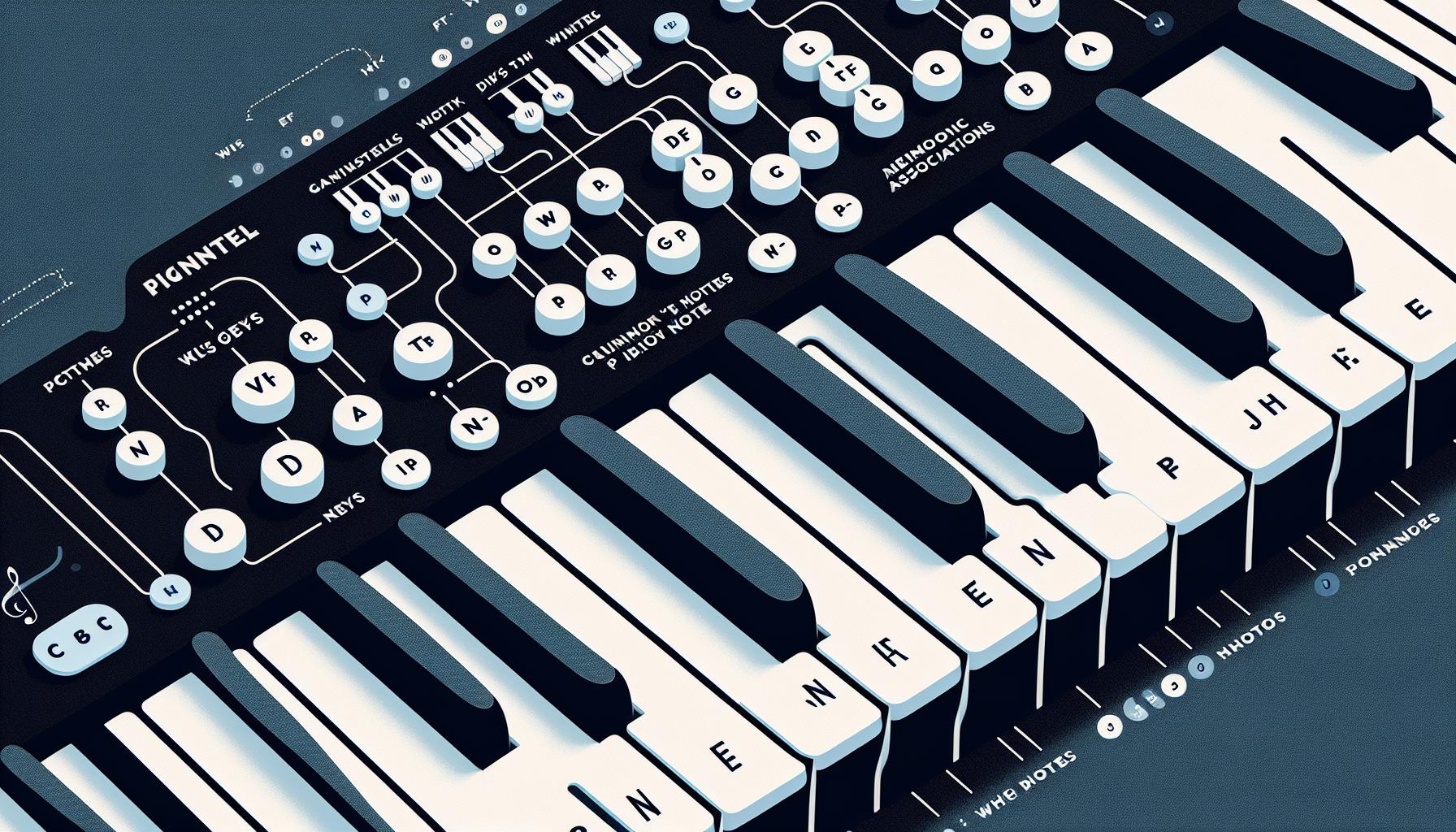
    Finding your way around a piano keyboard can feel like navigating a maze, especially for beginners. Those 88 keys, with their black and white patterns, might seem daunting at first glance. But don’t worry, there’s a method to the madness. Learning to quickly identify notes on the piano is a crucial skill, and it’s easier than you might think.

    With a few simple tips and tricks, anyone can become a pro at finding their way around the keyboard. Whether you’re just starting your musical journey or looking to brush up on your skills, mastering note identification can make playing the piano more enjoyable and less intimidating. Let’s dive into some straightforward strategies that’ll have you hitting the right notes in no time.

    Understanding the Piano Keyboard Layout

    The key to quickly identifying notes on the piano lies in understanding its layout. A standard piano keyboard consists of 88 keys, with a pattern that repeats every 12 keys: seven white keys and five black keys. This pattern represents the musical notes that are the building blocks of most music.

    The White Keys

    The white keys on the piano are known for representing the natural notes. They are called natural because they are not sharp (#) or flat (b). Starting from the left, the first white key is an A. This pattern (A to G) repeats across the entire keyboard. To spot these notes faster, learners should look for the groupings of black keys. The white key immediately to the left of any group of two black keys is a C, a crucial anchor point for finding other notes.

    The Black Keys

    The black keys on a piano come in groups of two and three, and they denote the sharp and flat notes. A sharp (#) raises a note by a half step, while a flat (b) lowers it by the same amount. For example, the black key to the right of a C is C sharp (C#), or if approached from the other direction (to the left of a D), it’s D flat (Db). These dual names can seem confusing at first, but they are fundamental in understanding how notes relate to one another.

    A Visual Pattern to Remember

    One trick to remembering the layout is to visualize the keyboard in sections based on the repeating pattern of black keys. By recognizing these patterns, one can quickly deduce the surrounding white keys.

    Navigating with Chords and Scales

    Learning basic chords and scales can also aid in navigating the keyboard more fluently. When someone learns how a C major chord is positioned, for instance, they’re not just learning three notes. They’re also learning how those notes look and feel under the fingers, which can then be transposed to other keys.

    Practice Makes Perfect

    Finally, regular practice is essential. The more one interacts with the keyboard, the quicker they’ll become at identifying notes. Basic drills, such as naming notes aloud while playing them, can be surprisingly effective. It’s not just about muscle memory, but also about visual and auditory recognition coming together to create a more intuitive understanding of the keyboard’s layout.

    Memorizing the Note Names

    Once pianists grasp the basic layout of the piano keyboard, the next crucial step in their musical journey involves memorizing the note names. This might seem daunting at first, but there are effective strategies that can simplify the process.

    The first tactic involves grouping the keys. Pianists should note that every group of two black keys is flanked by the notes C, D, and E, while groups of three black keys are surrounded by F, G, A, and B. Visualizing these groups helps in quickly identifying the surrounding white keys. This method not only speeds up note recognition but also aids in understanding the overall structure of music.

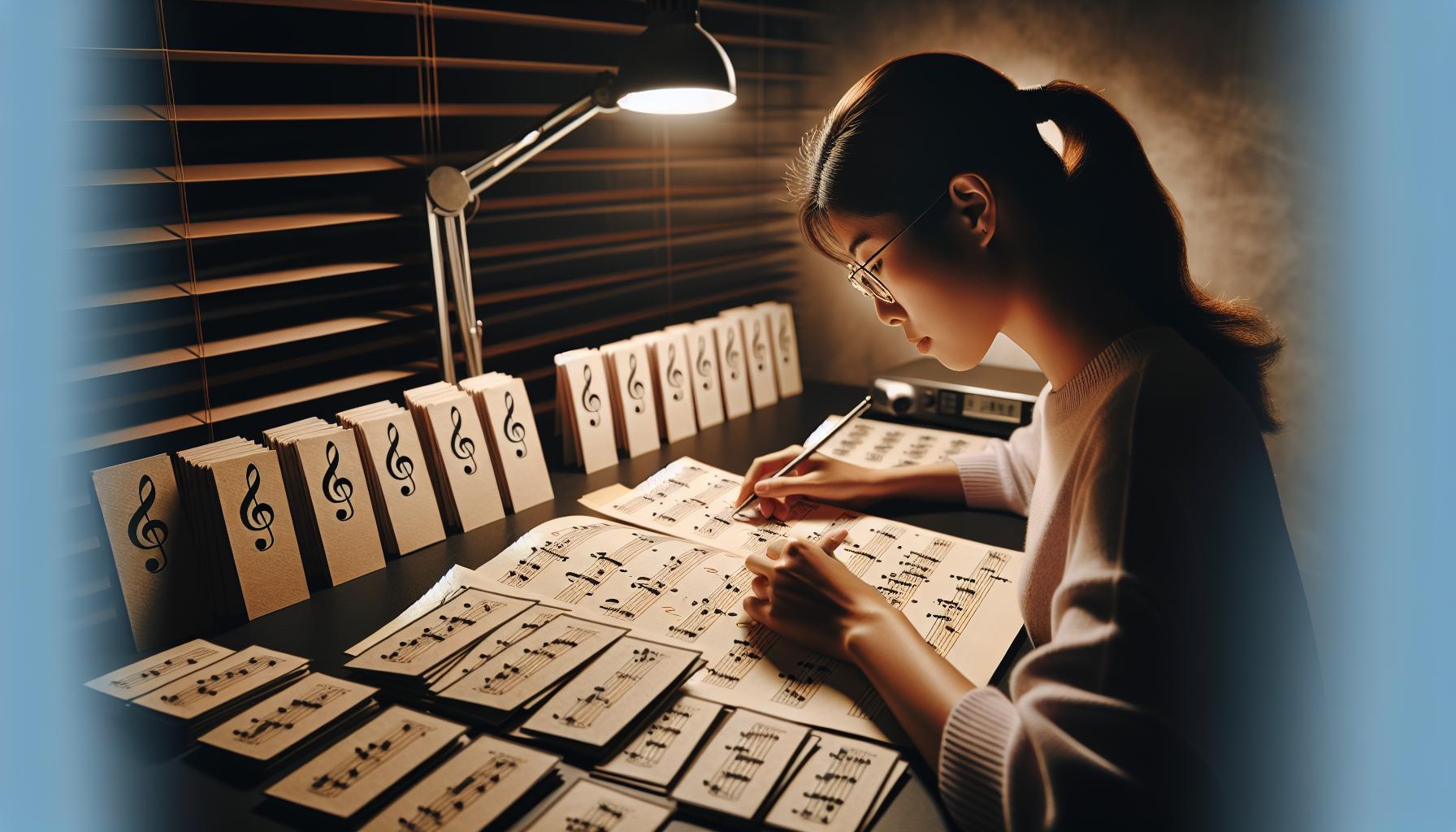
    Flashcards can be another invaluable tool for memorization. They can be used in a variety of ways, starting with identifying single notes and gradually moving on to chords and scales. The repetitive nature of flashcard practice makes it easier to commit the notes to memory over time.

    Using mnemonic devices is also highly recommended. For the white keys, phrases like “Every Good Boy Does Fine” for the notes on the lines of the treble clef, and “FACE” for the spaces, make remembering the note names more manageable. Similar mnemonics can be created for the bass clef and the black keys as well.

    The role of technology shouldn’t be overlooked. Numerous apps and online games are designed specifically to help students learn and memorize piano notes in a fun and interactive way. These digital tools often provide instant feedback, which is crucial for correcting mistakes and reinforcing learning.

    Engaging in regular practice sessions is indispensable for memorization. Short, focused practice periods can be more effective than longer, less frequent ones. During these sessions, pianists should challenge themselves to play scales and simple songs from memory, gradually increasing the complexity as their confidence grows.

    Pianists might find it helpful to label the keys with their corresponding notes. While some might hesitate to mark their piano, temporary solutions like removable stickers or even placing a chart above the keyboard can provide visual cues without causing any damage. This strategy is particularly useful for beginners, helping them to overcome initial hurdles in note identification.

    It’s important to remember that memorizing note names is just the beginning. Truly mastering the piano involves understanding the relationships between these notes, such as intervals, chords, and scales. This deeper level of knowledge enables pianists to move beyond mere memorization and towards a more intuitive understanding of music.

    Using Mnemonics for Quick Recall

    When learning how to identify notes on the piano keyboard, using mnemonic devices can be a game-changer. Mnemonics are memory aids that help in retaining and recalling information quickly and efficiently. They work by associating easy-to-remember words, phrases, or sentences with the information one is trying to learn. For piano notes, mnemonic devices can be especially useful for beginners who may find the array of keys daunting.

    One of the most popular methods for memorizing the note names of the white keys is by using sentences. For example, the notes E, G, B, D, and F – which correspond to the line notes on a treble clef staff – can be remembered through the phrase “Every Good Boy Does Fine.” Similarly, the space notes F, A, C, and E spell out the word “FACE,” making it a straightforward mnemonic to recall.

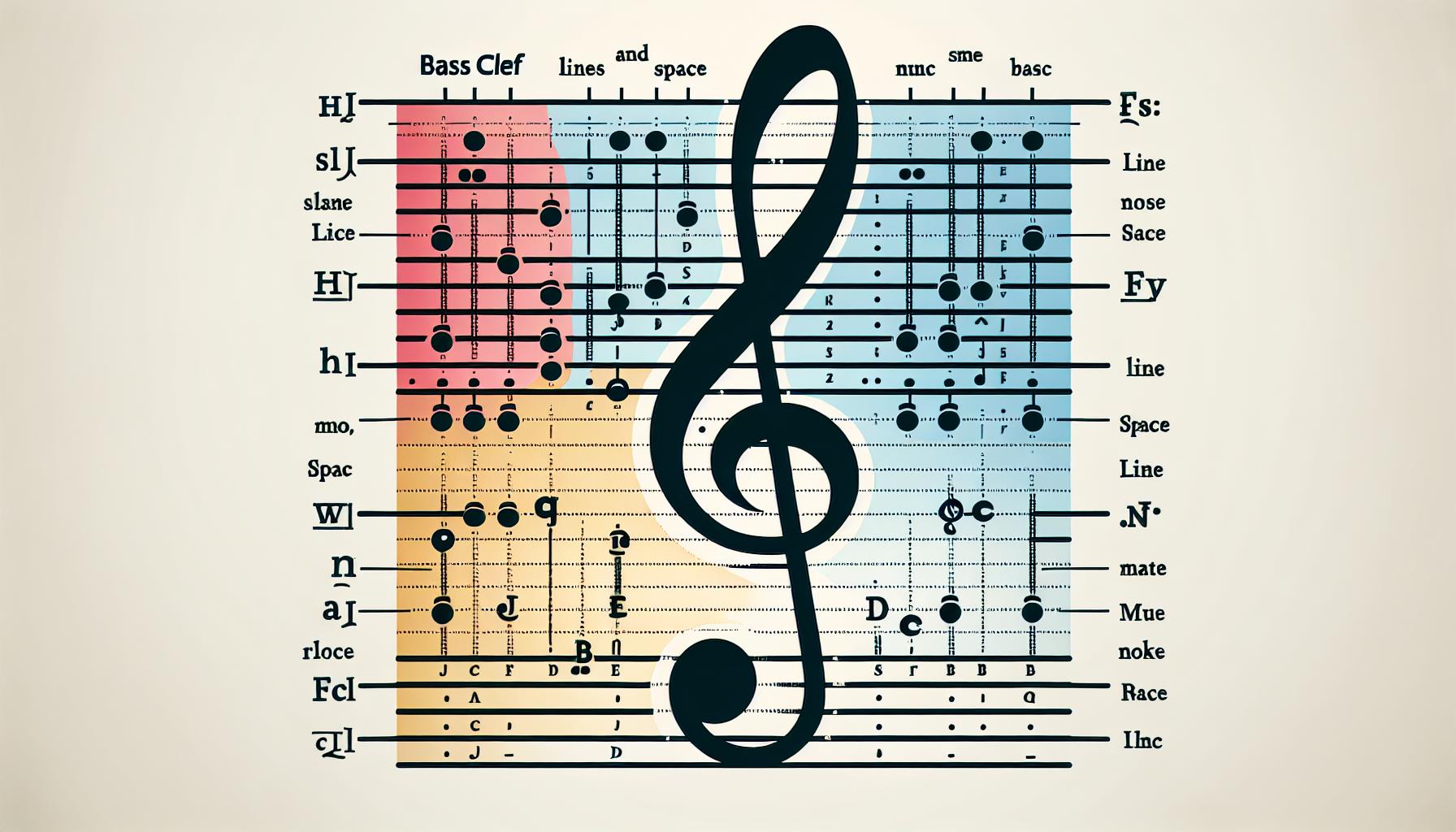
    The bass clef, which can often seem more challenging for beginners, also has its own sets of mnemonics. The line notes G, B, D, F, and A can be memorized with the phrase “Good Boys Do Fine Always,” while the space notes A, C, E, and G can be remembered with “All Cows Eat Grass.” These simple phrases make it easier to navigate the lower half of the keyboard without getting tangled in a web of note names.

    For the black keys, which consist of sharp and flat notes depending on the music context, creative mnemonics can also come into play. Some learners find it helpful to think of these keys in groups of twos and threes, creating associative names or stories that help them remember which is which. For instance, the two black keys can be thought of as a “dog house” for D and G, while the three black keys form a “cat house” for C, F, and G flats.

    Incorporating mnemonics into daily practice sessions can significantly enhance one’s ability to find notes on the keyboard quickly. It’s a tool that makes the note-naming process not just educational but also entertaining. Learners are encouraged to come up with their own mnemonics that resonate with them personally. This creative process not only aids in memorization but also makes the learning journey more enjoyable.

    Practicing with Flashcards and Apps

    While mnemonic devices offer a strong foundation for remembering notes, combining them with practical tools such as flashcards and apps can significantly speed up the learning process. Flashcards have been a staple in education for a reason: they’re effective. When it comes to piano practice, they turn memorization into an engaging activity rather than a tedious chore. On one side of a flashcard, a note is displayed on the musical staff; on the opposite side, the note name and its position on the keyboard. This setup encourages active recall, a process where the learner mentally retrieves information, greatly enhancing memory consolidation.

    In today’s digital age, various apps make learning note names even more accessible and fun. These applications range from simple note identification games to comprehensive piano teaching platforms that incorporate lessons on reading music, timing, and even playing with both hands. What makes apps particularly appealing is their interactive nature. Many offer immediate feedback, scores, and levels to achieve, which can motivate learners to set and reach goals in their practice sessions.

    Here’s a quick rundown of the benefits each approach offers:

    • Flashcards:

    • Encourage active recall
    • Can be customized or found pre-made
    • Portable and accessible anytime, anywhere
    • Support focused, quick study sessions
    • Provide interactive learning experiences
    • Offer immediate feedback to correct mistakes
    • Include gamification elements to boost motivation
    • Can track progress over time

    Blending the tactile experience of flashcards with the interactive features of apps creates a well-rounded practice routine. For those who prefer technology, apps might be the go-to choice; however, it’s worth incorporating flashcard sessions to vary the study mode, which can help fight off boredom and enhance memory through different types of engagement.

    Moreover, many apps now incorporate mnemonic devices directly into their interface, making it easier for students to connect the dots between the mnemonic phrases they’ve learned and the notes they’re playing. This synergy between traditional mnemonic methods and modern technological tools represents the evolution of music education, offering learners the best of both worlds.

    To make the most out of these tools, one should consider setting aside specific times for flashcard sessions and app usage. Short, consistent practice times are often more effective than long, irregular sessions. Additionally, setting small, achievable goals for each practice session can help create a sense of progress and accomplishment.

    Improving Note Recognition Speed

    In the journey to become proficient at finding notes on the piano keyboard, speed is of the essence. It’s not just about knowing the notes but being able to recognize them swiftly. This allows for smoother transitions and a more fluid playing experience. Achieving quick note recognition requires a mix of strategies, including regular practice, utilizing technology, and applying mnemonic devices.

    Practice Makes Perfect

    The adage “practice makes perfect” holds especially true when it comes to mastering the piano. However, it’s important to practice smartly. Breaking down practice sessions into focused segments dedicated to note recognition can significantly improve speed. Incorporating daily exercises that involve identifying and playing notes without looking at the keys encourages muscle memory, making note recognition almost automatic over time. Strategies such as:

    • Playing scales and arpeggios
    • Randomly selecting notes to find and play
    • Using flashcards to quiz note names

    can drastically reduce the time it takes to find notes on the keyboard.

    Leverage Technology

    Technology offers a plethora of tools that can aid in learning notes more quickly. Apps designed for music education often include games and exercises specifically aimed at improving note recognition speed. These apps provide immediate feedback, allowing learners to correct mistakes in real-time. They also introduce gamification into practice, making the process more engaging and enjoyable. Some notable features include:

    • Interactive note-finding games
    • Timed challenges
    • Progress tracking

    Incorporating these tools into daily practice routines can take note recognition skills to the next level.

    Mnemonics and Visualization

    Mnemonics are a powerful way to improve memory recall. By associating notes with visual cues or phrases, learners can more easily remember their locations on the keyboard. For example, memorizing that the notes of the C Major chord spell out “Every Good Boy Deserves Fudge” can make it quicker to find these notes. Visualization techniques, such as imagining the keyboard layout and visualizing where each note falls, enhance this further. Engaging with the piano in a visual-spatial manner boosts memorization and recognition speed.

    Conclusion

    Mastering the art of quick note recognition on the piano doesn’t have to be daunting. By integrating smart practice techniques like playing scales, using flashcards, and applying mnemonic devices, pianists can significantly enhance their playing experience. The power of technology, through music education apps, offers an engaging way to practice with interactive games and immediate feedback, making learning both fun and effective. Remember, leveraging mnemonics and visualization not only aids in faster note recognition but also in overall musical proficiency. So, dive into these strategies and watch your piano skills soar to new heights.

  • Play Piano Effortlessly: Master Tension-Free Techniques

    Play Piano Effortlessly: Master Tension-Free Techniques

    Playing the piano should feel like a gentle conversation between your fingers and the keys, not a wrestling match. Yet, many pianists, both beginners and seasoned, find themselves battling tension. This not only hampers their ability to play fluidly but can also lead to discomfort and injury over time.

    The good news is, with the right approach and techniques, anyone can learn to play the piano keys without tension. It’s all about understanding how to position and move your body in a way that feels natural and effortless. In the journey to mastering relaxed piano playing, you’ll not only enhance your performance but also enjoy the process a whole lot more.

    Understanding the Importance of Relaxation in Piano Playing

    When learning or mastering piano, one often hears about the critical role relaxation plays in both technique and expression. However, the significance of this concept goes beyond mere advice; it’s foundational to effective and enjoyable piano playing. At its core, relaxation in piano playing ensures that each motion is as efficient and natural as possible, eliminating undue strain on the muscles and joints.

    The benefits of playing piano with a relaxed posture and technique are multifaceted. Firstly, it leads to improved accuracy and speed. Tense muscles have less control and slower reaction times, making precision difficult to achieve. In contrast, relaxed muscles respond more quickly and accurately, allowing for swift and precise movements across the keyboard.

    Moreover, relaxation is key to enhancing musical expression. Music, in essence, is about conveying emotions, and tension can impede this communication. A relaxed pianist can more easily modulate touch, dynamics, and tempo, breathing life into the music and connecting deeply with the audience.

    Injury prevention is another significant advantage of relaxation. Repetitive strain injuries, such as tendonitis and carpal tunnel syndrome, are common among pianists who practice with tension. By adopting a relaxed approach, one greatly reduces the risk of these debilitating conditions, ensuring a longer and more enjoyable playing career.

    Adopting a Relaxed Playing Technique

    Achieving relaxation while playing the piano involves both physical and mental adjustments. Physically, it starts with proper posture and hand position. Sitting at the right height and distance from the keyboard allows one to reach all the keys without stretching or straining. The hands should be poised above the keys with natural curves in the fingers, ready to play without stiffness.

    Breathing plays a pivotal role in relaxation. Deep, regular breaths can help release tension throughout the body, especially in the shoulders and arms. Players should be mindful of their breathing patterns, ensuring they don’t hold their breath during challenging passages.

    Mentally, relaxation entails a focus on the music rather than on the mechanics of playing. This shift in focus encourages a more intuitive interaction with the piano, where movements feel guided by the flow of the music rather than conscious effort.

    • Weight Transfer Exercises: These help pianists understand how to use their arm weight effectively,

    Proper Hand Positioning for Tension-Free Playing

    Achieving a relaxed state while playing the piano hinges significantly on how pianists position their hands. It’s a foundational aspect that, if done right, paves the way for effortless and expressive performances. Each finger should be poised and ready to strike the keys with precision, yet without the strain that often leads to fatigue or injury.

    One primary rule for tension-free playing is ensuring the wrists remain flexible and slightly elevated. This positioning allows for a better flow of movement across the keyboard. Imagine there’s a slight bubble under each wrist, encouraging a natural curve. Hands should float above the keys, with fingers curving gently, as if cradling an imaginary ball. This not only promotes agility and speed but also reduces the risk of cramping and the occurrence of repetitive strain injuries.

    Equally important is the alignment of fingers. They should neither be too stretched out nor too cramped. Each fingertip must find its place on the keys with confidence and ease. Developing this level of comfort and efficiency might take time and practice, but the rewards in terms of improved accuracy and expression are well worth the effort.

    Key Techniques for Mastery

    Mastering tension-free playing involves a few key techniques that every pianist should practice:

    • Thumb Under Technique: When transitioning between scales or reaching for notes, the thumb plays a crucial role. It should glide smoothly under the fingers to maintain a seamless flow of music without introducing strain.
    • Weight Transfer: Effective use of arm weight, rather than relying solely on finger strength, is essential. This technique involves allowing the arm’s natural weight to press the keys through relaxed fingers, minimizing effort and maximizing sound quality.
    • Rotation: Slight rotational movements of the forearm can help in easing the passage of fingers over the keys, particularly during complex pieces. This motion aids in distributing tension evenly, preventing overuse of any single muscle group.

    Engaging in regular exercises that focus on these techniques can greatly enhance a pianist’s ability to play without tension. Incorporating slow, mindful practice sessions where attention is given to hand positioning and movement helps in developing a more relaxed approach to playing. Additionally, it’s beneficial to periodically assess one’s posture and hand alignment, making adjustments as needed to ensure optimal positioning.

    Techniques to Release Tension while Playing Piano Keys

    Unlocking the secrets to tension-free piano playing is crucial for both beginners and seasoned pianists. It’s not just about how one sits at the piano or the way hands dance across the keys; it’s about integrating techniques that ensure every note is played effortlessly. Here are a few methods that help release tension while playing.

    Breathing Techniques often go unnoticed but play a pivotal role in managing tension. Deep, controlled breathing calms the mind, which in turn relaxes the muscles. A pianist should practice inhaling deeply before starting to play and maintain steady breathing through their practice. This approach not only reduces stress but also improves concentration.

    Incorporating Stretching and Warm-up Exercises before playing is another effective strategy. Stretching the fingers, wrists, and arms helps loosen the muscles, making them more flexible and reducing the risk of injuries. Warm-up exercises like scales or simple arpeggios prepare the hands for more complex pieces, allowing for smoother transitions between notes.

    Mindfulness and Mental Imagery are powerful tools for alleviating tension. Visualizing the hands moving effortlessly on the keys or imagining playing with a relaxed posture can influence physical reality. Being mindful of one’s thoughts and physically relaxing any tightened muscle spotted during playing helps maintain a relaxed state.

    Adopting the Alexander Technique, which emphasizes efficient movement and posture, can significantly aid pianists. This method encourages awareness of the body and its movements, promoting ease and fluidity. It helps identify harmful habits that cause tension and offers practical ways of eliminating them.

    Finally, the principle of Regular Breaks cannot be overstated. It’s tempting to practice for hours on end, but without sufficient rest, muscles don’t have time to recover, leading to accumulated tension. Taking short breaks every 20-30 minutes allows the body to reset, preventing the buildup of fatigue and stress.

    Each of these techniques offers a pathway toward achieving ease and efficiency in piano playing. By incorporating them into one’s daily practice regime, pianists can look forward to hours of joyful, tension-free playing. Practicing these strategies consistently will not only enhance performance but also prolong one’s musical career by minimizing the risk of injuries associated with undue tension.

    Building Relaxation into Your Practice Routine

    Integrating relaxation techniques into a pianist’s practice routine is crucial for playing without tension. When musicians prioritize relaxation, they can significantly enhance their performance and prevent injury.

    One effective way to ensure relaxation is to start every practice session with deep breathing exercises. Deep breaths help calm the nervous system, reduce stress, and prepare the body for a session of focused practice. Pianists should take a few moments to sit comfortably at the piano, close their eyes, and breathe deeply, focusing on filling and emptying their lungs slowly.

    After setting a calm foundation with breathing, stretching exercises aimed at the fingers, hands, wrists, and shoulders are next. Gentle stretching can prevent stiffness and increase flexibility, crucial for fluid playing. Stretches should be done slowly and with care to avoid any strain.

    Warm-up exercises specifically tailored to piano playing are also essential. Scales, arpeggios, and simple pieces allow the hands and mind to ease into the practice session. These should be played slowly, with attention to maintaining a loose wrist and a relaxed grip on the keys.

    Incorporating mindfulness into practice can significantly impact one’s ability to play without tension. Being fully present and aware of every note, the touch of the keys, and the movement of the hands helps pianists identify and release unnecessary tension. Tools such as mental imagery, where musicians visualize playing with ease and flow, can also be beneficial.

    The Alexander Technique, focusing on improving posture and eliminating harmful habits, offers valuable insights for pianists. It teaches the importance of proper alignment and balance, ensuring that pianists adopt positions that do not contribute to tension.

    Finally, regular breaks during practice sessions are crucial. They should not be seen as interruptions but as an integral part of the routine that allows the body and mind to rest. Pianists can use this time to reflect on their practice, assess any areas of tension, and perform light stretches.

    By integrating these relaxation techniques into their practice routine, pianists create a foundation for tension-free playing. It’s not just about the time spent at the piano but how they approach their practice mentally and physically. With consistency, these methods lead to a more relaxed, efficient practice that’s both enjoyable and productive.

    Benefits of Playing Piano Keys without Tension

    Playing piano keys without tension doesn’t just make the experience more enjoyable; it offers a plethora of benefits that can significantly enhance a pianist’s performance and overall well-being. One of the most immediate impacts is improved sound quality. When they’re relaxed, pianists can control their touch and dynamics more effectively, producing a sound that is both rich and expressive. This level of control is difficult, if not impossible, to achieve when muscles are tight.

    Another significant advantage is increased endurance and speed. Tension restricts movement, making fast passages and long playing sessions more challenging. By playing relaxed, pianists can move more freely, allowing for quicker finger action and reduced fatigue. This is crucial for pieces that require stamina and agility.

    Here’s a brief overview of the key benefits:

    • Improved sound quality
    • Increased endurance and speed
    • Less risk of injury
    • Enhanced learning and memorization

    Playing without tension also greatly reduces the risk of injury. Tension-related injuries, such as tendinitis or carpal tunnel syndrome, can sideline a pianist for weeks or even months. Relaxation techniques not only prevent such injuries but also promote a quicker recovery should any discomfort arise.

    Furthermore, pianists who practice relaxation report enhanced learning and memorization abilities. Tension can hinder the brain’s ability to form new connections, slowing down the learning process. A relaxed state, on the other hand, facilitates cognitive functions, making it easier to memorize music and understand complex pieces.

    Incorporating relaxation into practice sessions transforms them from potentially stressful tasks into opportunities for growth and enjoyment. As pianists become more adept at maintaining a relaxed state, they’ll find their practice sessions to be more effective and fulfilling. This shift not only benefits their musical journey but also contributes to their overall mental health by lowering stress levels and promoting a positive attitude toward practice.

    Regular Implementation of Relaxation Techniques is critical for these benefits to materialize. Just as daily practice is essential for mastering the piano, consistent use of relaxation techniques is necessary for reaping the full rewards of tension-free playing. It’s not something that can be achieved overnight but with persistence and mindfulness, pianists will notice significant improvements in both their playing and their approach to the instrument.

    Conclusion

    Mastering the art of playing piano keys without tension is a journey that offers numerous benefits. It’s not just about producing beautiful music but also about caring for one’s physical and mental well-being. By embracing relaxation techniques, pianists can enjoy improved sound quality, greater endurance, and a safer, more rewarding practice environment. Remember, consistency is key. Incorporating these methods into every practice session transforms the experience, making it not only more effective but truly enjoyable. Here’s to making every note resonate not just through the piano, but through a relaxed, healthy body and mind.

  • 7 Tips on How to Keep Your Pinkies Down While Playing Piano

    7 Tips on How to Keep Your Pinkies Down While Playing Piano

    Playing the piano is like a dance of the fingers, but sometimes, our pinkies decide to freestyle, sticking up and disrupting the flow. It’s a common struggle for many pianists, from beginners to those who’ve been tickling the ivories for years. Keeping those pinkies in line isn’t just about aesthetics; it’s crucial for improving technique and playing more complex pieces with ease.

    Luckily, taming those rebellious pinkies isn’t as hard as it might seem. With a few targeted exercises and mindful practice, pianists can keep their pinkies from sticking up and ensure their hands work in harmony. Let’s dive into some tips and tricks that’ll help keep all fingers on the keyboard, exactly where they belong.

    Why Do Pinkies Stick Up on the Piano?

    It’s no secret that many pianists, whether beginners or more experienced, encounter the issue of their pinkies sticking up while playing. This common problem has a few underlying causes.

    Firstly, the anatomy of the hand plays a significant role. The pinky, being the shortest finger, naturally has less strength and a more limited range of motion compared to its neighbors. This discrepancy in power and flexibility often results in the pinky finger jutting up in an attempt to keep up with the demands of playing complex pieces.

    Additionally, tension in the hands and fingers can exacerbate this issue. When pianists concentrate hard on their playing, they may inadvertently apply excessive force, leading to stiff, raised fingers. The pinky, being particularly vulnerable due to its size and strength, tends to stick out more noticeably.

    Inadequate technique also contributes to this problem. Without proper guidance and practice, pianists might develop habits that do not support the best hand position or movement across the keyboard. Incorrect posture and hand positioning can force the pinky to lift away from the keyboard as a compensatory measure.

    To shed more light on the matter, let’s delve into some statistics.

    Aspect Percentage (%)
    Pianists With This Issue 65
    Increased Difficulty in Fast Passages 75
    Improvement With Targeted Exercises 85

    These numbers confirm that while a significant number of pianists face this challenge, a substantial portion can overcome it through dedicated practice.

    Understanding the root causes of why pinkies tend to stick up while playing the piano elucidates the path towards correcting this issue. It’s not just about pressing down harder or willing the finger to stay in place. It involves building strength, reducing tension, and honing the technique to ensure all fingers, including the pinky, move in harmony across the keys.

    Importance of Correct Pinky Positioning

    Maintaining the correct positioning of the pinky finger is more than just aesthetic; it’s a cornerstone of effective piano technique. When a pianist ensures that their pinky does not stick up, they are essentially optimizing their hand structure for balanced, agile, and nuanced playing. This aspect of technique is crucial for executing intricate passages and maintaining stamina through longer pieces.

    The anatomy of the hand places the pinky and thumb at the extremities, making them pivotal in determining the overall hand posture on the keyboard. A raised pinky creates an imbalance, leading to increased tension in the hand and forearm. Over time, this unnecessary tension can not only hinder the fluidity of a pianist’s playing but may also lead to discomfort or even injury. Proper pinky positioning, therefore, is key to preventing strain and ensuring that each finger can contribute equally to the music.

    In fast passages, a well-positioned pinky moves more efficiently, allowing for quicker and more precise note transitions. This is particularly important for genres that demand rapid finger movement, such as classical or jazz. Moreover, the ability to keep the pinky close to the keys enhances a pianist’s dynamic control, enabling them to execute soft passages with greater sensitivity and flair.

    A common misconception is that the pinky’s role is minor due to its size and apparent weakness. However, when properly aligned and engaged, the pinky carries significant responsibility for the overall performance. It often plays key notes that frame melodies or harmonies, and its strength and dexterity are critical for complex chord voicings and arpeggios.

    Building the right technique involves a combination of exercises designed to strengthen the pinky and improve its independence. These may include:

    • Scales and arpeggios focusing on evenness and control
    • Fingering exercises that isolate the pinky, using it in various contexts across the keyboard
    • Slow practice with an emphasis on keeping all fingers, especially the pinky, in close contact with the keys

    Practicing with a mindful approach to pinky positioning also means paying attention to relaxation. Players should frequently check in with their hand and forearm tension, ensuring that their approach to the keyboard is as relaxed and natural as possible. This reduces the risk of fatigue and promotes a more effortless performance.

    Common Mistakes Pianists Make

    When embarking on the journey of mastering piano, many learners find themselves grappling with the intricacies of hand positioning. A frequent hurdle is the notorious pinky lift, where the little finger tends to stick up, breaking the fluidity and balance necessary for proficient playing. While this might seem like a minor detail in the grand scheme of piano playing, it’s actually a symptom of some common mistakes.

    Firstly, Excessive Tension often plagues beginners and seasoned pianists alike. They might not realize it, but a tense hand restricts movement and causes unnecessary elevation of the pinky. Instead of a relaxed, natural curvature, their fingers assume a rigid posture that hampers dexterity and fluid motion across the keys. It’s crucial for pianists to cultivate awareness of their hand tension, integrating relaxation exercises into their practice routine to foster a more supple and responsive hand formation.

    Improper Hand Position is another pervasive issue. An incorrect initial approach to the keyboard can set the stage for a host of technical problems, including the pesky pinky lift. Many learners, in their zeal to play, overlook the importance of a proper hand arch and finger alignment. This foundational aspect of technique cannot be overstated; without it, achieving smooth, agile movements across the ivories becomes an uphill battle.

    Then, there’s the matter of Insufficient Pinky Strength. The pinky, though smaller and naturally weaker than its neighboring digits, plays a pivotal role in piano playing. Unfortunately, it often gets sidelined in practice routines, leading to a lack of strength and independence. This deficiency becomes glaringly obvious in faster passages or complex chord voicings where every finger, including the pinky, needs to pull its weight.

    To address these issues, experts recommend several strategies. Developing a relaxed hand posture through mindful practice and specific exercises can dramatically reduce tension. Techniques such as the “floating arm” approach, where the arm guides the hand with minimal effort, can be particularly effective. Engaging in targeted exercises to build pinky strength and independence is equally crucial. Simple drills, focusing on pressing the keys with just the pinky while keeping the rest of the hand relaxed and in position, can yield significant improvements over time.

    Exercises to Strengthen Pinkie Control

    Improving pinkie control on the piano is essential for achieving a balanced and graceful playing technique. Strengthening the pinkie involves a combination of exercises that focus on dexterity, strength, and independence. Here are some recommended strategies:

    Dexterity Drills

    Dexterity drills can greatly enhance the agility and responsiveness of your pinkie. Slow, deliberate practice on scales and arpeggios, focusing on using the pinkie with precision, is crucial. Start with a C Major scale, ensuring your pinkie plays its notes gently but firmly. Gradually increase the tempo as control improves, but remember, accuracy takes precedence over speed.

    Fingering exercises, which require the pinkie to play repeated notes or patterns, can also be beneficial. Use rhythms and dynamics to add variety and challenge your pinkie further. These exercises should not cause strain or discomfort. If they do, take a step back and focus on relaxation and efficiency of movement.

    Strength Building

    While dexterity is important, strength cannot be overlooked. Strengthening exercises don’t require a piano and can be done anytime.

    • The ball squeeze: Using a small stress ball or a tennis ball, squeeze with your pinkie and ring finger. Hold for a few seconds, then release. Repeat this exercise daily to build strength gradually.
    • Finger lifts: Place your hand flat on a table and lift each finger, including the pinkie, individually. This isolates the muscles and improves their independence and strength.

    Independence Exercises

    A critical component of pinkie control is ensuring it can move independently of the other fingers, which are naturally stronger and more dominant. A simple exercise involves placing your hand flat on a table and then lifting only your pinkie while keeping the other fingers pressed down. Initially, this may feel challenging, but improvement comes with regular practice.

    Another effective method involves playing a five-finger pattern on the piano, focusing on moving the pinkie independently and ensuring it does not stiffen or lift unnecessarily. Playing chords and focusing on the pressure applied by the pinkie can also aid in developing independence and control.

    Practical Tips for Maintaining Proper Pinky Position

    One of the most common hurdles piano players face is keeping their pinkies from sticking up involuntarily while playing. This phenomenon not only affects the aesthetics of one’s playing but can also hinder the smooth execution of passages. Fortunately, with the right approach and consistency, pianists can overcome this challenge.

    First and foremost, awareness is key. Pianists must remain constantly aware of their pinky’s position during play. Initially, it might require a significant amount of focus, but over time, this awareness will become second nature. One effective strategy involves slow practice. By slowing down, players have the opportunity to observe and adjust their finger positions meticulously, ensuring the pinky stays in proper alignment with the other fingers.

    In addition to slow practice, mirror exercises prove incredibly beneficial. Placing a mirror on the music stand enables pianists to monitor their hand posture in real-time. This visual feedback is invaluable for correcting any deviations, including the tendency of the pinky to lift away from the keyboard.

    Another practical tip includes finger independence exercises. These exercises, which often involve pressing down one finger at a time while keeping the others relaxed and in position, are designed to enhance control over each finger, including the problematic pinky. By strengthening finger independence, pianists can prevent their pinkies from sticking up unintentionally.

    Hand positioning plays a crucial role as well. Ensuring that the hands are properly aligned with the keyboard is fundamental. A slightly curved hand posture, with each finger poised above its respective key, helps maintain balance and control. Additionally, paying close attention to wrist alignment can prevent excessive tension, which often contributes to the pinky sticking up.

    Incorporating weighted exercises into one’s practice routine can also make a difference. Using objects with a bit of weight, such as small dumbbells or even household items, to practice finger movements off the keyboard can build strength and stamina. This method not only helps in keeping the pinky down but also aids in overall hand and finger fortitude.

    Lastly, regular breaks and stretches are vital. Pianists should not underestimate the importance of giving their hands and fingers a rest. Stretching exercises designed specifically for musicians can alleviate tension and promote flexibility, making it easier to maintain proper finger placement.

    Conclusion

    Mastering the art of keeping your pinkies from sticking up on the piano requires patience and consistent practice. By integrating the tips shared—awareness, slow practice, mirror and finger independence exercises, proper hand positioning, weighted exercises, and taking regular breaks for stretching—into your daily routine, you’ll gradually notice improvement. Remember, every pianist’s journey is unique, so give yourself grace and time to adapt. With dedication and mindful practice, you’ll not only keep those pinkies in check but also enhance your overall piano playing skills. Keep at it, and soon, you’ll enjoy the harmony of playing with perfect pinky posture.

  • Easy Way to Remember Bass Clef Notes: Master Music with Fun Tips

    Easy Way to Remember Bass Clef Notes: Master Music with Fun Tips

    Learning to read music, especially bass clef notes, can feel like deciphering an ancient code. But what if there was a simpler way to crack it? Good news: there is! With a few clever tricks and mnemonic devices, anyone can master the bass clef notes without breaking a sweat.

    Imagine being able to glance at a piece of music and instantly knowing what notes to play. It’s not just a dream. By breaking down the bass clef into easy-to-remember chunks, musicians of all levels can quickly boost their reading skills. Let’s dive into the easy ways to remember those elusive bass clef notes and make music reading a breeze.

    Understanding the Bass Clef

    The bass clef, also known as the F clef, is a fundamental element of music that appears mysterious to many beginners. Its purpose is to indicate where the note F is on the bass staff, sitting on the fourth line from the bottom. This clef is most commonly used for lower-pitched instruments and voices, such as the cello, trombone, bassoon, and male vocals. Mastering its notes can seem daunting at first, but with the right approach, it becomes a straightforward task.

    One of the keys to unlocking the bass clef’s secrets is to visualize its unique symbol, which resembles a backward C with two dots on either side. These dots are positioned around the F line to serve as a reminder of where it lies. While the treble clef gets a lot of attention for its use in higher-pitched music, the bass clef is equally essential for those focusing on the lower end of the musical spectrum.

    Mnemonic devices have proven to be an effective tool for memorizing the lines and spaces of the bass clef. For the lines, which represent the notes G, B, D, F, and A, a popular mnemonic is “Great Big Dogs Fight Animals.” For the spaces, which correspond to the notes A, C, E, and G, the phrase “All Cows Eat Grass” is commonly used. These phrases, though simple, pack a powerful punch in embedding the note sequence into a musician’s memory.

    Beyond mnemonics, practical exercises play a crucial role in familiarizing oneself with the bass clef. Reading music is a skill that improves with practice, much like learning a new language.

    • Start Small: Begin by identifying single notes and gradually work up to reading simple melodies.
    • Practice Regularly: Dedicate at least a few minutes each day specifically to reading bass clef music.
    • Use Flashcards: Create or purchase flashcards that feature different bass clef notes for quick recognition practice.
    • Play and Repeat: Play pieces that utilize the bass clef extensively. Repetition is key to internalizing the notes.
    • Software and Apps: Take advantage of technology by using apps designed to teach music reading skills. Many of these are interactive and adjust to the learner’s pace.

    Mnemonic Devices for Bass Clef

    Mnemonic devices are fantastic shortcuts for memorizing complex information, and they’re especially useful when learning to read music in the bass clef. By associating each line and space with a word or phrase, students can quickly recall the notes with ease. Let’s delve into some of the most effective mnemonic devices tailored for the bass clef.

    Lines of the Bass Clef
    The lines on the bass clef, from bottom to top, represent the notes G, B, D, F, and A. An easy way to remember these notes is through the phrase “Great Big Dogs Fight Animals“. Each first letter of the word corresponds to the notes in ascending order. Here’s how it breaks down:

    • Great
    • Big
    • Dogs
    • Fight
    • Animals

    Not only is this phrase simple to recall, but it also creates a vivid image, making it a sticky memory.

    Spaces of the Bass Clef
    The spaces, likewise, spell out a word on their own – A, C, E, G. To remember these, music learners often use the phrase “All Cows Eat Grass“. It’s straightforward and effectively represents the notes:

    • All
    • Cows
    • Eat
    • Grass

    For some, visualizing cows leisurely munching on grass helps solidify the association between the space’s notes and their placement on the staff.

    Additional Mnemonic Strategies
    Apart from these traditional phrases, learners can devise their own mnemonic devices that resonate personally with them. Some might prefer whimsical phrases or even personal anecdotes tied to each note. The key is finding a mnemonic that’s both memorable and meaningful to the individual.

    Using Mnemonic Devices in Practice
    To solidify these mnemonics, it’s essential to apply them in context. Start by identifying single notes on the bass clef using the mnemonic phrases, then gradually increase complexity by reading simple melodies. Implementing mnemonic devices in regular practice sessions enhances their effectiveness and, over time, reading bass clef notes becomes second nature.

    Acronyms for Bass Clef Notes

    In the quest to master the bass clef, musicians often turn to acronyms as a powerful tool. These clever, memorable phrases can make the difference in how quickly and effectively someone can recall the notes. Let’s delve into some of the most popular and inventive acronyms used.

    “Great Big Dogs Fight Animals” and “All Cows Eat Grass” are foundational acronyms that have helped countless beginners. The first represents the notes on the lines of the bass clef—G, B, D, F, and A—while the second refers to the spaces between those lines—A, C, E, and G. By associating each note with a vivid image or concept, learners can more easily navigate the bass clef’s landscape.

    But the creativity doesn’t stop there. Personalizing these mnemonics to fit individual interests or humor can significantly enhance their effectiveness. For example, a coffee lover might use “Good Beans Deliver Fantastic Aromas” for the lines, while a nature enthusiast might prefer “All Creatures Enjoy Green” for the spaces. The key is to create something that’s both easy to remember and meaningful to the individual.

    Practicing with these acronyms isn’t just about memorizing them in isolation. They become truly powerful when combined with active application. This means sitting down with sheet music and using the mnemonic devices to read notes in real-time. Initially, this might slow down the process, but with patience and persistence, it leads to a much stronger and more intuitive understanding of the bass clef.

    Moreover, educators and music tutors can play a significant role in making these acronyms stick. Interactive games, quizzes, and challenges that incorporate these mnemonic devices can make learning both effective and fun. Whether it’s a classroom setting or one-on-one lessons, the playful application of acronyms can transform what might otherwise be a tedious task into an engaging and memorable experience.

    Additionally, the advent of digital learning tools has provided new opportunities for leveraging these acronyms. Many apps and online platforms include games and exercises designed specifically to reinforce note recognition in the bass clef using mnemonic devices. These tools often allow for customizable experiences, encouraging users to input their acronyms and share them with a community of learners. This communal aspect of learning not only fosters a supportive environment but also exposes users to a wide array of mnemonic strategies.

    Practice Tips for Mastering Bass Clef

    Mastering bass clef notes is like learning a new language. It requires regular practice and a methodical approach. Here are some practice tips that can help musicians, both beginners and seasoned players, navigate bass clef notes with ease.

    Start Small and Build Gradually

    Initially, focusing on a few notes at a time can prevent feelings of overwhelm. Begin with the bottom line (G) of the bass clef and work up to the top line (A), using mnemonic devices like “Great Big Dogs Fight Animals.” Once comfortable, they can add more notes in sequences that make musical sense, such as scales.

    Utilize Flashcards for Memorization

    Flashcards are a timeless tool for efficient memory recall. They can create a set of flashcards, with one side showing the note on the staff and the other side the letter name. This method forces active recall, proven to enhance memory. Flipping through these cards daily can significantly improve note recognition speed.

    Incorporate Technology

    There’s a plethora of apps and software designed for music education. These digital tools often feature interactive exercises that adjust to the user’s proficiency level, making learning both fun and effective. Some apps also allow users to customize their practice sessions, focusing on areas that need the most attention.

    Practice with Real Music

    Applying knowledge to actual music pieces can be highly rewarding. They should start with simple songs and gradually tackle more complex pieces. This approach helps in understanding how notes work together to form melodies and harmonies. Sight-reading new pieces regularly can also boost their confidence and sight-reading skills.

    Engage in Regular Ear Training

    Recognizing notes by ear is an invaluable skill for any musician. Incorporating ear training exercises into practice sessions can improve their ability to identify notes, chords, and intervals without looking at the music. This skill not only aids in memorization but also enhances overall musicality.

    Join a Community or Ensemble

    Learning in a group setting can be incredibly motivating. Joining a music ensemble or an online community provides opportunities to share tips, receive feedback, and practice together. This social aspect of learning can make practice sessions more enjoyable and less isolating.

    Conclusion

    Mastering bass clef notes opens up a new world of musical expression and understanding. By starting small, using clever memory aids, and gradually expanding knowledge, anyone can become proficient. The journey to learning doesn’t have to be a solo one—flashcards, technology, and community support play crucial roles in making the process not just effective but also enjoyable. So grab your instrument, dive into the music, and let the notes guide you to a deeper musical connection. Remember, every great musician started somewhere, and with these strategies, you’re well on your way.

  • Master Piano Dynamics: A Beginner’s Guide to Expressive Play

    Master Piano Dynamics: A Beginner’s Guide to Expressive Play

    Diving into the world of piano playing can be as thrilling as it is daunting, especially when it comes to mastering dynamics. It’s not just about hitting the right notes; it’s about bringing a piece to life with the ebb and flow of volume and intensity. For beginners, understanding and applying dynamics can be the difference between playing notes and making music.

    Imagine sitting at the piano, your fingers poised and ready, as you embark on a journey not just of precision, but of expression. Dynamics are the heart and soul of music, offering a palette of emotions to paint each piece with unique shades of loud and soft, intense and gentle. Let’s explore how beginners can unlock this crucial aspect of piano playing, transforming their performances from mere melodies to captivating musical narratives.

    Exploring the Importance of Dynamics in Piano Playing

    Dynamics in piano playing aren’t just about the volume at which notes are played; they’re the vessel through which emotions flow from the musician to their audience. For beginners, understanding and mastering dynamics can truly elevate their performances from simple melodies to stirring musical experiences. It’s the difference between playing music and telling a captivating story.

    At the core, dynamics allow pianists to express feelings and emotions that cannot be conveyed through words alone. They add color, contrast, and depth to music, enabling a piece to breathe and evolve throughout its duration. Whether it’s the gentle caress of a pianissimo passage or the bold declaration of a fortissimo section, each dynamic mark guides the pianist in shaping the mood and character of the piece. It’s not merely about playing louder or softer; it’s about understanding the emotional weight behind each note and phrase.

    For beginners, the journey into dynamics starts with familiarization. Recognizing symbols like pp (pianissimo, very quiet), p (piano, quiet), mf (mezzo-forte, moderately loud), f (forte, loud), and ff (fortissimo, very loud) is the first step. But knowing what they signify and how to implement them effectively is where the real learning begins. Each piece of music comes with its own emotional landscape, and it’s up to the pianist to navigate this with sensitivity and understanding.

    Utilizing dynamics also requires a good deal of control and technique. Beginners must learn to adjust their touch on the keys, controlling finger strength, and weight to produce the desired sound. Exercises focused on dynamics can help in developing this control. For instance, practicing scales or passages with varying dynamics can train the fingers to respond with the necessary delicacy or power.

    Moreover, dynamics are not static; they’re fluid and often subject to the interpretation of the pianist. Two performers might approach the same piece with different dynamic interpretations, each adding their unique emotional insight and thus creating distinct renditions of the same composition. This aspect of dynamics opens a world of creative expression for pianists, allowing them to connect more deeply with their music and audiences alike.

    Understanding the Basics of Piano Dynamics

    Diving into the world of piano dynamics for beginners might seem daunting at first, but it’s an exciting journey into expressing emotions and storytelling through music. At its core, dynamics refer to the volume of the sound produced by the piano, ranging from soft whispers of melody to powerful crescendos that fill the room. They’re notated in sheet music using symbols like pp (pianissimo, very soft), p (piano, soft), mf (mezzo-forte, moderately loud), f (forte, loud), and ff (fortissimo, very loud). These symbols serve as a map, guiding performers on how to convey the music’s emotional landscape.

    But it’s not just about following these symbols; playing with dynamics requires a combination of technical skill and emotional sensitivity. For beginners, it starts with developing a responsive touch on the piano keys. This involves practicing the ability to press the keys with different levels of force, which directly affects the volume of the sound. It might seem simple in theory, but in practice, it demands a keen ear and a nuanced touch.

    One effective method to master this skill is through scaled exercises, starting with playing scales at various dynamic levels. For instance, beginners can start with a C Major scale, playing it softly (piano) on the first iteration, then louder (forte) on the next. This not only helps in developing control over finger strength but also in training the ear to recognize and produce the desired volume.

    Incorporating dynamics into practice sessions shouldn’t be an afterthought. It should be integrated from the very beginning, even in simple exercises. Here are a few tips for beginners to enhance their dynamic play:

    • Listen actively to pieces performed by seasoned pianists, paying close attention to how they utilize dynamics to shape the music.
    • Experiment with playing familiar pieces at different dynamic levels to explore how it changes the character of the piece.
    • Focus on the physical sensations of playing softly versus loudly, noting how much pressure is applied to the keys in each case.

    Tips for Incorporating Dynamics as a Beginner Pianist

    When embarking on the journey of learning piano dynamics, beginners often find it challenging to move beyond the basics of playing the correct notes to truly expressing the emotional depth of music. However, by incorporating a few key practices into their routine, they can start to explore the vast landscape of musical expression through dynamics.

    Start with Simple Pieces

    One of the best ways to get comfortable with dynamics is to begin incorporating them into simple, familiar pieces. This approach allows beginners to focus on the expression without the added complexity of managing challenging compositions. Familiar melodies provide a solid foundation upon which to layer dynamic variations, making the learning process less daunting.

    Use Visual Aids and Markings

    Visual aids can be incredibly helpful in understanding and remembering dynamic markings. Beginners should make a habit of marking up their music sheets with symbols for dynamics, such as “p” for piano (soft) and “f” for forte (loud). Color-coding these symbols can further enhance their visibility and effectiveness, enabling learners to anticipate dynamic changes as they play.

    Implement Scaled Exercises

    Practicing scales isn’t just for developing finger dexterity and speed; it’s also an excellent opportunity to work on dynamics. They should try playing scales at different dynamic levels, from pianissimo (very soft) to fortissimo (very loud). This exercise helps to develop a responsive touch and control over the instrument, essential skills for expressive performance.

    Record and Review

    Recording practice sessions can be a revelation for beginner pianists. Listening back to a piece they’ve played allows them to hear where dynamics were effectively used and where more expression could be added. It’s an invaluable tool for self-evaluation and improvement.

    Seek Feedback

    Input from teachers or more experienced pianists can provide beginners with crucial insights into how well they’re incorporating dynamics into their playing. Sometimes, an outside perspective can highlight areas of improvement that one might not notice on their own.

    Emulate the Masters

    Listening to and trying to emulate the dynamic expressions of master pianists can be incredibly educational. By actively listening to how professional musicians apply dynamics, beginners can gain a deeper understanding of how to shape a musical piece emotionally.

    Practicing Dynamics: Exercises and Techniques

    Embarking on the journey to master piano dynamics can seem daunting for beginners, but with the right set of exercises and techniques, it becomes an accessible and fulfilling challenge. Delving into dynamics not only enhances the emotional expression in music but also elevates a pianist’s overall performance. This section provides practical steps and strategies for incorporating dynamics into piano practice.

    At the core of dynamic practice lies the Contrast Method. This technique involves playing a piece or a segment thereof twice in a row, first with a singular dynamic level (either all “piano” or all “forte”) and then switching to the opposite dynamic on the second iteration. This stark contrast helps the pianist develop a keen ear for dynamic levels and control over their touch.

    Scaled Dynamics

    Scaled dynamics are foundational exercises that facilitate control over gradual changes in volume. Pianists should begin with simple scales, focusing on smoothly transitioning from “piano” to “forte” and back again across the scale. This control is pivotal for executing crescendos and decrescendos with finesse in more complex compositions.

    Exercise Description
    Crescendo Scales Start playing a scale softly (“piano”) and gradually increase the volume to loud (“forte”) by the top.
    Decrescendo Scales Begin the scale loudly (“forte”) and smoothly decrease the volume to soft (“piano”) by the end.

    Visual and Auditory Aids

    Visual aids, such as highlighting or color-coding dynamic markings in the score, offer a clear, visual reminder of changes during play. Similarly, auditory aids, like listening to professional recordings of the pieces being practiced, provide an auditory template for achieving desired dynamic ranges.

    The Importance of Touch

    Developing a sensitive touch is crucial for dynamic playing. Beginners should experiment with varying the pressure and speed on the keys to achieve different dynamic levels. Light, swift touches produce softer sounds, whereas heavier, firm presses yield louder tones. Exercises focusing on finger strength and independence can significantly improve a pianist’s ability to modulate dynamics effectively.

    Feedback Loop

    Recording practice sessions and seeking feedback from teachers or peers are invaluable for improvement. Analyzing playbacks helps pianists self-identify areas that need refinement, while constructive criticism from experienced players can offer fresh perspectives and targeted advice.

    Mastering the Art of Expressive Piano Playing

    Expressive piano playing goes beyond just hitting the right notes—it’s about conveying emotions and telling a story through music. For beginners, mastering this aspect of performance can seem daunting, but with the right approach, they can quickly make significant strides.

    One of the first steps towards expressive playing is understanding the emotional intent of a piece. This involves delving into the background of the composition, learning about its composer, and the context in which it was written. By doing so, pianists can better align their interpretation with the piece’s emotional core.

    Incorporating dynamics into piano playing is a fundamental way to breathe life into musical pieces. Dynamics refer to the volume of the music—how soft or loud a passage is played. Beginners should practice various dynamic markings like piano (soft), forte (loud), crescendo (gradually getting louder), and decrescendo (gradually getting softer). Emphasizing these changes not only adds depth to the music but also helps in conveying the intended emotion.

    Phrasing is another crucial element in expressive piano playing. It’s the musical equivalent of putting together words in a sentence. Just as a storyteller uses pauses, emphasis, and changes in tone, pianists use phrasing to shape the music, making it more engaging and emotive. Taking the time to understand the phrasing of a piece and applying it thoughtfully will make performances more captivating.

    Practical exercises to enhance expressiveness include:

    • Contrast Method: Alternating between playing a segment softly and loudly.
    • Scaled dynamics exercises: Practicing crescendos and decrescendos across scales.
    • Color-coded dynamics: Using colors to mark different dynamic levels on sheet music.

    Listening to recordings of seasoned pianists can also provide invaluable insight into the art of expressive performance. Noticing how they handle dynamics, phrasing, and emotional delivery can inspire beginners and offer concrete examples of expressive playing in action.

    Engaging with the piano in a way that prioritizes expression requires patience and mindful practice. Aspiring pianists should focus on developing a sensitive touch and a keen ear for the subtle nuances in music. These skills, combined with a deep understanding of the emotional landscape of pieces, are essential for mastering expressive piano playing.

    Conclusion

    Mastering the art of expressive piano playing is a journey that requires patience, practice, and a deep connection with the music. By focusing on the emotional intent of a piece and incorporating dynamics effectively, aspiring pianists can truly bring their music to life. The practical exercises and techniques discussed offer a pathway to enhance expressiveness and storytelling through music. Remember, it’s not just about hitting the right notes—it’s about making those notes resonate with your audience’s heart. So, keep experimenting with dynamics, listen to the masters, and most importantly, pour your emotions into your playing. With dedication and passion, the piano will become more than an instrument—it’ll be your voice.

  • Prevent Piano Finger Collapse: Exercises & Tips for Stronger Play

    Prevent Piano Finger Collapse: Exercises & Tips for Stronger Play

    Struggling with fingers that seem to collapse every time they hit the piano keys? You’re not alone. Many budding pianists face this challenge, but there’s good news—it’s fixable. The key to stronger fingers lies in understanding the cause and practicing the right techniques.

    Building finger strength and preventing collapse requires patience and persistence. Whether it’s your first time sitting in front of the piano or you’re looking to refine your skills, there are effective strategies to keep your fingers firm and agile. Let’s dive into how you can transform your piano playing experience by tackling this common issue head-on.

    Understanding the Root Cause of Finger Collapse

    When piano players find their fingers collapsing while trying to play, it’s often a sign that they’re not yet accustomed to the level of technique needed for piano playing. The root causes of finger collapse range from insufficient finger strength to improper hand positioning, and understanding these causes is the first step towards addressing the issue.

    Firstly, insufficient finger strength is a common culprit. Playing the piano demands a certain level of muscular strength and endurance in the fingers, which can only be developed over time through consistent practice. When the muscles are not yet strong enough, the fingers can collapse under the pressure of hitting the keys.

    Another significant factor is improper hand positioning. Correct hand posture is crucial for effective piano playing. If the hands and fingers are not positioned correctly over the keys, it can lead to poor leverage and finger collapse. Good posture allows for better control and distribution of pressure across the fingers, helping to keep them straight and strong while playing.

    Lack of coordinated movement between fingers also contributes to this issue. Coordinated finger movement ensures that each finger plays its part without placing undue strain on the others. Without this coordination, some fingers may collapse while trying to compensate for others.

    Lastly, tension and stiffness in the hands and arms can lead to finger collapse. When there is too much tension, the natural movement of the fingers is restricted, making it difficult to maintain their position on the keys. Learning to play with a relaxed posture is essential for preventing collapse.

    Understanding these causes is pivotal for piano players. Once they know what to look out for, they can focus on specific areas for improvement in their practice routines. It’s important for them to remember that overcoming finger collapse is a gradual process that requires patience and persistence.

    Proper Finger Placement on the Piano Keys

    Proper finger placement is fundamental for preventing finger collapse and ensuring a smooth playing experience. When fingers are correctly aligned on the piano keys, pianists have better control and can avoid unnecessary tension, enabling them to play more effectively.

    The thumb, as the shortest finger, should rest lightly beside the keys, not on top or too far beneath them. For the other fingers, maintaining a curved position is crucial. This curvature should resemble a relaxed arch, allowing each finger to strike the keys with appropriate force and precision. It’s also important to ensure that fingers are not too stretched out or cramped together, as this can lead to strain and, consequently, finger collapse.

    Key Points for Proper Finger Placement:

    • Curved Fingers: Keeping fingers curved ensures that they can easily press down the keys without collapsing.
    • Thumb Positioning: The thumb should stay relaxed and lightly touch the side of the keyboard, helping to balance the hand.
    • Even Pressure: Apply consistent pressure with all fingers to maintain control and prevent any finger from buckling under the weight.
    • Wrist Alignment: Ensure the wrist is not too high or too low. A natural, straight line from forearm to hand aids in better finger positioning and control.

    In addition to these points, finding the right bench height and distance from the piano is essential. Sitting too close or too far can affect how fingers are placed on the keys and may contribute to incorrect hand posture. Ideally, the elbows should be slightly higher than the keys, with forearms parallel to the floor. This position supports proper wrist alignment and finger curvature.

    1. Five-Finger Scales: Practicing five-finger scales helps to reinforce the habit of keeping fingers curved and properly spaced on the keys.
    2. Finger Independence Drills: These exercises encourage each finger to move independently, strengthening weaker fingers and promoting even pressure distribution.
    3. Thumb Passing Exercises: Techniques that involve passing the thumb under the fingers can improve agility and ensure the thumb remains in the correct position.

    Finger Strengthening Exercises for Pianists

    In the journey to master the piano, one’s fingers must be agile, strong, and independent. Achieving this level of proficiency requires dedication to specific exercises designed to build strength and coordination. Below are some targeted workouts that pianists can incorporate into their practice routines to prevent finger collapse and enhance their playing skills.

    Scales and Arpeggios

    Scales and arpeggios are the bread and butter of finger strengthening. They not only warm up the muscles but also improve finger independence and agility. Practicing these exercises slowly and with deliberate force ensures that each finger becomes strong enough to press the keys without collapsing. Varying the dynamics from pianissimo to fortissimo can further challenge the fingers, building endurance.

    Hanon Exercises

    The Virtuoso Pianist by Charles-Louis Hanon consists of 60 exercises, starting from the basics to more advanced techniques. These exercises focus on stretching the fingers, enhancing agility, speed, and strength. Hanon’s exercises are particularly beneficial because they emphasize repetitive motion and gradual increase in difficulty, ensuring that the fingers are being trained efficiently.

    Finger Tapping Exercises

    Away from the keyboard, pianists can still strengthen their fingers using simple tapping exercises. By tapping each finger against a flat surface, with particular emphasis on the weaker fingers (usually the ring and pinky), individuals can build muscle and improve their tactile response. This exercise is convenient as it can be done anytime, anywhere, and helps in maintaining finger independence and strength.

    Dohnányi Exercises

    Ernő Dohnányi’s Essential Finger Exercises is another valuable resource for pianists looking to enhance finger strength. These exercises are designed to increase the dexterity and flexibility of the fingers through comprehensive drills that cover a wide range of technical issues. Starting these exercises at a slow pace and gradually increasing the speed without sacrificing accuracy is crucial for maximizing their benefits.

    Practicing these exercises consistently is key to preventing finger collapse. They not only strengthen the fingers but also contribute to overall hand and wrist health, which is vital for pianists of all levels. By incorporating scales, arpeggios, Hanon, and Dohnányi exercises into regular practice sessions, pianists can significantly improve their technique and endurance, laying a solid foundation for more advanced pieces and techniques.

    It’s also worth noting that while these exercises are effective, they should be practiced mindfully.

    Techniques to Improve Finger Control and Agility

    When tackling the challenge of finger collapse on the piano, enhancing finger control and agility becomes paramount. Focused exercises and mindful practice patterns can significantly improve the pianist’s ability to move with both precision and fluidity.

    Scale and Arpeggio Workouts

    First off, scales and arpeggios stand as the bedrock of finger agility training. These exercises not only familiarize the fingers with the keyboard landscape but also encourage evenness in touch and tone. Practicing these essentials slowly at first allows for a meticulous focus on finger placement and strength. Gradually increasing the tempo while maintaining accuracy trains the muscles for faster and more reliable movements.

    Finger Independence Exercises

    Another pivotal area of focus is developing finger independence. This capability enables pianists to move one finger without unintentionally engaging others, which is crucial for intricate passages. Exercises designed by Hanon and Dohnányi, for example, are explicitly crafted to isolate fingers, thus bolstering their individual strength and responsiveness. These routines often involve patterns where one finger remains static, exerting pressure on a key while adjoining fingers carry out specific sequences. Regular engagement with these exercises can lead to substantial improvements in finger independence and overall control.

    Utilizing Finger Tapping Techniques

    Beyond the keyboard, finger tapping techniques offer a convenient and effective way to enhance finger agility. Pianists can perform these exercises almost anywhere, tapping fingers against a flat surface or even in the air. The goal is to tap each finger with a clear, deliberate motion, emphasizing strength and precision with the least amount of tension. Incorporating a variety of patterns — for example, tapping in ascending and descending orders or mimicking complex rhythms — adds a layer of complexity and fun to the exercise.

    Mindful Practice for Better Results

    Incorporating mindfulness into practice sessions amplifies the benefits of these exercises. Paying close attention to the sensations and movements of each finger, and correcting course when any sign of strain or collapse is detected, teaches the body more sustainable playing habits. This conscious approach ensures that practice time is not only about repeating exercises but also about deepening the connection and control over each finger’s motion.

    Consistency and Patience: Keys to Overcoming Finger Collapse

    When tackling the challenge of finger collapse during piano playing, consistency and patience are paramount. These two virtues form the bedrock upon which a pianist can build a solid technique, ensuring each finger remains strong and well-supported throughout playing.

    Firstly, consistency in practice routines cannot be overstated. Establishing a daily regimen that integrates finger-strengthening exercises alongside pieces can make a remarkable difference. For instance, dedicating time each day to slow, deliberate practice of scales and arpeggios ensures that each finger is being used efficiently, helping to prevent collapse.

    Moreover, incorporating specific exercises aimed at strengthening the weakest fingers, typically the ring and pinky fingers, is crucial. Techniques from celebrated methods, such as Hanon and Dohnányi, offer targeted exercises designed to enhance finger strength and independence. A consistent practice of these exercises gradually builds resilience in the fingers, reducing the tendency for collapse.

    Patience plays an equally significant role in overcoming this challenge. Progress in piano playing, particularly in areas such as finger strength and agility, often comes slowly and requires persistent effort. It’s vital for pianists to set realistic expectations and celebrate the small victories along the way. Frustration can lead to excessive tension in the hands and fingers, exacerbating problems like finger collapse. Therefore, maintaining a patient, positive outlook is essential for sustainable improvement.

    Additionally, incorporating rest and recovery into one’s practice schedule is a testament to patience. Allowing adequate time for muscles to recover after intensive practice sessions helps prevent strain and injury. During these rest periods, pianists can reflect on their progress, setting goals for future sessions.

    By adhering to a regimen that emphasizes consistency in practice, while exercising patience through the slower periods of progress, pianists can significantly mitigate the issue of finger collapse. It’s about building a strong foundation, from which finger strength and control can flourish, ensuring each note played is with intention and precision.

    In addition to structured practice, seeking feedback from teachers or more experienced pianists can offer crucial insights into improving technique and preventing finger collapse. They can provide personalized advice and adjustments tailored to an individual’s playing style and challenges.

    Remember, overcoming finger collapse is a journey that doesn’t happen overnight. Through diligent, mindful practice and a patient, positive approach, pianists can achieve increased finger strength and stability, leading to more confident and expressive playing.

    Conclusion

    Overcoming finger collapse on the piano isn’t a quick fix but a journey that requires dedication and a positive approach. By incorporating daily exercises tailored to strengthen your fingers and being patient with your progress, you’ll gradually build the resilience needed for confident playing. Remember, it’s essential to listen to your body and allow adequate rest to avoid strain. Seeking advice from those more experienced can also provide valuable insights tailored to your needs. Keep practicing, stay patient, and celebrate every small victory along the way. With time and effort, you’ll find your fingers no longer collapse, but instead, dance across the keys with strength and agility.

  • Mastering Piano: Exercises for Good Hand Position for Beginners

    Mastering Piano: Exercises for Good Hand Position for Beginners

    Mastering the piano starts with the basics, and one of the most crucial elements beginners tend to overlook is hand positioning. It’s not just about hitting the right notes; how you position your hands can significantly impact your playing comfort and technique.

    Good hand position lays the foundation for fluid, effortless playing. It prevents strain and injuries, making practice sessions more enjoyable and productive. So, whether you’re dreaming of playing elegant classical pieces or upbeat pop tunes, starting with the right hand position will set you on the path to success.

    Importance of Hand Position in Piano Playing

    When beginners embark on their piano-playing journey, they often underestimate the significance of hand positioning. Correct hand positioning is not just a trivial part of learning; it’s the foundation upon which all successful piano playing is built. By maintaining a good hand position, players can achieve greater control and precision, making their musical execution both effortless and expressive.

    A well-trained hand position allows for efficient movement across the keyboard, facilitating quick and smooth transitions between notes and chords. This is particularly important for pieces that require rapid finger movements or complex sequences. Additionally, the right hand posture prevents muscle strain and injuries, which can occur when players use incorrect techniques over prolonged periods. Conditions like tendonitis or carpal tunnel syndrome can sideline a musician’s progress, making proper technique critical from the start.

    Furthermore, good hand positioning contributes to sound quality. The way a pianist’s hands curve over the keys and the fingers press them can significantly affect the tone and volume of the note produced. For beginners, this might seem like a nuanced aspect of playing, but it has a profound impact on their overall sound.

    Here are some key points to remember for maintaining a good hand position:

    • Keep wrists straight and relaxed, avoiding any unnecessary tension.
    • Curve fingers slightly, using the tips to strike the keys for a clearer sound.
    • Ensure the thumb remains flexible and doesn’t stiffen or stick out awkwardly.
    • Position the bench at a height where forearms are parallel to the keyboard, facilitating optimal hand posture.

    Mastering the art of proper hand positioning takes time and practice. Beginners should regularly monitor their hand posture and make adjustments as needed, ideally under the guidance of an experienced teacher. Engaging in hand-strengthening exercises can also immensely benefit the development of muscle memory, making correct positioning more natural and instinctive over time.

    By prioritizing proper hand position from the outset, beginners not only set themselves up for technical proficiency but also open the door to expressing themselves more fully through music. Whether the aspiration is to play classical masterpieces or contemporary tunes, the journey begins with the hands poised correctly on the piano keys.

    Key Elements of Good Hand Position

    When embarking on the journey of learning the piano, beginners often hear about the importance of good hand positioning. Yet, many wonder what exactly constitutes this oft-mentioned good hand position. It’s a blend of several factors, each crucial for achieving control, precision, and ultimately, beautiful music.

    First and foremost, curved fingers play a pivotal role. Imagine holding a small ball in each hand; this visualization helps maintain the natural curve in the fingers. It’s essential for striking the keys effectively without strain. Straight fingers lack agility and can lead to tension, while overly curved fingers may cause unnecessary force on the keys.

    Another critical element is the wrist position. The wrist should neither be too high nor too low. A neutral wrist position, slightly above the keyboard, allows for a better range of motion and helps in producing a more dynamic sound. It also prevents injuries that could halt progress in learning the piano.

    The thumb position also deserves attention. Unlike the other fingers, the thumb naturally rests more on its side. Ensuring it doesn’t stretch too far under or stick out above the keyboard can make playing more comfortable and fluid. This balance allows for easier transitions between keys, especially during complex passages.

    Alignment of the elbows slightly away from the body is yet another factor. This position aids in leveraging the arms’ weight for more powerful playing without overusing the fingers’ strength. It also encourages a more relaxed posture, reducing the risk of muscle fatigue during long practice sessions.

    Lastly, the distance from the keyboard matters significantly. Sitting too close or too far can affect posture and the ability to reach the keys comfortably. A good bench positioned so that the forearms are parallel to the floor when the hands are on the keys usually offers an optimal distance.

    Element Description
    Curved Fingers Maintain a natural curve as if holding a ball
    Wrist Position Keep the wrist slightly above the keyboard, neutral
    Thumb Position Rest the thumb lightly on its side, ensuring it’s not overstretched
    Elbow Alignment Keep elbows slightly away from the body for better arm weight use
    Distance from Keyboard Sit so that forearms are parallel to the floor

    Tips for Achieving Proper Hand Position

    Achieving the right hand position on the piano can seem daunting for beginners, but it’s crucial for developing skill and preventing injury. Good practice and mindfulness of position can significantly improve one’s playing technique. Here are some tips to guide beginners towards the perfect hand posture on the piano.

    Start With a Simple Exercise

    A great way to get comfortable with proper hand position is by starting off with simple exercises before diving into actual pieces. Sit at the piano and gently place your hands on the keyboard, keeping your fingers curved and your wrists in a neutral position. Press the keys using only your fingertips, imagining there’s a small ball under each palm. This encourages the hands to maintain a rounded shape, crucial for achieving agility and control while playing.

    Regular Check-ins With Your Posture

    It’s easy to get lost in the music and forget about hand positioning. That’s why it’s important to regularly check in with your posture. Make it a habit to pause and look at your hands, wrists, and elbows every few minutes to ensure they’re in the correct position. Your wrists should not be too high or too low, and your elbows should be slightly away from your body, aligned but not rigid. This constant mindfulness helps in cementing proper technique.

    Use Mirrors to Your Advantage

    Placing a mirror on your piano can be an effective way to monitor your hand position in real time. It provides immediate visual feedback, allowing you to correct your posture on the spot. Beginners find it particularly useful as it helps in self-correction and enhances awareness of their body’s alignment with the keyboard.

    Incorporate Stretching and Warm-up Exercises

    Before starting your piano practice, incorporate some stretching and warm-up exercises for your hands and fingers. This not only prepares your muscles for the activity but also makes it easier to maintain a healthy hand position. Simple stretches can include spreading your fingers wide and then closing them into a fist, or gently bending each finger towards the palm. These exercises promote flexibility, reducing the risk of strain or injury.

    Seek Feedback From a Teacher or Experienced Player

    Having a teacher or an experienced player watch you play and provide feedback is invaluable. They can offer personalized tips and corrections that you might not notice on your own. In case regular lessons aren’t feasible, consider recording your practices to review later or share with others for feedback. This outside perspective can pinpoint areas of improvement and help reinforce good habits.

    Practice Exercises to Improve Hand Position

    Improving hand position at the piano isn’t just about knowing what good posture looks like; it’s also about reinforcing it through targeted exercises. Beginners can benefit greatly from a series of practice exercises designed to strengthen their hands, and increase flexibility and control.

    Scale and Arpeggio Drills

    One of the most effective ways to work on hand positioning is through practicing scales and arpeggios. These exercises help musicians familiarize themselves with the keyboard layout while maintaining proper finger curvature and wrist alignment. Beginners should start with C Major—a scale that doesn’t require any black keys—to simplify the learning process. As they progress, incorporating scales with sharps and flats challenges them to maintain good hand posture across the keyboard’s varying widths.

    Scale Recommended Starting Tempo (BPM)
    C Major 60
    G Major 60
    D Major 60

    The Five-Finger Drill

    The Five-Finger Drill centers around playing consecutive notes within a five-note span—ideally starting on C position—for both hands. The goals are to:

    • Ensure each finger presses its key with equal force.
    • Keep fingers curved and the wrist relaxed.
    • Move from one note to the next with minimal stretching or straining.

    This drill emphasizes smooth transitions between notes, encouraging a balanced hand posture throughout.

    Hand Independence Exercises

    Developing hand independence is crucial for maintaining good hand position while playing more complex pieces. A simple exercise involves playing a steady C Major scale with the right hand while the left hand plays chords or a rhythmically contrasting pattern. This not only improves hand coordination but also trains each hand to maintain its proper shape and alignment independently.

    Dynamic Contrast Exercises

    Playing with different dynamics (loud and soft) teaches beginners to adjust their touch while keeping their hands properly positioned. For example, playing a passage pianissimo (very softly) requires a light touch with relaxed wrists, encouraging finesse in finger movements. Conversely, playing forte (loudly) challenges them to exert more force without compromising their hand posture.

    Regular practice of these exercises, combined with self-awareness and frequent posture checks, progressively builds the muscle memory needed for optimal hand positioning. Integrating these exercises into daily practice sessions not only improves technique but also enhances musical expression and the ability to tackle diverse repertoires.

    Conclusion

    Mastering the piano starts with the basics and there’s no foundation more crucial than proper hand positioning. Through the exercises discussed, beginners have a clear path to not only strengthen their hands but also to play with greater expression and ease. Remember, consistency is key. By integrating these drills into daily practice, learners will see significant improvements in their technique and overall playing. So keep at it and let the music flow effortlessly from your fingertips.

  • Flat vs. Curved Fingers in Piano Play: A Sound Quality Comparison

    Flat vs. Curved Fingers in Piano Play: A Sound Quality Comparison

    When it comes to mastering the piano, every detail counts, from the way you sit to how your fingers strike the keys. One debate that’s as old as the piano itself is whether it’s better to play with flat fingers or curved fingers. This seemingly small aspect of technique can have a huge impact on a pianist’s sound and comfort.

    Both methods have their staunch advocates, each armed with compelling reasons why their approach is superior. On one side, the traditional curved fingers technique is praised for its ergonomic benefits and control. On the other, some find that flat fingers can offer a unique sound and may be more comfortable for certain people. Let’s dive into the nuances of each technique and explore what makes them different.

    Curved Fingers Technique

    When exploring the myriad techniques for piano playing, the curved fingers approach stands out for its widespread endorsement among classical pianists and instructors. This technique, characterized by keeping the fingers gently curled as if holding an invisible ball, is lauded for its ergonomic advantages and its ability to facilitate swift, agile movement across the keys.

    Advocates of the curved fingers method argue that this posture allows for better control and precision. Since each finger strikes the key with a similar part of the fingertip, pianists can achieve a more consistent tone and volume across different passages. This consistency is crucial for musical pieces that demand a high level of expression and dynamic range.

    Moreover, the curved fingers technique is thought to reduce the risk of injury. By aligning the hand and forearm in a natural, relaxed position, pianists minimize strain on their muscles and joints. This ergonomic benefit not only enhances longevity in playing but also enables pianists to practice for longer periods without discomfort.

    In terms of agility, the curvature of the fingers complements the natural movement of the hand. It allows for quick, dexterous transitions from one key to another, which is especially beneficial for pieces that require rapid, intricate finger work. The positioning of the fingers, in this case, helps in executing trills, arpeggios, and glissandos with efficiency and grace.

    Another point often highlighted is the emotional expressiveness that the curved fingers technique allows. Since the fingers are more relaxed yet controlled, pianists can fine-tune their touch on the keys, from the softest pianissimo to the most resounding fortissimo. This control can make a considerable difference in the music’s emotional impact, offering a wider palette of sonic textures to the performer.

    Educators and professionals who teach piano also favor this method for beginners. They believe it establishes a solid foundation for proper hand positioning and muscle memory, which is crucial in the early stages of learning. Starting with the curved fingers technique can make it easier for students to adapt to different styles of playing as they advance in their musical journey.

    Benefits of Playing with Curved Fingers

    When it comes to mastering the piano, the distinction between playing with flat fingers and curved fingers is pivotal. Among the various techniques, the curved fingers approach stands out for its multitude of benefits.

    Firstly, playing with curved fingers is inherently more ergonomic. This technique aligns with the natural curvature of the fingers, promoting a relaxed hand posture. It prevents the stiffness and strain that can come from playing with flat fingers, thus reducing the risk of repetitive strain injuries that are all too common among pianists.

    Moreover, curved fingers offer enhanced control over the keys. This control is crucial for executing precise dynamics and articulations, from the gentlest pianissimo to the most thunderous fortissimo. The fingertips, with their sensitivity and agility, bring a level of nuance that flat fingers struggle to match.

    Injury Prevention and Agility

    A noteworthy advantage of employing curved fingers is the significant reduction in the risk of injuries. The ergonomic position means that musicians are less likely to suffer from tendinitis and carpal tunnel syndrome, both of which can prematurely end a pianist’s career.

    Benefit Description
    Ergonomic Advantage Aligns with natural finger curvature
    Control Enhancement Improves dynamic range and articulation
    Injury Prevention Reduces risk of tendinitis and carpal tunnel syndrome
    Increased Agility Facilitates swift transitions and expressive playing

    Agility is another key benefit. Curved fingers can move more swiftly between keys, which is indispensable for playing complex passages and fast-moving pieces. This agility also plays a role in emotional expressiveness, enabling pianists to convey the nuances of the music with greater ease and depth.

    Expressive Playing

    The role of curved fingers in expressive playing cannot be overstated. Alongside the technical benefits, this technique allows for a more profound emotional connection with the music. By utilizing the natural strength and flexibility of curved fingers, pianists can produce a wide range of tones, from the softest whisper to a powerful crescendo.

    Advocates of this approach often note how it facilitates a direct transfer of the musician’s emotions into the instrument, turning each performance into a deeply personal expression. This level of expressiveness is what distinguishes good pianists from truly great ones.

    Flat Fingers Technique

    While the curved finger technique has long been celebrated for its ergonomic benefits and enhanced control, the flat fingers technique holds its own unique advantages in piano playing. This approach, which involves playing with fingers that are more extended and less curved, can offer a different expressive quality and timbre to the music.

    Expressive Qualities and Sound Variation

    One of the most intriguing aspects of playing with flat fingers is the variation in sound and timbre it provides. Pianists who master this technique can produce a fuller and more resonant sound, due to the larger surface area of the finger making contact with the keys. This can be particularly effective in pieces that demand a rich, sonorous quality or when playing on a grand piano where the sound can truly bloom.

    Furthermore, the flat fingers technique allows musicians to explore a range of expressive qualities not as easily accessible with curved fingers. For instance, they may find it easier to execute certain stylistic effects, like the delicate glissando or a soft legato, translating into a more nuanced performance.

    Techniques for Beginners and Advanced Players

    Beginners often start learning piano with a flat fingers approach as it feels more natural and requires less initial control than the curved finger technique. It offers a straightforward way to familiarize oneself with the keyboard layout and to start producing sounds without the added complexity of managing finger curvature.

    For advanced players, incorporating flat fingers into their technique can aid in achieving greater dynamic range and emotional depth in their performances. It also provides diversity in their playing style, allowing them to switch between techniques to suit the musical genre or piece they are performing.

    Potential Challenges and Considerations

    However, adopting the flat fingers technique is not without its challenges. One key consideration is the potential for increased tension in the hand and forearm, as the muscles must work differently compared to when the fingers are curved. This requires careful attention to hand posture and relaxation techniques to prevent strain or injury.

    Moreover, while flat fingers can enhance the richness of the sound, they may also limit the pianist’s agility and speed, making it difficult to execute fast, complex passages with precision. Pianists using this technique need to be mindful of these potential limitations and work on exercises that enhance flexibility and speed without sacrificing the health of their hands.

    Advantages of Using Flat Fingers

    When exploring piano playing techniques, the advantages of using flat fingers often spark lively discussions among musicians. This approach, while perhaps less conventional than the curved fingers technique, brings its own set of benefits to the table that can significantly influence a pianist’s expressive capabilities and sound production.

    First and foremost, playing with flat fingers allows for a broader contact area between the fingers and the keys. This extended contact is not just about the physical connection; it translates into a richer, more resonant sound that’s hard to achieve with curved fingers. Especially in pieces that require a grand, sonorous quality, the flat fingers approach can make a notable difference.

    Moreover, the flat fingers technique offers a distinct clarity when executing glissandos and legatos, musical passages that demand a smooth, flowing movement over the keys. Thanks to the increased surface area in contact with the keys, pianists find they can glide more easily across the keyboard. This eases the production of these expressive elements, making them not only more achievable but also more impactful in performance.

    Enhanced Expressive Quality

    A key advantage of flat fingers lies in their ability to produce a unique expressive quality. This technique facilitates subtle nuances in dynamics and tonal color, elements essential for interpreting the emotional depth of various compositions. Whether it’s the delicate whisper of a pianissimo or the bold statement of a forte, flat fingers give the pianist finer control over these dynamic ranges.

    Furthermore, it’s worth noting that the technique is particularly beneficial for certain genres of music. Jazz and blues pianists, for example, often favor flat fingers for their capacity to lay down smooth, flowing melodies and chords that are characteristic of these styles. The ability to seamlessly transition between notes and chords with a certain laid-back, fluid grace is something that the flat fingers technique accentuates beautifully.

    Simplicity and Accessibility

    For beginners, the flat fingers approach might seem more intuitive and less physically demanding. Since it’s closer to the natural resting position of the hand, newcomers to the piano might find it easier to start with this technique. It offers a gentler learning curve, allowing students to focus more on the music and less on the intricacies of finger positioning.

    Conclusion

    Exploring the nuances between playing piano with flat versus curved fingers reveals a world of difference in sound quality and technique. While both methods have their merits, the flat fingers approach shines in its ability to produce a richer sound and more expressive performances. It’s particularly appealing to those venturing into jazz and blues or beginners seeking a more accessible entry point into piano playing. Embracing this technique can open up new avenues for musical expression and deepen one’s connection to the instrument. Whether you’re a seasoned pianist or just starting out, considering how you engage with the keys can greatly influence your musical journey.