Blog

  • Famous Bands and Their Iconic Keyboards: A Deep Dive

    Famous Bands and Their Iconic Keyboards: A Deep Dive

    When we think of rock and roll or pop music, guitars and drums usually steal the spotlight. But let’s not forget the unsung hero behind many hits: the keyboard. It’s fascinating how keyboards, in their various forms, have played pivotal roles in shaping the sound of famous bands. From the psychedelic swirls of the Hammond organ to the punchy vibes of the Clavinet, keyboards have been there, setting the stage alight.

    Diving into the world of famous bands and their choice of keyboards is like opening a treasure chest of musical history. Whether it’s the smooth sounds of a Fender Rhodes underpinning a soul classic or the acoustic piano driving a rock anthem, these instruments have been key players. Let’s explore what piano keyboards famous bands have used and how these choices have contributed to their iconic sounds.

    What to Look for when buying a Keyboard

    When embarking on the quest to find the perfect keyboard, knowing what to look for can make all the difference. My years of experience have taught me that there are several key factors that can’t be overlooked. First and foremost, consider the type of music you’re looking to play. For rock and pop, you might lean towards keyboards with built-in rhythms and sound effects to elevate your performance.

    The key action and the number of keys are paramount. Most full-sized keyboards come with 88 keys, mirroring a traditional piano. However, for beginners or those with space constraints, models with 61 or 76 keys might be more suited. Weighted keys that mimic the resistance of piano keys can significantly affect playability and are essential for anyone looking to transition to the piano.

    Connectivity options are another crucial aspect. A keyboard with MIDI or USB to Host ports, like the PSR-E373, offers flexibility for recording and using digital audio workstations. This feature can be particularly useful for aspiring songwriters and producers.

    Sound quality cannot be ignored. Brands like Yamaha, Roland, and Kurzweil are known for their robust sound libraries and quality built-in speakers. If you’re exploring various genres or want to emulate the iconic sounds of your favorite bands, opting for a keyboard that offers a wide selection of voices and tweaking options is a wise move.

    Lastly, consider your budget. The price range for keyboards varies greatly, but remember, investing in a slightly more expensive model initially can save money in the long run. Higher-end models from Korg or Williams, for example, often come with features that accommodate growth and prevent the need for an early upgrade.

    By keeping these factors in mind, you’ll be well on your way to finding a keyboard that not only meets your current needs but also supports your musical journey as you evolve.

    Types of Keyboards

    As I’ve delved into what piano keyboards famous bands use, I’ve noticed that the diversity in keyboard types is staggering. The variety caters to different sounds and functionalities, each with its unique flair. It’s fascinating to see how each type plays a role in the music industry.

    Digital Pianos are the go-to for musicians looking for authentic piano sounds. With weighted keys that mimic the response of an acoustic piano, they’re ideal for those who prioritize feel and sound quality. Bands needing a classical touch often gravitate towards digital pianos for their rich, resonant tones.

    Synthesizers, on the other hand, are the playground for creatives looking to sculpt unique sounds. Their ability to generate a wide array of noises makes them indispensable for genres that thrive on innovation, like electronic, pop, and rock. Synthesizers offer endless possibilities, from mimicking traditional instruments to creating out-of-this-world audio effects.

    Workstations blend the functionalities of a synthesizer with recording capabilities, allowing musicians to produce complete tracks on a single device. Bands that handle much of their production find workstations invaluable for their versatility and power. The ability to sequence tracks, layer sounds, and even integrate digital effects makes them a cornerstone for any band serious about their music production.

    Arranger Keyboards are a bit of a jack-of-all-trades, combining the features of digital pianos, synthesizers, and sometimes even workstations. They’re equipped with auto-accompaniment functions, making them perfect for solo performers or bands that need to fill in parts when a member is absent. Their built-in rhythms and musical patterns can inspire creativity and add depth to a performance.

    In exploring the vast landscape of keyboards used by famous bands, it’s clear that the choice often hinges on the specific needs of the music being created. From the tactile response of digital pianos to the expansive sonic capabilities of synthesizers and workstations, each keyboard type offers something unique.

    What Is a Workstation Keyboard?

    When diving into the realm of musical keyboards, it’s crucial to understand the diversity within this tool’s family. A workstation keyboard is an extensive piece of equipment, favored by many famous bands for its versatility and comprehensive features. Essentially, it includes its own computer, packed with advanced programming options and composition tools. This makes it more than just an instrument; it’s a portable studio.

    Advantages of a Workstation Keyboard

    The first thing I noticed about workstation keyboards is their array of benefits that cater particularly well to professionals in the music industry. Here’s a brief rundown of their primary advantages:

    • Versatility: They’re essentially Swiss Army knives in the world of keyboards, equipped with a variety of sounds and effects. This allows for seamless genre-crossing, from hip-hop beats to rock anthems.
    • Composition and Arrangement Tools: The built-in computer facilitates on-the-fly composition, making it possible to arrange entire pieces without additional equipment.
    • Weighted Keys: This feature provides a realistic piano feel, which is crucial for many performers who transition between acoustic and digital pianos.
    • Professional Standards: Workstation keyboards meet the rigorous demands of the music industry, ensuring that the sound quality and functionality align with professional expectations.

    Disadvantages of a Workstation Keyboard

    Despite their appeal, workstation keyboards aren’t without drawbacks. It’s important to consider these before deciding if one is right for you:

    • Price: Quality comes at a cost. These keyboards tend to be priced at the higher end, which can be a significant factor for those on a tight budget.
    • Complexity: With great power comes great complexity. The sheer number of features and options available can be overwhelming, particularly for beginners or those who prefer a simpler setup.
    • Weight: Though some models are designed to be portable, the inclusion of so many features can make them heavier than other types of keyboards. This might be a deterrent for musicians who frequently travel for gigs.

    In exploring what piano keyboards famous bands use, it’s evident that workstation keyboards hold a special place for those needing a blend of performance versatility and compositional capabilities. Their ability to bridge the gap between live performance and studio work makes them an invaluable tool for many artists.

    What Is an Arranger Keyboard?

    When I’m exploring the diverse world of musical keyboards, one type that always catches my attention is the arranger keyboard. Unlike traditional pianos, these nifty devices are powerful tools designed for musicians who wish to have an entire backing band at their fingertips. Arranger keyboards offer a plethora of built-in automated accompaniment options that cater to various musical styles and enable musicians to create complex arrangements with ease.

    Advantages of an Arranger Keyboard

    The benefits of using an arranger keyboard are numerous, making them an attractive option for both beginners and seasoned professionals. Here’s a rundown of some key advantages:

    • Versatility in Music Creation: One of the standout features of arranger keyboards is their ability to produce a wide array of sounds and musical styles. This versatility allows me to experiment with different genres, from jazz and blues to pop and electronic, without needing multiple instruments.
    • Built-In Accompaniment Features: The auto-accompaniment function is a game-changer. It enables me to select various styles, rhythms, and tempos, creating a full-band sound by simply playing chords. This feature is particularly beneficial when I’m composing music or practicing alone, as it simulates playing with other musicians.
    • Enhanced Learning Experience: For beginners, arranger keyboards can be an invaluable learning tool. The array of built-in features, including preset songs, lessons, and rhythms, can significantly enhance the learning experience, making practice sessions more engaging and effective.
    • Portability: Most arranger keyboards are more compact and lighter than their acoustic counterparts, making them easily portable. This is essential for me when I’m gigging or need to bring my instrument to rehearsals or recording sessions.

    Disadvantages of an Arranger Keyboard

    Despite their many benefits, arranger keyboards do come with a few drawbacks that are worth considering:

    • Price Point: Generally, arranger keyboards are more expensive than basic keyboards due to their advanced features and capabilities. This can be a significant consideration, especially for beginners or those on a tight budget.
    • Complexity: The wealth of features and programmable options available on arranger keyboards can be overwhelming, particularly for novices. Mastering all the functionalities and navigating through the various settings can take time and patience.
    • Focus on Electronic Sounds: While the ability to mimic a wide range of instruments is a major plus, the synthesized sounds may not always satisfy purists seeking the authentic tone of acoustic instruments. This is something I’ve learned to balance, depending on the gig or project I’m working on.

    In my journey as a musician, I’ve found that weighing the advantages against the disadvantages is crucial when considering whether an arranger keyboard is the right fit for my needs. They offer a world of creativity and flexibility, but it’s important to be mindful of their limitations.

    What Is a Synthesizer?

    When I delve into the realm of music production and performance, the synthesizer stands out as an iconic instrument that’s fundamentally transformed the sound of music over decades. Originating in the late 19th century, its breakthrough came in the 1960s with instruments like the Moog synthesizer. Today, I’m fascinated by how synthesizers can produce a wide array of sounds, from mimicking traditional instruments to generating unique, electronic textures. They’re not just electronic sound boxes; they’re intricate devices capable of bringing the most imaginative sounds to life.

    Advantages of a Synthesizer

    Exploring the strengths of synthesizers, I’ve discovered a range of benefits that make them indispensable in modern music. Here’s what stands out:

    • Versatility in Sound Production: One of the greatest perks I’ve noticed is their ability to generate an almost infinite variety of sounds. Whether it’s emulating the warm tones of a piano or crafting entirely new sonic landscapes, synthesizers can do it all.
    • Portability and Convenience: Unlike traditional large instruments, most synthesizers are remarkably portable. This makes them ideal for touring musicians or those with limited studio space.
    • Enhanced Creative Potential: With their array of controls and settings, synthesizers offer unmatched creative freedom. I’ve found that tweaking oscillators, filters, and envelopes opens up new avenues for musical expression.
    • Integration with Modern Technology: Modern synthesizers can easily integrate with computers and other digital equipment. This connectivity is crucial for contemporary music production and performance.

    Disadvantages of a Synthesizer

    However, synthesizers also come with their own set of challenges. It’s essential to be aware of these:

    • Complexity: Initially, I was overwhelmed by the complex interface and myriad options available on a synthesizer. The learning curve can be steep for beginners.
    • Cost: High-quality synthesizers can be an investment. The more features and versatility a synth offers, the higher the price tag tends to be.
    • Digital vs. Analog Debate: There’s a perennial debate in the music community about the warmth and authenticity of analog sounds versus the clarity and flexibility of digital synths. Purists might find digital synthesizers lacking in character.

    As I navigate the multifaceted world of synthesizers, these advantages and disadvantages shape my understanding and use of this transformative instrument. From providing unmatched sound diversity to grappling with their complexity, synthesizers play a pivotal role in my musical journey.

    What Is a Controller Keyboard?

    When exploring the various types of keyboards used by famous bands, it’s critical to understand the role of a controller keyboard. At first glance, these keyboards might seem like any other, but they hold a unique place in music production and performance. Unlike traditional keyboards that produce sound internally, a controller keyboard acts as a MIDI (Musical Instrument Digital Interface) device, sending data to external sound generators like synthesizers or computer software. This makes them exceptionally versatile and a popular choice among professionals.

    Advantages of a Controller Keyboard

    I’ve found several advantages of using a controller keyboard, which can significantly impact music production and live performances. Here are some key benefits:

    • Flexibility and Versatility: Controller keyboards are inherently flexible. They can control various digital instruments, giving me access to an almost unlimited array of sounds. Whether it’s simulating a grand piano, a bass guitar, or any synth texture, these keyboards let musicians craft their unique sound palette.
    • Portability: Many controller keyboards are lighter and more compact than their sound-generating counterparts. This makes them an excellent option for touring musicians who need to minimize their gear load.
    • Integration with Music Production Software: Most controller keyboards are designed to integrate seamlessly with digital audio workstations (DAWs). This is crucial for me when I’m recording or producing music, as it streamlines the workflow and enhances creative control.
    • Cost-Efficiency: Because they don’t produce sound on their own, controller keyboards can be less expensive than full-featured synths or digital pianos. This makes them a great entry point for budding musicians or a cost-effective addition to a professional’s toolkit.

    Disadvantages of a Controller Keyboard

    However, it’s not all smooth sailing. Here are some drawbacks I’ve noticed:

    • Dependency on External Sound Sources: Since controller keyboards don’t generate sound internally, they require a connection to an external sound module, synth, or computer. This can be limiting if I’m in a situation without access to these tools or if there’s a technical malfunction.
    • Complexity in Setup: Integrating a controller keyboard with other devices or software can sometimes be complex, particularly for those not technically inclined. It often involves understanding MIDI mapping and DAW configurations, which might steer some musicians towards more straightforward, standalone instruments.
    • Lack of Onboard Speakers: Most controller keyboards lack onboard speakers, which means I need an external amplification system to hear what I’m playing. This isn’t usually a problem in a studio setting but can be an inconvenience during informal practice sessions or small, acoustic gigs.

    In my experience, whether the advantages outweigh the disadvantages greatly depends on one’s specific needs and context. For studio-savvy musicians and bands looking to expand their sound palette, controller keyboards offer a gateway to unparalleled creative freedom. However, for those prioritizing simplicity and ease of use, especially in live performance settings, other options might be more suitable.

    Roland FP 90x – Best Overall

    When diving into the world of piano keyboards famous bands use, one model consistently stands out: the Roland FP 90x. This isn’t just another digital piano; it’s a masterpiece, marrying advanced technology with top-notch craftsmanship. I’ve spent considerable time reviewing and playing various models, and the FP 90x genuinely sets a new standard for performance and quality.

    One of the most impressive features of this model is its PHA50 keyboard action. This technology, often reserved for much pricier models, offers an exceptionally realistic playing feel. With 88 keys crafted from hybrid materials, the FP 90x provides a tactile experience that musicians, both professionals and hobbyists, fall in love with. This realism is crucial for bands wanting to recreate the nuanced dynamics of their studio recordings on stage.

    Additionally, the FP 90x boasts Roland’s proprietary SuperNATURAL sound technology. This isn’t just marketing fluff; the sound quality is genuinely exceptional, setting it apart from nearly every other option on the market. For bands that prioritize sound fidelity, this technology ensures that every performance is imbued with clarity and depth, crucial for live gigs and studio work alike.

    However, I must note that the Roland FP 90x’s robust features come with increased size and weight. While this might be a drawback for musicians constantly on the move, the unmatched quality and responsiveness it offers make it a worthy trade-off for many.

    In the competitive landscape of digital pianos and keyboards, the Roland FP 90x emerges as the best overall choice for bands seeking a blend of realism, sound quality, and durability. Whether it’s for recording sessions, live performances, or simply honing your craft, this model offers capabilities that can elevate any musical project.

    Korg SV-2S Vintage 88-Key Stage Piano With Built-in Speakers – Best For Performing Live Shows

    When it comes to performing live, the Korg SV-2S stands out as a remarkable choice for musicians aiming to bring that vintage vibe to their performances. With its 88 fully weighted keys, the SV-2S not only offers an authentic playing experience but also comes equipped with built-in speakers, making it incredibly convenient for gigs where quick setup and tear down are paramount. The sound quality is nothing short of spectacular, delivering deep, resonant tones that can fill any venue.

    One of the features that truly set the Korg SV-2S apart is its extensive library of iconic keyboard sounds. From vintage electric pianos to strings and organs, this stage piano packs everything a band would need to recreate the classic tracks or forge new ones in a live setting. The tactile knobs and switches offer hands-on control over the sound, allowing for real-time adjustments that are crucial during live performances.

    The built-in tube-driven amplifier adds another layer of warmth and depth to the sound, a characteristic often sought after by bands that aim to recreate or be inspired by the retro soundscapes of past decades. This is particularly useful for genres like jazz, blues, or classic rock, where the authenticity of the sound plays a significant role in the overall performance.

    Moreover, the SV-2S is not just about great sounds; its connectivity options are equally impressive. The ability to connect to a computer for further sound editing and customization makes it an incredibly versatile tool for both live performances and studio sessions. This feature alone makes it an indispensable part of a band’s gear, offering flexibility rarely found in other stage pianos.

    In sum, the Korg SV-2S Vintage 88-Key Stage Piano is an excellent choice for bands looking to leave a mark on their live performances. Its combination of authentic sounds, ease of use, and versatile connectivity options make it a top contender for musicians who value quality and performance. Whether it’s for small gigs or larger venues, the SV-2S has what it takes to make each performance memorable.

    Roland FA-07 (& Roland FA-08) – Best For Recording

    When exploring what pianos famous bands tend to gravitate towards, especially for recording purposes, my research and experience point me towards the Roland FA-07 and its sibling, the FA-08. These keyboards exemplify versatility and quality, making them a top pick for artists looking to capture studio-grade sound.

    Roland’s use of the SuperNATURAL sound engine across its range of instruments, notably in these models, stands out for its fusion of audio samples with software modeling. This combination allows for an expansive sound palette that’s as dynamic as it is authentic. The main piano sound, particularly, is designed to mimic an acoustic piano, delivering an exceptionally convincing feel. This detail is crucial for bands aiming to balance digital convenience with organic sound quality during recording sessions.

    The FA-07 and FA-08 don’t just stop at excellent piano tones. They offer a broad range of sound options including electric pianos, organs, and strings, summing up to a total of 56 onboard tones. This variety ensures that bands can experiment with different genres and arrangements without needing multiple instruments at hand.

    What seals the deal for me, regarding these models as the best for recording, is their sophisticated keyboard action. The PHA-4 Standard key action utilizes individually weighted hammers and triple sensors. This setup not only enhances the realism of each note played but also dramatically increases the accuracy and precision of keypress detection – a necessity for capturing nuanced performances in a studio environment.

    Moreover, despite the Roland FA series being robust choices for recording, these keyboards are also fitting for live performances. Their programmability and extensive sound library allow musicians to transition seamlessly from studio to stage. While they may not match the live prowess of Nords or Kronoses, and despite a slightly less rugged build, their quality and versatility should not be underestimated.

    Yamaha MX88 – Budget Option

    In my journey through the world of keyboard performances, I’ve come across a plethora of options catering to various needs and budget constraints. Among these, the Yamaha MX88 stands out as a remarkable budget option, especially for musicians who are just stepping into the professional realm or even seasoned players looking for a reliable backup.

    The MX88 isn’t just affordable; it’s a powerhouse. With its 88 fully-weighted keys, it offers a tactile response that closely mimics that of an acoustic piano, making it a joy to play. The key action is smooth enough for rapid passages yet firm enough to provide the necessary resistance for dynamic expression. This balance makes it highly versatile for both live performances and studio work.

    One of the aspects I’ve grown to admire about the Yamaha MX88 is its selection of sounds. The piano and string tones are particularly impressive, lending a rich and authentic sound to performances. While it takes a bit of time to set up layers and splits, the effort is well worth it. The keyboard can adeptly handle complex gigs, providing a wide range of sounds that are more than satisfactory for most professional situations.

    Though some reviews hint at the sounds being somewhat dated, I’ve found this characteristic to be an advantage, especially in cover bands. The classic, well-loved tones of the MX88 can bring a sense of nostalgia and authenticity to performances, which is often highly appreciated by audiences.

    While it’s true that newer models like the Montage boast more advanced features, the enormity and complexity of such keyboards can be a deterrent. The MX88, on the other hand, strikes an excellent balance between functionality and portability. Its full-sized, fully-weighted keyboard with great action, coupled with a vast array of satisfactory sounds, makes it a top choice for musicians looking for quality on a budget.

    Nord Electro 6D

    When I dive into the world of keyboards used by famous bands, the Nord Electro 6D often comes up as a highlight. This instrument is a powerhouse, famed for its lightweight design and robust capabilities. Weighing in at just 25 pounds, it’s one of the most portable options for musicians on the move. I can’t stress enough how valuable this is, especially when I’m juggling gigs and need to transport my gear effortlessly.

    The Nord Electro 6D isn’t just about portability. Its technical specifications are equally impressive, boasting features that cater to the nuanced needs of professional musicians. Let’s look at some key tech specs that make the Nord Electro 6D stand out:

    Feature Specification
    Polyphony 100 notes
    Outputs Two ¼-inch, one headphone
    Weight 25 pounds
    Keys Available in 61 or 73 key versions

    I personally own the 73-key version and find it indispensable for my performances. The range it provides suits my style perfectly, but for those who prioritize space and portability, the 61-key version might be a better fit.

    Another aspect that makes the Nord Electro 6D a favorite among bands is its sound quality. From crisp pianos to lush strings, the Electro 6D delivers a sound that can cut through any mix, making it a reliable choice for live performances and studio recordings alike. The keyboard’s 100-note polyphony ensures that even the most complex chords and sequences are played back without any note drops, crucial for keeping performances smooth and professional.

    In terms of design, the Nord Electro 6D is built to last. Even though it’s light, its sturdy construction can withstand the rigors of touring. Plus, investing in a good case, as I did, adds an extra layer of protection without compromising on its portability. This makes the Nord Electro 6D not just an instrument but a long-term partner for musicians.

    Korg Kronos

    When diving into what piano keyboards famous bands use, I can’t skip over the Korg Kronos. It’s practically a legend in the music industry for its versatility and robust feature set. I’ve noticed it on stage with countless artists, from progressive rock bands to jazz ensembles. Its appeal lies not just in the quality of its sounds, which are stunningly lifelike, but also in its unparalleled ability to cater to virtually any musical need.

    One of Korg Kronos’ most compelling attributes is its extensive library of sounds. From emulating vintage electric pianos to orchestral strings that breathe with an air of authenticity, it’s got it all. But what really sets it apart is its ability to handle complex splits and layers, making it a powerhouse for live performances. The Kronos isn’t just about presets; its deep synthesis capabilities allow musicians to create unique sounds, adding a personal touch to their performances. This is a feature I’ve seen bands use to stand out in a crowded music scene.

    The Kronos offers models with 61, 73, and 88 keys, catering to various preferences. However, I’ve found that many touring musicians prefer the 61 or 73 models. They strike the perfect balance between playability and portability, crucial for artists constantly on the move. Despite its vast capabilities, the Kronos’ interface is designed for the heat of performance, offering quick access to its most powerful features without the need to dive through menus.

    In discussing its performance capability, it’s worth noting that the Kronos is not just about keys. Its sequencing and recording features are robust, allowing musicians to capture ideas on the fly or even perform with layered tracks live. Whether it’s the multi-engine sound generation system or the expansive effects section, the Kronos is engineered to inspire creativity.

    The decision to integrate it into a band’s setup often comes down to the need for a keyboard that can wear many hats. Whether it’s playing a shimmering piano segment or a growling synth lead, the Kronos stands ready. Its ongoing presence on stages around the world is a testament to its ability to meet the needs of professional musicians.

    Awesome Artists Who Were Great Pianists or Keyboardists

    When I dive into the rich tapestry of music history, I’m always thrilled to uncover the layers of talent that iconic musicians brought to the table. It’s not just their vocal prowess or guitar riffs that left a mark on the world but also their skillful mastery of the keys. Let’s take a closer look at some of these legendary artists who were also remarkable pianists or keyboardists.

    Freddy Mercury – Queen

    When discussing multi-talented musicians, Freddy Mercury undoubtedly tops the list. Known for his electrifying stage presence and unparalleled vocal range, Mercury’s skill on the piano truly set Queen apart from their contemporaries. Classic hits like “Bohemian Rhapsody” and “My Best Friend” aren’t just remembered for their melodious harmonies and captivating lyrics but also for Mercury’s intricate piano arrangements. His ability to intertwine piano riffs seamlessly into rock compositions has made those songs anthemic, proving that his legacy as a pianist is as monumental as his persona.

    Geddy Lee – Rush

    Next up is Geddy Lee, the frontman of Rush—a band that’s synonymous with progressive rock. Lee’s multifaceted role involved not just handling the bass guitar and vocals but also mesmerizing fans with his keyboard performances. What makes Lee’s keyboard skills so remarkable is his ability to produce complex arrangements that perfectly complement Rush’s sci-fi infused lyrics. The dynamic sounds emanating from his keyboards on tracks about “arguing trees” and other fantastical themes have undoubtedly contributed to the band’s legendary status in the world of rock.

    John Paul Jones – Led Zeppelin

    While Led Zeppelin might be best known for their heavy guitar riffs and mythic lyrics, John Paul Jones reminded us that keyboards have a place in rock music too. His subtle yet profound use of keyboards added a new dimension to the band’s sound, weaving in classical and folk influences that enriched their music’s complexity. Whether it’s the haunting Mellotron in “Stairway to Heaven” or the electric piano in “Trampled Under Foot,” Jones’ keyboard work is a testament to his versatility and ingenuity as an artist.

    Billy Preston – Various Acts

    Regarded by many as “the fifth Beatle,” Billy Preston‘s contributions on the keyboard helped shape the sound of not just the Beatles but numerous other acts. Preston’s spirited play on the Hammond organ and Fender Rhodes added soul and depth to classics like the Beatles’ “Get Back” and “Let It Be.” His work with other artists such as Eric Clapton and the Rolling Stones further solidified his reputation as a keyboard virtuoso whose influence transcends genres and eras.

    These artists remind me that the keyboard is not just a supporting instrument but a versatile tool that can elevate a song to legendary status. Their legacy on the keys continues to inspire both audiences and aspiring musicians around the globe.

    Best Gigging Keyboards – My Top Picks

    Through exploring the iconic sounds of legendary bands and artists, it’s clear that the right keyboard can make a world of difference. Whether it’s Freddie Mercury’s emotive piano melodies, Geddy Lee’s intricate synth lines, John Paul Jones’ innovative keyboard textures, or Billy Preston’s soul-stirring organ riffs, these musicians have shown that the keyboard is more than an instrument—it’s a canvas for creativity. Each of these artists chose keyboards that complemented their unique styles, proving that the perfect match between musician and instrument can birth unforgettable music. As I’ve delved into the keyboards used by these famous bands, I’ve been reminded of the power and versatility of this instrument. It’s not just about the notes you play, but how you play them and the stories you tell. So whether you’re a budding musician or a seasoned pro, remember to choose your keyboard wisely—it might just be your ticket to creating the next legendary sound.
     

  • Uncovered: Do Cheap Piano Keyboards Enhance or Impede Learning?

    Uncovered: Do Cheap Piano Keyboards Enhance or Impede Learning?

    We’ve all been there, right? Trying to encourage a budding musical interest in a child, but not sure if it’s a fleeting fancy or a lifelong passion. So, we opt for the budget-friendly route, a portable keyboard, just to test the waters. But is this approach doing more harm than good?

    I’ve seen it time and time again. Parents, with the best intentions, buy these keyboards as a starter instrument. However, these keyboards often hinder real development and can even cause students to lose interest in playing altogether. These kids can play songs perfectly at home, but when they switch to their teacher’s real piano, everything falls apart.

    Deciding to learn piano is the first step on an incredibly rewarding journey

    When it comes to playing the piano, an authentic desire to learn is the first and foremost requirement. Many folks express interest in piano lessons – for themselves or their kids – yet the commitment often falls short. I’ve observed this countless times, with families choosing low-cost, quick lesson programs accompanied by the purchase of a cost-effective unweighted keyboard. The common thread here is a focus on saving money rather than investing in fruitful musical education.

    Unweighted keyboards can be miraculous gadgets for a beginner, exhibiting a flurry of features. Still, they often can’t mimic a traditional piano’s authentic feel and response, which are fundamental aspects of genuine piano education. The end result? A month passes, and the child new to music, despite consuming numerous lessons, has struggled to learn anything substantial, and that $200-$300 spent on the temporary setup might have been put to better use.

    Every beginner should bear in mind that initiation to this musical journey demands genuine interest, investment of time, and a few extra bucks to attain an instrument with an authentic feel. The essence here is making a distinction between cost-effectiveness and valuable investment in a worthwhile musical journey.

    Now let’s step into the brighter side of the aisle. Once you’ve unlocked your ambition to learn piano and made a wise decision on investing in a quality instrument, you’re in for a fantastic voyage. This journey isn’t solitary either – you’ve got a faithful companion: your piano.

    Your piano is not just an instrument—it’s your consolation, gratification, a homely presence, and your learning partner. In other words, selecting the right piano is of utmost importance. It doesn’t come easy, though – the process involves understanding a multitude of options and terms that could be quite overwhelming.

    The key, pardon the pun, is to bifurcate the options into three simple categories to ease the selection process: The budget-friendly option with convenience and versatility, the high-end authentic feel producing acoustic pianos, and the midrange option having a balance between the two. It’s not about the information overload. Instead, it’s about choosing the right instrument which aligns with your commitment to fully immerse in the grand symphony of piano learning.

    Pros.

    Incredibly, there’s a myriad of advantages to investing in a quality piano, even if you’re still a beginner. From emulating the truest sound to providing an authentic feel, right keyboards tend to make transitioning to the piano smooth and almost effortless.

    The Truest Sound

    Sound quality remains crucial in grasping how an authentic piano should sound. Interestingly, industry advancements in sound replication technology constantly strive to provide a lifelike piano sound. Higher-end keyboards like the Roland FP-10, for instance, employs a sophisticated sound engine mimicking the subtle nuances of a piano’s sound: the hum of hammers hitting the strings, the distinct string vibrations when depresses the damper pedal among others. Although it might sound trivial, those little touches significantly enhance the sense of realism. Imagine having a jam session with another player also using a grand piano sound – you wouldn’t want your end sounding off, would you?

    Authentic Feel

    Right after sound quality comes the necessity of an authentic feel. Every quality piano should replicate the true essence of a traditional piano’s weighted keys – featuring a delicately balanced weight bringing out even the subtlest nuances of sound. Not only does this support different music genres where articulation is paramount (here’s to you, classical and jazz fans), it also becomes a delight for your fingers. Given the importance of ensuring an authentic feel, leading brands have made significant strides. For instance, the Roland HP702’s PHA4 Standard keyboard boasts of a play experience closely akin to a genuine piano, not too light like the Casio, and not overly heavy like the Yamaha.
    Easier to Transfer to Keyboard

    On the other end, despite the authentic sound and feel, the beauty of starting on a quality piano is how much easier it makes the transition to the keyboard. With a quality piano, going from one sound (piano) to the vast array of keyboard sounds becomes a manageable journey. When a beginner learns on a real piano, they’ll know how it feels when a key is played, thereby causing the action frame to move the hammers that strike the strings. They grow familiar with this feel and, as a result, transitioning to keyboards becomes less challenging. Even though keyboards might not entirely replicate that feel, having the experience from an authentic piano is a significant leap forward.

    Cons.

    While quality pianos, such as the Roland FP-10 and Roland HP702, offer undeniable benefits, it’s important to take into account some of the cons that come along with them. These can include heftier price tags, regular maintenance and their actual size, which can heavily factor into your decision depending on what you’re looking for in an instrument.

    1) Costs More

    While they do provide an unparalleled playing experience, quality pianos like those we’ve discussed tend to come with a notably higher price tag than their digital counterparts. For instance, professional piano movers and tuners can be quite costly. It could set you back roughly $200-$400 to move an upright piano, and factors such as stairs and distance can increase this cost. If you’re shipping from outside your city/state, greater distances across the US can set you back anywhere from $700 to $2000 and can take up to 3-4 weeks.

    Moving a grand piano can cost between $300 – $1000 to move locally, depending on the logistics, and moving a grand nationally can cost between $1000 – $2500. The cost of moving a piano is something that’s often overlooked but is a crucial factor in the decision-making process.

    2) Higher Maintenance

    Quality pianos also require regular maintenance which can quickly rack up the costs. Tuning, a necessity after moving a piano, costs between $100-$175 each visit, and should be done ideally twice a year. Such maintenance needs can add to the overall cost of owning a quality piano.

    Also, while less common, repairs on an acoustic piano can be quite significant. For instance, a broken pin block can render most pianos worthless and can cost as much as $8000 on high-end grands.

    3) They’re Really Big

    Finally, let’s not forget size. The sheer size of quality pianos can be a deterring factor for many. An average vertical piano is about 5 feet wide, 2.5 feet deep, factoring in space for the musician to sit, the piano can occupy a large space. A piano’s size not only impacts where you can place it in your home, but it also affects its ability to be moved or rearranged as desired.

    From their weight to their delicacy, moving a piano isn’t a simple feat. Remember, the average weight of a vertical piano is approximately 500lbs! It’s not something that you’ll be able to easily shuffle around, and every move may require professional piano movers, with another surge in moving costs.

    Purchasing tips.

    Buying a piano can be a gradual process. There’s no need to rush. You might be itching to get your hands on the keys, but waiting just a bit longer to make a more informed purchase can make a world of difference in your learning journey. After all, the last thing we want is for you to end up like those who buy too quickly and end up regretting it down the line.

    When you’re out there scanning through options, don’t blindly trust what a salesperson or a friend recommends. Sure, their insights could be valuable, but you’ve got to do your own research as well. The same applies to photographs given by sellers. It’s not uncommon for these to reveal available features, often in very small print or incomplete sentences at the end of the description.

    A key factor to take into account is the keyboard compass. On a standard piano, you have 88 keys, and high-end electronic keyboards offer the same. However, most options meant for student or casual use have around 61 keys. Be sure not to let terms like “full keyboard” or “complete keyboard” fool you. A 61-key keyboard should be your minimum, as this will allow you to play a wide range of music pieces.

    By the time you’re playing Chopin and Beethoven, you’ll likely have moved onto a full-scale piano. A word of caution here, anything fewer than 61 keys transforms the electronic keyboard into a mere toy against learning.

    One more aspect to consider is where, or from whom, you plan to make your purchase. If you’re looking at used pianos, make sure to buy from a reputable dealer or have an experienced piano technician inspect the instrument before anything else. Buying correct used piano can be an affordable first step into piano playing. However, choosing the wrong one could end up costing you much more than it’s worth.

    Remember, your piano investment should bring joy and build memories in your home. It’s not just about matching the color to your furniture or deciding between an acoustic and a digital piano. It’s much more than that. After all, buying a piano isn’t a decision you make every day. So let’s do it right, shall we?

    Pros.

    Cheap piano keyboards come with numerous advantages worthy of note. While they might not provide some benefits that accrue from owning an acoustic piano, their price point, low maintenance requirements, and practical benefits pack a punch for new musical explorers.

    Friendlier Price

    First off, the friendlier price tag is a significant advantage of opting for cheap piano keyboards. You can easily find multiple options within the $500 – $5,000 range, which is notably less than what you’d expect to pay for a typical grand piano (approximately $5k – $300k). So, if you’re starting out exploring the piano or have strict budget constraints, cheap piano keyboards provide a less financially taxing option for you.

    Much Less Maintenance

    Next, the reduced maintenance requirements of cheap piano keyboards can be a big advantage, particularly for beginners. Acoustic pianos, especially grand ones, require regular tuning — ideally by a professional tuner twice a year. On the other hand, digital keyboards don’t have this maintenance need, saving you both time and resources.

    Greater Practicality

    Then there’s greater practicality. Comfortably portable and compact, cheap piano keyboards can be an excellent choice for apartment dwellers or touring musicians. They also offer built-in metronomes, transposition features, and drum beats to provide a more comprehensive learning experience. Plus, the option to practice with headphones allows for private practice sessions at any time — a feature not common with acoustic pianos.

    Interestingly, some keyboards keep effect settings (such as those for modulation, chorus, and reverb effects) in memory, restoring them as needed. Features like these enhance the overall functionality and user experience of cheap piano keyboards, arguing their case for being a practical choice compared to traditional pianos.

    As we continue this journey in our quest to investigate whether investing in cheap piano keyboards helps or hurts, we will further explore the cons that accompany these pros — weighing benefits against downsides and considering individual user needs.

    Cons.

    1) Inauthentic sound source

    Even though keyboard technology’s come a long way, there’s a significant difference between the sound produced by an acoustic piano and its cheaper, digital counterparts. Because there are no hammers striking strings in a keyboard, the sound source is ultimately speakers – either built-in or connected. While the replication of the true piano sound has improved, it’s just not the same. It’s worth noting in your budgeting decisions.

    2) Imperfect feel

    There’s an intangible quality to playing an acoustic piano that cheap keyboards often can’t mimic. From the depth and response of the keys to their texture and weight, there’s a significant difference. For many skilled musicians, even the best cheap keyboards can’t offer the tactile satisfaction of a real piano.

    3) Harder to transfer to piano

    In the case you eventually want to make the transition to an acoustic piano, starting on a cheap keyboard might make this more challenging. The feel, sound, and technical aspects of playing a real piano are distinctive, and starting with a budget keyboard could limit your growth and adaptability.

    Portable Keyboards Are Toys – NOT Tools

    Portable keyboards, specifically the budget ones, are designed with convenience and ease of use in mind, rather than aiming to provide an authentic piano-playing experience. While their portability does provide a level of flexibility, they’re often seen as toys rather than serious musical instruments.

    There Are Better Options

    Digital pianos

    Digital pianos can offer a significantly enhanced experience compared to cheap keyboards. They often include fully-weighted keys, closer mimicking the feel of an acoustic piano and providing a greater range of volumes and timbres. They could be a worth-considering upgrade for anyone looking for both the convenience of a digital instrument and the sensation of a traditional one.

    Acoustic pianos

    Acoustic pianos, albeit more expensive, offer an experience that no digital instrument can match. From their authenticity, potential to last for generations, to their undeniable beauty as a piece of furniture, all factors speak for this investment.

    Number of keys

    Cheap keyboards often fall short on the number of keys they provide. Most serious pianists will recommend a minimum of 61 keys for a comprehensive range of music pieces.

    Key action

    The action of a keyboard, or how the keys respond when pressed, significantly impacts the playing experience. Cheaper keyboards often have lighter, less nuanced key action, which can make them less satisfying to play and limit your ability to express musicality.

    Accessories for keyboards

    Even though there’s a list of shortcomings, there are some redeeming qualities to cheap keyboards. They often come with a plethora of handy features such as built-in metronomes, headphone compatibility, and memory settings. These features can make them more practical, especially for beginners.

    Digital pianos

    Digital pianos could be referred to as the hybrid offspring of acoustic pianos and electronic keyboards. They espouse a broader range of sounds and are friendlier to sound modifications. Typically, a digital piano has the same length – 88 keys – like its acoustic parent. Giving you a more than ample keyboard compass for various music pieces.

    One key advantage that a digital piano has over isn’t loud enough electronic keyboard is the superior sound quality. Mostly, due to the in-built speaker systems. But here’s a twist, these sound amplifying speakers, slightly dent the portability score of digital pianos in comparison to keyboards.

    An interesting feature that digital pianos boast is weighted keys. They lend a more authentic playing experience, similar to striking the ivories on an acoustic piano.

    Let’s talk about the tech-savvy side of digital pianos. They often come with a MIDI output. What does that mean for you? Well, you can connect your digital piano to your computer via a reasonably priced interface. Imagine having the ability to record, edit your playing, add more parts, or even control other instruments!

    So whether you are a novice, thinking about trying your hand at piano-playing or an active keyboard enthusiast or perhaps, a professional stage musician – a digital piano might just be the suitable upgrade for you.

    The crucial point here is to not get overwhelmed with the jargon you see in product descriptions or hear from salespeople. We’re here to simplify all that. Let’s explore the key differences between digital pianos, acoustic pianos, and electronic keyboards in the subsequent section.

    Now that we’ve unpacked digital pianos and seen their appeal, our next stop is a closer look at their acoustic counterparts and electronic keyboards. We’ll aim to strip away all the confusion, delving deeper into each type’s strengths and weaknesses. That would ideally set you in the right track to making the best-informed decision when buying your first, or next musical instrument.

    Acoustic pianos

    When it comes to learning piano, don’t underestimate the power of a true acoustic instrument. They provide a level of responsiveness that can’t be matched, even by the best digital pianos. The sound produced by real strings and real wood is something many students find invaluable. However, acoustic pianos come with a hefty price tag. The typical price range for a quality acoustic upright, also known as a vertical piano, ranges between $4,000 to $8,000. For a grand or baby grand piano, you’d be looking at $6,000 to $10,000 or even more. Despite the steep prices, the enriched sound and authenticity they offer can justify the cost for many. But don’t let the cost deter you, many piano stores offer affordable rental programs.

    Features That Are Probably Unnecessary for Student Use

    As students are getting comfortable with their new instrument, it’s essential to remember that a luxury feature-filled piano isn’t always necessary. In fact, most pianists, in my experience, seldom use anything beyond the basic grand piano sound.
    Speakers

    While we strive for a rich and immersive sound, paying attention to the speaker systems on acoustic pianos may not always produce valuable benefits. You may find that within a certain price range, no piano features a speaker system large and sophisticated enough to mimic the sound of a grand piano faithfully. The goal, in any case, is that the piano should sound adequately full and not distort severely when deep bass notes are being played.

    Connections

    Connections such as a USB jack for interfacing with computers and MIDI sound modules might not be essential for beginners. The basics students should expect are a headphone jack, which can double as an output for use with an amp or a recording system, and a connection for a sustain pedal.

    Special Features

    Special features such as a built-in metronome, voice recorder, or rhythm machine may be beneficial for more advanced players, but aren’t essential for beginners. However, if a beginner is looking towards a more advanced level of play, these features could provide some utility. Ease of use is equally important, and intuitive physical controls can make the learning process smoother.

    It Sounds Different

    So, are cheap piano keyboards a help or a hindrance? Well, it’s not a simple yes or no answer. It’s about understanding what you’re getting into and making sure it aligns with your musical goals. Cheap pianos can be a great starting point. They’re affordable and can help you dip your toes into the world of music. But remember, they might not offer the best sound quality or the full range of keys.

    If you’re serious about your piano playing journey, a digital or acoustic piano might be a better long-term investment. They offer superior sound quality, a more authentic playing experience, and a wider range of keys. Yes, they’re pricier, but there are affordable rental programs to consider.

    At the end of the day, it’s not about the price tag. It’s about finding a piano that meets your needs and helps you grow as a musician. So go ahead, take your time, do your research, and find the piano that sings to you.

  • Mastering Piano Chord Inversions: A Comprehensive Guide for Beginners

    Mastering Piano Chord Inversions: A Comprehensive Guide for Beginners

    Just like you, I’m a beginner piano player who’s recently run into something called piano chord inversions. It’s a term that might sound intimidating, but trust me, it’s a concept that’s not only essential but also quite fascinating.

    In our piano lessons, we learn that a chord is a group of notes played simultaneously. The most common ones we encounter are triads, which are 3-note chords. But what happens when we shuffle these notes around? That’s where chord inversions come into play.

    What are piano chord inversions?

    When you’re learning to play piano, understanding and mastering piano chord inversions can truly ramp up the repertoire you can play. Let’s delve a bit further into what these inversions are.

    Piano chord inversions are simply chords played with the notes shuffled in a different order. If you have a basic understanding of chords, you know that they’re groups of notes played simultaneously, often consisting of triads (three-note chords). Switching the order of these notes gives us the so-called inversions.

    Consider this: there’s more than one way to play any given chord. For instance, the inversion exercise for piano in C Major doesn’t look or sound the same as the same chord in B Major. Practicing chord inversions not only makes your playing more versatile but it also enhances your ear’s ability to recognize distinct chordal patterns.

    It might sound intimidating at first but let me assure you, investing time in understanding inversions helps you navigate the keyboard more naturally. You’ll encounter these patterns repeatedly in most piano pieces, so mastering them will prove extremely beneficial.

    Instead of sticking to one chord in its root form, I encourage you to explore altered chord voicings with inversions. You will find that this strategic exercise can help you master essential chord inversions – and quicker than you think. We’re talking weeks instead of years. Sounds exciting, right?

    Let’s proceed to our next section where we’ll learn how to easily identify and create various chord inversions, and what fingering is best to use. There’s a lot to grasp here, but don’t worry, we’ll take it one step at a time. Can hardly wait to move forward in this inversions journey!

    Why are chord inversions important for beginners?

    When first learning to play chords on a piano, most people begin with what’s known as the root position. With a C chord, for example, you’d learn the chord in the sequence of the notes C, E, and G. Sounds simple, right? But here’s the twist: understanding piano chord inversions allows musicians to play these same notes in a different order, providing versatility and a depth of sound that lays the foundation for a broad range of music styles.

    So, why are these inversions so important to beginners, you might ask? Well, by learning to play chords in different but standard positions, beginners can transition smoothly from basic to more complex chords. They become aware of patterns and variations in music that would be tough to isolate without these inversions. This gained versatility opens broader horizons of musical creativity.

    Another crucial thing to master regarding inversions is the ideal fingering technique. The fingering ‘1-2-5’ or ‘1-3-5’ is not arbitrary. The selection depends on the distance of the note adjacent to the pinky.

    Fingering Right Hand Left Hand
    1-2-5 First Inversion Chord Shape Second Inversion Chord Shape
    1-3-5 Any time the note adjacent to the pinky is a third interval Whenever the note next to the pinky is a third interval

    To summarize, if the note next to the pinky is a third interval, the ‘1-3-5’ fingering should be used. ‘1-2-5’ is more suitable when the interval is a fourth ‒ to allow for the larger distance.

    How to identify chord inversions on a piano?

    Learning how to identify chord inversions on the piano can initially feel slow and cumbersome, often involving a painstaking process of figuring out each note as you go. However, rest assured, with practice, these patterns will become ingrained in your musical vocabulary. You’ll be able to see a pattern of notes on a staff, and instantly recognize the chord and its inversion. One recommended practice tool for this skill is using sheet music.

    Reading sheet music can drastically improve your sight-reading abilities, as well as your capacity to quickly recognize chords and their inversions. As you analyze the notes and pay attention to the chord formation’s appearance on paper, the patterns will start to materialize. Between the lines and spaces, you’ll begin spotting the clusters that signal different chord inversions.

    Let’s further understand how you can arrange the notes in a chord, which leads us to the concept of chord inversions. For instance, if you play a triad (three notes), that chord can have three inversions. In the case of a four-note chord, there will be four chord inversions, and so on. Through the table below, let’s visualize this concept:

    Number of Notes in Chord Number of Chord Inversions
    3 3
    4 4
    5 5

    The beauty of piano chord inversions is their ability to help you play the piano in a flowing manner, without making the music sound choppy. They allow for freedom in hand movement, reducing the necessity to stick with the root position for each chord. These inversions contribute to the dynamic versatility of minor or major chords, also known as triad chords. Eventually, with consistent practice and exposure to various chord progressions, this process will come naturally to you. You’ll see a chord inversion without having to think about it.

    Remember, mastering the art of piano chord inversions requires patience and consistency. So, don’t rush. Instead, embrace the learning process and let the music flow naturally. You’ll find the path from a basic beginner to an experienced musician unfolding naturally as your understanding deepens.

    Understanding the different types of chord inversions

    That’s right, even though we’re dealing with the same notes, chord inversions alter the way chords sound, and the difference can be striking. For instance, in the iconic song “God Only Knows” by The Beach Boys, the use of inverted chords lends a unique tension and mood – an effect that regular chords simply couldn’t deliver.

    Let’s dive a bit deeper. Picture a simple C major chord, made up of C, E, and G. In its root position, C sits at the base of our chord. But what if we shuffled things around, put G at the bass? Voila – you’re now looking at a C major chord inversion.

    Remember: A chord inversion occurs when any note other than the root note is placed at the bass.

    If we break it down, there are two fundamental types of inversions relevant to the root, third, and fifth notes in major, minor, and diminished chords.

    Firstly, the Root Position, where the name-giving root note anchors the chord. Secondly, the 1st Inversion, where the third note assumes the role of the bass. And finally, we have the 2nd Inversion, which pushes the fifth to the forefront, sandwiching the other notes in between.

    Here’s a handy trick: next time you’re experimenting with some chords, try out these movements – Root Position, 2nd Inversion, 1st Inversion, and again Root Position.

    These sequences aren’t the only ones possible, but are quite common. It’s all about exploration, after all.

    There aren’t any stringent rules to follow, but a few tips can enhance your play. To put it simply, piano chord inversions allow you to arrange notes in a variety of ways, providing you the freedom to create harmonious music while maintaining a smooth flow.

    If you dive into more complex chords, the number of inversions will rise. For instance, four-note chords offer four inversions. Five-note ones? Five inversions.

    At the heart of mastering this technique is a simple mantra: patience and consistency. Brace yourself for myriad harmonic adventures as you experiment and familiarize yourself with how these variations affect your music.

    Practice exercises for learning piano chord inversions

    Consistent practice is undeniably crucial after understanding the theory behind piano chord inversions. I’d like to share a few methods that can significantly enhance your inversion practice regime. Try dedicating 5-15 minutes of your session to any of these exercises and don’t forget that correct fingering is essential when forming these chords and inversions.

    We’ll start off with a simple exercise that works wonders in developing the muscle memory for the chord you’re practicing. First, select any chord. For example, consider ‘C Major’.

    • Play this chord in root position
    • Move onwards to play the same chord in the first inversion
    • Next, play the chord in second inversion
    • Repeat these steps while moving upwards on the piano for an octave or two
    • Finally, move back down the piano back to your initial position

    This drill could potentially hasten your journey to mastering chord inversions.

    But remember, with a myriad of chord and inversion possibilities, finding an approach to practice can seem daunting. This is when the circle of fifths comes into play. The beauty of this concept is its adherence to most music that move in perfect fourth and perfect fifth intervals. Practicing this way aids in internalizing how music operates.

    Knowing the notes in a chord and their location on the piano is useful but memorizing and intuitively knowing where to find them is a game-changer.
    Before wrapping up this section, let’s not forget an innovative piece of practice – the 21 Inversion Exercise. As the name suggests, this exercise ingeniously cycles through 21 chord inversions drawn from the major scale. This acts as a natural extension of major scale studies for late beginner and early intermediate students. This exercise could potentially revolutionize your inversion practice sessions. Always remember, mastering chord inversions requires patience and tenacity.

    Remember, journeying down the inversions lane not only sharpens your technique but also broadens your stylistic range. Armed with these exercises, you’re ready to delve deeper into the realm of chords and their inversions.

    Conclusion

    Mastering piano chord inversions is a journey, not a sprint. As we’ve seen, they’re crucial for smooth transitions, pattern recognition, and broadening your musical style. Perfecting your fingering technique is key, and the exercises we’ve discussed, such as the 21 Inversion Exercise and the circle of fifths, are practical tools to help you get there. Remember, it’s about developing muscle memory and understanding how music operates. So don’t get discouraged if you’re not getting it right away. Keep practicing, stay patient, and your tenacity will pay off. As you continue to learn and grow, you’ll find that chord inversions add a new depth and versatility to your piano playing.


  • Ultimate Guide to Buying a Quality Used Piano Keyboard: Tips and Things to Watch Out For

    Ultimate Guide to Buying a Quality Used Piano Keyboard: Tips and Things to Watch Out For

    Buying a second-hand piano keyboard can be a great way to save some money. But it’s not as simple as just picking one that looks good. There are a few things you’ll need to keep in mind to ensure you’re getting a quality instrument.

    First off, you’ll want to consider the age and condition of the keyboard. Older models might have a charming vintage vibe, but they may also need more maintenance. And while a few scratches and dings won’t affect the sound, serious damage could be a sign of neglect.

    You’ll also need to think about the brand and model. Some brands are known for their durability and excellent sound, while others might not hold up as well over time. Researching and understanding the different options can help you make an informed decision.

    Factors to consider when buying a second-hand piano keyboard

    When it comes to buying a second-hand piano keyboard, age and condition often take the spotlight. It’s easy to understand why. An older model might charm buyers with its classic aesthetic, but these keyboards often need more care and maintenance. It’s essential to scrutinize the keyboard’s condition before finalizing the purchase. Detecting issues like persistent sticking keys or strangely tuned notes, which could be signs of underlying problems, is crucial.

    Knowledge of brands and models often parallels the importance of age and condition. Some brands hold their quality better over time, while others might deteriorate more rapidly. The different piano brands often come with their various attributes and characteristics which often mirror in their produced models. Hence, understanding the nature of the brand and its models can aid potential buyers greatly. Gleaning details from online reviews, piano forums, or even pulling tips from local music stores can be key steps in gaining a broad understanding of the piano market landscape.

    A table showcasing a general classification of piano keyboards by brand reputation might look something like this:

    Brand Reputation Brands
    High Steinway & Sons, Kawai
    Medium Yamaha, Casio
    Low Alesis, Behringer

    While knowing about brands and conditions is useful, buyers must consider another important factor: the skill level. The requirement in a piano keyboard for a rookie embarking on the journey of music is starkly different from a classical pianist with years of practice. Buyers should reflect on the user’s skill level when deciding.

    Browsing through second-hand goods is always an adventure; unexpected treasures and occasional pitfalls are in the equation. Therefore, inspecting the keyboard thoroughly and understanding the world of pianos is a must. As the journey unfurls, seasoned musicians and beginners alike might find themselves swaying to the rhythm of their perfect keyboard. Knowledge of brands, understanding of varying conditions, and due consideration of the user’s skill level are the solid notes to this melody.

    Evaluating the age and condition of the keyboard

    One critical factor when buying a second-hand piano keyboard is evaluating the instrument’s age and general condition. It’s worth mentioning again that the condition of a second-hand keyboard can dramatically impact its performance and longevity. So, let’s delve into this point further, shall we?

    Age isn’t just a number when it comes to piano keyboards. Much like a fine wine, some keyboards can improve with age, while others may deteriorate. It’s important to know the age of the keyboard as it can provide clues about potential wear and tear or underlying issues that aren’t immediately visible.

    Depending on how well it’s been maintained, an older keyboard might have a rich and warm sound that younger keyboards haven’t developed yet. On the flip side, a neglected older keyboard may carry unseen complications such as internal rusting or dust accumulation, which may affect its sound quality and require costly repairs.

    Another tip: Inspect the keyboard’s physical condition. Look out for noticeable defects such as cracks or chipped keys, as these can affect the keyboard operation and overall sound production. It’s also a good idea to play a few notes across the entire keyboard to ensure there are no sticking keys or strangely tuned notes.

    Being thorough during your evaluation would definitely pay off. A keyboard that has been well cared for, regardless of its age, is likely to provide a much better experience compared to a newer keyboard that’s been neglected.

    Remember, purchasing a second-hand keyboard is similar to buying a used car. It’s not just about finding a good deal. It’s about smart investing, understanding why age and condition matter, and ultimately finding the best fit for you.

    Next, the article explores the importance of professional assessment and advice when purchasing a second-hand keyboard. After all, there are nuances and technicalities a layperson might miss, so stay tuned.

    Understanding the importance of the brand and model

    When shopping for a second-hand piano keyboard, it’s essential to understand the role that the brand and model can play. Brand reputation plays a big part, as some keyboard manufacturers are known for their quality, longevity, and sound.
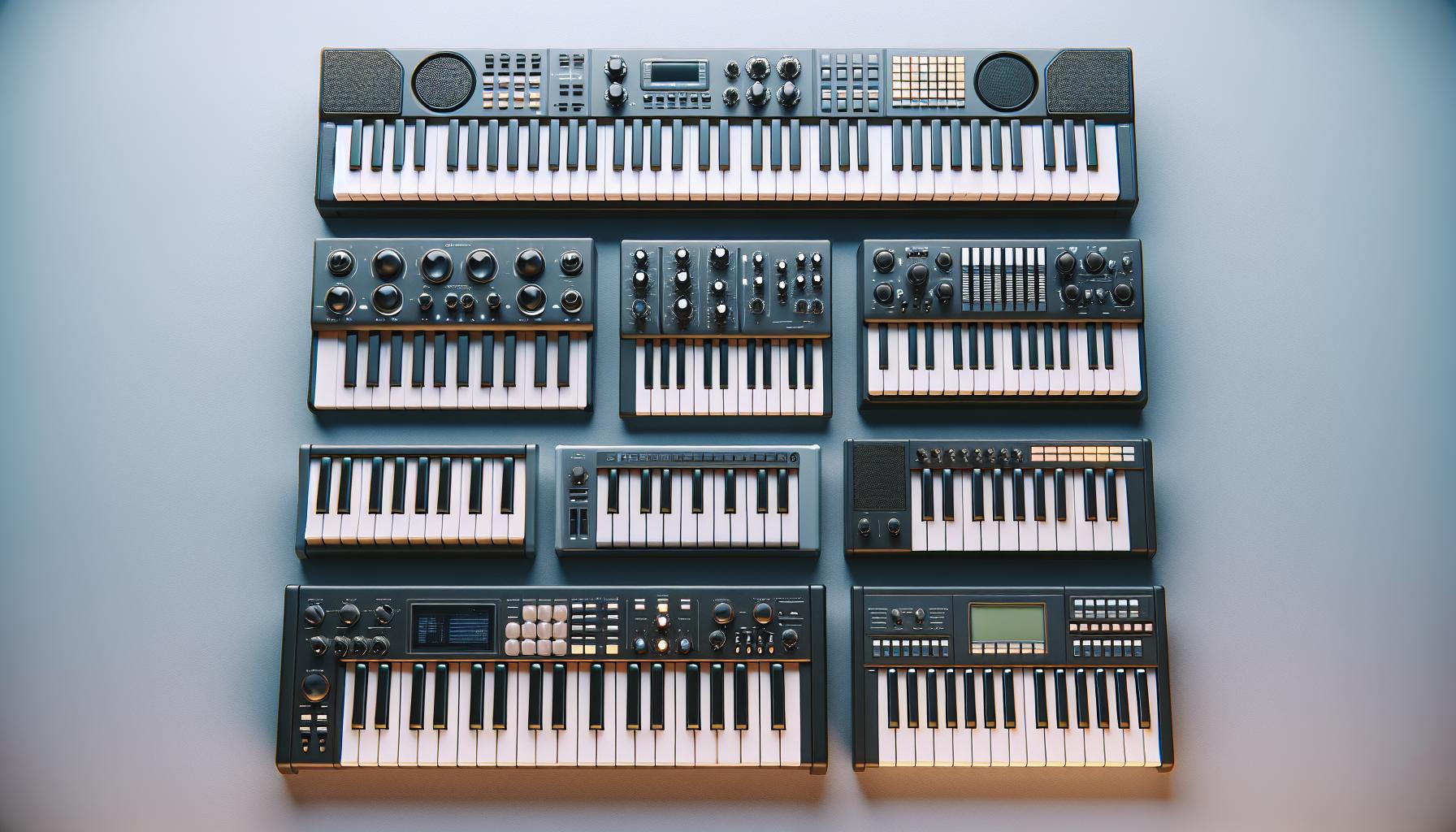
    Popular and well-established manufacturers usually ensure that their products are built to standard and made of quality materials. This tends to hold up over time, even for used models. For instance, brands like Yamaha, Roland, and Casio have solid reputations in the music industry for delivering high-caliber keyboards that produce excellent sounds.

    However, don’t let brand names overshadow the importance of inspecting each second-hand keyboard on its own merits. While a strong brand reputation can provide a sense of assurance, every used keyboard has its unique history of use and care.

    Moving onto model considerations, it’s just as important to research the piano keyboard’s model as it is to look into the brand. Various models within a brand can have drastically different features, sounds, and build quality. For instance, some models are better suited for beginners, while others are designed with professional use in mind.
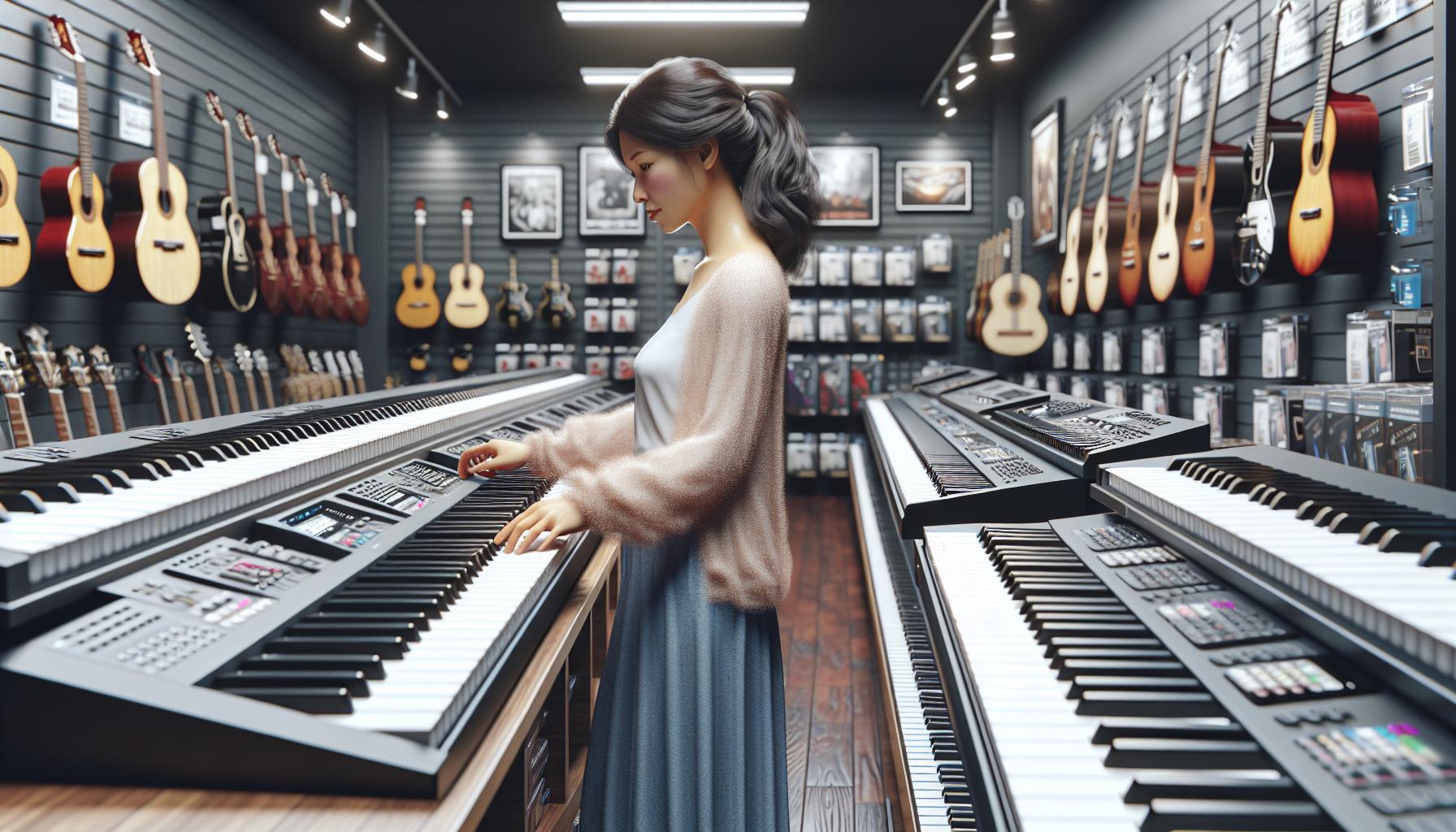
    Moreover, the age of the model should be a key consideration. The older the model, the more likely it is to have worn components and outdated technology. Conversely, more recent models may feature upgraded technology and design.

    Here are some key points to reflect on when considering the brand and model of a used keyboard:

    • Brand reputation for quality and durability
    • Individual history of the keyboard despite the brand reputation
    • The specific model and its features
    • The year the model was released

    A second-hand piano keyboard can be an excellent investment with the proper research and considerations. Remember—it’s a combination of the keyboard’s brand, model, and individual condition that’ll likely dictate its performance and lifespan. Therefore, don’t shy away from asking relevant questions or seeking professional advice to ensure the right choice.

    Researching different options before making a decision

    Purchasing a second-hand piano keyboard isn’t a decision to rush. It’s critical to explore all possible options. Researching different brands, models, and prices will offer a wider perspective, making it easier to find what you’re looking for. Don’t limit yourself to one brand or model. Be open to different possibilities; you never know what gem you could uncover!

    Having a clear understanding of your needs and preferences will help refine the search. Are you a beginner looking for a basic keyboard? Or a seasoned musician in need of advanced features? Once you define your needs, narrow down your options. It’s essential to consider the age of the keyboard, as it directly impacts its condition and the technology used in its construction.

    Remember, buying from a trusted source is of utmost importance. Do not neglect this aspect during your research. Trusted sources may be a reputable music store, a professional musician selling their gear, or even a trusted online marketplace. Verify the seller’s reputation or credibility before making any commitments. A reliable source should provide enough information about the keyboard, support proof of ownership, and allow for inspection before purchase.

    Show interest in the keyboard’s history. Therefore, ask about how often it’s been used, whether it’s been professionally serviced, and if it’s ever been repaired. The more insight you can get, the safer your buying decision will be.

    To aid your research process, consider reaching out to keyboardist communities or forums online. There’s an enormous wealth of knowledge within these communities from people who’ve been in your shoes before. They can offer advice, share their experiences, answer your concerns. This can vastly expand your knowledge about the specifics of what to lookout for when purchasing a second-hand keyboard. But remember, while these insights can guide your decision, the final call is entirely up to you.

    Having explored the tips on research and considerations, let’s delve into what to expect when inspecting a second-hand keyboard.

    Conclusion

    So there you have it! Buying a second-hand piano keyboard isn’t as daunting as it might seem. It’s all about doing your homework, knowing what you want, and not being afraid to ask questions. Remember, it’s not just about the price tag; it’s about finding a keyboard that suits your needs and will stand the test of time. Trust your gut, rely on your research, and connect with fellow keyboard enthusiasts. With patience and persistence, you’ll find the perfect second-hand piano keyboard that hits all the right notes. Happy playing!

  • Top Picks: Best Piano Keyboards with Hammer-Action Keys Reviewed

    Top Picks: Best Piano Keyboards with Hammer-Action Keys Reviewed

    If you’re a music enthusiast seeking the perfect piano keyboard, you’ve likely heard about hammer action keys. They’re the secret to getting that authentic piano feel, mimicking the resistance and rebound of traditional piano keys. But with so many options out there, it’s hard to know where to start.

    That’s where this guide comes in. It’ll help you navigate the sea of hammer action keyboards, pointing out the top picks. Whether you’re a beginner or a seasoned pro, you’ll find the perfect fit for your needs and budget. So, sit back and let’s dive into the world of hammer action keyboards.

    What are hammer action keys?

    Push any key on a traditional, acoustic piano, and here’s what’ll happen: the key raises a hammer, which then strikes the string. The weight and response of this hammer action are what gives a piano its characteristic touch or feel. When talking about piano keyboards, hammer action keys attempt to replicate this mechanical process as closely as possible.

    Let’s look at the mechanics. In a hammer-action keyboard, each key is attached to a weight. When the key gets pressed down, it raises this weight (just like the hammer in an acoustic piano), and when released, the weight falls back into place. That gives the sensation of weight and momentum, nearly imitating the feel of playing a traditional piano.

    You’re probably wondering, “But why does this matter?”

    Well, if you’re a beginner, a keyboard with hammer action keys provides that authentic piano feel, which might make the transition to an acoustic piano smoother down the road. And if you’re an experienced player, there’s no dismissing the tactile satisfaction of weighted keys. It adds depth and nuance to your playing and allows for expressive performances.

    Note: Not all keyboards are created equal, and neither are all hammer action keys.

    Many manufacturers come up with their unique designs and technologies for hammer action keyboards. They will differ in terms of touch sensitivity, response, and even weight distribution across the keys (traditional pianos have heavier keys in the low end and lighter keys on the high end).

    So there’s a lot to consider when choosing a hammer action keyboard. Rest easy, we’ll delve deeper into these factors and guide you through the world of hammer action keyboards, steering you toward the best option for your musical needs.

    Benefits of hammer action keys

    For both novice and seasoned musicians, hammer action keys on a piano keyboard offer multiple benefits. Designed to mimic the mechanical operation of an acoustic piano, these keys provide an authentic piano experience that’s comfortable for beginners and familiar to experienced players.

    First off, this system provides important feedback to the player. When pressing a hammer action key, the resistance felt is very much like that of an acoustic piano. Players can sense when the note has been played. This tactile response can significantly improve finger strength and overall keyboard technique. This makes it perfect for musicians aiming to transition from electronic to traditional piano play.

    Secondly, due to the graded weight system implemented in hammer action keys, each key’s resistance varies from low to high notes. The keys highlighted in lower octaves are typically heavier and become gradually lighter as a player moves toward the higher octaves. This replicates the feel of an acoustic piano, providing an innate sense of organic playability that’s almost impossible to achieve with non-weighted keyboards.

    One key factor to remember here is not all hammer action keyboards are created equal. Manufacturers often have unique designs and technologies for their hammer action keys. It’s not a “one size fits all”. So, when it comes to choosing a hammer action keyboard, understanding personal preferences and the main objective plays a significant role.

    In the next section of this article, we’ll delve deeper into the key factors and parameters that one needs to consider when selecting the right hammer action keyboard. These factors may range from the keyboard’s overall construction and design to the specific characteristics of the hammer action mechanism itself.

    Factors to consider when choosing a piano keyboard with hammer action keys

    When venturing into the territory of hammer action keyboards, there are a few important factors to consider. They’ll not only determine the quality of the keyboard but also how well it matches your style of play and feel preference.

    Feel and Responsiveness:
    The general *feel* of the keyboard should be your foremost consideration. No doubt, it’s about how authentic the keyboard feels to a real acoustic piano. Superb hammer action keyboards mimic the mechanical operation accurately, providing a seamless transition between digital and acoustic experiences. There’s the tactile feedback to think about as this can greatly improve finger strength and keyboard technique.

    Graded Weight System:
    One notable property of high-quality hammer action keyboards is the *graded weighting system*. This incorporates a resistance that varies between low and high notes. This replicates the feel of an acoustic piano where lower notes require more force to play than the higher ones. Always test this factor out when making the selection.

    Manufacturer’s Design and Technology:
    Each keyboard manufacturer has their own unique designs and technologies. Brands differ and so do the qualities of their keys. Some favor a more synthetic, light feel while others go for heavier, more realistic keys that are also significantly louder.

    Additional Features and Needs:
    Apart from the primary consideration of the keys itself, look at the additional features the keyboard offers. Does it have a built-in speaker system, or MIDI capabilities to record your playing? Perks like these often separate the good keyboards from the best.

    Ultimately, it’s essential to sample a few different keyboards before making a decision. This way, you can see what feels and sounds best to you. As you do, keep the following factors in mind: feel and responsiveness, graded weight system, manufacturer’s design and technology, and finally, additional features. Remember, the best keyboard is one that feels right to you and suits your individual needs.

    Top picks for piano keyboards with hammer action keys

    When it comes to top picks for piano keyboards with hammer action keys, several stand out. These models are renowned not only for their exceptional feel and responsiveness but also for the realistic replication of an acoustic piano sensation.

    A top-notch choice is Yamaha’s P-115 model. It’s widely considered for its GHS (Graded Hammer Standard) keyboard, which is designed to enhance the natural playing experience. Yamaha has carefully calibrated each key, so the lower keys bear more weight just like an acoustic piano. Its ability to interact with iOS applications add to the engaging experience it offers.

    Next on the list is the Casio Privia PX-160 which is well-known for its remarkable Tri-Sensor Scaled Hammer Action II keyboard. This technology allows for an impressive level of detail when it comes to responsiveness and recreating the nuances of delicate piano playing. Further, it boasts its unique features like split and layer capability, plus it’s equipped with a host of high-quality tones.

    The Roland FP-30 claims a spot as one of the best piano keyboards with hammer action keys as well. Its innovative PHA-4 (Progressive Hammer Action) offers high resolution, expressiveness, and great playability. A step above, it makes use of Roland’s SuperNATURAL Piano sound engine providing a rich, authentic sound that flows naturally with your playing.

    Additionally, Korg’s B1SP is a worthy mention. Korg has implemented a Natural Weighted Hammer Action (NH) keyboard in this model, replicating the heavier touch in the low keys and lighter touch in the high keys. Additionally, the B1SP is equipped with built-in speakers and comes with a dedicated stand and pedal board.

    These top picks represent the best in class for hammer action keys, each offering unique features that set them apart. Whether it’s the feel, responsiveness, or the additional features, these keyboards are the epitome of what to expect when choosing a piano keyboard with hammer action keys.

    Conclusion

    So there you have it! The Yamaha P-115, Casio Privia PX-160, Roland FP-30, and Korg B1SP have proven to be top-notch when it comes to piano keyboards with hammer action keys. They’ve each got their own unique features that make them stand out in the crowd. But what they all have in common is their ability to mimic the feel and responsiveness of an acoustic piano. Whether you’re a seasoned pro or just starting out, there’s something in this lineup for everyone. These keyboards truly represent the cream of the crop for hammer action keys. So go ahead and make your pick. You won’t be disappointed!

  • Affordable Excellence: A Review of the Alesis Recital Pro and other Budget-Friendly Digital Piano Keyboards

    Affordable Excellence: A Review of the Alesis Recital Pro and other Budget-Friendly Digital Piano Keyboards

    If you’re on the hunt for a digital piano keyboard that doesn’t break the bank, you’ve come to the right place. We know that finding the perfect blend of affordability and quality can be a bit of a challenge. That’s why we’ve taken the time to review some of the best budget-friendly options out there.

    From beginners looking to dip their toes in the world of music, to seasoned players wanting a cost-effective backup, there’s something here for everyone. We’ve considered factors like sound quality, key action, and additional features to give you a comprehensive look at each keyboard.

    Yamaha P-45 Digital Piano Keyboard Review

    Diving right in, Yamaha’s P-45 is an exceptional option when it comes to affordability and quality. It’s a perfect balance that attracts both beginners and professionals seeking a budget-friendly backup.

    What sets the P-45 apart is its Graded Hammer Standard (GHS) weighted action. This feature mimics the touch of an acoustic piano. The lower keys feel heavier, and as one progresses upward, the keys become lighter, offering an authentic piano feel.

    Sound quality is crucial, and the P-45 doesn’t compromise. This keyboard packs an impressive Advanced Wave Memory (AWM) sound engine. This technology captures the sound of an acoustic piano, enabling realistic and immersive playing experiences.

    Delving into the keyboard’s range, it provides 88 keys – an essential element for those looking to play a broad spectrum of pieces. With a maximum of 64-note polyphony, players have ample range to navigate complex works without note drop-off.

    Let’s not forget the keyboard’s simplicity. The P-45 features an easy-to-use button for changing voice, song, and metronome settings. A minimalist approach, which certainly benefits beginners and those valuing straightforwardness in their musical equipment.

    Yet, even with all these features, the Yamaha P-45 maintains amazing portability. Perfect for shared apartments, college students, and gigging musicians. Weighing just under 25 lbs, it’s effortlessly transportable and doesn’t demand a large space.

    Feature Details
    Key Action Graded Hammer Standard (GHS) weighted action
    Sound Technology Advanced Wave Memory (AWM)
    Keys 88
    Polyphony 64-note
    Weight 25 lbs

    For those who want a versatile keyboard that delivers affordability, quality, and portability, they might find their match in the Yamaha P-45. He ticks all the boxes, proving that you don’t have to break the bank for quality music.

    Casio Privia PX-160 Digital Piano Keyboard Review

    In the quest for budget-friendly digital piano keyboards, Casio’s offerings are impossible to overlook. Among those, the Privia PX-160 stands out as a strong candidate. It’s loaded with features that cater to both newcomers and seasoned players giving it an edge in terms of versatility.

    One of the standout aspects of the PX-160 is the scaled hammer action keys. This Tri-Sensor Scaled Hammer Action II keyboard provides a level of touch response that’s incredibly close to that of a grand piano. The lower notes have a heavier feel, while the higher ones are lighter, mirroring the natural, physical characteristics of an acoustic piano.

    The PX-160 is no slouch on the sound front either. It’s equipped with AiR Sound Source, the latest sound production system from Casio. This generates a sound quality that’s rich, detailed and full-bodied. The two-track MIDI recorder is an additional feather in the cap, allowing one to record, tweak and perfect their performances.

    In terms of design, it’s sleek, compact and most importantly, portable. It does not require a dedicated space and is easy to carry around if the need arises.

    In terms of educational features, the PX-160 is equipped with Duet mode, making it a convenient choice for piano lessons. Here is an overview of the PX-160’s key features:

    • Tri-Sensor Scaled Hammer Action II keyboard
    • AiR Sound Source
    • Two-track MIDI recorder
    • Duet mode
    • Compact and portable

    So, when it comes to seeking a digital piano keyboard that delivers an authentic feel, excellent sound quality and excellent portability, the Casio Privia PX-160 is an option that’s worthy of serious consideration.

    Roland FP-30 Digital Piano Keyboard Review

    It’s time to take a step further and introduce another fabulous budget-friendly digital piano keyboard, the Roland FP-30. Noted for its remarkable design and advanced features, this keyboard sets a high standard for its price range.

    First off, the Roland FP-30 comes with 88 fully weighted keys. They’re crafted to mimic the feel of a high-quality acoustic piano. You’ll notice that these keys are sensitive to touch, providing various sound dynamics based on your playing intensity. It’s a fantastic feature for those seeking an immersive playing experience.

    When it comes to sound quality, the Roland FP-30 doesn’t disappoint. Behind its stellar performance is the renowned SuperNATURAL Piano Sound engine. It delivers rich, textured tones inspired by a grand acoustic piano. Whether you’re exploring jazzy tunes or deploying classical melodies, this is your reliable partner for an expressive performance.

    What about connectivity? The Roland FP-30 is well-equipped in that department. It features USB and Bluetooth connectivity, allowing you to link with mobile devices, computers, or music software. This feature supports music learning apps and expands your music library with an abundance of song choices for your practice.

    If education is a priority, the Roland FP-30 covers that ground. With its Twin Piano mode, it’s easy for two players to run the keyboard simultaneously. It works by splitting the keyboard into two identical halves, great for music lessons where the teacher and student play side by side.

    Let’s move on to design. The Roland FP-30 is compact and lightweight, fitting snugly into narrow spaces. If you’re the traveling musician, you’ll appreciate the portability of this digital piano keyboard. Plus, it doesn’t compromise on sturdiness, promising durability for the long haul.

    The Roland FP-30 is powerful, versatile, and mindful of your budget. It continues the lineup of high-quality yet accessible digital piano keyboards. Let’s look at other remarkable options out there.

    Alesis Recital Pro Digital Piano Keyboard Review

    Moving on to another great budget-friendly digital piano option, let’s highlight the Alesis Recital Pro. This keyboard is an excellent choice for both beginners and advanced pianists who need a versatile and reliable instrument without denting their wallets.

    The Alesis Recital Pro is known for its 88 fully weighted keys, providing a realistic piano feel. It’s also sensitive to touch for a wide variety of sound dynamics. An impressive feature of this keyboard is its adjustable touch response, allowing players to cater the sensitivity of the keys to their liking.

    One of the standout features of the Recital Pro is its rich and textured tones made possible by its powerful 20W built-in speakers. With 12 premium voices from acoustic piano to organ, the keyboard ensures top-notch sound quality for playing an assortment of musical pieces.

    The Alesis Recital Pro also boasts useful learning features such as “Lesson Mode” that divides the keyboard into two sections with identical pitch ranges – ideal for one-on-one teaching or self-learning. Moreover, its three-month Skoove Premium subscription offers interactive online piano lessons to enhance players’ skills.

    For connectivity, Alesis Recital Pro provides multiple options. It includes a USB-MIDI output for connecting to computers or mobile devices and also has 1/4″ headphone output that allows players to practice privately. For those who need to perform in front of an audience, this keyboard comes with a 1/4″ stereo output to connect to an amplifier.

    Despite its comprehensive features, the Alesis Recital Pro remains easy to use, thanks to its user-friendly controls and intuitive interface. While it may not be as lightweight as the Roland FP-30, it’s certainly sturdy and built to last, making it a sensible choice for the newbies and experienced players alike.

    Please note that the values and facts mentioned are as per the manufacturer’s specifications, and actual performance may vary based on individual use.

    Overall, the Alesis Recital Pro is quite impressive with its fully weighted keys, built-in speakers, and varied connectivity options. It’s not just easy on the pocket but also rich in features, making it a great value for money. It stands as a robust competitor to the Roland FP-30 in the realm of cost-effective digital pianos.

    Conclusion

    So there you have it. The Alesis Recital Pro stands out among budget-friendly digital pianos. Its full 88 keys, touch sensitivity, and adjustable touch response make it a dream for any pianist. Its powerful speakers deliver outstanding sound quality and its learning features make it a perfect choice for beginners. Plus, its connectivity options allow for a wide range of uses. It’s not just a piano, it’s a tool for musical exploration. And the best part? It’s sturdy, easy to use, and offers excellent value for money. If you’re on a budget but don’t want to compromise on quality, the Alesis Recital Pro might just be the keyboard you’re looking for. Happy playing!

  • Yamaha VS Casio Digital Pianos: A Detailed Comparison of Price, Durability & Sound Quality

    Yamaha VS Casio Digital Pianos: A Detailed Comparison of Price, Durability & Sound Quality

    When it comes to digital piano keyboards, two names often rise to the top: Yamaha and Casio. Both brands offer a wide range of options for musicians of all levels, from beginners to professionals. But how do they stack up against each other?

    Yamaha’s keyboards are known for their high quality and professional-grade features. They’re often seen in music studios and on concert stages around the world. On the other hand, Casio keyboards are praised for their affordability and user-friendly interfaces, making them a popular choice among beginners and hobbyists.

    In this article, we’ll dive deeper into the specifics of these two brands. We’ll compare their key features, sound quality, durability, and pricing to help you make an informed decision. Whether you’re a seasoned musician or just starting out, this comparison should shed some light on which keyboard is the right fit for you.

    Key features of Yamaha keyboards

    When it comes to digital piano keyboards, Yamaha holds a strong reputation for its impeccable key features. Each model offers a unique combination of specifications that cater to a range of pianists, from beginners to seasoned musicians.

    One of the standout features of Yamaha keyboards is the Graded Hammer Standard (GHS) keyboard. This technology mimics the feel of an acoustic piano where the keys in lower octaves provide a heavier touch, getting lighter as the keys go up in octave. It’s a crucial feature for those who want to build proper finger technique.

    Additionally, Yamaha’s AWM stereo sampling enhances the sound quality to a level that’s strikingly real. AWM (Advanced Wave Memory) is a sampling system which creates the realism of an acoustic instrument by using digital technology to record the instrument’s sound. This carries over the rich tones of an actual piano, adding immense value to the playing experience.

    An equally impressive aspect is Yamaha’s Smart Pianist App compatibility. It gives users an interactive platform to adjust settings, select instrument voices, and even transcribe music. Beginners find this particularly beneficial as it provides useful tools for learning.

    On top of these, Yamaha keyboards typically come with an extensive library of pre-loaded songs. The song bank, featuring a varied selection of classical favorites to popular hits, works as both an educational tool and a source of entertainment.

    Further proving its worth, it’s important to note that Yamaha keyboards often have durable builds and understated aesthetics. They’re manufactured with high-quality materials that ensure longevity and are designed with a professional look, appealing to many pianists.

    In terms of connectivity, most Yamaha models have USB and MIDI ports, allowing pianists to connect the keyboard to other devices for expanded functionality.

    All these notable features combine to make Yamaha keyboards a favourable choice for many. Yet, it’s essential to consider other factors like individual budget, required features, and personal preference when making the final decision.

    Key features of Casio keyboards

    Let’s talk about Casio. Known for their innovation, Casio keyboards offer a myriad of features that make them a competitive choice for a digital keyboard. They’ve created a name in the industry for their quality, variety of options, and easy accessibility to beginners and professionals alike.

    Primarily, Casio keyboards come with the Scaled Hammer Action II Keyboard system. It’s a sophisticated technology that doesn’t just mimic the feel of an acoustic piano. It goes a step further in replicating the granular details. The moment you strike the key, you’d feel a heavy touch on the lower notes that gradually becomes lighter as you move up.

    Sound technology is a strength Casio doesn’t shy away from flexing. The brand’s proprietary AiX sound Source technology provides clear, rich tones that resonate for a remarkable music experience. You’d find that it enhances the audio output to a quality that parallels a grand piano, captivating the hearts of the listeners.

    Furthermore, Casio offers its Chordana Play app compatibility. It’s a supportive tool for beginners and music enthusiasts. The app allows you to change settings easily, access tutorial lessons, and play along with MIDI files as per your learning pace.

    Casio also equips their keyboards with a wide selection of built-in songs and rhythms. From the classics to the latest chart-toppers, there is an abundance of choices for training and entertainment. Plus, Casio keyboards boast of durable builds that can withstand the test of time.

    Suffice to say, Casio keyboards pack a punch with their feature sets. However, each person’s preferences vary. It’d be wise to compare these features with what Yamaha has to offer before jumping into a conclusion.

    Bear in mind, both Yamaha and Casio offer excellent keyboards intending to suit the needs of their users. As much as the choice relies on the product’s features, it also comes down heavily on the user’s preferences, budget, and required features.

    Sound quality comparison

    Comparing Yamaha and Casio keyboards in terms of sound quality also reveals noteworthy differences. While both models strive to offer the most realistic sound possible, the technologies they employ to deliver this vary.

    In the Yamaha keyboards, sound quality is significantly enhanced via the company’s very own AWM stereo sampling technology. This technology works by capturing high-quality recordings of acoustic pianos, which are then used to generate the sound in Yamaha’s digital keyboards. No matter if someone’s playing a soft soothing melody, a serene nocturne or a vivacious sonata, these keyboards produce grand acoustic variations that cater to every musical taste and style.

    On the flip side, Casio keyboards rely on their AiX Sound Source technology to deliver sounds that are clear, rich, and filled with harmonic overtones. With this technology, Casio has excelled in providing grand piano tones that are expressive, powerful and resonate beautifully across all frequencies. Whether one is practicing scales or performing at their first concert, playing a Casio keyboard creates a sonic experience that can rouse any audience.

    The differences don’t just end here. Yamaha keyboards generally have a warmer, more vibrant sound profile. This tends to produce a full-bodied tone that is comfortable for most pianists. Conversely, Casio keyboards tend to produce a brighter tone which can be quite attractive to performers who lean towards precision and clarity.

    However, it’s important to note that the sound quality of both these keyboards can be greatly affected by external factors such as existing room acoustics or the type of external speaker system used.

    With the clear distinctions between the two keyboard giants when it comes to sound quality, one would think making a choice between the two would be simple. However, that’s not necessarily the case as the sound preference can be highly subjective based on the user’s piano playing style, ear for music, and personal auditory preference. The best way to decide is simply to play and listen to both keyboards and see which one resonates most.

    Durability comparison

    Shifting focus onto the durability aspect, both Yamaha and Casio don’t skimp when it comes to the quality of their pianos. However, minor differences divide these two giants. Diving deeper into this comparison allows us to shed some light on these subtle nuances.

    When talking about Yamaha, durability is part and parcel of their offerings. They’ve built a reputation for their keyboards’ longevity, much like their motorbikes. Grown from the same ethos, Yamaha puts an uncompromised focus on quality at every stage of construction. Take their PSR series, for example, that’s been around for 3 decades and shows no sign of faltering. This steadfast dependability across their range is a testament to Yamaha’s commitment to durability.

    Now let’s focus on Casio keyboards. Despite Yamaha’s robustness, Casio musical instruments don’t lag behind. Casio’s specs sheet implies a strong focus on resilience. Their Privia PX series, illustrated by the model Casio PX-770, is strikingly solid and designed to last. Its matte keys provide resistance to wear and tear, aiding the keyboard’s overall lifespan in the long run.

    Additional aspects like the soldering of electronic components, quality of elemental materials, and tight control on manufacturing processes play a significant role in determining the keyboards’ durability too. Yamaha and Casio prioritize these factors, ensuring their customers receive a product that lasts.

    Despite subtle differences, users globally have found their digital pianos from both these brands going strong even after several years of consistent use. It’s clear that Yamaha and Casio both manufacture keyboards that are built to last.

    Remember, though, that the exact lifespan of a digital piano can hinge significantly on how it’s used and maintained. Regular cleaning, proper storage, and usage within the manufacturers’ guidelines certainly help prolong the keyboard’s lifespan. Comparing Yamaha and Casio’s durability brings us to the realization that both brands offer robust musical instruments. They each have their own unique strengths and choosing between them really boils down to personal play style and brand preference.

    Pricing comparison

    While sound quality and durability are vital factors when choosing a digital piano, it’s essential not to overlook the price point. Everyone’s on a budget, whether it’s tight or generous. That’s where the brands Yamaha and Casio reveal another contrast.

    Yamaha keyboards typically come with a higher price tag compared to their Casio counterparts. The higher cost isn’t just for prestige – it’s reflective of the quality of materials used, the engineering prowess, and the longstanding reputation that Yamaha has built over the years.

    On the other hand, Casio’s digital piano keyboards are often more budget-friendly. Their appeal lies in providing a good balance of quality and affordability. These keyboards are priced lower but still offer an impressive array of features. So, for beginners or those on a tighter budget, Casio can be an attractive choice.

    There’s no doubt that both Yamaha and Casio produce a wide array of keyboards catering to all sorts of budgets. To give an apt idea about the price range, let’s consider some popular models from both brands.

    Brand Model Price Range
    Yamaha P-45 $450-$500
    Yamaha YDP-144 $1000-$1200
    Casio CTK-3500 $100-$150
    Casio PX-770 $600-$700

    As we can see, the prices vary quite a bit, even within each brand. These figures give a general sense of where each brand falls in terms of price.

    In the journey of choosing between Yamaha and Casio, one needs to evaluate carefully. It’s not just about whether you can stretch your budget to get a Yamaha piano or save some bucks with a Casio. What matters more is if the features and qualities fit your specific needs and preferences. Because the true value of a musical instrument is not in its price tag, but in the happiness and satisfaction it brings to its user.

    Conclusion

    When it comes to picking the perfect keyboard, it’s not a one-size-fits-all situation. Yamaha and Casio both have their strengths. Yamaha’s keyboards might be a bit pricier but they’re known for their superior sound quality and durability. On the other hand, Casio’s keyboards are the go-to for those on a budget, offering a balance of quality and affordability. It all boils down to what fits your personal play style, brand preference, and budget. So whether you’re leaning towards the rich tones of a Yamaha or the cost-effective reliability of a Casio, you’re sure to find a keyboard that hits all the right notes.

  • Top Compact and Lightweight Piano Keyboards for Gigs: A Comprehensive Guide

    Top Compact and Lightweight Piano Keyboards for Gigs: A Comprehensive Guide

    If you’re a gigging keyboardist, you know how crucial it is to have a compact and lightweight piano keyboard. It’s not just about the sound – it’s about ease of transport, quick setup, and the ability to adapt to different performance environments.

    In the world of music, where gigs can pop up anywhere from a cozy coffee shop to a sprawling outdoor festival, having the right gear matters. A compact and lightweight piano keyboard can be a game-changer.

    Let’s dive into the world of portable keyboards, exploring the features that make them gig-worthy and the top models that professional musicians swear by. Whether you’re a seasoned pro or just starting out, this is the guide you’ve been waiting for.

    What to Look for in a Compact and Lightweight Piano Keyboard

    When it’s time to shop for a compact and lightweight piano keyboard, there are several essential aspects that should grab your attention. These features will make your life on the road—or even just moving from home to studio—a whole lot easier.

    Weight and Size are the first elements that come to mind. As a gigging keyboardist, you’ll appreciate something that’s compact and light enough to transport without too much hassle. But remember that smaller doesn’t always mean better. The balance between lightweight design and playing functionality should be considered. After all, you don’t want to compromise the overall feel and comfort of playing.

    The Number of Keys on the keyboard is crucial. Some suggest a minimum of 61 keys for a balanced experience, while others recommend going for 73 or 88 keys if your music demands more range. It’s important to find a key count that suits your requirements and style of play.

    Sound Quality shouldn’t be overlooked. Smaller size might sometimes mean dropping a few tones or sound effects. But the keyboard you choose should consistently produce top-notch audio regardless of its dimensions.

    Durability is an important factor too. Your keyboard needs to withstand the rigors of regular transportation and performance. Look for rugged build quality so that even if it’s compact, it can endure the hustle of nightly gigs.

    Ease of Connectivity is another key factor. It should have essential ports and jacks for simple plug-and-play capability with amplifiers, sound systems, or recording devices. Some keyboards come with built-in Bluetooth or wifi for wireless connections which could be a convenient option.

    The Battery Life of portable keyboards can vary greatly. If you plan on using your keyboard for extended periods, ensure it has enough juice to last the entire gig. Or at least have options for easily recharging or changing batteries on the go.

    Are these the only things you need to think about when shopping for your next gigging keyboard? They’re certainly crucial factors, but depending on your unique needs, there might be more to consider. For example, the range of tones and rhythms available or built-in recording functionality could be important too. Still, these points are a great place to start.

    Portability Features to Consider

    When on the hunt for the perfect compact and lightweight piano keyboard, there’s a few key portability features that should be on your radar.

    Size and weight are probably the first things that come to mind. It’s gotta be compact enough to fit in tight gigging spaces and light enough that it won’t break your back hauling it around town. Check the product specs before you buy!

    The number of keys on the keyboard matters too. Sure, a 61-key keyboard is a lot more portable than a full-sized 88-key one. But if the music you’re playing requires a full range, you might have to compromise on portability.

    Sound quality shouldn’t be sacrificed for portability. When you’re rocking the keys, you want a keyboard that can produce rich and full sounds. Look for models with higher quality built-in speakers.

    Next up is durability. Your keyboard should be able to endure the wear and tear of travel and performance. Consider models with a rugged build and tough exterior casings.

    Connectivity becomes critical for live performances. You need a keyboard that can easily connect to a sound system. Look for models with a variety of connection ports, such as USB, MIDI, and audio out.

    Lastly, consider battery life. If your gigs often lack access to power outlets, consider a keyboard that can run on batteries. Keep in mind, though, that battery power should last long enough for your entire performance.

    While these aspects are important, remember that individual needs may vary. You know your music best: performance style, gear requirements, and travel conditions. Keep all these factors in mind as you weigh the pros and cons of each model.

    Key Considerations for Gigging Keyboardists

    When it comes to selecting a lightweight, compact keyboard for gigs, not just any keyboard will do. There are several key elements that gigging keyboardists should take into account to ensure they’re making the most optimal choice.

    Size and Weight
    Compact size and lightweight design are a given when lugging gear between gigs. No one wants to be burdened with a heavy, clunky keyboard that’s difficult to transport. Few things you should consider:

    • How much space is available in the van or vehicle?
    • What’s the distance between parking and the venue?
    • Will stairs or other obstacles be a factor?

    Number of Keys
    It’s not always a simple case of ‘the more the merrier’. Yes, the standard piano comes with 88 keys but it may be too bulky for a gig. Consider opting for a keyboard with 76, 61, or even fewer keys if portability outweighs the need for range.

    Sound Quality
    While a compact, lightweight design is important, the sound quality should not be compromised. Both the quantity and quality of sound samples are important factors in creating an authentic piano sound.

    Durability
    Your keyboard will likely go through lots of unpacking and packing, moving around, and potentially some bumps here and there. Durability is key — figuratively and literally.

    Connectivity
    Most compact keyboards offer a variety of connectivity options. Consider the range of devices you might want to connect. This could include a tablet, smartphone, or laptop for programming sounds, or an external sound module for increased audio flexibility.

    Battery Life
    A keyboardist on the go needs a keyboard that doesn’t quit mid-show. Consider a model with long battery life, or better yet, one that also works off mains power.

    Of course, every gigging keyboardist has different needs. While these are general considerations, it’s crucial to keep your specific situation, performance style, and gear requirements in mind. Remember, even the most ‘perfect’ keyboard won’t be much help if it doesn’t align with the individual user’s needs and conditions.

    Top Models of Compact and Lightweight Piano Keyboards

    When it comes to combining compactness and lightness with excellent performance for gigs, a few keyboard models stand out. Let’s take a peek at some of these top performers.

    The Yamaha Piaggero NP12 surely deserves a mention. It’s a 61-key beauty that weighs merely 4.5 kilograms. Don’t let its featherweight fool you though. This keyboard packs a punch with its high-quality sounds and is popular for its portability. Moreover, its battery life spans up to 16 hours — a fantastic choice for gigging keyboardists who perform for extended periods.

    Next in line is the Roland RD-88 Stage Piano, a slightly bigger model with 88 keys. Despite its bigger size, it’s relatively light at 13.5 kilograms. Built with Roland’s acclaimed SuperNATURAL sound engine, it delivers unrivaled sound quality. A bonus is the advanced onboard controller features, enabling seamless integration with other gear.

    Korg KROSS 2, sporting 61 keys, is another top pick. Weighing just 3.8 kilograms, it’s one of the lightest options. It surprises with a whopping battery life up to 7 hours and scores high on connectivity, offering a multitude of inputs and outputs.

    Lastly, we have the Casio Casiotone CT-S200, an affordable yet feature-rich keyboard. Weighing only 3.3 kilograms, it’s a 61-key option with a fantastic build quality, making it a great pick for the rough and tumble of the road.

    Here’s a quick overview of these models:

    Model Number of Keys Weight Key Features
    Yamaha Piaggero NP12 61 4.5 kg High sound quality, Portable, Long battery life
    Roland RD-88 Stage Piano 88 13.5 kg High-quality SuperNATURAL sound engine, Good connectivity
    Korg KROSS 2 61 3.8 kg Lightweight, Excellent connectivity, Long battery life
    Casio Casiotone CT-S200 61 3.3 kg Very light, Durable, Affordable

    Each of these keyboards shows how modern design and technology can answer the demand for compactness, lightness, and high performance in the world of gigging keyboards.

    Pros and Cons of Compact and Lightweight Keyboards

    When it comes to considering the choice of equipment for gigging keyboardists, it’s important to weigh the advantages and drawbacks. Let’s take a closer look at some of the pros and cons of compact and lightweight keyboards.

    In the realm of benefits, the portability factor should not be underestimated. Given their compact nature, these keyboards can be carried around easily, enabling musicians to transport without any hassle. For those who gig extensively, this flexibility is an indispensable asset.

    Furthermore, these keyboards are not just lightweight and small, they’re potent in terms of performance too. Despite their size, they come power-packed with diverse sounds, handy features, and an impressive battery life. So, no matter which model you go for, whether it’s the Yamaha Piaggero NP12, the Roland RD-88 Stage Piano, the Korg KROSS 2, or the Casio Casiotone CT-S200, you’re promised a high-functioning music maker.

    Now coming to the cons, while compactness and lightness bring about the convenience of transport, they might compromise on the full range of a traditional piano. The keyboards could also feel less substantial and more plastic in comparison to higher-end models.

    Moreover, some musicians might find that the smaller size and fewer number of keys limit their playability. Not all compact and lightweight keyboards feature weighted keys, a factor that can make a significant difference to the feel and touch of the instrument.

    Each keyboardist’s needs and preferences are different, and what works for one may not necessarily work for another. Keyboards should not just sound good and perform well, they should also feel comfortable and intuitive for the musician. Thus, it’s always important to try out a keyboard before making a purchase decision.

    Conclusion

    So, it’s clear that compact and lightweight piano keyboards can be a game-changer for gigging musicians. They’re portable and pack a punch when it comes to performance. Sure, they might not offer the full range of a traditional piano and some may lack weighted keys. But that doesn’t mean they’re not worth considering. It’s all about finding the right fit for your musical needs and preferences. Try out a few models, see what works for you. Remember, the perfect keyboard for gigs is out there waiting for you. It’s just a matter of finding it.

  • Choosing the Ideal Piano Keyboard: Top Recommendations for Classical Pianists

    Choosing the Ideal Piano Keyboard: Top Recommendations for Classical Pianists

    Choosing the right piano keyboard can be a game-changer for any classical pianist. It’s not just about the keys and sounds, it’s about the feel, the touch, and the connection that a pianist develops with their instrument.

    There’s a sea of options out there, from digital keyboards to grand pianos, each boasting unique features and qualities. It can be a daunting task to find the perfect fit, especially for classical pianists who need an instrument that’ll truly capture the depth and nuances of their music.

    This article aims to help classical pianists navigate through these options, providing a comprehensive guide to the best piano keyboards in the market. It’s intended to simplify the process and ensure that every pianist finds an instrument that resonates with their style and enhances their performance.

    Key Considerations for Classical Pianists

    A myriad of factors come into play when selecting the ideal piano keyboard for a classical pianist. Mind you, it’s not just about finding a functional instrument, it’s about discovering a trusty partner for emotional journey and expression.

    Touch Sensitivity might be the first thing a classical pianist should look for in a keyboard. It enables pianists to vary their playing style and create nuances in their performances. When a keyboard has high touch sensitivity, it responds differently to varying degrees of force. This feature is essential for classical music which often requires rapid shifts from soft, gentle pieces to powerful, booming notes.

    Next, Weighted Keys provide a realistic piano playing experience. They’re designed to mimic the resistance and rebound of a traditional grand piano. An instrument with weighted keys can prepare a passing beginner for an eventual upgrade to an acoustic piano. It’s also perfect for an experienced pianist who might prefer a more authentic feel.

    Of course, we can’t talk about keyboards without mentioning Sound Quality. A good classical music keyboard will produce sounds that are almost indistinguishable from an acoustic piano. Top-notch keyboards even offer hundreds of different tones and sounds.

    The keyboard’s Build Quality and Design Aesthetics should also not be overlooked. A well-built keyboard will stand up to the rigors of heavy use while maintaining precision and responsiveness.

    Moreover, for those who love to take their music on the go, Portability can be a defining factor. Some keyboards are designed with portability in mind, being lightweight and compact.

    These crucial elements form a part of the decision-making puzzle when it comes to choosing a piano keyboard. Each pianist’s interpretation of these factors may be unique, based on their personal style, training background, and goals as a musician. Nonetheless, by understanding the importance of each of these considerations, the task of finding the right instrument becomes a more informed and enjoyable journey.

    Digital Keyboard vs Grand Piano: Pros and Cons

    When considering the best piano keyboard for classical pianists, it’s often a toss-up between the digital keyboard and the grand piano. Differences in portability, price, maintenance, and the overall playing experience separate the two. These variations can greatly affect a classical pianist’s playing style, performance, and satisfaction. Let’s dive deeper into the pros and cons of each.

    Digital Keyboard

    The benefits of a digital keyboard include:

    • Portability and Convenience: A digital keyboard is lightweight, easy to transport, and perfect for on-the-go musicians.
    • Budget-Friendly: They’re generally less expensive than grand pianos, making them a fantastic choice for those on a budget.
    • Ease of Maintenance: Digital keyboards require minimal upkeep, unlike grand pianos that might need regular tuning and cleaning.

    However, the drawbacks of a digital keyboard are:

    • Lack of Authenticity: While they’re getting better, digital keyboards can’t perfectly replicate the sound and touch of an acoustic piano.
    • Dependency on Electricity: You’ll always need electricity or batteries to play which might limit where and when you can practice.

    Grand Piano

    A grand piano has several advantages:

    • Exceptional Sound Quality and Touch Sensitivity: Grand pianos are renowned for their unmatched sound quality and touch sensitivity, offering the most authentic piano experience.
    • Elegance and Aesthetic Appeal: They’re quite a sight to behold and can significantly enhance any room’s aesthetics.

    Nonetheless, here are some disadvantages of a grand piano:

    • Pricey and High Maintenance: Grand pianos are quite expensive and require consistent maintenance.
    • Lacks Portability: Due to their size and weight, moving them can be a challenge.

    In the end, it comes down to personal preference and specific needs. A classical pianist might find a grand piano more appealing for its authenticity and sound quality. On the contrary, a traveling musician or a hobbyist might appreciate the convenience, portability, and affordability of a digital keyboard. The key lies in understanding one’s preferences, style, expectations, and constraints to make an informed choice. The ideal instrument ultimately enhances a musician’s performance and enjoyment, becoming their perfect musical companion.

    Top Features to Look for in a Piano Keyboard

    When hunting for the perfect piano keyboard, there are a handful of must-have features that can make all the difference in a classical pianist’s performance.

    One of the biggies is touch sensitivity. You’ve gotta have a keyboard that responds in volume based on how gently or forcefully the keys are struck. It’s a critical factor that brings out the nuances and dynamic range in a piece of music.

    Next up, we have weighted keys. These simulate the resistance you’d feel on an acoustic piano. With weighted keys, pianists can perform intricate pieces full of subtleties and emotion, giving an authentic feel to their performance.

    Sound quality can’t be overlooked either. High-quality sound sampling tech is a must in today’s keyboards. Imagine playing Chopin’s nocturne and hearing the rich, deep bass tones ring out, clear and unmodified. Nothing beats that.

    Then we need to talk about build quality. It’s essential to go for a keyboard that can stand the test of time. That one that has a robust build, handles the rigors of constant use, and boasts a sturdy keybed.

    Let’s not forget about design aesthetics. While it might not affect the sound, a well-designed, eye-catching keyboard can undoubtedly up the comfort quotient and inspire pianists.

    Convenience is king, so portability is a key consideration. If you’re a gigging musician or a pianist who lives in a small flat, you’d appreciate a light, compact, and easy-to-move keyboard.

    So, to sum it up:

    • Touch sensitivity
    • Weighted keys
    • Sound quality
    • Build quality
    • Design aesthetics
    • Portability

    Best Piano Keyboards for Classical Pianists

    When it comes to selecting a keyboard for a classical pianist, it’s not just about the price tag or brand. The essential features mentioned earlier, like touch sensitivity, weighted keys, sound quality, and more, need to be taken into consideration. To aid in the decision-making process, here are some keyboards that get top marks in these departments:

    Yamaha P125 88-Key Weighted Action Digital Piano

    With a sleek design, 88 different keys, and impressive sound quality, the Yamaha P125 checks all the boxes for a classical pianist. It’s built like a tank, ensuring extended durability and resistance to wear and tear. Yamaha’s attention to detail extends to the level of key resistance too, closely mimicking the feel of an actual piano.

    Roland RD-2000 88-Key Digital Piano

    Packed with innovative features and boasting of Roland’s legendary build quality, the RD-2000 is perfect for those who value the nuance in their music. Its revolutionary V-Piano technology delivers unparalleled sound quality, while the weighted keys provide a very authentic feel. It’s portable, giving it an edge in terms of convenience.

    Kawai ES110 88-Key Digital Piano

    The Kawai ES110 combines portability and performance brilliantly. This keyboard is highly rated for the realistic acoustic piano sound it delivers, thanks to its Harmonic Imaging sound technology. It’s also praised for its Responsive Hammer Compact Action, which gives the keys a natural, weighted feel, akin to playing an acoustic piano.

    It’s worth noting that every pianist has their own style and personal taste, and what works well for one might not for another. That’s why trying out several keyboards to see which one feels the best is the only tried and true approach. It’s the pianist’s unique connection with the instrument that can breathe life into the notes. Therefore, the perfect keyboard is one that feels just right.

    Grand Pianos for Classical Performances

    When it comes to grandeur and elegance in live performances, grand pianos take center stage. They’re particularly adored by classical pianists for a multitude of reasons.

    One vital aspect classical pianists appreciate in a grand piano is the superior sound quality. Grand pianos are built with an advanced sound projection system, generally consisting of a soundboard and acoustic chamber. This setup yields a resonant, vibrant, and authentic sound crafted for a concert hall environment. It delivers the depth and nuance vital to the dynamics of classical compositions.

    Another significant feature is the touch sensitivity offered by a grand piano. The intricate mechanics of a grand piano, including its larger keys and longer strings, provide enhanced control over articulation and dynamics. This allows pianists to express their musical intentions with the finesse that classical pieces often demand.

    Grand pianos truly shine with weighted keys. The keys’ weightiness and subsequent hammer action allow the musician to experience a real feeling of primum mobile – the first cause or initial movement in the key’s depression; critical in producing nuanced, controlled tones.

    Though one has to handle the weight literally here, as these pianos are typically large, heavy, and aren’t designed to be moved around frequently. Also, they come with a hefty price tag, which might be a significant constraint for some.

    Given these aspects to consider, a few top-notch grand pianos that warrant attention from classical pianists include Steinway & Sons Model D, Yamaha CFX, and the Bosendorfer 290 Imperial. These finely crafted instruments exemplify the ultimate standard of sonority, delicate control, and majestic aesthetics necessary for any classical performance.

    Choosing a grand piano for classical performances is no small decision. It involves a considerable investment of time, effort, and resources but brings forth a unique and unparalleled music-making experience that no digital keyboard can replicate.

    Conclusion

    Choosing the best piano keyboard for classical pianists isn’t a one-size-fits-all situation. It’s a delicate balance of touch sensitivity, sound quality, build quality, and aesthetics. And let’s not forget the importance of portability for those who are always on the go. Digital keyboards tick many of these boxes and are a great option for those seeking convenience and affordability. But for those who crave authenticity and the unparalleled music-making experience, a grand piano is hard to beat. Brands like Steinway & Sons, Yamaha, and Bosendorfer offer top-notch grand pianos that are worth the investment. Ultimately, it’s about finding that perfect instrument that resonates with your style and enhances your performance. So, whether it’s a digital keyboard or a grand piano, the right choice is the one that brings you the most joy and satisfaction. Happy playing!

  • Top Multi-functional Piano Keyboards for Music Production: A Comprehensive Guide

    Top Multi-functional Piano Keyboards for Music Production: A Comprehensive Guide

    When it comes to music production, it’s all about having the right tools at your fingertips. And one of the most versatile instruments in a producer’s arsenal? That’d be the multi-functional piano keyboard.

    These aren’t your average keyboards. They’re designed with a slew of features that can take your music production to the next level. From built-in sound libraries to MIDI compatibility, they’ve got it all.

    Whether you’re a seasoned producer or just starting out, a multi-functional piano keyboard could be just what you need to elevate your sound. So, let’s dive in and explore the world of these incredible instruments.

    Features of multi-functional piano keyboards

    One of the key benefits of multi-functional piano keyboards lies in their comprehensive feature set. These instruments pack an array of sound enhancing features designed to help users fine-tune their art, thereby providing a unique touch to every music piece.

    For starters, most modern multi-functional piano keyboards come with a built-in sound library. This feature allows the user to incorporate a wide range of instrument sounds into their music without the need for separate audio hardware. From traditional instruments like the violin, guitar, and drums to more exotic sounds such as sitar, harpsichord, and lackadaisical synths – the options are virtually endless.

    Another impressive feature is MIDI compatibility. MIDI, or Musical Instrument Digital Interface, is a standard that allows different digital music tools and devices to communicate with each other. Piano keyboards with MIDI compatibility can be connected to various other devices like computers, digital audio workstations (DAWs), and other MIDI controllers, providing a seamless experience for music producers.

    Not to overlook weighted keys, an often underappreciated detail that significantly affects performance and sound output. Multi-functional piano keyboards often have different key weight options. Users can select lighter keys for swift playing or heavier keys that provide more resistance for a stronger tactile sense of playing.

    Moreover, there’s recording capability. Many multi-functional keyboards offer built-in mechanisms that allow for easy recording and playback of compositions. This feature is quite practical for professionals who can’t afford to lose a moment of creativity, as well as beginners who want to listen to and refine their playing.

    Wrap it up with the ability to layer sounds. This allows for multiple tones to be played simultaneously, combining to create a richer, more layered sound than what can be achieved with a single string of notes.

    To sum up, a multi-functional piano keyboard truly redefines the boundaries of music production with its exceptional feature set, elevating sound to a whole new realm. Whether you’re an expert or a beginner, incorporating these keyboards into your setup proves incredibly beneficial.

    Benefits of using multi-functional piano keyboards for music production

    In a tech-driven world, multi-functional piano keyboards serve as a potent toolbox for both novice and experienced musicians. These high-spec gadgets are beneficial in multiple aspects when it comes to music production.

    For starters, these keyboards pack a vast built-in sound library. These sounds replicate a variety of different instruments, giving artists the freedom to experiment beyond the piano. Incorporating sounds of a guitar, violin, flute or drums into compositions has never been simpler.

    A grand leap from traditional models, these keyboards also come with MIDI compatibility. This attribute allows a seamless connection to computers, digital audio workstations or other MIDI-enabled devices. It opens up a realm of possibilities in terms of audio editing, beat making, scoring, and even virtual instrument playing.

    One of the most significant attributes of these multi-functional keyboards is the presence of weighted keys. This addition bestows them with a realistic piano-like feel, enhancing the overall playing experience. Musicians can adjust the key weight to fit their preference, giving them greater control over how they play.

    In terms of the recording, these keyboard models feature automatic recording and playback capabilities which can be incredibly useful for musicians. They can easily record and playback their compositions, enabling them to polish their pieces to perfection.

    Lastly, and perhaps most exciting is the capacity to layer sounds. This means that users can add multiple sounds together to create a completely new layered sound. This opens up countless new possibilities for creativity and can make compositions sound fuller and richer.

    All these features amalgamate to provide an elevated and comprehensive platform for music production. Users can let their creative juices flow freely and explore unchartered territories without being tethered by restrictions.

    Types of multi-functional piano keyboards

    Different types of multi-functional piano keyboards cater to the needs of various musicians. The variety scopes from beginner-friendly options to professional-grade models. It’s crucial to identify the kind that suits one’s needs best.

    One of the most common types is the Portable Keyboard. These lightweight, compact keyboards are perfect for musicians on the go. They often pack in a substantial sound library, allowing on-the-move creativity.

    For the music producers that want authentic piano feel, the Digital Pianos are an excellent choice. They offer weighted keys, giving the sensation of playing an acoustic piano. Digital pianos also boast high-quality, realistic sound samples.

    Next, we have Arranger Keyboards. These are a massive hit with songwriters and composers. They have built-in accompaniments and patterns, perfect for laying down quick song ideas.

    Last but not least, the Workstation Keyboards are the ultimate tool for the serious music producer. They’re essentially a music production studio encapsulated in a keyboard. From layering sounds to manipulating effects, the possibilities are vast with workstation keyboards.

    Each of these keyboards varies in price, features, and functionality, so it’s worthwhile getting a clear understanding of what each offers. Take a look at the table below to get an idea:

    Keyboard Type Best For Feature Highlights
    Portable Keyboard On-the-go musicians Lightweight, vast sound library
    Digital Piano Authentic piano feel enthusiasts Weighted keys, high-quality sound samples
    Arranger Keyboard Songwriters and composers Built-in accompaniments and patterns
    Workstation Keyboard Serious music producers All-in-one production studio, sound layering

    As a music producer, the choice of a multi-functional keyboard hinges on personal preferences and music production goals. That’s the fascinating part – the keyboard you choose becomes an integral part of your unique sound.

    Top brands in the market

    Yamaha, a pioneer in the music industry, stands tall among the top brands offering multi-functional keyboards. Their keyboards boast high-quality sound, realistic touch response, and a vast array of built-in voices, styles, and effects. They’ve got keyboards specifically designed for learners and professionals alike.

    Moving ahead we find Roland, another giant in the music equipment market. Known for their high-end, cutting-edge tech integrated into every keyboard, they contribute to the uniqueness of each musician’s sound. Their workstation keyboards are particularly popular for their incredible versatility and comprehensive features.

    Don’t underestimate the offerings of Korg, as their keyboards provide an exciting mix of functionality and affordability. Their range includes everything from beginner-friendly keyboards up to the more advanced workstation keyboards.

    Casio is an option worth considering, particularly for those on a tighter budget. Long gone are the days when Casio was considered inferior. Today, their premium line of keyboards offer an impressive array of features without straining your wallet.

    Nord can’t be left out when discussing the best in the business. Their handcrafted Swedish keyboards are known for being robust, portable and delivering exceptional sound quality. Nord’s keyboards are the choice of many touring musicians due to their bright red appearance and phenomenal performance.

    Lastly, Arturia is making waves with their innovative designs. Their hybrid keyboards blend traditional piano elements with modern technology to create a seamless player experience. Particularly worth noting is their powerful software integration, giving musicians a whole new dynamic to play with.

    Though each brand has its strengths, it’s crucial to remember that the best keyboard depends entirely on the musician’s individual taste, style, and needs. After all, it’s the musician that makes the music, not the keyboard alone. So, while these brands offer some of the best options around, it ultimately boils down to what feels and sounds right for each individual artist.

    Tips for choosing the right multi-functional piano keyboard

    Choosing the right multi-functional piano keyboard can feel like a daunting task given the array of options available in the marketplace. When sifting through the landscape of brands like Yamaha, Roland, Korg, Casio, Nord, and Arturia, it’s crucial to remember that the perfect keyboard is usually the one that resonates the best with a musician’s individual taste, style, and needs.

    Understand Your Needs: One does not buy a keyboard on whim or just because it looks fancy. The purpose of purchase should guide the decision-making process. Is the keyboard for recording, production, live performances, or personal use? The answer to this question will help narrow down the options.

    Budget Consideration: Another vital aspect to consider is budget. Keyboards range in price from affordable to quite steep. Determine your budget beforehand and stick to it. There’s a wide range of quality keyboards available at every price point.

    Key Quality and Action: One of the most important considerations when buying a keyboard is the feel of the keys under the fingers. Some prefer the weighted keys of an acoustic piano while others like the light touch of synthesizer keyboards. Spend enough time at the store hitting those keys to decide which ones feel the most comfortable.

    Check the Sound Quality: Listen carefully to the various sounds the keyboard makes – not just the tones but also the volume and the resonance of the notes. High-quality keyboards should have a rich and full sound.

    It helps to keep in mind that ultimately, the purpose is to produce music that satisfies. Make sure to explore a variety of options, keep these tips handy, and be prepared to make an educated choice. Every musician has a unique touch and style, honoring that is the true art of music making.

    Conclusion

    So there you have it. Choosing the right multi-functional piano keyboard for music production isn’t a one-size-fits-all solution. It’s about finding the keyboard that resonates with your unique style and meets your specific needs. Whether it’s Yamaha, Roland, Korg, Casio, Nord, or Arturia, each brand brings something special to the table. But remember, it’s not just about the brand. It’s about the key quality, sound quality, and of course, your budget. So take your time, explore different options, and make an informed decision. After all, the right keyboard can make all the difference in your music production journey. Happy playing!