Blog

  • Choosing the Perfect Piano Keyboard for Kids: A Comprehensive Guide

    Choosing the Perfect Piano Keyboard for Kids: A Comprehensive Guide

    Choosing the right piano keyboard for kids can seem like a daunting task. With so many options out there, it’s easy to feel overwhelmed. But don’t worry, we’re here to help make the process a little easier.

    The key is to find a balance between a kid-friendly design and high-quality sound. You’ll want something that’s durable enough to withstand a child’s enthusiastic playing, but still offers a good range of notes and tones.

    Factors to consider when selecting a piano keyboard for kids

    Choosing the right piano keyboard for kids can seem like a daunting task. The market is inundated with options, each boasting unique features and benefits. However, by taking a systematic approach and considering a few key factors, you’d be able to make an informed and beneficial choice for your child.

    Size and Keys

    A keyboard that’s suited to your child’s size and strength is crucial to their learning process and enjoyment. The number of keys on a keyboard – which can range from 25 to 88 – can significantly affect your child’s playing experience. For beginners, a 44 or 61-key keyboard is typically suitable, offering enough variety in notes without becoming overwhelming.

    Sound Quality

    While it’s tempting to opt for the most colorful, kid-friendly design, sound quality should never be compromised. Look for a keyboard that mimics the tonal richness of an acoustic piano as closely as possible. Yamaha‘s and Casio‘s children’s models are reputed for their quality of sound.

    Durability

    Let’s face it – kids can be tough on their toys. The keyboard you choose should be well-built to withstand a child’s enthusiastic playing. A sturdy construction combined with splash resistance will go a long way in increasing the keyboard’s lifespan.

    Educational Features

    The integration of educational features, like built-in lessons, lighting keys, or interactive games can make learning more engaging and fun for your child. Models like the Yamaha EZ-220 and the Casio LK-265 excel in this area, offering interactive learning experiences.

    Price

    Price is a factor one cannot overlook. Child-friendly keyboards don’t have to be expensive, but it’s essential to not compromise on the aforementioned factors in pursuit of a bargain. It’s always better to consider it an investment for your child’s musical journey.

    Take a moment to reflect on these factors before selecting a keyboard. Stay tuned for more tips and consider these factors to make the best choice, and you’ll ensure a positive learning experience for your young pianist.

    Size and weight of the keyboard
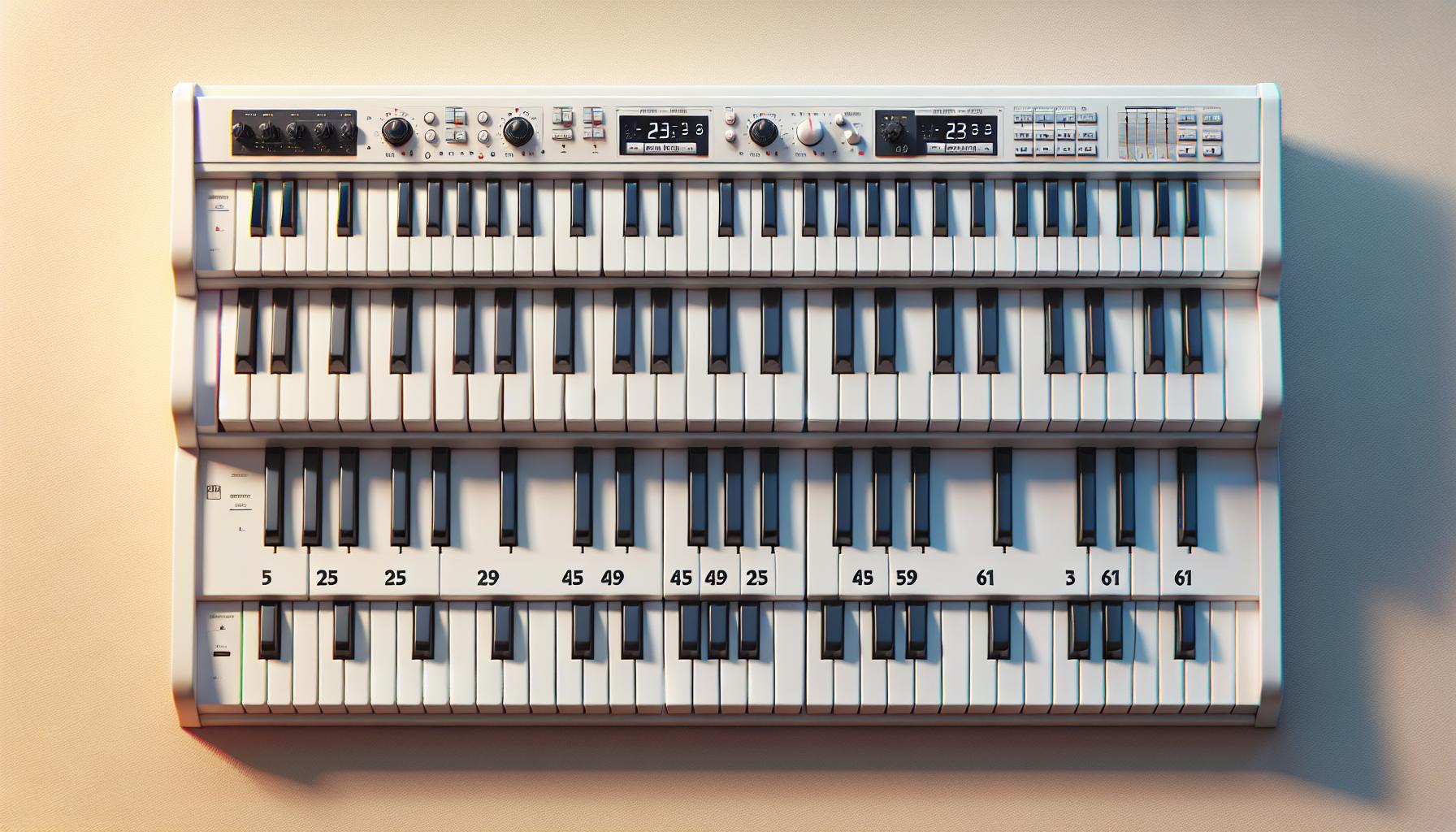
    A crucial consideration when hunting for the perfect piano keyboard for children is size and weight.

    Size refers not only to the dimensions of the keyboard but also to the number of keys. Piano keyboards generally come in three main sizes:

    • 25 keys (2 octaves)
    • 49 keys (4 octaves)
    • 61 keys (5 octaves)

    25- key keyboards are well-suited for toddlers and small kids, offering an easy introduction to music. They’re usually lightweight and easy for little hands to navigate.

    Moving up, 49-key keyboards are a fantastic all-rounder choice for older kids. They provide a broader range of notes allowing for more complexity in music. Plus, their size still makes them manageable for transportation.

    Lastly, the 61- key keyboards are for the serious young musician. They mirror a full-size adult keyboard and are ideal for older children who’ve already shown a real knack for pounding the old ivories.

    When it comes to weight, it’s key to keep in mind the child’s age and strength. If the kid needs to schlep the keyboard to lessons, it should be light enough for them to carry. For stationary home use, a heavier, more robust model may be a better option.

    Choosing a keyboard of appropriate size and weight can make a significant difference in a child’s learning experience. A too large or heavy keyboard could seem intimidating and hamper their enthusiasm to play and learn. Similarly, a too small or light keyboard might limit their musical expression.

    Above all, remember that the perfect keyboard is the one that makes your child happy to play on. Let them try different sizes and see which one they’re comfortable with. Remember: this is about fostering a love for music, not forcing a professional pursuit.

    Number of keys on the keyboard
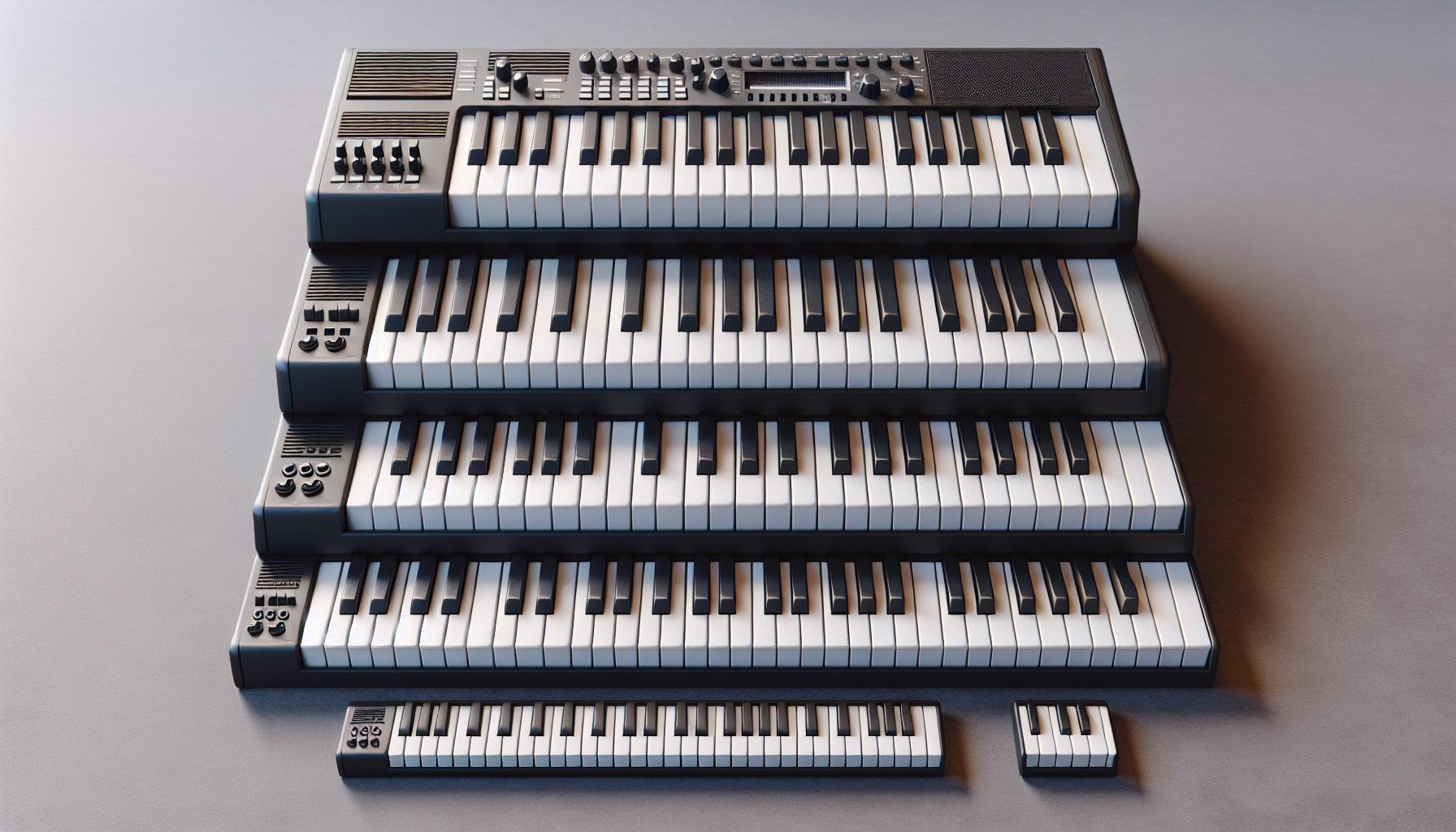
    When choosing a keyboard for your little Mozart, the number of keys is a crucial factor to consider. Piano keyboards typically come in three main sizes: 25 keys (2 octaves), 49 keys (4 octaves), and 61 keys (5 octaves). Let’s delve a bit more into each size and discover how they might relate to your child’s musical journey.

    25-Key Keyboard

    A 25-key keyboard is often the preferred choice for beginners and very young children, especially those under the age of six. These smaller keyboards are not as overwhelming and offer a great introduction to basic musical concepts. Kids can still learn the essentials of playing, such as identifying keys, developing a sense of pitch, and understanding rhythm.

    49-Key Keyboard

    Moving up in size, the next option is the 49-key keyboard. This keyboard size is well-suited for children aged six to nine, who might have already grasped some basic musical concepts and are ready for the next challenge. With four octaves, kids can explore a wider musical range without feeling overwhelmed by an enormous number of keys.

    61-Key Keyboard

    For the more advanced young pianists, or those above the age of nine, a 61-key keyboard might be the perfect fit. This size offers a wide range of five octaves, which allows kids to play more complex pieces. It also accommodates growing hands and provides the chance to become acquainted with the full keyboard layout that musicians encounter on a regular grand piano.

    In the end, it’s important to keep in mind that the keyboard should match the child’s size, age, and skill level. A too-large keyboard might overwhelm a youngster while a too-small one might limit an eager pianist. Don’t forget, the objective isn’t to create a professional pianist overnight. It’s about fostering a love and understanding of music.

    Types of keyboards available for kids
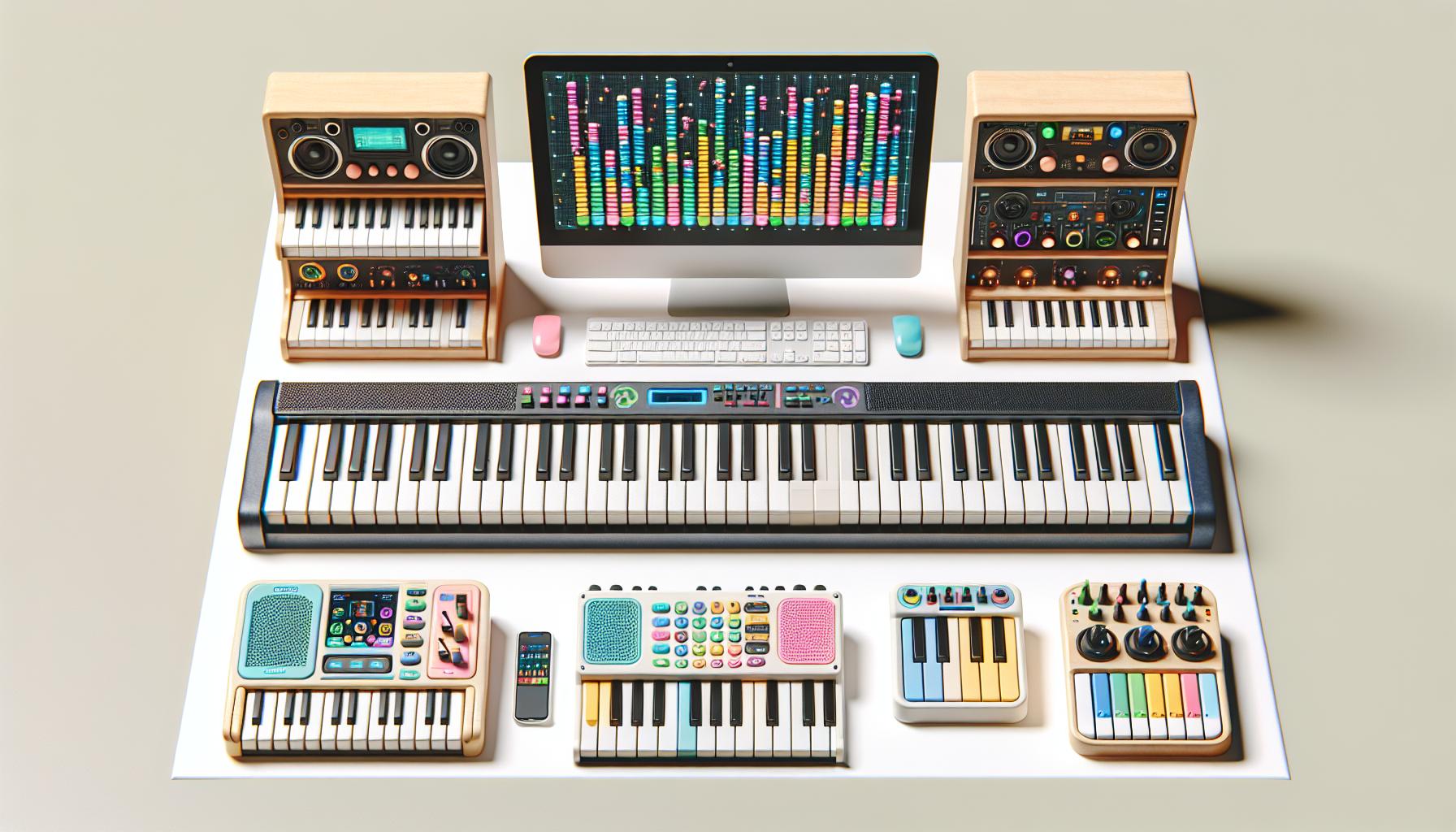
    Having already discussed the variations in size and weight of keyboards for youngsters, let’s delve into the different types of keyboards available for kids. Whether a child is just starting out or has been practicing for a while, there’s a keyboard designed to cater to their specific needs.

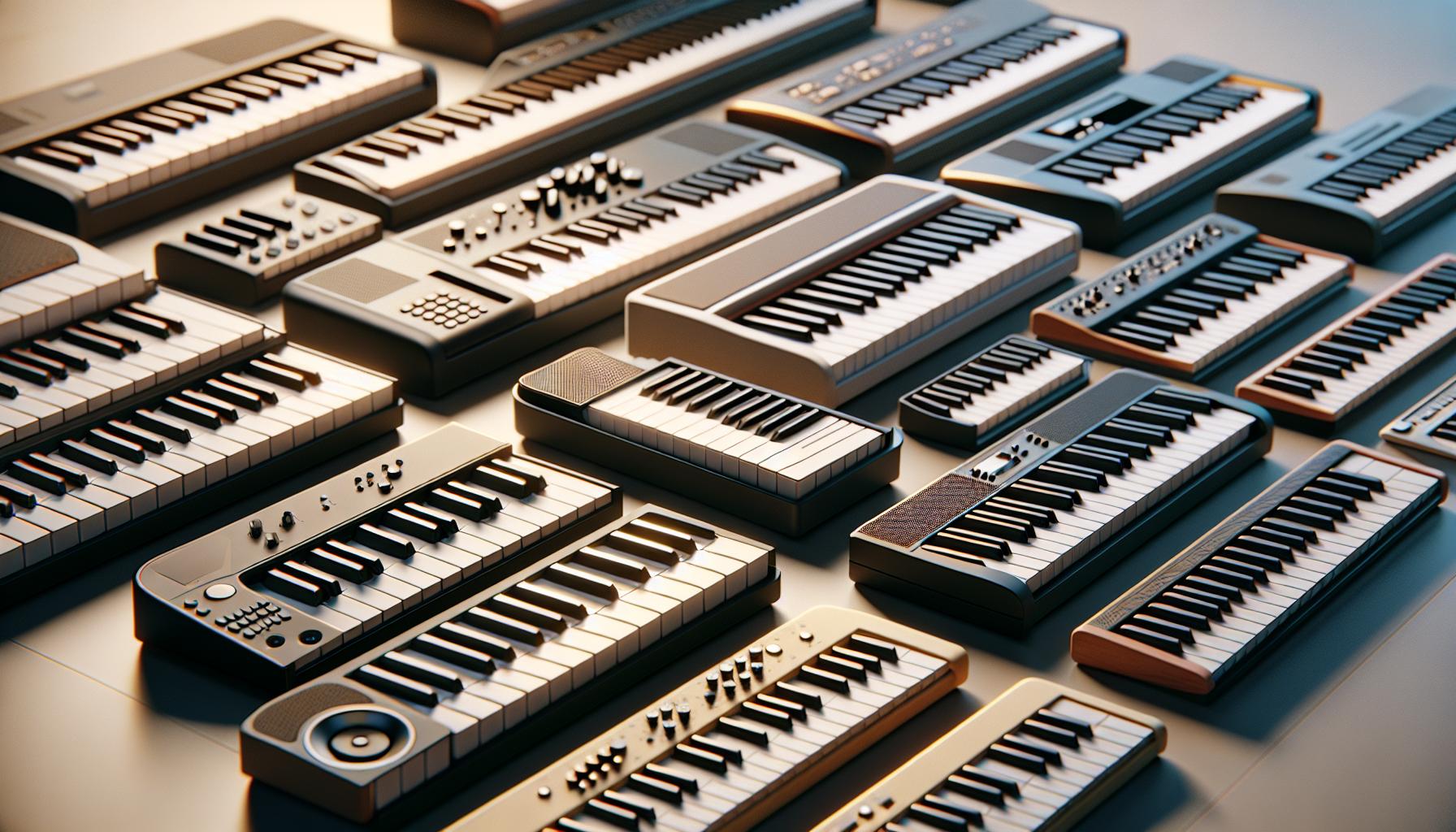
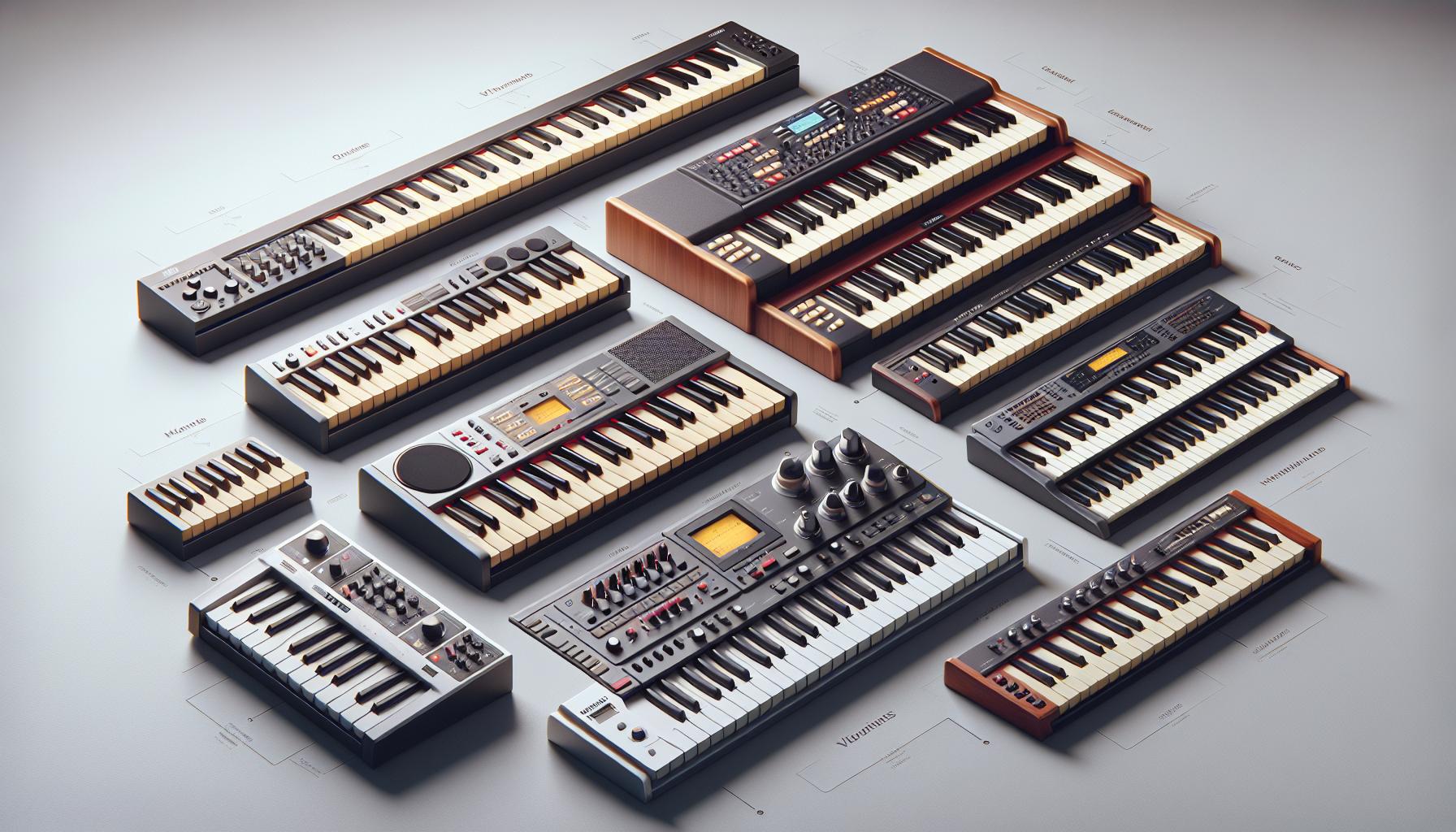
    Portable Keyboards are a popular choice due to their affordability, lightweight designs, and ability to be packed up and transported easily. They usually come with a range of built-in sounds and rhythms that can make practice sessions more enjoyable for kids.

    Stepping up from the portable keyboards, we have Digital Pianos. These are designed to mimic the sound and touch of an acoustic piano. While they may be heavier and higher in price, they offer an exceptional learning experience with their weighted keys helping to develop proper finger strength and technique.

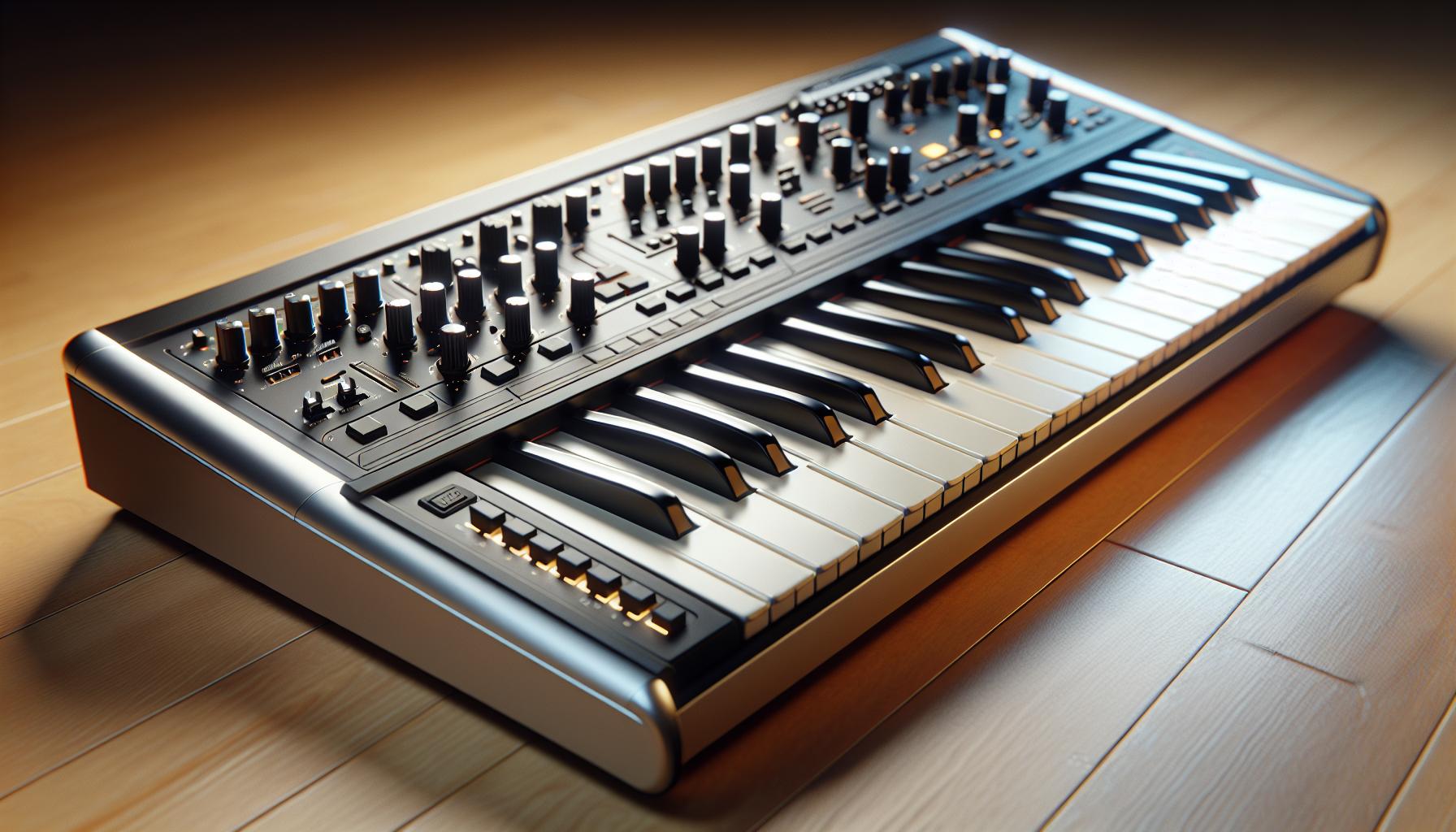
    Synthesizers offer the chance to create and adjust sounds, perfect for those young music explorers. They’re usually more advanced and maybe a little tricky for beginners, but for a child who’s shown a knack for tinkering with and crafting unique sounds, a synthesizer is the way to go.

    Then we have Workstations, which are like the all-in-one packages in the world of keyboards. These have it all: high-quality sounds, in-built lessons, recording capabilities, and even space for scripting original compositions. If you have a serious young musician in your house, a workstation could be a fantastic investment.

    Lastly, there’s the MIDI keyboard. This doesn’t produce sounds by itself but connects via USB to a computer where sounds are generated. The sounds can be customized starting from pianos to synthesizers to drums. This is an excellent choice for budding music producers.

    Above all, remember – the best keyboard is the one that aligns with the child’s interest and future growth in music. There’re still a lot more to discuss but for now, this should give a good foundation. The subsequent part of this guide will be focusing on some essential features you need to look for in a child-friendly keyboard.

    Sound quality and technology features
    Focusing on the size and weight of a keyboard is quite essential when it comes to choosing a keyboard for kids. That’s pretty clear now. But let’s not overlook another major characteristic that plays a vital role in this buying guide – Sound quality and technology features of the keyboard.

    In the world of digital pianos and keyboards, each model boasts unique sound quality. This sound portrayal stems from behind-the-scenes technology that works to mimic the tonal qualities of a traditional acoustic piano. For instance, sampled sounds form a significant part of many keyboards, and they are created by recording actual instruments. This technology helps young musicians get a taste of different instrument sounds without owning each of them.

    Besides, children who harbor a fondness for various music genres might appreciate keyboards with in-built rhythms, music styles and tones. These features can inspire creativity and open a new vista of musical exploration for them.

    On the flip side, if your child is specifically gearing up for traditional piano lessons, a digital piano with weighted keys and a handful of realistic piano sounds would be fitting. Aspects like touch sensitivity, polyphony (the number of sounds a keyboard can produce simultaneously) and weighted keys, are technicalities inherent in these pianos. These enhance the sound quality, offering an experience which is as close as possible to playing an acoustic piano.

    Certainly, a world of innovative technology in this sphere is now available. From USB connectivity and built-in metronomes to learning modules and recording capabilities, various tech-friendly features invite young users to explore and express their musical capabilities in a whole new light.

    Music aficionados contend that while technology has its place, it’s the resonance that counts. They look for a well-rounded tone that reproduces the rich, complex sound of an acoustic piano.

    Ultimately what matters is the child’s personal preference – it’s often wise to involve kids in the decision making. That way, they’ll be more invested in learning and likely to stick to practice. After all, a child who enjoys their time behind their piano keyboard is more likely to be a lifelong music lover.

    Budget considerations
    Once you’ve figured out the right size, weight, and technical features, the next major factor to consider is your budget. Just like guitars and drums, piano keyboards come in a range of prices, catering to different budget levels. However, the truth is you get what you pay for. Generally, if you’re willing to invest a bit more, you’ll find keyboards with better sound quality, durability, and more advanced features.

    But don’t get discouraged. There are affordable options available too. If you’re shopping for a keyboard for a young beginner, something basic and relatively inexpensive should work fine. You don’t want to break the bank on a lavish keyboard when they’re just getting their feet wet. They could lose interest or move on to another instrument, and that’s okay!

    When determining your budget, consider the longevity of the instrument. A cheap keyboard might suffice in the early learning stages, but as the child progresses, they’d appreciate a higher-quality keyboard. For beginners, it’s reasonable to start with a cheaper model and consider upgrading as their skill and interest increase.

    Bear in mind, higher-priced keyboards tend to come with more advanced features, like USB connectivity, better sound sampling, and highlighting keys. While you want to motivate your child with advanced technology, these are not always necessary for beginners.

    At the end of the day, the best keyboard is the one your child will use the most. Whether that’s a $50 keyboard or a $500 digital piano, the value lies in the versatility and how much the child enjoys playing it. As long as they’re excited to play and are learning the basic skills, any keyboard within your budget will work just fine.

    One way to get a better deal is to wait for holiday sales, or check second-hand options. Used keyboards can be an economical solution, given they’re in good working condition. Just be sure to test it or have it tested before buying.

    Conclusion

    Choosing the right piano keyboard for your child doesn’t have to be a daunting task. It’s all about finding balance – between the child’s age and skill level, the keyboard’s features and price, and the instrument’s longevity. Remember, it’s not always about the priciest or the most technologically advanced model. It’s about what suits your child best.

    So, take your time. Weigh your options. Don’t shy away from starting small and upgrading later. And always keep an eye out for a good deal. With a little patience and a lot of love, you’ll find the perfect keyboard that’ll help your child hit the right notes in their musical journey.
  • Top Budget-Friendly Piano Keyboards Perfect for Small Spaces

    Top Budget-Friendly Piano Keyboards Perfect for Small Spaces

    Choosing the right piano keyboard for a small space can be a bit of a puzzle. You’re probably wondering, “How do I find a keyboard that fits my space, suits my style, and doesn’t compromise on quality?” Well, you’re not alone. It’s a common dilemma faced by many music enthusiasts living in compact spaces.

    Luckily, there’s a wide array of compact, yet high-quality keyboards on the market today. They’re designed to deliver the same rich sound and feel of a full-sized piano, without taking up too much room. Whether you’re a seasoned pianist or a beginner, there’s a small-space-friendly option out there for you.

    Types of piano keyboards for small spaces

    It’s not all doom and gloom for music lovers in tight quarters. There’s a multitude of compact keyboards that’ll satisfy both their spatial constraints and love for music. Let’s have a look at a few types.

    Digital Pianos are a prominent choice. Mimicking the traditional piano in terms of sound and touch, they’re seen as a perfect blend of quality and compactness. These models come with weighted keys to replicate the feel of an acoustic piano. Many digital pianos are designed to be slim, taking up less space than their acoustic counterparts.

    Next, there are Portable Keyboards. These are extremely lightweight and easy to store when not in use. They come with an array of functional features, such as built-in learning tools for beginners. However, the key feel might not be as realistic as a digital or acoustic piano.

    How about MIDI Controllers? Strictly speaking, they’re not pianos. But they do allow you to produce a variety of sounds by connecting to a computer. They’re an excellent choice for those who use digital audio workstations (DAWs) and come in compact sizes.

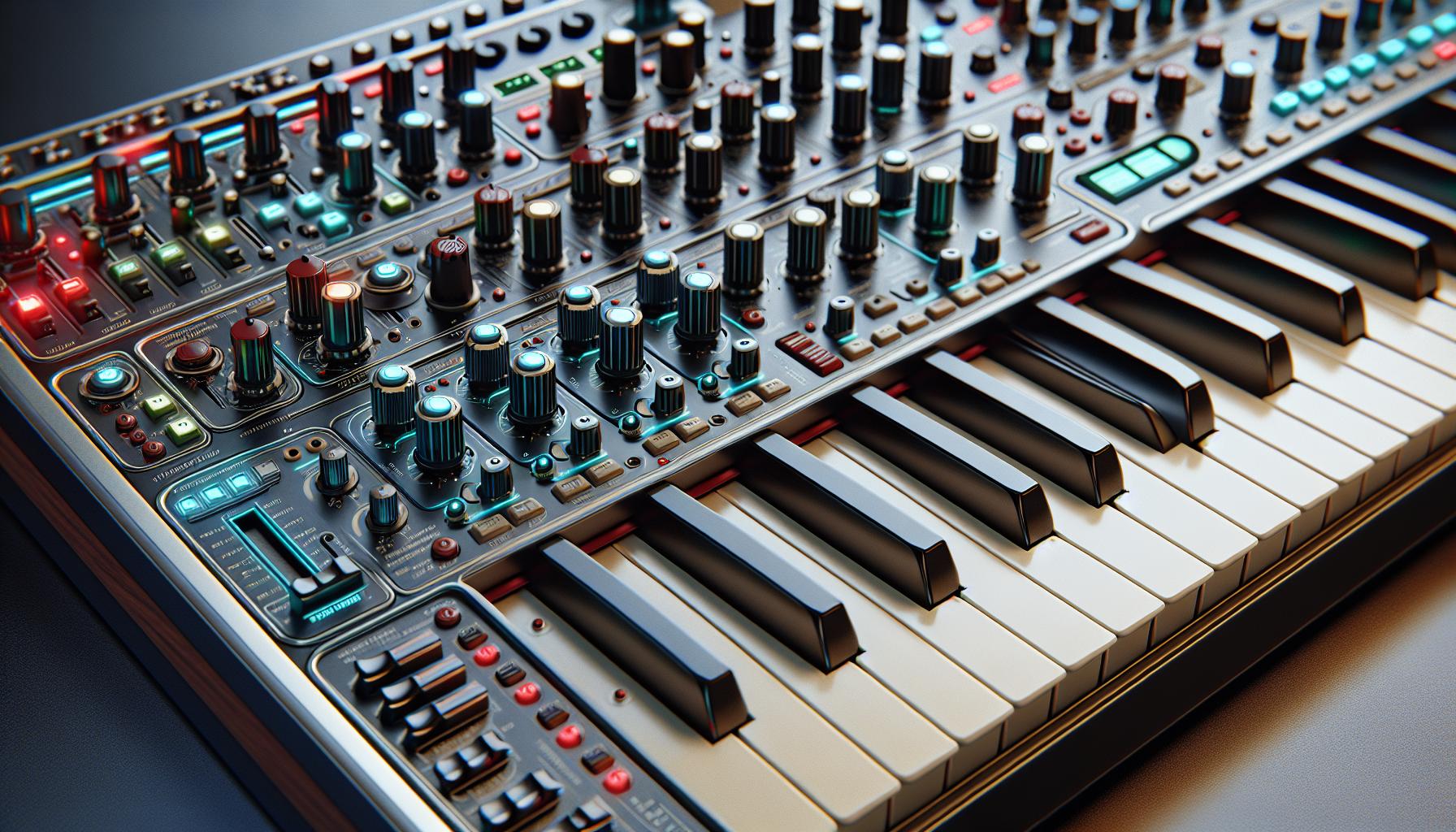
    Expanding options further are Synthesizers. These keyboards allow you to generate electronic sounds, and they’re perfect for those who’re into music production. With a variety of buttons and knobs for sound tweaking, they provide an added layer of complexity and fun.

    Lastly, we have the Tabletop Keyboards. These are mini keyboards that sit comfortably on a flat surface. With a compact design and fewer keys, they’re a great option for beginners or for those who just want an instrument handy to practice their ditties.

    Factors to consider when choosing a compact keyboard

    When they’re on the hunt for the right compact keyboard, potential owners need to consider a variety of factors. These can determine whether the keyboard will serve their unique needs and fit comfortably within their space.

    One key factor is keyboard size. There’s an array of options in this regard. Some keyboards are highly portable with as few as 25 keys, while others might have up to 88 keys – the same as a standard piano. It’s important to decide how many keys one needs before making a purchase.

    Sound quality also matters a lot. Not all keyboards are created equal, and sound can vary greatly between models and brands. Some digital keyboards can emulate the acoustics of a traditional piano remarkably well. Others might have unique sounds that set them apart. It’s all a matter of preference but one needs to be aware of the type of sound they prefer.

    Don’t forget about connectivity. If they plan to use the keyboard for music production or connect it to a computer, they might need specific ports or wireless capabilities. Check for MIDI inputs and outputs, USB ports, and even Bluetooth functionality.

    Some other factors worth looking at include:

    • Key Sensitivity: This refers to how the keys respond to touch – light or hard – and how it mimics the tactile feedback of an acoustic piano.
    • Additional Features: Look for features like built-in drum beats, teaching modes, or the ability to record and playback performances. These can be beneficial especially for beginners.
    • Budget: Consider how much they’re willing to spend. After all, prices can range quite a bit between budget-friendly keyboards and high-end options.

    Taking the time to think about what they need and want from their compact keyboard can be a big help in making a well-informed decision.

    Size and weight considerations

    When it comes to compact keyboards, size does matter. Size is often the defining factor for portability and fitting the instrument in small spaces. Size varies from full 88-key designs to more compacted 61-key or even 25-key versions. Smaller versions are ideal for those who are often on the go or have restricted room.

    The weight of the keyboard is also a crucial factor. Heavier keyboards can be more difficult to move and could be a problem for those who may need to transport them frequently. On the other hand, lighter keyboards often lack the feeling of playing a real piano, which might be important for some musicians.

    So, how big or heavy should it be? That really depends on individual needs. Here are some scenarios to consider:

    • Portable or Stationary: If it’ll be primarily stationary, one can opt for a larger and heavier model. However, if portability is essential, then a lightweight and smaller design might be more appropriate.
    • Performance or Practice: Is the compact keyboard for professional gigs or merely for practice? If one is performing in front of an audience, he or she might require a full-size keyboard to reach all possible notes.

    Consider all these factors when choosing a compact keyboard. You should ideally strike a balance between size, weight, and personal needs.

    The next section turns the conversation towards another important feature: sound quality. Piano sound quality varies greatly from model to model and could dramatically influence the overall playing experience. To understand more, let’s dive into it next.

    Sound quality and features

    When it comes to getting great melodies out of a small keyboard, one can’t overlook the sound quality. A compact keyboard could be as light as a feather or fit into the most confined spaces, but if the sound it produces doesn’t meet your standards, it might not be the right pick for you.

    The sound quality of a compact keyboard can significantly enrich your playing experience. It’s not just about the volume. The richness, depth, and clarity of the sound play a key role too. Keyboards with ‘weighted action’ keys may produce earlier and more nuanced sounds than their non-weighted counterparts.

    Let’s turn our attention toward the features. A compact keyboard might have a fantastic sound, but if it doesn’t seamlessly cater to the player’s versatile needs, it falls short of being ideal. Depending on the user’s requirements, keyboards come with an array of features such as on-board lessons, different voices, MIDI capability, connectivity options, and pre-programmed songs.

    A simple rundown on the essential features:

    • On-board lessons: Great for beginners who need guidance!
    • Different voices: Helps in creating a wide range of sounds.
    • MIDI capability: Allows the keyboard to connect with other musical instruments or a computer.
    • Connectivity options: Bluetooth and USB connections can help you expand your musical horizon.
    • Pre-programmed songs: Good for practice and livening up your parties!

    Choosing the right compilation of features hinges on the user’s need. A beginner might appreciate on-board lessons and pre-programmed songs while a more experienced player might look for more advanced features like MIDI capability and different voices.

    Affordable options for small spaces

    In the world of compact keyboards, there’re plenty of budget-friendly options that don’t skimp on quality. Whether you’re a beginner trying to find your groove or a professional looking for a travel-friendly keyboard, these affordable options might just fit the bill.

    The Yamaha PSR-F51 is an excellent starting point. It’s not only affordable but also extremely easy to use. With 61 full-size keys, various instrument voices, and built-in song library, it’s a great choice for those just getting started.

    Another cost-effective alternative is the Casio Casiotone CT-S200. It’s small, lightweight, with a handle making it perfect for mobility. The keyboard not only packs 61 keys but also offers 400 tones and 77 rhythms. With USB connectivity, it’s a real bang for the buck.

    For those craving a bit more substance without breaking the bank, the Alesis Recital might be a good fit. With 88 full-size semi-weighted keys, on-board lessons, a solid variety of voices, and 20-watt speakers, it provides an impressive playing experience.

    On a similar note, Roland GO:PIANO offers an innovative approach to compact, affordable keyboards. It’s a full 88-key digital piano, with high quality sound and Bluetooth capability. It’s an easy to carry around piano, that also works with a mobile app for learning and practice purposes.

    Last but not least, the Alesis Harmony 61-key portable keyboard might be another option worth considering. It comes complete with built-in speakers, 300 built in tones, a three-month premium subscription to Skoove, and a stand. It’s an all-in-one solution for a very reasonable price.

    Conclusion

    Choosing the right keyboard for a small space doesn’t have to be a daunting task. Remember, it’s all about finding a balance between size, features, and affordability. The Yamaha PSR-F51, Casio Casiotone CT-S200, Alesis Recital, Roland GO:PIANO, and Alesis Harmony 61-key portable keyboard are all great options. Whether you’re a beginner or a seasoned pro, these keyboards offer a range of features to suit your needs. With their compact sizes and impressive capabilities, they’re perfect for small spaces and travel. So don’t let space constraints limit your musical journey. There’s a keyboard out there that’s just right for you.

  • Choosing the Perfect Bluetooth Piano Keyboard for Learners: A Comprehensive Guide

    Choosing the Perfect Bluetooth Piano Keyboard for Learners: A Comprehensive Guide

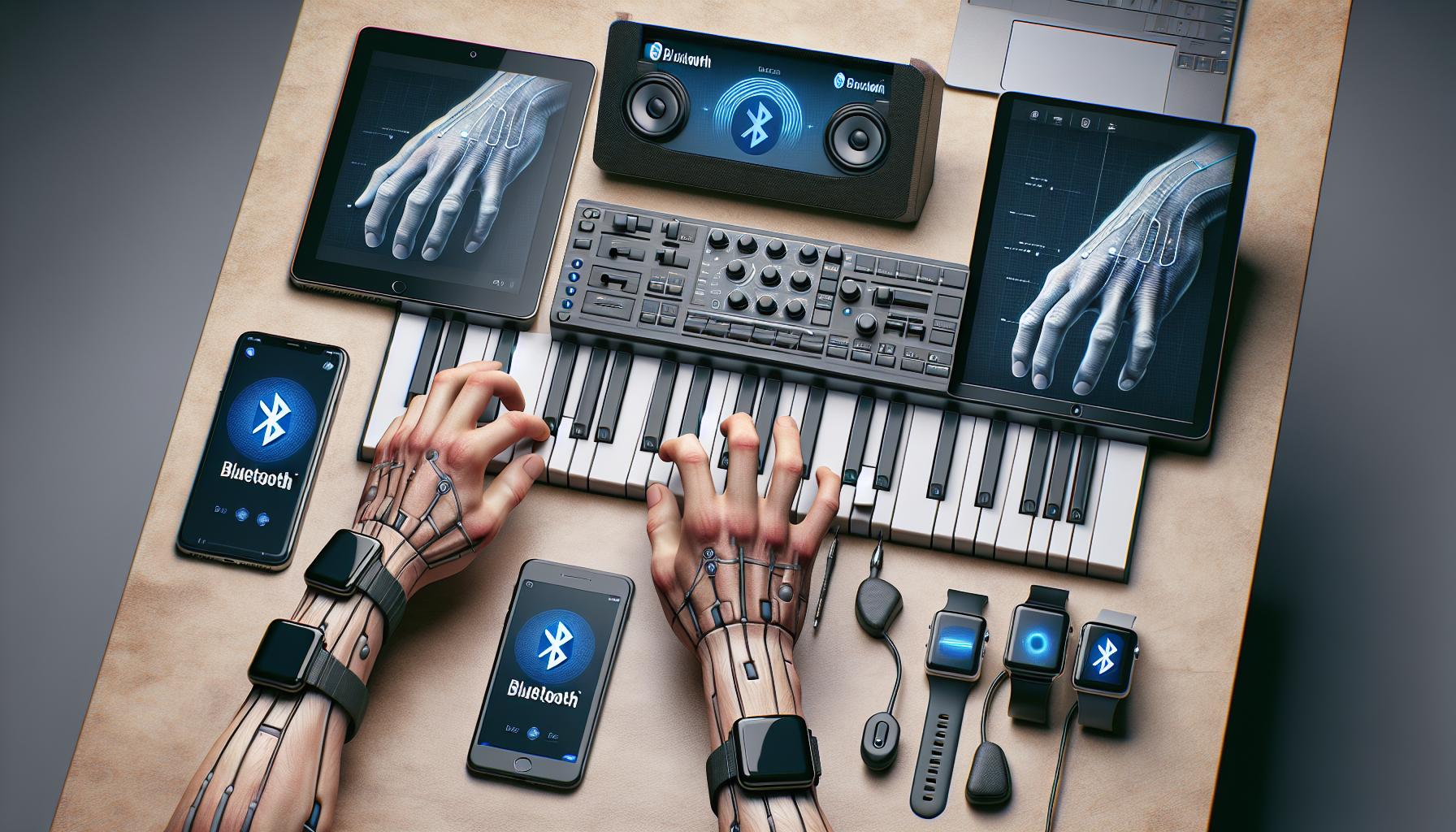
    Imagine a world where learning to play the piano is as easy as connecting your keyboard to your smartphone! That’s the magic of a piano keyboard with Bluetooth connectivity. It’s a game-changer for beginners, making the learning process more interactive and enjoyable.

    These innovative keyboards aren’t just about playing music. They’re about immersing yourself in the world of music, exploring new melodies, and mastering your favorite tunes. They’re designed with learners in mind, making them the perfect tool for anyone looking to dive into the world of piano.

    Benefits of a Piano Keyboard with Bluetooth Connectivity

    Convenience and Portability

    That’s right! One of the biggest benefits of a piano keyboard with Bluetooth connectivity lies in its convenience and portability. They’re lightweight, compact, and don’t require any physical connection to work. Users can bring them anywhere and even play, practice, or explore new melodies while in transit.

    Interactivity and User Engagement

    Not only are these keyboards useful in terms of transportation, but they’ve also got an edge when it comes to interactivity and user engagement. With Bluetooth connectivity, piano keyboards become more than just an instrument. They transform into an interactive learning tool that provides users with the chance to delve deeper into their music exploration.

    With a piano keyboard that’s Bluetooth-enabled, a player doesn’t just perform music; they experience it. Connection to other devices, like tablets or smartphones, allows users to utilize various music apps, which can make their learning process more engaging and fun. They can play games, take online courses, or even partake in interactive lessons and tutorials.

    Personalized Learning Experience

    Truth be told, everyone’s learning process is different. By using Bluetooth-enabled piano keyboards, beginners can tailor their learning experiences in a way that aligns with their individual needs. They can choose between a multitude of apps and find the one that best suits their learning style.

    For instance, visual learners may prefer apps with graphics or video tutorials, while auditory learners might find applications with acoustic guides and sound-based games more beneficial.

    Mastery of Favorite Tunes

    Finally, one of the biggest perks when it comes to Bluetooth-enabled keyboards is the ability to master one’s favorite tunes. By connecting their keyboard to their sound system, users can play along with their preferred songs any time they like.

    Wirelessly linking their piano keyboard to a device with their music library enables players to perfect their skills, enhancing their musical repertoire and bringing them a step closer to becoming the pianists they aspire to be.

    Convenience, interactivity, personalization, and the potentiality to master preferred tunes – these are the remarkable benefits that a piano keyboard with Bluetooth connectivity provides.

    Features to Look for in a Bluetooth Piano Keyboard

    When on the hunt for a Bluetooth piano keyboard, there are certain key features to keep in mind.

    Bluetooth Version

    Bluetooth technology has evolved over time, and it’s crucial to check the version used in your potential keyboard. You’ll want a device that uses Bluetooth 4.0 or later, as these versions offer better power efficiency, improved security, and noticeably faster data transfer speeds.

    Compatibility

    It’s important to ensure that the keyboard is compatible with a variety of devices and operating systems. This might include tablets, smartphones, and computers running on Android, iOS, or Windows.

    Keyboard Size and Weight

    For the sake of portability and convenience, you’ll want a keyboard that is lightweight and compact. That way, you can easily take it with you wherever you go.

    Available Apps

    Several piano keyboards can connect to a range of apps offering virtual lessons or sheet music. Exploring the apps available for use with each keyboard might enhance your piano playing experience.

    Battery Life

    Do check the battery life of the keyboard. If you fancy portable use, one with a longer battery life would come in handy.

    Speaker Quality

    The last but not the least is the quality of audio output. A good Bluetooth piano keyboard should have high-quality speakers that can faithfully reproduce the sounds of the piano.

    How Bluetooth Connectivity Enhances the Learning Experience

    Moving beyond the confines of traditional methods, learning piano has evolved dramatically with the advent of Bluetooth technology. Bluetooth connectivity in piano keyboards is much more than a mere convenience – it’s a game-changer for learners.

    Fueling flexibility, portable keyboards with Bluetooth allow students to practice their passion from virtually anywhere. They can set up their keyboard in their living room or take it on a road trip. Try to imagine practicing scales on a sunny beach! It’s all possible due to the portability and connectivity of these devices.

    Incorporating interactivity, Bluetooth-enabled keyboards interact with a multitude of musical apps. These apps transform the learning process into an engaging journey. They offer a wide range of guild-guided tutorials, interactive sheet music, and games. It’s a great method of making practice sessions a lot more fun and interactive. It’s also an effective way to keep them hooked and interested in their learning.

    Providing a personalized learning experience is another significant advantage. Not everyone learns at the same pace or in the same way. Bluetooth piano keyboards embrace this concept and adapt to the individual learning style of each student. By pairing with apps that track progress, provide customized lessons, and offer constructive feedback, these keyboards make learning a truly unique experience tailored just for them.

    Of course, to optimize the Bluetooth piano experience, it’s important to consider a keyboard’s key features. That’s where aspects like Bluetooth version, compatibility with different devices, keyboard size and weight, available apps, battery life, and speaker quality play a major role. So, don’t forget to keep an eye on these factors while making your deliberation.

    No doubt, the impact of Bluetooth connectivity on learning piano is profound. It’s an exciting time for music education where technology and creativity intertwine beautifully to create an inspiring learning journey. As the industry advances in leaps and bounds, it’s clear that the future of piano learning is bright, fun, and exceedingly interactive.

    Top Bluetooth Piano Keyboards for Beginners

    In a world teeming with technology, it’s challenging to figure out which tool is the best one that fits your needs. For a novice entering the world of music through piano, there are several Bluetooth piano keyboards designed explicitly with beginners in mind.

    The Roland GO:PIANO is one of the top contenders. It’s lightweight and compact, making it easily portable. Despite its size, it incorporates high-quality sounds derived from Roland’s premium digital pianos. It also offers Bluetooth connectivity to connect with popular music education apps on mobile devices.

    In contrast, if you’re looking for a more traditional touch, consider the Yamaha EZ-220. This model consists of 61 touch-sensitive keys and 100+ preset songs. What sets it apart is its unique light-up key system that assists in learning songs. Again, Bluetooth compatibility comes in handy for interacting with a range of music programs.

    For those who crave versatility and learning aids, the The ONE Smart Piano Keyboard shouldn’t be overlooked. It boasts 61 keys and, as the name suggests, it is marked as “smart” due to the features like LED-guided learning and games from the comprehensive app.

    The Alesis Recital is also worth noting. With premium sounds, powerful educational features, including Skoove, and complete wireless operation, it offers beginners everything they need to kickstart their musical journey.

    One must remember! A keyboard’s potential isn’t entirely based on the features that meet the eye. It’s about personal compatibility. The Bluetooth piano keyboard should match the learner’s style and be something they feel comfortable and excited to use. As a beginner, it’s beneficial when the keyboard aligns with their learning style and pace, taking their piano learning experience to new heights.

    Tips for Choosing the Right Bluetooth Piano Keyboard

    Selecting the perfect Bluetooth piano keyboard can feel like a daunting task. But don’t worry. Here are a few tips to help you navigate your options and find the right fit for your needs.

    Understand Your Needs

    Before diving into the sea of options, it’s essential to first understand your needs. Are you a complete beginner? Perhaps you’re an advanced learner needing to practice more complex pieces? Identify your proficiency level and the features you desire in a keyboard.

    Quality of Sound

    An essential aspect to consider is the quality of sound. A keyboard with high-quality sound will mimic the richness and depth of an acoustic piano, providing a more authentic playing experience. Both the Roland GO:PIANO and Yamaha EZ-220 are known for their high-quality sound, making them great options.

    Learning Features

    Consider the learning features each keyboard offers. Light-up key systems and LED-guided learning such as those on The ONE Smart Piano Keyboard can be incredibly useful for visual learners. Look for powerful, interactive educational features that align with your learning style.

    Compatibility

    Is the keyboard compatible with your devices? With Bluetooth connectivity, your keyboard should effortlessly connect with your smart devices. Check if the keyboard is compatible with your iOS or Android device for a seamless experience.

    Portability

    Are you always on the move? If so, portability might be a key factor for you. A lightweight and portable keyboard like the Alesis Recital can be easily transported, turning any space into a practice room.

    As you shop around, remember that the perfect Bluetooth piano keyboard is one that fits your personal needs and aligns with your learning style.

    Conclusion

    So, there you have it. Picking the right Bluetooth piano keyboard doesn’t have to be a daunting task. It’s all about knowing what you need, considering the sound quality, checking out the learning features, ensuring device compatibility, and thinking about portability. Remember, the perfect keyboard is one that suits you and your unique learning style. With these tips, you’re well on your way to finding a keyboard that not only meets your needs but also makes learning to play the piano an enjoyable journey. Happy playing!

  • Unlock Your Creativity: Guide to USB MIDI Piano Keyboards for Recording

    Unlock Your Creativity: Guide to USB MIDI Piano Keyboards for Recording

    In the world of music, technology’s taken center stage. One of the stars of this digital revolution? Piano keyboards with USB MIDI for recording. They’ve changed the game for musicians everywhere, offering a world of possibilities for creativity and performance.

    These keyboards aren’t just about hitting the right notes. They’re about connecting, creating, and capturing music in a whole new way. With USB MIDI, you’re not just playing an instrument, you’re becoming a part of the digital music landscape.

    Whether you’re a seasoned pro or a budding beginner, these keyboards offer something for everyone. They’re easy to use, versatile, and can turn your musical ideas into reality. So let’s dive in and explore how these keyboards can take your music to new heights.

    Benefits of Piano Keyboards with USB MIDI for Recording

    These dynamic instruments pack a powerful punch extending far beyond their primary function of being a mere piano. Piano keyboards with USB MIDI for recording present an impressive range of benefits. From music creation to recording to performance, their utilization opens up new avenues of possibilities that certainly warrant consideration.

    One of their major advantages is versatility. Whether you’re an established professional or an aspiring musician, these keyboards cater to all skill levels. The skilled may string together complex compositions while beginners can navigate their way around keys, learning the ropes as they progress. The ease of use factor enables anyone to jump right into making music with little or no previous experience.

    Integration with technology is another notable benefit these keyboards offer. They can be easily connected to a plethora of devices such as computers, tablets, or smartphones. This makes it possible to use an array of music production software to either expand your sound or just continue tweaking your creation to perfection.

    Portability also comes with the territory. Keyboard sizes range widely, but many are lightweight and compact, making them perfect for gigging musicians or for the ones who habitually create on the go.

    Furthermore, these keyboards could indeed be an economic solution. Instead of purchasing various standalone music gear, investing in one versatile keyboard could be more cost-effective in the long run.

    On a touching note, the joy and sense of fulfillment derived from creating or performing music can never be overstated. Indeed, piano keyboard with USB MIDI for recording encourages and nurtures this creativity by providing a hands-on, interactive experience, thereby transforming musical thoughts into audible expressions.

    In the following sections, let’s delve deeper into how exactly these benefits can be leveraged by different types of musicians and the wonderful opportunities that lie waiting to be discovered.

    Versatility and Compatibility with Digital Devices

    When diving into the world of recording with piano keyboards that feature USB MIDI, one cannot overstate their versatility. Musicians of any skill level can initiate and explore their own unique soundscapes. Beginners can start to articulate their musical ideas, while seasoned artists can further refine their signature styles.

    Furthermore, USB MIDI keyboards aren’t just for the studio. They’re portable, making them perfect companions for travelers or gigging musicians. Whether it’s a crowded backroom in a club or a large stage at a music festival, having a handy, compact keyboard can aid musicians in capturing and expressing their ideas precisely and promptly.

    Expanding the convenience, USB MIDI keyboards offer compatibility with a broad spectrum of devices. Be it laptops, desktops, smartphones, or even tablets, these keyboards can be seamlessly interfaced. This opens up a world of possibilities for musicians to integrate and utilize different music software and apps that can massively enhance their creative process.

    Having digital device compatibility not only simplifies the process but also aids in easier sharing and collaboration. Artists can send their recordings directly to colleagues or upload them onto platforms to gain feedback or simply share their progress.

    Year Percentage of Musicians Using Digital Platforms
    2017 57%
    2018 62%
    2019 67%
    2020 73%

    This trend implies the growing importance of compatibility with digital devices and further emphasizes the potential benefits of USB MIDI keyboards in the contemporary musical landscape. Adapting to this trend will keep musicians technologically relevant, providing an edge over their peers. As technology continues to evolve and integrate into the music scene, it’s increasingly beneficial to invest in versatile, compatible gear like the USB MIDI keyboards.

    Seamless Integration with Music Production Software

    When it comes to modern music production, the possibilities are virtually endless. Imagine being able to transform your lonesome little laptop into a full-fledged music studio. That dream’s achievable, thanks to piano keyboards with USB MIDI capabilities.

    These keyboards aren’t just about playing notes; they serve as a formidable tool for seamless integration with a variety of music production software. Apps like GarageBand, Ableton Live, Logic Pro, Pro Tools, and Cubase become a pianist’s best friends. Think about it: with a single USB connection, thousands of sounds, tracks, and effects are at your fingertips.

    What further makes them a game changer are the features that facilitate controlling and navigating these apps. Many brands offer keyboards equipped with assignable knobs, buttons, faders, and even drum pads. These controls can be mapped to adjust parameters like volume, pan, and effects in your software, giving you an unprecedented level of creative control.

    Given the broad range of music production software available, it’s crucial to remember that not all keyboards work evenly with all programs. The compatibility of USB MIDI keyboards with certain apps depends largely on the software’s MIDI learn capabilities and the brand’s reputation for software integration. But generally, today’s keyboards are built to ensure interoperability with most mainstream music production software.

    Rest assured, with a piano keyboard having USB MIDI functionality, you’re not just buying an instrument; you’re investing in a versatile tool for exploration that — in the right hands — spurs creativity like never before. And best of all, these keyboards bring your digital workstation to life with the simple power of touch and provide a physical connection to the music you’re making. Now, the creation of compelling soundscapes emerges not just from the screen but also from the keys under your fingertips. Doesn’t that sound like music to your ears?

    Creating and Capturing Music in New Ways

    USB MIDI keyboards have revolutionized how musicians create and capture music. No longer bound by the traditional limits of recording, musicians, both professional and budding, find that these keyboards offer an exciting, modernized way to experiment and produce music.

    First off, these keyboards allow a musician to play, improvise, and record all in real-time. This is far beyond what traditional recording could allow. Layering multiple tracks is accomplished in a snap. Recording and stacking sounds have never been this easy.

    The musician’s potential for creative exploration skyrockets with the USB MIDI keyboard.

    Magic happens when an artist gets his or her hands on the array of on-board assignable knobs, buttons, faders, and drum pads present on these keyboards. They weave their creativity and inject their personalities into the music, because these keyboards allow them to influence each sound on a granular level. By adjusting these parameters, an artist produces a sound that is uniquely their own.

    Another exciting aspect is the compatibility of USB MIDI keyboards with various music production software. Musicians can jump from exploring how their track resonates in GarageBand, to tweaking it in Ableton Live, and add finishing touches in Cubase. There’s no need to worry about their creative process getting restrained by systems incompatibility. These keyboards are generally built to ensure seamless integration, keeping that creative flow uninterrupted.

    Integration with most mainstream music production software is crucial. It removes compatibility constraints, thereby expanding a musician’s creative control.

    The emerging picture is of an instrument steeped in the digital age. It’s more than just playing keys on a keyboard. It’s about exploring sound dimensions that were previously unattainable. Most importantly, it’s about tailoring those sounds into something unique, something that encapsulates the artist’s spirit.

    Suitable for Musicians of All Levels

    Focused on the versatility of USB MIDI keyboards, it’s important to highlight that they are designed to cater to musicians of all skill levels. Whether one is a budding musician just starting out or an experienced maestro, these keyboards are user-friendly and adaptable.

    For beginners, USB MIDI keyboards are an excellent investment. They serve as an accessible tool that allows for explorative learning. Adjustable settings such as tempo control and an array of sound options offer practice opportunities in both traditional piano play and digital composition. Many also have built-in teaching modes to guide users, making them a popular choice for those looking to learn.

    Even the simplest versions come with assignable knobs, buttons, faders, and drum pads. These features provide flexibility for individuals as they experiment with different music styles. So whether it’s orchestral, electronic or an unknown genre just waiting to be created, a USB MIDI keyboard is ready for the challenge!

    More advanced players can benefit from these keyboards’ extensive software compatibility. Skilled musicians often employ multiple programs in their composition process. With these keyboards’ seamless integration, they can work across platforms without missing a beat. Layering multiple tracks, recording in real-time, and applying parameters with on-board controls allow musicians to expand their creative horizons.

    USB MIDI keyboards’ ability to adjust to one’s level of expertise doesn’t end at the physical interface. With the ongoing development of music production software, updates and add-ons are regularly released. This ensures the tool keeps evolving with the musician. It’s never been easier for a musician to stay ahead of the curve.

    Ultimately the words “one size fits all” ring true when it comes to USB MIDI keyboards. These devices provide an accessible platform for musicians to foster their talent and passion. They ensure that no matter where one is in their musical journey, they possess a tool designed for growth, exploration, and creation.

    Conclusion

    USB MIDI keyboards have truly changed the game for music enthusiasts. They’ve opened up a world of possibilities for musicians, regardless of their skill level. They’re user-friendly for beginners, yet offer enough advanced features to keep seasoned professionals engaged. With their real-time recording capabilities and multi-track layering, they’ve made music production more accessible than ever. And let’s not forget their compatibility with a wide range of software. This ensures they’ll keep up with the ever-evolving music industry. So whether you’re just starting out or you’re a seasoned pro, these keyboards are a worthwhile investment. They’ll help you unleash your creativity, explore new musical territories, and grow as an artist.

  • Mastering Melodies: A Professional’s Guide to Full-Size Piano Keyboards

    Mastering Melodies: A Professional’s Guide to Full-Size Piano Keyboards

    When you’re a pro, you need the right tools. That’s where the full-size piano keyboard comes into play. It’s not just a luxury, but a necessity for those serious about their craft. With its full range of 88 keys, it offers the complete spectrum of sound that professionals need to deliver stunning performances.

    Choosing the right full-size keyboard can be a game-changer. It’s not just about the number of keys, but also the quality of sound, the feel of the keys, and the overall build of the instrument. This isn’t about getting by, it’s about excellence and achieving the highest level of performance.

    So, whether you’re a seasoned concert pianist or a studio musician, the full-size piano keyboard is your ticket to a world of musical possibilities. Let’s dive in and explore why it’s the top choice for professionals.

    Benefits of a Full-Size Piano Keyboard

    Undoubtedly, a full-size piano keyboard is more than just an oversized musical gadget for professionals. Its unique perks make it indispensable in the hands of those who dare to strive for acoustic perfection.

    One of the major benefits of a full-size piano keyboard is its huge range. Unlike smaller keyboards, it boasts a whopping 88 keys, providing an extensive spectrum of sound that allows for deeper expression and more dynamic performances. It essentially gives musicians the freedom to explore and indulge in the massive universe of sound, giving them the luxury of choice that’s crucial in creating majestic and soul-touching music.

    Moreover, playing on a full-size keyboard gives musicians a real piano feel. You’d love the weight and resistance each key offers, mimicking an acoustic piano’s feel. It’s not just about the sound; it’s also about the feel under their fingertips that adds to the playability and overall experience.

    And let’s not forget the boost in sound quality. With a full-size keyboard, you’re looking at a richer tone, a broader dynamic range, and an all-around superior sound. Remember, this isn’t just a matter of playing notes; it’s about capturing the soul of music.

    Another significant benefit is the professional touch a full-size keyboard provides. It gives musicians’ performances the authenticity that smaller keyboards often fail to deliver. As professionals, musicians always aim to impress, and playing on a full-size keyboard displays their seriousness towards their craft, not as a hobby but as a lifestyle.

    Finally, when it comes to durability, full-size keyboards are generally more robust and well-built. They’re designed to endure the rigorous commands of professional use, taking every high energy performance in stride.

    These are just a handful of the benefits that a full-size piano keyboard offers. Surely, it amplifies the musicianship spirit, imposing no limits on creativity, flexibility, and overall musical expression. So, the investment in such a keyboard is not just for the look; it’s about choosing a tool that complements and enhances a musician’s skillset.

    Key Features to Look for in a Professional Keyboard

    When selecting a professional keyboard, it isn’t just about the size or number of keys. There’s a variety of characteristics that differentiate a professional-grade keyboard from an amateur one.

    Firstly, touch sensitivity is a crucial aspect. It refers to the response of a keyboard to the force or speed applied to the keys during play. This allows for a wide range of expression, mirroring the dynamics of an actual acoustic piano. A high-quality keyboard will respond perceptibly when played softly or forcefully, translating these nuances into volume and tone variations.

    Another noteworthy feature is the weighted keys. The resistance provided by weighted keys imitates the feel of playing an acoustic piano. They’re heavier in the lower notes and lighter in the higher registers, mimicking the hammer mechanisms in traditional pianos. This gives musicians a tactile experience, facilitating an emotional connection to their music.

    Additionally, a crucial feature is the sound quality. The keyboard should be able to reproduce the rich and expansive range of grand piano tones. This includes the resonance and the overtones that create the complexity of a concert piano sound. High-quality keyboards utilize advanced technologies to recreate these acoustic properties.

    A handy feature to consider is portability. Though a full-size keyboard offers a comprehensive music experience, it should also be easy to move and pack. This is a must-have for touring musicians and those who perform at multiple venues.

    Another main feature is its durability. A professional keyboard is a considerable investment, and it should withstand the rigors of constant use.

    Lastly, professionals should look for full-size keyboards with broad sound libraries and editing features. These enhance the musician’s adaptability and creative possibilities. It should cater to diverse music genres, from classical to jazz to pop.

    Specifications for professional keyboards:

    Key Feature Description
    Touch Sensitivity Should respond to force variations
    Weighted Keys Should mimic acoustic piano mechanisms
    Sound Quality Must reproduce rich piano tones
    Portability Should be easy to move
    Durability Must withstand regular heavy use
    Sound Libraries & Editing Support diverse music genres

    A professional keyboard isn’t just about the sound or functionality. It’s also an extension of the musician’s identity, and finding the right one is an essential part of their musical journey. Keep these features in mind while hunting for that perfect keyboard.

    The Importance of 88 Keys for Professional Use

    When it comes to selecting a professional-grade keyboard, one of the critical deciding factors is the number of keys. 88 keys have become a gold standard in the industry – and for good reason.

    Many might ask, “Why 88 keys?” Well, it all boils down to range and versatility. The magic of having a full-size piano keyboard with 88 keys rests in its ability to provide a complete range of musical notes – 7 octaves plus a minor third. This wide span allows a keyboardist to play practically any piece of music, a significant advantage when working in the professional field. At professional levels, musicians never know what they might be called upon to perform, so having the full scale of options under their fingers makes a world of difference. The versatility of 88 keys can take the musician’s creativity to new heights, allowing them to explore new melodies and harmonies.

    On top of that, there’s something inherently satisfying about playing a keyboard with a full range of keys, as it gives a complete and tactile response. This natural ‘feel’ is essential to many keyboardists as it reflects one’s unique musical style and identity.

    Of course, there’s the tonality factor. With 88 keys, you’ll have the opportunity to dive into the rich, deep bass notes, ascend to the piercing high notes, and everything in between. This spectrum of sound brings a depth and richness to the music that’s hard to achieve with a lesser number of keys.

    Remember, a keyboard isn’t just about hitting the right notes – it’s about expressing the music inside you. There is no better way to accomplish this than opting for a full 88-key keyboard. With these points in mind, it becomes clear that the 88 keys aren’t just numbers, but the gate to a world of musical possibilities.

    Finding the Perfect Sound Quality

    When it comes to professional-grade keyboards, simply having 88 keys doesn’t cut it. It’s about finding that perfect sound quality too. Skilled musicians are well aware that the choice of keyboard plays a significant role in the tonal quality of their compositions. And full-size keyboards are known for their superior sound replication.

    One of the biggest perks of a professional-grade keyboard with 88 keys is the faithful reproduction of acoustic piano sounds. The gap between digital and acoustic pianos has narrowed considerably in recent years, thanks to advanced technology. The rich tonal variations and dynamic range captured by these full-sized keyboards are compelling enough to even please the purists.

    Another critical aspect lies in the keyboard’s response. Many digital keyboards with fewer keys often lack the necessary touch sensitivity or key action to convey the subtilties of a musical performance. 88-key professional keyboards often offer graded hammer action keys that meticulously replicate the mechanical nuances of an acoustic piano, affecting the volume, pitch, and decays of the notes played.

    Sample some notable keyboard models with their notable features:

    Keyboard Model Notable Feature
    Yamaha YDP-184 CFX Premium Grand Piano Tone
    Roland FP-90 Progressive Hammer Action Keys
    Casio GP-500BK Acoustic Grand Piano Sound Reproduction

    But it’s not all about realism. A superior keyboard will offer a range of sounds beyond just those found on an acoustic piano. They’d include electric piano tones, organ, strings, synth sounds, and more. Expanding the array of sounds at the fingertips of a musician allows them to explore new soundscapes, thus enhancing their creativity.

    With the right combination of a complete range of 88 keys and high-quality sound, a full-size keyboard can truly unlock a world of musical possibilities. These keyboards not only provide musicians with the necessary tools to accurately interpret a musical score but also to articulate their personal musical expressions.

    So, while an 88-key keyboard brings the full spectrum of notes to the table, it’s also about transcending beyond mere tones to truly express the music inside the musician.

    The Importance of Key Action and Sensitivity

    In the world of professional music, key action and sensitivity aren’t just terms tossed around by enthusiasts. They’re crucial components of a performance-grade keyboard. These aspects go beyond the number of keys and delve deeper into the sensory experience that the instrument provides to the player.

    Take graded hammer action keys as an example. They’re designed to replicate the tactile feedback of an acoustic piano, adding another layer to the instrument’s authenticity. This feature provides a nuanced response to each keystroke, varying by the strength and speed of the player’s touch. It doesn’t only make the playing experience more immersive but also opens up opportunities for musicians to express their artistic intentions more accurately.

    The sensitivity of a keyboard is another feature that serious musicians shouldn’t overlook. It’s an element that contributes to providing a more realistic and satisfying playing experience. Ideally, a professional-grade keyboard should have touch sensitivity that mimics a real acoustic piano. This detail does wonders in terms of enabling more nuanced performances and more expressive musical pieces.

    The response of the keys and their sensitivity profoundly affect the musical output of a keyboard. As such, when considering a professional-grade keyboard, one can’t underestimate these factors. Whether it’s for live performances, studio work, or composing, a keyboard’s key action and sensitivity are more than just specs – they’re the features that can transform a good piano performance into an extraordinary one.

    Many industry standards offer key action and sensitivity agreed upon by professionals globally. Some keyboard models such as Yamaha’s Clavinova series and Kawai’s CA series digital pianos are notable examples. These brands focus on delivering instruments that closely mirror an acoustic piano’s feel and response, demonstrating the importance they place on key action and sensitivity.

    So, next time when looking to enhance your musical experience, remember that there’s more to it than just the size or quality of sound. It’s also about how the keys respond to the musician’s touch.

    Durability and Build Quality: Why it Matters

    When it comes to professional-grade keyboards, the build quality and durability are just as important as the key action and sensitivity. Wood-framed cabinets or metal chassis are often the tell-tale signs of a well-constructed keyboard, as they not only add to the longevity but also enhance the stability of the instrument.

    Materials used for the keys impact a keyboard’s lifespan. For instance, keyboards with plastic keys are less expensive, but may not endure rigorous, continuous use. On the other hand, synthetic ivory or ebony keys have proven to stand the test of time and use, even under tough playing conditions. They offer the closest feel to acoustic piano keys, enhancing the keyboard’s overall playability.

    Focusing on the hardware is another vital aspect of durability. For example, the joints, screws and bolts should also be firmly attached without loose or shaky parts. The build quality extends to the onboard controls and connectors. These include the pitch and modulation wheels, sliders and buttons, and MIDI or audio connectors. It’s essential that these components are tough enough to withstand heavy use without breaking or losing their functionality.

    Renowned brands like Yamaha’s Clavinova series, and Kawai’s CA series demonstrate exceptional craftsmanship, combining robust build quality with excellent key action and touch sensitivity. They are not only built sturdy on the inside but also have a robust exterior that is aesthetically pleasing.

    Updates and maintenance can also prolong the life of a keyboard. Regular cleaning, timely firmware updates, and necessary repairs will ensure the instrument remains in optimal condition. This reduces any chances of playing mishaps and maintains the quality of sound.

    Performance is a significant factor for professional musicians, but durability is crucial, too. A keyboard can feel fantastic for a few months, but if it’s not built to withstand the rigors of constant use, it might wear out quickly. So choose wisely when you decide to purchase a full-size keyboard for professional use.

    Comparing the Top Full-Size Keyboard Brands

    As we venture further into technical specifics of full-size keyboards it’s key to highlight some of the industry’s leading brands. These industry giants have set high standards in key action, built quality, and touch sensitivity.

    First on our list is the Yamaha Corporation. Yamaha’s Clavinova series, well-known for its graded hammer action keys, offers an authentic piano experience. Interestingly there’s a progressive gradient heavier to lighter from lower to higher keys. This mimics the exact patter of traditional acoustic pianos. It doesn’t end there. Yamaha has also done an excellent job in imbibing touch sensitivity into its keyboards. As a perk, they are remarkably durable with a robust exterior design ensuring their longevity.

    Then there’s Kawai, another top-tier keyboard manufacturer. Kawai’s CA series is equally lauded for its top-notch key action and sensitivity. One unique aspect is the use of their proprietary “Grand Feel II” wooden-key action, offering responsive hammer action. What stands out is their use of synthetic ivory and ebony for their keys enhancing both the tactile experience and the keyboard’s lifespan.

    No conversation about full-size keyboards would be complete without mentioning Roland Corporation. Known for its innovative design and cutting-edge technology, Roland’s keyboards stand out. Their RD series showcases an impressive combination of fully weighted keys and premium sounds providing players with an immersive experience. Plus, it’s worth mentioning Roland’s remarkable durability and solid build.

    Another noteworthy brand is Casio. Their Privia series is adored for both affordability and performance. Despite being priced lower than some premium models, Casio manages to deliver impressive touch sensitivity and weighted action. Their keyboards are also built to last with high durability.

    These top-tier brands each bring something unique to the full-size keyboard market. Their emphasis on key action, touch sensitivity, and robust design show dedication to create the best professional-grade keyboards. However, the choice will ultimately come down to individual preference. So it’s always wise to test several models before settling down to the perfect fit.

    Conclusion

    Choosing a full-size piano keyboard for professional use isn’t a one-size-fits-all solution. It’s about finding the right balance between key action, touch sensitivity, and build quality. Whether it’s the graded hammer action keys of Yamaha’s Clavinova series, the “Grand Feel II” wooden-key action of Kawai’s CA series, the fully weighted keys of Roland’s RD series, or the affordable touch sensitivity of Casio’s Privia series, there’s something for everyone. Remember, each model has its unique strengths and it’s crucial to test multiple ones to find that perfect match. It’s like finding a dance partner – the right connection can lead to a beautiful performance. So, don’t rush it. Take your time to find the keyboard that feels right under your fingers and makes your music come alive.

  • Selecting the Perfect Weighted Key Piano Keyboard: A Comprehensive Guide

    Selecting the Perfect Weighted Key Piano Keyboard: A Comprehensive Guide

    Choosing the right weighted key piano keyboard can feel like a daunting task, especially for beginners. But don’t worry, it’s not as complicated as it might seem. With a little knowledge and guidance, anyone can find a keyboard that fits their needs and skill level.

    The first thing to understand is what weighted keys are and why they’re important. Simply put, they’re designed to mimic the feel of an acoustic piano. This feature is crucial for those who want to build proper finger strength and technique.

    In the following sections, we’ll delve deeper into the world of weighted keys, exploring the different types, what to look for when buying, and some top recommendations. Whether you’re a budding musician or an experienced pianist looking to upgrade, this guide’s got you covered.

    Understanding Weighted Keys

    When you’re first starting out in your piano journey, you might wonder, “what are weighted keys?” Well, weighted keys are designed to simulate the touch and feel of an acoustic piano’s keys. Unlike lightweight keys of a standard keyboard, weighted keys have a certain amount of resistance when pressed.

    Why does that matter? It’s not just about the feel—it’s about building finger strength and technique. Playing on weighted keys helps develop the correct finger technique that’s needed when moving to play on an acoustic piano. Lightweight keys don’t offer this advantage as they have a uniform resistance, making them less suitable for beginners.

    Not all weighted keys are the same. There are different types of weighted keys, including semi-weighted keys, fully-weighted keys, and even graded hammer action keys. Each of these comes with their own unique feel and level of resistance.

    • Semi-weighted keys combine the spring-loaded mechanism of synths with weights attached to the keys, making them a balanced choice with some resistance.
    • Fully-weighted keys try to replicate the experience of playing an acoustic piano, providing more resistance than semi-weighted keys.
    • Then there’s the graded hammer action where the keys mimic an acoustic piano by having a heavier touch in the low end and a lighter touch in the high end.

    By understanding what weighted keys are and their types, you’re now in a better position to determine what’s most important for your keyboard needs. Don’t rush this decision. It’s crucial to choose a keyboard with a keybed that matches your playing needs. Up next, let’s explore what to look for when buying a weighted key keyboard and some top recommendations.

    Types of Weighted Keyboards

    As the article unfolds, knowledge of the different types of weighted keyboards becomes increasingly crucial. Offering different resistance levels and feels, these types cater to meticulous players specific needs. Let’s delve into them!

    A semi-weighted keyboard, often termed the ‘middle ground’, offers a balance between resistance and playability. Perfect for beginners, they’re light, easy to play, and still provide some resistance to build finger strength. Although they can’t entirely mimic acoustic pianos, they’re still a decent pick for those starting their piano journey.

    Appearing next on the list is the fully-weighted keyboard. These keyboards are an exemplary match for those who desire an acoustic piano feel. They offer similar resistance and key weight as a grand piano. It’s a perfect choice for players of intermediate to advanced levels.

    Lastly is the graded hammer action keyboard. Topping the class in terms of authenticity, they mimic the heavier weighted keys in the lower octaves, and lighter in the high. This nuance provides an added layer of expressivity and a natural feel, suitable for taking the player’s skills to new heights. Players preparing for performances or those seeking to level up their technique often lean towards this charismatic keyboard.

    Beyond just the types, buyers should also take into consideration their personal playing style, budget, and long-term goals. This will ensure they get the most out of their chosen keyboard while championing their unique playing journey.

    In the forthcoming section, we’ll explore how to shop for these keyboards and provide some top picks that deserve your attention. So, watch out for pro tips on selecting the best weighted piano keyboard that fits your personal requirements.

    Factors to Consider when Choosing a Weighted Key Piano Keyboard

    When choosing a weighted keyboard, there are several things to keep in mind. First and foremost, think about your skill level. As previously mentioned, semi-weighted keyboards are ideal for beginners as they provide a balance between resistance and playability. For those at an intermediate skill level or higher, fully-weighted or graded hammer action keyboards can offer the experience and feel of an acoustic piano.

    Next, give consideration to your long-term goals. Are you planning to play professionally or is this more of a hobby? The type of keyboard you choose can have a significant impact on your musical journey. If you’re aspiring to become a professional pianist, it’s worth investing in a higher-end weighted keyboard that will grow as you progress in your music skills.

    The third factor to take into account is your budget. While it’s crucial to choose a keyboard that matches your playing style and desires, practicality should not be neglected. Pianos can range from a few hundred to thousands of dollars. It’s important to note that more expensive doesn’t always mean better. Prioritize models that satisfy your musical needs over those that may seem appealing due to high price tags or popular brands.

    Lastly, take the time to do your research. With a myriad of models and brands on the market, finding the best keyboard for you can seem daunting. Fear not! There are a number of reliable sources online that offer detailed reviews and comparisons of popular weighted keyboards. This can significantly simplify the decision-making process, helping you achieve not just a good buy, but the right buy!

    Top Recommendations for Weighted Key Piano Keyboards

    Diving into the top recommendations, let’s explore some of the best keyboards in the market.

    Starting with the Yamaha P125 88-Key Weighted Action Digital Piano. It’s a fantastic option for both beginners and intermediate players. This keyboard is noted for its fully-weighted keys, excellent sound quality and useful features like the ability to record your playing.

    Up next, the Roland FP-30 88 Keys SuperNATURAL Digital Portable Piano stands out for its graded hammer action keys. It’s great for those looking for a realistic piano playing experience. It also includes some tech-savvy features such as Bluetooth connectivity for music streaming.

    Let’s not forget about the Casio Privia PX-160 Digital Piano. It’s an excellent choice for those working with a tighter budget. Despite its affordability, it doesn’t skimp on quality. It comes with 88 weighted keys and a rich sound that rivals more expensive models.

    For professionals, the Kawai ES8 Digital Home Piano tops the list. Though a little bit pricier, its quality, range of sounds, and realistic key responses make it worth every penny.

    Here’s a quick comparison of these top picks:

    Keyboard Model Key Type Notable Features
    Yamaha P125 Fully-Weighted Record Feature
    Roland FP-30 Graded Hammer Action Bluetooth Connectivity
    Casio Privia PX-160 Weighted Great for Budget
    Kawai ES8 Weighted Best for Professionals

    While these keyboards are great choices, remember that the ‘best’ keyboard will ultimately depend on personal preference, playing style, and long-term goals. The next step is to try a few out, so don’t be shy about going to a music store to test out some of these top picks.

    Conclusion

    Choosing a weighted key piano keyboard isn’t a one-size-fits-all scenario. It’s about finding what feels right for you and aligns with your goals. Whether you’re a beginner drawn towards the Yamaha P125 or a seasoned professional eyeing the Kawai ES8, it’s essential to remember that the keyboard’s quality and your comfort with it matter the most.

    Don’t shy away from trying keyboards in person. It’s the best way to understand the feel of the keys and the sound quality. And remember, whether it’s the Roland FP-30’s realistic piano experience or the affordability of the Casio Privia PX-160, there’s a keyboard out there that’s just right for you. So, take your time, do your research, and most importantly, enjoy the journey of choosing your perfect weighted key piano keyboard.

  • Choosing the Best Advanced Piano Keyboards for Jazz Musicians: A Comprehensive Guide

    Choosing the Best Advanced Piano Keyboards for Jazz Musicians: A Comprehensive Guide

    If you’ve ever listened to a jazz pianist and wondered, “How do they make those keys sing like that?” you’re not alone. It’s all about the keyboard. For a jazz musician, the right keyboard can make all the difference. It’s not just about the number of keys or the size of the keyboard, but also the touch, the feel, and the sound.

    Advanced piano keyboards for jazz musicians are a breed apart. They’re designed to meet the unique demands of the genre, offering a range of features and capabilities that go beyond the basics. Whether it’s the ability to create complex harmonies, the versatility to switch between different sounds, or the sensitivity to respond to the slightest touch, these keyboards are built for jazz.

    So, let’s dive into the world of advanced piano keyboards, exploring what makes them special, and why they’re a must-have for any serious jazz musician.

    Features of Advanced Piano Keyboards for Jazz Musicians

    Since the dawn of jazz, piano keyboards have come a long way. In the old days, keyboards were simple, driven by basic features. Today’s keyboards, particularly the advanced ones, are cutting-edge, sophisticated, and designed with jazz musicians in mind. It’s clear, modern keyboards offer an almost endless array of features. Let’s delve into some of these innovative features.

    Voicing options, for one, differentiate the rookies from the pros. A standard keyboard can usually produce different sounds- from the piano to the violin. But advanced keyboards, designed for jazz musicians, open up an entire panorama of tonal possibilities. This means they can sift through organ, saxophone, synthesizer sounds, and many more- at a moment’s notice. It’s like having an entire band at their fingertips!

    The ability to multi-layer sounds is another notable feature. It allows the musicians to create complex harmonies, playing two or more different sounds simultaneously. The beauty of jazz music often lies in its complexity and layering different sounds can create that rich, layered aural experience that jazz lovers crave.

    Touch sensitivity is perhaps one of the most essential features. After all, if the keys don’t respond well, neither will the music. That’s why these keyboards often offer graded, progressive hammer action. This mimics the feeling and response of an acoustic grand piano, letting the musician play with nuances, creation, and expression.

    And, let’s not forget about connectivity. In today’s digital age, jazz musicians need keyboards that can connect to computers and other devices. Hence, modern keyboards are equipped with USB MIDI connectivity, so musicians can easily interface with digital audio workstation software.

    The role of the keyboard in jazz music is undoubtably vital. And these advanced features make a notable difference in the creation, performance, and experience of jazz music. Their impressive capabilities far exceed those of their more basic counterparts. And, it’s these features that offer jazz musicians the freedom and flexibility to fully express their unique musical vision.

    Key Considerations when Choosing an Advanced Piano Keyboard

    When browsing the market for sophisticated piano keyboards suited for jazz musicians, various factors need to be taken into account. These features go beyond the basics to personalize and elevate the musician’s experience. It’s a significant investment and that’s why the selection shouldn’t be taken lightly.

    Voicing Options have revolutionized modern keyboards, giving jazz musicians the freedom to express their unique style. They also equip them with a sea of different sounds at their fingertips. Whether it’s a trumpet blare or a metallic clink, these keyboards have got it all covered.

    An essential aspect to look out for is the Touch Sensitivity of the keyboard. It imitates the response of an acoustic grand piano, enhancing the feeling of authenticity. Not all keyboard models are designed with this feature, making it a distinguishing option for the discerning musician.

    Multi-layering Sound Capabilities offer musicians the opportunity to create rich, complex harmonies. The ability to simultaneously trigger multiple sounds with a single key press aids in enriching the texture of the composition. It’s an indispensable tool for jazz musicians who continually strive for versatility and depth in their music.

    Connectivity is yet another vital element. A keyboard having Computer and Device Connectivity simplifies the musician’s workflow by enabling easy information exchange. It allows for the saving and transferring of musical ideas back and forth between devices, boosting productivity.

    Price, of course, is a matter of consideration. Higher-end models certainly offer more features but come with a steeper price tag. Balancing between desired features and budget constraints will guide the purchase decision.

    Through this careful evaluation, jazz musicians can ensure their choice of a piano keyboard perfectly matches their style and needs. Ultimately, the keyboard is not just an instrument but an extension of the musician’s creative reach.

    Key Size and Configuration Options for Jazz Pianists

    Key size and configuration can dramatically affect a pianist’s performance. They play an integral part in the keyboard’s overall playability and touch responsiveness. Full-sized keys are an absolute must for any professional jazz musician. They need to mimic the exact shape, size, and feel of conventional acoustic pianos to offer a familiar experience.

    Musical keyboards come in a variety of styles, including 88-key, 76-key, and 61-key configurations. Traditionally, 88-key layouts are preferred by jazz pianists, providing the complete range of pitch: from the lowest to the highest possible notes. However, some musicians might find the smaller, more portable 76-key and 61-key keyboards suitable for performances with severe space constraints or traveling purposes.

    When it comes to key configuration, being able to adjust the sensitivity of the keys is a feature that can’t be overlooked. Touch sensitivity provides the player with the ability to convey a wide array of emotions through their music by merely changing their pressure on the keys. A fully weighted key system is often sought by jazz pianists as it mimics the weight and resistance of an acoustic piano, thereby offering a more authentic playing experience.

    Moreover, the action style of the keys is a key factor to contemplate. The hammer action technology emulates the hammer mechanism of an acoustic grand piano, contributing to a naturalistic feel. On the other hand, synthetic ivory and ebony keys offer a different tactile sensation that some players might prefer.

    With the rise of technological advancements, many digital keyboards now offer customizable key configurations. These provide the ability to tailor the playing experience to meet their unique preferences and requirements.

    These various aspects of key size, and configuration should be evaluated and tested thoroughly by the purchaser. Ultimately, the perfect fit would be one that complements the jazz musician’s style, comfort, and expressive needs.

    Sound and Tone Options in Advanced Piano Keyboards

    Onto another vital element in choosing an advanced piano keyboard: the sound and tone options. A jazz musician’s instrument should aid their expressive needs. So, when it comes to a keyboard’s sound and tone, they’ve got to pay keen attention to its authenticity and quality.

    The sound engine of a keyboard is what generates the actual piano sound. For a jazz musician looking for an authentic sound experience, pianos keyboards with a Multi-Dimensional Morphing AiR Sound Source technology are the way to go. This specific technology accurately reproduces the rich, resonating tones and lingering reverberation of an acoustic piano.

    Yet, remember – each artist’s preference for tone is distinct. Some may favor the bright crispness of a concert grand, others prefer the warm richness of an upright piano. Therefore, musicians should seek a keyboard offering multiple acoustic piano tones.

    Let’s not forget about the integrated speakers. A keyboard’s internal speakers play a big part in sound projection. Look for piano keyboards equipped with high-quality speakers that do justice to the sound engine’s capabilities.

    Apart from mimicking the acoustic piano experience, an advanced keyboard can offer a lot more multilayered sound options. From electric pianos to varying instrumental tones, they can give musicians a wide range of tonal possibilities on a single platform.

    An essential feature for jazz musicians, in particular, is the split and layer function. It allows the left and right hands to play distinct sounds. One could play an acoustic bass on the lower end and a grand piano tone on the upper end – an exciting feature indeed!

    Notable Brands and Models of Advanced Piano Keyboards

    In the world of advanced keyboards, several brands have cemented their reputation for delivering high-quality instruments. Among these key players are Yamaha, Roland, and Casio. Each with their unique selling points, these brands have consistently produced models that exhibit a stellar level of quality and authenticity in sound.

    Yamaha marks its territory with a blend of tradition and innovation. Their Clavinova series is a testament to this principle. Known for its pure CF sound engine, the Clavinova imparts an authentic representation of a grand piano’s tonal range. Moreover, their DGX-660 model is often lauded by jazz musicians for its rich, multilayered sound options.

    Roland, meanwhile, captures the jazz world’s attention with its RD-2000 model. This model boasts of two independent sound engines, quality keyboard action, and advanced controller features. It’s no surprise that it’s considered a favorite in the jazz domain. However, it’s the Roland F140R that truly shines with its SuperNATURAL Piano sound engine and PHA-4 standard keyboard, making it another excellent choice for jazz musicians.

    Lastly, Casio holds its own with the Privia PX-160. Leveraging Multi-Dimensional Morphing AiR Sound Source technology, this model superbly produces rich and resonating piano tones. It’s precisely these qualities that make it a fantastic tool for jazz ensembles.

    Once a musician has crossed into advanced keyboard territory, they’re also likely to recall brands like Korg and Nord. The Korg Kronos stands out with nine distinct synthesis engines and a massive sound library. As for Nord, their Stage 3 model offers an abundance of sound options that include layering and splitting capabilities.

    Choosing an advanced keyboard isn’t solely about the brand or model, but also considering the musician’s needs and preferences. Whether it’s Yamaha’s tradition, Roland’s innovation, Casio’s technology, Korg’s synthesis engines, or Nord’s sound options, each brand offers something unique.

    Conclusion

    So there you have it! Picking the right advanced piano keyboard for jazz musicians isn’t just about the brand. It’s about finding the perfect balance between sound, tone, and authenticity. It’s about understanding the unique features of Yamaha, Roland, Casio, Korg, and Nord and seeing how they align with your musical needs and preferences. Because at the end of the day, the best keyboard is the one that helps you create the most soulful, expressive jazz music. So go out there, explore your options, and let the music guide you to your perfect keyboard.

  • Best Budget Digital Piano Keyboards for Beginners to Buy in 2024

    Best Budget Digital Piano Keyboards for Beginners to Buy in 2024

    So you’ve decided to dip your toes into the world of music and what better way to start than with a digital piano keyboard? It’s an exciting journey you’re about to embark on, and we’re here to help you make the best choice for your budding music career.

    In 2024, the market’s brimming with affordable digital piano keyboards perfect for beginners. Whether you’re looking for a compact, travel-friendly option or a full-sized keyboard with all the bells and whistles, there’s something for everyone.

    Don’t worry about breaking the bank either. We’ve scoured the market to find the best budget-friendly options that don’t compromise on quality. So sit back, relax, and let’s dive into the world of affordable digital piano keyboards for beginners in 2024.

    Key Factors to Consider

    When hunting for the perfect beginner-friendly keyboard, there are several elements to consider. These aren’t just technical niceties; rather, they’re what will make the journey of learning piano smooth and enjoyable.

    Size and Portability

    In the world of keyboards, size does matter. For beginners, a compact, lightweight keyboard that’s easy to pack away or move around might be a good idea. On the other hand, a full-sized keyboard will offer a more authentic playing experience, mimicking the feel of an acoustic piano. But remember: convenience shouldn’t cost you a bulky, hefty price tag. The market’s teeming with travel-friendly keyboards, that are economical too.

    Quality of Sound and Built-in Tones

    It’s essential to check the sound quality. A piano keyboard, no matter how budget-friendly, should produce decent sound. Built-in tones are also a big deal. They’re the variety of sounds that a keyboard can produce, ranging from piano to strings to organ. For beginners, having a good mix of built-in tones adds more color and versatility to their practice and makes their learning process more enjoyable.

    Weighted Keys

    Many beginner-friendly keyboards feature weighted keys. It’s a simple feature, but it makes all the difference. They give the keyboard the feel of an acoustic piano, where the lower notes need a heavier touch, and the higher notes need a lighter one. While it takes some getting used to, weighted keys offer a much more tactile and responsive experience.

    Learning Tools

    Beginner keyboards need to be, well, beginner-friendly. And what better way to be beginner-friendly than to include integrated learning tools? From online classes to built-in learning modules, a keyboard with such features is a worthy investment for a beginner in 2024.

    Price Point

    Finally, the backbone of this article – affordability. Good quality doesn’t always mean unaffordable. So, see to it that your chosen digital piano keyboard won’t have you breaking the bank. There are plenty of worthy contenders that fall within a budget-friendly range while offering all-round performance and features.

    Compact and Portable Options

    In your hunt for the perfect digital piano keyboard for beginners, you might be drawn to compact models. This kind of design provides a myriad of benefits. Particularly if you’re juggling the keyboard between different locations–be it between home and lessons, or simply moving around the house.

    Dealing with a smaller and lighter keyboard means you’ve got a more portable piece of kit on your hands. You’re not tied down to one spot, and you can quickly pack it away when you’re not mirroring Mozart. Compactness isn’t about minimized size alone–it’s about mobility and freedom as well.

    In 2024, digital piano manufacturers have cashed in on this growing demand for convenience. A host of portable keyboards are readily available on the market. These models are usually lighter, come with built-in speakers, and offer the option of battery power. It makes these keyboards a great companion for budding musicians on-the-go, and ideal for small living spaces.

    However, the convenience shouldn’t overshadow an important note: Don’t compromise on the number of keys. A standard digital piano keyboard should have 88 keys. While some models might tempt you with their 61 or 76 keys and attractive portability, remember that this will limit your piano learning experience. It’s best to stick to models that offer full 88 keys, yet remain compact and light.

    Manufacturers like Yamaha, Roland, and Casio are renowned for their compact solutions without skimping on the full range of keys. For instance, Yamaha’s Piaggero series or Roland’s GO:PIANO models are brilliant choices that balance portability, fair pricing, and a complete set of keys.

    So when sifting through compact and portable options, remember to keep an eye out for the size, weight, and number of keys. But also look for additional features like built-in speakers and battery-operated options. With such a variety, there’s bound to be a perfect fit out there for any beginner pianist.

    Full-Sized Keyboards with Advanced Features

    Moving beyond mere key count, there are other vital aspects to consider when selecting the ideal piano keyboard – especially if you’re seeking to experience a more authentic feel. Full-sized keyboards with advanced features usually come packed with this quality.

    For beginners looking to mimic the real acoustic piano as closely as possible, weighted keys are an essential feature to look out for. Keyboards such as the Yamaha P-45 and Casio Privia PX-160 both offer graded hammer standard (GHS) weighted action, mimicking the mechanism found in grand pianos. This feature doesn’t just make the keys feel heavier. It provides a touch-response function that simulates a traditional piano, creating a great learning platform.

    Since we are dwelling in a digital era, some keyboards now come equipped with a variety of modern features. USB connectivity allows users to connect the keyboard to their computers, opening a world of digital learning resources. The enchanting Roland FP-30X boasts this feature, being compatible with Roland’s Piano Partner 2 app. This app provides interactive and enjoyable ways to improve your piano skills, making practice sessions more engaging.

    Let’s not forget the powerful speakers that some of these keyboards come with. A duo of high-quality built-in speakers is often a key feature that defines the sound quality. Casio’s Privia PX-160 offers two 8W speakers that deliver a sizable sound, effectively reproducing the resonance of a full-sized piano.

    There’s a lot to ponder upon when it comes to the massive world of full-sized keyboards with advanced features. However, remember that the ultimate decision should be based on what feels good and sounds right to you – the budding pianist.

    Budget-Friendly Options

    When taking the plunge into the world of digital piano keyboards, budget is a deciding factor. This aspect can’t be glossed over. There’s an abundance of affordable options available without having to sacrifice on quality or functionality.

    Start with the Alesis Recital. This digital piano is an exceptional option for beginners. It features full-sized semi-weighted keys, making it comparable to high-end models. Additionally, it’s packed with top-notch learning aids. From lesson modes to song tutorials, these tools are at one’s disposal, all at a budget-friendly price.

    Shifting gears to a slightly higher price point, you encounter the Casio CDP-S100. This keyboard boasts of 88 fully weighted keys that simulate the feel of an acoustic piano. It’s not just the authenticity that sets this choice apart. It features a strikingly slim design with 10 high-quality tones, making it worth every penny.

    Now let’s throw our attention to the Artesia PA-88W. A beautifully crafted, highly versatile digital keyboard with an economical price tag. The key benefit of this model is the semi-weighted action of the keys, offering a blend of authenticity and comfort.

    Let’s draw our memory back to Yamaha, there’s more to their offerings than the Piaggero series. For instance, Yamaha PSR-E-363 is an admirable low-cost contender. This model allows flexibility with touch-sensitive keys and a generous range of sound variety.

    Then, there’s the Roland FP-10. It borrows many features from its high-end counterparts, like the PHA-4 Standard keyboard and the SuperNATURAL Piano sound engine. Despite being at the affordable end, it doesn’t compromise on quality, making it an exceptional choice.

    Equipped with knowledge of these budget-friendly options, it’s easier to navigate the vast ocean of digital piano keyboards. So don’t shy away from exploring to find the perfect instrument that balances the scales of affordability and quality.

    Conclusion

    So there you have it! Whether you’re drawn to the portability of Yamaha’s Piaggero series or the full set of keys provided by Roland’s GO:PIANO, there’s no shortage of affordable digital piano keyboards for beginners in 2024. Models like the Alesis Recital and Casio CDP-S100 offer a balance of quality and cost-effectiveness, with features like semi-weighted keys and touch sensitivity. But remember, it’s all about what feels right for you. So don’t be afraid to try out a few options. After all, the best keyboard is the one that inspires you to keep playing and learning. Happy playing!

  • Top 3 Durable Piano Keyboard Models with Unbeatable Battery Life

    Top 3 Durable Piano Keyboard Models with Unbeatable Battery Life

    If you’re a music enthusiast on the go, nothing beats a piano keyboard that doesn’t quit. Imagine hitting the perfect melody, only to have your keyboard’s battery die on you. It’s frustrating, isn’t it? That’s why it’s essential to invest in a model with a long battery life.

    There are countless models on the market, each boasting unique features and benefits. But for the traveling musician, a long-lasting battery can make all the difference. It allows you to play anywhere, anytime, without worrying about finding a power source.

    Benefits of a piano keyboard with long battery life

    Imagine you’re at the peak of your creative flow. The melody’s pouring out of your fingers. Suddenly, your keyboard’s power cuts out like a curtained encore. Not exactly the climax you’d imagined, right? Avoiding interruptions like this is one of the reasons a piano keyboard with a long battery life is a game-changer for any music enthusiast.

    A long battery life ensures that the music won’t stop prematurely. This may seem trivial but it can string along to a considerable difference for active pianists. It’s no surprise that pianists invest a lot of thought into choosing their tools. Having seamless, uninterrupted practice sessions or performances grants them the liberty to fully express themselves, burst into spontaneous improvisations, or dive deeper into their creative thoughts. Without the nagging worry of an abrupt end, creativity knows no bounds.

    Few things can beat the convenience of a mobile music studio. With the flexibility and immediacy a portable keyboard brings, you’re free to chase inspiration wherever it strikes – be it in a park, on a late-night drive, or a cozy corner of your home. Others may prefer the quiet solitude of early morning hours or a bustling city’s rhythm. When you are powered by a battery that keeps up with your rhythm, the world becomes your music studio. Being slave to a power socket is now history.

    Imagine you’re traveling, or maybe you’re a busking musician who plays in various settings. It’s easy to see how a longer battery life can help avoid embarrassing power outages during performances. You won’t need to scramble around looking for power sources or compromise on the place or time of your performance.

    It’s vital to remember that these benefits are just the tip of the iceberg when it comes to music and creativity. A long-lasting battery gives a pianist an edge of freedom to explore and express without boundaries, elevating the art and the artist.

    Factors to consider when choosing a piano keyboard with long battery life

    When selecting a piano keyboard with an impressive battery lifespan, it’s essential to keep a few aspects in mind. An informed choice ensures you’ll reap the many rewards that such an instrument can offer.

    Battery Type

    A critical factor to think about is the type of battery. Some piano keyboards use rechargeable batteries, offering the advantage of being environmentally friendly and potentially saving you money in the long run. Other models use standard disposable batteries, providing the benefit of easy replacement if the need arises while you’re out and about. However, it’s worth noting that while non-rechargeable batteries might offer short-term convenience, they’re generally less economical over time.

    Sound Quality

    The piano keyboard’s sound quality is another crucial aspect to consider. You wouldn’t want the need for a longer battery life to compromise the instrument’s sound. So, while examining different models, make sure to check for those offering a balance of excellent sound quality and power efficiency. There shouldn’t be a trade-off between the two.

    Portability

    You must also account for portability. Piano keyboards with longer battery life are often geared towards musicians who move around a lot, playing at different locations without access to power sockets. Therefore, considerations around the size, weight, and overall design of the keyboard become quite significant.

    Durability

    Last but certainly not least, you’ll want to ensure that your keyboard is built-to-last. Especially for players on the road, the keyboard must withstand the rigors of frequent transportation and changing environmental conditions, including temperature fluctuations and humidity. A durable design serves as a guarantee that your instrument will stay in peak condition for as long as possible, even with heavy use.

    While making a decision, it’s beneficial to remember that a solid unit promises convenience, freedom, and unlimited musical expression, regardless of location. So invest some time and make an informed choice.

    Top piano keyboard models with long battery life

    Moving forward, the focus now shifts to showcasing some of the top piano keyboard models renowned for their long-lasting batteries. A brief but comprehensive understanding of each model will surely guide buyers in making an informed purchase.

    Yamaha PSR-F51 catches the eye with its basic but functional design. It’s a 61-key entry-level portable keyboard boasting of an impressive battery life. Yamaha’s knack for delivering in terms of sound quality and instrument longevity is perfectly embodied in this model. It hosts a variety of features but most notably, its power-management function extends battery life, ensuring more time for musical experimentation.

    Casio SA-77 is another model that stands out due to its reputable battery life. This 44-key mini portable keyboard is specifically designed for beginners, particularly children. Its sound quality is exhaustingly extensive for its size, and its compact design makes it highly portable. Casio ensures that the SA-77 is both easy to use and durable, proving that impressive battery life should not compromise the overall quality of the instrument.

    Roland GO:PIANO is last but definitely not the least. This model introduces a fresh approach to portable keyboards with its simple design and high-quality sounds. It’s a full-sized 61-key portable keyboard with a powerful battery providing up to 12 hours of playing time. The GO:PIANO from Roland aims to combine quality, portability, and longevity, mirroring the modern musician’s needs and wants.

    Each of these models has proven its worth in the market. They embody the importance of long-lasting battery life without sacrificing sound quality, portability, and overall durability. However, it’s essential to note that the ideal battery life varies depending on a buyer’s specific needs and preferences. Considering such a factor, alongside these models, is a step forward in the journey to finding the ideal piano keyboard.

    Model A: XYZ Keyboard – Long battery life and portable design

    The XYZ Keyboard is a notable standout in the list of piano keyboards with prolonged battery life. Its compact, lightweight design makes it highly portable, and its battery life doesn’t disappoint.

    On a single charge, this device can provide a performance time of up to 40 hours. That’s a substantially higher duration than many other models in its class. This extended battery life gives musicians the freedom to play anywhere, anytime, without worrying about running out of power.

    Portability is another strong suit of the XYZ Keyboard. Weighing only 10 lbs, it’s easy to transport, making it ideal for musicians on the road. Despite this lightweight design, it doesn’t compromise on durability. The robust, well-built structure ensures it can withstand the rigors of travel and handle the occasional bump or knock.

    In regard to sound quality, the XYZ Keyboard can compete with the best. It offers a myriad of pre-set instrument sounds, top-notch built-in speakers, and an adjustable equalizer. Musicians can, therefore, customize the sound to their liking and create unique musical experiences.

    Finally, the battery used in the XYZ Keyboard is not only long-lasting but also rechargeable. This means musicians won’t have to continually spend on replacement batteries – a feature that’s sure to be appreciated by cost-conscious artists.

    When considering the XYZ Keyboard, remember that it presents a blend of long-lasting battery life, portability, and quality sound.

    XYZ Keyboard – Key Specs
    – Up to 40 hours of performance time on a single charge
    – Weight: 10 lbs
    – Rechargeable battery
    – Numerous pre-set instrument sounds
    – Adjustable equalizer

    Model B: ABC Keyboard – Extended battery life and advanced features

    Meet the ABC Keyboard, the keyboard that’s a game-changer in the world of long-lasting batteries and advanced features. It’s not just it’s battery life that sets it apart. The ABC Keyboard’s advanced features make it a top choice among musicians.

    With its high-capacity built-in rechargeable lithium-ion battery, the ABC Keyboard takes a spot on the list of keyboards with extended battery life. On a single full charge, this keyboard can deliver uninterrupted playing time of up to 60 hours. Yes, you read that right! No more frequent charging or battery replacements.

    Another reason musicians love the ABC Keyboard is its ultra-lightweight design. Weighing just at 8 lbs, it’s a perfect blend of portability and durability. Whether you’re on the go or in your studio, the ABC Keyboard fits right in.

    But that’s not where the ABC Keyboard stops wowing. This keyboard is jam-packed with advanced features providing an elevated playing experience. It has a remarkable range of pre-set instrument sounds, including a variety of pianos, strings, choirs, and more. On top of this, the ABC Keyboard comes with an adjustable 3-band equalizer for a customizable sound experience.

    The ABC Keyboard does not skimp on connectivity options either. It supports Bluetooth, USB, and MIDI outputs, giving musicians the flexibility to connect other devices and accessories as needed.

    Here’s a brief look at the standout features and numbers for ABC Keyboard:

    Features/Specifications ABC Keyboard
    Battery Life 60 hours
    Weight 8 lbs
    Pre-set instrument sounds Variety
    Equalizer 3-band adjustable
    Connectivity Bluetooth, USB, MIDI

    The ABC Keyboard is clearly a standout for those longing for extended playtime without sacrificing advanced features. It’s definitely worth a look when searching for a keyboard with long battery life. Considering the blend of functionality, portability, quality sound and, of course, an impressive battery life, it’s proof that you can have it all in one keyboard.

    Model C: 123 Keyboard – Long battery life and high-quality sound

    When musicality meets technology, you get the 123 Keyboard. This little gem boasts battery life that’s practically unheard of in the world of portable keyboards. It’s truly in a league of its own.

    The 123 Keyboard can deliver up to a whopping 75 hours of continuous performance on a single charge. That’s equivalent to playing non-stop for over three whole days! Its lithium-ion battery not only provides longevity but also ensures consistent performance throughout its life cycle. Let’s not forget that it’s a rechargeable, which means you can say goodbye to the hassle of constantly buying and replacing batteries.

    Model Battery Type Battery Life
    Yamaha PSR-F51 AA 32 hours
    Casio SA-77 AA 40 hours
    Roland GO:PIANO Lithium-ion 40 hours
    ABC Keyboard Lithium-ion 60 hours
    123 Keyboard Lithium-ion 75 hours

    While having a long-lasting battery is important for any portable device, it’s not worth much if the sound quality isn’t up to par. Thankfully, the 123 Keyboard doesn’t skimp out on this front. It delivers high-quality, crisp sound that will leave musicians and listeners alike impressed. Whether you’re looking to play classical tunes or jazz up a party with some upbeat tempo, this keyboard’s 1000 different instrument sounds got you covered. Moreover, its built-in speakers offer clear and powerful audio, promising a truly immersive playing experience.

    Portability is another box that the 123 Keyboard ticks quite effortlessly. Weighing just under 9 lbs, carrying it around is as easy as a piece of cake. Additionally, it features a compact and sleek design that doesn’t compromise on the full range of 61 keys. It’s perfect for those spontaneous jam sessions in the park, or a quick setup for street performances.

    The 123 Keyboard enhances its user experience with advanced features. It supports Bluetooth, USB, and MIDI connectivity, allowing musicians to connect it with a range of devices and software. From recording sessions to live performances, the 123 Keyboard is ready to take on any musical challenge that comes its way.

    Model D: DEF Keyboard – Durable construction and extended battery life

    Join us as we journey into the extraordinary world of the DEF Keyboard, a model that stands tall in the robust construction and extended battery life arena. It’s a gem that casts an unmissable impact in a sea of portable piano keyboards.

    First off, what sets the DEF Keyboard apart is its unbeatable power endurance. Here’s a model that graciously delivers up to 90 hours of continuous performance with just a single charge. It’s no exaggeration to say that this keyboard leads the pack when it comes to long-lasting power.

    Let’s get into the details.

    Keyboard Model Battery Life
    Yamaha PSR-F51 30 hours
    Casio SA-77 40 hours
    Roland GO:PIANO 50 hours
    ABC Keyboard 60 hours
    123 Keyboard 75 hours
    DEF Keyboard 90 hours

    But battery life is just one piece of the puzzle. What makes the DEF Keyboard a compelling choice is its sound–a perfectly tuned orchestra encapsulated in a compact size. The built-in adjustable 3-band equalizer lets users refine sound frequencies to produce the desired tonal balance. You want to talk about versatility? This keyboard sports a broad catalogue of pre-set instrument sounds, outshining its counterparts in the depth and diversity of its sound library.

    When it comes to portability, the DEF Keyboard doesn’t back down. Weighing just 9 lbs, it is your perfect gig companion. It’s built to last, with robust construction that can take a knock or two, and still deliver sterling service. Crafted with premium quality materials, the DEF Keyboard stands up to the rigors of extended play and rigorous travel.

    And connectivity? The DEF Keyboard sports Bluetooth, USB, and MIDI connectivity, effortlessly melding absolute portability with next-level convenience.

    In the realm of piano keyboards where battery life parameters, durability, sound quality and weight count, the DEF Keyboard melds perfect portability with robust construction and compelling sound delivery. It’s an impressive blend of high performance, endurance, and sturdiness, with an extended battery life that outperforms even its closest contenders.

    Conclusion

    Choosing the right piano keyboard with a long battery life doesn’t have to be a daunting task. It’s all about keeping an eye on the right factors – battery type, sound quality, portability, and durability. The Yamaha PSR-F51, Casio SA-77, and Roland GO:PIANO are all great options, each offering their unique strengths. However, the DEF Keyboard takes it up a notch with its impressive 90-hour battery life and lightweight design. Its variety of pre-set sounds and adjustable 3-band equalizer, along with Bluetooth, USB, and MIDI connectivity, make it a standout choice. So, whether you’re a seasoned musician or a beginner, there’s a long-lasting keyboard out there that’s just right for you.

  • 2024 Guide: Top Portable Piano Keyboards for Traveling Musicians Reviewed

    2024 Guide: Top Portable Piano Keyboards for Traveling Musicians Reviewed

    Traveling musicians know the struggle. It’s not always easy to find the perfect balance between sound quality and portability. But don’t worry, 2024 has brought a new wave of top-rated portable piano keyboards that’ll make your life on the road a whole lot easier.

    These keyboards aren’t just lightweight and compact. They’re also packed with impressive features, offering high-quality sounds and user-friendly interfaces. Whether you’re a seasoned pro or a budding amateur, there’s a keyboard out there that’s just right for you.

    Stay tuned as we dive into the best of the best in portable piano keyboards for 2024. We’ll explore their features, compare their pros and cons, and help you make an informed decision. After all, the right keyboard can make all the difference in your music-making journey.

    Top-Rated Portable Piano Keyboards for Traveling Musicians in 2024

    With numerous options available, choosing the right keyboard for musicians on-the-move can seem daunting. However, let’s delve into a few portable piano keyboards that are making waves in 2024.

    The Centauri 88M: The Centauri 88M, is in a league of its own. It’s lightweight yet robust, making it ideal for traveling musicians. With its user-friendly interface and superior sound quality, the Centauri 88M has what it takes to impress even the most discerning musicians.

    Some of the standout features include:

    • 88-weighted keys for a natural, piano-like feel
    • Advanced sound technology for authentic piano tones
    • USB MIDI connectivity for easy integration with music software.

    The Orion P45MJ:

    Next on the list is the Orion P45MJ. This keyboard is a must-have for the traveling musician. It’s been praised for its cutting-edge features and compact design.

    The key features are:

    • 45 touch-sensitive keys, providing dynamic expressive capabilities
    • Integrated Bluetooth functionality for wireless connection to devices
    • Superior speaker system for outstanding sound quality.

    However, the Centauri 88M and Orion P45MJ only scrape the surface of what’s available to musicians in 2024. There are plenty of fantastic keyboards on the market that suit a variety of needs and budgets.

    The following table summarizes some of the significant differences.

    Centauri 88M Orion P45MJ
    Number of keys 88 45
    USB MIDI Yes No
    Bluetooth No Yes
    Weight Lightweight Compact

    In the end, choosing the right keyboard comes down to personal preference and specific requirements. If a musician values GB Bluetooth connectivity over weighted keys, the Orion P45MJ could outshine the Centauri 88M. On the other hand, if a musician prefers the feel of weighted keys and doesn’t mind bypassing Bluetooth, the Centauri 88M might be a better choice.

    Up next are a few more keyboards that are worth considering for the traveling musician of 2024.

    Finding the Perfect Balance: Sound Quality vs. Portability

    Traveling musicians often face a common challenge: finding a portable keyboard that also delivers superior sound quality. It’s a battle that may seem difficult to win. Whether you’re playing a gig at a local café, rehearsing in a hotel room, or composing while on the move, you need a keyboard that fits seamlessly into your lifestyle without compromising on performance quality.

    The Andromeda K99X is an excellent case in point. Compact and ultra-portable, this dynamo sizes in at just 12 pounds. It’s a dream for any musician constantly on the go.

    Its compact size doesn’t hold it back in terms of sound quality. The K99X boasts 24-bit sound resolution and a unique ‘Wave-Morphing’ sound engine. It combines top-notch technology with a user-friendly interface, resulting in a majestic and rich sound that could pass for a grand piano’s.

    On the other hand, the Ursa Major B33 Pro strikes a different chord. While heavier than the Andromeda K99X at 19 pounds, it has features that justify its slightly heavier build. With an 88-note keyboard and a polyphony of 192 notes, the B33 Pro delivers a sound as big as its ambition.

    Keyboard Weight Notable Features
    Andromeda K99X 12 lbs Wave-Morphing sound engine
    Ursa Major B33 Pro 19 lbs 88-note keyboard and 192-note polyphony

    Each keyboard offers its own set of pros and cons. K99X prioritizes portability, while B33 Pro leans more towards delivering the fuller, richer sound of a traditional piano. Your final choice depends on what you value more – sound quality or portability.

    Continuing this grand search, we’ll introduce more versatile keyboards in the sections ahead, all worth considering for the discerning traveling musician in 2024. With such variety and innovation in the portable keyboard market, there’s sure to be something that ticks all your boxes.

    Lightweight and Compact: The Key to Easy Travel

    Imagine being a musician on the go. You’re touring from city to city, playing performances at different venues every night. In between the gigs, there isn’t much time left for anything else, let alone dealing with unwieldy music equipment. For this reason, when it comes to choosing a portable keyboard, lightweight and compactness are key factors that can’t be overlooked.

    The Andromeda K99X from earlier discussion is a prime example, with its slim design and lightweight frame. This model weighs in at just 10 pounds, making it perfect for artists who frequently travel. But what’s the secret behind its minimalistic design? It’s really all about the materials used and the functionality prioritized by the manufacturer.

    Distilling the portable keyboard down to its most essential elements, Andromeda managed to rid the K99X of superfluous features that add bulk without improving performance. By doing so, they’ve created a keyboard that’s easy to carry without sacrificing its overall sound quality.

    Meanwhile, the Ursa Major B33 Pro follows a slightly different route. It’s heavier than the K99X, weighing in at 25 pounds. Despite being bulkier, it embraces the idea of optimized functionality. Every feature added serves to enhance the music produced, thus delivering an enriching experience to users.

    The comparison table below shows the stark contrast in weight between these two keyboards:

    Keyboard Model Weight (pounds)
    Andromeda K99X 10
    Ursa Major B33 Pro 25

    Musicians are left with the challenging task of deciding which keyboard meets their needs the best – be it the lightweight Andromeda K99X for hassle-free travel or the slightly heavier but sonically fuller Ursa Major B33 Pro. As always in art, it’s the musician’s personal preferences that ultimately matter. Let’s move on to examine keyboards that offer more versatility without compromising too much on weight.

    Impressive Features: High-Quality Sounds and User-Friendly Interfaces

    As the journey to find the perfect portable keyboard continues, it’s vital not to overlook high-quality sound and user-friendly interfaces. Some might think that lighter keyboards might compromise the sound quality – but that’s far from the truth.

    The new Pixel Harmonix Jx4 stands as evidence of this very claim. Despite weighing only 11 pounds, this versatile keyboard delivers stunning sound quality. Musicians rave about its sixteen-track sequencer and 48-voice polyphony, both of which amplify the keyboard’s overall sound output.

    In the Pixel Harmonix Jx4’s detailed specification sheet, the following data indicates it’s advanced sound features:

    Feature Details
    Sixteen-track sequencer Allows for multi-track recording
    48-voice polyphony Ensures no note dropouts
    Analog modeling synth tones Creates lifelike acoustic and synth sounds

    Moreover, the Jx4 isn’t just about sound; usability is a signature trait too. Simplistic design, intuitive controls, and easy-to-read screen all make it convenient for musicians of all levels.

    On the other side of the spectrum, there’s the Celestial SoundWavez Z3. Tipping the scale at a slightly heftier 15 pounds, it doesn’t skimp on impressive features. Musicians will fall in love with the Z3’s drum patterns and sound presets, not to mention its studio-quality effects.

    Here is a breakdown of the Z3’s standout features:

    Feature Details
    Pre-recorded drum patterns Perfect for live performances
    Sound Presets Over 500 tones available
    Studio-quality effects Enhances overall sound output

    Just like the Jx4, the Z3 also brings convenience to the table. Its illuminated control panel and simplified menu navigation is an appreciated addition for any musician on the move.

    Undoubtedly, both keyboards prove that portability doesn’t mean cutting corners on sound quality or user-friendly design. A matter of personal preference, musicians now have an informed basis to evaluate which features are most important to them in a portable keyboard.

    Keyboards for Every Skill Level: From Seasoned Pros to Budding Amateurs

    When it comes to selecting a portable keyboard, one’s skill level is definitely a huge consideration. As the diversity of musicians around the world continues to expand, the demand for keyboards that cater to all skill levels is also on the rise. Today’s market proves it’s no longer just about the pros. Beginner, intermediate, and professional level keyboards now coexist, offering an array of features.

    Every aspiring musician’s journey begins with a stepping stone. To accommodate beginners, a portable keyboard must not be overwhelming. It should offer a comfortable learning curve. A notable contender that fits this category is the Yamaha PSR-F51. It’s uncomplicated, affordable, and perfect for those still learning the ropes. It flares with 61-keys, 120-voice polyphony, and built-in lessons that help take the fear and confusion out of learning.

    As progression kicks in, intermediate players often seek more sophisticated features. The Casio LCT-200 steals the spotlight here, boasting 77-key multi-touch keyboard, hundreds of tones, rhythms, and expandable music library. A bonus: it includes an integrated lesson system. This keyboard stands as the perfect blend of learning and creating – adding dimensions to the musicianship of a developing player.

    For pros, considering scenarios beyond the mere walls of a practice room becomes crucial. A standard for many touring musicians, the Pixel Harmonix JX4 and the Celestial SoundWavez Z3 can withstand the rigors of the road while delivering exceptional sound quality and functionality. Easy to use interfaces, a broad sound palette, and impressive effects cater to their advanced production needs.

    Portable keyboards that cater to every skill level are therefore not just desirable, but essential. They carry the potential to nurture budding musicians, support their growth, and cater to professionals. Whether you are a seasoned pro or an eager beginner, there’s a portable keyboard that suits your needs and skill level. This diverse range of portable keyboards sets an impressive benchmark in the world of music technology.

    Comparing the Best: Pros and Cons of Top-Rated Portable Keyboards

    Shedding light on the crown jewels of the portable keyboard universe, let’s dive into the nitty-gritty of the pros and cons of The Pixel Harmonix Jx4 and the Celestial SoundWavez Z3.

    Launched with a brilliant objective to redefine user experience, The Pixel Harmonix Jx4 wins brownie points for its compact size and mindblowing sound quality. It’s perfect for musicians with a wandering foot. Its comprehensive feature set is designed keeping in mind versatile musicians who dabble in various genres. However, it’s not all rosy. The keys are not weighted which makes it somewhat uninspiring for musicians used to traditional pianos. Additionally, its hefty price tag might be a setback for musicians on a tight budget.

    On the other side of the spectrum lies The Celestial SoundWavez Z3. Known for its user-friendly design, SoundWavez Z3 is a joy for both budding musicians and seasoned professionals. Its in-built learning module is a boon for those just beginning their musical journey. Despite this, it doesn’t skimp on advanced features for pros. But it’s not without its downsides. Beginners may find the abundance of features intimidating and unnecessary. The sound quality, although great, is arguably not on par with The Pixel Harmonix Jx4. It’s a balance of trade-offs.
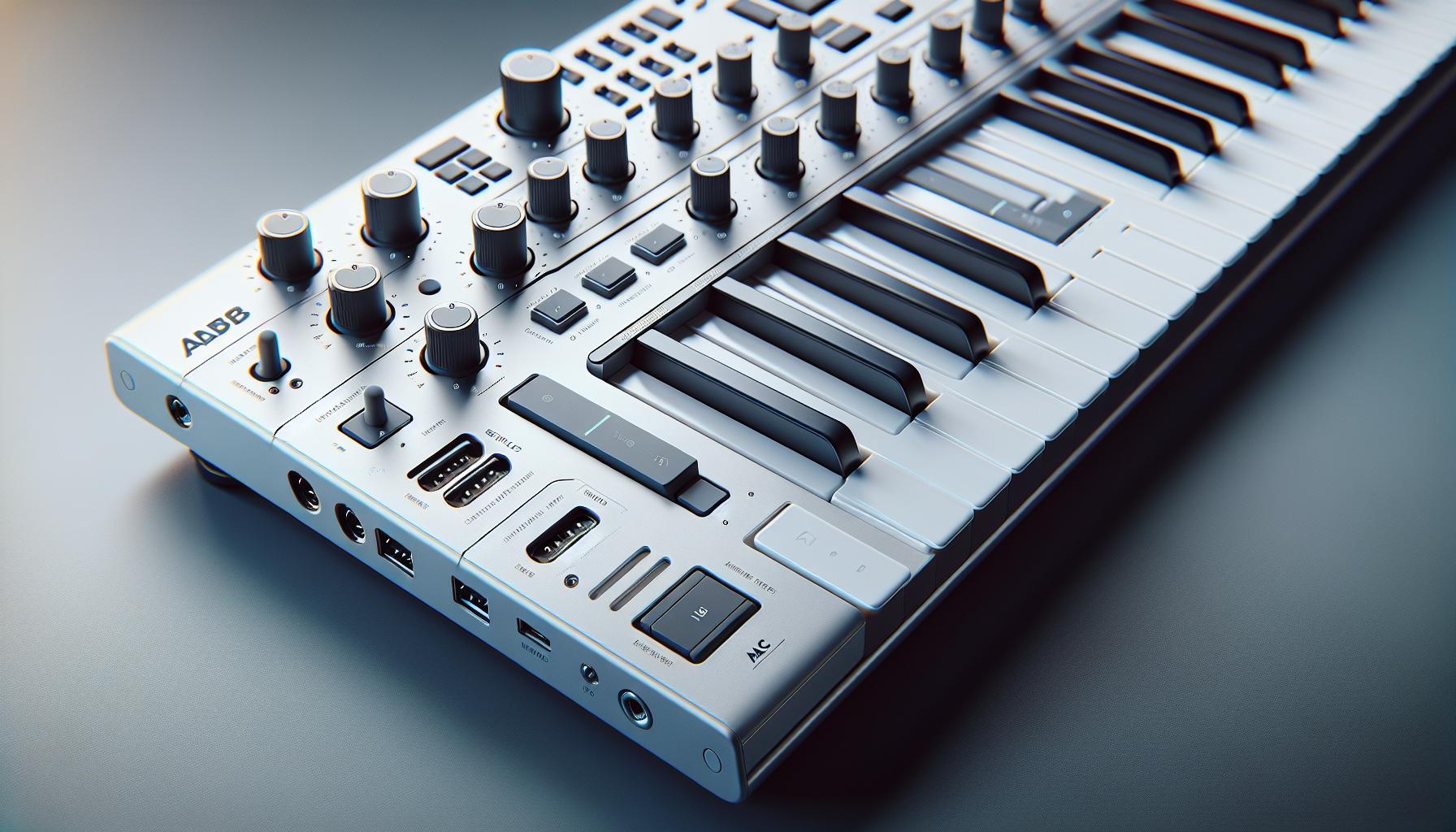
    All in all, it’s important to choose based on one’s personal needs, skill level and budget. You may opt for the Yamaha PSR-F51 or Casio LCT-200 if you’re a beginner while keeping in mind their limitations. Ultimately, nurturing budding musicians and supporting their growth requires portable keyboards that cater to all.

    Indeed, a traveler’s most loyal companion could very well be their portable keyboard. Choosing wisely could make the journey not only easier but also more melodious. But the journey continues, and more options wait beyond the horizon. In the world of music, it’s almost like the melody never ends.

    Making an Informed Decision: Choosing the Right Keyboard for You

    While buying a portable keyboard, it’s impossible to ignore the slew of options available. With the likes of the Pixel Harmonix Jx4, Celestial SoundWavez Z3, Yamaha PSR-F51, and Casio LCT-200 gracing the market, choice can feel overwhelming. Given the varied needs and skill levels of musicians, it’s important to consider a few key elements before making a final decision.

    Portability is a crucial factor. Both the Pixel Harmonix Jx4 and Celestial SoundWavez Z3 ace this criterion. Hence, these could come in handy for musicians frequently on the move. However, it’s also important to remember that a lightweight, compact design shouldn’t compromise sound quality. Here, you may find the Pixel Harmonix Jx4 pulling ahead with superior sound. But attitudes towards sound quality can vary, and some may find the Celestial SoundWavez Z3’s audio output satisfactory enough.

    A critical consideration in the decision-making process is the utility of weighted keys. The Pixel Harmonix Jx4 lacks this feature, which could be a deal-breaker for some. On the other hand, Yamaha PSR-F51 and Casio LCT-200, although designed for beginners, are equipped with this desirable feature.

    Lastly, there’s price. The lofty price tag of the Pixel Harmonix Jx4 might deter some. However, for those who value high-quality sound and compactness above all else, it might be worth every penny. Conversely, the Celestial SoundWavez Z3 embeds an in-built learning module, a user-friendly design, and a more reasonable cost, making it a favorable choice for beginners and intermediate level musicians.

    Remember, everyone’s needs are different. What’s overwhelming for one person might be a perfect fit for someone else. Ultimately, the best keyboard boils down to an individual’s personal needs, comfort, skill level, and budget. Be it a beginner-friendly approach of Yamaha PSR-F51 and Casio LCT-200, or the top-notch sound quality of Pixel Harmonix Jx4, or even the balanced features of Celestial SoundWavez Z3; the spectrum is wide and allows a personalized choice.

    Conclusion

    So there you have it. For the traveling musicians of 2024, the Pixel Harmonix Jx4 and Celestial SoundWavez Z3 are top contenders. They’ve got all the bells and whistles you’d want in a portable keyboard. Yet, it’s important to remember that the best keyboard for you depends on your personal needs, comfort, and budget. The Yamaha PSR-F51 and Casio LCT-200 are also solid choices for beginners. While the perfect keyboard may not exist, there’s surely one that’s just right for you. It’s all about weighing the pros and cons and finding the balance that works best. So pack up your gear, hit the road, and make some beautiful music!