Blog

  • Revolutionizing Music: The Versatility and Convenience of Electric Piano Keyboards with Built-in Speakers

    Revolutionizing Music: The Versatility and Convenience of Electric Piano Keyboards with Built-in Speakers

    Whether you’re a seasoned pro or just starting your musical journey, there’s nothing quite like the convenience and sound quality of an electric piano keyboard with built-in speakers. It’s a complete, self-sufficient musical instrument that’s ready to play, no matter where you are.

    These keyboards are a godsend for musicians on the go. They’re portable, versatile, and pack a punch in terms of sound. You don’t need to lug around hefty external speakers or deal with a complicated setup. Just plug in, power up, and you’re ready to fill the room with music.

    Benefits of electric piano keyboards with built-in speakers

    There’s an undeniable appeal to electric piano keyboards with built-in speakers. Fully packed with an array of benefits, these musical instruments revolutionize the playing experience due to their convenience and potency.

    First up is the matter of convenience. Electric piano keyboards with built-in speakers minimize the need for additional gear. There are no external speakers to cart around, no complex wiring to compile. Everything a pianist needs is placed right at their fingertips. These keyboards are compact, portable, and ready to play at a moment’s notice, making them an excellent choice for musicians on the move. That’s a huge benefit whether they’re gigging around town or simply love to practice in different locations.

    These keyboards are also immensely versatile. They’re equipped to provide a variety of sounds to suit diverse musical tastes and styles. Some models feature a library of hundreds of tones and rhythms, allowing musicians to experiment and explore vast musical horizons. From classical orchestral sounds to modern synth effects, there’s a lot in store for the creative minds.

    Last but not least is their powerful sound. Despite their compact size, these keyboards don’t compromise on sound quality. The built-in speakers produce a powerful and crisp sound that can fill a room with ease. It’s a testament to the development of modern technology, making it possible for compact devices to produce sound that was once only achievable with much larger equipment.

    These advantages make electric piano keyboards with built-in speakers a smart choice for musicians at all levels. Whether someone is just starting their musical journey or they’re a seasoned pro, this type of keyboard brings a lot to the table. Beyond just feature sets, there’s also the element of cost-effectiveness. Most of these keyboards are priced reasonably and offer a great value for money. There’s no denying that this investment pays off.

    The electric piano keyboards with built-in speakers promise a complete and self-sufficient musical experience. With this kind of setup, musicians can truly focus on their craft without worrying about peripheral issues. It’s about getting down to the business of making music – and that’s something every musician can appreciate.

    Portability and convenience

    When it comes to playing your tunes anywhere, electric piano keyboards with built-in speakers take the stage. They’re slim enough for toting around on the go, yet powerful enough to deliver a full-bodied sound. From rehearsing in a studio, performing on stage or just practicing at home, these musical marvels prove to be a convenient option.

    Lightweight and compact, they’ve rewritten the rules of making music. Forget about hauling a load of gear to your next gig or practice session. With everything built right in, you’re always ready to rock it out. These keyboards prove that big sound can indeed come in small packages. It’s no wonder that they’re a hit with singers, songwriters, and professional musicians alike.

    Sturdy and resilient, these keyboards resist the rigors of frequent transportation. Whether you’re a touring artist or an aspiring one, such endurance adds to the overall convenience. They’re designed to last and continuously offer top-notch performance, regardless of the challenges posed by heavy use.

    Variety is another factor contributing to their convenience. Most electric piano keyboards offer a vast range of preloaded sounds. This opens up a world of possibilities for musicians, enabling them to experiment with different music styles. It’s like having an entire band at your fingertips.

    Add to the mix the fact that these keyboards require minimal setup. They’re practically play-ready right out of the box. Just plug them in, turn them on, and you’re good to go. Wired or wireless, these keyboards ensure that your creativity flows without interruption or delay.

    In a world where immediate gratification rules, electric piano keyboards with built-in speakers are a boon. The ease of use and the convenience they bring to the table make it quite hard to resist their charm. Remember, true mastery lies in simplicity, and these keyboards embody this principle at its best.

    They’re game-changers. Transformative and innovative, they offer musicians a superior tool that blends portability with convenience. A potent combination that has revolutionized the music-making process for many musicians.

    High-quality sound output

    An important aspect to consider when talking about built-in speakers in electric piano keyboards is the sound quality they produce. It’s simply transformational. This feature enhances musicians’ experiences, allowing them to hear every note at its best.

    Straight off the shelves, the sound that emanates from these keyboards is nothing short of impressive. These keyboards boast of high-quality speakers that deliver crisp, clear, and powerful sound. Their quality and power enable the production of a wide range of tones from the highest treble to the deepest bass.

    Traditionally, keyboard players had to deal with external amplification systems. They were often bulky, difficult to transport, and had to be set up properly to get good sound. But now with the built-in speaker system, they’ve got an easy, reliable way to share their music without lugging around heavy equipment or dealing with complicated setups. The convenience and versatility of these keyboards, along with their excellent sound output, continue to earn praises from musicians across the globe.

    Indeed, the game has in many respects been changed by the electric piano keyboards with built-in speakers. Whether it’s jazz, classical, pop, or any other music genre, they offer musicians the opportunity to experiment with sound like never before. And with this simple, compact solution, performers can focus more on their music, not on technicalities.

    And let’s not forget about novice musicians. For someone starting on their musical journey, these keyboards are a great starting point. They offer beginners the chance to learn the ropes while enjoying high-quality sound. And that’s not all: because these keyboards are compact and lightweight, they’re also highly portable. This makes them excellent for practice sessions, jamming with friends, or even a casual performance.

    Choosing to go with electric piano keyboards with built-in speakers means choosing a tool that’s going to make music creation a lot more accessible and enjoyable. So, if one is passionate about music, these keyboards surely deliver something special, making these instruments a fantastic addition to any musician’s gear collection.

    Versatility in usage

    One of the great things about electric piano keyboards with built-in speakers is their versatility. They are versatile not just due to the range of sounds they can produce but also because they adapt to the musician’s needs and the environment.

    Whether one’s playing classical, jazz, rock, or creating an experimental sound, these keyboards can adjust to it all. They’re equipped with a variety of high-quality preloaded sounds that musicians can explore. Each of these sounds are unique and offer different nuances in tone. This level of choice and flexibility automatically makes the keyboard a musician’s best friend.

    What’s more, these keyboards come with multiple and customizable settings allowing musicians to shape the sound to their specific liking. They can tweak the volume, adjust the bass and treble, or dip into a myriad of other options. It’s like they have a mini sound studio at their fingertips.

    And let’s not forget about their adaptability to space. Be it in a small room, a large conference hall, or an open-air concert, these keyboards with built-in speakers play loud and clear. The sound output is impressive and does not require any external amplification. This is because such keyboards spotlight on the most crucial part of music – the sound. With their built-in speakers, the keyboards ensure that the sound output is consistently of high quality.

    Moreover, these keyboards are plug-and-play devices meaning they require minimal setup. You plug them in, power them on, and start playing. This means the musician can focus more on creating beautiful melodies rather than wrestling with complicated setup procedures.

    In a nutshell, whether you’re a novice or a seasoned musician, these keyboards provide a complete and self-sufficient musical experience. Notably, their versatility makes them a valuable tool perfect for any music genre, situation, or setting. The electric piano keyboard with built-in speakers caters to every musician’s needs, offering a broad spectrum of possibilities for exploring their musical creativity.

    Easy setup and use

    One of the key features of electric piano keyboards with built-in speakers is their easy setup and use. For the avid musician, time spent on rules and procedures for operation can be a chore. Who wants to go through a lengthy and complicated process before they can start making music? The musicians certainly don’t. They’d rather spend that time perfecting their craft and these keyboards answer the call.

    These keyboards are plug-and-play instruments. The musicians simply need to connect them to a power source, turn them on, and they’re all set. Forget about external amplifiers, intricate wiring systems, or complicated settings. They’re designed to be ready right out of the box, so the musicians can focus on what truly matters: creating and enjoying music.

    When it comes to ease of use, these keyboards surely deliver. Their user-friendly design features intuitive controls that are laid out in a manner that makes sense. Even a beginner would find their way around in no time. There’s no need to be an experienced musician or a die-hard tech enthusiast to operate these keyboards. The manufacturers have kept everyone in mind during the design process, making these keyboards suitable for all; from the hobbyists who play for fun to the budding musicians taking their first steps in the world of music.

    But don’t think that ease of use means limited functionality. Quite the contrary, these keyboards come with a variety of settings that the musicians can customize according to their preferences. From the volume of the sound to the type of sound effect, the musicians have a wide array of options at their disposal. They can truly mould the sound to fit their specific liking, giving them a personalized musical experience.

    Manufacturers continuously innovate and strive to design electric piano keyboards with built-in speakers that cater to all. Expert or novice, tech-enthusiast or not, these keyboards are designed with simplicity and versatility in mind. This ensures that the musicians can focus on what’s most important: making music. And isn’t that what it’s all about?

    Conclusion

    Electric piano keyboards with built-in speakers have truly changed the game. They’re not only portable and easy to use but also versatile and robust. They’ve made it possible for musicians to play, experiment, and share music anywhere, anytime. With the high-quality sound they produce, they’ve eliminated the need for additional equipment. They’re suitable for both beginners and seasoned musicians, providing an all-in-one musical experience. With their plug-and-play design and customizable settings, they’ve made music creation more accessible and personalized than ever before. So, whether you’re a music enthusiast looking for a new toy, or a professional musician seeking convenience and quality, these keyboards are a wise investment. They’re not just instruments; they’re powerful tools that inspire creativity and passion in the world of music.

  • Best Yamaha Digital Pianos as Christmas Gifts in 2023

    Best Yamaha Digital Pianos as Christmas Gifts in 2023

    Digital pianos have become increasingly popular in recent years due to their ability to replicate the sound and feel of a traditional piano while offering additional features and benefits. Yamaha is a well-known brand in the world of digital pianos, offering a wide range of models suitable for beginners and professionals alike. With the holiday season fast approaching, a Yamaha digital piano could make an excellent gift for the music lover in your life.

    When choosing the best Yamaha digital piano as a Christmas gift, there are several factors to consider. One critical factor is the skill level of the recipient. Yamaha offers digital pianos suitable for beginners, intermediate players, and professionals. Another crucial factor is the intended use of the piano. Will it be used for practice, performance, or recording? The intended use will determine the necessary features and capabilities of the digital piano.

    We spent hours researching and testing various Yamaha digital pianos to identify the best options for Christmas gifts. Our top picks include models suitable for beginners, intermediate players, and professionals, with features such as weighted keys, multiple voices and sound effects, and connectivity to computers and other devices. Whether you’re looking to gift a digital piano to a loved one or treat yourself, our recommendations have got you covered.

    Best Yamaha Digital Pianos

    Are you looking for the perfect Christmas gift for the music lover in your life? Look no further than a Yamaha digital piano! Yamaha is known for producing high-quality musical instruments, and their digital pianos are no exception. In this article, we’ve rounded up the best Yamaha digital pianos on the market, so you can find the perfect one for your loved one. Whether they’re a beginner or a seasoned musician, there’s a Yamaha digital piano that will suit their needs. So, without further ado, let’s dive into our list of the best Yamaha digital pianos for Christmas gifts.

    Yamaha P71B Digital Piano

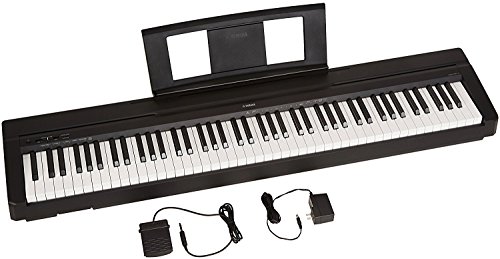
    YAMAHA P71 88-Key Weighted Action Digital Piano with Sustain Pedal and Power Supply (Amazon-Exclusive)

    If you’re looking for a high-quality digital piano that won’t break the bank, the Yamaha P71B is an excellent choice. With its fully-weighted keys and realistic sound, it’s perfect for both beginners and experienced players.

    Pros

    • The fully-weighted keys simulate the feel of an acoustic piano and provide a quality playing experience.
    • The slim and stylish design with a depth of less than 12 inches makes it easy to fit in any space.
    • The dual mode lets you combine 2 voices together, like piano and strings, for an inspiring new playing experience.

    Cons

    • It doesn’t have MIDI, but USB support will get the job done.
    • The keys are slightly noisy, but it’s not a dealbreaker.
    • The sustain pedal is not of the highest quality, but it still works well.

    The Yamaha P71B is an Amazon-exclusive model designed to be the perfect home digital piano for rehearsing, learning, and creating. It comes with a proper USB port, a sustain jack, and a headphone jack, making it easy to connect with an amplifier or integrate the keyboard sounds with other music software.

    The P71B contains 10 different voices, including digitally sampled tones from real Yamaha acoustic grand pianos. The dual mode lets you combine two voices together, like piano and strings, for an inspiring new playing experience. With a depth of less than 12 inches, the P71B requires little space and weighs only 25 pounds, making it easy to move around your home.

    In conclusion, the Yamaha P71B is an excellent digital piano for both beginners and experienced players. It’s compact, affordable, and provides a realistic playing experience. If you’re looking for a high-quality digital piano that won’t break the bank, the Yamaha P71B is definitely worth considering.

    Yamaha YPT270 Portable Keyboard With Power Adapter

    Yamaha YPT270 61-Key Portable Keyboard With Power Adapter (Amazon-Exclusive),Black

    If you’re looking for a beginner-friendly digital piano that’s loaded with features, the Yamaha YPT270 is a great option.

    Pros

    • With hundreds of high-quality voices and styles, this keyboard is perfect for exploring a variety of genres and sounds.
    • The Smart Chord feature allows you to play complex chords with a single finger, making it easy to create professional-sounding music.
    • The quiz mode is a fun and interactive way to learn and practice music theory and keyboard skills.

    Cons

    • The YPT270 only has 61 keys, which may be limiting for more advanced players.
    • While the keyboard is portable, it’s still a bit heavy and bulky, making it less than ideal for travel.
    • The power adapter is included, but some users have reported issues with the connection.

    Overall, the Yamaha YPT270 is a solid choice for beginners who want a versatile and feature-packed digital piano. The high-quality voices and styles, along with the Smart Chord and quiz mode, make it easy to learn and explore music. However, more advanced players may find the 61-key limit and portability issues to be drawbacks.

    Yamaha PSRE473 Digital Piano

    Yamaha, 61-Key Portable Keyboard (PSRE473), Black

    If you’re looking for an affordable and portable digital piano that offers advanced features, the Yamaha PSRE473 is a great option.

    Pros

    • The assignable knobs allow you to manipulate various effects and parameters on voices, styles, and more in real-time, giving you greater control over your sound.
    • The Quick Sampling function allows you to add your own content at just the right time, so you can create unique performances.
    • The built-in DSP lets you add professional sound to your vocals when you connect a microphone, making it perfect for singers.

    Cons

    • The surface of the keys feels a bit plastic, which may not be ideal for some players.
    • The polyphonic limitations may hinder some styles of play.
    • Some users have reported issues with the product’s durability over time.

    We found the Yamaha PSRE473 to be a versatile and feature-packed digital piano that’s great for both beginners and more experienced players. The assignable knobs and Quick Sampling function allow for a unique playing experience, and the built-in DSP adds a professional touch to your performances. However, the plastic feel of the keys and polyphonic limitations may not be ideal for some players. Overall, we recommend the Yamaha PSRE473 for anyone looking for an affordable and portable digital piano with advanced features.

    Yamaha PSREW310 76-Key Touch Sensitive Portable Keyboard with PA130 Power Adapter Power Supply Included

    Yamaha PSREW310 76-Key Touch Sensitive Portable Keyboard with PA130 Power Adapter

    If you’re looking for a portable keyboard that offers a wide range of features and great sound quality, the Yamaha PSREW310 is a fantastic choice.

    Pros

    • The 76 keys make it a great choice for beginners who want to learn on a keyboard that’s closer to a full-size piano.
    • The AWM Dynamic Stereo Sampling engine creates a realistic acoustic instrument sound.
    • Super Articulation Lite Voices allow for nuanced expression and control.

    Cons

    • The keyboard can be a bit heavy to carry around for extended periods of time.
    • The included power adapter isn’t very long, so you may need an extension cord.
    • Some users have reported issues with the USB to HOST connectivity.

    We’ve been using the Yamaha PSREW310 for a few weeks now, and we’ve been really impressed with its features and performance. The 76 keys are a great size for beginners who want to learn on a keyboard that’s closer to a full-size piano, and the touch sensitivity makes it feel more like an acoustic instrument.

    The AWM Dynamic Stereo Sampling engine does a great job of creating a realistic acoustic instrument sound, and the Super Articulation Lite Voices allow for nuanced expression and control. We’ve had a lot of fun experimenting with the different voices and sounds, and we’ve been really impressed with how versatile this keyboard is.

    One downside is that the keyboard can be a bit heavy to carry around for extended periods of time. It’s not a huge issue, but if you’re planning on taking it with you to gigs or performances, you may want to invest in a good case or bag to make it easier to transport.

    Another minor issue is that the included power adapter isn’t very long, so you may need an extension cord if you want to play in a room where the outlet is far away. Finally, some users have reported issues with the USB to HOST connectivity, so you may want to double-check that everything is working properly before you start using it with your computer or other devices.

    Overall, we think the Yamaha PSREW310 is a great choice for anyone who wants a portable keyboard that offers a wide range of features and great sound quality. Whether you’re a beginner who’s just starting out, or an experienced musician who wants a versatile instrument that can handle a variety of styles and genres, this keyboard is definitely worth considering.

    Yamaha P45 88-Key Weighted Digital Piano Black

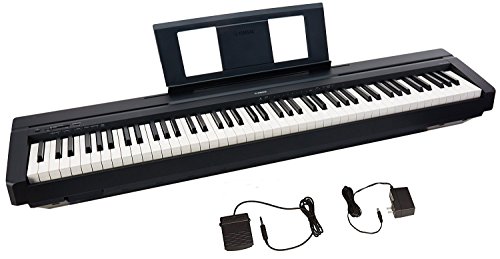
    Yamaha P45 88-Key Weighted Digital Piano

    If you’re looking for a high-quality, beginner-friendly digital piano, the Yamaha P45 88-Key Weighted Digital Piano Black is an excellent choice.

    Pros

    • The 88 fully weighted piano style keys simulate the feel of an acoustic piano and provide a quality playing experience.
    • The GHS weighted action is heavier in the low end and lighter in the high end, just like an acoustic piano.
    • Contains 10 different voices, including digitally sampled tones from real Yamaha acoustic grand pianos.

    Cons

    • The sustaining pedal feature tends to move under your foot.
    • The speakers could use more power.
    • The sound quality could be better.

    We’ve been using the Yamaha P45 88-Key Weighted Digital Piano Black for a few weeks now, and we’re impressed with its performance. The keys are well-weighted and provide a realistic playing experience, making it an excellent choice for beginners who want to learn on a high-quality instrument.

    The dual mode feature is another highlight of this digital piano, allowing you to combine two voices together, like piano and strings, for a unique and inspiring playing experience.

    One downside we’ve noticed is that the sustaining pedal feature tends to move under your foot, which can be a bit frustrating. Additionally, while the sound quality is good, it could be better, especially considering the price point.

    Overall, we would definitely recommend the Yamaha P45 88-Key Weighted Digital Piano Black to anyone looking for a quality digital piano that’s perfect for beginners. It’s compact, lightweight, and easy to use, making it an excellent choice for anyone who wants to learn how to play the piano.

    Yamaha PSRSX900 Arranger Workstation keyboard

    Yamaha PSRSX900 Arranger Workstation keyboard

    We highly recommend the Yamaha PSRSX900 Arranger Workstation keyboard for anyone looking for a top-of-the-line digital piano that offers a wide range of features and exceptional sound quality.

    Pros

    • The color touch screen makes it easy to access and adjust a variety of features and settings.
    • The joystick controller allows for a wide range of pitch and modulation combinations, making it ideal for playing many different world music styles.
    • Assignable real-time control knobs allow for filtering and adjusting sound like an analog synthesizer.

    Cons

    • The keyboard may be difficult for beginners to use due to its advanced features.
    • The chord looper feature may take some time to master.
    • The price point may be too high for some consumers.

    The Yamaha PSRSX900 Arranger Workstation keyboard is a powerful tool for songwriting and performance. The color touch screen allows for easy access to a variety of features and settings, making it simple to adjust your sound on the fly. The joystick controller is a unique feature that allows for a wide range of pitch and modulation combinations, making it ideal for playing many different world music styles. The assignable real-time control knobs also allow for filtering and adjusting sound like an analog synthesizer.

    One potential downside of the PSRSX900 is that it may be difficult for beginners to use due to its advanced features. The chord looper feature is also a bit complex and may take some time to master. Additionally, the price point may be too high for some consumers.

    Overall, the Yamaha PSRSX900 Arranger Workstation keyboard is an excellent choice for anyone looking for a top-of-the-line digital piano with exceptional sound quality and a wide range of features.

    Yamaha PSR-EW310 PKY Premium Keyboard Pack

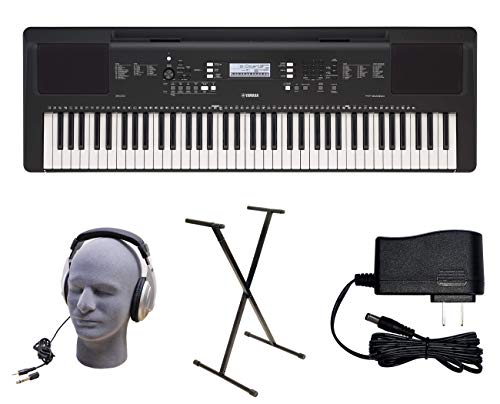
    Yamaha PSR-EW310 PKY 76-Key Premium Keyboard Pack with Power Supply, Bolt-On Stand, and Headphones, YAM PSREW310

    If you’re looking for a beginner keyboard that delivers on sound quality and versatility, the Yamaha PSR-EW310 PKY Premium Keyboard Pack is a great choice.

    Pros

    • With 622 instrument voices, including Super Articulation Lite Voices that mimic the nuances of stringed instruments, you’ll have a wide variety of sounds to play with.
    • The touch-sensitive keyboard allows for dynamic control of your music, making your performances more expressive.
    • The auto accompaniment Styles make it easy to control a backing band that can play a variety of musical genres.

    Cons

    • The higher keys may feel dull to some users.
    • The keys stick out with no support, which may be a concern for durability.
    • The package does not come with a sustain pedal.

    The Yamaha PSR-EW310 PKY Premium Keyboard Pack is a great starter keyboard for those looking to improve their piano skills. With 622 instrument voices and Super Articulation Lite Voices, you’ll have a wide variety of sounds to experiment with. The touch-sensitive keyboard accurately reflects every nuance of your playing, making your performances more musically expressive. The auto accompaniment Styles make it easy to control a backing band that can play a variety of musical genres, from jazz to R&B to Latin.

    One potential downside is that some users may find the higher keys to be dull. Additionally, the keys stick out with no support, which may be a concern for durability. Finally, the package does not come with a sustain pedal, which may be an additional expense for some users.

    Overall, if you’re looking for a versatile and high-quality beginner keyboard, the Yamaha PSR-EW310 PKY Premium Keyboard Pack is a great choice.

    Yamaha P71 Digital Piano (Amazon Exclusive) Deluxe Bundle with Furniture Stand and Bench

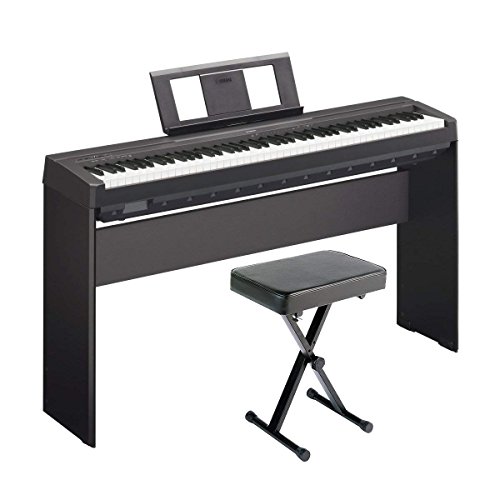
    Yamaha P71 Digital Piano (Amazon Exclusive) Deluxe Bundle with Furniture Stand and Bench

    If you’re looking for a high-quality digital piano, the Yamaha P71 is an excellent choice. We highly recommend this product for anyone who wants a digital piano that feels like a real one.

    Pros

    • The keys feel authentic and are weighted just like a real piano.
    • The sound quality is excellent and realistic.
    • The bundle comes with a stand and bench, making it a great value.

    Cons

    • The sustain pedal could be of better quality.
    • The piano has a limited number of voices and sound effects.
    • The piano does not have a recording function.

    The Yamaha P71 Digital Piano is a perfect gift for anyone who wants to learn how to play the piano. The keys are weighted and feel authentic, just like a real piano. The sound quality is excellent and realistic, making it a joy to play.

    The bundle comes with a stand and bench, making it a great value. The stand is sturdy and looks great with the piano. The bench is comfortable and adjustable, so you can find the perfect height for you.

    While the sustain pedal is included in the bundle, it could be of better quality. The piano has a limited number of voices and sound effects, which may not be a problem for some people, but could be a drawback for others. Additionally, the piano does not have a recording function, which could be a dealbreaker for some.

    Overall, the Yamaha P71 Digital Piano is an excellent choice for anyone who wants a high-quality digital piano that feels like a real one. It’s a great value and comes with everything you need to get started.

    This is the model I own and it’s terrific.

    Buying Guide

    When choosing a Yamaha digital piano as a Christmas gift, there are several features to consider to ensure that the recipient receives the best product for their needs. Here are some factors to keep in mind:

    Keyboard

    The keyboard is the most important feature to consider when purchasing a digital piano. It should feel and respond like an acoustic piano. Look for a keyboard with weighted keys that mimic the touch and feel of a traditional piano. Additionally, the number of keys on the keyboard is also important. Most digital pianos come with 88 keys, but some models may have fewer.

    Sound Quality

    The sound quality of a digital piano is another crucial factor to consider. Look for a piano with a sound system that produces a clear and natural sound. The piano should also have multiple sound options, including various piano sounds, as well as the ability to adjust the tone and pitch.

    Connectivity

    Connectivity is another important feature to consider. Look for a digital piano with USB and MIDI connectivity, which allows the piano to be connected to a computer or other devices. This feature is especially useful for recording and composing music.

    Additional Features

    Finally, consider any additional features that may be important to the recipient. This could include built-in lessons, recording capabilities, and the ability to connect to headphones for quiet practice.

    By considering these factors, you can ensure that the Yamaha digital piano you choose as a Christmas gift will be the perfect fit for the recipient.

  • The Piano Showdown: Billy Joel vs. Elton John

    The Piano Showdown: Billy Joel vs. Elton John

    Social Impact

    Pop Icons with Mass Appeal

    Both Billy Joel and Elton John rose to fame in the 1970s as piano-playing singer-songwriters who went on to become two of the best-selling musicians of all time. Their widespread popularity and catchy piano melodies appeal to audiences across generations and cultures, from Baby Boomers who grew up with their music to Millennials streaming their hits today. The piano talents of these two artists have brought joy to millions globally.

    Influencing Aspiring Musicians

    As household names, Billy Joel and Elton John inspire legions of amateur piano players who admire their skills and classic tunes. Aspiring musicians take their songs to practice rooms and piano bars, with many no doubt honing skills on the great pianists’ repertoire. Their lasting cultural imprint will continue impacting budding players for decades to come through musical mentorship.

    Connecting Through Nostalgia

    Billy Joel and Elton John’s piano ballads offer shared musical touchstones that connect people through nostalgia. Their melodies bring back memories and induce emotions associated with meaningful life moments. Singing along unites audiences during concerts and provides a sense of community. Such nostalgic piano pop acts as a social adhesive.

    Historical Context

    Singers Who Play, Not Pianists

    While incredibly talented pianists, it helps to view both musicians in their accurate historical context. Unlike classical virtuosos, they are singers and composers first who accompany themselves on piano, not purely pianists presenting solo instrumental work. They use piano to support their songs rather than as the main focus.

    Pop Songwriting Tradition

    They follow a legacy of pianistic singer-songwriters like Carole King, Randy Newman, Phil Collins and countless jazz vocalists accompanying themselves on piano during intimate club sets. Their skills serve melodic pop songcraft, not classical pianism – an important distinction when comparing talents.

    Larger-Than-Life Personas

    Also central to their history are the outsized rock star personas and flamboyance defining their legacy as much as piano playing. Concerts rely as much on pageantry and showmanship as technical skills. Unlike recital pianists, their stardom stems from vocal and pop culture fame more than pure piano ability removed from singing.

    Economic Impact

    Lucrative Record Sales and Touring Revenue

    Thanks to their pop stardom and piano talents combined, Billy Joel and Elton John have earned astronomical fortunes from album sales, publishing royalties, and blockbuster tours filling stadiums around the world. Their success has funded lavish lifestyles and made them two of the most financially successful musicians ever through their business-savvy solo careers.

    Expensive Concert Tickets

    Decades since releasing their biggest hits, diehard fans today still pay hundreds of dollars to see these icons live largely thanks to the familiar piano melodies that make up their beloved song catalog. Piano abilities helped drive record sales, which allows their touring tickets to remain premium priced based on continued demand.

    Supporting the Piano Industry

    As two of the most famous contemporary pianists, Billy Joel and Elton John have likely given the piano industry and market a boost by inspiring fans to purchase their own instruments and take up lessons themselves. Their cultural influence may drive more sales and strengthen the piano business.

    Practical Appeal

    Joel’s Instructional Value

    While maybe less of a pure virtuoso, the simplicity and clarity of many Billy Joel piano parts offers instructional value for less advanced players learning. The accessible arrangements help build skills through practice. Elton’s orchestrated pop complexity poses more challenges to replicate.

    Relatable Everyman Image

    Billy Joel also benefits from an endearing, working-class image that makes him feel relatable and approachable to amateur players. His unpretentious interview persona makes his piano skills feel attainable, unlike Elton’s lavish pop superstardom. Many feel they could imagine playing like Billy one day.

    Intricate Arrangements in Elton’s Favor

    However, Elton John undeniably displays more diverse technical mastery and intricacy in his piano playing across various styles. His intricate arrangements and classically-influenced passages evidence greater expertise that can inspire advanced learners toward higher skills ceilings. His supernova stage persona however can feel unattainable.

    Cultural Legacy

    Elton’s Flair and Showmanship

    While Billy Joel has his own iconic hits, Elton John’s huge glasses, sequin jumpsuits, and sparkling onstage energy have made him arguably the bigger overall cultural icon. His musical output expands across film soundtracks, Broadway, and collaboration with numerous artists over decades. The force of his persona is undeniable.

    Billy’s Working Class Authenticity

    Yet Billy Joel’s unvarnished image continues endearing him to fans worldwide as well. His lyrics about blue-collar characters connect with audiences’ daily lives more than Elton’s glitz. Songs like “Piano Man” and “Scenes from an Italian Restaurant” feel relatable. His sincerity endures past trends.

    Intertwined with Pop History

    Ultimately both musicians have composed instantly recognizable melodies that will live forever in pop culture. Their catalogs each contain numerous piano-driven classics known worldwide. As cultural icons they remain impossible to untangle from the pop landscape and piano’s important role in it.

    Spiritual Songwriting

    Joel’s “River of Dreams”

    Billy Joel’s hit single “River of Dreams” contains religious imagery and spiritual romanticism that resonates with listeners through gospel-style piano accompaniment. The song contemplates faith, morality, and purpose. Piano cues the reverence in his philosophical lyrics.

    Elton’s Religious Roots

    While less devotional in content, some of Elton John’s piano ballads actually found inspiration in his early classical training for church choir as a child. The gospel influencemanifests at times in soulful piano lines and vocal delivery, as on “Border Song.” His piano talents took root serving church music.

    Pensive Songs Transcend

    Neither are devout faith icons, but at moments their thoughtful piano melodies and introspective lyrics touch on purpose in life, meaning, and existential yearning in ways that offer listeners spiritual contemplation elevated above standard pop fare. Their gift for poignant storytelling shines through.

    Educational Value

    Advantages of Simpler Songs

    Pedagogically, Billy Joel’s less virtuosic piano repertoire actually provides strong learning material for novices developing skills. Practicing accessible, familiar pop songs teaches basic accompanying, tempo, dynamics, and technique effectively. Students stay engaged with music they know.

    Applying Theory to Pop

    Both artists exemplify how piano theory can bring nuance and interest to pop compositions. Their lessons in chord progressions, key changes, harmonic flavors and piano orchestration within a radio-friendly format gives students diverse arranging tools that broaden horizons.

    Importance of Songwriting Craft

    Above all, the two musicians demonstrate how impactful songwriting holds equal importance to performing. Honing sharable melodies and harmonies using piano ultimately serves expression. Their pianism supports songcraft, not the reverse. This instructs composers in training.

    A Personal Take

    Joel Resonates More as Piano Inspiration

    For me personally, while Elton John clearly demonstrates more mastery and vision musically, Billy Joel resonates as a greater source of inspiration as a piano student. His charming accessibility as both a performer and musician makes his gift feel within closer reach. Elton feels more supernova – untouchable.

    Relatability Aids Learning

    Trying to replicate Elton’s sophisticated compositions generally proves discouraging for someone at my amateur skill level. But playing a familiar Billy Joel progression reinforces that simple piano parts can sound great supporting a heartfelt vocal. His piano embellishes songs, not the reverse. That focus helps my own development.

    Lasting Value Over Flash

    I respect Elton John’s undeniable piano accomplishments. But the kind of pianist I aspire to become sits behind a well-worn upright singing earnestly, not a rhinestone-bedazzled grand. For my money, Billy Joel’s pianism exudes more wisdom and substance. His restrained style delivers lasting value over flashy playing.

    In the end, both musicians offer merits to celebrate. But their differing approaches lead this pianist to gain more inspiration from Billy Joel’s humility at the keys. His enduring music echoes my own journey better than Elton’s bombast. Joel makes piano mastery feel within sight for anyone with dedication to the craft.

  • The Great Debate: Is Piano or Guitar Easier to Learn?

    The Great Debate: Is Piano or Guitar Easier to Learn?

    The Great Debate: Is Piano or Guitar Easier to Learn?

    Social Impact

    Widespread Popularity of Music Lessons

    Learning an instrument like piano or guitar is an extremely popular extracurricular activity for both children and adults alike. Millions of people across the world sign up for formal music lessons on these instruments each and every year. The choice between opting to study piano versus guitar has rather broad social implications that extend far beyond just deciding how to fill one’s free time. When looking at the bigger picture, the selection influences everything from family dynamics to education systems to community organizations.

    Music is simply an integral part of human life and culture. Playing an instrument provides a creative outlet, a process of self-expression, and a way to connect more deeply with others. The arts, including music, are essential to quality of life and have the power to transcend boundaries between people. All communities everywhere incorporate music into social practices, traditions, and values. Whether piano or guitar, the opportunity to participate more fully in these musical spaces is open to everyone.

    Building Confidence and Creativity

    Learning to play either piano or guitar can be tremendously beneficial for building up confidence as well as enhancing creativity. As people steadily develop their musical skills on the instrument they have chosen, even starting from just a beginner level, they will likely feel a far greater sense of personal achievement, competence, productivity, and expressiveness. Their aptitude translates into real life with positive impacts on social circles, professional aspirations, educational performance, and overall wellbeing.

    Playing an instrument provides an outlet for creativity and artistry. With piano or guitar, students can explore musical composition, write their own songs and instrumental pieces, and ultimately learn to translate their inner world into external expression through sound. Achieving small goals like learning a favorite tune or nailing a challenging chord progression fuels creative passion. As musical abilities advance, what once seemed impossible becomes second nature. That creative energy spills over into other areas of life as well.

    Strengthening Bonds and Communities

    Playing music powerfully connects people across all walks of life. Simply joining a band or ensemble introduces teamwork, camaraderie, and friendship. Giving a performance fills both player and audience with joy. Music has a profound capacity to unite communities and bridge divides between cultures. Shared musical experiences build understanding. Whether someone opts for piano or guitar, actively participating in music strengthens social bonds and brings people together.

    Music has been a vital community institution throughout all of human history. Every culture worldwide incorporates music heavily into social functions and local traditions. Across all nations, music facilitates storytelling, expression, ceremonies, dance, worship, celebrations, and more. Playing an instrument allows individuals to engage with their regional musical heritage on a deeper level. Ensembles like orchestras, choirs, marching bands, and guitar groups provide connection through regular practices and shows. Music is a universal language that transcends scores of potential differences.

    Historical Origins

    Centuries of Piano Tradition

    The piano as we know it today has existed in one form or another since the very early 1700s, giving it centuries of history and development behind it. The instrument has evolved gradually over time, with technological improvements that helped create the modern piano most commonly used around the late 1800s. This exceptionally long tradition and evolution has produced widely established teaching methods, technique guides, musical theory education, and a massive repertoire of canonic compositions.

    Agents like piano manufacturers, composers, and music schools have helped formalize and standardize piano instruction over the decades. Pieces by famous composers like Mozart, Beethoven, Chopin, and Debussy pose technical challenges for students while exposing them to varied styles from Baroque to Impression. Within classical genres, piano enjoys an esteemed stature and studying it provides access to that rich heritage. The lengthy, continuous piano tradition influences its ongoing popularity as a foundational instrument.

    Ancient Roots of Guitar

    Early guitar-like instruments originated over 4,000 years ago and have taken diverse forms across different world cultures since then. Precursors to the modern guitar first emerged in ancient Persia, Greece, and Moorish Spain. These early instruments were later brought to Europe from the Middle East and North Africa during the Middle Ages, roughly 500 or more years ago. From there, guitar design evolved and branched out regionally, leading to instruments like the vihuela in Renaissance Spain.

    Of course, the guitar as we currently conceptualize it took shape more recently, during the mid to late 1800s. Like the piano, the guitar has undergone tremendous changes in structure, materials, and technical capabilities over the centuries. It has a long, rich past and has captivated musicians for millennia. The instrument’s ancient origins anchor it firmly as a globally beloved musical tradition. Myriad cultures have incorporated their own guitar variations into local musical heritage.

    Recent Guitar Popularity Surge

    Although guitar instruments have existed for thousands of years across many civilizations, the modern six-string guitar saw an utterly meteoric rise to mass popularity during just the 20th century. The growing prevalence of recorded music and radio exposed audiences to guitar sounds more regularly. As musical tastes shifted to favor new contemporary genres like folk, country, blues, and especially rock ‘n’ roll, the guitar assumed center stage.

    Key figures like Andrés Segovia and Robert Johnson paved the way for guitar visionaries of the 50s and 60s who ultimately transformed the instrument into an icon of popular culture, especially once amplification took hold. Wildly influential musicians like Chuck Berry, Dick Dale, Keith Richards, Eric Clapton, Jimi Hendrix, Carlos Santana, and Eddie Van Halen cemented the guitar’s status. Today it remains intensely intertwined with pop music and culture. In contrast, piano studies retain a more traditional, classical reputation.

    Economic Factors

    Piano’s Higher Costs

    Acoustic pianos certainly represent a major investment in terms of raw financials. Decent quality upright pianos often cost between $3,000 to $7,000 at minimum, while grand pianos easily start around $10,000 and can range up to $150,000 or more for concert-grade instruments. Additional long-term costs for professional tuning, maintenance, repairs, movers, and sometimes even extra climate control for the piano room add up exponentially over time.

    The overall expense associated with buying and properly caring for an acoustic piano puts them out of reach for many families and potential students. While some schools and public spaces possess pianos, most serious students require consistent at-home access. Prohibitively high costs inhibit many from pursuing lessons. However, the growth of used instrument markets, introduction of lower-priced digital piano models, and pricing tiers among acoustic pianos ameliorate some financial barriers. But broadly speaking, piano training necessitates a major financial commitment.

    Greater Affordability of Guitars

    Contrastly, guitars are significantly more affordable overall, with very beginner-friendly options available. While professional-level instruments still entail four-digit price tags, basic yet decent quality acoustic guitars for students can readily be purchased brand new for less than $200 in most cases. The prevalence of used instrument sales also ensures abundant access to lightly-used guitars often for under $100. Even high-end professional acoustic guitars almost never exceed the $5,000 mark.

    Even brand new student guitar models from trusted brands provide great sound and playability without breaking the bank. Of course, more advanced instruments run $1,000 or more, but not nearing piano territory. Discount music shops and mass retailers also offer super low-priced guitars that enable almost anyone to pick up an instrument. Between new economy models, used deals, and ultra-budget options, guitars are far more economically accessible than pianos for the curious student.

    Instruction Costs

    In terms of learning costs, both private piano lessons and private guitar lessons tend to average around $30 to $60 per hour-long session on the moderate end. Lesson rates rise with more experienced instructors in major metropolitan areas. Group classes can lower per person costs, usually ranging $15 to $40 per person. While costs fluctuate based on area, instructor qualifications, and other factors, the overall expense ends up fairly comparable between instruments.

    The principal financial differentiator remains the instrument purchase itself. Guitars for beginners cost magnitudes less than pianos. While instruction prices are similar and add up over years, the piano’s sheer initial buy-in and maintenance costs give guitar a substantial overall price advantage. Of course, both instruments require ongoing investments in books, sheet music, accessories, etc. But between purchase differential and upkeep costs, guitar proves the more accessible choice financially.

    Practicality

    Piano’s All-in-One Appeal

    One major asset of the piano in terms of practical appeal is its all-in-one nature. The piano can play both melody lines and accompaniment simultaneously, allowing for harmony, polyphonic textures, and layered arrangements in a way most other instruments simply cannot match. Pianists can develop skills to perform a satisfying range of musical parts together solo, thanks to the instrument’s versatile layout. This versatility also allows pianists to play songs across many different musical styles effectively.

    With the piano’s capacity for harmony, range of registers from bass to treble, blend of percussive and sustained tones, wide tonal variability, and potential for nuance, pianists can readily perform solo classical, pop, jazz, folk, and religious music successfully. Other instruments like guitar and woodwinds by nature produce more limited sounds individually. This gives piano unique practicality and flexibility unattainable from a single guitar, saxophone, etc. Budding musicians often thrive starting on an instrument so well-equipped to play harmonious, multifaceted arrangements independently.

    Guitar’s Portability

    In contrast to a massive, heavy piano, one of guitar’s most obvious practical advantages is its compact size and sheer portability. Guitars’ relatively small frames and lightweight builds make them exceptionally easy to transport virtually anywhere with minimal burden. This extreme mobility helps facilitate practice and encourage regular playing in ways less conducive to an acoustic piano that by nature permanently occupies a large footprint of space.

    The ability to pick up and move a guitar without trouble factors prominently into student practice habits. Learners can practice in any room, take their instrument along on trips, play outside, bring it to jam sessions and classes, and stay motivated. Having an instrument you can use on-the-go yields frequent exposure. Portability also assists performing guitarists who can easily transport their gear to gigs. For some, freedom of movement makes guitar a more appealing choice than being tethered to a piano room.

    Physically Less Demanding

    For the majority of beginners, the guitar also imposes less physical demand and strain than learning piano technique. While building calluses and finger strength takes time, guitar strings are more forgiving on hands than piano keys. Switching between basic guitar chords allows movement and adjustments between shapes to reduce fatigue. In contrast, piano requires intense dexterity in individual fingers and the heavy use of hand stretches and forms. These athlete-like physical requirements can increase injury risks and discourage some students.

    Guitarists can rely more on moving the entire hand as a single unit, and large muscle memory within the shoulder, arm, and wrist. Piano playing depends far more on developing independent coordination and control between individual fingers. While guitar has its own technical challenges, many find chord transitions and strumming patterns more physically fluid and less straining than intricate piano fingerwork. Each instrument makes unique physical demands, but for some beginners the guitar’s generally lower barrier to basic functional technique gives it an edge.

    Cultural Significance

    Piano’s Central Role in Classical Music

    The piano holds an almost irreplaceable role within formal classical music traditions spanning Baroque, Classical, Romantic, and modern era repertoire. It features so prominently across the most foundational genres that anyone pursuing serious classical training essentially requires functional piano technique to fully engage with the canon. While other instruments occupy important places in orchestras, quartets, etc, piano skills remain too crucial to classical foundations to ignore.

    From Bach to Beethoven to Chopin, the piano was central in classical composers’ output, resulting in cornerstone works like concertos and sonatas any classically-minded student must study. Pieces rely on the piano’s diverse technical capacities. As genres evolved, piano technique grew accordingly demanding. Greats like Liszt and Rachmaninoff expanded virtuosic boundaries. Learners playing these pieces connect to history. Jazz and pop genres also grew out of classical piano traditions. Simply put, classical piano is deeply rooted cultural heritage.

    Guitar Dominates Pop and Rock

    At the same time, guitar playing forms the instrumental foundation of most popular music from early rock ‘n’ roll to modern pop, rock, indie, folk revival, country, and more. Music icons in these genres like Chuck Berry, Keith Richards, Eric Clapton, Jimi Hendrix, Prince, Eddie Van Halen, Joni Mitchell, Jack White and countless more created the signature guitar sounds that energize contemporary music and culture as we know them. Even pop superstars like Taylor Swift rose from singer-songwriter backgrounds focused on guitar skills.

    Unlike classical music, contemporary pop genres center almost entirely around the guitar in some electric or acoustic form, usually as part of a band. Guitar-driven music dominates the cultural soundscape through radio play, celebrity musicians, and mass media. Aspiring pop musicians gravitate toward guitar as an almost mandatory first step. While piano maintains relevance across genres, guitar forms the core of multiple pop cultures worldwide in a starkly different way than historical classical music worlds.

    Both Instruments Culturally Significant

    Examining music history makes clear both piano and guitar, despite divergent cultural connotations, occupy profound places in human culture alongside all other major instruments. Both provide avenues into tremendously important realms of musical heritage spanning classical traditions, multiple ethnic folk styles, seminal genres like blues and jazz, and beloved contemporary pop music. Preferences divide based heavily on individual taste along the lines of classical versus contemporary, and specific cultures and styles better suited to one instrument versus the other. But viewed comprehensively, neither eclipses the other in cultural significance. Both piano and guitar offer learners access to tremendous cultural riches if studied diligently.

    Religious Purposes

    Piano in Ceremonies and Worship

    The commanding presence and nuanced musicality of the piano made it a historically popular accompaniment for religious ceremonies, rituals, and worship across faith traditions. Its resonant harmony, dynamic capabilities, and full sound lend themselves to sanctified spaces and religious functions rooted in formality and tradition. Piano or organ music often provides the backdrop to weddings, funerals, holidays, and regular worship services in cultures worldwide.

    The piano’s versatility allows it to voice everything from ethereal reverence to joyous praise depending on context. From Hindu temple rituals to Jewish High Holiday services to U.S. Christian revival meetings, piano music has facilitated devotion and community for generations. Gospel music also relies on piano to provide rhythmic, improvised accompaniment. For many world religions, piano music complements the grandeur and gravity of important spiritual ceremonies and practices.

    Folksy Simplicity of Worship Guitar

    In contrast, the relatively minimalist format of rhythm guitar accompaniment with chords appeals well to religious gatherings emphasizing communal participation, fellowship, and intimate expression of faith in action. Strumming familiar chords to guide group singing fosters community and familiarity that resonates for many worship cultures. The laidback, folky aesthetic suits these congregations well.

    The guitar provides a simpler, more portable and economical option for smaller groups and organizations compared to a pipe organ or grand piano. Its minimal equipment needs and informal sound cater to groups prioritizing accessibility and sincere personal connection over pomp and ritual during gatherings. Across various world faiths, the guitar offers an efficient means to focus singing, storytelling, and fellowship on shared spirituality rather than elaborate performance.

    Preference Depends on Culture

    In the end, different religious cultures simply gravitate toward either piano or guitar accompaniment based heavily on their musical values, aesthetics and practices. A Catholic mass with its rituals and traditions may favor the commanding nature of pipe organ or piano, while a small evangelical Protestant congregation may embrace the familiar informality of acoustic guitar. But neither format inherently precludes spiritual resonance when thoughtfully applied. Both instruments prove capable of facilitating musical worship according to different needs.

    Educational Lessons

    Piano Builds Coordination and Focus

    Mastering piano technique and repertoire requires rapidly developing tremendous dexterity, coordination, and independence between the hands and fingers. Good form demands disciplined focus and repetition. Reading increasingly complex sheet music while simultaneously playing strengthens musical literacy and concentration skills together. These lifelong benefits go beyond music.

    Playing piano passages relies heavily on kinesthetic intelligence using fine and gross motor skills in tandem. All ten fingers must work in precise synchronization to voice unique parts together seamlessly. The athletic nature strengthens hands, fingers, wrists, arms, shoulders, core, and back. Skills like hand-eye coordination, memorization, listening, and quick thinking all improve dramatically. With diligent practice, pianists often become excellent multitaskers and cerebral coordinators.

    Guitar Develops Creativity and Expression

    Alternately, beginner guitar education frequently emphasizes chord progressions, tablature reading, and playing/singing melodies from an early stage. This tends to nurture free-flowing creativity and self-expression beyond rote practice. Students quickly apply chords to compose songs, improvise, and accompany singing. Lyrics enhance emotional release and communication. Even basic chord strumming provides a creative outlet.

    On guitar, the initial focus is less on perfect technique and more on harnessing the instrument as a tool for creativity. Letting students improvise and invent songs enables imagination and vulnerability. While technical skills still demand work, guitar provides satisfying creative outlets and sharing music more immediately than the prolonged skills development on piano. Many students find singing and playing guitar together the perfect form of personal musical expression.

    Transferable Skills Either Way

    Importantly, both instruments also impart foundational musical knowledge and skills that provide benefit beyond just piano or guitar technique alone. Concepts of rhythm, tempo, scales, time signatures, chord construction, harmony, melody, and general music theory all transfer between instruments. Building this well-rounded musical literacy and ear training creates advantages for picking up additional instruments later on.

    So in that sense, starting piano provides outstanding technical grounding and classical insight, while starting guitar delivers more immediate creative fulfillment. But either direction lays the educational groundwork to expand musical horizons further through transferable theory, listening, reading, finger dexterity, and other fundamentals. For long-term musical development, the chosen path matters less than consistent dedication and an open mind.

    Personal Perspectives

    Subjective Preferences Shape Decisions

    For most individuals and families evaluating piano versus guitar lessons, especially children, practical factors like educational benefits, costs, and technique considerations hold influence. But in many cases, decisions ultimately come down to more personal and subjective preferences around interests, temperament, goals, and motivation.

    An outgoing, pop culture-loving teenager may find piano lessons boring but become passionate about learning their favorite rock tunes on guitar. A studious, perfectionist child may better thrive under the structure of classical piano training. Piano may click with mathematical, analytical minds, while free-spirited creative types flock to guitar. Without an intrinsic draw and passion, motivation and practice will likely suffer either way.

    Consider Physical Factors

    Physical attributes and abilities also come into play for some looking to begin lessons. Smaller hands or shorter fingers can find piano challenging but guitar necks more manageable and comfortable. Larger body types may struggle with proper guitar posture. Certain motor or hearing differences may make one instrument easier to start than the other depending on the individual.

    While many overcome physical barriers, ergonomic factors can provide helpful guidance when split between two appealing options. However, discouraging beginners for physical reasons alone risks missing hidden talents. Trying both instruments helps determine any inherent strengths or weaknesses before committing. An objective teacher’s input helps as well.

    Think Long-Term

    Envisioning longer-term musical goals also merits consideration. Does the student aspire to classical excellence on piano or jazz guitar mastery? Pop music notoriety starting on guitar? Leading a church worship band? Goals steering toward classical mastery certainly necessitate early and diligent piano training to build formidable technique in time.

    But contemporary music careers have fewer rigid prerequisites between instruments. The key is dedicating time to build skills on one focus path. Splitting lessons seldom nurtures world-class abilities. While multi-instrument skills prove valuable, laser focus gets superior results on a main instrument. Thinking long-term helps determine if passion lies with piano or guitar.

    In the end, whether piano or guitar best facilitates a rewarding musical journey depends mainly on the individual. As long as the instrument sparks passion and dedication, rewards will unfold with consistent practice over time. Each path presents pros, cons, and unique advantages. But often, the heart knows best. Listen closely, and the choice may be clear.

  • Play 10 Easy Beatles Songs with 4 Chords or LESS!

    Play 10 Easy Beatles Songs with 4 Chords or LESS!

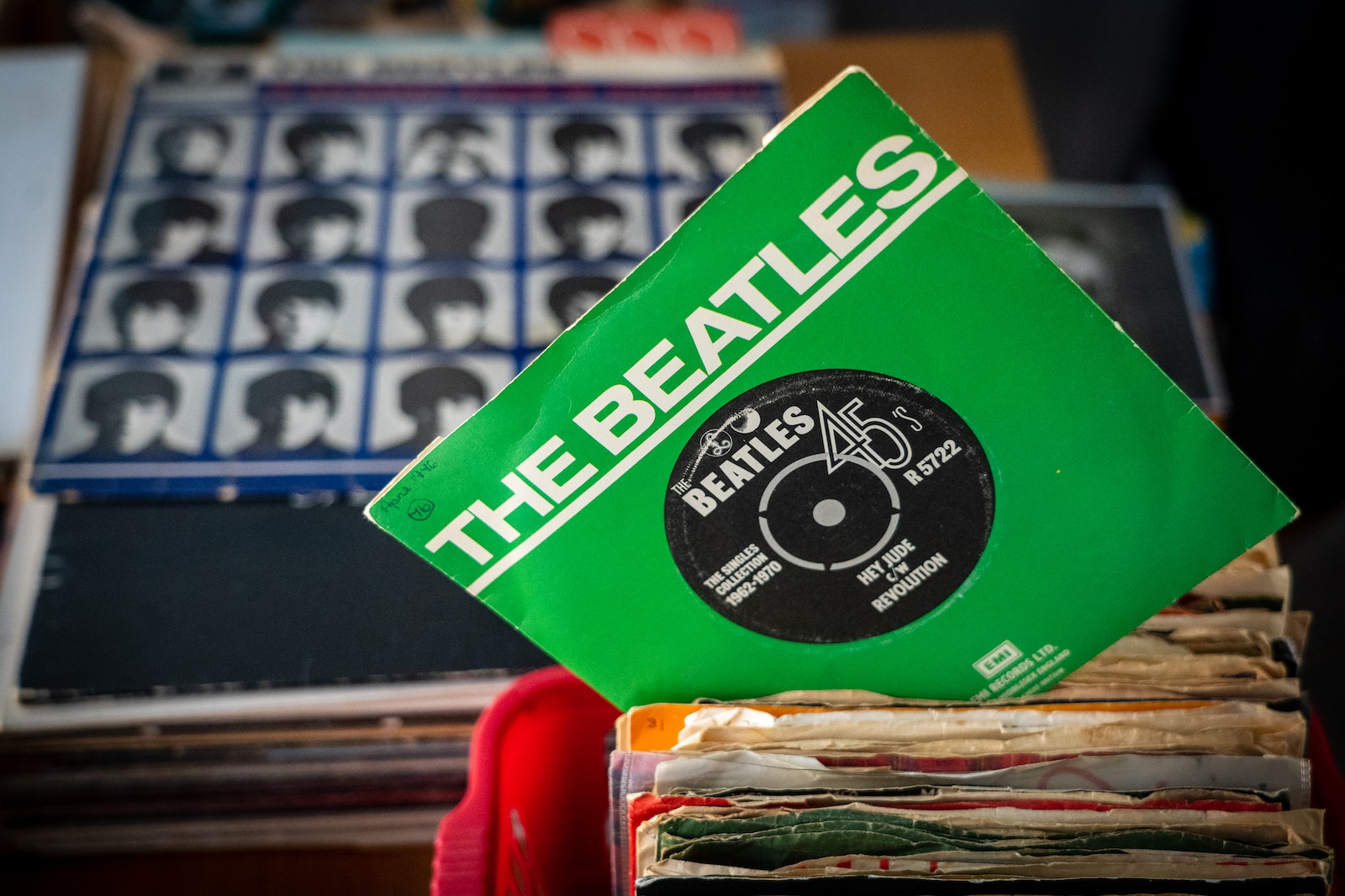
    In this article, the focus will be on the Beatles and their use of four chords or less in their songs. The four chords used in these songs are G major, D major, E minor, and C. While these chords are commonly known as the “four chords chord sequence,” the Beatles did not frequently use this progression. The songs chosen for this list are those that use these four chords throughout the entire song without any other chords.

    The article will cover a variety of Beatles songs that can be played with just four chords or less. Some songs use only two chords, such as “Paperback Writer” and “Eleanor Rigby,” while others use three chords, like “Love Me Do” and “Taxman.” There is also one song, “Let It Be,” that uses the classic four-chord progression. The article will provide chord sheets and tutorials for each song to help readers learn and play along.

    Key Takeaways

    • The Beatles did not frequently use the “four chords chord sequence” in their songs.
    • Several Beatles songs can be played with just four chords or less, including some with only two or three chords.
    • Chord sheets and tutorials are available for each song to help readers learn and play along.

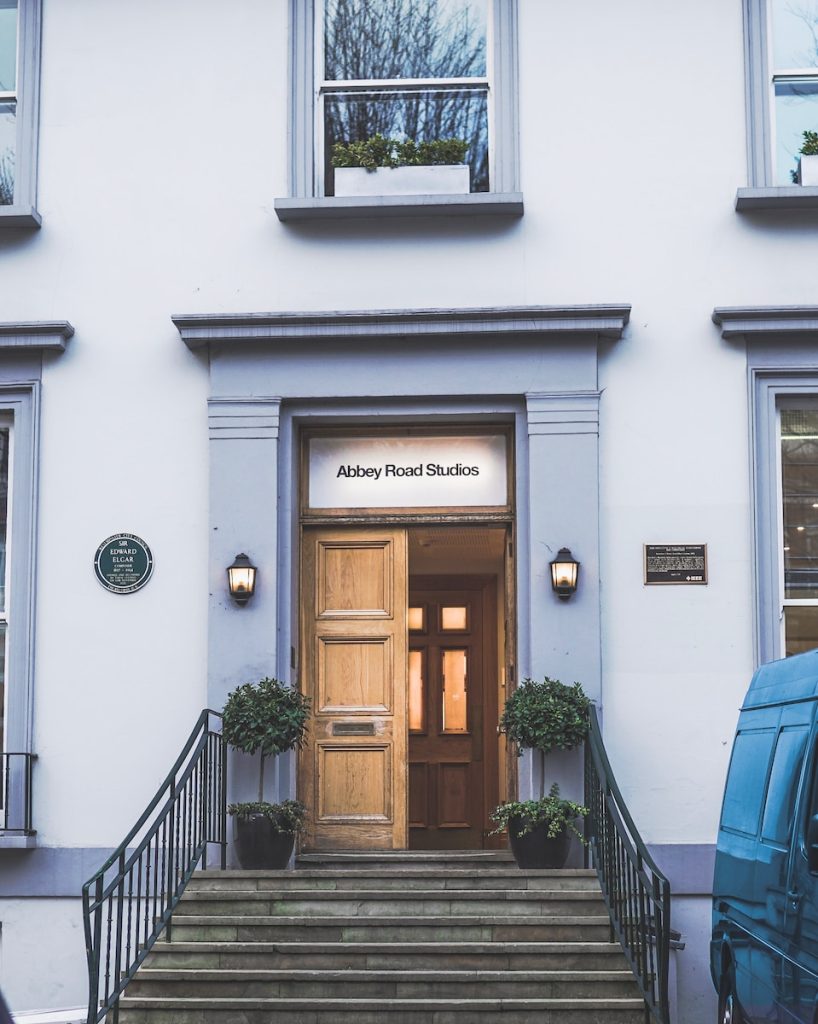
    blue car parked beside white concrete building during daytime

    Four Chords for Every Song

    There are 10 Beatles songs that can be played with just four chords or less, and these four chords are the same for every song. The chords are G major, D major, E minor, and C. However, the speaker clarifies that only one song on the list actually uses these four chords in the same progression. It took a lot of sorting and finding to identify these songs that use the same chords throughout and no other chords in the song at all.

    The first song on the list is “Paperback Writer,” which uses only G major and C major chords and a simple strumming pattern of down, down, up, up, down. The second song is “Eleanor Rigby,” which uses only E minor and C major chords.

    There are a few Beatles songs that use only three chords, and the most famous one is “Love Me Do,” which uses G major, C major, and D major chords. “Taxman” is another simple three-chord song.

    Other songs that use the same four chords as “Paperback Writer” include “Obladi Oblada,” “Come Together,” and “Hey Jude.” The speaker notes that “Let It Be” also uses these four chords, but it deviates from the classic four-chord song progression.

    The speaker provides full song tutorials for more songs on the list on their YouTube channel and website, where they have all the song tutorials in a list with chord sheets and everything. The speaker emphasizes the importance of learning a few chords and trying to get as many songs under your belt with those chords as possible, especially in the early days of learning guitar.

    Two-Chord Beatles Songs

    The Beatles are known for their complex and innovative chord progressions, but there are a few songs that only require two chords. These songs are great for beginners who are just starting to learn guitar or for anyone who wants to play some simple yet classic tunes. The two chords used in these songs are G major and C major.

    One of the most famous two-chord Beatles songs is “Paperback Writer.” The song features a fantastic riff and uses the chords G major and C major. The strumming pattern used in this song is down, down, up, up, down.

    Another popular two-chord Beatles song is “Eleanor Rigby.” The song uses the chords E minor and C major and has a haunting melody that is instantly recognizable.

    There are also a few Beatles songs that use just three chords. One of the most famous three-chord Beatles songs is “Love Me Do,” which uses G major, C major, and D major. “Taxman” is another three-chord Beatles song that uses G major, C major, and D major.

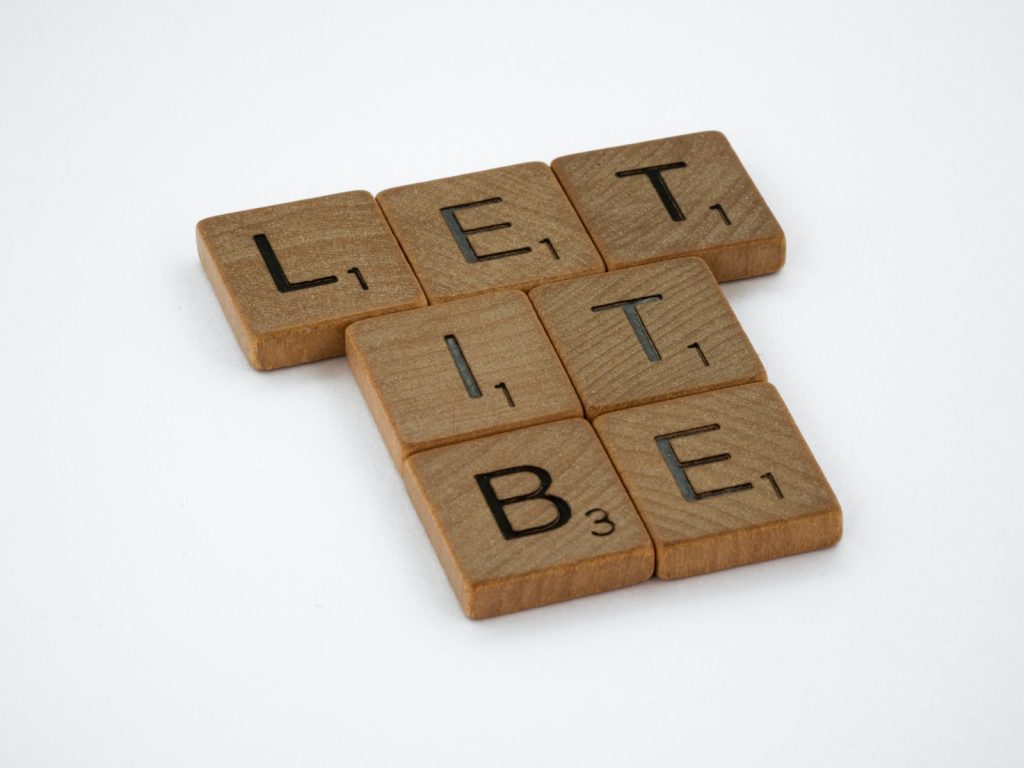
    For those who want to learn more songs with the same four chords, G major, D major, E minor, and C major, “Let It Be” is a classic example. The song starts with the chord progression G, D, Em, C, and then goes back to G and C.

    Other songs that use these four chords include “Ob-La-Di, Ob-La-Da,” “Come Together,” and “Hey Jude.” With just a few chords, you can play some of the greatest songs ever written and impress your friends and family with your guitar skills.

    Three-Chord Beatles Songs

    The Beatles are known for their complex and innovative chord progressions, but there are still a number of their songs that can be played with just three or four chords. In this section, we will explore some of the Beatles’ songs that can be played with just three chords: G major, D major, and E minor.

    One of the most famous two-chord Beatles songs is “Eleanor Rigby,” which just uses the two chords E minor and C major. Another famous two-chord Beatles song is “Paperback Writer,” which just uses the chords G major and C major.

    There are also a few Beatles songs that use just three chords. Perhaps the most famous and well-known is “Love Me Do,” which uses G major, C major, and D major. “Taxman” is another simple three-chord song that uses G major, C major, and D major.

    The Beatles also have a number of songs that can be played with the four-chord sequence of G major, D major, E minor, and C major. One of the most famous of these songs is “Let It Be,” which uses this chord progression throughout most of the song. Other songs that use this chord progression include “Obla Di Obla Da,” “Come Together,” and “Hey Jude.”

    It’s important to note that while the four-chord sequence is often referred to as the “four chords” progression, the Beatles did not use this progression often. It took a lot of sorting and finding to find these songs that use these same chords throughout and no other chords in the song at all.

    Overall, these three and four-chord Beatles songs are great for beginners who are just learning guitar and want to play some classic songs. With just a few chords, you can play some of the most iconic songs in rock history.

    Three-Chord Beatles Songs with a Different Chord

    There are ten Beatles songs that can be played using four chords or less, specifically G major, D major, E minor, and C. While these chords are often referred to as the “four chords chord sequence,” there is only one song on the list that uses these chords exclusively. The rest of the songs on the list utilize these chords throughout the song, with no other chords included.

    The first song on the list is “Paperback Writer,” which uses only G major and C major chords. The speaker demonstrates the strumming pattern of “down down up up down” used in the song. The next song on the list is “Eleanor Rigby,” which uses only E minor and C major chords.

    Several Beatles songs that use only three chords, including “Love Me Do,” which uses G major, C major, and D major chords. “Taxman” is another three-chord song, which uses the same chords as “Love Me Do,” but with a different rhythm. The speaker notes that a full tutorial for “Taxman” will be available soon.

    Two bonus songs that use the chords D major, G major, and A major, including “Twist and Shout” and “Get Back.” The speaker notes that these songs are simple three-chord songs that can be played with just a few minutes of practice.

    Four songs that use the same four chords as “Let It Be,” including “Ob-La-Di, Ob-La-Da,” “Come Together,” and “Hey Jude.” The speaker notes that playing these songs with the same chords as “Let It Be” requires a capo on the second fret.

    So you see the importance of learning a few chords and using them to play as many songs as possible.

    brown wooden puzzle blocks on white surface

    The Classic Four-Chord Song

    The Beatles are known for their catchy melodies and memorable lyrics. However, what many people don’t know is that they often used the same four chords in many of their songs. These chords are G major, D major, E minor, and C major. Although this chord progression is commonly referred to as the “four chords chord sequence,” there is only one song on this list that uses these chords exclusively.

    The first song on the list is “Paperback Writer.” This song uses only two chords, G major and C major, and a simple strumming pattern. The song’s catchy riff is a highlight, but the rest of the song relies solely on these two chords.

    Another famous two-chord Beatles song is “Eleanor Rigby,” which uses the chords E minor and C major. The song’s haunting melody and lyrics make it a fan favorite.

    There are a few Beatles songs that use just three chords, such as “Love Me Do,” which uses G major, C major, and D major. “Taxman” is another simple song that uses just three chords, but the original recording has more complexity.

    “Rock and Roll Music” is a 12-bar blues song that can be played with the three chords G, C, and D. “Can’t Buy Me Love” is another song that uses the same 12-bar blues chord progression.

    Two other bonus songs that use the chords D, G, and A major are “Twist and Shout” and “Get Back.” These songs are simple three-chord songs that anyone can play with just a few minutes of practice.

    The classic four-chord song that uses the chords G major, D major, E minor, and C major is “Let It Be.” This song is in the key of C major, so to play it with these chords, a capo is needed on the fifth fret.

    Other songs that use these same four chords include “Ob-La-Di, Ob-La-Da,” “Come Together,” and “Hey Jude.” These songs demonstrate the capabilities of what can be done with just a few chords and a little creativity.

    In conclusion, the Beatles were masters at creating memorable songs with simple chord progressions. By using the same four chords in many of their songs, they were able to create a unique sound that is still beloved by fans today.

    The song book below is one of my favorites. It’s an exhaustive collection of Beatles’ songs. Click the picture to purchase it on Amazon.

    The Beatles Sheet Music Collection - Piano, Vocal and Guitar Chords

  • Best Phone Apps to Learn Piano Keyboard: Top Picks for Beginners and Pros Alike

    Best Phone Apps to Learn Piano Keyboard: Top Picks for Beginners and Pros Alike

    As someone who has always been interested in playing the piano, I have found that learning to play this instrument can be a daunting task. It requires dedication, patience, and a lot of practice. However, with the help of technology, it has become easier than ever to learn how to play the piano. There are a variety of phone apps available that can help you learn how to play the piano keyboard.

    In this article, I will be discussing some of the best phone apps that can help you learn how to play the piano keyboard. Whether you are a beginner or an experienced pianist, these apps can help you improve your skills and take your playing to the next level. From apps that teach you how to read sheet music to those that provide interactive lessons, there is something for everyone. So, if you are ready to start playing the piano, let’s take a look at some of the best phone apps available.

    Understanding Piano Learning Apps

    As a beginner, learning to play the piano can be challenging. However, with the help of piano learning apps, you can learn basic piano skills, chords, scales, and even play your favorite songs in no time. Piano apps offer interactive lessons, tutorial videos, and step-by-step instructions that make learning fun and easy.

    One of the great advantages of piano learning apps is that they provide personalized lessons that cater to your individual needs. You can choose from a variety of genres, such as classical, pop, jazz, and rock, and learn at your own pace. Some apps even offer sight-reading exercises and music theory lessons to help you improve your overall piano skills.

    When choosing a piano app, it’s important to consider what features you need. Some apps offer workouts and exercises, including 5-min workouts and personalized five-minute workouts, to help you practice and improve your skills. Others provide a piano simulator with an on-screen keyboard or connect to a midi keyboard via USB midi connection.

    Another important factor to consider is the quality of the lessons. Some apps offer real piano teachers or instructors who provide personalized feedback and guidance. Apps like Playground Sessions, Simply Piano, Flowkey, Yousician, Skoove, Pianote, Vivace, and Perfect Piano offer high-quality lessons and tutorials that can help you improve your piano skills.

    Overall, piano learning apps are a great way to learn how to play the piano. With the right app, you can learn basic piano skills, play your favorite songs, and improve your overall piano skills. So, choose an app that suits your needs and start learning today!

    Choosing the Right App for Your Skill Level

    When it comes to choosing the right piano app, it’s essential to consider your skill level. There are apps for beginners, intermediate players, and even advanced pianists. So, it’s crucial to select an app that suits your skill level and helps you progress.

    If you’re a beginner, you should look for an app that offers courses specifically designed for beginners. These courses should cover the basics of playing the piano, such as hand positioning, playing with both hands, and playing in different modes. The app should also have a “wait mode” feature that allows you to practice at your own pace and slow down the tempo when necessary.

    For intermediate players, an app that offers more advanced courses and techniques is ideal. The app should have a touch course that helps you improve your playing technique and offer backing tracks for improvisation practice. It should also have a feature that allows you to slow down the tempo of a song to help you practice difficult parts.

    Advanced players should look for an app that offers courses and techniques for advanced players. The app should have a wide variety of playing modes and backing tracks for improvisation. It should also have a feature that allows you to customize your playing mode and practice specific techniques.

    In conclusion, choosing the right piano app for your skill level is essential to progress in playing the piano. Whether you’re a beginner, intermediate, or advanced player, there’s an app out there that can help you improve your skills.

    Benefits of Using Piano Learning Apps

    As someone who has learned to play the piano using both traditional methods and piano learning apps, I can confidently say that there are numerous benefits to using apps to learn the piano keyboard.

    One of the most significant advantages of piano learning apps is the instant feedback they provide. With apps like Simply Piano, Skoove, and Flowkey, you receive real-time feedback as you play, allowing you to correct mistakes and improve your accuracy. This immediate feedback is incredibly helpful, especially for beginners who are still learning the basics.

    Another benefit of piano learning apps is the personalized approach they offer. Many apps, such as Playground Sessions and Yousician, provide weekly challenges and personalized five-minute workouts to help you progress at your own pace. Additionally, apps like Piano Academy and Simply Piano offer interactive lessons, tutorial videos, and step-by-step instructions to guide you through the learning process.

    Piano learning apps are also an excellent resource for learning music theory, chords, scales, and different genres of music. With apps like Perfect Piano and Perfect Ear, you can practice sight-reading and reading music, while apps like Pianote and Vivace offer workouts and exercises to improve your skills.

    Moreover, piano learning apps are incredibly convenient. You can practice anywhere, anytime, without the need for a piano or keyboard. Many apps, such as Real Piano Teacher and Real Piano Teacher 2, offer a piano simulator and on-screen keyboard, while others like Simply Piano and Playground Sessions support MIDI connection with a USB MIDI keyboard or a real piano.

    Overall, piano learning apps are an excellent resource for anyone looking to learn the piano keyboard. With their instant feedback, personalized approach, and convenience, they offer a fun and effective way to learn and improve your skills.

    Piano Learning Apps for Different Ages

    When it comes to learning to play the piano, age is just a number. Whether you’re a young child or an adult, there are plenty of piano learning apps available to help you get started. Here are some of the best piano learning apps for different ages:

    Kids

    There are many piano learning apps specifically designed for kids, with colorful graphics and fun games to make learning the piano more engaging and interactive. Some of the best piano apps for kids include:

    • Simply Piano: This app uses games and challenges to teach kids how to play the piano, and includes a wide range of songs and exercises to keep them engaged.
    • Piano Maestro: This app is designed for kids aged 6-12, and includes lessons, games, and challenges to help them learn to play the piano.
    • Piano Dust Buster: This app turns learning to play the piano into a game, with fun graphics and challenges to keep kids engaged.

    Teens

    Teens who are interested in learning to play the piano may prefer apps that are more sophisticated and challenging. Some of the best piano apps for teens include:

    • Yousician: This app is designed for both beginners and more advanced players, with lessons and exercises tailored to your skill level.
    • Piano Academy: This app includes a wide range of lessons and exercises, as well as fun games and challenges to help you improve your skills.
    • Flowkey: This app uses popular songs to teach you how to play the piano, and includes a wide range of lessons and exercises to help you improve your technique.

    Adults

    Adults who want to learn to play the piano may prefer apps that are more focused on technique and theory. Some of the best piano apps for adults include:

    • Skoove: This app offers interactive lessons that adapt to your skill level, and includes a wide range of songs and exercises to help you improve your technique.
    • Piano Marvel: This app includes a wide range of lessons and exercises, as well as tools to help you improve your sight-reading and ear training skills.
    • Simply Piano: While this app is designed for kids, it can also be a great option for adults who are just starting out and want a fun, engaging way to learn to play the piano.

    Apps for Learning Specific Songs and Genres

    When it comes to learning specific songs and genres, there are a few apps that stand out from the rest. Here are some of the best apps for learning popular songs and different genres of music:

    flowkey

    flowkey is a great app for learning specific songs, as it offers over 1,500 songs to choose from. The app includes songs from a variety of genres, including pop, classical, rock, and more. Some of the popular songs available on flowkey include Adele’s “Someone Like You,” The Beatles’ “Let It Be,” and many more.

    The app also includes step-by-step instructions to help users learn important skills like improv, chords, technique, and how to read music. Plus, flowkey works with your real piano or keyboard, making it easy to learn and practice at home.

    Yousician

    Yousician is another great app for learning specific songs and genres. The app offers a wide variety of songs to choose from, including popular hits, classical pieces, and more. Some of the popular songs available on Yousician include Adele’s “Hello,” The Beatles’ “Let It Be,” and many more.

    In addition to specific songs, Yousician also offers lessons on different genres of music, including pop, rock, blues, and more. The app includes interactive lessons that cover everything from basic chords to advanced techniques, making it a great choice for beginners and advanced players alike.

    Simply Piano

    Simply Piano is a popular app that offers a wide variety of songs to choose from, including pop hits, classical pieces, and more. Some of the popular songs available on Simply Piano include Adele’s “Hello,” The Beatles’ “Let It Be,” and many more.

    The app includes interactive lessons that cover everything from basic chords to advanced techniques, making it a great choice for players of all skill levels. Plus, Simply Piano works with your real piano or keyboard, making it easy to learn and practice at home.

    Overall, these apps are great choices for anyone looking to learn specific songs and genres on the piano or keyboard. Whether you’re interested in pop hits, classical pieces, or rock anthems, there’s an app out there that can help you learn and master your favorite songs.

    Piano Learning Apps for Different Devices

    As a pianist, I have found that piano learning apps are a great way to supplement my practice routine and learn new skills. With the advancements in technology, there are now many great piano learning apps available for different devices. Here are some of the best piano learning apps for different devices:

    iOS Devices

    If you have an iOS device such as an iPhone or iPad, there are many great piano learning apps available on the App Store. One of the best apps is Simply Piano. This app is perfect for beginners who want to learn how to play the piano quickly and easily. The app uses artificial intelligence to listen to you play and provides instant feedback on your performance. It also includes a wide variety of songs to learn, from classical to pop.

    Android Devices

    For Android users, there are also many great piano learning apps available. One of the best apps is Perfect Piano. This app turns your phone or tablet into a virtual piano, allowing you to practice and learn on the go. It includes a variety of features such as a keyboard, metronome, and recording capabilities.

    Online Platforms

    If you prefer to learn on your computer, there are also many great online piano learning platforms available. One of the best platforms is Flowkey. This platform offers interactive piano lessons that are suitable for all skill levels. It includes a wide variety of songs to learn and provides instant feedback on your performance.

    Overall, there are many great piano learning apps available for different devices. Whether you prefer to learn on your phone, tablet, or computer, there is an app or platform that can help you improve your piano skills.

    Understanding Subscriptions and Budget

    As you start your search for the best piano learning app, you will come across many options with different subscription plans. Some apps offer free trials, while others require a subscription to access all of their features. It’s important to consider your budget and what you’re willing to pay for a piano learning app.

    When it comes to subscriptions, there are a few things to keep in mind. First, make sure to read the terms and conditions carefully before signing up for any subscription. Some apps may automatically renew your subscription and charge your credit card without your consent, so it’s essential to know what you’re getting into.

    Second, consider the length of the subscription. Some apps offer monthly subscriptions, while others offer yearly subscriptions at a discounted rate. If you’re committed to learning the piano, a yearly subscription may be more cost-effective in the long run.

    Third, take advantage of free trials. Many piano learning apps offer free trials, which allow you to test out the app before committing to a subscription. Use this time to explore the app’s features and determine if it’s the right fit for you.

    When it comes to budget, there are many affordable options available. Some apps offer free versions with limited features, while others offer paid subscriptions at a reasonable price. It’s essential to consider your budget and what you’re willing to pay for a piano learning app.

    In conclusion, understanding subscriptions and budget is crucial when it comes to choosing the best piano learning app. Make sure to read the terms and conditions carefully, consider the length of the subscription, take advantage of free trials, and choose an app that fits your budget. With these tips in mind, you’ll be on your way to mastering the piano in no time.

    Using Physical Instruments with Apps

    As much as I love using piano apps to learn and practice, there’s nothing quite like playing on a physical instrument. Fortunately, many piano apps allow you to use physical instruments, such as an acoustic or digital piano, to play along with the app’s lessons.

    One way to connect your physical instrument to the app is by using a microphone. Simply place the microphone near the instrument and adjust the app’s settings to recognize the sound. This method works well for acoustic pianos, but may not be as effective for digital pianos or keyboards with built-in speakers.

    Another option is to use a MIDI cable to connect your instrument directly to your device. This method allows for more accurate recognition of notes and can provide a more seamless experience. However, not all instruments have MIDI capabilities, so be sure to check before purchasing a cable.

    It’s also worth noting that some apps, such as Simply Piano, offer a feature called “Guitar Hero mode” which allows you to play along with the app using the device’s touchscreen as a virtual keyboard. While this method may not be as authentic as playing on a physical instrument, it can still be a fun and effective way to learn.

    Overall, using a physical instrument with piano apps can enhance your learning experience and provide a more realistic feel. Whether you choose to use a microphone, MIDI cable, or Guitar Hero mode, be sure to adjust the app’s settings to optimize the recognition of your instrument’s sound.

    Learning Piano From YouTube

    YouTube is a great resource for learning how to play the piano. There are countless videos available that can help beginners get started and more advanced players improve their skills. Here are some tips for using YouTube to learn how to play the piano:

    1. Start with the basics: Look for videos that teach the fundamentals of playing the piano, such as proper hand positioning, finger placement, and posture. These videos can help you build a strong foundation for your playing.
    2. Follow along with tutorials: Many YouTube channels offer step-by-step tutorials for playing specific songs or techniques. Following along with these tutorials can help you learn new skills and improve your playing.
    3. Watch performances: Watching other pianists perform can be a great source of inspiration and motivation. Look for videos of your favorite pianists or performances of your favorite songs to get inspired.
    4. Join a community: There are many piano communities on YouTube where you can connect with other players, share your progress, and get feedback on your playing. Joining a community can help you stay motivated and make learning the piano more fun.

    Overall, YouTube can be a valuable resource for anyone looking to learn how to play the piano. Whether you’re a beginner or an advanced player, there are videos available that can help you improve your skills and achieve your goals.

    Frequently Asked Questions

    What are some of the top-rated piano learning apps for beginners?

    Some of the top-rated piano learning apps for beginners include Simply Piano, Flowkey, and Playground Sessions. These apps offer interactive lessons, feedback, and a variety of songs to practice.

    Can you effectively learn to play piano using a phone app?

    Yes, it is possible to effectively learn to play piano using a phone app. However, it is important to note that learning to play piano requires practice and dedication, regardless of the method used.

    What are the best free apps available to learn piano?

    Some of the best free apps available to learn piano include Perfect Piano, Real Piano Teacher 2, and Piano Academy. These apps offer basic lessons and the ability to practice playing songs.

    Are there any apps similar to Simply Piano?

    Yes, there are apps similar to Simply Piano, such as Flowkey and Piano Academy. These apps offer interactive lessons, feedback, and the ability to practice playing songs.

    Which piano learning apps are recommended for children?

    Some piano learning apps that are recommended for children include Simply Piano, Piano Maestro, and Piano Dust Buster. These apps offer fun and engaging lessons that are suitable for children.

    What’s the best piano app for Android devices?

    Some of the best piano apps for Android devices include Simply Piano, Perfect Piano, and Real Piano Teacher 2. These apps offer interactive lessons, feedback, and a variety of songs to practice.

  • Piano Buying Guide: How to Choose the Right Piano for You

    Piano Buying Guide: How to Choose the Right Piano for You

    Piano Buying Guide: Expert Tips for Your Perfect Purchase

    The world of pianos, particularly digital ones, can often be perplexing and daunting for both beginners and experienced musicians. This article aims to address and answer the numerous questions that may arise when searching for the ideal digital piano. By gaining a better understanding of how to choose the right instrument tailored to personal needs, narrowing down options to one or two suitable models becomes much easier.

    It is crucial to conduct proper research, as digital pianos are complex machines with many factors to consider before making an informed decision. Additionally, being mindful of the source of information is essential in avoiding unreliable online resources. This article will delve into the intricacies of digital pianos, discussing the differences between digital and acoustic variations and providing insights on the piano buying guide, strings, and tuners to make an educated choice in purchasing a musical instrument.

    Digital vs Acoustic: The Magic of The Digital World

    Exploring Samples

    Samples are significant components when discussing digital pianos. They are short audio recordings of a musical instrument’s sound or other sounds such as waves, sirens, and wind. In digital pianos, these samples help reproduce the sound of musical instruments, including acoustic pianos.

    The quality of samples and the technology used to create them greatly impact the realism and accuracy of the produced sound. With advances in technology, high-end digital pianos can deliver a sound that is nearly indistinguishable from a real acoustic piano.

    The Art of Physical Modeling

    Physical modeling is an innovative technology that has been increasingly popular in digital piano designs. Unlike sampling, physical modeling recreates the piano sound from the ground up by emulating the physical behavior of an acoustic instrument.

    While sampling is still the predominant technology in digital pianos, most models use a blend of sampling with some modeling elements (like string resonance and damper resonance) to enhance the sound and make it more natural.

    Some digital pianos, such as high-end Roland models, exclusively use physical modeling known as SuperNATURAL Piano Modeling. This technology leads to ongoing debates about whether sampling or physical modeling attains a more accurate, natural sound.

    Both digital and acoustic pianos have their respective advantages and disadvantages. Examining the differences between them can help aspiring musicians make informed decisions when choosing the right instrument for their needs. For a detailed comparison, consider reading our Digital vs Acoustic Piano Guide.

    Keyboard vs Digital Piano

    Digital Pianos

    Digital pianos strive to replicate the feeling and sound of an acoustic piano as authentically as possible. They consistently feature 88 fully-weighted, hammer-action keys. In contrast, keyboards typically have only 76 or 61 non-weighted or semi-weighted keys.

    High-quality multi-samples and sophisticated modeling are employed in digital pianos to create a natural and realistic piano sound. They rarely have more than 20-30 built-in tones, as their primary focus is on reproducing the acoustic piano experience. Additional features such as built-in sounds, songs, accompaniment styles, and interactive elements are generally not present in digital pianos.

    Key features of digital pianos:

    • 88 fully-weighted, hammer-action keys
    • High-quality multi-samples
    • Limited built-in tones (focused on acoustic piano sound)
    • Fewer additional features compared to keyboards

    Keyboards

    Digital or electronic keyboards differ from digital pianos in that their primary focus is not to replicate the acoustic piano experience. Keyboards come in various types such as portable arranger keyboards, synthesizers, music workstations, and MIDI-controllers. The feature sets of these types often overlap, making categorization challenging.

    These instruments are typically more expensive and aimed at professional musicians, live performers, composers, and music producers. Unlike digital pianos, keyboards often have numerous built-in sounds and interactive features catering to various musical styles and purposes.

    In summary, digital pianos and keyboards cater to different needs, with digital pianos focusing on reproducing the authentic acoustic piano experience, while keyboards provide a wider range of sounds and features for versatile musical applications.

    Types of Digital Pianos

    Portable Pianos

    Portable digital pianos, also known as “slab pianos,” combine the convenience of lightweight and compact design with the full range of 88 hammer-action keys found in acoustic pianos. These pianos typically have better sound quality, higher polyphony count, and a wider dynamic range compared to portable keyboards. They offer a more affordable option compared to console digital pianos, although a separate stand may need to be purchased. Some popular portable piano models include the Yamaha P-45, Yamaha P-125, Casio CDP-S160, and Roland FP-30X.

    Console Pianos

    Console digital pianos closely replicate the sound, touch, and appearance of acoustic pianos. They come with a built-in stand and pedals, and their attractive design makes them a visually appealing addition to any room. Console pianos offer a superior playing experience but are generally heavier and bulkier than portable pianos. Prices for console digital pianos range from $700 to $5,000 or more, depending on the degree of resemblance to an acoustic piano. Some popular console piano models are the Casio PX-870, Yamaha YDP-145, Roland F701, and Kawai KDP120.

    Arranger Pianos

    Arranger digital pianos combine the core features of digital pianos, such as high-quality piano samples and 88 hammer-action keys, with additional functionalities found in arranger keyboards. They offer a wide range of built-in sounds, rhythms, songs, effects, and recording features, making them suitable for amateur music production, composing, and exploring various musical instruments and styles. Popular arranger piano models include the Yamaha DGX-670, Casio PX-S3100, Casio PX-780, and the Yamaha CSP-series.

    Stage Pianos

    Designed for live performance and studio use, stage pianos prioritize portability and hands-on control while maintaining the quality of acoustic piano sounds and touch response. They often come equipped with other tones, such as electric pianos and organs, and provide various sound effects and parameters for customization. Stage pianos usually don’t have built-in speakers, as they are designed for use with external amplification systems. Some popular stage piano models include Roland RD-2000, Korg Grandstage, Nord Stage 3, and Yamaha CP88.

    Types of Keyboards

    Portable Arranger Keyboards

    Portable arranger keyboards are an affordable option often chosen by beginners who are not fully committed to piano mastery. These keyboards usually cost between $100 to $300 and have 76, 73, or 61 semi-weighted or unweighted keys. Although they don’t provide the same level of realism in sound and touch as a traditional piano, they are lightweight and easy to transport. Most portable arranger keyboards are equipped with numerous sounds, songs, rhythms, and other interactive features, making them popular among beginners and children. However, they may not be the best choice for those aiming to develop proper piano techniques.

    Synthesizers

    Synthesizers are electronic keyboards used in music production, capable of generating or replicating a wide variety of sounds. They come with basic waveforms and pre-recorded sounds that can be mixed and altered to create virtually any audio effect. Synthesizers are highly versatile and allow musicians to create sounds of instruments, voices, and environmental noises.

    Arranger Keyboards / Workstations

    Arranger keyboards or workstations are designed for professional musicians and offer a wide range of backing tracks (chord and rhythm patterns) for various styles, rhythms, and tempos. These features enable composers and songwriters to create accompaniment for their music easily and quickly. Lower-end arrangers are often referred to as “portable arrangers” or simply “portable keyboards.”

    Music Workstations

    A music workstation is essentially a computer built into a keyboard. It combines a wide range of tools, allowing users to perform various tasks, such as sound synthesis, sequencing, audio recording, and working with sound effects and filters. Music workstations typically come with hundreds or even thousands of top-notch sound samples, which can be customized using knobs and sliders for on-the-fly control of various sound parameters.

    MIDI Controllers

    A MIDI controller is a device that generates and transmits MIDI data to other electronic devices capable of interpreting the data and triggering sounds or controlling sound parameters accordingly. These controllers typically have a piano-style keyboard and connect to a computer via USB or MIDI ports. MIDI controllers cannot produce sounds on their own, as they only track key presses and control elements like knobs, sliders, and pads. The data collected from MIDI controllers is sent to a computer or another musical keyboard to generate the actual sound. Most MIDI controllers have non-weighted keys, but some models target piano players and feature realistic weighted-key action, such as the M-Audio Hammer 88 or the Kawai VPC1.

    Best Digital Piano Brands

    Brands to Trust

    When choosing a digital piano, it’s essential to select one from reputable brands to ensure a high-quality instrument. Some of the top digital piano brands include:

    • Yamaha: A well-established brand, known for its excellent technology and realistic sound.
    • Roland: Another industry leader with a solid track record of producing high-quality instruments.
    • Casio: A popular choice for digital pianos, delivering a great mix of quality and affordability.
    • Kawai: A brand that focuses on innovative piano technology and authentic touches.
    • Korg: A name synonymous with professional-grade digital pianos and keyboards.
    • Nord: Known for their distinctive red instruments, Nord offers a range of high-quality digital pianos.
    • Dexibell: An emerging player with a dedication to creating realistic and expressive digital pianos.

    These brands provide top-notch technology, build quality, and realistic sound that will exceed your expectations.

    Brands to Steer Clear of

    Behind some digital pianos are lesser-known brands that may look appealing but deliver low-quality sound and key action. Some of these brands to avoid include:

    • Williams
    • Suzuki
    • Artesia

    While these models may look attractive and affordable, they often don’t meet the standards set by trusted brands like Yamaha, Roland, Casio, and their peers.

    Types of Keyboard Actions

    Non-Weighted Keyboards (Synthesizers)

    Non-weighted keyboards, also known as synthesizers, are the lightest in terms of key action. They are commonly found in organs, entry-level keyboards, and synthesizers that do not aim to mimic the feel of an acoustic piano. These keyboards utilize a simple spring-loaded mechanism, resulting in thin and small keys with a light plastic feel. While not ideal for piano players due to their fast and springy action, non-weighted keyboards are preferred for playing synth leads and organ tunes due to their playability and light feel.

    Pros

    • Ideal for playing non-piano music
    • Allows for fast note repetitions
    • Most non-weighted keyboards are very portable

    Cons

    • Doesn’t feel like an acoustic piano
    • Not the best choice for piano players
    • May be difficult to transition to an acoustic piano after practicing on this type of action

    Semi-Weighted Keyboards

    Semi-weighted keyboards offer slightly more resistance and better control than non-weighted keyboards. They use the same spring-loaded mechanism but with heavier keys due to stiffer springs or additional weights. Although they still lack the realism of an acoustic piano, semi-weighted keyboards are a middle ground between non-weighted and fully weighted keyboards, making them suitable for those who frequently switch between piano and non-piano sounds. They are commonly found in music workstations, arranger keyboards, and some stage pianos.

    Pros

    • Closer to an acoustic piano feel than non-weighted actions
    • Great for playing organ and electric piano sounds
    • Relatively light and portable

    Cons

    • Still lacks realism and piano-like feedback
    • Not the best choice for piano players
    • May be difficult to transition to an acoustic piano after practicing on this type of action

    Fully Weighted Keyboards (Hammer Action)

    Fully weighted keyboards, or hammer action keyboards, are designed to replicate the touch and feel of an acoustic piano. To achieve this, manufacturers add small hammers under or behind each key to recreate the mechanical movement of a real piano. However, not all hammer action keyboards are created equal, and the quality and feel can vary significantly between different models. High-end models often feature real wooden keys with an escapement mechanism that recreates the intricate nuances of an acoustic piano action.

    Pros

    • The most realistic type of keyboard action
    • Helps develop proper finger strength and technique
    • The best choice for piano players

    Cons

    • Relatively heavy and not as portable
    • More expensive than non-weighted and semi-weighted actions
    • Not as versatile due to its heavier feel

    Notable Characteristics of Hammer Action Keyboards

    Hammer action keyboards often come with desirable features such as 88 keys, graded hammer effect, textured keys that simulate the feel of ivory and ebony, touch sensitivity, a three-sensor system for detecting key depth and velocity, and minimal key noise. These features contribute to the overall playing experience and can make it easier for players to transition to an acoustic piano further down the line.

    The Definitive Glossary

    Functions and Features

    Digital pianos offer numerous features to enhance the playing experience and make learning more enjoyable. Some of the essential functions include:

    • Metronome: A valuable tool for practice that helps improve rhythmic and timekeeping skills by providing a steady beat to play along with. Some digital pianos even allow customization of the metronome sound and tempo.
    • Polyphony: Refers to the number of notes a digital piano can produce simultaneously. Contemporary digital pianos typically have 64, 128, 192, or 256-note polyphony. It is advisable to have at least 64 notes of polyphony.
    • Modes: Digital pianos come with various modes that allow dual instrument sounds or duet play. Popular modes include Split Mode, Dual Mode (or Layer Mode), and Duo Mode (or Duet Play, Partner Mode, Twin Piano)
    • Preset Temperaments: Some digital pianos enable users to switch the standard Equal Temperament tuning to alternative tuning systems better suited for specific musical styles.
    • Lesson Function: Enables users to practice left or right-hand parts of a song separately with the aid of a multi-track MIDI recorder.
    • MIDI Recording: Allows recording and playback of performances without needing additional software or hardware. Multi-track recorders facilitate recording of several musical parts on separate tracks.
    • Audio Recording: Permits recording the audio output of the piano to a flash drive, usually in WAV or MP3 format, for sharing and playback on various devices.
    • Accompaniment: Enriches performances with a full backing band that follows the user’s playing and transforms it into a complete song.
    • Transpose and Fine Tuning: Enables shifting the overall pitch of the keyboard in semitone steps or adjusting the tuning from the standard A440 pitch to match other instruments or music.

    Sound Simulation

    Digital pianos attempt to mimic the complex tone of an acoustic piano by reproducing various nuances of the piano’s sound. Some key elements of sound simulation include:

    • Damper Resonance: Replicates the sustained sound of notes when the damper pedal of an acoustic piano is depressed. Certain digital pianos also offer a “half-pedal” feature for enhanced control.
    • String Resonance: Imitates the natural resonance of strings when other strings are played.
    • Key-Off Effect: Simulates the sound made when a key is released on an acoustic piano.
    • Lid Simulator: Emulates the effect of opening or closing the lid of an acoustic piano on the overall sound.

    Through the customization of these parameters, digital pianos enable their users to create a personalized tone that suits their preferences and playing style.

    Connectors

    Digital pianos come equipped with a variety of connectors that improve usability, enhance functionality, and enable seamless integration with other devices. Some common connectors include:

    • USB: For connecting the piano to a computer or other USB devices, enabling MIDI communication or data transfer.
    • MIDI IN/OUT: Permits linking the piano to other MIDI-compatible devices for communication and synchronization.
    • Audio In/Out: Enables connection to external audio sources or speakers for a more immersive listening experience.
    • Headphone Jacks: Accommodate headphones for private practice sessions, allowing for a quieter environment without disturbing others.

    By understanding the functions, features, sound simulation, and connectors of digital pianos, users can make informed decisions when purchasing a piano tailored to their needs and skill level.

    How Long Do Digital Pianos Last?

    Digital pianos can potentially serve users for a long time, with some lasting up to a decade or more. However, their lifespan is generally shorter compared to acoustic pianos. This difference in longevity is not only due to wear and tear but also because of the continuous advancement in digital piano technology.

    The digital piano market is ever-evolving, ushering in new models and features regularly to improve players’ experience, sound quality, and realism. Consequently, a decade-old digital piano may struggle to compete with more recent models, making it rare for people to use a 20-year-old digital piano.

    Buying a digital piano for around $1,000 today can provide a playing experience similar to that of an upright piano, but it’s unlikely that it will last 30, 40, or 50 years, due to two main factors:

    1. Obsolescence: Rapid technological innovations lead to improved piano models, making older models obsolete.
    2. Wear and tear: Mechanical wear and tear, especially in key action, can result in increased noise and a less enjoyable playing experience.

    The longevity of a digital piano’s key action depends on its quality and usage. High-end digital pianos with sophisticated action mechanisms tend to last longer than entry-level keyboards. Additionally, the playing frequency also impacts the piano’s lifespan.

    When repair or maintenance is required, newer and better models may already be available, making it financially unwise to invest in costly repairs. In some situations, repair expenses can be half the price of the piano or render it more practical to purchase a new model. Acquiring parts for digital pianos older than 10 years can also be challenging.

    In contrast, acoustic pianos have a considerably higher cost and are not subject to obsolescence. Therefore, repairing acoustic pianos is often a more sensible choice than for digital alternatives.

    However, the decision to repair or replace largely depends on the specific circumstances, such as the piano model and user preferences. For instance, owners of high-end digital pianos like the Kawai Novus NV10S (approximately $15,000) or the Yamaha AvantGrand NU1X (around $8,000) might opt for repair over replacement.

    To summarize, while digital pianos can last for a significant amount of time, their lifespan is generally outpaced by constant advancements in the industry, along with wear and tear. Making the choice between repairs, replacements, or upgrades ultimately lies in the hands of the piano owner and their unique needs.

    Accessories

    Stand

    There are two main types of stands to consider for your digital piano. The portable Z- or X-type stands are collapsible, adjustable, and easy to store away when not in use. On the other hand, furniture-style stands are sturdier and provide a more elegant look for home use. These stands can cost from $100-$150.

    Pedals

    Digital piano pedals come in a few different forms. Many entry-level pianos include a basic plastic footswitch sustain pedal. For a more realistic feel, you could opt for a piano-style chrome pedal like the M-Audio SP-2. If you need all three pedals (sustain, soft, and sostenuto) found on acoustic pianos, you may want a 3-pedal unit designed to be fastened to a furniture-style stand.

    Headphones

    A quality pair of headphones can significantly enhance your digital piano playing experience. It’s crucial to invest in a good pair that delivers rich and deep sound to your ears, especially if you plan on using them frequently. For more information on choosing the ideal headphones, you can consult an online guide.

    Bench

    When looking for a bench to accompany your digital piano, there are two main types to consider: adjustable X-style benches, which are perfect for gigs, and classic wooden benches, which are ideal for home use. Prices for benches range from about $20 to $60+, depending on the type, brand, and materials.

    External Amplification

    External speakers can provide a more powerful, higher-quality sound compared to built-in speakers on digital pianos. Keyboard amps, which combine a power amp and a speaker in one unit, are versatile options that can be used in various situations, from small band rehearsals to big performances. Some factors such as portability, power, input and output channels, and extra features should be considered when selecting external speakers.

    Bag/Case

    If you plan to move your digital piano for travel or gig situations, a keyboard bag or case is essential. These protective accessories help keep the instrument safe during transport and make carrying it easier. There are various types of bags and cases available, such as Gator Molded Flight Cases and SKB Keyboard Cases with Wheels, which are suitable for long-distance travel. For lighter travel, options like Gator Padded Gig Bags and Snigjat 88-Key Keyboard Soft Case may be more suitable.

    Buying a Digital Piano: My Recommendations

    Offline

    Purchasing a digital piano at a physical store remains a popular choice for many. Here, we discuss the pros and cons of buying from a brick and mortar store.

    Pros:

    1. You can try out the instrument in person to better assess its sound and feel.
    2. Making a decision is easier after playing the piano yourself.
    3. You receive personalized attention from the sales staff, including tailored recommendations and demonstrations of sound from a listener’s perspective.
    4. In most cases, you can pick up your piano immediately, eliminating the need to wait for delivery.

    Cons:

    1. A salesperson may negatively influence your decision, causing you to purchase a piano you don’t like or are unsure about.
    2. Physical stores generally have higher prices compared to online shops.
    3. The selection of piano models in stores can be limited.

    Online

    Online sales of musical instruments continue to grow, with many benefits driving this trend.

    Pros:

    1. Save time and effort by shopping from home at any time.
    2. Enjoy access to a wide range of available models through online outlets.
    3. Obtain trustworthy information about pianos from consumer and expert reviews, forum discussions, and video demonstrations.
    4. Take your time and weigh all the pros and cons with no pressure from salespeople.
    5. The total cost for the piano and shipping is often lower compared to brick-and-mortar stores.
    6. If your piano is under warranty, most online retailers offer free collection, repair, and return services.

    Cons:

    1. You can’t personally try out the instrument, which could result in purchasing a piano that doesn’t meet your preferences.
    2. Delivery times may vary from 2-5 days, and potential delays could be frustrating.
    3. Security risks, such as payment fraud and personal information theft, should be considered and mitigated with well-known, reliable online retailers.

    List of Retailers

    Here are some highly recommended online retailers for purchasing digital pianos:

    USA: Amazon – Amazon has an extensive selection and often offers special discounts, bundles, and fast shipping.

    Sweetwater – Sweetwater is a popular US-based music retailer known for excellent customer service, a well-organized website, and numerous payment options.

    Guitar Center/Musician’s Friend – These well-known US music retailers offer similar products, prices, and websites. They have an extensive selection, free shipping, and price matching.

    UK & Europe: Thomann – Thomann is the largest online retailer of musical instruments in Europe, offering a 3-year warranty, competitive prices, and free shipping from €398.

    Gear4music – Gear4music is another prominent retailer in the UK and Europe with local websites in 19 countries and delivery to 196 countries worldwide. They provide a 30-day money-back guarantee on all products with free returns.

    FAQ

    Do I need 88 keys on my piano?

    Yes, it is recommended to have 88 keys on a piano, especially for classical pieces. However, 73 or 76 keys may be sufficient for most musicians who require portability. Most digital pianos have 88 keys.

    Are all three piano pedals necessary?

    The sustain pedal is essential for all piano players, including beginners. The soft and sostenuto pedals are used less frequently and are not crucial for beginners or intermediate players. However, advanced players who perform classical pieces may require all three pedals.

    Do digital pianos need tuning?

    Digital pianos do not need tuning since they use samples of a perfectly tuned acoustic piano. Acoustic pianos, on the other hand, should be tuned at least once a year.

    Can the volume of a digital piano be adjusted?

    Yes, all digital pianos and keyboards allow you to adjust the volume.

    Is it possible to practice silently with headphones on a digital piano?

    Yes, you can connect headphones to a digital piano and practice without disturbing others. Most digital pianos and keyboards have a headphone jack.

    Can I record and play back my performance on a digital piano?

    Most digital pianos above $500 have a built-in MIDI recorder, enabling you to record and play back your performances. Some digital pianos even feature a multi-track recorder for recording multiple parts independently and playing them back as a single song.

    What is the recommended polyphony for a digital piano?

    A polyphony of at least 64 notes is recommended for playing piano, and 128 notes for layering multiple sounds and utilizing multiple backing tracks in performances.

    How important is speaker wattage in a digital piano?

    While a higher speaker wattage can provide a fuller and bolder sound, there are other factors such as speaker quality, quantity, location, and your acoustic environment that contribute to the overall sound. More output power does not always guarantee better sound quality.

    Do wooden keys make a difference on a digital piano?

    Wooden keys, often found on more expensive digital pianos, add an additional layer of realism due to their different physical qualities compared to plastic keys. However, as long as the key action provides proper resistance similar to an acoustic piano, the material of the keys should not matter too much.

    What basic features should I look for in a digital piano?

    For beginners, consider digital pianos that have 88 hammer action keys, at least 64 notes of polyphony, high-quality acoustic piano samples, as well as metronome and transpose functions. Depending on your needs, extra features such as USB-MIDI connectivity, an onboard MIDI-recorder, and built-in songs may also be important.

    Do digital pianos differ between manufacturers?

    Manufacturers develop their own technologies for sound recording, keyboard actions, speaker systems, and other features, which is why the sound and feel of digital pianos differ between brands. Generally, higher-priced digital pianos offer a more realistic sound and feel.

    You might also like:

    Digital Piano vs Keyboard vs Synthesizer: Full Comparison

    Digital vs Acoustic Piano: In-depth Comparison

    Best Digital Pianos & Keyboards (All Price Points)

    Worst & Best Digital Piano & Keyboard Brands: The Definitive Guide
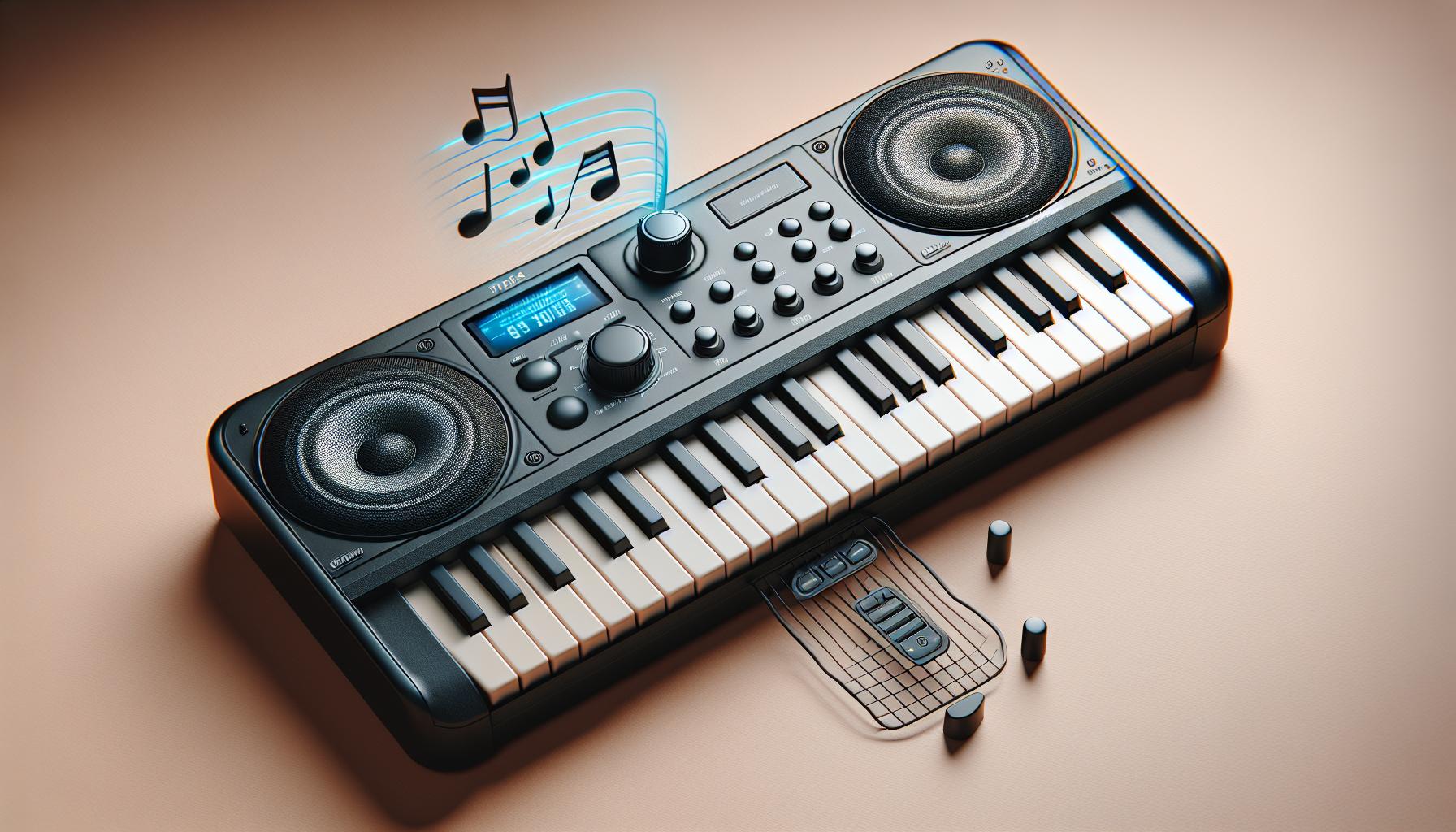
  • How to Learn to Play Chords on a Digital Piano

    How to Learn to Play Chords on a Digital Piano

    Are you ready to learn how to play chords on your digital piano?

    In this article, we’ll guide you through the process of getting started with chords, understanding essential chord theory, and mastering basic chord shapes.

    We’ll also share techniques to help you improve your chord transitions and explore advanced chord progressions.

    By the end, you’ll have the skills and knowledge needed to confidently play a variety of chords on your digital piano.

    Let’s dive in and get started!

    Getting Started With Chords on a Digital Piano

    If you’re new to playing chords on a digital piano, the first step is to familiarize yourself with the different types of chords and their fingerings. Chords are the foundation of music and learning them will greatly enhance your playing abilities.

    Start by understanding the basic major and minor chords. Major chords have a happy and uplifting sound, while minor chords create a more somber and melancholic tone. Once you have mastered these, you can move on to more advanced chords like suspended, augmented, and diminished chords.

    Each chord has its own unique finger placement on the keyboard, so it’s important to practice and memorize the correct positions. Take your time to learn and practice each chord until you can effortlessly play them on your digital piano.

    Essential Chord Theory for Digital Piano Players

    Understanding the basic theory behind essential chords is crucial for digital piano players. By grasping the foundations of chord theory, you’ll be able to construct and play a variety of chords confidently on your digital piano.

    Chords are made up of three or more notes played simultaneously, and they provide the harmonic structure and foundation for many songs. The most common chords you’ll encounter are major, minor, and dominant chords.

    Major chords have a happy and uplifting sound, while minor chords create a more melancholic and somber feel. Dominant chords add tension and a sense of resolution to a piece of music.

    Learning how to build and play these essential chords will greatly enhance your ability to play a wide range of songs on your digital piano.

     Mastering Basic Chord Shapes on a Digital Piano

    Mastering the basic shapes of chords on a digital piano can greatly improve your playing ability. By familiarizing yourself with these fundamental chord shapes, you will be able to play a wide range of songs and progressions more easily.

    Start by learning the major and minor chords in all keys. Practice moving between these chords smoothly and accurately, paying attention to correct hand and finger positioning.

    As you become more comfortable with these basic shapes, you can then move on to more complex chords such as sevenths, suspended chords, and inversions. Remember to practice regularly and gradually increase the difficulty of the chord progressions you play.

    With time and dedication, you will develop a strong foundation in chord shapes, enhancing your overall piano playing skills.

    Techniques to Improve Chord Transitions on a Digital Piano

    To improve your chord transitions on a digital piano, focus on practicing smooth and accurate hand movements between different shapes.

    Start by placing your fingers on the correct keys for each chord shape. As you play the first chord, pay attention to the position and movement of your fingers. Keep your hand relaxed and avoid unnecessary tension.

    When it’s time to transition to the next chord, lift your fingers off the keys and move them swiftly to the new positions. Aim for a seamless transition, without any pauses or hesitations.

    Practice this movement repeatedly, gradually increasing the speed and accuracy of your transitions. Remember to start slow and gradually build up your speed. With consistent practice, your chord transitions will become more fluid and effortless.

     Advanced Chord Progressions for Digital Piano Players

    As you progress on the digital piano, you’ll come across more complex chord progressions that challenge your skills and creativity. These advanced chord progressions add depth and complexity to your playing, allowing you to create beautiful and intricate music.

    One example of an advanced chord progression is the ii-V-I progression, commonly used in jazz music. This progression involves playing the second, fifth, and first chords of a major scale in sequence.

    Another challenging chord progression is the circle of fifths, which involves moving through a series of chords that are a fifth apart. These advanced chord progressions require precision and dexterity in your fingers, as well as an understanding of music theory.

    Take your time to practice and master these progressions, and soon you’ll be able to impress others with your skillful playing.

    What Is the Best Digital Piano for Beginners to Learn Chords On?

    The best digital piano for beginners to learn chords on is one with weighted keys and a variety of sound options. It should also have a user-friendly interface and built-in tutorials to help you learn chord progressions.

     How Long Does It Typically Take to Become Proficient at Playing Chords on a Digital Piano?

    It typically takes time and practice to become proficient at playing chords on a digital piano. You need to consistently work on your technique and build muscle memory.

    It’s important to dedicate regular practice sessions to chords, focusing on the correct finger placement and hand positioning. This will help you develop the necessary strength and coordination to play chords smoothly and accurately.

    In addition to practicing chords individually, it’s also beneficial to practice transitioning between different chords. This will improve your ability to quickly switch between chords in a song or piece of music.

    Remember to start with simple chords and gradually progress to more complex ones as you become more comfortable. Don’t get discouraged if you make mistakes or find certain chords challenging at first. With patience and persistence, you’ll gradually improve and become more proficient at playing chords on a digital piano.

     Are There Any Shortcuts or Tricks to Help With Learning and Memorizing Chord Shapes on a Digital Piano?

    There are no shortcuts or tricks to help with learning and memorizing chord shapes on a digital piano. It takes practice and dedication to become proficient.

    Keep practicing and you’ll get there!

    Can I Use the Same Chord Shapes and Progressions on a Digital Piano as I Would on an Acoustic Piano?

    Yes, you can use the same chord shapes and progressions on a digital piano as you would on an acoustic piano.

    The layout and functionality may be slightly different, but the principles remain the same.

    Are There Any Specific Exercises or Drills That Can Help Me Improve My Chord Transitions on a Digital Piano?

    To improve your chord transitions on a digital piano, try exercises like playing simple chord progressions in different keys. Gradually increase the tempo as you practice regularly to build muscle memory and improve your coordination.

    Conclusion

    So there you have it! You’ve learned the basics of playing chords on a digital piano. By understanding chord theory, mastering basic shapes, and practicing techniques for smooth transitions, you’ll be well on your way to becoming a skilled digital piano player.

    Don’t forget to challenge yourself with advanced chord progressions to further enhance your skills. Keep practicing and exploring different chord combinations, and soon enough, you’ll be playing beautiful music on your digital piano!

  • Is the Casio CT-S1000V the Best 61-Key Portable Keyboard?

    Is the Casio CT-S1000V the Best 61-Key Portable Keyboard?

    As a musician, I have been on the hunt for the perfect keyboard that can keep up with my musical creativity. After trying out a variety of keyboards, I have finally found the one that meets all my needs – the Casio, 61-Key Portable Keyboard (CT-S1000V).

    This keyboard is the best Casio keyboard ever made, and for good reason. It boasts 800 lifelike sounds that allow me to experiment with different genres of music, and the new Vocal Synthesis technology brings my lyrics to life. The 61 full-size, touch-responsive keys make playing a joyous experience, no matter what style of music I am playing.

    The CT-S1000V is also highly portable, making it perfect for musicians who are always on the go. It is lightweight and easy to carry, so I can take it with me wherever I go. Whether I am performing on stage or practicing at home, this keyboard has become an essential part of my musical journey.

    The Casio CT-S1000V: An Overview

    As a keyboard enthusiast, I’ve played on many different keyboards over the years. However, I have to say that the Casio CT-S1000V stands out as one of the best keyboards I’ve ever played on.

    First of all, the keyboard has a sleek and stylish design that catches the eye. The red color adds a pop of color and makes it stand out from other keyboards. It’s also a portable keyboard, which means I can take it with me wherever I go.

    The keyboard has 61 keys, which is the perfect number for me. It’s not too many keys that it becomes overwhelming, but it’s also not too few that it feels limited. The keys are also very responsive and have a nice feel to them.

    One of the standout features of the CT-S1000V is the vocal synthesis technology. This allows me to add my voice to the music I’m playing, which is a lot of fun. The keyboard also has 800 different tones, which means I can create a wide range of sounds and styles.

    Overall, the Casio CT-S1000V is an excellent keyboard that I would highly recommend to anyone looking for a high-quality portable keyboard. The sleek design, 61 keys, and vocal synthesis technology make it stand out from other Casio keyboards.

    Key Features of Casio CT-S1000V

    As someone who has used the Casio CT-S1000V keyboard, I can attest to its impressive features. Here are some of the key highlights that make it stand out:

    • 800 Tones: With 800 built-in tones, this keyboard offers a wide range of sounds to choose from. Whether you’re playing classical, rock, or jazz, you’ll find a tone that suits your style.
    • AIX-Powered Tones: The CT-S1000V uses Casio’s proprietary Acoustic Intelligent Expression (AIX) technology to create more realistic and dynamic tones. This means that your playing will sound more expressive and nuanced.
    • Touch-Responsive Keys: The full-size keys on the CT-S1000V are touch-responsive, which means that they respond to the force and speed of your playing. This allows for greater control and expression in your playing.
    • 61-Key Portable Keyboard: The CT-S1000V is a 61-key keyboard that is lightweight and portable, making it easy to take with you wherever you go. It’s perfect for musicians who need a keyboard that can be easily transported.

    In addition to these key features, the CT-S1000V also offers a range of other functions and features that make it a versatile and powerful keyboard. Whether you’re a beginner or an experienced musician, this keyboard has something to offer.

    Sound Quality and Effects

    As a musician, I know that sound quality is one of the most important aspects of any keyboard. I’m happy to report that the Casio CT-S1000V has some of the best sound quality I’ve ever heard from a portable keyboard. The AIX Sound Source is responsible for this, and it delivers a wide range of sounds, from electric pianos and strings to organs and more.

    The German Concert Grand Piano sound is particularly impressive. It’s rich and full, and it really sounds like you’re playing a grand piano. The keyboard also has a Virtual Concert Hall feature, which simulates the sound of playing in a concert hall. It adds a beautiful reverb effect to your playing, making it sound like you’re playing in a much larger space.

    The keyboard also has a range of effects, including amp models and rotary effects. These are great for adding depth and character to your sound. The DSP effects are also worth mentioning, as they allow you to add a range of different effects to your playing. From chorus and flanger to delay and more, there’s a lot of options to choose from.

    Overall, I’m really impressed with the sound quality and effects of the Casio CT-S1000V. It’s a versatile keyboard that offers a wide range of sounds and effects, all of which sound great. Whether you’re a beginner or a professional musician, I think you’ll be really happy with this keyboard.

    In-Built Rhythms and Tones

    One of the standout features of the Casio CT-S1000V keyboard is its vast array of in-built rhythms and tones. With 243 full-accompaniment rhythms and 235 rhythms, there’s a wealth of options to choose from to enhance your playing experience.

    I particularly appreciate the variety of genres covered by the rhythms. Whether I’m in the mood for jazz, rock, or Latin music, there’s a rhythm to match my mood. The full-accompaniment rhythms are especially impressive, providing a complete backing track to complement my playing.

    In addition to the rhythms, the keyboard boasts 600 tones, giving me a huge range of sounds to experiment with. From classic piano tones to more experimental synth sounds, there’s something for every musical style.

    Navigating the different tones and rhythms is made easy thanks to the keyboard’s intuitive controls and bright LCD display. I can quickly and easily switch between different settings, allowing me to focus on my playing rather than getting bogged down in menus and settings.

    Overall, the in-built rhythms and tones of the Casio CT-S1000V keyboard are a real highlight. Whether I’m practicing at home or performing in front of an audience, I know I can rely on the keyboard to provide a diverse range of sounds and rhythms to enhance my playing.

    Speaker System and Sound Output

    The Casio CT-S1000V keyboard boasts a powerful bass-ported stereo speaker system that delivers rich and vibrant sound quality. The built-in speakers are designed to produce a clear and balanced sound across all frequencies, making it ideal for both practicing and performing.

    In addition to the built-in speakers, the keyboard also features a headphone output for private practice sessions. This allows me to practice without disturbing others, and also allows me to hear every detail of my playing without any external noise interference.

    The keyboard also comes equipped with a bass-reflex stereo speaker system that provides a surround sound effect. This feature is particularly useful when playing in larger rooms or venues, as it helps to fill the space with a rich and immersive sound.

    For even more flexibility, the keyboard also includes Bluetooth connectivity, allowing me to connect it to a compatible Bluetooth speaker for even more powerful sound output. This is perfect for outdoor performances or parties where a larger sound system is needed.

    Overall, the speaker system and sound output of the Casio CT-S1000V keyboard are truly impressive. Whether I’m practicing at home or performing on stage, I can always count on this keyboard to deliver a rich and vibrant sound that truly brings my music to life.

    Connectivity Options

    When it comes to connectivity, the Casio, 61-Key Portable Keyboard (CT-S1000V) offers a variety of options to suit your needs.

    Firstly, the keyboard comes with a USB-MIDI port, allowing you to connect it to a computer or other MIDI-enabled device. This makes it easy to record your performances or use the keyboard as a MIDI controller for software instruments.

    In addition, the CT-S1000V features a VL (Virtual Tone Wheel Organ) engine and VZ (Variable Phase Synthesizer) engine, which can be used to create a wide range of sounds and styles. These engines can be accessed via the keyboard’s 1/4″ line outputs, allowing you to connect the keyboard to a mixer or amplifier for live performances.

    For those who prefer wireless connectivity, the CT-S1000V is compatible with the WU-BT10 Bluetooth MIDI/audio adapter and the WU-BT01 Bluetooth MIDI/audio adapter. These adapters allow you to connect the keyboard to iOS and Android devices, as well as Mac and Windows computers.

    Finally, the keyboard features a microUSB port, which can be used to connect the keyboard to a computer or other devices. This port can also be used to charge the keyboard’s battery, which is a convenient feature for those who need to use the keyboard on the go.

    Overall, the Casio, 61-Key Portable Keyboard (CT-S1000V) offers a range of connectivity options that make it a versatile and convenient choice for musicians of all levels.

    Sequencing and Sampling

    As a musician who loves creating new sounds, I was thrilled to discover that the Casio CT-S1000V keyboard comes with a 6-track sequencer and an audio sampler. These features allow me to easily create complex tracks and add my own unique samples to my compositions.

    The sequencer is easy to use, and I love that I can record up to six tracks simultaneously. This means that I can layer different sounds and create a more complex arrangement without having to go back and re-record each individual track. The sequencer also has a variety of editing tools, which makes it easy to fine-tune my recordings and make adjustments as needed.

    The audio sampler is another great feature that I love. With the sampler, I can easily record my own sounds or import samples from my computer. I can then trigger these samples using the keyboard’s phrase pads, which makes it easy to incorporate them into my tracks. The sampler also has a variety of editing tools, which makes it easy to adjust the length and pitch of my samples.

    Overall, I think the sequencing and sampling features on the Casio CT-S1000V are some of the best I’ve seen on a portable keyboard. They allow me to easily create complex tracks and add my own unique sounds to my compositions, which has really helped me take my music to the next level.

    Learning and Practice Tools

    As a beginner, I found the Casio, 61-Key Portable Keyboard (CT-S1000V) to be an excellent choice for learning and practice. The keyboard comes with 60 built-in songs, which I found very helpful in learning new songs and practicing my skills. The songs cover a wide range of genres, from classical to pop, and are arranged in increasing levels of difficulty, making it easy to progress from one level to another.

    One of the features I really enjoyed was the Lyric Creator app. With this app, I was able to create my own lyrics and melodies, which I found to be a great way to practice my songwriting skills. The app is very user-friendly, and I was able to create my own songs in no time.

    Another feature that I found to be very helpful was the practice mode. With this mode, I was able to practice my playing skills by playing along with the built-in songs. The keyboard also has a recording function, which allowed me to record my playing and listen to it later to identify areas that needed improvement.

    Overall, I found the Casio, 61-Key Portable Keyboard (CT-S1000V) to be an excellent choice for beginners who are looking for a keyboard that is easy to use and comes with a range of learning and practice tools. The keyboard is versatile and can be used for both practice and performance, making it a great investment for beginners who are serious about learning to play the keyboard.

    Additional Features

    One of the things I love about the Casio CT-S1000V is its LCD display. It’s large and backlit, making it easy to read even in low-light situations. The display shows you everything you need to know about the keyboard, including the current tone, rhythm, and tempo. It’s also where you can access all the different features and settings.

    Another great feature is the pitch bend wheel. This allows me to add some extra expression to my playing by bending the pitch of the notes I’m playing. It’s a great way to add some extra flair to your playing, especially when you’re performing live.

    The filter and modulation knobs are also a nice touch. They allow me to add some extra texture and depth to my playing, whether I’m playing acoustic drums or using one of the many horn ensembles. The assignable knobs are also a nice touch, as they allow me to customize the keyboard to my specific needs.

    The drum machines and custom tones are also great features. The drum machines allow me to create my own beats and rhythms, while the custom tones allow me to create my own unique sounds. The arranger is also a great feature, as it allows me to create full arrangements on the fly.

    The backlit LCD display is also a nice touch. It makes it easy to see what I’m doing even in low-light situations. The surround effect and delay are also great for adding some extra depth and atmosphere to my playing.

    The registrations are also a nice touch. They allow me to save my favorite settings and quickly recall them later. The modulation knob is also a nice feature, as it allows me to add some extra expression to my playing.

    Overall, the Casio CT-S1000V is a performer’s dream. It’s packed with features and has an intuitive interface that makes it easy to use. It’s also incredibly inspiring, allowing me to create music that I never thought was possible.

    Power Supply and Battery

    When it comes to powering the Casio, 61-Key Portable Keyboard (CT-S1000V), you have a few options to choose from.

    Firstly, the keyboard comes with an AC adapter that you can plug into a wall outlet. This is the most reliable and consistent way to power the keyboard, and it’s what I use most of the time.

    However, if you need to take the keyboard on the go, you can also power it with six AA batteries. This is a great option if you’re playing in a park or at a friend’s house and don’t have access to an outlet. Just make sure you have fresh batteries on hand, as the keyboard will drain them relatively quickly.

    One thing to note is that the keyboard doesn’t come with batteries, so you’ll need to purchase them separately if you want to use this option.

    Overall, I appreciate the flexibility that the Casio, 61-Key Portable Keyboard (CT-S1000V) offers when it comes to power supply. Whether I’m playing at home or on the go, I can always find a way to keep the music going.

    Ordering and Delivery

    Ordering the Casio CT-S1000V keyboard was a breeze. I simply went to Amazon.com and clicked on the “Add to Cart” button. The website was easy to navigate, and I was able to quickly find the keyboard I wanted. I also appreciated the fact that Amazon offers free shipping on this item.

    Once I placed my order, I received a confirmation email from Amazon with the details of my purchase. The email also included an estimated delivery date, which was very helpful. I was pleased to see that the keyboard would arrive in just a few days.

    When the keyboard arrived, I was impressed with the packaging. The keyboard was well-protected and arrived in perfect condition. I appreciated the care that was taken to ensure that my purchase arrived safely.

    The Casio CT-S1000V keyboard comes with a warranty, which gave me peace of mind. I knew that if anything went wrong with my purchase, I would be covered. I also appreciated the fact that Amazon offers financing options, which made it easier for me to afford this high-quality keyboard.

    Overall, I was very pleased with the ordering and delivery process for the Casio CT-S1000V keyboard. The website was easy to use, the shipping was fast and free, and the keyboard arrived in perfect condition. I would definitely recommend this keyboard to anyone who is looking for a high-quality instrument that is easy to use and produces great sound.

    Pricing and Tax

    When I was researching the best Casio keyboard, one of the factors I considered was the price. The Casio, 61-Key Portable Keyboard (CT-S1000V) is currently priced at $469.00 on Amazon.com. While this might seem like a high price point, I believe it’s worth the investment for anyone serious about playing the keyboard.

    It’s important to note that the price does not include tax or shipping costs. Depending on where you live, you may be subject to VAT, GST, or other taxes. Make sure to check the final price at checkout to avoid any surprises.

    When it comes to taxes, it’s important to know your local laws and regulations. In some cases, you may be able to claim back the VAT or GST if you’re using the keyboard for business purposes. Make sure to keep all receipts and documentation to make the process easier.

    Overall, I believe the Casio, 61-Key Portable Keyboard (CT-S1000V) is a great investment for anyone looking for a high-quality keyboard. While the price may seem high, the features and capabilities make it worth the investment. Just make sure to factor in any taxes or shipping costs before making your purchase.

    Accessories

    When it comes to accessories for the Casio CT-S1000V keyboard, there are a few options that can help enhance your playing experience.

    First and foremost, the keyboard comes with a music rest that securely attaches to the top of the keyboard. This is great for holding sheet music or songbooks while you play. The music rest is also adjustable, so you can set it to the perfect angle for your playing style.

    For those who prefer to use digital sheet music, Casio offers a tablet-ready music rest that can hold your tablet or smartphone while you play. This is a great option for those who prefer to use digital sheet music apps or programs, as it allows you to easily view your music while playing.

    If you plan on taking your keyboard on the go, a strap can be a useful accessory to have. Casio offers a keyboard strap that can be attached to the keyboard, allowing you to wear it like a guitar while you play. This can be especially helpful for street performers or musicians who need to move around while playing.

    Overall, while the Casio CT-S1000V keyboard comes with everything you need to get started, these accessories can help enhance your playing experience and make it more convenient.

    Reviews and Ratings

    As I was researching the best Casio keyboard, I came across the Casio, 61-Key Portable Keyboard (CT-S1000V) and was impressed by the reviews and ratings it received. I decided to take a closer look and see what all the fuss was about.

    First off, I was pleased to see that the keyboard has a 4.7 out of 5-star rating on Amazon, with over 100 reviews. Many reviewers praised the keyboard for its portability, ease of use, and sound quality. One reviewer even said, “This keyboard is amazing! It has everything I need and more. The sound quality is incredible, and it’s so easy to use.”

    I also looked at reviews on MusicRadar, and they gave the keyboard a positive review, stating that “It doesn’t perform miracles, but the Casiotone CT-S1000V is a blast to play, and the potential of its vocal synthesis technology is just begging to be tapped.”

    Overall, the keyboard seems to be well-liked by both casual and professional musicians. It’s portable, easy to use, and has great sound quality. I’m excited to try it out for myself and see if it lives up to the hype.

    Conclusion

    Overall, I am thoroughly impressed with the Casio, 61-Key Portable Keyboard (CT-S1000V). It is a sleek and portable keyboard that is perfect for both beginners and professionals alike.

    One of the standout features of this keyboard is the 61 full-size touch response keys plus pitch bend wheel. This allows for a more expressive playing experience and makes it easier to create dynamic and nuanced performances.

    Additionally, the inclusion of the WU-BT10 Bluetooth MIDI & audio adapter and music rest makes it easy to connect to other devices and to keep your sheet music organized.

    Another great feature of this keyboard is the 100 Lyric Tones, which are short vocal phrases that can be played back polyphonically. This can add a unique and interesting dimension to your music and can be used in a variety of genres.

    Overall, I highly recommend the Casio, 61-Key Portable Keyboard (CT-S1000V) to anyone in the market for a high-quality keyboard. Its combination of portability, versatility, and functionality make it a great investment for any musician.


    Casio, 61-Key Portable Keyboard (CT-S1000V)

  • Billy Joel Sheet Music – Greatest Hits – The Most Accurate Transcription

    Billy Joel Sheet Music – Greatest Hits – The Most Accurate Transcription

    Billy Joel - Greatest Hits, Volumes 1 and 2 - Piano/Vocal/Guitar Artist Songbook The “Greatest Hits, Volumes 1 & 2” songbook by Billy Joel is an essential collection for any music lover or musician who cherishes the works of this exceptional artist. Published by Hal Leonard, one of the leading names in sheet music, the songbook contains the musical notation for some of the most popular songs from Billy Joel’s repertoire. The book is available in print and Kindle versions on Amazon and is suitable for those at an intermediate level or higher of piano proficiency.

    The songbook features a comprehensive selection of 21 songs from Joel’s catalogue, which span his impressive career. Billy Joel, known as the “Piano Man,” is one of the most successful solo artists in American music history. He has earned numerous accolades throughout his career, including multiple Grammy Awards and induction into the Rock and Roll Hall of Fame in 1999.

    “Greatest Hits, Volumes 1 & 2” covers the first two decades of Joel’s career, from his breakout in the 1970s to his continued success into the late 1980s. These include classics like “Piano Man,” “Just the Way You Are,” “My Life,” and “Uptown Girl,” to name just a few.

    The beauty of this songbook is that it allows the reader to step inside the music and interpret it in their unique way. Sheet music offers a level of engagement that goes beyond simply listening to the music, enabling the musician to connect more intimately with the compositions. Furthermore, the Billy Joel songbook could be used by aspiring songwriters to study the structure and technique of Joel’s songwriting.

    The reviews for the songbook on Amazon are generally positive. Many customers praise the accuracy of the transcriptions and the book’s comprehensiveness. However, some point out that the arrangements are quite complex, meaning that this songbook is more suitable for intermediate to advanced players rather than beginners.

    Pricewise, the book is an excellent investment for those who admire Billy Joel’s work. Given the quality and quantity of songs included, the cost is quite reasonable. Furthermore, it is conveniently available in both digital and physical formats to suit the preferences of different users.

    In conclusion, Billy Joel’s “Greatest Hits, Volumes 1 & 2” songbook offers fans and musicians alike a wonderful opportunity to explore his music. The comprehensive selection of songs, the accuracy of the transcriptions, and the possibility to engage more deeply with Joel’s compositions make it a valuable addition to any music library. Whether you are an amateur musician, a professional, or a passionate Billy Joel fan, this songbook provides a unique way to celebrate and interpret the timeless work of this iconic artist.