Blog

  • Grand Piano vs. Baby Grand Piano-2023

    Grand Piano vs. Baby Grand Piano-2023

    Whether you’ve been playing the piano for years or simply enjoy the sound of it from time to time, it’s no secret that grand pianos and baby grand pianos make amazing musical instruments. This blog post discusses Grand Piano vs. Baby Grand Piano. Grand pianos and baby grand pianos share several features, such as strings and hammers, but there are also important differences between them.

    we will discuss their similarities and differences – and how they might suit your individual music needs. So get comfortable; let’s dive into these two amazing pieces of musical equipment!

    This information will help you decide what type of piano best suits your needs, whether you’re a seasoned musician or a beginner.

    Let’s get started!

    The Origins of the Piano

    The piano is a beloved and iconic instrument that has been a fixture of Western music for centuries. But where did this fantastic instrument come from, and how did it evolve into the form we know today?
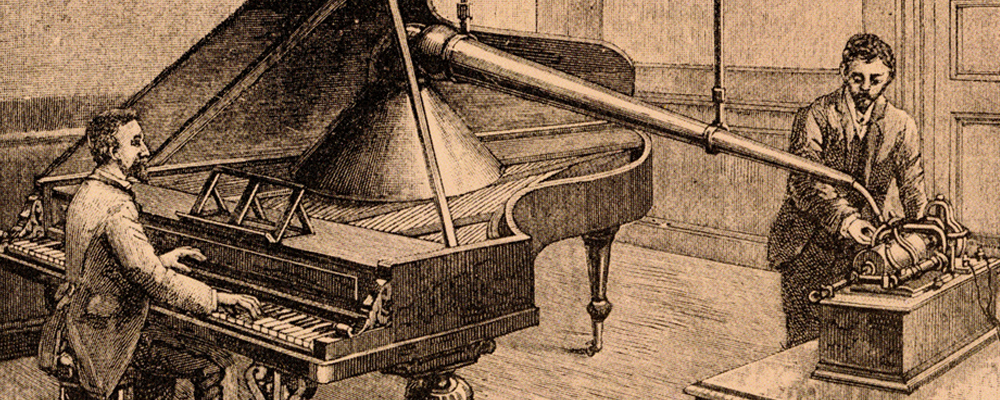
    The piano has a long history, beginning with its invention in the 1700s by Bartolomeo Cristofori, who lived in Padua, Italy (1655-1731). He sought to create an instrument with a greater range of expression and volume.

    This led to the creation of the first true piano, called a pianoforte (meaning “soft-loud” in Italian), because of its ability to produce a wide range of dynamic expressions. This instrument used hammers instead of plucking strings, so players could play quickly or sustain notes.

    Players could play the piano louder or softer depending on how hard they pressed the keys.

    Additionally, players could sustain notes by holding down a key on the instrument or create sharp staccatos by striking the keys rapidly.

    In the late 18th century, the pianoforte became popular over the harpsichord due to its greater expressiveness and variable volume.

    With time, as the piano’s popularity grew, it became a staple in the homes of distinguished families. Its versatility has made it a favorite among professionals and amateurs alike.

    The term “grand” meant large and was first used to describe any piano (upright or horizontal) with long strings. Later, the word “grand” became synonymous with horizontal pianos, usually larger than their upright counterparts.

    Due to their smaller footprint, upright pianos remained the most popular type of piano for domestic use for years after their invention. However, piano manufacturers continued to make smaller pianos suitable for home use.

    The name “baby grand” is often attributed to the piano maker Hugo Sohmer, though it is unclear when the first baby grand piano hit the market. In 1884, Sohmer & Company created the first 5″ grand piano, marketed as a baby grand.

    Since then, baby grand pianos have continued to be popular in living rooms and smaller spaces worldwide. The baby grand was an instant success and soon became a staple of the piano industry.

    The Different Types of Grand Pianos

    Pianos have two major types: vertical pianos and horizontal pianos.

    Vertical pianos (a.k.a. upright pianos) are constructed vertically and sit against a wall. They get this name because of the vertical placement of its strings and soundboard.

    The strings run vertically, perpendicular to the keyboard. The hammers of an upright piano move horizontally and use springs to return to their resting position.

    Upright pianos are smaller and more compact than grand pianos, making them popular for home use and other small spaces such as schools, churches, etc. They are also less expensive and produce a rich, full sound, although it may not be as nuanced as a grand piano.

    Horizontal pianos (a.k.a. grand pianos) sit on three legs horizontally. They get this name from their length and the horizontal placement of the strings and soundboard. This allows longer strings and a greater area of the soundboard.

    Grand pianos are the best, largest, and most expensive type of piano. Although grand pianos are typically more expensive than upright pianos, they also offer excellent responsiveness and super tonal quality.

    Both “grand” and “baby grand” pianos fall under the horizontal piano category. Grand pianos are famous in professional studios, concert halls, and other classical music venues.

    As I stated before, grand pianos come in various shapes and sizes. Here are different types of grand pianos:

    Petite Grand Piano
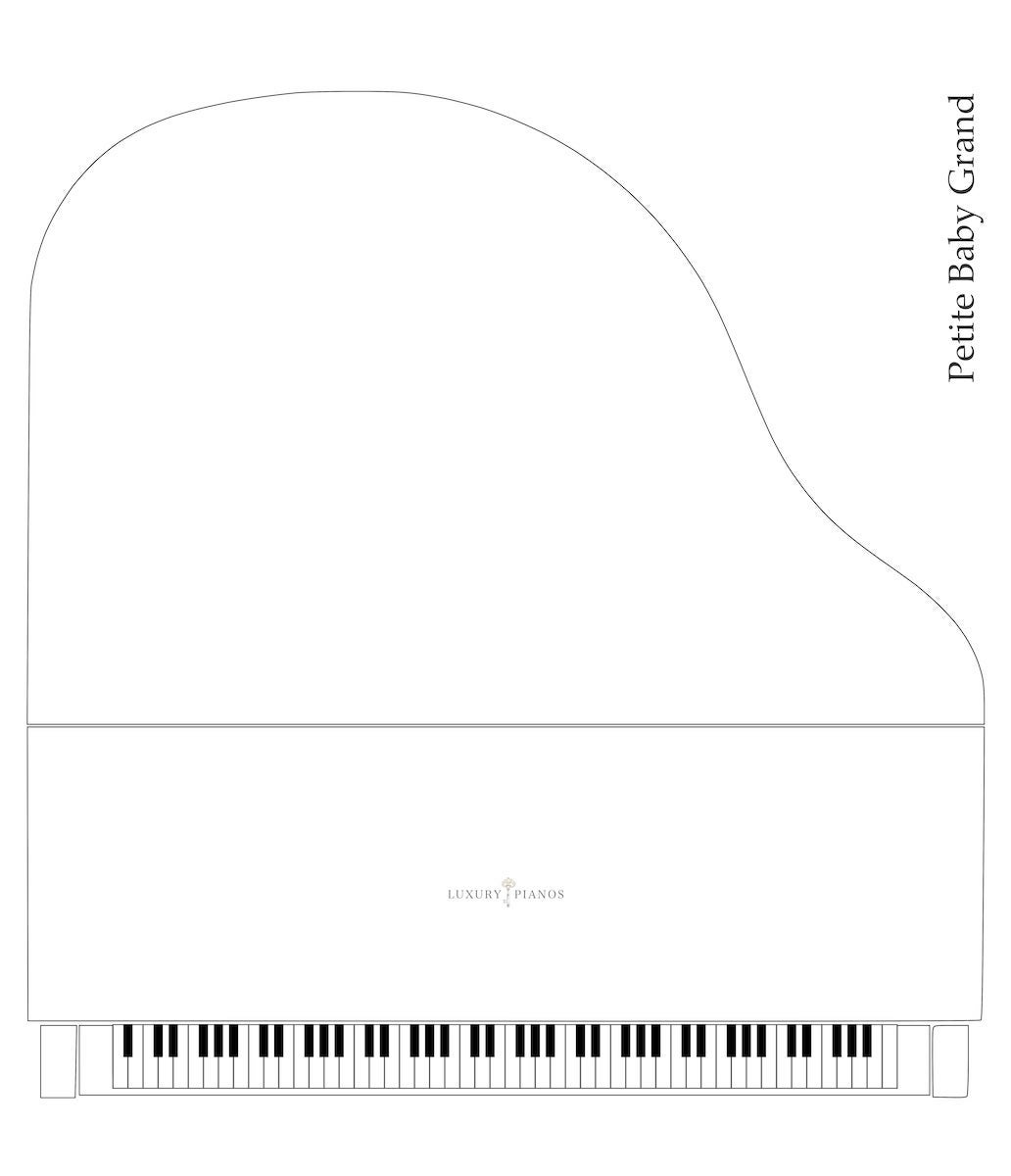
    Petite baby grand pianos are the smallest pianos in the grand piano line. They are typically 4’5″ to 4’11” feet long and are the most affordable grand pianos. They offer a less resonant, warmer, and quieter sound than other grand piano models.

    Baby Grand Piano
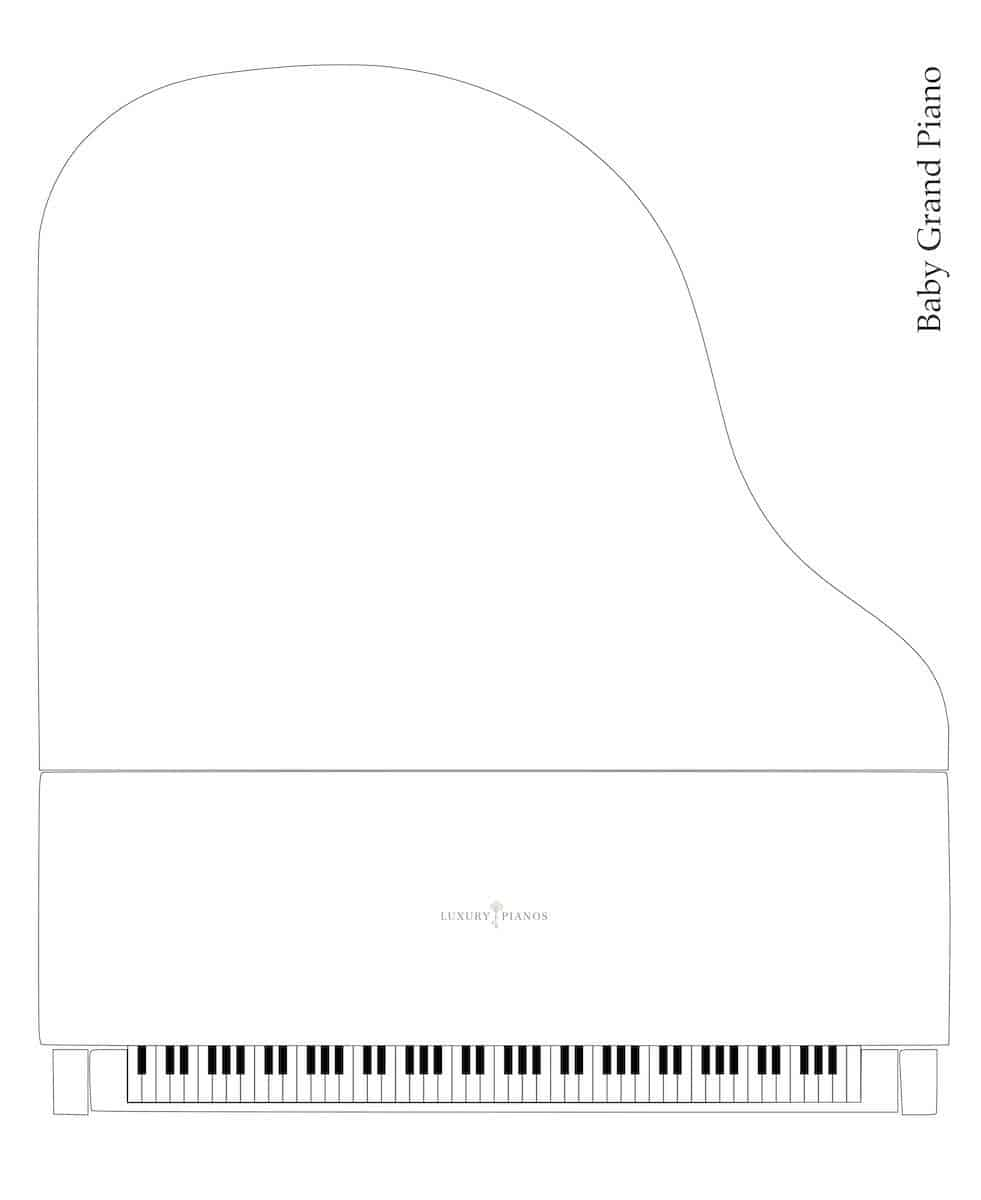
    Baby grand pianos are one of the most popular and smallest models in the grand piano family. Baby grands usually measure between 5′ and 5’6″, making them popular for domestic use. They deliver excellent sound quality at a more affordable price than larger models.

    Medium Grand Piano

    Medium grand piano, also known as a classic grand, ranges from 5′ 7″ to about 5′ 9″. It is slightly larger than the baby grand. It has a deeper soundboard and can produce a more powerful sound than the smaller models.

    Living Room Grand Piano

    Living room grand pianos measure between 5’9″ to 5’11”. They are sometimes referred to as classic grand pianos. Their larger soundboards, more strings, and more powerful sound make them more powerful than smaller models.

    Professional Grand Piano
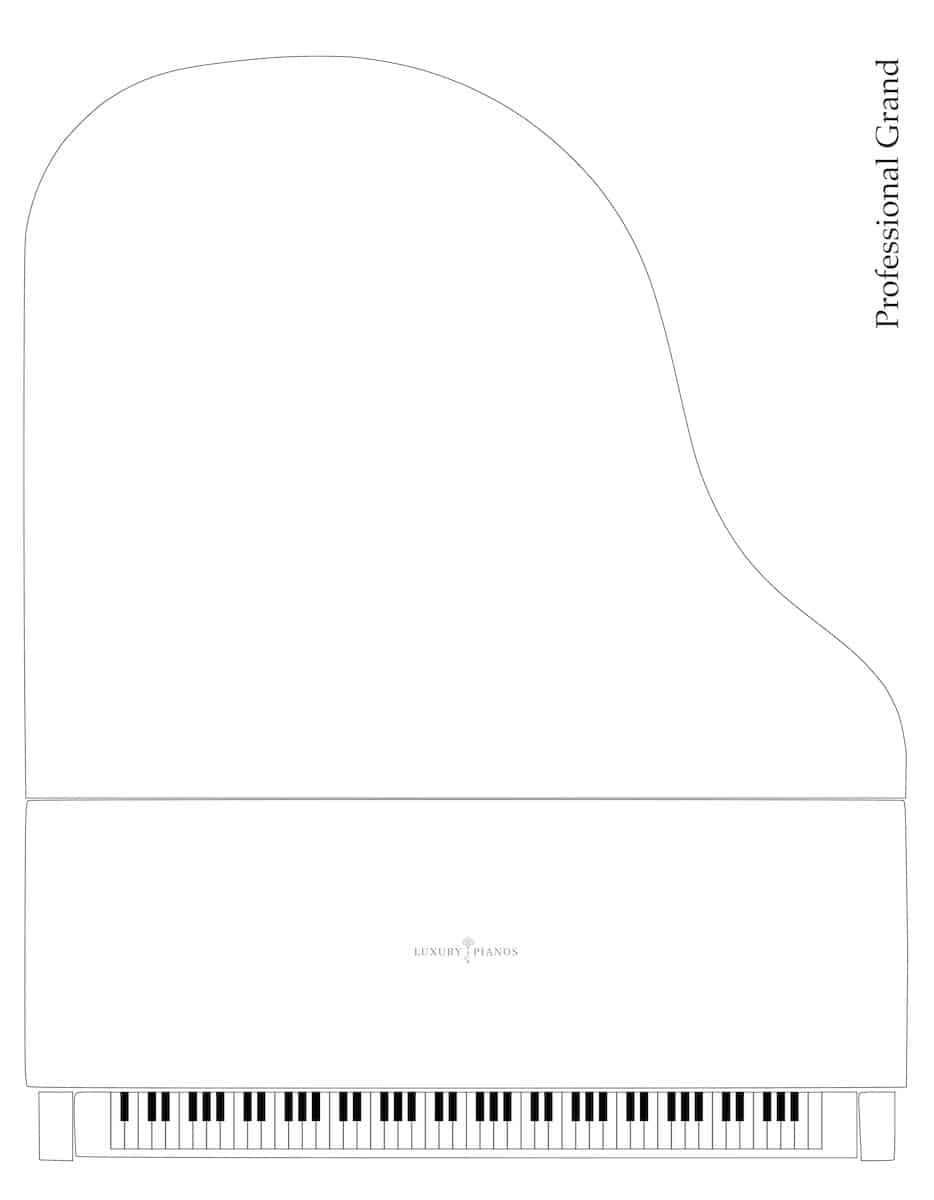
    Professional Grand Piano

    Professional grand pianos, also known as full-size grand pianos, are 5′ 9 to 6′ 2 feet long. They are the middle-sized grand pianos to which people usually refer when discussing grand pianos.

    They offer more powerful and excellent sound quality. The sound is natural and warm, and they have great resonance.

    Parlor Grand Piano
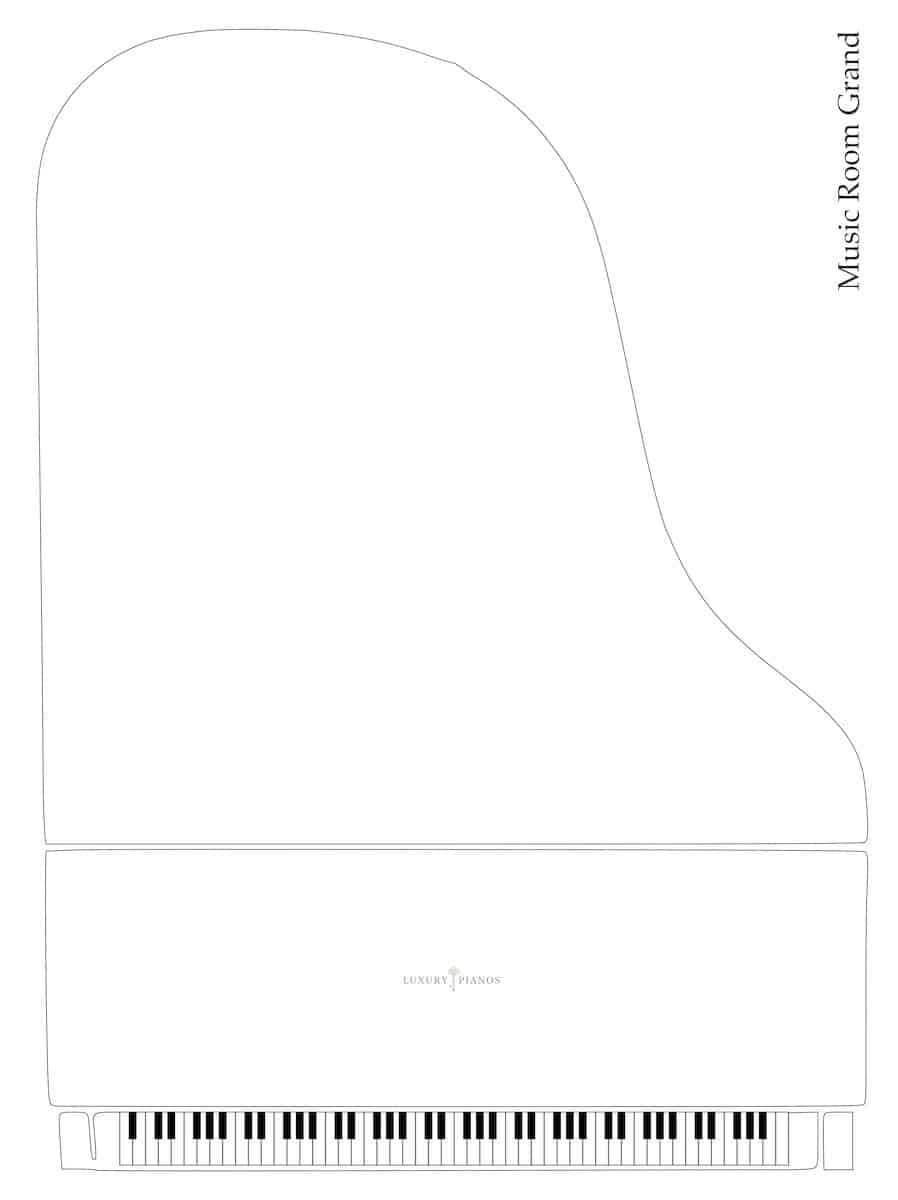
    Parlor Grand Piano

    Parlor grand pianos, also known as music room grand pianos, are popular for home concerts because of their great sound, resonance, and dynamics. These piano models are about 6’3″ and 6′ 10″ long.

    You can usually find this medium to large grand piano in schools and universities.

    Additionally, they are a magnificent living room centerpiece with a rich professional sound.

    Semi-Concert Grand

    Semi-concert grand pianos (a.k.a. ballroom grand pianos)are the second-largest and most expensive models in the grand family. They are around 6’11” to 8’6″ feet long.

    Semi-concert grands are loud and have great sonic qualities, with warm, clear, natural, and dynamic sounds. They are ideal for public performances in concert venues, recording studios, and ballrooms.

    Concert Grand
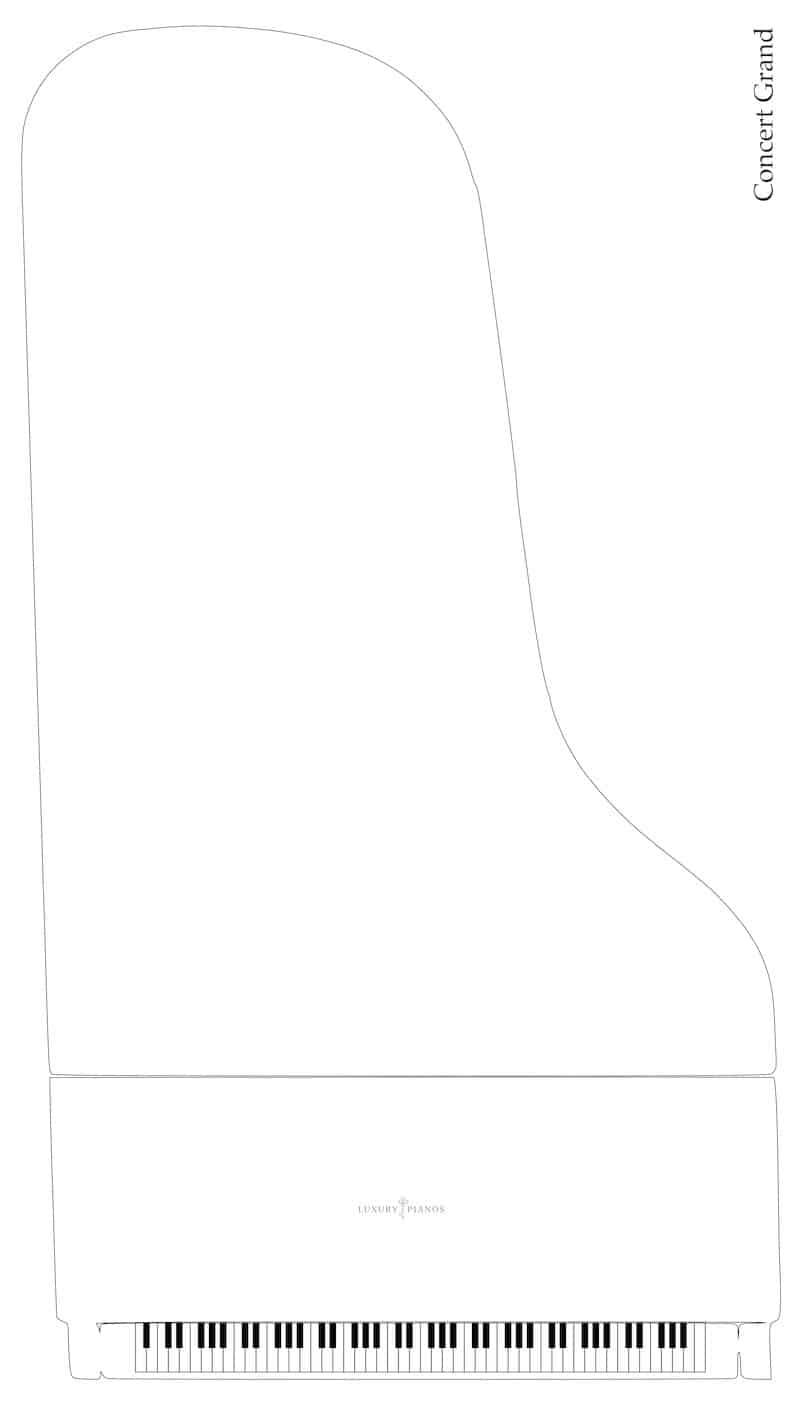
    Concert Grand piano

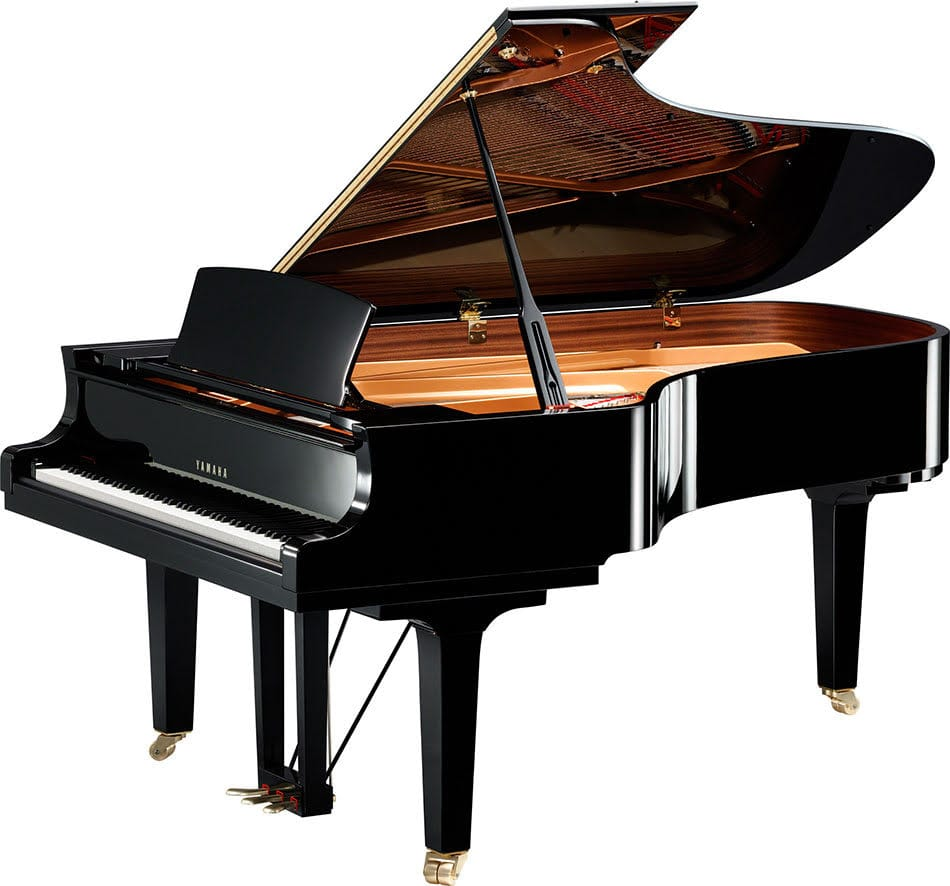
    Concert grand pianos are the largest and most powerful grand pianos. Typically, they are between 8’11” and 9′ in length.

    The concert grand piano produces the highest volume, richest sound, and most balanced tone. Their magical sound quality and power make them the choice of professional pianists for performances in larger music venues. They are also the most expensive type of grand piano.

    The size of the grand piano affects the sound quality and volume, with larger pianos generally producing a fuller, richer sound.

    What’s the Difference?

    Now that we have discussed the different types of grand pianos, it’s time to compare the baby grand piano and grand pianos based on their key features!

    Differences in Size

    The main difference between a grand piano and a baby grand piano is their size. Baby grand pianos are the shortest type, while concert grand pianos are the longest.

    A baby grand piano measures between 4’5″ and 5’8″ in length.

    In contrast, a grand piano, also called a concert grand, typically measures 8’11” and exceeds 9 feet long.

    Since 88 keys became a standard in the 1880s, almost all pianos have 88 keys. Therefore, the width measurements of grand pianos do not vary much.

    The length of a piano, from the keyboard to the tail end of its lid, determines its size.

    Although I have already covered grand piano types above, here is a quick rundown of their average lengths:
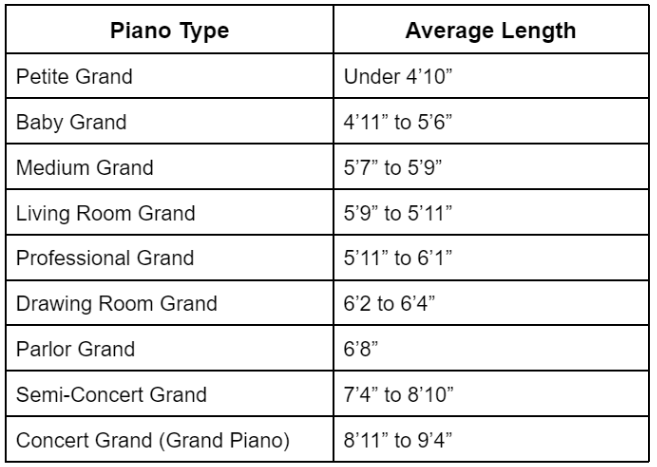
    The above table shows that full-sized grand pianos and baby grand pianos differ significantly in length. A full-sized grand piano is about twice as long as a baby grand piano.

    As a result of this physical difference, there are noticeable tonal and dynamic differences, which we’ll discuss shortly.

    Baby grand pianos are more compact and can better fit smaller spaces. The smaller models, such as the baby grand piano, are perfect for homes, recording studios, and rehearsal spaces. Despite their size, they still provide a beautiful sound.

    On the other hand, grand pianos take up more space and are difficult to fit into smaller rooms or homes. A grand piano is only used in a home if the area is large.

    Typically, these pianos are found in concert halls, where large volumes can be fully utilized and have sufficient space for their length.

    Differences in Sound

    In addition to their length differences, baby grand pianos and grand pianos also differ in their sound quality. However, a high-quality baby grand piano can produce a similar sound to a full-size grand piano.

    Longer strings and a larger soundboard in a grand piano give it a fuller, richer sound and more resonance.

    As a result, longer grand pianos have better sonic performance than baby grand pianos. Baby grand pianos produce less volume than grand pianos due to their shorter length.

    The lower tones will be deeper and more resonant, while the higher tones will be brighter and more vibrant. That means full-sized grand pianos have softer overtones, while baby grand pianos sound sharper with their harmonics.

    As a general rule, the longer the piano, the more balanced the overtones.

    Grand pianos have the volume to fill large spaces, so their sound will likely travel farther. For a smaller space, a baby grand piano is best.

    As the largest piano variety, concert grand pianos have longer strings than smaller grand pianos, allowing them to produce both quieter and louder sounds.

    It’s also important to remember that a space’s acoustics will impact the loudness and tone of a grand piano. A concert grand piano may sound muddy if you use it in a small room because the resonance may be too overwhelming.

    In contrast, a baby grand piano will sound more precise and defined in a smaller space because the maximum volume will fill the room rather than causing an overwhelming resonance.

    Grand pianos produce a louder and more intense sound for larger spaces than baby grand pianos. They create richer sounds with better overtones.

    Differences in Key Action

    The key action is another factor in which baby grand pianos and grand pianos may differ. It affects their playability. The string length plays a direct role in this.

    Usually, larger grand pianos have longer hammers and keys. The longer hammers that strike longer keys produce more kinetic energy with the longer mechanism. It gives the pianist more control over the dynamics, sound quality, and color of the music they play.

    That’s why concert grand pianos are the most popular options for professional players to demonstrate their total control and skill.

    On the other hand, baby grand pianos have shorter strings, hammers, and keys, leading to less control over the dynamics of the notes.

    However, a high-quality baby grand piano expertly crafted with the finest materials and components can play better than an entry-level concert grand piano.

    Overall, grand pianos have better key action than baby grand pianos. But it can feel vary with different pianos from different brands.

    Grand pianos tend to have a more responsive action, allowing for more control and expression in your playing. Even though baby grand pianos may not have quite as refined of action, they can still provide a satisfying playing experience.

    Differences in Price

    The price of grand pianos varies depending on the type, the brand, and the instrument’s condition.

    Usually, grand pianos tend to be more expensive than baby grand pianos due to their larger size and more complex construction. However, different manufacturers can have different prices.

    Baby grand pianos are the most miniature and most affordable grand pianos. They typically cost between $8,000 to $50,000.

    The prices of professional grand pianos or parlor grand pianos usually range from $10,000 to $50,000, while music room grand pianos typically cost between $60,000 to $250,000.

    Parlor grand pianos or professional grand pianos cost around $10,000 to $50,000, while music room grand pianos cost $60,000 to $250,000.

    In contrast, semi-concert and concert grand pianos are the most expensive pianos. The price of these pianos typically starts from $130,000 and goes up to $200,000, depending on the brand and finish.

    Overall, baby grand pianos are significantly more affordable than grand pianos.

    Which One Is Right For You?

    Now that you know all the differences between baby grand and grand pianos, it’s time to decide which is best for you.

    The best grand piano for you will depend on your playing skills, room size, and the purpose of the piano.

    A grand piano is the best option if you have ample space and money is not an issue. Grand pianos do best in rooms with high ceilings and abundant open space. They will create sounds that resonate freely without becoming muddy.

    Grand pianos are better suited to professionals who perform in front of audiences and must practice on a full-sized instrument. They offer a fuller, richer sound and excellent playability. Therefore, a grand piano is a good investment if you’re a professional musician.

    But many people forget to consider how they will fit the piano into the available space when buying it. Since grand pianos are extremely heavy, you need to hire professionals to transport them.

    Although baby grand pianos are lighter than grand pianos, they are still very heavy. When getting a piano into your home or other building, you should also take measurements of doorways, staircases, or any other obstacles.

    Beginners who want to learn the piano basics may not need a full-sized grand piano. A baby grand piano is an ideal choice if you’re a beginner with limited space and budget.

    Whether a newbie or an experienced piano player, a baby grand piano is the best choice if you have a limited budget and space.

    In short, a baby grand piano is perfect for you if you’re a beginner who wants an affordable and small grand piano. However, a grand piano is ideal if you’re a professional pianist who wants the highest quality sound, excellent playability, and no budget or size limitations.

    How To Choose A Grand Piano (Buying Guide)

    The following are some crucial factors to consider when buying a grand piano:

    Room Size

    The room size is one of the most important things when choosing a grand piano.

    A baby grand piano will be a good choice if you have a small space. Compared to a baby grand piano, which can fit in a smaller space like a living room or classroom, a grand piano is bigger and will take up more space.

    If you want to purchase a grand piano, ensure ample space since grand pianos are the largest instruments. A spacious room with high ceilings is the best place to play a grand piano. With ample space, the piano can achieve proper resonance and be played dynamically.

    So, measure the space you have available before purchasing a grand piano. You will also need to add a few extra feet to the length to accommodate the piano bench.

    Purpose of the Piano

    Another essential factor when choosing a grand piano is the purpose of the piano. If you are looking for a grand piano for a theater, recital hall, or other performance space, a concert grand is often the best choice. It produces a professional and clean sound that can easily fill a large concert hall.

    A beautiful baby grand piano could be the ideal choice if you’re a beginner looking for an aesthetic addition to your living space. You can also use Baby Grand pianos in small rooms in your home or workplace.

    A mid-sized grand piano, such as a professional or parlor grand, would be ideal for a school theater, large music classroom, or music club. The standard grand piano offers a rich sound without taking up as much space as the full-sized concert grand piano.

    If you are buying a piano for teaching purposes and price is a concern, you may consider getting a slightly smaller grand piano or purchasing a used piano.

    Player Skill Level

    It’s also important to consider your piano skill level when choosing a piano. If you’re a beginner pianist looking to learn how to play the piano and hone your skills, a smaller baby grand piano is a good choice.

    Professional pianists often prefer concert grand pianos because of their improved tonal quality and resonance. The harmonics of larger grand pianos allow professional musicians to showcase their skills.

    Whether you are a beginner pianist or enjoy playing piano for fun, a high-quality baby grand piano will still provide a fantastic sound.

    Budget

    Price is one of the most crucial factors when purchasing a product. The cost of a grand piano varies significantly according to its model, manufacturer, production year, and condition.

    Usually, baby grand pianos are more affordable than larger grand pianos.

    Don’t make the mistake of buying the largest grand piano you can afford just because it’s the largest you can afford. Instead, look for a high-quality piano within your budget.

    You can get better results from a quality baby grand piano than an inexpensive larger one.

    Brand

    Various brands of grand pianos are available. Choose a reliable and reputable brand known for producing the best grand pianos.

    Some popular grand piano brands include Steinway & Sons, Yamaha, Kawai, and Baldwin. These brands are known for producing superior-quality pianos with excellent sound qualities, outstanding playability, and other features.

    Each brand has its unique sound and characteristics. Research the different brands and find one that suits your needs and budget.

    By considering these factors, you should be able to find the perfect grand piano for your needs and budget.

    Conclusion

    As you can see, I’ve compared the grand piano and baby grand piano in detail. Both types of pianos offer a variety of advantages and disadvantages and are ideal for different players.

    Ultimately, choosing which type of piano is right for you depends on the purpose of the piano, the space available, your piano skill, and your budget.

    If you’re looking for a larger grand piano that provides a full sound and a wide range of tones, then a grand piano is the best choice.

    But a baby grand piano would be a great option if you want something smaller and more affordable. This piano offers a beautiful and enjoyable playing experience despite its smaller size.

    Whether you choose a grand piano or a baby grand piano, you’ll love these fantastic instruments’ beautiful sound and craftsmanship.

    Hopefully, this article has helped you decide which one to choose.
    Related Topics

  • How Many Pedals Does A Piano Have?

    How Many Pedals Does A Piano Have?

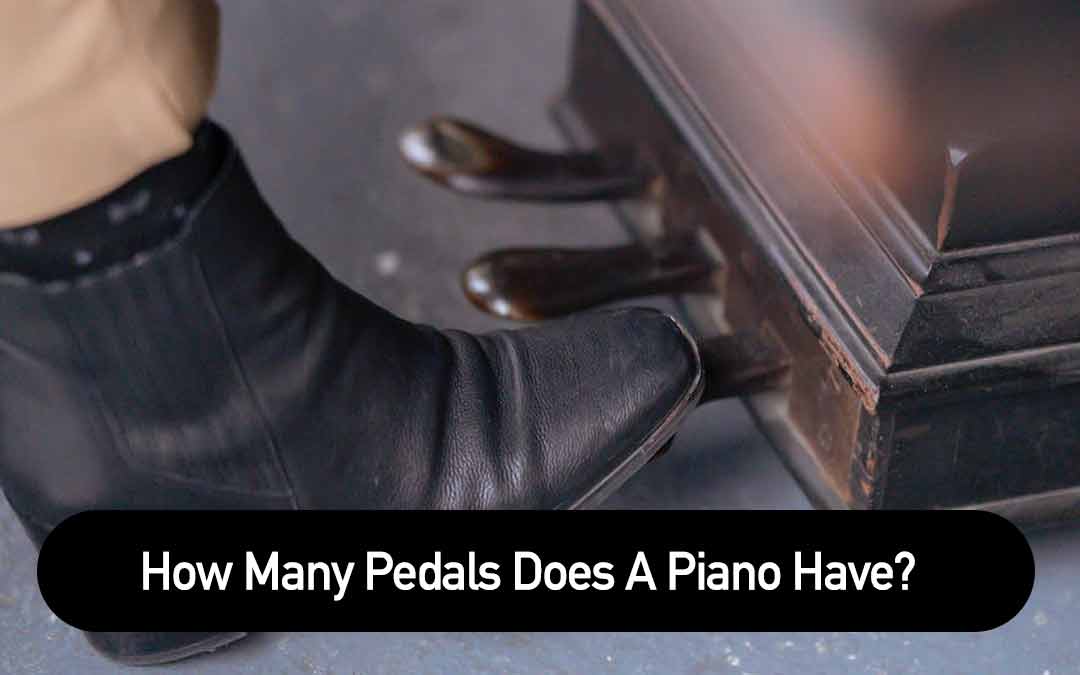
    Have you ever got the chance to see a grand piano and marvel at its beauty without giving a thought to how many pedals it has?

    From the outside, it may seem like a piano can only have two pedals. The truth is that there are many more than just two sets of pedals on a piano.

    We will also explain why each of these pedals exists and what effect they can have on your music.

    Like the keyboard, these pedals play a crucial role in enriching the sound of your music. In acoustic pianos, there are three pedals. Each has a different name and serves another purpose. Knowing their roles can help you master the pedal function, improving the quality of your music.
    If you are wondering about using piano foot pedals, you are in the right place. This guide will walk you through the three pedals on an acoustic piano, their uses, and some tips on using them correctly.

    Let’s get started.

    Piano Pedals: What are They Used For?

    Piano pedals are commonly found in acoustic, grand, and digital pianos. Despite being a vital piano component, most pianists and musicians never fully understand their uses and why they are there.

    The primary purpose of these pedals is to provide pianists with an excellent variety of sounds for their music. Learning how these pedals work is an essential part of your piano lessons, and they can make a great difference to the sound quality.

    Depending on your pedal, you can sustain the sound, make it softer, or enjoy the combination of these two.

    If you are looking for an expressive piano-playing experience, you need to understand the function of the three pedals.

    That’s especially important for people using upright pianos and digital pianos. Songwriters, singers, and those involved in the music industry can add a lot of variation to their music with just the three pedals.

    Type of Piano Pedals

    Great music requires an emotional element, which can be achieved by sustaining the music longer than usual. That’s what pedals help you achieve.

    Most modern acoustic pianos have three pedals, although their older variants have two. In this post, we will explore the use of each pedal, its connection to the music notation, and the right technique for playing them with the keyboard.

    Here are the three piano pedals you will find on all modern pianos:

    • Sustain pedal or damper pedal
    • Soft pedal
    • Sostenuto pedal

    Before we go ahead, note that pedals on a piano are for trained pianists. If you are a beginner, you might not use them for a while, or at least until you become a pro at playing the piano.

    Sustain Pedal or Damper Pedal

    Have you ever wondered how professional pianists get the notes to ring out even when not holding the keys down?

    That’s the work of a sustain pedal. The term “sustain” in the music industry refers to holding the sound. Due to its nature and use in almost all kinds of music, the sustain pedal is considered the piano’s soul.

    Also called the damper pedal, the sustain pedal is on the right side. They are found in all acoustic pianos. To test this pedal, press it down while using the keyboard. You will notice how the sound continues even when you have lifted your fingers off the piano. That’s how the sustain pedal works.

    It blends different notes and piano chords, producing a smooth sound effect. It’s also pretty useful when you transition from one music to another.

    While these damper pedals give a wonderful and soothing touch to your music, using them too much can lead to the loss of clarity in the sound. So, before pressing it down, ensure you understand how they work.

    Una Corda Pedal or Soft Pedal

    On an acoustic and an upright piano, each string is grouped in three, each associated with the same sound. When you hit the key, the hammer triggers all three strings simultaneously, producing the best sound.

    The Una Corda Pedal, also called the soft pedal or the left pedal, changes the mechanism of these strings. These are located on the left side of an acoustic piano.

    Usually, the pianos produce a bright sound when the hammer hits all strings. But, if you are playing music that requires soft sound, you should try the Una Corda Pedal. On a grand piano, this pedal strikes the right side of the string, hitting only the two of them, thus resulting in a softer and more beautiful sound.

    Since the entire mechanism is moved to the right strings, the resulting sound tends to be muted instead of bright. Una Cord translates into “one string.” The name is derived from the older pianos that would hit only one of the three strings.

    If you are using the upright piano, pressing the una corda pedal will shift the string mechanism to the right and bring the hammer and the strings closer, thus producing softer music.

    The entire mechanism does not affect the quality of the music or the tone in any way. But, the music becomes softer, as the hammer travels less to strike the strings.

    The soft pedal works differently for different pianos. For instance, a soft pedal strikes only a single string when used on older acoustic pianos and two strings when pressed on a modern upright piano or a digital piano.

    Sostenuto Pedal or Middle Pedal

    Located in the middle of the piano, the Sostenuto pedal serves three crucial functions:

    • Sostenuto pedals
    • Bass damper pedals
    • Practice pedals

    The middle pedal, or Sostenuto pedal, works like the sustain pedal, except it plays the notes that are currently played.

    In other words, the notes you play after pressing the pedal down won’t be sustained. This pedal works on the sound you played while pressing the pedal down.

    The main purpose of the Sostenuto pedal is to sustain the selective sound without making it too blurry or cluttered. The middle pedal is the latest addition to pianos, which is why most of the pianos launched before the 20th century do not have this.

    Note that not all pianos having this third pedal have a sostenuto pedal. Some musicians get a bass sustain pedal, focusing on the lower or bass notes. Some pianos have a practice pedal as the third pedal. It generates a soft sound (softer than the soft pedal).

    Practice pedals are mostly found in upright pianos and are often used for pressing and holding the pedal down so that you don’t have to keep pressing the pedal repeatedly. This feature comes in handy when you want to practice in silence with softer tones.

    Digital Pedals

    Most electronic pianos come with an input jack at the back of the system. These are used to plug the sustain pedals into the pianos. It also allows you to play electronic pianos with the sustaining feature without incorporating other complex pedals.

    Most digital upright pianos are equipped with three pedals, just like normal acoustic pianos, but compact ones may not have any pedals. You always have the option to plug the sustained pedal into the jack to incorporate sustained notes.

    Now that you know the different types of piano pedals, let’s check out the correct technique for using these pedals.

    Piano Pedals Function: How to Use a Piano Pedal

    Using the pedals require perfect coordination between your hand and feet. But what’s more important is that your big toes must align with the pedals. You must use the ball of your foot to press the pedal down.

    Your right foot must be used for the sustain pedal, while the left one should press the sostenuto pedal and the soft pedal. When you start aligning your feet with these pedals and experiment with the sound, you will know how these pedals alter different notes on the piano.

    Below we have listed a few effective techniques for perfectly using pedals to play piano. Let’s take a look.

    Delayed Pedaling

    Also called Legato pedaling, delayed pedaling is exactly what the name suggests. You press the pedals down after playing a note. You press the pedal, release it, and then press it down again after playing another note.

    This is the most popular pedaling technique, as it seamlessly transitions from one note to another without making the music sound muddy.

    Half Pedalling

    If you want to sustain the sound, but only lightly, half-pedaling can help.

    You need to press the sustain pedal partially so that the dampers lightly connect to the strings, producing a sound that’s neither too blurry nor too soft.

    Preliminary Pedaling

    Preliminary pedaling is when you press the pedals down after playing a note.

    Although preliminary pedaling is used commonly, it’s the best way to achieve a richer tone. The notes keep ringing out in a loud, rich sound even when you have taken your foot off the pedal.

    Simultaneous Pedaling

    The last pedaling technique is the one where you press down the pedal and play the chord at the same time. This requires excellent hand and foot coordination to achieve a perfect tone. This supports a rhythmic pattern.

    Simultaneous pedaling is another less commonly used technique on a pedal piano. But, when used correctly, the chords and the pedals might create a fantastic sound.

    Mistakes to Avoid when Using the Piano Pedal

    Pedaling is so important for pianists that these three tools can make or break your performance.

    When used correctly, the pedal can take your music to a new level, but using it too much or with the wrong notes can ruin it.

    Here are some common pedaling mistakes that most pianists make with acoustic and upright pianos.

    Not Lifting the Pedal Correctly

    A common mistake most pianists make when using pedaling technique is not lifting the pedals completely.

    The pedal must be lifted before it’s pressed down again. Likewise, when using the pedal, keep your foot on it all the time. Lifting your foot off the pedal can lead to a thunk sound, which might ruin the music.

    Changing Pedals Quickly

    You shouldn’t lift the pedal too early or simultaneously with the chord when playing a new note. That can make the music chaotic.

    The right technique is pressing the pedal down shortly after playing a note. That will sustain the note for some time while avoiding the small break in the sound.

    Sitting Near the Piano

    Many students complain about sore legs from playing the piano and pedaling continuously. That happens when you sit too close to the piano and give your legs no room for extension.

    This can be resolved easily by sitting further away from the instrument so that your leg doesn’t hurt from constant playing.

    Using Pedals to Soon

    Pedaling is an excellent technique to add colors and beautiful variations to your music. But that works when you have amazing piano skills. You shouldn’t jump to the pedals when you have not mastered the keyboard yet.

    As mentioned earlier, pedaling is not a necessity, not for beginners, at least. You should start with the keyboard and incorporate the pedals later into your music.

    Not Listening

    You can avoid all the above mistakes when you listen to the sound produced when you apply different pedals. Most mistakes can be spotted easily.

    However, people don’t pay much attention to music. That’s a common mistake that most beginner pianists make.

    Bottom Line

    Incorporating the above pedaling techniques into your piano playing can change how the instrument sounds. Beware of how you use the pedals, as using them too much or not aligning them with your music can lead to blurry and muddy sounds.

    Take care of the above-listed common mistakes people make when using piano pedals. Join piano classes to learn more about different pedals, their functions, and how exactly to use them. Take your time with pedaling and apply the pedal only when you are confident about using them.

    Read More

  • Best Yamaha Grand Piano- 2023 Update

    Best Yamaha Grand Piano- 2023 Update

    When it comes to grand pianos, Yamaha is one of the most reputable brands that has been delivering high-quality instruments since 1887. From exquisite craftsmanship to premium sound, Yamaha grand pianos offer the perfect balance of elegance and performance.

    The Yamaha company uses state-of-the-art technology combined with an iconic heritage. It uses only the best materials to create stunning grand pianos that will last a lifetime.

    If you’re looking for the best Yamaha grand piano that can deliver superior sound quality, looks gorgeous, and performs well, you’ve come to the right place!

    In this blog post, I’ll share some of the best Yamaha grand pianos on the market to help you decide which is best for you.

    So, please keep reading to find my top pick for Yamaha grand pianos!

    About the Yamaha Grand Pianos

    Before we get into my top picks, let’s talk a bit about Yamaha grand pianos.

    As part of the traditional acoustic pianos (which includes grand and upright pianos), Yamaha grand pianos are no ordinary instruments. They produce a beautiful, rich sound that is second to none. Yamaha’s products reflect their passion for excellence.

    With a reputation for time-honored craftsmanship and a dedication to tradition, these instruments truly stand out in the world of music.

    Despite the advent of new technologies, Yamaha pianos still emphasize tradition. As a result, they create musical instruments that highlight precision and accuracy.

    The blend of art and science makes Yamaha grand pianos so remarkable. Their Kakegawa factory in Japan carefully handles every step of the production process, from the selection of natural materials to careful assembly.

    The materials are not only aesthetically pleasing but also deliver unmatched quality. And with highly skilled artisans working to ensure that every piano is perfect.

    Different Types of Yamaha Grand Pianos

    The company has several models of grand pianos, ranging from small to large. Generally, there are three main categories of Yamaha grand pianos:

    Baby Grand Piano

    Baby grand pianos are the smallest instruments, measuring approximately 4 feet 11 inches to 5 feet 6 inches in height. Due to their small size, Baby grands are great for smaller spaces without sacrificing tone quality.

    The baby grand piano is extremely popular among beginner pianists due to its impressive tonal quality. In addition, they have an eye-pleasing aesthetic and are affordable for many people.

    Classic Grand Piano

    A classic piano (also known as a medium grand piano) is larger than a baby grand, approximately 6 to 7 feet. The Classic piano is the best option for intermediate users. The soundboard size and the strings’ length influence the tonal quality of a piano.

    Concert Grand Piano

    Concert grand pianos are the largest and most impressive of all grand pianos. These pianos are usually 7 to 9 long.

    They are the preferred choice for classical concerts and recitals and are known for their rich, full sound and impressive projection.

    These pianos are typically found in larger concert halls and performance venues and are considered the ultimate expression of musical excellence. A concert grand piano is your ideal choice if you’re an expert pianist with no budget constraints.

    Consider your space and budget when shopping for the best Yamaha grand piano.

    Now that you know more about Yamaha grand pianos, it’s time to discuss my top picks!

    The Best Yamaha Grand Pianos Available in 2023

    The following are the best grand pianos from Yamaha:

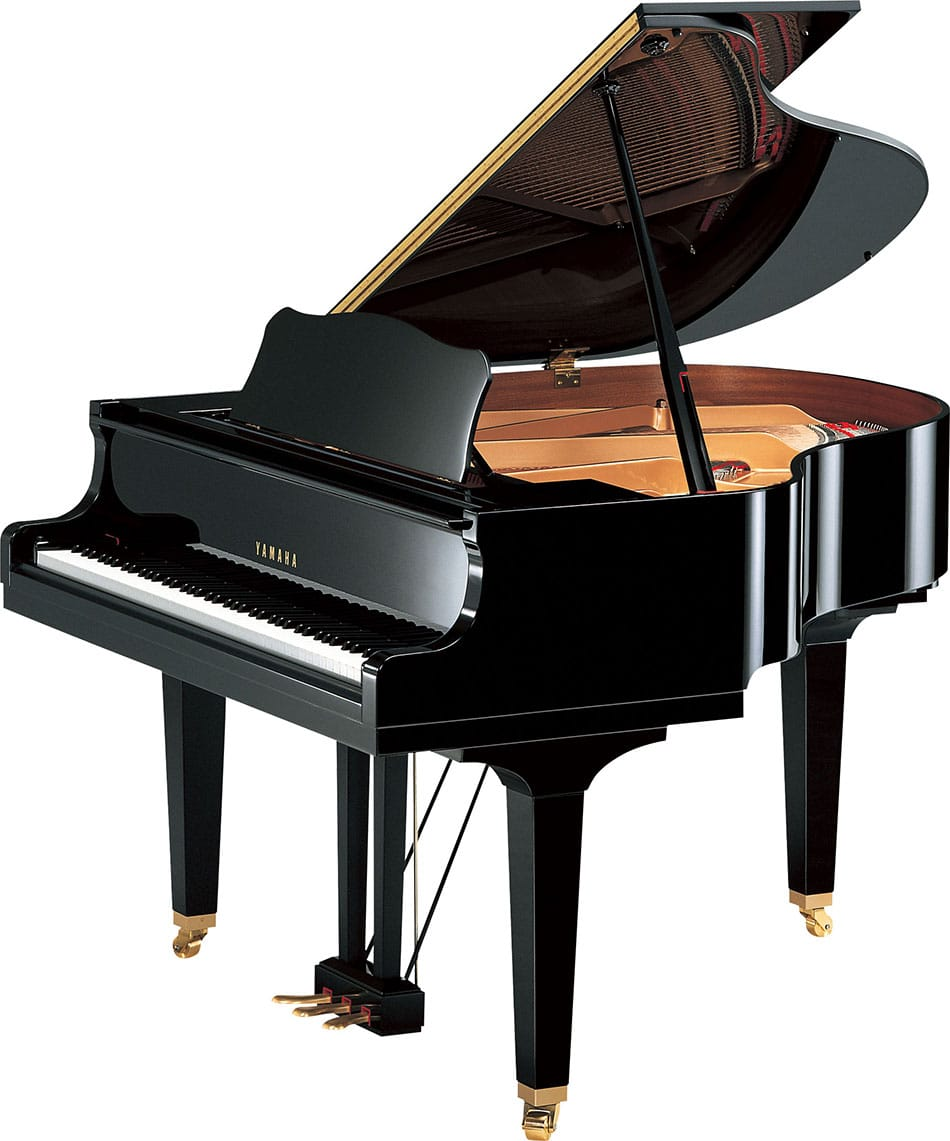
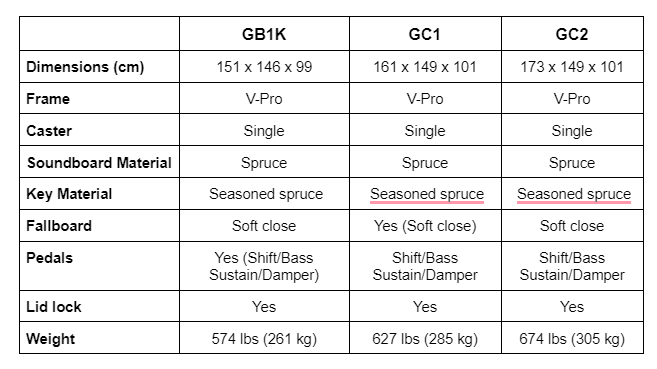
    Yamaha GB1K/GC Series

    Yamaha’s baby grand piano series is similar to other baby grand pianos. The Yamaha grand piano is an excellent choice for those seeking an entry-level grand piano at a reasonable price.

    While it may be considered a “baby grand piano” by Yamaha’s standards, don’t let its size fool you. This baby piano delivers impressive conservatory-level dynamics and expressive tones that belie its compact size.

    In terms of design, it has a classic design with polished ebony finishes that will add elegance to any room. Its spacious 88-key keyboard ensures effortless playing and satisfaction, while its three-pedal system allows for a wide array of dynamic control.

    This grand piano features room-filling resonance, producing a pleasing tone. It delivers a rich, full sound that fills the room with beautiful music despite its small size. However, the tones are slightly simpler than other grand piano options.

    In addition to its superb sound quality, the GB1K/GC Series also boasts a distinct hammer felt made in Japan. This hammer felt is designed to withstand changes in humidity and temperature, ensuring consistent performance no matter the environment.

    It has a strong back post, which is common in the conservatory series of Yamaha pianos. This feature adds stability and strength to the instrument, providing a solid foundation for the entire piano. It is also responsible for creating a powerful resonance.

    Overall, the Yamaha GB1K/GC Series is an excellent choice for beginners who want an affordable grand piano. Its impressive features, sturdy design, and dynamic performance make it a top pick for players of all skill levels.

    Specifications

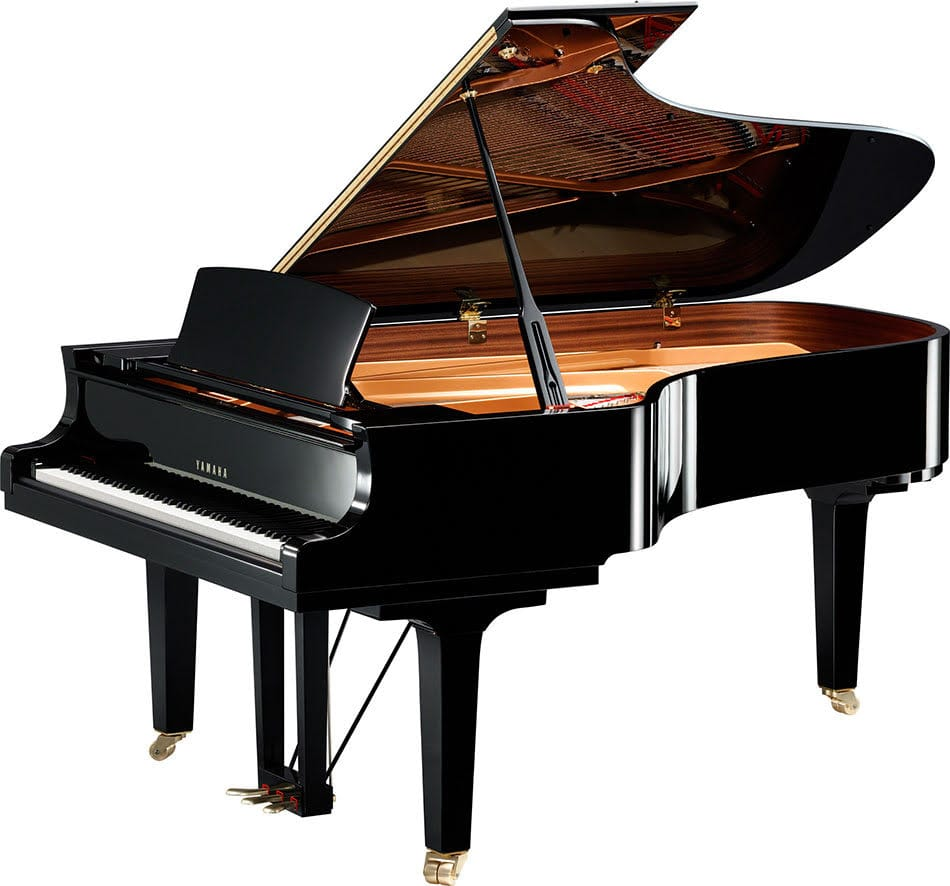
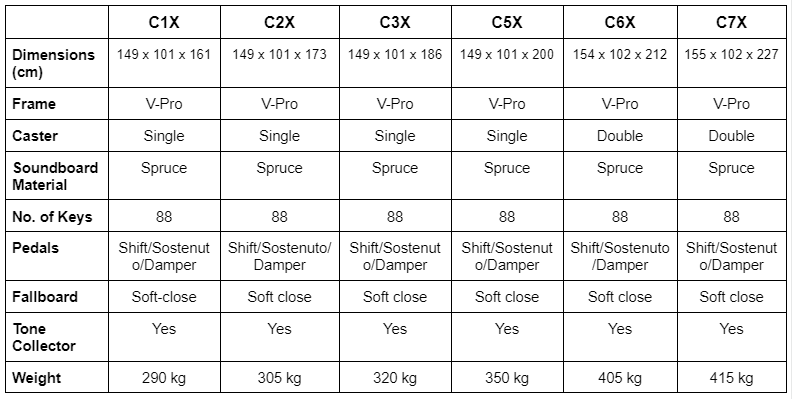
    Yamaha CX Series

    This Yamaha grand piano is one of history’s most recorded pianos. It is renowned for its supreme tonal quality, making it the choice of famous artists and producers.

    The piano features a luxurious design, with its polished ebony cabinet and gold-accented trim. Its elegant and flowing form is immediately noticeable, and its bold design only adds to its visual appeal.

    The soundboard is made of the finest spruce available, which produces a crisp and pleasant tone that is perfect for classical music.

    This acoustic piano has an 88-key keyboard that allows for a smooth and comfortable playing experience. It also has a solid, reinforced back post for strength and stability.

    The three-pedal system allows for a wide range of dynamic control, making it suitable for players of all skill levels.

    In addition, this instrument has a thick back frame, which acts as the skeleton of the device and provides the necessary support for its deep reverberation. This produces a powerful sound sure to capture any listener’s ear.

    It also has a new music wire, which affects the timbre of the music and its overall quality, making it sound harmonic and rich.

    Overall, the Yamaha CX grand piano is a remarkable instrument that combines elegance, innovation, and outstanding sound quality. Professional players choose it because of its superior craftsmanship and dynamic performance.

    Specifications

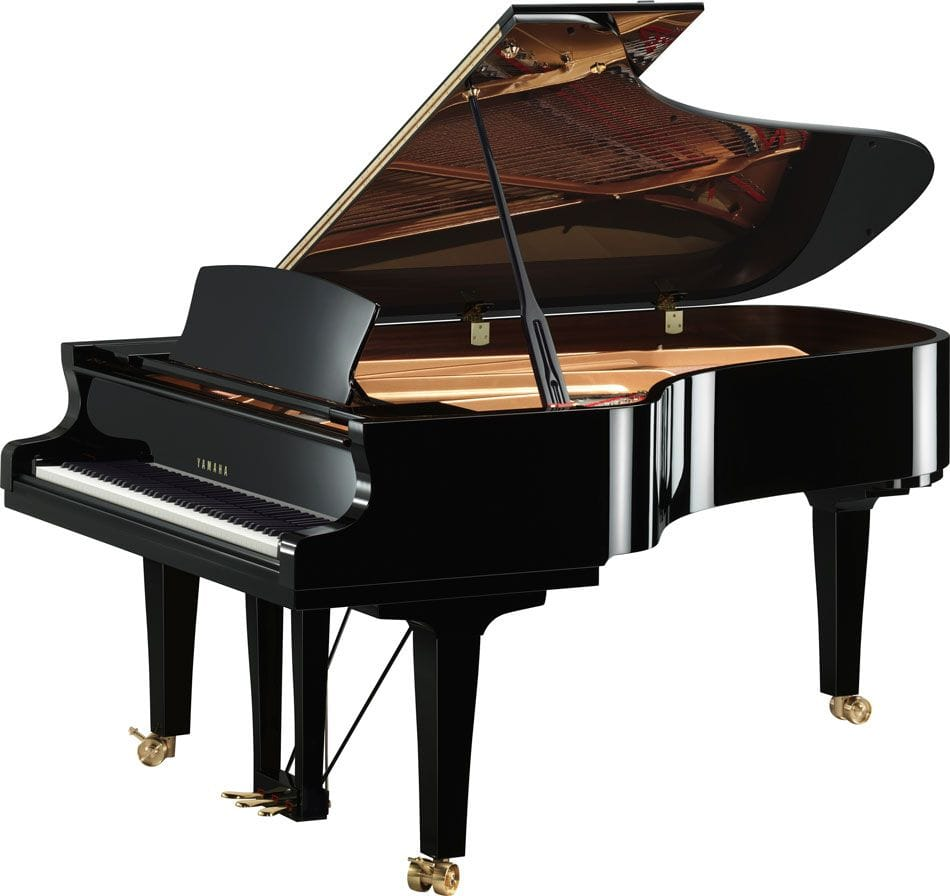
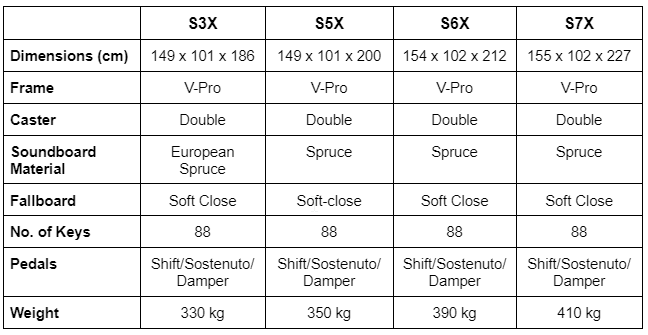
    Yamaha SX Series

    The Yamaha SX series is a great choice for those seeking a real grand piano that provides the same performance as a full-size concert grand yet fits into a limited space. It is designed with the same craftsmanship and attention to detail as Yamaha’s flagship CF series pianos.

    Despite its compact size, it doesn’t skimp on quality or performance. The sound is similar to that of its larger grand pianos.

    Its solid spruce soundboard is derived from the same DNA as the popular CFX series, ensuring a rich and powerful sound.

    This grand piano features exclusive hammer felt, which is the countless prototypes. This hammer has superb elasticity helps produce beautiful and clear tonal colors.

    It also uses advanced string scaling and voicing techniques to enhance sound. Its hand-wound bass strings contribute to the piano’s harmonious sound.

    Other features include three pedals, a divided bridge, and a high-end action. The action is designed to respond quickly and accurately, providing you with precise control over your piano playing.

    Overall, the Yamaha SX series is an excellent choice if you’re looking for a grand piano that can deliver top-notch quality without taking up too much space. Its superior tone and responsive action make the Yamaha SX series ideal for concert halls and intimate stages.

    Specifications

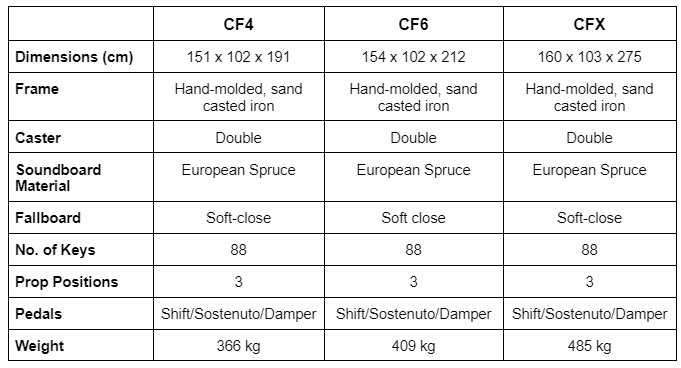
    Yamaha CF Series

    This top-of-the-line instrument is part of Yamaha’s concert series that has undergone extensive research and development.

    The manufacturer claims they spent two decades perfecting the design and handcrafting this piano using the highest quality materials. The Concert Piano Workshop (a separate part of the Kakegawa facility) handles the top regulation of the concert instruments.

    This grand piano uses the top 1% of wood around the world. It ensures that the piano has an unparalleled level of quality, with a rich, resonant sound that is unmatched.

    The metal frame of the piano also contributes to its exceptional tonal character while providing superior strength and stability.

    Aside from all that, the Yamaha CF series features ivory white keys. These keys are not only visually stunning, but they are also a joy to play. They mimic the look and feel of natural ivory, a rare and highly sought-after material.

    The piano keys provide a smooth, responsive touch that is perfect for professional musicians and even the most discerning professionals.

    The hammer action is also incredibly balanced, providing the ideal balance between response and resistance. With its superior sound and impeccable playability, this grand piano is sure to be an heirloom that will last time.

    The sound of the Yamaha CF piano will take your breath away. Its warm, full sound resonates throughout the room and its depth provides an unparalleled listening experience.

    The Yamaha CF series is an undoubtedly brilliant achievement. From its exquisite design to the sound quality, it provides an experience like no other. However, it is the most expensive and prominent instrument in Yamaha’s lineup.

    The Yamaha CF will surely be your go-to grand piano if you’re looking for a unique and unbeatable sound that can fill any room.

    Specifications

    Conclusion

    As you can see above, I’ve listed the best Yamaha grand pianos with their specifications. They are made from natural materials, which aren’t just aesthetically pleasing, but also deliver unmatched quality.

    Yamaha pianos are guaranteed to impress even the most discerning pianists. You can expect superior sound quality, beautiful design, and reliable performance from Yamaha.

    Depending on your budget and needs, pick the one that best suits you.

    If you are new to pianos and have budget concerns, the Yamaha GB1K Baby grand piano is ideal. It is also the most affordable option.

    If you are an advanced player and budget is not an issue, the Concert CF grand piano is your best choice. It offers unbeatable sound quality and an exceptional playing experience.

    Which Yamaha model appeals to you the most? And why? Please let us know in the comments below!

    Read more

  • Best Yamaha Piano For Beginners (2023 Updated List)

    Best Yamaha Piano For Beginners (2023 Updated List)

    Yamaha is among the most trusted and prolific brands of pianos and other musical instruments. The company has been producing incredible pianos since 1887.

    They produce everything from stunning concert grand pianos to the ideal first keyboards designed for beginners and kids. Whether you’re a beginner or a seasoned pro, Yamaha has a piano to match your skill level and budget.

    If you’re just getting started and looking for the best Yamaha piano to kickstart your musical journey, you’ve come to the right place.

    In this article, I’ve compiled the nine best Yamaha pianos for beginners that will suit all ages of musicians. This list only includes Yamaha digital pianos, as they are portable, affordable, and offer educational features that make them best suited for beginners.

    By the end of this post, you’ll have your first best Yamaha digital piano.

    So, let’s jump into my top recommendations!

    Top 9 Best Yamaha Piano For Beginners Available in 2023

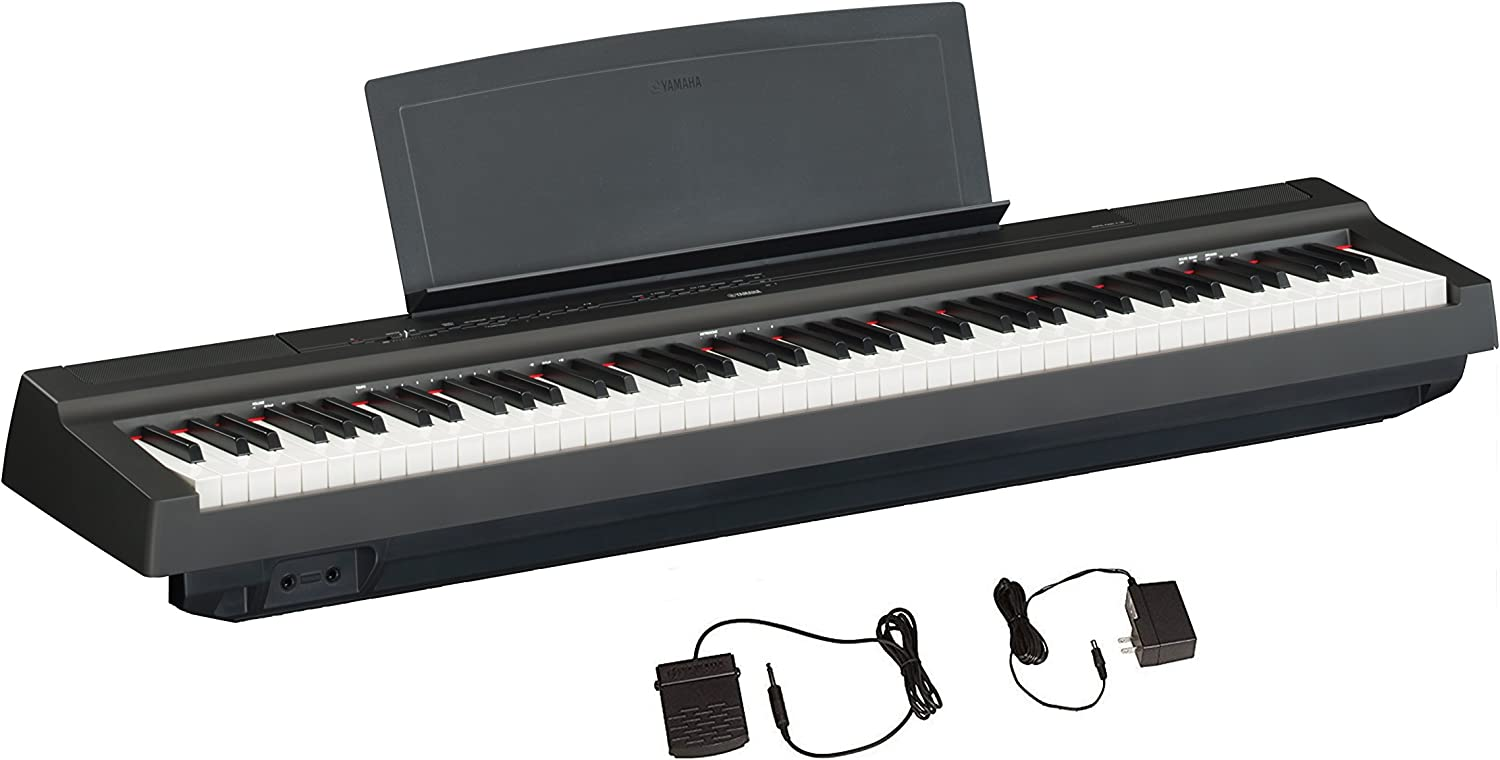
    Yamaha P125 88-Key Weighted Digital Piano

    Key Specifications

    • Dimensions: 52.19 x 11.63 x 6.56 inches
    • Keyboard Type: Graded hammer standard (GHS) keyboard
    • No. of Keys: 88
    • Touch Sensitivity: Hard/medium/soft/fixed
    • Polyphony (Max.): 192
    • Voices: 24
    • Effects: Yes
    • Speakers: Yes
    • No. of Pedals: 1 (Sustain Pedal)
    • Metronome: Yes
    • Connectivity: USB TO HOST, DC IN, dual Headphones Jacks, Sustain Pedal Input, AUX OUT
    • Weight: 11.8 kg
    • Price: $699.99

    The Yamaha P125 Digital Piano is the first Yamaha digital piano on our list. It offers many unique features that make it ideal for first-time players.

    This piano has a full-size 88-key graded-hammer standard keyboard that provides an authentic piano experience. Like an acoustic piano, the GHS-weighted action is heavier in the low keys and lighter in the high ones.

    It offers high-quality sound. The Pure CF sound engine faithfully reproduces the tone of the acclaimed Yamaha 9 feet CFIIIS Concert grand piano, offering a dynamic and expressive playing experience.

    Additionally, it offers 24 different voices that allow you to explore a variety of sounds. You can even layer two voices together or split the keyboard into two parts for different sounds.

    This portable digital piano includes 192 notes of maximum polyphony and sound effects such as Reverb, Chorus, and more.

    The P125 has USB-to-host connectivity with MIDI and audio transfer, so you only need one cable to connect to your music-making software or educational apps. It also features DC IN, dual headphone jacks, a sustain pedal input, and AUX OUT for connectivity to various devices.

    Furthermore, it has a Metronome and Tempo range of 5 to 280 bpm to help you keep the beat.

    It also has a tuning range of 414.8 Hz – 446.8 Hz, so you can tune it to the precise pitch you need. And at 11.8 kg, the P125 is lightweight enough to carry around.

    Accessory items include a music rest, sustain pedal and a power adapter.

    Ultimately, the Yamaha P125 is the best digital piano for beginners and intermediate players at a reasonable price of $699. Users will appreciate its realistic sound and touch and numerous connectivity options.

    Check On Amazon

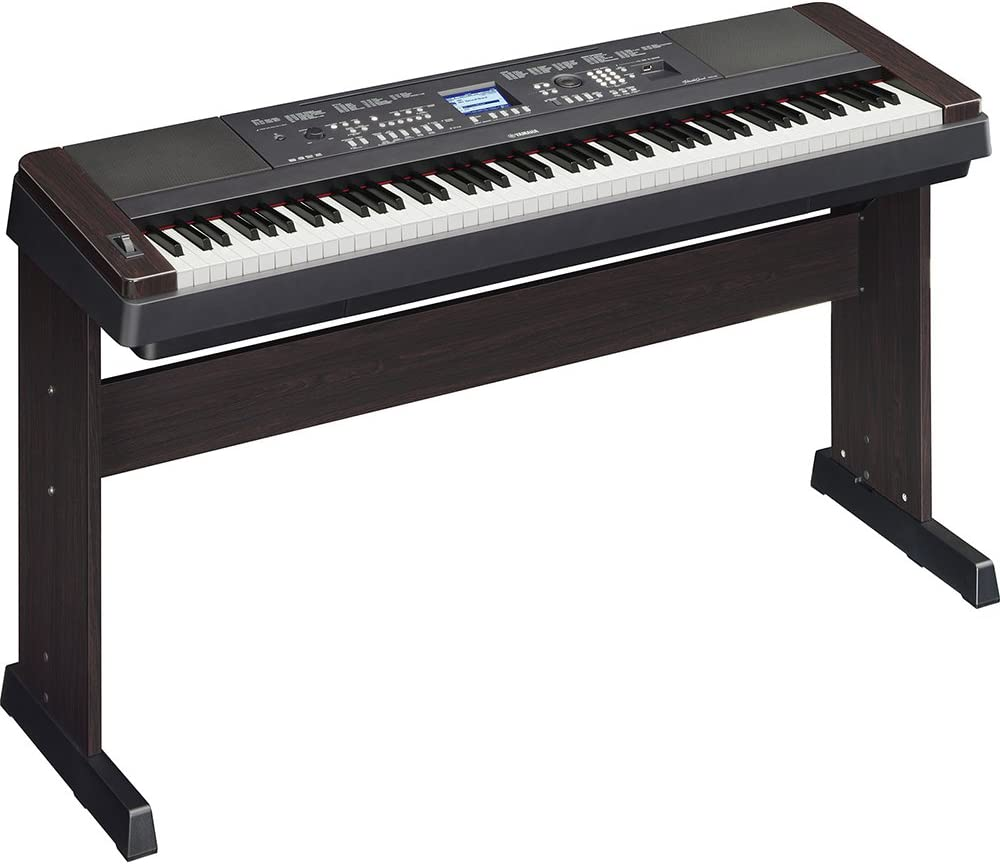
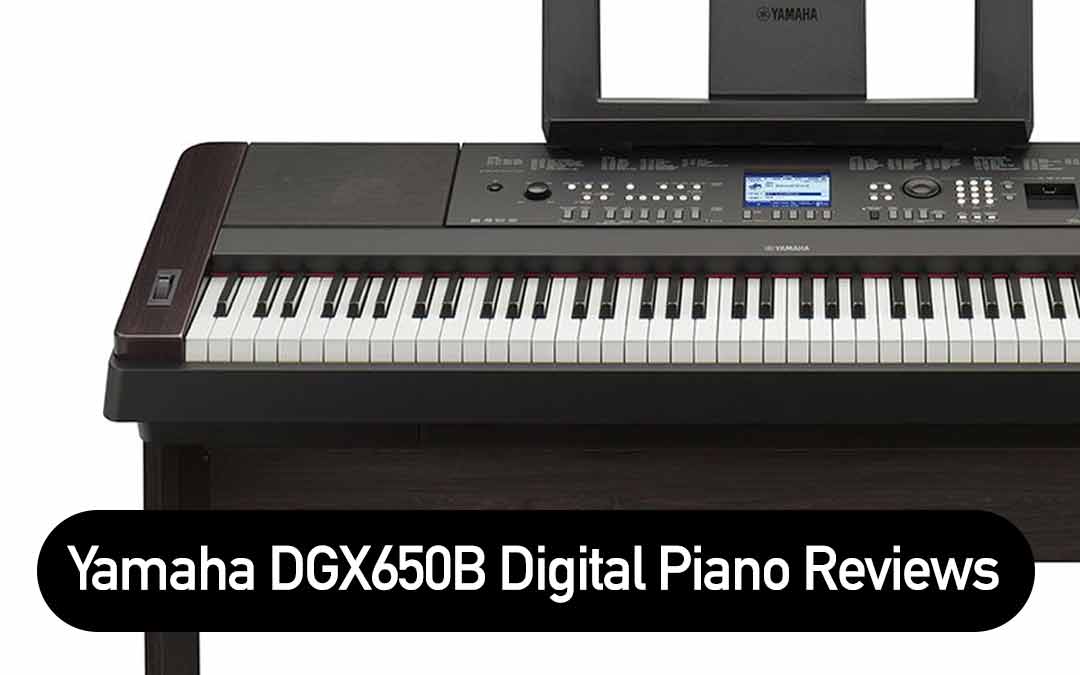
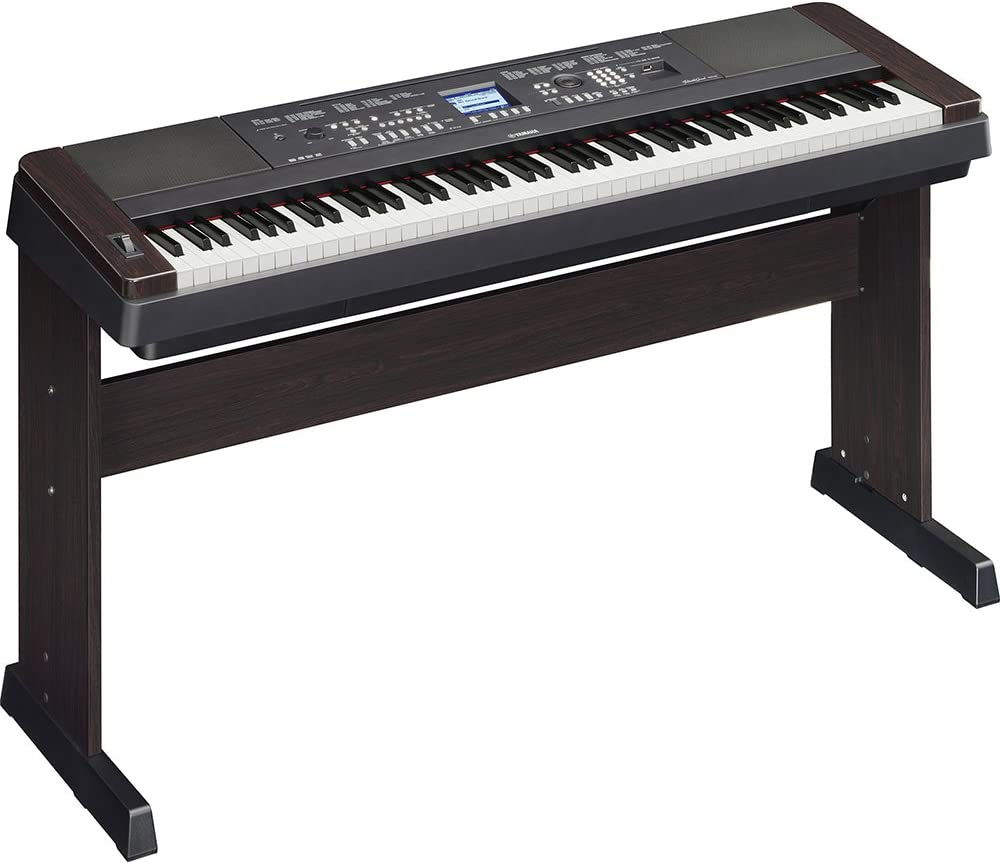
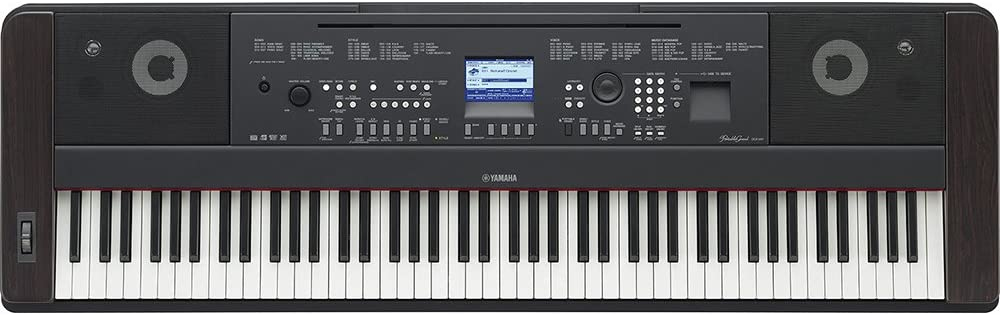
    Yamaha DGX650B Digital Piano

    Key Specifications

    • Dimensions: 58.94 x 21.46 x 12.8 inches
    • Keyboard Type: Graded hammer standard (GHS) keyboard
    • No. of Keys: 88
    • Touch Sensitivity: Hard/medium/soft/fixed
    • Polyphony (Max.): 128
    • Voices: 550+
    • Effects: Yes
    • Speakers: Yes
    • No. of Pedals: 1 (Sustain Pedal)
    • Metronome: Yes
    • Connectivity: USB TO DEVICE, USB TO HOST, DC IN, a Headphones Jack, Sustain Pedal Input, AUX In
    • Weight: 22.5kg
    • Price: $1,099.99

    The Yamaha DGX650B is an excellent choice if you want to learn to play piano but can’t afford a traditional acoustic piano.

    The DGX650B emphasizes acoustic piano touch and superb tone. That’s why it stands out as the best-sounding digital piano.

    The keyboard comes with PureCF-sampled piano voices like Yamaha’s acclaimed CFIIIS concert grand. It also has 128-note polyphony, meaning you can play many notes at once without dropping any.

    Designed for beginners and professionals alike, the DGX650B has great learning features and performing and recording options for advanced players.

    The scaled, graded hammer action gives it the touch of a professional piano. You can play chords on a single key with Smart Chord technology.

    Aside from all that, it features AUX line input. So you can connect your mobile device, computer, mixer, keyboard amplifier, or any other line-level audio device to send the instrument’s output signal to that device. And you can hear it through the built-in speakers.

    Its “You Are The Artist” Series contains professionally-arranged songs that let you learn to play like artists such as Elton John, Taylor Swift, and Adele.

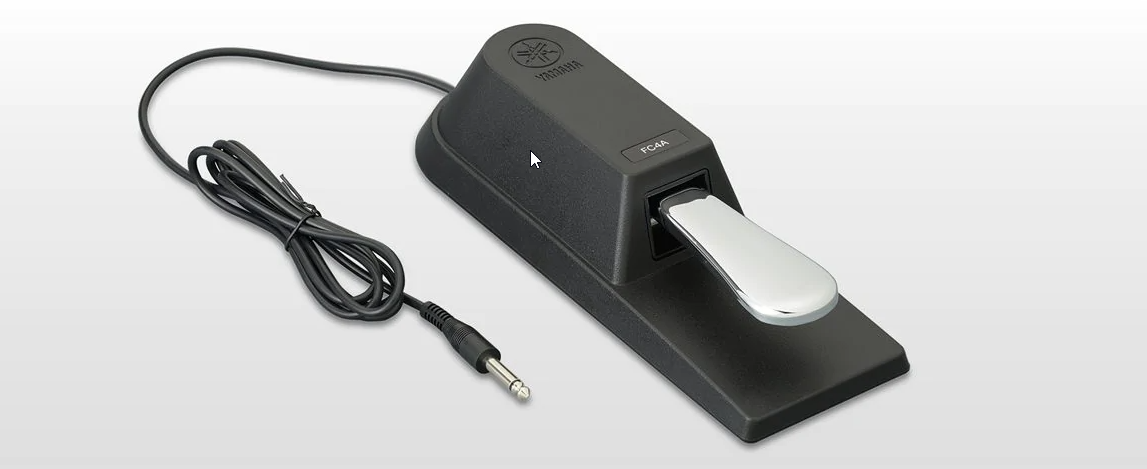
    The DGX650B includes cool accessories such as a foot pedal unit and bench, making it our top pick for the best digital Yamaha piano.

    So, if you’re looking for a Yamaha digital piano that is easy to use and allows you to play and share music, this DGX650B model from Yamaha is your best choice.

    Check On Amazon

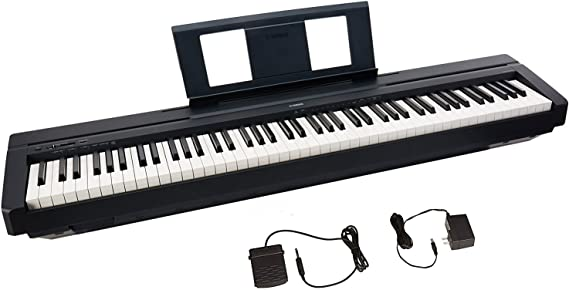
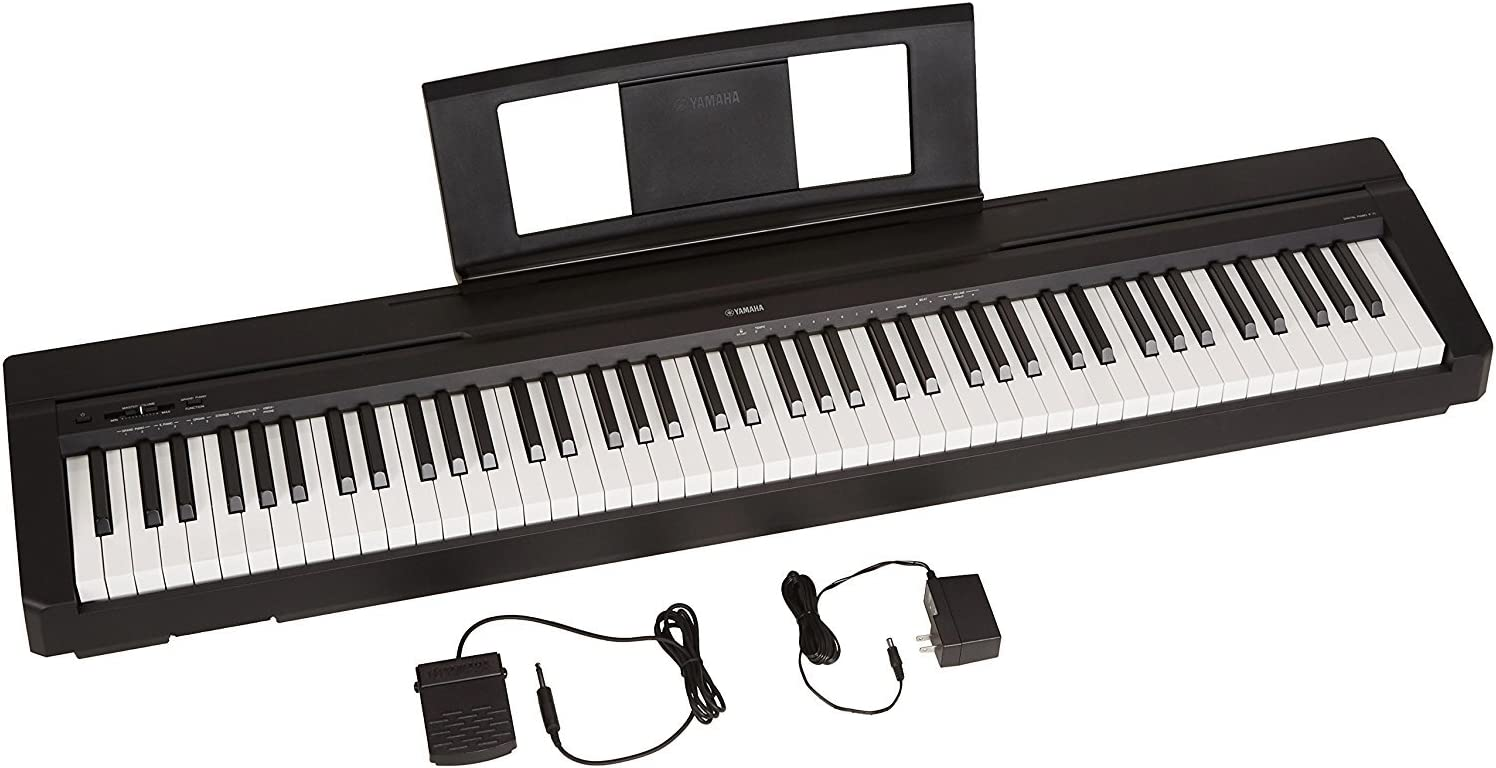
    Yamaha P45 88-Key Digital Piano

    Key Specifications

    • Dimensions: 52.25 x 11.5 x 6 inches
    • Keyboard Type: Graded hammer standard (GHS) keyboard
    • No. of Keys: 88
    • Touch Sensitivity: Hard/medium/soft/fixed
    • Polyphony (Max.): 64
    • Voices: 10
    • Effects: Yes
    • Speakers: Yes
    • No. of Pedals: 1 (Sustain Pedal)
    • Metronome: Yes
    • Connectivity: USB TO HOST, DC IN, Headphones Jack, Sustain Pedal Input Weight: 11.5 kg
    • Price: $549.99

    The Yamaha P-45 is one of the best portable digital pianos for kids and adult beginners.

    It is a simple yet Yamaha’s most popular model in the P (Portable) line of digital pianos. Also, it’s Yamaha’s only digital piano under $500.

    The P-45 has 88 Graded Hammer Standard (GHS) keys, the same as the P-125 (above model). That means the keys are light at higher notes and get heavier as you go toward the lower ones, just like an acoustic piano. It will help you develop the muscles necessary for serious piano playing.

    Also, this entry-level digital piano has an impressive ten voices, including some digitally sampled from real Yamaha acoustic grand pianos.

    And you can try playing a combination of these voices with Dual mode, which combines two voices like piano and strings.

    Additionally, it has 64 maximum polyphony and simulated touch response settings. That lets you create dynamic sounds that emulate the dynamics of a real acoustic piano.

    Connectivity-wise, it has a USB port for connecting to Mac/PC and modern midi recording software. Additionally, the metronome feature helps you practice in time and improve your technique.

    The P-45 also comes with a sustain pedal, music rest, and power adapter.

    If you’re looking for a budget-friendly digital piano for beginners, the P-45 is a solid choice. The lightweight and portable design make it easy to move around, and its sound and feel are similar to a real piano.

    Check On Amazon

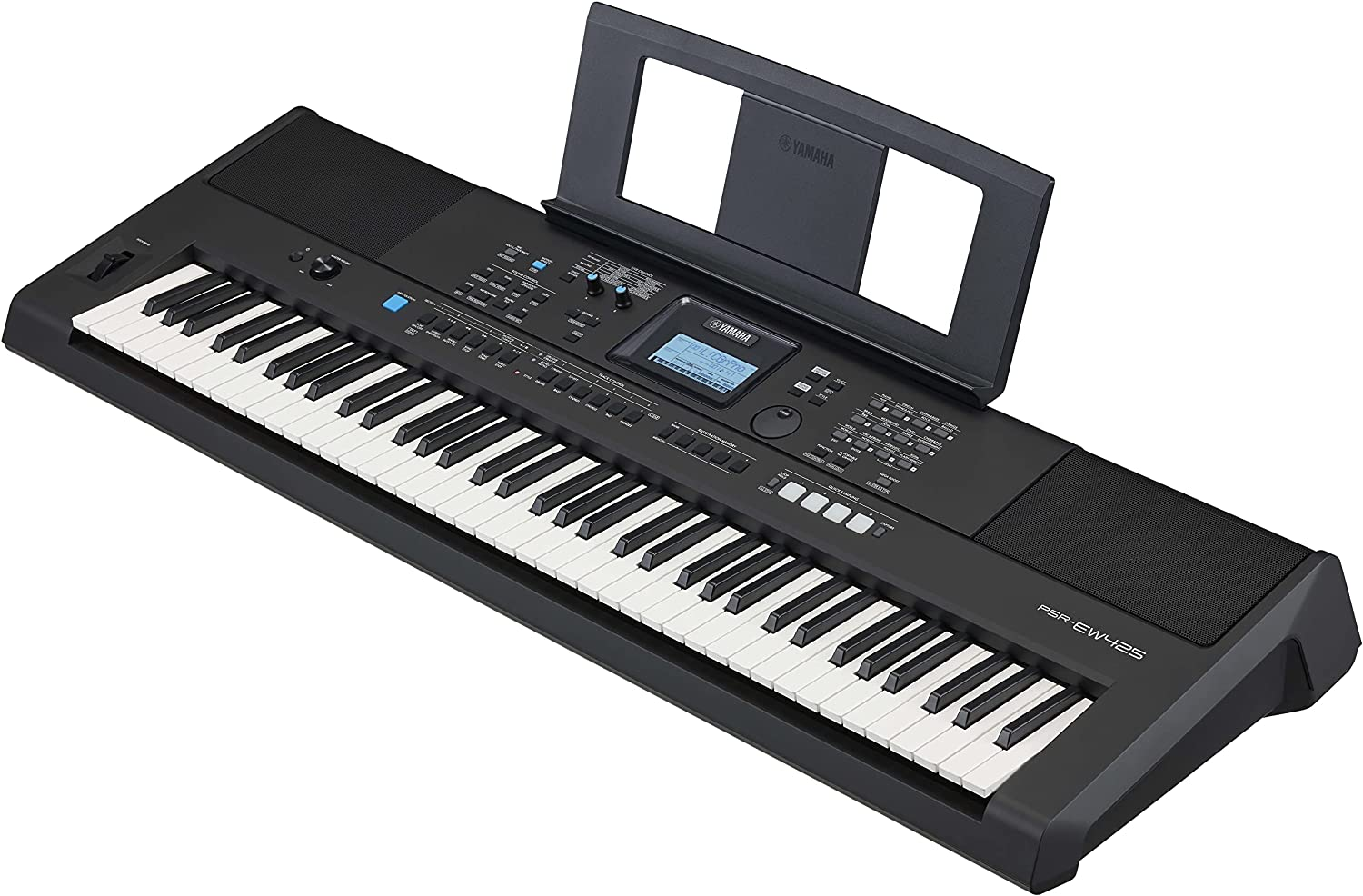
    Yamaha PSR-EW425 Portable Keyboard

    Key Specifications

    • Dimensions: 47.25 x 15.88 x 5.38 inches
    • Keyboard Type: Organ-style keyboard
    • No. of Keys: 76
    • Touch Sensitivity: Yes (Soft, Medium, Hard, Fixed)
    • Polyphony (Max.): 64
    • Voices: 820
    • Effects: Yes
    • Speakers: Yes
    • No. of Pedals: N/A
    • Metronome: Yes
    • Connectivity: USB TO DEVICE, USB TO HOST, DC IN, Sustain Pedal Input, Microphone jack, Headphones Jack, AUX IN
    • Weight: 8.3 kg kg
    • Price: $489.99

    The PSR-EW425 model from Yamaha is one of the best and most portable keyboards at an affordable price, making it perfect for beginners.

    This piano keyboard features 76 keys, which is more than enough for most musical playing styles. And the keys are touch-sensitive, allowing for a more expressive and dynamic playing experience. It delivers the same pro-quality sound found in high-end Yamaha keyboards.

    Also, it has a wide range of built-in sounds and effects, including realistic instrument voices and orchestral sounds.

    The PSR-EW425’s assignable knobs make manipulating various sound effects and parameters easy in real-time, while Mega Boost enhances your performance.

    Using the Motion Effect button, you can instantly modify the voices in your performance with filter, pitch, and modulation effects. And the quick sampling feature lets you record and playback a sample directly from the keyboard.

    This portable keyboard also includes an array of connectivity options such as USB, AUX, and MIDI. That means you can connect it easily to your computer and other instruments.

    The microphone input lets you connect a microphone and sing along while you play, adding an extra layer of fun to your performances.

    Overall, the Yamaha PSR-EW425 is a great digital piano and offers excellent value for the price. And it is sure to satisfy both beginners and serious musicians.

    Check On Amazon

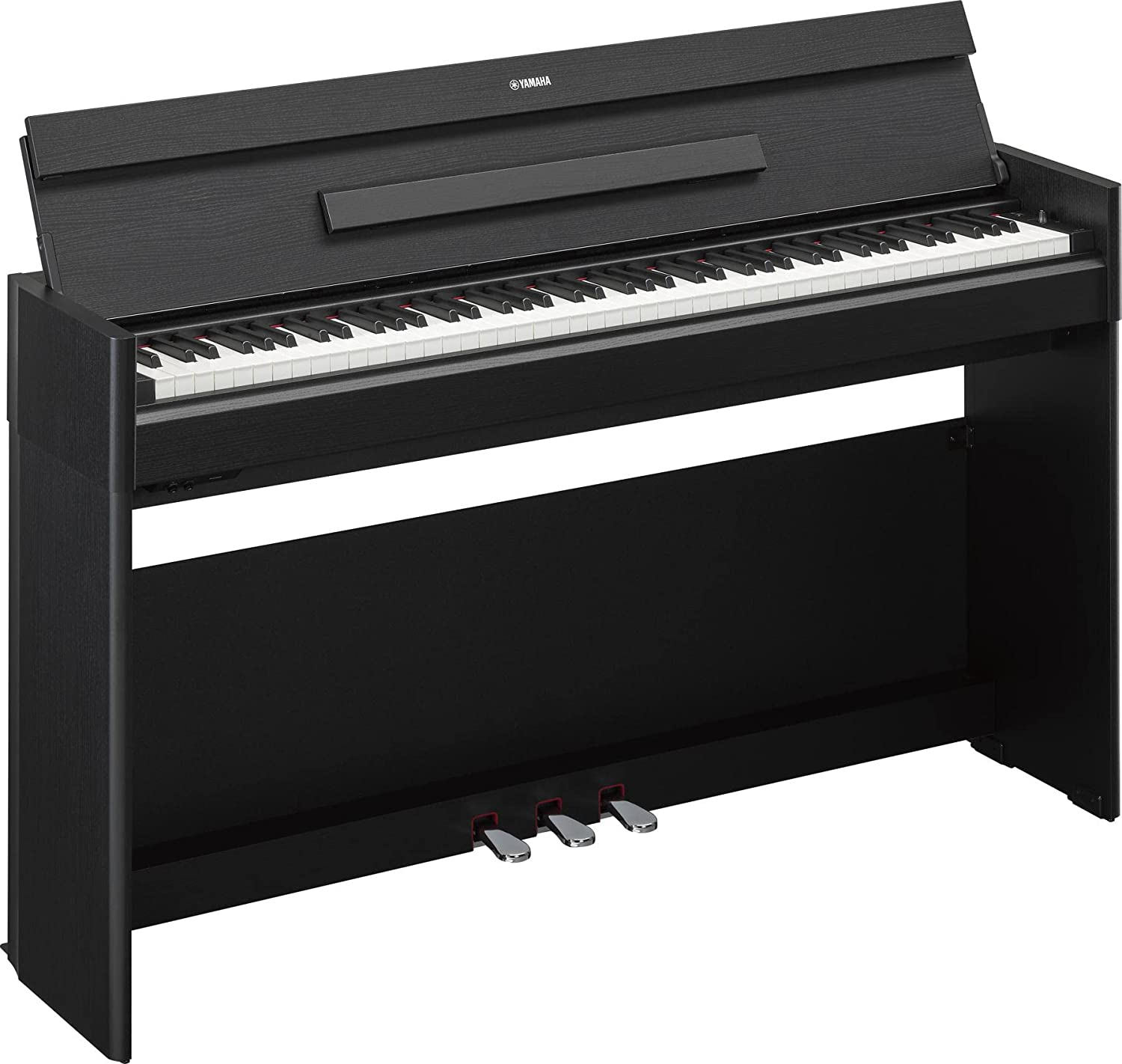
    Yamaha YDPS55 Arius Series Slim Digital Console Piano

    Key Specifications

    • Dimensions: 57.6 x 20.63 x 16.69 inches
    • Keyboard Type: GH3 keyboard with synthetic ebony and ivory keytops
    • No. of Keys: 88
    • Touch Sensitivity: Hard/medium/soft/fixed
    • Polyphony (Max.): 192
    • Voices: 10
    • Effects: Yes
    • Speakers: Yes
    • No. of Pedals: 3: Damper (with half-pedal function), Sostenuto, Soft
    • Metronome: Yes
    • Connectivity: USB TO HOST, DC IN, dual headphones Jacks
    • Weight: 40 kg
    • Price: $1,599.99

    The Yamaha YDPS55 Arius Series Digital Console Piano is an ideal piano for beginners, offering a range of features that will help new players get the most out of their instrument.

    With a GH3 keyboard featuring synthetic ebony and ivory keytops, the YDPS55 provides a realistic playing experience.

    The sound engine has improved to a Yamaha CFX concert grand piano, giving new pianists a professional sound to practice.

    Its slim design also makes it an ideal choice for those with limited space in their homes or apartments.

    The instrument also features three pedals (damper, Sostenuto, and Soft), which are not found on most beginner keyboards. The Pedals are located at the instrument’s base, making it play and feel like an acoustic upright piano.

    Furthermore, the YDPS55 is compatible with the Smart Pianist App for iOS, which is one of the best things about it.

    The app provides a graphical user interface for selecting Voices and configuring settings. It can even analyze songs in your music library and display a chord chart. It is perfect for learning and playing along with your favorite songs.

    If you’re looking for the best digital keyboard piano that’s easy to use, provides excellent sound quality, and feels real, you can’t go wrong with the Yamaha YDPS55 Console Piano. However, it is a bit pricey.

    Check On Amazon

    Yamaha P71 88-Key Weighted Action Digital Piano

    Key Specifications

    • Dimensions: 52.25 x 11.5 x 6 inches
    • Keyboard Type: Graded hammer standard (GHS) keyboard
    • No. of Keys: 88
    • Touch Sensitivity: Hard/medium/soft/fixed
    • Polyphony (Max.): 64
    • Voices: 10
    • Effects: Yes
    • Speakers: Yes
    • No. of Pedals: 1 (Sustain Pedal)
    • Metronome: Yes
    • Connectivity: USB TO HOST, a sustain jack, and a headphone jack
    • Weight: 11.3 kg
    • Price: $499.99

    This Yamaha P71 piano is a fantastic choice if you want a high-quality piano without bells and whistles. It is the top choice of many customers because it’s portable, classic in design, easy to operate, and great for beginners.

    The portable keyboard piano is built to last and has a great, realistic sound. The P71 features the AVM sound engine, which gives the sound of a traditional piano. It delivers a rich, deep, and spacious sound to our ears.

    This keyboard has 88 weighted keys suitable for beginners to help improve their skills. Its embedded sound sampling feature allows you to create a sound similar to an acoustic piano.

    It has ten different voices, and you can record a loop with any of them. You can also layer piano and string for a superb playing experience with the dual-mode function.

    The USB port gives you access to your smart device and DAWs on your PC. If you want to practice silently, you can plug in your headphones. You can also use the built-in metronome to keep your timing accurate.

    Since this piano keyboard is lightweight and portable, you can carry it anywhere.

    Whether you’re a beginner or intermediate player, the Yamaha P71 is one of the best digital pianos from Yamaha if you’re looking for a portable yet high-quality piano at an affordable price.

    Check On Amazon

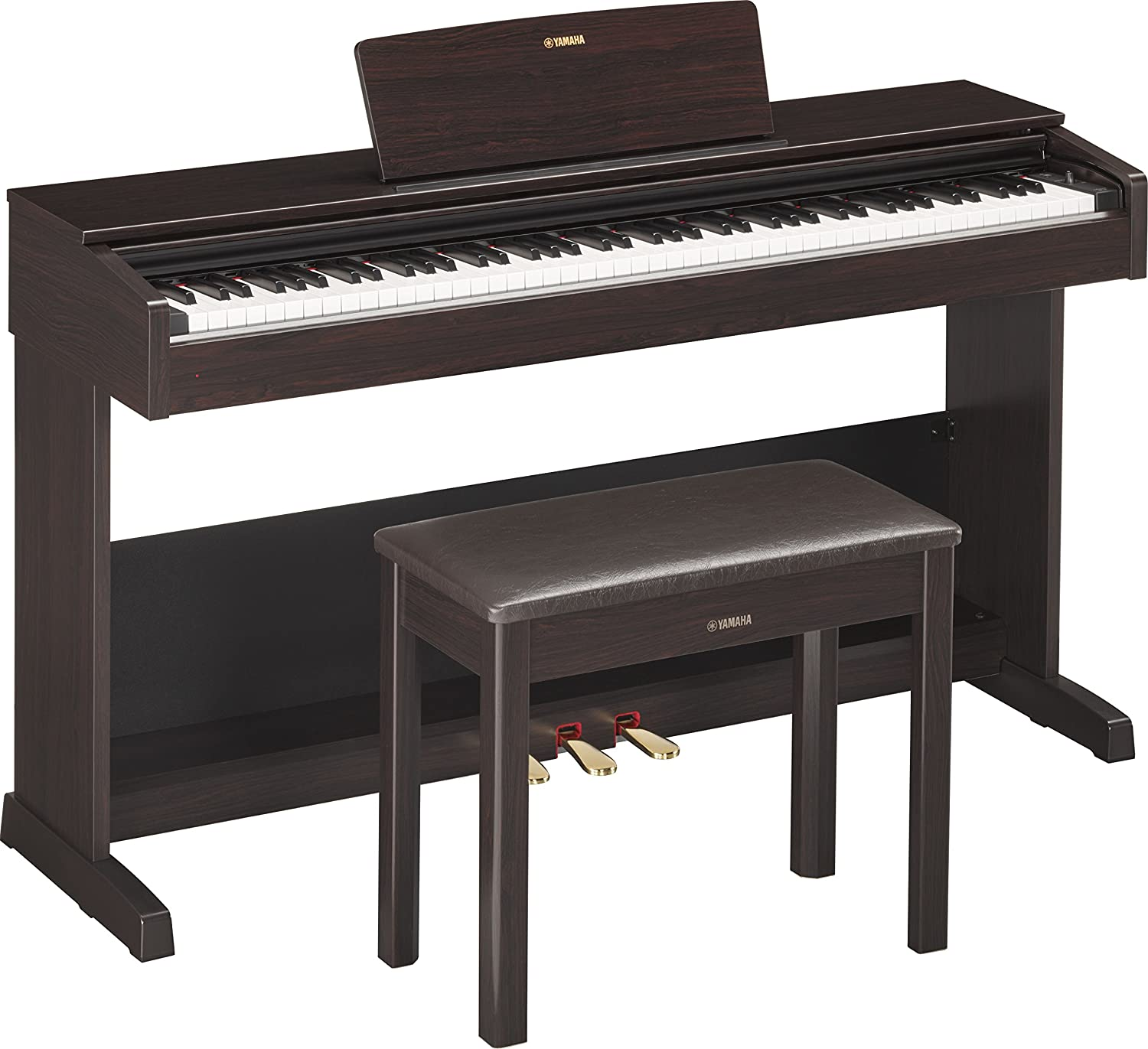
    Yamaha YDP103 Arius Series Piano

    Key Specifications

    • Dimensions: 53.44 x 32.06 x 16.63 inches
    • Keyboard Type: Graded hammer standard (GHS) keyboard
    • No. of Keys: 88
    • Touch Sensitivity: Hard/medium/soft/fixed
    • Polyphony (Max.): 64
    • Voices: 10
    • Effects: Yes
    • Speakers: Yes
    • No. of Pedals: 3 (Soft, Sostenuto, & Sustain Pedal)
    • Metronome: N/A
    • Connectivity: USB TO HOST, Dual Headphones Jacks
    • Weight: 37.5 kg
    • Price: $999.99

    The Yamaha YDP-103 is one of the best Yamaha digital pianos under $1000 because of its outstanding features.

    Like most digital pianos in this list, it uses a Graded Hammer Standard (GHS) key action, providing an excellent sense of touch and response.
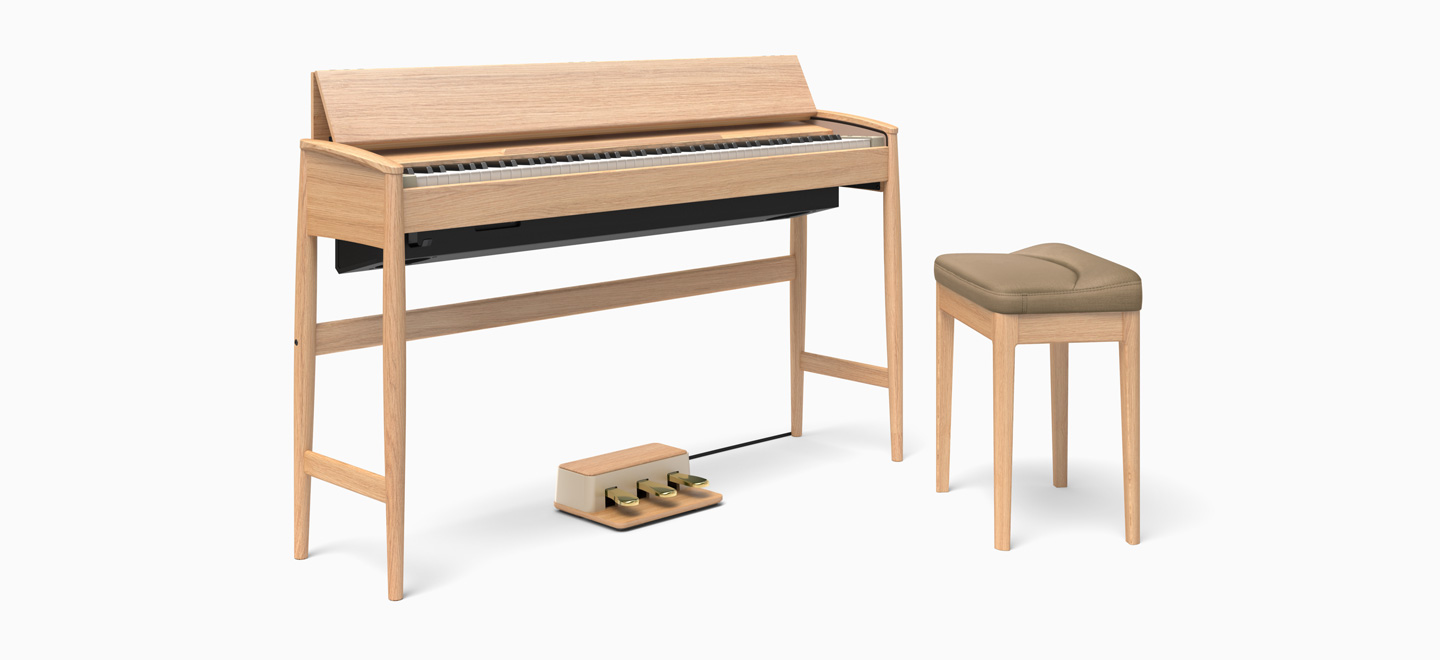
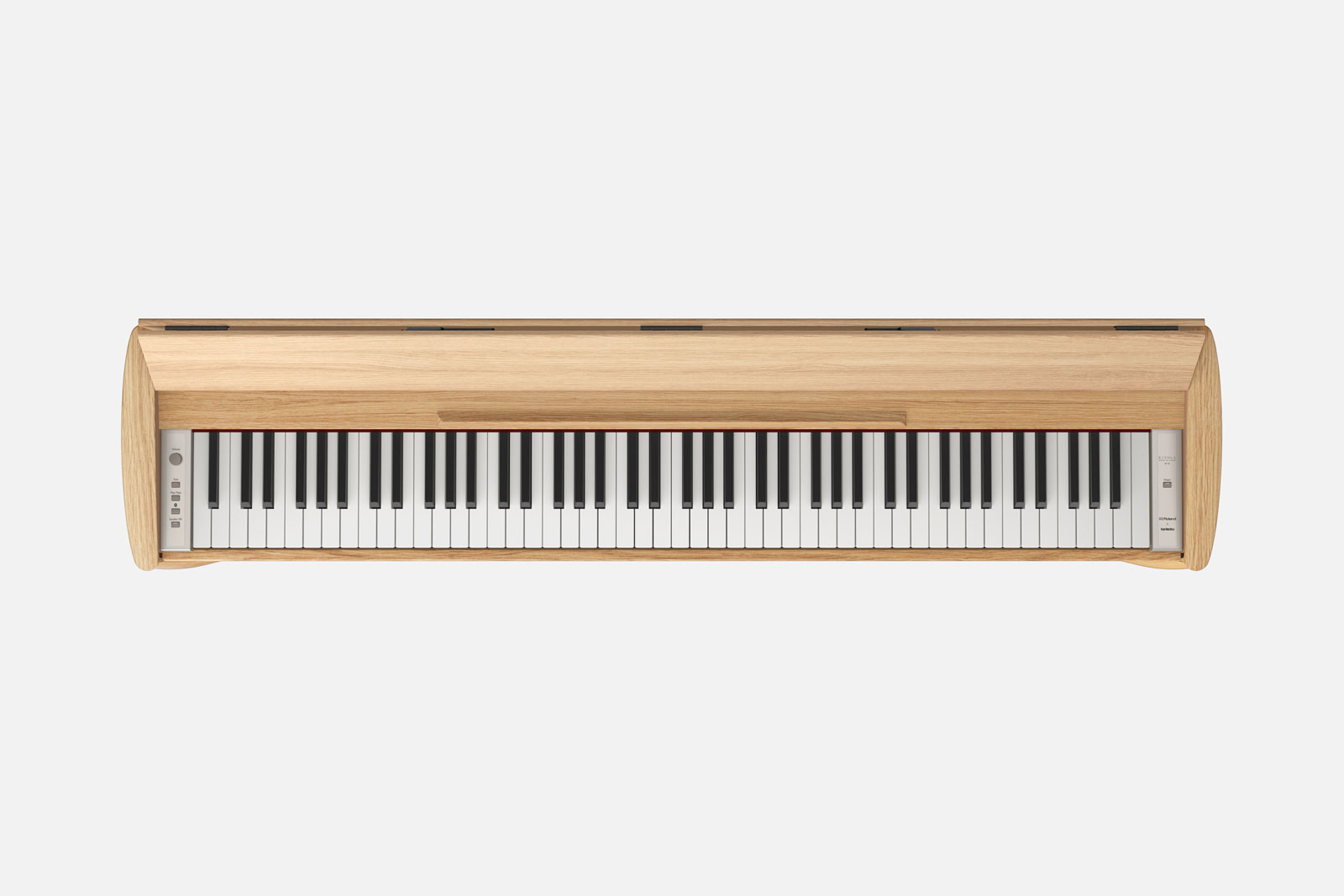
    The piano keys have three levels of touch sensitivity and 64-note polyphony, so you can play complex pieces without any notes dropping out.

    The YDP-103’s sound is powered by Yamaha’s AWM sampling. While it doesn’t quite match the quality of high-end digital pianos, it does deliver an impressive grand piano tone.

    In addition, it offers ten instrument voices, including electric piano, strings, harpsichord, and organ sounds. There are also sound effects such as chorus, reverb, and brilliance.
    Other impressive features of this digital piano include three pedals (soft, sostenuto, & sustain pedal). As with all acoustic pianos, the pedals provide complete control over the sound. It also has two headphone jacks for private practice and recording.

    Additionally, it has a USB port, so you can connect it to a computer for use with your favorite recording and music production software.

    Overall, the YDP-103 won’t disappoint if you’re a beginner or intermediate player who wants good-quality grand piano sounds for a reasonable price.

    Check On Amazon

    Yamaha PSR-EW310 76-key Portable Keyboard Piano

    Key Specifications

    • Dimensions: 45.3 x 14.5 x 4.6 inches
    • Keyboard Type: Organ Style Keyboard
    • No. of Keys: 76
    • Touch Sensitivity: Yes (Soft, Medium, Hard, Fixed)
    • Polyphony (Max.): 48
    • Voices: 622
    • Effects: Yes
    • Speakers: Yes
    • No. of Pedals: 1 (Sustain Pedal)
    • Metronome: Yes
    • Connectivity: USB TO HOST, DC IN, Headphones Jack, Sustain Pedal Input, & AUX In
    • Weight: 5.4 kg
    • Price: $313.94

    The Yamaha PSR-EW310 is an excellent choice for beginners and intermediate players looking to expand their skill set on the piano with greater chords and notes.

    Weighing only 5.4 kg, it’s one of the best portable digital pianos on the market. The compact size makes it easy to transport.

    Its robust plastic construction ensures that the keyboard is durable and can withstand everyday wear and tear. In addition, it’s easy to use and has straightforward controls.

    This keyboard has 76 touch-sensitive keys that respond to force applied to them. Two 12-inch speakers with an amplifier give good sounds.

    The AWM Dynamic Stereo Sampling engine captures the nuances of an acoustic instrument, which is ideal for those wanting to experience a more authentic sound.

    The Smart Chord feature allows you to play complex chord progressions with only a few fingers.

    Additionally, you can connect the piano to your computer via USB to access Yamaha Education Suite (Y. E. S.). The Yamaha Education Suite program allows you to practice at your own pace.

    The headphone jack makes it ideal for practicing without disturbing others. The device can be powered by six AA batteries or an AC adaptor.

    If you’re looking for the most affordable starter digital piano that’s portable and offers everything a beginner needs, you’ll go well with the Yamaha PSR-EW310.

    Check On Amazon

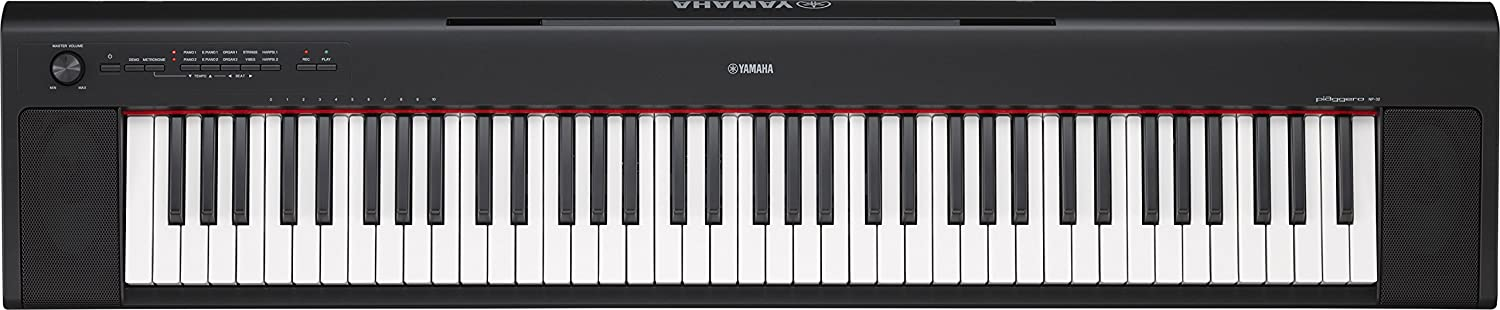
    Yamaha NP32 76-Key Lightweight Portable Keyboard

    Key Specifications

    • Dimensions: 49 x 10.2 x 4.1 inches
    • Keyboard Type: Graded Soft Touch (GST) keyboard
    • No. of Keys: 76
    • Touch Sensitivity: Yes
    • Polyphony (Max.): 64
    • Voices: 10
    • Effects: Yes
    • Speakers: Yes
    • No. of Pedals: 1 (Sustain Pedal)
    • Metronome: Yes
    • Connectivity: USB TO HOST, Sustain Pedal Input, Headphone output
    • Weight: N/A
    • Price: $354.99

    The Yamaha NP32 is the first and cheapest portable piano for novice players. It gives young players the illusion of playing a more professional instrument without spending much money.

    While the Piaggero NP-12 is not one of Yamaha’s top digital keyboards, it is the best in terms of price and ability.

    The NP32 features the 76-key Graded Soft Touch (GST) keyboard, which mimics the feel of an acoustic piano. That allows an authentic playing experience even with its lightweight construction.

    The NP-12 has a grand piano sound you won’t find on any beginner keyboard. The other ten sounds are equally impressive.

    In addition, the NP32 also boasts 64-note polyphony, a song recorder function, and extended battery life, making it an excellent choice for the absolute beginner.

    One of the standout features of the NP32 is the controller app for iOS, which adds a rich and user-friendly interface for easy navigation and configuration. The USB port allows you to connect and interact with various educational apps on your computer or mobile device.

    Overall, the Yamaha NP32 is ideal for those who are just starting to learn the basics of how to play piano.

    Check On Amazon

    Conclusion

    These are the top nine best Yamaha Digital Pianos for beginners available currently. I have selected the best options to suit every beginner’s budget and needs.

    These keyboard pianos are lightweight and have many impressive features that are easy to use. They offer excellent sound quality, touch-sensitive keys, educational programs, and various connectivity options.

    The Yamaha P125, Yamaha DGX650B, and Yamaha PSR-EW310 have the most features and are the most suitable for beginners.

    Whatever your budget, you’ll find something in this list to suit your needs.

    Read more

  • Easy Piano Beatles Songs You Can Learn To Play This Year (2023)

    Easy Piano Beatles Songs You Can Learn To Play This Year (2023)

    Do you want to impress people on piano but have little experience? If so, you should learn some of the classic Beatles songs.

    The Beatles are regarded as one of the most influential and iconic bands. They played an integral role in 1960s counterculture and popular music. So learning their songs is a great way to show off your skills.

    But sometimes, playing the piano versions of their songs can be challenging.

    That’s why I’ve compiled a list of the top 10+ easy piano Beatles songs you can easily play on your piano. Almost all of the Beatles’ songs are easily mastered, as they can be arranged in a simple piano style; this list of songs is subjective.

    Whether you’re a novice or an experienced player, these timeless tunes will surely bring joy and nostalgia to each chord.

    Let’s dive right in!

    A Brief Overview of The Beatles

    Before we dive into the Easy Piano Beatles Songs, let’s glance at The Beatles’ history.

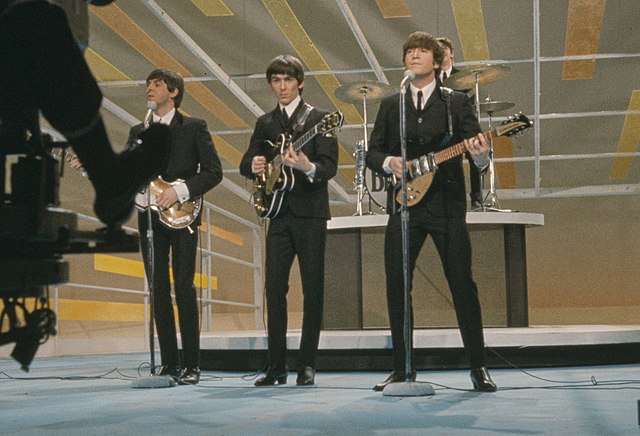
    Started in Liverpool, England in 1960, the Beatles were an English rock-pop band. The original band members included John Lennon, Paul McCartney, George Harrison, Stuart Sutcliffe, and Pete Best. They regularly performed at clubs in Hamburg, West Germany, from 1960 to December 1962.

    During this time, the band underwent various changes in members, names, and music styles, before settling on the final lineup and name. The principal members were John Lennon, Paul McCartney, George Harrison, and Ringo Starr.

    The original drummer Pete Best was replaced by Ringo Starr in 1962. The producer George Martin fired Best for his personality and because he wasn’t a good enough drummer. Sutcliffe also quit, so Paul McCartney began playing the bass.

    The Beatles’ primary songwriters were Lennon and McCartney, while George Martin produced most of their music. The manager of the band was Brian Epstein.

    They became famous after releasing their first “Love Me Do” single in late 1962. The song was a hit in the U.K. When the Beatles got more popular, they were called “Beatlemania”.

    Throughout their ten years of music making, The Beatles influenced many other bands with their creative avant-garde and orchestral music while inspiring the start of metal and punk.

    They are widely regarded as one of the most successful and influential bands in popular music history.

    Beatles in the style of Peter Max (Dall-E2)

    Top 10+ Easy Piano Beatles Songs That You Should Play

    The Beatle’s songs include some melodious but surprisingly simple to play on piano songs. That was one of the Beatle’s charms to have fun music that is easy to imagine and needs learning basics.

    The following are the top 11 Beatles songs that you can play on your piano:

    Hey Jude

    One of the best Beatles songs to play on the piano is “Hey Jude.” The song progresses slowly and has accessible arrangements, so even a very beginning student can play it.

    “Hey Jude” was released in August 1968 as a non-album single. Paul McCartney wrote it, and Lennon–McCartney credited it.

    This song became a number-one hit worldwide and the year’s top-selling single in the U.K., U.S., Australia, and Canada.

    The song was originally titled “Hey Jules,” and Paul McCartney wrote it to comfort John Lennon’s son, Julian, over his parents’ divorce.

    As it evolved, it became what we know and love as “Hey Jude.” The song begins with a verse-bridge structure that includes Paul’s vocal performance and piano accompaniment.

    This song has a simple and catchy melody, and the lyrics are full of hope and positivity. It is pretty easy to play on the piano, with just a few chords and simple melodies. It will help you build up your skills and confidence as a beginner.

    Click here to access the Beatles’ Hey Jude piano sheet music.

    All You Need Is Love

    “All you need is love” is another easy piano Beatles song released in July 1967. It is one of the most popular songs the Beatles have ever produced.

    John Lennon wrote and planned this song to portray a clear message: “love is everything”.

    It is a simple, elegant song with a straight melody. Also, it has a lovely chorus that you can sing along with the piano.

    Click here to access the Beatles’ All You Need Is Love piano sheet music.

    Let it be

    “Let It Be” is a classic song that was written and sung by Paul McCartney. In March 1970, The Beatles released it as a single and an alternative mix as the title track of the “Let It Be” album.

    This song has a soothing yet straightforward tone that sticks to the ear. Also, this song is excellent for piano solos.

    “Let It Be” was the last single released by the Beatles before Paul McCartney announced his departure. Paul McCartney’s message in his dream from his mother, who died when he was fourteen, inspired this song.

    According to Paul, his mother reassured him in a dream he had in the sixties that it would be OK. Just let it be!

    You will enjoy playing this song if you’re a piano soloist because it’s simple and soothing.

    Click here to access the Beatles’ Let it be piano sheet music.

    A Day In My Life

    “A Day in the Life” is one of the popular songs by the English rock band the Beatles. It is one of the most famous songs in music history, appearing on many lists of the greatest songs of all time.

    The Beatles released this song as the final track on their 1967 album “Sgt. Pepper’s Lonely Hearts Club Band”.

    John Lennon wrote most of the verses, with McCartney contributing most of the middle sections to the composition. Contemporary newspaper articles mainly inspired Lennon’s lyrics.

    The recordings contain two sections of orchestral glissandos partly designed in the avant-garde style. The song’s middle segment has McCartney’s memories of his younger years, which included riding the bus, smoking, and attending school.

    The Beatles added orchestral passages to this melody after recording this key lyric.

    “A Day in the Life” has a simple, recurring chord progression that is easy to play on a piano. When you play this song on the piano, its lyrics will remind you of your childhood.

    Click here to access the Beatles’ A Day In My Life piano sheet music.

    Hello, Goodbye

    “Hello, Goodbye” is one of the most popular and easy piano Beatles songs. It was the group’s first release since the death of their manager, Brian Epstein, in November 1967.

    It was a big hit worldwide and reached the top of the charts in several countries, including the U.S., the U.K., New Zealand, Canada, and Australia.

    Paul McCartney and John wrote the lyrics to this song to explore a certain duality in the world surrounding us.

    A real-life incident inspired the song. It happened when a band representative answered a fan’s questions about songwriting while McCartney stood by and replied with opposite answers.

    This song has an upbeat and catchy tune that is perfect for practicing your rhythm and finger dexterity. The song’s signature “Hello, hello” refrain is easy to play on the piano.

    Click here to access the Beatles’ Hello, Goodbye piano sheet music.

    Yesterday

    “Yesterday” is a timeless classic song by the English rock band the Beatles. It was first released on their album “Help!” in 1965. And it has since become one of the most covered songs in music history.

    The song was written by Paul McCartney and credited to both Lennon and McCartney. It is a melancholy ballad about the end of the relationship.

    McCartney lamented the beautiful yesterday he spent with his lover, who left after he said something to her.

    Its simple yet heartfelt lyrics and melodic structure have resonated with listeners for decades.

    The band’s masterful instrumentation and McCartney’s emotional performance made it an unforgettable listening experience.

    This song has easy piano arrangements, making it easy for beginners to learn.

    Click here to access the Beatles’ Yesterday piano sheet music.

    Yellow Submarine

    “Yellow Submarine” is one of the best and most straightforward Beatles songs.

    It was released as a part of their album Revolver in 1966. The song was also released as a double A-side single with Eleanor Rigby.

    “Yellow Submarine” was a children’s song with a very psychedelic aesthetic. But it’s an adorable singalong that anyone can enjoy.

    Paul McCartney and John Lennon wrote the song, and Ringo Starr sang it. “Yellow Submarine” won the Ivor Novello Award in 1966 for the highest certified sales.

    According to McCartney, he got the idea of a colored submarine during his holiday in Greece in 1963. He enjoyed an iced spoon sweet which was yellow or red and locally called a submarine.

    Click here to access the Beatles’ Yellow Submarine piano sheet music.

    Michelle

    “Michelle” is a classic song by the English rock band the Beatles released in 1965 as part of their album “Rubber Soul.”

    It’s one of Paul McCartney’s oldest but most memorable tracks. McCartney composed this song in his early days with the help of his wife and old school friends.

    This song is Paul’s nostalgic and romantic best from Rubber soul, where he tries to overcome the language barrier to express his love. “Ma belle” in the song is a French word that means “my beautiful”.

    The original recordings didn’t include piano, but piano learners still enjoy it because of its simple melody and slow tempo.

    Click here to access the Beatles’ Michelle piano sheet music.

    In My Life

    It is one of the best and most popular songs by the English rock band the Beatles. In 1965, this song was released as a part of their album Rubber Soul.

    John Lennon wrote the song as “a remembrance of friends and lovers of the past.” It is John’s best and most beautiful love song and describes all the changes the singer has had in his life.

    During an interview in 1980, Lennon said that this song was his “first real major piece of work” because it was the first time he had written about his own life.

    This song has a lovely and elegant tone. Its simple chord progressions and melody make this song a good choice for beginners. If you’re a beginner pianist, it’s a good starting point to learn piano melody songs.

    Click here to access the Beatles’ In My Life piano sheet music.

    Here Comes The Sun

    “Here Comes the Sun” is one of the best and most played piano Beatles Songs. In 1969, it was released as a part of the Beatles’ album Abbey Road.

    The song is credited to George Harrison, and listeners consider it one of his best. Harrison got inspired to write this song when he was experiencing many hardships in his personal life.

    The song portrays George’s optimistic view of life. Its lyrics describe his relief with spring’s arrival and his temporary break from the band’s business affairs.

    “Here Comes the Sun” is an easy song for beginners to play on the piano because it has a relatively easy melody. Playing this Beatles song on piano is a beautiful experience.

    Click here to access the Beatles’ Here Comes The Sun piano sheet music.

    In addition to the above, here are some other popular and easy Beatles songs to play on the piano:

    • Strawberry Fields Forever
    • Oh! Darling
    • BlackBird
    • Eleanor Rigby
    • Baby, You’re a Rich Man
    • If I Fell
    • Norwegian Wood (This Bird Has Flown)
    • With a Little Help from My Friends
    • She Loves You
    • I Want to Hold Your Hand
    • Good Day Sunshine

    Best Piano Books to Learn the Beatles

    If you are new to playing the piano keyboard, we’re going to show the absolute best ways to get started playing your favorite Beatle’s music. You can play the Beatles even if you are just a beginner.  These books are presented in the order of simplicity.

    The Beatles Super Easy Song Book is the first step to learning Beatles’ music. First, the letters of the note is written inside the actual note. Plus most of the songs have been transposed to a more simple arrangement.  Chords are quite simple are displayed at the top of the page. Super Easy Beatles song convey the essence of the song.  So songs that have long introductions or closed don’t contain these elements. This was my goto Beatles sheet music book when I got started.  The first song in the book is Across the Universe written by John Lennon. It’s a very simple song to play with only 3 chords in this version.

    The next book I’d recommend is when you are ready to move up to no notes inside the musical notation.  You’ll also get some nice piano intros. It’s called The Beatles Greatest Hits (Easy Piano).  Be aware there are different levels of “Easy”.

    Super easy and Easy Play Today both contain the notes inside the musical notations with just a few sharps and flats but that changes when you move to easy piano things get a little more challenging.

    This book uses more chords, sharps and flats and does not show inversions.  It presumes you are an advanced beginner.  This is a good selection but not exhaustive collection of Beatles songs.

    Getting better at the piano? Ready to move up again. The Beatles Sheet Music Collection has over 100 classics for you to play. These are fairly close to the original arrangements.  By this time you’ll be able to distinguish between between Lennon and McCartney’s writing. Both were more simple to play.  George Harrison’s songs seem more complex with the shifts of chords, sharps, and flats.  You will be a solid intermediate player and will not regret the purchase of this book.

    If you are thinking to skip directly to this book as a beginner, let me advise you – this would be a mistake.

    If you play gigs (or want to) you’ll probably want short arrangements of Beatles songs. This Fake book is an excellent choice for the essence of Beatles music. If someone asks you to play a song, this Fake book will have you covered. Remember, the book looks as if it was handwritten notation and has it’s own chord notation. An A- notation means you’re playing a minor chord.  If you got the Beatles sheet music collection, you probably don’t need this book for your collection – unless you are planning on playing gigs.

    That’s a pretty good introduction to Beatles sheet music. I hope it helps you grow.

    Conclusion

    As you can see above, I’ve listed the top 10+ Easy Piano Beatles Songs suitable for piano players of all skill levels.

    The Beatles are one of music’s most iconic and influential bands. All four band members knew how to compose and perform with elegance.

    They have captured the hearts of millions of fans worldwide with their unique blend of pop, rock, and psychedelic sounds.

    Whether a beginner or an experienced pianist, these songs (listed above) will improve your piano skills and offer hours of inspiration and a sense of accomplishment as you master them.

    Did you find any of your favorite songs here? Or do you have any recommendations? Please let us know by leaving your thoughts in the comment!

    Read More

  • Best Mini Keyboard Piano For You – 2023 Updated

    Best Mini Keyboard Piano For You – 2023 Updated

    Are you a pianist looking for a good keyboard piano but doesn’t have the space or budget for a full-sized piano? Or are you a beginner taking piano classes and need a portable unit that you can carry around easily? If so, you need a mini keyboard piano.

    But with so many options on the market, choosing the right mini portable keyboard piano for your needs can be overwhelming.

    That’s why I’ve made this list of the top 9 Best Mini Keyboard Pianos based on their features, quality, durability, price, customer reviews, and the reputation of the manufacturers.

    Also, I’ve included options to suit every type of customer.

    So, let’s get started!

    The 9 Best Mini Keyboard Pianos You Can Buy Today

    The following are the top nine best mini keyboard pianos for limited spaces or on-the-go playing:

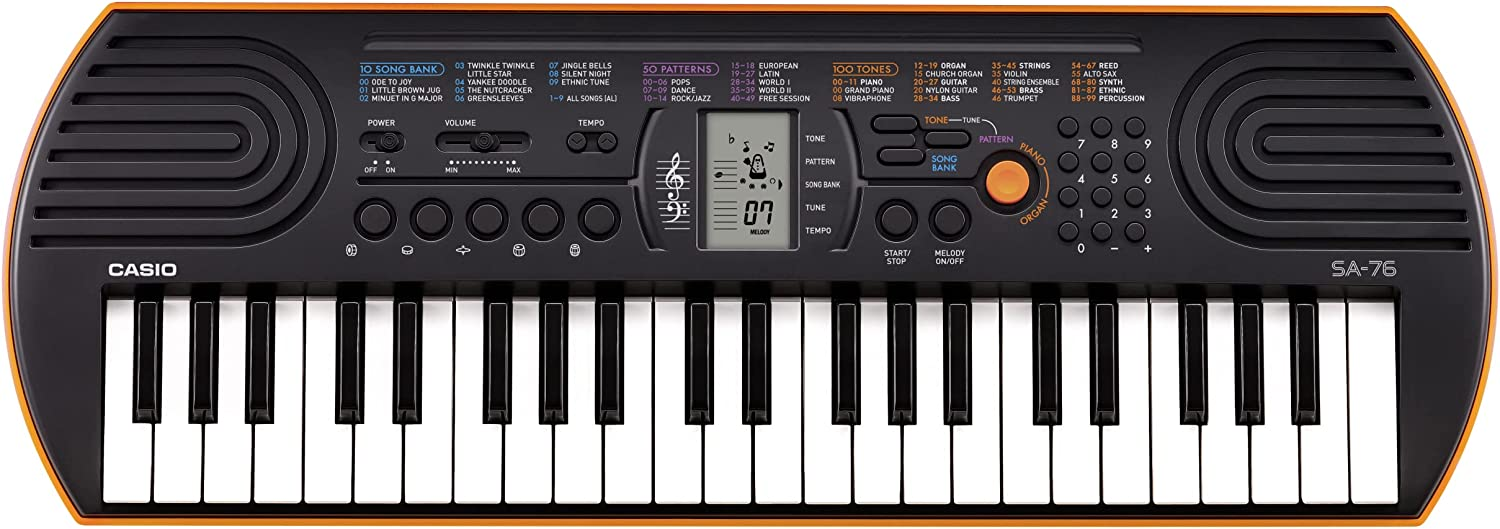
    Casio SA-76 44-Key Mini Personal Keyboard

    Key Specifications

    • Dimensions: 23.78 x 2.25 x 8.3 inches
    • No. of Keys: 44
    • Touch Sensitivity: N/A
    • Polyphony (Max.): 8
    • Tones: 100
    • Rhythms: 50
    • Speakers: Yes
    • Connectivity: PHONES/OUTPUT (Stereo mini jack)
    • Weight: 1.2 kg
    • Price: $59

    The Casio SA-76 is one of the best portable keyboard pianos for children and beginners. Despite its compact size, the SA-76 is a durable and reliable keyboard.

    It has a sleek and modern design and is built with high-quality materials that make it resistant to wear and tear.

    This keyboard piano has 44 mini keys and stereo speakers that produce beautiful sounds. It also offers 100 tones and 50 rhythms, allowing users to experiment with various sounds.

    It has an intuitive interface. You can operate all the buttons with ease. With the large orange button, you can quickly and easily select the Grand Piano or Reed Organ sound. Also, it has an LCD panel that lets you see the notes you play on the screen.

    The Casio SA-76 keyboard piano features a built-in lesson function that helps users learn to play songs through a series of drills and exercises.

    Additionally, it has five dedicated buttons for drum sounds. You can use these at the same time as the keys, so you play a melody while your friend plays drums.

    Since it’s battery-powered, you can take it anywhere. The only minor drawback is that it doesn’t include an AC adapter, so you have to purchase it separately.

    Overall, the Casio SA-76 44-Key Mini keyboard is an excellent instrument for younger musicians and beginners that is versatile and durable. It has an easy-to-use interface and provides excellent sound quality for the price.

    Who’s it for?

    The Casio SA-76 44-Key mini keyboard is ideal for kids, beginners, traveling musicians, and those with limited space and budget. But if your fingers are thicker, it’s not good for you.

    Check On Amazon

    Yamaha PSS-A50 Mini-Key Keyboard

    Key Specifications

    • Dimensions: 21.6 x 8.6 x 3.7 inches
    • No. of Keys: 37
    • Touch Sensitivity: Soft, Medium, Hard, Fixed
    • Polyphony (Max.): 32
    • Voices: 42
    • Rhythms: N/A
    • Effects: Yes
    • Speakers: Yes
    • Connectivity: A USB Port, MIDI, PHONES/OUTPUT (Stereo mini jack)
    • Weight: 1.2 kg
    • Price: $99.99

    The PSS-A50 Mini-Key Keyboard from Yamaha is one of the best portable keyboards with superior features, sound quality, touch, and feel. This keyboard piano is very compact and easy to carry around.

    The keyboard features 32 velocity-sensitive keys, which give you a more realistic playing experience, similar to an acoustic piano. This makes it easy and comfortable for beginners or those with small hands to play.

    If you’re an adult musician, the mini piano keys may take some time to get used to, but once you do, you’ll find they’re surprisingly responsive and allow for a wide range of expression.

    The keyboard offers high-quality sound. The piano sound is not like a toy but like one of Yamaha’s real musical instruments. It also has a built-in speaker and various sounds and effects, including a drum kit, making it great for solo practice or performances.

    Another significant aspect of the PSS-A50 is its versatility. It has a USB port, allowing easy connection to a computer or other device for recording or playing back music.

    Furthermore, it has a headphone jack for connecting an external speaker or amplifier. So you can practice silently without disturbing others.

    The device runs on four AA batteries or a USB mobile battery. So, you can take it along on road trips, jam sessions, backyard parties, or even in the recording studio.

    Overall, I highly recommend the Yamaha PSS-A50 to anyone looking for a small and versatile keyboard. It offers excellent value for the money.

    Who’s it for?

    The Yamaha PSS-A50 is an excellent piano keyboard for kids and students looking for a portable, easy-to-use option. Also, it’s suitable for musicians who are doing composition or arranging.

    Check On Amazon

    Lexington EK3282 32-Key Mini Portable Digital Keyboard Piano

    Key Specifications

    • Dimensions: 21.6 x 8.6 x 3.7 inches
    • No. of Keys: 32
    • Touch Sensitivity: Yes
    • Polyphony (Max.): N/A
    • Voices: 128
    • Rhythms: 128
    • Effects: N/A
    • Speakers: Yes
    • Connectivity: A Micro USB Port
    • Weight: 1.1 kg
    • Price: $47.99

    The Lexington EK3282 32-Key Mini Portable Keyboard Piano is ideal if you’re looking for a portable, affordable, compact, and easy to use.

    This keyboard features a cute design that combines blue and black panels. The interface is extremely easy to use and navigate.

    This musical instrument has 32 mini keys and decent sound quality. It also has 128 instrument sounds and 128 rhythms.

    You can connect the keyboard to your computer or tablet via USB for even more sound options.

    The Lexington EK3282 mini digital piano has a recording and playback function, so you can record your performance and listen to it later. It helps you improve your piano-playing skills.

    The digital piano includes an AC adapter, so you don’t need to worry about your batteries running out while you play.

    All in all, this Lexington keyboard is an excellent choice for anyone looking for a portable and affordable mini digital piano.

    Who’s it For?

    The Lexington EK3282 32-Key Mini Portable Digital Piano is best suited to small-handed adults and children just starting their musical journey.

    Check On Amazon

    Casio CTK-2550 PPK 61-Key Premium Keyboard

    Key Specifications

    • Dimensions: 44 x 15 x 9 inches
    • No. of Keys: 61
    • Touch Sensitivity: Yes
    • Polyphony (Max.): 48
    • Voices: 400
    • Rhythms: 150
    • Effects: Yes
    • Speakers: Yes
    • Connectivity: AUDIO IN (Stereo mini jack), PHONES/OUTPUT (Stereo standard jack), Sustain Pedal Jack
    • Weight: 3.3 kg
    • Price: $173.59

    It is another popular and best portable keyboard piano from the Casio brand in this list.

    The Casio CTK-2550 is a compact and lightweight yet rugged and reliable keyboard. Also, it uses battery power or an AC adapter, allowing you to make music anywhere.

    The keyboard has 61 touch-sensitive keys, making it a realistic piano experience. However, it does not have weighted keys.

    The sound quality is decent for the price. This device has 400 tones and 150 rhythms to meet all musical needs.

    It also includes the Dance Music Mode, which lets you easily create and remix electronic dance music with various drum beats, bass lines, synth parts, and effects.

    In addition, you can use the free Chordana Play app on your iOS or Android device to learn how to play your favorite songs with the keyboard’s display.

    The keyboard’s built-in speakers and the ability to connect headphones allow you to listen to your playing in various settings.

    The package includes a keyboard stand, headphones, and an AC adapter.

    Overall, the Casio CTK-2550 PPK is a reliable and feature-packed keyboard that will delight musicians of all ages. It offers excellent value for money.

    Who’s it For?

    The Casio CTK-2550 is one of the best digital pianos for beginners who are just starting lessons and are more concerned with functions than sound quality. However, you shouldn’t pick this digital piano if you’re an experienced musician.

    Check On Amazon

    AKAI Professional LPK25 – USB MIDI Keyboard controller

    Key Specifications

    • Dimensions: 13.7 x 4.0 x 1.5 inches
    • No. of Keys: 25
    • Touch Sensitivity: Yes
    • Polyphony (Max.): 0
    • Voices: 0
    • Effects: Yes
    • Speakers: N/A
    • Connectivity: MIDI, USB port
    • Weight: 1 pound
    • Price: $46

    The AKAI Professional LPK25 is a must-have for musicians and producers looking to interact with their music software more efficiently and intuitively.

    The compact design makes it easy to carry around, and the USB connection allows you to use the controller with any computer or laptop.

    The mini-keyboard features 25 full-size velocity-sensitive keys, allowing you to play natural-sounding piano and synth parts. The controller also features an octave up and down button, allowing you to access the full range of notes in your music software.

    The pitch and modulation wheels on the top of the controller are assignable to various parameters in your music software, allowing you to shape your sound in real-time.

    The LPK25 also features an arpeggiator, allowing you to create complex rhythms and patterns quickly. The arpeggiator can be synced to the tempo of your music software, making it easy to stay in time with your track. The controller also has an assignable data knob, which can control various parameters in your music software.

    In addition, it has four programmable memory banks that allow you to recall mappings for DAWs, virtual instruments, and effects instantly.

    As part of the package, you will receive the appropriate USB mini cable, manuals, and Editor Librarian software on CD.

    Overall, the AKAI Professional LPK25 is an excellent choice for musicians and producers who need a portable and intuitive MID keyboard controller for their music software.

    Who’s it For?

    This keyboard is a perfect choice if you want to get into music production. Music producers and musicians (both novice and professional) who want more hands-on control of their music software will enjoy this MIDI keyboard controller.

    Check On Amazon

    Kmise Mini Keyboard Piano

    Key Specifications

    • Dimensions: 17.5 x 8.26 x 2 inches
    • No. of Keys: 32
    • Touch Sensitivity: Yes
    • Polyphony (Max.): N/A
    • Voices: 128
    • Rhythms: 128
    • Effects: Yes
    • Speakers: Yes
    • Connectivity: USB port, DC Input, Headphone Output
    • Weight: 1.2 kg
    • Price: $49.99

    The Kmise is an excellent choice if you are looking for a small, portable digital electronic keyboard at an affordable price.

    Its lightweight and portable design make it easy to transport or store away when not in use. The keyboard is made from durable plastic, which makes it both sturdy and lightweight.

    Designed specifically for small hands, the Kmise has 32 touch-sensitive mini keys. The keys themselves have a smooth and responsive feel, which makes playing enjoyable, and the key action is surprisingly good for a mini keyboard.

    The keyboard includes several impressive features, including a metronome and a recorder for recording your practice sessions. It also has a range of sounds, from pianos to organs, strings, and synths, giving you plenty of options to explore.

    Aside from all that, the Kmise has various connectivity options, including MIDI and USB outputs, allowing you to connect to other instruments or software. It also includes a power adapter, making it easy to use wherever you go.

    All in all, the Kmise is one of the best mini keyboard pianos that offers excellent value, portability, and features.

    Who’s it For?

    This piano is designed for small hands. It is perfect for kids and adult beginners looking to start with keyboard music.

    Check On Amazon

    Roland GO:KEYS 61-key Music Creation Piano Keyboard

    Key Specifications

    • Dimensions: 34.6 x 10.7 x 3.25 inches
    • No. of Keys: 61
    • Touch Sensitivity: 3 types, fixed touch
    • Polyphony (Max.): 128
    • Voices: 554
    • Effects: Yes
    • Speakers: Yes
    • Connectivity: Bluetooth, USB Micro-B type (MIDI), Stereo miniature phone type, Stereo 1/4-inch phone type, sustain pedal input
    • Weight: 3.9 kg
    • Price: $299.99

    The Roland GO:Keys GO-61K Digital Keyboard is one of the best portable keyboards thanks to its fantastic sound quality and reasonable price.

    The keyboard features 61 velocity keys with an ivory feel, allowing users to produce a wide range of piano sounds. It has 128-note polyphony and 554 sounds, including grand piano, upright piano, electric piano, synths, strings, bass, brass, and organs.

    It also offers a variety of sound effects, allowing you to experiment with different sounds and create unique music.

    You’ve almost got the perfect partner for your online lesson plan because it features a digital metronome, a Loop Mix function, and a recording capability for your practice sessions.

    The Loop Mix function responds to whatever note you’re playing, helping you easily create and explore melodies.

    Bluetooth connectivity allows it to connect wirelessly with online piano tuition apps and stream audio through its built-in speakers.

    The device also features a USB Micro-B connector, stereo miniature phone connector, stereo 1/4-inch phone connector, and sustain pedal input.

    The best part is that it’s straightforward to use, even if you’ve never used a keyboard.

    Overall, the Roland GO: KEYS 61-key digital piano will surely be a hit with its impressive sound quality, versatility, and Bluetooth connectivity.

    Who’s it For?

    Whether you’re an entry-level or pro player looking for an instrument that’s easy to use and reliable, this digital keyboard piano is a superb choice.

    Check On Amazon

    Vangoa VGK610 Piano Keyboard, 61 Mini Keys

    Key Specifications

    • Dimensions: 32.7 x 10.9 x 3.1 inches
    • No. of Keys: 61
    • Touch Sensitivity: N/A
    • Polyphony (Max.): N/A
    • Voices: 350
    • Rhythms: 350
    • Effects: Yes
    • Speakers: Yes
    • Connectivity: Audio input, microphone jack, headphone jack, and adapter
    • Weight: 3.5 kg
    • Price: $89.95

    The Vangoa VGK610 Piano Keyboard is a delightful instrument for beginner musicians and children.

    The pink color gives it a vibrant and delicate appearance. Made from ABS material, it has the fine quality and a soft-edge design, making it safe and suitable for children.

    The VGK610 keyboard features 61 unweighted mini keys, perfect for kids’ tiny fingers, and won’t cause finger pain after practice.

    Additionally, it comes with 350 timbres, 350 rhythms, 30 demo songs, and eight percussions to choose from. You can customize the sounds and play with your favorite songs using the vibrato, sustain, and percussion buttons.

    Aside from all that, the VGK610 includes three teaching modes and an adjustable rhythm tempo to make it easy for beginners to learn. There is also a record and playback function that allows you to correct your playing.

    This keyboard has jacks for audio input, a microphone, headphones, and an adapter, and the headphone jack allows for immersive learning without disturbing others.

    The package includes a sheet music stand, power adapter, microphone, audio cable, and manual.

    Who’s it For?

    The Vangoa VGK610 Piano Keyboard is a fantastic choice for beginners and children who want to learn music.

    Check On Amazon

    Alesis Melody 32 – Electric Keyboard Digital Piano

    Key Specifications

    • Dimensions: 22 x 6.5 x 2.5 inches
    • No. of Keys: 32
    • Touch Sensitivity: N/A
    • Polyphony (Max.): N/A
    • Voices: 300
    • Rhythms: 300
    • Effects: Yes
    • Speakers: Yes
    • Connectivity: USB port, MIDI, Headphone Output
    • Weight: 1 kg
    • Price: $44.93

    The Alesis Melody 32 is an affordable digital piano with educational features perfect for kids. Its portable design and 32 premium mini piano-style keys make it easy to take with you wherever you go.

    The electric piano keyboard sounds are top-notch, with 300 voices to choose from, including electric piano, acoustic piano, strings, organ, synth, drums, and much more. It also offers 40 demo songs and accompaniment mode with 300 built-in rhythms that are great for practicing.

    This device has a recording feature that lets you record your performance. So you can listen to your performances later and learn how to play piano better.

    The built-in speakers deliver a room-filling sound. And if you need to practice quietly, you can use the 1/8″ stereo headphone output to mute the speakers.

    One of the best things is that this digital piano includes a Skoove 3-month premium subscription for interactive online piano lessons and two months of live video lessons from TakeLessons, making it an excellent choice for beginners.

    Who’s it For?

    If you’re looking for a digital keyboard piano with excellent sound quality, easy-to-use, and educational features, the Alesis Melody 32 is your best bet. It is a perfect choice if your child wants to learn how to play the piano.

    Check On Amazon

    Conclusion

    This was the list of 9 Best Mini Keyboard Pianos on the market. My selection includes the best portable keyboard piano for everyone, whether you’re recording at home or creating music on the train.

    These portable piano keyboards are ideal for small kids, students, and traveling musicians. They offer a range of features and functions to meet your specific requirements.

    So, pick one that fits your needs and budget.

    No matter which one you choose, you’ll be able to take your music wherever you go and enjoy the convenience and versatility of a mini keyboard piano.

    Now I’d like to hear from you!

    Which portable keyboard piano do you prefer? And why? Tell us in the comments!

    Related Topics

  • Yamaha G3 Piano Review | Everything You Need To Know (2023 Updated)

    Yamaha G3 Piano Review | Everything You Need To Know (2023 Updated)

    If you’re looking for a grand piano from Yamaha but have a low budget, then the Yamaha G3 could be a great option.  In this article, I will do an in-depth Yamaha G3 Piano Review, based on its features, design, and sound. I’ll also weigh its pros and cons so you can decide if it’s right for you.

    The G3 is one of the most affordable grand pianos available from Yamaha, and it still offers many of the features found in more expensive Yamaha grand pianos.

    Let’s dive into it!

    Yamaha G3 Grand Piano: A Detailed Review

    Before we get into the details of the G3, let’s get an overview of what it can do and the company behind it.

    Overview

    The Yamaha G3 is a grand piano made by Yamaha Corporation, one of the world’s leading manufacturers of musical instruments and audio equipment.

    It is part of the Yamaha G series of grand pianos and is designed to provide high-quality sound and responsive touch at an affordable price.

    Yamaha’s CX and GC series include more expensive and very nice pianos.

    The G3 piano is a beautiful instrument with a rich, clear tone and full sound that is sure to impress. It has a classic polished ebony finish and measures 6’1″ in length.

    This piano features Yamaha’s Solid Spruce Soundboard, which allows for a richer sound that resonates more deeply. The keys are smooth and responsive, helping you capture every nuance of your playing.

    Its sturdy construction ensures that it can withstand heavy use, and its sound quality is consistent regardless of the environment in which it’s played.

    The G3’s sound is full-bodied and well-rounded, with a presence that fills the room. It has a very nice soft dynamic range and can take a wide range of musical styles, from classical to jazz.

    Whether you are playing at home or in an institutional setting, the G3 is a good piano for first-time grand piano buyers or players upgrading from an upright.

    So, if you want a high-quality, affordable grand piano from Yamaha, the G3 grand piano is worth considering. It’s easy to use and offers a variety of sounds, making it the perfect choice for both professional and beginner players.

    Key Specifications

    Now, let’s take a look at some of the main specifications of the Yamaha G3 grand piano.

    • Brand: Yamaha
    • Piano Type: Grand Piano
    • Dimensions (cm): 183L x 148W x 101H
    • Soundboard Material: Solid Spruce
    • Key Surface: Real Ivory
    • Hammer: Maple
    • No. of Keys: 88
    • Touch Sensitivity: Yes
    • No. of Pedals: 2
    • Finish: Ebony (Black), Polished
    • Color: Black
    • Condition: Used
    • Weight: Approximately 310 kg
    • Price: $8,500

    Having given you a brief overview of the Yamaha G3 piano, it’s time to discuss its key features in more detail so you can make an informed decision!

    Design

    Starting with its design, the Yamaha G3 has a traditional design that’s made with high-quality materials.

    It features a beautiful polished ebony finish, which gives it an elegant and classic look. It has a solid wood cabinet. The keys are made of ivory, giving them a smooth feel and responsive touch.

    In terms of size, the G3 piano measures 6’1″ in length, which is larger than most upright pianos. That makes it ideal for large rooms and performance spaces that require a larger musical instrument.

    This classic-styled Yamaha grand piano is available in black. It also features two pedals: the damper pedal and the sostenuto pedal. These pedals help you control the sustain, resonance, and tone of your playing.

    Overall, this Yamaha G3 model has a beautiful and traditional design that appeals to both professional and beginner players.

    Keyboard

    As mentioned in the specifications section, it features an ivory surface that gives each key a smooth touch and responsive feel.

    It allows for more nuanced and accurate playing, especially when performing advanced techniques such as trills and tremolos.

    Also, this piano keyboard has 88 hammer action keys, which is standard for most Yamaha pianos. The action on this instrument is quite good, with a light touch and a fast response.

    Overall, the keyboard of the G3 piano is one of its most robust features. It offers a smooth and responsive playing experience along with beautiful tones that provide an enjoyable experience.

    Sound

    The sound quality that the G3 produces is one of its most impressive features. It has a full-bodied tone with excellent resonance thanks to its Solid Spruce Soundboard.

    The piano also features Yamaha’s unique Hammer design, which helps produce a rich and clear tone.

    The two-pedal system allows you to control the sound and sustain your playing. The G3 piano offers a wide range of sounds, from deep bass notes to crisp highs, making it ideal for various musical genres and styles.

    In addition, the G3 has an excellent dynamic range that allows you to play confidently, switching from soft to loud with ease.

    Whether you play jazz, classical, or another style of music, this piano will help you create rich and beautiful sounds.

    As a whole, the sound quality of the G3 is surprisingly good, considering its price point. Its Solid Spruce Soundboard gives the piano a fuller sound with more depth, while the GHS keyboard action ensures that each note is rich and clear.

    Price

    The price of a piano is one of the most important factors to consider when buying one. Make sure you choose an instrument that offers good value for the money.

    The G3 is currently priced around $8,500, which makes it an affordable option than other Yamaha grand pianos. The item is in good condition.

    In terms of sound quality and playability, the Yamaha G3 grand piano offers excellent value at an affordable price compared to other newer Yamaha pianos in its class.

    Pros and Cons of The Yamaha G3 Grand Piano

    Pros

    • Beautiful and classic design with a polished ebony finish.
    • Well restored inside-out.
    • It delivers a better quality of sound with rich tones.
    • The 88 hammer action keys give a responsive and smooth playing experience.
    • This piano has quite a mellow tone compared to newer Yamaha pianos.
    • Its two-pedal system allows you to control the sound.
    • Affordable price compared to other Yamaha grand pianos.
    • Excellent value for the money.

    Cons

    • It’s not portable because of its large size. Not suitable for small spaces.
    • Since it’s an older and used piano, you must check it carefully before purchasing it to ensure everything is working correctly.

    Who Should Buy Yamaha G3 Grand Piano?

    The Yamaha G3 grand piano is an excellent choice for first-time piano buyers or players upgrading from an upright at an affordable price. Its quality touch and action deliver a precise tone and timbre to inspire all piano players.

    However, this may not be the right choice if you are looking for a more portable option or need a piano better suited to smaller spaces.

    The alternative models to the Yamaha G3 Piano are the Yamaha C3 and G5. The G5 grand piano is slightly larger compared to the G3.

    Conclusion

    In conclusion, the Yamaha G3 piano is a fantastic option for pianists of all skill levels. Its smooth and responsive keys, superb tone and sound quality, and affordable price make it a great addition to your home or performance space.

    The G3’s hammer action keys and flexible pedal system make it a versatile instrument that can suit various music styles.

    However, keep in mind that check the product’s condition carefully before purchasing, as it is an older and used model.

    I’d recommend this piano to players looking for a high-performance musical instrument but want to avoid paying a hefty price.

    Have you ever tried playing the Yamaha G3 grand piano? If so, what did you think of its sound quality and playability? Would you recommend it to other musicians? Let us know your thoughts in the comments below!

    Read More

  • Roland Kiyola Piano Review | Everything You Need To Know (2023 Updated)

    Roland Kiyola Piano Review | Everything You Need To Know (2023 Updated)

    If you’re looking for a digital piano, but aesthetics are at the top of your priority list, you’ll love the Kiyola series from Roland.

    The Roland Kiyola digital pianos are some of the most unique and aesthetically pleasing digital pianos on the market. They have been gaining a lot of attention since their introduction.

    In this article, I’ll review the Roland Kiyola KF-10 piano based on its performance, design, features, and overall value.

    By the end of this review, you’ll have a good idea of whether or not the Kiyola KF-10 is the right choice for your needs.

    So, let’s get into the review!

    Roland Kiyola KF-10 Digital Piano: A Detailed Review

    Before we get into the details of this particular piano, let’s take a brief look at the Roland Kiyola KF-10 piano and company behind it!

    Overview

    Roland has been making instruments since 1972 and is one of the leading names in the digital piano industry. The company has put just as much emphasis on the aesthetics of the products as on the playing experience.

    The Kiyola series is no exception. The Roland Kiyola digital pianos have an elegant, minimalist design that gives them a unique appearance.

    Check The Product Here

    The Kiyola KF-10 digital piano is the latest in the line of Roland pianos. It is an advanced and stunningly versatile digital piano that will prove an enjoyable and rewarding experience for both beginners and professionals. It offers rich, authentic sound and many impressive features.

    The keyboard features 88 weighted keys, giving you the same feel as traditional acoustic grand pianos. It has a responsive feel that makes it ideal for playing expressive pieces.

    Furthermore, this digital piano features an extensive range of tones and voices that can be tapped via the intuitive control panel, allowing you to create various sounds and textures.

    You can connect the KF-10 to your iOS or Android device via USB and access over 270 voices. It also features a built-in metronome, digital sound effects, and Bluetooth capability for connecting to compatible devices.

    Aside from that, the KF-10 includes a stand, a piano bench with premium padding, a headphone hook, and a 3-pedal system.

    Overall, Roland Kiyola KF-10 is one of the best digital pianos that not only looks nice but will enhance the aesthetics in the room.

    Key Specifications

    Let’s look at the main specifications of the Roland Kiyola KF-10 digital piano.

    • Dimensions: 55W x 35.8H x 13.3D inches
    • Keyboard Type: PHA-50 Keyboard; Wood and Plastic Hybrid Structure
    • No. of Keys: 88
    • Touch Sensitivity: 5 types, fixed touch
    • Voices: 271
    • Piano Sound: SuperNATURAL Piano Modeling
    • Max. Polyphony: Unlimited for Piano, Other: 384
    • Internal Songs: 30
    • Speakers: Yes
    • Effects: Yes
    • Metronome: Yes
    • Transposer: Yes
    • Pedals: 3 (Damper pedal, Soft pedal, & Sostenuto pedal)
    • Recorder: N/A
    • Connectivity Options: DC In jack, USB Computer port: USB B type, USB Memory port: USB A type, Phones jack x 2: Stereo miniature phone type, Stereo 1/4-inch phone type
    • Power Supply: AC Adaptor
    • Color: Pure Oak, Sheer White, Walnut, Mocha Brown, and Sheer Black
    • Weight: 33 kg

    Now that we have a brief knowledge of the Roland Kiyola KF-10, it’s time to go into the details.

    Design

    The KF-10 has a “mid-century modern” style. The design is simple and clean with a solid Scandinavian flair.

    The body is made of wood, and the keys are black with white trim, giving it a classic look. Due to its sleek and minimalist design, it will complement almost any room.

    Most importantly, the KF-10 piano eliminates unnecessary knobs and buttons to highlight its beautiful cabinetry. The device has four small buttons, a volume knob, and a power button.

    However, it is pretty heavy and taller than other portable digital pianos on the market. It weighs 33kg and measures 55 x 35.8 x 13.3 inches.

    This instrument also comes with a matching ergonomic piano bench that encourages good posture, so you won’t get tired of sitting on it for a long time.

    Although the cabinetry speaks for itself, I’d like to mention that the Roland Kiyola series has been honored with one of the most prestigious awards from the Japan Institute for Design Promotion, the G Mark Badge. This award recognizes excellence in both aesthetics and functionality.

    The KF10 is available in five stunning wood finishes to perfectly match any space; Sheer Black, Mocha Brown, Pure Oak, Sheer White, and Walnut.

    Overall, the KF-10’s sleek, modern design and wooden body will add elegance to any room.

    Keyboard

    This Roland Kiyola digital piano features a hybrid keyboard with 88-weighted keys. The PHA-50 hybrid action gives your fingers an authentic, acoustic piano feel and provides maximum control when executing complex pieces.

    It provides a realistic and natural sound because the keys are responsive and allow you to play with dynamic expression.

    Furthermore, the keyboard has five adjustable velocity curves, allowing you to choose the most appropriate settings for your playing style.

    Sound

    In terms of sound quality, the KF-10 won’t disappoint you. The Kiyola KF-10 features SuperNATURAL Piano Modelling to provide premium sound quality.

    The sound engine produces a highly detailed and realistic tone with plenty of dynamic control and expression. It gives an immersive playing experience.

    This Kiyalo piano offers more than 270 tones. They include six types of piano tones (3 Grand piano tones, 1 Upright piano, 1 Electric piano) and 265 other voices, including eight drum sets and an SFX set. It also complies with GM2 music technology, allowing you to play musical pieces perfectly.

    In addition, The KF-10 digital piano offers Ambience and Brilliance effects. These features give you greater control over the tone you produce.

    Polyphony

    This Roland Kiyola piano provides unlimited polyphony on the piano tones and 384 notes of polyphony on all other voices. That’s more than enough for even experienced players.

    Having this much polyphony in a digital piano allows it to sound much more detailed and subtle. You can play complex pieces without losing any notes.

    Speaker System

    The KF-10 also features 12cm x 2 + 5cm x 2 built-in speakers that offer a rich, full sound with plenty of clarity and depth. It also has a powerful built-in amplifier and a range of digital effects that can help you create unique sounds.

    Additionally, the KF10 packs an impressive 60W of speaker power, which is plenty for an instrument of its size. It sounds loud enough to fill a large room without distorting the sound.

    Features

    The KF-10 offers many features that make it an ideal choice for beginners and professionals. These additional features include:

    Apps

    One of the impressive features of the KF-10 is its compatibility with Roland’s Piano Partner 2 and Roland’s Piano Designer App. This allows players to adjust the specifics of the piano’s tone and sound/touch responsiveness for a more personalized playing experience.

    You can select internal sounds, play onboard songs or set the built-in metronome when connected to the dedicated app via an Android or iOS device.

    The KF-10 works with Bluetooth to transfer data between the piano and compatible devices for easy recording, playback, and score sharing.

    Pedals

    Another essential feature of this digital piano is that it comes with three pedals: the damper pedal, the sostenuto pedal, and the soft pedal. This three-pedal system gives you more control over the sound when playing. It is handy for playing classical music.

    The damper pedal (sustain pedal) allows for half-pedaling, which adds more dynamic expression to your playing.

    The sostenuto pedal is a selective damper and is excellent for sustaining specific notes. This pedal sustains only certain notes (those pressed down when the pedal is pressed) and lets the pianist play all other notes without it. It allows the piano player to selectively sustain specific keys or chords.

    The soft pedal adds subtle changes in volume and tone to your playing. It reduces the piano’s volume by sandwiching a thin layer of felt between the hammers and the strings.

    Metronome

    This piano also features a built-in metronome. It helps you keep your tempo, while the record function lets you capture and save your performances for future listening or practice.

    This feature is excellent for helping you keep time and play in sync with other musicians. It is beneficial for beginners who are still learning to play in time with the music.

    Transposer

    The KF-10 digital piano also features a transposer function. It allows piano players to change the key of the notes according to their preference. It is ideal for singers who can’t sing in the same key as the piano.

    Auto-accompaniment Function

    The KF-10 has an advanced auto-accompaniment function that allows you to create a backing track for your playing. This feature lets you create a more engaging playing experience and adds extra realism to the instrument’s sound.

    Connectivity

    Connectivity-wise, the Roland Kiyola KF-10 keeps things simple but provides everything the player needs.

    With Bluetooth MIDI and Bluetooth Audio onboard, the KF10 can connect to popular learning and Roland apps and stream music wirelessly. You can access most of KF10’s connectivity features through Bluetooth, so your piano will look as clean as it should.

    However, if Bluetooth isn’t your thing or you need to transfer significant amounts of data quickly, the KF10 also offers two USB ports (a USB type A and a USB type B) that you can use to do so.

    The USB A port lets you connect USB memory devices such as flash drives, while the USB B port allows you to connect the piano to your computer, android, or iOS device to access the best music apps.

    The availability of USB ports and Bluetooth in this digital piano will provide most people with all the connectivity options they’ll need.

    Other connectivity ports include two phone jacks (one stereo miniature phone type and one stereo 1/4-inch jack), DC in jack, and a headphones jack. All these ports give you more flexibility and control over how your piano is connected to other components.

    Accessories

    The KF-10 digital piano also has useful accessories, so you can start playing immediately. It includes:

    • AC adaptor
    • Power cord
    • Headphone hook
    • Dedicated foot pedal
    • An ergonomically designed piano bench
    • Owner’s Manual
    • Operation Guide

    The headphone jack allows you to practice without disturbing anyone else. It also includes a leaflet stand assembly and leaflets for “Using the Unit Safely.”

    Additionally, you can purchase two optional items: USB flash memory and a dedicated foot switch (sold separately). These optional accessories will give you more control over the sound of your instrument and provide a more immersive playing experience.

    All these accessories ensure you can start playing the piano right out of the box with the KF-10.

    Price

    Price is one of the most critical factors when selecting a digital piano. Fortunately, the Roland KF-10 digital piano is reasonably priced and offers excellent value for money.

    It retails for around $4899.99. It may seem pricey, but it offers many features for the money.

    The KF-10 provides a great combination of features, high-quality sound, and excellent playability, all at a reasonable price.

    For those looking for an entry-level digital piano that won’t break the bank, the KF-10 is worth considering.

    Pros and Cons of The Roland Kiyola KF-10 Digital Piano

    After looking at all the features of the Roland Kiyola KF-10 digital piano in detail, it’s time to summarize its pros and cons.

    Pros

    • It has a beautiful contemporary style and unique design.
    • Easy to use and navigate.
    • The 88-weighted keys respond very well to your touch, making the piano playing experience more enjoyable and easier.
    • This digital piano offers natural, high-quality tones thanks to SuperNATURAL Piano Modelling. It sounds like a real acoustic piano.
    • It has an advanced auto-accompaniment function that allows you to create a backing track for your playing.
    • Easy to connect with other devices via Bluetooth or USB.
    • Includes valuable accessories so you can get started playing right away.
    • The price of this product is reasonable considering all the features it has.

    Cons

    • It is quite heavy and bulky, so it’s not portable like most digital pianos.
    • No onboard recording capabilities.

    Conclusion

    In conclusion, the Roland Kiyola KF-10 is one of the best digital pianos from Roland. It has numerous features that make playing and learning more convenient and fun.

    This digital piano boasts a powerful sound engine, plenty of polyphony, an excellent speaker system, Bluetooth connectivity, and many other features that make it ideal for home use.

    However, this musical instrument doesn’t come with built-in recording capabilities.

    Overall, I think the Roland Kiyola KF-10 is an excellent value digital piano for musicians of all levels, providing excellent sound quality and playability.

    Have you ever played the Roland Kiyola KF-10 digital piano? If yes, I’d love to hear about your experience in the comments below!

    Read More

  • Yamaha DGX650B Digital Piano Reviews 2023 Update

    Yamaha DGX650B Digital Piano Reviews 2023 Update

    If you’re looking for a new digital piano from Yamaha, then you’re probably wondering if the Yamaha DGX 650B is the right choice.

    After all, Yamaha instruments are known for their high quality and craftsmanship.

    In this article, I will review the Yamaha DGX 650B digital piano so you can decide if this is the right instrument for your needs. I will examine the design, features, keyboard, sound quality, playability, and pros and cons.

    By the end of this post, you’ll have a better idea of whether or not the DGX650B is the right choice for your needs.

    So, let’s get started!

    Yamaha DGX 650B Digital Piano: A Detailed Review (2022)

    Before we get into the details, let’s take a quick overview of this popular and one of the best Yamaha digital pianos.

    Overview

    Check On Amazon

    The DGX650B is part of Yamaha’s extensive lineup of portable digital pianos.

    It offers various interactive features for learning, sharing, and playing music. This DGX 650 emphasizes the traditional acoustic piano touch and its superb tone.

    It features a weighted 88-note Graded Hammer Standard keyboard that offers the feel of a real acoustic piano. It has PureCF-sampled piano voices like those in the Yamaha CFIIS. This allows for a more realistic sound and feels when playing the piano.

    This piano also has a built-in chorus and reverb effects that add to the realism of the sound. You can connect this keyboard piano to your computer and other devices through its USB port.

    Furthermore, it includes Yamaha Education Suite (Y.E.S.) lessons, a metronome, and a selection of songs to help you learn how to play the piano.

    On top of all that, the DGX 650 has a compact and portable design making it great digital piano for traveling musicians.

    Overall, the DGX 650 is one of the best-sounding digital pianos with many impressive features and educational tools. Because of that, it is an attractive choice for both beginners and more experienced players.

    Key Specifications

    In this section, let’s look at the main specifications of the Yamaha DGX 650 digital piano.

    • Dimensions: 55 x 17.5 x 5.75 inches
    • Keyboard Type: Graded Hammer Standard (GHS) Keyboard
    • No. of Keys: 88
    • Touch Sensitivity: Soft, Medium, Hard, Fixed
    • Voices: 500+
    • Polyphony (Max.): 128
    • Demo Songs: 100
    • Display: Yes (Full Dot LCD)
    • Speakers: Yes
    • Effects: Yes
    • Metronome: Yes
    • Pedal: Sustain pedal
    •  Recorder: Yes
    • Split Mode: Yes
    • Connectivity: DC IN, USB To Device, USB To Host, Headphones jack, Sustain Pedal Input, and AUX IN
    • Power Supply: Adaptor (PA-150 or the equivalent)
    • Color: Black
    • Weight: 22.5kg (49lbs. 10oz.)

    Now that you know a little about the Yamaha DGX 650 digital piano, it’s time to discuss each point in more detail to make an informed decision!

    Design

    The Yamaha DGX 650 piano has a sleek, modern design with a black finish and excellent wooden elements (side panels, stand). It is durable because it is made of top-notch materials.

    Even though it belongs to the Portable Grand line, I wouldn’t call the DGX 650 very portable. The keyboard is heavy and spacious compared to other Yamaha models in the range and P-series digital pianos.

    The piano is 55″ wide, 17.5″ deep, and 5.75″ high (29.9″ with the stand), which is pretty standard for 88-key keyboards. It weighs 49 lbs without a stand and 65 lbs with the matching stand that comes with it.

    Most importantly, the Yamaha DGX 650B features a 320×240 full dot LCD screen, making the keyboard more user-friendly. This display will show you the current setting and the scores and lyrics of songs.

    If you use the Lesson function, you’ll also be able to see what notes you’re playing and what notes you need to play (on the on-screen scores).

    The display has various buttons and knobs to adjust settings like touch sensitivity, voices, etc. They are easy to use and make it very simple to control the keyboard.

    Aside from all that, this model comes with a well-built matching stand. It is sturdy enough to hold this rather large keyboard and lets you find the correct positioning to play comfortably.

    Keyboard

    As with most Yamaha products, this model comes with a Graded Hammer Standard (GHS) keyboard. This touch-responsive keyboard features 88 fully weighted keys.

    The GHS-weighted keyboard allows you to play with refined dynamics and nuanced tone, emulating the sound of an acoustic piano. Also, it offers an identical graded touch similar to that of an acoustic piano, with heavier touch in the low end and lighter touch in the higher ranges.

    The keyboard comes with four levels of touch sensitivity (soft, medium, hard, and fixed) that allow you to adjust the touch sensitivity of each key. This makes it easier for you to play complex pieces or practice specific Techniques.

    It will help you develop the excellent technique and finger strength needed when playing the acoustic piano.

    Sound

    One of the most important aspects of the Yamaha DGX 650B is its sound quality. It delivers a natural and realistic piano sound.

    This DGX650 features Yamaha’s acclaimed Pure CF sampling technology, which reproduces the meticulously recorded sound of the Yamaha CFIIIS concert grand piano.

    The damper resonance and CF sound engine together produce a superb tone. Besides, the CF sound engine provides many dynamic levels between pianissimo to fortissimo.

    This digital piano has more than 500 sounds, including most instruments and things like fireworks, bubbles, laughing, and clapping.

    In total, there are 543 instrument sounds you can choose from:

    • 10 Piano sounds (Natural, pop grand, warm grand, live grand, studio grand piano, etc.)
    • 12 Electric Pianos
    • 14 Organs
    • 5 Accordions
    • 16 Strings
    • 14 Guitars
    • 9 Bass Guitars
    • 14 Saxophones
    • 9 Trumpets
    • And brasses, synths, drum kits, flutes, etc.
    • You can easily create beautiful music with such a wide range of options.

    Effects

    This Yamaha model offers an impressive library of sound effects, so you can customize the sound of your music to suit your taste. It includes 44 chorus types, 35 reverb types, 237 DSP types, and 5 Master EQ types of sound effects.

    Polyphony

    This digital piano has 128-note polyphony, allowing you to play complex compositions easily.

    That means you can perform and layer multiple piano sounds, use backing tracks, and use accompaniment styles without worrying about RAM and notes cutting off.

    Speakers

    The Yamaha DGX650B is also equipped with 12cm x 2 + 5cm x 2 built-in speakers with two 6W amplifiers, offering a rich, well-balanced sound.

    It has a total output power of 12W, which is on the low side of power, but because the speakers face upward rather than downward, the sound feels louder.

    Features

    The DGX650B also includes a variety of additional features. In this section, we’ll take a deeper look at some of them.

    Modes

    The DGX650 digital piano offers split and dual mode (layering) features so you can play two instrument sounds simultaneously.

    The Split Mode divides the keyboard into two parts and assigns two different instrument sounds to each piece.

    The Dual Mode (layering) will allow you to layer two instrument sounds so that they sound at the same time over the entire range of the keyboard.

    Style Recommender

    With this feature, you can find the perfect accompaniment style to match your playing style without searching through the endless menu. All you have to do is to play the rhythm you like, and the Style Recommender will suggest an appropriate accompaniment style.

    Smart Chord

    Smart Chord is a feature that allows you to play chords easily and quickly. It will recognize the chord you are playing, even if you don’t play it perfectly. With it, you will only need to play the single notes, and Smart Chord will do the rest, providing a complete, perfectly-sounding accompaniment.

    Yamaha Educational Suite

    This keyboard piano comes with the Yamaha Education Suite (Y.E.S.), an excellent learning program and something that makes it a great piano for beginners. This educational program makes it easier for beginners to learn how to play the piano.

    This program will allow you to isolate specific parts of songs to learn them perfectly. And once you have mastered each part, put everything all together. Using the waiting mode, you can pause tracks until you get everything right and are ready to move on.

    The program also includes a “Chord Dictionary” to help you understand the chords and their positions. The Repeat & Learn mode provides excellent opportunities for you to practice and helps you to improve your timing and accuracy.

    Music Database & Songbook

    One of the best features is that it has 305 built-in songs, so you can practice and learn at your own pace.

    Additionally, this digital keyboard piano comes with a songbook loaded with popular songs. You can play them while learning.

    The selection includes hits by some of the most prominent artists, including Elton John, Coldplay, Adele, and many others. These songs are professionally arranged, so even beginners can play along with a backup accompaniment.

    USB Audio (WAV) Recording & Playback

    The Yamaha DGX 650B features a built-in USB Audio (WAV) recorder, so you can easily record and playback your performances with the touch of a button.

    It allows you to record up to six tracks (5 Melody + 1 Chord) on the device. It has approximately 1.7MB of internal memory.

    You can save and playback your recordings to listen back to your work and make adjustments as needed. You can even add effects to customize your recordings and make them more engaging and unique.

    You can connect the piano to your computer and transfer your recordings if you wish. You can easily share your creations with others this way.

    Connectivity

    One of the best features of the Yamaha DGX 650 is its connectivity. You can connect it to several devices. This musical instrument has a USB port for inserting a flash drive to store or transfer WAV files or MIDI recordings.

    Using the USB ports (USB to device and USB to host), you can share music, edit sound, or create a CD using your computer. Also, you can save data on a USB flash drive.

    Besides, you can connect an external device, such as an iPad or computer, through the AUX-in port and listen to the music through the piano’s speakers. This model includes a headphone jack for connecting your external speaker.

    Accessories

    The Yamaha DGX 650 comes with a few accessories most users will find necessary for this instrument. These include a keyboard stand, Footswitch, music stand, piano bench, owner’s manual, and AC Power Adaptor (may not be applicable in some countries).

    You can also buy some other accessories separately if you want. For example, if you’re trying to learn how to play the piano, you can get lots of song files from the Hal Leonard “You Are the Artist” songbooks.

    If you are serious about learning how to play, purchase a separate damper pedal.

    You may also buy headphones if you’re going to practice privately or do not want to disturb your family members while practicing.

    Price

    The cost of a product is always a vital factor to consider. Especially if your budget is limited, you would like to get the most value for your money.

    The Yamaha DGX 650B is a mid-priced digital piano, and you can purchase it for $1,099.99 on Amazon. It is the perfect blend of a regular acoustic piano and electronic piano, offering a wide range of features and excellent sound quality.

    According to most Amazon users’ reviews, the Yamaha DGX 650 is the most outstanding digital piano for $1,000 compared to other electronic keyboard pianos.

    This product offers great value for its price, considering its features and sound quality. It delivers a top-quality piano-playing experience while saving you a lot of money.

    Pros and Cons of the Yamaha DGX650B Digital Piano

    Pros

    • It looks sleek and modern with a black finish.
    • The low learning curve makes it easy to use for anyone.
    • Easy to use controls.
    • It sounds professional, making it one of the best digital pianos for teaching and recording music.
    • Authentic audio production thanks to Pure CF sound sampling. Even though it is a digital piano, it sounds like a real piano.
    • The keys respond to your touch exceptionally well.
    • Thanks to weighted keys, excellent sound sampling, and touch sensitivity, it feels like an acoustic piano.
    • It can connect to various devices to improve your playing or recording experience.
    • A good value for money since it has all the features you are looking for in other grand pianos.
    • A perfect choice for both learners and advanced users.

    Cons

    • It is pretty heavy and difficult to move around without help.
    • No access to MIDI.
    • Some users find the pedal to be quite uncomfortable and hard.

    Conclusion

    In conclusion, the Yamaha DGX 650B Digital Piano is the most famous piano for both beginners and professional players.

    It has all the features you would expect from a piano and more. It looks nice, provides excellent sound quality, and the keys respond well to your touch.

    Even though the Yamaha DGX650 has some drawbacks, this model is still the best. It is one of the most popular digital pianos under $1,000.

    I hope this review article has helped you to make an informed decision.

    Now I’d like to hear from you!

    Have you ever used this digital piano before? What is your opinion on this model? Please share your experience or idea in the comments!

    Related Topics

  • Yamaha g2 Piano Review | Everything You Need To Know

    Yamaha g2 Piano Review | Everything You Need To Know

    If you are looking for a great-sounding grand piano for your home, then you may be wondering if the Yamaha G2 is the right choice for you.

    After all, investing in an acoustic grand piano is a major decision, as they are quite expensive and require a large space to place them.

    In this article, I’ll review the Yamaha G2 piano in detail to help you make an informed decision. This review will give you an honest assessment of the Yamaha G2 piano’s features, benefits, and weaknesses.

    By the end of this article, you’ll know if the Yamaha G2 is right for you.

    Let’s get started!

    Yamaha G2 Grand Piano: A Detailed Review (2022)

    When it comes to Grand pianos, some people find older European models preferable to the brighter-sounding modern Yamahas. However, the Yamaha G2 may prove to be an exception. So, let’s take a closer look at the Yamaha G2 piano to determine if it’s right for you!

    Overview

    Yamaha is one of the most trusted names in the piano industry. This company started building nice pianos in 1887. The G2 model is Yamaha’s top-selling grand piano and is a popular choice for home use or in teaching studios.

    The Yamaha G2 is an 88-key acoustic grand piano that was first introduced in Japan in 1984. Since then, it has been improved over the years and is now considered one of the best-sounding grand pianos in its price range.

    This musical instrument provides superb sound quality and exceptional playability. With its lovely rich and powerful tone, this piano will fill up any room with warm and vibrant sound.

    Also, it has a beautiful black polish finish and is in superb condition. Compared to other grand pianos, it is a smaller and more affordable option.

    Now that you have a brief overview of the Yamaha G2 piano, let’s go into more detail.

    Key Specifications

    First, let’s take a look at the key specifications of this piano.

    • Brand: Yamaha
    • Type: Grand Piano
    • Size (cm): 100H x 148W x 170L
    • Acoustic / Digital: Acoustic
    • No. of Keys: 88
    • No. of Pedals: 3
    • Finish: High Gloss
    • Color: Black
    • Condition: Used
    • Weight: 300kg (approx.)
    • Price: $9,950

    Design and Build quality

    The Yamaha G2 grand piano has a traditional design and is made with premium materials. Its high gloss black finish adds to its elegant look, while its sturdy construction ensures that this instrument will last for many years.

    Besides its classic black gloss case, the Yamaha G2 has a long tail design that makes it stand out. This allows it to fit perfectly in any room and complement any decor.

    In terms of size, the G2 grand piano measures 100H x 148W x 170L cm, making it one of the smaller options on the market. This makes it a great choice for small to medium-sized homes and teaching studios.

    The piano’s 88 keys are made from spruce wood and are designed to provide a responsive touch. The action is smooth, allowing for precise articulation of notes.

    The G2 also features 3 pedals – soft, sostenuto, and damper. These pedals can be used to change the tone of the piano in some way. That way, you can create several expressions and dynamics in your playing.

    Overall, the Yamaha G2 is a durable and reliable smart-looking grand piano.

    Sound Quality

    Now let’s talk about the sound quality of the Yamaha G2 acoustic piano.

    The G2 delivers a powerful and pure tone that is sure to impress. It has a deep bass and bright treble, giving it a full-bodied sound. The tone is clear and nicely balanced with plenty of detail.

    It also has a wide dynamic range. You can play many styles from gentle and delicate to loud and powerful. This makes it great for solo performances or accompaniment.

    This piano has a very powerful sound without overpowering the surroundings, so it’s ideal for playing with a band or in large spaces. In addition to its power for louder playing, the G2 also offers plenty of soft dynamics.

    You can easily adjust the piano sound with the three-pedal setup.

    Overall, the Yamaha G2 piano has an excellent sound quality that will be sure to please any audience. It produces an array of tones, so you can create your unique sounds with ease.

    The Piano Keys

    The Yamaha G2 piano features an 88-key keyboard. The 88 keys on this model are made of spruce wood and have a glossy finish. These keys provide excellent touch response, allowing you to accurately execute different playing techniques.

    They are also weighted appropriately, giving the player an authentic piano experience. The feel is light and comfortable, making it easy to play for extended periods.

    Additionally, the keys respond to different levels of touch, so you can play a more expressive performance.

    Overall, the Yamaha G2 piano provides smooth key action that is perfect for any pianist, beginner or advanced.

    Price and Value

    The Yamaha G2 piano is one of the most affordable Yamaha pianos on the market. It retails for around $10,000 and is in good condition. This makes it a good option for someone who is looking for an affordable yet high-quality grand piano.

    Considering its excellent sound and build quality, the Yamaha G2 is an exceptional value for the money. It is a piano that you can enjoy for many years to come.

    Pros and Cons of Yamaha G2 Piano

    Pros

    • It has a classic appearance thanks to its high gloss black finish and long tail design.
    • It has 88 spruce wood keys that have a nice responsive touch.
    • The well-rounded and full-bodied sound.
    • 3 pedals for added sound control and dynamics.
    • Compact size for houses.
    • More affordable than other Yamaha grand pianos.

    Cons

    • It requires careful inspection since it is an older model.
    • It’s not portable.

    Who should buy the Yamaha G2 Piano?

    As a wonderful starter piano, it would suit intermediate to advanced musicians who require a high-quality instrument. If you need a more compact acoustic piano for your home with fantastic sound and nice responsive action, then the Yamaha G2 model is a good choice.

    Conclusion

    To sum up, the Yamaha G2 piano is an excellent choice for those looking for a reliable and high-quality musical instrument.

    If you are looking for used pianos, you won’t find a better model than a Yamaha G2. Featuring an advanced scale design, it provides a wonderful tone and sound quality that will surely delight anyone who plays it.

    However, when purchasing this product, remember that it is an older model, so you should inspect it carefully.

    You can enjoy the amazing sound of the G2 for a lifetime if you take good care of it since Yamaha has built it to last for many years.

    Related Topics