Category: Choosing Gear

  • Top Keyboards for Authentic Organ Sounds: Customization Tips

    Top Keyboards for Authentic Organ Sounds: Customization Tips

    Finding the perfect keyboard that nails those lush, swirling organ sounds can feel like a quest for the Holy Grail for many musicians. Whether you’re channeling the soulful vibes of a gospel choir or the psychedelic swirls of progressive rock, the right keyboard can elevate your music to new heights.

    Thankfully, the market is brimming with options that cater to the needs of organ enthusiasts. From authentic Hammond emulations to innovative digital models that push the boundaries of sound, there’s something for everyone. Let’s dive into what makes a keyboard stand out in the world of organ sounds.

    Understanding the importance of organ sounds in music

    The rich, vibrant tones of the organ have been a cornerstone in various music genres for decades, from the haunting echoes in gothic symphonies to the jazzy vibes resonating in smoke-filled clubs. This versatility is what makes organ sounds so crucial in music. They don’t just fill the air with melody; they evoke emotions, create atmospheres, and, most importantly, lay down the foundation upon which many songs are built.

    In rock music, the organ’s swirling sounds have powered iconic tracks, offering a sonic depth that guitars alone cannot achieve. Bands like The Doors and Deep Purple harnessed the organ’s power to craft unforgettable riffs that still resonate with audiences today. Similarly, gospel music relies heavily on the organ to provide both melodic and harmonic support. The instrument’s capacity to convey a wide range of feelings, from uplifting joy to profound sorrow, makes it indispensable in these settings.

    Yet, the importance of organ sounds goes beyond traditional uses. In modern music production, sampling and digital emulation of organ tones have found their way into hip hop, EDM, and indie tracks. The incorporation of these sounds demonstrates how the timbre of the organ can add layers and texture, enriching the sonic palette.

    To truly appreciate the organ’s role in music, one must also recognize the technological advancements that have made organ sounds more accessible to musicians across the globe. From bulky, air-driven pipe organs to portable, digital keyboards that mimic the Hammond’s warmth and Leslie speaker’s distinctive modulation, technology has played a pivotal role. This evolution has not only preserved the organ’s legacy but has also paved the way for innovative musical explorations.

    Furthermore, the dynamics and expression achievable on a good keyboard with organ sounds are unmatched. Musicians can manipulate drawbars, use effects like reverb and overdrive, and control the rotary speaker speed to create a performance that’s both mesmerizing and deeply personal. This level of control allows for a direct connection between the artist and their instrument, making live performances particularly electrifying.

    • The organ’s versatility makes it a vital element across various music genres.
    • Technological advancements have made organ sounds more accessible to a wider range of musicians.
    • The ability to manipulate organ sounds on a keyboard allows for expressive and dynamic performances.

    Popular keyboard brands known for their organ sound quality

    When it comes to keyboards that offer top-notch organ sounds, several brands have carved out a name for themselves in the music industry. These brands are acclaimed not just for their high-quality sound but also for the variety of organ voices they provide, catering to genres that range from rock and gospel to jazz and electronic music.

    Nord stands out prominently in the list of brands celebrated for their organ sounds. Musicians often praise Nord keyboards for their meticulous emulation of both vintage and modern organ models. The Nord C2D, for instance, offers exceptional B3 tone wheel organ simulations, alongside baroque pipe organ voices, making it a favorite for both classical performers and touring bands.

    Yamaha is another heavyweight in the realm of keyboards with stellar organ sounds. The Yamaha Reface YC model is well-regarded for its versatility, providing five vintage organ sounds in a compact, highly portable unit. Featuring rotary speaker emulation and vibrato/chorus effects, this keyboard allows musicians to explore a wide range of organ tones, from mellow and smooth to robust and gritty.

    Roland has also made significant contributions with its VK and V-Combo series. Roland keyboards are known for their Virtual Tone Wheel technology, which accurately reproduces the complex sound of a tone wheel organ. Their inclusion of physical drawbars in some models offers players tactile control over their sound, enhancing the authenticity of the organ playing experience.

    Hammond, the brand synonymous with the classic sound of the rock and gospel organ, continues to influence the design and development of modern keyboards. The Hammond SK series successfully bridges the gap between the legendary sound of the Hammond B3 and the demands of contemporary music production. By incorporating both traditional elements like mechanical drawbars and modern features such as digital Leslie effects, Hammond keyboards remain a top choice for professional organists.

    Here’s a quick comparison of some notable models:

    Brand Model Notable Features
    Nord C2D B3 tone wheel organ simulation, baroque pipe organ sounds
    Yamaha Reface YC Five vintage organ sounds, highly portable
    Roland V-Combo VR-09 Virtual Tone Wheel technology, physical drawbars
    Hammond SK Series Mechanical drawbars, digital Leslie effects

    Key features to look for in a keyboard for organ enthusiasts

    When diving into the world of keyboards to find the perfect organ sound, there are several key features that organ enthusiasts should pay close attention to. The depth and realism of the organ sound, the variety of organ types available, and the quality of built-in speakers or outputs are paramount. Additionally, the ability to customize and manipulate these sounds to suit one’s musical style can significantly enhance the playing experience.

    Authentic Organ Sounds

    The cornerstone for any keyboard aiming to satisfy organ enthusiasts is the authenticity of its organ sounds. High-quality keyboards offer a range of organ sounds from vintage tones reminiscent of a Hammond B3 to the modern, crisp sounds of a digital church organ. It’s vital that these sounds are meticulously sampled or emulated to deliver the warmth and richness characteristic of traditional organs.

    Variety of Organ Voices

    A keyboard that boasts a variety of organ voices provides musicians with the flexibility to explore different genres. Nord and Yamaha are among the brands that offer keyboards with multiple organ models, allowing users to switch effortlessly between jazz, rock, gospel, and classical music styles. Look for keyboards that include:

    • Hammond-style drawbar organs
    • Theater organs
    • Pipe organs
    • Electronic organs

    Customization and Control

    For those looking to dive deeper into their sound, the ability to customize and control the organ’s voice is crucial. Keyboards equipped with physical drawbars or virtual sliders enable musicians to shape their tone in real-time. Additional controls for percussion, vibrato, and chorus effects, as well as the ability to adjust key click and leakage levels, make it possible to recreate the nuanced sound of a vintage organ or design something entirely new.

    Connectivity and Expansion

    In today’s digital age, connectivity is key. Keyboards that offer USB or MIDI connections make it easy to integrate with computers and other digital equipment, opening up a world of recording and sound editing possibilities. Expansion slots for sound libraries allow organ enthusiasts to continually update and expand their repertoire of organ sounds, keeping their music fresh and engaging.

    Exploring different types of organ sounds available in keyboards

    When diving into the world of keyboards that offer exceptional organ sounds, it’s essential to understand the variety of organ voices they can produce. Each type of organ sound offers a unique flavor and character, suitable for different musical genres and settings.

    Hammond-Style Drawbar Organs

    One of the most sought-after organ sounds in keyboards is the Hammond-style drawbar organ. This voice is iconic in genres ranging from jazz and gospel to rock and blues. The drawbar system allows players to sculpt their sound in real-time, offering a hands-on approach to tone customization. These organ sounds are known for their rich, warm tones and the characteristic rotary speaker effect, which can be emulated in many keyboards to give players that authentic swirling sound.

    Pipe Organs

    Another important organ voice found in keyboards is the pipe organ sound. Pipe organs are synonymous with classical music and liturgical settings, producing a majestic and grandiose sound that can fill massive spaces. Keyboards that include high-quality pipe organ samples can transport players to a cathedral setting, allowing them to create intricate polyphonic compositions with the lush, layered sounds of large pipe organs.

    Theatre Organs

    Theatre organs come equipped with a wide range of unique sounds and effects designed for silent film accompaniment. This type of organ voice in keyboards can recreate the whimsical and versatile sounds of the theater organ, including tuned percussions and special effects. Players fascinated by the nostalgic and expressive quality of theatre organs will find these sounds perfect for creating mood and atmosphere in their performances.

    Digital & Synthesized Organs

    Advancements in digital technology have introduced a wave of digital and synthesized organ sounds. These organs aren’t trying to emulate traditional organs faithfully but instead offer a new palette of sounds. From ethereal pads and aggressive synth leads to mellow ambient textures, digital organs open up a world of creative possibilities for composers and performers looking for something beyond the classical organ repertoire.

    Moreover, the ability to layer these organ sounds with other instrument voices or effects within a keyboard can lead to the creation of unique sonic landscapes, further showcasing the versatility and range of modern keyboards.

    Tips for optimizing and customizing organ sounds on your keyboard

    Optimizing and customizing organ sounds on a keyboard can transform any performance from good to unforgettable. With just a few adjustments and creative tweaks, keyboardists can breathe new life into the classic organ tones that have captivated audiences for decades. Here’s how one can take those organ sounds to the next level.

    Understanding Your Instrument’s Capabilities

    Before diving into customization, it’s crucial to understand what your keyboard can do. Not all keyboards are created equal, and some offer more in-depth options for sound customization than others. Familiarize yourself with your instrument’s range of organ sounds and any built-in effects that can alter those sounds. This could include reverb, chorus, or rotary speaker simulations, which can significantly impact the organ’s tone.

    Utilizing Drawbars or Virtual Drawbars

    For those keyboards equipped with physical or virtual drawbars, these are your best tools for shaping the organ sound. Drawbars allow you to mix and match different harmonic components, creating a wide array of organ tones. Experimenting with different drawbar settings can yield anything from a full, rich sound suitable for gospel music to a sharper, more cutting tone for rock or jazz. It’s all about finding the right balance that fits the music you’re playing.

    Experimenting With Effects

    Effects can dramatically change the character of your organ sounds. Reverb can add depth and space, making the organ sound more majestic or ethereal. Chorus effects can thicken the sound and provide a gentle motion to the tone, while overdrive or distortion can add grit and edge, perfect for rock organs. Even if your keyboard doesn’t have many effects built-in, external effect pedals or software can be used to expand your sonic palette.

    Layering Sounds

    One of the advantages of modern keyboards is the ability to layer sounds. Combining organ sounds with strings, brass, or other keyboard tones can create rich, complex textures. This can be particularly effective in a live setting, where you’re looking to fill the space with sound. Layering can also involve splitting the keyboard so that different sounds can be played with each hand, offering even more versatility in performance.

    Conclusion

    Exploring the full range of your keyboard’s organ sounds can truly transform your music. By diving into the nuances of effects like reverb and chorus, and getting hands-on with features like drawbars, you’re not just playing; you’re sculpting sound. Remember, layering these sounds with other instruments opens up a world of texture and depth that can elevate any performance. So go ahead, experiment, and let your creativity lead the way to unforgettable organ tones.

  • Top Best Keyboard for 5-Year-Olds: Boost Learning & Fun

    Top Best Keyboard for 5-Year-Olds: Boost Learning & Fun

    Choosing the best keyboard for a 5-year-old can be a delightful yet challenging adventure. It’s about finding a balance between fun and educational, ensuring they’re engaged and learning at the same time. With the right keyboard, your little one can embark on a musical journey that boosts their creativity and fine motor skills.

    In a world filled with options, it’s essential to pick a keyboard that’s not only age-appropriate but also durable and easy to use. Whether they’re just exploring sounds or ready to follow simple melodies, there’s a perfect keyboard out there for every budding musician. Let’s dive into finding that ideal instrument that’ll make their eyes sparkle with excitement and curiosity.

    Things to Consider When Choosing a Keyboard

    When venturing into the world of music with a child, selecting the right keyboard becomes a pivotal decision. It’s not just about picking the first keyboard one sees. There are specific aspects that cater to the unique needs of a 5-year-old, ensuring the musical journey is both enjoyable and educational.

    Size Matters

    For little fingers, the size of the keyboard and its keys are essential. A standard keyboard may be overwhelming, with its 88 keys. Instead, look for a model that offers a smaller range, such as 49 to 61 keys. These sizes are more manageable, making it easier for children to explore and learn.

    Weighted vs. Unweighted Keys

    The touch of the keys plays a significant role in developing motor skills and an ear for music.

    • Weighted keys mimic the response of traditional pianos, where more force needs to be applied. This can be beneficial for children to get a real feel of playing an instrument, though it may be challenging for younger kids.
    • Unweighted keys, on the other hand, are lighter and easier for small hands to press. They’re ideal for beginners, especially young children who are just getting acquainted with a keyboard.

    Selecting the right type of key can make the learning process more accessible and more enjoyable for a child.

    Durability and Portability

    Kids will be kids, meaning anything they use needs to withstand a bit of rough handling. A keyboard that’s durable, with a robust build, is a must. It doesn’t just stop at durability.

    A portable keyboard is advantageous for families on the move. Whether it’s a visit to grandma’s or a vacation, being able to easily transport the musical instrument allows the child to practice and play, regardless of the location.

    Educational Features

    While the main aim is to introduce music, incorporating an educational aspect can enhance the learning experience.

    • Built-in Lessons: Some keyboards come equipped with pre-programmed lessons tailored for beginners.
    • Light-up Keys: Keyboards that feature light-up keys can guide children, showing them which notes to play.
    • Sound Variety: Offering a range of sounds and rhythms can ignite a child’s creativity and keep them engaged for longer periods.

    Age-Appropriate Features to Look For

    When searching for the best keyboard for a 5-year-old, it’s crucial to identify age-appropriate features that not only make learning fun but also foster musical growth. Parents and guardians should focus on simple user interfaces and educational tools that cater specifically to young beginners.

    Keyboards designed for children often include colorful, easy-to-press buttons and knobs that are intuitive for little hands to navigate. These features can significantly reduce the frustration that young learners might experience when trying to select different sounds or songs. Moreover, keyboards with large, clearly labeled keys can help children in recognizing notes and their corresponding places on the keyboard more easily.

    Educational Features

    One of the most beneficial aspects of modern keyboards for young learners is the built-in educational content. Look for models that offer:

    • Pre-recorded songs that kids can play along with, helping to develop a sense of rhythm.
    • Light-up keys to guide finger placement, making it easier for children to learn notes and chords.
    • Lesson modes that divide songs into manageable sections, allowing kids to focus on mastering each part before moving on.

    These features not only keep the learning process engaging but also provide a structured path for musical development.

    Sound Variety

    Children are naturally curious and tend to have fluctuating interests. Keyboards that offer a wide variety of sounds can captivate their attention for longer periods. Instruments that include sound effects, different instrument voices, and rhythms, allow children to explore various musical genres and styles. This variety not only enriches their musical experience but also encourages creativity and experimentation.

    Safety and Durability

    Safety is paramount when it comes to choosing a keyboard for a child. Opt for models that are certified non-toxic and don’t have small detachable parts that could be a choking hazard. Furthermore, keyboards that are built to withstand the occasional drop or spill are more likely to endure the energetic activities of a 5-year-old.

    Durability does not mean compromising on portability. Lightweight and compact designs ensure that children can easily carry their keyboards around, making music accessible whether they’re at home, at a friend’s house, or on a family holiday.

    Durability and Safety Considerations

    When selecting the best keyboard for a 5-year-old, durability and safety should never be overlooked. Young children are known for their boundless energy and curiosity, which can sometimes lead to rough handling of toys and instruments. Therefore, choosing a keyboard that can withstand the occasional drop, bump, or spill is crucial. Manufacturers often highlight the durability of their products, but it’s always wise to check the materials used in construction. Keyboards made with heavy-duty plastic and those that have rounded edges tend to offer greater resilience against the rigors of daily use by energetic children.

    Safety is another paramount consideration. Children’s products, including musical instruments, must adhere to stringent safety standards to ensure they’re non-toxic and free from small parts that could pose a choking hazard. Always look for keyboards that are certified by reputable safety standards organizations such as the Consumer Product Safety Commission (CPSC) in the United States.

    In addition to external safety features, it’s essential to consider the volume control on a child’s keyboard. Young ears are more sensitive to loud sounds, so a keyboard with adjustable volume settings or one that caps at a decibel level safe for children can prevent accidental hearing damage. Some models come equipped with a headphone jack, allowing for quieter practice sessions and helping to protect the child’s hearing.

    Portability plays a role in both durability and safety. A lightweight keyboard that’s easy for a child to carry minimizes the risk of dropping and injury. Many portable models come with handles or are designed to be compact enough for small arms to grasp comfortably. This feature not only makes the keyboard more resilient but also encourages children to take their music wherever they go, fostering a sense of independence.

    A few points parents and guardians should consider include:

    • Materials: Opt for keyboards made from durable, non-toxic materials.
    • Design: Look for designs that incorporate rounded edges and sturdy construction.
    • Certifications: Check for safety certifications from recognized authorities.
    • Volume Control: Ensure the keyboard has adjustable volume or headphone options to protect hearing.
    • Portability: Consider the weight and handle design for safe and easy transportation.

    Educational Benefits of Different Keyboards

    Selecting the right keyboard for a 5-year-old is about more than just durability and safety. The educational benefits tied to various types of keyboards are essential in fostering a child’s musical journey. Keyboards, often the first musical instrument a child encounters, lay the foundation for a lifelong appreciation of music. They can significantly influence a child’s cognitive development, fine motor skills, and understanding of music theory.

    Cognitive Development

    Research shows that early exposure to music can enhance a child’s cognitive development, improving areas such as memory, attention, and problem-solving skills. Keyboards designed with interactive features, such as built-in lessons or games, can make learning more engaging for young minds. These interactive keyboards often incorporate colorful lights, sounds, or screen displays that guide children through lessons, making the learning experience both fun and educational.

    Fine Motor Skills

    Playing the keyboard requires coordination between the hands and eyes, promoting the development of fine motor skills. For young children, keyboards with mini keys are more suitable as they are easier to play with small hands. Some keyboards are specifically designed to encourage the correct hand positioning and finger movement, which is crucial in developing proper playing technique from an early age.

    Understanding of Music Theory

    Grasping the basics of music theory at a young age can be a game-changer for a child’s musical journey. Keyboards that include features such as note labels or follow-along songs help introduce children to musical notes, scales, and rhythms. This early introduction can demystify complex music concepts, making them more accessible and less intimidating for young learners.

    Emotional and Social Benefits

    Beyond the cognitive and motor skills benefits, playing the keyboard can have a profound effect on a child’s emotional and social development. Music creation offers an outlet for expression, helping children convey their emotions and improve their mood. Additionally, if they attend music classes or online forums, they’ll likely interact with peers and instructors, enhancing their social skills.

    Types of Keyboards and Their Benefits

    Different keyboards offer unique benefits tailored to various learning styles and objectives. Here’s a quick overview:

    Type of Keyboard Benefit
    Interactive Keyboards Engages with interactive lessons, improving cognitive development
    Mini-Key Keyboards Easier for small hands, enhancing fine motor skills
    Light-Up Keyboards Visual aids help in learning notes and chords

    Conclusion

    Choosing the right keyboard for a 5-year-old is more than just picking out a toy; it’s about fostering a love for music while supporting their developmental milestones. With the array of options available, from interactive to light-up keyboards, there’s a perfect match for every young learner’s needs. Remember, the best keyboard is one that not only fits your child’s learning style but also grows with them, offering both fun and educational value. So, take these insights, weigh the features against your child’s interests and abilities, and you’ll surely strike the right chord in their musical journey.

  • Top MIDI Keyboards for Beginners in Music Production: A Guide

    Top MIDI Keyboards for Beginners in Music Production: A Guide

    Diving into the world of music production can be as thrilling as it is daunting for beginners. With a maze of equipment and software to navigate, finding the right tools to express your musical ideas is crucial. That’s where a keyboard with MIDI capabilities comes in, offering a gateway to creating music that resonates with your soul.

    A MIDI keyboard doesn’t just play notes; it’s a versatile tool that can control virtual instruments, trigger samples, and even adjust volume levels within your software. It’s like having an entire orchestra at your fingertips, without needing a room full of instruments. For those just starting their journey in music production, this piece of equipment is a game-changer, making it easier to bring your melodies to life.

    Understanding MIDI in Music Production

    Musical Instrument Digital Interface, or MIDI, is a standard that allows electronic musical instruments, computers, and other equipment to communicate with each other. MIDI doesn’t transmit audio; it sends information about how music is produced, including pitch, intensity, and rhythm. For beginners venturing into music production, grasping the essentials of MIDI can significantly enhance their creative expression and streamline their workflow.

    At its core, MIDI is about control and communication. When a musician plays a note on a MIDI keyboard, it generates MIDI data, which can then trigger sounds from a computer or another device. This process transforms the MIDI keyboard into a powerful tool, capable of accessing a vast array of virtual instruments and effects. Beginners should understand that:

    • MIDI is versatile. It’s not just about notes on a keyboard; it can control drum patterns, chord progressions, and even lighting on stage.
    • MIDI is non-destructive. Since it’s transmitting data instead of audio, editing MIDI information allows one to change notes and rhythms without losing sound quality.

    Selecting the right MIDI keyboard can feel overwhelming due to the plethora of options available. However, focusing on a few key features can simplify the decision-making process:

    • Size and Portability: MIDI keyboards come in various sizes, from compact 25-key models to full 88-key instruments. Beginners might find smaller keyboards more manageable and less intimidating.
    • Key Action and Touch Sensitivity: The feel of the keys is crucial. Weighted keys mimic the resistance of an acoustic piano, while synth-action keys are lighter, ideal for fast parts and glissandi.
    • Extra Controls: Knobs, sliders, and pads on a MIDI keyboard offer additional ways to manipulate sound, providing a more immersive and interactive experience.

    Despite the technical aspects of MIDI, it’s essential to remember that at the heart of music production lies creativity. MIDI keyboards do not restrict but rather expand the palette of sounds and techniques at one’s disposal. They act as a bridge between the tactile experience of playing an instrument and the digital world of music production.

    For beginners, starting with a MIDI keyboard that aligns with their personal musical inclinations and production goals is advisable. Whether it’s composing cinematic scores, crafting electronic beats, or recording live performances, a MIDI keyboard offers the flexibility to explore various genres and styles.

    Why Choose a Keyboard with MIDI for Beginners?

    Choosing the right tools for embarking on a musical journey is crucial for beginners. Among the plethora of options, a keyboard with MIDI functionality stands out as a particularly beneficial choice. This section delves into the reasons why beginners should consider starting their music production journey with a MIDI-equipped keyboard.

    Firstly, ease of use is a paramount concern for beginners. MIDI keyboards are designed to be intuitive and user-friendly. They often come with software that guides users through the basics of music production, making the initial learning curve much less steep. These keyboards allow beginners to experiment with different sounds and styles without needing to master complex instruments or technology first. This experimentation is vital for fostering a love for music production and encouraging continued learning.

    Additionally, affordability is a significant factor. When starting, the costs associated with music production can be daunting. Investing in a variety of instruments and equipment can quickly become expensive. MIDI keyboards offer a cost-effective solution, providing a wide range of sounds and functionalities in a single device. This multiplicity not only saves money but also space, making a MIDI keyboard an ideal choice for those working in small home studios or limited areas.

    Another compelling reason to opt for a MIDI keyboard is its versatility. These keyboards serve as the cornerstone of any digital music production setup, allowing users to control various virtual instruments, synthesizers, and software. Whether one’s musical interests lie in electronic, classical, rock, or any genre in between, a MIDI keyboard can emulate the sounds of countless instruments. This versatility ensures that beginners won’t quickly outgrow their keyboard as their skills and interests evolve.

    Moreover, MIDI keyboards foster creativity. With access to a broad spectrum of sounds and the ability to manipulate music in digital form, beginners can explore their creative boundaries freely. They can layer tracks, tweak sounds, and experiment with complex arrangements that would be challenging or impossible with traditional instruments alone. This creative freedom is essential for developing one’s unique sound and style.

    For those concerned about compatibility and future-proofing their setup, MIDI keyboards are a safe bet. The MIDI standard has been a staple in the music industry since the 1980s, ensuring that these keyboards can communicate with a vast array of equipment and software. This compatibility means that a MIDI keyboard purchased today will remain a valuable tool in a musician’s arsenal for years to come, capable of adapting to new technologies and workflows.

    Features to Look for in a Keyboard with MIDI
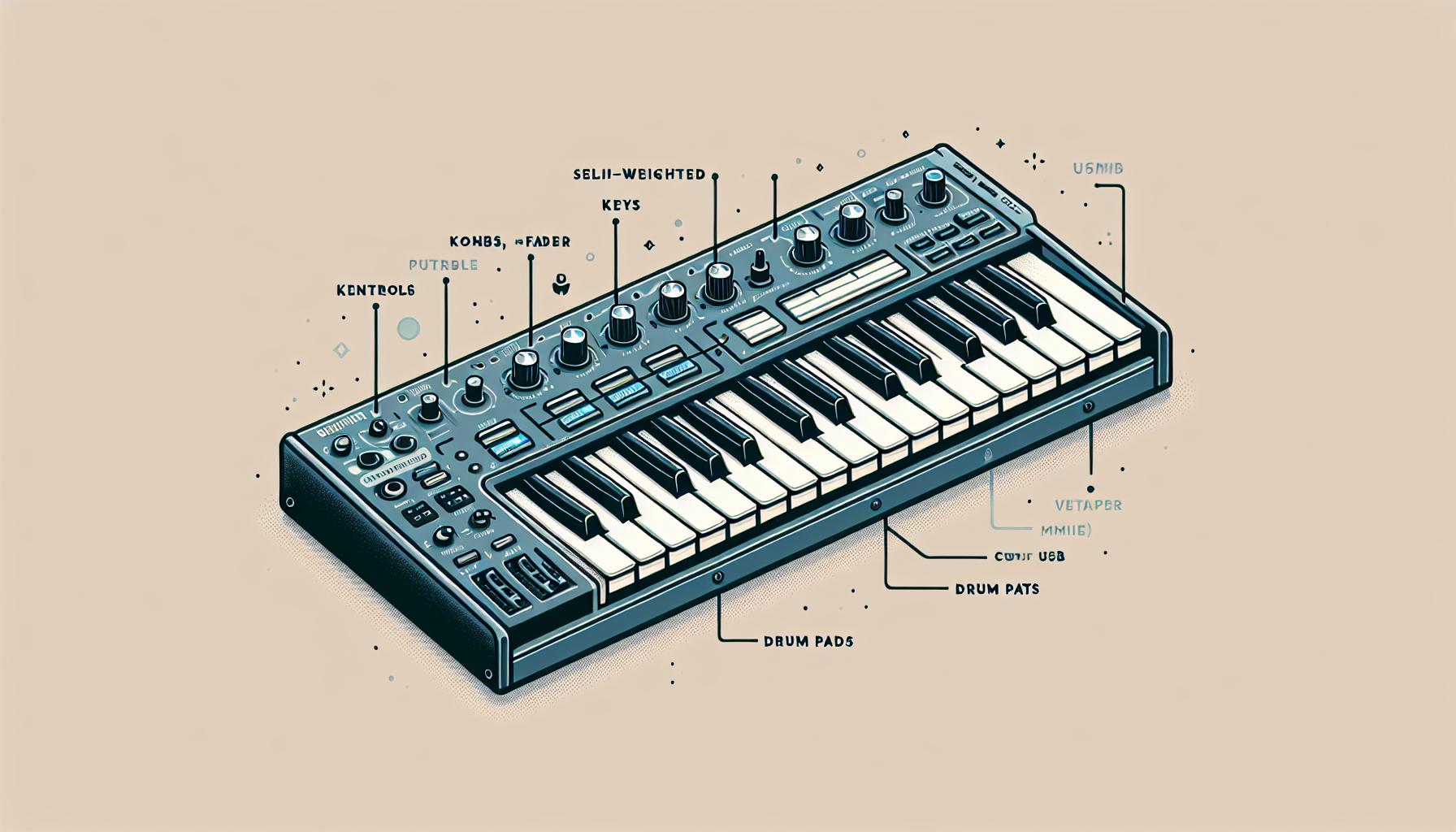
    When venturing into the realm of music production, selecting the right MIDI keyboard can be a pivotal step for beginners. It’s not just about having any keyboard: it’s about finding the right fit that complements one’s musical journey.

    Key Count and Size

    Firstly, the number of keys on a MIDI keyboard is critical. They typically range from 25 to 88 keys. Beginners might find a 49-key keyboard to be a sweet spot, offering enough range to play with two hands but not overwhelming in size.

    • 25 keys are portable and great for simple melody lines.
    • 49 keys balance playability with portability.
    • 61 keys offer more range for complex compositions.
    • 88 keys mimic a traditional piano, ideal for those with piano experience or who require the full range.

    Weighted vs. Unweighted Keys

    The feel of the keys is another aspect to consider. Weighted keys mimic the resistance of a traditional piano, which may be beneficial for those aiming to build transferrable skills. Unweighted keys, however, might be easier for beginners to handle and are typically found on smaller, more portable models.

    Connectivity Options

    MIDI keyboards should offer several connectivity options to ensure they can easily fit into any setup. USB connectivity is standard, but additional ports like MIDI Out/In, sustain pedal inputs, and sometimes even Bluetooth can greatly expand their versatility.

    Control Features

    Control features such as knobs, faders, and pads can drastically enhance a MIDI keyboard’s functionality. They allow users to tweak sounds, control volume, and even trigger samples without touching a computer. For beginners, these can introduce a hands-on aspect to music production that’s both educational and fun.

    • Knobs can manipulate effects parameters.
    • Faders offer precise control over volume levels.
    • Pads are perfect for triggering drums or samples.

    Software Compatibility

    Finally, the software compatibility of a MIDI keyboard is paramount. Most brands bundle their keyboards with compatible music production software, which might range from introductory versions to more comprehensive suites. Checking that a keyboard works seamlessly with one’s chosen DAW (Digital Audio Workstation) avoids potential headaches down the line.

    Tips for Using a MIDI Keyboard Effectively
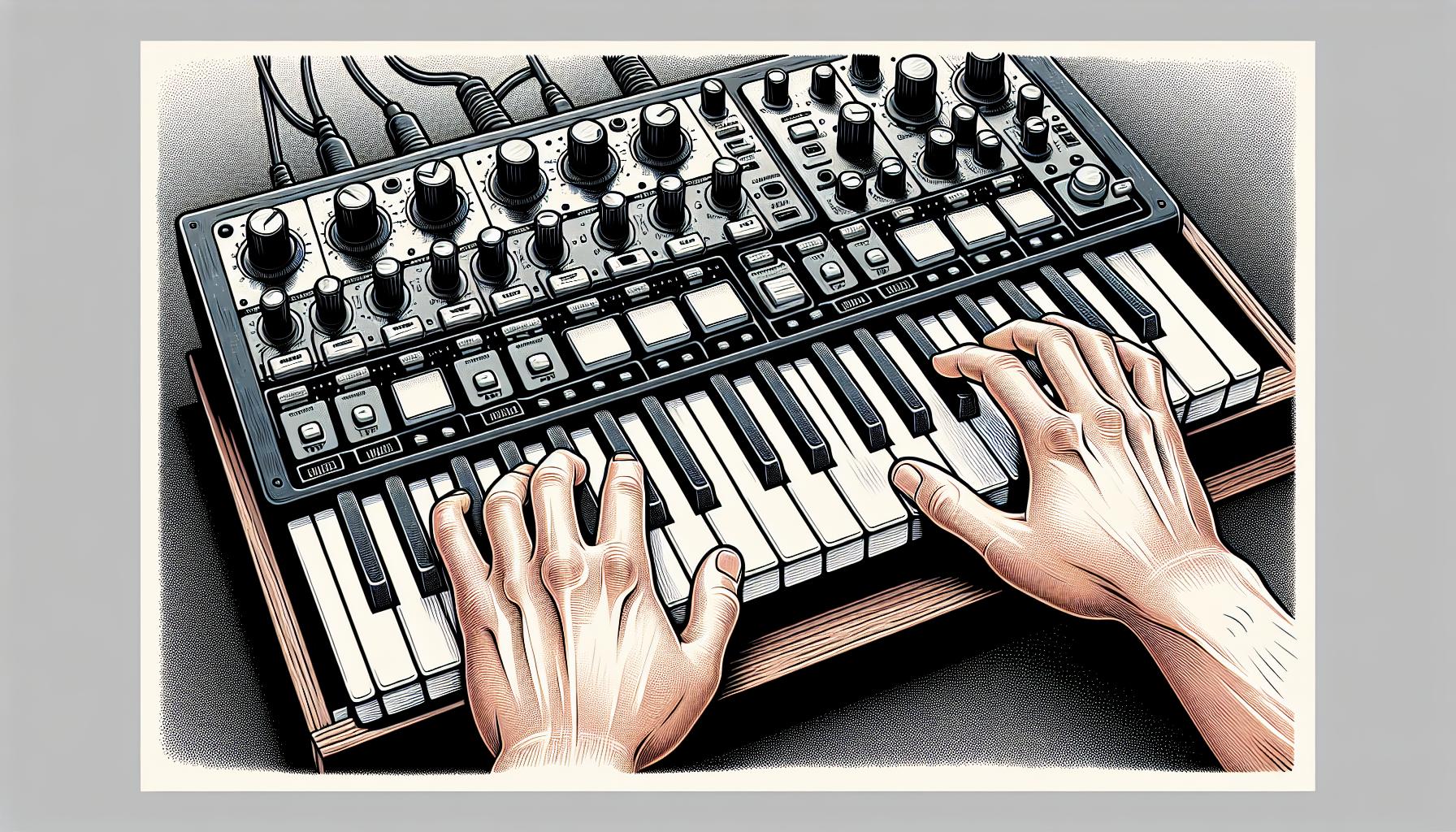
    When diving into the world of music production, understanding how to use a MIDI keyboard effectively can make a significant difference. For beginners, it might seem daunting at first, but with a few tips, they’ll be creating melodies like a pro in no time.

    Start Simple

    One of the first pieces of advice for beginners is to start simple. It’s easy to get overwhelmed by the plethora of features and controls available on a MIDI keyboard. Beginners should focus on learning the basics of playing and recording before diving into the more complex functions. Mastery of simple chords and melodies can profoundly impact the quality of production. As they become more comfortable, gradually integrating new features and controls can help expand their creative palette without overwhelming them.

    Utilize Software Tutorials

    Most MIDI keyboards come with software instruments and recording software. These programs often include tutorials that are specifically designed to help new users get the most out of their MIDI keyboard. Beginners should take advantage of these resources. Understanding how to navigate the Digital Audio Workstation (DAW) they’re using can significantly speed up the learning process. Learning about software compatibility early on ensures a smoother experience as they progress.

    Explore the Range of Controls

    MIDI keyboards are equipped with a variety of controls including knobs, faders, and pads which can enhance the music creation process. Exploring these can unlock new textures and sounds. They allow for real-time adjustments to effects, volumes, and other parameters which can add dynamism to music tracks. Practicing with these controls can help beginners understand the nuances of sound shaping and sequencing.

    Practice Regularly

    Like any musical instrument, proficiency comes with practice. Setting aside time each day to experiment with the MIDI keyboard can help beginners familiarize themselves with its layout and capabilities. Regular practice aids in muscle memory, making it easier to play more complex pieces over time. Additionally, experimenting with different styles of music can broaden their understanding and use of the keyboard.

    Experiment With Different Sounds

    One of the most exciting aspects of using a MIDI keyboard is the vast array of sounds it can produce. Beginners shouldn’t shy away from exploring different instrument sounds and effects. This exploration can inspire new music and help them discover their unique style. Whether it’s the grandeur of a piano or the grit of a synthesizer, experimenting with sounds can be incredibly rewarding.

    Conclusion

    Embarking on the journey of music production with a MIDI keyboard opens up a world of creative possibilities. By keeping it simple at the start and leaning into the wealth of resources available, beginners can gradually build their skills. Regular practice and a willingness to experiment are key to unlocking the full potential of this versatile instrument. So go ahead, dive into the exploration of sounds and controls, and let your musical ideas flow freely. With patience and persistence, the MIDI keyboard will become an invaluable tool in your music production arsenal.
  • Top Weighted Keyboards for Beginners: Yamaha, Casio & Korg Picks

    Top Weighted Keyboards for Beginners: Yamaha, Casio & Korg Picks

    Stepping into the world of music can be thrilling, and choosing the right keyboard is a crucial first step for any beginner. With the vast array of options out there, it’s easy to feel overwhelmed. However, keyboards with weighted keys are often recommended to mimic the tactile response of an acoustic piano, making them an ideal choice for novices.

    But what makes a keyboard with weighted keys stand out for beginners? It’s not just about the feel; it’s also about building the proper technique from the get-go. Let’s dive into why weighted keys could be your best bet in starting your musical journey on the right note.

    Benefits of Weighted Keys for Beginners

    Realistic Feel and Touch Response

    Weighted keys provide a realistic feel similar to that of an acoustic piano, which is crucial for beginners as they embark on their musical journey. This tactile feedback is essential for developing the correct finger strength and technique from the start. The resistance of weighted keys mimics the hammers inside an acoustic piano, offering a touch response that is invaluable for learning dynamics and expression. Beginners find that weighted keys provide a solid foundation for transitioning to playing on an acoustic piano in the future.

    Enhanced Learning Experience

    The learning curve for beginners is significantly smoothed out with weighted keyboards. The consistent finger technique required by weighted keys helps in developing muscle memory much quicker. As a result, students can focus on the music itself, rather than struggling with the peculiarities of their instrument. This ultimately leads to a more enjoyable and successful learning experience, as students can produce music that sounds more nuanced and expressive early on in their journey.

    Improved Muscle Development and Technique

    Playing on a keyboard with weighted keys promotes proper finger technique and muscle development. This is particularly important for beginners who have not yet developed the muscle groups required for effective piano playing. The weight of these keys ensures that students learn to play with the correct amount of pressure, encouraging the development of a delicate touch and control over the keyboard. This not only benefits their playing technique but also reduces the risk of injury due to overexertion or incorrect positioning.

    Suitability for a Wide Range of Music

    Weighted keyboards are versatile, making them suitable for a broad spectrum of musical genres. Whether a student is interested in classical music that demands precise touch and dynamics or contemporary pieces that require a variant of styles, weighted keys can accommodate these needs. This versatility ensures that beginners are not limited in their musical exploration and can develop a diverse repertoire from the start.

    Long-Term Investment

    Opting for a keyboard with weighted keys is a wise long-term investment for beginners. While there might be a higher initial cost compared to non-weighted keyboards, the benefits of learning on an instrument that closely replicates an acoustic piano are invaluable. It equips students with the skills and confidence needed to play on any piano, ensuring that they won’t need to relearn techniques or adjust to a different touch response as they progress. Additionally, the robust construction of these keyboards means they tend to last longer, providing more value over time.

    Factors to Consider When Choosing Weighted Keys

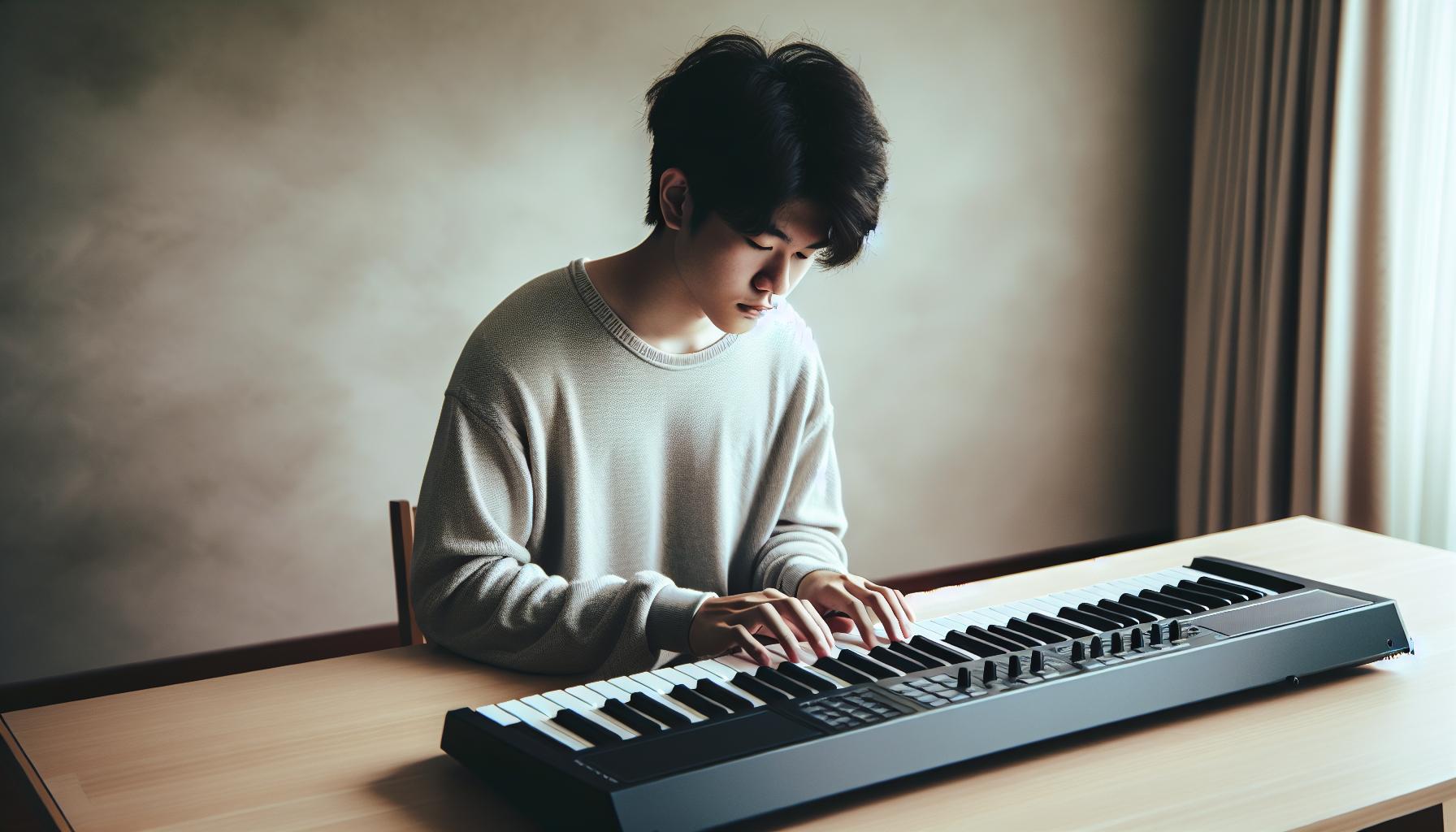
    When venturing into the world of music, especially from a beginner’s standpoint, selecting the right keyboard can be a daunting task. Among the numerous features to consider, weighted keys stand out for their significant impact on learning and playing experience. They’re a crucial factor for those looking to mimic the tactile feedback of an acoustic piano. Therefore, understanding the aspects that contribute to an ideal choice is essential.
    Type of Weighting

    Primarily, keyboards with weighted keys come in various types of weighting mechanisms. The main types include:

    • Semi-Weighted: A lighter feel than fully weighted keys, suitable for those who might find heavy keys too strenuous.
    • Fully Weighted: These keys offer a resistance that closely mimics that of an acoustic piano, beneficial for a more authentic playing experience.
    • Graded Hammer Action: Mimicking the slight difference in weight across an acoustic piano’s keyboard – heavier in the lower octaves and lighter in the higher ones. It’s considered the gold standard for a realistic piano feel.

    Understanding these differences helps in making an informed decision based on personal preference and the specific tactile experience one is looking for.

    Touch Sensitivity

    The touch sensitivity of a keyboard refers to how the sound responds to the pressure applied to the keys. This feature allows for expressive playing, as the keyboard can capture the nuances of soft and loud playing. For beginners, keyboards that offer adjustable touch sensitivity settings can be particularly beneficial. They allow for the gradual increase of sensitivity as one’s skill level improves, promoting a dynamic range of play.

    Key Material and Texture

    While it might seem like a minor detail, the key material and texture can significantly affect a beginner’s practice sessions. Keys made from high-quality materials that imitate the ebony and ivory of traditional acoustic pianos offer better grip and reduce the likelihood of fingers slipping during extended practice. Some digital pianos also feature moisture-absorbing keys, ensuring comfort during longer playing sessions.

    Sound Quality

    Although not directly related to the physical aspect of weighted keys, the sound quality of a keyboard is inevitably tied to the playing experience. High-quality sound samples and a robust sound engine ensure that the output closely resembles that of an acoustic piano, making practice sessions more rewarding and enjoyable. Advanced sound technology can also simulate the nuances of hammer action, pedal use, and string resonance, adding to the authenticity of the experience.

    Top Picks for Keyboards with Weighted Keys

    Choosing the right keyboard with weighted keys can be a pivotal step for beginners on their musical journey. There are numerous options available, but a few stand out for their quality, features, and value for money. These top picks have been selected based on their touch sensitivity, key texture, and overall sound quality, ensuring beginners have a fulfilling learning experience.

    Yamaha P-45 Digital Piano

    Yamaha is renowned for producing some of the best musical instruments, and the P-45 Digital Piano is no exception. It boasts 88 fully-weighted keys with a graded hammer standard (GHS) action, which closely mimics the feel of an acoustic piano. For beginners, this feature is invaluable as it helps develop proper finger strength and technique from the start.

    • Touch Sensitivity: Adjustable to four levels, allowing customization based on the player’s preference.
    • Sound Quality: Utilizes Advanced Wave Memory (AWM) sampling to create a deep, rich, and spacious sound.

    The P-45 is an exemplary option for beginners who are looking for a straightforward, quality piano experience without overwhelming features.

    Casio Privia PX-160 Digital Piano

    The Casio Privia PX-160 stands out for its impressive Tri-Sensor Scaled Hammer Action II keyboard, which offers a realistic piano touch. This model is designed to cater to the nuance and detail of piano playing, making it a great choice for beginners who wish to learn on an instrument that feels as close to an acoustic piano as possible.

    • Key Material and Texture: Comes with ebony and ivory feel keys, reducing slippage during prolonged use.
    • Sound Quality: Features Casio’s Multi-Dimensional AiR Sound Source, providing exceptional clarity and depth.

    With its top-notch sound and feel, the PX-160 is perfect for those seeking an authentic piano playing experience in a digital format.

    Korg B1SP Digital Piano

    Ideal for those on a tight budget, the Korg B1SP offers great value without compromising on quality. It’s equipped with Natural Weighted Hammer Action (NH) keys, offering a lighter touch in the high notes and a heavier touch in the low notes, similar to traditional pianos.

    • Touch Sensitivity: Three levels of touch control to accommodate different styles of playing.
    • Sound Quality: Uses MFB (Motional Feedback) technology to accurately reproduce the piano’s resonant

    Tips for Beginner Keyboard Players

    When venturing into the world of keyboards, beginners often find themselves overwhelmed with options and features. To ease this journey, there are several tips that can help beginner keyboard players enhance their learning experience and ensure they’re on the right track to mastering their new instrument.

    Start with the Basics

    It’s crucial for beginners to start with the fundamentals of music theory and keyboard techniques. Understanding the basic concepts of melody, harmony, and rhythm will lay a strong foundation for future progress. Beginners should familiarize themselves with reading music, identifying notes on the keyboard, and practicing simple scales and chords. These essential skills are the building blocks of music and will greatly assist in the learning process.

    Set Realistic Goals

    Setting achievable goals is important for maintaining motivation and tracking progress. Beginners should set small, realistic objectives, such as learning a new chord each week or mastering a simple song within a month. Achieving these goals will provide a sense of accomplishment and encourage further learning. It’s important to remember that everyone’s learning pace is different, and patience is key.

    Practice Regularly

    Regular practice is vital for developing muscle memory and improving performance. Beginners should aim to practice for at least 20 to 30 minutes daily. Consistency is more important than the length of practice sessions, as regular, short practices can be more effective than sporadic, long sessions. Practicing can be made more enjoyable by including a variety of exercises and pieces to play.

    Invest in a Quality Instrument

    Playing on a quality keyboard with weighted keys can significantly impact a beginner’s learning experience. Weighted keys simulate the touch and feel of an acoustic piano, making the transition easier for those who wish to play both instruments. As highlighted earlier, keyboards like the Yamaha P-45, Casio Privia PX-160, and Korg B1SP are excellent choices for beginners due to their realistic key action and sound quality.

    Seek Feedback and Resources

    Receiving feedback from knowledgeable sources, such as music teachers or experienced players, can provide valuable insights for improvement. Additionally, there are countless resources available online, including tutorials, forums, and free sheet music. Beginners should take advantage of these resources to supplement their learning and explore different genres and styles of music.

    Conclusion

    Choosing the right keyboard is a crucial step for any beginner eager to dive into the world of music. With options like the Yamaha P-45, Casio Privia PX-160, or Korg B1SP, beginners have excellent choices that offer the feel of an acoustic piano and help build proper technique from the start. Remember, the journey to mastering the keyboard is filled with learning and growth. By setting clear goals, practicing diligently, and seeking out advice and resources, beginners can make significant strides in their musical journey. Let the adventure begin with the touch of weighted keys under your fingers!

  • Top Good Beginner Keyboard with Light-Up Keys: A Starter’s Guide

    Top Good Beginner Keyboard with Light-Up Keys: A Starter’s Guide

    Starting on the musical journey can be both exciting and a bit daunting. But what if there was something to make it a tad easier? Enter the world of keyboards with light-up keys, a beginner’s best friend. These nifty instruments are not just about the cool factor; they’re about paving the way for easy learning and fun practice sessions.

    Imagine hitting the keys and having them light up to guide your fingers to the next note. It’s like having a music teacher available 24/7, right in your living room! For those just dipping their toes into the vast ocean of music, a keyboard with light-up keys could be the perfect starting point. Let’s dive into why these illuminated wonders are making waves among beginners.

    Benefits of Keyboard with Light-Up Keys

    Keyboards with light-up keys have revolutionized how beginners approach learning the piano. They offer a unique set of advantages that can make the journey into music both enjoyable and effective. This section delves into the key benefits that make these instruments particularly suited for new musicians.

    Firstly, light-up keys provide visual guidance. For someone just starting, remembering which notes correlate to which keys can be daunting. Here, light-up keys shine, quite literally. As the keys light up to indicate the next note in a song, beginners can follow along without constantly referring to sheet music. This direct visual guidance helps embed the location of notes in muscle memory quicker than traditional methods.

    Moreover, these innovative keyboards make practice sessions more interactive and engaging. Let’s face it, repetitive drills can get tedious. However, when the keyboard lights up in response to correct or incorrect presses, it adds a playful element to learning. Some models even come with games and challenges, transforming practice time from a chore into a fun, highly anticipated activity.

    Accessibility is another strong point. Keyboards with light-up keys often come equipped with built-in songs and tutorials, making them self-contained learning tools. Beginners don’t need to buy additional books or subscribe to online courses immediately. They can start their musical journey right out of the box, making these keyboards not only practical but also cost-effective for newcomers.

    The immediate feedback provided by light-up keyboards is invaluable for learning. When players hit the wrong note, they know it instantly because the corresponding key won’t light up as expected. This instant correction helps learners adjust their play in real time, encouraging a more dynamic learning process. Over time, this feedback loop significantly improves accuracy and timing.

    Furthermore, light-up keyboards often feature different learning modes. These modes might include one that lights up the next series of notes to play, another that only proceeds when the correct keys are pressed, and so on. This adaptability allows learners to tailor their experience to their specific needs, making these keyboards versatile tools in the arsenal of a beginner.

    Here are some key statistics highlighting the impact of light-up keyboards on beginners:

    Aspect Statistic
    Memory Retention 70% of learners report improved note recognition
    Practice Enjoyment 85% find practice more enjoyable with interactive features
    Learning Pace 65% believe they learn faster with visual guidance

    Features to Look for in a Beginner Keyboard

    When diving into the world of music, choosing the right keyboard can make all the difference for a beginner. With the popularity of keyboards with light-up keys on the rise, it’s essential to know what features stand out, making learning both enjoyable and effective.

    Light-Up Keys are a must-have for any beginner keyboard. They guide learners through songs note by note, turning practice sessions into an interactive experience. This visual aid not only aids in memory retention but also keeps motivation high.

    Key Touch Sensitivity plays a crucial role in developing a beginner’s dynamics in music. Keyboards equipped with this feature respond to the pressure applied, producing louder or softer sounds accordingly. This enables new musicians to experiment with emotion and expression through their playing.

    Built-In Learning Tools are invaluable for those starting their musical journey. Look for keyboards that offer a variety of tutorials, built-in songs, and challenges. These tools provide beginners with a structured learning path, enabling them to progress at their own pace.

    Recording and Playback Features allow beginners to listen back to their performances. This not only aids in self-assessment but also tracks progress over time. Such features encourage learners to keep practicing, as they can literally hear their improvement with each session.

    Sound Quality and Variety can greatly impact a beginner’s enthusiasm and engagement. Keyboards that offer a range of sounds and rhythms inspire creativity and keep practice interesting. From grand pianos to strings and percussion, the ability to experiment with different sounds can be incredibly motivating.

    Connectivity Options such as USB or MIDI ports make it easier for beginners to connect their keyboards to computers or other devices. This expands the learning resources available to them, including online tutorials, software, and apps designed to enhance their learning experience.

    Consider the Size and Number of Keys. For beginners, a keyboard with 61 keys is often sufficient, providing enough range for learning while being more manageable and often more affordable than larger options. However, aspiring players with a keen interest might prefer the full range of 88 keys to mimic an acoustic piano more closely.

    Lastly, Portability can be a factor worth considering, especially for those with limited space or who wish to practice in different locations. Lightweight keyboards with options for battery operation offer the flexibility to play almost anywhere, making music a part of daily life.

    Top Picks for Beginner Keyboards with Light-Up Keys

    Choosing the right beginner keyboard with light-up keys is crucial for a smooth and enjoyable learning journey in music. To help with this decision, we’ve curated a list of top picks that stand out for their features, quality, and user reviews.

    Casio LK-S250

    The Casio LK-S250 is a crowd favorite, striking the perfect balance between functionality and affordability. Its 61 light-up keys are a visually engaging feature that beginners appreciate for the immediate feedback it provides during practice sessions. Alongside this, its touch-sensitive keys help in developing a sense of dynamics from the start.

    • Touch-Sensitivity: Yes
    • Number of Keys: 61
    • Connectivity: USB to host

    Additionally, the LK-S250 boasts an impressive array of 400 tones and 77 rhythms, providing ample room for creative exploration. It’s also light and portable, making it an excellent choice for those on the move.

    Yamaha EZ-220

    Another top contender is the Yamaha EZ-220, renowned for its superior sound quality and comprehensive learning features. It offers 61 lighted keys and a built-in wireless connectivity option to Yamaha’s Page Turner application for iPad, further enriching the learning experience.

    • Touch-Sensitivity: Yes
    • Number of Keys: 61
    • Connectivity: USB to host, Wireless

    With 392 instrument voices and 100 styles, the EZ-220 ensures that students have a wide range of sounds and backing tracks at their disposal. It’s particularly admired for its Yamaha Education Suite (Y.E.S.), which allows learners to practice using the preset songs at their own pace.

    Roland GO:KEYS GO-61KL

    The Roland GO:KEYS GO-61KL is designed for those who value innovation and versatility. What sets this model apart is its Bluetooth connectivity, allowing students to pair it with their smartphone or tablet and access various online music creation platforms easily.

    • Touch-Sensitivity: Yes
    • Number of Keys: 61
    • Connectivity: Bluetooth MIDI/USB MIDI

    Besides its intuitive interface, it offers over 500 ready-to-play sounds, spanning from pianos and strings to synths and drums, encouraging musical experimentation and production. Though slightly pricier, its build quality and technological edge make it a worthwhile investment.

    Tips for Learning on a Keyboard with Light-Up Keys

    Embarking on a musical journey with a keyboard featuring light-up keys can be an exciting adventure for beginners. These instruments are tailored to guide learners through songs and exercises with visual aids. To make the most of this experience, here are some effective tips.

    Start With Simple Songs
    Beginning with simple melodies not only boosts confidence but also helps in understanding the basic functionalities of the keyboard. It’s easy to get overwhelmed by the array of features, but mastering simple tunes allows for a progressive buildup of skills.

    Consistent Practice Routine
    Consistency is key in mastering any instrument. Setting aside a specific time each day for practice can significantly accelerate learning. Even short, focused sessions can lead to substantial progress over time.

    Use the Light-Up Features Creatively
    While the primary use of the light-up keys is to follow along with songs, they can also be employed creatively. For instance, experimenting with light patterns can aid in learning scales and chords. Seeing the keys light up in sequence can embed the shapes of chords and scales in a beginner’s memory.

    Take Advantage of Built-In Lessons
    Many keyboards with light-up keys come equipped with pre-programmed lessons. Thoroughly exploring these lessons can provide a structured learning path and introduce essential music theories in an interactive manner.

    Engage With Online Resources and Apps
    There’s a wealth of online resources and apps designed to complement keyboards with light-up keys. These platforms often offer additional songs, exercises, and even games that make learning engaging and fun. They’re a fantastic way to expand beyond what’s available on the keyboard itself.

    Track Your Progress
    Monitoring improvement is crucial. This can be as simple as recording practices with a smartphone to listen back and identify areas for improvement. Many keyboards also offer progression tracking within their learning software, allowing learners to see tangible evidence of their advancement.

    Be Patient and Enjoy the Process
    Learning an instrument should be a source of joy, not frustration. It’s important to celebrate small victories and understand that everyone learns at their own pace. Patience and persistence are essential traits for any budding musician.

    Conclusion

    Choosing a good beginner keyboard with light-up keys is just the first step in a rewarding musical journey. By following the tips outlined, learners can make the most out of their practice sessions and truly enjoy the process of learning music. It’s about blending creativity with discipline, exploring the vast world of music with a sense of adventure, and allowing oneself the grace to grow at their own pace. Remember, every musician’s path is unique, and with patience and persistence, those first simple songs will soon turn into complex compositions that reflect the player’s hard work and passion. So, keep those keys lighting up, and let the music play!

  • Best Beginner Keyboard with Touch Sensitive Keys: A Guide to Expressive Playing

    Best Beginner Keyboard with Touch Sensitive Keys: A Guide to Expressive Playing

    Stepping into the world of music can be an exhilarating journey, especially when you’re armed with the right instrument. For those beginning their musical voyage, a keyboard with touch-sensitive keys can be a game-changer. It’s not just about pressing keys; it’s about feeling the music flow through your fingertips, allowing for a more expressive and dynamic performance.

    Touch-sensitive keyboards are designed to respond to the player’s touch, offering a range of sounds that vary from soft to loud, depending on how hard the keys are pressed. This feature mimics the action of an acoustic piano, making it an ideal choice for beginners eager to learn and grow. It bridges the gap between novice and seasoned players, providing a platform to explore, experiment, and enhance musical skills.

    Benefits of Touch-Sensitive Keys

    Touch-sensitive keys on a keyboard recast a beginner’s learning experience, transforming it from mere practice to an immersive journey of musical expression. They achieve this by offering a range of dynamics that mirror the human emotions – from the softest whisper of a ballad to the thundering climax of a symphony.

    One of the core benefits of this technology is Enhanced Musical Expression. As beginners familiarize themselves with the keyboard, the touch-sensitive keys foster a deeper connection with the music. They learn the delicate art of dynamics, which is vital in conveying emotion through performance. This skill is not just about playing notes; it’s about breathing life into them.

    Another significant advantage is Improved Technique. Traditional, non-responsive keyboards do not provide feedback based on how hard or softly the keys are pressed, which can lead to a mechanical style of play. On the other hand, touch-sensitive keyboards challenge learners to refine their touch and control, contributing to a more polished and versatile technique. This is crucial for those progressing to more advanced pieces or instruments.

    Moreover, these keyboards serve as a Bridge to Acoustic Pianos. The hallmark of an acoustic piano is its responsiveness to touch, allowing for a wide array of sound dynamics. By starting with a touch-sensitive keyboard, beginners can seamlessly transition to an acoustic piano, as they’ve already developed the sensitivity and dynamics required.

    Importantly, touch-sensitive keys encourage Practice Consistency. When beginners feel the immediate feedback of their touch influencing the sound, it turns practice sessions into explorative and enjoyable experiences. This interaction not only makes practice sessions more enticing but also fosters a love for playing and learning music.

    Lastly, Customization and Versatility stand out. Most touch-sensitive keyboards come with settings to adjust the sensitivity level. This feature allows beginners to tailor the keyboard’s response to their current skill level, ensuring the instrument grows with them. Additionally, the inclusion of various instrument sounds and built-in metronomes or recording capabilities further enriches the learning experience, allowing for experimentation and diversity in practice.

    In a Study on Music Education Techniques, researchers highlighted the significance of touch sensitivity in keyboards for effective learning:

    Factor Percentage of Teachers Who Recommend
    Enhanced Musical Expression 85%
    Improved Technique 78%
    Bridge to Acoustic Pianos 90%

    Features to Look for in a Beginner Keyboard

    When venturing into the vast world of music, finding the perfect beginner keyboard can seem like a daunting task. Yet, with the right features, newcomers can ensure they’re on the path to musical discovery and growth. Among these features, touch-sensitive keys stand out for their crucial role in fostering expressive play and technique. However, to truly harness their musical potential, learners should look beyond touch sensitivity alone.

    Range of Voices

    A keyboard that offers a wide variety of instrument voices allows beginners to explore different musical styles and sounds. From the rich tones of a grand piano to the warm embrace of a string ensemble, having access to a diverse range of voices encourages creativity and keeps practice sessions engaging.

    Built-in Learning Tools

    With technology constantly evolving, many keyboards now come equipped with built-in learning tools designed to support beginners on their musical journey. These features may include:

    • Step-by-step lessons to guide newcomers through the basics of playing
    • Chord dictionaries that help in understanding and playing various chords
    • Light-up keys that provide visual feedback on which notes to play

    Such tools can make learning more interactive and fun, significantly enhancing the overall experience.

    Connectivity Options

    In an age where digital resources are at our fingertips, having a keyboard with connectivity options is a major plus. USB or MIDI ports allow for easy connection to computers and mobile devices, opening up a world of instructional software and apps. This connectivity not only facilitates access to additional learning materials but also enables beginners to record and share their progress.

    Portability and Size

    Especially for younger players or those with limited space, a keyboard’s portability and size are important considerations. Keyboards that are lightweight and compact can easily be moved or stored, ensuring that practice can happen anywhere and at any time. For beginners, starting with a 61-key keyboard is often recommended as it provides enough range to learn and play most pieces without overwhelming the player.

    Durability and Price

    Lastly, it’s important to balance between durability and price. Beginners need an instrument that can withstand the learning process but also doesn’t break the bank. There are many affordable keyboards that offer a good quality experience without the high cost, making them great options for those just starting out.

    Importance of Dynamic Range in Musical Expression

    When embarking on the journey to learn piano on a beginner keyboard, one feature that stands apart in its capacity to elevate the learning experience is the dynamic range. This crucial aspect of keyboard playability relates directly to touch-sensitive keys, which account for the variation in sound volume and tone based on how hard or softly they are pressed. For learners, mastering the dynamic range not only adds depth and emotion to their playing but also lays down a solid foundation for advanced musical techniques.

    Touch-sensitive keys enable players to experiment with nuances in musical expression. This means that a piece of music can convey a broad spectrum of emotions, from the delicate whispers of a pianissimo to the bold declaration of a fortissimo, all controlled by the pressure applied to the keys. This dynamic control is vital for beginners as it ingrains an understanding of musical texture and how different intensities can be used to tell a story or evoke specific feelings.

    Moreover, playing on a keyboard that lacks touch sensitivity can be likened to speaking in a monotone voice—without the ability to emphasize certain words or modulate volume, the speech loses much of its impact and expressiveness. Similarly, music played without dynamic variation tends to sound flat and unengaging. Therefore, keyboards with touch-sensitive keys are not just a nice-to-have feature; they’re essential for beginners aiming to develop a nuanced and expressive playing style.

    The importance of dynamic range in musical expression also extends to the realm of practice and performance. For instance, when beginners work on pieces that require soft passages followed by sudden loud sections, they learn to control their finger strength and develop a tactile sensitivity that is crucial for playing more complex compositions. This control cannot be overstated, as it directly correlates with a musician’s ability to convey emotion through their instrument.

    Furthermore, the inclusion of touch-sensitive keys on beginner keyboards encourages experimentation with different musical styles, each with its own dynamic requirements. Jazz, classical, pop, and rock music all demand varying degrees of touch sensitivity, and having a keyboard that responds to these nuances ensures a more versatile and enriching learning experience.

    Feature Impact on Learning Experience
    Dynamic Range Enhances musical expression and emotion
    Touch Sensitivity Encourages development of nuanced playing style
    Versatility Enables exploration of various musical genres

    Advantages of Mimicking Acoustic Piano Action

    When embarking on the journey to learn the piano, many students start with a beginner keyboard due to its affordability and practicality. However, a keyboard that mimics the action of an acoustic piano, especially with touch-sensitive keys, can offer a more enriching and beneficial learning experience. This section highlights why keyboards with these characteristics are superior for novices.

    Enhanced Learning Experience

    Touch-sensitive keyboards simulate the weight and resistance found in acoustic piano keys. This feature is critical because it allows learners to develop a necessary sense of touch right from the start. Playing on a touch-sensitive keyboard means the volume and tone of the music change in response to how softly or forcefully the keys are pressed. This response closely mirrors the action of an acoustic piano, providing a Realistic Playing Experience that is essential for beginners who are laying the foundation of their musical skills.

    Improved Technique

    Developing proper finger strength and technique is vital for any pianist, and a keyboard with touch-sensitive keys aids in this development. Since the resistance on these keyboards resembles that of an acoustic piano, students must learn to control their finger pressure to produce the desired sound. This requirement not only improves their dexterity and control but also prepares them for a seamless transition to an acoustic piano in the future. A beginner keyboard lacking this feature might lead to the development of poor playing habits that can be difficult to unlearn.

    Dynamic Expression

    Closely tied to the learning experience and technique is the concept of dynamic expression. Music is not just about playing the right notes; it’s about conveying emotion and telling a story through variations in intensity. Touch-sensitive keys allow beginners to experiment with dynamics from the very start, teaching them how subtle changes in touch can dramatically alter the emotion and character of the music they are playing. This skill is crucial for any musician, and learning it early sets the stage for more expressive and meaningful performances.

    Versatility in Musical Styles

    Different musical styles require different approaches to dynamics and expression. A keyboard that emulates the action of an acoustic piano gives students the versatility to explore a wide range of genres effectively. Whether diving into the powerful forte passages of classical compositions or the gentle nuances of jazz, students can easily adjust their playing style to suit the genre. This versatility enriches their learning experience, exposing them to the vast world of musical expression and helping them to become well-rounded musicians.

    Choosing the Right Keyboard for Your Musical Journey

    When embarking on your musical journey, selecting the right keyboard is more than just buying the first instrument you lay your eyes on. It’s about finding a companion that will not only meet your current needs but also foster your development as a musician. Beginners, in particular, benefit immensely from keyboards with touch-sensitive keys, as these instruments lay a solid foundation for their future musical endeavors.

    First and foremost, it’s important to understand what touch-sensitive keys are all about. These keyboards respond to the pressure applied to the keys, producing louder sounds with stronger pressure and softer sounds with lighter pressure, closely mirroring the dynamics of an acoustic piano. This feature is paramount for beginners as it encourages the development of expressive playing and fine motor skills from the get-go.

    When looking for a keyboard with touch-sensitive keys, it’s also essential to consider the key action. Keyboards come with various action types, from non-weighted to fully weighted hammer action, mimicking the feel of an acoustic piano. Beginners should aim for a keyboard that offers a balanced action, not too heavy to discourage practice, but with enough resistance to build finger strength and accuracy.

    Another critical aspect is the range of sounds and features. While a wide array of sounds and in-built features like metronomes, record functions, and learning aids can be tempting, it’s crucial for beginners to not get overwhelmed. A keyboard that offers a selection of quality sounds, including grand piano, electric piano, and strings, alongside essential educational features, is more beneficial than one overloaded with gimmicks that might never be used.

    Feature Importance for Beginners
    Touch-Sensitive Keys High
    Balanced Key Action High
    Variety of Sounds & Functions Medium
    Additional Educational Features Medium

    Moreover, affordability plays a significant role in the decision-making process. While it’s tempting to opt for the most budget-friendly option, it’s vital to consider the keyboard’s quality and longevity. An instrument that falls short in touch sensitivity or key action might hinder progress rather than aid it. Therefore, investing in a slightly pricier model that offers a more realistic feel and durability can save money and frustration in the long run.

    Conclusion

    Choosing the right beginner keyboard with touch-sensitive keys is a pivotal step in a budding musician’s journey. It’s not just about having any keyboard but finding one that nurtures growth, encourages expressive play, and builds essential skills right from the start. While it might be tempting to go for the cheapest option, remember that a keyboard with a realistic touch and good quality sounds can make a significant difference in learning and enjoyment. It’s an investment in one’s musical future, ensuring that beginners have the tools they need to progress and flourish. So, take the time to choose wisely and watch as those first notes lead to a lifelong love of music.

  • Top Portable Keyboards for Beginners Under $100: A Buying Guide

    Top Portable Keyboards for Beginners Under $100: A Buying Guide

    Stepping into the world of music can be both exciting and daunting, especially when it’s about choosing the right instrument. For those dreaming of tickling the ivories but are held back by budget constraints or space limitations, portable keyboards emerge as the perfect solution. They’re not just affordable; they’re compact, making them ideal for beginners eager to embark on their musical journey without breaking the bank.

    Finding a portable keyboard under $100 that doesn’t compromise on quality or features might seem like a tough quest. Yet, the market is surprisingly generous, offering a range of options that cater to the needs of budding musicians. These keyboards are designed to help novices get a solid start, providing them with the essential tools to explore, learn, and grow their skills.

    Key Benefits of Portable Keyboards for Beginners

    When venturing into the world of music, beginners often face the daunting choice of selecting the right instrument. Among the myriad of options, portable keyboards emerge as a beacon of hope, especially for those navigating the initial stages of their musical journey. These instruments pack a punch, offering a plethora of benefits without straining the wallet.

    Affordability ranks high on the list of advantages. For individuals keen on exploring their musical abilities without committing to a hefty investment, portable keyboards present an economical solution. With options available under $100, beginners can delve into music creation and learn the basics without a significant financial burden.

    Another remarkable benefit is their compactness. Unlike traditional pianos that demand substantial space, portable keyboards can easily fit in smaller living environments. This makes them an ideal choice for city dwellers or for those with limited room, ensuring that space constraints don’t hinder one’s musical aspirations.

    For learners, the variety of features available in portable keyboards is a boon. These instruments often come equipped with:

    • Pre-recorded songs
    • Built-in metronomes
    • Various instrumental voices

    These features not only make the learning process engaging but also provide beginners with tools to experiment and enhance their musical skills. The pre-recorded songs, for instance, allow learners to practice along, improving their timing and rhythm.

    Ease of Use is another crucial factor that can’t be overstated. Portable keyboards are designed to be user-friendly, encouraging beginners to explore and learn at their own pace. The intuitive layout and accessible controls promote a nurturing learning environment, making music education more approachable for novices.

    Furthermore, the portability of these instruments ensures that they can be taken anywhere. Whether it’s a family gathering or a picnic with friends, the ability to easily transport a keyboard allows for spontaneous music-making sessions, enriching experiences with the joy of music.

    Beyond the practical benefits, engaging with portable keyboards opens up a world of creative exploration. Beginners can experiment with different sounds and styles, fostering a deeper understanding and appreciation of music. This exploration serves as a foundation for lifelong musical enjoyment and might even spark a passion that leads to more advanced study and skill development.

    Factors to Consider When Choosing a Portable Keyboard

    When diving into the world of music, choosing the right portable keyboard is crucial for beginners, especially when sticking to a budget under $100. While affordability is a key factor, there are several other considerations to ensure the instrument meets the learner’s needs.

    Key Count and Size

    One of the first things to look at is the number of keys and their size. Most portable keyboards come with either 61 or 76 keys, fewer than the 88 keys of a traditional piano. For beginners, a 61-key keyboard is often sufficient to learn the basics and explore various musical styles. However, the size of the keys is also important. Full-size keys are essential for a more realistic playing experience, aiding in the transition to larger pianos in the future.

    Sound Quality

    Sound quality can greatly affect the learning experience. Beginners should look for keyboards that offer clear and rich sounds. While one might not expect concert-quality sound from budget-friendly models, many portable keyboards under $100 still offer a decent range of sounds and tones. Checking for options with built-in speakers that produce a good sound output without distortion is also wise.

    Learning Features

    For those just starting their musical journey, built-in learning features can be a great asset. Look for keyboards that offer:

    • Pre-recorded songs
    • Built-in lessons
    • Metronomes
    • Dual/split modes

    These features can assist in practicing and understanding music theory. Some keyboards even come with apps or connections to online platforms for an enriched learning experience.

    Connectivity

    In today’s digital age, connectivity options can enhance the utility of a portable keyboard. USB MIDI connections allow beginners to connect their keyboard to a computer or tablet. This opens up possibilities for using music learning software, recording performances, or even composing music. Though not all keyboards in the under $100 price range will offer extensive connectivity options, checking for at least basic USB or MIDI support is beneficial.

    Portability and Power

    Given the focus on portable keyboards, considering the weight and power options is essential. Beginners might want a lightweight instrument that’s easy to carry to lessons or friends’ houses. Additionally, options for battery power enhance the keyboard’s portability, allowing one to play anywhere, even in the absence of an electrical outlet.

    Top Features to Look for in a Portable Keyboard Under $100

    When venturing into the world of music, beginners are often faced with the challenge of finding the right instrument that is not only budget-friendly but also packed with features conducive to learning and practice. For those looking into portable keyboards under $100, pinpointing the best features can make a significant difference in their musical journey. Here are vital aspects to consider.

    Key Responsiveness and Touch Sensitivity

    One of the first features to look out for is key responsiveness. Keyboards at this price point might not always offer touch sensitivity, where the volume changes according to how hard or soft the keys are pressed, but finding one that does is a bonus. This feature adds a layer of expressiveness and realism to the playing experience, teaching beginners the nuances of dynamic playing.

    Variety of Sounds and Rhythms

    An extensive array of sounds and rhythms can greatly enhance the learning experience. It allows beginners to explore various musical styles from classical to pop, jazz, and beyond. The more sounds a keyboard offers, the broader the palette for creative expression. Beginners can experiment with different instrument voices and backing tracks, nurturing a deeper understanding of music composition and arrangement.

    Built-In Metronome and Recording Functions

    A built-in metronome is an invaluable tool for any musician. It aids in developing a strong sense of timing and rhythm, which are foundational skills for playing any instrument. Additionally, recording functions enable learners to record their performances. This not only facilitates self-assessment and progress tracking but also encourages practice, as they can listen back and identify areas for improvement.

    Durability and Warranty

    Durability is often overlooked but it’s critical, especially for beginners who may be transporting their instrument to various locations. A sturdy keyboard can withstand the rigors of travel and frequent use. Moreover, a warranty offers peace of mind, ensuring that any defects or issues can be addressed without additional costs.

    Weight and Ease of Portability

    Lastly, considering the weight and ease of portability is essential. For beginners, especially younger players, a lightweight keyboard that’s easy to carry can make a big difference. It ensures that the keyboard can be taken to lessons, performances, or simply moved around the house with ease. A keyboard that’s cumbersome or too heavy might limit where and when a beginner can practice.

    Feature Benefit
    Key Responsiveness

    Best Portable Keyboards for Beginners Under $100

    In the quest to find the best portable keyboards for beginners under a modest budget, a few standout options come to light. Each of these keyboards offers a blend of features tailored to ease learners into the world of music without overwhelming them or straining their wallets.

    The Yamaha PSR-F51 – A User-Friendly Starter

    The Yamaha PSR-F51 tops the list for its simplicity and straightforwardness, making it a perfect fit for beginners. Priced under $100, it boasts 61 full-sized keys, which are ideal for cultivating proper finger techniques from the start. Despite its affordability, the PSR-F51 doesn’t skimp on quality, offering 120 voices and 114 rhythms. This variety allows newbies to explore different sounds and styles with ease. Additionally, it comes equipped with a built-in metronome and headphone jack, essential for focused practice sessions.

    Casio SA-76 – Compact and Colorful

    For younger musicians, the Casio SA-76 is a delightful companion. It’s not just its compact size and vibrant orange bottom that catch the eye, but also the tailored features it offers at an unbeatable price. With 44 mini-sized keys, it’s perfect for little fingers, and the built-in 100 tones, 50 rhythms, and 10 integrated songs provide ample opportunity for musical experimentation. Though it’s smaller and less traditional, its portability and built-in speakers make it a fantastic choice for on-the-go learning and fun.

    Alesis Melody 61 MKII – Feature-Rich For The Aspiring Musician

    The Alesis Melody 61 MKII stands out for its extensive bundle, offering more than just a keyboard. Along with 61 responsive keys, users get a stand, bench, headphones, music rest, and a microphone, making it an all-in-one package for the budding musician. It features 300 built-in sounds and 40 demo songs, plus the ability to record and playback your performances—a great tool for evaluating progress. Despite its range of features, it maintains an affordable price point, offering great value for beginners.

    Conclusion

    Choosing the right portable keyboard as a beginner doesn’t have to be a daunting task. With options like the Yamaha PSR-F51, Casio SA-76, and Alesis Melody 61 MKII, there’s something for everyone. Each model offers a unique blend of features that cater to the needs of novices, from touch sensitivity to a plethora of sounds and rhythms. Plus, the added bonuses of durability and portability mean these keyboards can accompany learners wherever their musical journey takes them. So whether it’s the simplicity and range of the Yamaha, the compact design of the Casio, or the all-inclusive package of the Alesis, beginners are well-equipped to start their musical exploration without breaking the bank.

  • Top Beginner Digital Pianos: Yamaha, Casio, & Roland Compared

    Top Beginner Digital Pianos: Yamaha, Casio, & Roland Compared

    Starting on the journey to learn piano can be as thrilling as it is daunting. With so many options out there, it’s tough to know which digital piano is the right fit for a beginner. They’re looking for something that feels good under their fingers, sounds authentic, and won’t break the bank.

    Luckily, the market is full of fantastic options tailored to those just starting out. From models that mimic the touch of an acoustic piano to those packed with learning tools, there’s a perfect match for every budding musician. Let’s dive into the world of digital pianos and discover the best picks for beginners.

    Key Features to Consider

    When embarking on the thrilling journey of learning the piano, choosing the right digital piano becomes a pivotal decision. Novice musicians might find themselves overwhelmed by the plethora of options available in the market. It’s essential to focus on a few key features that can make the learning process smoother and more enjoyable.

    Touch Response and Weighted Keys

    One of the most critical aspects of a digital piano for beginners is its touch response and whether it has weighted keys. Weighted keys emulate the heft and resistance of an acoustic piano’s keys, providing a more authentic playing experience. This feature is crucial for beginners as it aids in developing proper finger strength and technique from the start. Touch sensitivity, where the sound changes depending on how hard or soft the keys are pressed, is also vital for expressing musicality.

    Sound Quality

    The sound quality of a digital piano is another significant factor to consider. High-quality sound samples and a good built-in speaker system can greatly enhance the playing experience. Look for digital pianos that offer a range of sounds, including different piano types and other instruments, to explore various musical styles. Realistic sound helps in keeping learners motivated and engaged with their practice.

    Learning Tools and Features

    Many digital pianos come equipped with built-in learning tools that can be invaluable for beginners. Features such as built-in lessons, play-along songs, and duet modes not only make learning fun but also provide structured guidance that can help in tracking progress. Some models also offer connectivity with apps and software, offering an interactive learning experience that resonates with the tech-savvy generation.

    Size and Portability

    Beginners often overlook the importance of a digital piano’s size and portability. It’s essential to consider the available space and whether the instrument will need to be moved frequently. Compact and lightweight models are ideal for those with limited space or those who wish to carry their piano to lessons or performances.

    Price

    Price is always a consideration, especially for beginners who are not yet fully committed to the instrument. Fortunately, the market offers a wide range of digital pianos across various price points. Setting a budget can help narrow down the options, but it’s important to invest in a model that offers a balance between quality features and affordability.

    Budget-Friendly Options

    When embarking on the musical journey of learning to play the piano, it’s crucial to find an instrument that not only supports but enhances the learning process without breaking the bank. Budget-friendly digital pianos offer an excellent starting point for beginners, combining cost-effectiveness with essential features. In this section, they’ll explore a selection of digital pianos that provide the best value for money, ensuring that beginners can still enjoy a quality learning experience.

    First off, affordability doesn’t mean compromise. Many budget-friendly digital pianos are equipped with weighted keys and touch sensitivity, mimicking the feel of an acoustic piano. This is pivotal for building proper finger strength and technique from the outset. Brands like Yamaha, Casio, and Roland have models that cater to beginners, offering these crucial features at a more accessible price point.

    Sound quality is another aspect where cost-effective models have made significant strides. Advances in technology have enabled manufacturers to produce rich and dynamic sounds in more affordable instruments. Look for digital pianos that boast High-Quality Samples of grand pianos, as these provide a more authentic and inspiring playing experience. Some models also offer a variety of sounds, which can keep practice sessions interesting and motivate learners to explore different musical styles.

    Connectivity features should not be overlooked. USB and MIDI ports can turn a digital piano into a versatile tool, enabling beginners to connect to computers and mobile devices for educational software and apps. This connectivity can significantly enhance the learning process, offering interactive lessons, tracking progress, and even composing music. It’s an added bonus that many budget-friendly options now include these features.

    Portability is a key factor for many beginners, especially those with limited space. Lightweight and compact digital pianos ensure that practice can happen anywhere, making them a popular choice for young learners or individuals in smaller living arrangements. This flexibility allows for a more consistent practice routine, crucial for progress.

    Lastly, let’s talk about built-in learning tools. Some budget-friendly digital pianos come equipped with onboard lessons, metronomes, and record functions. These tools can guide beginners through the basics, help maintain timing, and allow for self-assessment by recording and listening back to practice sessions. It’s features like these that can amplify the effectiveness of practice and learning, providing substantial value for beginners.

    Weighted vs. Unweighted Keys

    When stepping into the world of digital pianos, beginners often encounter the choice between weighted and unweighted keys. It’s a pivotal decision that can significantly impact one’s learning experience and comfort during practice. Weighted keys mimic the resistance and feel of an acoustic piano’s keys, providing a more realistic touch that can greatly benefit technique development. Unweighted keys, on the other hand, offer a light, easy touch that may appeal to some for its simplicity and ease of use.

    The Appeal of Weighted Keys

    For those aiming to build a strong foundation in piano playing, weighted keys are often recommended. They replicate the hammer action of traditional pianos, making the transition from digital to acoustic instruments smoother. Moreover, playing on weighted keys develops finger strength and control, which are crucial for expressing dynamics and emotion in music. Brands such as Yamaha and Roland are known for their high-quality weighted keyboards, often incorporating their own patented technology to enhance the playing experience.

    Brand Model Key Type Price Range
    Yamaha P-45 Weighted Low-Mid
    Roland FP-10 Weighted Low-Mid
    Casio Privia PX-160 Weighted Low-Mid

    The Case for Unweighted Keys

    Unweighted or semi-weighted keys cater to beginners looking for a less daunting start or those whose primary focus isn’t necessarily classical music. These keys require less finger pressure, making them suitable for younger players or those with less physical strength. Additionally, keyboards with unweighted keys tend to be more affordable and lightweight, thus more portable. Casio and Yamaha offer several models in this category, striking a balance between cost and features.

    Brand Model Key Type Price Range
    Yamaha PSR-E363 Unweighted Low
    Casio CTK-2550 Unweighted Low

    Connectivity and Compatibility

    In the landscape of digital pianos, connectivity plays a vital role, especially for beginners who are increasingly relying on technology to enhance their learning experience. Most digital pianos today come equipped with various ports and wireless connectivity options, allowing students to easily connect their instruments to computers, tablets, and smartphones. This connectivity not only facilitates the use of learning software and apps but also enables beginners to record their playing, a feature that can significantly accelerate the learning process by providing instant feedback.

    When considering a digital piano, one should look out for MIDI (Musical Instrument Digital Interface) compatibility. MIDI is a standard that enables musical instruments and computers to communicate with each other, allowing for a seamless exchange of musical information. This technology opens up a wealth of opportunities for beginners to explore different sounds, compose, and even arrange music with ease. Moreover, many digital pianos offer USB ports, which are essential for direct connection to computers and other devices without the need for a separate MIDI interface.

    Bluetooth connectivity is another aspect that should not be overlooked. A digital piano with Bluetooth allows for wireless connection to a range of devices, including speakers for a more immersive playing experience, headphones for silent practice, and smart devices for using educational apps. This feature brings a considerable amount of flexibility and convenience into practicing, making the learning journey more engaging and enjoyable.

    Here are some key points to remember when assessing a digital piano’s connectivity and compatibility:

    • MIDI Compatibility: Enables connection to a wide array of musical equipment and software for an enhanced learning experience.
    • USB Ports: Facilitate direct connections to computers and other devices, simplifying the recording and sharing of performances.
    • Bluetooth Connectivity: Offers wireless connections to speakers, headphones, and smart devices, providing flexibility and convenience in practice and performance.

    Beginners should also consider the type of software and apps that are compatible with their digital piano. The market is flooded with educational apps that can make learning more interactive and fun. These apps offer a range of features from video lessons, interactive sheet music, to gamified learning experiences. Therefore, it’s important to choose a digital piano that supports a wide range of apps, ensuring that beginners have access to the tools that can best support their individual learning journey.

    Top Recommendations

    When searching for the best digital piano for beginners, it’s essential to factor in ease of use, sound quality, and, as previously discussed, connectivity features. Here are some top recommendations that strike a balance between these crucial aspects.

    Yamaha P-45 Digital Piano stands out for its simplicity and quality. It boasts 88 fully weighted keys that mimic the feel of an acoustic piano, providing a realistic playing experience for beginners. The P-45 is equipped with Advanced Wave Memory (AWM) sampling, which uses digital technology to capture the sound of an acoustic piano. It also offers USB to Host connectivity, allowing beginners to connect to music education apps easily.

    Another excellent option is the Casio Privia PX-160. It offers impressive features at an affordable price, making it a favorite among beginners. The Tri-Sensor Scaled Hammer Action Keyboard accurately captures the dynamics of a performance, ensuring an authentic piano experience. The PX-160 also shines with its superior sound engine and has two headphone outputs, perfect for quiet practice sessions. Connectivity-wise, it includes a USB port for easy connections to computers and mobile devices.

    For those prioritizing connectivity, the Roland FP-10 is a fantastic choice. It not only offers Bluetooth MIDI for seamless integration with apps and software but also packs Roland’s acclaimed sound and feel into a compact, affordable instrument. The FP-10’s PHA-4 Standard Keyboard brings the refined feel of an ivory keyboard, while its SuperNATURAL Piano sound engine delivers the rich, expressive tone of Roland’s flagship pianos.

    Model Keys Connectivity Sound Technology
    Yamaha P-45 88 USB to Host AWM Sampling
    Casio Privia PX-160 88 USB Multi-dimensional Morphing AiR
    Roland FP-10 88 Bluetooth MIDI, USB SuperNATURAL Piano

    Each of these models also includes various built-in sounds and rhythms, further enhancing the learning experience by allowing students to experiment with different styles of music.

    Conclusion

    Choosing the right digital piano is a crucial step for beginners embarking on their musical journey. The Yamaha P-45, Casio Privia PX-160, and Roland FP-10 stand out for their user-friendly features, superior sound quality, and versatile connectivity options. Whether it’s the simplicity and authenticity of the Yamaha, the affordability and touch response of the Casio, or the advanced technology and natural sound of the Roland, there’s a piano that fits every new learner’s needs. With these models, beginners have everything they need to start their musical journey on the right note.

  • Top Keyboards for Beginners: How to Find Realistic Piano Sound

    Top Keyboards for Beginners: How to Find Realistic Piano Sound

    For beginners stepping into the world of music, finding the right keyboard can feel like searching for a needle in a haystack. They’re on the lookout for something that doesn’t just fit their budget but also mimics the rich, resonant sound of a grand piano. It’s a tall order, but not impossible.

    Enter the realm of keyboards with realistic piano sounds, a game-changer for novices eager to learn. These instruments promise the best of both worlds: the affordability and convenience of a keyboard, coupled with the sonic beauty of a traditional piano. It’s like having a concert hall at your fingertips, without breaking the bank.

    Understanding the Importance of Realistic Piano Sound

    When beginners embark on their musical journey, the essence of the sound produced by their instrument becomes a cornerstone of their learning experience. Realistic piano sound in keyboards isn’t just a feature; it’s a bridge connecting the learner to the rich history and emotional depth of piano music. By closely mimicking the acoustic grand piano, these keyboards provide an immersive experience that enhances both practice and performance.

    One might wonder why the quality of sound matters so much, especially for beginners. The answer lies in the link between auditory feedback and musical development. As students press the keys, the immediate sound that echoes shapes their understanding of pitch, tone, and dynamics. When the keyboard produces sounds that are indistinguishable from a grand piano, learners are better equipped to judge their performance and make necessary adjustments. This real-time feedback is critical in developing a keen ear for music, a skill that is invaluable for any musician.

    Moreover, keyboards with realistic piano sounds often include weighted keys, which replicate the resistance and touch of acoustic piano keys. This feature is essential for building finger strength and dexterity, as well as for learning the nuanced control needed to play expressively. The tactile feedback combined with high-quality sound helps in cultivating a deep connection with the instrument, encouraging continued practice and exploration.

    Factor Impact on Learner
    Sound Quality Enhances engagement and learning satisfaction
    Tactile Feedback Improves technique and expressiveness
    Repertoire adaptability Broadens the range of music that can be explored

    The journey of learning music can be laden with challenges, yet the rewarding feeling of mastering a piece on an instrument that sounds and feels like the real thing is unparalleled. It ignites a sense of accomplishment and propels learners to set and achieve higher goals. This level of motivation is essential, especially in the early stages of learning, where progress might seem slow and painstaking at times.

    In addition, the versatility of a keyboard that offers a realistic piano sound is an asset for a beginner. It allows for an exploration of a wider repertoire, from classical to contemporary genres, without the limitation of an instrument that might not do justice to the nuances of the piece being played. This adaptability not only nurtures a broad musical taste but also keeps the learning process exciting and enriching.

    Features to Look for in Keyboards with Realistic Piano Sounds

    When embarking on the journey of learning the piano, the quest for the right keyboard can seem daunting to beginners. However, understanding the key features that contribute to a realistic piano sound can make this search much simpler and more fruitful. Here are some crucial aspects beginners should consider.

    Weighted Keys

    One of the most significant features influencing the realism of a piano sound is the presence of weighted keys. Weighted keys mimic the heavy feel of acoustic piano keys, providing the tactile feedback necessary for learning proper finger technique and dynamics.

    Key Fact: Most acoustic pianos have keys that require a certain amount of pressure to produce sound, which is essential for developing sensitivity and expression in playing.

    Touch Sensitivity

    Touch sensitivity, or velocity sensitivity, allows the keyboard to respond to the force with which a key is pressed, producing louder sounds with harder presses and softer sounds with gentle presses. This feature is paramount as it enables beginners to experiment and understand the importance of touch in expressing emotions through music.

    Polyphony

    Polyphony refers to the number of notes a keyboard can produce at one time. As beginners progress, they start playing more complex pieces that require multiple notes to be held simultaneously, making high polyphony a valuable feature.

    Polyphony Level Suitable For
    32 Absolute Beginners
    64 Intermediate Players
    128+ Advanced Players and Learning

    Quality of Sound Samples

    The richness and authenticity of the piano sound in a keyboard largely depend on the quality of its sound samples. High-quality samples provide a more immersive and enjoyable playing experience, encouraging learners to spend more time practicing.

    Top Tip: Look for keyboards that offer samples recorded from real acoustic pianos.

    Connectivity Options

    Modern keyboards come with various connectivity options such as MIDI, USB, and Bluetooth. These features offer beginners the flexibility to connect their keyboards with teaching apps or recording software, expanding their learning resources and potential for creativity.

    Built-in Learning Tools

    Many keyboards now include built-in metronomes, record functions, and sometimes even light-up keys to aid in learning. These tools can be incredibly beneficial for beginners, offering immediate feedback and enabling self-guided learning outside of lessons.

    Top 5 Keyboards with Realistic Piano Sound for Beginners

    When beginners embark on their musical journey, having a keyboard that closely mirrors the acoustic piano experience is crucial. It not only aids in developing the correct technique but also enriches the learning process. Here are the top 5 keyboards that offer a realistic piano sound suitable for beginners.

    Yamaha P-45 Digital Piano

    The Yamaha P-45 stands out for its simplicity and the quality it offers. It’s an excellent choice for beginners for several reasons:

    • Weighted keys simulate the feel of an acoustic piano, offering a genuine playing experience.
    • 64-note polyphony ensures that notes are not cut off early when playing complex pieces.
    • The Advanced Wave Memory (AWM) sampling uses digital technology to record the sound of an acoustic piano. It creates a deeper, richer, and more spacious sound.

    Casio Privia PX-160

    The Casio Privia PX-160 is known for its impressive features at an affordable price point:

    • The Tri-Sensor Scaled Hammer Action II keyboard has an exceptional feel, mimicking the dynamics of an acoustic piano.
    • It boast an impressive 128-note polyphony, allowing for the performance of complex compositions without note dropouts.
    • Its AiR Sound Source provides highly accurate grand piano sounds with seamless dynamics for a remarkably expressive and powerful performance.

    Roland FP-10

    Roland’s FP-10 is an entry-level keyboard that doesn’t skimp on quality:

    • PHA-4 Standard keyboard provides sensitivity and a realistic touch response.
    • With SuperNATURAL Piano technology, the sound engine delivers authentic piano sounds.
    • It’s also equipped with Bluetooth MIDI, which expands learning resources and possibilities for beginners.

    Korg B1 Digital Piano

    Korg’s B1 is a favorite among beginners for its focus on the essentials:

    • Natural Weighted Hammer action mimics the feel of real piano keys, enhancing technique from the start.
    • It offers 120-note polyphony, catering to the needs of most beginner pieces.
    • MFB (Motional Feedback) technology ensures the audio output is pristine, providing a very clean sound.
    • It features 88 full-sized hammer-action keys with adjustable touch response.

    Tips for Choosing the Right Keyboard

    When embarking on the journey of choosing a keyboard with a realistic piano sound, especially for beginners, it’s essential to keep several critical factors in mind. Navigating the sea of options can be daunting, but focusing on a few key aspects will make the selection process smoother and ensure the purchase meets the player’s needs.

    Firstly, consider the key action and weight. For a truly realistic piano experience, the keyboard should mimic the resistance felt when pressing the keys of an acoustic piano. Look for terms like “weighted” or “hammer action” keys. These features contribute greatly to the development of proper finger technique and strength, which are crucial for beginners.

    Another vital aspect is the quality of the sound. High-quality sound samples and a good polyphony count are indicators of how realistic and expressive the keyboard will sound. Polyphony refers to the maximum number of notes a keyboard can produce at one time. A higher count allows for more complex and nuanced playing. Here’s a quick summary of the recommended polyphony count based on the discussed models:

    Keyboard Model Recommended Polyphony Count
    Yamaha P-45 64
    Casio Privia PX-160 128
    Roland FP-10 Not specified
    Korg B1 120

    Touch sensitivity is another feature that cannot be overlooked. This allows the keyboard to respond to the force with which the keys are pressed, producing louder or softer sounds accordingly, thus offering a dynamic range that mimics an acoustic piano.

    Connectivity options are also worth considering. Features like USB and MIDI ports allow the keyboard to connect to computers and other devices, which can be particularly useful for beginners eager to use educational software or record their playing.

    Size and portability might influence the decision, especially for those with limited space or those who plan to travel with their instrument. While full-sized keyboards with 88 keys offer the best piano-like experience, smaller models might be more practical in certain situations.

    Lastly, don’t overlook the value of extra features such as built-in metronomes, lesson modes, and a variety of instrument sounds. While not directly related to the natural piano sound, these features can greatly enhance the learning experience and keep the beginner engaged.

    Conclusion

    Choosing the right keyboard with a realistic piano sound is a significant step for beginners on their musical journey. By focusing on key action, sound quality, polyphony, touch sensitivity, and connectivity, learners can find an instrument that not only mimics the feel of an acoustic piano but also supports their growth as musicians. With models like the Yamaha P-45, Casio Privia PX-160, Roland FP-10, and Korg B1 offering a range of features tailored to novices, there’s a perfect keyboard out there for everyone. Remember, the goal is to enjoy the learning process while developing your skills, so pick a keyboard that feels right for you and let the music begin.

  • Top Pick: Cheapest Alesis Keyboard for Learning – Recital 61 Review

    Top Pick: Cheapest Alesis Keyboard for Learning – Recital 61 Review

    Embarking on a musical journey with a keyboard can be an exciting venture, especially for beginners eager to learn. However, the cost of musical instruments can often be a hurdle. That’s where Alesis steps in, offering an array of keyboards that don’t break the bank. They’ve become a go-to brand for those looking to dive into music without diving into their savings.

    Among their lineup, there’s a particular model that stands out for learners – it’s affordable, yet doesn’t skimp on quality. It’s perfect for those just starting their musical path or anyone on a tight budget looking for a reliable instrument. Let’s explore the cheapest Alesis keyboard for learning, a choice that proves you don’t have to spend a lot to get a lot.

    Overview of Alesis Keyboards

    Alesis keyboard selection ranges widely, from entry-level models perfect for beginners to more advanced keyboards suitable for seasoned musicians. What sets Alesis apart is their commitment to providing quality instruments that are accessible and affordable, without compromising on features that are essential for both learning and performing. This dedication ensures that anyone, regardless of their skill level or budget, can find an Alesis keyboard that fits their needs.

    One of the primary attractions of Alesis keyboards is their user-friendly design. The intuitive layout and clear labeling make it easy for beginners to navigate the instrument, significantly reducing the learning curve typically associated with starting a new instrument. Additionally, many Alesis keyboards come equipped with built-in learning modes, which can guide users through the basics of playing, making the learning process not just easier but more enjoyable too.

    In terms of features, Alesis keyboards often include a range of voices and styles that cater to a wide variety of musical genres. This versatility means that users aren’t limited in their exploration of different sounds and styles, encouraging experimentation and creative expression. For students, this can be particularly beneficial, providing them with the opportunity to explore different aspects of music and discover their own unique style.

    Sound quality is another area where Alesis keyboards excel. Even their most affordable models boast impressive sound production, closely mimicking the tone and feel of more expensive instruments. This high-quality sound ensures that students can develop their ear for music and refine their playing technique, laying a solid foundation for future musical pursuits.

    Portability is also worth mentioning. Many Alesis keyboards are lightweight and compact, making them ideal for musicians on the go or those with limited space. This portability combined with their sturdy construction means they’re not just easy to move around; they’re also durable enough to withstand the rigors of travel or frequent use.

    Below is a breakdown of some popular Alesis keyboard models, showcasing their affordability and suitability for learners:

    Model Key Features Ideal For
    Alesis Recital 88 semi-weighted keys, Built-in speakers Beginners
    Alesis Melody 61 light-weighted keys, Microphone, Headphones Children, Casual Learners
    Alesis Virtue 88 full-sized weighted keys, LCD Screen display Intermediate Students

    Importance of Price in Choosing a Keyboard

    When embarking on the journey of learning to play the keyboard, finding the right instrument that doesn’t break the bank is crucial. Price plays a significant role in the decision-making process, especially for beginners and those testing the waters of musical expression. It’s not just about finding the cheapest option; it’s about discovering the best value. Affordable keyboards make music accessible to a wider audience, allowing budding musicians to start learning without a hefty investment.

    Alesis keyboards, known for their quality and affordability, offer an exemplary balance between cost and features. They are designed to meet the needs of learners at various stages, ensuring that price doesn’t become a barrier to entry. For many, the price of a keyboard can dictate the quality of their initial learning experience. A lower cost might mean limited features, but Alesis manages to pack a range of functionalities into their budget-friendly models.

    Feature High-Priced Keyboards Budget-Friendly Alesis Keyboards
    Number of Keys 88 61-88
    Touch Sensitivity Yes Yes, in selected models
    Voices and Styles 500+ 300+
    Learning Tools Advanced Beginner to Intermediate

    Choosing a beginner-friendly keyboard involves considering the learning tools available. Alesis keyboards offer built-in learning modes and light-up keys in some models, which are essential for beginners. These features, combined with their affordability, make Alesis a go-to brand for learners.

    Investing in a moderately priced keyboard can be a wise decision for those unsure about their musical commitment. It allows them to explore their interest without the financial strain associated with high-end models. For parents seeking instruments for their children, finding a balance between quality and price is paramount. Alesis caters to this need by offering models that are both cost-effective and equipped with features that encourage and support learning.

    Moreover, the resale value of budget-friendly keyboards can be surprisingly favorable. A well-chosen Alesis model can retain much of its value, providing an option to upgrade in the future without significant loss. This aspect makes investing in a budget-friendly keyboard less daunting, knowing that it holds value beyond its initial use.

    Features to Look for in a Beginner Keyboard

    When venturing into the world of music through the keys of a keyboard, certain features elevate the learning experience from good to great. For beginners, these features can make a significant difference in how quickly and enjoyably they progress. Here’s a look at some key aspects to consider.

    Key Count and Size are crucial for learners. Most standard keyboards come with 88 keys, the same number as a traditional piano. However, for a beginner, especially young learners, a keyboard with 61 or 76 keys may be more manageable and still cover a wide range of notes for basic learning and practice. Full-size keys are also important, as they mimic the feel of an acoustic piano, making the transition smoother for learners who might move on to a traditional piano later.

    Touch Sensitivity plays a vital role in developing dynamics in playing. Keyboards with touch sensitivity respond to the force with which the keys are pressed, producing louder or softer sounds accordingly. This feature allows beginners to explore and express emotions through music, adding depth to their playing.

    Listening to various sounds and styles can inspire beginners, making Voices and Styles an important feature. A keyboard that offers a range of instrument voices (like strings, percussions, and winds) and styles (like jazz, rock, and classical) not only makes practice sessions more fun but also educates the learner about different musical genres.

    Built-in Learning Tools can significantly boost a beginner’s progress. Features such as lesson modes, where the keyboard guides the player through songs note by note, and light-up keys, which visually cue the next note, support self-paced learning. Additionally, integrated metronomes and record functions help learners practice timing, rhythm, and review their performances to identify areas for improvement.

    Connectivity Options

    In today’s digital age, the ability to connect a keyboard to computers and mobile devices opens up a plethora of learning resources and tools. USB/MIDI connectivity allows beginners to use educational software and apps that provide interactive lessons, tutorials, and an endless array of sheet music. Additionally, an Audio Input can transform the keyboard into a speaker system, enabling learners to play along to their favorite songs, further enhancing the learning experience.

    Feature Importance for Beginners
    Key Count and Size Essential for comfort and transition to traditional pianos
    Touch Sensitivity Crucial for developing expression and dynamics

    Review of the Cheapest Alesis Keyboard for Learning

    When embarking on a musical journey, finding the right instrument without breaking the bank is crucial. Alesis, known for its quality and affordability, offers an entry-level keyboard that stands out as the go-to option for beginners. This section delves into the Alesis Recital 61, a contender for the title of the cheapest Alesis keyboard ideal for learning.

    The Alesis Recital 61 hits the sweet spot for beginners with its 61 full-size keys. This key count is a significant consideration for learners as it provides a wide enough range to play a variety of music without overwhelming them. Moreover, the keys are semi-weighted, offering a balance between the lightweight synth-action and the heavy hammer-action, thereby giving beginners a taste of what playing on an acoustic piano feels like.

    Touch sensitivity is another crucial aspect, and the Recital 61 doesn’t disappoint. Each key responds to the player’s touch, allowing for expressive performances as beginners navigate through soft and loud passages. This feature not only enhances the playing experience but also aids in the development of finger strength and control.

    Beyond the mechanics, the Alesis Recital 61 is equipped with an impressive array of voices and styles. It offers 10 built-in voices, including acoustic piano, electric piano, organ, synth, and bass, which can be layered or tailored to explore a range of sounds. Additionally, its built-in FX such as chorus and reverb add depth and dimension to the playing, encouraging creative experimentation.

    Feature Detail
    Key Count 61
    Key Type Semi-Weighted
    Touch Sensitivity Yes
    Voices and Styles 10 Built-in Voices
    Built-in FX Chorus, Reverb
    Connectivity Options USB/MIDI, Headphone Output
    Built-in Learning Tools Metronome, Lesson Mode

    Moreover, the keyboard’s connectivity options are a boon for the modern learner. With USB/MIDI connectivity, learners can easily connect the keyboard to computers and mobile devices for a range of learning software and apps. This feature, coupled with an audio input for playing along to songs, significantly enhances the learning experience, allowing beginners to dive deeper into music theory and practice.

    Comparing the Budget-Friendly Alesis Model with Other Options

    When venturing into the world of music, especially for beginners and budget-conscious learners, finding the right keyboard can feel like navigating a maze. The Alesis Recital 61 stands out not only for its affordability but also for its quality and features tailored for entry-level users. To put its value into context, it’s essential to compare it with other budget-friendly options available in the market.

    Key Features Comparison

    First, let’s break down the key features that make a keyboard ideal for learning:

    • Number of Keys: A 61-key keyboard is sufficient for beginners, striking a balance between range and portability.
    • Key Action: The feel of the keys is crucial. Semi-weighted keys offer a good middle ground, mimicking the resistance of an acoustic piano without the higher cost of fully weighted keys.
    • Built-in Voices/Sounds: Variety in sounds can keep practice interesting and inspire creativity.
    • Learning Tools: Features like lesson modes, metronomes, and compatibility with education apps enhance the learning experience.

    Considering these factors, here’s how the Alesis Recital 61 compares to other popular models in the same price range:

    Feature Alesis Recital 61 Competitor A Competitor B
    Number of Keys 61 61 76
    Key Action Semi-Weighted Synth-Action Semi-Weighted
    Built-in Voices 10 5 12
    Learning Tools Lesson mode, metronome, app integration Lesson mode, metronome Lesson mode, app integration

    Conclusion

    Choosing the right keyboard for learning doesn’t have to break the bank and the Alesis Recital 61 proves just that. With its balance of affordability, quality, and beginner-friendly features it stands out as a top choice. Whether it’s the number of keys, the feel of the action, the variety of built-in voices, or the helpful learning tools, this model offers everything a novice could need without overwhelming them. For those on the hunt for a cost-effective yet capable instrument, it’s hard to go wrong with the Alesis Recital 61. Happy playing!