Category: Choosing Gear

  • Exploring the Intricacies: Is Keyboard Music Really the Same as Piano Music?

    Exploring the Intricacies: Is Keyboard Music Really the Same as Piano Music?

    If you’ve ever wondered whether keyboard music is the same as piano music, you’re not alone. It’s a common question that I’ve come across numerous times. In this article, we’ll dive into the nuances of both keyboard and piano music, exploring their similarities and differences.

    Keyboards and pianos, while similar in appearance, can produce vastly different sounds. They each have unique characteristics that define their music. We’ll delve into these aspects, shedding light on what sets them apart.

    So, if you’ve been scratching your head trying to figure out if the tune you’re playing on your keyboard would sound the same on a piano, stick around. We’re about to unravel this musical mystery together.

    What is Keyboard Music?

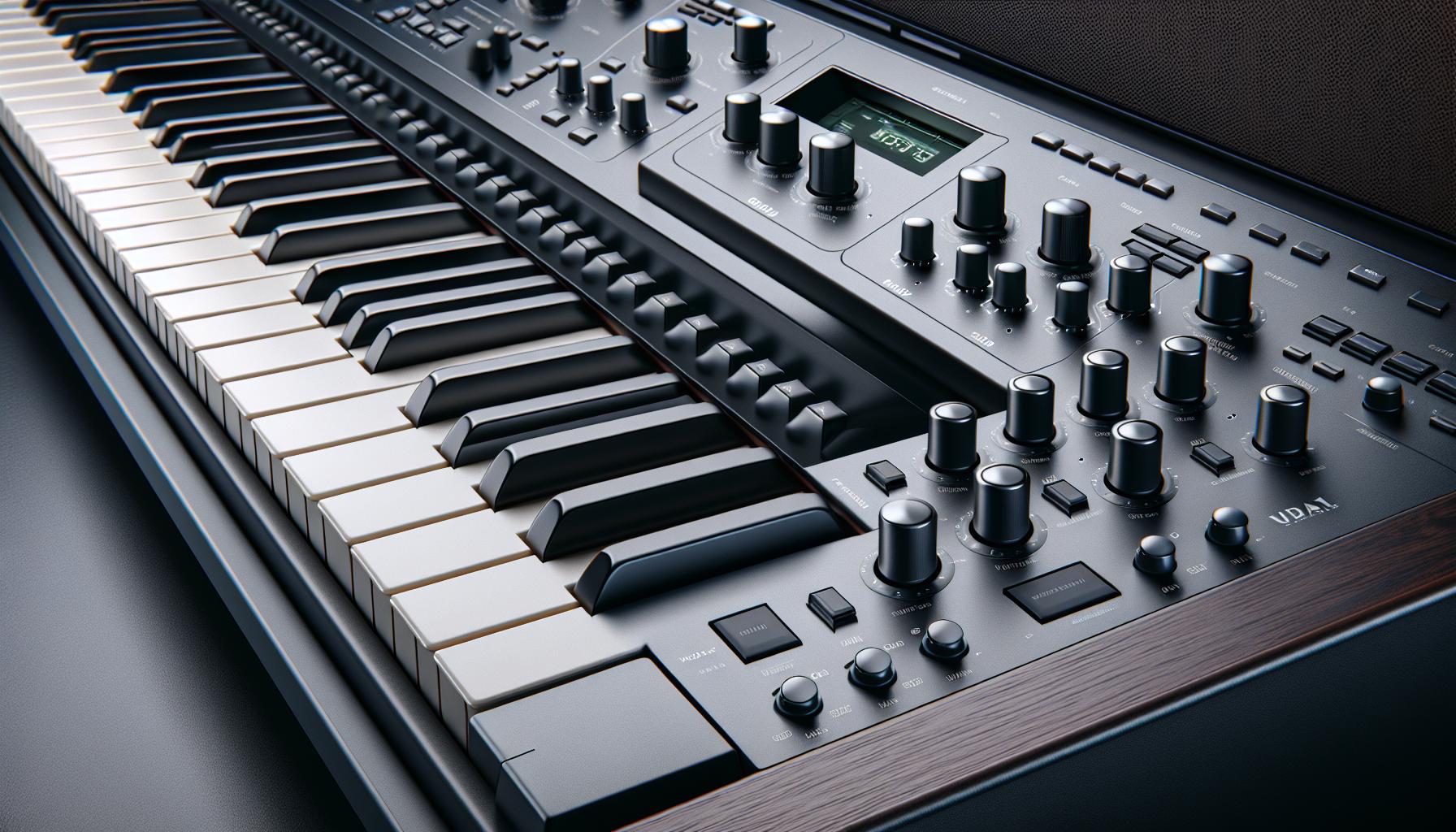
    When it comes to keyboard music, it’s a broad term that encompasses different types of instruments that use a keyboard. This includes the piano, but it doesn’t stop there. Organ, harpsichord, and synthesizers are also part of the larger keyboard family.

    You might ask how diverse sounds are produced in keyboard music. Well, it’s all about the technology inside the instrument. For an organ or a harpsichord, sound is created when the keys are pressed, where each key corresponds to a specific pitched sound. However, in the case of synthesizers, the sound can be modified and amplified, offering a wide range of tones and special effects.

    One key element that sets keyboard music apart is its adaptability. Keyboard instruments are versatile, offering a plethora of sounds that can fit any genre from classical to pop, rock, and even electronic music. You should hear how well they perform in different music styles – it’s truly awe-inspiring!

    One might say the keyboard is a musical chameleon. Its sound is not confined to one genre or style, and is often used to reproduce sounds of other instruments, which further enhances its flexible character. This adaptability is one of the reasons why it’s widely favored in music composition and production today.

    Here’s a simple breakdown of the main types of keyboards and their primary uses:

    Type of Keyboard Primary Use
    Organ Church music, classical concerts
    Harpsichord Early music, baroque music
    Synthesizer Electronic music, pop, rock

    So there you have it – the realm of keyboard music. It offers variety, versatility, and vitality. But now it begs the question, how does it compare to piano music? Is it the same, or is it worlds apart? We’ll delve into that in the next section. Stay tuned to unravel this intriguing musical journey.

    What is Piano Music?

    Even with all the different types of keyboards available, there’s one variant that outshines others in terms of popularity – the piano. This instrument is often considered the most well-known and masterful of the keyboard music family. With its melody-rich and harmonic capabilities, it’s an integral part of any western classical music ensemble.

    Piano music isn’t just linked to one specific genre; it’s incredibly versatile. From classical compositions to jazz improvisation, pop melodies to indie numbers, pianos orchestrate the moments of brilliance found in numerous music styles. Simultaneously, they can effortlessly emphasize the emotion in a piece or play a supporting role by enhancing the harmony.

    To truly comprehend the essence of piano music, it’s essential to understand that piano sound results from a mechanical action. When a key is pressed, a small hammer inside the piano strikes the corresponding strings to produce sound. The construction of the piano also plays a significant role in its sound production; the size and design of the instrument directly affect the timbre and resonance of the sound, providing its unique character.

    The piano keyboard’s layout presents a clear framework of the Western music system, with 12 repeating notes (7 white, 5 black) comprising an octave. Thanks to its range and polyphonic capabilities, the piano can command a wide spectrum of pitches and produce complex harmonies.

    As we delve into the question of how keyboard music compares to piano music, it’s important to highlight that what we call “piano music” often involves a lot more than just playing notes on a piano. It’s also about how the music is composed, how it’s interpreted by the musician, and how it resonates with the listeners.

    The next segment will be dedicated to a comparative study between keyboard and piano music, their similarities, and their distinct aspects. We’ll be using aspects discussed here as key metrics for our comparison, painting a comprehensive picture for our readers.

    The Similarities between Keyboard and Piano Music

    As we delve further into this comparative study, it’s pivotal that we examine the similarities between keyboard and piano music; this may enlighten us to why these two are often used interchangeably in conversation.

    At their core, both the piano and keyboard function on the principle of striking. What does this mean exactly? Well, in both instruments, sound is produced when a mechanism strikes a series of keys. For the piano, it’s piano hammers hitting strings; for the keyboard, it’s the combination of technology and electronic sound production. Either way, the act of pressing down on a key triggers a response that creates sound.

    Digital pianos and keyboards also share a similar layout in terms of black and white keys, with the piano’s traditional 88-key layout being commonly replicated in full-size keyboards. These layouts enable both keyboard and piano players to transition between the two instruments with relative ease.

    Moreover, they often serve the same musical purpose. Both can provide solid harmonic groundwork for a piece, and they’re both capable of carrying melody. Regardless of whether you’re a classical virtuoso or a budding pop star, the versatility of both keyboard and piano music makes them indispensable instruments in a myriad of music genres.

    Let’s not forget that the learning process for both keyboards and pianos can be incredibly similar. Many of the theory, techniques and skills that apply to one also apply to the other. In fact, it’s a known strategy among learners to start on keyboards and gradually transition to pianos.

    In the next segment, we’ll look at some of the key differences that distinguish keyboard music from piano music. This will help us understand that even with major strings of similarity, they have unique identities and serve different purposes according to different musical needs and contexts.

    The Differences between Keyboard and Piano Music

    Peeking into the differences between keyboard and piano music, we unveil some fascinating contrasts. It’s worth noting that despite their strong similarities, certain distinctive features set them apart.

    Both piano and keyboard music stem from the same foundation, but the distinction lies in the instruments. The complexity and richness of sound in a piano hinge upon its intricate architecture – strings, hammers, wooden casing all work together, creating a resonant, soulful output that’s synonymous with piano music. Pianos are equipped with pedals that further enrich the dynamic spectrum, presenting opportunities for subtlety or dramatic variations in volume and tone.

    Keyboards on the other hand offer a different playing experience. They are primarily electronic, mechanically simpler than pianos, and their sound is generated through digital sampling. Many come equipped with advanced features such as in-built rhythms or accompaniments, a variety of sound presets, or the capacity to connect to computers for programming and recording.

    Breaking it down, here’s a comparison chart of the fundamental differences between the two:

    Feature Piano Keyboard
    Sound generation Mechanical action Digital sampling
    Richness of sound Deep and rich Lighter and more versatile
    Portability Less portable due to size and weight More portable because of their smaller size and lighter weight
    In-built features Pedals for dynamic variation Variety of sound presets, rhythms, accompaniments, recording options

    The implications of these divergences elicit considerable impact upon the music produced. Piano music resonates with depth and richness, whereas keyboard music carries lightness and versatility to fit into different genres. This breadth and adaptability influence the learning curve and application in diverse musical styles.

    Diving deeper, the bass-dominant sound in some keyboards completely alters the sound texture, developing a characteristic preference leaning away from piano music. So while the piano and keyboard share some key attributes, they coax out distinctive rhythms, melodies, and harmonies under skilled hands. It’s thrilling to explore these contrasting pitches, vibrations, shades of sound that create the mosaic of keyboard and piano music.

    Sound Characteristics of Keyboards and Pianos

    Let’s dive deeper into the deferential aspects of sound between keyboards and pianos, shall we? While both use a similar striking mechanism and similar layout of keys, the processes involved in sound generation are remarkably distinctive, thus delivering their unique sounds.

    Understanding sound technologies is crucial in our journey to draw a clear distinction between keyboard and piano music. Keyboards utilize digital sound technology, providing the flexibility to simulate the sound of various instruments. It’s impressive to see how many keyboard models can competently mimic the sounds of pianos, organs, flutes, and even string instruments. Sometimes, their range reaches as far as to mimic unusual sounds like drum patterns, songbirds or even sirens. This wide variety of sound options makes keyboards incredibly versatile and capable of producing an array of sound effects not possible on traditional pianos.

    Pianos, on the other hand, use acoustic sound technology, with each note produced by the striking of a hammer against a string. This string has been meticulously tuned to vibrate at exactly the right frequency. Since a piano has around 230 strings, their interaction results in a distinct richness and depth of sound, much appreciated by musicians and listeners alike. The sophistication and natural resonance of a piano’s sound are inseparable from the very nature of the instrument, something that a synthesized electronic instrument finds hard to emulate completely.

    The following table offers a simple comparison between keyboard and piano sound characteristics:

    Keyboard Piano
    Sound Technology Digital Acoustic
    Type of Sound Simulated, Varies widely Natural, Rich and Harmonic
    Sound Variety Extensive Limited
    Sound Depth Moderate High

    It’s worth mentioning that the choice between a keyboard and a piano can often boil down to personal preference. For some, the electronic and adaptable nature of keyboards is a major advantage, whilst others are drawn to the authentic and distinctive sound of a traditional piano. The differentiation between the two often becomes a matter of the specific requirements and preferences of the musician.

    Conclusion

    So, is keyboard music the same as piano music? While they’re similar in many ways, they’re not identical. Both fall under the umbrella of keyboard instruments, yet they differ in sound generation, richness of sound, and versatility. Keyboards, with their digital technology, offer a range of simulated sounds and portability. Pianos, on the other hand, offer a unique richness and depth of sound thanks to their acoustic technology. The choice between the two often boils down to personal taste and the musician’s specific needs. Remember, it’s not just about playing notes, it’s about creating music that resonates. Whether you choose a keyboard or a piano, it’s your interpretation and expression that make the music come alive.

  • 61-Key Keyboards: Are They Sufficient for Playing the Piano?

    61-Key Keyboards: Are They Sufficient for Playing the Piano?

    So you’re wondering, “Is 61 keys enough to play piano?” It’s a common question I hear, especially from beginners or those looking to buy their first keyboard. I’ll be diving into this topic, shedding light on whether 61 keys are sufficient for your piano playing needs.

    In this article, we’ll explore the structure of the standard piano keyboard, the range of notes it covers, and how this compares to a 61-key keyboard. We’ll also touch on the types of music you can play on a 61-key piano and who might find this keyboard size most suitable.

    Whether you’re a budding pianist or a seasoned pro considering a more portable option, this article will provide the insights you need. Stay tuned as we unravel the mysteries of the 61-key piano.

    The Structure of the Piano Keyboard

    As we dive deeper into the world of piano keyboards, it’s vital to understand its structure. The standard full-scale piano keyboard features 88 keys, encompassing a range of seven octaves plus a minor third (from A0 to C8).

    A blend of 52 white and 36 black keys generate the plethora of sounds that we associate with the versatile piano. The seven white keys are usually labeled A to G, embodying the seven natural notes on the musical scale. Nestled between these white keys, you’ll find the five black keys, representing the five sharp (#) or flat (b) notes.

    White Keys Black Keys Total Keys
    Standard Full-Scale Piano 52 36 88

    This pattern repeats across the length of the keyboard, an aspect known as octave repeatability. This unique structure gives the player the option to play the same melody at different pitches, enabling a myriad of creative options.

    Our compact 61-key piano however slightly diffuses the full octave reach of its 88-key counterpart. It generally ranges from C1 to C7, essentially chopping off some of the lowest and highest notes from the full-scale piano. This is an important point to consider when comparing the 61 and 88-key pianos, but does the reduced number of keys dramatically affect the ability to play a wide array of tunes? To provide a comprehensive answer, we’ll delve into the impact of these dimensions on the types of music that can be played, as well as potential convenience of a 61-key piano in upcoming sections of the article.

    The Range of Notes on a Standard Piano Keyboard

    A full-sized, 88-key piano ranges from A0 all the way up to C8. That’s over seven full octaves! The lower end of the scale has a breath-taking bass who’s sound sends vibrations rolling through your body. The higher end, on the other hand, delivers a crisp, bright tone that can pierce through the thundering sound of other instruments.

    To break it down visually, each key on a piano corresponds to a specific note. Every octave consists of 12 keys: 7 white and 5 black. The white keys are named after the first seven letters of the alphabet, from A to G. The black keys are either a half step up (sharp) or down (flat) from the adjacent white keys.

    Here’s a simple table to illustrate this:

    Octave White Keys Black Keys (Sharps/Flats) Number of Keys
    1 A, B, C, D, E, F, G A#/B♭, C#/D♭, D#/E♭, F#/G♭, G#/A♭ 12
    2 A, B, C, D, E, F, G A#/B♭, C#/D♭, D#/E♭, F#/G♭, G#/A♭ 12
    7 A, B, C, D, E, F, G A#/B♭, C#/D♭, D#/E♭, F#/G♭, G#/A♭ 12
    Plus 3 extra keys in the last Octave A, B, C 3

    In essence, the construction of the piano keyboard is rooted in western music theory. It’s designed to aid the understanding and playing of both major and minor scales, along with various modes. The 88-key setup, specifically, serves to cater to the tonal repertoire of classical music. It’s built to encompass all the notes that composers from Bach to Beethoven, and on to contemporary times have employed.

    How Does a 61-Key Keyboard Compare?

    Transitioning from the world of 88-key pianos, a 61-key keyboard may seem like quite a shift. However, it’s vital to break down what this change really entails.

    For starters, 61-key keyboards lack some of the lowest and highest notes found on an 88-key piano. They roughly cover the notes from C2 to C7, skipping the first and last octaves. While this may seem restrictive, keep in mind that a significant portion of most music can be played within this range. After all, compositions tend to stick to mid-range notes that are easily audible and pleasant to the ear.

    Important to note is the aspect of portability. 61-key keyboards are naturally smaller and lighter, making them a solid choice for traveling musicians or those with tight living spaces.

    Another factor to consider is the black and white key arrangement. Like the full-sized counterpart, 61-key keyboards adhere to the same pattern, fostering an effortless transition when learning or practicing various major and minor scales or modes.

    However, the most significant factor perhaps lies in the repertoire. You can play the lion’s share of pop, rock, and even jazz music with a 61-key keyboard. Yet, if you’re keen on diving into the realm of classical music, 88 keys still reign supreme.

    Here’s a quick comparison table:

    Attribute 88-Key Piano 61-Key Keyboard
    Note Range A0 to C8 C2 to C7
    Portability Less portable More portable
    Key Arrangement White and Black pattern White and Black pattern
    Repertoire Range Fully Supports Classical More Suitable for Pop, Rock, and Jazz

    Remember, determining whether 61 keys are enough to play the piano largely hinges on your musical goals and preferences. Whether you’re a budding musician or an experienced maestro, the right keyboard can make or break your journey.

    What Can You Play on a 61-Key Keyboard?

    Well, I’m glad you asked. When it comes to the 61-key keyboard, there’s a lot more versatility than you might realize. It doesn’t have the full range of an 88-key piano, true, but it still offers plenty of opportunities to make great music.

    In fact, a large portion of pop, rock, and jazz music can be easily played on a 61-key keyboard. This is due to the fact that most of these genres heavily utilize middle octaves, ranges that are well within reach of your 61 keys. Rock pieces, particularly those written for bands, often only use a fraction of the keyboard, focusing on just one or two octaves.

    Experimenting with different genres isn’t just possible on a 61-key keyboard, it’s actually quite enjoyable. You’ll find that there’s a satisfying feeling in adapting music to fit the 61-key range. For instance, some jazz pieces can be played using only the middle registers.

    Challenge yourself by learning how to adapt pieces written for the full 88 keys to this smaller keyboard. You may be surprised at how different – and exciting – a familiar piece of music can sound when you transform it in this way. Granted, it’s not straightforward, but it’s an excellent exercise for enhancing musical adaptability and creativity!

    Now for classical music lovers, here’s a caveat – some pieces, particularly those by composers like Beethoven or Chopin who often use extreme ranges, may be difficult to adapt to a 61-key keyboard. However, there are still many pieces, like a good number of Bach’s Inventions or Mozart’s Sonata movements, which fit nicely within its range.

    All in all, the 61-Key Keyboard, despite its limitations, offers a host of possibilities for the enthusiastic musician.

    Who Would Benefit from a 61-Key Keyboard?

    Pop, rock, jazz, and many other music genres are beautifully adaptable to 61-key keyboards. Musicians who primarily delve into these areas would find such a keyboard wholly satisfactory. Additionally, people desiring the aspects of portability and convenience would thoroughly enjoy this range of keys.

    Gigging musicians in particular, favor the 61-key layout because of its ease of transport. The lightweight design of most 61-key keyboards allows these performers to quickly set up, tear down, and be ready to hit their next venue without the burdensome weight of a full-sized keyboard. It’s a boon for active musicians always on the roll!

    Another significant benefit of the 61-key variant applies to emerging keyboard artists. Young students or beginners who are just learning to navigate the complicated world of keyboard fingering and theory find it less intimidating. The limited number of keys helps them focus on fundamentals and slowly build their skills. For beginners, it’s an excellent starting platform before transitioning to an 88-key piano.

    The 61-key keyboard also provides an excellent bridge for musicians who are used to playing other, less extensive instruments such as the organ or harmonium. Transitioning to a full piano can be daunting and the 61-key keyboard offers a helpful step in the process.

    However, the 61-key keyboard’s abilities aren’t just confined to the versatility of genres. Electronic genres like EDM and synth-wave also utilize these types of keyboards, but not in the conventional manner. They require a keyboard controller, often a 61-key keyboard with a multitude of different knobs, sliders, and drum pads for creating unique sounds.

    The 61-key keyboard offers a versatile interface that meets the needs of musicians from various backgrounds. Its adaptability and transportability make it ideal for gigging musicians who value quick setup and takedown, beginners who are just starting, and even electronic artists seeking creative freedom. However, those looking to master classical pieces written for the full 88 keys might find this variant a touch restrictive. But who’s to say? Limitations often breed creativity, don’t they?

    Conclusion

    So, is 61 keys enough to play piano? Absolutely! For many musicians, a 61-key keyboard is more than satisfactory. It’s versatile, portable, and perfect for genres like pop, rock, and jazz. It’s also a great tool for beginners to focus on building their skills. Electronic musicians find it ideal for creating unique sounds. But let’s not forget, it’s not for everyone. If you’re seriously into classical music, you might find it limiting. So, it all boils down to your needs and the music you’re into. Choose wisely, and you’ll find that a 61-key keyboard can be a fantastic musical companion.

  • Uncovering the Cost of Keyboard Pianos: A Comprehensive Guide to Prices and Features

    Uncovering the Cost of Keyboard Pianos: A Comprehensive Guide to Prices and Features

    So, you’re thinking about buying a keyboard piano? It’s a great move! Whether you’re a beginner looking to dive into the world of music or an experienced pianist wanting to expand your skills, a keyboard piano is a fantastic investment. But one question that’s probably on your mind is, “how much does a keyboard piano cost?”

    Well, I’m here to break it down for you. In this article, we’ll explore the factors that determine the cost of a keyboard piano. From brand and model to features and size, we’ll cover it all. By the end, you’ll have a clear understanding of what you can expect to spend on your new musical companion. So, let’s get started, shall we?

    Factors that Determine the Cost of a Keyboard Piano

    Now that we’ve established the importance of a keyboard piano in a musician’s life, let’s delve into key factors that influence its cost. Understanding these aspects will give you a solid foundation for judging if a particular keyboard piano is worth the price tag.

    First off, the brand of the keyboard piano has a pronounced impact on the price point. Top brands like Yamaha, Casio, and Roland are known for their exceptional sound quality, durability, and innovative features. They often price their keyboard pianos higher due to these factors. That said, there are lesser-known brands that offer decent quality keyboards at a more accessible range.

    The model of the keyboard piano also plays a crucial role in determining its cost. Older models are typically less expensive compared to their newer counterparts. But remember, newer models often come with advanced features and enhanced capabilities like improved sound systems or richer instrument voices.

    In addition, the features of the keyboard piano can drastically change the price. Keyboards with numerous instrument voices, MIDI compatibility, built-in speakers, and digital screens are likely to cost more. Of course, if you’re a beginner or not planning on using these features, you can look for simpler models with just enough features to suit your needs.

    Lastly, the size of the keyboard contributes to the cost as well. A full-sized keyboard piano with 88 keys and a weighted action will cost more than a smaller, more portable keyboard.

    In summary:

    • Brand
    • Model
    • Features
    • Size

    These are the four major contributing factors that determine the cost of a keyboard piano. By having a keen eye for these elements during your hunt for the perfect keyboard, you are sure to secure a deal worth every penny.

    Brand and Model: How They Affect the Price

    When seeking to understand what determines the cost of a keyboard piano, you simply can’t overlook the importance of brand and model. Nowhere is the adage “You get what you pay for” more apparent than in the world of keyboard pianos. So what’s the scoop?

    It’s the brand and model that often dictate the price point. Market leaders like Yamaha, Casio, and Roland produce models that are renowned for their quality. They’ve attained a reputation over the years for delivering top-notch performances. Consequently, these premium brands command higher prices for their keyboard pianos. Yet, it’s not just about the name etched on the keyboard. The specific model plays a crucial part too.

    Think about it this way: Brands like Yamaha or Casio offer a vast range of models, from entry-level to professional-grade pianos. These different models come with varied features, build quality, and of course, pricing. More advanced models incorporate sophisticated technology, like weighted key action or advanced sound engines, making them cost significantly more.

    Don’t be surprised to find a price difference of hundreds or even thousands of dollars between beginner and pro models from the same brand. An entry-level Yamaha keyboard piano might cost around $200, while their high-end model could fetch up to $2000 or more.

    The important thing to remember is that pricier doesn’t always mean better for you. As a music enthusiast, it’s crucial to understand your needs and match them with the right brand and model. If you’re a beginner, an advanced professional-grade piano might offer more features than you need, and it will certainly have a higher price tag. On the other hand, if you’re a seasoned pianist, investing in a high-end model can be worth every penny for the enhanced musical experience it provides.

    The table below presents a simple comparison among different brands and models:

    Brand Entry-level Model Price High-End Model Price
    Yamaha $200 $2000+
    Casio $150 $1500+
    Roland $300 $2500+

    While the cost of a keyboard piano extends beyond the brand and model, these factors undeniably have a significant impact on the price tag.

    Exploring the Features: What Do You Get for Your Money?

    To understand how brands justify their price points, let’s delve into their features. Higher-priced keyboard pianos from top brands like Yamaha, Casio, and Roland typically come packed with a load of features that not only enhance the quality of sound but also the overall playing experience.

    The type of keys plays an integral role in pricing a keyboard piano. Weighted keys that mimic the feel of an acoustic piano often drive up the cost. More advanced models also offer “graded hammer action” – a design mimicking traditional pianos where the bass keys have a heavier touch than the treble keys.

    This dynamic doesn’t just stop at hardware. Software integrated into these keyboard pianos is increasingly becoming a key determinant of price. The sound engine of a digital piano also influences the cost. Models powered by more realistic sound engines that utilize high-definition digital samples of acoustic pianos naturally call for heftier price tags.

    Extra features such as an in-built metronome, a USB port, Mixing and Recording capabilities, and a large selection of built-in sounds are typical of high-end models.

    Let’s break down what you get for your money. Here’s a table comparing the important features of entry-level models to high-end models.

    Entry-Level High-End
    Keys Semi-weighted Fully Weighted, Graded Hammer Action
    Sound Engine Basic digital samples HD digital samples & advanced synthesis techniques
    Extras Limited selection of built-in sounds & basic connectivity Large selection of built-in sounds, advanced connectivity & other features

    Having assessed these features, it’s evident that market leaders are often able to justify the high costs associated with their keyboard pianos. But bear in mind the golden rule of shopping – let your individual needs, and not just the price tag, guide your decision-making process.

    Size Matters: How Size Impacts the Cost

    When browsing through piano options, you’ve probably noticed that size plays a big part in determining cost. Keyboard pianos come in different sizes, from small portable ones to larger, professional-grade models. It’s important to understand how size affects cost, as this can guide your purchasing decision.

    Smaller, portable keyboard pianos often provide an affordable entry point. They’re perfect for beginners who are just starting their musical journey. These keyboards typically have fewer keys, around 61 note keyboards instead of the full 88, cutting out some cost. However, they may lack advanced features such as weighted keys or graded hammer action seen in pricier models.

    On the other hand, larger keyboard pianos come with a higher price tag. They’re designed with more keys, encompassing the full 88 that you’d find on a traditional acoustic piano. What you’re paying for is not just the extra keys, but the enhanced range of expression and the extra piano features. Advanced features like realistic sound engines, weighted keys, and graded hammer action often come standard in larger models, providing a fuller, richer sound which emulates the feel of a grand piano.

    In addition, you also have digital grand pianos—this is where size greatly affects cost. These top-of-the-line models replicate the imposing size of a grand piano, requiring significant space. Aside from boasting a full range of keys and advanced features, they offer a luxurious design, adding a touch of elegance to any room.

    So why does size matter so much? Well, it mostly comes down to two important factors: materials and technology. Larger keyboards need more materials, hence increasing the cost. As for technology, advanced features built into bigger keyboards enhance sound quality and keyboard response which translates into higher prices.

    So, when making a choice, don’t just focus on the brand and model – your individual needs must guide your choice. Consider whether you need a portable piano, a full-size digital piano, or a digital grand piano. Weigh these options while keeping in mind the impact of size on cost. Another important factor to remember is the space you have available—don’t invest in a large model if you’re short on space.

    Budget-Friendly Options: Finding a Keyboard Piano within Your Price Range

    Looking for a budget-friendly keyboard piano doesn’t mean settling for less. In reality, some low-cost options might surprise you with their sound quality and abundance of features.

    There’s a common misconception that affordable keyboards fall short, but that’s not the case. You just need to know where to look and what to consider. Here’s some information on wallet-friendly keyboards that won’t make you feel like you’re boxing in the corners.

    Beginners or those limited by space could find smaller, portable keyboards the perfect starting point. They’re affordable and compact, making them ideal for those embarking on their musical journey. Here’s a quick look at the cost of few sizes:

    Keyboard Size Average Price Range
    25 keys $50- $100
    49 keys $100- $200
    61 keys $100 – $350

    Remember, smaller keyboards don’t offer the range of notes found on a standard 88-keys piano. However, they’re perfect for learning basic skills and practicing on-the-go.

    For those seeking more advanced features such as weighted keys or a larger range of notes, keyboards with 76 or 88 keys are recommended. Yes, they’ll set you back a bit more. But, you’ll find plenty of them in the mid-range price bracket, from $200 to $1,000.

    Keep in mind, you don’t always need to break the bank to achieve better sound quality or bigger size. There are digital pianos replicating grand pianos available at a wide price range starting from $500 upwards. Though they don’t quite capture the traditional grand piano’s aura, they deliver a comparable experience at a fraction of the cost.

    In short, the key to finding the right keyboard piano within your budget lies in identifying your needs and choosing the one that meets them best. Don’t rush, be patient, stay informed, and you’ll find the perfect instrument that doesn’t empty your pockets.

    Conclusion

    So you’ve seen that the cost of a keyboard piano can vary greatly. It’s all about matching your needs with your budget. Whether you’re just starting out or seeking advanced features, there’s a keyboard piano for you. Affordable options don’t have to compromise on sound quality or features. Remember, smaller keyboards are great for beginners or those with limited space. If you’re after the full piano experience, keyboards with 76 or 88 keys or digital pianos replicating grand pianos might be your pick. The world of keyboard pianos is wide and varied, and the perfect one for you is out there. Happy hunting!

  • Keyboard vs. Piano: Unveiling Differences and Choosing Your Instrument

    Keyboard vs. Piano: Unveiling Differences and Choosing Your Instrument

    Ever wondered if a keyboard is equivalent to a piano? I’ve often pondered over this, and I’m sure many of you have too. It’s a question that sparks debate among musicians and enthusiasts alike.

    In this article, we’ll delve into the intricate differences and similarities between these two instruments. We’ll explore their physical attributes, sound quality, and the skills required to play each. Whether you’re a seasoned pianist, a budding keyboard player, or just an interested observer, you’ll find this comparison intriguing.

    So, let’s get started! Is a keyboard really synonymous with a piano? Stay tuned as we unravel this musical mystery.

    Physical Attributes

    As we delve into the tangible distinctions, size and layout constitute major differences between keyboards and pianos. Now, a traditional acoustic piano usually boasts 88 keys, encompassing seven octaves plus a minor third. This layout has been the standard since Steinway designed it in the late 19th century. To contrast, the number of keys on a keyboard can significantly vary. You’ll commonly find keyboards with 61 or 76 keys, but those with 25 or even 88 keys are not unheard of.

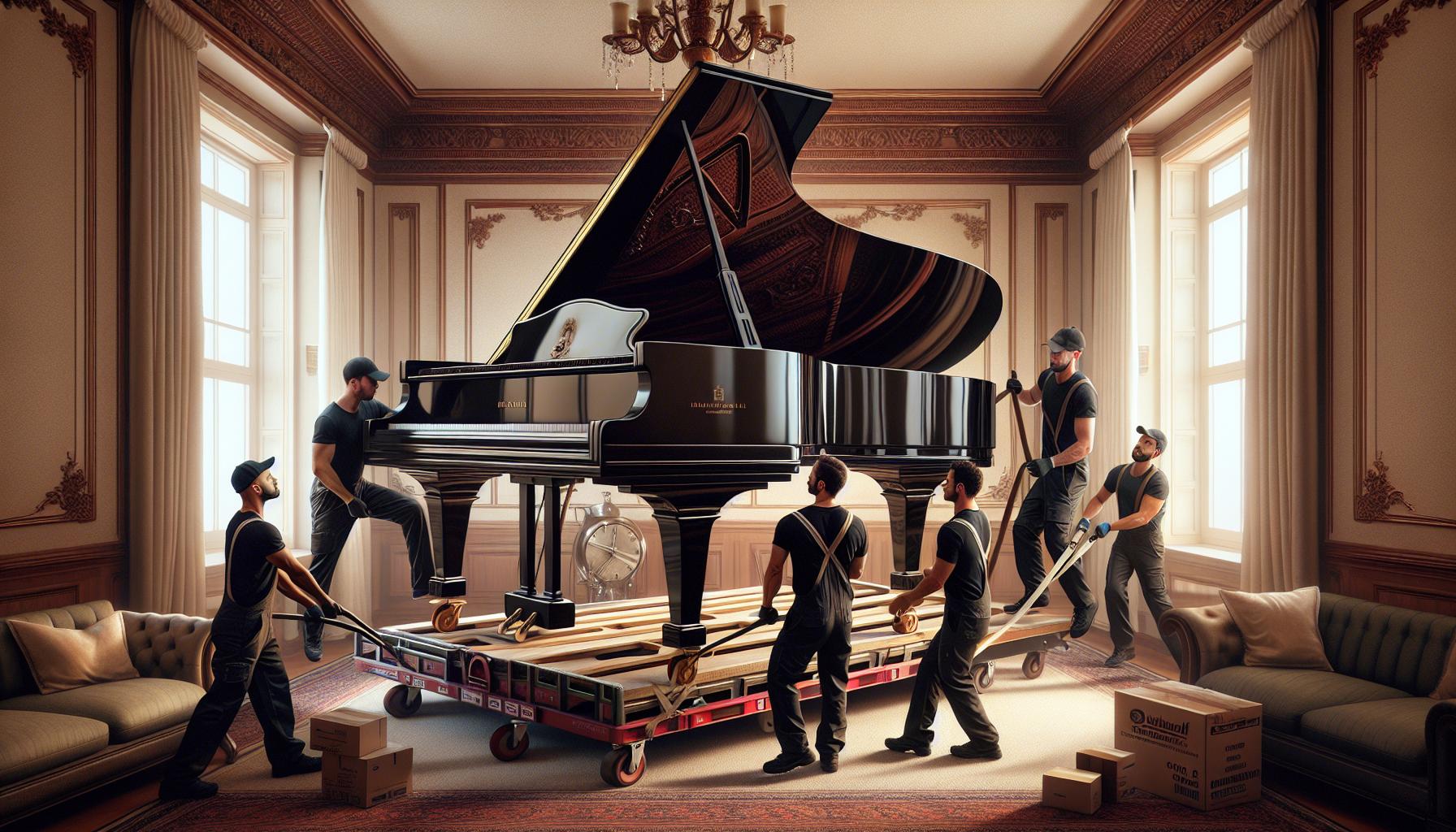
    Looking at the weight and portability, keyboards take a significant lead here. Lighter in design and compact in size make keyboards a more appealing choice for traveling musicians or those with space limitations. Comparatively, moving a piano involves painstaking effort and logistics.

    Next, let’s talk about the touch and feel of the instruments. When you strike a piano key, it activates a hammer mechanism that hits the strings, creating sound. This action provides a weighted, tactile sensation that pianos are renowned for. Keyboards – or at least the lower-end models – often lack this touch sensitivity. Yet, many advanced keyboards do contain weighted key options that mimic the feel of a piano.

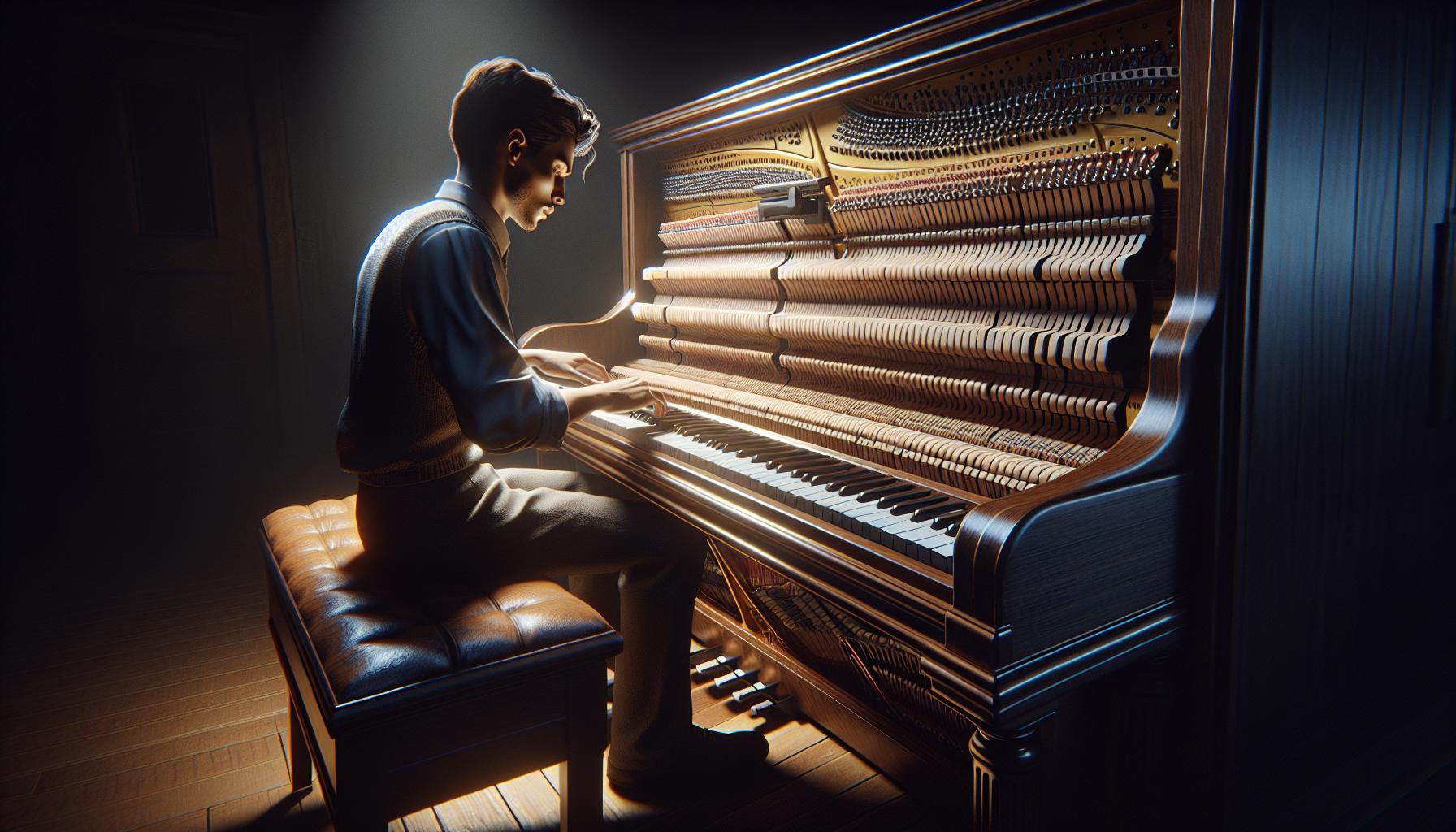
    Peek inside the piano, and you’ll find strings and hammers, responsible for creating rich, resonant tones. Keyboards, on the other hand, use electronic sound-producing mechanisms. This difference affects not just the tonal quality (which we’ll explore later), but also the physical maintenance required. Pianos need regular tuning – a service not necessary for keyboards.

    Throughout this section, I’ve addressed differences in the physical attributes, from size to sound mechanisms, between pianos and keyboards. This exploration helps to discuss further the sound quality and skill required for each instrument.

    Sound Quality

    Shifting gears for a bit, let’s delve into the nitty-gritty of sound quality. Here, we’ll discuss what makes a piano’s sound unique and how a keyboard holds up in comparison.

    The depth and richness of a piano’s sound principally come from its strings and hammers. Each time you press a key, a hammer strikes multiple strings simultaneously, creating an incredible resonance that musicians adore. The soundboard, a vital component of a piano, amplifies these vibrations, leading to a rich and unique sound. Pianos have a diverse dynamic range, meaning the tone changes depending on how hard or softly you play. That adds another layer of expressiveness, enabling you to create a wide array of emotions through your music.

    Moving on to keyboards, they utilize digital samples for their sound. This system allows an array of pre-recorded sounds to be played, ranging from classic piano tunes to other instruments like drums, violins, and much more. The sound is made by pushing a switch that sends a signal to produce the required tone. Due to this, keyboards are more consistent and predictable with their sound quality. They may not possess the dynamic range of a piano, but their versatility and variety of sound effects and tones are vast.

    As we transition into the next section on skill required, it’s important to keep in mind how these unique sound-producing mechanisms affect the techniques and approaches necessary for playing these two instruments.

    Playing Skills

    When it comes to mastering the finer points of playing, both the piano and keyboard have their unique challenges. You’ll find that the same techniques don’t always translate directly from one instrument to the other.

    Subtle Nuances in Piano Playing

    Piano playing requires an understanding of unique elements, largely due to its acoustic nature. For instance, the tone of a piano changes based on how hard or soft you press the keys, offering a rich, dynamic range of sounds. It’s important to develop a precise touch as too much pressure can lead to a harsh, unpleasant sound while too little pressure won’t be loud enough to carry the melody. It’s all about mastering the right balance.

    To excel in piano, you also need a robust understanding of pedaling. Piano pedals offer a degree of expressive control not found on many keyboards. By damping, sustaining, or modifying the instrument’s tones, pedals can significantly impact the overall musical output.

    Keyboard Technique Variations

    On the flipside, keyboard playing brings its distinctive set of skills. Since keyboards are electronically powered, volume and tone adjustments are typically controlled via knobs or buttons. You don’t have the same tactile feedback as a piano, which can be both a blessing and a curse depending on your perspective.

    Keyboards stand out with sound versatility. They offer a wide range of tones, effects, and even the ability to replicate other instruments. As a result, keyboard players often need to be adept in programming and understanding their instrument’s technical aspects, which can increase their versatility and musical potential.

    One can’t easily say that the learning curve for one is more daunting than the other. Understanding and mastering these distinctive musical elements, whether you’re seated at a grand piano or standing with a portable keyboard, will surely enhance your abilities and widen your musical horizon.

    The Debate

    As we dive deeper into the discussion, it’s clear the keyboard and the piano are drawn up to an intense battle on what’s considered the real McCoy of music. It’s akin to a duel of traditional versus modern, acoustic versus digital, natural resonance versus amplified sound, physical dexterity versus program utilization.

    The choice to opt for a piano or keyboard is often subjected to certain factors. It can be personal preference, the style of music an individual wants to play, affordability, portability, and the kind of musical training one has undergone.

    Let’s take one for the piano– it’s an acoustic instrument, unlike the keyboard. The sound produced is due to the natural resonance of the strings struck by hammers, creating an unrivaled depth of tone. A piano’s richness in sound is unparalleled and it draws individuals who value authenticity and the intricacies of acoustic sound production.

    In contrast, the keyboard thrives in the digital world. It’s portable. It can reproduce a variety of sounds and musical styles, which serves to its advantage. Moreover, keyboards allow musicians to explore and experiment, offering a universe of possibilities with the myriad of tones and effects. The keyboard’s versatility caters to a wide range of musical genres and styles. That too is something worth considering.

    *Fact-based Comparison:

    Criteria Piano Keyboard
    Sound Production Acoustic Electronic
    Portability Less portable Highly portable
    Variety Limited to piano sound Multiple sounds and effects
    Learning Curve Requires physical dexterity Requires technical programming skills
    Cost Generally more expensive More affordable

    Tying it all together, the difference in playing skills required for both the piano and keyboard, as previously discussed, further complicates this debate. It’s vital to understand and master these unique musical elements—be it the tone changes based on key pressure and the use of pedals for expressive control in pianos or adjusting volume, tone electronically, and programming the instrument for sound versatility in keyboards.

    Choosing the most fitting instrument is ultimately a decision based on individual needs and requirements. The debate, thus, remains subjective, much like the art of music itself.

    Conclusion

    So, is a keyboard equivalent to a piano? The answer isn’t black and white. Yes, they share similarities, but they’re unique in their own right. The choice hinges on what you’re looking for in an instrument. If it’s about portability and variety, a keyboard takes the lead. But if it’s about sound quality and traditional learning, a piano might be your best bet. It’s all about weighing the pros and cons, and choosing what suits your needs. Remember, it’s not a competition between the two, but about finding the right fit for you. So whether it’s a piano or a keyboard, what truly matters is the music you create.

  • Understanding Piano Keyboards: The 88 Key Standard vs Extended Models

    Understanding Piano Keyboards: The 88 Key Standard vs Extended Models

    Ever wondered how many keys a piano keyboard has? Well, you’re not alone. It’s a common question that’s intrigued many, from novice musicians to curious non-players. In this article, I’ll unravel this mystery and delve into the fascinating world of piano keyboards.

    We’ll explore the standard number of keys on a piano keyboard and why that number was chosen. We’ll also touch on variations in keyboards and how these differences impact the music produced. So, whether you’re a budding pianist or an intrigued reader, stay tuned for a captivating journey into the heart of the piano.

    This isn’t just about numbers. It’s about understanding the rich tapestry of sound a piano can produce, and how that’s tied directly to the number of keys. So get ready to dive deep into the realm of piano music, and let’s discover together the secret behind those black and white keys.

    The Importance of Piano Keyboards

    Getting to grips with the layout of a piano keyboard is like mastering the ABCs of a new language. It’s the first step towards becoming fluent in the beautiful language of music. Every key represents a distinct note and holds a unique position in creating the grand scope of music that a piano can produce.

    You might wonder why there are 88 keys precisely on a standard piano keyboard. It’s not just an arbitrary decision by piano manufacturers. The logic behind this lies in the range of human hearing. The standard range of aural perception for a healthy human ear extends from a low of approximately 20 Hertz to a high near 20,000 Hertz. The 88 keys span from 27.5 Hertz on an A0 to 4186 Hertz on a C8, effectively covering the entirety of our hearing range.

    But it’s not just about covering the audible spectrum. The multitude of keys provides the piano with a wide tonal range, making it one of the most versatile instruments out there. Pianists can play different melodies and harmonies simultaneously or delve into complex musical passages that demand a broad range of notes.

    Of course, variations exist in piano keyboards. There are keyboards with fewer or more keys to cater to different needs and preferences. For example, a piano designed for a beginner might have fewer keys to make learning less intimidating. On the other end, some manufacturers produce instruments with more than 88 keys for the virtuosos who demand an even wider tonal range.

    Keyboard Variations Number of Keys
    Standard Piano 88
    Beginner Piano Generally fewer
    Extended Range Piano More than 88

    It’s not just the number of keys that matter but also how they’re played. The piano’s responsive mechanism allows for expressive playing, with every key responding to the pianist’s touch in terms of volume, tempo, and emotion. This sensitivity to touch is another vital aspect of a piano keyboard, adding depth and dynamism to the music it produces.

    Understanding the importance of a piano keyboard and the relationship between the number of keys and the range of sounds it can produce can elevate a musician’s ability to express themselves musically. It enables them to tap into a world of diverse sounds and expressions, threading together the complex tapestry of musical dialogue.

    Unraveling the Mystery: How Many Keys Does a Piano Keyboard Have?

    When it comes down to the core question—how many keys does a piano keyboard have—the magic number is 88. This count includes 52 white keys and 36 black keys. This keying configuration produces seven octaves plus a minor third, ranging from A0 to C8. This number has been the norm since Steinway & Sons launched pianos with 88 keys back in the late 19th century.

    Let’s compare it with other instruments:

    Instrument Number of Keys
    Standard Piano 88
    Electronic Keyboard 61 to 76
    Pipe Organ 61 per manual

    But as we all know, norms were made to be broken. There are pianos out there with fewer or more keys, depending on the manufacturer and the musician’s needs or preferences.

    For instance, did you know there are smaller pianos—often used for kids and those learning—that contain as few as 25 keys? And that’s not even the smallest! There are pianos specifically constructed for music therapy that have just 20 keys. One the other hand, there are grand pianos that dare to cross the norm of 88 keys. A Bosendorfer Imperial Grand, for instance, stretches up to 97 keys!

    The number of keys extends not only the depth and range of sound possible on a piano but also impacts the piano’s size. For professional musicians seeking to explore unconventional soundscapes, pianos with extended keys offer a vast universe of sound.

    However, for the average piano hobbyist, a keyboard of 88 keys offers a completely adequate range.

    Size and design also count when choosing a piano. If space is a consideration, or portability is key, a smaller number of keys might be a beneficial trade-off. While an 88-key grand piano may take center stage in a concert hall, a smaller piano, a keyboard, or a synthesizer could fit more comfortably in a home or a touring van.

    The complexity of the piano mechanism—responsive mechanism, as we call it—is one of the factors that make it such a magnificent instrument for expressive playing. This characteristic changes the very essence of each note played, making each key press unique. Each note produced can bear the musician’s unique touch, allowing infinitely unique musical expressions.

    Evolution of the Piano Keyboard

    When I look back through history, the piano, in all its elegance and grandeur, has not always possessed the bountiful 88 keys we see today. Its journey has been marked by progressive development, fueled by the evolution of music and the artists’ desire to explore new horizons of tonality.

    The clavichord, considered an ancestor of our modern piano, emerged as early as the 14th century, boasting only around 20 keys. Later in the Baroque period, the harpsichord made its appearance, offering between 49 and 60 keys, allowing artists a wider tonal range.

    Piano evolution leap-forwarded in the 18th century as the fortepiano gained popularity, carrying a similar design but integrating a novel mechanism. This groundbreaking element provided for a higher level of expressive playing, lining the way for later advancements.

    The piano’s metamorphosis continued throughout the 19th century – a time when musical compositions began demanding extra keys. It’s during this era that the dominant manufacturers like Steinway & Sons endorsed the seven-octave, 88-key piano. This move sealed the standard keyboard layout we recognize today.

    Let’s not forget, though, that there are still specialty pianos manufactured with additional keys! The Imperial Bösendorfer, an exceptional example, sports a colossal 97 keys!

    Although the modern-day piano sits comfortably at 88 keys, the sweeping history and evolution of the keyboard opens up a fascinating perspective. It’s a powerful symbol of human creativity and the unfaltering pursuit to invent and refine. The piano, in its current state, eloquently reflects the mutually beneficial relationship between instruments and the music they inspire.

    Shedding light on the evolution of the piano keyboard, we come to appreciate not only the complexity and sophistication of this instrument but also its historical significance in the world of music.

    The Standard Number of Keys on a Piano Keyboard

    Diving deeper into the topic, it’s time we directly address the standard number of keys on a modern piano keyboard. The primary factor that has shaped the evolution of the piano keyboard throughout the centuries is the demand for a wide range of tonal possibilities. Evidently, the design we’ve embraced supports a significant breadth of musical expression.

    88 keys is the standard number on a regular piano keyboard. These keys embody 52 white and 36 black keys, corresponding to a unique note. They span seven grand octaves plus a few extra notes, granting the artist a colossal playground of harmonic diversity. Though it might appear like an arbitrary figure, this count advantageously resonates with the range of human hearing.

    Total Keys White Keys Black Keys Octaves
    88 52 36 7 + a few extra notes

    While certain pianos, especially earlier models like the clavichord and harpsichord, contained fewer keys, the development and adoption of the 88-key structure have effectively positioned it as the global standard. This layout enhances the capability of the instrument, permitting a wide selection of melodies, harmonies and expressions for the performer to explore.

    Yet, this hasn’t ceased instrument manufacturers, such as the renowned Austrian brand Bösendorfer, from experimenting with keyboards running beyond the 88-key convention. Models like their famous Imperial model flaunt a striking 97-key spread. Nonetheless, these are considered specialty pianos, designed for unique musical endeavours rather than widespread use. For the majority of pianists, the classic 88-key layout remains the longest-serving and most satisfying component in crafting music.

    I must also point out that despite our mastering of this design, we’re continually refining and redefining the piano keyboard’s range and capacity. It’s a classic testament to the resilient evolution of musical instruments. As artists seek to challenge the boundaries of expression, the piano continues to respond adroitly, proving why it has been and remains a central figure in the rich chronicle of music.

    Exploring Variations in Piano Keyboards

    In the realm of musical instruments, change is a constant. That’s clearly visible in the realm of piano keyboards. While the standard number of keys is set at 88, many renowned manufacturers haven’t shied away from crafting pianos with alternative key counts.

    Earlier designs of the piano featured significantly fewer keys. For instance, the grand piano crafted by inventor Bartolomeo Cristofori in the 1700s boasted a scant 49 keys. It’s fascinating to see how rapidly our beloved piano expanded its reach from a mere 4 octaves to 7+ octaves.

    Delving deeper into the different variations, it’s imperative to mention the Bösendorfer Imperial Grande. This piano is a wonder with a whopping 97 keys, 9 more than the standard 88. With its extended range, it opens a whole new world of musical exploration, ready to challenge and thrill even the most veteran pianists.

    Not all pianos strive for an extended range though. Certain manufacturers, like Steinway & Sons, choose to stick with tradition. Their pianos keep to the standard 88 keys, and yet, they’re globally recognized for their excellent craftsmanship and superb sound quality.

    A look at the various manufacturers and their unique offerings can help us understand the variations in piano keyboards:

    Manufacturer Key Count Noteworthy Model
    Cristofori 49 Original Grand Piano
    Bösendorfer 97 Imperial Grande
    Steinway & Sons 88 D-274 Concert Grand

    Almost every piano under the sun may have its unique charm irrespective of its key count. Our choice may depend on multiple factors – from the style of music we want to play to our level of expertise and budget.

    It’s worth noting that despite these variations, the 88-key layout has held its ground and is typically the favorite among aspiring and professional pianists alike. It’s a testament to the unwavering legacy of the piano, and its integral role in shaping the course of music history.

    The Impact of Keyboard Variations on Music

    Let’s delve into the heart of how keyboard variations can affect the music that’s created. It’s vital to remember, different keyboards produce different characteristics of sound. This variance can significantly impact a composer’s capabilities, the feasibility of particular pieces, and, most importantly, the overall musical expression.

    When we look at pianos like the Bösendorfer Imperial Grand which boasts 97 keys, it’s clear these additional keys provide musicians an expanded tonal range. Composers can manipulate this extra bandwidth either subtly, enriching the harmonics or by simply including those lower notes in their compositions. The result is a truly luxurious depth and resonance that can’t be achieved on the standard 88-keyed counterparts.

    The significance isn’t just for the low pitch excess provided. An instrument with extended keyboards also influences the total sonority of the instrument. As a result, notes played even within the ‘normal’ range of pianos will sound distinct due to the additional vibrating lengths of strings on the extended instrument.

    Conversely, manufacturers like Steinway & Sons have chosen to remain loyal to the classic 88 keys. They’ve prioritized upholding the traditions of the instrument by optimizing the design within this range. Steinway & Sons believe that the 88-key layout, a product of centuries of musical evolution, offers performers the best balance of range, portability, and sound quality.

    Now let’s compare the two based on their key count:

    Piano Type Number of Keys
    Bösendorfer Imperial Grand 97
    Steinway & Sons standard 88

    As we continue into the future of keyboard innovation, I’m eager to witness the creative ways designers and developers will continue to reshape the bandwidth and potential for musical expression on the piano keyboard.

    Conclusion

    So, there’s no one-size-fits-all answer to how many keys a piano keyboard has. It’s all about the balance between range, portability, and sound quality. The Bösendorfer Imperial Grand’s 97 keys offer a luxurious depth and resonance, while the classic 88 keys of Steinway & Sons’ pianos are a testament to tradition and balance. It’s a fascinating field with plenty of room for innovation. I’m excited to see what the future holds for keyboard design and how it’ll continue to reshape our musical expression. Regardless of the number of keys, the piano remains a versatile instrument, capable of producing a broad spectrum of sounds and emotions. The key (pun intended) is to find the one that best suits your musical needs and aspirations.

  • Famous Bands and Their Iconic Keyboards: A Deep Dive

    Famous Bands and Their Iconic Keyboards: A Deep Dive

    When we think of rock and roll or pop music, guitars and drums usually steal the spotlight. But let’s not forget the unsung hero behind many hits: the keyboard. It’s fascinating how keyboards, in their various forms, have played pivotal roles in shaping the sound of famous bands. From the psychedelic swirls of the Hammond organ to the punchy vibes of the Clavinet, keyboards have been there, setting the stage alight.

    Diving into the world of famous bands and their choice of keyboards is like opening a treasure chest of musical history. Whether it’s the smooth sounds of a Fender Rhodes underpinning a soul classic or the acoustic piano driving a rock anthem, these instruments have been key players. Let’s explore what piano keyboards famous bands have used and how these choices have contributed to their iconic sounds.

    What to Look for when buying a Keyboard

    When embarking on the quest to find the perfect keyboard, knowing what to look for can make all the difference. My years of experience have taught me that there are several key factors that can’t be overlooked. First and foremost, consider the type of music you’re looking to play. For rock and pop, you might lean towards keyboards with built-in rhythms and sound effects to elevate your performance.

    The key action and the number of keys are paramount. Most full-sized keyboards come with 88 keys, mirroring a traditional piano. However, for beginners or those with space constraints, models with 61 or 76 keys might be more suited. Weighted keys that mimic the resistance of piano keys can significantly affect playability and are essential for anyone looking to transition to the piano.

    Connectivity options are another crucial aspect. A keyboard with MIDI or USB to Host ports, like the PSR-E373, offers flexibility for recording and using digital audio workstations. This feature can be particularly useful for aspiring songwriters and producers.

    Sound quality cannot be ignored. Brands like Yamaha, Roland, and Kurzweil are known for their robust sound libraries and quality built-in speakers. If you’re exploring various genres or want to emulate the iconic sounds of your favorite bands, opting for a keyboard that offers a wide selection of voices and tweaking options is a wise move.

    Lastly, consider your budget. The price range for keyboards varies greatly, but remember, investing in a slightly more expensive model initially can save money in the long run. Higher-end models from Korg or Williams, for example, often come with features that accommodate growth and prevent the need for an early upgrade.

    By keeping these factors in mind, you’ll be well on your way to finding a keyboard that not only meets your current needs but also supports your musical journey as you evolve.

    Types of Keyboards

    As I’ve delved into what piano keyboards famous bands use, I’ve noticed that the diversity in keyboard types is staggering. The variety caters to different sounds and functionalities, each with its unique flair. It’s fascinating to see how each type plays a role in the music industry.

    Digital Pianos are the go-to for musicians looking for authentic piano sounds. With weighted keys that mimic the response of an acoustic piano, they’re ideal for those who prioritize feel and sound quality. Bands needing a classical touch often gravitate towards digital pianos for their rich, resonant tones.

    Synthesizers, on the other hand, are the playground for creatives looking to sculpt unique sounds. Their ability to generate a wide array of noises makes them indispensable for genres that thrive on innovation, like electronic, pop, and rock. Synthesizers offer endless possibilities, from mimicking traditional instruments to creating out-of-this-world audio effects.

    Workstations blend the functionalities of a synthesizer with recording capabilities, allowing musicians to produce complete tracks on a single device. Bands that handle much of their production find workstations invaluable for their versatility and power. The ability to sequence tracks, layer sounds, and even integrate digital effects makes them a cornerstone for any band serious about their music production.

    Arranger Keyboards are a bit of a jack-of-all-trades, combining the features of digital pianos, synthesizers, and sometimes even workstations. They’re equipped with auto-accompaniment functions, making them perfect for solo performers or bands that need to fill in parts when a member is absent. Their built-in rhythms and musical patterns can inspire creativity and add depth to a performance.

    In exploring the vast landscape of keyboards used by famous bands, it’s clear that the choice often hinges on the specific needs of the music being created. From the tactile response of digital pianos to the expansive sonic capabilities of synthesizers and workstations, each keyboard type offers something unique.

    What Is a Workstation Keyboard?

    When diving into the realm of musical keyboards, it’s crucial to understand the diversity within this tool’s family. A workstation keyboard is an extensive piece of equipment, favored by many famous bands for its versatility and comprehensive features. Essentially, it includes its own computer, packed with advanced programming options and composition tools. This makes it more than just an instrument; it’s a portable studio.

    Advantages of a Workstation Keyboard

    The first thing I noticed about workstation keyboards is their array of benefits that cater particularly well to professionals in the music industry. Here’s a brief rundown of their primary advantages:

    • Versatility: They’re essentially Swiss Army knives in the world of keyboards, equipped with a variety of sounds and effects. This allows for seamless genre-crossing, from hip-hop beats to rock anthems.
    • Composition and Arrangement Tools: The built-in computer facilitates on-the-fly composition, making it possible to arrange entire pieces without additional equipment.
    • Weighted Keys: This feature provides a realistic piano feel, which is crucial for many performers who transition between acoustic and digital pianos.
    • Professional Standards: Workstation keyboards meet the rigorous demands of the music industry, ensuring that the sound quality and functionality align with professional expectations.

    Disadvantages of a Workstation Keyboard

    Despite their appeal, workstation keyboards aren’t without drawbacks. It’s important to consider these before deciding if one is right for you:

    • Price: Quality comes at a cost. These keyboards tend to be priced at the higher end, which can be a significant factor for those on a tight budget.
    • Complexity: With great power comes great complexity. The sheer number of features and options available can be overwhelming, particularly for beginners or those who prefer a simpler setup.
    • Weight: Though some models are designed to be portable, the inclusion of so many features can make them heavier than other types of keyboards. This might be a deterrent for musicians who frequently travel for gigs.

    In exploring what piano keyboards famous bands use, it’s evident that workstation keyboards hold a special place for those needing a blend of performance versatility and compositional capabilities. Their ability to bridge the gap between live performance and studio work makes them an invaluable tool for many artists.

    What Is an Arranger Keyboard?

    When I’m exploring the diverse world of musical keyboards, one type that always catches my attention is the arranger keyboard. Unlike traditional pianos, these nifty devices are powerful tools designed for musicians who wish to have an entire backing band at their fingertips. Arranger keyboards offer a plethora of built-in automated accompaniment options that cater to various musical styles and enable musicians to create complex arrangements with ease.

    Advantages of an Arranger Keyboard

    The benefits of using an arranger keyboard are numerous, making them an attractive option for both beginners and seasoned professionals. Here’s a rundown of some key advantages:

    • Versatility in Music Creation: One of the standout features of arranger keyboards is their ability to produce a wide array of sounds and musical styles. This versatility allows me to experiment with different genres, from jazz and blues to pop and electronic, without needing multiple instruments.
    • Built-In Accompaniment Features: The auto-accompaniment function is a game-changer. It enables me to select various styles, rhythms, and tempos, creating a full-band sound by simply playing chords. This feature is particularly beneficial when I’m composing music or practicing alone, as it simulates playing with other musicians.
    • Enhanced Learning Experience: For beginners, arranger keyboards can be an invaluable learning tool. The array of built-in features, including preset songs, lessons, and rhythms, can significantly enhance the learning experience, making practice sessions more engaging and effective.
    • Portability: Most arranger keyboards are more compact and lighter than their acoustic counterparts, making them easily portable. This is essential for me when I’m gigging or need to bring my instrument to rehearsals or recording sessions.

    Disadvantages of an Arranger Keyboard

    Despite their many benefits, arranger keyboards do come with a few drawbacks that are worth considering:

    • Price Point: Generally, arranger keyboards are more expensive than basic keyboards due to their advanced features and capabilities. This can be a significant consideration, especially for beginners or those on a tight budget.
    • Complexity: The wealth of features and programmable options available on arranger keyboards can be overwhelming, particularly for novices. Mastering all the functionalities and navigating through the various settings can take time and patience.
    • Focus on Electronic Sounds: While the ability to mimic a wide range of instruments is a major plus, the synthesized sounds may not always satisfy purists seeking the authentic tone of acoustic instruments. This is something I’ve learned to balance, depending on the gig or project I’m working on.

    In my journey as a musician, I’ve found that weighing the advantages against the disadvantages is crucial when considering whether an arranger keyboard is the right fit for my needs. They offer a world of creativity and flexibility, but it’s important to be mindful of their limitations.

    What Is a Synthesizer?

    When I delve into the realm of music production and performance, the synthesizer stands out as an iconic instrument that’s fundamentally transformed the sound of music over decades. Originating in the late 19th century, its breakthrough came in the 1960s with instruments like the Moog synthesizer. Today, I’m fascinated by how synthesizers can produce a wide array of sounds, from mimicking traditional instruments to generating unique, electronic textures. They’re not just electronic sound boxes; they’re intricate devices capable of bringing the most imaginative sounds to life.

    Advantages of a Synthesizer

    Exploring the strengths of synthesizers, I’ve discovered a range of benefits that make them indispensable in modern music. Here’s what stands out:

    • Versatility in Sound Production: One of the greatest perks I’ve noticed is their ability to generate an almost infinite variety of sounds. Whether it’s emulating the warm tones of a piano or crafting entirely new sonic landscapes, synthesizers can do it all.
    • Portability and Convenience: Unlike traditional large instruments, most synthesizers are remarkably portable. This makes them ideal for touring musicians or those with limited studio space.
    • Enhanced Creative Potential: With their array of controls and settings, synthesizers offer unmatched creative freedom. I’ve found that tweaking oscillators, filters, and envelopes opens up new avenues for musical expression.
    • Integration with Modern Technology: Modern synthesizers can easily integrate with computers and other digital equipment. This connectivity is crucial for contemporary music production and performance.

    Disadvantages of a Synthesizer

    However, synthesizers also come with their own set of challenges. It’s essential to be aware of these:

    • Complexity: Initially, I was overwhelmed by the complex interface and myriad options available on a synthesizer. The learning curve can be steep for beginners.
    • Cost: High-quality synthesizers can be an investment. The more features and versatility a synth offers, the higher the price tag tends to be.
    • Digital vs. Analog Debate: There’s a perennial debate in the music community about the warmth and authenticity of analog sounds versus the clarity and flexibility of digital synths. Purists might find digital synthesizers lacking in character.

    As I navigate the multifaceted world of synthesizers, these advantages and disadvantages shape my understanding and use of this transformative instrument. From providing unmatched sound diversity to grappling with their complexity, synthesizers play a pivotal role in my musical journey.

    What Is a Controller Keyboard?

    When exploring the various types of keyboards used by famous bands, it’s critical to understand the role of a controller keyboard. At first glance, these keyboards might seem like any other, but they hold a unique place in music production and performance. Unlike traditional keyboards that produce sound internally, a controller keyboard acts as a MIDI (Musical Instrument Digital Interface) device, sending data to external sound generators like synthesizers or computer software. This makes them exceptionally versatile and a popular choice among professionals.

    Advantages of a Controller Keyboard

    I’ve found several advantages of using a controller keyboard, which can significantly impact music production and live performances. Here are some key benefits:

    • Flexibility and Versatility: Controller keyboards are inherently flexible. They can control various digital instruments, giving me access to an almost unlimited array of sounds. Whether it’s simulating a grand piano, a bass guitar, or any synth texture, these keyboards let musicians craft their unique sound palette.
    • Portability: Many controller keyboards are lighter and more compact than their sound-generating counterparts. This makes them an excellent option for touring musicians who need to minimize their gear load.
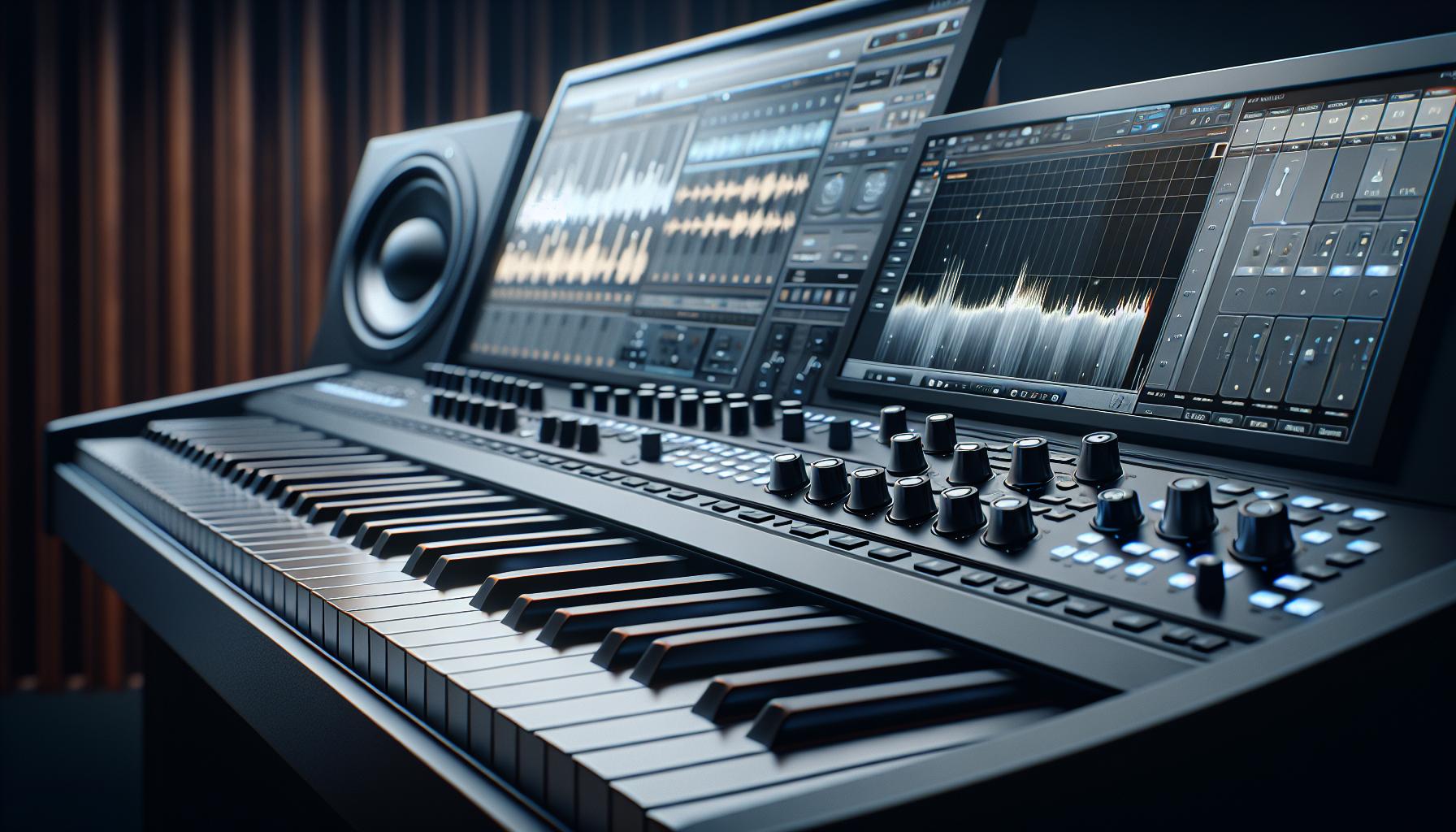
    • Integration with Music Production Software: Most controller keyboards are designed to integrate seamlessly with digital audio workstations (DAWs). This is crucial for me when I’m recording or producing music, as it streamlines the workflow and enhances creative control.
    • Cost-Efficiency: Because they don’t produce sound on their own, controller keyboards can be less expensive than full-featured synths or digital pianos. This makes them a great entry point for budding musicians or a cost-effective addition to a professional’s toolkit.

    Disadvantages of a Controller Keyboard

    However, it’s not all smooth sailing. Here are some drawbacks I’ve noticed:

    • Dependency on External Sound Sources: Since controller keyboards don’t generate sound internally, they require a connection to an external sound module, synth, or computer. This can be limiting if I’m in a situation without access to these tools or if there’s a technical malfunction.
    • Complexity in Setup: Integrating a controller keyboard with other devices or software can sometimes be complex, particularly for those not technically inclined. It often involves understanding MIDI mapping and DAW configurations, which might steer some musicians towards more straightforward, standalone instruments.
    • Lack of Onboard Speakers: Most controller keyboards lack onboard speakers, which means I need an external amplification system to hear what I’m playing. This isn’t usually a problem in a studio setting but can be an inconvenience during informal practice sessions or small, acoustic gigs.

    In my experience, whether the advantages outweigh the disadvantages greatly depends on one’s specific needs and context. For studio-savvy musicians and bands looking to expand their sound palette, controller keyboards offer a gateway to unparalleled creative freedom. However, for those prioritizing simplicity and ease of use, especially in live performance settings, other options might be more suitable.

    Roland FP 90x – Best Overall

    When diving into the world of piano keyboards famous bands use, one model consistently stands out: the Roland FP 90x. This isn’t just another digital piano; it’s a masterpiece, marrying advanced technology with top-notch craftsmanship. I’ve spent considerable time reviewing and playing various models, and the FP 90x genuinely sets a new standard for performance and quality.

    One of the most impressive features of this model is its PHA50 keyboard action. This technology, often reserved for much pricier models, offers an exceptionally realistic playing feel. With 88 keys crafted from hybrid materials, the FP 90x provides a tactile experience that musicians, both professionals and hobbyists, fall in love with. This realism is crucial for bands wanting to recreate the nuanced dynamics of their studio recordings on stage.

    Additionally, the FP 90x boasts Roland’s proprietary SuperNATURAL sound technology. This isn’t just marketing fluff; the sound quality is genuinely exceptional, setting it apart from nearly every other option on the market. For bands that prioritize sound fidelity, this technology ensures that every performance is imbued with clarity and depth, crucial for live gigs and studio work alike.

    However, I must note that the Roland FP 90x’s robust features come with increased size and weight. While this might be a drawback for musicians constantly on the move, the unmatched quality and responsiveness it offers make it a worthy trade-off for many.

    In the competitive landscape of digital pianos and keyboards, the Roland FP 90x emerges as the best overall choice for bands seeking a blend of realism, sound quality, and durability. Whether it’s for recording sessions, live performances, or simply honing your craft, this model offers capabilities that can elevate any musical project.

    Korg SV-2S Vintage 88-Key Stage Piano With Built-in Speakers – Best For Performing Live Shows

    When it comes to performing live, the Korg SV-2S stands out as a remarkable choice for musicians aiming to bring that vintage vibe to their performances. With its 88 fully weighted keys, the SV-2S not only offers an authentic playing experience but also comes equipped with built-in speakers, making it incredibly convenient for gigs where quick setup and tear down are paramount. The sound quality is nothing short of spectacular, delivering deep, resonant tones that can fill any venue.

    One of the features that truly set the Korg SV-2S apart is its extensive library of iconic keyboard sounds. From vintage electric pianos to strings and organs, this stage piano packs everything a band would need to recreate the classic tracks or forge new ones in a live setting. The tactile knobs and switches offer hands-on control over the sound, allowing for real-time adjustments that are crucial during live performances.

    The built-in tube-driven amplifier adds another layer of warmth and depth to the sound, a characteristic often sought after by bands that aim to recreate or be inspired by the retro soundscapes of past decades. This is particularly useful for genres like jazz, blues, or classic rock, where the authenticity of the sound plays a significant role in the overall performance.

    Moreover, the SV-2S is not just about great sounds; its connectivity options are equally impressive. The ability to connect to a computer for further sound editing and customization makes it an incredibly versatile tool for both live performances and studio sessions. This feature alone makes it an indispensable part of a band’s gear, offering flexibility rarely found in other stage pianos.

    In sum, the Korg SV-2S Vintage 88-Key Stage Piano is an excellent choice for bands looking to leave a mark on their live performances. Its combination of authentic sounds, ease of use, and versatile connectivity options make it a top contender for musicians who value quality and performance. Whether it’s for small gigs or larger venues, the SV-2S has what it takes to make each performance memorable.

    Roland FA-07 (& Roland FA-08) – Best For Recording

    When exploring what pianos famous bands tend to gravitate towards, especially for recording purposes, my research and experience point me towards the Roland FA-07 and its sibling, the FA-08. These keyboards exemplify versatility and quality, making them a top pick for artists looking to capture studio-grade sound.

    Roland’s use of the SuperNATURAL sound engine across its range of instruments, notably in these models, stands out for its fusion of audio samples with software modeling. This combination allows for an expansive sound palette that’s as dynamic as it is authentic. The main piano sound, particularly, is designed to mimic an acoustic piano, delivering an exceptionally convincing feel. This detail is crucial for bands aiming to balance digital convenience with organic sound quality during recording sessions.

    The FA-07 and FA-08 don’t just stop at excellent piano tones. They offer a broad range of sound options including electric pianos, organs, and strings, summing up to a total of 56 onboard tones. This variety ensures that bands can experiment with different genres and arrangements without needing multiple instruments at hand.

    What seals the deal for me, regarding these models as the best for recording, is their sophisticated keyboard action. The PHA-4 Standard key action utilizes individually weighted hammers and triple sensors. This setup not only enhances the realism of each note played but also dramatically increases the accuracy and precision of keypress detection – a necessity for capturing nuanced performances in a studio environment.

    Moreover, despite the Roland FA series being robust choices for recording, these keyboards are also fitting for live performances. Their programmability and extensive sound library allow musicians to transition seamlessly from studio to stage. While they may not match the live prowess of Nords or Kronoses, and despite a slightly less rugged build, their quality and versatility should not be underestimated.

    Yamaha MX88 – Budget Option

    In my journey through the world of keyboard performances, I’ve come across a plethora of options catering to various needs and budget constraints. Among these, the Yamaha MX88 stands out as a remarkable budget option, especially for musicians who are just stepping into the professional realm or even seasoned players looking for a reliable backup.

    The MX88 isn’t just affordable; it’s a powerhouse. With its 88 fully-weighted keys, it offers a tactile response that closely mimics that of an acoustic piano, making it a joy to play. The key action is smooth enough for rapid passages yet firm enough to provide the necessary resistance for dynamic expression. This balance makes it highly versatile for both live performances and studio work.

    One of the aspects I’ve grown to admire about the Yamaha MX88 is its selection of sounds. The piano and string tones are particularly impressive, lending a rich and authentic sound to performances. While it takes a bit of time to set up layers and splits, the effort is well worth it. The keyboard can adeptly handle complex gigs, providing a wide range of sounds that are more than satisfactory for most professional situations.

    Though some reviews hint at the sounds being somewhat dated, I’ve found this characteristic to be an advantage, especially in cover bands. The classic, well-loved tones of the MX88 can bring a sense of nostalgia and authenticity to performances, which is often highly appreciated by audiences.

    While it’s true that newer models like the Montage boast more advanced features, the enormity and complexity of such keyboards can be a deterrent. The MX88, on the other hand, strikes an excellent balance between functionality and portability. Its full-sized, fully-weighted keyboard with great action, coupled with a vast array of satisfactory sounds, makes it a top choice for musicians looking for quality on a budget.

    Nord Electro 6D

    When I dive into the world of keyboards used by famous bands, the Nord Electro 6D often comes up as a highlight. This instrument is a powerhouse, famed for its lightweight design and robust capabilities. Weighing in at just 25 pounds, it’s one of the most portable options for musicians on the move. I can’t stress enough how valuable this is, especially when I’m juggling gigs and need to transport my gear effortlessly.

    The Nord Electro 6D isn’t just about portability. Its technical specifications are equally impressive, boasting features that cater to the nuanced needs of professional musicians. Let’s look at some key tech specs that make the Nord Electro 6D stand out:

    Feature Specification
    Polyphony 100 notes
    Outputs Two ¼-inch, one headphone
    Weight 25 pounds
    Keys Available in 61 or 73 key versions

    I personally own the 73-key version and find it indispensable for my performances. The range it provides suits my style perfectly, but for those who prioritize space and portability, the 61-key version might be a better fit.

    Another aspect that makes the Nord Electro 6D a favorite among bands is its sound quality. From crisp pianos to lush strings, the Electro 6D delivers a sound that can cut through any mix, making it a reliable choice for live performances and studio recordings alike. The keyboard’s 100-note polyphony ensures that even the most complex chords and sequences are played back without any note drops, crucial for keeping performances smooth and professional.

    In terms of design, the Nord Electro 6D is built to last. Even though it’s light, its sturdy construction can withstand the rigors of touring. Plus, investing in a good case, as I did, adds an extra layer of protection without compromising on its portability. This makes the Nord Electro 6D not just an instrument but a long-term partner for musicians.

    Korg Kronos

    When diving into what piano keyboards famous bands use, I can’t skip over the Korg Kronos. It’s practically a legend in the music industry for its versatility and robust feature set. I’ve noticed it on stage with countless artists, from progressive rock bands to jazz ensembles. Its appeal lies not just in the quality of its sounds, which are stunningly lifelike, but also in its unparalleled ability to cater to virtually any musical need.

    One of Korg Kronos’ most compelling attributes is its extensive library of sounds. From emulating vintage electric pianos to orchestral strings that breathe with an air of authenticity, it’s got it all. But what really sets it apart is its ability to handle complex splits and layers, making it a powerhouse for live performances. The Kronos isn’t just about presets; its deep synthesis capabilities allow musicians to create unique sounds, adding a personal touch to their performances. This is a feature I’ve seen bands use to stand out in a crowded music scene.

    The Kronos offers models with 61, 73, and 88 keys, catering to various preferences. However, I’ve found that many touring musicians prefer the 61 or 73 models. They strike the perfect balance between playability and portability, crucial for artists constantly on the move. Despite its vast capabilities, the Kronos’ interface is designed for the heat of performance, offering quick access to its most powerful features without the need to dive through menus.

    In discussing its performance capability, it’s worth noting that the Kronos is not just about keys. Its sequencing and recording features are robust, allowing musicians to capture ideas on the fly or even perform with layered tracks live. Whether it’s the multi-engine sound generation system or the expansive effects section, the Kronos is engineered to inspire creativity.

    The decision to integrate it into a band’s setup often comes down to the need for a keyboard that can wear many hats. Whether it’s playing a shimmering piano segment or a growling synth lead, the Kronos stands ready. Its ongoing presence on stages around the world is a testament to its ability to meet the needs of professional musicians.

    Awesome Artists Who Were Great Pianists or Keyboardists

    When I dive into the rich tapestry of music history, I’m always thrilled to uncover the layers of talent that iconic musicians brought to the table. It’s not just their vocal prowess or guitar riffs that left a mark on the world but also their skillful mastery of the keys. Let’s take a closer look at some of these legendary artists who were also remarkable pianists or keyboardists.

    Freddy Mercury – Queen

    When discussing multi-talented musicians, Freddy Mercury undoubtedly tops the list. Known for his electrifying stage presence and unparalleled vocal range, Mercury’s skill on the piano truly set Queen apart from their contemporaries. Classic hits like “Bohemian Rhapsody” and “My Best Friend” aren’t just remembered for their melodious harmonies and captivating lyrics but also for Mercury’s intricate piano arrangements. His ability to intertwine piano riffs seamlessly into rock compositions has made those songs anthemic, proving that his legacy as a pianist is as monumental as his persona.

    Geddy Lee – Rush

    Next up is Geddy Lee, the frontman of Rush—a band that’s synonymous with progressive rock. Lee’s multifaceted role involved not just handling the bass guitar and vocals but also mesmerizing fans with his keyboard performances. What makes Lee’s keyboard skills so remarkable is his ability to produce complex arrangements that perfectly complement Rush’s sci-fi infused lyrics. The dynamic sounds emanating from his keyboards on tracks about “arguing trees” and other fantastical themes have undoubtedly contributed to the band’s legendary status in the world of rock.

    John Paul Jones – Led Zeppelin

    While Led Zeppelin might be best known for their heavy guitar riffs and mythic lyrics, John Paul Jones reminded us that keyboards have a place in rock music too. His subtle yet profound use of keyboards added a new dimension to the band’s sound, weaving in classical and folk influences that enriched their music’s complexity. Whether it’s the haunting Mellotron in “Stairway to Heaven” or the electric piano in “Trampled Under Foot,” Jones’ keyboard work is a testament to his versatility and ingenuity as an artist.

    Billy Preston – Various Acts

    Regarded by many as “the fifth Beatle,” Billy Preston‘s contributions on the keyboard helped shape the sound of not just the Beatles but numerous other acts. Preston’s spirited play on the Hammond organ and Fender Rhodes added soul and depth to classics like the Beatles’ “Get Back” and “Let It Be.” His work with other artists such as Eric Clapton and the Rolling Stones further solidified his reputation as a keyboard virtuoso whose influence transcends genres and eras.

    These artists remind me that the keyboard is not just a supporting instrument but a versatile tool that can elevate a song to legendary status. Their legacy on the keys continues to inspire both audiences and aspiring musicians around the globe.

    Best Gigging Keyboards – My Top Picks

    Through exploring the iconic sounds of legendary bands and artists, it’s clear that the right keyboard can make a world of difference. Whether it’s Freddie Mercury’s emotive piano melodies, Geddy Lee’s intricate synth lines, John Paul Jones’ innovative keyboard textures, or Billy Preston’s soul-stirring organ riffs, these musicians have shown that the keyboard is more than an instrument—it’s a canvas for creativity. Each of these artists chose keyboards that complemented their unique styles, proving that the perfect match between musician and instrument can birth unforgettable music. As I’ve delved into the keyboards used by these famous bands, I’ve been reminded of the power and versatility of this instrument. It’s not just about the notes you play, but how you play them and the stories you tell. So whether you’re a budding musician or a seasoned pro, remember to choose your keyboard wisely—it might just be your ticket to creating the next legendary sound.


  • Uncovered: Do Cheap Piano Keyboards Enhance or Impede Learning?

    Uncovered: Do Cheap Piano Keyboards Enhance or Impede Learning?

    We’ve all been there, right? Trying to encourage a budding musical interest in a child, but not sure if it’s a fleeting fancy or a lifelong passion. So, we opt for the budget-friendly route, a portable keyboard, just to test the waters. But is this approach doing more harm than good?

    I’ve seen it time and time again. Parents, with the best intentions, buy these keyboards as a starter instrument. However, these keyboards often hinder real development and can even cause students to lose interest in playing altogether. These kids can play songs perfectly at home, but when they switch to their teacher’s real piano, everything falls apart.

    Deciding to learn piano is the first step on an incredibly rewarding journey

    When it comes to playing the piano, an authentic desire to learn is the first and foremost requirement. Many folks express interest in piano lessons – for themselves or their kids – yet the commitment often falls short. I’ve observed this countless times, with families choosing low-cost, quick lesson programs accompanied by the purchase of a cost-effective unweighted keyboard. The common thread here is a focus on saving money rather than investing in fruitful musical education.

    Unweighted keyboards can be miraculous gadgets for a beginner, exhibiting a flurry of features. Still, they often can’t mimic a traditional piano’s authentic feel and response, which are fundamental aspects of genuine piano education. The end result? A month passes, and the child new to music, despite consuming numerous lessons, has struggled to learn anything substantial, and that $200-$300 spent on the temporary setup might have been put to better use.

    Every beginner should bear in mind that initiation to this musical journey demands genuine interest, investment of time, and a few extra bucks to attain an instrument with an authentic feel. The essence here is making a distinction between cost-effectiveness and valuable investment in a worthwhile musical journey.

    Now let’s step into the brighter side of the aisle. Once you’ve unlocked your ambition to learn piano and made a wise decision on investing in a quality instrument, you’re in for a fantastic voyage. This journey isn’t solitary either – you’ve got a faithful companion: your piano.

    Your piano is not just an instrument—it’s your consolation, gratification, a homely presence, and your learning partner. In other words, selecting the right piano is of utmost importance. It doesn’t come easy, though – the process involves understanding a multitude of options and terms that could be quite overwhelming.

    The key, pardon the pun, is to bifurcate the options into three simple categories to ease the selection process: The budget-friendly option with convenience and versatility, the high-end authentic feel producing acoustic pianos, and the midrange option having a balance between the two. It’s not about the information overload. Instead, it’s about choosing the right instrument which aligns with your commitment to fully immerse in the grand symphony of piano learning.

    Pros.

    Incredibly, there’s a myriad of advantages to investing in a quality piano, even if you’re still a beginner. From emulating the truest sound to providing an authentic feel, right keyboards tend to make transitioning to the piano smooth and almost effortless.

    The Truest Sound

    Sound quality remains crucial in grasping how an authentic piano should sound. Interestingly, industry advancements in sound replication technology constantly strive to provide a lifelike piano sound. Higher-end keyboards like the Roland FP-10, for instance, employs a sophisticated sound engine mimicking the subtle nuances of a piano’s sound: the hum of hammers hitting the strings, the distinct string vibrations when depresses the damper pedal among others. Although it might sound trivial, those little touches significantly enhance the sense of realism. Imagine having a jam session with another player also using a grand piano sound – you wouldn’t want your end sounding off, would you?

    Authentic Feel

    Right after sound quality comes the necessity of an authentic feel. Every quality piano should replicate the true essence of a traditional piano’s weighted keys – featuring a delicately balanced weight bringing out even the subtlest nuances of sound. Not only does this support different music genres where articulation is paramount (here’s to you, classical and jazz fans), it also becomes a delight for your fingers. Given the importance of ensuring an authentic feel, leading brands have made significant strides. For instance, the Roland HP702’s PHA4 Standard keyboard boasts of a play experience closely akin to a genuine piano, not too light like the Casio, and not overly heavy like the Yamaha.

    Easier to Transfer to Keyboard

    On the other end, despite the authentic sound and feel, the beauty of starting on a quality piano is how much easier it makes the transition to the keyboard. With a quality piano, going from one sound (piano) to the vast array of keyboard sounds becomes a manageable journey. When a beginner learns on a real piano, they’ll know how it feels when a key is played, thereby causing the action frame to move the hammers that strike the strings. They grow familiar with this feel and, as a result, transitioning to keyboards becomes less challenging. Even though keyboards might not entirely replicate that feel, having the experience from an authentic piano is a significant leap forward.

    Cons.

    While quality pianos, such as the Roland FP-10 and Roland HP702, offer undeniable benefits, it’s important to take into account some of the cons that come along with them. These can include heftier price tags, regular maintenance and their actual size, which can heavily factor into your decision depending on what you’re looking for in an instrument.

    1) Costs More

    While they do provide an unparalleled playing experience, quality pianos like those we’ve discussed tend to come with a notably higher price tag than their digital counterparts. For instance, professional piano movers and tuners can be quite costly. It could set you back roughly $200-$400 to move an upright piano, and factors such as stairs and distance can increase this cost. If you’re shipping from outside your city/state, greater distances across the US can set you back anywhere from $700 to $2000 and can take up to 3-4 weeks.

    Moving a grand piano can cost between $300 – $1000 to move locally, depending on the logistics, and moving a grand nationally can cost between $1000 – $2500. The cost of moving a piano is something that’s often overlooked but is a crucial factor in the decision-making process.

    2) Higher Maintenance

    Quality pianos also require regular maintenance which can quickly rack up the costs. Tuning, a necessity after moving a piano, costs between $100-$175 each visit, and should be done ideally twice a year. Such maintenance needs can add to the overall cost of owning a quality piano.

    Also, while less common, repairs on an acoustic piano can be quite significant. For instance, a broken pin block can render most pianos worthless and can cost as much as $8000 on high-end grands.

    3) They’re Really Big

    Finally, let’s not forget size. The sheer size of quality pianos can be a deterring factor for many. An average vertical piano is about 5 feet wide, 2.5 feet deep, factoring in space for the musician to sit, the piano can occupy a large space. A piano’s size not only impacts where you can place it in your home, but it also affects its ability to be moved or rearranged as desired.

    From their weight to their delicacy, moving a piano isn’t a simple feat. Remember, the average weight of a vertical piano is approximately 500lbs! It’s not something that you’ll be able to easily shuffle around, and every move may require professional piano movers, with another surge in moving costs.

    Purchasing tips.

    Buying a piano can be a gradual process. There’s no need to rush. You might be itching to get your hands on the keys, but waiting just a bit longer to make a more informed purchase can make a world of difference in your learning journey. After all, the last thing we want is for you to end up like those who buy too quickly and end up regretting it down the line.

    When you’re out there scanning through options, don’t blindly trust what a salesperson or a friend recommends. Sure, their insights could be valuable, but you’ve got to do your own research as well. The same applies to photographs given by sellers. It’s not uncommon for these to reveal available features, often in very small print or incomplete sentences at the end of the description.

    A key factor to take into account is the keyboard compass. On a standard piano, you have 88 keys, and high-end electronic keyboards offer the same. However, most options meant for student or casual use have around 61 keys. Be sure not to let terms like “full keyboard” or “complete keyboard” fool you. A 61-key keyboard should be your minimum, as this will allow you to play a wide range of music pieces.

    By the time you’re playing Chopin and Beethoven, you’ll likely have moved onto a full-scale piano. A word of caution here, anything fewer than 61 keys transforms the electronic keyboard into a mere toy against learning.

    One more aspect to consider is where, or from whom, you plan to make your purchase. If you’re looking at used pianos, make sure to buy from a reputable dealer or have an experienced piano technician inspect the instrument before anything else. Buying correct used piano can be an affordable first step into piano playing. However, choosing the wrong one could end up costing you much more than it’s worth.

    Remember, your piano investment should bring joy and build memories in your home. It’s not just about matching the color to your furniture or deciding between an acoustic and a digital piano. It’s much more than that. After all, buying a piano isn’t a decision you make every day. So let’s do it right, shall we?

    Pros.

    Cheap piano keyboards come with numerous advantages worthy of note. While they might not provide some benefits that accrue from owning an acoustic piano, their price point, low maintenance requirements, and practical benefits pack a punch for new musical explorers.

    Friendlier Price

    First off, the friendlier price tag is a significant advantage of opting for cheap piano keyboards. You can easily find multiple options within the $500 – $5,000 range, which is notably less than what you’d expect to pay for a typical grand piano (approximately $5k – $300k). So, if you’re starting out exploring the piano or have strict budget constraints, cheap piano keyboards provide a less financially taxing option for you.

    Much Less Maintenance

    Next, the reduced maintenance requirements of cheap piano keyboards can be a big advantage, particularly for beginners. Acoustic pianos, especially grand ones, require regular tuning — ideally by a professional tuner twice a year. On the other hand, digital keyboards don’t have this maintenance need, saving you both time and resources.

    Greater Practicality

    Then there’s greater practicality. Comfortably portable and compact, cheap piano keyboards can be an excellent choice for apartment dwellers or touring musicians. They also offer built-in metronomes, transposition features, and drum beats to provide a more comprehensive learning experience. Plus, the option to practice with headphones allows for private practice sessions at any time — a feature not common with acoustic pianos.

    Interestingly, some keyboards keep effect settings (such as those for modulation, chorus, and reverb effects) in memory, restoring them as needed. Features like these enhance the overall functionality and user experience of cheap piano keyboards, arguing their case for being a practical choice compared to traditional pianos.

    As we continue this journey in our quest to investigate whether investing in cheap piano keyboards helps or hurts, we will further explore the cons that accompany these pros — weighing benefits against downsides and considering individual user needs.

    Cons.

    1) Inauthentic sound source

    Even though keyboard technology’s come a long way, there’s a significant difference between the sound produced by an acoustic piano and its cheaper, digital counterparts. Because there are no hammers striking strings in a keyboard, the sound source is ultimately speakers – either built-in or connected. While the replication of the true piano sound has improved, it’s just not the same. It’s worth noting in your budgeting decisions.

    2) Imperfect feel

    There’s an intangible quality to playing an acoustic piano that cheap keyboards often can’t mimic. From the depth and response of the keys to their texture and weight, there’s a significant difference. For many skilled musicians, even the best cheap keyboards can’t offer the tactile satisfaction of a real piano.

    3) Harder to transfer to piano

    In the case you eventually want to make the transition to an acoustic piano, starting on a cheap keyboard might make this more challenging. The feel, sound, and technical aspects of playing a real piano are distinctive, and starting with a budget keyboard could limit your growth and adaptability.

    Portable Keyboards Are Toys – NOT Tools

    Portable keyboards, specifically the budget ones, are designed with convenience and ease of use in mind, rather than aiming to provide an authentic piano-playing experience. While their portability does provide a level of flexibility, they’re often seen as toys rather than serious musical instruments.

    There Are Better Options

    Digital pianos

    Digital pianos can offer a significantly enhanced experience compared to cheap keyboards. They often include fully-weighted keys, closer mimicking the feel of an acoustic piano and providing a greater range of volumes and timbres. They could be a worth-considering upgrade for anyone looking for both the convenience of a digital instrument and the sensation of a traditional one.

    Acoustic pianos

    Acoustic pianos, albeit more expensive, offer an experience that no digital instrument can match. From their authenticity, potential to last for generations, to their undeniable beauty as a piece of furniture, all factors speak for this investment.

    Number of keys

    Cheap keyboards often fall short on the number of keys they provide. Most serious pianists will recommend a minimum of 61 keys for a comprehensive range of music pieces.

    Key action

    The action of a keyboard, or how the keys respond when pressed, significantly impacts the playing experience. Cheaper keyboards often have lighter, less nuanced key action, which can make them less satisfying to play and limit your ability to express musicality.

    Accessories for keyboards

    Even though there’s a list of shortcomings, there are some redeeming qualities to cheap keyboards. They often come with a plethora of handy features such as built-in metronomes, headphone compatibility, and memory settings. These features can make them more practical, especially for beginners.

    Digital pianos

    Digital pianos could be referred to as the hybrid offspring of acoustic pianos and electronic keyboards. They espouse a broader range of sounds and are friendlier to sound modifications. Typically, a digital piano has the same length – 88 keys – like its acoustic parent. Giving you a more than ample keyboard compass for various music pieces.

    One key advantage that a digital piano has over isn’t loud enough electronic keyboard is the superior sound quality. Mostly, due to the in-built speaker systems. But here’s a twist, these sound amplifying speakers, slightly dent the portability score of digital pianos in comparison to keyboards.

    An interesting feature that digital pianos boast is weighted keys. They lend a more authentic playing experience, similar to striking the ivories on an acoustic piano.

    Let’s talk about the tech-savvy side of digital pianos. They often come with a MIDI output. What does that mean for you? Well, you can connect your digital piano to your computer via a reasonably priced interface. Imagine having the ability to record, edit your playing, add more parts, or even control other instruments!

    So whether you are a novice, thinking about trying your hand at piano-playing or an active keyboard enthusiast or perhaps, a professional stage musician – a digital piano might just be the suitable upgrade for you.

    The crucial point here is to not get overwhelmed with the jargon you see in product descriptions or hear from salespeople. We’re here to simplify all that. Let’s explore the key differences between digital pianos, acoustic pianos, and electronic keyboards in the subsequent section.

    Now that we’ve unpacked digital pianos and seen their appeal, our next stop is a closer look at their acoustic counterparts and electronic keyboards. We’ll aim to strip away all the confusion, delving deeper into each type’s strengths and weaknesses. That would ideally set you in the right track to making the best-informed decision when buying your first, or next musical instrument.

    Acoustic pianos

    When it comes to learning piano, don’t underestimate the power of a true acoustic instrument. They provide a level of responsiveness that can’t be matched, even by the best digital pianos. The sound produced by real strings and real wood is something many students find invaluable. However, acoustic pianos come with a hefty price tag. The typical price range for a quality acoustic upright, also known as a vertical piano, ranges between $4,000 to $8,000. For a grand or baby grand piano, you’d be looking at $6,000 to $10,000 or even more. Despite the steep prices, the enriched sound and authenticity they offer can justify the cost for many. But don’t let the cost deter you, many piano stores offer affordable rental programs.

    Features That Are Probably Unnecessary for Student Use

    As students are getting comfortable with their new instrument, it’s essential to remember that a luxury feature-filled piano isn’t always necessary. In fact, most pianists, in my experience, seldom use anything beyond the basic grand piano sound.

    Speakers

    While we strive for a rich and immersive sound, paying attention to the speaker systems on acoustic pianos may not always produce valuable benefits. You may find that within a certain price range, no piano features a speaker system large and sophisticated enough to mimic the sound of a grand piano faithfully. The goal, in any case, is that the piano should sound adequately full and not distort severely when deep bass notes are being played.

    Connections

    Connections such as a USB jack for interfacing with computers and MIDI sound modules might not be essential for beginners. The basics students should expect are a headphone jack, which can double as an output for use with an amp or a recording system, and a connection for a sustain pedal.

    Special Features

    Special features such as a built-in metronome, voice recorder, or rhythm machine may be beneficial for more advanced players, but aren’t essential for beginners. However, if a beginner is looking towards a more advanced level of play, these features could provide some utility. Ease of use is equally important, and intuitive physical controls can make the learning process smoother.

    It Sounds Different

    So, are cheap piano keyboards a help or a hindrance? Well, it’s not a simple yes or no answer. It’s about understanding what you’re getting into and making sure it aligns with your musical goals. Cheap pianos can be a great starting point. They’re affordable and can help you dip your toes into the world of music. But remember, they might not offer the best sound quality or the full range of keys.

    If you’re serious about your piano playing journey, a digital or acoustic piano might be a better long-term investment. They offer superior sound quality, a more authentic playing experience, and a wider range of keys. Yes, they’re pricier, but there are affordable rental programs to consider.

    At the end of the day, it’s not about the price tag. It’s about finding a piano that meets your needs and helps you grow as a musician. So go ahead, take your time, do your research, and find the piano that sings to you.

  • Best Phone Apps to Learn Piano Keyboard: Top Picks for Beginners and Pros Alike

    Best Phone Apps to Learn Piano Keyboard: Top Picks for Beginners and Pros Alike

    As someone who has always been interested in playing the piano, I have found that learning to play this instrument can be a daunting task. It requires dedication, patience, and a lot of practice. However, with the help of technology, it has become easier than ever to learn how to play the piano. There are a variety of phone apps available that can help you learn how to play the piano keyboard.

    In this article, I will be discussing some of the best phone apps that can help you learn how to play the piano keyboard. Whether you are a beginner or an experienced pianist, these apps can help you improve your skills and take your playing to the next level. From apps that teach you how to read sheet music to those that provide interactive lessons, there is something for everyone. So, if you are ready to start playing the piano, let’s take a look at some of the best phone apps available.

    Understanding Piano Learning Apps

    As a beginner, learning to play the piano can be challenging. However, with the help of piano learning apps, you can learn basic piano skills, chords, scales, and even play your favorite songs in no time. Piano apps offer interactive lessons, tutorial videos, and step-by-step instructions that make learning fun and easy.

    One of the great advantages of piano learning apps is that they provide personalized lessons that cater to your individual needs. You can choose from a variety of genres, such as classical, pop, jazz, and rock, and learn at your own pace. Some apps even offer sight-reading exercises and music theory lessons to help you improve your overall piano skills.

    When choosing a piano app, it’s important to consider what features you need. Some apps offer workouts and exercises, including 5-min workouts and personalized five-minute workouts, to help you practice and improve your skills. Others provide a piano simulator with an on-screen keyboard or connect to a midi keyboard via USB midi connection.

    Another important factor to consider is the quality of the lessons. Some apps offer real piano teachers or instructors who provide personalized feedback and guidance. Apps like Playground Sessions, Simply Piano, Flowkey, Yousician, Skoove, Pianote, Vivace, and Perfect Piano offer high-quality lessons and tutorials that can help you improve your piano skills.

    Overall, piano learning apps are a great way to learn how to play the piano. With the right app, you can learn basic piano skills, play your favorite songs, and improve your overall piano skills. So, choose an app that suits your needs and start learning today!

    Choosing the Right App for Your Skill Level

    When it comes to choosing the right piano app, it’s essential to consider your skill level. There are apps for beginners, intermediate players, and even advanced pianists. So, it’s crucial to select an app that suits your skill level and helps you progress.

    If you’re a beginner, you should look for an app that offers courses specifically designed for beginners. These courses should cover the basics of playing the piano, such as hand positioning, playing with both hands, and playing in different modes. The app should also have a “wait mode” feature that allows you to practice at your own pace and slow down the tempo when necessary.

    For intermediate players, an app that offers more advanced courses and techniques is ideal. The app should have a touch course that helps you improve your playing technique and offer backing tracks for improvisation practice. It should also have a feature that allows you to slow down the tempo of a song to help you practice difficult parts.

    Advanced players should look for an app that offers courses and techniques for advanced players. The app should have a wide variety of playing modes and backing tracks for improvisation. It should also have a feature that allows you to customize your playing mode and practice specific techniques.

    In conclusion, choosing the right piano app for your skill level is essential to progress in playing the piano. Whether you’re a beginner, intermediate, or advanced player, there’s an app out there that can help you improve your skills.

    Benefits of Using Piano Learning Apps

    As someone who has learned to play the piano using both traditional methods and piano learning apps, I can confidently say that there are numerous benefits to using apps to learn the piano keyboard.

    One of the most significant advantages of piano learning apps is the instant feedback they provide. With apps like Simply Piano, Skoove, and Flowkey, you receive real-time feedback as you play, allowing you to correct mistakes and improve your accuracy. This immediate feedback is incredibly helpful, especially for beginners who are still learning the basics.

    Another benefit of piano learning apps is the personalized approach they offer. Many apps, such as Playground Sessions and Yousician, provide weekly challenges and personalized five-minute workouts to help you progress at your own pace. Additionally, apps like Piano Academy and Simply Piano offer interactive lessons, tutorial videos, and step-by-step instructions to guide you through the learning process.

    Piano learning apps are also an excellent resource for learning music theory, chords, scales, and different genres of music. With apps like Perfect Piano and Perfect Ear, you can practice sight-reading and reading music, while apps like Pianote and Vivace offer workouts and exercises to improve your skills.

    Moreover, piano learning apps are incredibly convenient. You can practice anywhere, anytime, without the need for a piano or keyboard. Many apps, such as Real Piano Teacher and Real Piano Teacher 2, offer a piano simulator and on-screen keyboard, while others like Simply Piano and Playground Sessions support MIDI connection with a USB MIDI keyboard or a real piano.

    Overall, piano learning apps are an excellent resource for anyone looking to learn the piano keyboard. With their instant feedback, personalized approach, and convenience, they offer a fun and effective way to learn and improve your skills.

    Piano Learning Apps for Different Ages

    When it comes to learning to play the piano, age is just a number. Whether you’re a young child or an adult, there are plenty of piano learning apps available to help you get started. Here are some of the best piano learning apps for different ages:

    Kids

    There are many piano learning apps specifically designed for kids, with colorful graphics and fun games to make learning the piano more engaging and interactive. Some of the best piano apps for kids include:

    • Simply Piano: This app uses games and challenges to teach kids how to play the piano, and includes a wide range of songs and exercises to keep them engaged.
    • Piano Maestro: This app is designed for kids aged 6-12, and includes lessons, games, and challenges to help them learn to play the piano.
    • Piano Dust Buster: This app turns learning to play the piano into a game, with fun graphics and challenges to keep kids engaged.

    Teens

    Teens who are interested in learning to play the piano may prefer apps that are more sophisticated and challenging. Some of the best piano apps for teens include:

    • Yousician: This app is designed for both beginners and more advanced players, with lessons and exercises tailored to your skill level.
    • Piano Academy: This app includes a wide range of lessons and exercises, as well as fun games and challenges to help you improve your skills.
    • Flowkey: This app uses popular songs to teach you how to play the piano, and includes a wide range of lessons and exercises to help you improve your technique.

    Adults

    Adults who want to learn to play the piano may prefer apps that are more focused on technique and theory. Some of the best piano apps for adults include:

    • Skoove: This app offers interactive lessons that adapt to your skill level, and includes a wide range of songs and exercises to help you improve your technique.
    • Piano Marvel: This app includes a wide range of lessons and exercises, as well as tools to help you improve your sight-reading and ear training skills.
    • Simply Piano: While this app is designed for kids, it can also be a great option for adults who are just starting out and want a fun, engaging way to learn to play the piano.

    Apps for Learning Specific Songs and Genres

    When it comes to learning specific songs and genres, there are a few apps that stand out from the rest. Here are some of the best apps for learning popular songs and different genres of music:

    flowkey

    flowkey is a great app for learning specific songs, as it offers over 1,500 songs to choose from. The app includes songs from a variety of genres, including pop, classical, rock, and more. Some of the popular songs available on flowkey include Adele’s “Someone Like You,” The Beatles’ “Let It Be,” and many more.

    The app also includes step-by-step instructions to help users learn important skills like improv, chords, technique, and how to read music. Plus, flowkey works with your real piano or keyboard, making it easy to learn and practice at home.

    Yousician

    Yousician is another great app for learning specific songs and genres. The app offers a wide variety of songs to choose from, including popular hits, classical pieces, and more. Some of the popular songs available on Yousician include Adele’s “Hello,” The Beatles’ “Let It Be,” and many more.

    In addition to specific songs, Yousician also offers lessons on different genres of music, including pop, rock, blues, and more. The app includes interactive lessons that cover everything from basic chords to advanced techniques, making it a great choice for beginners and advanced players alike.

    Simply Piano

    Simply Piano is a popular app that offers a wide variety of songs to choose from, including pop hits, classical pieces, and more. Some of the popular songs available on Simply Piano include Adele’s “Hello,” The Beatles’ “Let It Be,” and many more.

    The app includes interactive lessons that cover everything from basic chords to advanced techniques, making it a great choice for players of all skill levels. Plus, Simply Piano works with your real piano or keyboard, making it easy to learn and practice at home.

    Overall, these apps are great choices for anyone looking to learn specific songs and genres on the piano or keyboard. Whether you’re interested in pop hits, classical pieces, or rock anthems, there’s an app out there that can help you learn and master your favorite songs.

    Piano Learning Apps for Different Devices

    As a pianist, I have found that piano learning apps are a great way to supplement my practice routine and learn new skills. With the advancements in technology, there are now many great piano learning apps available for different devices. Here are some of the best piano learning apps for different devices:

    iOS Devices

    If you have an iOS device such as an iPhone or iPad, there are many great piano learning apps available on the App Store. One of the best apps is Simply Piano. This app is perfect for beginners who want to learn how to play the piano quickly and easily. The app uses artificial intelligence to listen to you play and provides instant feedback on your performance. It also includes a wide variety of songs to learn, from classical to pop.

    Android Devices

    For Android users, there are also many great piano learning apps available. One of the best apps is Perfect Piano. This app turns your phone or tablet into a virtual piano, allowing you to practice and learn on the go. It includes a variety of features such as a keyboard, metronome, and recording capabilities.

    Online Platforms

    If you prefer to learn on your computer, there are also many great online piano learning platforms available. One of the best platforms is Flowkey. This platform offers interactive piano lessons that are suitable for all skill levels. It includes a wide variety of songs to learn and provides instant feedback on your performance.

    Overall, there are many great piano learning apps available for different devices. Whether you prefer to learn on your phone, tablet, or computer, there is an app or platform that can help you improve your piano skills.

    Understanding Subscriptions and Budget

    As you start your search for the best piano learning app, you will come across many options with different subscription plans. Some apps offer free trials, while others require a subscription to access all of their features. It’s important to consider your budget and what you’re willing to pay for a piano learning app.

    When it comes to subscriptions, there are a few things to keep in mind. First, make sure to read the terms and conditions carefully before signing up for any subscription. Some apps may automatically renew your subscription and charge your credit card without your consent, so it’s essential to know what you’re getting into.

    Second, consider the length of the subscription. Some apps offer monthly subscriptions, while others offer yearly subscriptions at a discounted rate. If you’re committed to learning the piano, a yearly subscription may be more cost-effective in the long run.

    Third, take advantage of free trials. Many piano learning apps offer free trials, which allow you to test out the app before committing to a subscription. Use this time to explore the app’s features and determine if it’s the right fit for you.

    When it comes to budget, there are many affordable options available. Some apps offer free versions with limited features, while others offer paid subscriptions at a reasonable price. It’s essential to consider your budget and what you’re willing to pay for a piano learning app.

    In conclusion, understanding subscriptions and budget is crucial when it comes to choosing the best piano learning app. Make sure to read the terms and conditions carefully, consider the length of the subscription, take advantage of free trials, and choose an app that fits your budget. With these tips in mind, you’ll be on your way to mastering the piano in no time.

    Using Physical Instruments with Apps

    As much as I love using piano apps to learn and practice, there’s nothing quite like playing on a physical instrument. Fortunately, many piano apps allow you to use physical instruments, such as an acoustic or digital piano, to play along with the app’s lessons.

    One way to connect your physical instrument to the app is by using a microphone. Simply place the microphone near the instrument and adjust the app’s settings to recognize the sound. This method works well for acoustic pianos, but may not be as effective for digital pianos or keyboards with built-in speakers.

    Another option is to use a MIDI cable to connect your instrument directly to your device. This method allows for more accurate recognition of notes and can provide a more seamless experience. However, not all instruments have MIDI capabilities, so be sure to check before purchasing a cable.

    It’s also worth noting that some apps, such as Simply Piano, offer a feature called “Guitar Hero mode” which allows you to play along with the app using the device’s touchscreen as a virtual keyboard. While this method may not be as authentic as playing on a physical instrument, it can still be a fun and effective way to learn.

    Overall, using a physical instrument with piano apps can enhance your learning experience and provide a more realistic feel. Whether you choose to use a microphone, MIDI cable, or Guitar Hero mode, be sure to adjust the app’s settings to optimize the recognition of your instrument’s sound.

    Learning Piano From YouTube

    YouTube is a great resource for learning how to play the piano. There are countless videos available that can help beginners get started and more advanced players improve their skills. Here are some tips for using YouTube to learn how to play the piano:

    1. Start with the basics: Look for videos that teach the fundamentals of playing the piano, such as proper hand positioning, finger placement, and posture. These videos can help you build a strong foundation for your playing.
    2. Follow along with tutorials: Many YouTube channels offer step-by-step tutorials for playing specific songs or techniques. Following along with these tutorials can help you learn new skills and improve your playing.
    3. Watch performances: Watching other pianists perform can be a great source of inspiration and motivation. Look for videos of your favorite pianists or performances of your favorite songs to get inspired.
    4. Join a community: There are many piano communities on YouTube where you can connect with other players, share your progress, and get feedback on your playing. Joining a community can help you stay motivated and make learning the piano more fun.

    Overall, YouTube can be a valuable resource for anyone looking to learn how to play the piano. Whether you’re a beginner or an advanced player, there are videos available that can help you improve your skills and achieve your goals.

    Frequently Asked Questions

    What are some of the top-rated piano learning apps for beginners?

    Some of the top-rated piano learning apps for beginners include Simply Piano, Flowkey, and Playground Sessions. These apps offer interactive lessons, feedback, and a variety of songs to practice.

    Can you effectively learn to play piano using a phone app?

    Yes, it is possible to effectively learn to play piano using a phone app. However, it is important to note that learning to play piano requires practice and dedication, regardless of the method used.

    What are the best free apps available to learn piano?

    Some of the best free apps available to learn piano include Perfect Piano, Real Piano Teacher 2, and Piano Academy. These apps offer basic lessons and the ability to practice playing songs.

    Are there any apps similar to Simply Piano?

    Yes, there are apps similar to Simply Piano, such as Flowkey and Piano Academy. These apps offer interactive lessons, feedback, and the ability to practice playing songs.

    Which piano learning apps are recommended for children?

    Some piano learning apps that are recommended for children include Simply Piano, Piano Maestro, and Piano Dust Buster. These apps offer fun and engaging lessons that are suitable for children.

    What’s the best piano app for Android devices?

    Some of the best piano apps for Android devices include Simply Piano, Perfect Piano, and Real Piano Teacher 2. These apps offer interactive lessons, feedback, and a variety of songs to practice.

  • Piano Buying Guide: How to Choose the Right Piano for You

    Piano Buying Guide: How to Choose the Right Piano for You

    Piano Buying Guide: Expert Tips for Your Perfect Purchase

    The world of pianos, particularly digital ones, can often be perplexing and daunting for both beginners and experienced musicians. This article aims to address and answer the numerous questions that may arise when searching for the ideal digital piano. By gaining a better understanding of how to choose the right instrument tailored to personal needs, narrowing down options to one or two suitable models becomes much easier.

    It is crucial to conduct proper research, as digital pianos are complex machines with many factors to consider before making an informed decision. Additionally, being mindful of the source of information is essential in avoiding unreliable online resources. This article will delve into the intricacies of digital pianos, discussing the differences between digital and acoustic variations and providing insights on the piano buying guide, strings, and tuners to make an educated choice in purchasing a musical instrument.

    Digital vs Acoustic: The Magic of The Digital World

    Exploring Samples

    Samples are significant components when discussing digital pianos. They are short audio recordings of a musical instrument’s sound or other sounds such as waves, sirens, and wind. In digital pianos, these samples help reproduce the sound of musical instruments, including acoustic pianos.

    The quality of samples and the technology used to create them greatly impact the realism and accuracy of the produced sound. With advances in technology, high-end digital pianos can deliver a sound that is nearly indistinguishable from a real acoustic piano.

    The Art of Physical Modeling

    Physical modeling is an innovative technology that has been increasingly popular in digital piano designs. Unlike sampling, physical modeling recreates the piano sound from the ground up by emulating the physical behavior of an acoustic instrument.

    While sampling is still the predominant technology in digital pianos, most models use a blend of sampling with some modeling elements (like string resonance and damper resonance) to enhance the sound and make it more natural.

    Some digital pianos, such as high-end Roland models, exclusively use physical modeling known as SuperNATURAL Piano Modeling. This technology leads to ongoing debates about whether sampling or physical modeling attains a more accurate, natural sound.

    Both digital and acoustic pianos have their respective advantages and disadvantages. Examining the differences between them can help aspiring musicians make informed decisions when choosing the right instrument for their needs. For a detailed comparison, consider reading our Digital vs Acoustic Piano Guide.

    Keyboard vs Digital Piano

    Digital Pianos

    Digital pianos strive to replicate the feeling and sound of an acoustic piano as authentically as possible. They consistently feature 88 fully-weighted, hammer-action keys. In contrast, keyboards typically have only 76 or 61 non-weighted or semi-weighted keys.

    High-quality multi-samples and sophisticated modeling are employed in digital pianos to create a natural and realistic piano sound. They rarely have more than 20-30 built-in tones, as their primary focus is on reproducing the acoustic piano experience. Additional features such as built-in sounds, songs, accompaniment styles, and interactive elements are generally not present in digital pianos.

    Key features of digital pianos:

    • 88 fully-weighted, hammer-action keys
    • High-quality multi-samples
    • Limited built-in tones (focused on acoustic piano sound)
    • Fewer additional features compared to keyboards

    Keyboards

    Digital or electronic keyboards differ from digital pianos in that their primary focus is not to replicate the acoustic piano experience. Keyboards come in various types such as portable arranger keyboards, synthesizers, music workstations, and MIDI-controllers. The feature sets of these types often overlap, making categorization challenging.

    These instruments are typically more expensive and aimed at professional musicians, live performers, composers, and music producers. Unlike digital pianos, keyboards often have numerous built-in sounds and interactive features catering to various musical styles and purposes.

    In summary, digital pianos and keyboards cater to different needs, with digital pianos focusing on reproducing the authentic acoustic piano experience, while keyboards provide a wider range of sounds and features for versatile musical applications.

    Types of Digital Pianos

    Portable Pianos

    Portable digital pianos, also known as “slab pianos,” combine the convenience of lightweight and compact design with the full range of 88 hammer-action keys found in acoustic pianos. These pianos typically have better sound quality, higher polyphony count, and a wider dynamic range compared to portable keyboards. They offer a more affordable option compared to console digital pianos, although a separate stand may need to be purchased. Some popular portable piano models include the Yamaha P-45, Yamaha P-125, Casio CDP-S160, and Roland FP-30X.

    Console Pianos

    Console digital pianos closely replicate the sound, touch, and appearance of acoustic pianos. They come with a built-in stand and pedals, and their attractive design makes them a visually appealing addition to any room. Console pianos offer a superior playing experience but are generally heavier and bulkier than portable pianos. Prices for console digital pianos range from $700 to $5,000 or more, depending on the degree of resemblance to an acoustic piano. Some popular console piano models are the Casio PX-870, Yamaha YDP-145, Roland F701, and Kawai KDP120.

    Arranger Pianos

    Arranger digital pianos combine the core features of digital pianos, such as high-quality piano samples and 88 hammer-action keys, with additional functionalities found in arranger keyboards. They offer a wide range of built-in sounds, rhythms, songs, effects, and recording features, making them suitable for amateur music production, composing, and exploring various musical instruments and styles. Popular arranger piano models include the Yamaha DGX-670, Casio PX-S3100, Casio PX-780, and the Yamaha CSP-series.

    Stage Pianos

    Designed for live performance and studio use, stage pianos prioritize portability and hands-on control while maintaining the quality of acoustic piano sounds and touch response. They often come equipped with other tones, such as electric pianos and organs, and provide various sound effects and parameters for customization. Stage pianos usually don’t have built-in speakers, as they are designed for use with external amplification systems. Some popular stage piano models include Roland RD-2000, Korg Grandstage, Nord Stage 3, and Yamaha CP88.

    Types of Keyboards

    Portable Arranger Keyboards

    Portable arranger keyboards are an affordable option often chosen by beginners who are not fully committed to piano mastery. These keyboards usually cost between $100 to $300 and have 76, 73, or 61 semi-weighted or unweighted keys. Although they don’t provide the same level of realism in sound and touch as a traditional piano, they are lightweight and easy to transport. Most portable arranger keyboards are equipped with numerous sounds, songs, rhythms, and other interactive features, making them popular among beginners and children. However, they may not be the best choice for those aiming to develop proper piano techniques.

    Synthesizers

    Synthesizers are electronic keyboards used in music production, capable of generating or replicating a wide variety of sounds. They come with basic waveforms and pre-recorded sounds that can be mixed and altered to create virtually any audio effect. Synthesizers are highly versatile and allow musicians to create sounds of instruments, voices, and environmental noises.

    Arranger Keyboards / Workstations

    Arranger keyboards or workstations are designed for professional musicians and offer a wide range of backing tracks (chord and rhythm patterns) for various styles, rhythms, and tempos. These features enable composers and songwriters to create accompaniment for their music easily and quickly. Lower-end arrangers are often referred to as “portable arrangers” or simply “portable keyboards.”

    Music Workstations

    A music workstation is essentially a computer built into a keyboard. It combines a wide range of tools, allowing users to perform various tasks, such as sound synthesis, sequencing, audio recording, and working with sound effects and filters. Music workstations typically come with hundreds or even thousands of top-notch sound samples, which can be customized using knobs and sliders for on-the-fly control of various sound parameters.

    MIDI Controllers

    A MIDI controller is a device that generates and transmits MIDI data to other electronic devices capable of interpreting the data and triggering sounds or controlling sound parameters accordingly. These controllers typically have a piano-style keyboard and connect to a computer via USB or MIDI ports. MIDI controllers cannot produce sounds on their own, as they only track key presses and control elements like knobs, sliders, and pads. The data collected from MIDI controllers is sent to a computer or another musical keyboard to generate the actual sound. Most MIDI controllers have non-weighted keys, but some models target piano players and feature realistic weighted-key action, such as the M-Audio Hammer 88 or the Kawai VPC1.

    Best Digital Piano Brands

    Brands to Trust

    When choosing a digital piano, it’s essential to select one from reputable brands to ensure a high-quality instrument. Some of the top digital piano brands include:

    • Yamaha: A well-established brand, known for its excellent technology and realistic sound.
    • Roland: Another industry leader with a solid track record of producing high-quality instruments.
    • Casio: A popular choice for digital pianos, delivering a great mix of quality and affordability.
    • Kawai: A brand that focuses on innovative piano technology and authentic touches.
    • Korg: A name synonymous with professional-grade digital pianos and keyboards.
    • Nord: Known for their distinctive red instruments, Nord offers a range of high-quality digital pianos.
    • Dexibell: An emerging player with a dedication to creating realistic and expressive digital pianos.

    These brands provide top-notch technology, build quality, and realistic sound that will exceed your expectations.

    Brands to Steer Clear of

    Behind some digital pianos are lesser-known brands that may look appealing but deliver low-quality sound and key action. Some of these brands to avoid include:

    • Williams
    • Suzuki
    • Artesia

    While these models may look attractive and affordable, they often don’t meet the standards set by trusted brands like Yamaha, Roland, Casio, and their peers.

    Types of Keyboard Actions

    Non-Weighted Keyboards (Synthesizers)

    Non-weighted keyboards, also known as synthesizers, are the lightest in terms of key action. They are commonly found in organs, entry-level keyboards, and synthesizers that do not aim to mimic the feel of an acoustic piano. These keyboards utilize a simple spring-loaded mechanism, resulting in thin and small keys with a light plastic feel. While not ideal for piano players due to their fast and springy action, non-weighted keyboards are preferred for playing synth leads and organ tunes due to their playability and light feel.

    Pros

    • Ideal for playing non-piano music
    • Allows for fast note repetitions
    • Most non-weighted keyboards are very portable

    Cons

    • Doesn’t feel like an acoustic piano
    • Not the best choice for piano players
    • May be difficult to transition to an acoustic piano after practicing on this type of action

    Semi-Weighted Keyboards

    Semi-weighted keyboards offer slightly more resistance and better control than non-weighted keyboards. They use the same spring-loaded mechanism but with heavier keys due to stiffer springs or additional weights. Although they still lack the realism of an acoustic piano, semi-weighted keyboards are a middle ground between non-weighted and fully weighted keyboards, making them suitable for those who frequently switch between piano and non-piano sounds. They are commonly found in music workstations, arranger keyboards, and some stage pianos.

    Pros

    • Closer to an acoustic piano feel than non-weighted actions
    • Great for playing organ and electric piano sounds
    • Relatively light and portable

    Cons

    • Still lacks realism and piano-like feedback
    • Not the best choice for piano players
    • May be difficult to transition to an acoustic piano after practicing on this type of action

    Fully Weighted Keyboards (Hammer Action)

    Fully weighted keyboards, or hammer action keyboards, are designed to replicate the touch and feel of an acoustic piano. To achieve this, manufacturers add small hammers under or behind each key to recreate the mechanical movement of a real piano. However, not all hammer action keyboards are created equal, and the quality and feel can vary significantly between different models. High-end models often feature real wooden keys with an escapement mechanism that recreates the intricate nuances of an acoustic piano action.

    Pros

    • The most realistic type of keyboard action
    • Helps develop proper finger strength and technique
    • The best choice for piano players

    Cons

    • Relatively heavy and not as portable
    • More expensive than non-weighted and semi-weighted actions
    • Not as versatile due to its heavier feel

    Notable Characteristics of Hammer Action Keyboards

    Hammer action keyboards often come with desirable features such as 88 keys, graded hammer effect, textured keys that simulate the feel of ivory and ebony, touch sensitivity, a three-sensor system for detecting key depth and velocity, and minimal key noise. These features contribute to the overall playing experience and can make it easier for players to transition to an acoustic piano further down the line.

    The Definitive Glossary

    Functions and Features

    Digital pianos offer numerous features to enhance the playing experience and make learning more enjoyable. Some of the essential functions include:

    • Metronome: A valuable tool for practice that helps improve rhythmic and timekeeping skills by providing a steady beat to play along with. Some digital pianos even allow customization of the metronome sound and tempo.
    • Polyphony: Refers to the number of notes a digital piano can produce simultaneously. Contemporary digital pianos typically have 64, 128, 192, or 256-note polyphony. It is advisable to have at least 64 notes of polyphony.
    • Modes: Digital pianos come with various modes that allow dual instrument sounds or duet play. Popular modes include Split Mode, Dual Mode (or Layer Mode), and Duo Mode (or Duet Play, Partner Mode, Twin Piano)
    • Preset Temperaments: Some digital pianos enable users to switch the standard Equal Temperament tuning to alternative tuning systems better suited for specific musical styles.
    • Lesson Function: Enables users to practice left or right-hand parts of a song separately with the aid of a multi-track MIDI recorder.
    • MIDI Recording: Allows recording and playback of performances without needing additional software or hardware. Multi-track recorders facilitate recording of several musical parts on separate tracks.
    • Audio Recording: Permits recording the audio output of the piano to a flash drive, usually in WAV or MP3 format, for sharing and playback on various devices.
    • Accompaniment: Enriches performances with a full backing band that follows the user’s playing and transforms it into a complete song.
    • Transpose and Fine Tuning: Enables shifting the overall pitch of the keyboard in semitone steps or adjusting the tuning from the standard A440 pitch to match other instruments or music.

    Sound Simulation

    Digital pianos attempt to mimic the complex tone of an acoustic piano by reproducing various nuances of the piano’s sound. Some key elements of sound simulation include:

    • Damper Resonance: Replicates the sustained sound of notes when the damper pedal of an acoustic piano is depressed. Certain digital pianos also offer a “half-pedal” feature for enhanced control.
    • String Resonance: Imitates the natural resonance of strings when other strings are played.
    • Key-Off Effect: Simulates the sound made when a key is released on an acoustic piano.
    • Lid Simulator: Emulates the effect of opening or closing the lid of an acoustic piano on the overall sound.

    Through the customization of these parameters, digital pianos enable their users to create a personalized tone that suits their preferences and playing style.

    Connectors

    Digital pianos come equipped with a variety of connectors that improve usability, enhance functionality, and enable seamless integration with other devices. Some common connectors include:

    • USB: For connecting the piano to a computer or other USB devices, enabling MIDI communication or data transfer.
    • MIDI IN/OUT: Permits linking the piano to other MIDI-compatible devices for communication and synchronization.
    • Audio In/Out: Enables connection to external audio sources or speakers for a more immersive listening experience.
    • Headphone Jacks: Accommodate headphones for private practice sessions, allowing for a quieter environment without disturbing others.

    By understanding the functions, features, sound simulation, and connectors of digital pianos, users can make informed decisions when purchasing a piano tailored to their needs and skill level.

    How Long Do Digital Pianos Last?

    Digital pianos can potentially serve users for a long time, with some lasting up to a decade or more. However, their lifespan is generally shorter compared to acoustic pianos. This difference in longevity is not only due to wear and tear but also because of the continuous advancement in digital piano technology.

    The digital piano market is ever-evolving, ushering in new models and features regularly to improve players’ experience, sound quality, and realism. Consequently, a decade-old digital piano may struggle to compete with more recent models, making it rare for people to use a 20-year-old digital piano.

    Buying a digital piano for around $1,000 today can provide a playing experience similar to that of an upright piano, but it’s unlikely that it will last 30, 40, or 50 years, due to two main factors:

    1. Obsolescence: Rapid technological innovations lead to improved piano models, making older models obsolete.
    2. Wear and tear: Mechanical wear and tear, especially in key action, can result in increased noise and a less enjoyable playing experience.

    The longevity of a digital piano’s key action depends on its quality and usage. High-end digital pianos with sophisticated action mechanisms tend to last longer than entry-level keyboards. Additionally, the playing frequency also impacts the piano’s lifespan.

    When repair or maintenance is required, newer and better models may already be available, making it financially unwise to invest in costly repairs. In some situations, repair expenses can be half the price of the piano or render it more practical to purchase a new model. Acquiring parts for digital pianos older than 10 years can also be challenging.

    In contrast, acoustic pianos have a considerably higher cost and are not subject to obsolescence. Therefore, repairing acoustic pianos is often a more sensible choice than for digital alternatives.

    However, the decision to repair or replace largely depends on the specific circumstances, such as the piano model and user preferences. For instance, owners of high-end digital pianos like the Kawai Novus NV10S (approximately $15,000) or the Yamaha AvantGrand NU1X (around $8,000) might opt for repair over replacement.

    To summarize, while digital pianos can last for a significant amount of time, their lifespan is generally outpaced by constant advancements in the industry, along with wear and tear. Making the choice between repairs, replacements, or upgrades ultimately lies in the hands of the piano owner and their unique needs.

    Accessories

    Stand

    There are two main types of stands to consider for your digital piano. The portable Z- or X-type stands are collapsible, adjustable, and easy to store away when not in use. On the other hand, furniture-style stands are sturdier and provide a more elegant look for home use. These stands can cost from $100-$150.

    Pedals

    Digital piano pedals come in a few different forms. Many entry-level pianos include a basic plastic footswitch sustain pedal. For a more realistic feel, you could opt for a piano-style chrome pedal like the M-Audio SP-2. If you need all three pedals (sustain, soft, and sostenuto) found on acoustic pianos, you may want a 3-pedal unit designed to be fastened to a furniture-style stand.

    Headphones

    A quality pair of headphones can significantly enhance your digital piano playing experience. It’s crucial to invest in a good pair that delivers rich and deep sound to your ears, especially if you plan on using them frequently. For more information on choosing the ideal headphones, you can consult an online guide.

    Bench

    When looking for a bench to accompany your digital piano, there are two main types to consider: adjustable X-style benches, which are perfect for gigs, and classic wooden benches, which are ideal for home use. Prices for benches range from about $20 to $60+, depending on the type, brand, and materials.

    External Amplification

    External speakers can provide a more powerful, higher-quality sound compared to built-in speakers on digital pianos. Keyboard amps, which combine a power amp and a speaker in one unit, are versatile options that can be used in various situations, from small band rehearsals to big performances. Some factors such as portability, power, input and output channels, and extra features should be considered when selecting external speakers.

    Bag/Case

    If you plan to move your digital piano for travel or gig situations, a keyboard bag or case is essential. These protective accessories help keep the instrument safe during transport and make carrying it easier. There are various types of bags and cases available, such as Gator Molded Flight Cases and SKB Keyboard Cases with Wheels, which are suitable for long-distance travel. For lighter travel, options like Gator Padded Gig Bags and Snigjat 88-Key Keyboard Soft Case may be more suitable.

    Buying a Digital Piano: My Recommendations

    Offline

    Purchasing a digital piano at a physical store remains a popular choice for many. Here, we discuss the pros and cons of buying from a brick and mortar store.

    Pros:

    1. You can try out the instrument in person to better assess its sound and feel.
    2. Making a decision is easier after playing the piano yourself.
    3. You receive personalized attention from the sales staff, including tailored recommendations and demonstrations of sound from a listener’s perspective.
    4. In most cases, you can pick up your piano immediately, eliminating the need to wait for delivery.

    Cons:

    1. A salesperson may negatively influence your decision, causing you to purchase a piano you don’t like or are unsure about.
    2. Physical stores generally have higher prices compared to online shops.
    3. The selection of piano models in stores can be limited.

    Online

    Online sales of musical instruments continue to grow, with many benefits driving this trend.

    Pros:

    1. Save time and effort by shopping from home at any time.
    2. Enjoy access to a wide range of available models through online outlets.
    3. Obtain trustworthy information about pianos from consumer and expert reviews, forum discussions, and video demonstrations.
    4. Take your time and weigh all the pros and cons with no pressure from salespeople.
    5. The total cost for the piano and shipping is often lower compared to brick-and-mortar stores.
    6. If your piano is under warranty, most online retailers offer free collection, repair, and return services.

    Cons:

    1. You can’t personally try out the instrument, which could result in purchasing a piano that doesn’t meet your preferences.
    2. Delivery times may vary from 2-5 days, and potential delays could be frustrating.
    3. Security risks, such as payment fraud and personal information theft, should be considered and mitigated with well-known, reliable online retailers.

    List of Retailers

    Here are some highly recommended online retailers for purchasing digital pianos:

    USA: Amazon – Amazon has an extensive selection and often offers special discounts, bundles, and fast shipping.

    Sweetwater – Sweetwater is a popular US-based music retailer known for excellent customer service, a well-organized website, and numerous payment options.

    Guitar Center/Musician’s Friend – These well-known US music retailers offer similar products, prices, and websites. They have an extensive selection, free shipping, and price matching.

    UK & Europe: Thomann – Thomann is the largest online retailer of musical instruments in Europe, offering a 3-year warranty, competitive prices, and free shipping from €398.

    Gear4music – Gear4music is another prominent retailer in the UK and Europe with local websites in 19 countries and delivery to 196 countries worldwide. They provide a 30-day money-back guarantee on all products with free returns.

    FAQ

    Do I need 88 keys on my piano?

    Yes, it is recommended to have 88 keys on a piano, especially for classical pieces. However, 73 or 76 keys may be sufficient for most musicians who require portability. Most digital pianos have 88 keys.

    Are all three piano pedals necessary?

    The sustain pedal is essential for all piano players, including beginners. The soft and sostenuto pedals are used less frequently and are not crucial for beginners or intermediate players. However, advanced players who perform classical pieces may require all three pedals.

    Do digital pianos need tuning?

    Digital pianos do not need tuning since they use samples of a perfectly tuned acoustic piano. Acoustic pianos, on the other hand, should be tuned at least once a year.

    Can the volume of a digital piano be adjusted?

    Yes, all digital pianos and keyboards allow you to adjust the volume.

    Is it possible to practice silently with headphones on a digital piano?

    Yes, you can connect headphones to a digital piano and practice without disturbing others. Most digital pianos and keyboards have a headphone jack.

    Can I record and play back my performance on a digital piano?

    Most digital pianos above $500 have a built-in MIDI recorder, enabling you to record and play back your performances. Some digital pianos even feature a multi-track recorder for recording multiple parts independently and playing them back as a single song.

    What is the recommended polyphony for a digital piano?

    A polyphony of at least 64 notes is recommended for playing piano, and 128 notes for layering multiple sounds and utilizing multiple backing tracks in performances.

    How important is speaker wattage in a digital piano?

    While a higher speaker wattage can provide a fuller and bolder sound, there are other factors such as speaker quality, quantity, location, and your acoustic environment that contribute to the overall sound. More output power does not always guarantee better sound quality.

    Do wooden keys make a difference on a digital piano?

    Wooden keys, often found on more expensive digital pianos, add an additional layer of realism due to their different physical qualities compared to plastic keys. However, as long as the key action provides proper resistance similar to an acoustic piano, the material of the keys should not matter too much.

    What basic features should I look for in a digital piano?

    For beginners, consider digital pianos that have 88 hammer action keys, at least 64 notes of polyphony, high-quality acoustic piano samples, as well as metronome and transpose functions. Depending on your needs, extra features such as USB-MIDI connectivity, an onboard MIDI-recorder, and built-in songs may also be important.

    Do digital pianos differ between manufacturers?

    Manufacturers develop their own technologies for sound recording, keyboard actions, speaker systems, and other features, which is why the sound and feel of digital pianos differ between brands. Generally, higher-priced digital pianos offer a more realistic sound and feel.

    You might also like:

    Digital Piano vs Keyboard vs Synthesizer: Full Comparison

    Digital vs Acoustic Piano: In-depth Comparison

    Best Digital Pianos & Keyboards (All Price Points)

    Worst & Best Digital Piano & Keyboard Brands: The Definitive Guide

  • How To Record Yamaha Keyboard On Computer

    How To Record Yamaha Keyboard On Computer

    As a piano player, you know the joy of creating your music. But what if you want to share your tunes with friends or collaborate with other musicians?

    One of the easiest ways to do that is to record your keyboard on your computer. Keyboard recording allows you to save compositions, share music with friends, or create a professional album.

    You can also enhance your recordings with added effects, tracks, and other editing tools.

    However, recording can be intimidating if you are new to Yamaha keyboards. How do you connect your keyboard to your computer? Which software do you need? What settings should you use?

    In this post, I’ll answer these questions and give you a step-by-step guide explaining how to record your Yamaha keyboard on your computer. Also, you’ll be able to transfer files and record music from the keyboard on your computer.

    So, keep reading!

    The Difference Between MIDI And Audio

    MIDI and audio are the two main ways to record from a keyboard.

    If you are a musician and plan to record, it’s essential to understand the differences between audio and MIDI formats. Which one do you need? And what purpose does it serve?

    The main difference between audio and MIDI data is that audio contains information about sound, like frequencies and amplitude, while MIDI doesn’t.

    Instead, MIDI contains information about the MIDI messages generated by your electronic musical instrument when you’re playing it.

    Thus, when you record an audio track, you’re recording sound. In contrast, recording MIDI tracks means you’re recording MIDI data.

    In this section, we’ll talk about MIDI and Audio in more detail and how they work.

    MIDI Overview

    So what exactly is MIDI? MIDI stands for Musical Instrument Digital Interface. It is a protocol invented in the 1980s that allows computers and electronic musical instruments to communicate with each other.

    When you play a key, a sustain pedal, or use any other controller your instrument has, it sends MIDI messages to your computer telling it which key was pressed, how hard it was pressed, and how long it was pressed. All these messages are recorded as a MIDI file.

    When you play back the MIDI file from your host program or another MIDI player, the computer sends these MIDI messages back to the keyboard. This tells the keyboard what and how to play.

    MIDI files are basically instructions for the computer to tell your instrument how to play sounds. You can also store information like the change of a program. This allows you to change the sound program that your device uses at any time.

    One of the best features of the MIDI format is that it is easy and convenient to edit after recording.

    For example, if you play a wrong note, you can correct, change, or replay it by opening a MIDI editor window in your program.

    You can also make changes like adding a sustain pedal or adjusting the tempo. You can even modify intervals or chords in a composition without having to re-record the entire piece.

    Furthermore, if you don’t like the sound of your budget instrument but have a friend with a better one, you can take your MIDI file to him and ask him to play it back.

    Another benefit of using the MIDI format is that you can use different channels for different instruments and parts of your arrangement.

    It supports up to 16 channels. You can assign separate instruments to each so that you can record and play them simultaneously.

    It’s like having an orchestra or jazz band at your fingertips!

    In other words, MIDI files are like music scores that are written for conductors and orchestras. These files are also helpful for music notation software and are easy to edit.

    However, MIDI files do not contain sound information, but they have instructions on generating sound using an electronic or virtual instrument. This means that your MIDI track might sound different from computer to computer or from one digital piano to another.

    You need an audio recording to ensure your music sounds exactly as you played or composed it.

    Note: MIDI tracks take up less space than audio files.

    Audio Overview

    Thanks to advancements in sound technology, you no longer need tape machines and magnetic tapes to store audio recordings. Instead, you can store audio in digital files on compact hard drives or virtual cloud storage.

    But before you record your performance in your chosen Digital Audio Workstation program (DAW), you must convert the analog audio signal into a digital one. This process is called analog-to-digital (AD) conversion and requires a converter, such as a computer audio interface or a digital recorder.

    So, what’s the difference between analog and digital audio signals?

    Analog audio signals are continuous waves of sound that are captured by a microphone or pickup and converted into electronic signals. This is how acoustic instruments are recorded. Electronic devices can also generate analog signals directly.

    Digital audio signals, on the other hand, are represented by a series of discrete numbers, which are stored and transmitted as digital data. Digitizing an analog signal involves converting the continuous wave into a series of binary numbers that electronic devices can easily store and process.

    You need a digital-to-analog (DA) converter to listen to digital audio recordings that decodes the audio files back into electronic signals. So you can listen to digital recordings through speakers.

    The great thing about digital audio recordings is that you can easily edit and manipulate them with audio editing software. This means you can correct pitch, add effects like reverb, and even insert audience applause to your recordings.

    In essence, recording audio is all about capturing and replaying sound precisely as it was at the moment of recording. With digital audio technology, you can do all that while enjoying the added benefits of more accessible storage and editing.

    We’ve talked about MIDI and audio format. Now, we’ll see how to connect a Yamaha piano keyboard to a computer!

    How To Connect Yamaha Keyboard To A Computer

    Depending on the model, your Yamaha keyboard may have different USB ports. You are likely to find four types of audio-out ports on your keyboard. They are:

    USB audio and MIDI: This type of port is capable of sending both audio and MIDI data, and you can connect these ports to your computer using a USB A-to-B cable.

    USB MIDI Only: The USB MIDI port can send MIDI data to your keyboard but not audio data. Alternatively, you can connect it to your computer via a USB A-to-B cable.

    MIDI Port: Some older digital keyboards do not have a USB port but, instead, have circular MIDI ports with five pins. If your Yamaha MIDI keyboard has this type of MIDI interface, you will need an audio interface with a MIDI in port to connect it to your computer.

    Line-out/auxiliary: Some piano keyboards feature a line-out or auxiliary port, which you can connect to using a 1/4″ audio cable. Alternatively, you can use the headphone port on the keyboard as a line-out port.

    Once you have identified the type of port on your keyboard, you can connect your USB or MIDI cable to your computer. If you are using a USB A-to-B cable directly linked to your keyboard, connect the other end of the cable to a free USB interface on your computer.

    If you are using a MIDI cable, connect it to the MIDI port and connect the audio interface to a USB A-to-B cable. If your Yamaha keyboard has an auxiliary port, you need to connect a 1/4″ audio cable to the line-in port. To attach the audio interface, you can use a USB A-to-B cable.

    If you do not have an audio interface, you can still connect your keyboard to your computer by connecting the cable to the keyboard’s microphone port using an adapter (3.5mm).

    Once you have connected your keyboard to the computer, please turn it on. Some Yamaha models may require you to put your piano keyboard into MIDI or PC mode to record midi data or transfer MIDI data.

    How Can I Connect My Yamaha Keyboard To A Computer?

    Yamaha keyboards are usually recorded via MIDI data. You’ll need to download the latest MIDI drivers for your system (MAC or PC). Here, I’ll show you how to download the latest drivers for your Yamaha keyboard and connect it to windows.

    To connect a Yamaha keyboard to your Windows, follow the below steps:

    • First, visit the following link: USB Midi Driver for Win.
    • Once you’ve done this, click the checkbox to agree to the license agreement.
    • Now click on the purple button to download the required zip file.
    • After you download the zip file, it will appear in your “downloads folder,” from where you can extract the files.
    • Next, open the “um3141x64” folder and run the “setup file” to connect your keyboard to your Windows.
    • Once you’ve done this, select your keyboard in the sound settings. To select the keyboard in the sound settings, click the Windows Start menu>Settings>System>Sound. After that, click on the “Input” drop-down menu and select a keyboard or audio interface.

    How Can I Connect My Yamaha Keyboard To A MAC?

    To connect a Yamaha keyboard to your MAC, follow these steps:

    • First, click the following link to download MIDI drivers on your MAC: USB Midi Driver for Mac.
    • Next, click the checkbox that guarantees conformity to the software license agreement.
    • Tap the purple button to download the zip file. And then extract it from wherever it downloads to on your Mac (usually the “Downloads” folder).
    • Open the “cum132-2mx” file in the folder and then select your musical keyboard in the sound settings.
    • To select your keyboard in the sound settings, click on the Apple icon, then select System Preferences, then Sound. After that, click the “Input” tab at the top and choose your keyboard or audio interface.

    And that’s it!

    How To Record Yamaha Keyboard On Computer

    Here’s a step-by-step guide that explains how to record:

    Step 1: Access your Digital Audio Workstation (DAW)

    To start, you’ll need to access your DAW. Some Yamaha models may have their own built-in DAW, but if not, you can download free trials of programs like Audacity or Reaper.

    Step 2: Click “Track” and select “New MIDI” or “New Audio”

    Once your DAW is open, click “Track” at the top of the menu bar. From there, you can select either “New MIDI Track” or “New Audio Track,” depending on the type of recording you want to make.

    Step 3: Start recording

    Once you have set up your track, the recording process will begin. Your DAW will start recording the sound produced by your musical keyboard, which can be saved as an audio file. Remember that MIDI tracks will record the keys you press and the sound volume, but you’ll need to use your DAW to adjust the tone.

    Step 4: Stop recording when you’re done

    Once you’ve recorded your song, click the stop button to end the recording process.

    That’s it! With these simple steps, you can easily record as many songs as you want on your computer using your Yamaha keyboard.

    How do I transfer files from a Yamaha Keyboard to my computer?

    You can transfer files via a USB cable or disk depending on your Yamaha model. Simply connect the cable or disk to the port on your Yamaha keyboard and download the files onto your computer.

    Once downloaded, create a folder and save the files in it. After that, you can disconnect the Yamaha keyboard and access these files whenever you want.

    Additionally, you can download “Audacity” for free and plug in your headphones to a ¼ inch jack. You must get a 1/4 to 1/8 adapter for the keyboard and plug it into the back of your computer. Start Audacity”, play the keyboard, and don’t forget to click the record button to start the recording process.

    After you have finished recording the music, stop the recording and save the file. You can then listen to the recording at any time.

    Conclusion

    Hopefully, this detailed guide has helped you connect your Yamaha keyboard to a computer and record music easily.

    Recording your Yamaha keyboard on your computer is a fantastic way to capture and share your musical creativity with the world. Before recording, you must connect your keyboard or digital piano to your computer.

    With the right equipment and software, you can easily connect your keyboard to your computer and start recording high-quality audio quickly. They include an audio interface, MIDI, or a USB connection.

    The steps above will help you establish this connection and record your keyboard successfully.

    Related Topics