Category: Choosing Gear

  • How to Learn the Major Scale on the Piano

    How to Learn the Major Scale on the Piano

    The major scale is one of the most widely used musical scales. It is comprised of seven unique notes (and one repeating note) that span the range of an octave. The distance between notes in a major scale always follows this formula: Whole-Half-Whole-Whole-Whole.

    It is also the foundation of many other scales that are frequently used in music. The modes are also built from this formula, as is the relative minor.

    Having a clear understanding of the major scale will make it much easier to play other types of chords and melody lines. It will also help you to become a more fluent player.

    You will need to practice the major scale on a piano regularly in order to learn it properly, but there are some exercises that can help you do that faster. These are all based on memorization and picking hand technique and will make your playing speed increase significantly as you improve your finger strength and muscle memory.

    Exercise #1: The Scalar Speed Drill

    First of all, you want to make sure that you are using the correct fingerings for your scale. This is done by identifying the first, third, fifth, and seventh degrees (or notes). While the first three keys of a major scale look identical on a keyboard with black keys added to them, the sixth and seventh degrees look different.

    Then, you want to practice using your thumb under and your third finger over to play each of the corresponding notes on the scale in this order: A-B-C-D-E-F#.If you have trouble finding the correct fingerings, look at a music book or ask someone who can show you how to do it correctly.

    After you are confident with the proper fingerings, try to build a scale on the piano by playing each note one at a time. Do this by starting with the white key that comes before the two black keys on a C major scale and building it from there.

    Once you have done this for all of the C major scale degrees, then it’s time to move on to the D major scale and so on. This will help you to understand the scale in a more detailed way and give you a better understanding of how the scale formula works, as well as allowing you to begin building the other scales on the piano.

    Exercise #2: The Steps Pattern

    Once we’ve built the major scale on a piano, it’s time to start learning how to read it in the music notation. This can be a little difficult at first as you will be seeing the notes in a different order than what you’re used to, but it’s not too hard once you get used to it. You’ll notice that scales are written with key signatures instead of with each accidental placed before the note. This can take some getting used to but once you’ve mastered it, you’ll find it very easy to read and play any scale on the piano!

    Now that you’ve learned how to read and build the major scale on a piano, it’s now time to work on memorizing the notes within the scale. This will make it so much easier to learn other scales on the piano and you’ll be able to play them more quickly too!

  • Roland digital piano vs Yamaha Digital Piano

    Roland digital piano vs Yamaha Digital Piano

    Roland digital piano vs Yamaha digital piano: Which one fits your budget? Our comparison will help you choose the best instrument for your needs. As you know the piano is a timeless instrument that almost all musical artists love. We are currently living in the golden era of pianos. A traditional piano is quite expensive and bulky. And if anyone is looking for a compact and affordable piano, a Digital piano should be your choice.

    Digital pianos are lighter compared to grand pianos and with better technology which is improving every day to a new level. Digital pianos are not only suited for professional pianists but are also an excellent choice for beginners and learners of any age. Key features to look out for in a digital piano are:

    • Portable digital pianos
    • Versatile
    • Cost-effective
    • Technically updated Sound system
    • Recording
    • Sound Amplifier

    Best digital pianos: Product guide

    Good music can change the world and good music needs good instruments.

    With various big brands offering a variety of pianos like digital pianos, upright pianos, portable pianos, etc., it is becoming difficult to choose a piano that will fulfill our requirements.

    With innovation and technology taking a front seat, there are numerous good choices available for the pianist to choose from and at an affordable price. Digital pianos are lighter in weight and design and sound better than acoustic ones. A digital piano is more delicate and equipped with better technology and sound.

    Many famous brands manufacture top-quality digital pianos that are not only suited for professional pianists but also beginners and learners, be they, kids or adults. Usually, people look out for different features and the price range of the pianos before buying them. A few features to be kept in mind while selecting a piano are:

    • Keyboard Quality: This is the central feature to look out for. Digital pianos have come a long way in terms of the keys. Choose a keyboard with weighted keys. Weighted keys are the most durable and produce a sound of top-class quality. A full-fledged piano will have 88 keys and 7 octaves, while a few have 76 keys. Make sure the digital piano comes with an adjustable stand.
    • Voice/ Sound: A good digital piano comes with an in-built synthesizer that controls the piano’s voice. Digital piano empowers you to play many sounds, from sample strings sections to rhythms.
    • Polyphony: Polyphony is simultaneously combining two or more tones or melodic lines. This feature is essential in a high-quality digital piano. The best digital keyboard brands have 64 notes or 128-note polyphony. Polyphony allows them to sustain layered voices and introduce more notes without chopping off sustains.
    • Material: This is also an important feature. Some traditional pianos, for example, acoustic or grand pianos, are made like ordinary furniture in the house. Other digital pianos are made of rigid plastic with metal components. Digital pianos must balance mobility and structural integrity in their design.

    Yamaha vs. Roland pianos:

    Choosing suitable digital piano models is one of the most demanding tasks. Various digital piano models are available at different prices with world-class features. It is a tough market for pianos, and buyers often need clarification about which brand to buy. When it comes to the top two brands of the piano industry, we need to find the most realistic digital pianos amongst Yamaha digital pianos and Roland digital pianos.

    Both these brands are amongst the top in the market and offer different models to cater to additional requirements and budgets. Both these brands make high-quality instruments with the best features catering for beginner instruments to professional pianos.

    Compared with Roland, Yamaha is the most prominent instrument manufacturer in the world. It is the best brand to buy a high-end piano. The high-end models of Yamaha sound more like acoustic pianos.

    Yamaha digital pianos cost relatively less the Roland pianos and cater to all ages, including beginners, intermediates, and professional pianists.

    Yamaha specializes in classical piano sounds and is less into innovation and modern technology. On the other hand, Roland is the leading brand of modern technology of digital pianos which provide tons of different sounds.

    Roland is known for using the best synthesizers used by many musicians and provides substantial sonic innovation to provide creativity and innovation in producing music.

    Roland digital pianos are good with classical piano sounds, but Yamaha is much better than Roland. Roland is a performance master in piano sounds with a lot of innovations.

    As per dimensions, both Yamaha and Roland are compact and easy to transport.

    Both the piano brand use weighted keys; Yamaha uses graded hammer standards, which is quite good, especially in the price range. At the same time, Roland uses PHA-4 hammer action on its Keyboard. It is higher in terms of price and technique as compared to the previous models.

    Both the piano brands have two headphone jacks which is a very essential feature, the only difference is the location of the jack on the piano.

    Portable vs. Upright vs. Grand piano

    Portable pianos are also known as the Flat piano.

    • Portable pianos are a great option if there is a space constraint or the pianist wishes to store the piano after playing.
    • The only drawback of the portable piano is that the piano stand can wobble when playing vigorously.
    • A foot pedal is also attached to the piano, which could slide around and be frustrating while playing.

    Upright Piano: The upright piano is relatively compact compared to a portable piano, wobbles less, and has a stationary pedal.

    • The strings are vertical in an upright piano, making it relatively compact and can be played in limited floor space.
    • Upright pianos come in various sizes; the shortest are snippets or consoles.
    • The main advantage of an upright piano is that it is moderately priced, used for playing at home, schools, and learning studios, and cannot be used for concerts.

    Grand piano: A grand piano is a giant piano with strings set horizontally to the ground.

    • Grand pianos are large pianos used for concerts and recording purposes.
    • The piano offers a wide dynamic range, rich resonance, diverse tonality, and responsive touch. When all these features are combined, a pianist can perform better and with precision.
    • Grand pianos have considerably large soundboxes and longer strings, often resulting in much louder and fuller-sounding pianos.

    Yamaha PSR-E363 vs. Roland GO: PIANO 88

    • Yamaha PSR-E363: Yamaha is a massive name for digital pianos. Yamaha PSR is one of their leading choices in the budget category of Yamaha pianos.
    • Yamaha PSR- E363 has the budget arranger keyboard formula. The Arranger keyboard allows musicians to perform with a virtual backing band and a built-in auto accompaniment.
    • Yamaha PSR -E363 is the best digital piano with an arranger keyboard. This is an ideal keyboard for beginners. It has touch sensitivity keys feel, onboard lessons, and computer and mobile device connectivity. It has 61 keys.
    • Roland Go: Piano 88: For beginners starting their journey to become a pianist, Roland go is the best digital piano in this category with 88 keys. This is one of the super affordable digital pianos.
    • It has 88 keyboard keys, that are not fully weighted but are more like a traditional piano allowing you to develop a correct technique from the beginning itself and become a dynamic player.
    • Its unique features like built-in speakers, Bluetooth MIDI support, wireless connectivity, sustain pedal, and music rest make it the best digital piano in a premium, affordable and compact category.
    • As discussed, both Yamaha and Roland digital pianos are entry-level digital pianos for beginners, but both excel in their respective features. Yamaha PSR 363 has more sonic sounds and around 574 presets compared to Roland, which has four presets. Yamaha has 48-note polyphony, whereas Roland has 128-note polyphony.

    Yamaha P45 vs. Roland FP-30X

    • Yamaha P45 is a high-quality digital piano with great sound and keys, and Roland FP-30X is a versatile piano with a fantastic sound feature. Both these models are well suited for middle-level pianos.
    • Both these models can be used by beginners as well as professional pianists and have 88 keys. Yamaha P45 keys are fully weighted graded hammer action keys, while Roland digital piano keys are fully weighted touch-sensitive keys.
    • Yamaha has ten instrument sounds equivalent to two pianos, and Roland FP -30 X has 56 sounds. Yamaha P45 has a more authentic piano sound and feel with 64-note polyphony and a dual 6W speaker system. Roland FP-30 X is an all-around digital piano model with sonic versatility, touch-sensitive keys, and a MIDI controller.

    Roland HP-201

    Roland HP201 is one of the new digital piano models, with a unique piano sound and a beautifully designed cabinet feel. It has 88 essential piano sounds along with a PHA II keyboard with a dynamic range. It has a damper pedal which gives an acoustic feel and makes it a grand digital piano. It has a twin piano mode for better application and sound.

    Casio vs. Yamaha

    Yamaha digital pianos are considered better digital instruments than Casio due to their sound quality and key-off resonance, as they can sample their concert grand pianos.

    Some musicians feel that Yamaha keys are better than any other brand like Casio or vice versa. Choosing a better digital piano depends on the requirement like Casio digital pianos are more appropriate for recording purposes, while Yamaha is used for concerts and performances.

    Casio pianos are less expensive, with a good level of sound and sturdy built compared to Yamaha digital pianos. If you are performing or are a traveler musician, Yamaha should be your choice, and if you are still learning or a beginner, go for Casio digital pianos.

    What Keyboard or digital piano brand is most used by today’s famous artists?

    • Professional and popular artists usually have personal preferences for the best digital piano brands. There are many criteria based on which they decide, like authentic piano sound and affordable digital piano; some prefer high-end digital piano r may be portable models.
    • Some professionals choose the sound and tone of the digital piano while some advanced players prefer electric keyboards and other new technology.
    • Many professional artists choose Nord as they produce the best electronic keyboards.
    • Pianists by far choose Yamaha for stage pianos and performances.
    • Kawai for a fabulous look and sound at a competitive price range.
    • Roland digital pianos are preferred for flexible settings and external hardware.

    What brand of keyboards is most trusted by professional musicians?

    Professional musicians starting their musical journey prefer Casio, while someone already experienced in the music world would blindly choose the Yamaha Keyboard brand.

    Brands to avoid

    The digital brands are Keyboards that should be avoided are:

    • Williams: These pianos are meager prices compared to the other brands, but they need the mechanics to back up their aesthetics. The range and quality are not up to the mark, and the speakers are powerful, but the sound quality is disappointing. It feels like playing on an old tabletop.
    • Artesia: This is a brand similar to Williams. They are dealing in the beginning range pianos. These are priced relatively higher than Williams but much less than Yamaha or Casio and definitely not worth the savings. The building quality of Artesia could be better. The technology used in these pianos fell ages old. So definitely, this brand is to be avoided for sure.
    • Other brands that should be avoided are Suzuki, Omega, and Galileo. These brands have come up with their names in the far east but are not worth buying as they need more technology and basic piano sounds.

    Are cheap pianos from lesser-known brands worth trying?

    As beginners, we can try some lesser-known brand that offers pianos at a lower price. But this could prove to be a very wrong decision in the long run. Most digital pianos from brands like Yamaha, Casio, and Roland are made in such a way that they are durable, worth the money, and performance-based and would be helpful for a longer time. At the same time, cheaper pianos need new technology and mechanics and soon become outdated. So even if you are s beginner, buying a digital piano from a well-known brand is always a wise idea, even if the cost is a bit high, as learning piano requires a strong foundation early on.

    Semi-Recommended Brands

    Two brands can be considered for a digital piano but are not as competitive as the earlier ones:

    • Kurzweil: This brand started by making machines that helped people with disabilities and eventually ventured into acoustic pianos. These were basically for intermediate piano players. Though they are pretty affordable, their keyboards need to be lighter, lighter, and with outdated technology.
    • Their top-end stage piano is quite popular and expensive, with 23 program controllers. Still, a better digital piano is available in the same price range as a better digital piano brand, which is why Kurzweil is less recommended.
    • Alesis: This well-known brand has been manufacturing musical instruments and audio equipment for 30 years. But if you require a realistic digital piano, it is better to consider other famous brands, as Alesis has limited experience in digital pianos.

    What are the benefits of choosing a digital piano?

    Usually, a beginner starts their piano journey with an acoustic piano at home. After learning piano, they switch to a grand piano, a digital piano, or an upright piano. Technology has come a long way, and everyone wants to be well-equipped with the changing and new scenarios of the piano industry.

    Brands like Yamaha or Roland digital pianos are effortlessly trying to build new and innovative digital pianos considering the following benefits

    • Better Priced and Affordable than Acoustic pianos
    • High-Quality Sound
    • Nearly very similar to the acoustic piano but better in technology.
    • Digital pianos do not require tuning.
    • Easy Bluetooth and MIDI connectivity (can be easily played with two headphone jacks).
    • Digital pianos are more versatile; many sounds and tones can be played simultaneously.
    • Better Accompaniments due to new and advanced technology.
    • Ability to record various audio and sounds

    Which brand has the best piano sound?

    This is a very personal preference and challenging also. Per the piano market and research, Yamaha and Kawai are considered the best piano sound brands in a digital piano. At the same time, Nord and Roland’s digital pianos are the best among stage pianos.

    Final Thoughts

    It is a large market for pianos out there. Innovation, advanced technology, and the availability of almost all types of pianos at a competitive price are big blessings for the music industry.

    Deciding which piano to buy depends on your preference, ability, affordability, required features, and the brand’s dependability.

    It is essential to make sure that amongst the many models that you are choosing, the piano should be as per the new technology with good connectivity options and is suited for beginners, intermediate professionals, and advanced players as well.

    Related Topics

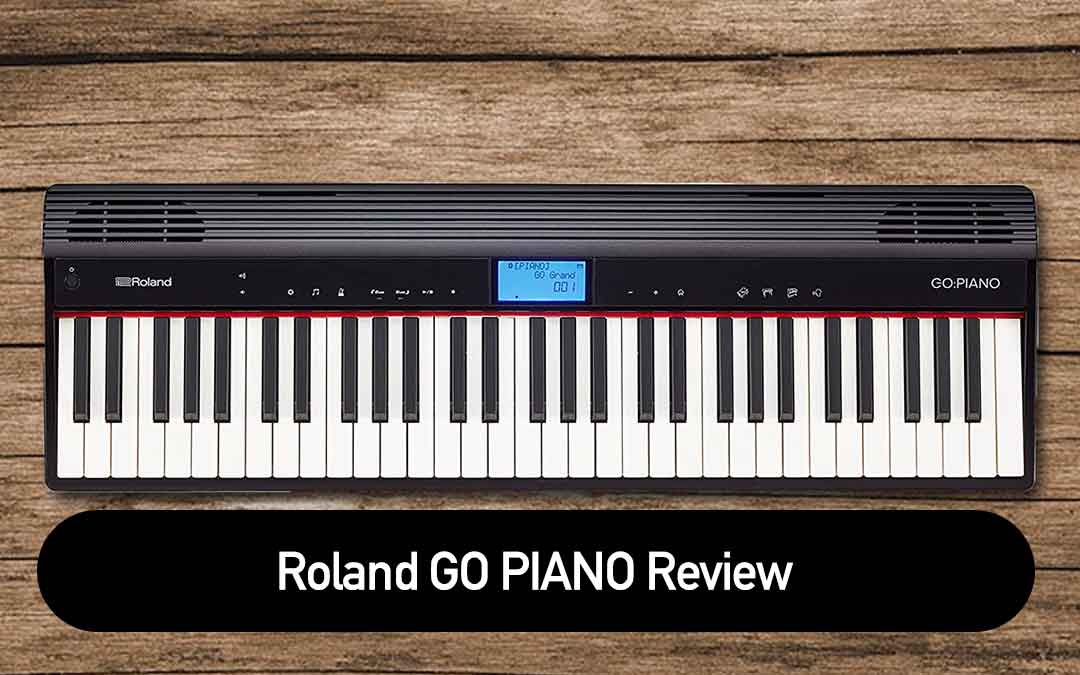
  • Roland GO PIANO Review

    Roland GO PIANO Review

    Are you a beginner pianist looking for a portable piano from Roland that’s easy to use and packed with features? If so, you’re probably wondering if the Roland Go Piano is the right choice.

    Roland is a well-known brand in the piano industry, known for high-quality digital pianos. It has been one of the leading players in this market for decades and continues to be an innovative brand.

    The Roland Go Piano is one of Roland’s best portable digital piano keyboards for beginners and musicians on the go.

    In this article, I will thoroughly review Roland GO:PIANO 61 so you can decide if it’s right for you. In this review, I will take a close look at the following factors:

    • Design
    • Keyboard & playability
    • Sound quality
    • Features
    • Connectivity
    • Accessories
    • Price

    By the end of this post, you’ll better understand whether the Roland GO:PIANO is the right choice for your needs.

    So, without further ado, let’s get started!

    Roland GO:PIANO: A Detailed Review

    Quick Overview

    Roland GO PIANO Review

    The Roland GO:PIANO 61-key Digital Piano is a compact instrument that offers superior piano performance at a reasonable price. Its 61-note keyboard and standard full-size keys provide an authentic touch response for an immersive playing experience.

    The Roland GO PIANO has Bluetooth audio/MIDI support, which lets you connect your smartphones or tablets for even more versatility.

    It also features high-quality Bluetooth speakers for wireless smartphone connection, making it easy to play and share your music with others.

    Since this digital piano has a compact and lightweight design, you can easily store and transport it. Therefore, it is ideal for musicians on the go.

    And with the fully wireless operation, including battery power and Bluetooth connectivity, you can play your piano anywhere without needing cords or cables.

    Additionally, this digital piano includes Roland’s acclaimed piano sounds with 128-voice polyphony and electric pianos, organs, and other sounds.

    It also includes three months of free piano lessons with Pianote, the ultimate online piano lesson service. If you own a Roland keyboard piano, you’ll get unlimited access to everything inside Pianote, including step-by-step tutorials, live lessons, and teacher support.

    You can learn to play your Roland piano from the comfort of your home, anytime you like, and access your lessons from any internet-ready computer, tablet, or phone.

    Overall, the Roland GO:PIANO 61-key Digital Piano is an excellent choice for both beginner and experienced piano players looking for a compact and versatile instrument. You can turn your piano goals into a reality with its premium piano performance, Bluetooth connectivity, and free piano lessons.

    Note: I’m reviewing the Roland GO:Piano 61 portable keyboard in this blog post. This Roland piano is also available in an 88-key version, though they have quite a few differences. So please keep in mind that this review is only about the 61-key version.

    Key Specifications

    Let’s first look at the main specifications of the Roland GO:PIANO 61-key digital piano.

    • Dimensions: 34.5 x 10.7 x 3.2 inches
    • No. of Keys: 61 (Ivory Feel and Box-shape Keys with velocity)
    • Touch Sensitivity: 3 types, fixed touch
    • Voices: 40
    • Polyphony (Max.): 128
    • Demo Songs: N/A
    • Display: Custom LCD (with Backlit)
    • Speakers: 2.5 W x 2
    • Effects: Chorus, Reverb
    • Metronome: Yes
    • Pedal: N/A
    • Recorder: Yes
    • Split Mode: N/A
    • Connectivity: Phones/Output jack (1/8″), USB Micro-B type (MIDI), DC In jack, a 1/4″ sustain pedal input jack, and a 1/8″ Aux In jack
    • Battery Life: 4-6 hours
    • Power Supply: AC adaptor or Alkaline battery
    • Color: Black
    • Weight: 8.6 lbs (3.9 kg)

    Check On Amazon

    Now that we have a brief knowledge of the Roland Go:Piano 61-key, it’s time to dig deeper into it!

    Design

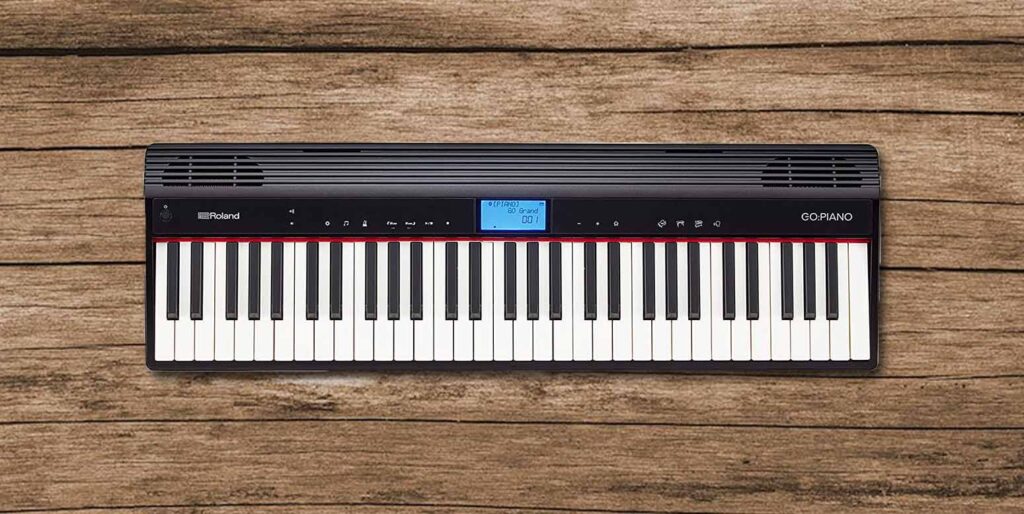
    The Roland GO:PIANO 61-key Digital Piano has a compact and lightweight design, making it an ideal choice for players on the go. The device weighs only 3.9 kg and measures 34.5 x 10.7 x 3.2 inches.

    Its simple yet effective design would look great in any apartment or home. The piano’s white and black color scheme is eye-catching and gives it a clean, elegant look.

    However, the build quality may not meet everyone’s expectations, as the body construction feels cheap. The keyboard is made from glossy/satin plastic, and its lightweight design leaves a bad first impression.

    Although some people like the look, your mileage may vary.

    Thankfully, the front panel control area has a matte finish, which helps reduce fingerprints and enhances its overall appearance.

    This digital piano also has a red felt cloth behind the keys that adds a premium feel, even though it doesn’t serve much of a purpose.

    The underside of the keyboard does not seem to be sturdy.

    Unlike most keyboards, the GO:PIANO shows how little plastic is used at its bottom. The lightweight construction of the piano gives an apprehension about its sturdiness.

    But the piano didn’t bend during play, even with forceful playing fortissimo.

    User Interface

    The user interface of the Roland GO:PIANO is easy to use. It uses smooth touch buttons and has a basic menu screen. Once you get the hang of it, the interface is pretty simple.

    Although some players don’t like smooth buttons, they prefer a more tactile interface. However, when you make selections, you get audible beeps (if you want), so you get confirmation that you’ve pressed the button. You’ll become accustomed to them pretty quickly.

    On the left, there is volume control, then a button to access the settings menu, built-in songs, as well as recording and playback of your own play. The octave shift up and down buttons are a standout feature, making it easy to adjust the octave without navigating through menus.

    The right side of the menu has +/- keys for menu navigation, a “home” button to return to the main menu, and voice category navigation buttons.

    Overall, the user interface is simple once you get used to it, and the audible beeps provide feedback when making selections.

    Keyboard

    This Roland Go Piano features a 61-note keyboard with standard full-sized keys designed to offer a realistic playing experience.

    Since the piano keys have full-size, they feel very similar to a traditional piano. This is a plus for beginners as they can transfer their playing habits from the Go Piano to other pianos.

    Also, the keys have a matte finish which helps reduce slipping during play.

    Like real piano keys, the keys are box-shaped. These box-shaped keys respond beautifully to your touch, making playing effortless and enjoyable.

    While there are no weighted keys, they are touch-sensitive. The keyboard offers three types of sensitivity levels, allowing you to choose the most appropriate settings for your playing style.

    Overall, the keys feel nice and easy to play on the Roland Go:Piano 61, offering a great playing experience for beginners and intermediate piano players.

    Sound

    The sound quality of the Roland GO:PIANO is excellent. The piano samples are clear, rich, and full of depth.

    With its clean and clear sound, the Roland Go Piano has a similar sound to an acoustic or grand piano, which is better than most portable keyboards at the same price point.

    The sounds on this digital piano are derived from Roland’s acclaimed premium pianos.

    Voices

    The original 61-key GO:PIANO features 40 voices. Here is a list of the included sounds:

    • 10 Acoustic piano sounds
    • 7 electric piano sounds
    • 7 organ sounds
    • 16 “other” sounds (a drum kit, a sound effects set, and others)

    The sounds are generally good, and some are admittedly hilarious inclusions, such as the Jazz Scats.

    Sadly, you cannot layer or split the voices; the keyboard still offers a decent piano and strings voice and an awe-inspiring piano and pad voice found in the piano section.

    Effects

    This Roland model also offers some piano sound effects, so you can customize the sound of your music to suit your taste. It includes chorus and reverb sound effects.

    Certain Roland GO:Piano 61 voices have a chorus effect, but you cannot modify it. In addition, some piano voices feature damper resonance (which you cannot control).

    This piano also features a reverb effect with adjustable levels. There are ten levels from 0-10. You can tweak the intensity between 0-10. The algorithm emulates a hall reverb to help give the sound a sense of space. Some sounds come with reverb by default.

    Polyphony

    The Roland digital piano has 128-note polyphony, allowing you to play complex compositions easily.

    Polyphony is the number of notes you can play simultaneously without cutting off samples. The 128-note polyphony means you’re likely to have enough notes while performing.

    Speaker System

    The Roland Go Piano 61 also features 12cm x 2 + 6cm x 2 built-in speakers, offering a high-quality sound. Each speaker produces 2.5W. This results in a total output power of 6W.

    Although they are not the most powerful speakers, they are good enough for home practice. The sound quality is slightly better than average for a piano keyboard like this.

    Features

    The Roland GO:PIANO is packed with features that make it an excellent choice for both beginners and professional pianists. Some of its best features include:

    Roland Piano Partner 2

    One of the impressive features of the Roland GO:Piano 61 is its compatibility with Roland’s free app Piano Partner 2. It is a free piano app designed to help you learn piano and develop your music skills.

    This app provides interactive features for Roland digital pianos, including sheet music displays, lessons, and piano accompaniments.

    Roland knows that accompaniment features are a necessity for many beginners. So they’ve included this functionality through the Piano Partner 2 app, which also serves as a recording and educational tool.

    With the app, you get the standard accompaniment options, and it tracks your chords with Bluetooth, playing off the corresponding backing.

    Please Note: In keyboard courses, the accompaniment features of the app are not a replacement for arrangement keyboards.

    With Piano Partner 2, you can quickly expand your musical capabilities and enjoy the full potential of the Roland piano.

    Metronome

    The Roland digital piano also features a built-in metronome. It helps you keep a consistent tempo, so you don’t inadvertently speed up or slow down.

    You can use a metronome to practice playing at different tempos and to improve timing and rhythm. The piano keyboard lets you set variable time signatures and a tempo from 5-300.

    With this feature, you can stay on time and play in sync with other musicians.

    Transposer

    The Roland Go Piano digital piano also features a transposer function. Piano players can use this feature to change the key of the notes according to their preferences. You can move up or down within a 12-semitone range if unfamiliar with the key signature.

    Single Song Recorder

    The Roland GO: Piano 61 features a built-in MIDI song recorder (single-track song recorder) that is relatively easy to access and can store more than one song.

    You can’t overdub or edit in any way, so it’s just a handy way to get an idea for that new hit song you’re writing.

    To record a song, you will need to use a device with recording software like GarageBand on an iPad, either by using the micro-USB port to send MIDI data or the headphone port with a splitter cable to transmit audio data to your recording device.

    Connectivity

    When it comes to connectivity, the Roland GO: PIANO will not let you down. It offers a range of connectivity options that make it easy to connect with other devices, such as your computer or mobile device.

    You can connect it to a computer or mobile device via USB or Bluetooth, so you can use your favorite music software.

    It also includes a 1/4″ headphone jack for practicing quietly without using speakers. If you want to use external speakers, you’ll need to use this jack, but keep in mind that you’ll need to work with converters.

    Additionally, this piano keyboard features the 1/8″ Auxiliary In jack that allows you to connect your smartphone or media player to use the built-in speakers. It is the best option if you don’t like using Bluetooth due to reliability issues.

    Lastly, the 1/4″ Pedal jack lets you connect a sustain pedal. On the 61-key version, the front panel has a light that indicates when a pedal is connected.

    You can easily use this digital keyboard piano with its range of connectivity options. These connectivity options make the Roland GO: PIANO a versatile, user-friendly choice for musicians.

    Accessories

    The Roland piano offers a few accessories to make it easy to set up and start playing right away. The accessories include:

    • Music stand
    • AC adaptor
    • Owner’s manual
    • Leaflet “USING THE UNIT SAFELY”

    I like these keyboard accessories because they are all good quality and make the keyboard much easier to use.

    Additionally, you can purchase some other accessories separately. For example, you should purchase a separate damper pedal (sustain pedal) if you are serious about learning how to play piano.

    Price

    Price is one of the most crucial factors when choosing a digital piano. You want to get the best value for your money, especially if you’re on a limited budget.

    The Roland Go:Piano 61- key retails for around $314.99 on Amazon. The price is a little higher than some other options.

    If you’re on a tight budget, you might consider the Yamaha NP-32. Although the Roland Go:Piano has better sounds, the Yamaha NP-32 is still one of the best keyboard pianos for beginners who don’t need arrangement features.

    It falls in the $300 price range, which makes it a more affordable option than the Roland Go Piano.

    However, if you’re looking for a digital keyboard that can go with you on road trips, the GO:PIANO is an option worth considering. You can use it to practice anytime, anywhere, and even jot down ideas when inspiration strikes.

    Pros and Cons of the Roland Go Piano

    We’ve reviewed all the features of the Roland Go:Piano (61-key) in detail. Now let’s summarize its pros and cons!

    Pros

    • Simple yet effective design.
    • The device is very light and portable, so you can take it wherever you go.
    • It has full-sized touch-sensitive keys that respond well to the user’s touch.
    • Easy-to-use controls.
    • Offers a wide range of good quality and impressive sounds.
    • Compatible with Bluetooth MIDI technology.
    • It can connect to various devices to enhance your playing and recording experience.
    • Ideal for both beginners and younger players.

    Cons

    • The price is a bit high.
    • The build quality isn’t great.
    • The keyboard has non weighted keys.
    • It lacks split and layer modes.

    Who should buy Roland Go:Piano (61-key)?

    In my opinion, the Roland Go:Piano is an excellent choice for traveling musicians and beginners. It is suitable for younger players who want to develop music-making, songwriting, and production skills.

    The only downside is its price and abundance of features, which might not be ideal for all younger users.

    Overall, this keyboard piano is the best option for young aspiring piano players and traveling musicians.

    Conclusion

    After thoroughly reviewing the Roland Go Piano, it’s clear that this is one of the best portable keyboards for traveling pianists.

    With its excellent sound quality and connectivity, the Go Piano is perfect for novice and expert pianists looking for portability.

    While it has only 61 keys without counterweight, it has good key response thanks to its pressure sensitivity and keyboard speed system.

    Remember that the Go Piano is only ideal for people who want to travel and learn to play the piano, but if you want a keyboard for music production or more functions, you should look at something else.

    Now I’d like to hear from you!

    Have you ever used this Roland Go Piano before? What is your opinion on this model? Please share your experience or thoughts in the comments.

    Related Topics

  • Simply Piano vs Yousician: Which One is Better?

    Simply Piano vs Yousician: Which One is Better?

    Want to learn to play piano at your own pace or improve your piano skills without spending lots of money on a keyboard or piano? If so, a piano learning app may be the best choice. This post compares the two best in the industry, Simply Piano vs Yousician: so which one is better?

    When learning piano, Simply Piano and Yousician are the most popular and commonly used piano apps.

    Both piano learning applications are excellent in their different ways. They offer a variety of features and instructional methods to help you learn piano and other instruments.

    But which one is the best fit for you? The answer depends on your learning style, previous piano experience, and the overall goal you want to achieve.

    In this blog post, I will review two of the most famous piano learning apps: Simply Piano and Yousician.

    I will compare their key features, prices, user experiences, advantages, and disadvantages, so you can determine which one is right for you.

    By the end of this post, you’ll have all the information you need to make an informed decision and start on your piano-playing journey.

    So, let’s dive in!

    Simply Piano: An Honest Review

    In this section, I will review one of the best learning piano apps, Simply Piano!

    Overview

    Simply Piano, developed by JoyTunes, provides a fast and fun way to learn the piano for players of any skill level.

    This piano learning app is highly popular and has won multiple awards, such as Apple’s Editor’s Choice Award, Best App from Google Play, and Parents’ Choice Award.

    According to JoyTunes, their piano apps are used by tens of thousands of piano teachers worldwide each week to teach millions of songs. Their goal for Simply Piano was to create an easy-to-use, educational, and fun app for learning piano quickly and easily.

    Use an acoustic piano, a digital piano, or a keyboard with 88 weighted keys for the piano lesson. The app works only on tablets and smartphones – not on computers. You’ll also need to install the Android or Apple app on your smart device to start using it.

    Lesson Flow

    Simply Piano uses a video game-like approach to teach students how to play the piano. The lessons are easy to follow, step-by-step. The app breaks down music pieces into small sections, allowing you to practice and master them.

    Beginners and intermediate students can benefit from the lessons as they emphasize the basics of piano playing.

    The lessons use a combination of video tutorials, interactive games, and quizzes to help you learn the basics of reading music and playing piano. You can also find helpful instructions on how to practice at home and how to use the app.

    In addition, the app identifies mistakes or notes missed as it hears what keys are pressed. The app has a practice mode to help users master the lessons. And it doesn’t move forward if they don’t master them. It allows you to measure your progress and track how much you’ve improved over time.

    What’s Included

    Simply Piano offers several features to help you learn the piano quickly and effectively. Let’s take a closer look at some of the features!

    COURSES

    Currently, Simply Piano has 27 courses, each with a different focus. The courses are divided into two streams: Soloist and Chords.

    Though you don’t have to choose between them, you can do them simultaneously, one after another, or focus on one.

    The courses begin with an introductory video explaining what you’ll learn and then move on to videos demonstrating the new concepts.

    After that, you’ll get to the learning interface. On the upper part of the screen, you’ll see a musical staff, and on the bottom is a keyboard. New notes will be highlighted on your keyboard as you learn them.

    The app lets you practice a few bars at a time by first hearing it and then reading it from the staff. After you learn several short sections, you will put them together with a backing track and music scrolling through the screen.

    When you play a note on your keyboard, it will light up as the following:

    • Blue – Correct
    • Red – Incorrect
    • Yellow – You have to pick up the note

    In simple terms, if you get a note right, it turns blue; if you don’t, it turns red. And when you take too long to find the note, it will turn yellow to show you where it is on your keyboard.

    Remember to repeat those few bars if you play more than a few yellow notes.

    And you will go into practice mode if you play more than two red notes. Practice mode has you playing with a metronome at a much slower speed than you usually would.

    SONG LIBRARY

    The Simply Piano song library offers hundreds of songs, a good selection for each level. You can easily find the right level by scrolling across the top.

    Although you can sort by ability level, you cannot sort by genre. And almost all of the songs in the library are pop songs.

    Each piece is divided into sections like “intro” and “chorus” to make learning easy. You learn a few bars at a time by listening, sight reading, and playing longer sections with the backing track.

    When you’re practicing a song from the library, the app will show you your accuracy and rhythm and give a rating out of three stars. As you learn each piece, the app will break it down into smaller sections so that you can learn how to play it completely.

    5-MINUTE WORKOUTS

    This piano learning app includes five-minute workouts. These short practice sessions will help to keep your piano skills sharp even when you’re too busy to do a lesson. There is no general menu; instead, you’ll get a workout based on your current level.

    Although you don’t learn anything new in these workouts, they reinforce the musical concepts you learn in the courses.

    SHEET MUSIC

    Simply Piano also offer sheet music for those who prefer to have it in front of them rather than on their phones. It provides printable sheet music, so you don’t have to read from the scrolling music all the time.

    The Curriculum

    Before the courses are divided into Soloist and Chords streams, there are two courses designed to give students a quick foundation of piano basics. They include Piano Basics and Essentials I.

    These courses will teach finger numbers, basic rhythm, easy chords, and a few notes on the keyboard and musical staff. Piano learners need to take these courses before proceeding to either of the two major courses:

    • Soloist: This mode emphasizes sheet music, sight reading, coordination, and piano technique. Additionally, you will be able to learn your favorite songs and compositions with these best piano lessons.
    • Chords: Chords teach how to play different chord progressions in your favorite songs so you can learn to play them. It is great if you want to learn piano improvisation and accompaniment.

    Pricing

    Simply Piano has a variety of pricing options. It offers monthly, quarterly and annual plans that start at $9.99 and go up to $119.88. It also provides a free seven-day trial to see if it is the right app for you.

    If you like it, you can purchase a 3-month subscription for $59.99, a 6-month subscription for $89.99, or a year-long subscription for $119.99. There is no lifetime subscription available.

    However, this piano learning app lets you create multiple player profiles on an account if you want your whole family to learn piano.

    Pros and Cons of Simply Piano

    Pros

    Works with any piano or keyboard: Simply Piano can work with any piano or keyboard, including acoustic pianos, since it listens to the notes. It is not necessary to have a digital piano or midi cables.

    Does not require an internet connection: The app works without an internet connection, so you don’t need the internet at all times to work on lessons. It is a great benefit for users to practice and learn anywhere at any time. The only time you need the internet is when you download new stuff.

    Teaches Basic Piano Theory Early: The app teaches basic piano theory early on, which helps you understand the piano note reading and develop your skills as you progress through the course.

    Makes you review previously learned material: A recap prompts you to review previously learned content before moving on to the next. It is essential for retention and improvement.

    Multiple profiles on one account: The app allows multiple profiles on one account, which is helpful for families or friends to share the app and learn together.

    Cons

    Not compatible with computers: Simply Piano does not work with computers. You will need to use a tablet or smartphone for online piano lessons.

    Can’t Skip Ahead: The app does not allow you to skip ahead to new material if you are already familiar with a task. It may be frustrating for more advanced players to follow the lessons linearly.

    Doesn’t teach advanced music reading or theory: Simply Piano focuses on teaching users how to play the piano, but it does not cover advanced music reading or music theory. The piano lessons do not cover many musical symbols and terms needed to read more advanced music.

    Additionally, the app is very light on music theory compared to other online piano courses and traditional methods.

    Who is Simply Piano Best For?

    Simply Piano is a good choice for kids and adults looking for an easy-to-use, visually appealing program to learn piano.

    It has a colorful design and images that kids will enjoy. In addition, the courses and song library are suitable for learners of all generations.

    Since the app progresses slowly, it is perfect for young learners. However, it is not a good choice for faster learners because the format makes it difficult to skip through and ensure you’re not missing anything you might need a refresher on.

    Yousician: An Honest Review

    Now let’s review the Yousician app in detail!

    Overview

    Yousician is a music learning app that helps you “unleash your inner musician” with virtual, game-like lessons. It provides instant feedback on your timing and accuracy as you play the notes on the screen.

    Unlike Simply Piano, this app is compatible with mobile devices, tablets, and computers. It recognizes notes played on the instrument based on microphone audio.

    The app uses a combination of video lessons, interactive exercises, and feedback tools to help users learn and improve their musical skills. It offers a variety of skill levels, from beginner to advanced, and allows users to track their progress and set goals.

    With the Yousician app, you can learn piano, guitar, ukulele, bass, and singing. However, I will focus on the piano aspect of the Yousician app.

    This popular app has won several awards, including Apple’s “Editor’s Choice” and Google Play’s “Best of 2016 Apps”.

    Overall, Yousician is a comprehensive and user-friendly music-learning app that can help users of all skill levels to learn and improve their musical abilities.

    Lesson Flow

    Yousician offers progress-based guided lessons, where you decide how much time to devote to them.

    Each class is structured into levels with videos that explain the concepts and exercises to practice the lessons.

    The app also includes “Workouts” to enhance piano techniques, scales, chords, note reading, and ear training.

    To make learning more exciting, Yousician has weekly “Challenges” where students from the same level can compete by playing the same songs and earning points based on accuracy.

    What’s Included

    Yousician offers several features that make learning piano fun and interactive for both beginners and experienced players.

    Let’s take a closer look at some of the features!

    GUIDED LESSONS

    One of the main features of Yousician is the guided lessons. These lessons are designed for you based on your progress in other areas of the app.

    You can choose between the 10-minute “Quick” lesson, the 20-minute “Casual” lesson, or the 30-minute “Intense” lesson.

    Though the name sounds like you’ll receive virtual teaching guiding you through the concepts, this is not true. Instead, you are shown interactive lessons that give you hands-on and cognitive exercises that reinforce concepts.

    In Guided Lessons, you get instant feedback on your notes’ accuracy, but you don’t actually play a game.

    MISSION

    Another best feature of Yousician is the “mission” feature. This category has nine levels, each with a different number of lessons. Each level contains a few video lessons explaining the level’s main concepts.

    You can practice in two different modes: practice mode and performance mode.

    • Practice Mode: This mode allows you to adjust the tempo and turn on or off the right or left hand. Also, you can use the looper’s handles to mark the part of the song you want to practice.
    • Performance Mode: During this mode, you can play a song or practice an exercise while the app checks whether you played the music correctly. After each lesson, you’re given a star rating, and three golden stars mean you did well.

    You can choose from three notation styles in both modes (practice, play):

    • Enhanced: It displays colored bubbles with the notes’ names in the respective lines instead of notes. Correctly played tones turn green while playing. The length of the bubble determines how long you should play a note.

      The visual representation is helpful for complete beginners, but for serious practice, classical notation is a better option.

    • Sheet: Classical notation with no colors or note names. This is the mode for you if you want to learn about reading music without using crutches.
    • Colored: Each note has the same color as the virtual keyboard’s tones. You can use this tool to control tones and finger movements.

      You can turn on or off the metronome, adjust the tempo of the song, and turn off the backing sound if you only want to play only the piano in the settings below the arrow.

    NOTE: If you want to skip the previous lesson without completing it, you will have to pass a test that will test your skills.

    WORKOUTS

    Workouts are an excellent source for improving technique, playing chords and scales, sight-reading, and ear training.

    The lessons are taught in the same way as the missions. Depending on your level, you can choose individual Workouts within broad categories, such as Major Scales and Pop Chords.

    It is highly recommended that you complete the Workouts and the Missions and Guided Lessons, as they reinforce important concepts more deeply.

    CHALLENGES

    If you like challenges, you can participate in these optional weekly challenges against other students at your level, in your friend list, or in general. You will play the same song, and the system will evaluate and compare your performance.

    SONG LIBRARY

    Yousician’s song library offers a wide array of songs in levels 0 to 10. It features various genres like classical, pop, Jazz, blues, and even metal.

    There is usually an accompaniment to most songs that is fun to play along with, but there are also solo piano pieces that you can play.

    You can search by artist, song name, genre, and level to find the perfect song.

    The Curriculum

    In levels one and two, students learn proper hand technique, basic notes in the treble and bass clefs, and simple tunes using both hands.

    When you reach level three, the app offers three paths: Classical, Knowledge and Creativity, and Pop.

    Classical: You will learn to play classical pieces by great composers in this path. It teaches new notes, keys, and styles using well-known pieces. When you get to level nine, you’ll know a lot of scales, know how to read music in several keys, and have good hand coordination.

    Knowledge and Creativity: This path aims to give you an understanding of music so that you can write your own songs. It teaches students the foundations of songwriting and key signatures, chords, scales, and ear training.

    Pop: The music on this path is primarily rock, pop, and blues. It emphasizes chords, patterns, and riffs.

    Pricing

    Yousician offers two plans: Premium plan and Premium+ plan.

    The premium plan costs $9.99 monthly and offers unlimited lesson time for one instrument. With this plan, you can only access a limited number of songs.

    The Premium+ costs $14.99 per month. It includes access to all songs, all instruments, and unlimited lesson time.

    You can choose the Premium or Premium+ plan and pay monthly or annually. Additionally, both plans offer a free 7-day trial so that you test out the app for yourself.

    Once you’ve created an account, you’ll have to download the app. Then you select the instrument (piano) and decide whether to use an acoustic or digital piano. If you’re playing an electronic keyboard, ensure your USB or MIDI cable is connected.

    Pros and Cons of Yousician

    Pros

    Works with any piano keyboard and most devices: Yousician works with various piano keyboards and devices, making it a versatile tool for learning piano. It is compatible with iOS, Android, and desktop computers.

    Helps you move at the right pace: Yousician helps users progress comfortably. When you take a skill test to enter a level or ace a lesson, ensure you’re not going too fast or too slow.

    Wide song selection: The song library offers a wide selection of songs, allowing users to learn a diverse range of music. It is suitable for all levels and has a variety of genres.

    Many practice options: It provides various practice options, including Guided Lessons, Missions, Workouts, Songs, and challenges, to keep users engaged and motivated.

    Price flexibility: The app provides different pricing options to suit different budgets.

    Cons

    No fingering and dynamics: This app does not guide fingering and dynamics, which are essential to playing piano.

    Allows note-reading crutches: Unlike in-person teachers, Yousician lets you keep color labels and labels for as long as you want, making it harder to adjust to sheet music outside the app.

    No printable materials: No printable materials are available, meaning you will have to memorize the song or use the game-like sheet music in the app to show off your skills. Additionally, you won’t get a feel for how traditional sheet music works.

    Does not measure note length: The app does not measure note length, which is an important aspect of timing and rhythm.

    Who is Yousician Best For?

    Yousician is best suited for adult pianists who want to learn piano quickly and independently.

    Almost every Yousician piano review recommends this app for children and teens. Because the video tutorials are easy to follow, and the interface looks like a game.

    They can play more “visually” with colored and enhanced notation, but it can be a disadvantage over time.

    Most children will need a piano teacher or adult’s help to use this app.

    Simply Piano vs. Yousician: Which One Is Best For You?

    Now that you have reviewed both of the best piano-learning apps, it’s time to decide which is right for you!

    The decision between Simply Piano and Yousician largely depends on what you want from a course. The following are our recommendations for who should use each:

    Use Simply Piano If:

    • Mostly, you want to learn how to play along with popular songs.
    • An on-screen keyboard appeals to you.
    • You want an app that ensures you get each section right before moving on to the next.
    • You want multiple profiles on your account.

    Use Yousician If:

    • You prefer a more self-directed learning experience.
    • You want to learn quickly and appreciate a bit less spoon-fed approach.
    • You enjoy a game-like format and interactive exercises.
    • You want access to a massive song library.
    • You want to use the app as a supplement to regular piano lessons.
    • You want to learn a variety of instruments, not just the Piano.

    The Best Alternatives To Simply Piano And Yousician

    The following are some of the best alternatives to Simply Piano and Yousician learning piano apps:

    • Flowkey
    • Playground Sessions
    • Skoove
    • Piano Marvel
    • Pianoforall

    Final Thought

    Simply Piano and Yousician are great options for learning piano, but they have different features that cater to different learning styles and preferences.

    Simply Piano is ideal for beginners who want a step-by-step approach to learning popular songs. Yousician is a better choice for those who wish to learn piano at their own pace. With it, you can learn fast or slowly according to your preferences.

    Ultimately, it depends on your learning style and preferences which app is best for you. Since both apps offer free trials, log in and see which suits you best.

    Hopefully, this article has helped you decide which piano-learning app is right for you.

    Which piano learning app are you going to use? And why? Please let us know in the comments!

    Related Topics
  • How To Ship A Keyboard Piano?

    How To Ship A Keyboard Piano?

    Shipping a keyboard piano can seem like an intimidating task, especially for those who have never done it before. Our guide on how to ship a keyboard piano will help make the task delightful and straightforward. From choosing the right materials to determining the right shipping process, you’ll have all the answers in one place.

    Keyboard and digital pianos are expensive and fragile musical instruments that must be handled carefully while playing and transporting from one place to another. The transportation involves proper packaging and shipping of the musical instruments to avoid any damage or misplacement of any part during transit.

    All piano keyboards are assembled at the time of purchase, which is a good way because if it has to be moved again to another place, the shipping becomes easier. It is also advisable to retain the box of the piano and its parts along with the foam pads.

    Shipping and packing of the keyboard piano are usually the same. First of all, you need to decide whether you wish to move the piano on your own or you are going to get this done through movers and packers. If the moving distance is less, the shipping can be done quickly with professional help. And in the case of long-distance shipping, a professional, reliable shipping company or a courier service is essential.

    Basic guidelines and tips for shipping the Piano keyboards

    It is always a good idea to plan well before time and follow some essential tips for shipping of musical instruments. These are:

    Shipping company and Courier services

    Finding a few good shipping companies with reasonable rates and safe shipping experience is crucial.

    Using a good freight or a cargo service is better as they can handle a larger shipment with more care. Another thing is to consider is the shipping cost they are offering. Usually, all shipping companies are careful while packing musical instruments as they are fragile and use good quality packing material and packaging techniques.

    Along with shipping costs, another critical aspect is safe shipping, and they need to ensure that the keyboard piano can be delivered safely.

    While selecting the shipment company, it is essential to discuss the declared value of the package, as it is the shipper’s responsibility to take care of the shipment and compensation in case of any damage, loss, delay, or misdelivery of the shipment.

    Packaging

    Packaging is an other significant feature while shipping. From disassembling the piano to packing it for final shipping, it is a critical and tedious process. To properly seal the grand pianos, digital piano, and its parts, it is recommended to use excellent quality packing material and padding material to protect the piano from any damage during transit.

    Before starting the packing process, cleaning the piano keyboard, especially the keys, is vital to avoid dust accumulation on the musical instrument.

    The packaging material includes:

    Bubble wrap:

    Bubble wrap is a very reliable, suitable, and effective way of protecting your fragile and delicate shipment, especially the piano keys, as they can break or get scratched if not appropriately packed. It would help if you got a thick roll of plastic bubble wrap and heavy-duty packing tape to tie it tightly.

    Foam pieces:

    Foam pieces are usually kept behind the keyboard to prevent them from directly touching the wall or a hard surface. It keeps the instrument safe and avoids damage.

    Packing Peanuts:

    Packing peanuts are available in different shapes and are used to fill in the empty spaces in the packing boxes to prevent the piano parts from moving and touching outside the boundary.

    Foam Corner Protectors:

    As the name suggests, foam corner protectors are used to protect the corners of the keyboard to avoid damage. Sometimes these are used to save and guard the keys as well.

    Bubble wrap, Foam pieces, packing peanuts, and foam corners are suitable padding materials for transporting musical instruments like digital pianos.

    Original box of the piano keyboard and pedals: Retaining the original tubes of the piano keyboards and other parts, these boxes should be in excellent and sturdy condition so that different piano parts are packed nicely.

    Empty box:

    After properly packing the bubble-wrapped keyboard and the other parts, they should be safely kept in open cardboard boxes to ship them safely. After individually packing all the parts, they should be kept in a big box.

    Markers, Stickers, and labels:

    After packing the boxes, it is essential to label the individual packed boxes with stickers with details like the name of the piano parts, fragile/ delicate, side up or side down, full shipment address and location, etc.

    Packing tape:

    Packing tape is the most crucial piece of equipment used for bubble wrap packing and packing boxes.

    The other essential types of equipment are Scissors/Knives for cutting purposes, measuring tape to measure the boxes (height and width), the keyboard, the keys, the pedal, and a weighing machine. It is essential to weigh your boxes before sending them to the shipping company as it can give you an idea of the shipping costs, and you should be aware of the weight of your shipment.

    Shipment Details

    Add all the dimensions related to your packaged keyboard piano- height, width, length, and weight. The shipment details should be accurate as usually the shipment company is particular with their processes and calculate the shipping costs on the actuals. The best way to ensure this is to write the exact specifications closest to the decimal point. The shipment details should also include the complete address and location of the receiver and the emergency contact in case the shipment is lost.

    Shipping of Large Instruments

    There are two options to ship the large musical instrument like an Acoustic Piano or a grand piano; one is through a freight service that will be solely responsible for packing securely and shipping the piano, which is quite challenging. The other more reliable option is through the piano companies specializing in moving pianos.

    Packing Process for the shipment of the keyboard

    The first and foremost step is to arrange all the boxes for packaging. Finding the right size boxes; there could be a possibility to cut a few big boxes to the required size. Count the number of packed instruments and prepare the packages for each part. Also, keep some space to add the foam packing material to protect the instruments.

    Disassembling the keyboard is essential and quite tricky. Dismantling of the keyboard should be done per the manufacturer’s product manual. Extra precautions must be taken in the case of digital pianos with console bodies dismantling the console from the keyboard along with pedals, legs, and music stand.

    The next step is to wrap the keyboard and the keys. You should put two to three layers of bubble on the keyboard, and if required, put some small pieces of foam on the keys of the piano and the sides of the keyboard. Then using the packing tape, tape the keyboard neatly and smoothly. After you have wrapped the keyboard, fold the power chords, portable leads, and any other power cable nicely and cover it with at least two layers of bubble wrap.

    Now to secure the delicate corners of the keyboard, use the foam padding material and foam pieces and tape it nicely in the corners using good quality packing tape. This padding material helps prevent any damage during transit.

    After packing the keyboard nicely, we will take the cardboard boxes we arranged to fill. An important step here is to put one or two layers of foam pieces, packing peanuts, and other packing material in the boxes and then put your instruments in the empty box. Now put some more padding material, and seal the package nicely with the help of packing tape. Once the boxes have been closed, check thoroughly by shaking the box for any sound of something moving inside.

    This step is optional; if your shipping services are secure and reliable, you can ship the individual boxes separately. If you wish, you may keep all the small boxes in a big portable wooden box to ship musical instruments.

    Once the packing is complete as per the guideline, label the boxes with stickers with correct details like dimensions, weight, address of a location, fragile/delicate, etc. written on it.

    While the packing has been done and checked, the next step is to ensure that the shipment is lifted carefully and kept in the transit vehicle; get this done under your supervision.

    Make sure the official paperwork is complete before the shipment is sent, including the sender’s address, the location, and the receiver’s address, along with the emergency address and declared value, in case the shipment is lost.

    Challenges faced while moving a Piano keyboard.

    High Cost involved: A high cost is applied while moving a piano, including the packaging and shipping costs.

    Transit Distance: If the distance is less, it will be relatively more straightforward, but if the space is more, there could be a possibility of damage in the transit.

    Doors and staircases: This has to be kept in consideration that navigating through sleek doors ad stairs could be risky; the professional shipment needs to be very careful while moving through doors and stairs.

    Shipment of delicate parts is always tricky and challenging. A slight mistake can prove to be a huge blunder. So it is essential to be very careful and take the services of professional people in their field.

    Some natural factors like weather conditions, road transport, or a clearance department can also become a road in the block for the shipment.

    The Crux

    Shipping and moving a piano is not a one-day s work; it requires making a proper plan or a strategy. It may be expensive, but it is essential to ship the instrument with utmost care and the correct measures to reach the destination without any damage during transit.

    Related Topics

  • Can You Play Piano With Long Nails?

    Can You Play Piano With Long Nails?

    If you are learning the piano or are a professional pianist, you might have wondered whether playing piano with long nails is possible. That’s a commonly asked question among female pianists. If you are like most women, you’d love to grow your nails and practice lovely nail art on them. But does it affect your piano-playing ability? What if your nail chips on the keyboard? Or worse, your nail length interferes with the piano sound?

    Some women can’t remove their natural long nails or have flat fingers, as growing them is tricky. It takes months of care and patience to grow them big enough to get nail art done. While you might be passionate about piano and other musical instruments, you might be equally excited about growing your nails. So, is there any way you can play the piano while keeping your long nails intact?

    Those who have just started learning this instrument are often asked to keep their nails short enough to hit the right keys properly. The question is, do your nails affect your piano skills? Or is it just a myth that you can’t play the piano with long nails due to nails hitting? In this post, we have discussed all you should know about the connection of your nails with the piano and how it affects the sound quality. Keep reading.

    Piano Playing: Can You Play Piano With Long Nails?

    The short answer to this question is yes. It’s possible to play piano with long nails, but it’s highly recommended that you cut your nails to get a better grip on the keyboard and play the instrument without the risk of chipping your nails accidentally.

    Long nails present a lot of problems when you hit certain keys. To play this instrument effortlessly, it’s important that your hands and fingers are in a good position and you can use the keyboard without putting in the extra effort.

    Usually, it is the fingernails that strike different keys, and that’s considered the correct position. You shouldn’t stretch your fingers more than required, as that makes playing difficult and disrupts the noise.

    Downsides to Playing with Fake Nails

    If you are a regular player, you shouldn’t keep long nails. We’ve already mentioned some reasons, but unfortunately, those are not the only downsides. Below we have listed some downsides to playing piano with long fake nails.

    The Tapping Sound is Irritating

    If you haven’t already noticed, your fingernails will produce a tapping sound as soon as you are done hitting the key. The sound is pretty obvious and can be easily heard, disrupting your session. If it’s complex music, the tapping sound will easily get annoying.

    You don’t want your audience listening to your music to get annoyed by the click-click sound just because you couldn’t trim your nails or get rid of those fake nails. Remember, it’s possible to paint your small and original nails, but you can’t get rid of the click-click noise with your long nails.

    Lack of Contact Between Your Fingers and the Keyboard

    When hitting the keyboard, your natural instinct is to bring perfect coordination between your fingers. However, with long nails, your fingers won’t be striking the keys. It’s rather those fake nails that will play the piano.

    If you need a finger-contact with the piano, you should trim the nails and use your fingers properly. This small sacrifice will help you achieve immense pleasure and get greater control of the instrument.

    Not touching the fingers to the keyboard also means you won’t be able to express the emotions in the music, which affects the overall performance. You cannot understand the weight of the keys, which ultimately affects your ability to play nicely.

    Difficulty Playing

    The most obvious disadvantage of playing piano with long nails is the inability to keep your fingers firmly on the keyboard.

    The long fingernails tend to slide and slip as you press several keys simultaneously. In addition to ruining the performance, this can create great discomfort for the pianist.

    You don’t want your audience to think that you are incapable of playing perfectly. And the only way to do that is to keep your nail length short enough to ensure perfect coordination between your fingers and excellent contact with the keyboard.

    Possibility of Injuries

    Another problem with long nails is that there’s a risk they might get chipped in the middle of the session, causing pain. It can also cause bleeding if the nails get stuck in the space between two keys.

    Likewise, it’s tricky to play complex music with longer nails, irrespective of whether they are fake nails or the original ones. As your nails are bigger than your fingertips, it’s obvious that your fingertips won’t hit the piano keys. As a result, your nails might bend out and get torn off.

    Tips For Playing Piano with Long Nail Length

    While it’s highly recommended that you trim your nails before starting a piano session, some people can’t just sacrifice their long nails.

    Fake nails can be easily removed. You can remove them before the session and glue them to your original nails once you play. That’s the safest way to play piano without sacrificing your long nails.

    Then again, this tip doesn’t work for people with naturally long nails. Once they are trimmed, there’s no way you are growing them back quickly. If you can’t trim them, practicing simple music is the ideal way to play piano with long nails. Avoid too many alterations. Instead, it would be best if you stuck to a straightforward music session.

    Some pianists believe that your nail shape and size are not a big deal. If you can adjust your piano playing strategy to what fits you and can be played easily, there shouldn’t be any problem.

    We understand women’s desire to have long, pretty nails that are naturally curved and stunning. The good news is that regular practice can help you learn the art of playing this instrument without having to shorten your nail length. Just keep one thing in mind, consistency is key to quick learning. If you are considering fake nails, make sure you don’t change the length and shape frequently.

    Playing piano with long nails is not a challenge. If you used to have short nails and have recently grown them, you might need some time to get used to the new playing technique. But that’s certainly not the end of your passion.

    To answer the above question of “whether you can play the piano and get to keep the nails,” the short answer is yes. You can get fake nails. If you love nail art and piano, your best bet is to get fake nails. It’s easier to experiment with different nail arts and nail colors on them. And you can take them off when playing piano.

    Why Keeping Short Nails is Better for Pianists?

    By now, you must already know the reasons professional pianists keep short nails. First, the length of your nails directly impacts the level of comfort you enjoy when playing this instrument. Besides, the music is much better when your fake nails do not hit the keys.

    Let’s check out some common reasons why shorter nails are better for piano players and why you should trim them before playing the instrument.

    It helps You Maintain the Right Hand Position

    Short nails allow you to get more control over the keys, making your piano session far more comfortable and better than those with longer nails. It also removes the stress of hitting the keyboard with one of your fake nails and having them torn off badly.

    You can play the piano without worrying about damaging your nail or getting any injury on your hand. The best part is that it ensures seamless coordination between your hands. Keeping your hand curved is easier, which is the natural position for playing piano correctly and effortlessly.

    Good Expression and Sensitivity

    Thprimaryin purpose of trimming your nail is to get perfect contact between your fingertips and the keyboard. Being able to touch the keys with your fingertips will allow you to play them properly. As mentioned before, you can focus on playing the instrument instead of looking at your nails frequently.


    In addition, touching the keyboard allows you to express the emotions in the songs better than playing the piano with your long nails.

    It’s believed that touching the piano with your fingertips is not only a proper technique to play this instrument right but is also important to get all the chords correct and bring emotion to the song.

    Excellent Speed

    Long nails are not an option for pianists learning or playing difficult passages. Some types of music require complex passages. You need to hit the keys constantly and quickly. So, if you want to play tricky notes, it’s best to get those nails off.

    Playing with long nails won’t only cause injury if your nail gets stuck in the middle of the keys, but it will ruin your song. Short nails are your best bet if you want to enjoy excellent speed and amazing music.

    If you are currently taking a piano lesson, you should keep your nails trimmed so that you learn all the chords easily. It will keep your nails from hitting the keys and getting torn. Learn to play piano with excellent speed and enjoy this musical instrument with neat and short nails.

    Piano Students with Long Nails

    A common question people ask is, do piano students need to cut their nails? Since you are in the learning phase, you might wonder if you need shorter nails or the long nails are okay. Being a piano student, you might not yet perform live. But that doesn’t mean making mistakes is okay.

    Piano teachers will most likely want you to keep the length of your nail tips as short as possible. This is because the shorter your nails, the better your control over the keyboard, and the easier it is to press all the keys efficiently. So, it’s advisable to keep your nails short.

    However, some teachers may not mind the children using artificial nails or keeping the nail length longer, as it’s better to learn with longer nails. Since it’s just a learning phase, growing your nails shouldn’t be a problem. It’s going to be better. Once you learn to play piano with longer nails, playing any instrument with longer nails becomes much easier. So, if a situation comes up, you should be ready to play piano with long nails.

    Some piano teachers are strict about the kids growing their nails, as they believe it affects the playing quality significantly and might injure the nails. If you are still confused about whether it’s a good idea to keep the nails longer or shorter, it’s best to seek advice from your teacher and do as they say.

    Conclusion

    I hope this post answered your questions about playing piano with long hands. If you are considering expert advice, you need to keep the nails short enough to play piano with your fingertips so that your fingers get in contact with the keys.

    This way, you will spend more time playing the piano and learning different chords instead of worrying about getting your nails stuck in the middle of the keys.

    Fake nails are the best option for those who can’t sacrifice their nails but also want to play piano like a pro. You can remove these nails during piano lessons and put them back on once the session ends. While the size of your nails matters when it comes to musical instruments, once you get the hang of the piano and learn the proper technique to play it, nails will hardly be a problem. I hope you have a great time playing this magical instrument.

    Related Topics

  • How To Get Good At Piano Fast

    How To Get Good At Piano Fast

    If you’re eager to learn how to get good at piano fast, you’ve come to the right place! Undoubtedly, mastering this fantastic instrument takes time, dedication, and practice, but with some expert tips and tricks, beginners can play piano in no time.

    This blog post will provide an insider’s perspective into techniques any experienced piano teacher use to get your hands run faster on a piano. Through practical exercises and helpful advice, you’ll be playing like a pro in no time.

    So put your hands at the ready, and let’s start learning; here are some of the easiest ways to become an expert piano player:

    Manage your piano playing practice time

    To become an expert, you need to practice piano apart from being patient. There is no replacement for piano practice to become an expert; even professional musicians have regular practice sessions. When you are planning your piano playing practice time, remember the following factors:

    • You should schedule a regular practice session in your daily piano routine. If you think you can learn piano by playing the instrument whenever you get the time, you are mistaken. You must play the piano for at least 30 minutes every day.
    • The more practice you get at playing the piano, the better you will become at playing the instrument. You must practice the same piece several times to avoid missing notes and become perfect when learning piano.

    Hence, there is no alternative to practicing to become an expert and play the piano like an advanced player. So you make to keep practicing playing the piano and avoid making mistakes. This will help you become a better piano player faster.

    Become a better piano player by practicing reading sheet music

    You must learn to read sheet music when playing the piano and practicing the instrument, which is essential to becoming a professional pianist. When you are practicing reading sheet music, you must keep the following things in mind:

    • When you are practicing sight reading and trying to play the piano with the help of sheet music, do not worry about missing notes and mistakes. Instead, it would be best to play the entire music before moving to a new piece.
    • Simply playing the music from start to finish to your best ability and running through it a few more times is essential to the practice time and the reading of sheet music.

    Hence, sitting at your piano to play an entire song from sheet music during a practice session is a good idea. As a piano player, incorporating this during your p practice time can be pretty helpful in becoming an expert. When you plan your practice routine to practice the piano at home, you need to design the schedule to give you time to complete an individual piece of music during each session.

    Avoid missing out on taking piano lessons.

    To ensure that you get sufficient piano practice, you must put aside a specific time during the day for practice. However, along with your piano practice routine, you need to ensure that you do not miss out on taking piano lessons. If you miss a lesson, you will find that you have fallen behind the other piano students of your teacher.

    You cannot expect to become an expert in piano in one session. But at the same time, you must attend classes regularly to understand your progress and compare it with other students. Your teacher might find it challenging to teach a song that she has already taught in a lesson you have missed. You will have to work extra hard to learn the music and play the piano.

    Avoid practicing music or song that you already know

    It might be fun to play the same piece or song. However, it can slow your progress, and you will find that you are getting bored playing the same music. According to tips given by piano teachers, students need to learn something new and complex as this can keep them motivated.

    Students need to be taught the keyboard in a fun way. But that does not mean they have to play the same piece repeatedly. To keep your students interested in playing the piano, you must introduce them to new pieces and ensure they can play the songs.

    When students practice playing the piano, it is essential to teach them to identify their mistakes while playing. This is also one of the most important tips given by experts, as this can help you to play better. If you can hear and identify your mistakes, you will play the piano without making errors.

    Tips for playing the piano from Youtube videos

    If you plan to play the keyboard by watching a youtube video, you need first to understand that here, too, you will need to do piano practice regularly. So make a practice schedule and adhere to it. Some of the tips that will help you learn piano from a youtube video are as follows:

    • Among all tips about learning piano from an online video, the most important is that you must be prepared for hard work. As no teacher will guide you, it is essential to be diligent and play the piano with all seriousness.
    • When it comes to tips for learning piano from a youtube video, you must remember that you must develop a sense of music. When you develop a sense of music, you must diligently follow the tips given in the video and play the piano regularly.

    If you want to learn to play the piano fast, you must be prepared to put in hard work. Learning the instrument requires putting in at least thirty minutes of practice daily. If you put in the necessary time, your progress will be faster, and you will feel satisfied. Hence, even if you are learning from online videos, you must have a schedule and follow it.

    Set a clear goal and work towards it

    It is essential to set a goal and work towards it. If you feel your progress could be faster, check if you have set your goals correctly. For example, your goal should be something like you should learn one song in a single session or you will complete practicing two songs in a single sitting. Of course, taking a break during your practice sessions is essential, but it should not divert you from what you want to achieve in the session.

    However, students sometimes need to set the right goals. For example, if you plan to practice for three hours at a stretch, you will find it quite formidable. Similarly, if you want to learn a complete piece of classical music in a single session, you will find that it is more than just formidable; it might be impossible. If you set such goals, you will be demotivated and give up on the piano before playing your first successful piece. Thus it is essential to set a clear goal and work towards it.

    Practice each hand separately to become an expert at playing the keyboard

    You must check your hand movements if you feel slow learning the piano. You need to ensure that your hands move swiftly across the keyboard so that you can play the sound you want. Sometimes pianists need to work on their hand movements separately. Here is what you need to know about hand movement across the piano.

    • It would be best if you played an entire piece with each hand before using both hands to play the song or the piece.
    • When you have played the piece with your left hand separately, you need to proceed to play it with your right hand. You will learn to use each hand and then use both hands to play the piece.
    • You can practice playing one to two bars with your left hand and the same with your right hand. You will find that initially, it is slow, but slowly you can play the same bars with both hands. It is a good idea to break the piece into manageable segments so you can expertly play the piano with both hands.

    Do not think this will increase your time to play the piano. Instead, you will find that you can learn to play the instrument with both hands faster if you give equal time to both hands separately. On the other hand, using two hands to play the instrument right from the beginning can make learning to play the piano quite challenging and slow you down.

    Practice playing classical music

    Learning to read and play classical music when you play the piano is essential. It might seem daunting, but with practice, you will find playing classical music is essential and can help you learn the piano faster. Here is how classical music can be helpful in learning piano faster:

    • When you play classical music, you learn the instrument’s technique faster.
    • The technique of playing the piano would mean learning to hold a note longer, swifter movements of your fingers, and better control of the keyboard.
    • With classical pieces, you will find that the movement of your fingers across the keyboard has become better and swifter. As a result, you have become a better piano player.

    Most piano teachers give their students essential advice to play sheet music, especially classical pieces, to get to a point where they can understand and play even the most complex pieces. This is essential advice because, as a student, if you want to learn piano faster, becoming an expert in finger movement is essential. You can achieve it by playing classical pieces.

    Finding a good teacher

    If you want to learn piano from the beginning, you need to get a good teacher who can guide you through the process. You will find that she will schedule classes weekly, and you need to attend them regularly. Your teacher will also guide you regarding the number of practice hours you must put in a week to become an expert.

    Practice is vital to becoming a good piano player within a short period. However, when you practice, you must refrain from repeating the mistakes because it will become quite challenging to rectify. When you join a piano class with a teacher, she will help you understand the best way to develop the skill to become a good pianist.

    You must also update your teacher about the number of hours in a week that you managed to put in. It is essential to be honest with your teacher so that she can guide and help you with your progress. Finally, you must work with your teacher and listen to her advice to improve your keyboard skill.

    Always warm up before you start playing.

    You need to warm up and strengthen your fingers and wrists to avoid fatigue when playing the piano. In addition, if you want to learn piano fast, it is necessary to ensure that you do not hurt your hand in the process.

    Many pianists complain of carpal tunnel syndrome because they have spent hours practicing on the keyboard. However, you can easily avoid it if you spend some time warming up your hands and relaxing the muscles.

    It only takes a moment to injure your hand and fingers, which can be pretty painful. The key to avoiding such matters is to warm up properly before a session and then play the instrument. This will ensure that you do not hurt your hand even if you play the piano for more than an hour.

    Sometimes it might be good to go slow.

    Although you want to learn the piano fast, it is essential to remember that it takes time to pick up complex pieces. You must gain a certain amount of expertise before playing complex pieces. You will find that you will have to play a complex piece at least three times before you can play it with expertise.

    Conclusion

    Sometimes students feel that the right teacher can help them learn the piano fast. However, you need to understand that you will have to practice hard and regularly to become an expert in playing the piano.

    Developing a schedule and setting goals to improve your playing skills are vital in order to master music. To become an expert, it is essential to interpret and comprehend what is heard. Additionally, following the advice of one’s instructor is critical in order to achieve the desired results.

    Related Topics

  • Piano Playing Tips For Beginners

    Piano Playing Tips For Beginners

    Piano playing can be a rewarding experience but starting out can seem overwhelming. If you’re a beginner, fret not! Here you will find Piano Playing Tips for Beginners which have been designed to help make your journey easier and more comfortable. From understanding the basics of the piano keys to more advanced techniques that you can use to take your skills closer to mastery, this blog post has it all. So if you’re ready to get started on your piano journey, strap in and let us take off!

    Practice scales, chords, and arpeggios daily

    The first step in your learning experience begins with practice:

    1. It would help if you learned your way around the keyboard.
    2. You must ensure that your daily practice sessions last at least twenty minutes.
    3. During a practice session, you must remember to do the following:
    • The first step in the learning process of playing piano is to understand the scales. You must learn to differentiate between the 12 scales in piano music.
      When you play piano, you must learn to master the c major scale, as this is the basis of music theory.
    • For beginner pianists, starting with C significant scales with the left hand and then using both hands together is essential. It would help if you started playing C major scale in parallel and contrary motion when you have mastered this.
    • When you have mastered your scales, you must learn to play the chords and the arpeggios. This will increase your practice time and make the sessions interesting for beginning pianists.

    When you learn piano, it is essential to enjoy playing, and when you start enjoying your practice time, you will find that you can learn how to play the piano quickly. Sometimes students feel that learning the chord structure can be complex, but you can learn it quickly if you start slowly and play the piano regularly.

    Learn to play the notes

    Your piano teacher will tell you that the next step in playing the piano is to learn to play the notes. When you learn a song, ensure that you follow the correct order: notes, fingering, rhythms, expression, and speed.

    When you practice the notes on the keyboard as a beginner pianist, you should start practicing at half speed and then increase the tempo. It would be best if you practiced notes on the keyboard while playing piano.

    You need to develop an ear for the notes to identify when you play a wrong note on the piano while playing the piano. One of the great tips that your piano teacher can give you when you play the piano is that correct notes can be played only with the correct fingering.

    When you play music on the piano, you must consider the notes adding to the melody because it adds to the expressive elements indicated in the music. The correct notes will create crescendos or dimuendos, ritardando, staccato and sforzando.

    Thus, when you practice playing the piano, you must concentrate on playing the correct notes with a consistent tempo.

    Avoid sitting in the wrong way when you play piano.

    Maintaining the correct posture is essential when you play the piano. Sometimes when you try to play complex musical notes, or you are trying to reach the black keys at the far end of the piano, you should not bend yourself in such a manner that you damage your posture. Here is what you should remember about your posture:

    • While playing the instrument, maintaining a good posture is essential; hence, while practicing, position your stool so that you can reach the keyboard quickly and all keys are within your reach.
    • When you practice playing the piano, you must remember to keep your forearms at the same level as the keyboard. While playing the instrument, if you have to keep moving your arms far apart to reach the keys, you will find it challenging to play the songs.
    • You must develop a technique that suits you when maintaining a posture. Most pianists believe that the best posture is keeping your back straight and using your right hand to play most of the keys. With practice, you can quickly develop a technique that suits you perfectly.

    You must practice maintaining the best posture while playing the keyboard right from the beginning. As you continue practicing, you will avoid developing bad habits, and it will become easier to play the instrument.

    Learn how to do sight reading

    An essential part of learning to play the piano is sight reading. Sight reading means reading and playing a song you’ve never played before without preparation or practice.

    Several sight reading books are available in the market, and you can purchase one to test your ability to sight read. You need to develop a knowledge of understanding sheet music to do sight reading.

    When you can do sight reading successfully, you will know that you have developed a thorough knowledge of music theory.

    This is necessary because if you are placed in a performance and have not practiced a particular piece of music before, sight reading is necessary to play the notes successfully.

    Among the many tips that expert pianists will give you, they will tell you that sight reading plays a crucial role because it helps build your confidence. You will know that you can play the instrument even if you are faced with a piece of music you have not played before.

    This is essential to prove your instrument expertise and your understanding of music.

    Developing muscle memory with practice

    Practice is necessary to ensure you learn to play the keyboard continuously without concentrating on the instrument. For example, if you have observed a professional pianist play the grand piano, you might have observed that he sometimes plays with his eyes closed. He has achieved this level of perfection with practice.

    Since the beginning, he trained himself to understand the sound of the keyboards and the individual keys. This helps him to identify the individual note and subsequently develop muscle memory. As a result, he can play the keyboard without consulting the sheet music all the time.

    You, too, need to develop this capacity or memory, which can be achieved only through practice. You will develop muscle memory for the keys with particular notes as you practice playing the same music repeatedly.

    Training your ear to understand music

    You must train your ear to identify the chords and the gaps in the music. So when it comes to tips for playing the piano, an essential part of it is developing a musical ear.

    This is necessary to ensure that you can identify the chords, rhythms, notes, and gaps in the chords. When you can identify these, you can easily play the music.

    When you train your ear to identify the music, you also train it to identify the mistakes. This is essential to ensure that you refrain from repeating it.

    For example, when you practice playing the piano, you will have to train your ear to understand the music played. This is also essential to understand the differences between the different musical pieces.

    Practice playing songs

    When you play a song on the piano, you must concentrate on the individual notes. This is because a single note you play wrong can completely change the tune, and the song will sound different. Hence each note has to be played carefully, and when you practice playing a song, you must concentrate on all notes with equal attention.

    To learn classical music, you must practice playing songs with classical notes. As a beginner, you will find it challenging to master the eighth notes in a musical sheet. This is especially true in the case of classical sheet music.

    However, with practice, you can master the white notes and then move on to the black notes. This will make it easier for you to play songs on the piano. In addition, playing songs will make learning to play the piano fun, and you will start to enjoy the process.

    Pianists often mention that to make students interested in playing a keyboard, it is a good idea to help them learn to play a whole song on the instrument.

    It helps them get a sense of achievement and keeps them interested in playing the piano. One of the easiest ways to do it would be to introduce yourself to new music and have fun learning it. You will learn a new song and keep playing the keyboard.

    Play easy passages and then move to difficult ones

    When you are learning to play the piano, you need practice time and to first learn to play easy passages before moving to difficult ones. Getting control over your fingers is essential to learning to play the instrument. Hence, it is essential to understand that you must learn your way around the keyboard. When you practice playing easy passages, here is what you will get to understand about the instrument:

    • First, you will learn the manipulation of your wrist, which is essential to playing complex pieces.
      You do not want to stretch your hands to play the intricate pieces, so you must learn how to play the simple pieces at varying tempos. This can help you control your finger movements and wrist better.
    • When you learn to manipulate your wrist better, you will find that your hands do not get fatigued even when you play complex pieces and piano for a longer period.
    • When playing a simple passage, you must look through the sheet music and find the most complex part. While playing the instrument, you must visualize yourself playing the complex parts without making a single error. When it comes to piano playing tips for beginners, this might seem a bit unusual, but it is pretty helpful.
      When you visualize yourself playing the problematic part of an easy passage without any error, you will find it easier to master the technique.

    The primary reason behind mastering the easy passages is that when you get to the difficult ones, you will have to learn to hold the notes, move from one note to another and play complete songs in a single sitting. Hence, learning to manipulate your hands, fingers, and wrists is essential to quickly mastering the keyboard technique.

    Avoid expecting too much of yourself.

    Unless you are born talented, it takes time to master playing the piano. You will have to progress from one note to another. According to the tips provided by expert pianists, it is wrong to expect too much from yourself.

    You are not a piano virtuoso; hence, you will have to expect slow progress. You must wait to become an expert pianist. Therefore, it is essential to keep your expectations within the accepted limits.

    You must listen to your teacher and follow his instructions carefully. It is important to practice regularly, but sometimes your progress will be slow.

    However, you can become an expert pianist in time with slow practice. Therefore, you need to be patient while learning to play the keyboard.

    There are several things that you need to learn about the instruments, and it is not just the keys. You will have to learn how to hold the notes, manipulate the pedals, and play complex notes on a simple keyboard.

    This takes time; hence, you must be patient while playing the piano.

    Conclusion

    When you learn to play the piano, having fun and enjoying the entire process is essential. Of all the tips that expert pianists provide, the most important is to enjoy learning to play the instrument. You must be careful about being slow in learning to play the instrument.

    This will help build a strong foundation necessary to play complex musical pieces. If you want to become an expert pianist, you will have to play complex pieces, and you can learn this only with time and patience. Therefore, enjoying, practicing, and having fun while playing the instrument is essential.

    Related Topics

  • How Many Pedals Does A Piano Have?

    How Many Pedals Does A Piano Have?

    Have you ever got the chance to see a grand piano and marvel at its beauty without giving a thought to how many pedals it has?

    From the outside, it may seem like a piano can only have two pedals. The truth is that there are many more than just two sets of pedals on a piano.

    We will also explain why each of these pedals exists and what effect they can have on your music.

    Like the keyboard, these pedals play a crucial role in enriching the sound of your music. In acoustic pianos, there are three pedals. Each has a different name and serves another purpose. Knowing their roles can help you master the pedal function, improving the quality of your music.

    If you are wondering about using piano foot pedals, you are in the right place. This guide will walk you through the three pedals on an acoustic piano, their uses, and some tips on using them correctly.

    Let’s get started.

    Piano Pedals: What are They Used For?

    Piano pedals are commonly found in acoustic, grand, and digital pianos. Despite being a vital piano component, most pianists and musicians never fully understand their uses and why they are there.

    The primary purpose of these pedals is to provide pianists with an excellent variety of sounds for their music. Learning how these pedals work is an essential part of your piano lessons, and they can make a great difference to the sound quality.

    Depending on your pedal, you can sustain the sound, make it softer, or enjoy the combination of these two.

    If you are looking for an expressive piano-playing experience, you need to understand the function of the three pedals.

    That’s especially important for people using upright pianos and digital pianos. Songwriters, singers, and those involved in the music industry can add a lot of variation to their music with just the three pedals.

    Type of Piano Pedals

    Great music requires an emotional element, which can be achieved by sustaining the music longer than usual. That’s what pedals help you achieve.

    Most modern acoustic pianos have three pedals, although their older variants have two. In this post, we will explore the use of each pedal, its connection to the music notation, and the right technique for playing them with the keyboard.

    Here are the three piano pedals you will find on all modern pianos:

    • Sustain pedal or damper pedal
    • Soft pedal
    • Sostenuto pedal

    Before we go ahead, note that pedals on a piano are for trained pianists. If you are a beginner, you might not use them for a while, or at least until you become a pro at playing the piano.

    Sustain Pedal or Damper Pedal

    Have you ever wondered how professional pianists get the notes to ring out even when not holding the keys down?

    That’s the work of a sustain pedal. The term “sustain” in the music industry refers to holding the sound. Due to its nature and use in almost all kinds of music, the sustain pedal is considered the piano’s soul.

    Also called the damper pedal, the sustain pedal is on the right side. They are found in all acoustic pianos. To test this pedal, press it down while using the keyboard. You will notice how the sound continues even when you have lifted your fingers off the piano. That’s how the sustain pedal works.

    It blends different notes and piano chords, producing a smooth sound effect. It’s also pretty useful when you transition from one music to another.

    While these damper pedals give a wonderful and soothing touch to your music, using them too much can lead to the loss of clarity in the sound. So, before pressing it down, ensure you understand how they work.

    Una Corda Pedal or Soft Pedal

    On an acoustic and an upright piano, each string is grouped in three, each associated with the same sound. When you hit the key, the hammer triggers all three strings simultaneously, producing the best sound.

    The Una Corda Pedal, also called the soft pedal or the left pedal, changes the mechanism of these strings. These are located on the left side of an acoustic piano.

    Usually, the pianos produce a bright sound when the hammer hits all strings. But, if you are playing music that requires soft sound, you should try the Una Corda Pedal. On a grand piano, this pedal strikes the right side of the string, hitting only the two of them, thus resulting in a softer and more beautiful sound.

    Since the entire mechanism is moved to the right strings, the resulting sound tends to be muted instead of bright. Una Cord translates into “one string.” The name is derived from the older pianos that would hit only one of the three strings.

    If you are using the upright piano, pressing the una corda pedal will shift the string mechanism to the right and bring the hammer and the strings closer, thus producing softer music.

    The entire mechanism does not affect the quality of the music or the tone in any way. But, the music becomes softer, as the hammer travels less to strike the strings.

    The soft pedal works differently for different pianos. For instance, a soft pedal strikes only a single string when used on older acoustic pianos and two strings when pressed on a modern upright piano or a digital piano.

    Sostenuto Pedal or Middle Pedal

    Located in the middle of the piano, the Sostenuto pedal serves three crucial functions:

    • Sostenuto pedals
    • Bass damper pedals
    • Practice pedals

    The middle pedal, or Sostenuto pedal, works like the sustain pedal, except it plays the notes that are currently played.

    In other words, the notes you play after pressing the pedal down won’t be sustained. This pedal works on the sound you played while pressing the pedal down.

    The main purpose of the Sostenuto pedal is to sustain the selective sound without making it too blurry or cluttered. The middle pedal is the latest addition to pianos, which is why most of the pianos launched before the 20th century do not have this.

    Note that not all pianos having this third pedal have a sostenuto pedal. Some musicians get a bass sustain pedal, focusing on the lower or bass notes. Some pianos have a practice pedal as the third pedal. It generates a soft sound (softer than the soft pedal).

    Practice pedals are mostly found in upright pianos and are often used for pressing and holding the pedal down so that you don’t have to keep pressing the pedal repeatedly. This feature comes in handy when you want to practice in silence with softer tones.

    Digital Pedals

    Most electronic pianos come with an input jack at the back of the system. These are used to plug the sustain pedals into the pianos. It also allows you to play electronic pianos with the sustaining feature without incorporating other complex pedals.

    Most digital upright pianos are equipped with three pedals, just like normal acoustic pianos, but compact ones may not have any pedals. You always have the option to plug the sustained pedal into the jack to incorporate sustained notes.

    Now that you know the different types of piano pedals, let’s check out the correct technique for using these pedals.

    Piano Pedals Function: How to Use a Piano Pedal

    Using the pedals require perfect coordination between your hand and feet. But what’s more important is that your big toes must align with the pedals. You must use the ball of your foot to press the pedal down.

    Your right foot must be used for the sustain pedal, while the left one should press the sostenuto pedal and the soft pedal. When you start aligning your feet with these pedals and experiment with the sound, you will know how these pedals alter different notes on the piano.

    Below we have listed a few effective techniques for perfectly using pedals to play piano. Let’s take a look.

    Delayed Pedaling

    Also called Legato pedaling, delayed pedaling is exactly what the name suggests. You press the pedals down after playing a note. You press the pedal, release it, and then press it down again after playing another note.

    This is the most popular pedaling technique, as it seamlessly transitions from one note to another without making the music sound muddy.

    Half Pedalling

    If you want to sustain the sound, but only lightly, half-pedaling can help.

    You need to press the sustain pedal partially so that the dampers lightly connect to the strings, producing a sound that’s neither too blurry nor too soft.

    Preliminary Pedaling

    Preliminary pedaling is when you press the pedals down after playing a note.

    Although preliminary pedaling is used commonly, it’s the best way to achieve a richer tone. The notes keep ringing out in a loud, rich sound even when you have taken your foot off the pedal.

    Simultaneous Pedaling

    The last pedaling technique is the one where you press down the pedal and play the chord at the same time. This requires excellent hand and foot coordination to achieve a perfect tone. This supports a rhythmic pattern.

    Simultaneous pedaling is another less commonly used technique on a pedal piano. But, when used correctly, the chords and the pedals might create a fantastic sound.

    Mistakes to Avoid when Using the Piano Pedal

    Pedaling is so important for pianists that these three tools can make or break your performance.

    When used correctly, the pedal can take your music to a new level, but using it too much or with the wrong notes can ruin it.

    Here are some common pedaling mistakes that most pianists make with acoustic and upright pianos.

    Not Lifting the Pedal Correctly

    A common mistake most pianists make when using pedaling technique is not lifting the pedals completely.

    The pedal must be lifted before it’s pressed down again. Likewise, when using the pedal, keep your foot on it all the time. Lifting your foot off the pedal can lead to a thunk sound, which might ruin the music.

    Changing Pedals Quickly

    You shouldn’t lift the pedal too early or simultaneously with the chord when playing a new note. That can make the music chaotic.

    The right technique is pressing the pedal down shortly after playing a note. That will sustain the note for some time while avoiding the small break in the sound.

    Sitting Near the Piano

    Many students complain about sore legs from playing the piano and pedaling continuously. That happens when you sit too close to the piano and give your legs no room for extension.

    This can be resolved easily by sitting further away from the instrument so that your leg doesn’t hurt from constant playing.

    Using Pedals to Soon

    Pedaling is an excellent technique to add colors and beautiful variations to your music. But that works when you have amazing piano skills. You shouldn’t jump to the pedals when you have not mastered the keyboard yet.

    As mentioned earlier, pedaling is not a necessity, not for beginners, at least. You should start with the keyboard and incorporate the pedals later into your music.

    Not Listening

    You can avoid all the above mistakes when you listen to the sound produced when you apply different pedals. Most mistakes can be spotted easily.

    However, people don’t pay much attention to music. That’s a common mistake that most beginner pianists make.

    Bottom Line

    Incorporating the above pedaling techniques into your piano playing can change how the instrument sounds. Beware of how you use the pedals, as using them too much or not aligning them with your music can lead to blurry and muddy sounds.

    Take care of the above-listed common mistakes people make when using piano pedals. Join piano classes to learn more about different pedals, their functions, and how exactly to use them. Take your time with pedaling and apply the pedal only when you are confident about using them.

    Read More

  • Easy Piano Beatles Songs You Can Learn To Play This Year (2023)

    Easy Piano Beatles Songs You Can Learn To Play This Year (2023)

    Do you want to impress people on piano but have little experience? If so, you should learn some of the classic Beatles songs.

    The Beatles are regarded as one of the most influential and iconic bands. They played an integral role in 1960s counterculture and popular music. So learning their songs is a great way to show off your skills.

    But sometimes, playing the piano versions of their songs can be challenging.

    That’s why I’ve compiled a list of the top 10+ easy piano Beatles songs you can easily play on your piano. Almost all of the Beatles’ songs are easily mastered, as they can be arranged in a simple piano style; this list of songs is subjective.

    Whether you’re a novice or an experienced player, these timeless tunes will surely bring joy and nostalgia to each chord.

    Let’s dive right in!

    A Brief Overview of The Beatles

    Before we dive into the Easy Piano Beatles Songs, let’s glance at The Beatles’ history.

    Started in Liverpool, England in 1960, the Beatles were an English rock-pop band. The original band members included John Lennon, Paul McCartney, George Harrison, Stuart Sutcliffe, and Pete Best. They regularly performed at clubs in Hamburg, West Germany, from 1960 to December 1962.

    During this time, the band underwent various changes in members, names, and music styles, before settling on the final lineup and name. The principal members were John Lennon, Paul McCartney, George Harrison, and Ringo Starr.

    The original drummer Pete Best was replaced by Ringo Starr in 1962. The producer George Martin fired Best for his personality and because he wasn’t a good enough drummer. Sutcliffe also quit, so Paul McCartney began playing the bass.

    The Beatles’ primary songwriters were Lennon and McCartney, while George Martin produced most of their music. The manager of the band was Brian Epstein.

    They became famous after releasing their first “Love Me Do” single in late 1962. The song was a hit in the U.K. When the Beatles got more popular, they were called “Beatlemania”.

    Throughout their ten years of music making, The Beatles influenced many other bands with their creative avant-garde and orchestral music while inspiring the start of metal and punk.

    They are widely regarded as one of the most successful and influential bands in popular music history.

    Beatles in the style of Peter Max (Dall-E2)

    Top 10+ Easy Piano Beatles Songs That You Should Play

    The Beatle’s songs include some melodious but surprisingly simple to play on piano songs. That was one of the Beatle’s charms to have fun music that is easy to imagine and needs learning basics.

    The following are the top 11 Beatles songs that you can play on your piano:

    Hey Jude

    One of the best Beatles songs to play on the piano is “Hey Jude.” The song progresses slowly and has accessible arrangements, so even a very beginning student can play it.

    “Hey Jude” was released in August 1968 as a non-album single. Paul McCartney wrote it, and Lennon–McCartney credited it.

    This song became a number-one hit worldwide and the year’s top-selling single in the U.K., U.S., Australia, and Canada.

    The song was originally titled “Hey Jules,” and Paul McCartney wrote it to comfort John Lennon’s son, Julian, over his parents’ divorce.

    As it evolved, it became what we know and love as “Hey Jude.” The song begins with a verse-bridge structure that includes Paul’s vocal performance and piano accompaniment.

    This song has a simple and catchy melody, and the lyrics are full of hope and positivity. It is pretty easy to play on the piano, with just a few chords and simple melodies. It will help you build up your skills and confidence as a beginner.

    Click here to access the Beatles’ Hey Jude piano sheet music.

    All You Need Is Love

    “All you need is love” is another easy piano Beatles song released in July 1967. It is one of the most popular songs the Beatles have ever produced.

    John Lennon wrote and planned this song to portray a clear message: “love is everything”.

    It is a simple, elegant song with a straight melody. Also, it has a lovely chorus that you can sing along with the piano.

    Click here to access the Beatles’ All You Need Is Love piano sheet music.

    Let it be

    “Let It Be” is a classic song that was written and sung by Paul McCartney. In March 1970, The Beatles released it as a single and an alternative mix as the title track of the “Let It Be” album.

    This song has a soothing yet straightforward tone that sticks to the ear. Also, this song is excellent for piano solos.

    “Let It Be” was the last single released by the Beatles before Paul McCartney announced his departure. Paul McCartney’s message in his dream from his mother, who died when he was fourteen, inspired this song.

    According to Paul, his mother reassured him in a dream he had in the sixties that it would be OK. Just let it be!

    You will enjoy playing this song if you’re a piano soloist because it’s simple and soothing.

    Click here to access the Beatles’ Let it be piano sheet music.

    A Day In My Life

    “A Day in the Life” is one of the popular songs by the English rock band the Beatles. It is one of the most famous songs in music history, appearing on many lists of the greatest songs of all time.

    The Beatles released this song as the final track on their 1967 album “Sgt. Pepper’s Lonely Hearts Club Band”.

    John Lennon wrote most of the verses, with McCartney contributing most of the middle sections to the composition. Contemporary newspaper articles mainly inspired Lennon’s lyrics.

    The recordings contain two sections of orchestral glissandos partly designed in the avant-garde style. The song’s middle segment has McCartney’s memories of his younger years, which included riding the bus, smoking, and attending school.

    The Beatles added orchestral passages to this melody after recording this key lyric.

    “A Day in the Life” has a simple, recurring chord progression that is easy to play on a piano. When you play this song on the piano, its lyrics will remind you of your childhood.

    Click here to access the Beatles’ A Day In My Life piano sheet music.

    Hello, Goodbye

    “Hello, Goodbye” is one of the most popular and easy piano Beatles songs. It was the group’s first release since the death of their manager, Brian Epstein, in November 1967.

    It was a big hit worldwide and reached the top of the charts in several countries, including the U.S., the U.K., New Zealand, Canada, and Australia.

    Paul McCartney and John wrote the lyrics to this song to explore a certain duality in the world surrounding us.

    A real-life incident inspired the song. It happened when a band representative answered a fan’s questions about songwriting while McCartney stood by and replied with opposite answers.

    This song has an upbeat and catchy tune that is perfect for practicing your rhythm and finger dexterity. The song’s signature “Hello, hello” refrain is easy to play on the piano.

    Click here to access the Beatles’ Hello, Goodbye piano sheet music.

    Yesterday

    “Yesterday” is a timeless classic song by the English rock band the Beatles. It was first released on their album “Help!” in 1965. And it has since become one of the most covered songs in music history.

    The song was written by Paul McCartney and credited to both Lennon and McCartney. It is a melancholy ballad about the end of the relationship.

    McCartney lamented the beautiful yesterday he spent with his lover, who left after he said something to her.

    Its simple yet heartfelt lyrics and melodic structure have resonated with listeners for decades.

    The band’s masterful instrumentation and McCartney’s emotional performance made it an unforgettable listening experience.

    This song has easy piano arrangements, making it easy for beginners to learn.

    Click here to access the Beatles’ Yesterday piano sheet music.

    Yellow Submarine

    “Yellow Submarine” is one of the best and most straightforward Beatles songs.

    It was released as a part of their album Revolver in 1966. The song was also released as a double A-side single with Eleanor Rigby.

    “Yellow Submarine” was a children’s song with a very psychedelic aesthetic. But it’s an adorable singalong that anyone can enjoy.

    Paul McCartney and John Lennon wrote the song, and Ringo Starr sang it. “Yellow Submarine” won the Ivor Novello Award in 1966 for the highest certified sales.

    According to McCartney, he got the idea of a colored submarine during his holiday in Greece in 1963. He enjoyed an iced spoon sweet which was yellow or red and locally called a submarine.

    Click here to access the Beatles’ Yellow Submarine piano sheet music.

    Michelle

    “Michelle” is a classic song by the English rock band the Beatles released in 1965 as part of their album “Rubber Soul.”

    It’s one of Paul McCartney’s oldest but most memorable tracks. McCartney composed this song in his early days with the help of his wife and old school friends.

    This song is Paul’s nostalgic and romantic best from Rubber soul, where he tries to overcome the language barrier to express his love. “Ma belle” in the song is a French word that means “my beautiful”.

    The original recordings didn’t include piano, but piano learners still enjoy it because of its simple melody and slow tempo.

    Click here to access the Beatles’ Michelle piano sheet music.

    In My Life

    It is one of the best and most popular songs by the English rock band the Beatles. In 1965, this song was released as a part of their album Rubber Soul.

    John Lennon wrote the song as “a remembrance of friends and lovers of the past.” It is John’s best and most beautiful love song and describes all the changes the singer has had in his life.

    During an interview in 1980, Lennon said that this song was his “first real major piece of work” because it was the first time he had written about his own life.

    This song has a lovely and elegant tone. Its simple chord progressions and melody make this song a good choice for beginners. If you’re a beginner pianist, it’s a good starting point to learn piano melody songs.

    Click here to access the Beatles’ In My Life piano sheet music.

    Here Comes The Sun

    “Here Comes the Sun” is one of the best and most played piano Beatles Songs. In 1969, it was released as a part of the Beatles’ album Abbey Road.

    The song is credited to George Harrison, and listeners consider it one of his best. Harrison got inspired to write this song when he was experiencing many hardships in his personal life.

    The song portrays George’s optimistic view of life. Its lyrics describe his relief with spring’s arrival and his temporary break from the band’s business affairs.

    “Here Comes the Sun” is an easy song for beginners to play on the piano because it has a relatively easy melody. Playing this Beatles song on piano is a beautiful experience.

    Click here to access the Beatles’ Here Comes The Sun piano sheet music.

    In addition to the above, here are some other popular and easy Beatles songs to play on the piano:

    • Strawberry Fields Forever
    • Oh! Darling
    • BlackBird
    • Eleanor Rigby
    • Baby, You’re a Rich Man
    • If I Fell
    • Norwegian Wood (This Bird Has Flown)
    • With a Little Help from My Friends
    • She Loves You
    • I Want to Hold Your Hand
    • Good Day Sunshine

    Best Piano Books to Learn the Beatles

    If you are new to playing the piano keyboard, we’re going to show the absolute best ways to get started playing your favorite Beatle’s music. You can play the Beatles even if you are just a beginner.  These books are presented in the order of simplicity.

    The Beatles Super Easy Song Book is the first step to learning Beatles’ music. First, the letters of the note is written inside the actual note. Plus most of the songs have been transposed to a more simple arrangement.  Chords are quite simple are displayed at the top of the page. Super Easy Beatles song convey the essence of the song.  So songs that have long introductions or closed don’t contain these elements. This was my goto Beatles sheet music book when I got started.  The first song in the book is Across the Universe written by John Lennon. It’s a very simple song to play with only 3 chords in this version.

    The next book I’d recommend is when you are ready to move up to no notes inside the musical notation.  You’ll also get some nice piano intros. It’s called The Beatles Greatest Hits (Easy Piano).  Be aware there are different levels of “Easy”.

    Super easy and Easy Play Today both contain the notes inside the musical notations with just a few sharps and flats but that changes when you move to easy piano things get a little more challenging.

    This book uses more chords, sharps and flats and does not show inversions.  It presumes you are an advanced beginner.  This is a good selection but not exhaustive collection of Beatles songs.

    Getting better at the piano? Ready to move up again. The Beatles Sheet Music Collection has over 100 classics for you to play. These are fairly close to the original arrangements.  By this time you’ll be able to distinguish between between Lennon and McCartney’s writing. Both were more simple to play.  George Harrison’s songs seem more complex with the shifts of chords, sharps, and flats.  You will be a solid intermediate player and will not regret the purchase of this book.

    If you are thinking to skip directly to this book as a beginner, let me advise you – this would be a mistake.

    If you play gigs (or want to) you’ll probably want short arrangements of Beatles songs. This Fake book is an excellent choice for the essence of Beatles music. If someone asks you to play a song, this Fake book will have you covered. Remember, the book looks as if it was handwritten notation and has it’s own chord notation. An A- notation means you’re playing a minor chord.  If you got the Beatles sheet music collection, you probably don’t need this book for your collection – unless you are planning on playing gigs.

    That’s a pretty good introduction to Beatles sheet music. I hope it helps you grow.

    Conclusion

    As you can see above, I’ve listed the top 10+ Easy Piano Beatles Songs suitable for piano players of all skill levels.

    The Beatles are one of music’s most iconic and influential bands. All four band members knew how to compose and perform with elegance.

    They have captured the hearts of millions of fans worldwide with their unique blend of pop, rock, and psychedelic sounds.

    Whether a beginner or an experienced pianist, these songs (listed above) will improve your piano skills and offer hours of inspiration and a sense of accomplishment as you master them.

    Did you find any of your favorite songs here? Or do you have any recommendations? Please let us know by leaving your thoughts in the comment!

    Read More