Category: Learning Methods

  • Are Casio Keyboards Good? Explained in Detail

    Are Casio Keyboards Good? Explained in Detail

    If you’re considering buying a keyboard, you may have come across the brand Casio.

    Casio is known for its reliable and affordable electronic musical instruments, and its keyboards are no exception.

    But are Casio keyboards good? That’s a question many people have asked, and the answer is not so straightforward. It depends on the individual’s needs and preferences.

    In this blog post, we will dive into the world of Casio keyboards and answer the question, “Are Casio keyboards good?

    We’ll cover everything from their affordability and versatility to their sound quality and additional features to help you determine if a Casio keyboard is the right choice.

    So, whether you’re a beginner or a professional musician, read on to find out if a Casio keyboard is right for you!

    About the Casio Brand

    Casio has been one of the world’s leading brands in the world of electronic musical instruments for decades. It was founded a year after World War 2 in 1946 by the Kashio family, which gave the company its namesake.

    It was founded a year after World War 2 in Japan in 1946 by the Kashio family, which gave the company its namesake. Since then, the company has become a household name in electronic keyboards, synthesizers, and digital pianos.

    Casio is known for producing high-quality instruments that are both affordable and accessible for musicians of all skill levels.

    As you might know, the Casio brand is also known for its innovative technology, such as its use of touch screens and mobile app integration, which allows users to control their instruments from their smartphones or tablets. They manufacture watches, calculators, and cameras, as well as projectors.

    The first keyboard Casio released was the miniature Casiotone 201 in 1980, which was the first portable keyboard ever released. At that time, the brand was already well-established.

    Today, Casio is a trusted and reliable brand. It has an electronic keyboard or digital piano that suits your needs and budget, whether you’re a piano student, a home player, or a professional musician.

    Casio Keyboards: A Honest Review

    In this section, we’ll take a closer look at the reputation of the brand in the music industry and various aspects of its piano keyboards.

    This information will give you a better picture of what the brand offers so that you can make an informed decision.

    So, let’s begin!

    The Reputation of the Brand

    If you are buying a musical instrument, you should pay attention to the reputation of the brand. Reputation is extremely important and plays an essential role in what they do.

    In fact, a brand’s reputation is the key to its long-term success. A well-known brand means they provide high-quality, durable, and reliable products.

    Casio has a solid reputation in the music industry and is well-known for manufacturing high-quality, affordable keyboards.

    In the music industry, Casio has a good reputation for producing affordable and accessible keyboards with high-quality sound and durable construction. Casio keyboards have earned positive reviews for their cutting-edge technology and new features.

    Overall, the brand is well-respected by musicians and beginners alike, making it a good choice for those who want a quality keyboard at an affordable price.

    Variety of Models

    A diverse product line allows different types of customers to find what they need.

    If a company sticks to only one or two types of products, it won’t be able to meet the needs of different kinds of customers. As a result, it will soon find itself in a rut.

    Casio offers a wide range of electronic keyboards, digital pianos, and stage pianos, making it an excellent choice for musicians at all levels, from beginners to professionals.

    In their Privia product line, Casio decided to focus on having a variety of keyboards in one product line. Here, you can find all kinds of keyboards, from simple and affordable keyboards to portable digital pianos for professional musicians.

    With the Privia series, you can have a digital piano that resembles an acoustic piano.

    Here are various Casio models you can choose from:

    Portable Keyboards

    • SA Series: Casio SA-46, Casio SA-76, Casio SA-77, Casio SA-78
    • CASIOTONE Series: Casio Casiotone CT-S100, Casiotone CT-S200, Casiotone CT-S300
    • LK Series: Casio LK-190, Casio LK-265, Casio LK-280, Casio LK-S250 (Casiotone)
    • CTK Series: Casio CTK-2500, Casio CTK-2550, Casio CTK-3500, Casio CTK-6250
    • CT-X & WK Series: Casio CT-X800, Casio CT-X3000, Casio CT-X5000, WK-245, WK-6600, WK-7600

    You can easily find these keyboards for less than $300. They are perfect if you’re new and don’t want to invest in something that might not be a long-term hobby.

    The CT-X series keyboards have 61 keys, while the WK series keyboards have 76 keys.

    Portable Digital Pianos

    • CDP-S Series: Casio CDP-S100, Casio CDP-S150, Casio CDP-S350
    • PX Series (Privia Line): Casio PX-360, Casio PX-560, Casio PX-5S, Casio PX-770, Casio PX-870
    • PX-S Series (Privia Line): Casio PX-S1000, Casio PX-S3000

    These privia digital pianos are suitable for all pianists, from beginners to professionals.

    Console Digital Pianos

    • AP Series: Casio AP-470, Casio AP- 650, Casio AP- 710
    • GP Series: Casio GP-310, Casio GP-510

    These digital pianos are ideal for Intermediate to Advanced level piano players.

    Arranger/Music Workstations

    • MZ-X Series: Casio MZ-X300, Casio MZ-X500

    Sound Quality

    Sound quality is one of the most important factors when choosing a keyboard. It is what makes a keyboard appealing to musicians and what separates a good keyboard from a bad one.

    The sound quality of Casio digital pianos and keyboards is decent. You can find a good piano keyboard from Casio if you’re looking for an affordable keyboard with good sound quality.

    For example, Casio’s Tri-Sensor keyboards in their Privia line produce excellent sound quality.

    However, the company does not have many models in the $1000 or more range for professional musicians. Therefore, if you’re looking for a high-end, expensive keyboard with the best sound quality, you should choose another reliable and trusted brand, such as Yamaha.

    Key Action and Touch Response

    Key action and touch response are two crucial factors in keyboard performance. Key action refers to how the keys move and respond to touch, while touch response refers to the sensitivity of the keys to different levels of touch.

    Casio keyboards generally have superb key action and touch response, particularly in their Privia line.

    Their Privia line offers Tri-Sensor Scaled Hammer Action keyboards, which provide a realistic playing experience and a good touch response.

    The keys are extremely responsive. These keyboards are ideal for beginners and intermediate players.

    Construction

    No matter how good the sound of a keyboard piano is, it is worthless if it breaks down the first time you transport it. This is especially important for portable keyboards that are frequently transported from gig to gig.

    The construction of a product determines its durability and longevity, which is why it is one of the most important factors to consider when buying a piano keyboard.

    A well-constructed keyboard can last for many years and withstand regular use.

    Casio keyboards are known for their sturdy construction, which is made to withstand regular use. The company uses high-quality materials in its keyboards, which results in a durable and long-lasting product.

    Casio devotes a great deal of time and effort to constructing their keyboards. So, if you’re buying a keyboard from Casio, we can safely say that you are purchasing a well-made instrument that will not break under normal circumstances.

    Even though some keyboards are bulkier than others, that is not really related to this category – that is a design issue (more on that in the next section).

    Design and Visual Appearance

    Design and visual appearance are not the most important factors when choosing a keyboard, but they are still important.

    The design and appearance of a keyboard can affect its overall appeal and impact how comfortable it is to play. Visually appealing keyboards enhance the aesthetics of any setup.

    Many musicians are concerned about the design and appearance of their keyboards. You will want your upright digital piano to look attractive if you plan to place it in the middle of your home.

    When performing on stage in front of an audience, you’ll want a keyboard that looks flashy and nice rather than one that looks like a plastic toy.

    Casio is unmatched in terms of design and visual appeal. In the last few years, the company seems to have been putting more effort into creating unique and beautiful design solutions.

    Their keyboards come in various designs, from sleek and modern to classic and traditional. They offer a range of colors and styles to suit the taste of any musician.

    In particular, the models in the Casio Privia series have a fantastic design that is ideal for small spaces and portability.

    Some of the best examples are the PX-160, PX-5S, and PX-130. They are sleek, elegant, and filled with just the right colors. The best thing about them is that these models are free of unnecessary accessories.

    In short, Casio keyboards are stylish and visually appealing.

    Additional Features

    One of the main reasons why many people prefer digital pianos and keyboards over acoustic pianos is because they have so many useful digital features. These features help musicians improve their performance.

    However, adding different kinds of features to keyboard types isn’t always easy, which is precisely what separates great companies from average ones.

    Casio modern digital pianos and keyboards come with several additional features that make them a good choice for beginner and intermediate musicians. Some of these features include:

    • A wide range of voices and sound effects
    • MIDI connectivity
    • Accompaniment styles and rhythm patterns
    • Preset songs
    • Built-in speakers
    • Recording and playback functions
    • Piano lessons and educational features

    Connectivity options like USB and Bluetooth make Casio keyboards easy to connect to other devices, such as smartphones, laptops, and computers.

    Price and affordability

    Affordability is one of the biggest selling points for Casio keyboards. Casio offers a wide range of keyboards at different price points, from beginner keyboards to more advanced models.

    Most Casio keyboards are affordable, so you don’t need to spend a fortune to get a good instrument. Their affordable price range makes it easy for beginner musicians to get started with a decent instrument without breaking the bank.

    Even though they are affordable, they do not compromise on quality. Some Casio digital pianos and keyboards have features that are similar to many Yamaha models, but they are typically much less expensive than Yamaha models.

    Even with a minimal budget, you can still find a quality product from Casio.

    Yamaha digital pianos and keyboards tend to cost more just because they are Yamaha. Remember that more expensive doesn’t always necessarily mean a better product.

    So, if we are talking about price and affordability, Casio is definitely a good choice.

    Home or Stage Use

    Do you plan on using your digital piano at home, in a studio, or on stage? When choosing a digital piano, whether it is from Casio or another brand, you should ask yourself this question.

    Casio keyboard pianos are suitable for both home and stage use. They have a wide range of models, from beginner to advanced, with different features and capabilities.

    Their digital pianos and keyboards come with built-in speakers, making them ideal for home use and practice sessions. They also have portability options, making them easy to carry and use on stage.

    Casio’s Privia line is popular for stage use, as it provides excellent sound quality, touch response, and key action. Additionally, the connectivity options, such as MIDI and USB, allow you to easily connect to other devices on stage.

    If you are planning to use it exclusively at home, you might be interested in Casio’s console digital piano. With this type of digital piano, you won’t need to use an amplifier because it comes with built-in speakers.

    Many console pianos have a cabinet that blends in with your furnishings and decor. And there are many different styles available at various price points.

    A Casio model you may find interesting is the Previa PX360, which uses Casio’s AiR (Acoustic and intelligent Resonator) sound engine, which creates a realistic acoustic grand piano sound.

    This piano keyboard also features 88 full-size keys with hammer actions, making it feel like playing a regular piano.

    Now that we have looked at the different aspects of Casio keyboards and digital pianos, it’s time to answer your question: Are Casio Keyboards Good?

    Yes, Casio keyboards are good, especially for beginners and intermediate players. They are an excellent choice because of their affordability, sturdy construction, decent sound quality, and superb playability.

    Additionally, they come in various designs and styles to appeal to different tastes. However, they may not have as many high-end models as other brands so professional musicians may prefer a higher-end brand like Yamaha for their exceptional sound quality.

    Even though the sound quality of Casio is not as good as other brands, the finish and reliability are better at a fraction of the cost.

    Overall, Casio keyboards are ideal for both beginners and intermediate players. To be honest, Casio is an excellent and affordable brand.

    Who should buy a Casio keyboard?

    If you’re a beginner or on a budget, you should consider buying a Casio keyboard. Casio musical products are reliable, sturdy, and fun to play. You can’t go wrong with a Casio instrument if you want a keyboard for your children or want to start playing.

    Advanced players may also like them because they feature touch-sensitive keys, built-in sound effects, and other advanced features such as Dance Music Mode.

    In short, Casio keyboards are ideal for beginners, children, hobbyists, and anyone looking for an affordable and portable option.

    Are Casio Keyboards As Good As Yamaha?

    Comparing Casio keyboards to Yamaha is a matter of personal preference and individual needs. Both brands offer a range of keyboards with different features and price points, and each brand has its strengths and weaknesses.

    As I mentioned before, Casio keyboards are known for their affordability, portability, and versatility. This makes them a popular choice for beginners, hobbyists, and travelers. They also offer a range of features such as built-in speakers, multiple tone and rhythm options, and connectivity options like USB and MIDI.

    On the other hand, Yamaha keyboards are widely recognized for their outstanding sound quality, advanced features, and durability, making them popular among professionals, piano teachers, and serious hobbyists. In addition to keyboards, Yamaha also offers stage pianos, synthesizers, and workstations.

    Ultimately, the choice between Casio and Yamaha will depend on your specific needs and budget.

    Casio may be a better choice if you’re a beginner or need something portable and affordable. But if you’re a professional musician or require a keyboard with advanced features and sound quality, Yamaha may be the way to go.

    Here’s a quick comparison of Casio keyboards and digital pianos with other popular brands:

    Casio vs. Yamaha

    Beginner keyboards: Tie

    Keyboard pianos: Yamaha

    Digital pianos: Yamaha

    Synths: Yamaha

    Casio vs. Korg

    Digital pianos:

    Beginner keyboards: Casio

    Keyboard pianos: Korg

    Synths: Korg

    Casio vs. Roland

    Beginner keyboards: Casio

    Digital pianos: Roland

    Synths: Roland

    Casio vs. Kawai

    Beginner keyboards: Casio

    Digital pianos: Kawai

    Synths: Kawai

    FAQs

    Are Casio Keyboards Good For Beginners?

    Yes, Casio keyboards are undoubtedly suitable for beginners because they are less expensive and easy to use. They offer a variety of sounds, touch response keys, and other helpful features to make learning to play the keyboard fun and easy.

    Is Yamaha Piano Better Than Casio?

    Both Yamaha and Casio are reputable brands in the musical instrument industry.

    They offer a variety of instruments at different price points and quality levels. Each of their products caters to a different need or preference.

    So, it’s not accurate to say that Yamaha pianos are generally better than Casio pianos or vice versa.

    Yamaha pianos are known for their high-quality sound and feel, making them popular among professional musicians and serious students.

    On the other hand, Casio is known for its wide range of digital pianos that offer a more affordable option with advanced features and versatility.

    Ultimately, whether a Yamaha or Casio keyboard is “better” depends on the individual’s needs, preferences, and budget.

    Conclusion

    So, Are Casio Keyboards and Digital pianos Good? Yes, Casio keyboards are a good choice for individuals looking for a budget-friendly, versatile, and durable instrument.

    Here’s a quick breakdown of why Casio keyboards are good:

    • Affordable – They are more affordable than their competitors.
    • Available in various series – Casio’s keyboards and digital pianos come in a range of series, so you can choose a model that best suits your needs.
    • Exceptional functionality and key action – Provides reliable playing and assists players in developing their skills.
    • Wide range of features – Casio piano instruments offer a variety of features, including hundreds of sounds, rhythm patterns, and built-in lessons, making them suitable for both beginner and advanced players.
    • The best design and visual appeal – Their design and aesthetics are fantastic.
    • Lightweight and portable – Most Casio keyboards are lightweight and compact, making them easy to transport for performances or lessons.

    Although Casio keyboards have some limitations, such as limited piano sound options in entry-level models, they are an excellent choice for those who want to start playing the keyboard without breaking the bank.

    So, if you’re looking for a new keyboard, consider a Casio keyboard and experience its superior performance.

    Related Topics

  • Roland FRP-1 Digital Piano Review

    Roland FRP-1 Digital Piano Review

    Are you looking for a digital piano from Roland that offers the excellent sound quality, playability, features, and a complete set of accessories? If so, you probably came across the Roland FRP-1 digital piano.

    Keep reading to learn if this Roland FRP-1 portable piano is the right choice for you!

    In this article, I will thoroughly review Roland FRP-1 digital piano currently available at Costco. This comprehensive review will cover the following aspects in depth:

    • Design
    • Key Action
    • Sound
    • Features
    • Connectivity
    • Accessories
    • Price & Availability

    By the end of this review article, you’ll better know whether the Roland FRP-1 Digital Piano fits your needs.

    So, let’s dive in!

    Roland FRP-1 Digital Piano: Initial Thoughts

    First, before I get into the Roland FRP-1, I want to point out that it is basically a rebranded FP-10 piano with a few added accessories.

    The FP-10, priced at $600 on average, includes a music rack, sustain pedal, and power supply but no stand, bench, or headphones.

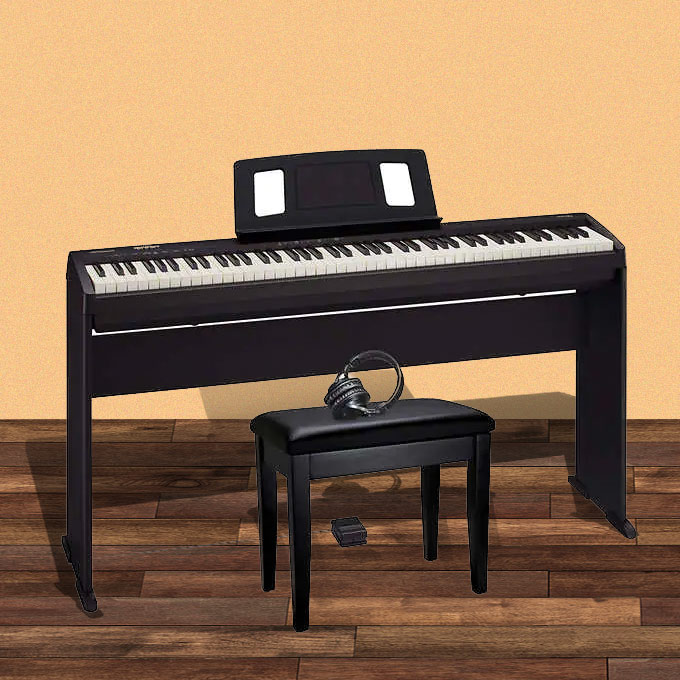
    The FRP-1, on the other hand, comes with a padded bench, piano stand, and headphones, bringing the total cost to around $700 on average. It provides a more convenient option for those who want a digital piano complete with accessories.

    Overall, I think FRP-1 is just the name of the bundle, and the actual piano you get is an FP-10. There is no difference between the FP-10 and the FRP-1 other than the FRP-1 includes a padded bench, piano stand, and headphones.

    Roland FRP-1 Digital Piano: A Detailed Review

    Quick Overview

    Roland FRP-1 Digital Piano

    Check The Product Here

    The Roland FRP-1 Digital Piano is a compact and affordable digital piano that offers an authentic piano-playing experience with its advanced technology and features.

    It comes with an 88-note hammer-action keyboard with Ivory-Feel keys that provides a responsive and expressive touch. The built-in SuperNATURAL Piano sound engine offers rich and dynamic tones that you can through the onboard speakers or headphones.

    The FRP-1 also supports Bluetooth connectivity, making it easy to connect to various devices and apps. The free Piano Partner 2 app provides an intuitive interface for selecting sounds, adjusting settings, and viewing sheet music.

    This Roland digital piano also has a twin piano mode, which lets two people play side-by-side in the same octave range. This makes it a perfect choice for piano lessons.

    Additionally, it comes with a sustain pedal and music stand, so you can start playing immediately.

    Overall, Roland FRP-1 is one of the best digital pianos for those looking for a musical instrument that offers the superior sound quality, playability, and features. It is an excellent choice for both beginner and experienced pianists.

    Key Specifications

    First, let’s look at the main specifications of the Roland FRP-1 digital piano.

    • Dimensions: 50.7 x 29.3 x 13.5 inches
    • Keyboard Type: PHA-4 Standard Keyboard: with Escapement and Ivory Feel
    • No. of Keys: 88
    • Touch Sensitivity: 5 types, fixed touch
    • Piano Sound: SuperNATURAL Piano Sound
    • Tones: 15
    • Polyphony (Max.): 96
    • Demo Songs: 15 songs (Listening: 17 songs)
    • Speakers: Yes (12 cm x 2)
    • Effects: Yes
    • Metronome: Yes
    • Pedals: 1 (Sustain Pedal)
    • Split Mode: N/A
    • Connectivity: DC In jack, USB Ports (Type A & B), Phones jacks (usable as output jack) x 1: Stereo miniature phone type, Bluetooth MIDI interface
    • Power Supply: AC adaptor
    • Color: Black
    • Weight: 12.3 kg (27 lbs)

    Now that we have a brief knowledge of the Roland FRP-1, it’s time to dive deeper into it!

    Design

    The FRP-1 digital piano has a sleek, compact design, making it an excellent choice for home use and professional performances.

    Since this product is built with high-quality materials and sturdy construction, it will last for years.

    It looks clean and modern. It can easily fit into any decor style. However, unlike other digital models, the Roland FRP-1 is only available in black.

    Size & Weight

    Being a portable digital piano, the FRP-1 is compact and lightweight. It weighs about 12.3 kg (27 lbs) and measures 50.7(W) x 29.3(H) x 13.5(D).

    This digital piano is considerably smaller and lighter than the Roland FP-30.

    Compared to its competitors in the market, the FRP-10 is one of the most portable digital piano keyboards.

    Control

    The Roland FRP-1 Digital Piano’s control panel is user-friendly. It is simple to use, and this model has four toggle buttons to access all of its functions.

    These buttons allow you to change the key transposition, select touch sensitivity, select instrument sounds, ambience/reverb, brilliance control, and metronome and access a song library with 17 song demos and 15 full songs.

    You can also control the master volume using two toggle buttons on the control panel, which go from loud to soft. And you can see the volume level (minimum to maximum) through the lighted LEDs.

    In addition, there is a power button for the entire piano and a default piano button that’s useful for those who only want to play piano.

    Overall, in terms of simplicity, the FRP-1 piano is easy to use even though it does not have a display. Because this piano doesn’t have many “bells & whistles,” a display screen is not as necessary as it would be if it did.

    Key Action

    The Roland FRP-1 piano has a full keyboard with 88 weighted keys. It uses Roland’s PHA-4 key action, which is the company’s basic but great entry-level weighted key action.

    Each key on the keyboard is individually weighed. This gives the piano the same feel as a real piano. On the left side, the keys are heavier, and as you move toward the right side, the keys gradually become lighter.

    The piano keys are also velocity-sensitive. That means you can adjust the volume depending on how hard or soft you play them. This feature is essential for creating a realistic keyboard experience.

    Since the PHA-4 has synthetic ivory key tops, it helps absorb moisture during extended playing sessions. It also helps to improve grip as you move your fingers across the keyboard.

    Overall, the hammer action keyboard provides plenty of control over your playing dynamics.

    Even though the Roland FRP-1 offers a slightly heavier playing experience than other models in the same price range, it is more expressive and dynamic.

    Sound

    The Roland FRP-1 digital piano delivers excellent sound quality. You’ll feel like you are playing a real grand piano when you play this piano. That’s because it has an authentic acoustic piano sound with plenty of depth and character.

    Tones

    The Roland FRP-1 has 15 different instrument tones. They include four pianos and two electric pianos, and the other instrument sounds include strings, organs, harpsichords, vibraphone, pad, and jazz scat which is a fantastic sound.

    To access these sounds, press the “function button” on the control panel and simultaneously play an appropriate black or white key. Once you have completed that step, the FRP-1 is ready to play the sound.

    You can even layer up to two sounds together or divide the keyboard into two sections with different sounds. Musicians will appreciate this feature on the FRP-1.

    Effects

    The Roland digital piano also has plenty of sound effects, such as ambience, brilliance, and more, to enhance your playing experience. You can use these effects to create your own sound, depending on your preferences.

    Speakers

    The FRP-1 digital piano has two 6-watt speakers facing the floor under the piano. Unfortunately, the sound is muffled when you play it because it points away from you (the player).

    Unlike this Roland piano, the speakers on Yamaha, Korg, and Casio digital pianos in the same price range face the player, which produces a clearer and more immediate sound.

    A digital piano cabinet and speaker system would sound better if the speakers were pointed upward. That way, you can hear the frequency range much better than speakers facing away from you and down to the floor, like with the FRP-1.

    Also, each speaker of the FRP-1 produces 6-watt power. As a result, the total power output for this model is just 12 watts. They don’t sound very loud and aren’t very powerful.

    With this limitation, the FRP-1 is only suitable for home use. If you’re going to do any serious performance, you’ll need an external monitor or speaker.

    When the master control is turned up, the piano has sufficient volume. But the sound quality and speaker positioning could be improved. Considering its $600 price tag, it performs well.

    Polyphony

    Polyphony refers to the number of piano notes that can be played and heard at once on a digital piano. It describes the maximum number of piano notes played and heard simultaneously when playing and sustaining multiple piano notes at once.

    The polyphony number depends on the complexity of the instrument sounds and affects the processing power needed. This model has 96 notes of polyphony, which is considered a bit low. And it reflects its lower price. It uses Roland’s entry-level sound engine.

    The 96 notes of polyphony should be sufficient for you if you don’t layer or mix sounds and don’t play at a high level.

    Features

    The FRP-1 piano model offers several features that make it a perfect choice for beginners and professional pianists. Some of its best features include:

    Bluetooth Wireless MIDI

    The Roland FRP-1 features built-in Bluetooth wireless MIDI connectivity.

    That means you can connect the keyboard piano wirelessly to external Bluetooth devices like Garageband, Piano Partner 2, computers, DAW software, and more. This eliminates the need for a USB cable.

    The Bluetooth connection does not affect what the apps and software do.

    Roland Piano Partner 2 App

    One of the best features of the FRP-1 digital piano is that it is compatible with Roland’s free Piano Partner 2 app.

    It provides interactive features such as lessons, sheet music, and games, along with the ability to control various settings and sounds on the piano directly from your tablet or smartphone.

    You can select sounds, set metronomes, view Digiscore sheet music, and record directly from your smartphone. This app works on iOS and Android devices.

    Modes

    The keyboard piano has two modes, including;

    • Dual mode: This mode splits the keyboard piano into two parts, allowing two players to play the same instrument simultaneously.
    • Twin mode: Twin Piano mode is ideal for lessons. It allows students and teachers to play in the same octave ranges at the same time. Piano teachers acclaim this unique feature.

    Pedal

    The pedals on a piano are essential, especially the main sustain pedal. The Roland FRP-1 digital piano comes with a basic square plastic sustain pedal switch called the DP2.

    The DP2 is an on/off pedal switch that activates the sustain and holds the piano sound when you press down the pedal.

    As soon as you release the pedals, the piano sound stops sustaining. This pedal is pretty simple and does a good job.

    In contrast to most other digital pianos, the FRP-1 does not have a triple pedal option. It may be a bit disappointing for professional piano players. But since it’s an inexpensive piano, you can’t expect some things.

    Connectivity

    In terms of connectivity, the Roland FRP-1 digital piano won’t disappoint you. It features several connectivity options, including;

    • DC In jack
    • USB ports (Type A & B)
    • Phones jacks (usable as output jack) x 1: Stereo miniature phone type
    • Headphone jacks

    The USB Type-A port lets you connect the FRP-1 to USB memory devices such as flash drives for easy storage and data transfer. You can use it to load new firmware updates or to transfer piano performance data.

    At the same time, the USB Type B port allows you to connect the piano to your computer to access the best music apps.

    In addition, it has a stereo mini phone jack for connecting any external device, such as amplification systems. You can plug in your headphones if you want to practice quietly without disturbing your family members and neighbors.

    There is also a DC In jack where you can connect the power adapter, which provides the necessary power to run the piano.

    Overall, the Roland FRP-1 digital piano offers a wide range of connectivity options, making it an excellent choice for musicians and music teachers. All these connectivity options give you more flexibility and control over how your piano is connected to other devices.

    Accessories

    As I mentioned above, the Roland FRP-1 digital piano comes with most of the accessories that some piano players may want. They include:

    • Music Rest
    • Headphones
    • Dedicated Stand: KSCFP10
    • AC Adaptor, Power Cord (for connecting AC Adaptor)
    • Sustain Pedal switch (DP-2)
    • Bench with Storage
    • Owner’s Manual

    All these things provide a more convenient way to play piano. A padded piano bench helps you sit comfortably for long hours without causing discomfort or pain while the music rest securely holds sheet music.

    You can plug in your headphones if you need to practice piano and don’t want to disturb your roommates or neighbors. The headphones provide a private and quiet playing experience.

    The sustain pedal allows you to create longer, sustained notes while playing. The dedicated stand provides a sturdy and stable platform for the piano, and the bench with storage offers a convenient place to store sheet music and other accessories.

    Price & Availability

    As we all know, price is one of the most crucial aspects when choosing a product. The same goes for digital pianos.

    Fortunately, Roland FRP-1 digital piano is available at an affordable. It costs around $699.99 at Costco, which makes it an excellent value for money considering all its features.

    You can buy the Roland FRP-1 digital piano from Costco. For the last few years, Roland has had the FP-10 model available at Roland piano dealers. It has now been repackaged for Costco and comes with a few extra accessories under the new name, FRP-1.

    Previously, it was also available through a couple of other places besides Costco, but for now, the FRP-1 is only available at Costco and only while supplies last.

    Let’s take a quick look at Costco!

    Costco is a popular store for in-store and online sales. As a membership-based warehouse club, Costco provides its members with quality brand-name merchandise at the best possible prices.

    The company offers groceries, electronics, furniture, home goods, and more. Founded in 1983, it operates in various countries worldwide, including the United States, Canada, Mexico, and others.

    The store always has a few digital piano brands on sale during the year. And occasionally, you can see a few digital piano models in person in some of their stores during the holiday season.

    The Roland FRP-1 is one of the best portable digital pianos currently available at Costco.

    Pros and Cons of The Roland FRP-1 Digital Piano

    We have reviewed the Roland FRP-1 portable digital piano in-depth. Now let’s summarize its pros and cons!

    Pros

    • Compact size and lightweight design.
    • Excellent PHA4 with Ivory feel keys and Escapement.
    • The keys are touch-sensitive, giving you a realistic feel.
    • Easy to use interface.
    • The digital piano offers a variety of sounds and effects.
    • Piano Partner 2 app for extended functionality.
    • It features Bluetooth connectivity and other connectivity options.
    • The package includes sustain pedal, piano bench, and music stand.
    • Affordable.

    Cons

    • The speakers are not very powerful.
    • Some players don’t like plastic keys.
    • There is no internal recording capability on the device.
    • No optional 3-pedal unit.

    Who Should buy Roland FRP-1 Piano?

    In my opinion, the Roland FRP-1 is a perfect entry-level digital piano for beginners and even lower-intermediate piano players. If you’re on a tight budget, you can go with this one, as it’s affordable and portable.

    However, it is not a suitable option for professional pianists. That’s because the most crucial factor for a digital piano is the authentic playing experience, including key action, sound, pedaling, and speaker system.

    Other features, such as Bluetooth connection and accessories, are not as important. They will not excite pro-level players musically.

    Therefore, if you’re serious about playing piano, you should invest in the best piano-playing experience you can afford.

    Conclusion

    In conclusion, the Roland FRP-1 digital piano is an excellent option for those looking for a portable instrument that offers good sound quality and playability without breaking the bank.

    It has many features, such as velocity-sensitive keys and a variety of sounds, so it is a good choice for beginners and even experienced players.

    This digital keyboard piano provides an authentic playing experience at an affordable price, thanks to its easy-to-use interface and modern design.

    Although professional pianists may not find it the best fit, the FRP-1 still offers excellent value for its price.

    Ultimately, the Roland FRP-1 is a good choice for anyone looking for an entry-level digital piano.

    What do you think of this Roland FRP-1 Digital Piano review? Let me know in the comments!

    And do you have any experience with the Roland FRP-1? I’d love to hear about it in the comments section.

    Related Topics

  • Yamaha U1 Piano Review

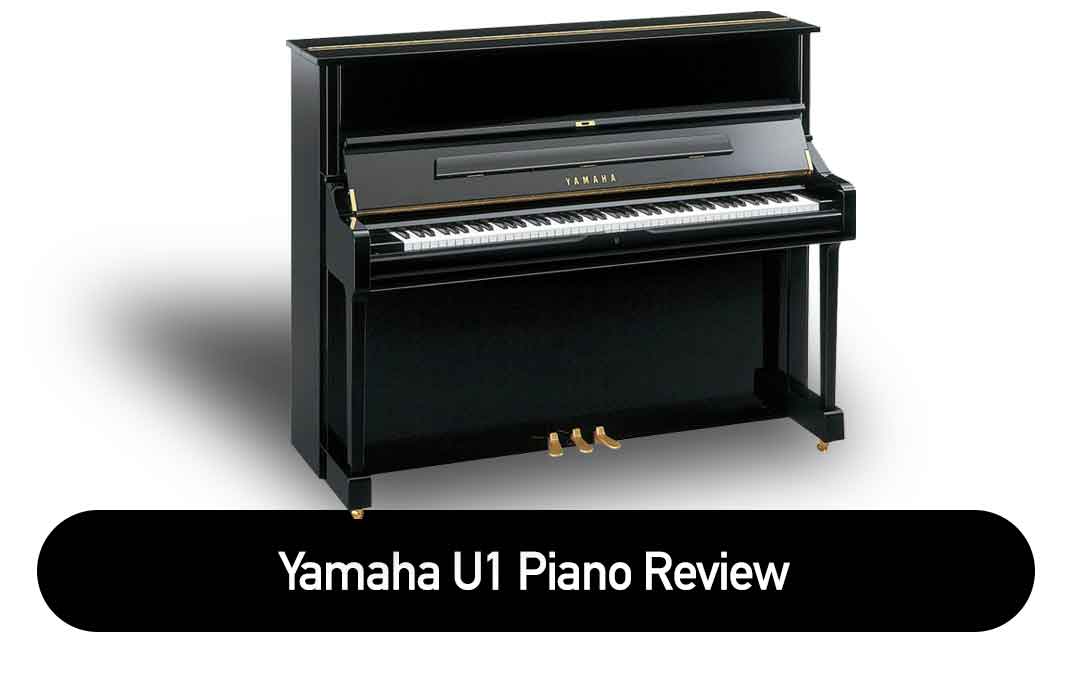
    Yamaha U1 Piano Review

    The Yamaha U series is one of the most popular and successful model lines in the piano world. It has been the upright piano of choice for decades and has won the hearts of many musicians, music teachers, and piano enthusiasts.

    Amongst the various models in the Yamaha U series, the Yamaha U1 upright piano is the most popular.

    But just because something is popular doesn’t necessarily mean it’s perfect for you.

    That’s why I’m bringing you an honest review of one of the most well-known upright pianos on the market: the Yamaha U1.

    This review will cover the following aspects of this musical instrument:

    • Main Specifications
    • Design & Build Quality
    • Key Action
    • Sound quality
    • Features
    • Price
    • Pros and Cons

    By the end of this upright piano review, you will better understand what the Yamaha U1 has to offer and whether it will suit your needs.

    So, let’s dive in!

    Yamaha U1 Upright Piano: A Detailed Review

    About Yamaha U1 Upright Piano

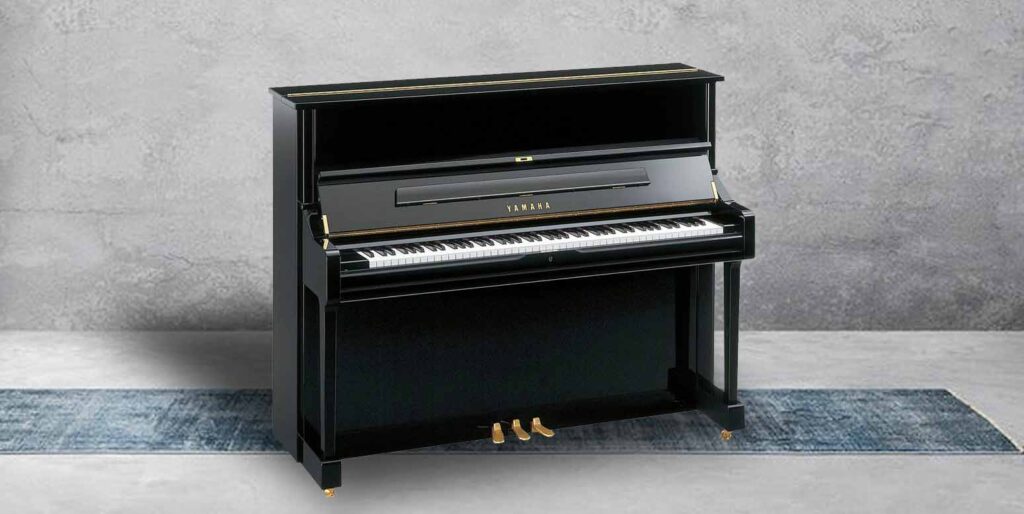
    Yamaha U1 Piano

    Yamaha has been making upright and grand pianos for decades. And it is widely favored by musicians, teachers, students, and more. Since 1967, Yamaha has sold more than four million upright pianos.

    The Yamaha U1 piano was first introduced in the 1960s. The company crafted the U1 upright piano with care and high-quality raw materials. Because of that, you can hand it down from one generation to the next.

    Made in Japan, the U1 was designed for professional musicians. It produces a rich, deep bass tone and is easy for quick repetition. Its consistent action and deep tones distinguish it from other pianos.

    Furthermore, the Yamaha U1 upright piano has a good resale value and consistency, which makes it so appealing.

    In short, the Yamaha U1 is a reliable and versatile instrument that inspires musicians of all levels to reach new heights in their piano playing.

    Key Specifications

    Now let’s look at the main specifications of the Yamaha U1 upright piano.

    • Brand: Yamaha
    • Type: Upright Piano
    • Dimensions (W x H x L): 60″ x 48″ x 24″
    • Speaking length of #1 bass string: 46.8″
    • Hammer Weight: 10 kg (22 lbs)
    • No. of Keys: 88
    • No. of Pedals: 3 (Soft Pedal, Mute Pedal, Damper Pedal)
    • Soundboard material: Spruce
    • Back post material: Spruce
    • V-pro Plate: Yes
    • Soft-Close Fallboard: Yes
    • Caster: Single-wheeled
    • Finishes: Polished Ebony, Polished American Walnut, Polished White, Polished Mahogany, Satin Ebony, and Satin American Walnut
    • Google Condition: Used
    • Weight: 228 kg (503 lbs)

    Design & Build Quality

    The Yamaha U1 piano has a classic and elegant design and is made with premium materials. Its sturdy construction ensures that this acoustic piano will last for many years.

    The U1 Upright uses solid spruce wood for its soundboard and back post, which contributes to its rich and deep tone. The company uses this material in its top-of-the-line acoustic pianos because of its outstanding acoustic properties.

    For this reason, the Yamaha U1 Upright has become a popular choice for professional musicians and music schools. They use it for classes and performances.

    In terms of size and weight, the Yamaha U1 Upright piano is pretty standard for an upright piano. Its dimensions are 60″ x 48″ x 24″, and it weighs 503 lbs. It may be a little heavy to move around. The U1 features a single-wheeled caster, making it easier to move around.

    Besides its robust construction, this wonderful piano comes in several finishes, including polished ebony, satin ebony, polished American walnut, satin American walnut, polished white, and polished mahogany.

    These finishes enhance the instrument’s appearance and add durability and protection to the wood. Choose one that perfectly fits the style and decor of your room.

    Overall, the Yamaha U1 Upright Piano boasts excellent design and build quality that looks great and performs well. It is probably the most reliable, well-made upright piano you’ll ever own.

    Key Action

    The Yamaha U1 comes with an 88-key keyboard. The key action on the Yamaha U1 is super precise and suitable for any genre of music. It is neither too heavy nor too light. While it is on the lighter side, the U1 provides excellent quality control over your music.

    For example, Yamaha U1 responds admirably when playing demanding, virtuosic music with constant dynamic changes. You can play the late Beethoven sonatas, Chopin Ballades, and Scherzi, even a piano duet version of Stravinsky’s Rite of Spring. I can assure you that the U1 won’t let you down.

    The Yamaha U1 also features Yamaha’s “V-Pro Plate,” which helps distribute the hammers’ force evenly and reduces stress on the strings and soundboard. This results in a consistent and smooth touch, even after years of use.

    Furthermore, the Yamaha U1 Upright doesn’t require tuning often since it keeps a tune well, so you’ll always have a satisfying time when you play.

    Ultimately, the Yamaha U1 has a smooth, responsive, and consistent action that makes it easy for players of all levels to play effectively and expressively.

    Sound

    The sound and tone quality is the most critical aspect we look for in a musical instrument. And the Yamaha U1 Upright Piano does not disappoint in this aspect.

    The Yamaha U1 produces a rich and deep bass tone. It is ideal for classical music, but it can also accommodate jazz, pop, rock, and other genres of music.

    Yamaha did well in building such a robust piano with a versatile tone. The U1 has a powerful and full sound that fills the room and will suit any playing style.

    However, remember that the U1 is sized for studio-type spaces like average-sized living rooms, smaller classrooms, practice rooms, etc. So if you plan to place your piano in a larger area, you may find that the U1 might not fill the space with sound.

    The Yamaha pianos are known for their bright tone, which may not be for everyone. The crisp, live sound you get from a Yamaha upright is delightful to listen to the ear.

    In terms of tuning, Yamaha U1 can hold the tuning better than other pianos.

    If you want an acoustic piano with a crisp, lively sound, you won’t go wrong with a Yamaha U1. It is very versatile and can hold a tune quite well. It produces a high-quality sound that can satisfy musicians of all levels.

    Features

    In addition to its outstanding design and sound quality, the Yamaha U1 piano has some additional features that make it a great choice for pianists of all levels. Here are a few of them:

    Soft-Close Fallboard

    The Yamaha U1 comes with a soft close fallboard to prevent the board from abruptly closing on the keyboard, which can cause accidental injury or damage. It uses a damping mechanism to control the descent of the fallboard and ensure a smooth and safe closure.

    The cover over the keys reduces the risk of potential damage to the keys and internal parts. It protects the keyboard from dust and other foreign objects when not in use.

    This piano feature adds to the overall durability of the piano.

    Pedals

    The Yamaha U1 Upright Piano offers three pedals, the Soft Pedal, the Mute Pedal, and the Damper Pedal.

    Soft Pedal: It is also known as una corda pedal, which means “one string.” This pedal is often used to soften the sound of the piano.

    When the player presses the pedal, it shifts the hammers slightly so that only one string is struck for each note. This makes the sound less powerful and creates a softer, more delicate tone.

    Mute Pedal: It is also known as a practice pedal or middle pedal. The purpose of this pedal is to reduce the volume of the piano. Pressing the mute pedal lowers a piece of felt or cloth between the hammers and the strings to muffle the sound.

    Piano students often use this pedal to practice the piano without disturbing other people. You can also use it to achieve a specific sound effect in performance.

    Damper Pedal: The damper pedal, also known as the sustain pedal, is the most commonly used pedal on the piano. The purpose of this pedal is to make your notes sound longer.

    When you press the damper pedal, the dampers are lifted from the strings, allowing the sound to continue even after you have released the keys. This creates a smooth and sustained sound, making it easier to play legato or connect notes.

    Price

    The price of the Yamaha U1 varies based on the condition and location, but on average, it ranges from $8,000 to $11,999 for a new piano.

    If $8,000 is too much, you can try the used market. You can usually find a refurbished model for around $4,000. Make sure it has been refurbished by someone competent and professional – a piano refurbished by a cowboy will cause you problems in the future.

    Although the price may seem high, the value you get is way more than the price. In fact, it’s hard to find a better product than this one with other brands at that price.

    Overall, the Yamaha U1 is a piano that will give you the most bang for your buck if you want the best piano for your money.

    Pros and Cons of the Yamaha U1 Upright Piano

    With all that information about the Yamaha U1, let’s summarize its pros and cons!

    Pros

    Elegant design & solid construction: The Yamaha U1 has a classic and sleek design. It is made with premium materials, ensuring its durability and longevity.

    Reliable and versatile: This Upright piano is very reliable. With regular maintenance, it will last an extremely long time without degradation. It is also suitable for various musical genres, making it ideal for amateur and professional musicians.

    Precise, light action: The Yamaha U1’s key action is superbly precise and suitable for any genre. When you shift dynamics, it responds amazingly well.

    Nice, rich tone: The U1 produces a rich, deep bass tone and has a consistent and smooth touch. It is ideal for classical music, jazz, rock, and more.

    Multiple finishes available: This popular upright piano also comes in several finishes, including polished ebony, satin ebony, satin American walnut, polished American walnut, polished white, and polished mahogany.

    Good resale value: The Yamaha U1 piano has a great resale value.

    Cons

    Higher price point: New Yamaha U1 Upright pianos are more expensive than other upright and digital pianos on the market, making them less accessible for budget-conscious piano players.

    Bright tone: Yamaha pianos are bright. Even though it isn’t necessarily bad, some people find it too bright.

    Who should buy the Yamaha U1 Upright Piano?

    In all respects, the Yamaha U1 is an excellent instrument. It is a high-quality instrument that is suitable for a variety of purposes.

    It is an excellent choice for professional musicians, music teachers, piano students, families, and individuals looking for reliable instruments for their homes, music schools, and performance venues.

    If you are looking for a reliable upright piano that offers excellent sound quality and good playability, the Yamaha U1 is your best bet.

    This fantastic piano is worth every penny, but if your budget is limited, you may not be able to afford it. In that case, you should consider getting a used piano. If you’re buying a used one, make sure it’s been well-maintained or refurbished.

    Is It Okay to Buy a Used Yamaha U1 Piano?

    Getting a used Yamaha piano raises a lot of concerns. Some of these Yamaha u series pianos come from Japan, where they were used in schools for 20-30 years, then sold to a dealer or distributor and shipped overseas for sale.

    It is called a “gray market” piano. This is because it was initially built for the Japanese market but is now being used elsewhere.

    So, the question is, is it okay to buy a Second-hand Yamaha U1 Upright Piano?

    As I mentioned earlier, the U1 Upright could command a good resale value if well maintained.

    So, it is okay to buy a used Yamaha U1 Upright piano. However, it is important to thoroughly inspect the piano before purchasing it to ensure that it is in good condition and free from any damage or problems that could affect its performance.

    It’s always a good idea to hire a trained technician to inspect the piano before buying.

    If you want your piano to last the longest, you should always buy a new one (whether upright or grand piano). But if you can only afford a used Yamaha piano, you can find one that’s in good condition and won’t have any problems.

    The most commonly used Yamaha U1 pianos in Europe and the United States are grey-market pianos.

    Conclusion

    The Yamaha U1 Upright piano is an excellent investment for professional musicians and institutions. Its Japanese craftsmanship and attention to detail are evident in its superior tone and touch.

    This instrument’s impressive performance and durability make it popular among musicians. It offers great value for the money.

    You will surely enjoy many years of musical enjoyment if you own the U1, no matter how experienced you are.

    Hopefully, this information helped you decide whether Yamaha U1 Upright piano is worth your money.

    Related Topics

  • Is it too late to learn piano?

    Is it too late to learn piano?

    Is it too late to learn piano? Well, as they say, It is always possible to learn something. Life has ample opportunities to offer when we decide what is best for us and what we want to do.

    Likewise, learning a new skill or starting a hobby is always independent of age, even if it’s about learning music or a musical instrument. If someone is keen to learn music, they can start learning it at any age. Then, moving further, let’s learn about the various benefits, ways to proceed, the barriers crossed, and much more when people of all ages and all walks of life start piano lessons.

    Piano Lessons for all ages

    Age is never a barrier to learning something new. Especially to start piano lessons, the first and foremost thing is to make up your mind and just get started. Usually, we only pursue a hobby or interest for various reasons like lack of time, resources, prior engagements, studies, work, etc.

    But to learn to play piano, you must choose a good instrument, get a good piano teacher and begin piano lessons, regardless of age.

    Playing music – the perfect getaway to peace.

    Playing music is an ideal activity for all ages, which helps you manage stress, improve your social skills, and uplift your mood with an abundance of happy and positive thoughts. It’s your best escape from the daily mundane life and chaos.

    Starting Piano lessons

    When younger students begin piano lessons early, it is more of a learning through concepts, notes, chords, etc.

    Young kids learn piano more like a subject and gradually move towards making it a hobby. In contrast, adult piano students are more likely to start it as an interest or a hobby and thus get more immersed in its feel and vibe than just learning it at the surface level.

    Advantages of playing piano for adult students

    While it’s true that playing piano helps children in many ways, be it their overall growth or the development of their senses, there are equally important benefits for adult piano students as well.

    Intellectual and Cognitive Benefits

    When you start piano lessons, its mellow music and healing vibes increase brain activity, enhance creativity, and improve memory by relaxing your senses.

    Reduces Stress, Anxiety, and depression

    Playing music is a form of meditation that helps adult students to balance their stress and improve their efficiency. Music, especially playing piano, can also become a magical way to treat ailments like depression.

    Playing the piano has some scientific benefits as well.

    It helps in improving your hearing and listening skills, cognitive and mathematic skills, while also largely improving your memory. It is also proven to enhance IQ and help in developing hand-eye coordination.

    While the long list of advantages holds, the big fact remains that the amount of feeling the grown-ups can invest in learning music is much more than their young counterparts as it refines and grows over age.

    The depth of understanding music and its wide applicability has evolved over the years; thus, age can be an edge over younger students.

    Learning piano at various stages in life

    College Life

    When adults start college, they get ample opportunities to learn music and explore their creative side by playing a musical instrument. They get the platform to learn and to perform in events in addition to their professional studies. All colleges and professional institutes provide a platform to help them harness their musical side.

    Professional/ Corporate Life

    When an individual enters a professional life, work-life balance plays an enormously important role in maintaining a healthy lifestyle and sanity of mind. Starting a new hobby like music lessons or learning musical instruments from a professional music teacher helps them develop a new skill and, in addition to that, helps them balance the stress and chaos of their work life.

    Post Retirement

    It is said that age is just a number, and many people plan to learn music when they retire to have ample time to invest in a new skill like playing piano. Activities like learning to play the piano help stimulate brain cells and help to keep your mind active and vibrancy going on even in your second inning.

    The only thing that could be important to consider for elderly persons while learning piano is that it might take some more time and effort for them, but remember, in the end, it would be much more fruitful than you thought.

    Learning piano at any age helps develop patience and perseverance, which helps you meet a better version of yourself. Learning piano at an older age also helps in being focused and disciplined, as learning requires a lot of concentration and hard work.

    Playing piano is a self-care, which everyone should focus on to maintain a better life and move away from the chaos and the regular hustle-bustle of mundane life.

    Learning piano at a later stage in life

    Playing the piano actually makes you smarter, happier, and more focused.

    It helps in sharpening memory.

    Piano playing is a learning process that helps our brain function more efficiently. Studying piano helps in enhancing the working memory of adults. Studies have shown that playing the piano may improve our brain’s thinking ability.

    Developing Aural skills

    Aural skill is the ability to understand the sounds we make and hear. Piano playing and taking piano lessons help develop a musical ear, which further helps develop these skills.

    Maintaining concentration and being focused.

    Any musical journey requires focus and concentration, whether playing piano, guitar, or any other instrument. And piano students multitask while playing piano, remembering the chords, and focusing on rhythm, tempo, pitch, melody, and everything simultaneously. Thus they are more focused and attentive.

    Building fine motor skills

    Playing the piano encourages one’s inclination to move and develop fine motor skills and gross motor skills. Piano lessons help build hand and eye coordination in children and adults.

    Increased finger grip

    This is helpful, especially for older people, as learning and playing piano improves the finger grip and strengthens the arm muscle.

    Teaches hard work, patience, and perseverance

    Playing piano requires knowledge, focus, and concentration; learning the basics takes time, practice, and a little more hard work. When we put in so much effort and hard work, we automatically develop skills like patience and perseverance. Yes, Piano students are quite hard working.

    Effectively dealing with stress and anxiety.

    Due to the hustle and bustle of work and life, many people suffer from stress and anxiety. Playing the piano is effective in relaxation and stress management. It overcomes negative emotions and depression in older people.

    Healing

    Any learning process, be it piano lessons or music theory, helps heal the soul by distracting from the negative environment and increasing the overall positive vibes.

    Facing the world with more confidence

    Playing the piano helps to overcome shyness; it is a very effective way of expressing your thoughts with music without speaking or communicating directly with the audience. Learning piano is a musical journey, and your confidence increases as and when you take a step ahead.

    Feeling of contentment and happiness from within

    Learning piano not only reduces negative emotions but also increases the positivity in an individual. The positive emotions make you feel happy from within. When you play the piano, you feel content and satisfied from within.

    Societal

    At any stage in life, one must go out, meet and interact with people. Music has the power to help connect people. Several benefits of playing piano can help a person gel well with society as a whole.

    • Meeting new people with the same interests and genre.

    Playing piano connects you to people worldwide with similar interests in music. It helps you connect with people who understand music, especially the music teacher.

    • Being part of a devotional or a musical group of people who play piano

    People who play piano are more likely to meet like minded people who play piano or a musical instrument and are part of some devotional, religious groups or a band/ musical group. This gives a chance to participate and be a part of some event or a musical group.

    • Being more outgoing and extrovert

    It is obvious that when you meet people, you are likely to become more extroverted and outgoing.

    • Feeling of contentment and happiness from within

    Success and achieving something in life, be it pursuing a hobby like playing the piano, gives a sense of fulfillment and happiness.

    • Above all, playing piano relaxes the mind and the soul.

    In this era of corporate work life, it is important to relax and unwind; your mind also needs rest. Playing the piano diverts not only your mind but also rejuvenates your soul.

    • Positive effect on the life of other people

    Our actions and reactions affect other people as well. Your happiness and your positive thoughts have an optimistic effect on the other person as well.

    Challenges one might face

    While we talk about a host of benefits and advantages of learning to play piano, there are a few challenges as well, faced by people at later stages in their life.

    • The biggest challenge while trying to learn piano is finding time from their busy schedules
    • Family responsibilities
    • Having a bad work life balance
    • Health issues that require intensive care
    • Finding a good music teacher
    • Motivation and support from loved ones
    • Lack of resources

    Bottom line

    But as they say, once you decide, there’s no looking back. So get going, step out and buy a new piano for yourself – digital piano or acoustic piano. Don’t fear your age, and don’t think you’re a misfit; don’t care about what the world would say.

    Enroll for private lessons and trust that good musical education will help you add a new skill and explore a new side of yourself. So, don’t hesitate, don’t stop; do it.

    Related Topics

  • Piano Easy Songs With Letters

    Piano Easy Songs With Letters

    Are you having difficulty learning to play piano songs from sheet music? Do you find yourself struggling to remember which note is which? Well, fear not!

    I have the solution for you – piano easy songs with letters. That’s right, these songs have notes labeled with letters, making learning and playing easier. It will make learning piano more enjoyable and increase your chances of becoming a good pianist.

    In this post, I’ve compiled a list of the best easy piano songs with letters for beginners.

    I also included a video tutorial for each of them, explaining how to play each hand’s notes with letters and showing the notes visibly.

    So, without further ado, let’s dive in!

    An Overview of Notes And Letters On A Piano Keyboard

    Before we get into the list of easy popular piano songs with letters, let’s first grasp the notes they are attached to on a piano keyboard.

    When learning to play the piano, it’s essential to understand the layout of the notes and letters on the piano keyboard. A digital piano keyboard typically has 88 keys, 52 white keys, and 36 black keys (sharps and flats).

    Note: Different piano keyboards have different numbers of keys, so your keyboard might have fewer keys.

    The white keys represent the natural notes, including A, B, C, D, E, F, and G. The black keys represent the sharps and flats, which are the notes between the natural notes. For example, the black key between C and D is C# or Db.

    Remember that the notes repeat in a pattern of seven natural notes and five sharps or flats.

    Here, I’m showing you where each note is in an octave so you can easily play the songs listed below.

    The following diagram shows the piano keys chart:

    This diagram will help you understand where all the notes are on the piano keyboard. So, you must read it carefully. If you know these music notes well; you’ll find it much easier to follow the piano song tutorials below.

    8+ Piano Easy Songs With Letters (For Kids & Adult Beginners)

    Even though there are several easy piano sheet music options available on the internet, not everyone knows how to comprehend a score.

    In that situation, learning to play piano with easy tutorials and less complex systems, such as letters on notes, is the best option.

    The following are the 8 Easiest Piano Songs to Play with Letters and Notes:

    Twinkle Twinkle Little Star

    “Twinkle Twinkle Little Star” is one of the world’s most popular songs and is very easy to play on the piano. Therefore, beginners frequently play it on the piano.

    It is a famous English lullaby. Its lyrics are from Jane Taylor’s early-19th-century English poem “The Star. Jane Taylor first published this poem in 1806 in Rhymes for the Nursery, a collection of poems by Jane and her sister Ann.

    Now, let’s learn how to play Twinkle Twinkle Little Star on the piano, starting with the right hand and moving to the left hand.

    The great thing about this song is that almost every note is played twice in a row, meaning there are fewer notes for you or your kid to locate.

    Here are the notes of the right hand to play this song:

    These letters above represent the sequence of notes in the entire right hand of Twinkle Twinkle Little Star. Play all of these notes in a loop, one after another.

    After a while, you will become fluid at playing this song on the piano with the right hand.

    Here are the notes of the left hand to play this song:

    Play all these letters one after the other on your piano, and you’ll learn the entire melody in your left hand.

    Now that you know how to play Twinkle Twinkle Little Star with the left and right hands, you need to play both hands simultaneously. To do this, watch this tutorial video that shows the notes to play and the corresponding letters.

    Twinkle Twinkle Little Star is a classic nursery rhyme that any beginner pianist will love playing on the piano. It is a simple and easy song to play on the piano.

    Happy Birthday to You

    “Happy Birthday to You” is one of the most popular easy piano songs for beginners to learn to play. It was inspired by the famous song, Good Morning to All, composed by American sisters Patty and Mildred J. Hill in 1893.

    This tune can come in handy anytime. Whether you’re celebrating someone’s birthday or looking for an easy piano song for children to practice, you’ll find this one useful.

    Therefore, this song became one of the most played songs on the piano.

    See how you can play this song’s melody with both hands and the letters of all the notes.

    Here are the notes of the right hand to play this song:

    G – A – G – C – B – G – G – A – G – D – C – G – G – G – E – C – C – B – A – F – F – E – C – D – C.

    Play the above sequence of notes on the piano to learn how to play the right hand of Happy Birthday:

    Here are the notes of the left hand to play this song:

    C – C – G – G – C – C – F – F – C – G – C.

    Watch this tutorial video to play “Happy Birthday” using both hands.

    Overall. “Happy birthday to You” is a simple piano song you can learn quickly. If a piano or keyboard is nearby at a birthday party, you can lead the singing, which might help people sing in tune.

    If You’re Happy and You Know It

    “If You’re Happy and You Know It” is one of the most fun piano songs for kids and adult beginners. The song’s simple and repetitive melody makes it easy to play on the piano.

    The song’s catchy lyrics and upbeat tempo make it an excellent choice for sing-alongs and group performances. The tune allows your little musician to clap and dance while playing.

    Let’s learn how to play this song’s melody with both hands and the letters of each note.

    Play all the notes (mentioned below) to play this song on your piano keyboard.

    C C F F F F F F E F G

    C C G G G G G G F G A

    A A Bb Bb Bb Bb D D

    Bb Bb A A A G F F

    A A G G G F E E D E F

    Alternatively, you can watch this video tutorial to play “If You’re Happy and You Know It.”

    Ode to Joy

    “Ode to Joy” is one of Ludwig van Beethoven’s most recognized and beloved melodies. This popular classic song was first published in Germany in 1786.

    It is very easy to play on the piano. This song is an excellent choice for beginner pianists since it has a repetitive tune that is easy to play.

    The song’s uplifting and joyful melody makes it a perfect choice for any occasion.

    Now learn how to play the two hands of Ode to Joy using the letters that correspond to the notes of the music!

    You’ll need to play these in the following letter sequence to play the entire right-hand melody of this song on your piano keyboard.

    To play the entire left-hand melody on your piano keyboard, play these in the following letter sequence.

    Note: The “+” symbol indicates two notes played simultaneously, constituting a chord.

    Once you have mastered the left and right hands of Ode to Joy, it is time to play both hands simultaneously. In the image below, you can see which notes should be played by each hand:

    Click this link to watch the tutorial video showing how to play the notes of the “Ode to Joy” song with both hands simultaneously.

    Star Wars Theme

    Star Wars Theme is a popular song composed by the world-famous musician John Williams. It is the main musical theme of Star Wars and was released in 1977 as a part of the movie Star Wars: A New Hope.

    It is straightforward to play for a beginner and captures the iconic melody and spirit of the Star Wars theme. Besides being easy to play, this song is relatively short, which makes it the perfect music to practice on the piano.

    It’s one of the world’s most famous themes today, and many amateur pianists play it.

    The right hand notes for this theme are as follows:

    C – G – F – E – D – C – G – F – E – D – C – G – F – E – F – D – C – G – F – E – D – C – G – F – E – F – E – D – C – D – E – D – F – E – D – C – G – D – F – E – D – C – C – C – D – E – D D – E – D – C – A# – G# – G – F – D# – C – G – F – E – D – C – G – F – E – D – C – G – F – E – D – C – G – F – E – D – C – G – F – E – D – C – G – F – E – F – D – C – C – C.

    Here are the left hand notes for this theme:

    G – G – G – G – G – G – G – G – A – A – A – B – G – G – A – A – G – A – B – G – G – G – G – G – G – G – G – G – G – G – A – C – G – G – G – G – G – G – G – G.

    Playing Star Wars Theme isn’t tricky at all. You need to play all these letters in a row on your piano.

    Click here to watch the video tutorial to learn how to play Star Wars Theme with both hands simultaneously, paying attention to the time and tempo of the notes.

    Overall, the Star Wars Theme is a great way to learn piano while immersing yourself in the Star Wars universe. It’s easy to follow and fun to play, making it perfect for Star Wars fans.

    Jingle Bells

    “Jingle Bells” is a festive song usually sung at Christmas time. James Lord Pierpont composed this song’s lyrics and published it under the title “The One Horse Open Sleigh” in 1857.

    In 1859, Oliver Ditson republished the song with the new title “Jingle Bells” in the city of Boston in the United States.

    Today, it became one of the most popular Christmas songs played on the piano worldwide.

    It is easy to learn and play this song since there are a lot of repeated notes, and everyone knows the tune.

    You can learn a song faster if you know the melody instead of playing one from notes you’ve never heard before. Even though the verse is a bit more complex, it isn’t too tricky.

    Here’s the sequence of letters corresponding to the notes of the music, so you can learn and start playing Jingle Bells using both hands:

    (Oh) Jingle Bells, Jingle Bells, Jingle All The Way

    (D^) B – B B B – B B B-^D G A B

    Oh, What Fun It Is To Ride

    C C C C C B B

    In A One Horse Open Sleigh

    B B B A A B A

    Click here to watch the easy tutorial video for the Christmas song, Jingle Bells.

    Mary Had a Little Lamb

    “Mary Had a Little Lamb” is one of the best easy piano songs for children that a piano teacher can teach to their students.

    It is an English nursery rhyme of American origin dating back to the 19th century. American writer Sarah Josepha Hale published it first in 1830.

    The melody of this song is simple to play on the piano. The best part about this song is that it includes additional verses about the adventures Mary and her lamb have, making the song so fun.

    It is one of the most commonly performed piano songs for beginners in the US.

    Now let’s learn how to play Mary Had a Little Lamb on the piano!

    Press the following keys one after another on the piano to play Mary Had a Little Lamb using both hands:

    Mary had a little lamb

    E D C D E E E

    Little lamb, little lamb

    D D D E G G

    Mary had a little lamb

    E D C D E E E

    Its fleece was white as snow

    E D D E D C

    Alternatively, you can watch this video tutorial, showing all the notes labeled.

    London Bridge Is Falling Down

    “London Bridge Is Falling Down” is a classic nursery rhyme and one of the most popular children’s songs that originated in 18th-century England.

    During the 19th century, it gained popularity, particularly in Britain and the United States.

    London Bridge Is Falling Dawn is the most popular song worldwide, especially among children who want to start learning to play piano.

    This song is simple to play on the piano for beginners. You can also teach your kid how to play this piano song easily. Now I will explain how you can learn it simply by following the letters of the notes.

    To play this song on the piano, here are the right-hand notes:

    D – E – D – C – C – D – C – D – D – E – D – C – C – D – D.

    The following are the left-hand notes for playing this song on the piano:

    B – A – B – C – B – B – A – B – G.

    Once you have mastered the right hand and left hand, watch this video to learn how to play London Bridge Is Falling Dawn on the piano with both hands at the same time.

    Overall, “London Bridge Is Falling Down” is one of the easiest piano songs for anyone looking for a fun and easy-to-play version of the beloved nursery rhyme.

    In addition to these easy piano songs for beginners with letters, here are some more:

    • Bella Ciao
    • HAVANA – Camila
    • All You Need Is Love – The Beatles
    • Fur Elise by Ludwig van Beethoven
    • A Whole New World – Aladdin
    • Can You Feel The Love Tonight – The Lion King
    • We Know the Way – Moana
    • Feed the Birds – Mary Poppins
    • When You Wish Upon a Star – Pinocchio
    • Once upon a Dream – Sleeping Beauty

    FAQs

    What Is The Easiest Song To Learn On Piano For Kids?

    The following are a few popular and easiest songs to learn on the piano for kids:

    • Twinkle Twinkle Little Star
    • Mary Had a Little Lamb
    • Happy Birthday
    • Chopsticks

    What Song Can You Play With Five Keys?

    “Ode to Joy” is a song you can play with only five keys on the piano. You can play the first part of this famous melody with only five notes.

    What Are Easy Christian Piano Songs With Letters?

    Some easy Christian songs you can play on the piano include;

    • Amazing Grace
    • How Great is Our God
    • Here I Am to Worship
    • Jesus Loves the Little Children
    • Revelation Song
    • Blessed Assurance
    • Nothing I Hold Onto

    These songs often have simple melodies and chord progressions, making them suitable for beginners.

    Conclusion

    As you can see above, I’ve shared a list of some easy piano songs with letters and notes. These piano songs with letters are great for beginners who don’t know how to decipher a score.

    They are easy to learn and play on the piano. In addition, children will surely enjoy them during piano lessons since almost all the songs are fun to play.

    You can master these songs with practice and dedication and impress your family and friends with your musical ability.

    So grab your piano keyboard and start practicing today!

    Which piano song with letters do you want to play? Or did I miss any song in this article that’s your favorite and easy to read? Please let us know in the comments!

    Related Topics

  • Piano Keyboard Types and With Pros & Cons

    Piano Keyboard Types and With Pros & Cons

    If you’re a musician or music enthusiast, you know that pianos come in all shapes and sizes. But did you know that there are different piano keyboard Types as well? That’s right – not all pianos are created equal, and the kind of keyboard you choose can greatly impact your playing experience.

    In this post, I’ll dive deeper into the different types of piano keyboards available and discuss the pros and cons of each.

    From professional stage pianos to portable digital and MIDI keyboards, there’s a keyboard piano for every playing style and approach.

    So, let’s dive in and learn more about the different types of piano keyboards!

    Understand The Keyboard Better

    Before we get into the types of piano keyboards, let’s first understand the keyboard better!

    The piano keyboard is a beautiful and complex instrument, capable of producing a wide range of sounds and emotions.

    The main feature of the keyboard is its ability to simulate other sounds, which is true of most keyboard types. You can play the musical notes with the keys to produce a variety of sounds, including those of brass and string instruments.

    Keyboards have different numbers of keys, divided into two sections: white and black. The white keys are the natural notes (A, B, C, D, E, F, and G), and the black keys are the sharp and flat notes (also known as accidentals).

    The pattern of white and black keys repeats itself every octave, a range of eight notes. The lowest key on the 88-key keyboard is an A, and the highest one is a C.

    One of the main reasons people choose keyboard pianos over acoustic pianos is convenience and cost. Keyboard pianos are often more portable and versatile, making them an excellent choice for gigging musicians or those who don’t have room for a full-size piano in their home.

    However, it’s important to note that there’s nothing quite like an acoustic piano’s rich, natural sound. It’s all about finding the right balance for your needs and budget.

    7 Types Of Piano Keyboards (2023)

    Below are the seven different types of piano keyboards:

    Digital Piano Keyboard

    As the name implies, a digital keyboard piano is a keyboard that simulates the sounds and feels of a piano. It is probably the best keyboard for students who need to focus on practicing musicianship and for adult beginners who want to learn piano.

    Digital keyboards use analog sensors for keyboard action and different versions of chips that reproduce the sound of an acoustic piano.

    Unlike many other keyboards, this piano keyboard typically has 88 full-size keys. The best digital piano keyboards have graded and weighted keys to replicate the feel of a real piano.

    They come with various features, such as built-in speakers, touch sensitivity, and the ability to save and play back recordings.

    They also offer extra features such as excellent maximum polyphony, demo songs, lesson modes, USB MIDI connections, and more for added versatility.

    Digital piano keyboards are more portable and cost-effective than acoustic pianos.

    Pros

    • Digital piano keyboards are portable and lightweight, making them easy to move and store.
    • They are much cheaper than traditional pianos.
    • They have various sounds and features, such as changing instrument sounds and computer connectivity.
    • They do not require tuning, saving the cost and hassle of regular maintenance.

    Cons

    • Their tactile feel isn’t like an acoustic piano, which can be a drawback for some pro players.
    • The sound quality may not be as good as an acoustic piano.
    • Some digital pianos can be expensive, especially if you want a high-end model with advanced features.

    Stage Keyboard Piano

    These keyboard pianos are professional digital pianos specifically designed for live performances. They are generally more lightweight and portable than digital piano keyboards.

    Due to their portability and durability, you can easily move between stages, and the sound quality is pro-level. They often have a built-in sound library to access sounds such as electric pianos, organs, and synthesizers.

    These keyboard pianos are also highly customizable, allowing the performer to tailor their sound to fit the needs of the gig.

    A portable digital piano differs from a stage piano primarily in terms of construction, materials, and overall performance. Stage pianos are sturdier and more portable. The keys feel excellent, and the sonic performance is often superior to that of entry-level to mid-level portable digital pianos.

    While the extra features and overall quality may differ from brand to brand and model to model, they are typically top-notch and high-quality musical instruments.

    Pros

    • They are very lightweight and portable, making them easy to carry and transport to different gigs.
    • Suitable for live performances due to their portability and durability.
    • They have a built-in sound library with various sounds, allowing for greater flexibility in terms of sound.
    • Highly customizable.

    Cons

    • They don’t have the same level of sound quality as a traditional piano.
    • They may be more expensive than entry-level digital pianos.
    • They don’t offer as many features as some other digital pianos.

    Arranger Keyboard

    Arrangers are electronic keyboards that come with auto-accompaniment features. They are designed for solo musicians who want a versatile keyboard at their fingertips on stage.

    One of the best features of arranger keyboards is their auto-accompaniment feature, which allows you to create music that sounds like a full band or orchestra is playing it.

    That makes arranger keyboards perfect for live performances, where you need to create complex and dynamic music on the fly.

    In addition to their versatility and live performance capabilities, they offer different instrument sounds, effects, and USB connectivity. With USB connectivity, you can easily record and edit your music on the keyboard.

    In short, arranger keyboards are an all-in-one solution for solo musicians who want to create and perform professional-sounding music. They are incredibly versatile, allowing the user to create complete songs independently.

    Pros

    • Suitable for composition.
    • The auto-accompaniment feature encourages students to play.
    • They have a user-friendly interface and easy-to-use controls.
    • Ideal for musicians who want a single instrument that can handle various tasks.

    Cons

    • Starting prices can be higher for keyboards than for less advanced keyboards.
    • While arranger keyboards are generally easy to use, the range of programmable options can overwhelm beginners.
    • They have limited sound options.

    Workstation Keyboard

    Workstation keyboards are a type of keyboard that is essentially a computer in a keyboard form. They are designed for music production and are great for use in the studio or on stage.

    These keyboards allow you to easily manipulate music by sampling, sequencing, recording, editing, and more. They often come with weighted keys, making them ideal for advanced beginners.

    It is the versatility of workstation keyboards that makes them so popular. Workstations allow you to do almost everything a digital audio workstation (DAW) can do on a computer or smart device with a DAW. That makes them a great all-in-one solution for musicians, arrangers, and producers of all levels.

    However, it’s important to note that workstation keyboards are not the best choice for classic piano players. That’s because the keys on workstation keyboards are not typically designed to simulate the feel of an acoustic piano. Instead, they focus on the functionality and versatility of music production.

    Workstation keyboards come in various sizes and with different features, depending on the brand and model. While they can be pricey, they have generally considered the best all-around instruments for music production in their price range.

    Pros

    • Highly versatile and perfect for advanced beginner piano students.
    • These keyboards feature weighted keys.
    • Wide range of built-in sounds.
    • Workstation keyboards are much lighter and take up less space than traditional pianos, making them easier to transport.

    Cons

    • Their prices tend to be higher, especially high-end models.
    • Piano beginners can find these instruments too advanced.

    Synthesizers

    Synthesizer keyboards have been a popular choice for a long time due to their ability to create unique sounds, layer effects, and manipulate sound.

    With their digital or analog processing capabilities, synths are commonly used to create particular sounds and beats for studio recordings and on stage.

    Synthesizers have many sound manipulation functions that standard keyboards do not, such as an effects library, filters, tones, samples, and more.

    A workstation keyboard is a synth with MIDI and DAW controllers and has some additional features.

    Synthesizers come in analog and digital forms. It is essential to note the difference between analog and digital synthesizers.

    Digital synths operate using a numerically-controlled oscillator, resulting in digital signals. These synthesizers are relatively new and typically feature a keyboard and LCD display.

    On the other hand, analog synths use a voltage-controlled oscillator with analog signals and consist of sound-generating circuitry and modulators.

    The major difference for musicians is that analog synths provide a continuous signal with a richer sound, while digital synths offer more versatility and additional functions.

    Since professionals use synthesizers to create unique sounds and soundtracks, they require considerable music knowledge and experience.

    Pros

    • They can create unique sounds and manipulate sound in various ways.
    • Excellent for studio recordings and live performances.
    • They offer multiple sounds and output to amps or recording equipment.
    • Digital synths offer more versatility and additional functions.
    • Analog synths provide a continuous signal with a richer sound.

    Cons

    • Require a significant amount of music knowledge and experience to utilize their capabilities thoroughly.
    • The quality can vary between brands.
    • A bit pricey.

    Electric Organs

    Electric organs are electronic keyboard instruments that mimic the sound of traditional pipe organs or Hammond organs.

    They are primarily used in churches. These musical instruments have been popular for decades and were often used in rock music during the 1970s and 1980s.

    Digital organs come in various sizes and key numbers, so you can have the vintage organ sound whenever you want.

    Like other piano keyboards, they offer various sound effects and sound sets. Furthermore, they are compatible with both hardware and software. Some high-quality electronic organs produce a sound that resembles a pipe organ.

    Several manufacturers have retained the pipe organ parts in the electronic versions, including drawbars, pedal boards, and multiple key decks.

    However, this instrument is different from a piano. An electronic organ may not be the best choice if you’re serious about learning about the piano.

    Pros

    • Digital organs mimic the sound of traditional pipe organs or Hammond organs.
    • They are available in various sizes and key numbers.
    • They offer different sound effects and sound sets.
    • It is easier to transport and set up electric organs because they are portable and lightweight.
    • They tend to require less maintenance than traditional organs.

    Cons

    • They rely on electricity, which can be a limitation in certain situations or locations.
    • They may not be the best choice if you’re serious about learning the piano.

    MIDI Controllers

    MIDI controllers are specialized keyboards designed to control other electronic instruments or software.

    MIDI stands for Musical Instrument Digital Interface, a technology introduced in the 1980s. The purpose of this is to communicate between electronic instruments and computers.

    The controllers do not produce sounds on their own, but they can trigger sounds or control parameters in other devices. These keyboards transmit MIDI data between the device and the computer to trigger the sounds on your computer.

    Because controllers lack built-in sound-generating capabilities, they have lower price tags than other keyboards for beginning pianists.

    The right DAW and virtual instrument plug-ins make MIDI keyboards highly versatile. They are advanced mouse and keyboard combinations for playing music and producing it.

    MIDI controllers are popular in live and studio projects. You can use them to play any instrument, manipulate sound with effects, create loops, and control your DAW.

    Many different MIDI keyboard models are available on the market, from basic 25-key models to highly advanced 88-key models for greater control over your music.

    Pros

    • MIDI controllers are a good choice for computer composition.
    • They send MIDI information to synthesizers and computer programs.
    • Affordable.
    • You can use them to trigger sounds and control various parameters in real time.
    • Portable and easy to take to gigs.
    • Available in various sizes and styles, it is easy to find a controller that fits your needs and budget.

    Cons

    • It requires a computer or laptop to run virtual instruments and music production software.
    • No onboard sounds.

    Types of Pianos

    Now let’s take a quick look at the different types of pianos!

    There are three primary types of pianos: acoustic pianos, digital pianos, and hybrid pianos.

    Acoustic Piano

    First up, we have the classical acoustic piano. These instruments are made with wood, metal strings, and hammers and produce sound when the keys are pressed, and the hammers hit the strings. Acoustic pianos are known for their rich, full sound and are the go-to choice for many professional musicians.

    They are the most traditional pianos, based on vertically and horizontally arranged strings. Since their strings are arranged differently, they are classified into grand and upright pianos.

    Grand Pianos: Grand pianos (aka grands) are known for their elegant appearance and rich, full sound. They have a longer, horizontal design with the strings stretched out horizontally.

    In grand pianos, strings and hammers are arranged diagonally from the keyboard. They also have soundboards, which help amplify the sound.

    Grand pianos are famous for concert pianists and professional recording studios due to their exceptional sound quality. However, they can be expensive and require more space, making them less practical for the average home.

    Upright Pianos: These pianos are more compact and cost-effective. They have a vertical orientation, and the strings and hammers are arranged vertically behind the keyboard.

    Upright pianos are an excellent option for those with limited space or a tighter budget. While they may not have the same rich, full sound as a grand piano, they can still produce beautiful music and are an excellent choice for beginners and amateur musicians.

    They are often found in homes and smaller venues.

    Remember, acoustic pianos require regular maintenance, such as tuning and voicing, to keep them sounding their best.

    Digital Piano

    The next type of piano is a digital piano. These electronic instruments use samples of real piano sounds and amplify them through speakers or headphones.

    In addition to reproducing the sounds of a piano in a memorized manner, this piano model can also increase or decrease the volume of the keys, and its appearance is similar to an acoustic piano.

    They offer a range of sounds beyond just the traditional piano so that you can get creative with your playing.

    In addition, digital pianos include numerous features such as built-in metronomes, rhythm patterns, recording capabilities, connectivity options, and more. These features allow you to expand your musical possibilities.

    They’re also more affordable than traditional acoustic pianos, and you don’t need to worry about tuning or transporting them.

    Digital pianos are an excellent option for beginners or those who don’t have the space or budget for an acoustic piano.

    Hybrid Piano

    This type of piano is a mixture of acoustic and digital pianos. Hybrid pianos combine the best of both worlds – the sound and feel of an acoustic piano with the convenience and versatility of a digital piano.

    That means you can enjoy a grand piano’s rich, authentic sound and access a variety of sounds and effects on the digital side.

    Hybrid pianos often have real strings, hammers, and a digital component that allows for additional sounds and features.

    So, which type of piano is right for you? Well, that depends on your needs and preferences. Acoustic pianos offer a classic, authentic sound but require more maintenance and space.

    Digital pianos are more convenient and affordable, but they may not have the same level of depth and nuance as acoustic pianos. Hybrid pianos offer a good balance of both but can be pricier.

    Ultimately, the best piano for you is the one that fits your playing style and meets your needs.

    How To Choose The Right Piano Keyboard

    When choosing the right piano keyboard, there are a few key things to consider. Here are some tips to help you make the right decision:

    Keyboard Size

    The keyboard size is an essential factor to consider, mainly if you have limited space in your home or plan on taking your keyboard with you on the go. In addition to the layout, you should consider the number of keys.

    A full-size keyboard typically has 88 keys, just like a traditional piano. If you have the space and plan on playing more advanced pieces, a full-size keyboard is a good choice.

    If you have limited space or plan on traveling with your keyboard, a smaller option with 76 or even 61 keys might be a better fit.

    Sound

    The sound quality of a keyboard is another crucial factor to consider. If you’re a beginner, you might not be as concerned with the nuances of sound quality.

    But as you become more advanced, the sound of your keyboard can make a big difference in your playing experience. Keyboards from the best brands produce sounds similar to those produced by a real piano.

    You should also consider polyphony (how many sounds the keyboard produces at any given time) and multiple sounds, such as drums, strings, and woodwinds.

    Action

    The action of a piano keyboard refers to how well the keys respond when pressed. A keyboard’s action varies in firmness and resistance depending on its model.

    Keyboards with weighted keys are more responsive than unweighted keys, making them good pianos for beginners.

    Some keyboards have a lighter action, which can be easier to play but might not feel as authentic as those with a heavier action. A lighter action might be a good choice if you’re a beginner. But if you want a more authentic piano feel, consider a heavier action keyboard.

    MIDI Compatibility

    MIDI, or Musical Instrument Digital Interface, is a technology that allows keyboards to connect to computers and other digital devices.

    MIDI compatibility is an important feature to consider if you want to use your keyboard to create music on your computer. Many keyboards come with USB MIDI, which makes it easy to connect to your computer.

    Budget

    Last but not least, you should consider your budget when choosing a keyboard. There are options available at different prices, from budget-friendly options for beginners to high-end keyboards for more advanced players.

    Determine how much you’re willing to spend and look for a keyboard that fits within your budget while still offering the features you need.

    Conclusion

    As you can see, I’ve discussed different types of piano keyboards. Each piano keyboard type has its own unique features and benefits, and the right choice for you will depend on your needs and preferences.

    So, you can choose the most suitable piano keyboard type for your playing needs.

    A portable digital piano is the best option if you’re a beginner looking for your first keyboard piano at a reasonable price.

    If you’re more interested in music production, you should consider using a MIDI keyboard with your DAW (digital audio workstation).

    Read More

  • How To Play b On Piano? Everything Explained

    How To Play b On Piano? Everything Explained

    Many musicians, both beginners, and experienced players alike wonder how to play b on piano, Understanding piano chords is a real struggle. For someone who’s just discovered their passion for this musical instrument, it might feel pretty overwhelming to press those keys that appear in the black and white pattern. When you sit in the chair with all those keys before you, minor and major chords might appear similar and confusing.

    You have no clue which key does what exactly and how to use them to produce the best sound. Of course, it’s just a matter of time before you learn how to play different songs and get better at it, but starting isn’t going to be easy.

    Should you press one key at a time or a bunch at once? Should you use all ten fingers? What about those three pedals at the bottom? How do they affect the sound? When you have just started learning a piano, there’s so much on your mind, and it’s quite normal to be confused.

    If you learn from a pianist, things might get a little easier, but then again, learning all the chords and using them correctly will take time, patience, and effort.

    In this post, we will walk you through one of the most vital chords on a piano, i.e., the B major chord. Keep reading to learn more about the role of B major on the sound and how you should use it with other chords. But before we discuss the B major chord, you should know what notes, scales, and chords mean on a piano. Let’s start with the scales.

    What are the Scales on the Piano?

    The seven notes combined on the piano that is played in a row (one after the other) make a scale. When you play these notes, you will hear the sound of space between them, which are called intervals. These small intervals are called semitones.

    Although there are a total of 12 notes, only 8 characters are used to define them: A. B, C, D, E, F, G. Now, the keyboard is a combination of black and white keys grouped together to create different notes. The black ones are called sharp and flat keys.

    Some notes get two names that are used interchangeably. For example, a C# is also known as a Db because the key is between the C and D keys.

    Let’s see what a Major scale is and how to use it.

    Major Scale

    Most western music produced over the last few decades is based on the Major scale. These are also perfect for beginners who don’t know much about piano scales and chords.

    The combination of semitones and tones creates a major scale. C is the first chord that people learn on the piano. They combine tones and semitones between the C major chords to create the perfect note.

    Note: It’s advisable for beginners to start learning a piano with the B notes first. They are easier to use and are closer to your fingers, making learning easier.

    What are Chords?

    Chords refer to one or more notes that are played at the same time on a piano to produce a sound. Each chord consists of three notes, which are called a triad.

    A professional pianist can produce a wide variety of sounds using these notes by adding a fourth or fifth note to this triad. The combination of the chords on a piano determines whether the song is joyous, fun, entertaining, or sad.

    Simply put, the chords set the tone of the music and help you determine the emotion in the song. The chords are classified into major and minor. Major chords are often considered part of a happy chord family, as these produce a bright sound.

    To play a major chord, you are supposed to choose the root note. Suppose you are playing the F major. So, you have to figure out the other two notes that fall in this category. You need to find the 1, 3, and 5, which are F, A, and C.

    You should play minor chords if you want your music to be sad and slow. These chords are also used to add a hint of drama and suspense to the music. The minor chord pattern is similar to the major, except you need to use B3 (lowering the B by a single semitone). This creates the following pattern: 1, b3, 5.

    What is a B Major Chord?

    Like other chords in the family, the B chord is produced using three notes or the triad. Before we tell you how to play the B major chords, you need to find them on the keyboard.

    There’s a B major on the right side of the three black keys. It consists of three keys, B, D#, and F#. You must play B with your first finger and D# and F# using your third and fifth fingers, respectively.

    The fingers you use to play the B chord might differ depending on the music. To learn more about the B chords and the kind of sound it produces, you need to play them live or listen to the B major chord on a piano.

    If you have not noticed, the B chord has two sharps, which makes this different from other major chords. Of course, B is the root.

    To find the root or the B, you need to go right below the C chord or above the three black notes. Either way, you will hit the B chord. The question is, how do you find the other two notes, i.e., the D# and F#, on the piano?

    Once you have found the root, the next step is to locate the two sharps. Just keep one thing in mind: all three notes are a 3rd apart on the piano. The D# is located just the two white keys up the B root and one black key on the right. There you go! You got the D#.

    The F# is found on the black note located right next to the D#.

    B Chord Piano Finger Position

    Once you know the location of each note, the next step is deciding where exactly your fingers must be on. Remember, the finger position determines how well the notes are played and the quality of the sound produced.

    The good news is that you don’t have to change the finger positions for the B chord. It’s similar to the other chords. Here’s how it goes:

    Left hand: 1, 3, 5

    Right Hand: 5, 3, 1

    Let’s move on to the next important part of this guide, i.e. the B chord inversions.

    B Chord Inversions: What are They and How to Use Them?

    Do not just stop at the B chords. Once you have mastered that, you should also give the inversions a try. If you don’t know what inversions on a piano means, these are the same notes but ordered differently.

    To get the inversion right, you are supposed to put the bottom note on the top. As tricky as these sound, they are fairly simple to play and can add variation to your music, making it more fun and clear.

    B inversions are classified into two types. They are as follows:

    The First Inversion

    In this first inversion of the B chord, you are supposed to put the D# as the bottom note. The notes include B, F#, and D# (similar to the ones in the basic B chords, except that the order of playing is different). This is played with your right hand and in the following way.

    • B with the fifth finger (pinky finger)
    • F# with the second finger (middle finger)
    • D# with the first finger

    The Second Inversion

    Another inversion of the b major focuses on the F# as the bottom note. Its order goes in the following format:

    • D# with the pinky finger
    • B with the third finger
    • F# with the first finger

    The trick here is to memorize the right hand and finger position for each note.

    Hopefully, you have learned the basics of the B major chord, its inversions, and the correct way to play this on a piano. To help you play this musical instrument flawlessly, we have compiled a list of a few additional tips that will come in handy when practicing on a piano. Let’s get started.

    Tips for Learning to Play a Piano Quickly

    The piano is all about the notes and chords. Earlier, we discussed what a B major chord is and where it is used. Now, we will take a look at a few easy tips for learning piano quickly. Let’s get started.

    Understand the Keyboard with Notes

    The most tricky yet crucial part of learning a keyboard is understanding the notes. As mentioned above, people might feel intimidated by the number of notes and their difficulty levels, but that’s easy to master.

    There are 12 notes, grouped into 6, each consisting of 7 white keys and 5 black keys. The black keys are further classified into sharp and flat notes. You will also see the vertical bars below each note, representing the duration of these notes. This includes the whole note, half note, quarter note, and eighth note.

    There are also rest symbols, similar to the duration of the notes. These show the resting period, i.e. how long you go without playing the next note. Simply put, it determines the break between each note.

    Get the Perfect hand Coordination

    Another crucial step for learning a piano is achieving the best hand coordination. Earlier we mentioned how using different fingers to play the B major chord correctly is an important part of getting the perfect sound. Well, that isn’t just for the b major, but nearly every chord on a piano.

    Remember that playing the piano is not a cakewalk. Especially hand coordination is often the biggest challenge that players experience when playing certain notes. You should engage both hands, but learn to practice using one hand at a time. For instance, you should play with the right hand first and then the left hand. Later, you can play with both hands. That will ease the learning process.

    Using the Pedals

    In piano lessons, you are taught the right ways to use the pedals. For all pop songs, you need to use these pedals correctly to add the perfect variation to the music.

    There are three types of pedals on a piano. Of these, the sustain pedal is the most popular and commonly used in all types of songs. As the name suggests, it sustains the note, i.e., rings out the key when you have lifted a finger off it. To produce different sounds, you need to get the pedaling right.

    Engage the Middle Finger, Pinky Finger, and the First Finger

    For a b major, you need to use your first, third, and fifth fingers. Although the order of using them may vary depending on the hand, you are playing with and whether you are playing the basic notes or inversions.

    But one thing is common.

    This chord involves your three fingers, and achieving the right coordination between them is key to mastering this and another major triad. The hand-fingering technique may vary for different notes. To avoid getting confused, you should start with one chord, learn all its notes, and then move on to the next one.

    Bottom Line

    The B major on the piano is all about hand-fingering. Knowing which finger should be used and how to achieve perfect coordination will help you play this chord perfectly. You should play the B major chord with your left hand, right hand, and both hands.

    The more you practice, the faster you will learn. It’s advisable to join a piano class to get the hang of it. Initially, you might face difficulty understanding the bass note, key signature, chord progression, and all the major chords. But it’s only a matter of time before you will master all the notes.

    Read More

  • Grand Piano vs. Baby Grand Piano-2023

    Grand Piano vs. Baby Grand Piano-2023

    Whether you’ve been playing the piano for years or simply enjoy the sound of it from time to time, it’s no secret that grand pianos and baby grand pianos make amazing musical instruments. This blog post discusses Grand Piano vs. Baby Grand Piano. Grand pianos and baby grand pianos share several features, such as strings and hammers, but there are also important differences between them.

    we will discuss their similarities and differences – and how they might suit your individual music needs. So get comfortable; let’s dive into these two amazing pieces of musical equipment!

    This information will help you decide what type of piano best suits your needs, whether you’re a seasoned musician or a beginner.

    Let’s get started!

    The Origins of the Piano

    The piano is a beloved and iconic instrument that has been a fixture of Western music for centuries. But where did this fantastic instrument come from, and how did it evolve into the form we know today?

    The piano has a long history, beginning with its invention in the 1700s by Bartolomeo Cristofori, who lived in Padua, Italy (1655-1731). He sought to create an instrument with a greater range of expression and volume.

    This led to the creation of the first true piano, called a pianoforte (meaning “soft-loud” in Italian), because of its ability to produce a wide range of dynamic expressions. This instrument used hammers instead of plucking strings, so players could play quickly or sustain notes.

    Players could play the piano louder or softer depending on how hard they pressed the keys.

    Additionally, players could sustain notes by holding down a key on the instrument or create sharp staccatos by striking the keys rapidly.

    In the late 18th century, the pianoforte became popular over the harpsichord due to its greater expressiveness and variable volume.

    With time, as the piano’s popularity grew, it became a staple in the homes of distinguished families. Its versatility has made it a favorite among professionals and amateurs alike.

    The term “grand” meant large and was first used to describe any piano (upright or horizontal) with long strings. Later, the word “grand” became synonymous with horizontal pianos, usually larger than their upright counterparts.

    Due to their smaller footprint, upright pianos remained the most popular type of piano for domestic use for years after their invention. However, piano manufacturers continued to make smaller pianos suitable for home use.

    The name “baby grand” is often attributed to the piano maker Hugo Sohmer, though it is unclear when the first baby grand piano hit the market. In 1884, Sohmer & Company created the first 5″ grand piano, marketed as a baby grand.

    Since then, baby grand pianos have continued to be popular in living rooms and smaller spaces worldwide. The baby grand was an instant success and soon became a staple of the piano industry.

    The Different Types of Grand Pianos

    Pianos have two major types: vertical pianos and horizontal pianos.

    Vertical pianos (a.k.a. upright pianos) are constructed vertically and sit against a wall. They get this name because of the vertical placement of its strings and soundboard.

    The strings run vertically, perpendicular to the keyboard. The hammers of an upright piano move horizontally and use springs to return to their resting position.

    Upright pianos are smaller and more compact than grand pianos, making them popular for home use and other small spaces such as schools, churches, etc. They are also less expensive and produce a rich, full sound, although it may not be as nuanced as a grand piano.

    Horizontal pianos (a.k.a. grand pianos) sit on three legs horizontally. They get this name from their length and the horizontal placement of the strings and soundboard. This allows longer strings and a greater area of the soundboard.

    Grand pianos are the best, largest, and most expensive type of piano. Although grand pianos are typically more expensive than upright pianos, they also offer excellent responsiveness and super tonal quality.

    Both “grand” and “baby grand” pianos fall under the horizontal piano category. Grand pianos are famous in professional studios, concert halls, and other classical music venues.

    As I stated before, grand pianos come in various shapes and sizes. Here are different types of grand pianos:

    Petite Grand Piano

    Petite baby grand pianos are the smallest pianos in the grand piano line. They are typically 4’5″ to 4’11” feet long and are the most affordable grand pianos. They offer a less resonant, warmer, and quieter sound than other grand piano models.

    Baby Grand Piano

    Baby grand pianos are one of the most popular and smallest models in the grand piano family. Baby grands usually measure between 5′ and 5’6″, making them popular for domestic use. They deliver excellent sound quality at a more affordable price than larger models.

    Medium Grand Piano

    Medium grand piano, also known as a classic grand, ranges from 5′ 7″ to about 5′ 9″. It is slightly larger than the baby grand. It has a deeper soundboard and can produce a more powerful sound than the smaller models.

    Living Room Grand Piano

    Living room grand pianos measure between 5’9″ to 5’11”. They are sometimes referred to as classic grand pianos. Their larger soundboards, more strings, and more powerful sound make them more powerful than smaller models.

    Professional Grand Piano

    Professional Grand Piano

    Professional grand pianos, also known as full-size grand pianos, are 5′ 9 to 6′ 2 feet long. They are the middle-sized grand pianos to which people usually refer when discussing grand pianos.

    They offer more powerful and excellent sound quality. The sound is natural and warm, and they have great resonance.

    Parlor Grand Piano

    Parlor Grand Piano

    Parlor grand pianos, also known as music room grand pianos, are popular for home concerts because of their great sound, resonance, and dynamics. These piano models are about 6’3″ and 6′ 10″ long.

    You can usually find this medium to large grand piano in schools and universities.

    Additionally, they are a magnificent living room centerpiece with a rich professional sound.

    Semi-Concert Grand

    Semi-concert grand pianos (a.k.a. ballroom grand pianos)are the second-largest and most expensive models in the grand family. They are around 6’11” to 8’6″ feet long.

    Semi-concert grands are loud and have great sonic qualities, with warm, clear, natural, and dynamic sounds. They are ideal for public performances in concert venues, recording studios, and ballrooms.

    Concert Grand

    Concert Grand piano

    Concert grand pianos are the largest and most powerful grand pianos. Typically, they are between 8’11” and 9′ in length.

    The concert grand piano produces the highest volume, richest sound, and most balanced tone. Their magical sound quality and power make them the choice of professional pianists for performances in larger music venues. They are also the most expensive type of grand piano.

    The size of the grand piano affects the sound quality and volume, with larger pianos generally producing a fuller, richer sound.

    What’s the Difference?

    Now that we have discussed the different types of grand pianos, it’s time to compare the baby grand piano and grand pianos based on their key features!

    Differences in Size

    The main difference between a grand piano and a baby grand piano is their size. Baby grand pianos are the shortest type, while concert grand pianos are the longest.

    A baby grand piano measures between 4’5″ and 5’8″ in length.

    In contrast, a grand piano, also called a concert grand, typically measures 8’11” and exceeds 9 feet long.

    Since 88 keys became a standard in the 1880s, almost all pianos have 88 keys. Therefore, the width measurements of grand pianos do not vary much.

    The length of a piano, from the keyboard to the tail end of its lid, determines its size.

    Although I have already covered grand piano types above, here is a quick rundown of their average lengths:

    The above table shows that full-sized grand pianos and baby grand pianos differ significantly in length. A full-sized grand piano is about twice as long as a baby grand piano.

    As a result of this physical difference, there are noticeable tonal and dynamic differences, which we’ll discuss shortly.

    Baby grand pianos are more compact and can better fit smaller spaces. The smaller models, such as the baby grand piano, are perfect for homes, recording studios, and rehearsal spaces. Despite their size, they still provide a beautiful sound.

    On the other hand, grand pianos take up more space and are difficult to fit into smaller rooms or homes. A grand piano is only used in a home if the area is large.

    Typically, these pianos are found in concert halls, where large volumes can be fully utilized and have sufficient space for their length.

    Differences in Sound

    In addition to their length differences, baby grand pianos and grand pianos also differ in their sound quality. However, a high-quality baby grand piano can produce a similar sound to a full-size grand piano.

    Longer strings and a larger soundboard in a grand piano give it a fuller, richer sound and more resonance.

    As a result, longer grand pianos have better sonic performance than baby grand pianos. Baby grand pianos produce less volume than grand pianos due to their shorter length.

    The lower tones will be deeper and more resonant, while the higher tones will be brighter and more vibrant. That means full-sized grand pianos have softer overtones, while baby grand pianos sound sharper with their harmonics.

    As a general rule, the longer the piano, the more balanced the overtones.

    Grand pianos have the volume to fill large spaces, so their sound will likely travel farther. For a smaller space, a baby grand piano is best.

    As the largest piano variety, concert grand pianos have longer strings than smaller grand pianos, allowing them to produce both quieter and louder sounds.

    It’s also important to remember that a space’s acoustics will impact the loudness and tone of a grand piano. A concert grand piano may sound muddy if you use it in a small room because the resonance may be too overwhelming.

    In contrast, a baby grand piano will sound more precise and defined in a smaller space because the maximum volume will fill the room rather than causing an overwhelming resonance.

    Grand pianos produce a louder and more intense sound for larger spaces than baby grand pianos. They create richer sounds with better overtones.

    Differences in Key Action

    The key action is another factor in which baby grand pianos and grand pianos may differ. It affects their playability. The string length plays a direct role in this.

    Usually, larger grand pianos have longer hammers and keys. The longer hammers that strike longer keys produce more kinetic energy with the longer mechanism. It gives the pianist more control over the dynamics, sound quality, and color of the music they play.

    That’s why concert grand pianos are the most popular options for professional players to demonstrate their total control and skill.

    On the other hand, baby grand pianos have shorter strings, hammers, and keys, leading to less control over the dynamics of the notes.

    However, a high-quality baby grand piano expertly crafted with the finest materials and components can play better than an entry-level concert grand piano.

    Overall, grand pianos have better key action than baby grand pianos. But it can feel vary with different pianos from different brands.

    Grand pianos tend to have a more responsive action, allowing for more control and expression in your playing. Even though baby grand pianos may not have quite as refined of action, they can still provide a satisfying playing experience.

    Differences in Price

    The price of grand pianos varies depending on the type, the brand, and the instrument’s condition.

    Usually, grand pianos tend to be more expensive than baby grand pianos due to their larger size and more complex construction. However, different manufacturers can have different prices.

    Baby grand pianos are the most miniature and most affordable grand pianos. They typically cost between $8,000 to $50,000.

    The prices of professional grand pianos or parlor grand pianos usually range from $10,000 to $50,000, while music room grand pianos typically cost between $60,000 to $250,000.

    Parlor grand pianos or professional grand pianos cost around $10,000 to $50,000, while music room grand pianos cost $60,000 to $250,000.

    In contrast, semi-concert and concert grand pianos are the most expensive pianos. The price of these pianos typically starts from $130,000 and goes up to $200,000, depending on the brand and finish.

    Overall, baby grand pianos are significantly more affordable than grand pianos.

    Which One Is Right For You?

    Now that you know all the differences between baby grand and grand pianos, it’s time to decide which is best for you.

    The best grand piano for you will depend on your playing skills, room size, and the purpose of the piano.

    A grand piano is the best option if you have ample space and money is not an issue. Grand pianos do best in rooms with high ceilings and abundant open space. They will create sounds that resonate freely without becoming muddy.

    Grand pianos are better suited to professionals who perform in front of audiences and must practice on a full-sized instrument. They offer a fuller, richer sound and excellent playability. Therefore, a grand piano is a good investment if you’re a professional musician.

    But many people forget to consider how they will fit the piano into the available space when buying it. Since grand pianos are extremely heavy, you need to hire professionals to transport them.

    Although baby grand pianos are lighter than grand pianos, they are still very heavy. When getting a piano into your home or other building, you should also take measurements of doorways, staircases, or any other obstacles.

    Beginners who want to learn the piano basics may not need a full-sized grand piano. A baby grand piano is an ideal choice if you’re a beginner with limited space and budget.

    Whether a newbie or an experienced piano player, a baby grand piano is the best choice if you have a limited budget and space.

    In short, a baby grand piano is perfect for you if you’re a beginner who wants an affordable and small grand piano. However, a grand piano is ideal if you’re a professional pianist who wants the highest quality sound, excellent playability, and no budget or size limitations.

    How To Choose A Grand Piano (Buying Guide)

    The following are some crucial factors to consider when buying a grand piano:

    Room Size

    The room size is one of the most important things when choosing a grand piano.

    A baby grand piano will be a good choice if you have a small space. Compared to a baby grand piano, which can fit in a smaller space like a living room or classroom, a grand piano is bigger and will take up more space.

    If you want to purchase a grand piano, ensure ample space since grand pianos are the largest instruments. A spacious room with high ceilings is the best place to play a grand piano. With ample space, the piano can achieve proper resonance and be played dynamically.

    So, measure the space you have available before purchasing a grand piano. You will also need to add a few extra feet to the length to accommodate the piano bench.

    Purpose of the Piano

    Another essential factor when choosing a grand piano is the purpose of the piano. If you are looking for a grand piano for a theater, recital hall, or other performance space, a concert grand is often the best choice. It produces a professional and clean sound that can easily fill a large concert hall.

    A beautiful baby grand piano could be the ideal choice if you’re a beginner looking for an aesthetic addition to your living space. You can also use Baby Grand pianos in small rooms in your home or workplace.

    A mid-sized grand piano, such as a professional or parlor grand, would be ideal for a school theater, large music classroom, or music club. The standard grand piano offers a rich sound without taking up as much space as the full-sized concert grand piano.

    If you are buying a piano for teaching purposes and price is a concern, you may consider getting a slightly smaller grand piano or purchasing a used piano.

    Player Skill Level

    It’s also important to consider your piano skill level when choosing a piano. If you’re a beginner pianist looking to learn how to play the piano and hone your skills, a smaller baby grand piano is a good choice.

    Professional pianists often prefer concert grand pianos because of their improved tonal quality and resonance. The harmonics of larger grand pianos allow professional musicians to showcase their skills.

    Whether you are a beginner pianist or enjoy playing piano for fun, a high-quality baby grand piano will still provide a fantastic sound.

    Budget

    Price is one of the most crucial factors when purchasing a product. The cost of a grand piano varies significantly according to its model, manufacturer, production year, and condition.

    Usually, baby grand pianos are more affordable than larger grand pianos.

    Don’t make the mistake of buying the largest grand piano you can afford just because it’s the largest you can afford. Instead, look for a high-quality piano within your budget.

    You can get better results from a quality baby grand piano than an inexpensive larger one.

    Brand

    Various brands of grand pianos are available. Choose a reliable and reputable brand known for producing the best grand pianos.

    Some popular grand piano brands include Steinway & Sons, Yamaha, Kawai, and Baldwin. These brands are known for producing superior-quality pianos with excellent sound qualities, outstanding playability, and other features.

    Each brand has its unique sound and characteristics. Research the different brands and find one that suits your needs and budget.

    By considering these factors, you should be able to find the perfect grand piano for your needs and budget.

    Conclusion

    As you can see, I’ve compared the grand piano and baby grand piano in detail. Both types of pianos offer a variety of advantages and disadvantages and are ideal for different players.

    Ultimately, choosing which type of piano is right for you depends on the purpose of the piano, the space available, your piano skill, and your budget.

    If you’re looking for a larger grand piano that provides a full sound and a wide range of tones, then a grand piano is the best choice.

    But a baby grand piano would be a great option if you want something smaller and more affordable. This piano offers a beautiful and enjoyable playing experience despite its smaller size.

    Whether you choose a grand piano or a baby grand piano, you’ll love these fantastic instruments’ beautiful sound and craftsmanship.

    Hopefully, this article has helped you decide which one to choose.

    Related Topics

  • Best Yamaha Grand Piano- 2023 Update

    Best Yamaha Grand Piano- 2023 Update

    When it comes to grand pianos, Yamaha is one of the most reputable brands that has been delivering high-quality instruments since 1887. From exquisite craftsmanship to premium sound, Yamaha grand pianos offer the perfect balance of elegance and performance.

    The Yamaha company uses state-of-the-art technology combined with an iconic heritage. It uses only the best materials to create stunning grand pianos that will last a lifetime.

    If you’re looking for the best Yamaha grand piano that can deliver superior sound quality, looks gorgeous, and performs well, you’ve come to the right place!

    In this blog post, I’ll share some of the best Yamaha grand pianos on the market to help you decide which is best for you.

    So, please keep reading to find my top pick for Yamaha grand pianos!

    About the Yamaha Grand Pianos

    Before we get into my top picks, let’s talk a bit about Yamaha grand pianos.

    As part of the traditional acoustic pianos (which includes grand and upright pianos), Yamaha grand pianos are no ordinary instruments. They produce a beautiful, rich sound that is second to none. Yamaha’s products reflect their passion for excellence.

    With a reputation for time-honored craftsmanship and a dedication to tradition, these instruments truly stand out in the world of music.

    Despite the advent of new technologies, Yamaha pianos still emphasize tradition. As a result, they create musical instruments that highlight precision and accuracy.

    The blend of art and science makes Yamaha grand pianos so remarkable. Their Kakegawa factory in Japan carefully handles every step of the production process, from the selection of natural materials to careful assembly.

    The materials are not only aesthetically pleasing but also deliver unmatched quality. And with highly skilled artisans working to ensure that every piano is perfect.

    Different Types of Yamaha Grand Pianos

    The company has several models of grand pianos, ranging from small to large. Generally, there are three main categories of Yamaha grand pianos:

    Baby Grand Piano

    Baby grand pianos are the smallest instruments, measuring approximately 4 feet 11 inches to 5 feet 6 inches in height. Due to their small size, Baby grands are great for smaller spaces without sacrificing tone quality.

    The baby grand piano is extremely popular among beginner pianists due to its impressive tonal quality. In addition, they have an eye-pleasing aesthetic and are affordable for many people.

    Classic Grand Piano

    A classic piano (also known as a medium grand piano) is larger than a baby grand, approximately 6 to 7 feet. The Classic piano is the best option for intermediate users. The soundboard size and the strings’ length influence the tonal quality of a piano.

    Concert Grand Piano

    Concert grand pianos are the largest and most impressive of all grand pianos. These pianos are usually 7 to 9 long.

    They are the preferred choice for classical concerts and recitals and are known for their rich, full sound and impressive projection.

    These pianos are typically found in larger concert halls and performance venues and are considered the ultimate expression of musical excellence. A concert grand piano is your ideal choice if you’re an expert pianist with no budget constraints.

    Consider your space and budget when shopping for the best Yamaha grand piano.

    Now that you know more about Yamaha grand pianos, it’s time to discuss my top picks!

    The Best Yamaha Grand Pianos Available in 2023

    The following are the best grand pianos from Yamaha:

    Yamaha GB1K/GC Series

    Yamaha’s baby grand piano series is similar to other baby grand pianos. The Yamaha grand piano is an excellent choice for those seeking an entry-level grand piano at a reasonable price.

    While it may be considered a “baby grand piano” by Yamaha’s standards, don’t let its size fool you. This baby piano delivers impressive conservatory-level dynamics and expressive tones that belie its compact size.

    In terms of design, it has a classic design with polished ebony finishes that will add elegance to any room. Its spacious 88-key keyboard ensures effortless playing and satisfaction, while its three-pedal system allows for a wide array of dynamic control.

    This grand piano features room-filling resonance, producing a pleasing tone. It delivers a rich, full sound that fills the room with beautiful music despite its small size. However, the tones are slightly simpler than other grand piano options.

    In addition to its superb sound quality, the GB1K/GC Series also boasts a distinct hammer felt made in Japan. This hammer felt is designed to withstand changes in humidity and temperature, ensuring consistent performance no matter the environment.

    It has a strong back post, which is common in the conservatory series of Yamaha pianos. This feature adds stability and strength to the instrument, providing a solid foundation for the entire piano. It is also responsible for creating a powerful resonance.

    Overall, the Yamaha GB1K/GC Series is an excellent choice for beginners who want an affordable grand piano. Its impressive features, sturdy design, and dynamic performance make it a top pick for players of all skill levels.

    Specifications

    Yamaha CX Series

    This Yamaha grand piano is one of history’s most recorded pianos. It is renowned for its supreme tonal quality, making it the choice of famous artists and producers.

    The piano features a luxurious design, with its polished ebony cabinet and gold-accented trim. Its elegant and flowing form is immediately noticeable, and its bold design only adds to its visual appeal.

    The soundboard is made of the finest spruce available, which produces a crisp and pleasant tone that is perfect for classical music.

    This acoustic piano has an 88-key keyboard that allows for a smooth and comfortable playing experience. It also has a solid, reinforced back post for strength and stability.

    The three-pedal system allows for a wide range of dynamic control, making it suitable for players of all skill levels.

    In addition, this instrument has a thick back frame, which acts as the skeleton of the device and provides the necessary support for its deep reverberation. This produces a powerful sound sure to capture any listener’s ear.

    It also has a new music wire, which affects the timbre of the music and its overall quality, making it sound harmonic and rich.

    Overall, the Yamaha CX grand piano is a remarkable instrument that combines elegance, innovation, and outstanding sound quality. Professional players choose it because of its superior craftsmanship and dynamic performance.

    Specifications

    Yamaha SX Series

    The Yamaha SX series is a great choice for those seeking a real grand piano that provides the same performance as a full-size concert grand yet fits into a limited space. It is designed with the same craftsmanship and attention to detail as Yamaha’s flagship CF series pianos.

    Despite its compact size, it doesn’t skimp on quality or performance. The sound is similar to that of its larger grand pianos.
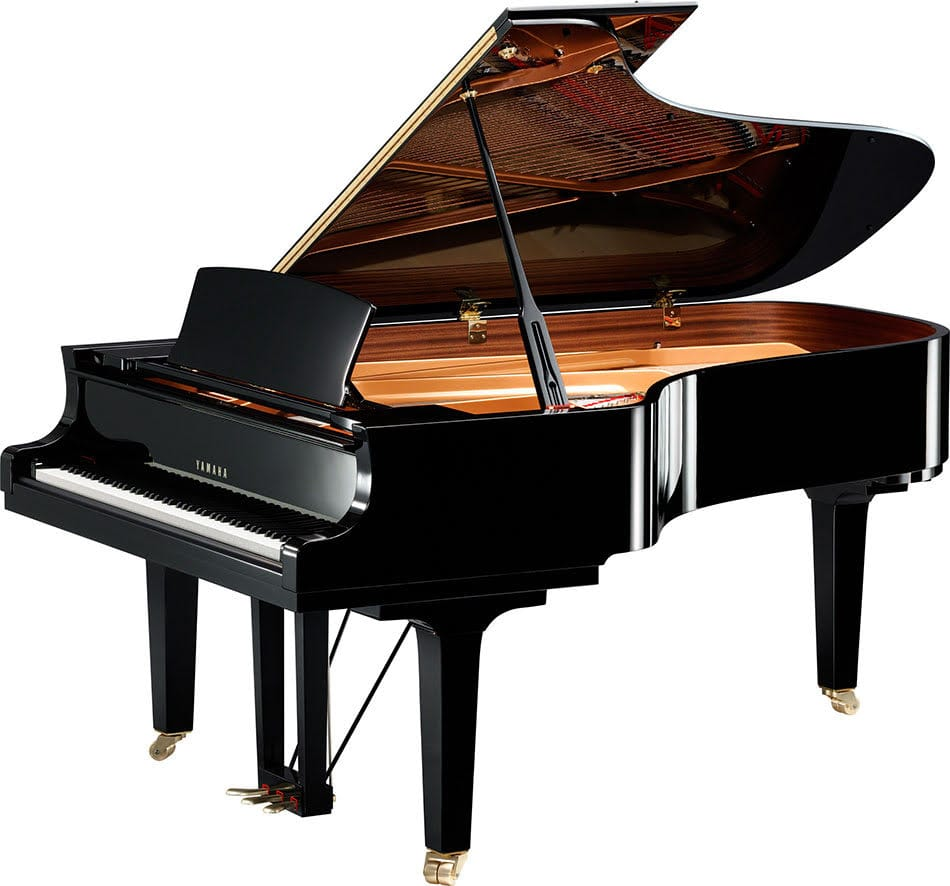
    Its solid spruce soundboard is derived from the same DNA as the popular CFX series, ensuring a rich and powerful sound.

    This grand piano features exclusive hammer felt, which is the countless prototypes. This hammer has superb elasticity helps produce beautiful and clear tonal colors.

    It also uses advanced string scaling and voicing techniques to enhance sound. Its hand-wound bass strings contribute to the piano’s harmonious sound.

    Other features include three pedals, a divided bridge, and a high-end action. The action is designed to respond quickly and accurately, providing you with precise control over your piano playing.

    Overall, the Yamaha SX series is an excellent choice if you’re looking for a grand piano that can deliver top-notch quality without taking up too much space. Its superior tone and responsive action make the Yamaha SX series ideal for concert halls and intimate stages.

    Specifications

    Yamaha CF Series

    This top-of-the-line instrument is part of Yamaha’s concert series that has undergone extensive research and development.

    The manufacturer claims they spent two decades perfecting the design and handcrafting this piano using the highest quality materials. The Concert Piano Workshop (a separate part of the Kakegawa facility) handles the top regulation of the concert instruments.

    This grand piano uses the top 1% of wood around the world. It ensures that the piano has an unparalleled level of quality, with a rich, resonant sound that is unmatched.

    The metal frame of the piano also contributes to its exceptional tonal character while providing superior strength and stability.

    Aside from all that, the Yamaha CF series features ivory white keys. These keys are not only visually stunning, but they are also a joy to play. They mimic the look and feel of natural ivory, a rare and highly sought-after material.

    The piano keys provide a smooth, responsive touch that is perfect for professional musicians and even the most discerning professionals.

    The hammer action is also incredibly balanced, providing the ideal balance between response and resistance. With its superior sound and impeccable playability, this grand piano is sure to be an heirloom that will last time.

    The sound of the Yamaha CF piano will take your breath away. Its warm, full sound resonates throughout the room and its depth provides an unparalleled listening experience.

    The Yamaha CF series is an undoubtedly brilliant achievement. From its exquisite design to the sound quality, it provides an experience like no other. However, it is the most expensive and prominent instrument in Yamaha’s lineup.

    The Yamaha CF will surely be your go-to grand piano if you’re looking for a unique and unbeatable sound that can fill any room.

    Specifications

    Conclusion

    As you can see above, I’ve listed the best Yamaha grand pianos with their specifications. They are made from natural materials, which aren’t just aesthetically pleasing, but also deliver unmatched quality.

    Yamaha pianos are guaranteed to impress even the most discerning pianists. You can expect superior sound quality, beautiful design, and reliable performance from Yamaha.

    Depending on your budget and needs, pick the one that best suits you.

    If you are new to pianos and have budget concerns, the Yamaha GB1K Baby grand piano is ideal. It is also the most affordable option.

    If you are an advanced player and budget is not an issue, the Concert CF grand piano is your best choice. It offers unbeatable sound quality and an exceptional playing experience.

    Which Yamaha model appeals to you the most? And why? Please let us know in the comments below!

    Read more

  • Best Yamaha Piano For Beginners (2023 Updated List)

    Best Yamaha Piano For Beginners (2023 Updated List)

    Yamaha is among the most trusted and prolific brands of pianos and other musical instruments. The company has been producing incredible pianos since 1887.

    They produce everything from stunning concert grand pianos to the ideal first keyboards designed for beginners and kids. Whether you’re a beginner or a seasoned pro, Yamaha has a piano to match your skill level and budget.

    If you’re just getting started and looking for the best Yamaha piano to kickstart your musical journey, you’ve come to the right place.

    In this article, I’ve compiled the nine best Yamaha pianos for beginners that will suit all ages of musicians. This list only includes Yamaha digital pianos, as they are portable, affordable, and offer educational features that make them best suited for beginners.

    By the end of this post, you’ll have your first best Yamaha digital piano.

    So, let’s jump into my top recommendations!

    Top 9 Best Yamaha Piano For Beginners Available in 2023

    Yamaha P125 88-Key Weighted Digital Piano

    Key Specifications

    • Dimensions: 52.19 x 11.63 x 6.56 inches
    • Keyboard Type: Graded hammer standard (GHS) keyboard
    • No. of Keys: 88
    • Touch Sensitivity: Hard/medium/soft/fixed
    • Polyphony (Max.): 192
    • Voices: 24
    • Effects: Yes
    • Speakers: Yes
    • No. of Pedals: 1 (Sustain Pedal)
    • Metronome: Yes
    • Connectivity: USB TO HOST, DC IN, dual Headphones Jacks, Sustain Pedal Input, AUX OUT
    • Weight: 11.8 kg
    • Price: $699.99

    The Yamaha P125 Digital Piano is the first Yamaha digital piano on our list. It offers many unique features that make it ideal for first-time players.

    This piano has a full-size 88-key graded-hammer standard keyboard that provides an authentic piano experience. Like an acoustic piano, the GHS-weighted action is heavier in the low keys and lighter in the high ones.

    It offers high-quality sound. The Pure CF sound engine faithfully reproduces the tone of the acclaimed Yamaha 9 feet CFIIIS Concert grand piano, offering a dynamic and expressive playing experience.

    Additionally, it offers 24 different voices that allow you to explore a variety of sounds. You can even layer two voices together or split the keyboard into two parts for different sounds.

    This portable digital piano includes 192 notes of maximum polyphony and sound effects such as Reverb, Chorus, and more.

    The P125 has USB-to-host connectivity with MIDI and audio transfer, so you only need one cable to connect to your music-making software or educational apps. It also features DC IN, dual headphone jacks, a sustain pedal input, and AUX OUT for connectivity to various devices.

    Furthermore, it has a Metronome and Tempo range of 5 to 280 bpm to help you keep the beat.

    It also has a tuning range of 414.8 Hz – 446.8 Hz, so you can tune it to the precise pitch you need. And at 11.8 kg, the P125 is lightweight enough to carry around.

    Accessory items include a music rest, sustain pedal and a power adapter.

    Ultimately, the Yamaha P125 is the best digital piano for beginners and intermediate players at a reasonable price of $699. Users will appreciate its realistic sound and touch and numerous connectivity options.

    Check On Amazon

    Yamaha DGX650B Digital Piano

    Key Specifications

    • Dimensions: 58.94 x 21.46 x 12.8 inches
    • Keyboard Type: Graded hammer standard (GHS) keyboard
    • No. of Keys: 88
    • Touch Sensitivity: Hard/medium/soft/fixed
    • Polyphony (Max.): 128
    • Voices: 550+
    • Effects: Yes
    • Speakers: Yes
    • No. of Pedals: 1 (Sustain Pedal)
    • Metronome: Yes
    • Connectivity: USB TO DEVICE, USB TO HOST, DC IN, a Headphones Jack, Sustain Pedal Input, AUX In
    • Weight: 22.5kg
    • Price: $1,099.99

    The Yamaha DGX650B is an excellent choice if you want to learn to play piano but can’t afford a traditional acoustic piano.

    The DGX650B emphasizes acoustic piano touch and superb tone. That’s why it stands out as the best-sounding digital piano.

    The keyboard comes with PureCF-sampled piano voices like Yamaha’s acclaimed CFIIIS concert grand. It also has 128-note polyphony, meaning you can play many notes at once without dropping any.

    Designed for beginners and professionals alike, the DGX650B has great learning features and performing and recording options for advanced players.

    The scaled, graded hammer action gives it the touch of a professional piano. You can play chords on a single key with Smart Chord technology.

    Aside from all that, it features AUX line input. So you can connect your mobile device, computer, mixer, keyboard amplifier, or any other line-level audio device to send the instrument’s output signal to that device. And you can hear it through the built-in speakers.

    Its “You Are The Artist” Series contains professionally-arranged songs that let you learn to play like artists such as Elton John, Taylor Swift, and Adele.

    The DGX650B includes cool accessories such as a foot pedal unit and bench, making it our top pick for the best digital Yamaha piano.

    So, if you’re looking for a Yamaha digital piano that is easy to use and allows you to play and share music, this DGX650B model from Yamaha is your best choice.

    Check On Amazon

    Yamaha P45 88-Key Digital Piano

    Key Specifications

    • Dimensions: 52.25 x 11.5 x 6 inches
    • Keyboard Type: Graded hammer standard (GHS) keyboard
    • No. of Keys: 88
    • Touch Sensitivity: Hard/medium/soft/fixed
    • Polyphony (Max.): 64
    • Voices: 10
    • Effects: Yes
    • Speakers: Yes
    • No. of Pedals: 1 (Sustain Pedal)
    • Metronome: Yes
    • Connectivity: USB TO HOST, DC IN, Headphones Jack, Sustain Pedal Input Weight: 11.5 kg
    • Price: $549.99

    The Yamaha P-45 is one of the best portable digital pianos for kids and adult beginners.

    It is a simple yet Yamaha’s most popular model in the P (Portable) line of digital pianos. Also, it’s Yamaha’s only digital piano under $500.

    The P-45 has 88 Graded Hammer Standard (GHS) keys, the same as the P-125 (above model). That means the keys are light at higher notes and get heavier as you go toward the lower ones, just like an acoustic piano. It will help you develop the muscles necessary for serious piano playing.

    Also, this entry-level digital piano has an impressive ten voices, including some digitally sampled from real Yamaha acoustic grand pianos.

    And you can try playing a combination of these voices with Dual mode, which combines two voices like piano and strings.

    Additionally, it has 64 maximum polyphony and simulated touch response settings. That lets you create dynamic sounds that emulate the dynamics of a real acoustic piano.

    Connectivity-wise, it has a USB port for connecting to Mac/PC and modern midi recording software. Additionally, the metronome feature helps you practice in time and improve your technique.

    The P-45 also comes with a sustain pedal, music rest, and power adapter.

    If you’re looking for a budget-friendly digital piano for beginners, the P-45 is a solid choice. The lightweight and portable design make it easy to move around, and its sound and feel are similar to a real piano.

    Check On Amazon

    Yamaha PSR-EW425 Portable Keyboard

    Key Specifications

    • Dimensions: 47.25 x 15.88 x 5.38 inches
    • Keyboard Type: Organ-style keyboard
    • No. of Keys: 76
    • Touch Sensitivity: Yes (Soft, Medium, Hard, Fixed)
    • Polyphony (Max.): 64
    • Voices: 820
    • Effects: Yes
    • Speakers: Yes
    • No. of Pedals: N/A
    • Metronome: Yes
    • Connectivity: USB TO DEVICE, USB TO HOST, DC IN, Sustain Pedal Input, Microphone jack, Headphones Jack, AUX IN
    • Weight: 8.3 kg kg
    • Price: $489.99

    The PSR-EW425 model from Yamaha is one of the best and most portable keyboards at an affordable price, making it perfect for beginners.

    This piano keyboard features 76 keys, which is more than enough for most musical playing styles. And the keys are touch-sensitive, allowing for a more expressive and dynamic playing experience. It delivers the same pro-quality sound found in high-end Yamaha keyboards.

    Also, it has a wide range of built-in sounds and effects, including realistic instrument voices and orchestral sounds.

    The PSR-EW425’s assignable knobs make manipulating various sound effects and parameters easy in real-time, while Mega Boost enhances your performance.
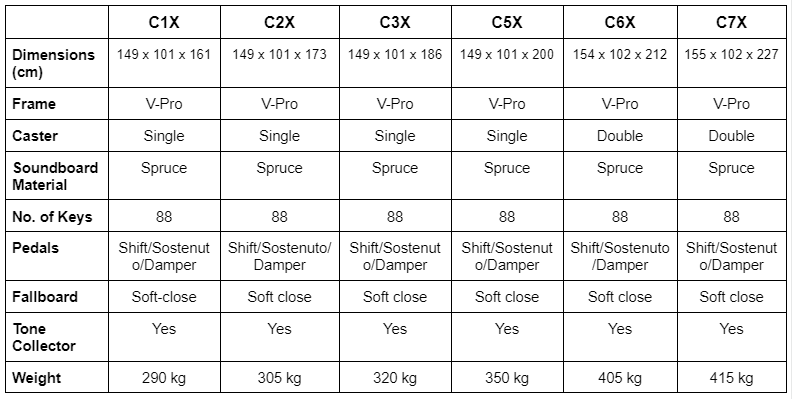
    Using the Motion Effect button, you can instantly modify the voices in your performance with filter, pitch, and modulation effects. And the quick sampling feature lets you record and playback a sample directly from the keyboard.

    This portable keyboard also includes an array of connectivity options such as USB, AUX, and MIDI. That means you can connect it easily to your computer and other instruments.

    The microphone input lets you connect a microphone and sing along while you play, adding an extra layer of fun to your performances.

    Overall, the Yamaha PSR-EW425 is a great digital piano and offers excellent value for the price. And it is sure to satisfy both beginners and serious musicians.

    Check On Amazon

    Yamaha YDPS55 Arius Series Slim Digital Console Piano

    Key Specifications

    • Dimensions: 57.6 x 20.63 x 16.69 inches
    • Keyboard Type: GH3 keyboard with synthetic ebony and ivory keytops
    • No. of Keys: 88
    • Touch Sensitivity: Hard/medium/soft/fixed
    • Polyphony (Max.): 192
    • Voices: 10
    • Effects: Yes
    • Speakers: Yes
    • No. of Pedals: 3: Damper (with half-pedal function), Sostenuto, Soft
    • Metronome: Yes
    • Connectivity: USB TO HOST, DC IN, dual headphones Jacks
    • Weight: 40 kg
    • Price: $1,599.99

    The Yamaha YDPS55 Arius Series Digital Console Piano is an ideal piano for beginners, offering a range of features that will help new players get the most out of their instrument.

    With a GH3 keyboard featuring synthetic ebony and ivory keytops, the YDPS55 provides a realistic playing experience.

    The sound engine has improved to a Yamaha CFX concert grand piano, giving new pianists a professional sound to practice.

    Its slim design also makes it an ideal choice for those with limited space in their homes or apartments.

    The instrument also features three pedals (damper, Sostenuto, and Soft), which are not found on most beginner keyboards. The Pedals are located at the instrument’s base, making it play and feel like an acoustic upright piano.

    Furthermore, the YDPS55 is compatible with the Smart Pianist App for iOS, which is one of the best things about it.

    The app provides a graphical user interface for selecting Voices and configuring settings. It can even analyze songs in your music library and display a chord chart. It is perfect for learning and playing along with your favorite songs.

    If you’re looking for the best digital keyboard piano that’s easy to use, provides excellent sound quality, and feels real, you can’t go wrong with the Yamaha YDPS55 Console Piano. However, it is a bit pricey.

    Check On Amazon

    Yamaha P71 88-Key Weighted Action Digital Piano

    Key Specifications

    • Dimensions: 52.25 x 11.5 x 6 inches
    • Keyboard Type: Graded hammer standard (GHS) keyboard
    • No. of Keys: 88
    • Touch Sensitivity: Hard/medium/soft/fixed
    • Polyphony (Max.): 64
    • Voices: 10
    • Effects: Yes
    • Speakers: Yes
    • No. of Pedals: 1 (Sustain Pedal)
    • Metronome: Yes
    • Connectivity: USB TO HOST, a sustain jack, and a headphone jack
    • Weight: 11.3 kg
    • Price: $499.99

    This Yamaha P71 piano is a fantastic choice if you want a high-quality piano without bells and whistles. It is the top choice of many customers because it’s portable, classic in design, easy to operate, and great for beginners.

    The portable keyboard piano is built to last and has a great, realistic sound. The P71 features the AVM sound engine, which gives the sound of a traditional piano. It delivers a rich, deep, and spacious sound to our ears.

    This keyboard has 88 weighted keys suitable for beginners to help improve their skills. Its embedded sound sampling feature allows you to create a sound similar to an acoustic piano.

    It has ten different voices, and you can record a loop with any of them. You can also layer piano and string for a superb playing experience with the dual-mode function.

    The USB port gives you access to your smart device and DAWs on your PC. If you want to practice silently, you can plug in your headphones. You can also use the built-in metronome to keep your timing accurate.

    Since this piano keyboard is lightweight and portable, you can carry it anywhere.

    Whether you’re a beginner or intermediate player, the Yamaha P71 is one of the best digital pianos from Yamaha if you’re looking for a portable yet high-quality piano at an affordable price.

    Check On Amazon

    Yamaha YDP103 Arius Series Piano

    Key Specifications

    • Dimensions: 53.44 x 32.06 x 16.63 inches
    • Keyboard Type: Graded hammer standard (GHS) keyboard
    • No. of Keys: 88
    • Touch Sensitivity: Hard/medium/soft/fixed
    • Polyphony (Max.): 64
    • Voices: 10
    • Effects: Yes
    • Speakers: Yes
    • No. of Pedals: 3 (Soft, Sostenuto, & Sustain Pedal)
    • Metronome: N/A
    • Connectivity: USB TO HOST, Dual Headphones Jacks
    • Weight: 37.5 kg
    • Price: $999.99

    The Yamaha YDP-103 is one of the best Yamaha digital pianos under $1000 because of its outstanding features.

    Like most digital pianos in this list, it uses a Graded Hammer Standard (GHS) key action, providing an excellent sense of touch and response.

    The piano keys have three levels of touch sensitivity and 64-note polyphony, so you can play complex pieces without any notes dropping out.

    The YDP-103’s sound is powered by Yamaha’s AWM sampling. While it doesn’t quite match the quality of high-end digital pianos, it does deliver an impressive grand piano tone.

    In addition, it offers ten instrument voices, including electric piano, strings, harpsichord, and organ sounds. There are also sound effects such as chorus, reverb, and brilliance.
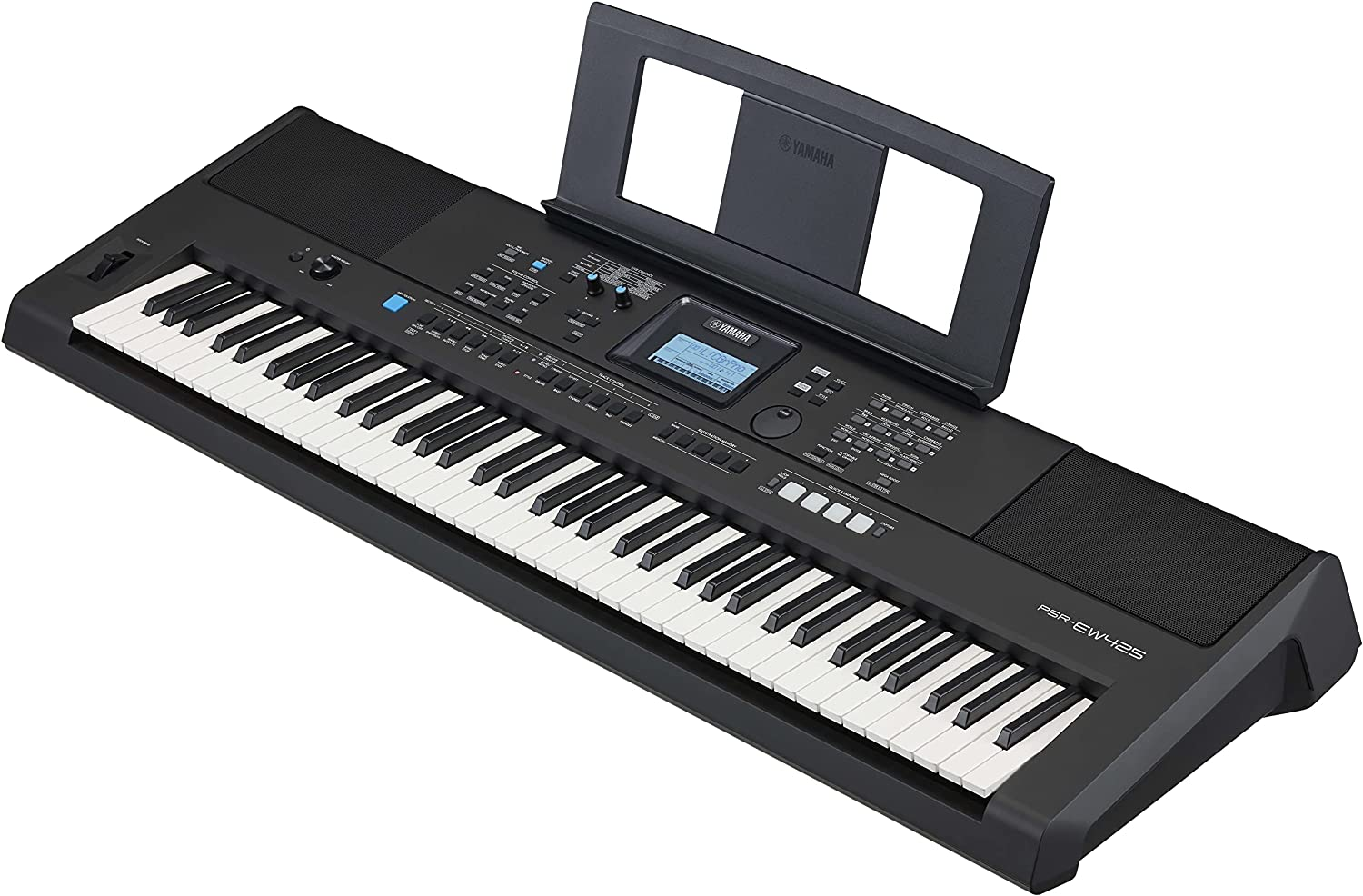
    Other impressive features of this digital piano include three pedals (soft, sostenuto, & sustain pedal). As with all acoustic pianos, the pedals provide complete control over the sound. It also has two headphone jacks for private practice and recording.

    Additionally, it has a USB port, so you can connect it to a computer for use with your favorite recording and music production software.

    Overall, the YDP-103 won’t disappoint if you’re a beginner or intermediate player who wants good-quality grand piano sounds for a reasonable price.
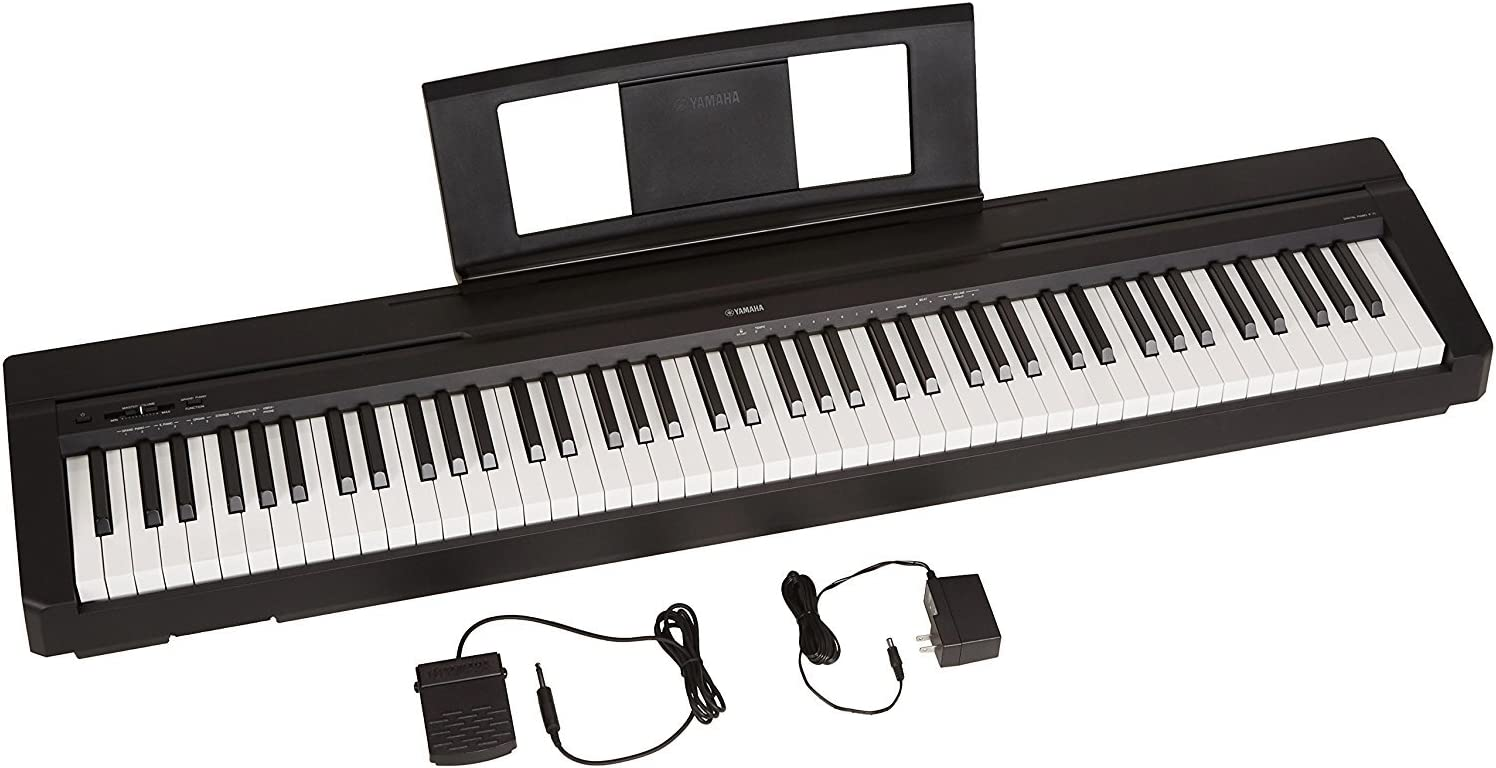
    Check On Amazon

    Yamaha PSR-EW310 76-key Portable Keyboard Piano

    Key Specifications

    • Dimensions: 45.3 x 14.5 x 4.6 inches
    • Keyboard Type: Organ Style Keyboard
    • No. of Keys: 76
    • Touch Sensitivity: Yes (Soft, Medium, Hard, Fixed)
    • Polyphony (Max.): 48
    • Voices: 622
    • Effects: Yes
    • Speakers: Yes
    • No. of Pedals: 1 (Sustain Pedal)
    • Metronome: Yes
    • Connectivity: USB TO HOST, DC IN, Headphones Jack, Sustain Pedal Input, & AUX In
    • Weight: 5.4 kg
    • Price: $313.94

    The Yamaha PSR-EW310 is an excellent choice for beginners and intermediate players looking to expand their skill set on the piano with greater chords and notes.

    Weighing only 5.4 kg, it’s one of the best portable digital pianos on the market. The compact size makes it easy to transport.

    Its robust plastic construction ensures that the keyboard is durable and can withstand everyday wear and tear. In addition, it’s easy to use and has straightforward controls.

    This keyboard has 76 touch-sensitive keys that respond to force applied to them. Two 12-inch speakers with an amplifier give good sounds.

    The AWM Dynamic Stereo Sampling engine captures the nuances of an acoustic instrument, which is ideal for those wanting to experience a more authentic sound.

    The Smart Chord feature allows you to play complex chord progressions with only a few fingers.

    Additionally, you can connect the piano to your computer via USB to access Yamaha Education Suite (Y. E. S.). The Yamaha Education Suite program allows you to practice at your own pace.
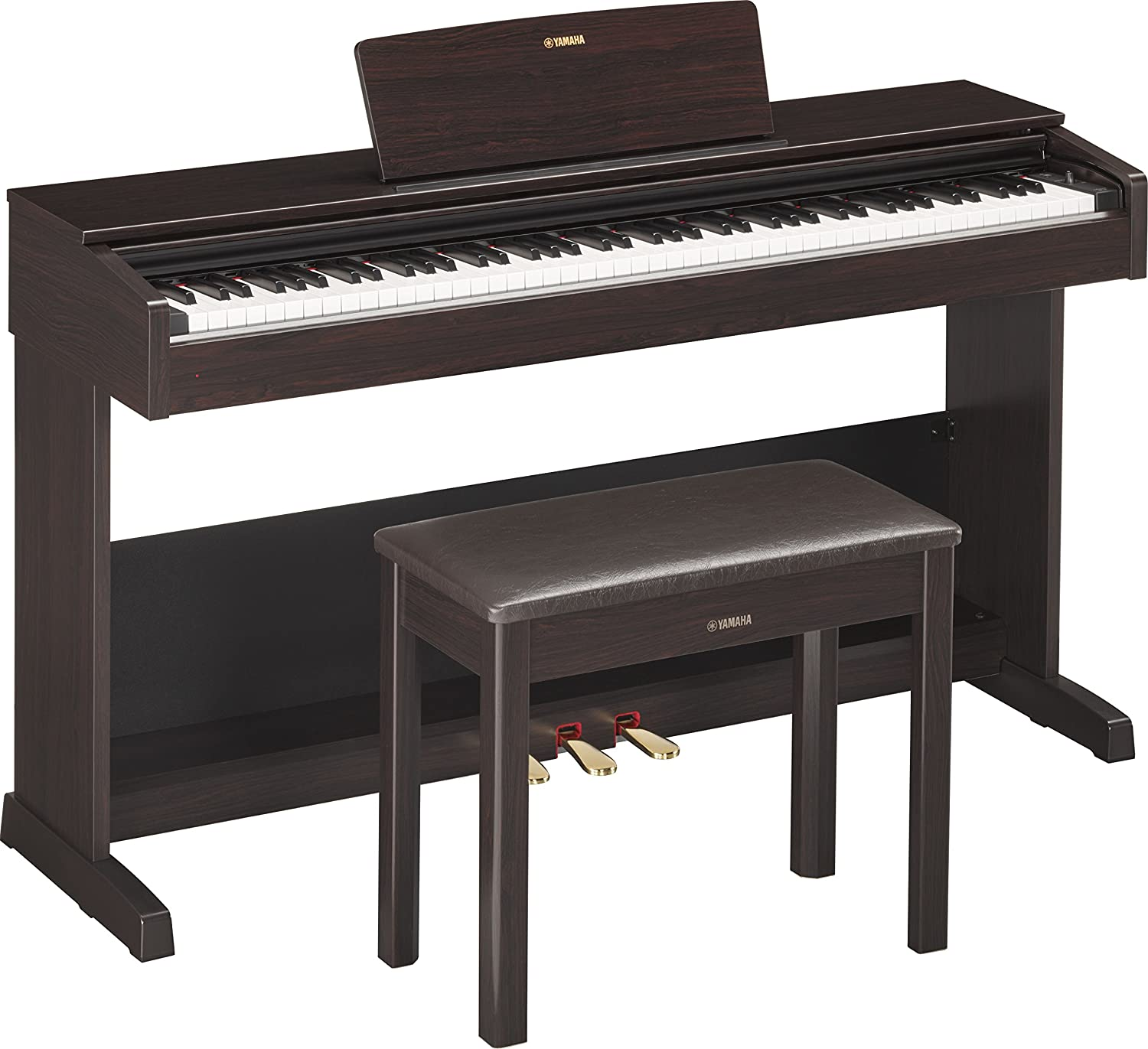
    The headphone jack makes it ideal for practicing without disturbing others. The device can be powered by six AA batteries or an AC adaptor.

    If you’re looking for the most affordable starter digital piano that’s portable and offers everything a beginner needs, you’ll go well with the Yamaha PSR-EW310.

    Check On Amazon

    Yamaha NP32 76-Key Lightweight Portable Keyboard

    Key Specifications

    • Dimensions: 49 x 10.2 x 4.1 inches
    • Keyboard Type: Graded Soft Touch (GST) keyboard
    • No. of Keys: 76
    • Touch Sensitivity: Yes
    • Polyphony (Max.): 64
    • Voices: 10
    • Effects: Yes
    • Speakers: Yes
    • No. of Pedals: 1 (Sustain Pedal)
    • Metronome: Yes
    • Connectivity: USB TO HOST, Sustain Pedal Input, Headphone output
    • Weight: N/A
    • Price: $354.99

    The Yamaha NP32 is the first and cheapest portable piano for novice players. It gives young players the illusion of playing a more professional instrument without spending much money.

    While the Piaggero NP-12 is not one of Yamaha’s top digital keyboards, it is the best in terms of price and ability.

    The NP32 features the 76-key Graded Soft Touch (GST) keyboard, which mimics the feel of an acoustic piano. That allows an authentic playing experience even with its lightweight construction.

    The NP-12 has a grand piano sound you won’t find on any beginner keyboard. The other ten sounds are equally impressive.

    In addition, the NP32 also boasts 64-note polyphony, a song recorder function, and extended battery life, making it an excellent choice for the absolute beginner.

    One of the standout features of the NP32 is the controller app for iOS, which adds a rich and user-friendly interface for easy navigation and configuration. The USB port allows you to connect and interact with various educational apps on your computer or mobile device.

    Overall, the Yamaha NP32 is ideal for those who are just starting to learn the basics of how to play piano.

    Check On Amazon

    Conclusion

    These are the top nine best Yamaha Digital Pianos for beginners available currently. I have selected the best options to suit every beginner’s budget and needs.

    These keyboard pianos are lightweight and have many impressive features that are easy to use. They offer excellent sound quality, touch-sensitive keys, educational programs, and various connectivity options.

    The Yamaha P125, Yamaha DGX650B, and Yamaha PSR-EW310 have the most features and are the most suitable for beginners.

    Whatever your budget, you’ll find something in this list to suit your needs.

    Read more